
SPIRITUAL INSIGHTS INTO THE LIFE OF SAINT HENRY II
July 13, 2026
Revelation 3:20
July 14, 2026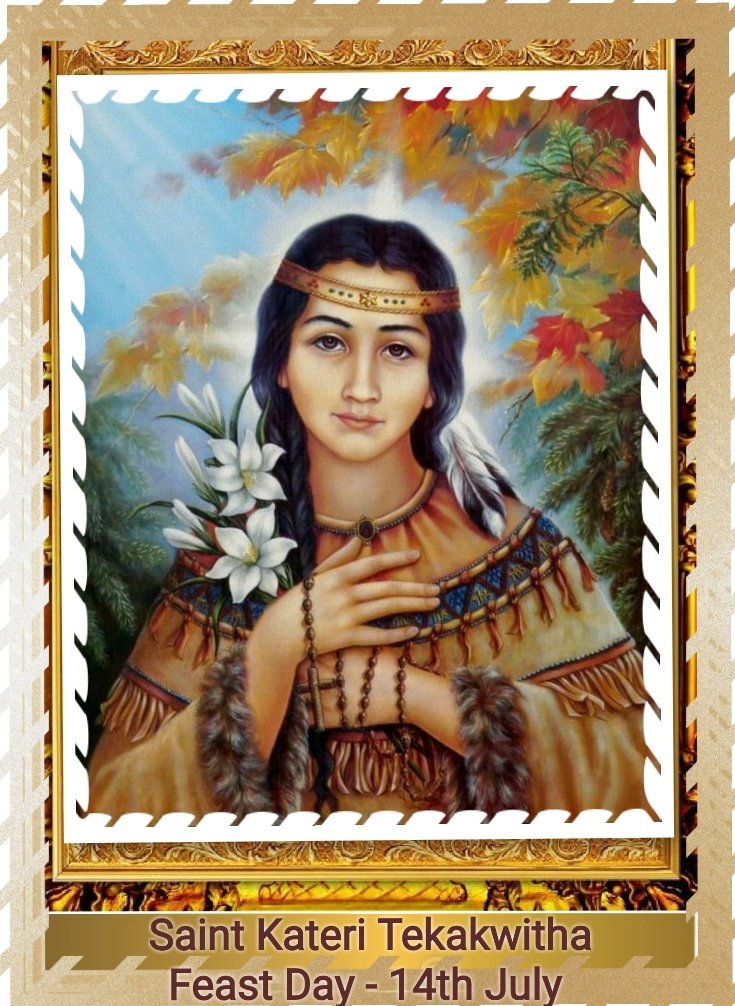
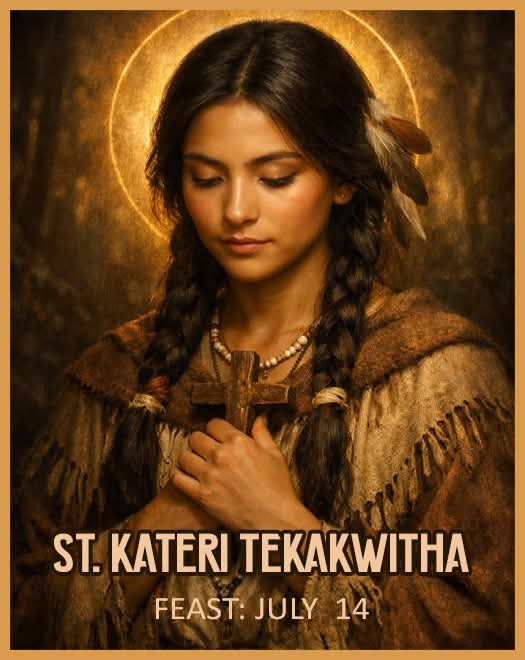
FEAST OF SAINT KATERI TEKAKWITHA, VIRGIN
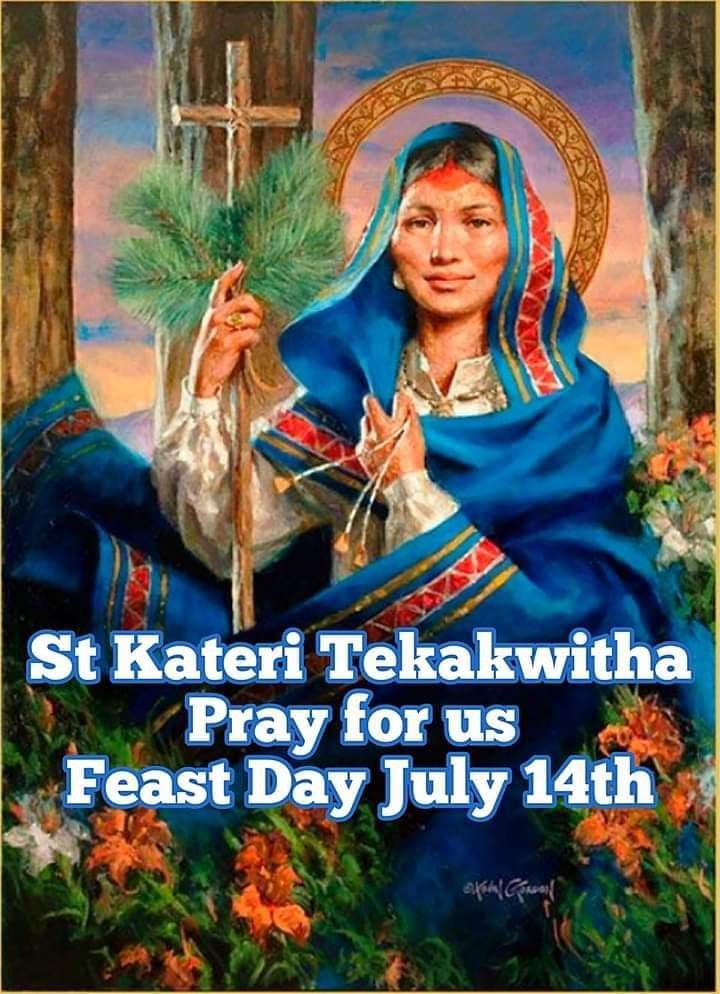
FEAST DAY – 14th JULY
Kateri Tekakwitha is the first Native American to be recognized as a saint by the Catholic Church. She was born in 1656, in the Mohawk village of Ossernenon. Her mother was an Algonquin, who was captured by the Mohawks and who took a Mohawk chief for her husband.
She contracted smallpox as a four-year-old child which scarred her skin. The scars were a source of humiliation in her youth. She was commonly seen wearing a blanket to hide her face. Worse, her entire family died during the outbreak. Anastasia, a friend of Kateri’s mother, took care of her and told her stories about the Christian God. Then Anastasia left for Canada to join other Christians there.
Kateri was subsequently raised by her uncle, who was the chief of a Mohawk clan. He hated the coming of the Blackrobers – Jesuit missionaries – but could do nothing to them because a peace treaty with the French required their presence in villages with Christian captives. Kateri was moved by the words of three Blackrobers who lodged with her uncle, but fear of him kept her from seeking instruction.
Kateri was known as a skilled worker, who was diligent and patient. However, she refused to marry. When her adoptive parents proposed a suitor to her, she refused to entertain the proposal. They punished her by giving her more work to do, but she did not give in. Instead, she remained quiet and diligent. Eventually they were forced to relent and accept that she had no interest in marriage.
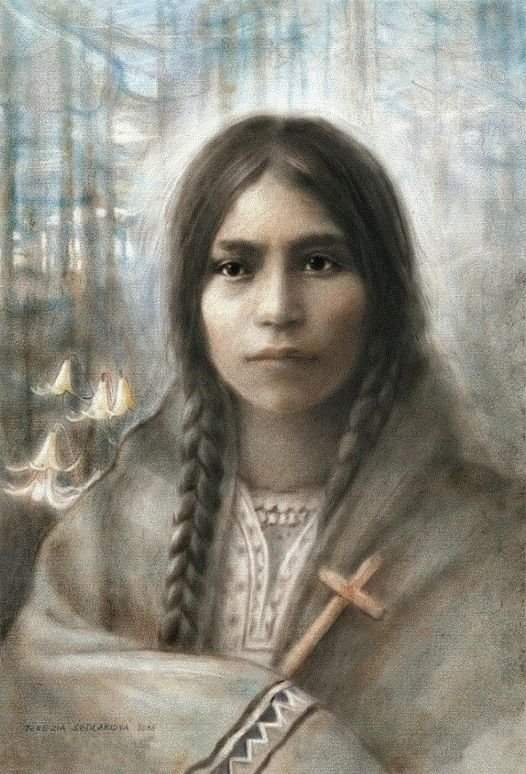
Finally, at age 19, Kateri Tekakwitha got the courage to take the step of converting to Catholicism. She was baptized with the name Kateri – Catherine – on Easter Sunday. Now she would be treated as a slave, taking a vow of chastity and pledging to marry only Jesus Christ. Her decision was very unpopular with her adoptive parents and their neighbors. Some of her neighbors started rumors of sorcery.
It was hard for Kateri to live as a Christian. Her people expected her to work in the fields on Sunday, the Lord’s Day. Sometimes they didn’t feed her. Children made fun of her and threw stones at her. Kateri endured this for two years. She found a place in the world where she could pray an hour a day and was accused of meeting a man there!
Her life in grace grew rapidly. She told a missionary that she often meditated on the great dignity of being baptized. She was powerfully moved by God’s love for human beings and saw the dignity of each of her people. She was always in danger, for her conversion and holy life created great opposition.
Finally a priest advised Kateri to go to Canada where she would be with other Christians. One day when her uncle was not home, she left for Canada with a Christian named Hot Ashes. When Kateri’s uncle found she was missing, he followed her but did not catch her.
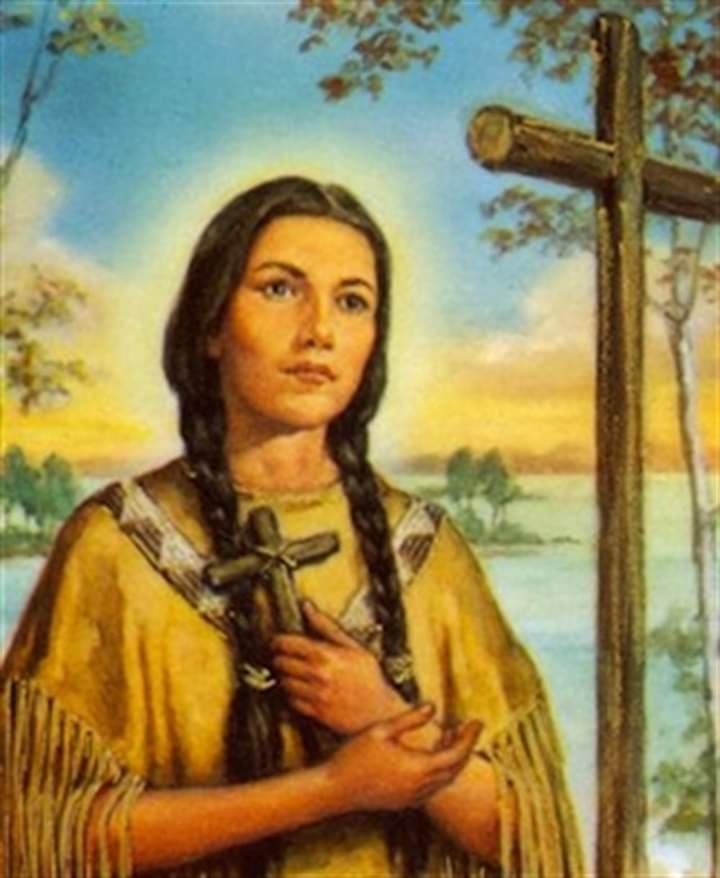
To avoid persecution, she traveled to a Christian native community south of Montreal. Kateri began a 200-mile walking journey to a Christian Indian village at Sault St. Louis, near Montreal. Kateri brought with her a note from the missionary priest to a Canadian priest that said, “I send you a treasure, Katherine Tekakwitha. Guard her well.”
Kateri lived an outstanding Christian life. She went to Mass daily, made frequent visits to the Blessed Sacrament, and prayed the rosary often. She cared for the sick and the old and taught the children. She did much penance. For three years she grew in holiness under the direction of a priest and an older Iroquois woman, giving herself totally to God in long hours of prayer, in charity, and in strenuous penance.
She lived a life dedicated to prayer, penitential practices, and care for the sick and aged. Each morning she stood before the chapel door waiting for it to open. Kateri prayed throughout the day, remaining in chapel until after the last Mass. She was devoted to the Eucharist and to Jesus Crucified.
Her dedication to virginity was instinctive: Kateri did not know about religious life for women until she visited Montreal. Inspired by this, she and two friends wanted to start a community, but the local priest dissuaded her. She humbly accepted an “ordinary” life.
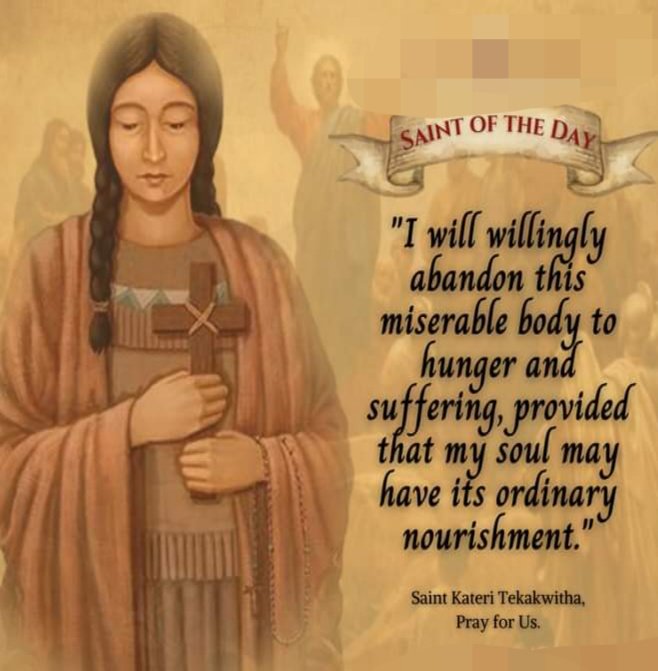
According to legend, Kateri was very devout and would put thorns on her sleeping mat. She often prayed for the conversion of her fellow Mohawks. According to the Jesuit missionaries, she often fasted and when she would eat, she would taint her food to diminish its flavor. On at least one occasion, she burned herself. Such self-mortification was common among the Mohawk.
Kateri was very devout and was known for her steadfast devotion. She was also very sickly. Her practices of self-mortification and denial may not have helped her health. Kateri suffered from bad headaches. She was not strong and could eat very little.
Sadly, just five years after her conversion to Catholicism, she became ill and passed away at age 24, on April 17, 1680. When she died, the scars on her face disappeared and she was beautiful. Kateri’s last words were, “Jesus, I love you.”
Saint Kateri Tekakwitha is the first Native American to be recognized as a saint by the Catholic Church. Her name, Kateri, is the Mohawk from of Catherine, which she took from Saint Catherine of Siena. She is informally known as Lily of the Mohawks.
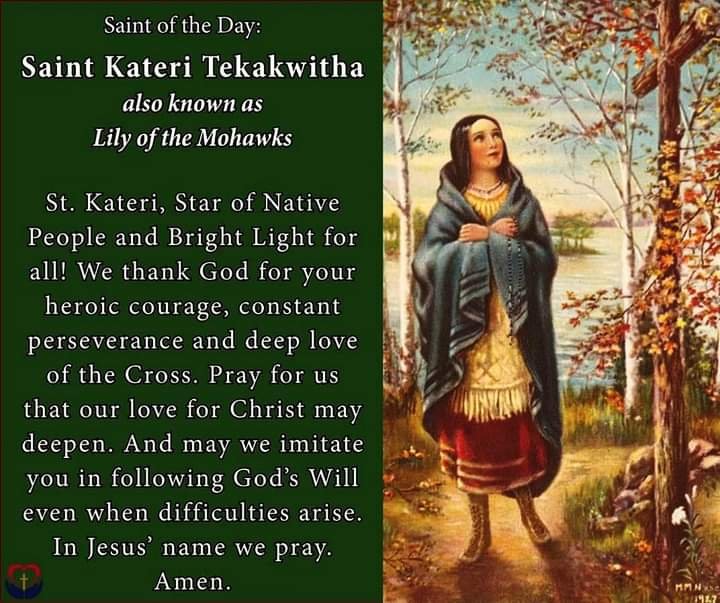
St. Kateri Tekakwitha was canonized by Pope Benedict XVI on Oct. 21, 2012. She is the patroness of ecology and the environment, people in exile and Native Americans. She is also the Patron saint of those who have suffered loss of parents, orphans, and people ridiculed for their piety.
CONTEMPLATING THE LIFE OF SAINT KATERI TEKAKWITHA
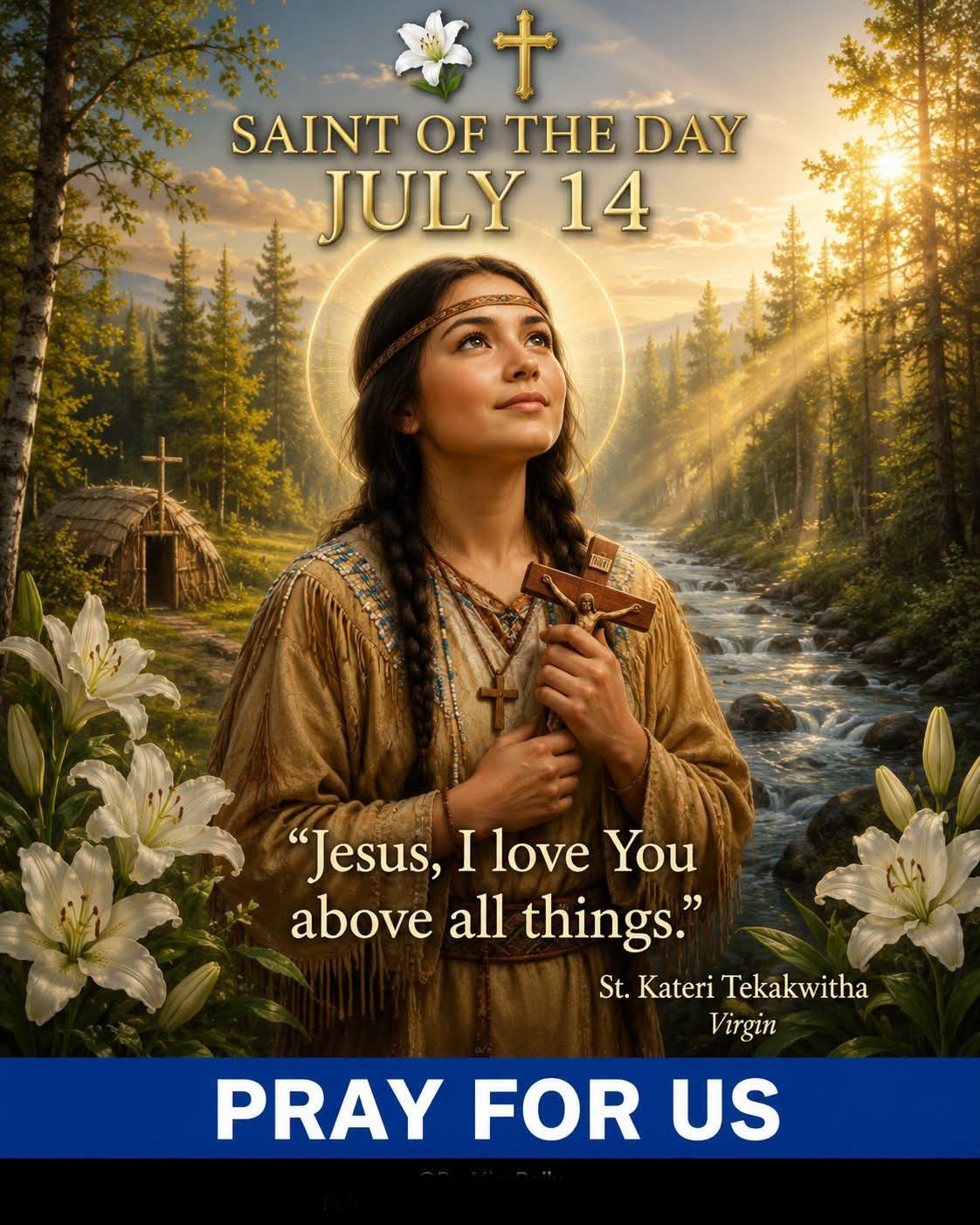
THE LILY OF THE MOHAWKS
Saint Kateri Tekakwitha (1656–1680), known as the “Lily of the Mohawks,” was the first Native American to be canonized by the Catholic Church. Born into the Mohawk nation in present-day New York, she embraced the Catholic faith despite strong opposition from her community. Her life was marked by prayer, purity, courage, forgiveness, and a deep love for Jesus Christ. Though she lived only twenty-four years, her witness continues to inspire Christians throughout the world. Her feast is celebrated on July 14.
A CHILD BORN BENEATH THE FOREST SKY
Kateri was born in the Mohawk village of Ossernenon, surrounded by the beauty of God’s creation. Her father was a Mohawk chief, and her mother was an Algonquin Christian who introduced her to Jesus. Though she was very young, the seed of faith planted by her mother would one day bear abundant fruit.
THE SCARS THAT BECAME HER CROWN
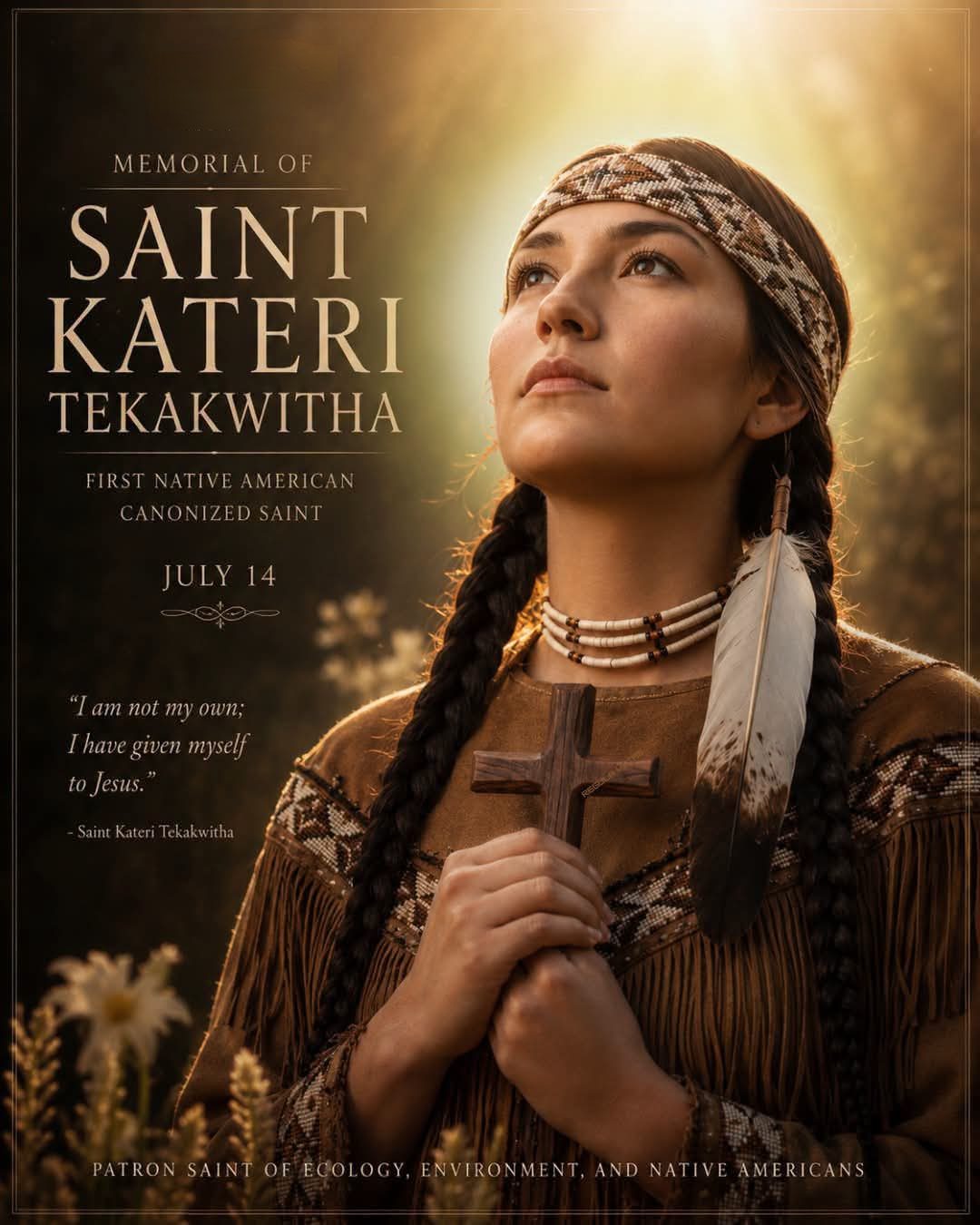
At the age of four, Kateri lost her parents and younger brother during a smallpox epidemic. She survived but was left with facial scars and poor eyesight. She became known as “Tekakwitha,” meaning “the one who bumps into things.” What the world saw as weakness, God transformed into the path of holiness.
THE QUIET HEART THAT LISTENED
As she grew up, Kateri became known for her quiet spirit, hard work, and faithful service to her family. While carrying out ordinary daily tasks, she held in her heart a deep longing for God, remembering the stories of Jesus her mother had shared with her.
WHEN THE GOSPEL RETURNED
When Jesuit missionaries arrived in her village, Kateri eagerly listened to their teaching about Christ. On Easter Sunday in 1676, she was baptized and received the name Kateri. Through Baptism, she became a beloved daughter of God and found her true home in the Church.
THE PRICE OF FOLLOWING CHRIST
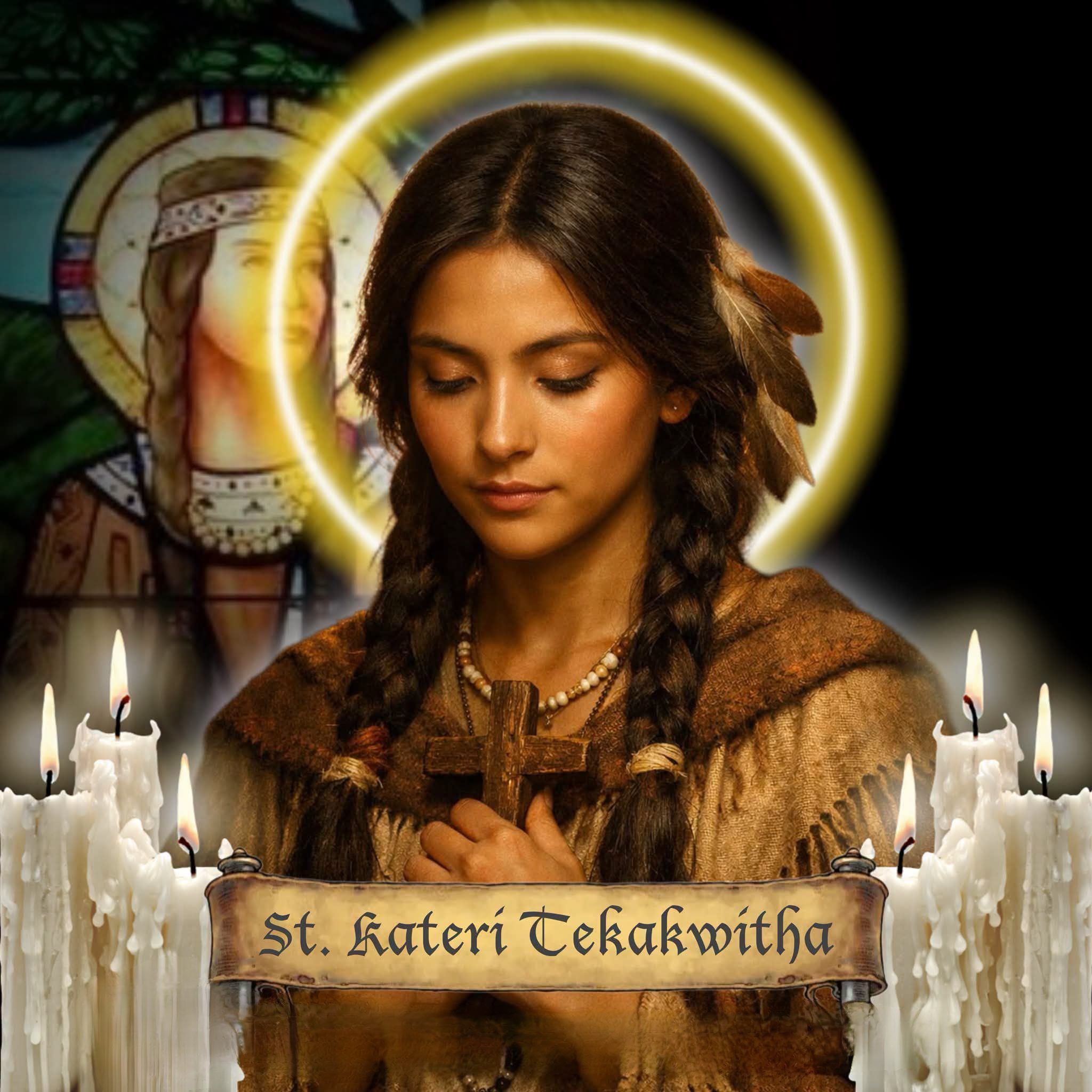
After her Baptism, Kateri faced ridicule and rejection because of her Christian faith. She refused to work on Sundays to honour the Lord and responded to every insult with patience and kindness. Her faithfulness showed that following Christ often requires sacrifice.
THE LONG JOURNEY TO FREEDOM
Unable to practise her faith freely, Kateri travelled nearly two hundred miles through forests and rivers to the Christian mission at Kahnawake. There she lived a life of prayer, attended Mass, cared for the sick and poor, and spent long hours before the Blessed Sacrament, growing ever closer to Christ.
A BRIDE OF CHRIST
Kateri dedicated her life completely to Jesus through a private vow of virginity. She found great joy in silent prayer, often praying alone in the woods. She loved creation because it reflected the beauty and glory of its Creator.
THE FACE THAT BECAME BEAUTIFUL
Kateri died at the age of twenty-four with the words, “Jesus, I love You.” Soon after her death, the scars on her face disappeared, and her face became radiant and peaceful, revealing the beauty of the holiness God had formed within her.
MIRACLES AND CANONIZATION
Devotion to Kateri spread steadily through the centuries. She was beatified by Pope John Paul II in 1980 and canonized by Pope Benedict XVI on October 21, 2012. The miracle approved for her canonization was the unexplained healing of a Native American child from a life-threatening bacterial infection through her intercession.
PATRONAGE
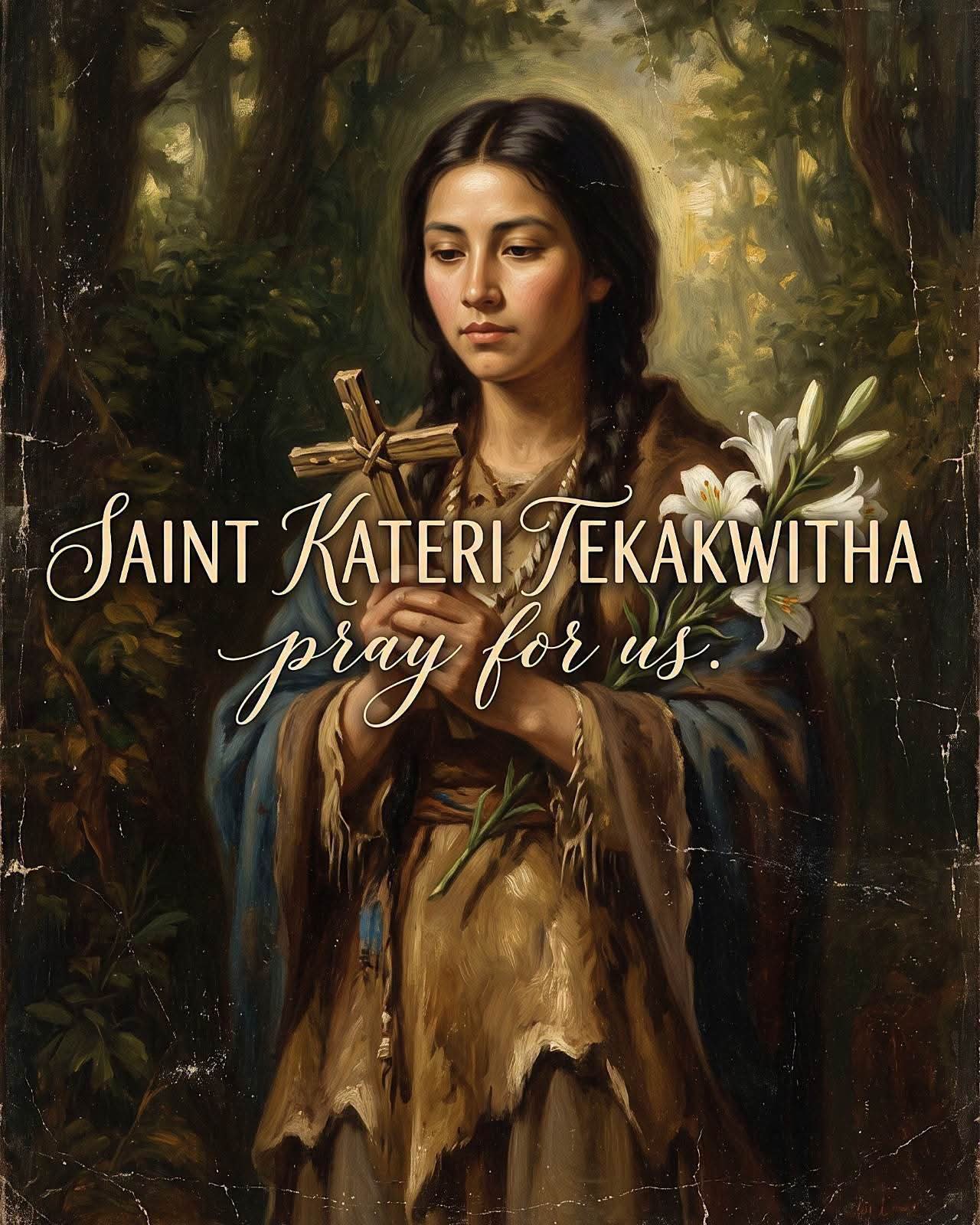
Saint Kateri Tekakwitha is the patron saint of Indigenous peoples, Native Americans, First Nations Catholics, those who care for creation, and those who suffer rejection because of their faith.
HER SPIRITUALITY
Kateri’s spirituality was centred on a deep love for Christ, purity of heart, courage in suffering, constant prayer, simplicity of life, and respect for God’s creation. She honoured the Creator through the beauty of the natural world.
LESSONS FROM HER LIFE
Saint Kateri teaches that holiness is possible in every culture, suffering can lead to sanctity, faith requires courage, prayer deepens our friendship with Christ, every culture can be enriched by the Gospel, and true beauty comes from a holy life.
HER LASTING LEGACY
Saint Kateri Tekakwitha remains a powerful witness that the Gospel fulfils rather than destroys cultural identity. Her life encourages all believers to persevere in faith, care for God’s creation, forgive those who oppose them, and seek Christ with an undivided heart.
PRAYER
O Saint Kateri, Lily of the Mohawks, your love for Jesus, was so courageous, devout and complete that we pray we may become like you. Your short and painful life showed us your strength and humility. Help us to be humble.
May our hearts burn with love of Jesus with the same intensity you displayed, to become one like you in heaven. Through Christ our Lord. Amen
++++++++++++++++++++++++++++++++++
OPTIONAL MEMORIAL
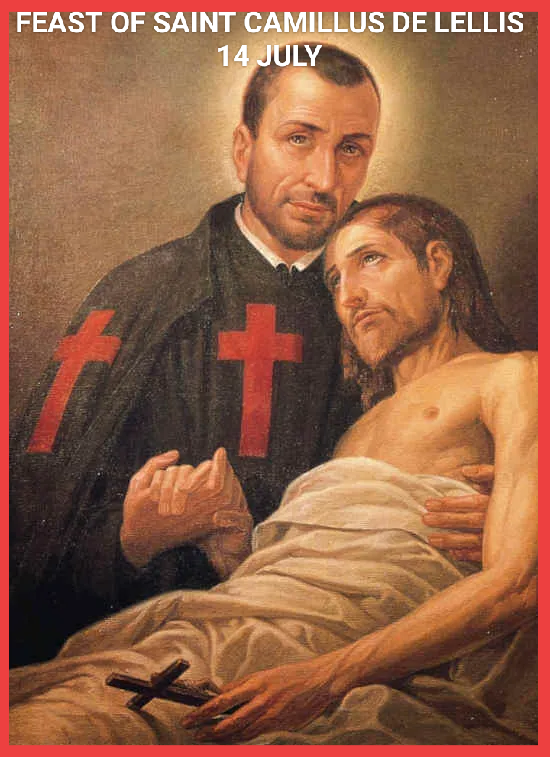
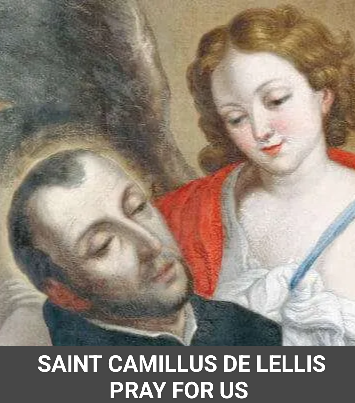
FEAST OF SAINT CAMILLUS DE LELLIS FEAST DAY – 14th JULY
Camillus was born in the Kingdom of Naples. His mother was in her late forties when he was born, and his father was a soldier who was often away from home. Before his birth, his mother had a dream that she would give birth to a son who would wear a red cross on his chest and lead others with the same cross.
However, Camillus’ mother died when he was young, leaving him mostly on his own. In his teenage years, Camillus joined his father on military campaigns where he fell into the vice of gambling and constantly experienced destitution. He wounded his leg on one campaign, which never properly healed.
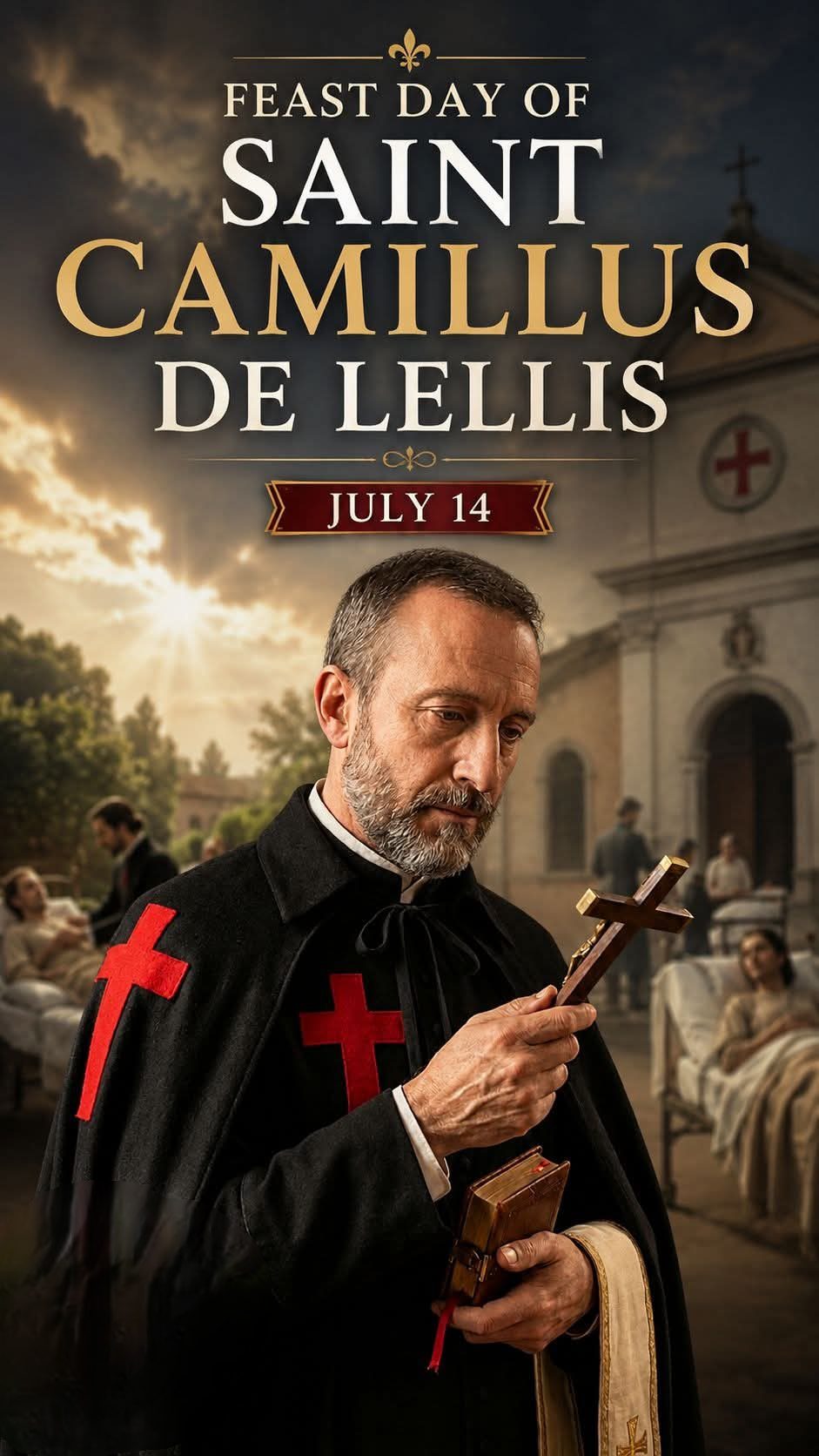
In Camillus’ mid-twenties, his military regiment was disbanded, and he found his way to a Franciscan friary where he obtained menial work. One day, a saintly friar spoke with him, saying, “God is everything. The rest is nothing. One should save one’s soul which does not die.” This had a profound impact on Camillus.
Shortly afterward, he fell on his knees and prayed, “Lord, I have sinned. Forgive this great sinner! How unhappy I have been for so many years not to have known you and not to have loved you. Lord, give me time to weep for my sins for a long time.” After this initial conversion, he applied to the friars for admission as an apprentice, but his application was rejected due to his unhealed leg wound.
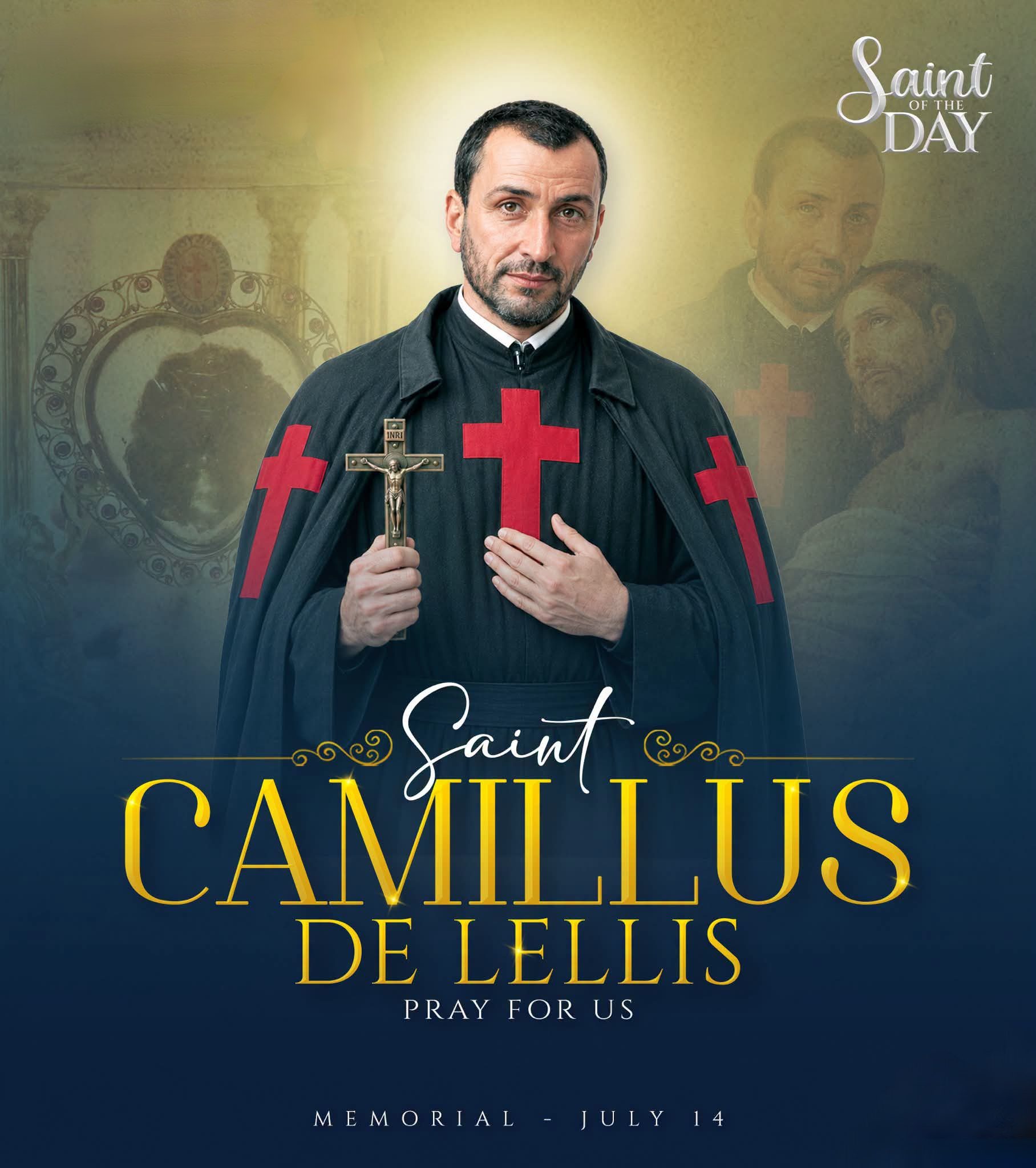
Since the wound on his leg was deemed incurable, Camillus traveled to Rome and found work at Saint James Hospital for the Incurable. There, he received treatment while caring for the sick and dying. He also began living a life of deep prayer and penance.
At that time, hospitals for the dying were not as they are today. Many hospital workers were society’s rejects. Caring for the sick and dying was considered a lowly and undesirable task, and many did it only to make a meager living, not as a sincere act of mercy. Camillus’s newfound faith and penitential life made him stand out in the hospital. He became such an inspiration that he was made the hospital’s director. As director, he tried to form a lay association of charitable hospital workers, but his efforts proved fruitless.
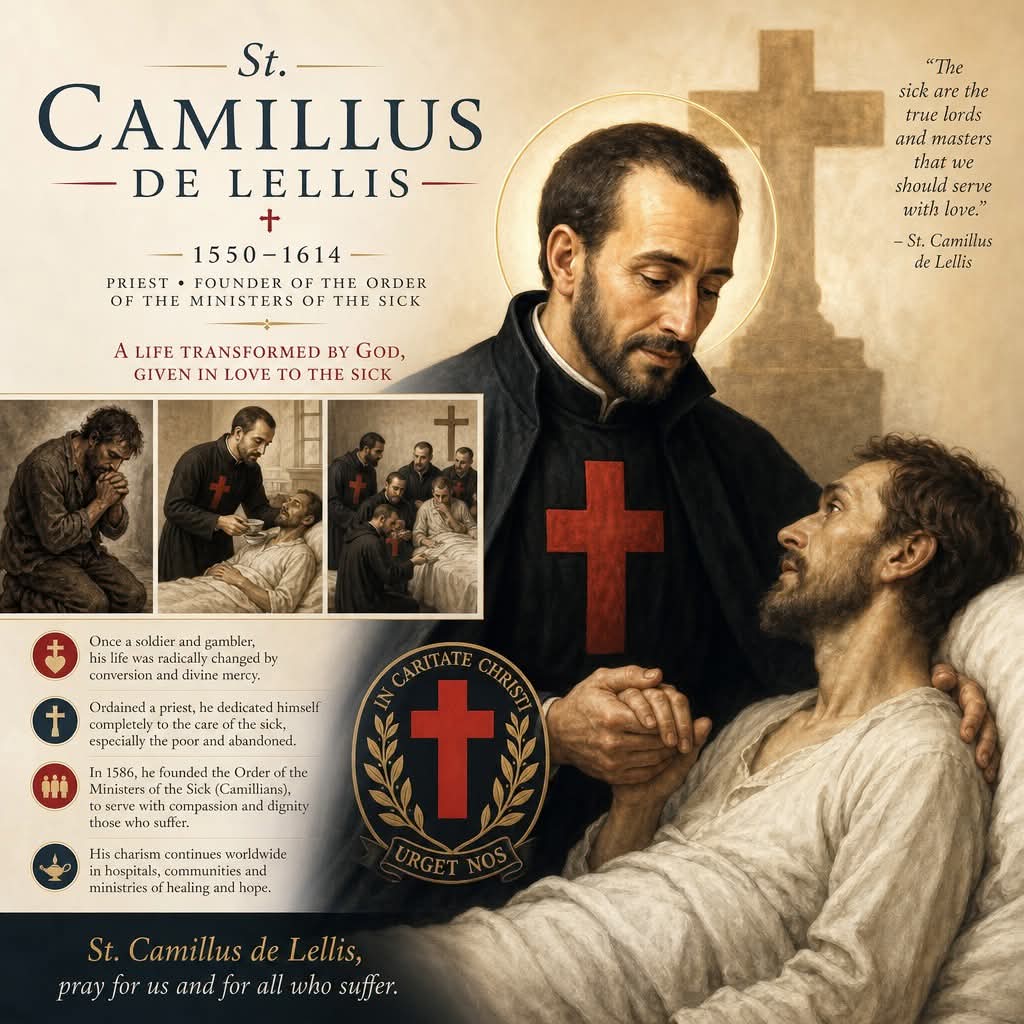
Fortunately for him, he met Saint Philip Neri, who became his spiritual director. Saint Philip encouraged him in his work and suggested that he become a priest to bring his calling to fruition. Thus, with the help of Saint Philip, he found a benefactor, completed his theological studies, and was ordained a priest at the age of thirty-four.
As a priest, he and his group of merciful hospital workers began serving the sick at Holy Spirit Hospital in Rome. They made quite an impression. They served not for money or because they could find no other work. They served out of charity, according to the vocation given to them by God. In addition to caring for those at the hospital, they ministered to the homebound and to everyone they found sick or dying.
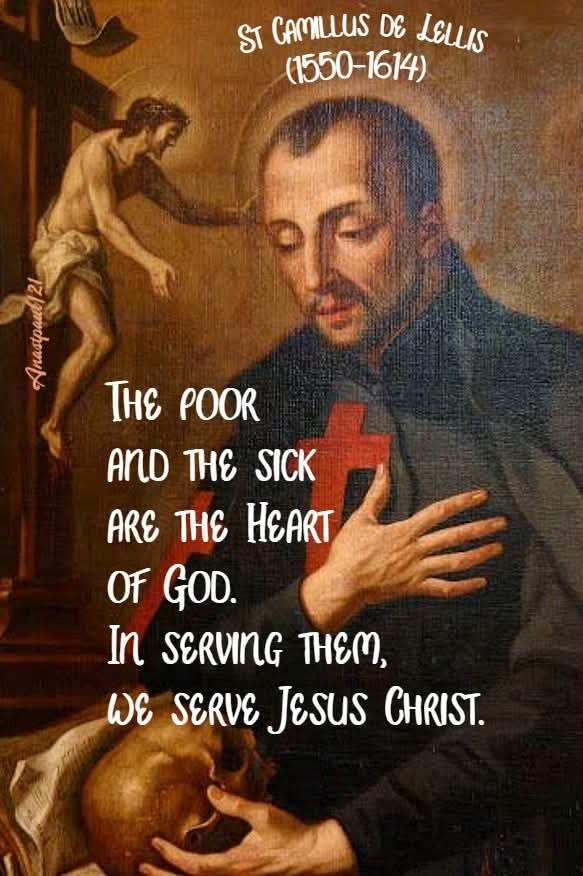
In 1586, after Camillus had been a priest for only two years, Pope Sixtus V formally approved his new congregation, named the Order of Clerks Regular, Ministers of the Infirm (M.I.), later known as the Camillians. In addition to taking the traditional three vows of poverty, chastity, and obedience, they took a fourth vow of “service to the sick poor, including the plague-ridden, in their corporeal and spiritual needs, even at risk to their own life, having to do this out of sincere love for God.” In 1591, Pope Gregory XV raised the congregation to the level of a Religious Order. They wore a black habit with a large red cross over their chest, just as his mother had dreamt before he was born.
In the years that followed, Father Camillus and his new order of ministers to the infirm expanded to other hospitals and towns, cared for those suffering from various plagues, and tended to soldiers wounded in battle. By the time of Camillus’ death, the order had expanded throughout Italy and even into Hungary.
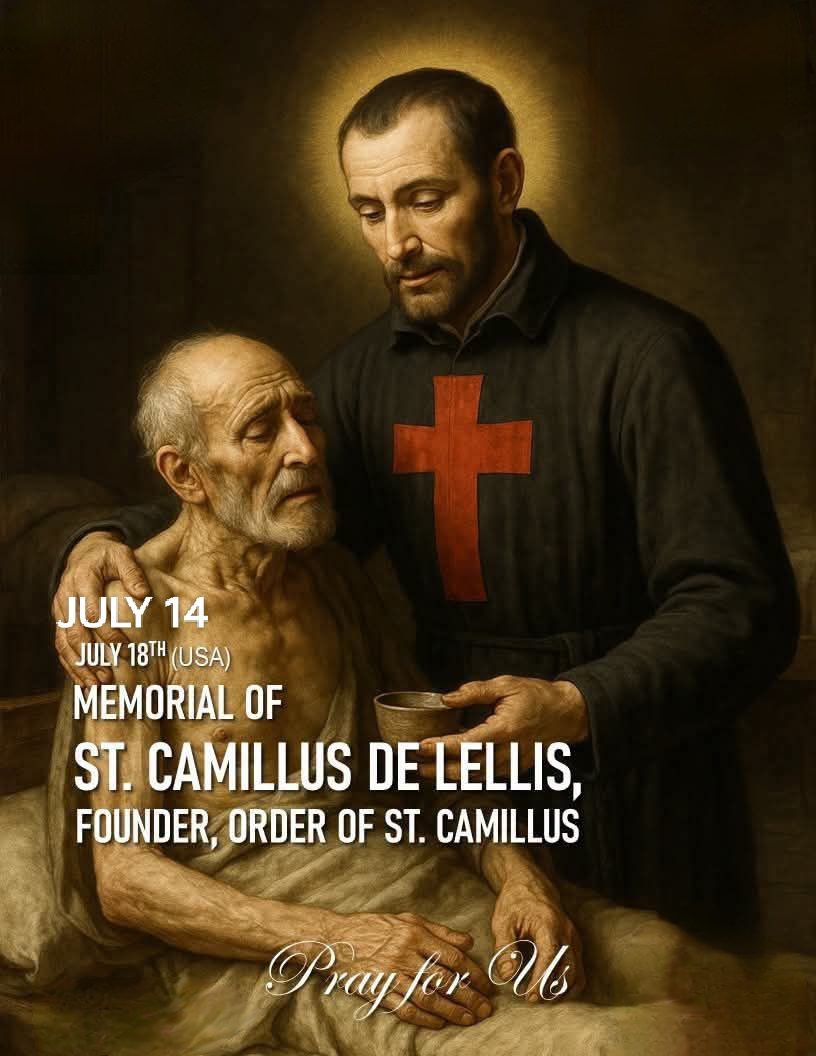
Though his wounded leg remained a source of much suffering throughout his life, he never allowed it to deter him from his work, even if he had to crawl to a patient’s bedside. His holiness was evident, as were the gifts of prophecy and healing. After his death, religious sisters were formed according to his order’s charism, as were lay associations.
In his service of the poor and sick, Saint Camillus was serving Christ. When he ministered to those who were suffering the most, with the most repulsive infirmities, he was drawn to them as he was drawn to the suffering Christ. His tenderness and compassion did much for their physical well-being, but it did much more for their eternal souls.
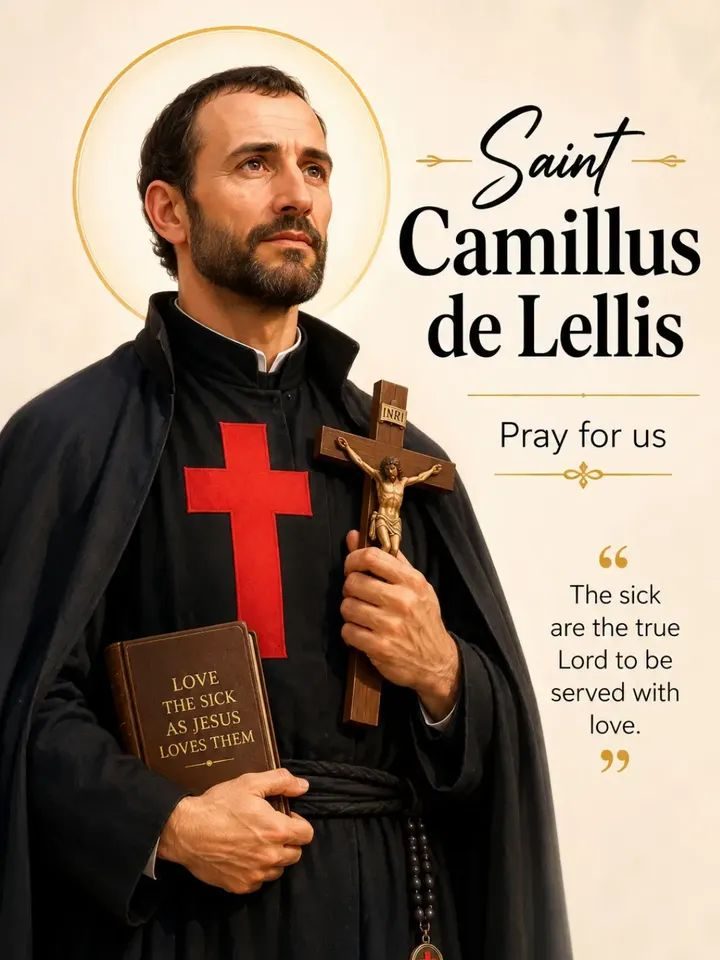
As we honor this great founder and saintly convert, consider the contrast we find in his life. He was mostly abandoned and fell into grave sin as a youth, but God touched him and transformed him, doing great things through his life. As you consider his life, consider also your own weaknesses and sins and know that there is always hope for you and for others, and that God can transform your life in glorious ways, doing great things in and through you.
PRAYER
Saint Camillus de Lellis, you suffered as a young man from an addiction to gambling and lived a destitute life. God called you out of that darkness and you responded. Please pray for me, that the light of Christ will enter into my own darkness and sin, and from that place of suffering, transform me into a living saint, fully devoted to the service of God and others. Saint Camillus, pray for me. Jesus, I trust in You.
Source: mycatholiclife