
SPIRITUAL INSIGHTS INTO THE LIFE OF SAINT PAUL MIKI AND COMPANIONS
February 7, 2026
1 Timothy 4:8
February 7, 2026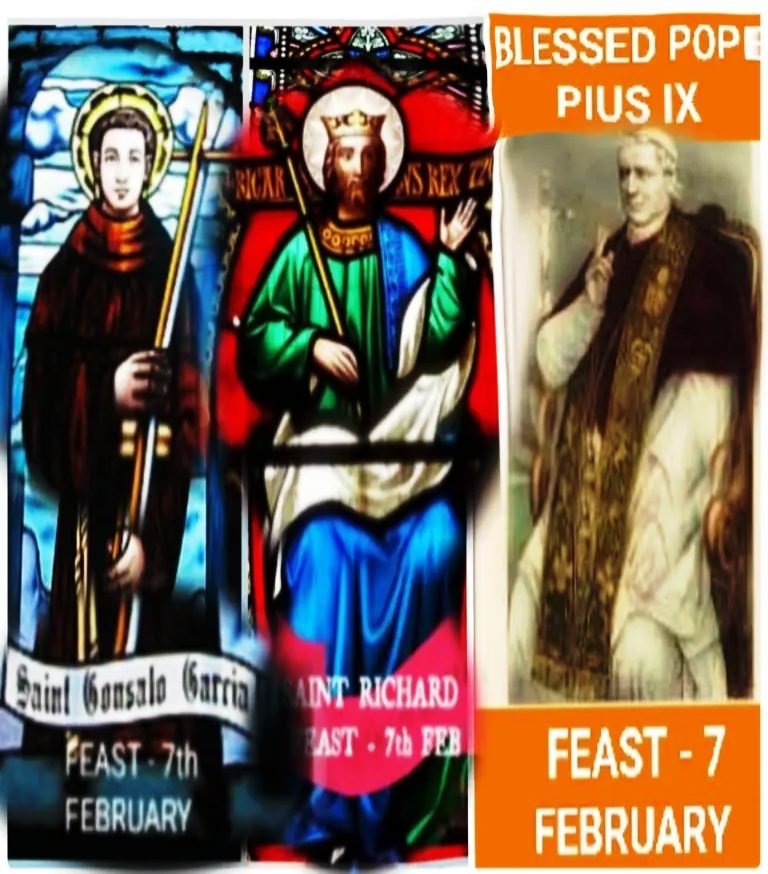
FEAST OF SAINTS GONSALO GARCIA, SAINT RICHARD THE PILGRIM, BLESSED POPE PIUS IX
FEAST DAY – 7th FEBRUARY
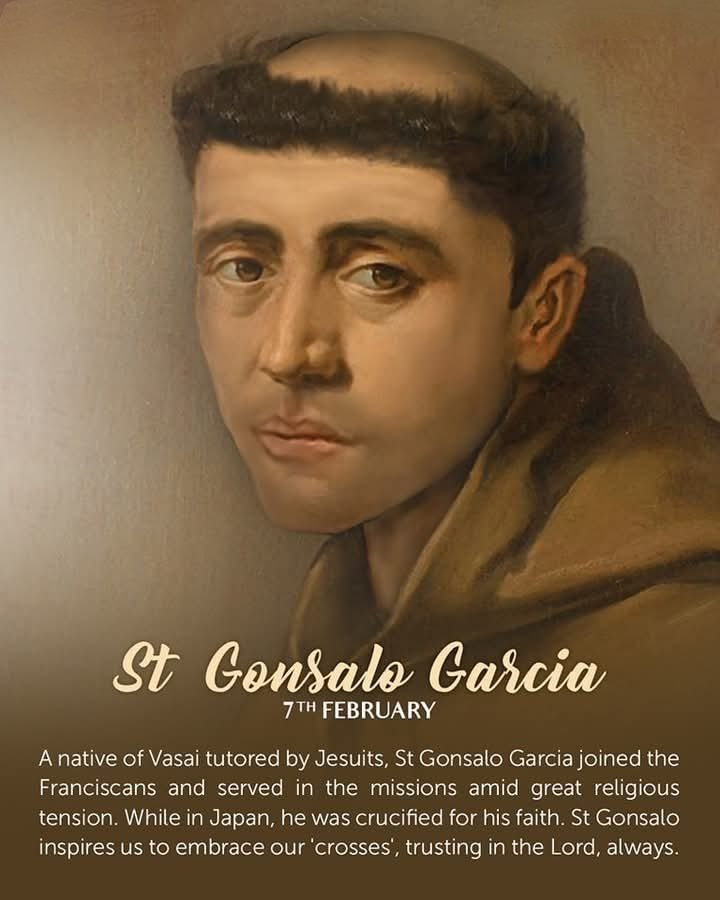
SAINT GONSALO GARCIA
Gonsalo Garcia was born in 1557, in Agashi village which is in Bassein. His father was a Portuguese soldier and his mother a Canarim as the Portuguese called the inhabitants of the Konkan, from Bassein. The fort was reserved for the European people and their servants. According to the policy adopted by the Portuguese colonial government, any Portuguese who got married with a local woman was given certain privileges. So Garcia’s father was permitted to stay in the fort as a civilian employee, along with his family.
Garcia studied at the Jesuit school in Fort Bassein and helped in their Igreja do Santo Nome de Jesus (Church of the Holy Name of Jesus), now known as St. Gonsalo Garcia Church. Here Garcia came into contact with the Jesuit priest, Sebastião Gonsalves, who became a friend and guide throughout his life. During his stay with the Jesuits, he learned grammar, philosophy and Roman history.
In 1580, Garcia left Bassein with some Jesuit missionaries, headed to join their mission in Japan. He quickly acquired a knowledge of the language. As a missionary, he went about in public places drawing children to himself by his amiable disposition, by his fluency in the language of the country and by his kindness. He served faithfully as a catechist for eight years. On leaving the Jesuits, Garcia went to the city of Alacao and established himself as a merchant. During his frequent business visits to Manila he became acquainted with Franciscan Friars, and being drawn towards them, joined as a lay brother.
Garcia was delighted to be accepted into the Franciscan order. In Manila, he came into contact with the Franciscan missionary, Friar Pedro Bautista, who remained his companion until their shared death. Garcia started his career as a catechist in Manila. The main advantage for him was his ability to speak the Japanese language. From the different parts of Japan, people began to send him invitations to return. It was at this time that the King of Spain wanted to send a delegation to Japan.
The Spanish Governor of Manila selected Peter Baptist as the leader of the delegation, and, since he did not know the Japanese language, Garcia was selected as his translator as well as his companion. Garcia was so happy with this offer that he immediately accepted the responsibility. The missionaries left Manila on 26 May 1592. In Japan, Garcia became the center of attraction, as he knew the Japanese language well.
The Franciscans began their missionary work in Kyoto, Osaka, etc. The Japanese regent Toyotomi Hideyoshi was very friendly with these Franciscans. It was a time when Jesuits were facing lot of opposition in Japan. The people of Japan appreciated the simple way of living adopted by these Franciscan missionaries. It helped them to accelerate their conversion program. Many Japanese, including their overlords, began to accept Christianity. Slowly Japan became the great center of evangelization for the missionaries.
In October 1596, the Spanish ship San Felipe, bound from Manila to Acapulco, was driven by typhoons to the coast of Japan. Laden with gold and silver it beached on a sandbar in Urado Bay. The pilot, Francisco de Olandia, conversing with the Japanese customs officials, spoke of La Espanha de los Conquistadores and boasted that the King of Spain had captured many countries in the world. He told them that the King of Spain sent the missionaries to instigate people against their ruler.
When this was reported to Toyotomi Hideyoshi, he became enraged. The situation was exploited by Yakuin Zenso, his physician and close advisor. The shogun issued an order to arrest and execute all Christian missionaries in Japan. The Franciscans, including Bautista, Garcia and others were arrested on 8 December 1596 and were sentenced to death. There were three Jesuits also, including the native seminarian, Paul Miki.
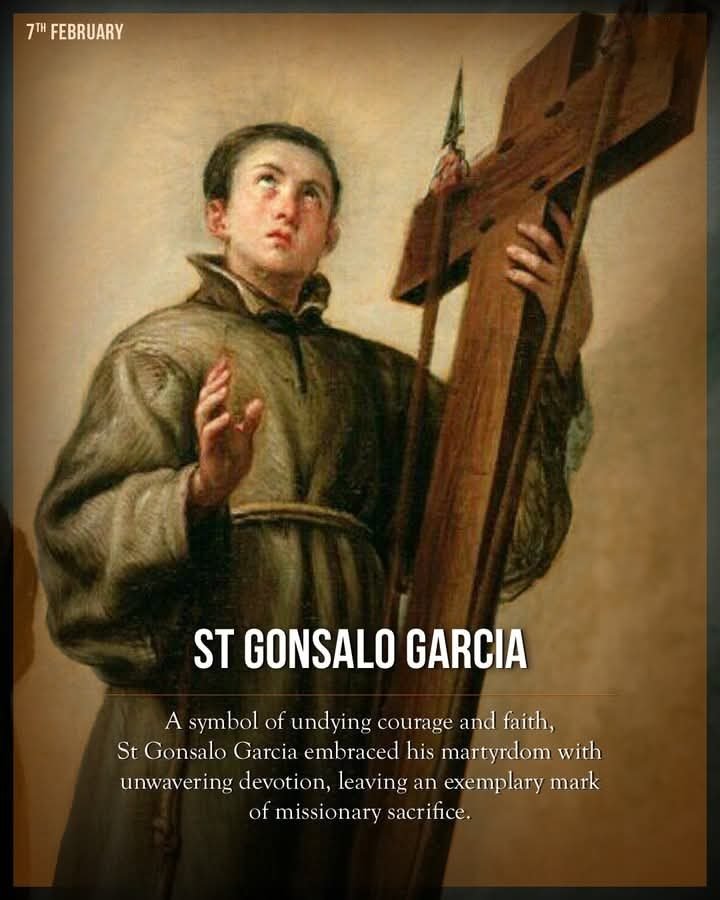
On 4 January the prisoners who had been sentenced to death began their journey from Kyoto, reaching Nagasaki on 4 February 1597. The next morning they were taken to a hill known as Nishigaoka. As Garcia was prominent among the missionaries, he was given the middle place. The execution started at 10 o’clock in the morning. He, Peter Baptist, and the other friars were crucified, along with fifteen teenage boys who were members of the Third Order of Saint Francis, as well as the three Jesuits.
The condemned were so tired that they could not endure it for long and within half an hour everything was over. The Portuguese and Japanese Christians attending the execution broke past the guards and started soaking pieces of cloth in the blood of the executed, gathering lumps of the blood-soaked dirt, and tearing up their religious habits and kimonos for holy relics. The guards beat the relic-hunters away and order was reestablished. Guards were positioned around the hill to keep onlookers at a distance.
In 1627, the twenty-six were declared venerable by Pope Urban VIII. In 1629 their veneration was permitted throughout the Universal Church. The matter was neglected for more than two centuries and was once again taken up in 1862, and on 8 June 1862 Pope Pius IX canonized Gonsalo Garcia and his co-martyrs. Brother Gonsalo Garcia became St. Gonsalo Garcia, the first Catholic saint of India and the Indian sub-continent. 8 June 2012 marked the 150th anniversary of his canonization.
Garcia’s memory is kept alive with a college named after him in Vasai. He is the patron saint of the Roman Catholic Archdiocese of Mumbai and the Diocese of Vasai and his feast day is a joint one for the group of martyrs, on 6 February and celebrated in India on 7 February. Garcia’s relevance even today lies in the universalism of his charity and love. A statue of Gonsalo Garcia was taken from Portugal to Recife in Brazil in 1745 by a local Brazilian, where his veneration soon began.
PRAYER
Eternal God, celebrating the feast of the virtuous martyr, Saint Garcia, we pray that his blood shed for the faith may so revitalize the Church in India and Japan that propelled by his courage and sacrifice more and more people may zealously accept the Catholic faith and live it with commitment. We make this prayer in the Name of Jesus. Amen.
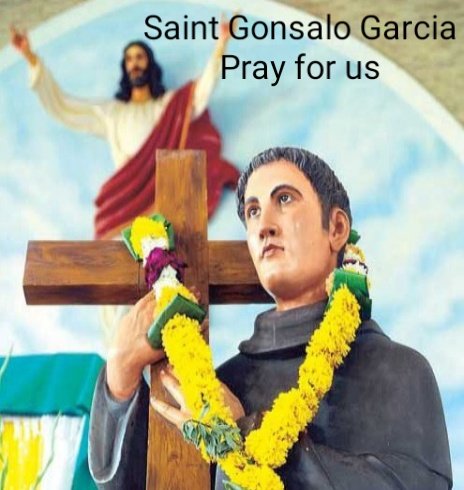
Saint Gonsalo Garcia, pray for us.
++++++++++++++++++++++++++++++++
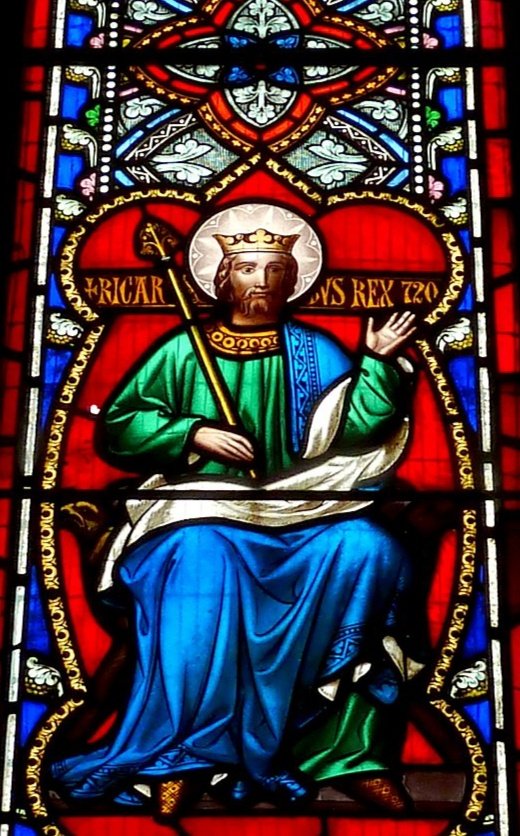
SAINT RICHARD OF LUCCA
Saint Richard the Pilgrim or Richard of Wessex or Richard of Lucca (died 720), was the father of the West Saxon saints Willibald, Winnibald, and Walpurga. He was a prince of the West Saxons in the 8th century but he was accorded the title of King by his people, who held him in great veneration.
He led his family on a pilgrimage to the Holy Land but died en route in Lucca, where he was buried in the church of Saint Fridianus. The reigning king of the West Saxons in 720 was King Ine, who ascended the throne in 688 and died in or possibly after 726. Bede states that he abdicated after 37 years, i.e. 725–26. The Anglo-Saxon Chronicle refers to him abdicating in and around 726–28, then traveling to Rome and dying there.
Richard was from Wessex, England, and his real name is uncertain. He appears to have been an Anglo-Saxon chieftain or a Brittonic under-king in Wessex, probably of part of Devon. His wife was Saint Wuna of Wessex, and they were the parents of Willibald, Bishop of Eichstätt, Saint Winibald, Abbot of Heidenheim, and Walpurga, Abbess of Heidenheim. He obtained by his prayers the recovery of his three-year-old son Willibald, whom he laid at the foot of a great crucifix erected in a public place in England, when the child’s life was despaired of in a grievous sickness.
In 720, he entrusted his eleven-year-old daughter Walpurga to the abbess of Wimborne in Dorset, renounced his estates, and set sail with his two sons from Hamblehaven near Southampton. They landed in France and temporarily stayed in Rouen. From there, they set off on the pilgrimage to Italy, where they prayed at shrines situated along the way.
He died unexpectedly after developing a fever in Lucca, Tuscany, where he was buried in the Church of San Frediano, founded by the Irish monk Fridianus. Miracles were reported to have occurred at his tomb and a cult venerating him developed. The people of Lucca gave him the name “Richard” and embellished their accounts of his life, describing him as an English prince. Another apocryphal story described him as the Duke of Swabia in Germany.
His son, Willibald, continued the pilgrimage to the Holy Land. Richard’s niece, a nun called Hygeburg (Huneburc of Heidenheim), wrote an account of the pilgrimage, entitled “Hodoeporicon”; historians date the text between 761 and 786. Some of Richard’s relics were transported to Eichstätt, where Willibald eventually became Bishop. Richard’s feast day is 7 February.
Richard is depicted with the Blessed Mother and his three children at Eichstätt Cathedral. In religious artworks, Richard is portrayed as a royal pilgrim in an ermine-lined cloak with two sons, one a bishop and one an abbot. His crown appears to lie on a book (Roeder). Richard is particularly venerated at Heidenheim and Lucca.
The Saint’s sons helped their uncle, St. Boniface, the apostle of Germany, to evangelize the Franks. His daughter became abbess of Heidenheim and ran a school for the children of Frankish nobles.
PRAYER
Lord God, You alone are holy and no one is good without you. Through the intercession of St. Richard help us to live in such a way that we may not be deprived of a share in Your glory.
In our Lord Jesus’ Name we pray. Amen
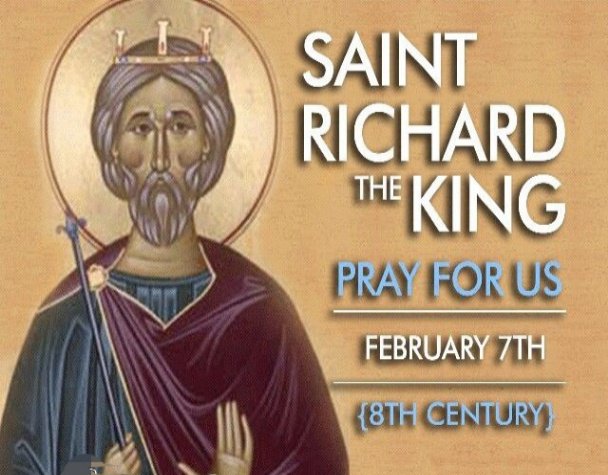
Saint Richard, King and Pilgrim, pray for us.
++++++++++++++++++++++++++++++++++
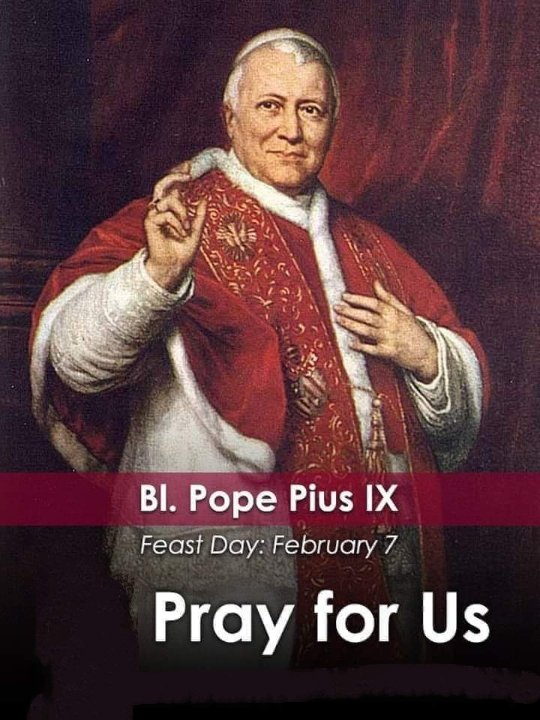
Future pope as a missionary
Giovanni Maria Mastai Ferretti (Pio IX) was the ninth child of Count Girolamo and Caterina Sollazzi. He was born in Senigallia on May 13, 1792. Between 1803 and 1808, he was a pupil at the College for noblemen in Volterra. Due to sudden attacks of epilepsy, he had to pause his studies to become a priest. In 1815, at Loreto, he obtained the grace of a full recovery. He resumed his theological studies in 1819 and was ordained a priest. In 1823, he went as a missionary to Chile for two years.
Young bishop of Spoleto | Pope at 54
At just 35 years of age, he was appointed Archbishop of Spoleto, and then of Imola in 1832. In 1840, he was created Cardinal, and, on June 16, 1846, on the fourth vote, with 36 votes out of 50 Cardinals at the Conclave, was elected Supreme Pontiff at just 54 years of age. As soon as he became Pope, he undertook a number of reforms within the Papal State (freedom of the Press, freedom to Jews, beginning of a railway, promulgation of the Statutes, etc.). However, his “persecution” began in 1848, when he refused to support the war against Austria.
Advises Don Bosco on his Society
St. John Bosco had his first audience with Pius IX on March 9, 1858. Both of them had the feeling they had encountered a Saint. Pius IX supported and guided Don Bosco in the founding of the Salesian Congregation. It was he who suggested calling it a Society in step with the times, of having vows, but not solemn vows, and he suggested a simple habit and an intense, but not too complicated, practices of piety. Moreover, he convinced Don Bosco to write his memoirs to leave the Salesians a spiritual legacy.
Don Bosco’s Pope
During his Pontificate, he approved the Constitutions and the Salesian Society, the Institute of the Daughters of Mary Help of Christians, and the Pious Union of Salesian Cooperators, and was amongst the first to enroll as a member. Don Bosco had a great love for Pius IX and accepted all his advice, even when it cost him great sacrifice. “I am ready to face any difficulty,” he would say, “when dealing with the papacy and the Church.” But the Pope, too, had great esteem for Don Bosco and called him to Rome often to ask his help on delicate issues.
Papal acts of importance
On December 8, 1854, he defined the dogma of the Immaculate Conception. In 1869, he called Vatican Council I, and on December 8, 1870, proclaimed St. Joseph Patron of the Universal Church. On June 16, 1875, he consecrated the Church dedicated to the Sacred Heart of Jesus. He died on February 7, 1878, after 32 years of Pontificate. John Paul II beatified him on September 3, 2000, together with Pope John XXIII.
Declared Venerable on July 6, 1985, he was beatified on September 3, 2000 by St. John Paul II.
PRAYER
Holy Father God, our eternal praise and thanksgiving are offered to You for the Chair of Peter, the Church instituted by our Lord Jesus Christ.
Assist us in edifying the Holy Church by the example of true Christian living, in service of all. Grant that by the prayers of Blessed Pope Pius IX, who most faithfully followed the values of the Universal Church, that we too may live and and have our being in You through Jesus, our Lord. Amen
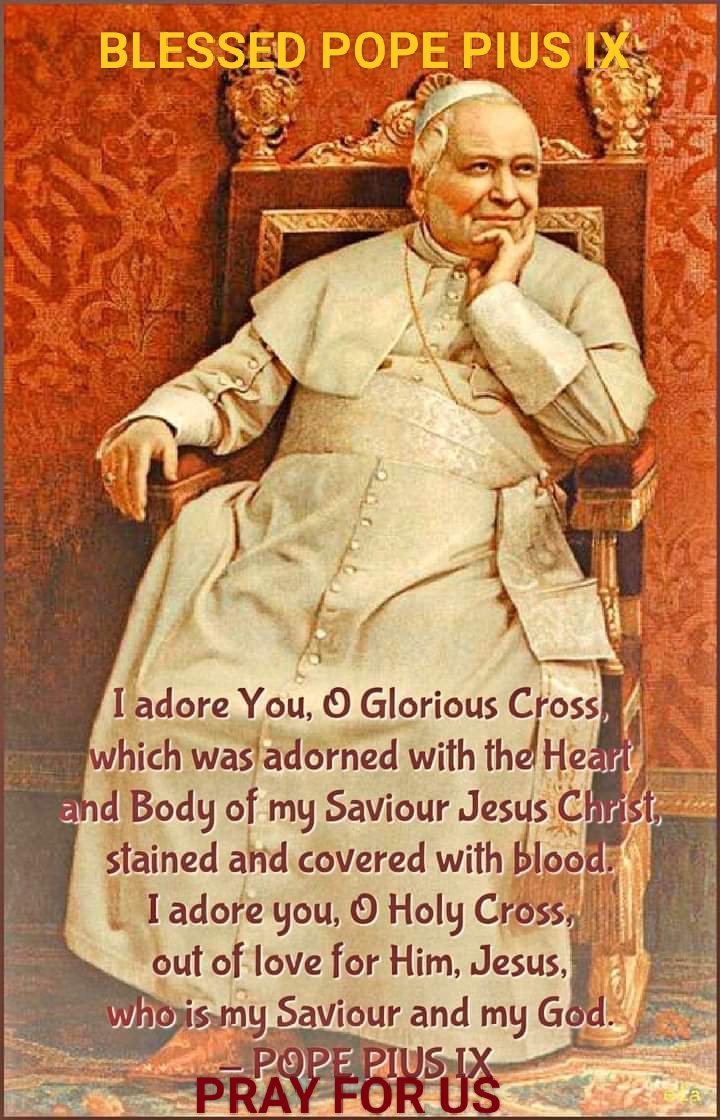
Source: salesians.org
************************************
ALSO CELEBRATED:
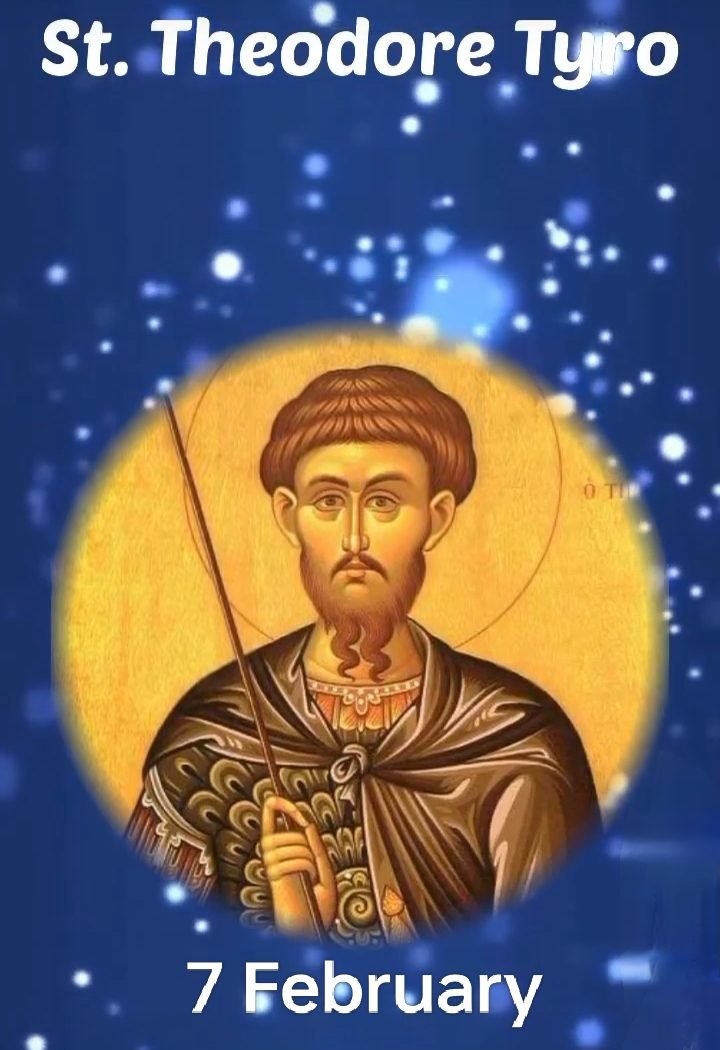
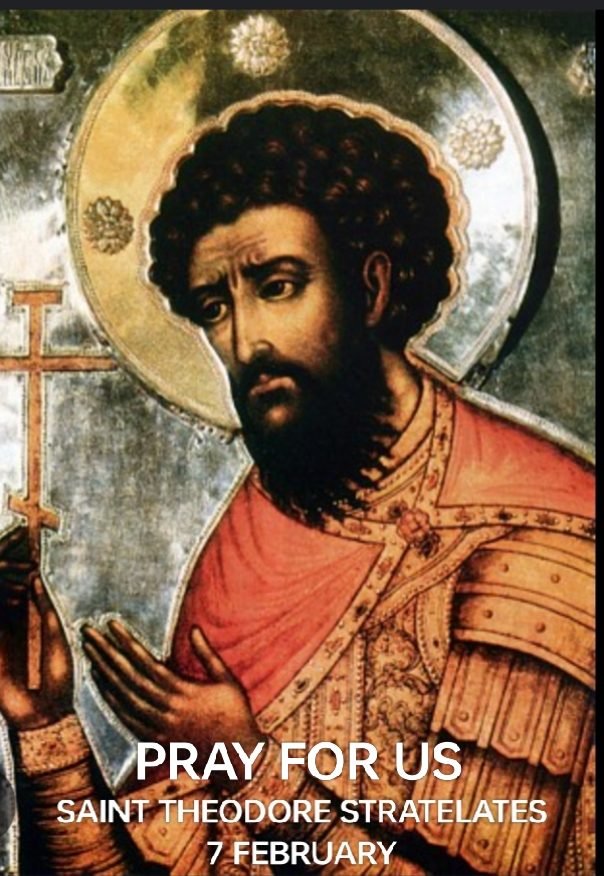
SAINT THEODORE STRATELATES – MARTYR
The Great Martyr Theodore Stratelates came from the city of Euchaita in Asia Minor. He was endowed with many talents, and was handsome in appearance. For his charity God enlightened him with the knowledge of Christian truth. The bravery of the saintly soldier was revealed after he, with the help of God, killed a giant serpent living on a precipice in the outskirts of Euchaita. The serpent had devoured many people and animals, terrorizing the countryside. St Theodore armed himself with a sword and vanquished it, glorifying the name of Christ among the people.
For his bravery St Theodore was appointed military commander [stratelatos] in the city of Heraclea, where he combined his military service with preaching the Gospel among the pagans subject to him. His gift of persuasion, reinforced by his personal example of Christian life, turned many from their false gods. Soon, nearly all of Heraclea had accepted Christianity.
During this time the emperor Licinius (311-324) began a fierce persecution against Christians. In an effort to stamp out the new faith, he persecuted the enlightened adherents of Christianity, who were perceived as a threat to paganism. Among these was St Theodore. Licinius tried to force St Theodore to offer sacrifice to the pagan gods. The saint invited Licinius to come to him with his idols so both of them could offer sacrifice before the people.
Blinded by his hatred for Christianity, Licinius trusted the words of the saint, but he was disappointed. St Theodore smashed the gold and silver statues into pieces, which he then distributed to the poor. Thus he demonstrated the vain faith in soulless idols, and also displayed Christian charity.
St Theodore was arrested and subjected to fierce and refined torture. He was dragged on the ground, beaten with iron rods, had his body pierced with sharp spikes, was burned with fire, and his eyes were plucked out. Finally, he was crucified. Varus, the servant of St Theodore, barely had the strength to write down the incredible torments of his master.
God, however, in His great mercy, willed that the death of St Theodore should be as fruitful for those near him as his life was. An angel healed the saint’s wounded body and took him down from the cross. In the morning, the imperial soldiers found him alive and unharmed. Seeing with their own eyes the infinite might of the Christian God, they were baptized not far from the place of the unsuccessful execution.
Thus St Theodore became “like a day of splendor” for those pagans dwelling in the darkness of idolatary, and he enlightened their souls “with the bright rays of his suffering.” Unwilling to escape martyrdom for Christ, St Theodore voluntarily surrendered himself to Licinius, and discouraged the Christians from rising up against the torturer, saying, “Beloved, halt! My Lord Jesus Christ, hanging upon the Cross, restrained the angels and did not permit them to take revenge on the race of man.”
Going to execution, the holy martyr opened up the prison doors with just a word and freed the prisoners from their bonds. People who touched his robe were healed instantly from sicknesses, and freed from demonic possession. By order of the emperor, St Theodore was beheaded by the sword. Before his death he told Varus, “ Do not fail to record the day of my death, and bury my body in Euchaita.” He also asked to be remembered each year on this date. Then he bent his neck beneath the sword, and received the crown of martyrdom which he had sought. This occurred on February 8, 319, on a Saturday, at the third hour of the day.
St Theodore is regarded as the patron saint of soldiers.
PRAYER
O God, who hast set about us the protection of the glorious confession of thy blessed Martyr Theodore, grant that we may ever profit by the following of his example, and be sustained by the succor of his intercession, through Jesus Christ our Lord. Amen