
TODAY’S GOSPEL READING – 8 APRIL
April 8, 2026
SPIRITUAL INSIGHTS INTO THE LIFE OF SAINT WALDETRUDIS
April 9, 2026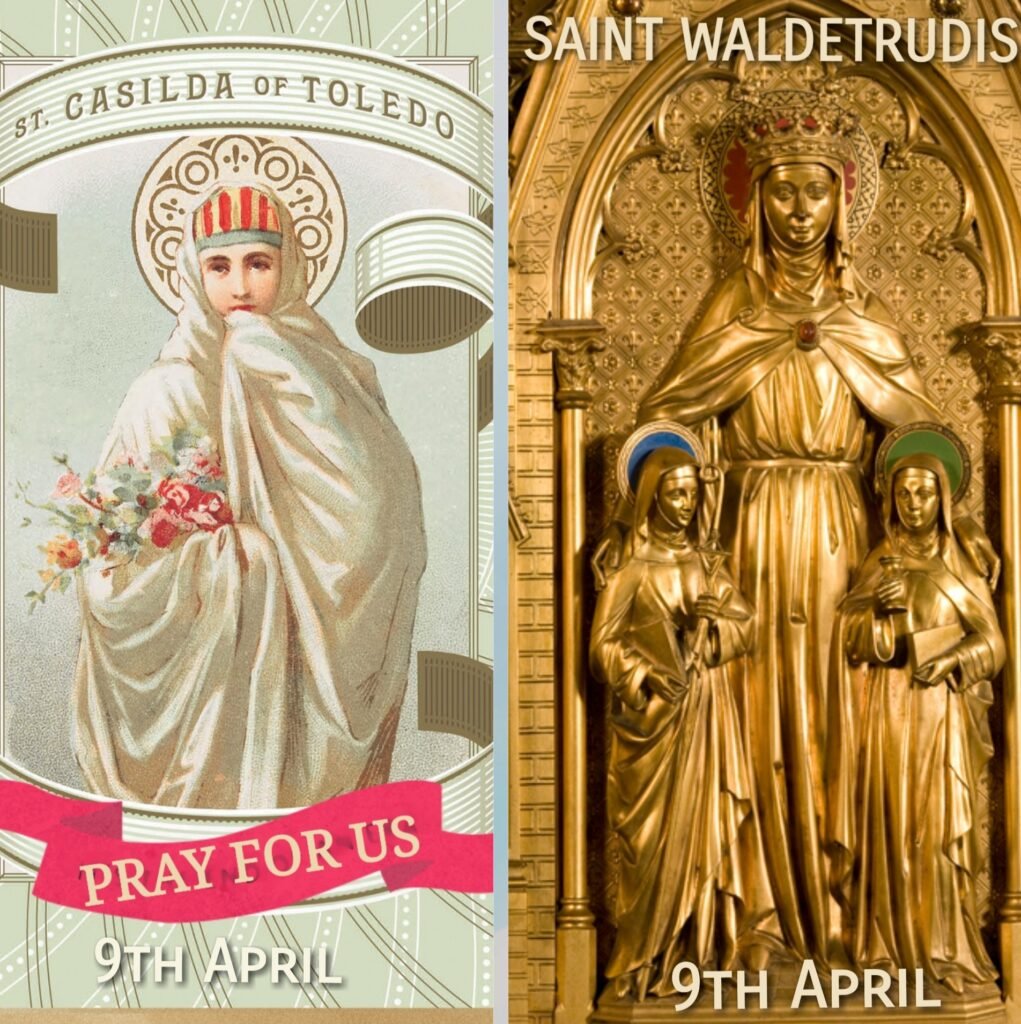
FEAST OF SAINTS CASILDA OF TOLEDO AND WALDETRUDIS OF BELGIUM
FEAST DAY – 9th APRIL
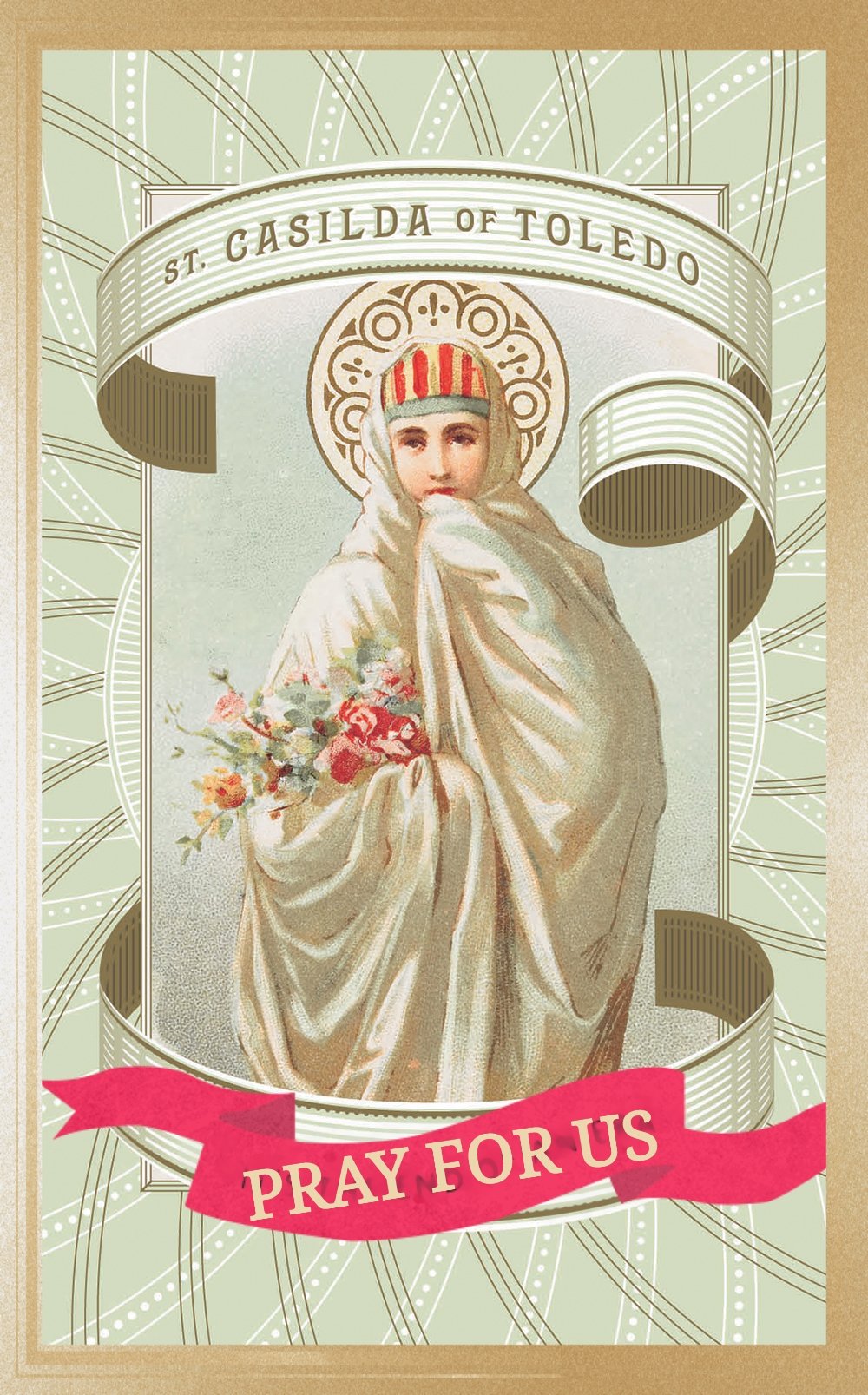
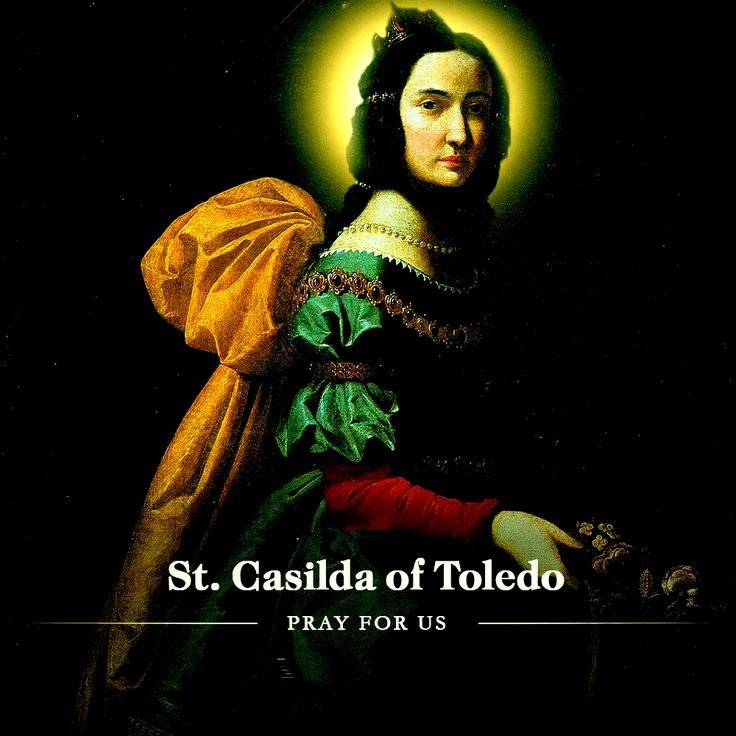
SAINT CASILDA OF TOLEDO (1007- 1107) is venerated as a saint of the Catholic Church and Eastern Orthodox Church. Casilda was a Muslim princess, the daughter of the ruler of Toledo. Like Elizabeth of Hungary and Elizabeth of Portugal, the Miracle of the roses was attached to her legend. While Casilda predated both Elizabeths, her hagiography was not written until three centuries after her death, and is likely influenced by the story of one of them.
Casilda, a daughter of a Muslim king of Toledo, Yahya ibn Ismail Al-Mamun, showed great compassion for Christian prisoners by frequently smuggling bread into the prison, in a basket concealed in her clothes, to feed them. Once when stopped by soldiers to ask what she was bringing to the prison, she replied ‘roses.’ When she showed the basket to the soldiers, it was full of roses, thus hiding her charitable mission.
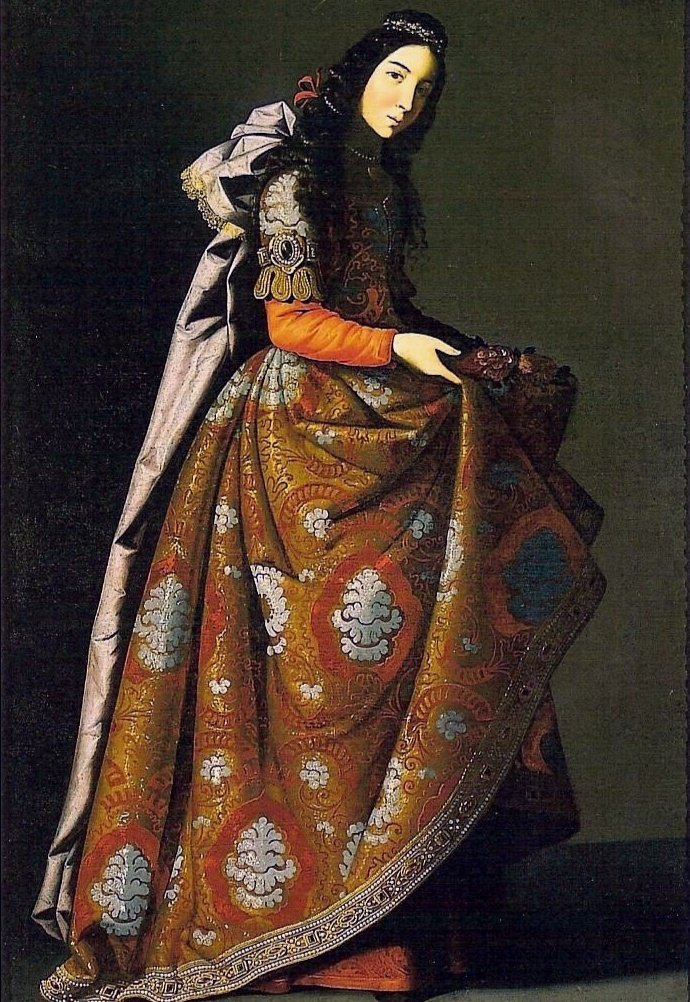
Casilda became ill, most likely with women’s health issues, and Muslim doctors had not been able to heal her. She travelled to the healing springs at San Vicente near the northern coast of Spain and was miraculously cured. Casilda then converted to Christianity and was baptized at Burgos. She returned to San Vicente and lived the rest of her life as a prayerful hermit, not far from the springs that healed her.
The later years of her life were spent in solitude, prayer and penance. It is said that she lived to be 100 years old, dying sometime around 1050. Saint Casilda’s feast day is April 9. She is the patron saint of infertile women and Muslim converts to Christianity.
PRAYER
Saint Casilda of Toledo, pray for us that we will find peace in our hearts helping all of God’s children regardless of their culture, religion or status. Amen
++++++++++++++++++++++++++++++++++
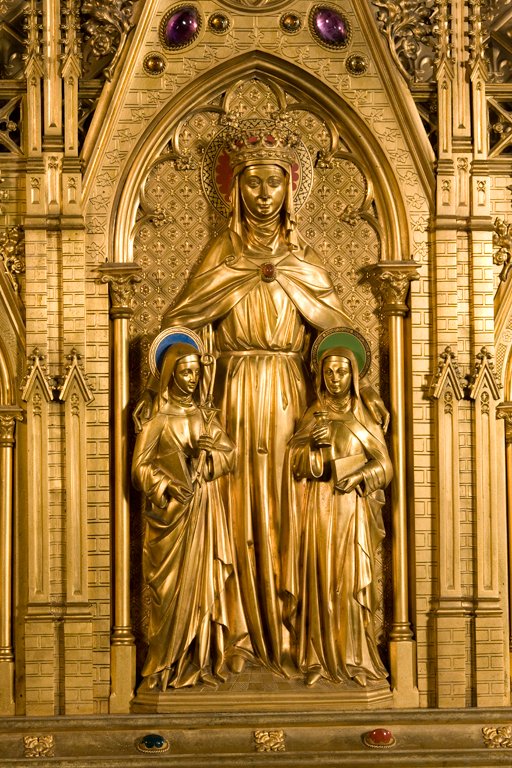
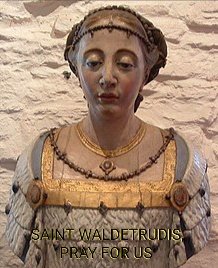
SAINT WALDETRUDIS, (died April 9, c. 688 AD), also known as Waltrude, was the daughter of Saints Walbert and Bertilia and sister of St. Aldegunus or Aldegonde, foundress of Maubeuge Abbey. Waltrude was born in Cousolre in northern France, to a wealthy and influential noble family. Waldetrudis grew up in a family of extraordinary holiness. Both parents, her sister, her husband, and their four children are all venerated as saints.
According to Alban Butler, she married Vincent Madelgarius. According to scholar John O’Hanlon, Madelgarius was originally from Ireland. He was the Count of Hainault. Waldetrudis became the mother of saints Aldetrude, Abbess of Maubeuge Abbey, Landericus or Landry of Paris, Bishop of Paris, Madalberta of Maubeuge, who succeeded Aldetrude as abbess of Mauberge, and Dentelin.
When her husband chose to become a monk about 643 in the monastery of Hautrnont, France, which he had founded, she herself became a nun in 656 and established a convent at Chateaulieu, around which grew up the town of Mons, Belgium.
She is the patron saint of Mons, Belgium, where she is known in French as Sainte Waudru, and of Herentals, Belgium, where she is known in Dutch as Sint-Waldetrudis or -Waltrudis. Both cities boast a large medieval church that bears her name.
Her biography celebrates her for the pious intention under vow to free captives. She arranged the ransom price [pretium], weighed out the silver. When the captives had been bought back with the ransom money out of her own purse, at her command they returned to their families and home. She lived a simple life of prayer in a very small, humble house and performed many works of mercy.
She was known for miracles of healing that happened through her intercession when she was alive and after her death. The shrine of Saint Waltrude is kept in the Saint Waltrude Collegiate Church in Mons. Each year, as part of the Ducasse de Mons festival, the shrine is placed on the car d’or, a gilded cart, and drawn by horses through the city streets.
Both her parents (Walbert and Bertille) and her sister (Aldegund) were canonized. Her four children were also declared saints (Landericus, Dentelin, Aldetrude, and Madelberte) and so was her husband (Madelgaire).
Source: catholic.org
CONTEMPLATING THE LIFE OF SAINT WALDETRUDIS
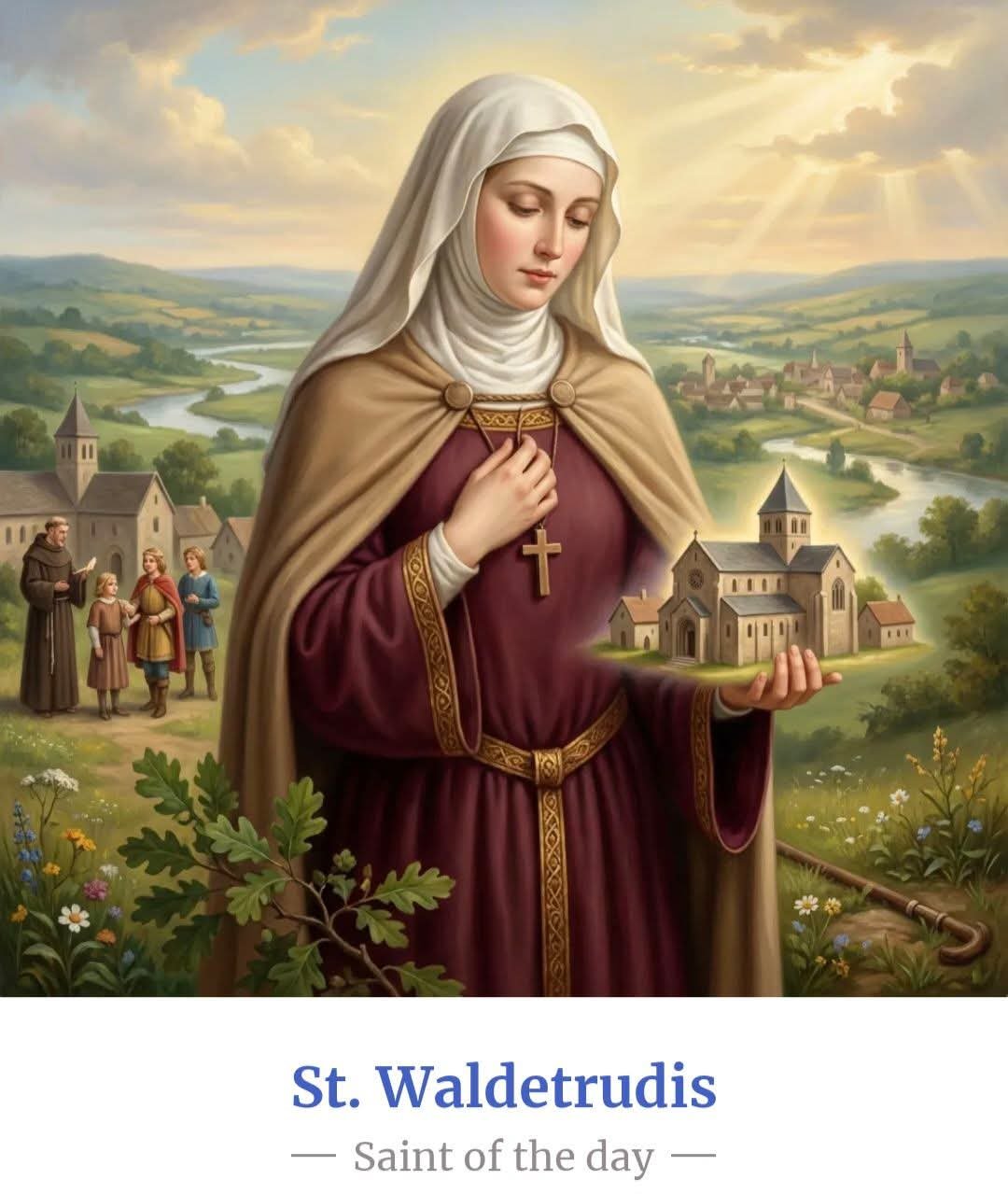
St. Waldetrudis, also spelled Waltrude, Waudru, or Waldetrude, is a remarkable early medieval saint whose life beautifully weaves together marriage, family, conversion, and consecrated life. She stands as a witness that holiness can flourish within family life and beyond it.
She was born around the year 612 in the region of present-day Belgium, in Hainaut, and died around 686. Her feast day is celebrated on April 9. She is venerated as a wife, mother, widow, and abbess, and she founded a monastery at Mons in Belgium.
A HOME THAT BECAME A PATH TO GOD
A HOUSE BUILT ON FAITH
In the quiet lands of early Christian Europe, where kingdoms were still forming and faith was still taking root, a noble household stood apart. It was not because of its wealth, but because of its spirit.
Waldetrudis lived there. She was born into privilege, surrounded by influence, and raised among people who could shape the world. Yet what marked her life was not power, but devotion. Her home was not simply a place of living. It was a place where God was remembered.
A MARRIAGE THAT POINTED BEYOND ITSELF
She married St. Vincent Madelgarius. Their life together was not extraordinary in the eyes of the world. They worked, raised children, and managed their responsibilities.
But beneath the ordinary was something deeper, a shared direction. Their love did not close in on itself, but opened outward toward God. Their home became a place where faith was lived, not just spoken. Slowly and quietly, that home began to form saints.
THE CHILDREN WHO WATCHED
Children learn more from what they see than what they hear. The children of Waldetrudis saw prayer woven into daily life, charity offered without hesitation, and faith lived without compromise. One by one, they grew not just in age, but in holiness. Some would become bishops, others abbesses, and all would become witnesses.
They had four children, traditionally all venerated as saints: St. Landry of Paris, St. Dentelin, St. Aldetrudis, and St. Madelberte. This is extraordinary. The home had become something more than a family, an entire household oriented toward God. It had become a school of sanctity.
WHEN LOVE CHANGES FORM
Years passed and the children grew. Then something unexpected unfolded. Her husband Vincent heard a deeper call and left to become a monk. This was not out of rejection, but out of response to God.
Waldetrudis remained for a time. She continued her life, her duties, and her prayer. But something had shifted. The love they once lived together was now drawing them both further toward God.
THE COURAGE TO LET GO
There comes a moment in every true vocation when holding on must give way to surrender. For Waldetrudis, that moment came quietly.
When her responsibilities were fulfilled and her children were grown, she followed the call. She left behind status, security, and familiar life, not because these were bad, but because God was asking for more. Her life did not end. It deepened.
A NEW FAMILY IS FORMED
She withdrew from the world, but not from love. At Mons, she began again, not as a noblewoman, but as a servant of God.
Women gathered around her and a community formed. Prayer became central, charity continued, and a new kind of family was born. It was not bound by blood, but by grace.
THE QUIET LEGACY
There were no great public speeches and no recorded writings, only a life lived faithfully through changing seasons.
Waldetrudis moved through it all as daughter, wife, mother, consecrated woman, and foundress. Each stage was complete and each stage surrendered.
A LIFE OF CHARITY AND PENANCE
Tradition describes her as deeply prayerful, generous to the poor, and committed to penance. She used her noble resources not for status, but for service.
SPIRITUAL SIGNIFICANCE
A SAINT OF FAMILY HOLINESS
She shows that the family can be a path to sanctity and not an obstacle.
A SAINT OF TRANSITION
Her life moves through stages such as marriage, parenthood, and consecrated life. Each stage became holy.
A SAINT OF LETTING GO
She teaches that even good things, like family life, can be surrendered to God when He calls.
KEY THEMES FROM HER LIFE
HOLINESS IN ORDINARY LIFE
Marriage and parenting can lead to sainthood.
SHARED SPIRITUAL JOURNEY
Her family moved together toward God.
DETACHMENT AND GROWTH
She let go progressively as God called her deeper.
LEGACY THROUGH FORMATION
Her greatest legacy was not buildings, but people.
DEATH AND VENERATION
When her life came to its end around the year 686, it left behind something greater than memory. It became a living witness that holiness is not confined to one path, but is found in every path that leads to God.
The city of Mons grew around her foundation and remains closely associated with her memory. She was venerated soon after her death.
PRAYER
St. Waldetrudis, you were the wife and mother who stood at the center of a family of saints. Your many works of mercy and your simplicity, draw us to you. Saint Waldetrudis, pray for us!