
FEAST OF SAINT MAGDALENE OF CANOSSA – 10th APRIL
April 10, 2026
Psalm 145: 18
April 10, 2026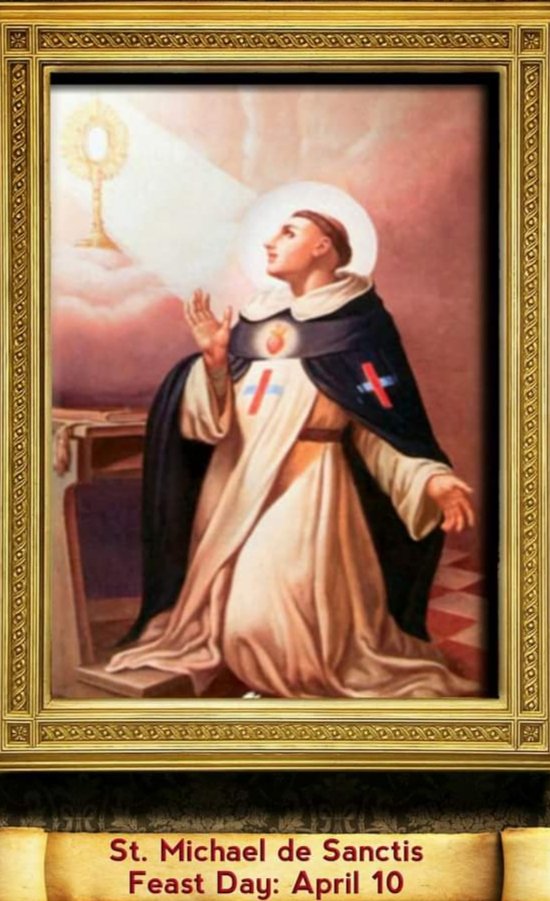
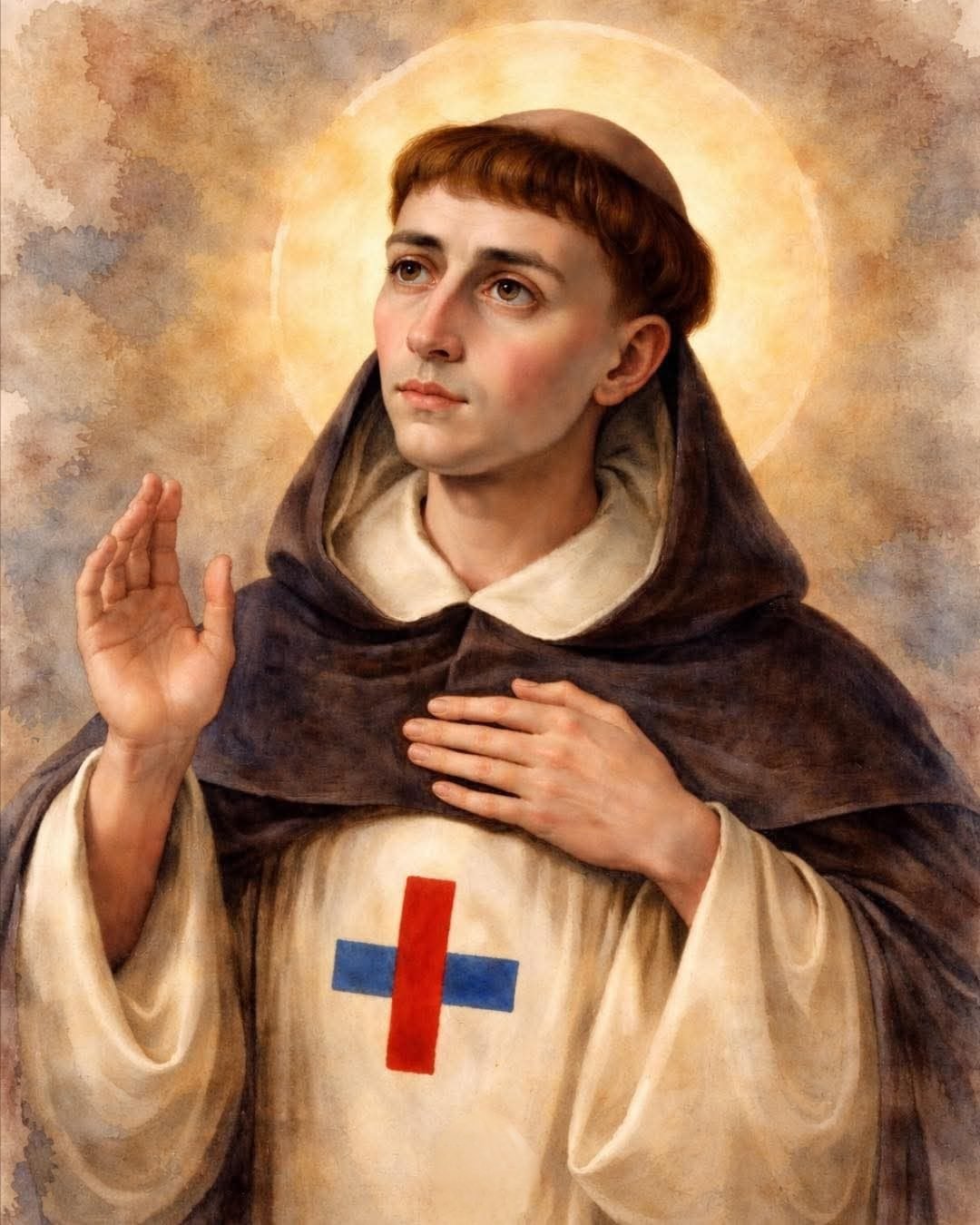
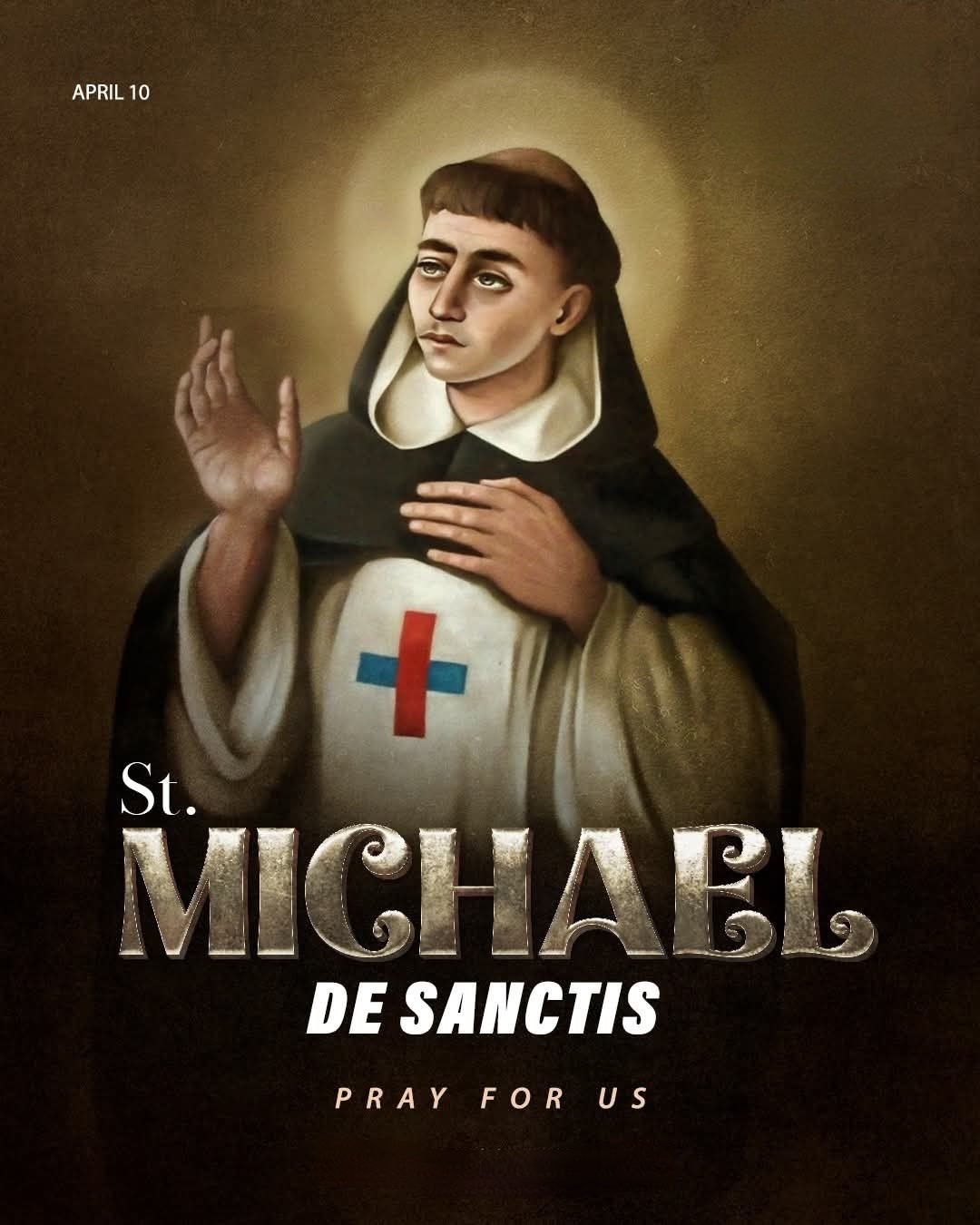
SAINT MICHAEL DE SANCTIS (MICHAEL OF THE SAINTS), PRIEST
FEAST DAY – 10 APRIL
Michael de Sanctis was born in Catalonia, Spain around 1591. At the age of six he informed his parents that he was going to be a monk. Moreover, he imitated St. Francis of Assisi to such a great extent that he had to be restrained. His confreres considered him to be a saint, especially because of his devotion to the Most Blessed Sacrament and his ecstasy during Mass. After his death at the age of thirty-five on April 10, 1625 many miracles were attributed to him. , St. Michael stands out as worthy of imitation as well as of the prayers of both young and old alike. His feast day is April 10.
Michael’s parents died when he was about ten years old. He then served as an apprentice with a local merchant. During this apprenticeship, he continued his fervent devotion to the Lord, especially to the Sacred Heart of Jesus. At the age of 12, he joined the Trinitarian Friars at Barcelona, taking his vows at St. Lambert’s monastery in Saragosa four years later.
Shortly afterwards, Michael expressed a desire to join the reformed group of Trinitarians and was given permission to do so. He went to the Novitiate at Madrid and, after studies at Seville and Salamanca, he was ordained a priest. Twice he served as Superior of the house in Valladolid. As Superior, Michael set a high standard of holiness for the order, focusing on prayer, penance, and mortification, as well as devotion to the Blessed Sacrament.
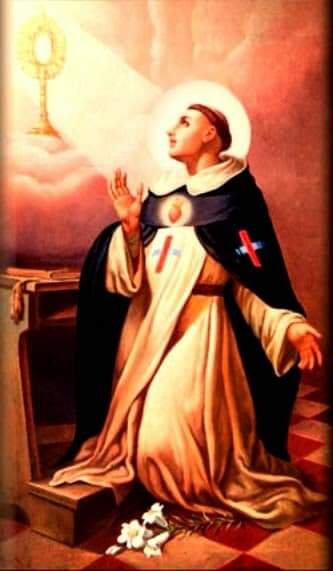
While he was still alive, he was viewed as a saint, due to his personal piety, leadership, devotion to the Blessed Sacrament, and the frequent ecstasies he experienced during the Consecration at Mass. Outside of the monastery, his preaching was known for its holiness, and the neighboring royal court called upon him for spiritual and pastoral counseling. His generous service to the poor and the sick made him a compassionate priest and a faithful friend.
Michael died on April 10, 1625, at the monastery in Valladolid, Spain at the age of 33. He was beatified by Pius VI in 1779 and canonized by Pius IX in 1862. Many miracles were attributed to him at his tomb following his death. He was known as one of the greatest apostles of the Trinitarian order in the 17th century, and is often called ‘the Ecstatic One.’
MIRACULOUS HEALING THROUGH HIS INTERCESSION
After eleven days of prayer, Frances Sanz was cured of cancer through his intercession. The cancerous tumors on her lips and tongue disappeared. No scars were left. Hers was one of many such cures and was presented as one of many miracles when Pius IX canonized Michael on June 8th 1862. He is patron for Cancer patients.

PRAYER FOR CANCER PATIENTS
Most Holy Trinity, You who gave us Saint Michael of the Saints as trusted friend and intercessor, and as patron of those afflicted with cancer, look with kindness on your servants who this day invoke your name. Through his intercession, comfort those in distress, confirm those in doubt. Satisfy their spiritual needs from the treasury of your grace. Remember all those who call on your help, but be especially solicitous of (mention name). Restore health to this person and all who are sick. Sanctify those who endure pain with Christ-like acceptance and grant to all of us a just reward in the life of glory to come. We make this prayer through Christ our Lord. Amen.
PRAYER
Lord, we remember those afflicted with cancer, look with kindness on your servants who this day invoke your name, comfort them in distress, confirm them in doubt. Satisfy their spiritual needs from the treasury of your grace. Restore health to this person and all who are sick. Sanctify them as they endure pain with Christ-like acceptance and grant to all of us a just reward in the life of glory to come. Amen
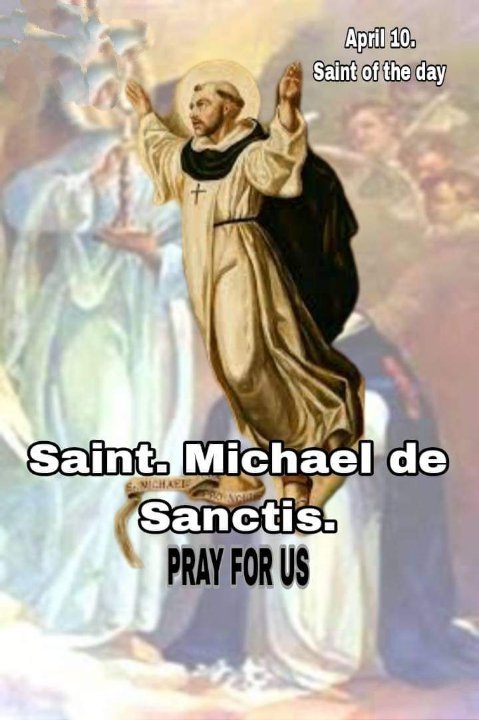
Saint Michael de Sanctis, model of humility, prayer, and devotion, help us to follow your example in our daily lives, that we may grow in holiness and love for God and others.
Grant us the strength to persevere in faith, the grace to live with humility, and the courage to serve those around us with love. May your prayers intercede for us, that we may be drawn closer to God and find peace in following His will.
Saint Michael de Sanctis, pray for us.
*****************************************************************************
ALSO CELEBRATED:
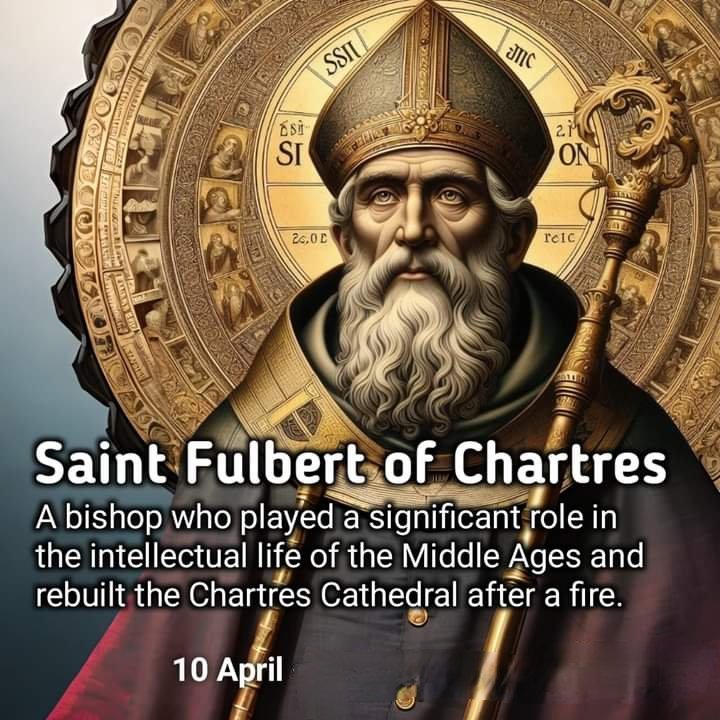
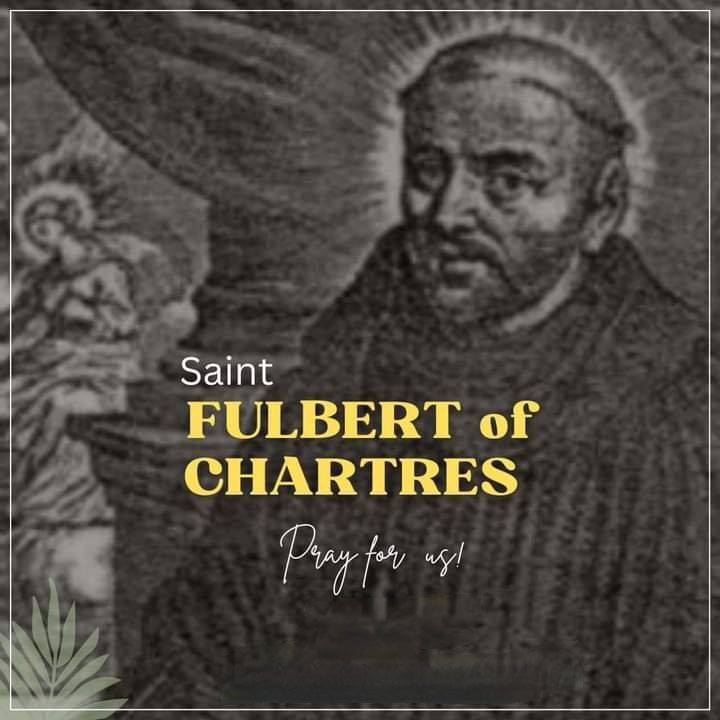
SAINT FULBERT OF CHARTRES
FEAST DAY – 10 APRIL
Fulbert of Chartres (French: Fulbert de Chartres; 952–970–10 April 1028) was the Bishop of Chartres from 1006 to 1028 and a teacher at the Cathedral school there. Fulbert was a pupil of Gerbert of Aurillac, who would later become Pope Sylvester II. He was responsible for the advancement of the Nativity of the Virgin’s feast day on September 8 and for one of the many reconstructions of the Chartres Cathedral. Most of the information available about him comes from letters he wrote to secular and religious figures between 1004 and 1028.
He was born in Italy in the 10th century and studied at Rheims, France, under the celebrated philosopher Gerbert, who later became Pope Sylvester II. Gerbert took Fulbert to Rome with him. After the Pope’s death, the bishop of Chartres made Fulbert the chancellor of the cathedral, and soon Chartres became one of the best learning centers in France.
Fulbert labored diligently and long and succeeded in making these schools the greatest educational center in France, frequented by students from Germany, Italy, and England. He was regarded as another Socrates and Plato, a bulwark against the rationalizing temper of his day.
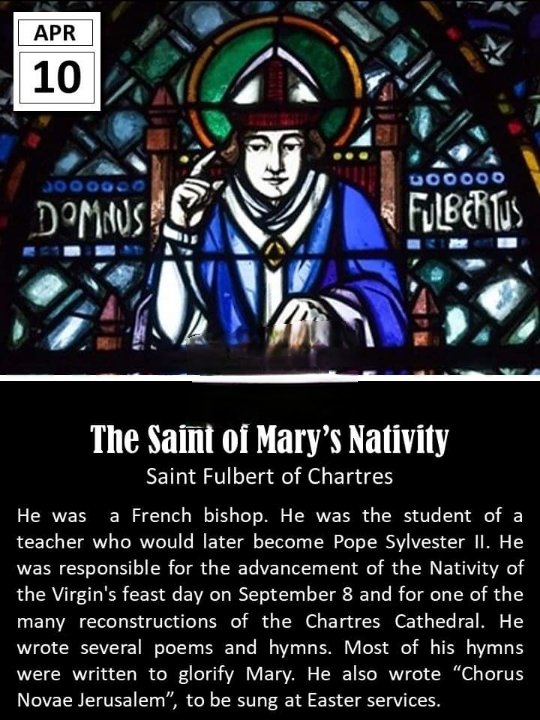
Later, Fulbert became Bishop of Chartres, despite his protestations of unworthiness. His influence was vast in this position, since he became the recognized oracle of the spiritual and temporal leaders of France in addition to maintaining control of the cathedral schools. Yet he never allowed external affairs to interfere with the task of caring for his diocese. He preached regularly at the cathedral and strove to spread instruction throughout his diocese.
This great Saint had a deep devotion to Mary and composed several hymns in her honor. He is also responsible for the beautiful Easter hymn, You Choirs of New Jerusalem. After an episcopate of nearly twenty-two years, St. Fulbert died on April 10, 1029.
CONTEMPLATING THE LIFE OF SAINT FULBERT OF CHARTRES
St. Fulbert is remembered as one of the great intellectual and pastoral figures of early medieval France. He was a bishop, teacher, and builder of Christian culture who stood at the meeting point of faith, learning, and leadership, helping to shape what would later become the flourishing of medieval schools and universities.
He was born around the middle of the tenth century, possibly in Italy or northern France, though the exact place is uncertain. He died in the year 1028. He served as Bishop of Chartres from the year 1006 until his death. His feast day is celebrated on April 10.
He lived during a time when Europe was emerging from instability, when learning was being rediscovered and organized, and when the Church played a central role in education.
REBUILDING MINDS, REBUILDING FAITH
A WORLD WAITING TO LEARN AGAIN
Europe was emerging from a period of shadow. The great structures of the past had crumbled, learning had faded, and stability was fragile. Yet beneath the surface there was a quiet stirring, a deep hunger and a renewed desire to understand.
Into this moment came Fulbert, not with armies or power, but with a mind awakened by truth and a heart rooted in God.
A SCHOLAR IN A TIME OF RENEWAL
Fulbert was formed in cathedral schools, possibly at Reims, and was shaped by the intellectual revival of the late tenth century. He became known for his mastery of Scripture, his knowledge of theology and classical learning, and his skill in teaching.
In time, he became the head of the Cathedral School of Chartres, one of the most important centers of learning in Europe.
THE TEACHER WHO SAW BEYOND BOOKS
Fulbert was not only a scholar but a listener. He listened to Scripture, to tradition, and to the questions of his time. Students gathered around him not because of fame, but because of his clarity and depth.
He taught them not only how to think but how to seek. His life seemed to express that truth is not something to possess but Someone to encounter. In his classroom, something new was taking shape, not merely knowledge, but true formation.
TEACHER OF A GENERATION
Fulbert’s school attracted students from across Europe, including future bishops and leaders. His approach to education emphasized the harmony of faith and reason, clarity of thought, and moral formation.
He did not simply teach subjects; he formed persons. Many of his letters remain, revealing his wisdom, his pastoral care, and his concern for both intellectual growth and virtuous living.
A SHEPHERD CALLED TO LEAD
In time, Fulbert was called from the classroom to serve the Church more directly. He became Bishop of Chartres and faced political tensions, social instability, and the need for spiritual renewal.
He served with prudence, compassion, and firmness. His questions were no longer only about understanding truth, but also about how to live it and how to guide others toward it. He wrote letters, advised leaders, corrected gently, and taught patiently, carrying not only ideas but people in his care.
WHEN THE FIRE CAME
A great fire destroyed the cathedral of Chartres, the heart of the city and the center of its faith. What remained were ashes, silence, and a deep sense of loss. For many, it seemed like the end.
But Fulbert looked at the ruins and saw not only what had been lost, but what could be rebuilt.
THE COURAGE TO BEGIN AGAIN
He did not rush and he did not give in to despair. Instead, he began again, patiently and steadily, rebuilding stone by stone and heart by heart.
He gathered people, inspired them, and led them not only to rebuild walls but to renew their faith. The cathedral rose again, becoming a sign that what is rooted in God can rise even after destruction.
This rebuilding became a powerful symbol of faith rising from ruin and laid the foundation for what would later become the famous Gothic Cathedral of Chartres.
A HEART TURNED TOWARD HEAVEN
At the center of Fulbert’s life was a deep and quiet devotion to Mary. In her he saw faith without confusion and surrender without fear. He encouraged others to turn to her not as someone distant, but as a loving guide.
Chartres became a place where hearts were lifted toward heaven, where learning and devotion met, and where the mind and soul found harmony. He promoted Marian theology and composed hymns and sermons in her honor, helping to make Chartres a major center of Marian devotion.
THE LEGACY THAT ENDURES
Fulbert did not build an empire, but something far more lasting. He formed students who would go on to teach others, established structures that endured beyond his lifetime, and shared a vision in which faith and reason walked together.
When he died, there was no great spectacle, only the quiet assurance that what he had rebuilt, both in stone and in souls, would continue to bear fruit.
PRAYER
God, Light and Shepherd of souls, You established St. Fulbert as Bishop in Your Church to feed flock by his word and form it by his example. Help us through his intercession to keep the Faith he thought by his word and follow the way he showed by his example. Amen