
SPIRITUAL INSIGHTS INTO THE LIFE OF SAINT HILARY OF ARLES
May 5, 2026
Acts 2: 38
May 6, 2026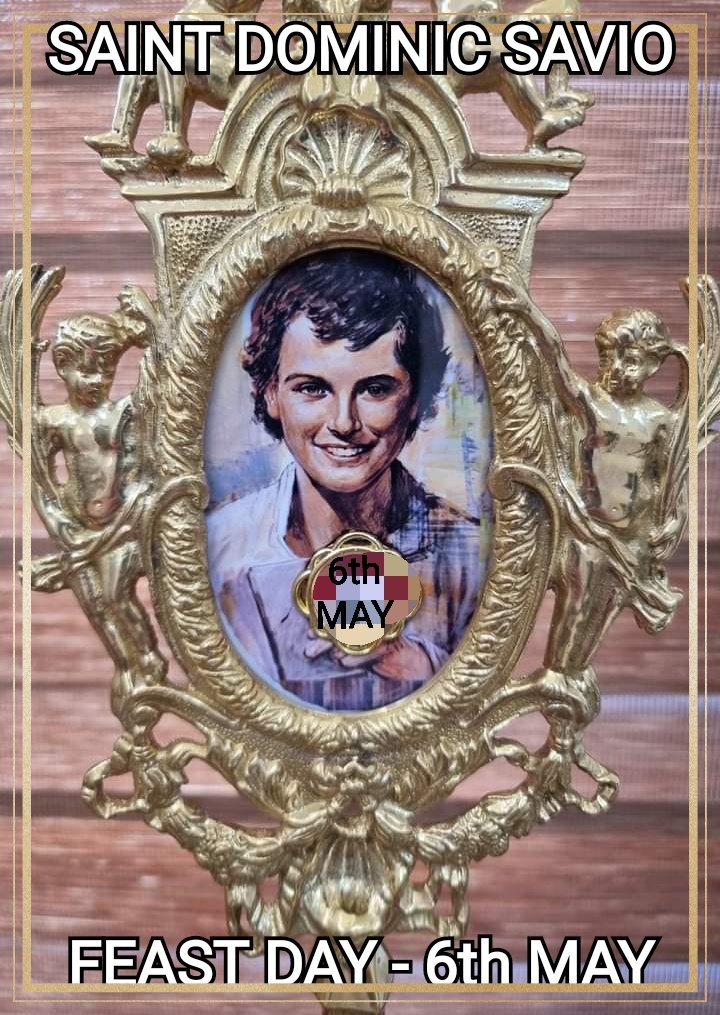
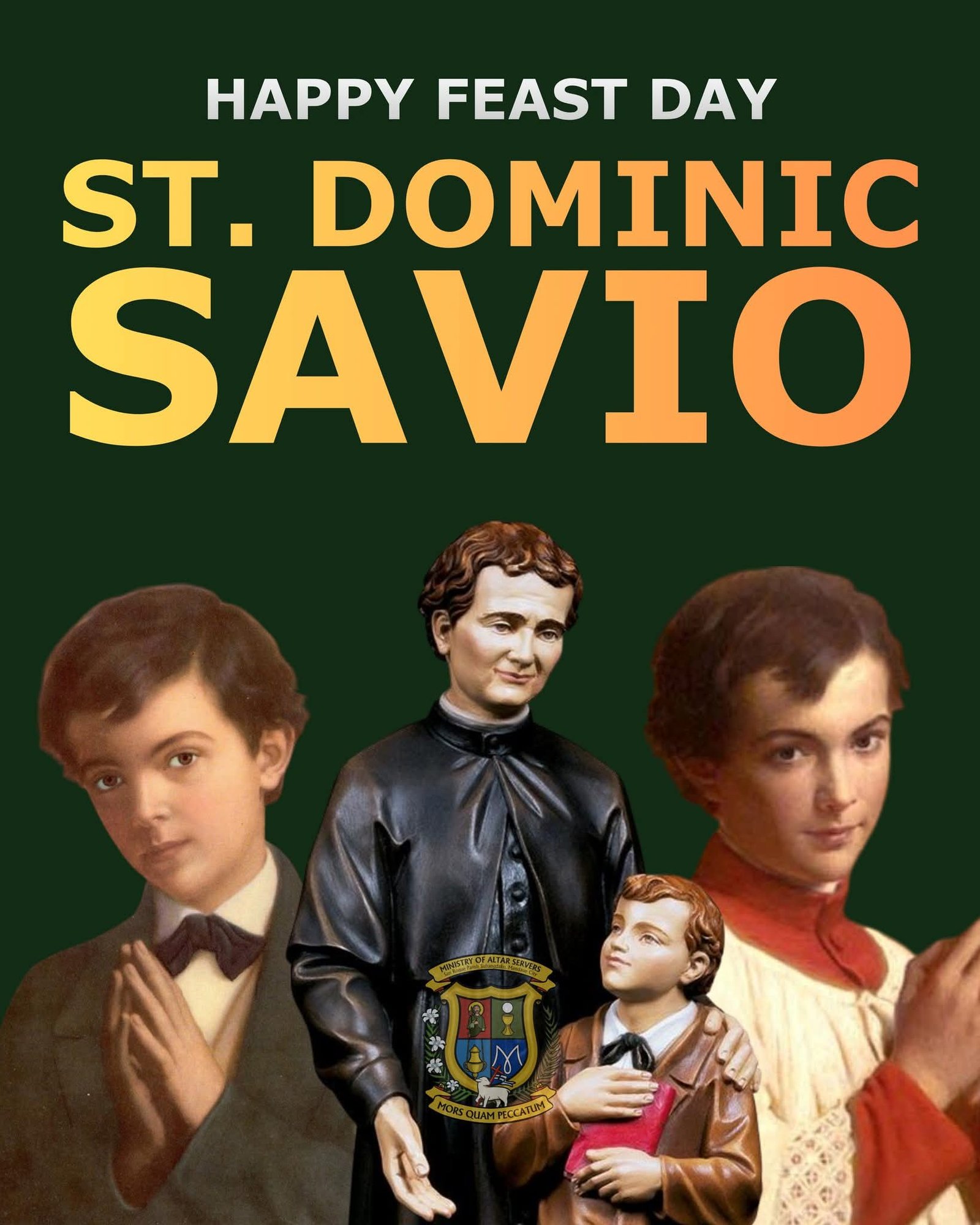
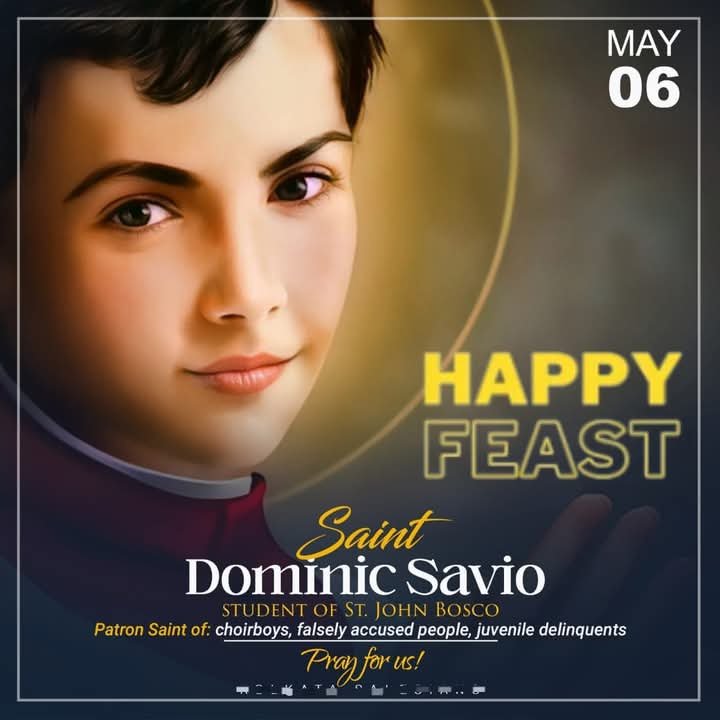
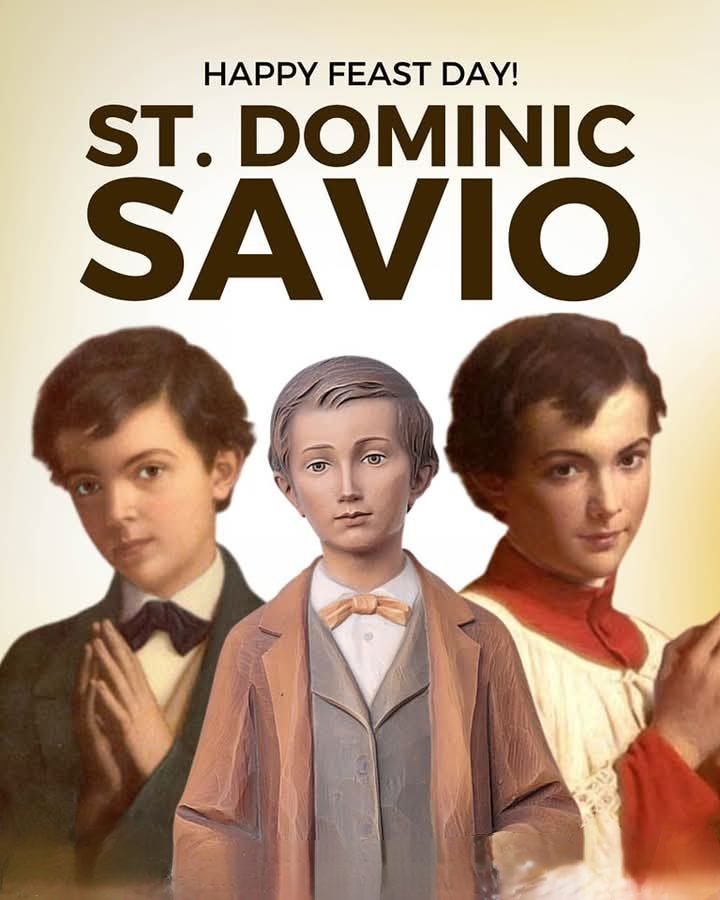
FEAST OF SAINT DOMINIC SAVIO
FEAST DAY – 6th MAY
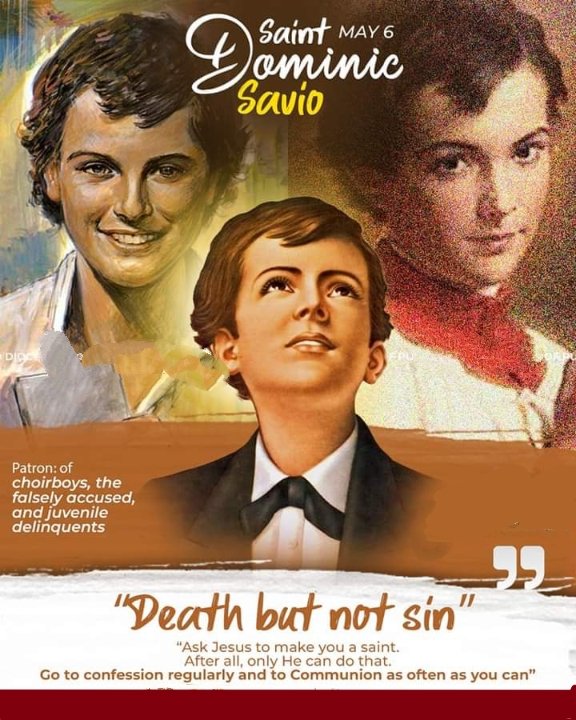
Dominic Savio (Italian: Domenico Savio; 2 April 1842 – 9 March 1857) was an Italian student of Saint John Bosco. He was studying to be a priest when he became ill and died at the age of 14. He was noted for his piety and devotion.
On April 2, 1842, in the village of Mondonioin, Italy, Dominic was born, a weak and frail baby, in a poor blacksmith’s family. The father rushed him to Church for baptism, fearing that his baby would not survive for long. Although he suffered poor health, the baby did survive and was filled with the love of God.
He was born in the village of Riva in northern Italy. His father was a blacksmith and his mother a seamstress. He had nine brothers and sisters. His family was poor but hardworking. They were devout and pious Catholics.
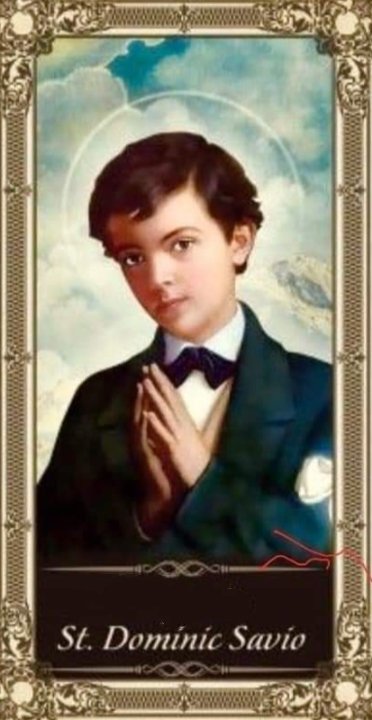 When he was just two years old, Dominic’s family returned to their native village of Castlenuovo d’Asti, (Today, Castlenuovo Don Bosco) near the birthplace of John Bosco. Bosco would himself later be canonized as a Saint by the Church and became a major influence on the life of Dominic.
As a small child, Dominic loved the Lord and His Church. He was very devout in practicing his Catholic faith. For example, he said grace before every meal and refused to eat with those who did not. He was always quick to encourage others to pray.

Dominic attended Church regularly with his mother and was often seen kneeling before the Tabernacle in prayer. He even prayed outside the Church building. It did not matter to Dominic if the ground was covered with mud or snow, he knelt and prayed anyway.
Dominic was quickly recognized as an exceptional student who studied hard and performed well in school. He became an altar server. He also attended daily Mass and went to confession regularly. He asked to receive his first communion at the age of seven. This was not the practice in the Church of Italy at the time.
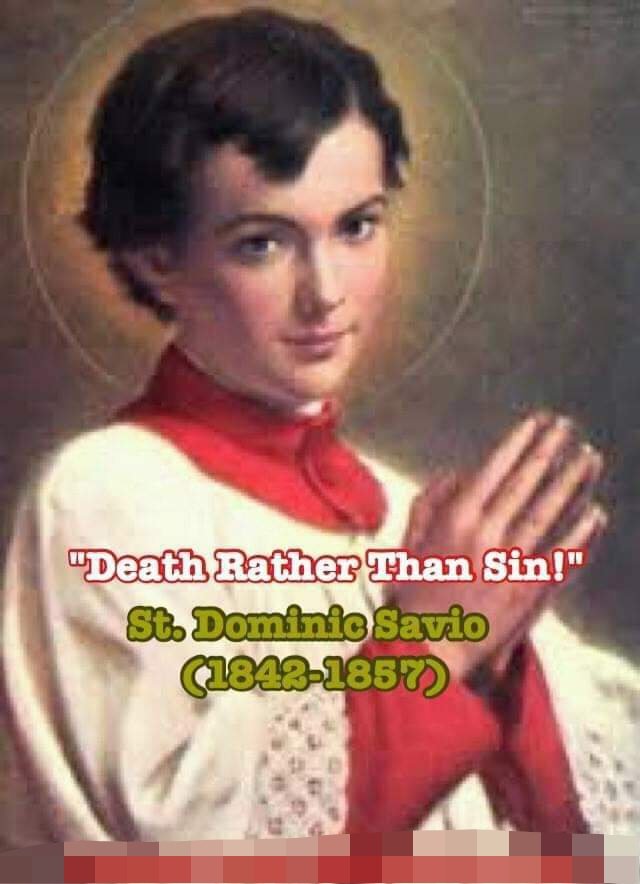
Normally, children received their first holy communion at the age of twelve. Dominic’s priest was so impressed with his intelligence concerning the faith, his love for the Lord and his piety that he made an exception. Dominic said that the day of his First Communion was the happiest day of his life.
On the Day he received his first communion, Dominic wrote four promises in a little diary. Dominic loved the Holy Eucharist. Rain or snow, he would attend Mass. His four promises were:
1) I will go to Confession and receive the
Holy Eucharist as often as I am allowed.
2) I will try to give Sundays and holy days completely to the Lord.
3) My best friends will be Jesus and Mary.
4) Death rather than sin.
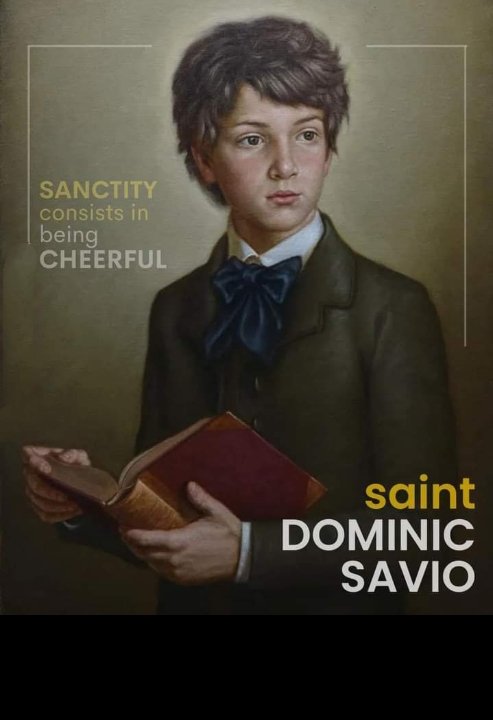
The Parish Priest saw the young boy was deeply virtuous, so Dominic was allowed to receive his First Holy Communion at the age of seven. At the age of twelve, Dominic was sent by his Parish Priest to a school run by Don Bosco. This holy priest quickly recognised his saintly virtues and good behaviour.
“I can’t do big things but I want everything to be for the glory of God,” said Dominic. So, he made small sacrifices for God; never complaining about the weather or food, doing little odd jobs for the other students, and faithfully guarded himself from sin. Dominic gained the love and respect of all the boys and the priests as well.
 One day two boys were fighting with stones. Dominic held up a Crucifix and said “Throw your first stone at me.” One of the boys said, “But Dominic, you have never hurt me and you are my friend.” “You will not hurt me, a poor human, but will you, by your actions, hurt Jesus Christ who is also God?” asked Dominic. The boys hung their heads in shame and dropped their stones.
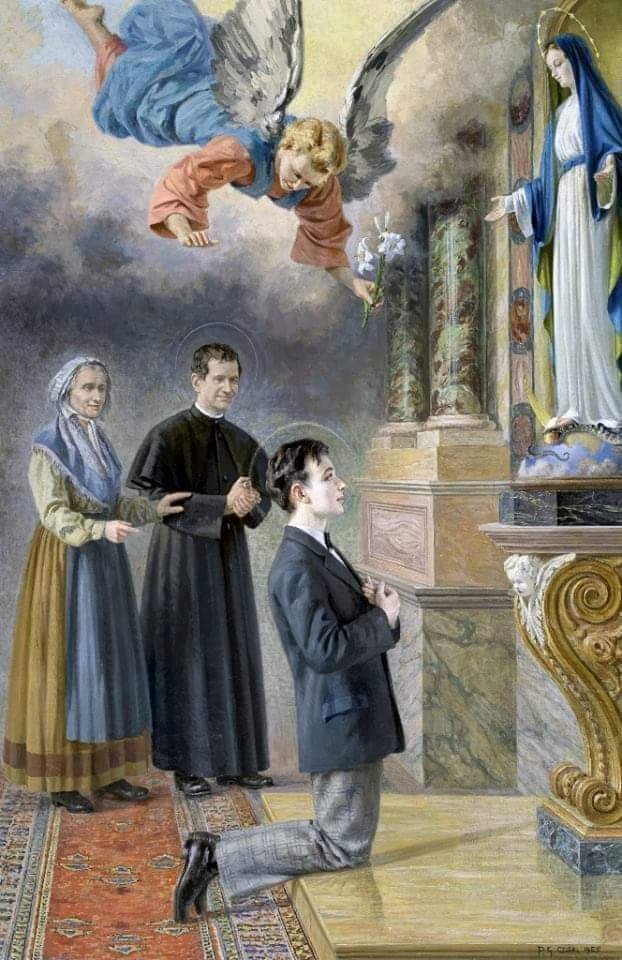
The young Dominic graduated to secondary school and walked three miles to school each day. He undertook this chore gladly. While walking to school on a hot day a farmer asked why he wasn’t yet tired. Dominic cheerfully replied, “Nothing seems tiresome or painful when you are working for a master who pays well.”
Although he was young, Dominic was clearly different than his peers. When two boys stuffed a school heating stove with snow and rubbish, the boys who were known troublemakers and were likely to face expulsion if caught, blamed Dominic for the misdeed. Dominic did not deny the accusation and he was scolded before the class.
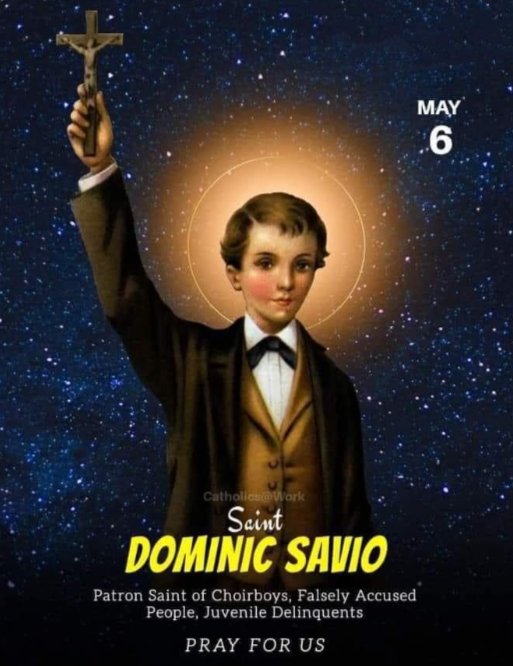
However, a day later the teacher learned the truth. He asked Dominic why he did not defend himself while being scolded for something he did not do. Dominic mentioned he was imitating Jesus who remained silent when unjustly accused.
Dominic’s teacher spoke well of him and brought him to the attention of Fr. John Bosco, who was renowned for looking after hundreds of boys, many of them orphaned and poor. In October 1854, Dominic was personally introduced to Fr. Bosco – along with his father.
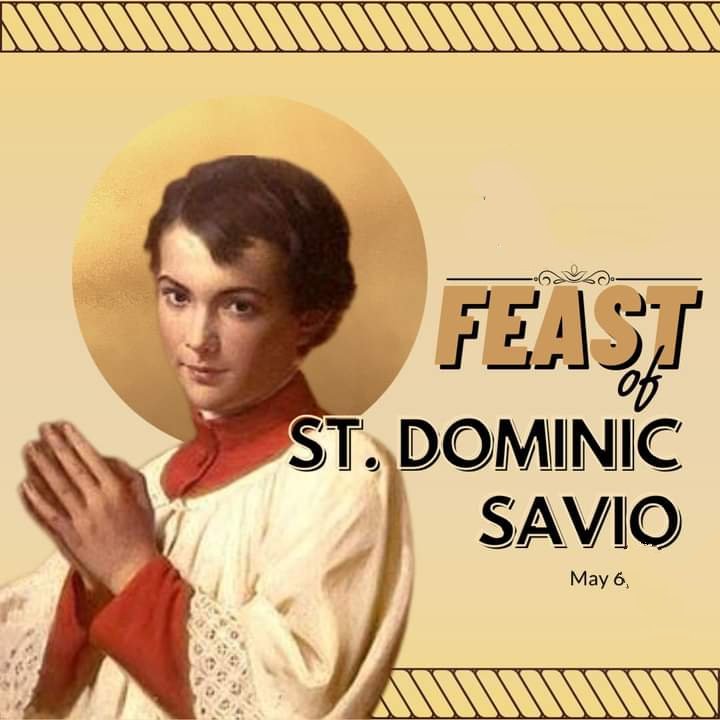 Bosco wanted to test Dominic’s intelligence and understanding of the Catholic faith. He gave Dominic a copy of The Catholic Readings, a pamphlet that dealt with apologetics. He expected Dominic to provide a report the next day, but ten minutes later Dominic recited the text and provided a full explanation of its significance. This solidified Bosco’s high opinion of Dominic.
Dominic expressed an interest in becoming a priest and asked to go to Turin to attend the Oratory of St. Francis de Sales. Fr. Bosco agreed to take him. At the Oratory, Dominic studied directly under Fr. Bosco. He worked diligently and always asked questions when he did not understand something.
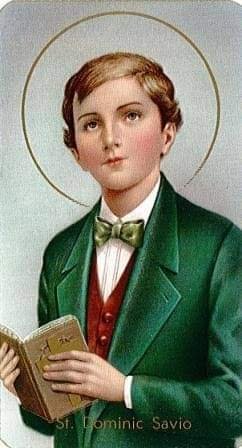
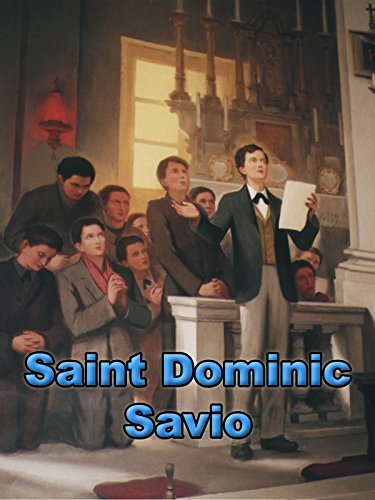
He renewed his First Communion promises that he wrote in his little book at the age of seven. After six months at the Oratory, Dominic delivered a speech on the path to sainthood. In his speech, he made three outstanding points; it is God’s will that we ALL become saints, it is easy to become a saint, and there are great rewards in heaven for saints.
Dominic’s desire to become a saint troubled him however. He wondered how someone as young as he, could become a saint. In his zeal, he tried voluntary mortification and other voluntary penances, hoping that they would help him grow closer to Jesus and help him to be less concerned with his own needs. He made his bed uncomfortable and wore thin clothes in winter.

When Fr. Bosco observed these practices, he corrected Dominic. He explained that as a child, what he should do instead was to devote himself to his studies and to be cheerful. He discouraged Dominic from any more physical penances. Dominic’s happy demeanor quickly returned.
At the same time as Dominic was developing his reputation as a fantastic student, his health began to fail. He started to lose his appetite and Fr. Bosco became concerned. Dominic was taken to the doctor who recommended that he be sent home to his family to recover.
Dominic always reminded his classmates to go to Confession. He would not allow them to swear or curse while playing. Often he would invite them to make visits to the Blessed Sacrament or pray the Holy Rosary with him. At the age of just 15, Dominic contracted tuberculosis.
Dominic wanted to stay at the oratory, but Fr. Bosco insisted he go home. Everybody expected Dominic to recover, except for Dominic himself who insisted he was dying. Before he departed, Dominic made the Exercise of a Happy Death and predicted this would be his final devotion.
After four days at home, Dominic’s health worsened. The doctor ordered him to bed to rest. He then performed bloodletting, which was still performed at that time. Over the next four days, Dominic was bled ten times before the doctor was satisfied he would recover.
But Dominic was sure of his impending death. He implored his parents to bring the parish priest so he could make a last confession. They obliged him and Dominic made a confession and was given the Anointing of the Sick. He asked his father to read him the prayers for the Exercise of a Happy Death.
Then he fell asleep. Hours later he awoke and said to his father radiantly, “Goodbye, Dad, goodbye … Oh what wonderful things I see!” Dominic fell asleep and died within minutes. It was March 9, 1857 and Dominic was merely 14 year of age. His father wrote to Fr. Bocso, to report the sad news.
Fr. Bosco was powerfully touched by Dominic and he wrote a biography, “The Life of Dominic Savio.” The biography quickly became popular and would eventually be read in schools across Italy. As people learned about Dominic, they called for his canonization. He was declared a saint in 1954.
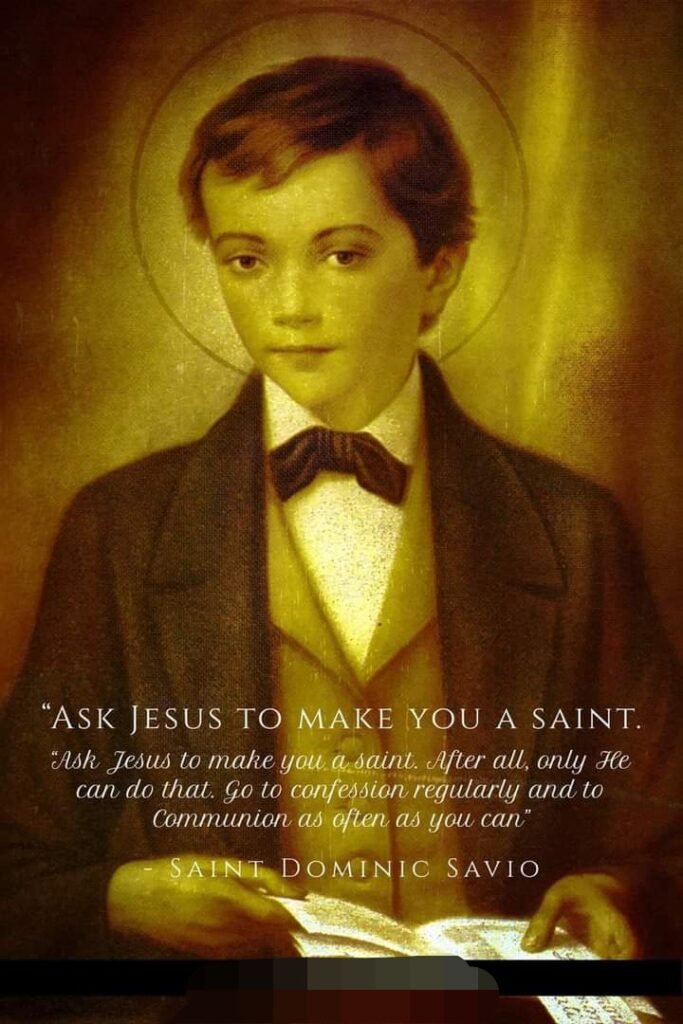
Detractors argued that Dominic was too young to be canonized and pointed out that he was not a martyr. However, Pope Pius X disagreed and opened his cause for canonization. Dominic Savio was declared venerable in 1933 by Pope Pius XI, beatified in 1950, then canonized in 1954 by Pope Pius XII.
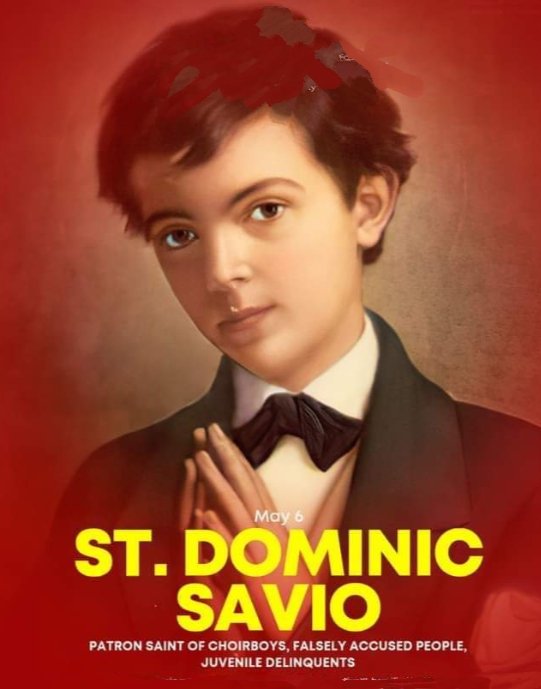
Saint Dominic is the patron saint of choirboys, the falsely accused, and juvenile delinquents. His feast day is May 6, moved from March 9. Many schools and institutions dedicated to boys are dedicated to him.
CONTEMPLATING THE LIFE OF SAINT DOMINIC SAVIO
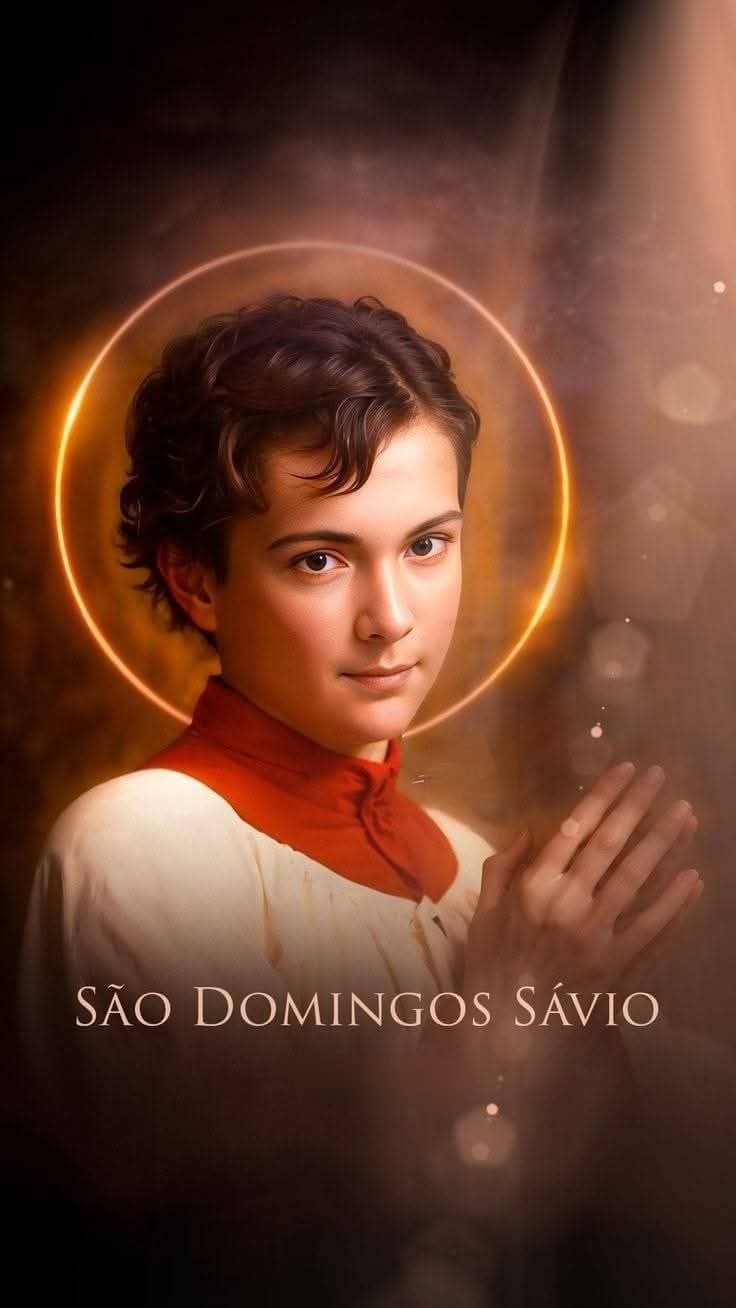
HISTORICAL IDENTITY AND BACKGROUND
Saint Dominic Savio was one of the youngest non-martyr saints of the Catholic Church. Born in nineteenth-century Italy to simple and devout parents, he grew up in an atmosphere of faith and humility. From an early age, he showed a quiet joy and a deep sincerity in his relationship with God.
THE BOY WHO TOOK GOD SERIOUSLY
Dominic appeared like any other child. He played, studied, and lived an ordinary life. Yet within him was a steady and mature awareness of God. His life revealed that holiness can grow quietly within the simplicity of daily living.
A CHILD WHO KNEW WHAT MATTERED
At his First Communion, Dominic made firm resolutions in his heart. He chose to remain close to God through the sacraments, to keep the Lord’s Day holy, and to love Jesus and Mary deeply. His striking resolve to choose death rather than sin reflected not drama, but a clear and sincere love for God.
THE MEETING THAT CHANGED EVERYTHING
Dominic’s life took a decisive turn when he met Saint John Bosco. When he asked how to become a saint, he received a simple answer: be cheerful, do your duties well, and help others. This guidance shaped the path he would follow.
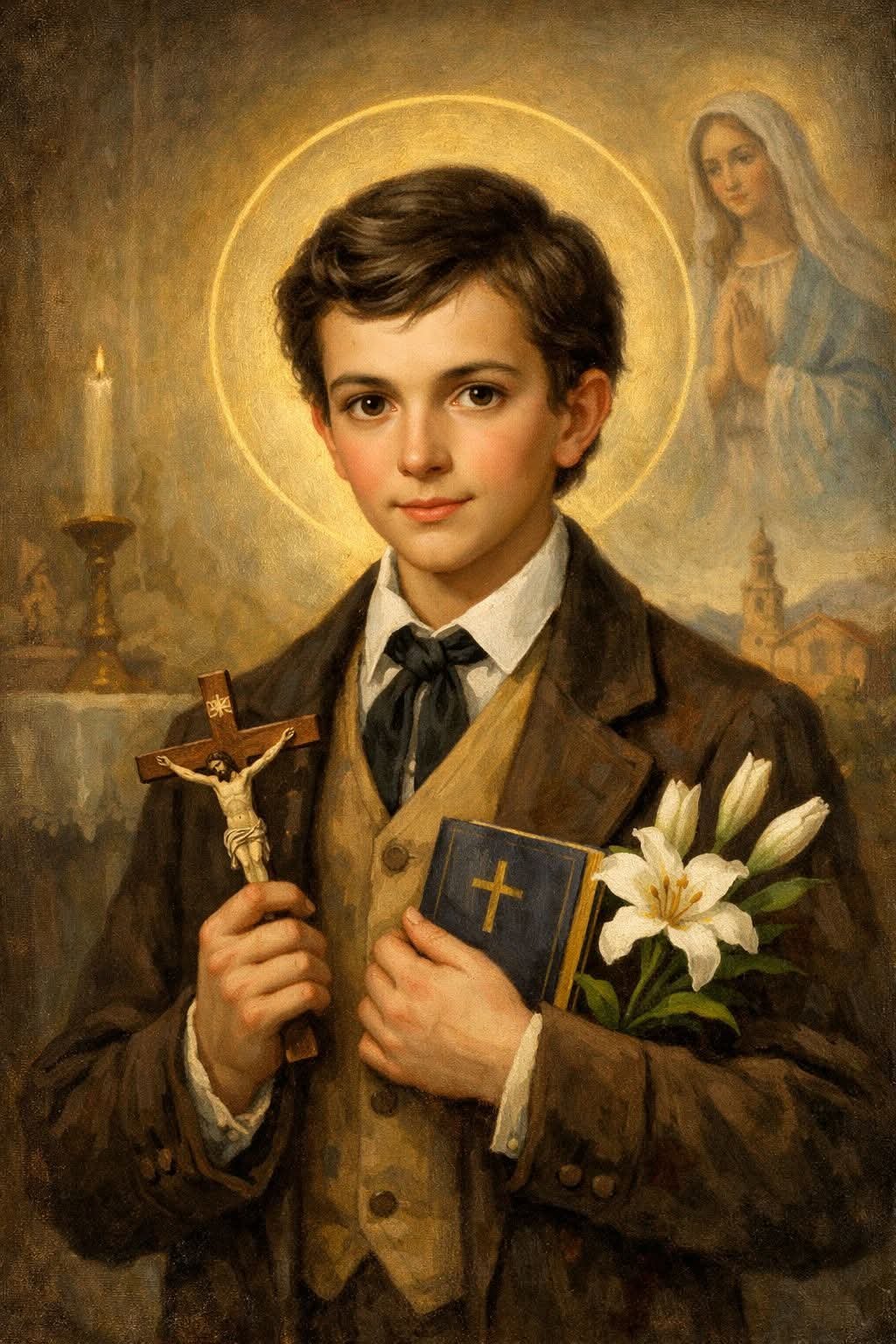
LEARNING A DIFFERENT KIND OF HOLINESS
At the Oratory in Turin, Dominic embraced a full and active life. Initially drawn to strict penance, he was gently guided by Don Bosco to live holiness through obedience and joy. He learned that sanctity is found in doing ordinary things with love and integrity.
THE BOY WHO CHANGED THE ROOM
Dominic influenced others not through words, but through presence. He brought peace where there was conflict and encouraged goodness through simple, sincere actions. His authenticity quietly transformed the atmosphere around him.
A LEADER WITHOUT POWER
He formed a small group called the Company of the Immaculate, where young people encouraged one another in goodness. There was no ambition for recognition, only a shared desire to grow closer to God together.
THE DEPTH BENEATH THE SIMPLICITY
Behind his cheerful nature was a deep spiritual life. Dominic loved the Eucharist and spoke to God with simplicity and closeness. Under Don Bosco’s guidance, he remained balanced, avoiding extremes and growing steadily in humility.
A LIFE THAT BURNED BRIEFLY BUT FULLY
Illness came early and gradually weakened him. Though his life was short and without outward achievements, it was already filled with meaning and grace.
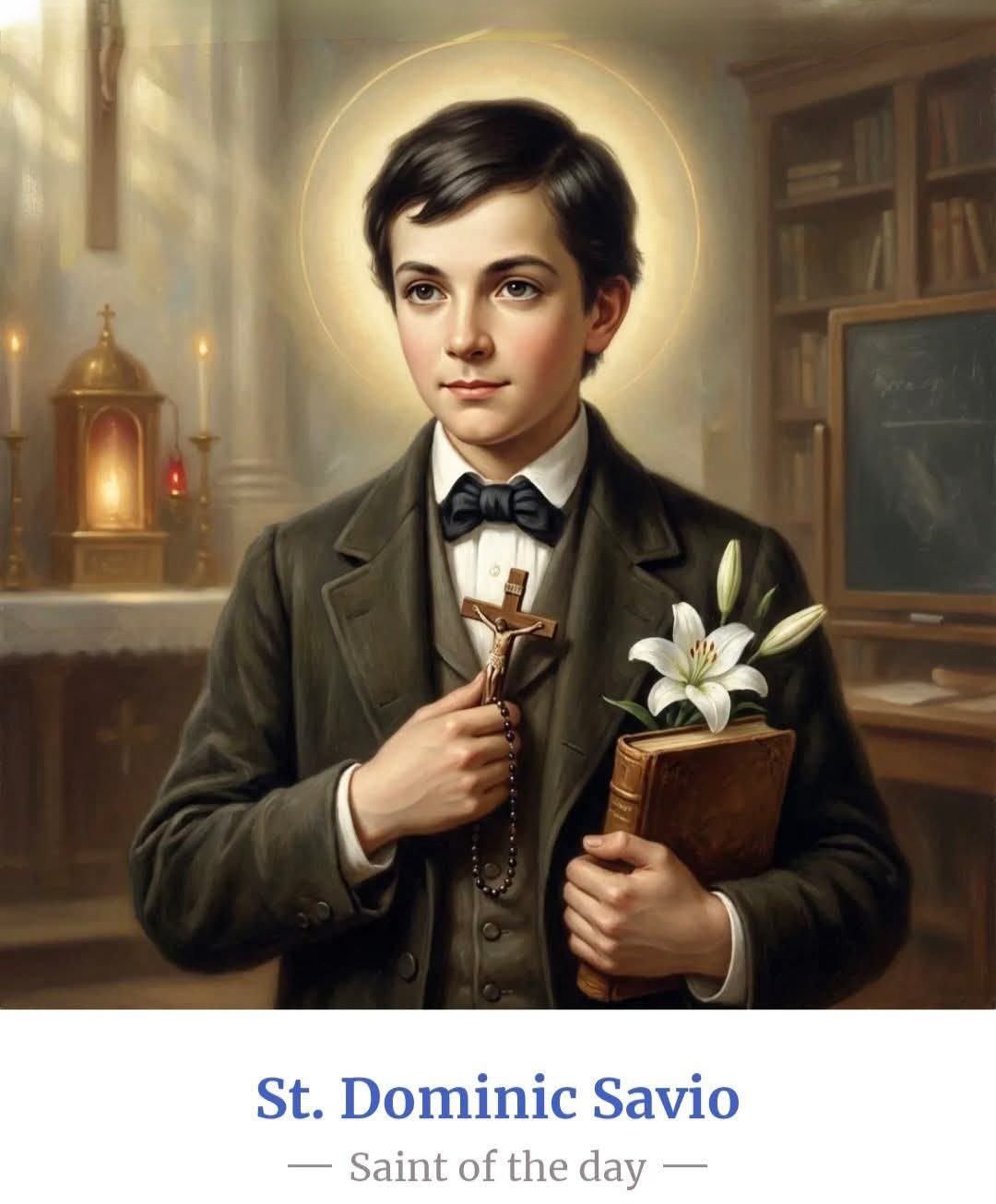
THE FINAL MOMENT
As he approached death, Dominic expressed not fear but wonder, speaking of the beauty he beheld. He died at the age of fourteen, completing a life rich in faith and love.
CANONIZATION AND RECOGNITION
Dominic Savio was later recognized by the Church as a saint, showing that holiness is not limited by age but is open to all who respond to God’s grace.
PATRONAGE AND INFLUENCE
He is remembered as a patron of youth, students, and those in need of guidance. His life continues to inspire especially in the formation of young people.
SPIRITUAL THEMES AND CHARACTERISTICS
Dominic’s life reflects joyful holiness, disciplined love, purity of heart, and the power of friendship as a path to God. He showed that true influence comes from living what is good with sincerity.
THE HIDDEN WORK OF A SPIRITUAL FATHER
Behind Dominic stood the steady guidance of Saint John Bosco, who recognized and nurtured his inner desire for holiness. He directed Dominic toward balance, joy, and growth in the ordinary. His role was not to create sanctity, but to guide and protect it.
A BRIEF NARRATIVE REFLECTION
Dominic was not known for great achievements or dramatic acts. He was a boy who lived simply, yet chose to take God seriously in every moment. In doing so, he showed that true greatness is often quiet and formed through repeated choices for what is right.
A CONTEMPLATIVE CLOSING
Dominic Savio’s life was simple, joyful, and complete. He chose, again and again, to live faithfully in the ordinary. His life leaves a lasting question: what might unfold if we too chose, even now, to live our daily lives with sincere and extraordinary faith.
 PRAYER TO ST. DOMINIC SAVIO
O Saint Dominic Savio, you who learned at the school of St. John Bosco to pass in holiness all the days of your youth, help us to imitate you in your love for Jesus, your devotion to Mary, and your zeal for souls.
Pray that we, too, by resolving to die rather than sin, may obtain our eternal salvation. Amen
St. Dominic Savio, pray for us.
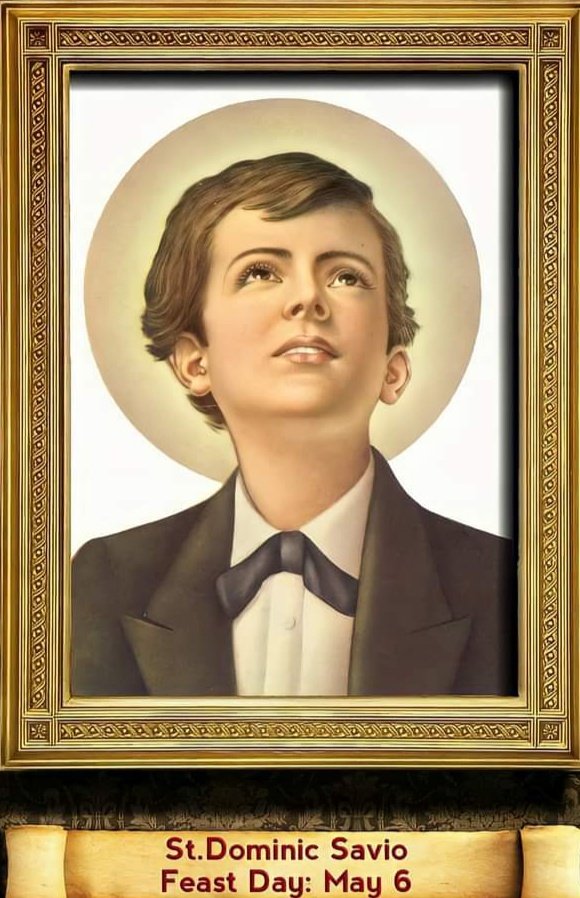
O Saint Dominic Savio, who, faithful to your heroic resolution: “Death rather than sin,” preserved unspotted your angelic purity, obtain for us the grace to imitate you in fleeing from all dangerous amusements and occasions of sin, and thereby cherish unceasingly that same beautiful virtue. Amen
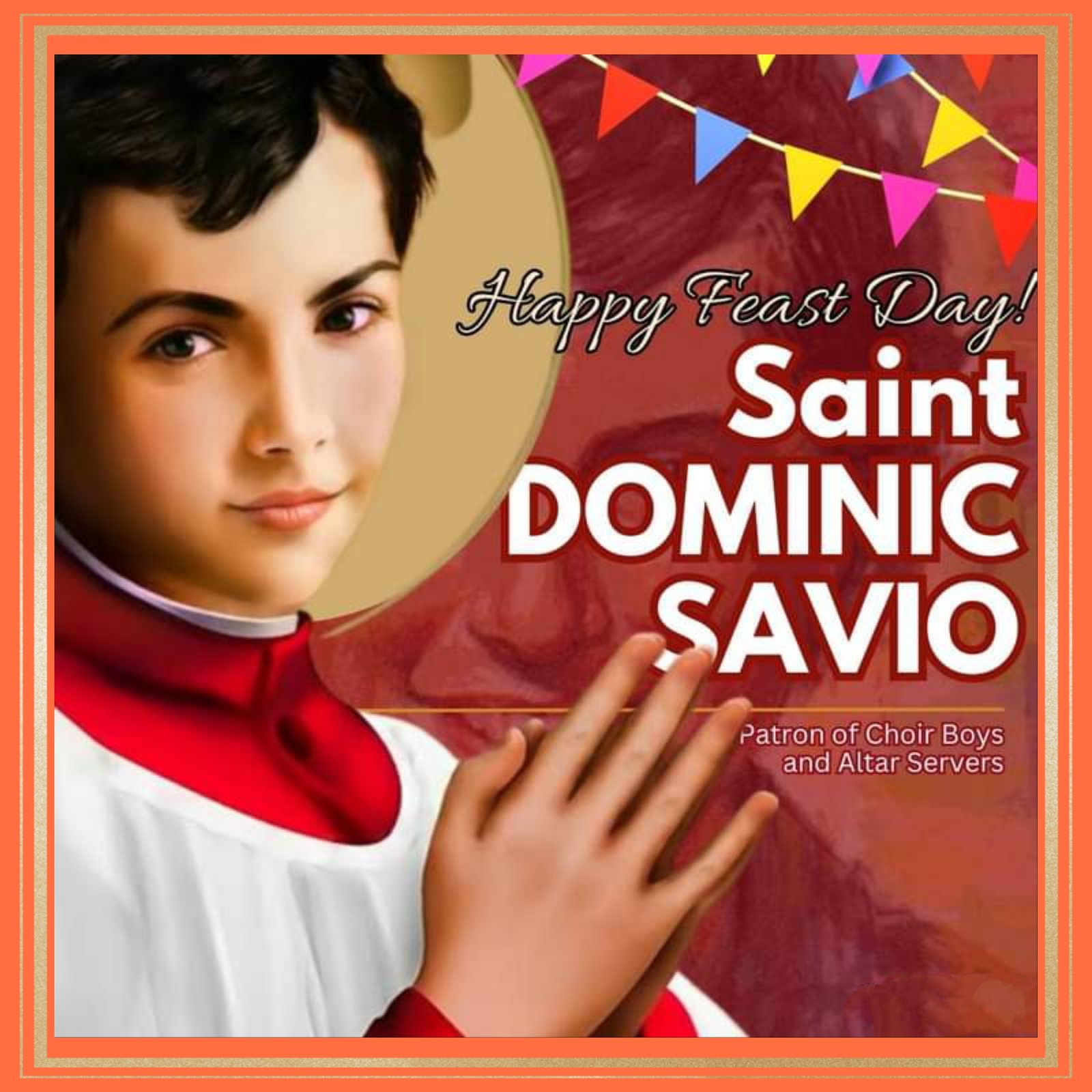
HAPPY FEAST TO YOU ALL!