
SPIRITUAL INSIGHTS INTO THE LIFE OF SAINT PAUL VI
May 29, 2026
Isaiah 1: 17
May 30, 2026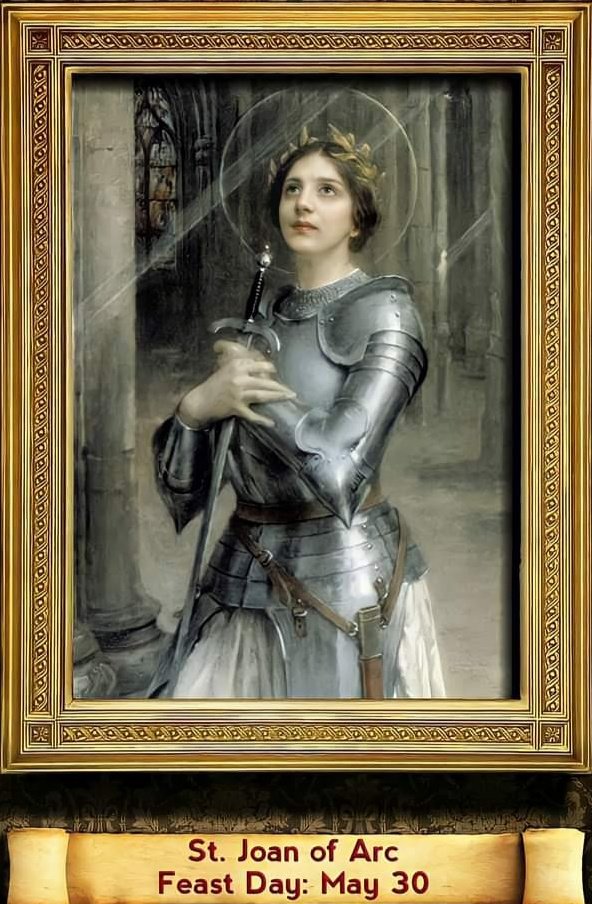
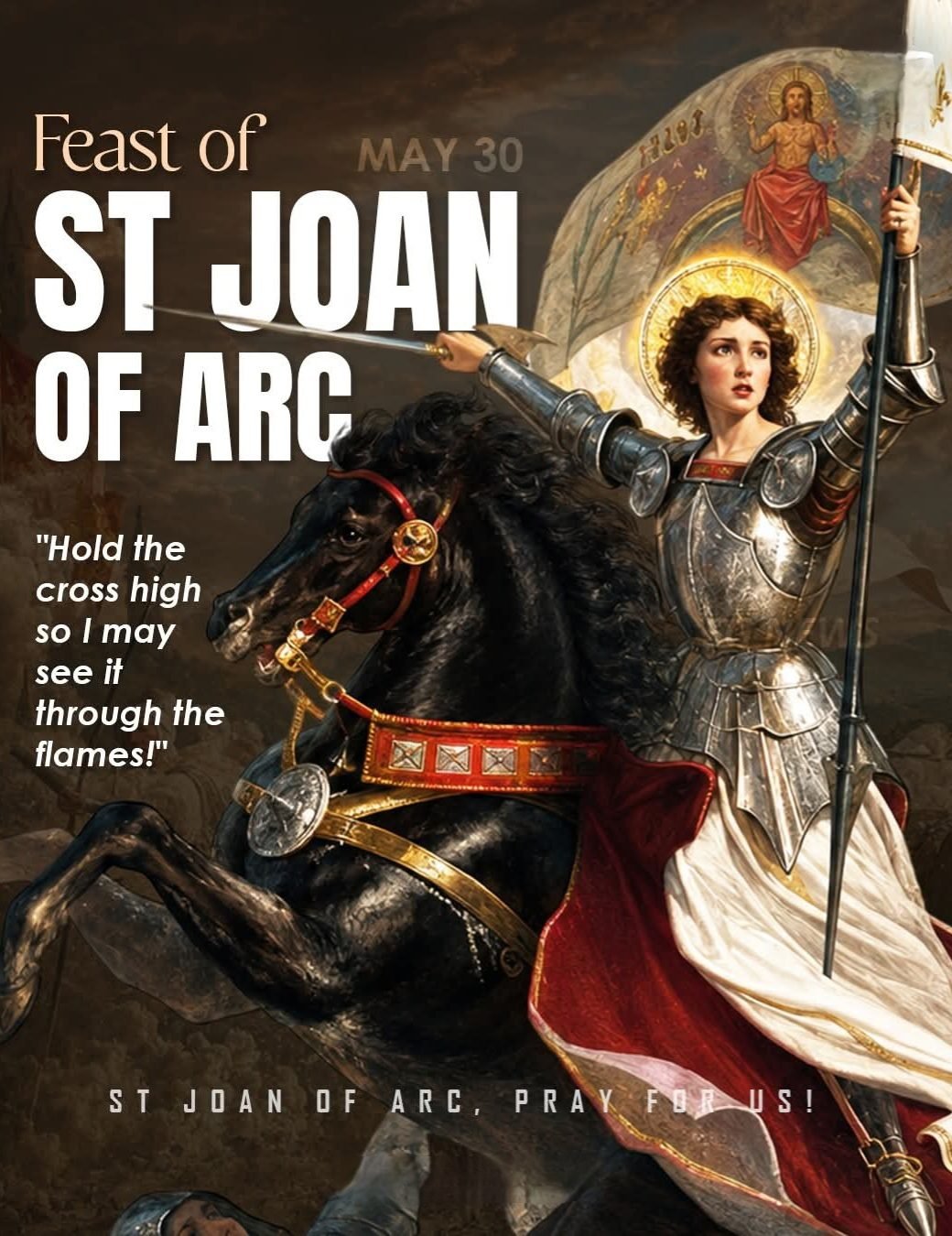
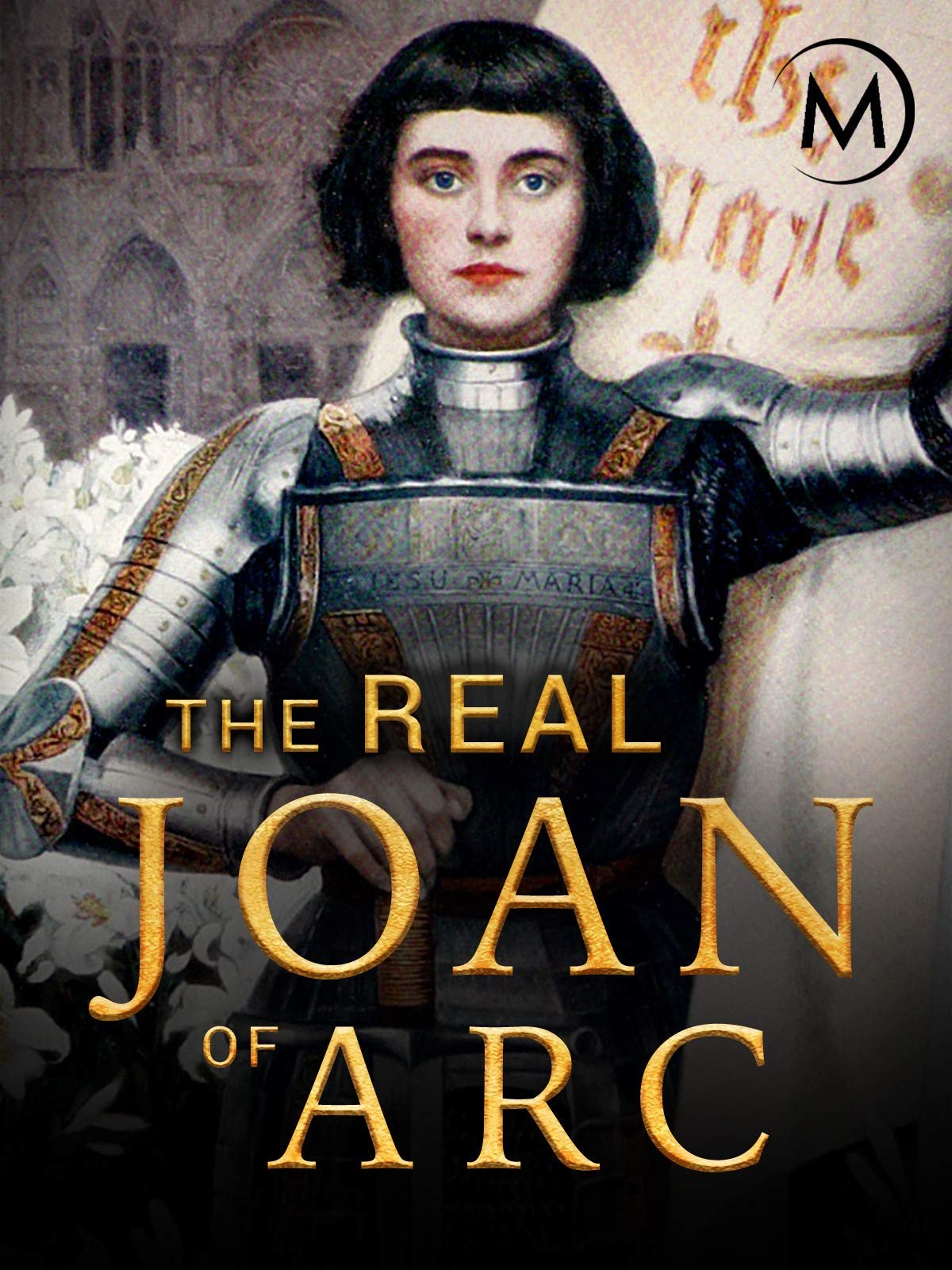
FEAST OF SAINT JOAN OF ARC
FEAST DAY – 30th MAY
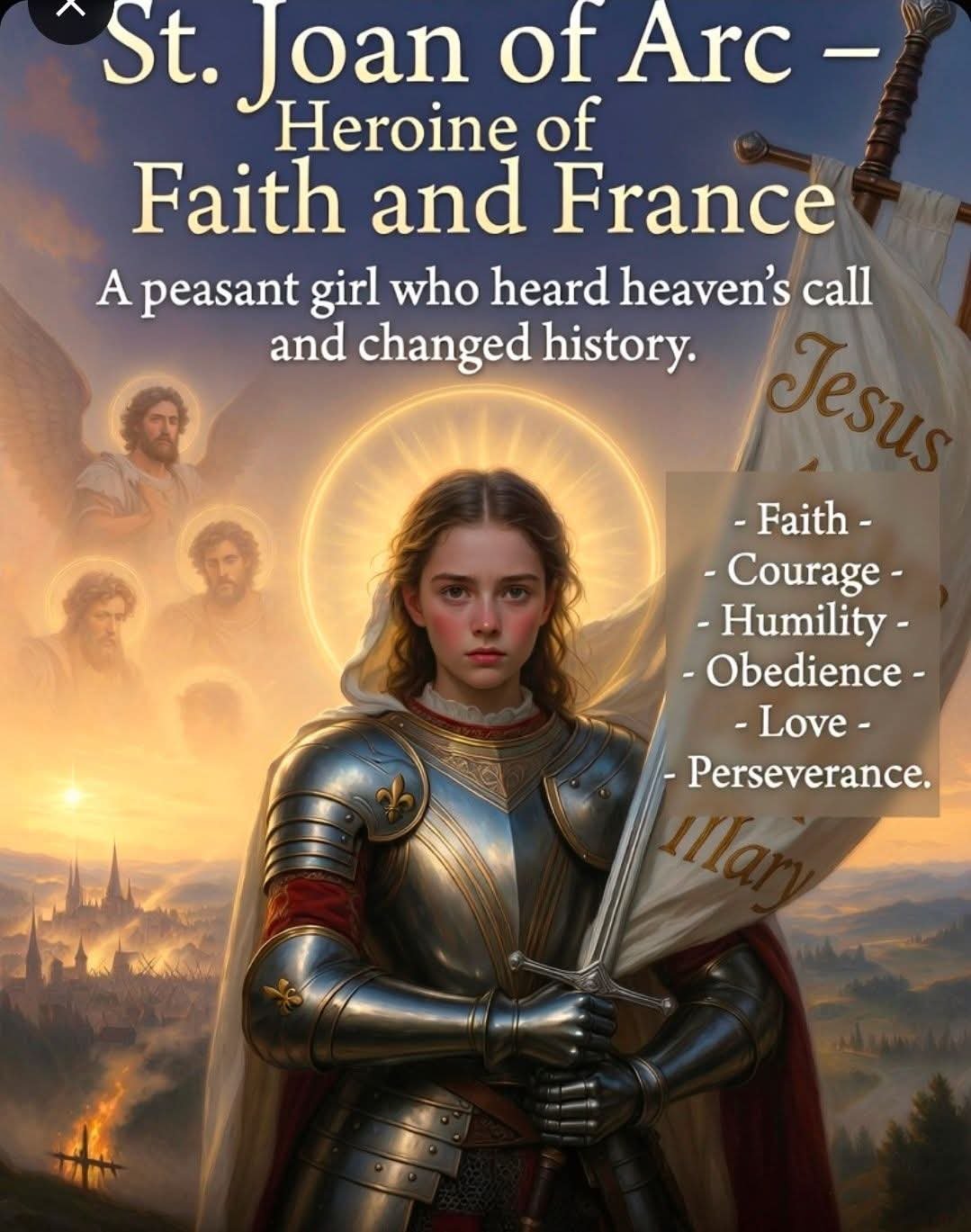
Joan of Arc (1412 – 30 May 1431) is considered a heroine of France for her role in the siege of Orléans and the coronation of Charles VII of France during the Hundred Years’ War against England. After successfully leading several French military actions, she was captured, handed over to English authorities, convicted as a heretic, and burnt at the stake in 1431.
Fifteen years later, her conviction was formally overturned due to her “unjust and deceitful” trial. Nearly 500 years after her death, she was canonized as a saint by the Roman Catholic Church. St. Joan of Arc, whose feast day is May 30, inspired the French in battle against the English in the 15th century and was subsequently executed as a heretic.
Hundreds of years later, she inspires more questions than nearly any saint in history. Books about her fill shelves, and perhaps more films tell her story than that of any other saint. She continues to fascinate and captivate the popular imagination.

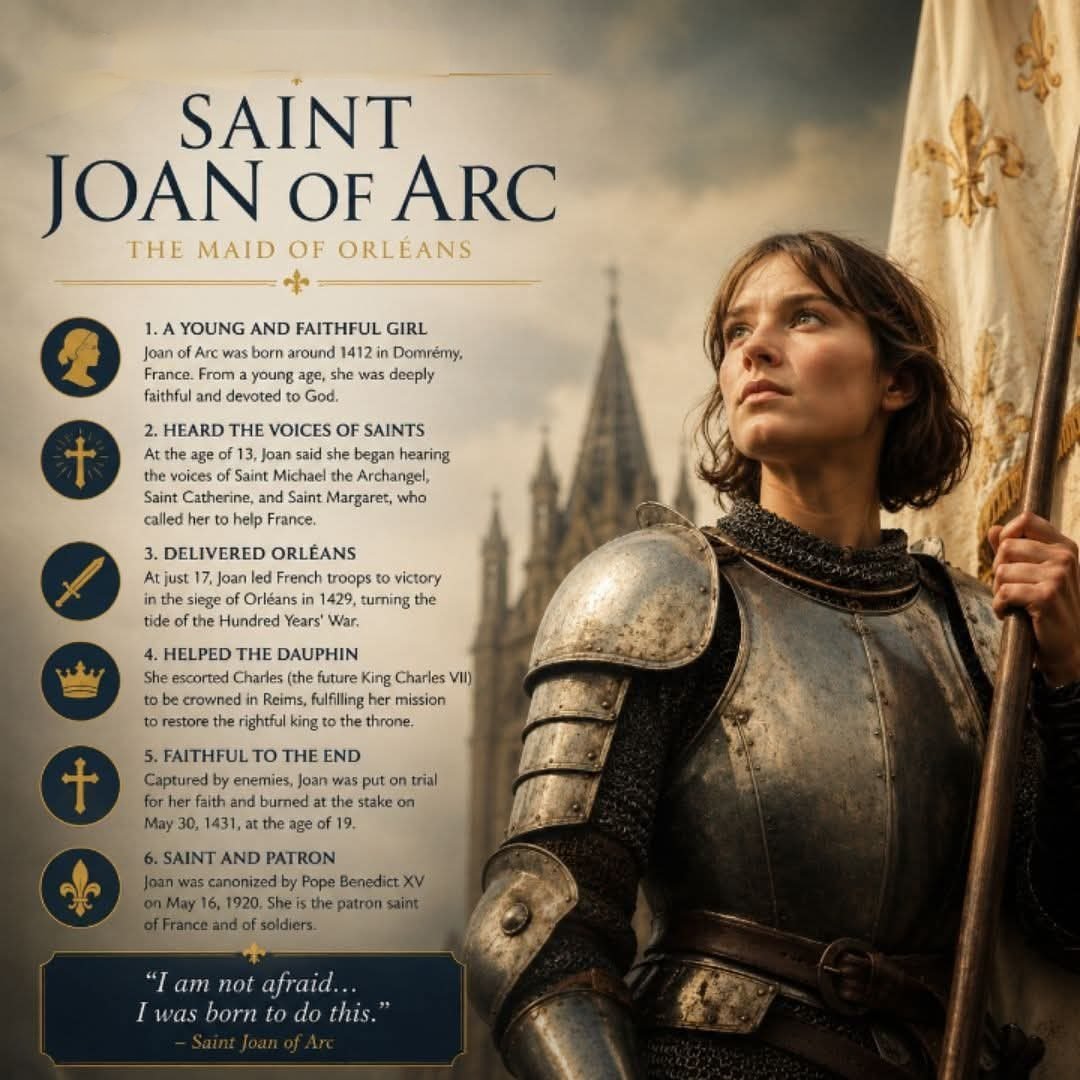
Joan was born to a peasant family at Domrémy in northeast France. In 1428, she traveled to Vaucouleurs and requested to be taken to Charles, later testifying that she had received visions from the archangel Michael, Saint Margaret, and Saint Catherine instructing her to support Charles and recover France from English domination.
Her request to see the king was rejected twice, but she was finally given an escort to meet Charles at Chinon. After their interview, Charles sent Joan, who was about 17 years old, to the siege of Orléans as part of a relief army. She arrived at the city on 29 April 1429, and quickly gained prominence during the fighting. The siege was lifted nine days after her arrival.
Joan participated in the Loire Campaign, which culminated in the decisive defeat of the English at the Battle of Patay. The French army advanced on Reims and entered the city on 16 July. The next day, Charles was crowned as the King of France in Reims Cathedral with Joan at his side. These victories boosted French morale and paved the way for the final French victory in the Hundred Years’ War at Castillon in 1453.
After Charles’s coronation, Joan and John II, Duke of Alençon’s army besieged Paris. An assault on the city was launched on 8 September. It failed, and Joan was wounded. The French army withdrew and was disbanded. In October, Joan was participating in an attack on the territory of Perrinet Gressart, a mercenary who had been in the service of the English and their French allies, the Burgundians.
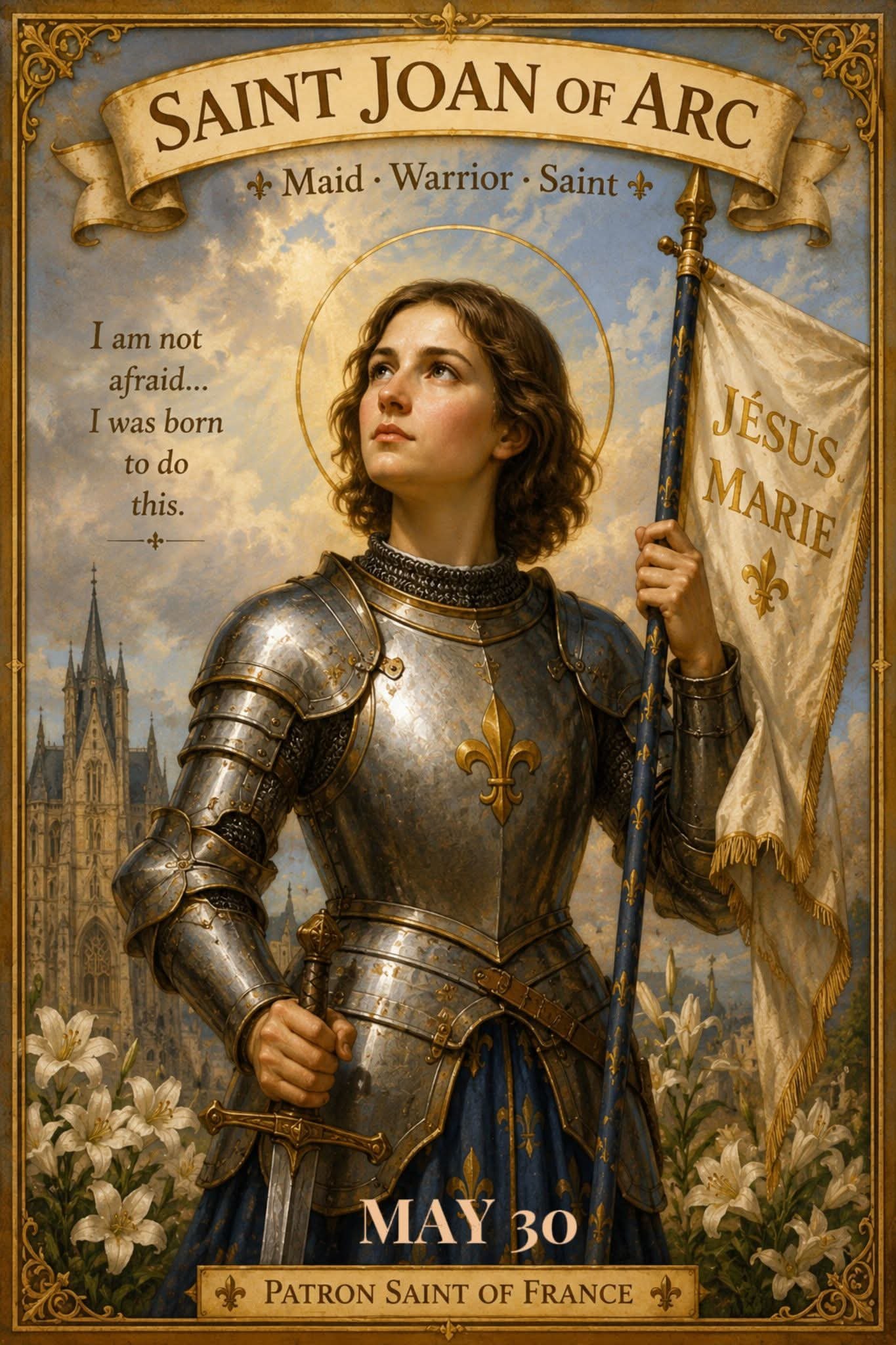
After some initial successes, the campaign ended in a failed attempt to take Gressart’s stronghold. At the end of 1429, Joan and her family were ennobled by Charles. In early 1430, Joan organized a company of volunteers to relieve Compiègne, which had been besieged by the Burgundians. She was captured by Burgundian troops on 23 May and exchanged to the English.
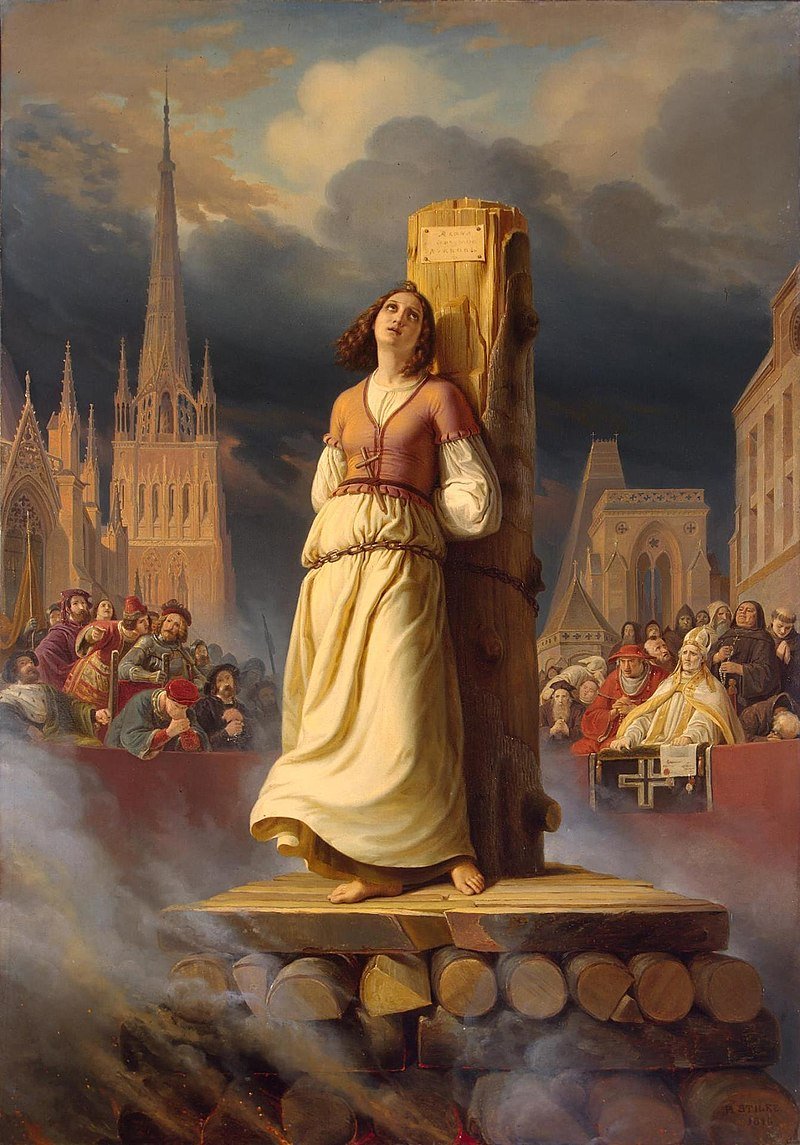
She was put on trial by the pro-English bishop, Pierre Cauchon, on a charge of heresy. She was declared guilty and burned at the stake on 30 May 1431, dying at about 19 years of age. In 1456, Pope Callixtus III authorized an inquisitorial court to investigate the original trial. The court nullified the trial’s verdict, declaring it was tainted by deceit and procedural errors, and Joan was exonerated.
Since her death, Joan has been popularly revered as a martyr. After the French Revolution she became a national symbol of France. She was canonized in 1920, and declared a secondary patron saint of France in 1922. Joan of Arc remains a popular figure in modern literature, painting, sculpture and music, and cultural depictions of her continue to be created.
Joan was born into the midst of the Hundred Years’ War, a conflict that actually lasted 116 years, from 1337 to 1453. This “war” was not one constant, ongoing battle, but rather an intermittent series of fights, punctuated by years of peace and bouts of plague, over who had the right to rule France.
The dispute involved a long series of claimants, both English and French, to France’s throne. This being the medieval period, there was much intermarriage between royal families making a clear-cut winner a tough pick. Some French, called the Burgundians, supported the English claim.
This was a fight between two Catholic countries. It wouldn’t be until the 16th century that King Henry VIII severed England’s ties to Rome. Joan was born to a devout peasant family in Domremy, France. She was illiterate and spent her childhood learning domestic duties and helping on the farm. It is said that even within her own local area, people disagreed about whom should rule France.
When Joan was around 12 or 13 years old, she began to have visions. She said her messengers were St. Michael the Archangel, St. Catherine of Alexandria and St. Margaret of Antioch, and their assignment became clear: She was to help Charles VII be officially proclaimed the rightful king of France.
As a little girl, she did not immediately act on these messages. But she continued to see visions and hear voices and by the time she was 16, she approached a local garrison commander and told him she wanted to meet the king. Naturally, he scoffed. But Joan must have been incredibly charismatic. And being medieval France, her claim of visions appealed to popular imagination.
But first she needed to sway the commander, who relented and sent her with an escort on the 300-mile journey, some of it through wilderness, to the king’s court. What happened there is a mystery. Tradition says Joan was able to recognize Charles VII, even though he disguised himself to test her. Supposedly, she told him things only he would know.
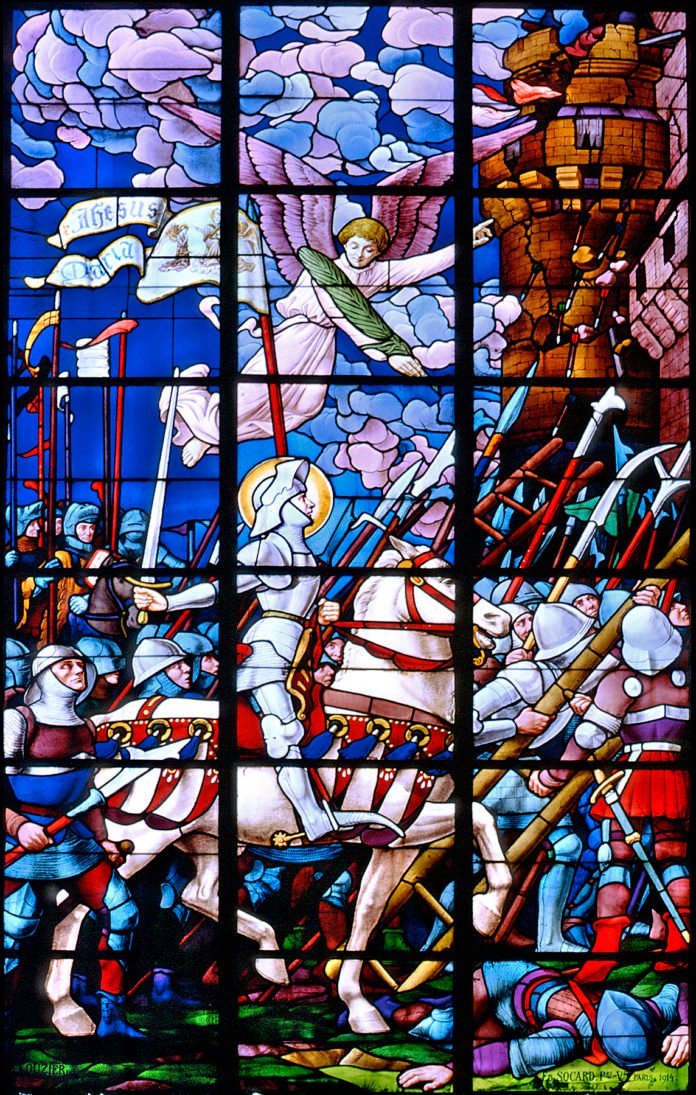
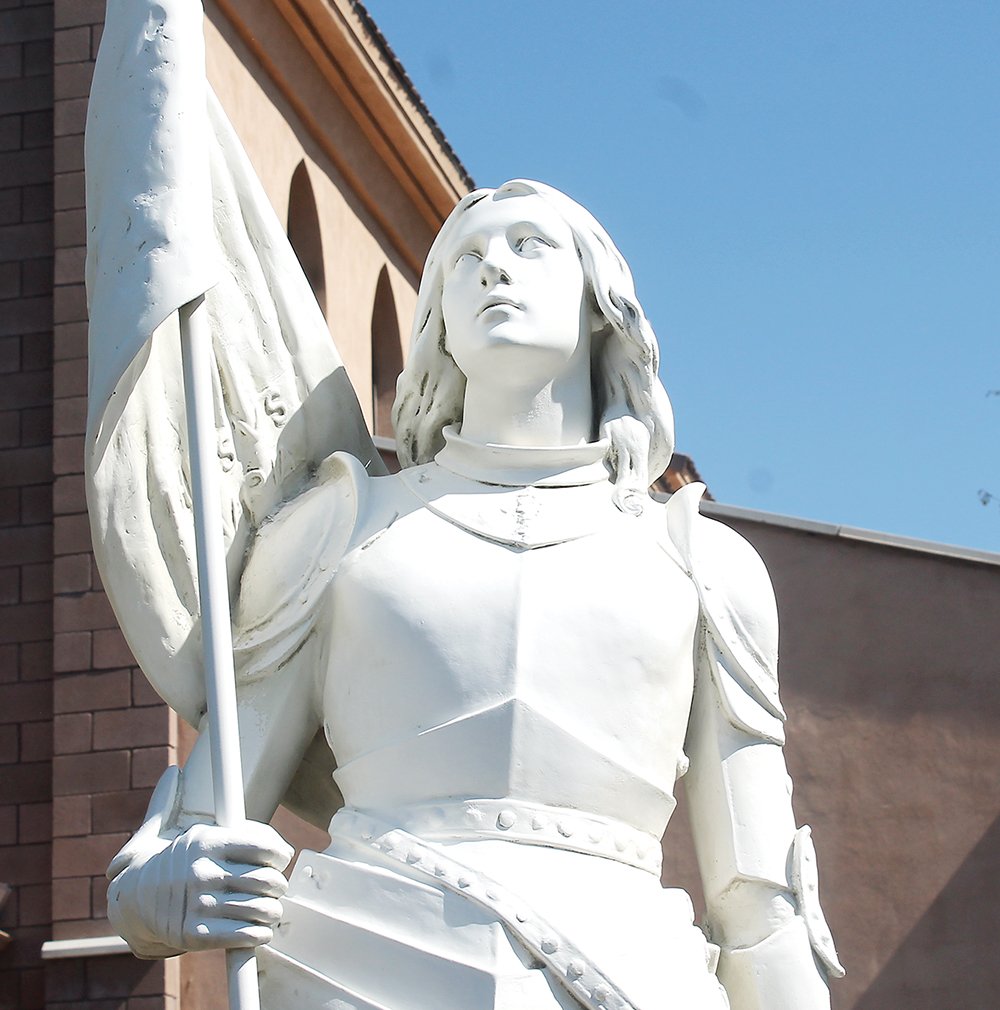
The likeness of St. Joan of Arc is seen at St. Etienne Cathedral in Auxerre, France. Charles VII allowed Joan, dressed for battle as a man, to lead his troops into the crucial fight for Orleans. Although Joan was wounded during the battle, the liberation of Orleans and subsequent victories led to the formal crowning of Charles at Rheims, which had also been foretold in her visions. (Gene Plaisted/CNS, via The Crosiers) See FAITH-ALIVE 22 April 23, 2020.
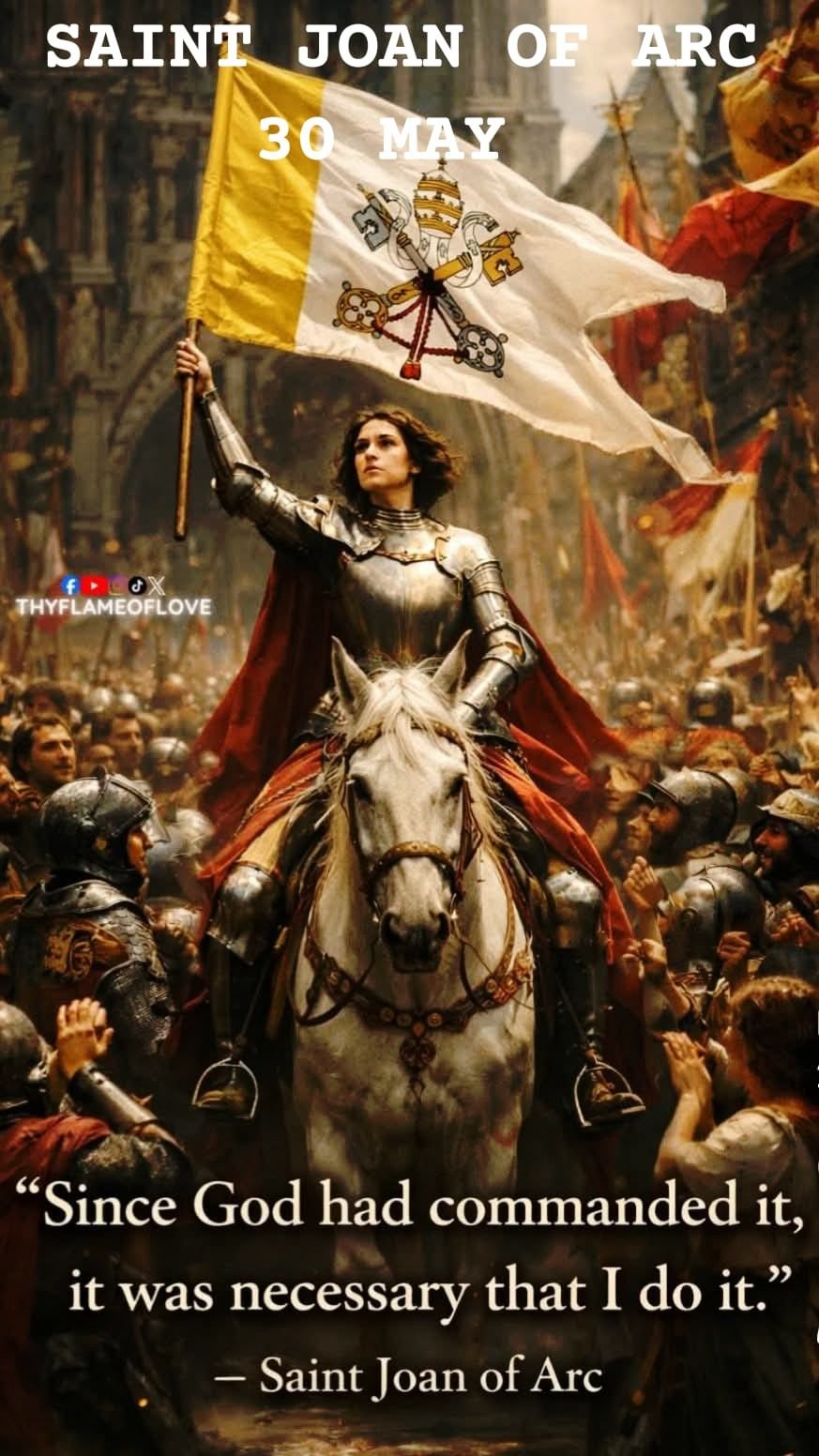
Convinced, he allowed her, dressed for battle as a man, to lead his troops into the crucial fight for Orleans. Fervent hope spread that the young visionary was God’s instrument of French victory. Although Joan was wounded during the battle, the liberation of Orleans and subsequent victories led to the formal crowning of Charles at Rheims, which had also been foretold in her visions. Her renown spread; she was perhaps the most famous person in Europe.
Unfortunately for Joan, military victory was short-lived. Her subsequent imprisonment cast a negative light on Charles VII, who did almost nothing to secure her release. The English put her on trial, an ecclesial trial run by the Church. But that did not take politics out of the equation, since she was in English custody and her enormous notoriety was political.
Transcripts of her trial exist, portraying a courageous woman maintaining confidence in her visions. Joan was charged with heresy, witchcraft and dressing like a man. Yes, that last charge alleged that Joan’s cross-dressing violated divine law, even though she needed the protection of armor in battle and protested that she feared assault in prison without male garb.
Public heresy was a capital crime, in which an unrepentant or relapsed heretic could be given over to the judgment of the secular courts and punished by death. Having signed the abjuration, Joan could not be put to death as an unrepentant heretic, but she could be put to death if she was convicted of relapsing into heresy again.
As part of her abjuration, Joan was required to renounce wearing men’s clothes. She exchanged her clothes for a woman’s dress and allowed her head to be shaved. But she was kept in English custody instead of being transferred to an ecclesiastical prison. She was returned to her cell and kept in chains.
Witnesses stated that Joan was subjected to mistreatment and rape attempts, including one by an English noble, and that guards placed men’s clothes in her cell, forcing her to wear them. Cauchon was notified that Joan had resumed wearing male clothing. He sent clerics to admonish her to remain in submission, but the English prevented them from visiting her.

The likeness of St. Joan of Arc is seen at St. John Berchman Church in Chicago. Joan was born to a devout peasant family in Domremy, France. She was illiterate and spent her childhood learning domestic duties and helping on the farm. (Gene Plaisted/CNS, via The Crosiers) See FAITH-ALIVE 22 April 23, 2020.
On 28 May, Cauchon personally went to Joan’s cell, along with a number of other clerics. According to the trial record, Joan said that she had gone back to wearing men’s clothes because it was more fitting that she dress like a man while being held with male guards, and the judges had broken their promise to let her go to mass and to release her from her chains.
She stated that if they fulfilled their promises and placed her in a decent prison, she would be obedient. When Cauchon asked about her visions, Joan stated that they had blamed her for adjuring out of fear, but she would not deny them again. As Joan’s abjuration had required her to deny her voices, this was sufficient to convict her of relapsing into heresy and to condemn her to death. The next day, forty-two assessors were summoned to decide Joan’s fate.
Eventually found guilty, Joan was burned before a crowd of thousands. Her ashes were scattered in the Seine River. The Hundred Years’ War would drag on, but Joan’s martyrdom helped spur the French to eventually drive the English out of most of France. Charles VII, perhaps feeling some well-deserved guilt, procured a trial review years later that nullified Joan’s guilty verdict.
It would be nearly 500 years later, in 1920, that the 19-year-old visionary and warrior was canonized, increasing her historical profile and offering an example of strength against impossible odds for women everywhere.
CONTEMPLATING THE LIFE OF SAINT JOAN OF ARC – THE PEASANT GIRL WHO CHANGED THE FATE OF FRANCE
Saint Joan of Arc remains one of the most extraordinary figures in Christian and world history. A teenage peasant girl who claimed divine guidance, she led armies during the Hundred Years’ War, changed the political destiny of France, endured imprisonment and trial, and died a martyr at only nineteen years old.
She is remembered as a visionary, warrior, mystic, patriot, martyr, and saint. Yet her life was far more than politics or warfare. It was a story of radical obedience, courage amid fear, purity amid violence, faithfulness under persecution, and complete trust in God’s mission.
HISTORICAL BACKGROUND
Joan lived during the later years of the Hundred Years’ War between France and England. France suffered deeply from war, famine, disease, political division, and foreign occupation. Much of the kingdom was under English control, and many believed France was nearing collapse.
The rightful heir, Charles VII, had not yet been crowned and faced enormous political weakness. Into this national crisis stepped an unlikely figure: an uneducated peasant girl.
THE GIRL WHO HEARD VOICES AND CHANGED A NATION
A VILLAGE SURROUNDED BY WAR
Joan was born around 1412 in Domrémy, a village surrounded by fear and conflict. She helped with farm work, cared for animals, and spent much time in prayer.
Though young and ordinary in appearance, she was deeply devoted to God, loved the Mass, cherished silence, and displayed unusual seriousness from childhood.
THE VOICES IN THE GARDEN
Around the age of thirteen, Joan said she began hearing heavenly voices while in her father’s garden. At first frightened, she later believed these voices came from Saint Michael, Saint Catherine of Alexandria, and Saint Margaret of Antioch.
The voices called her to holiness, purity, courage, and eventually gave her a mission that seemed impossible: help save France.
THE GIRL NOBODY BELIEVED
Few believed Joan at first. People mocked her claims and questioned how a teenage village girl could advise kings or armies.
Despite opposition, Joan remained calm and determined. Her conviction eventually led her to meet Charles VII, the uncrowned heir struggling to unite France.
THE MEETING WITH THE DAUPHIN
Joan’s claims were carefully tested by royal and Church authorities. Tradition says Charles disguised himself among his court, yet Joan identified him immediately.
After extensive questioning regarding her faith, morality, and visions, no heresy was found. Slowly, the king entrusted her with a mission.
THE MAIDEN IN ARMOR
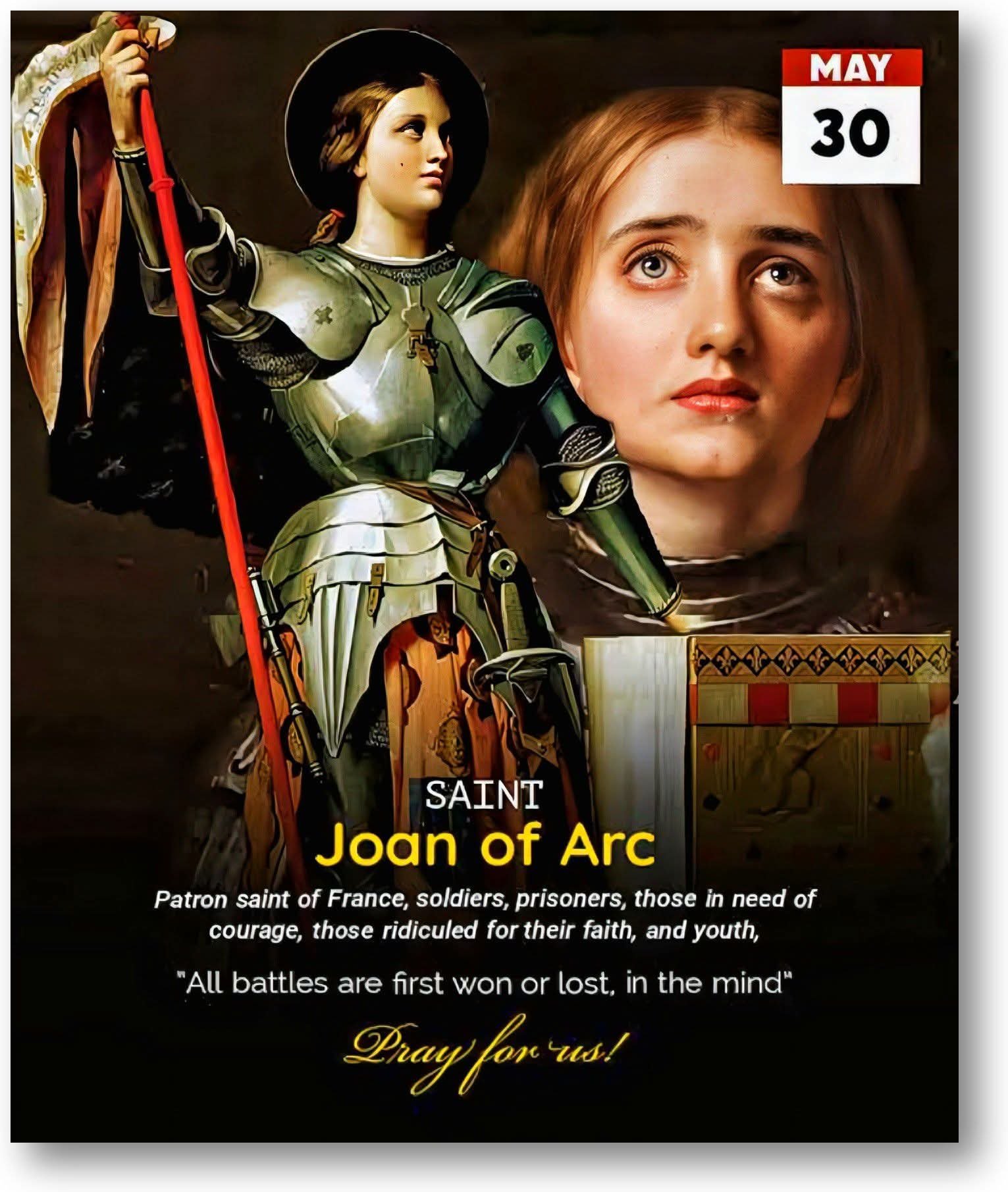
France soon witnessed an extraordinary sight: a young girl in armor riding beside soldiers.
Joan carried a banner more often than a sword. She insisted on prayer, confession, and moral discipline among troops. Her confidence and faith revived hope among exhausted soldiers and citizens.
THE SIEGE OF ORLÉANS
Orléans stood close to defeat under English siege when Joan arrived.
Her presence inspired the city, and despite being wounded in battle, she continued encouraging troops. Against expectations, the siege was lifted, and many began believing God was working through her.
THE ROAD TO REIMS
Joan insisted Charles must travel to Reims for coronation despite dangerous territory.
City after city opened its gates, and in 1429 Charles VII was crowned King of France. Joan stood nearby holding her banner, seeing not personal success, but the fulfillment of God’s mission.
THE LONELY DECLINE
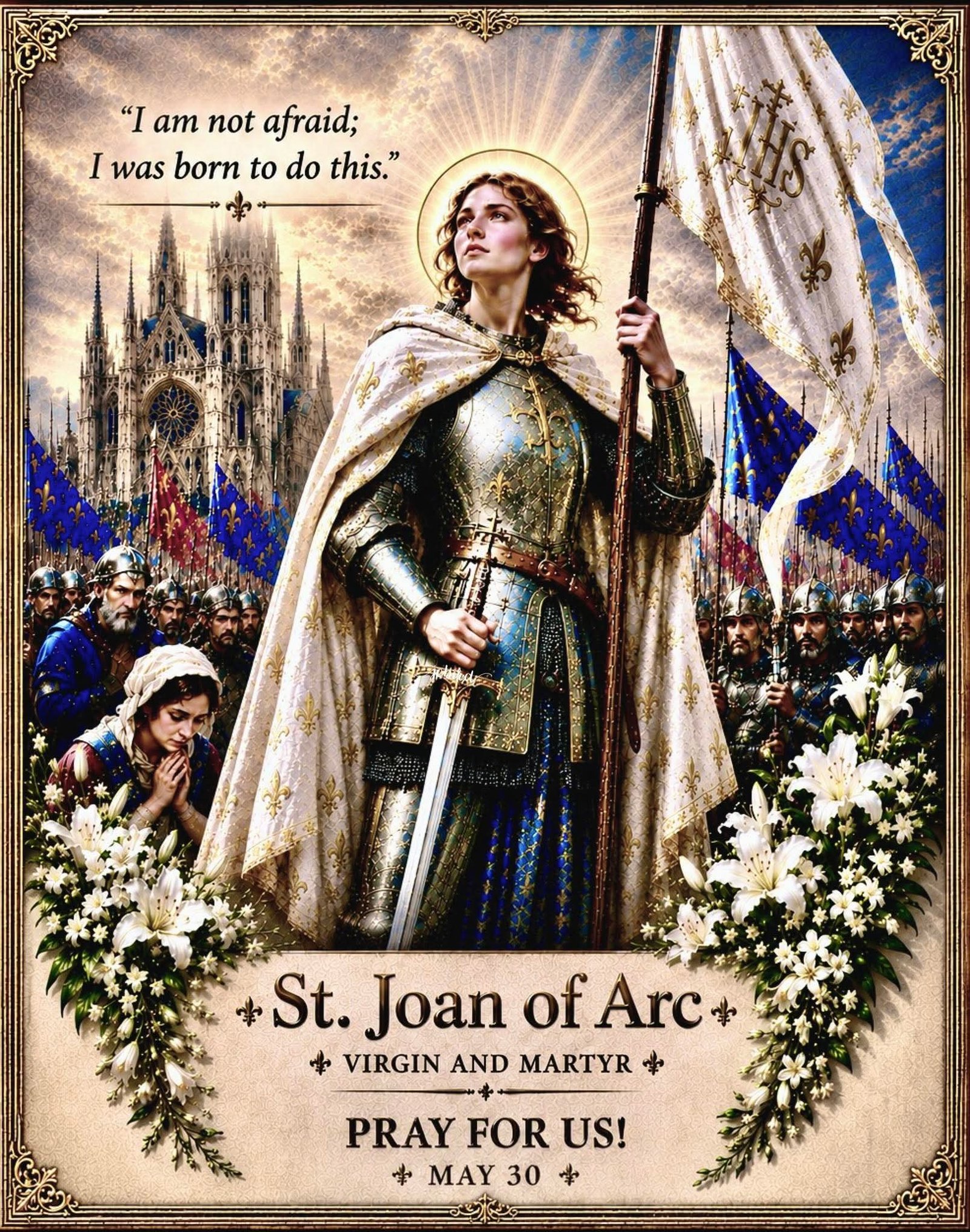
Victory did not last forever. Political divisions increased, military setbacks followed, and Joan gradually became isolated.
In 1430, she was captured near Compiègne. The young woman who had inspired armies became a prisoner.
THE PRISON CELL
Joan endured harsh imprisonment. She was chained, closely guarded, and pressured psychologically and spiritually.
Yet witnesses noted her remarkable composure. The young peasant girl had become inwardly strong and unshakable.
THE TRIAL
Joan was placed on trial for heresy in proceedings deeply influenced by politics. Judges questioned her relentlessly about her visions, clothing, obedience, and faith. Yet she responded with intelligence and spiritual wisdom.
When asked, “Are you in God’s grace?” she answered: “If I am not, may God place me there; if I am, may God keep me there.” Her response astonished even her judges.
THE FIRE

Joan was sentenced to death by burning.
On May 30, 1431, nineteen-year-old Joan was led to the stake in Rouen. Witnesses reported hearing her repeatedly cry out:
“Jesus… Jesus…”
An observer reportedly said afterward:
“We are lost; we have burned a saint.”
Her ashes were scattered to prevent devotion, but her memory only grew stronger.
THE GIRL THE WORLD COULD NOT SILENCE
Years later, the Church re-examined her case and concluded that her trial had been unjust and corrupt. The verdict was overturned, and Joan was declared innocent.
CANONIZATION
Joan was canonized in 1920 by Pope Benedict XV.
Today she stands among history’s greatest witnesses to courage and faith — a mystic, warrior, martyr, and saint.
SPIRITUAL THEMES IN HER LIFE
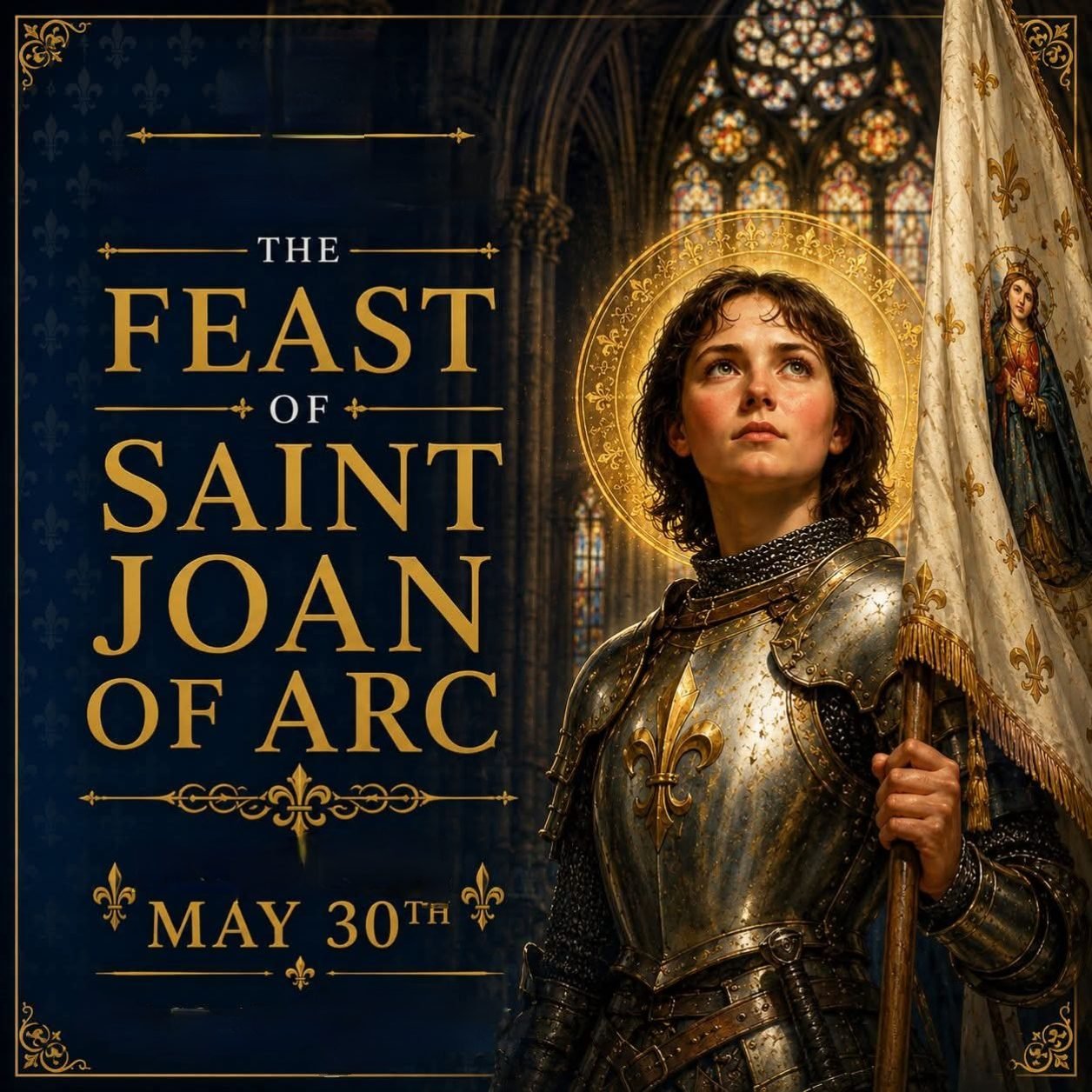
OBEDIENCE TO DIVINE CALLING
Joan followed what she sincerely believed God asked of her, despite ridicule and resistance.
COURAGE AMID FEAR
Her bravery was not the absence of fear but faithfulness despite danger.
PURITY AMID VIOLENCE
Even in war, Joan preserved deep spiritual integrity and personal holiness.
FAITHFULNESS UNDER PERSECUTION
She remained steadfast when abandoned politically and condemned unjustly.
MYSTICAL DIMENSION
Joan’s visions continue to inspire fascination and discussion.
While the Church does not require belief in every detail of her private revelations, it recognized her holiness, sincerity, heroic virtue, and fidelity to God.
PATRONAGES
Saint Joan of Arc is patroness of France, soldiers, military personnel, prisoners, martyrs, and those ridiculed for remaining faithful.
ARTISTIC REPRESENTATION
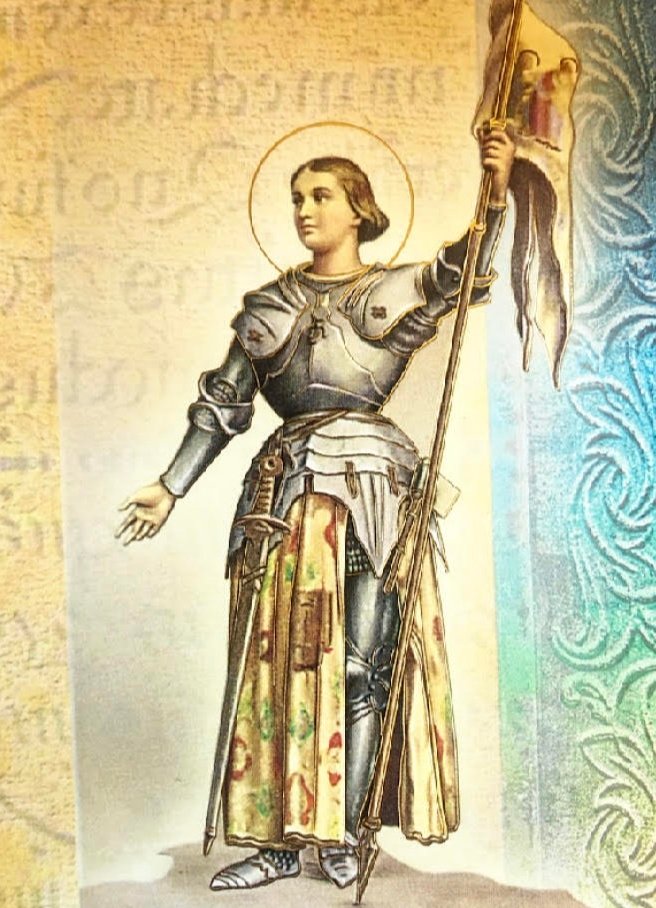
Joan is often shown wearing armor, carrying a banner, hearing heavenly voices, standing in battle, facing trial, or at the stake.
Artists frequently portray the contrast between military strength and youthful holiness.
WHY IS JOAN STILL RELEVANT
Joan continues to inspire because her life joined seeming opposites: innocence and warfare, humility and leadership, mysticism and politics, youth and authority, suffering and courage.
Her life raises enduring questions about discerning God’s will, remaining faithful under pressure, and following conscience despite opposition. Her story reminds the world that God often chooses unlikely people to accomplish extraordinary things.
A village girl heard a voice, obeyed it, and changed the destiny of nations.
PRAYER
Saint Joan of Arc, you held firm in your faith and faced your enemies, who harassed, ridiculed and doubted you, with commendable fortitude.
We pray that we may be so emboldened in our beliefs as to confront courageously our own battles in this life. Amen