
FEAST OF OUR LADY OF FATIMA – 13th MAY
May 13, 2026
Proverbs 13:20
May 13, 2026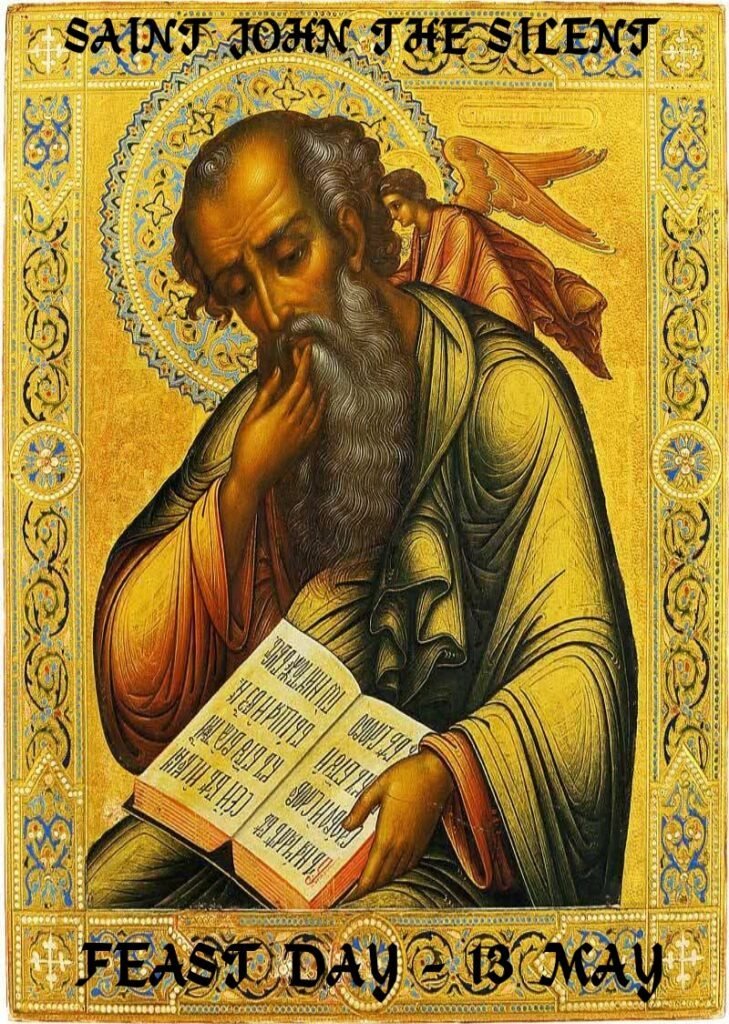
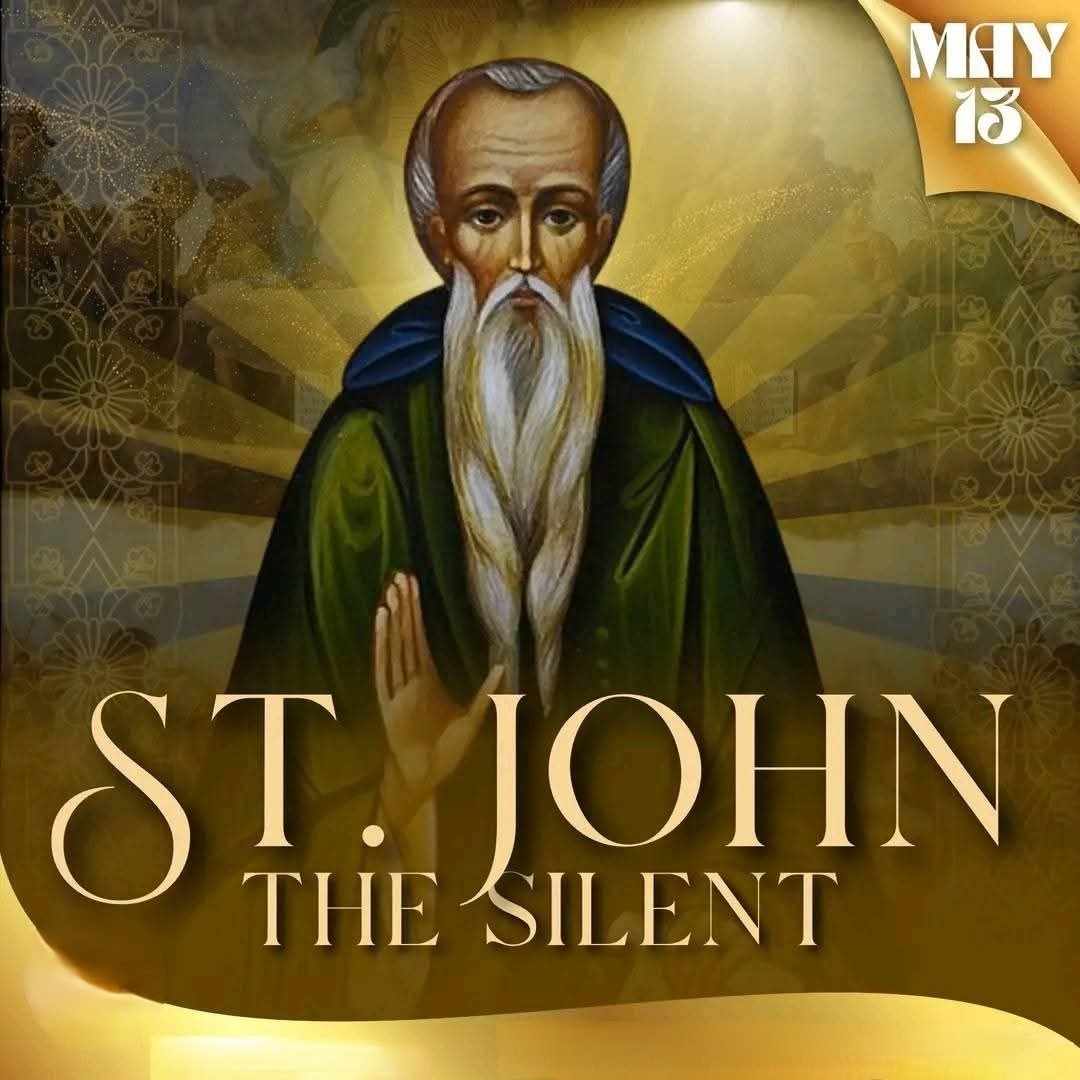
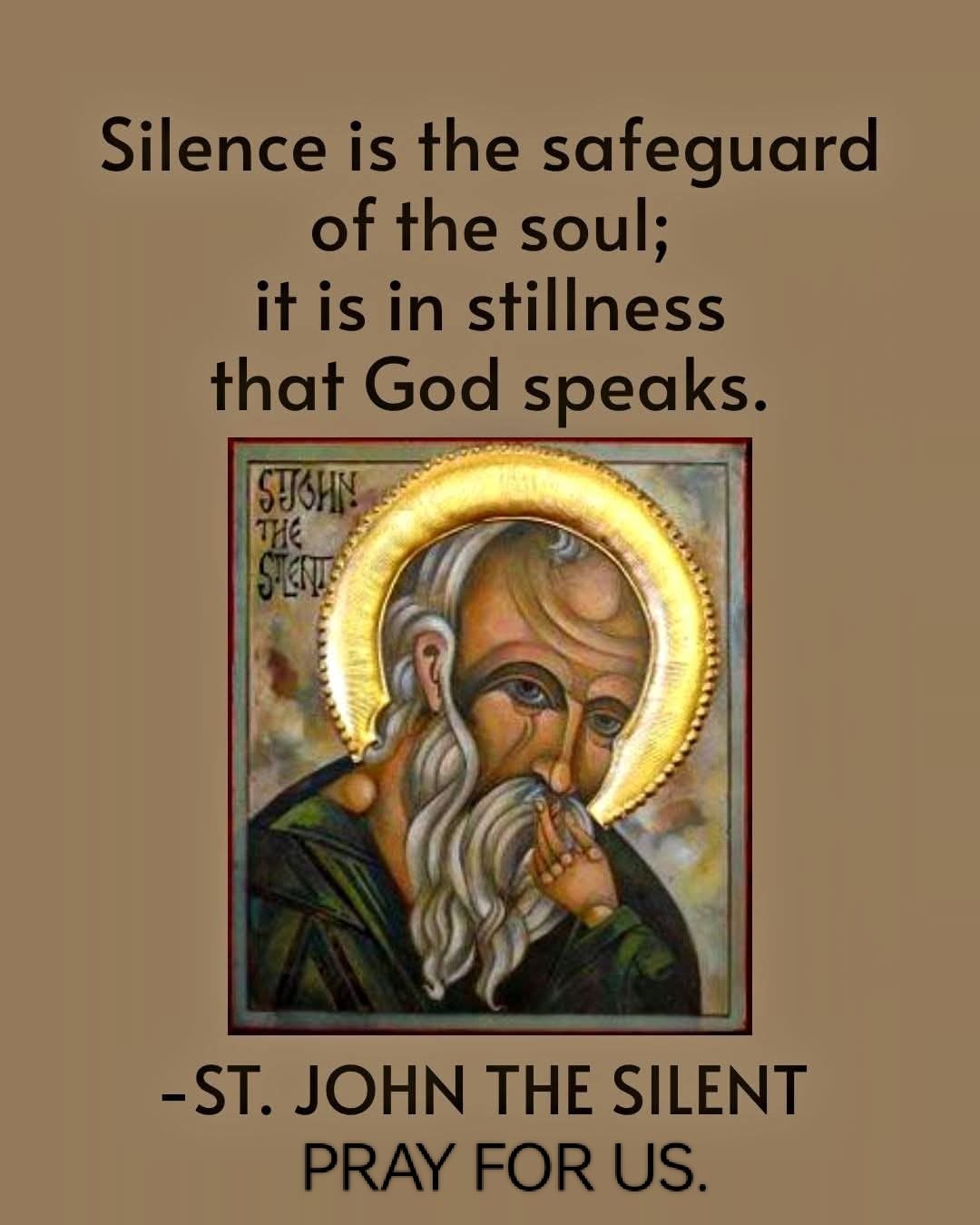
FEAST OF SAINT JOHN THE SILENT – 13 MAY
John was born of a noble family at Nicopolis, in Armenia, in the year 454; but he derived from the virtue of his parents a much more illustrious nobility than that of their pedigree.
After their death, he built at Nicopolis a church honor of the Blessed Virgin, as also a monastery, in which, with ten fervent companions, he shut himself up when only eighteen years of age, with a view of making the salvation and most perfect sanctification of his soul his only and earnest pursuit.
Not only to shun the danger of sin by the tongue, but also out of sincere humility and contempt of himself, and the love of interior recollection and prayer, he very seldom spoke; and when obliged to, it was always in very few words, and with great discretion.
To his extreme affliction, when he was only twenty-eight years old, the Archbishop of Sebaste obliged him to quit his retreat, and ordained him Bishop of Colonian in Armenia in 482. In this dignity John preserved always the same spirit, and, as much as was compatible with the duties of his charge, continued his monastic austerities and exercises.
Whilst he was watching one night in prayer, he saw before him a bright cross formed in the air, and heard a voice which said to him, “If thou desirest to be saved, follow this light.” It seemed to move before him, and at length point out to the monastery of St. Sabas.
Being satisfied what the sacrifice was which God required at his hands, he found means to abdicate the episcopal charge, and retired to the neighboring monastery of St. Sabas, which at that time contained one hundred and fifty fervent monks.
St. John was then thirty-eight years old. After living there unknown for some years, fetching water, carrying stones, and doing other menial work, St. Sabas, judging him worthy to be promoted to the priesthood, presented him to the Patriarch Elias.
St. John took the patriarch aside, and, having obtained from him a promise of secrecy, said, “Father, I have been ordained bishop; but on account of the multitude of my sins have fled, and am come into this desert to wait the visit of the Lord.” The patriarch was startled, but God revealed to St. Sabas the state of the affair, whereupon, calling for John, he complained to him of his unkindness in concealing the matter from him. Finding himself discovered, John wished to quit the monastery, nor could St. Sabas prevail on him to stay, but on a promise never to divulge the secret.
In the year 503, St. John withdrew into a neighboring wilderness, but in 510 went back to the monastery, and confined himself for forty years to his cell. St. John, by his example and counsels, conducted many fervent souls to God, and continued to emulate, as much as this mortal state will allow, the glorious employment of the heavenly spirits in an uninterrupted exercise of love and praise, till he passed to their blessed company, soon after the year 558; having lived seventy-six years in the desert, which had only been interrupted by the nine years of his episcopal dignity.
CONTEMPLATING THE LIFE OF SAINT JOHN THE SILENT OF SAINT SAVVA MONASTERY
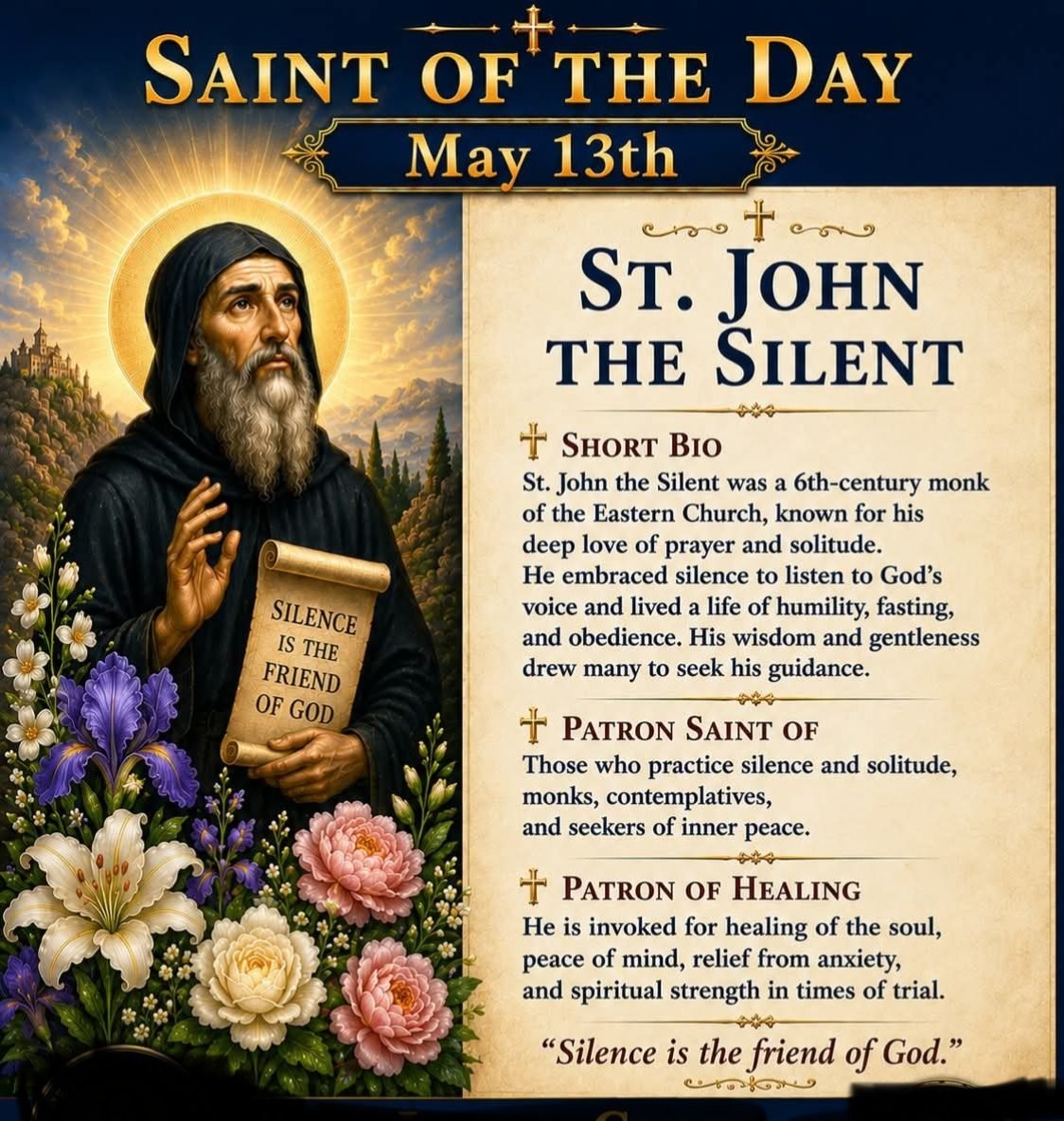
EARLY YEARS OF PRAYER AND SOLITUDE
Saint John the Silent was born around the year 454 in Nicopolis of Armenia to Enkratius, a military commander, and his wife Euphemia. From an early age, John showed little interest in worldly pleasures. He devoted himself to the study of Holy Scripture and developed a deep love for silence, prayer, and solitude.
Though raised in a respected and influential family, his heart longed for communion with God rather than earthly honor. His quiet spirit and desire for holiness became evident even in his youth.
FOUNDING A CHURCH AND EMBRACING THE MONASTIC LIFE
After the death of his parents, Saint John used his inheritance in a holy and generous manner. He built a church dedicated to the Most Holy Theotokos, desiring that it become a place of worship and prayer for the faithful.
At the age of eighteen, he embraced the monastic life along with ten other monks. He lived a life marked by fasting, temperance, prayer, and strict discipline. Even in his youth, he showed remarkable spiritual maturity and deep dedication to God.
THE HUMBLE BISHOP OF COLONIA
The people of Colonia, recognizing John’s holiness and wisdom, desired him as their bishop. At the age of twenty-eight, he was consecrated Bishop of Colonia by the Metropolitan of Sebaste.
Although he now held a position of authority in the Church, Saint John did not change his simple and ascetical way of life. He remained humble, disciplined, and devoted to prayer. His holy example deeply influenced his family members as well, including his brother Pergamios and his nephew Theodore, both of whom were connected with the imperial court.
TRIALS AND BURDENS OF LEADERSHIP
In the tenth year of his episcopacy, unrest arose within the Armenian Church when Pazinikos, the governor of Armenia and husband of John’s sister Maria, began interfering in ecclesiastical matters.
Saint John traveled to Constantinople and appealed to Emperor Zeno through Archbishop Euthymius for protection of the Church. Although he acted courageously and responsibly, the conflicts and worldly disputes grieved his soul deeply. He longed once more for silence and uninterrupted prayer.
THE JOURNEY TO JERUSALEM
Secretly leaving his diocese behind, Saint John journeyed to Jerusalem in search of peace and salvation. With tears and earnest prayer, he asked God to guide him to the place where he should live.
According to tradition, a bright star appeared and led him to the Lavra of Saint Savva. There, John found the spiritual refuge for which his soul had longed.
HIDDEN HOLINESS AND PERFECT HUMILITY
Upon entering the monastery, Saint John concealed the fact that he was a bishop and presented himself simply as a novice. Under the guidance of Saint Savva, he carried out humble tasks with complete obedience for more than four years.
He served workers during the building of the monastery guesthouse and helped with construction work without complaint or desire for recognition. His humility was so profound that no one suspected his true identity.
Saint Savva, impressed by John’s holiness and obedience, wished to ordain him to the priesthood. Only then was John compelled to reveal that he was already a bishop. Patriarch Elias instructed that John should continue living in silence and not be disturbed by others.
LIFE OF SILENCE AND SECLUSION
Saint John spent several years enclosed in his cell, receiving no visitors and rarely leaving even for church services. He desired complete stillness of heart and deeper union with God.
Seeking even greater solitude, he later withdrew into the desert, where he lived for more than nine years. He survived on plants and herbs, embracing extreme simplicity and hardship.
During a violent Saracen invasion, the Lord protected him in a miraculous way through a fierce lion that frightened away those who intended to harm him. Many miracles were also associated with his life in the wilderness.
RETURN TO THE LAVRA
When Saint Savva returned after a long absence, he persuaded Saint John to leave the wilderness and return to the monastery. Over time, God revealed to the monks that the quiet and hidden ascetic among them was truly a bishop and a man of great holiness.
When Saint Savva died, Saint John grieved deeply because he had not been present at his spiritual father’s passing. Later, Saint Savva appeared to him in a vision, consoling him and foretelling future struggles against heresy within the Church.
Though John loved silence and solitude, he obediently helped strengthen the brethren in their struggle against false teachings.
GIFTS OF GRACE AND MIRACLES
Saint John spent sixty-six years in the Lavra of Saint Savva. Through unceasing prayer, humility, and ascetic labor, he attained great spiritual wisdom and grace.
He was known for miracles, healings, and spiritual discernment. He could perceive the hidden thoughts of people, heal the sick, and deliver those tormented by evil spirits. Many who invoked his prayers were saved from danger.
One remarkable tradition recounts how Saint John scattered fig seeds upon barren rock, and by God’s grace a fruitful tree sprang up and eventually overshadowed his cell.
His life became a testimony to the transforming power of holiness and prayer.
THE SILENT WITNESS OF HOLINESS
Saint John’s silence was not emptiness but a life completely filled with God. Without seeking attention or praise, he became a beacon of holiness to countless souls.
His humility, obedience, prayerfulness, and detachment from worldly glory reveal the beauty of a soul entirely surrendered to God. Even while living hidden from the world, his life spoke powerfully to all who encountered him.
PEACEFUL DEPARTURE TO THE LORD
After a long life of prayer, asceticism, and faithful service, Saint John the Silent departed peacefully to the Lord at the age of 104.
He left behind a legacy of holiness, silence, humility, and unwavering devotion to God. His life continues to inspire all who seek inner peace, deeper prayer, and a closer walk with the Lord.
REFLECTION
A love of Christian silence is a proof that a soul makes it her chiefest delight to be occupied on God, and finds no comfort like that of conversing with Him. This is the paradise of all devout souls.
PRAYER
O holy Saint John the Silent, faithful servant of God and lover of prayerful solitude, teach us to seek the peace that comes from communion with the Lord. Help us to grow in humility, obedience, patience, and purity of heart. Intercede for us that we may not be distracted by the noise and distractions of this world, but may learn to listen quietly to the voice of God. Strengthen us in times of struggle, guide us in the path of holiness, and lead us ever closer to Christ. Amen