
SPIRITUAL INSIGHTS INTO THE LIVES OF SAINTS SIXTUS II AND COMPANIONS
August 7, 2026
Mark 11:24
August 8, 2026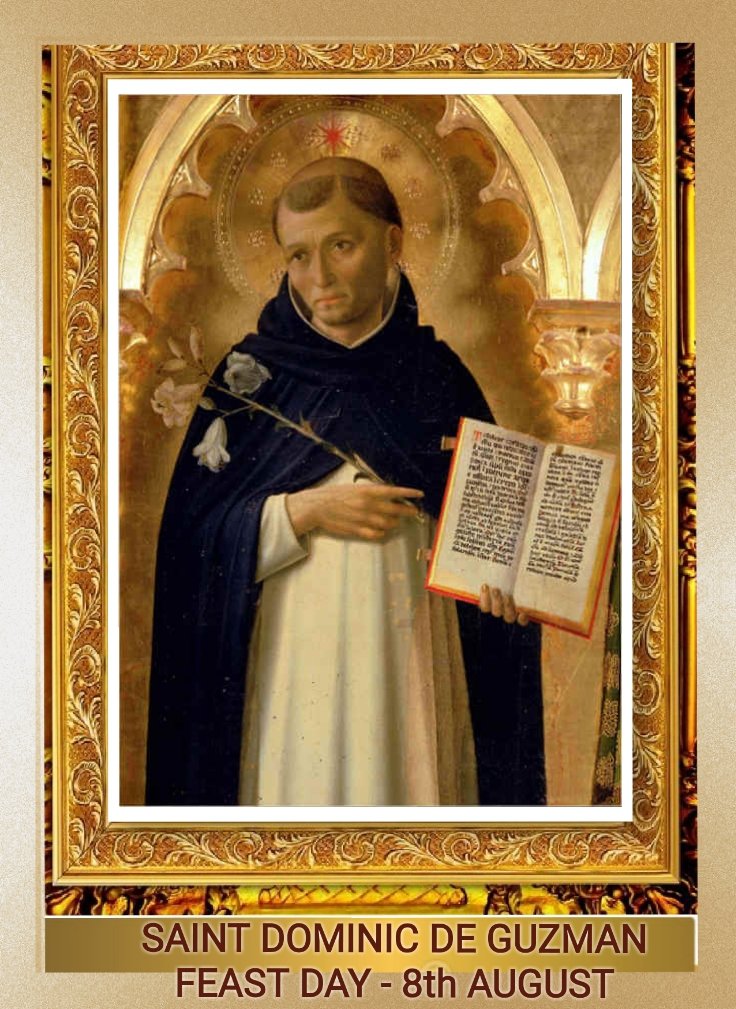
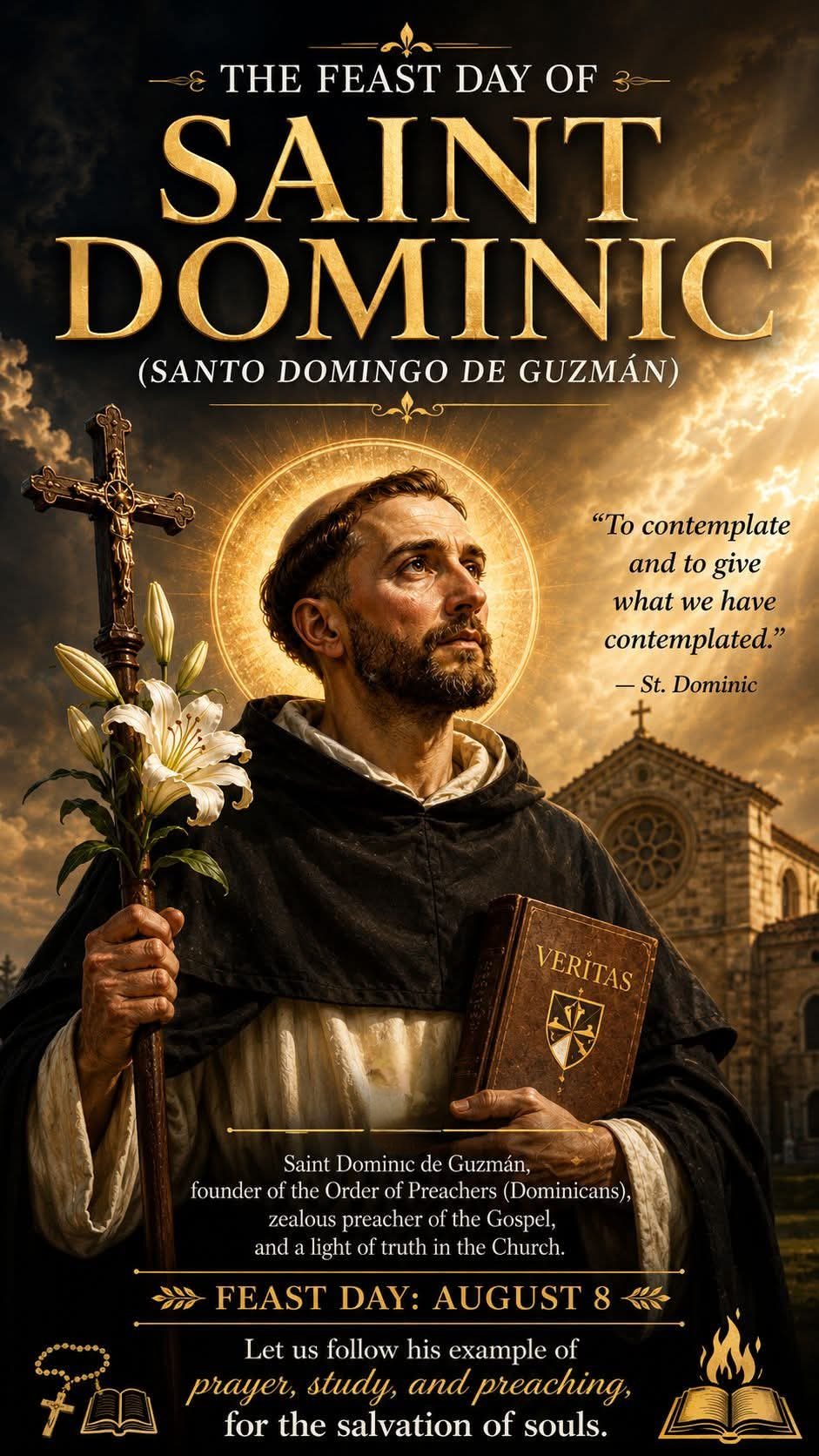
FEAST OF SAINT DOMINIC DE GUZMAN
FEAST DAY – 8th AUGUST
Saint Dominic OP (Spanish: Santo Domingo; 8 August 1170 – 6 August 1221), also known as Dominic de Guzmán, was a Castilian Catholic priest founder of the Dominican Order and patron saint of astronomers. He is alternatively called Dominic of Osma, Dominic of Caleruega, and Domingo Félix de Guzmán.
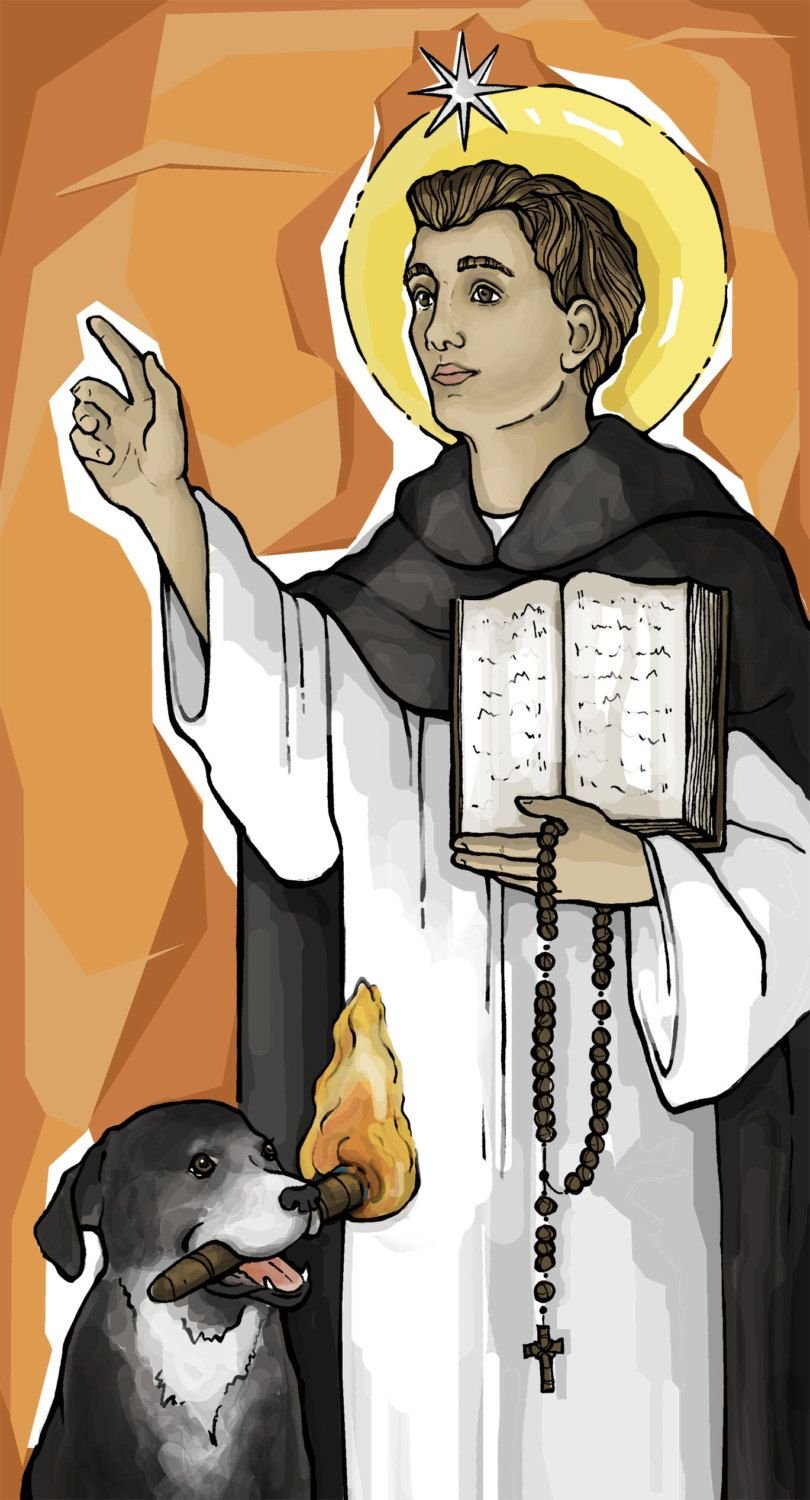
Dominic was born in Caleruega, halfway between Osma and Aranda de Duero in Old Castile, Spain. He was named after Saint Dominic of Silos. The Benedictine abbey of Santo Domingo de Silos lies a few miles north of Caleruega. In the earliest narrative source, by Jordan of Saxony, Dominic’s parents are not named. The story is told that before his birth his barren mother made a pilgrimage to the Abbey at Silos, and dreamt that a dog leapt from her womb carrying a flaming torch in its mouth, and seemed to set the earth on fire.
This story is likely to have emerged when his order became known, after his name, as the Dominican order, Dominicanus in Latin and a play on words interpreted as Domini canis: “Dog of the Lord.” Jordan adds that Dominic was brought up by his parents and a maternal uncle who was an archbishop. The failure to name his parents is not unusual, since Jordan wrote a history of the Order’s early years, rather than a biography of Dominic.
A later source, still of the 13th century, gives their names as Juana and Felix. Nearly a century after Dominic’s birth, a local author asserted that Dominic’s father was “vir venerabilis et dives in populo suo” (“an honoured and wealthy man in his village”). The travel narrative of Pero Tafur, written circa 1439 (about a pilgrimage to Dominic’s tomb in Italy), states that Dominic’s father belonged to the family de Guzmán, and that his mother belonged to the Aça or Aza family. Dominic’s mother, Joan of Aza, was beatified by Pope Leo XII in 1829.
Dominic is commonly but apocryphally associated with the Inquisition. Historical sources from Dominic’s own time period reveal nothing about his involvement in the Inquisition. Dominic died in 1221, and the office of the Inquisition was not established until 1231 in Lombardy and 1234 in Languedoc.
Canon 27 of the Third Council of the Lateran of 1179 stressed the duty of princes to repress heresy and condemned “the Brabantians, Aragonese, Basques, Navarrese, and others who practice such cruelty toward Christians that they respect neither churches nor monasteries, spare neither widows nor orphans, neither age nor sex, but after the manner of pagans, destroy and lay waste everything”.
This was followed in 1184 by a decretal of Pope Lucius III, Ad abolendam. This decreed that bishops were to investigate the presence of heresy within their respective dioceses. Practices and procedures of episcopal inquisitions could vary from one diocese to another, depending on the resources available to individual bishops and their relative interest or disinterest.
Convinced that Church teaching contained revealed truth, the first recourse of bishops was that of ‘persuasio’. Through discourse, debates, and preaching, they sought to present a better explanation of Church teaching. This approach often proved very successful. In 1231, Pope Gregory IX appointed a number of Papal Inquisitors, mostly Dominicans and Franciscans, for the various regions of Europe.
As mendicants, they were accustomed to travel. Unlike the haphazard episcopal methods, the papal inquisition was thorough and systematic, keeping detailed records. This tribunal or court functioned in France, Italy and parts of Germany and had virtually ceased operation by the early fourteenth century.
In the 15th century, the Spanish Inquisition commissioned the artist Pedro Berruguete to depict Dominic presiding at an ‘auto da fé’. Thus, the Spanish inquisitors promoted a historical legend for the sake of auto-justification. Reacting against the Spanish tribunals, 16th- and 17th-century Protestant polemicists gladly developed and perpetuated the legend of Dominic the Inquisitor.
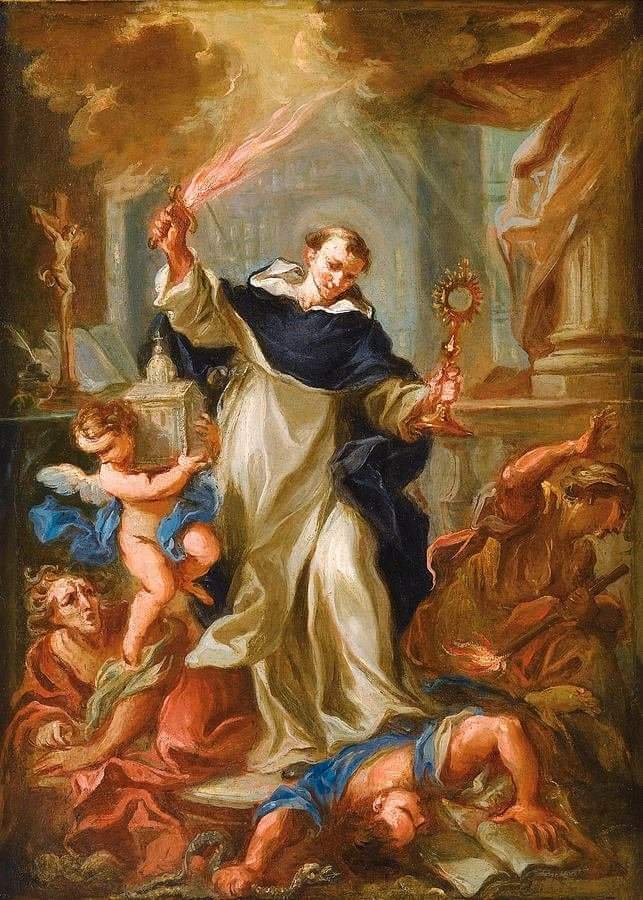
This image gave German Protestant critics of the Catholic Church an argument against the Dominican Order whose preaching had proven to be a formidable opponent in the lands of the Reformation. As Edward Peters notes, “In Protestant historiography of the sixteenth century a kind of anti-cult of St. Dominic grew up.” The spread of the Rosary, a Marian devotion, is attributed to the preaching of Dominic.
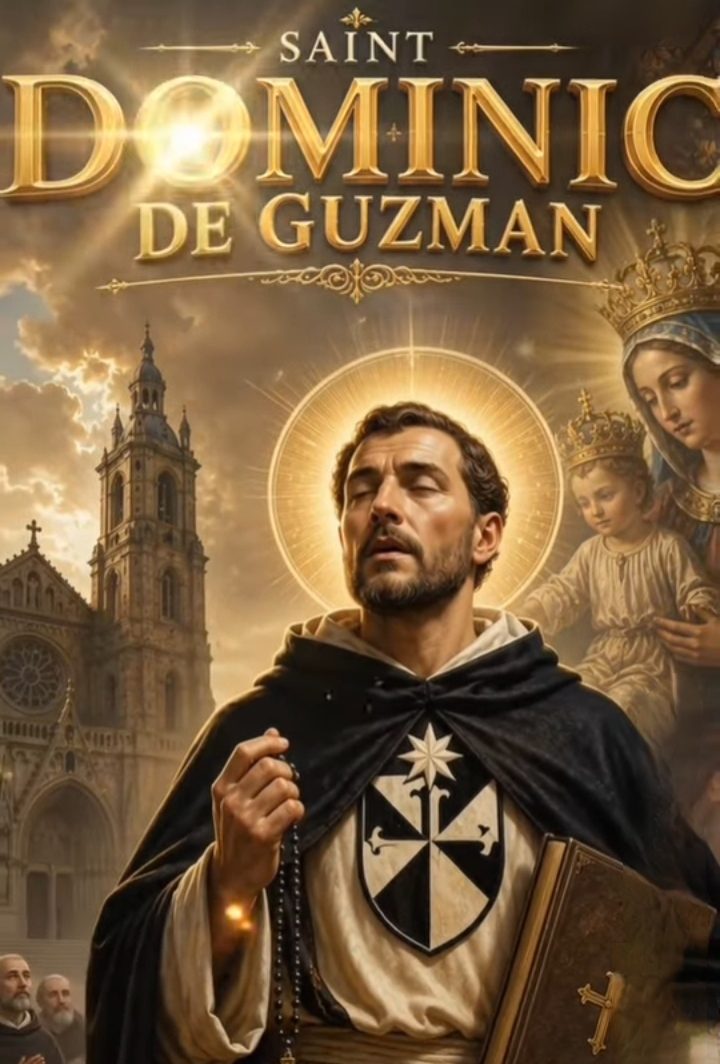
For centuries the Rosary has been at the heart of the Dominican Order. Pope Pius XI stated, “The Rosary of Mary is the principle of, and the foundation on which the very Order of Saint Dominic rests for making perfect the life of its members and obtaining the salvation of others.” For centuries, Dominicans have been instrumental in spreading the Rosary and emphasizing the Catholic belief in The Power of the Rosary.
The feast of Saint Dominic is celebrated with great pomp and devotion in Malta, in the old city of Birgu and the capital city Valletta. The Dominican order has very strong links with Malta and Pope Pius V, a Dominican friar himself, aided the Knights of St. John to build the city of Valletta.
CONTEMPLATING THE LIFE OF SAINT DOMINIC DE GUZMÁN – SET THE WORLD ON FIRE
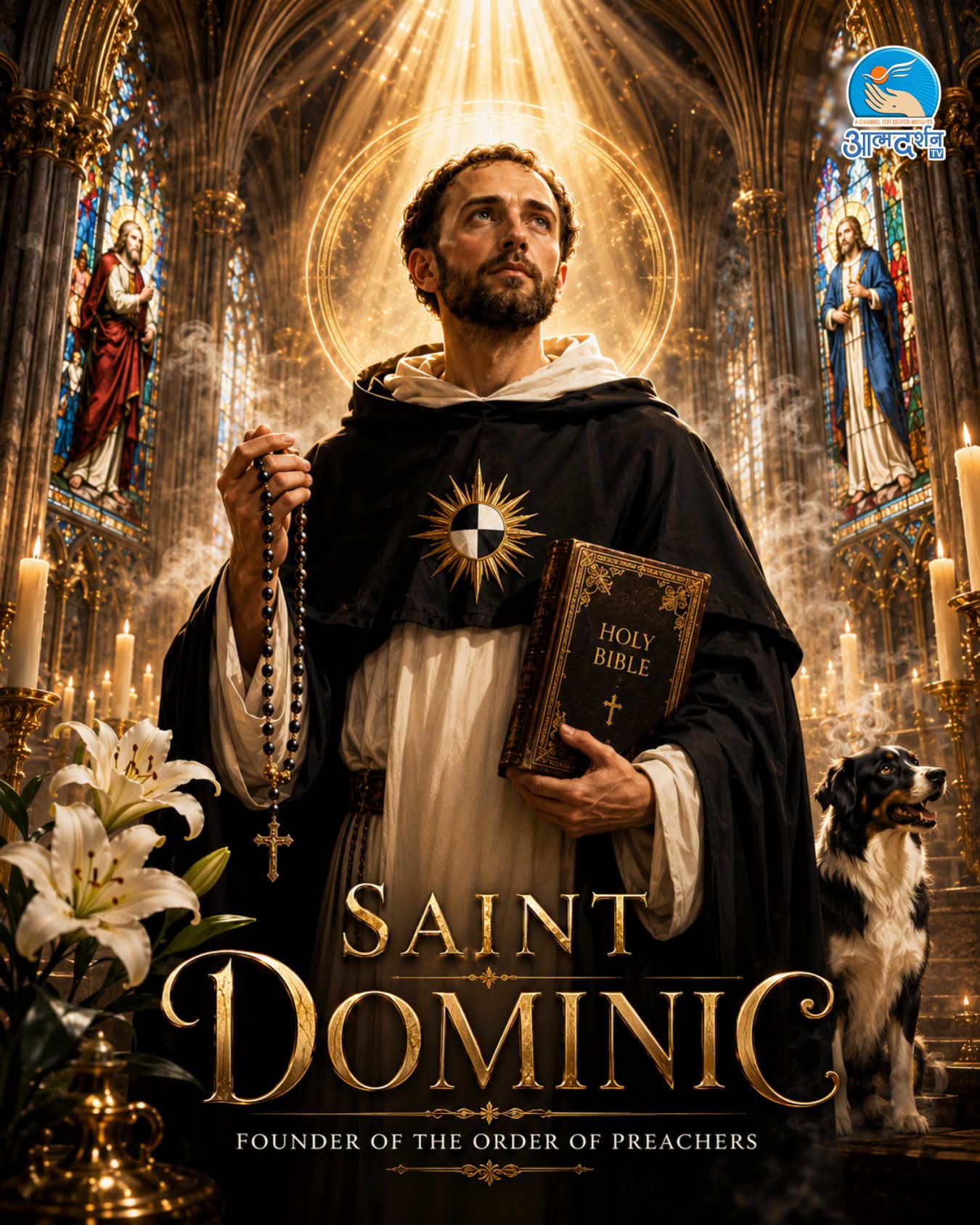
THE DREAM OF THE TORCH
Around 1170, in Caleruega, Spain, Jane of Aza, Dominic’s mother, is said to have dreamed of a dog emerging from her womb carrying a torch that set the world on fire. The image became a fitting symbol of Dominic’s life. He would ignite the Church with the fire of truth, prayer and compassion.
A HEART FOR THE POOR
While studying theology in Palencia, Dominic witnessed a devastating famine. Rather than keep his precious books, he sold them to feed the hungry. His concern for suffering people revealed a heart completely devoted to God and neighbour. He understood that knowledge has little value if it does not lead to love.
A LAND IN DARKNESS
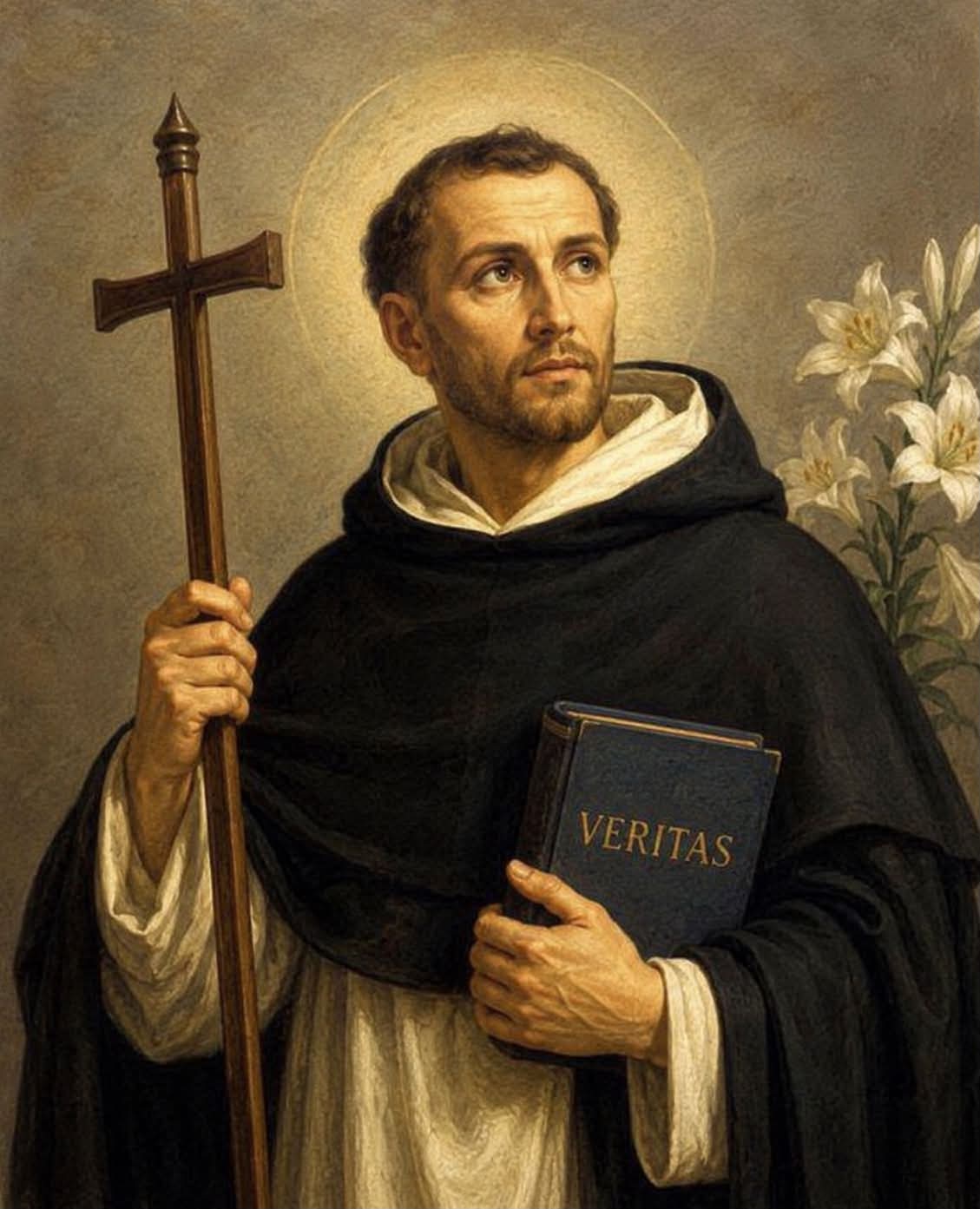
During his travels through southern France, Dominic encountered the Albigensian movement, part of the Cathar heresy. Its followers rejected the goodness of the material world, the Incarnation, the Eucharist, the sacraments and the resurrection of the body.
Dominic was deeply troubled not only by their errors but also by the sincerity of those who were searching for spiritual meaning. The weakness and worldly lifestyle of some Catholic clergy had also caused many people to lose confidence in the Church. Dominic realised that truth had to be proclaimed through a life that genuinely reflected Christ.
A NEW KIND OF PREACHING
Dominic chose to preach on foot, live simply and remain close to the people. He relied not on wealth or power but on prayer, Scripture, study and personal holiness. He sought not merely to win arguments but to win souls. His frequent prayer, “Lord, what will become of sinners?” expressed his deep compassion for those who were lost.
PLANTING THE ORDER OF PREACHERS
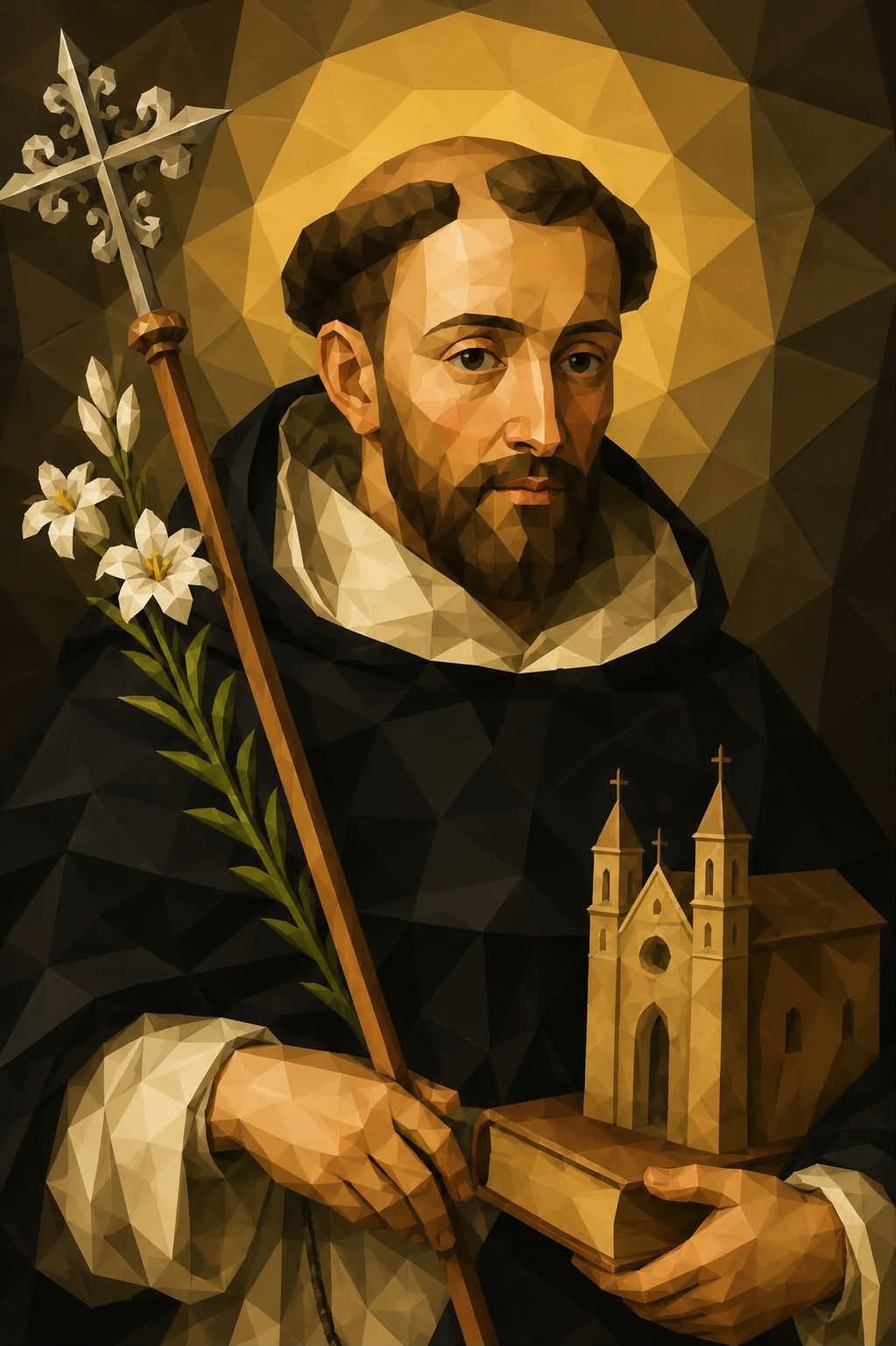
Dominic gathered companions who shared his passion for truth and holiness. Pope Honorius III formally approved the Order of Preachers in 1216. The Dominicans became known for combining deep study, prayer, poverty and preaching. Their mission was to bring the truth of Christ to the world through both their words and their lives.
REACHING THE WOMEN
Dominic also cared deeply for women who had been influenced by the Cathar movement. He founded a monastery where women could find a life of prayer, dignity and spiritual renewal. Some former Cathars became devoted followers of Christ within the Church.
A WITNESS OF PEACE
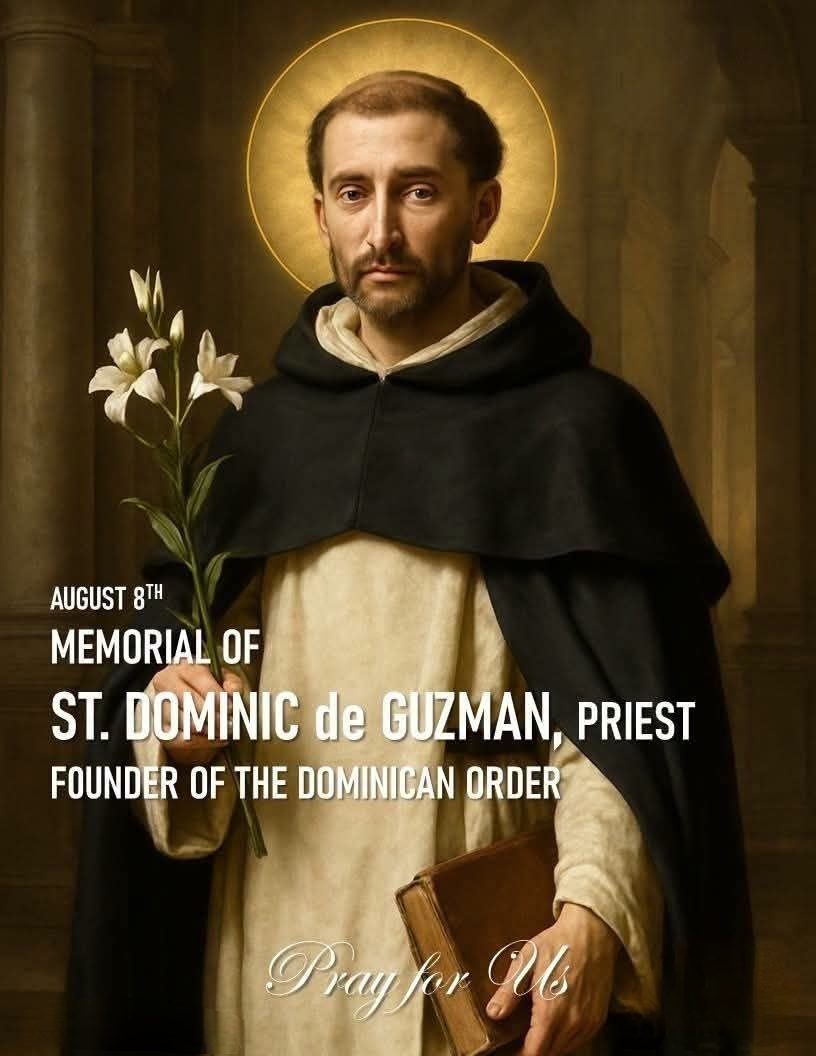
Although others responded to heresy with violence, Dominic’s mission centred on preaching, prayer and persuasion. He believed that the Gospel should be proclaimed through truth joined with charity. His witness reminds us that genuine conversion comes through the transforming power of Christ rather than force.
THE ROSARY AND PRAYER
Although the Rosary developed into its present form after Dominic’s lifetime, tradition strongly associates him with its promotion. The Rosary became an important part of Dominican spirituality, helping Christians contemplate the mysteries of Christ through the eyes of Mary.
A FIRE THAT NEVER DIED
Dominic spent long hours in prayer, sometimes walking alone at night and weeping for sinners. His deep love for souls gave him strength amid exhaustion, rejection and opposition. Yet he remained joyful because his heart was firmly rooted in Christ.
When Dominic died in 1221 at the age of fifty one, he asked to be buried beneath the feet of his brothers, expressing his profound humility and desire for no personal glory.
HIS TORCH STILL BURNS
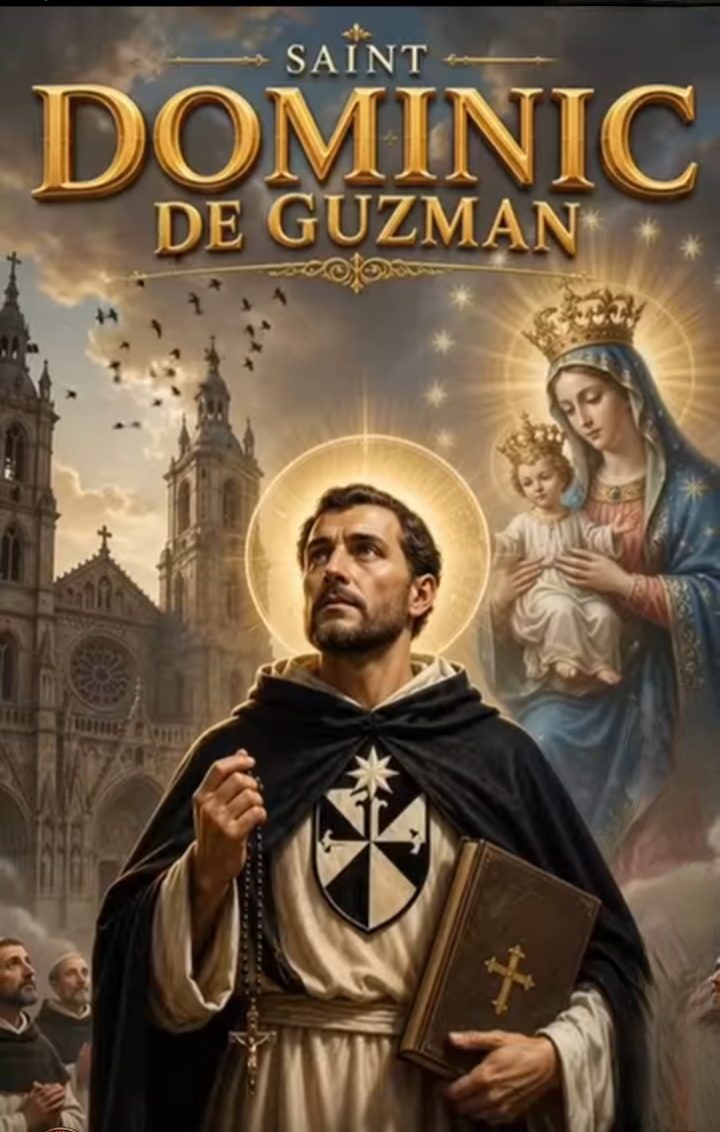
The mission Dominic began continued through generations of Dominicans, producing great saints and teachers such as Saint Thomas Aquinas, Saint Catherine of Siena and Saint Martin de Porres. The torch of Dominic continues to burn wherever Christians proclaim truth with humility, courage and love.
A LEGACY FOR TODAY
Saint Dominic reminds us that truth must always be accompanied by charity, that a holy life is a powerful witness, and that humility and love can touch hearts more deeply than argument or force. In a world searching for truth and meaning, one person whose heart burns with God’s love can become a light for many.
PRAYER TO SAINT DOMINIC
O radiant preacher of truth, Saint Dominic, flame of divine love, teach us to thirst for souls as you did, to pray faithfully and to speak with compassion. May our lives reflect the light of Christ, humble in word, courageous in love and generous in mercy. Intercede for us, that we may become torches of Christ in a world longing for truth. Amen.
PRAYER
God of Truth you bestowed upon your church a new light of Faith and Truth, in the person and preaching of Saint Dominic. Assist us to attain your favor and blessings by preaching your Holy Word and by leading holy and simple lives.
We ask this through our Lord Jesus Christ, your Son, who lives and reigns with you and the Holy Spirit, God, forever and ever. Amen
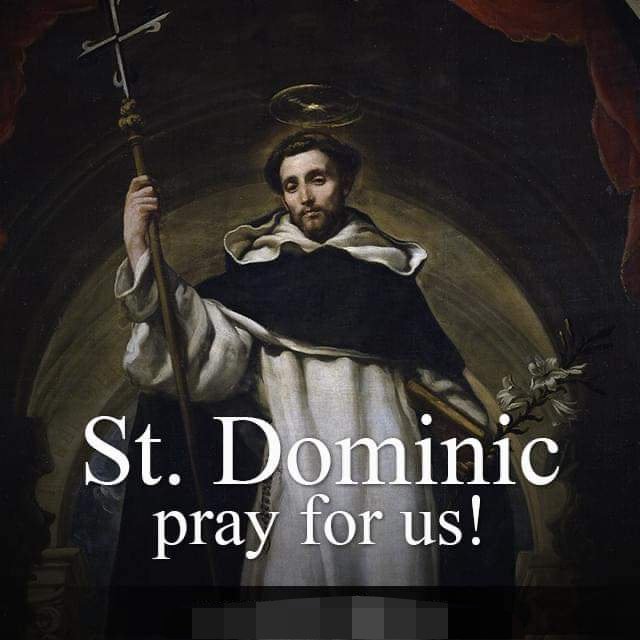
Saint Dominic, Pray for us.