
10 Daily Habits that Strengthen your Faith
January 17, 2026
1 Corinthians 1:10
January 18, 2026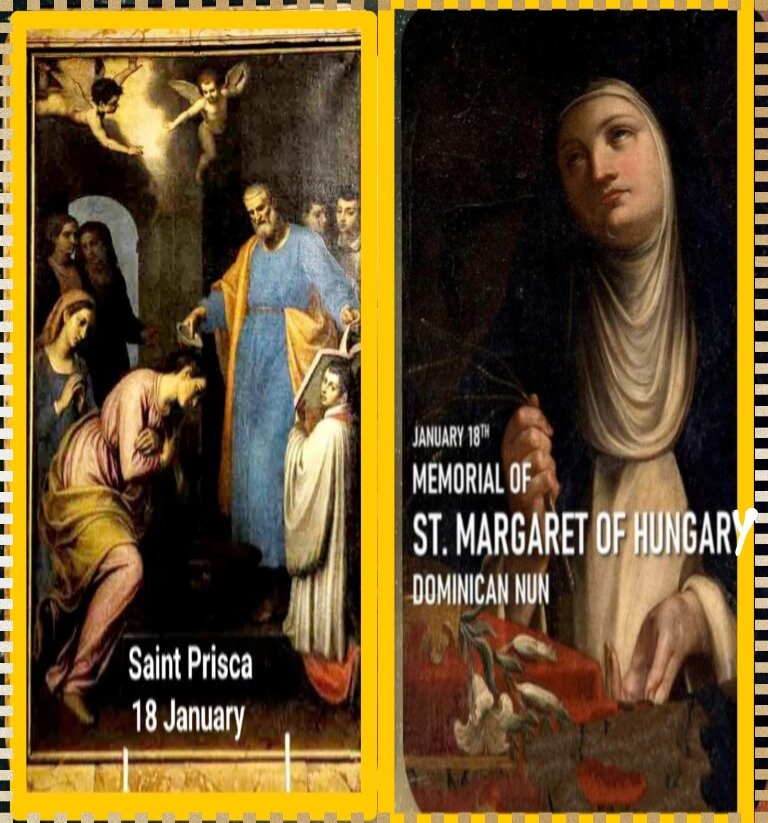
FEAST OF SAINT PRISCA, VIRGIN AND MARTYR AND SAINT MARGARET OF HUNGARY
FEAST DAY – 18th JANUARY
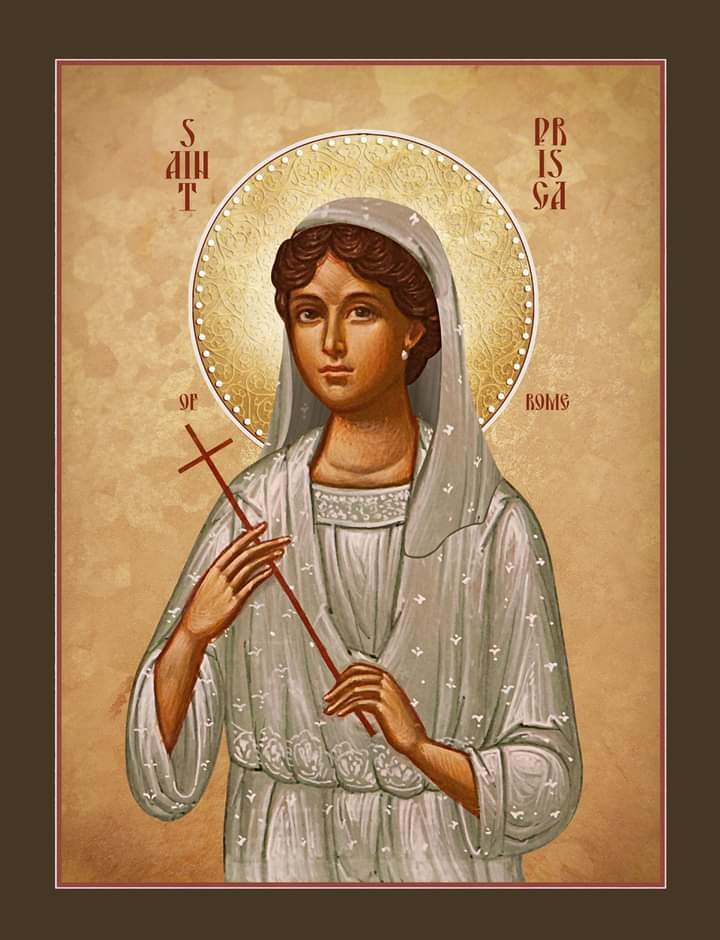
SAINT PRISCA, VIRGIN AND MARTYR
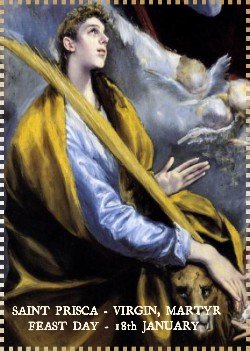
Saint Prisca was a young Roman girl, who was brutally tortured and executed because of her Christian faith. The dates of her birth and death are unknown. She is revered as a saint and a martyr by the Catholic Church and in the Anglican Communion. Especially in England, she is honored as a child martyr. Legend says that Saint Prisca was of noble family. Also known as St. Priscilla, St. Prisca was a child martyr of the early Roman Church. Scholars do not believe she is the Priscilla (Prisca) of the New Testament couple, Priscilla and Aquila, who were friends of the Apostle Paul.
Her parents had managed to keep their secret, and were not suspected of being Christians. But Prisca scorned any precaution and was unafraid to profess to every one what she believed and Whose Cross she followed. She soon became known as a firm little Christian maiden, but there were people in the city, cruel and wicked enough to hate even a child-Christian and to wish her evil. Prisca was seized by guards and brought before Emperor Claudius, who did not persecute Christians with the same fervor as other emperors. Yet, Christians practiced their faith secretly.
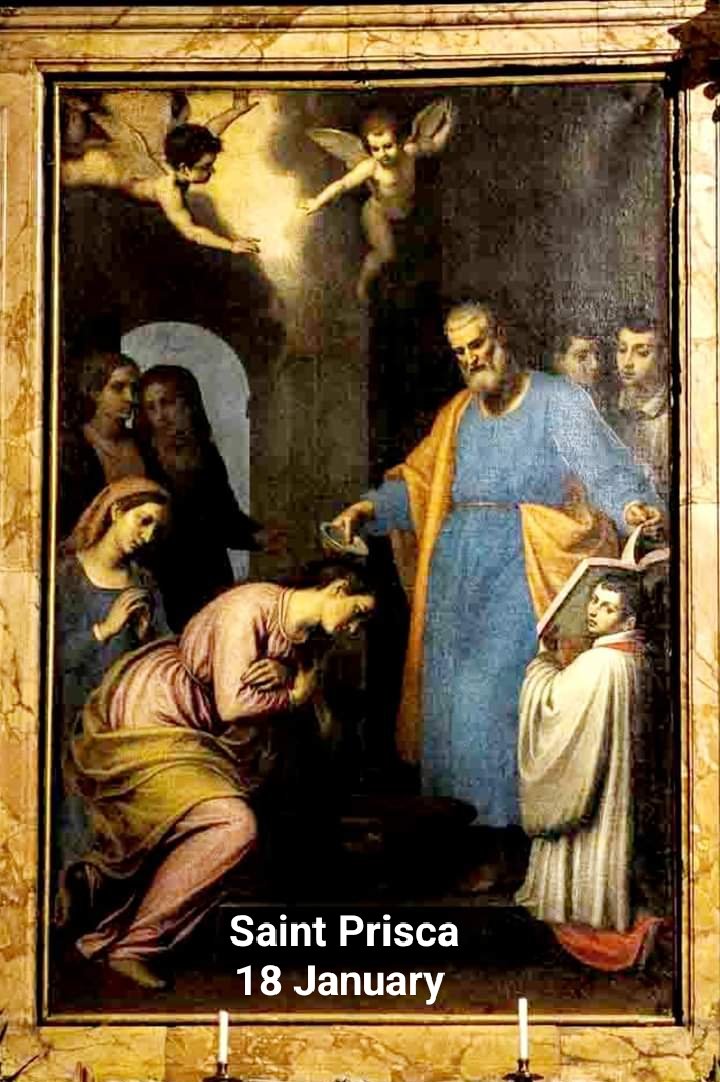
The Emperor, looked at the little maid in surprise to find her so young, and thought that he could easily make this little Christian change her mind. He bade his men take her to the temple of Apollo and make her offer incense to the pagan god. So they carried her to the top of the Palatine, one of the seven hills on which Rome was built. She was thirteen, when she was charged and forced to make a sacrifice to the god Apollo. When she refused because of her Christian faith, she was beaten and sent to prison.
When she was released from prison, she still held steadfastly to her faith in Jesus Christ. This time her punishment included flogging, the pouring of boiling tallow upon her, and a second term of imprisonment. She was at last thrown to a lion in the amphitheater, but it quietly lay down at her feet. The Italian poet Martha Marchina (1600 -1646) describes this moment of Prisca’s martyrdom in poems, in her book Musa Posthuma where the lion’s humane nature is contrasted against human savagery.
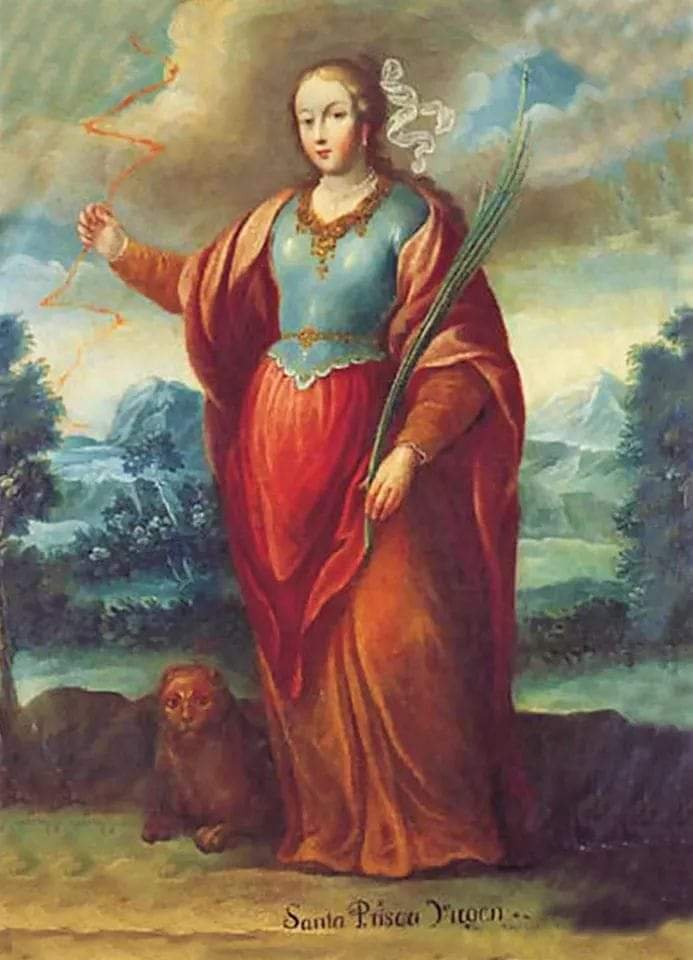
She was starved for three days in a slaves’ prison house, and then tortured upon the rack. Pieces of flesh were next torn from her body with iron hooks, and she was thrown on a burning pile. She miraculously remained alive, but was beheaded at the tenth milestone on the Via Ostiensis—the road from Rome to Ostia. When she died, a great eagle appeared in the sky, hovering over Saint Prisca’s body far up in the air.
And when any of the Romans ventured near her, the eagle swooped down upon them with dreadful cries and flapping of his wings. And his round gray eyes looked so fierce and his claws so long and sharp, that no one dared to touch her for fear of the bird. Saint Prisca had found another protector in cruel Rome. This is why many of the old pictures of Saint Prisca’s martyrdom show a great eagle hovering over her.
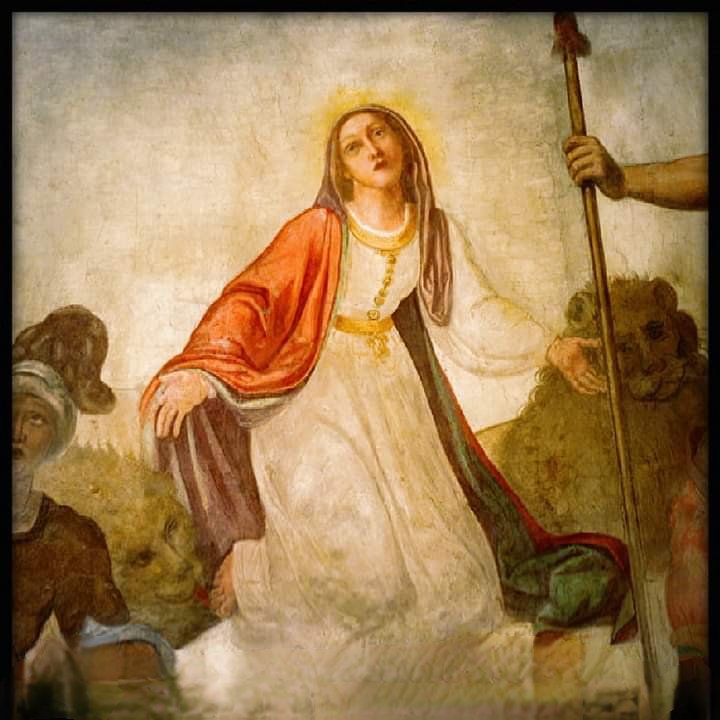
The creature guarded her body night and day, driving every one away, until the Christians, who had been waiting for the chance to venture out, came secretly one night and carried her away.
They buried her where the Romans could not find her, in their little secret cemetery in Saint Priscilla’s catacombs, where now stands a church of St. Prisca and where previously stood a very early title church, the Titulus Priscoe, mentioned in the fifth century and likely built in the fourth. January 18 is her feast day.
SPIRITUAL INSIGHTS INTO THE LIFE OF SAINT PRISCA – 18 JANUARY
Early Witness of Faith
Saint Prisca, also known as Priscilla, is venerated as a young Roman martyr who bore courageous witness to Christ at a tender age. Living during a time of fierce persecution, she chose fidelity to Jesus over comfort, safety, and even life itself, revealing that authentic faith is not measured by age but by depth of conviction.
Courage Rooted in Love
Despite threats, imprisonment, and suffering, Saint Prisca remained steadfast. Her courage did not arise from human strength alone but from a heart deeply rooted in love for Christ. She teaches that true bravery flows from loving God more than fearing loss, rejection, or death.
Purity of Heart and Total Surrender
Tradition remembers Saint Prisca as pure in body and spirit, wholly surrendered to God. Her life reflects the spiritual truth that holiness is not merely avoidance of sin, but a joyful offering of oneself entirely to the Lord, even when the cost is high.
Faith Tested Through Suffering
Saint Prisca’s martyrdom reveals that suffering, when united with Christ, becomes a powerful testimony. Her trials did not weaken her faith but purified it, reminding believers that hardship can become a sacred place of encounter with God.
Witness That Inspires the Church
Though young and hidden from worldly fame, Saint Prisca’s witness has endured through centuries. Her life proclaims that even silent fidelity speaks loudly in the Kingdom of God and that every believer, regardless of status or age, is called to be a living witness to the Gospel.
Spiritual Message for Today
Saint Prisca invites modern believers to examine their commitment to Christ in a world that often pressures compromise. She calls us to courage, purity of heart, and unwavering faith, encouraging us to stand firm in truth and love, trusting that God gives strength to those who remain faithful.
PRAYER
Heavenly Father, you endowed the firm followers of Christ with superlative strength of their faith as Christians, unafraid and loyal, even unto terrible torture, persecution and death. Saint Prisca, the little virgin martyr was one of the ranks of saints who glorified your Name, sacrificially, at the cost of her life.
Help us gain your merits through her intercession, as we give this little saint the honor given to Christ’s fervent disciples, in Jesus’ Name. Amen
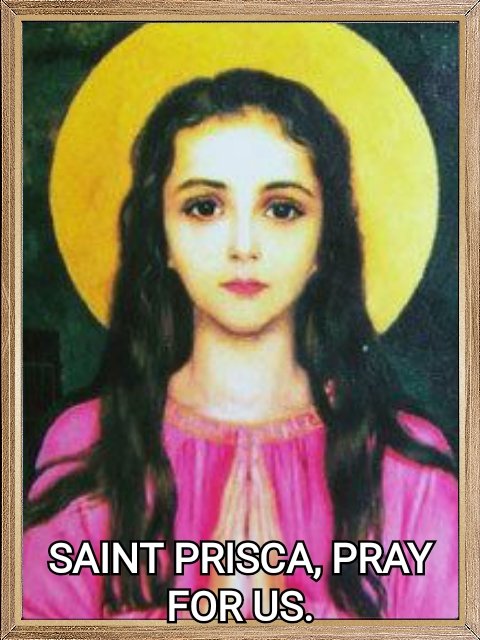
Saint Prisca, pray for us to remain unshaken in the face of trials, in Christ our Lord. Amen
+++++++++++++++++++++++++++++++++
SAINT MARGARET OF HUNGARY
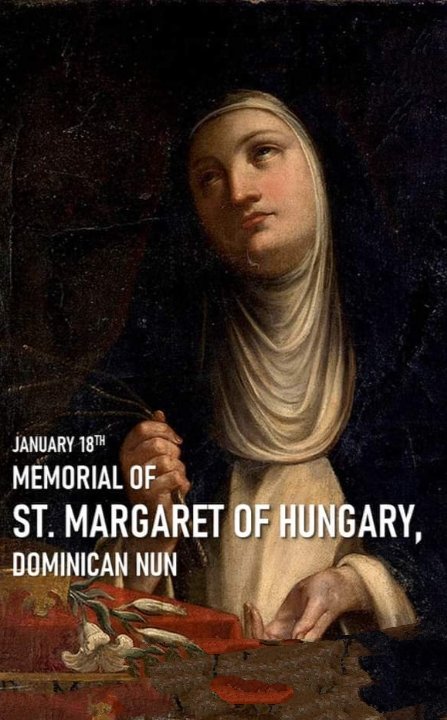
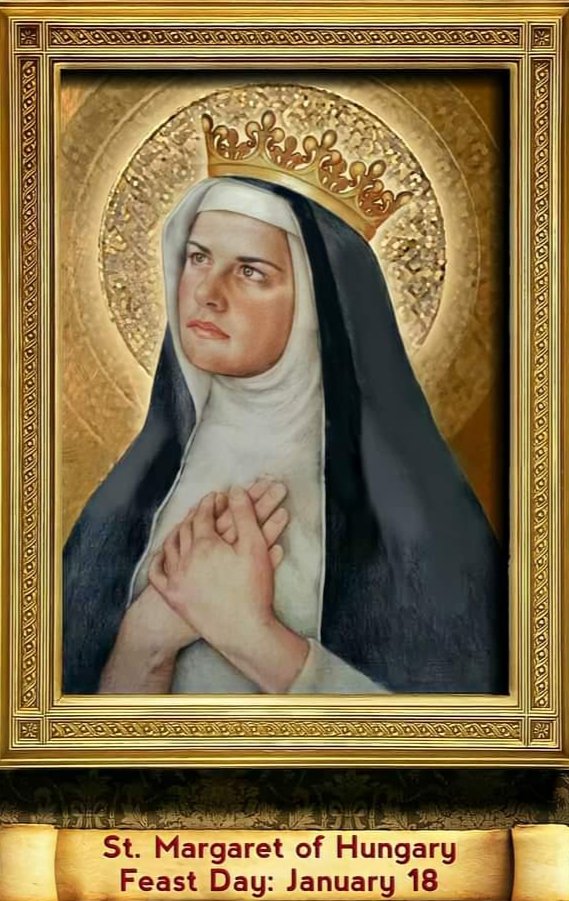
Margaret was born in Klis Fortress in the Kingdom of Croatia, the eighth and last daughter (9th of 10 children) of the royal couple. They resided there during the Mongol invasion of Hungary (1241–42) as her father was also ruler of this land. Her parents vowed that if Hungary was liberated from the Mongols, they would dedicate the child to religion.
The three-year-old Margaret was entrusted by her parents to the Dominican monastery at Veszprém in 1245. Six years later she was transferred to the Monastery of the Blessed Virgin founded by her parents on Nyulak Szigete (Rabbit Island) near Buda (today Margaret Island, named after her, and a part of Budapest; the ruins of the monastery can still be seen). She spent the rest of her life there, dedicating herself to religion and opposing all attempts of her father to arrange a political marriage for her with King Ottokar II of Bohemia.
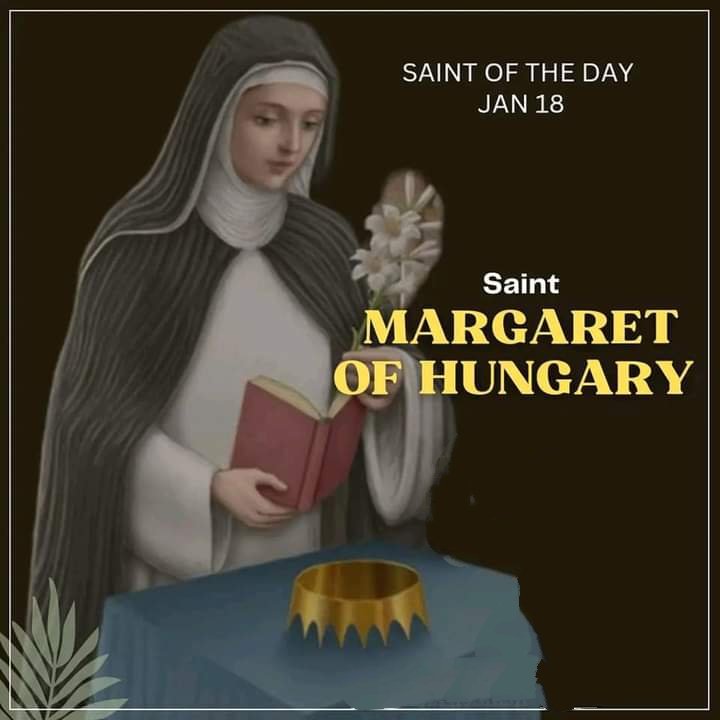
She appears to have taken solemn vows when she was eighteen years old. In marked contrast to the customs of her Order, she received the Consecration of Virgins along with some other royals to prevent further attempts on the part of her father to have her vows dispensed by the pope for marriage.
Many of the details of her life are known from the Legend of Saint Margaret, written probably in the 14th century and translated from Latin to Hungarian in the 15th. The only remaining copy of the legend is in the Margaret Codex copied by the Dominican nun Lea Ráskay around 1510. According to the legend, Margaret chastised herself from early childhood, wore an iron girdle, hairshirts and shoes spiked with nails and performed the most menial work in the convent. The extravagance of the penances she undertook may have shortened her life. She died on 18 January 1270.
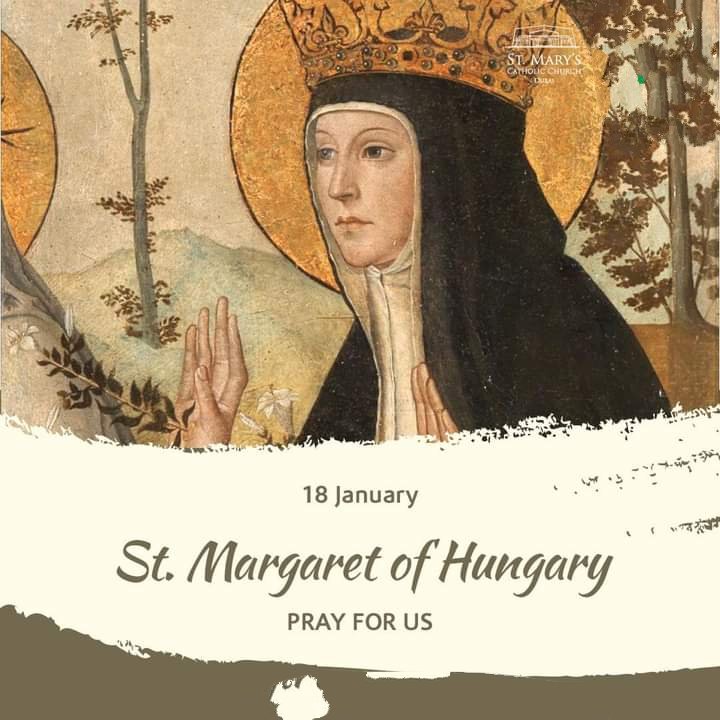
She was venerated as a saint soon after her death, e.g., a church dedicated to her in Bocfolde, Zala County, appears in documents dated 1426. Steps were taken to procure her canonization shortly after her death, at the request of her brother King Stephen V.
The necessary investigations were taken up between 1270 and 1276, but the canonization process was not successful, even though 74 miracles were ascribed to her intercession, most of them referring to curing illnesses, even someone coming back from the dead.
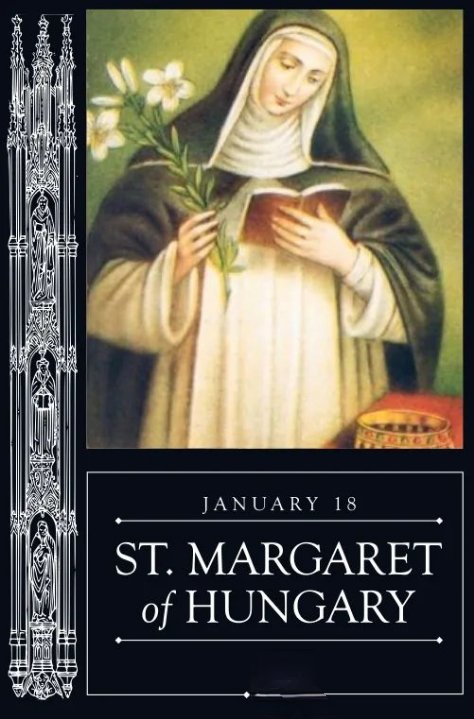
Among those giving testimony were 27 people for whom miracles had been wrought. Unsuccessful attempts to canonize her were also made in 1640 and 1770. She was finally canonized by Pope Pius XII on November 19, 1943, at that time the feast day of her aunt,
Saint Elizabeth of Hungary. Her feast day is celebrated by the Dominican Order. Raised by Pope Pius VII to a festum duplex, it is the day of her death, January 18.
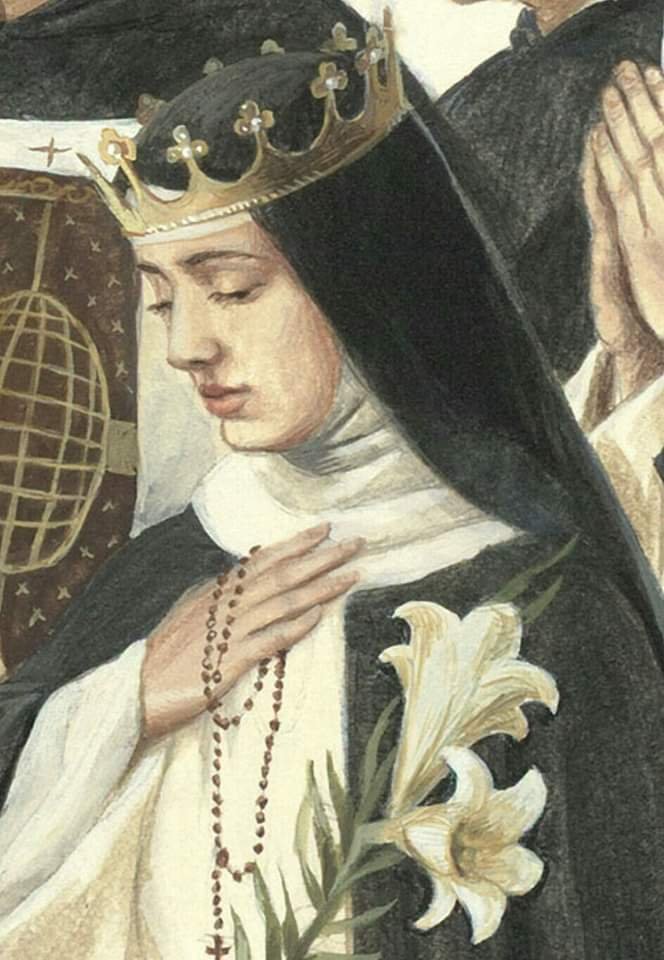
Her monastery was among those suppressed in 1782, part of the suppression of all monastic orders by the Emperor Joseph II. At that time, her remains were given to the Poor Clares. They were kept in Pozsony (today Bratislava) and Buda.
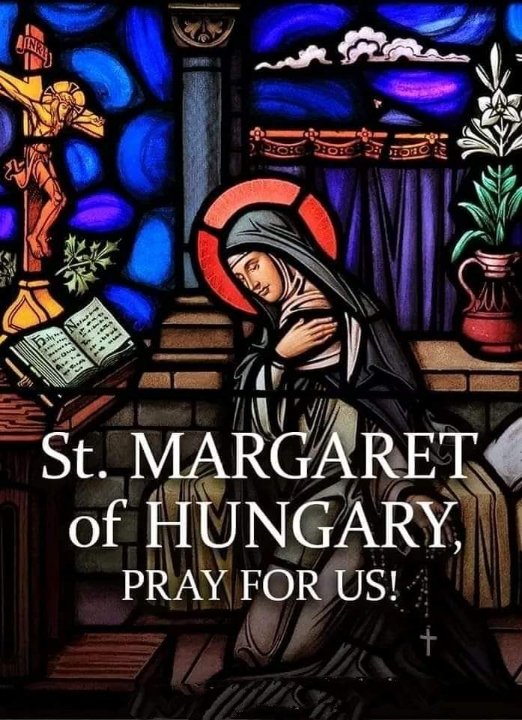
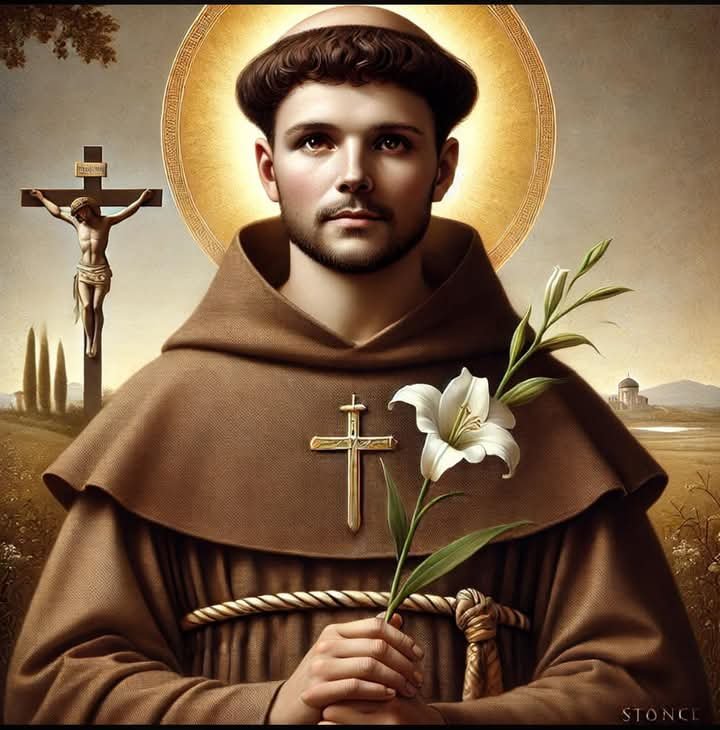
The relics were partly destroyed in 1789 but some portions were preserved and are now kept in Esztergom, Győr, and Pannonhalma. In art Margaret is usually depicted in a Dominican nun’s religious habit, holding a white lily and a book.
PRAYER
O God, you called your humble handmaid Saint Margaret of Hungary to dwell on you and walk your Way, before all else. Grant that, through her example and intercession, we may always seek your Holy Will with sanctified and humble hearts, to come at last to dwell in your presence of eternal glory.
We ask this in the Name of Jesus, your Son and our Lord, in the unity of the Holy Spirit. Amen
+++++++++++++++++++++++++++++++++++
ALSO CELEBRATED:
SAINT CHARLES OF SEZZE
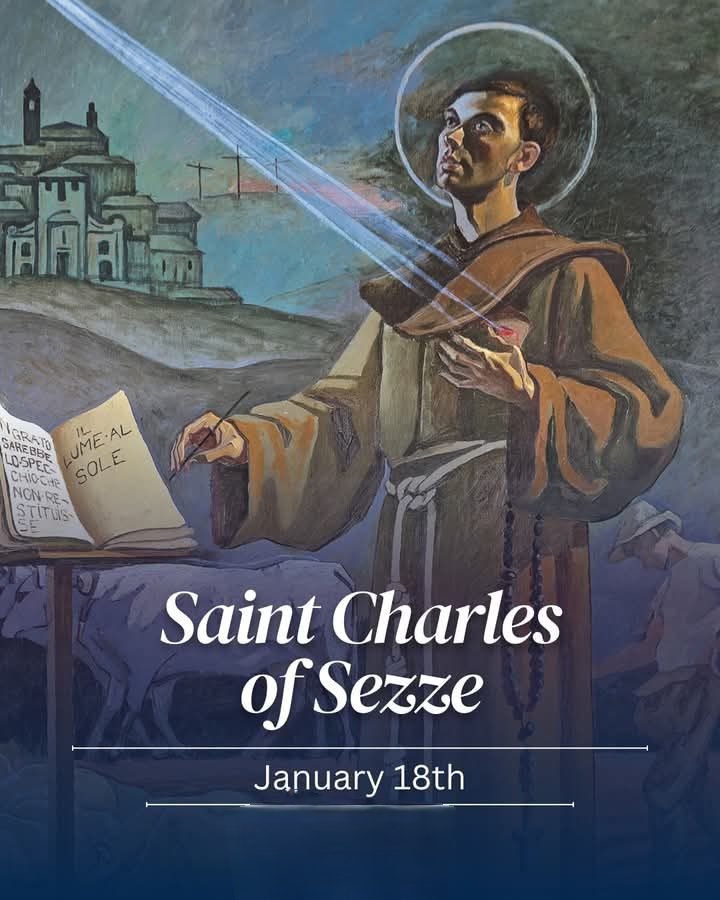
Charles thought that God was calling him to be a missionary in India, but he never got there. God had something better for this 17th-century successor to Brother Juniper.
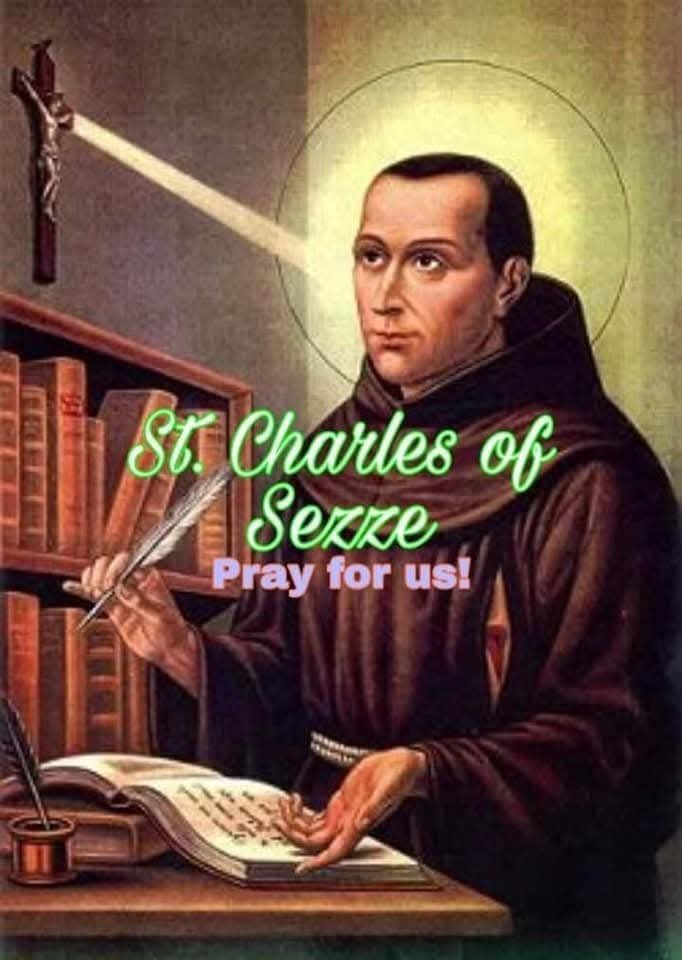
Born in Sezze, southeast of Rome on October 19, 1613, Charles was inspired by the lives of Salvator Horta and Paschal Baylon to become a Franciscan; he did that in 1635. Charles tells us in his autobiography, “Our Lord put in my heart a determination to become a lay brother with a great desire to be poor and to beg alms for his love.”
Charles served as cook, porter, sacristan, gardener and beggar at various friaries in Italy. In some ways, he was “an accident waiting to happen.” He once started a huge fire in the kitchen when the oil in which he was frying onions burst into flames.
One story shows how thoroughly Charles adopted the spirit of Saint Francis. The superior ordered Charles—then porter—to give food only to traveling friars who came to the door. Charles obeyed this direction; simultaneously the alms to the friars decreased. Charles convinced the superior the two facts were related. When the friars resumed giving goods to all who asked at the door, alms to the friars increased also.
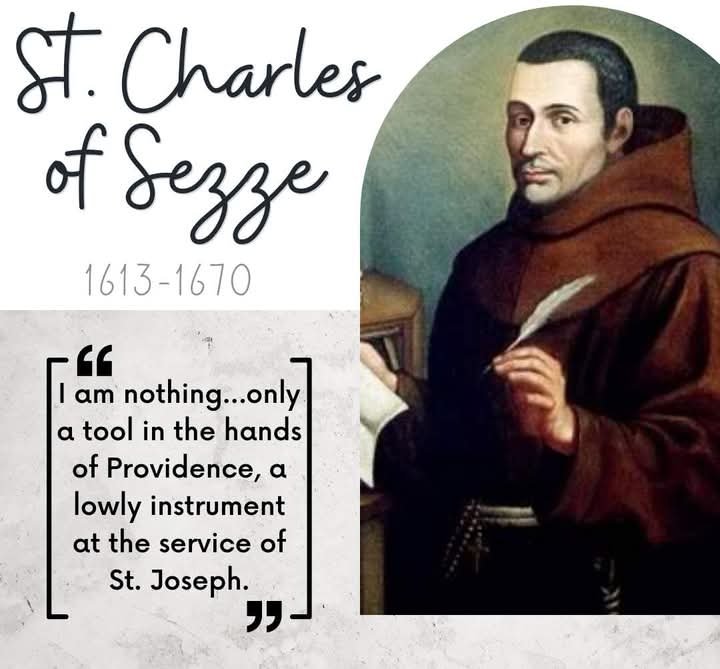
At the direction of his confessor, Charles wrote his autobiography, The Grandeurs of the Mercies of God. He also wrote several other spiritual books. He made good use of his various spiritual directors throughout the years; they helped him discern which of Charles’ ideas or ambitions were from God. Charles himself was sought out for spiritual advice. The dying Pope Clement IX called Charles to his bedside for a blessing.
Charles had a firm sense of God’s providence. Father Severino Gori has said, “By word and example he recalled in all the need of pursuing only that which is eternal” (Leonard Perotti, St. Charles of Sezze: An Autobiography, page 215).
He died at San Francesco a Ripa in Rome on January 6, 1670 and was buried there. Pope John XXIII, a Secular Franciscan canonized him in 1959.
The drama in the lives of the saints is mostly interior. Charles’ life was spectacular only in his cooperation with God’s grace. He was captivated by God’s majesty and great mercy to all of us.
PRAYER
Lord God, you kept St. Charles of Sezze faithful to Christ’s pattern of poverty and humility. May his prayers help us to live in fidelity to our calling and bring us to the perfection you have shown us in your Son, who lives and reigns with you and the Holy Spirit, one God, for every and ever.
 Source: Franciscan Media
*************************************
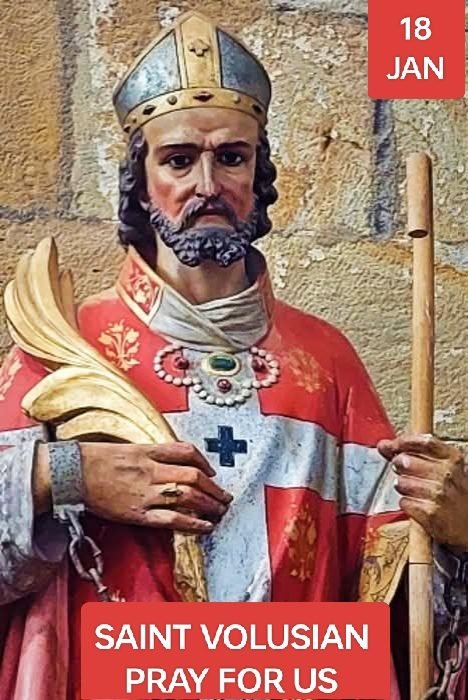
SAINT VOLUSIAN, BISHOP OF TOURS … FEAST DAY 18th JANUARY
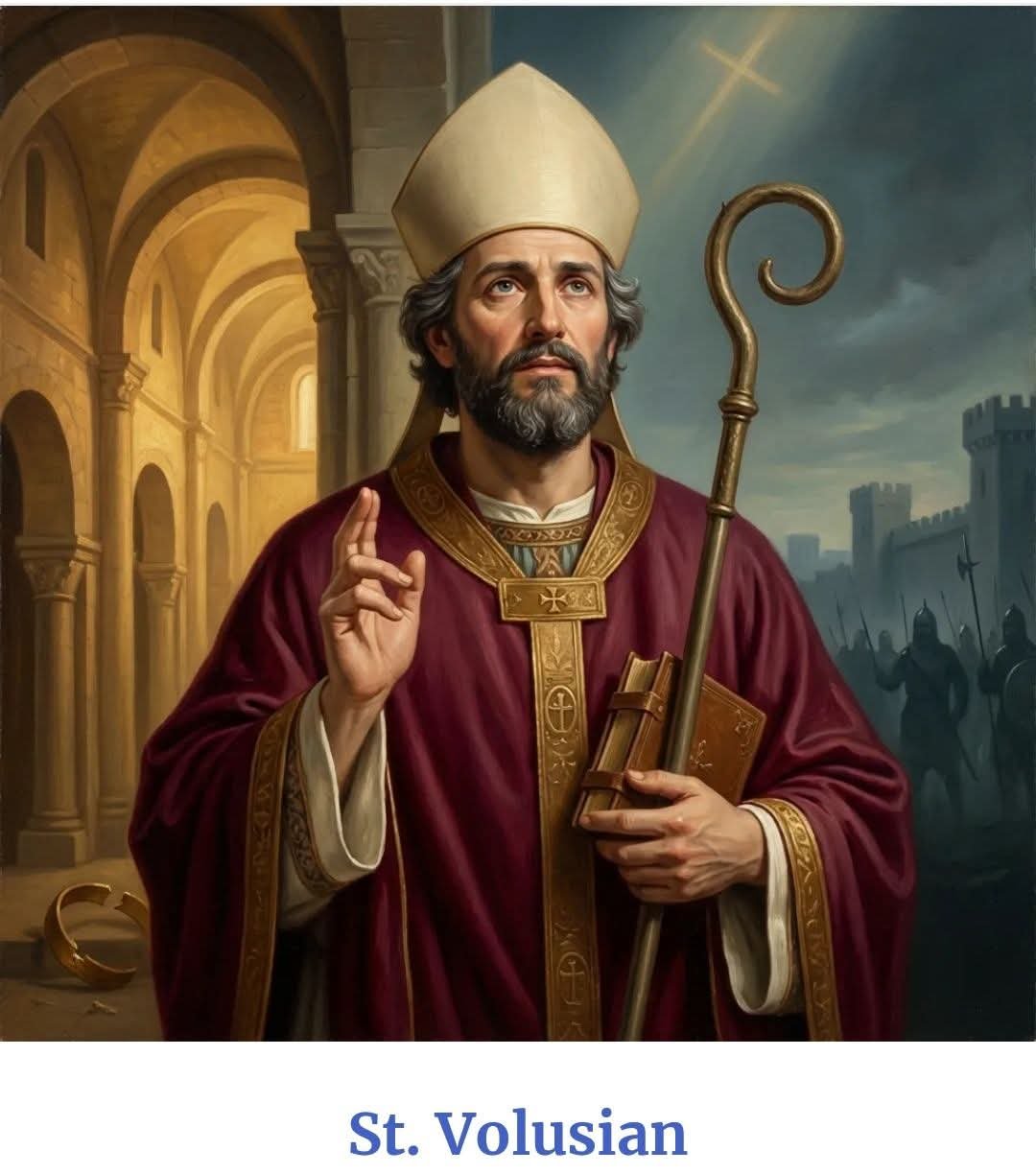
Saint Volusian was born in France into a wealthy and influential senatorial family. Though the exact date and place of his birth remain unknown, his lineage was marked by strong Christian values and devotion. He was related to Saint Perpetuus, his predecessor as Bishop of Tours, and to Ruricius of Limoges, further emphasizing his connection to prominent religious figures of the time.
Before taking holy orders, Volusian was married, as clerical celibacy was not strictly enforced in the Western Church during this period. His marriage, however, posed unique challenges, as historical accounts describe his wife as having a fiery and difficult temperament. Despite these personal obstacles, Volusian’s faith remained steadfast, guiding his journey toward serving the Church.
Volusian was appointed the seventh Bishop of Tours around 491 AD, succeeding Saint Perpetuus. Tours, a prominent Christian center in Gaul, was experiencing political unrest and the looming threat of barbarian invasions, particularly from the Visigoths, who adhered to Arianism. As bishop, Volusian worked tirelessly to defend the faith, strengthen the Church, and guide his flock through these trying times.
He is known for his eloquence and wisdom in addressing both spiritual and temporal matters. His leadership during a period of intense uncertainty and division within the region highlighted his dedication to his role as a shepherd of the Christian community.
The increasing tensions between the Catholic Church and the Arian Visigoths eventually led to Volusian’s exile. In 496 AD, he was accused of opposing the Visigothic rulers and was forced to leave Tours. He was sent to Toulouse, where he lived in exile. Historical records suggest he died on January 18, 496, though the exact circumstances of his death remain unclear. Some traditions hint at martyrdom, though this claim is not universally accepted.
PRAYER
O Saint Volusian, faithful shepherd of the Church and steadfast witness to Christ, you who endured exile and suffering rather than betray the truth entrusted to you, intercede for us before the Lord.
Obtain for us courage in times of trial,
patience in injustice, and fidelity to the Gospel even when it is costly.
Help us to remain firm in faith, gentle in charity, and hopeful in adversity, that we may persevere to the end and glorify God in all things. Through Christ our Lord.
Amen