
TODAY’S GOSPEL READING – 2 MAY
May 2, 2026
Romans 1:16
May 3, 2026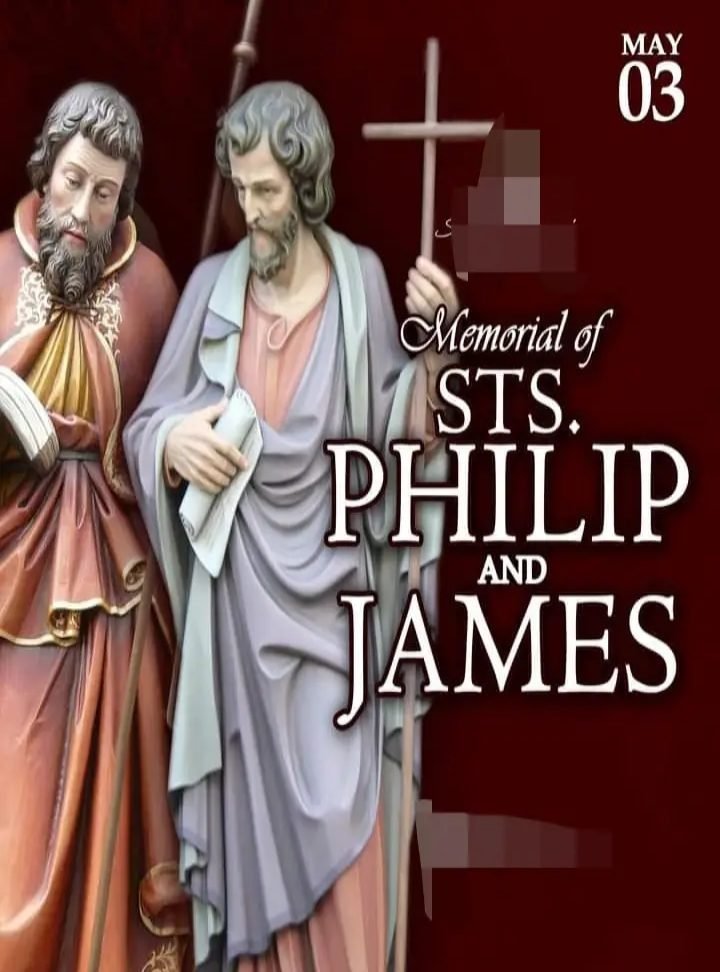
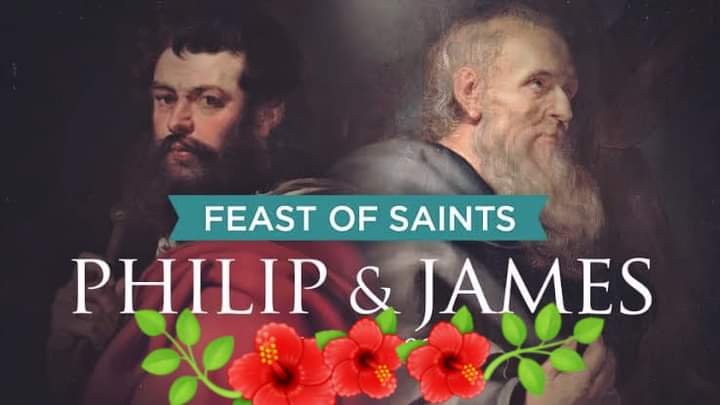
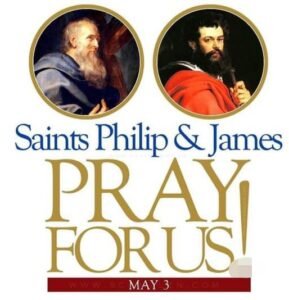
FEAST OF SAINT PHILIP AND SAINT JAMES THE LESS, APOSTLES, MARTYRS
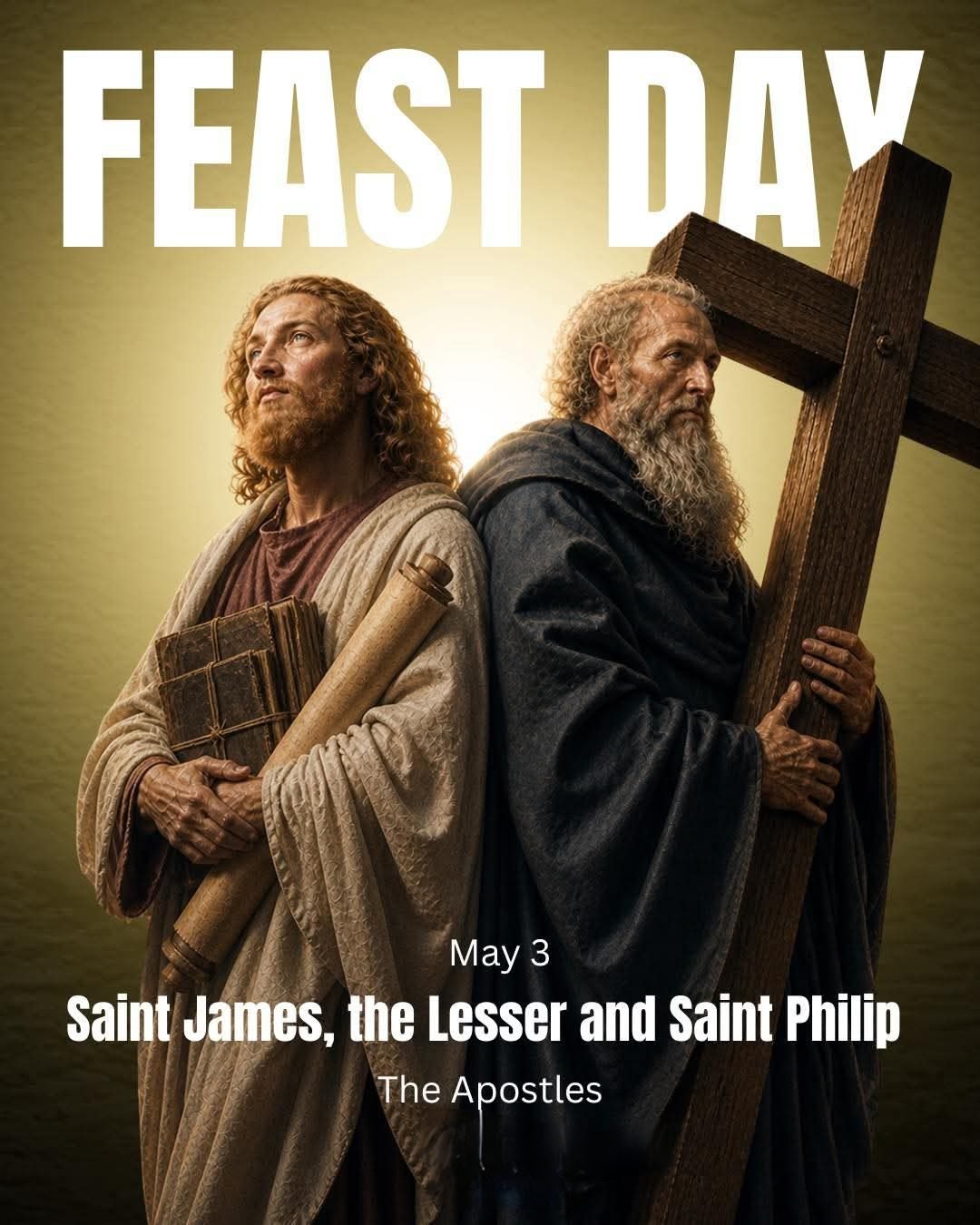
FEAST DAY – 3rd MAY
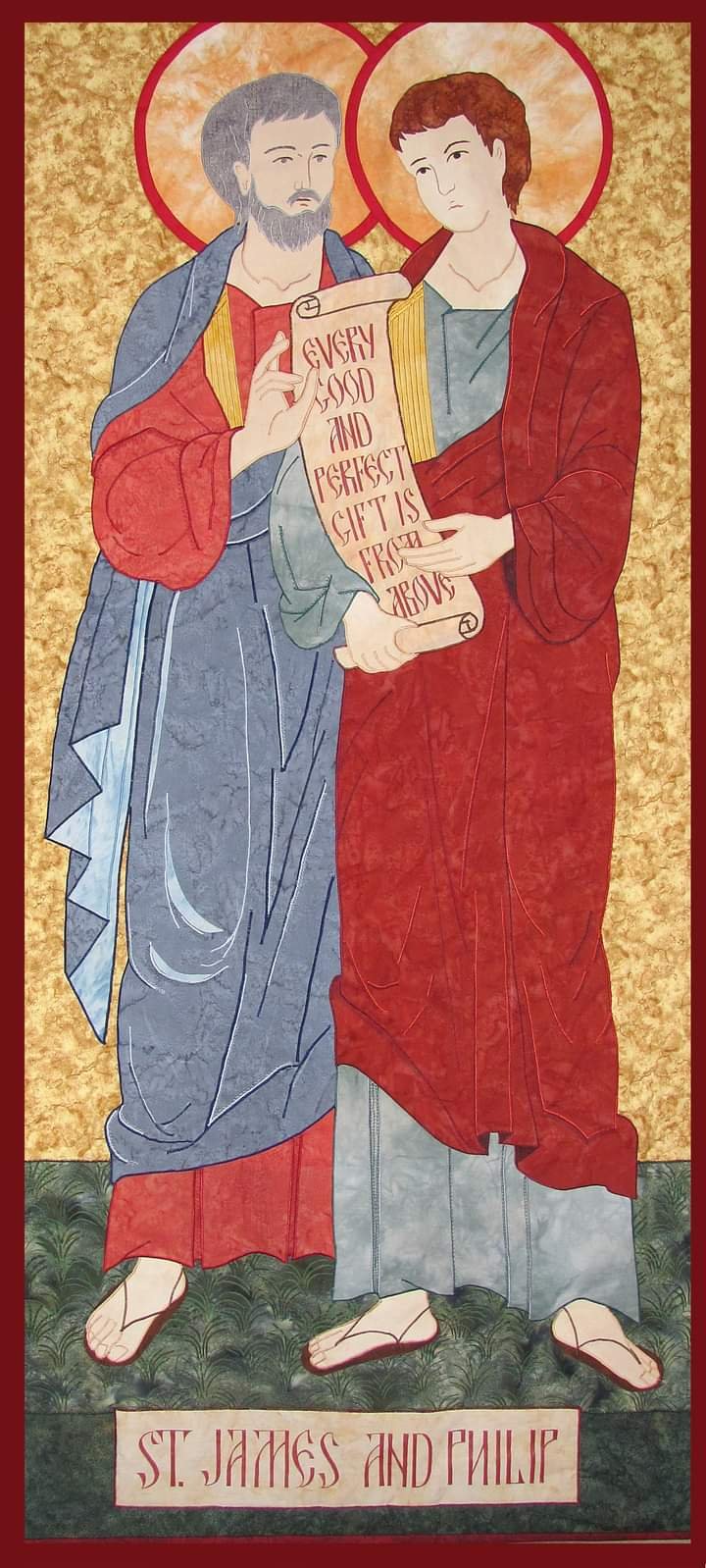
Little is known of the these two men except that they had been listed among the Twelve. Philip, we know, came from Bethsaida and his appearances in the Gospels are episodes which portray him as a gatekeeper, one who connects people with Jesus. His few pieces of discourse also unwittingly make Jesus reveal something significant about his identity as being One with the Father and as the Way, the Truth and the Life.
Philip’s prayer makes a good prayer of faith for all of us: “Lord, show us the Father and that will be enough for us.” Jesus’ response may sound tired and exasperated “Philip, I have been with you all this time and you still do not know me? I and the Father are one,” but Philip’s statement was no more unknowing than “Lord, I believe, help my unbelief.”
For many of us, it takes a while to understand and it takes even a longer while to believe. For people like us, Ignatius’ counsel is to always touch base with our deep desires and if our deep desire be that of Philip’s “show us the Father” that should really be enough to get us through.
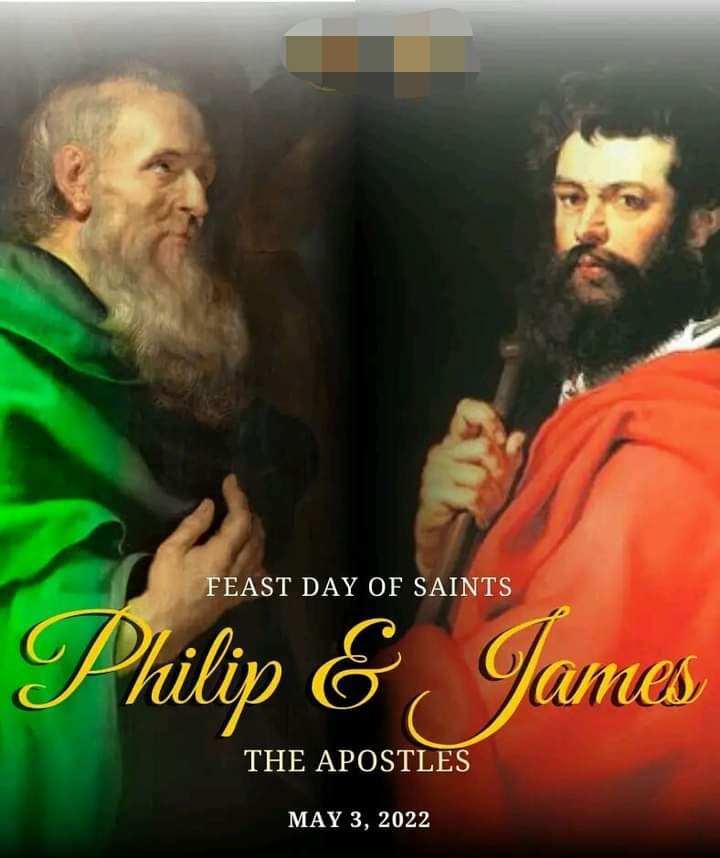
Of James, usually referred to as “James the Lesser” to distinguish him from “James the Greater” who is also an apostle, the son of Zebedee, brother of John. James the Greater is part of the innermost circle of Peter, James and John. James the Lesser is the son of Alphaeus.
Some commentators say that his pairing with Philip in the celebration of the apostles’ feasts are an attempt to extol to virtues of faith and works, faith being attributed to Philip and works to James, alluding to the Epistle of James. But other scholars would not identify James the Less with James the author of the epistle who was most probably the Bishop James or James the Just.
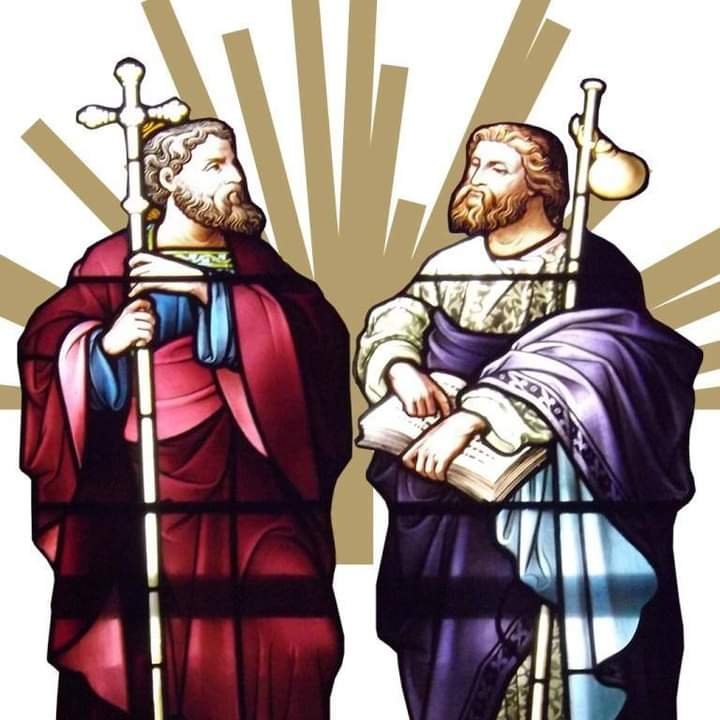
Biblical characters are not often as clear as we want them for a big part of their history is unknown to us. For now it is good to note that for Philip and James, the dignity of becoming apostles did not lie on any human achievement or stature of theirs but to gratuitous providence of God, the inner power of love from all apostolic calls to service derives.
Ultimately it is not as important to project who they were in the early Church although we know they became shepherds of their communities, but that they served to proclaim Jesus, the Way of Truth and Life and so allow Jesus to gather all back to the Father.
SAINT PHILIP
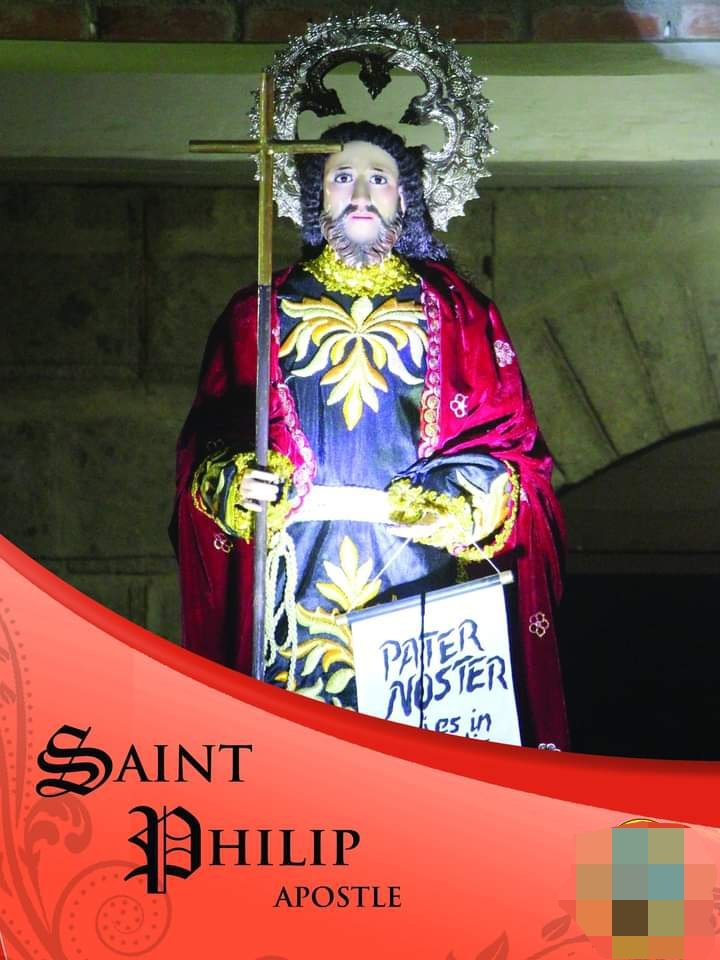
Like Sts. Peter and Andrew, St. Philip was from Bethsaida, in Galilee. According to tradition he was crucified at Hierapolis in Phrygia, where he had preached the Gospel. He introduced St. Bartholomew (Nathanael) to Christ. Christ declared to St. Philip, “Whoever has seen me has seen the Father… I am in the Father and the Father is in me” (Jn. 14:8, 11).
Philip was one of the first chosen disciples of Christ. On the way from Judea to Galilee Our Lord found Philip, and said, “Follow Me” Philip straightway obeyed; and then in his zeal and charity sought to win Nathaniel also, saying, “We have found Him of Whom Moses and the prophets did write, Jesus of Nazareth.”
When Nathaniel in disbelief and in utter wonder of how the Messiah could be from Nazareth asked, “Can any good come out of Nazareth?” Philip simply answered, “Come and see,” bringing him to Jesus.
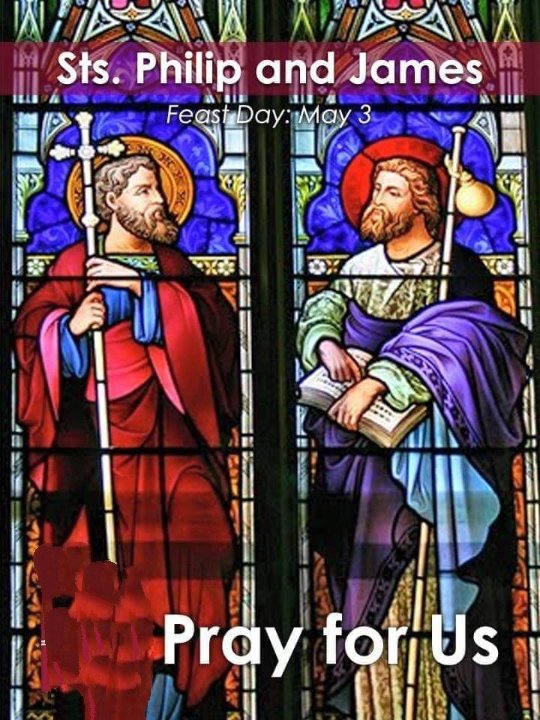
Another characteristic saying of this apostle is preserved for us by St. John. Christ in His last discourse had spoken of His Father; and Philip exclaimed, in the fervor of his thirst for God, “Lord, show us the Father, and it is enough”
He is the Patron of Hatters, Luxembourg, pastry chefs, Uruguay.
SAINT JAMES THE LESS
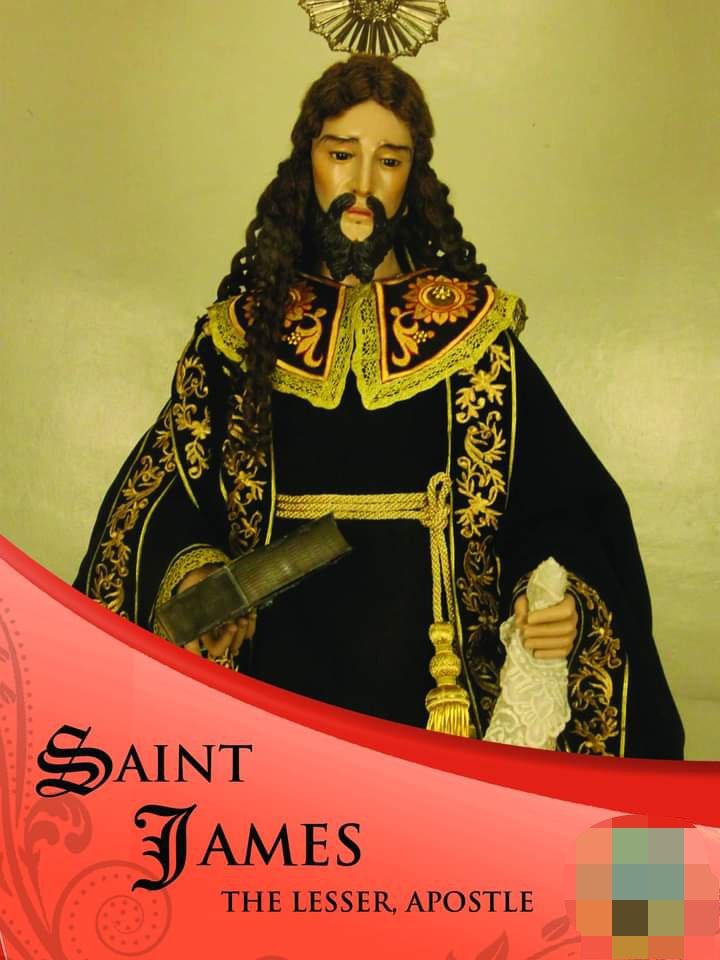
St. James was a cousin of of Our Lord. He is often called St. James the Less because of St. Mark’s reference to him as “the younger” (Mk. 15:40). While he was Bishop of Jerusalem, St. James wrote an Epistle of the New Testament. He was thrown from the terrace of the Temple and then stoned to death.
St. James the Less, was also the brother of the Apostle Jude, and was of Cana of Galilee. He is regarded as the author of one of the Catholic Epistles in the New Testament. He was favored by an appearance of the Risen Christ (I Cor. 15:7).
After the dispersion of the Apostles he was made Bishop of Jerusalem. He was visited by St. Paul (Gal. 1:19). He spoke after Peter at the meeting of the Apostles (Acts 15:13). When he refused to deny the Divinity of Christ, the Jews cast him down from the terrace of the temple and clubbed him to death.
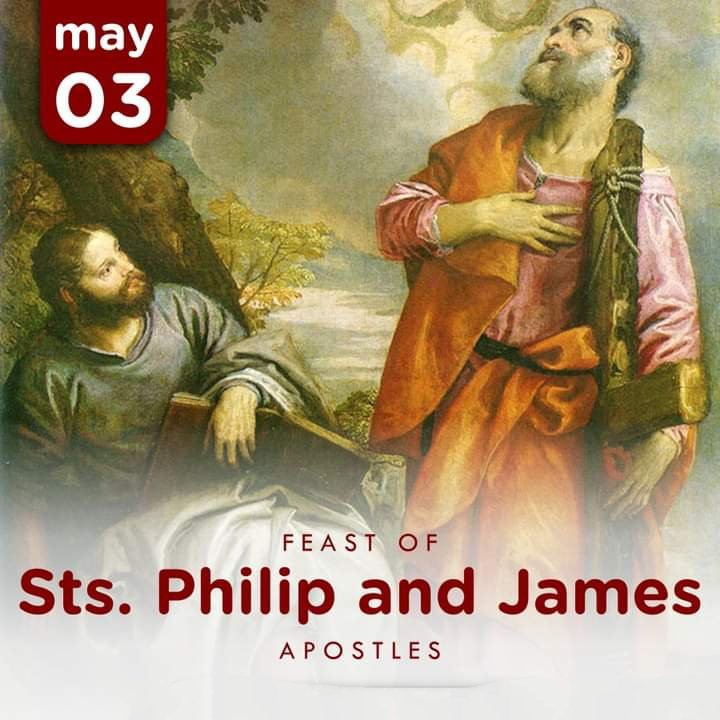
The Breviary contains a description of his death. “When he was ninety-six years old and had governed the Church for thirty years in a most holy manner, the Jews sought to stone him, then took him to the pinnacle of the temple and cast him off headlong.
As he lay there half dead, with legs broken by the fall, he lifted his hands toward heaven and prayed to God for the salvation of his enemies, saying: Lord, forgive them for they know not what they do!
While the apostle was still praying, a fuller struck his head a mortal blow.” His relics now rest next to those of St. Philip in the church of the Holy Apostles in Rome, and their names are mentioned in the first list in the Canon of the Mass.
Patron of Apothecaries, druggists, dying people, fullers, hatmakers, hatters, milliners, pharmacists, Uruguay.
(Excerpted from Homily of Fr. Vic and The Church’s Year of Grace, Pius Parsch)
CONTEMPLATING THE LIVES OF SAINTS PHILIP AND JAMES THE LESSER, APOSTLES – 3 MAY
INTRODUCTION
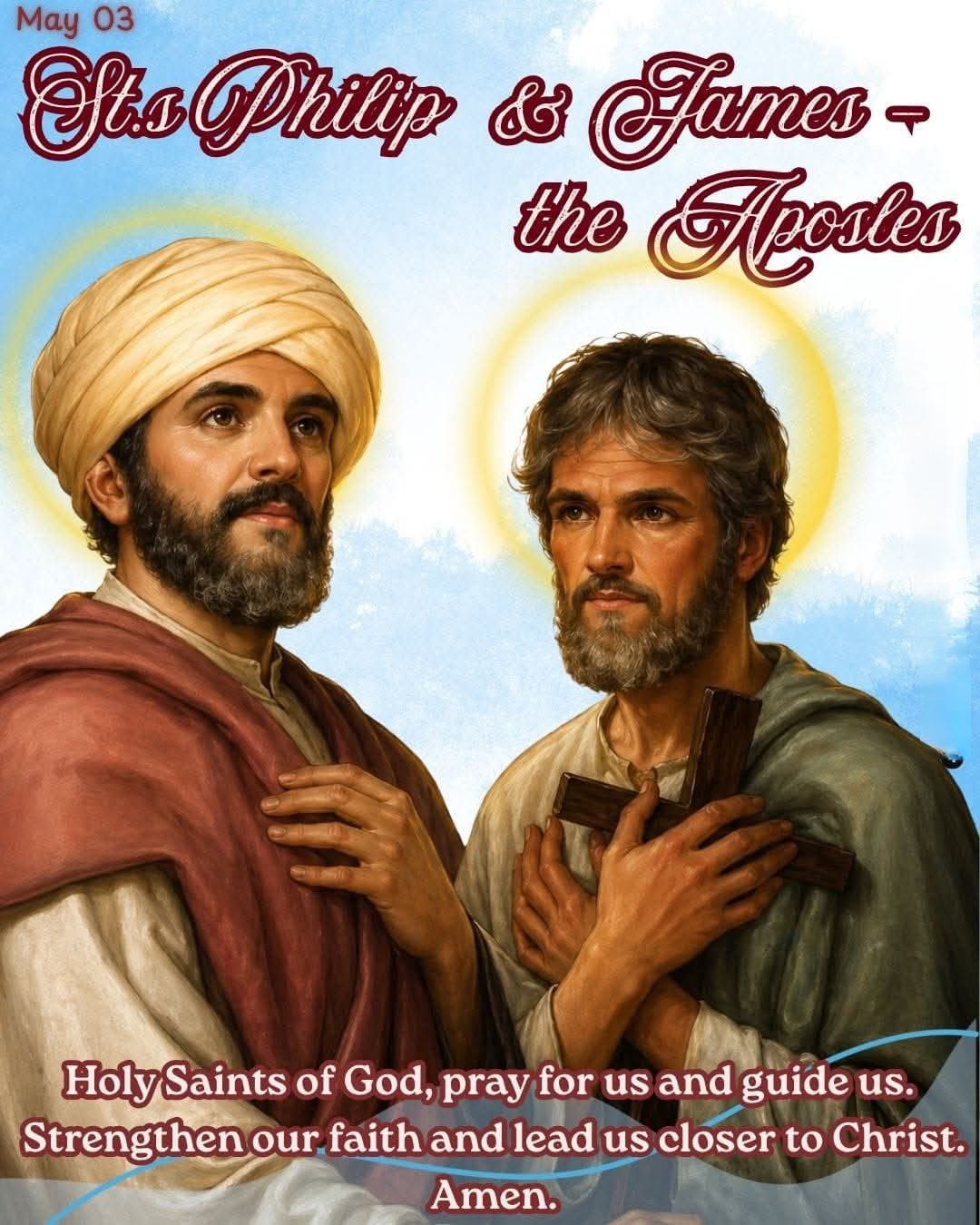
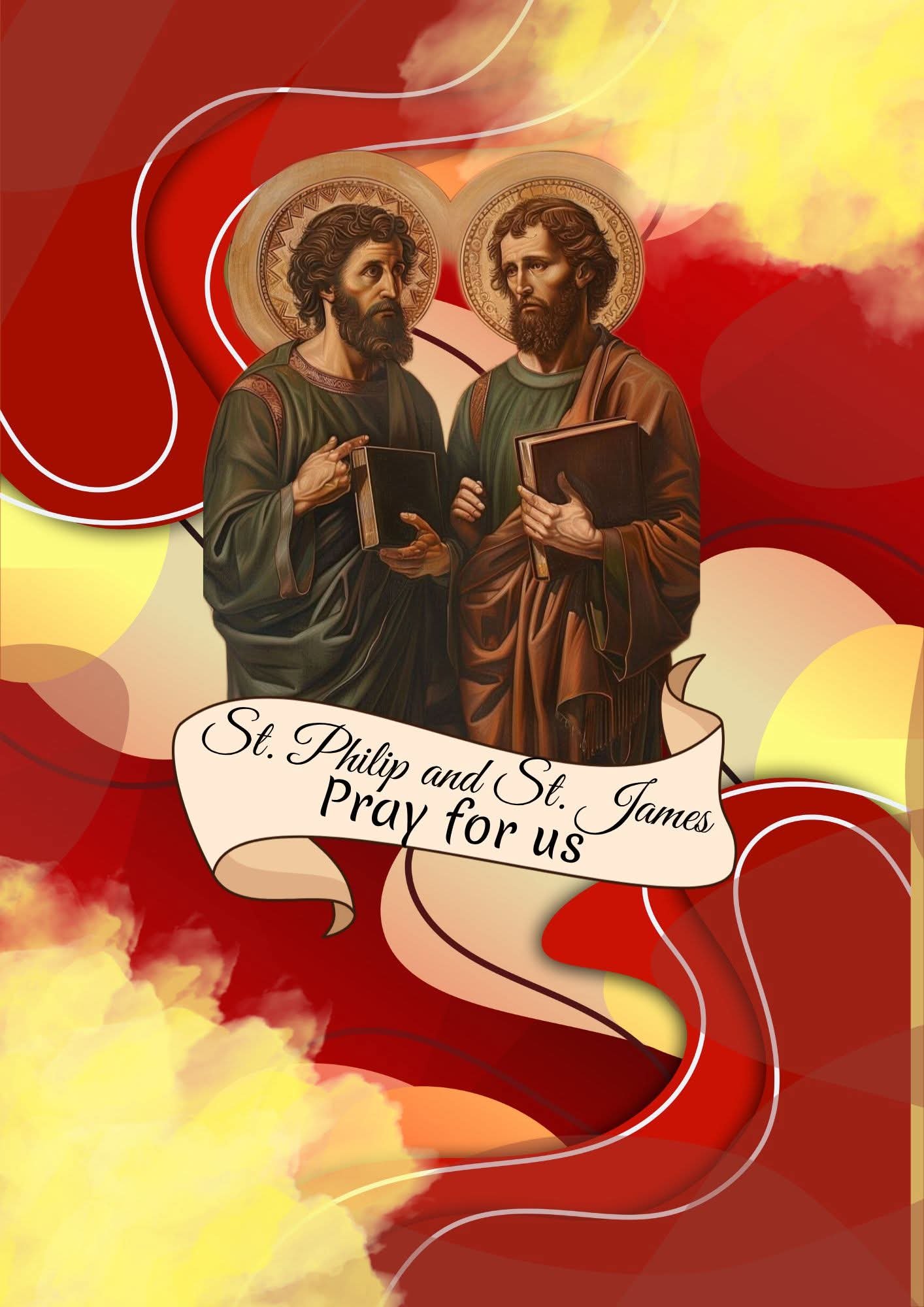
The Church commemorates Saints Philip and James the Lesser together, honoring their faithful witness as Apostles of Christ. Though less prominently featured in the Gospels than some others, their lives shine with quiet dedication, missionary zeal, and steadfast commitment to truth.
SAINT PHILIP: THE SEEKER WHO LED OTHERS TO CHRIST
Philip was called personally by Jesus, and his immediate response reflects a heart open to God. After encountering the Lord, he did not keep the joy to himself but went to find Nathanael, declaring that they had found the One foretold by Moses and the prophets.
Scripture reveals Philip as sincere and practical, yet still growing in faith. At the feeding of the five thousand, he struggled to see how the need could be met, and at the Last Supper, he asked Jesus to show them the Father. These moments reveal a disciple learning to move from human reasoning to deeper trust.
Tradition holds that Philip preached the Gospel in distant lands, enduring hardship and ultimately martyrdom. His life reminds us that faith is a journey—from questioning to conviction, from seeking to proclaiming.
JAMES THE LESSER: THE HIDDEN PILLAR OF THE CHURCH
James, called “the Lesser” to distinguish him from James the son of Zebedee, is often identified as the son of Alphaeus and closely associated with the early Church in Jerusalem. He is known for his leadership, holiness, and deep sense of justice.
He is traditionally regarded as the author of the Epistle of James, which emphasizes living faith through action. His teaching is direct and practical: faith must be shown in works, patience in trials, and care for the poor.
As a leader of the Jerusalem community, James guided the early Church through critical decisions, including the acceptance of Gentile believers. His life of prayer and austerity earned him great respect. Tradition recounts that he died a martyr, remaining faithful even unto death.
THEIR SHARED WITNESS
Though different in personality and role, Philip and James shared a common mission—to bear witness to Christ. One brought others to Jesus through personal invitation; the other strengthened the Church through leadership and teaching.
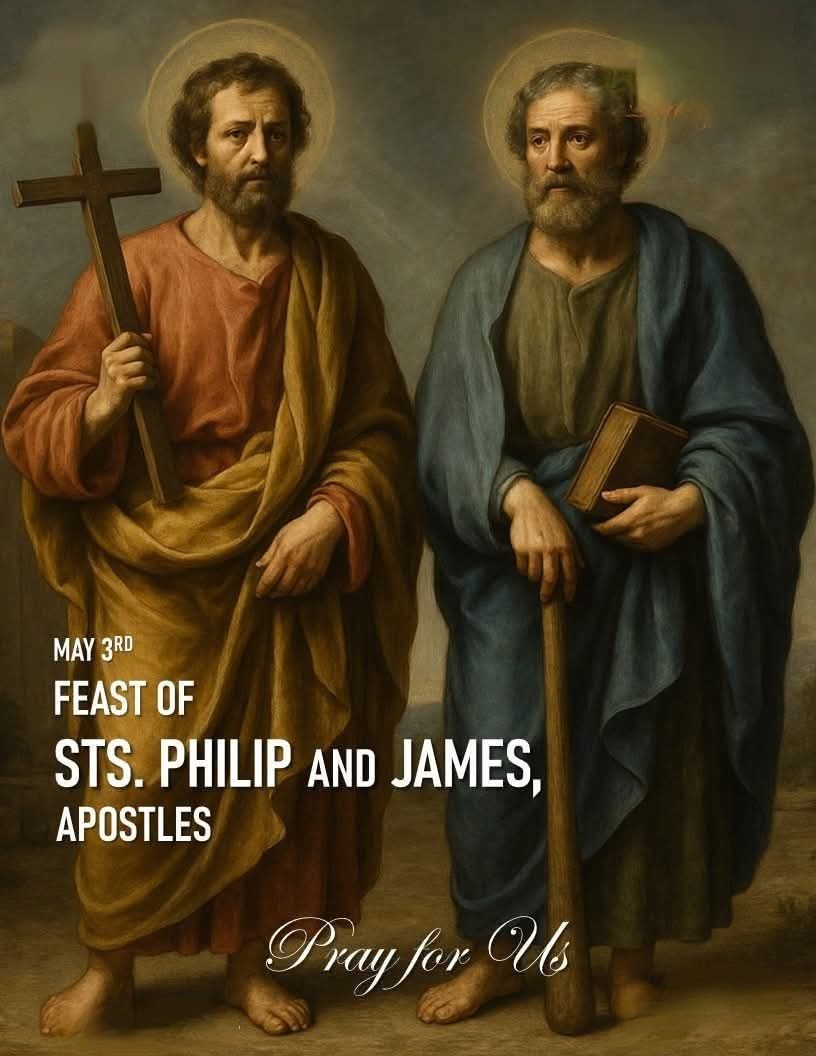
Together, they reflect two essential dimensions of discipleship: evangelization and perseverance. Their lives show that whether through active outreach or quiet faithfulness, each disciple has a vital place in God’s plan.
SPIRITUAL LESSONS FROM THEIR LIVES
Philip teaches openness—the willingness to seek, to question, and to follow where Christ leads. He shows that even imperfect understanding can grow into strong faith when rooted in a relationship with the Lord.
James teaches integrity—a faith lived out in action, grounded in prayer and expressed through righteous living. He reminds us that holiness is often formed in hiddenness, through consistency and obedience.
RELEVANCE FOR TODAY
In a world filled with doubt and distraction, Philip encourages us to lead others to Christ with simplicity and conviction. His example urges us not to wait for perfect understanding before sharing the Good News.
James speaks powerfully to modern life by calling for authentic faith. In times when words are many but actions are few, he reminds us that true belief must be visible in how we live, serve, and endure.
CONCLUSION
The lives of Saints Philip and James the Lesser invite us into a deeper discipleship—one that seeks Christ earnestly and lives His truth faithfully. Their witness continues to guide the Church, calling every believer to be both a seeker and a doer of the Word.
PRAYER
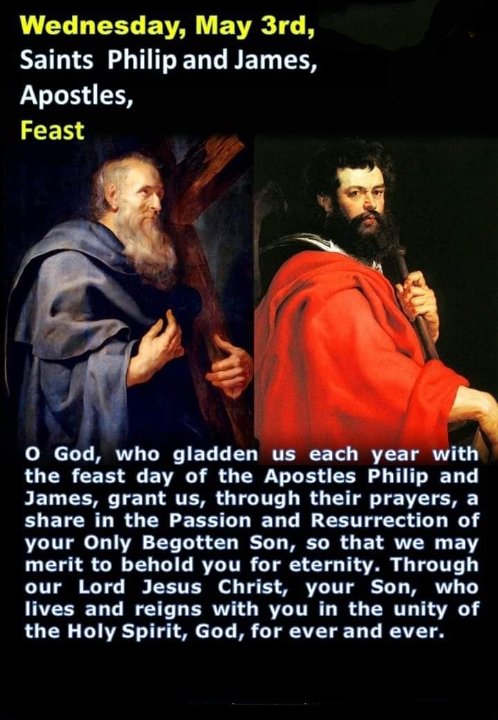
O God, who gladden us each year with the feast day of the Apostles Philip and James, grant us, through their prayers, a share in the Passion and Resurrection of your Only Begotten Son, so that we may merit to behold you for eternity. Through our Lord Jesus Christ, your Son, who lives and reigns with you in the unity of the Holy Spirit, one God, for ever and ever. Amen
Saints Philip and James, who are commemorated in the Roman Canon Eucharistic Prayer I, as Apostles of Our Lord, pray for us!