
Psalm 31- A Prayer of Trust and Refuge
May 4, 2026
Matthew 9: 37-38
May 4, 2026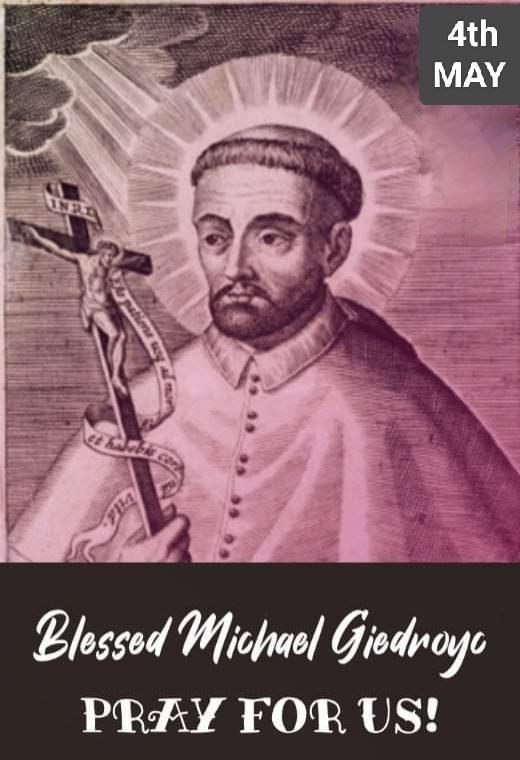
FEAST OF BLESSED MICHAEL GIEDROYC
FEAST DAY – 4th MAY
Michał Giedroyć (1425 – 4 May 1485) was a Lithuanian Roman Catholic noble and brother of the Canons Regular of the Penitence of the Blessed Martyrs. Giedroyć did not have any great accomplishments, but his life followed Devotio Moderna, a movement calling for genuine pious practices such as humility, obedience, and simplicity of life.
Giedroyć was born to a noble family in the Grand Duchy of Lithuania. One of his feet was paralyzed and he had to use crutches when walking. He later became a religious in the Canons Regular of the Penitence of the Blessed Martyrs, an Augustinian order. In 1460, he moved to Kraków, Kingdom of Poland, where he received a university degree and remained until his death.
He lived an austere life as a hermit in a hut attached to the Church of St. Mark, Kraków, where he served as a sacristan. He practiced self-flagellation. He was said to have received a vision from Jesus Christ and to have the gift of prophesy. The cause for his canonization was launched sometime after his death and his relics were raised and enshrined in 1624.
However, the beatification stalled and was abandoned in the 17th century. The cause was revived in the 1980s and in 2001 he was recognized as a Servant of God. On 7 November 2018, Pope Francis authorized his equipollent beatification due to recognition of his longstanding local cultus (veneration).
Michaeł Giedroyć was born to the princely Giedroyć family of Lithuanian nobles. His year of birth is not known and is estimated based on his signature witnessing a donation by the Radziwiłł family to the Franciscans in Vilnius in 1439 – i.e. he had to be at least 15-years old. The Grand Duchy of Lithuania was officially converted to Catholicism only in 1387, making Giedroyć only the second generation to be baptized.
He suffered from frail health including lower than average height. A childhood accident left one of his feet paralyzed and he had to use crutches. Later examination of his remains revealed one of his legs was much shorter than the other. His disability likely influenced his later hermit tendencies and his devotion to crucified Christ. He did not want to be a burden and wanted to serve others.
Therefore, he started making boxes (most likely from wood) for the Eucharist that could be brought to the sick in their homes. He joined the Canons Regular of the Penitence of the Blessed Martyrs, an Augustinian order that had a convent in Bystryca [be] in present-day Belarus. They wore a white robe with a symbol of a red heart in front and thus were known as the White Augustinians.
In 1460, together with the general superior of an Augustinian monastery and several other novices, he left for Kraków and the following year enrolled into the Jagiellonian University. He studied the liberal arts and graduated with a bachelor’s degree in 1465. However, Lithuanian researcher Paulius Rabikauskas argued that the university records related to a different person by the same name.
After his studies, Giedroyć became a sacristan at the Church of St. Mark, Kraków. He received permission from his superiors to live as a hermit in a tiny hut attached to the church. He was not ordained as a priest and remained a religious brother helping clean, maintain, and decorate the church. He lived a reclusive and austere life and practiced mortifications and self-flagellation.
 Attracted by his charism, people started seeking out Giedroyć for his advice and prayer as they believed that he could prophesy. He ate poorly, refusing meat and often fasting on bread and salt alone. He most frequently prayed to the crucifix and image of the Madonna.The image of the Madonna is now known as the Madonna Giedroyciowa or Matka Boska Giedroyciowa.
His prayers to Christ were so intense that he is said to have received a vision and heard Christ speak from the cross. According to a latter tradition, Christ spoke the words from the Revelation 2: Be faithful until death, and I will give you the crown of life. The crucifix now hangs in the main altar of the church.
Giedroyć died in 1485 and his remains were interred in the Church of Saint Mark. He was buried in the presbytery, on the left to the main altar. According to his hagiography, the divine message to bury him in such a prominent place was delivered by Świętosław Milczący.
The first mention of Giedroyć and his pious life comes from Chronica Polonorum written by Maciej Miechowita in 1519. A complete hagiography was written by Jan of Trzciana, a professor at the Jagiellonian University, in 1544. Published in 1605 in Latin and in 1615 in Polish, it remains the main source of information on Giedroyć’s life.
There is evidence that there was an earlier manuscript written right after Giedroyć’s death but it was lost in a church fire in 1494 or 1520. Researchers count five published biographies of Giedroyć in the 17th century, eight in the 18th century, and fourteen in the 19th century.
His grave was first opened in 1521 and his remains were found in good condition. The first known votive painting is from 1521. It was gifted by a city resident in gratitude for reviving her stillborn child and depicted the miracle. In 1614–1615, five soldiers of the Polish–Muscovite War (1605–1618) left votive paintings in gratitude for surviving the war.
His tomb was reopened again on 4 June 1624 and his relics were translated to a new sarcophagus suitable for public veneration on 11 August 1625. A late Renaissance tomb which survives to this day was built at the same time. In 1624, a large painting was completed depicting key scenes from Giedroyć’s life. The central part depicts the key miracle – the message from the crucified Jesus.
In a window behind him, there are burning houses and people rushing away – a reference to the tradition confirmed by Miechowita that Giedroyć was a protector from fires. Twelve smaller scenes illustrate episodes from his life on the left and miracles attributed to him on the right. These episodes include the miraculous rescue of the church of St. Mark from a fire, satanic torture that Giedroyć experienced during his prayers, and prophesying to city residents.
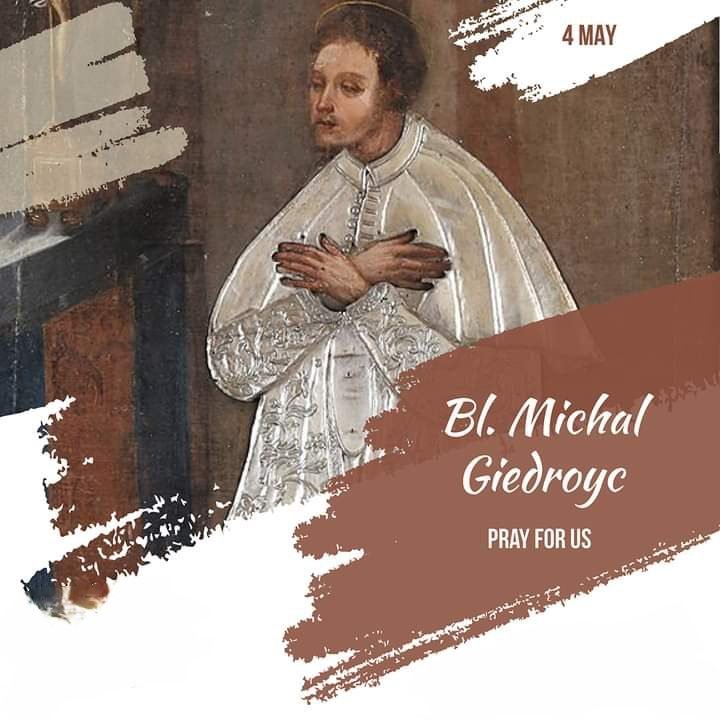
His posthumous miracles include the message delivered by Świętosław Milczący regarding the proper burial place for Giedroyć, healing of Katarzyna Rybarka (she was a possessed woman and it was the first recorded posthumous miracle attributed to Giedroyć), saving two young boys from drowning (a son of a Hungarian merchant who drowned in the Danube and a boy in the village of Spytkowice), and reviving a stillborn child.
His cult continued to center in Poland and particularly Kraków, but also spread to Lithuania in the 17–18th centuries. Paintings of him can be found in churches of Videniškiai, Giedraičiai, and Tverečius. His paintings were mentioned in church records but do not survive in Veliuona, Jūžintai, and Papilys. The church in Videniškiai was founded by his relatives, voivode Martynas Marcelis Giedraitis and bishop Merkelis Giedraitis.
In 1617, Martynas Marcelis also founded a monastery of the Canons Regular of the Penitence in Videniškiai. The painting of Giedroyć originally hung in a chapel-mausoleum where members of the Giedroyć family were interned. In September 2019, a relic of Giedroyć was solemnly installed in the Church of the Assumption of the Blessed Virgin Mary, Vilnius, by Archbishop Gintaras Grušas.
A life of physical pain and mental torment didn’t prevent Michael Giedroyc from achieving holiness. Michael suffered from physical and permanent handicaps from birth. He was a dwarf who had the use of only one foot. Because of his delicate physical condition, his formal education was frequently interrupted. But over time, Michael showed special skills at metalwork. He created sacred vessels, including chalices.
Though he knew the meaning of suffering throughout his years, his rich spiritual life brought him consolation. Michael’s long life ended in 1485 in Kracow. Five hundred years later, Pope John Paul II visited the city and spoke to the faculty of the Pontifical Academy of Theology. The 15th century in Kracow, the pope said, was “the century of saints.” Among those he cited was Blessed Michael Giedroyc.
PRAYER
Please watch over all of those with physical and mental handicaps Blessed Michael Giedroyc. May they take strength in your example to persevere through their difficulties. May we who are blessed with good health come to assist these individuals and act as Christ’s light to them. Amen

*******************************
ALSO CELEBRATED:
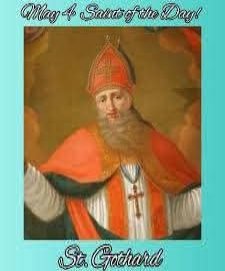
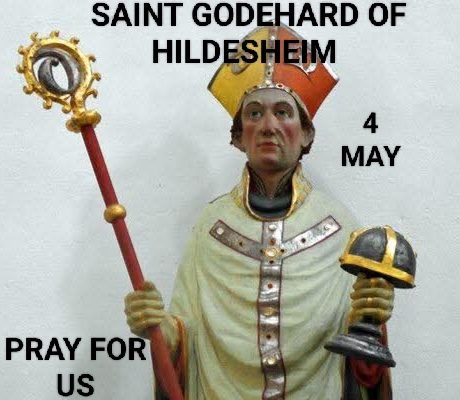
SAINT GOTHARD (GODEHARD) of HILDESHEIM, Bishop
Saint Godehard is Patron of travelling merchants and is invoked against fever, dropsy, childhood sicknesses, hailstones, the pain of childbirth, and gout; invoked by those in peril of the sea.
St. Godehard is a Romanesque church in Hildesheim, Germany, formerly the church of a Benedictine abbey. It remained almost unaltered through the centuries and was not damaged much in World War II.
Born in the Bavarian village of Reichersdorf about 960, Gothard was educated by the Canons of that area and showed so much promise that he attracted the attrntion of Archbishop Frederick of Salzburg. He became a priest and in 990 when the Benedictine Rule was restored to the Abbey of Nelder-Altaich he received the monastic habit. He became Prior and eventually Abbot of the Abbey.
There was such good religious discipline under Saint Gothard that the Emperor, Saint Henry II, entrusted him with the reform of other monasteries. Over the course of twenty-five years he formed nine Abbots for various houses, and when Saint Bernward died in 1022, Saint Gothard was made Bishop of Hildesheim in his place. Despite his pleas of age and lack of suitable qualifications.
In typical fashion, this dedicated servant of God set about reforming his diocese with all the vigor of a young man. He built and restored churches, fostered education, espicially in the Cathedral schools, established order throughout the diocese, and erected a hospice for the poor and sick at the edge of Hildesheim. He died in 1038. The pass and railroad tunnel from Switzerland into Italy takes its name from this Saint in whise honor the near-by hospice for travelers and its chapel were dedicated.
PRAYER
God, You made Saint Gothard/Godehard an outstanding exemplar of Divine love and the Faith that conquers the world, and added him to the role of saintly pastors. Grant by his intercession that we may persevere in faith and love and become sharers of his glory. Amen †††
*********************************
ALSO CELEBRATED:
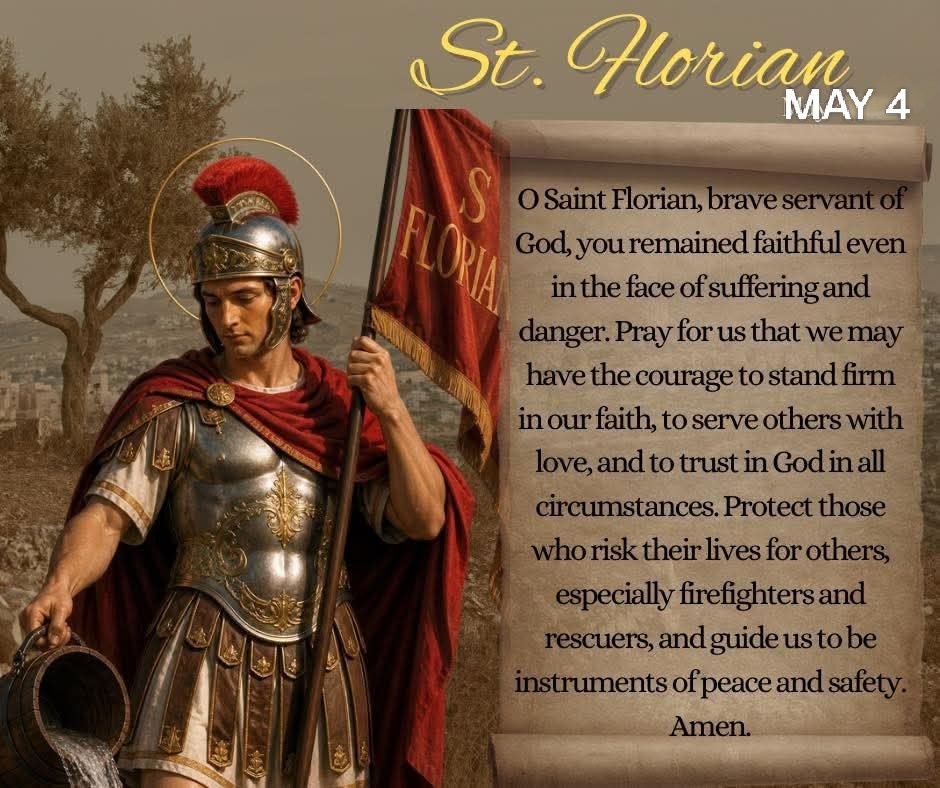
MEMORIAL OF SAINT FLORIAN, SOLDIER, AND MARTYR – 4 MAY
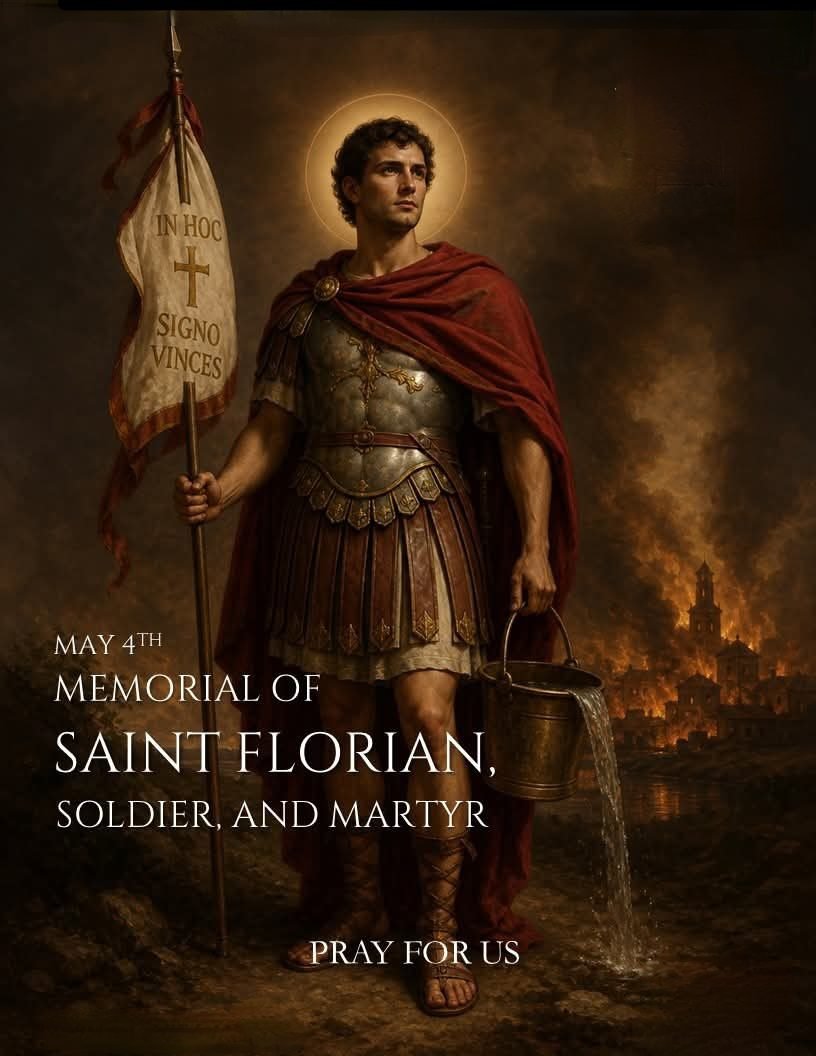
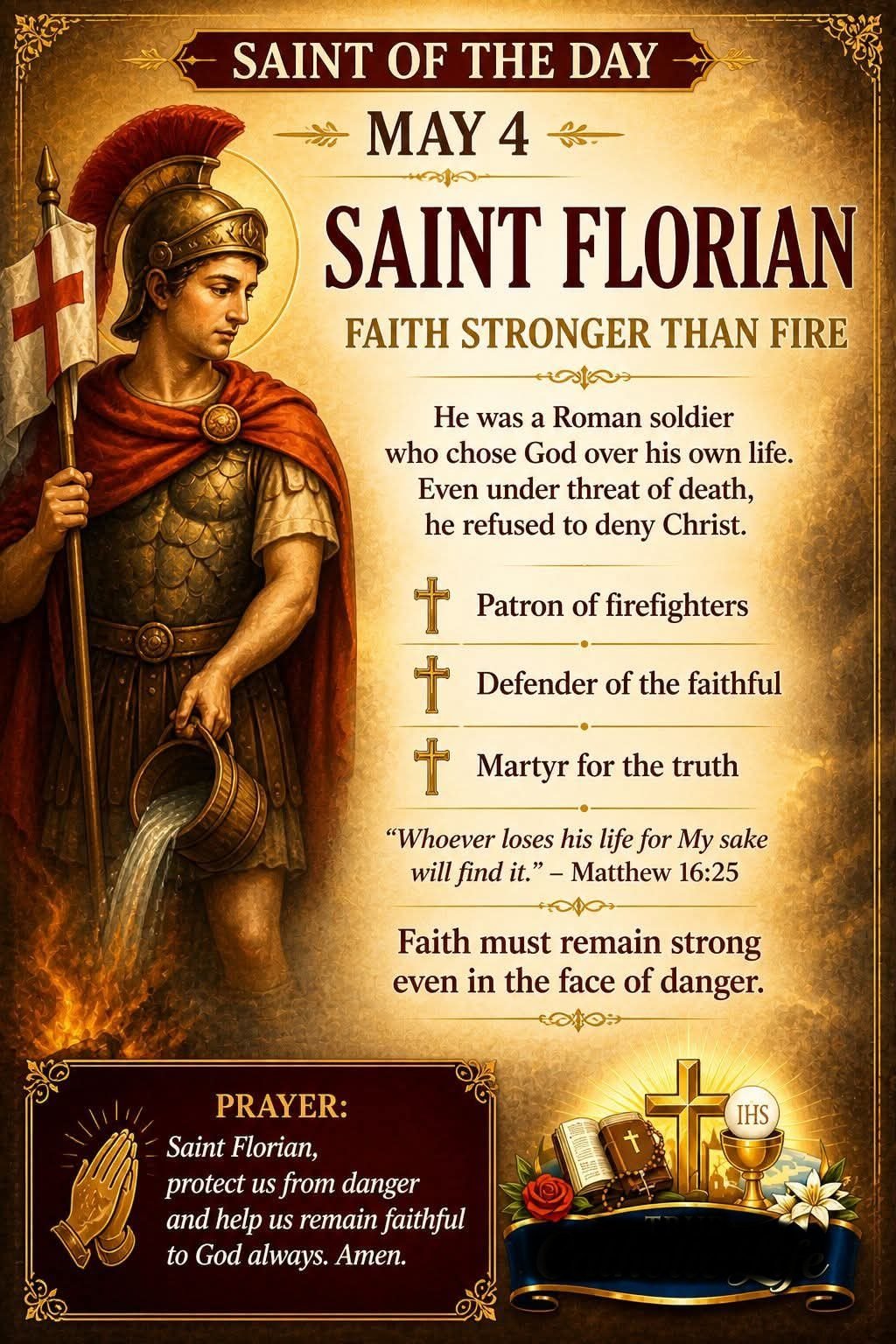
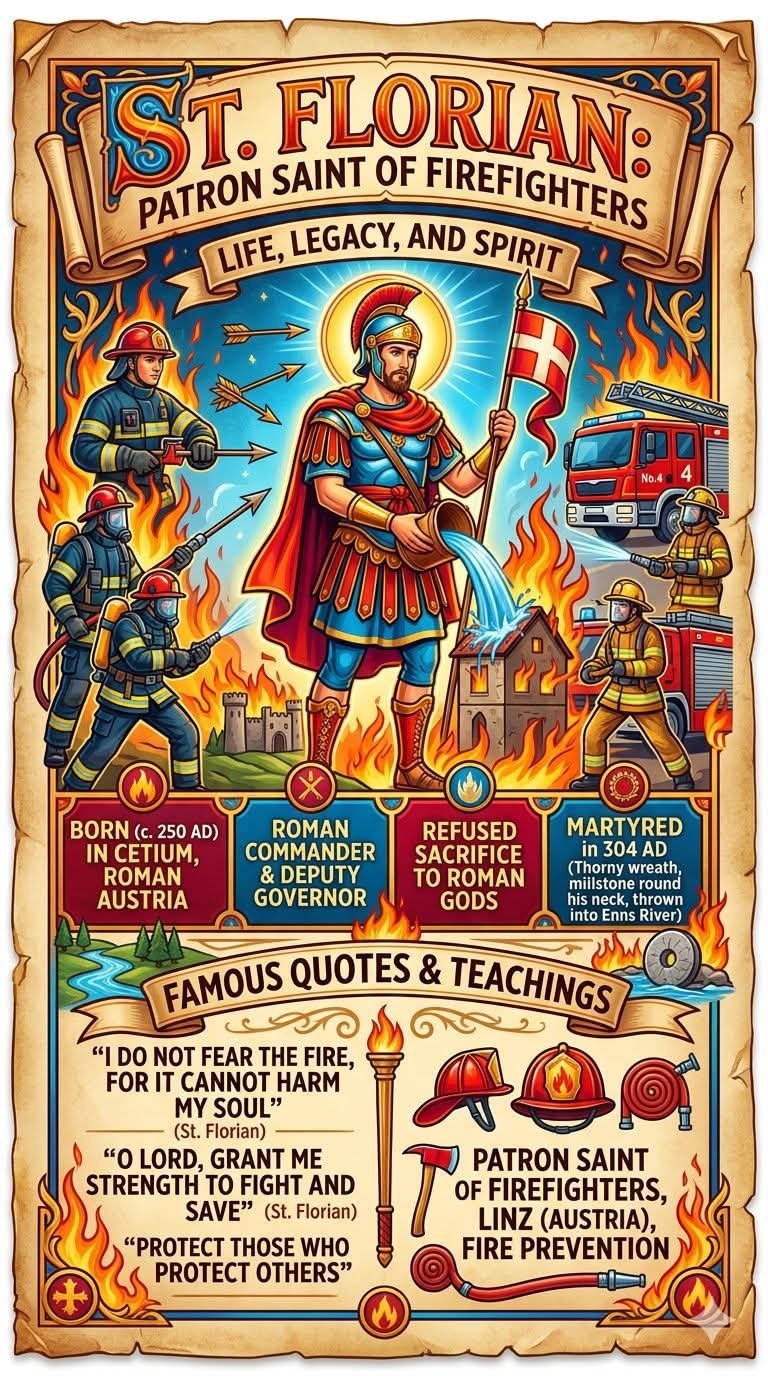
St. Florian (c. 250–304 A.D.) was a commander in the Roman army in what is now Austria and lived during the fierce persecutions of Emperor Diocletian. Though entrusted with military authority, St. Florian was also secretly a Christian.
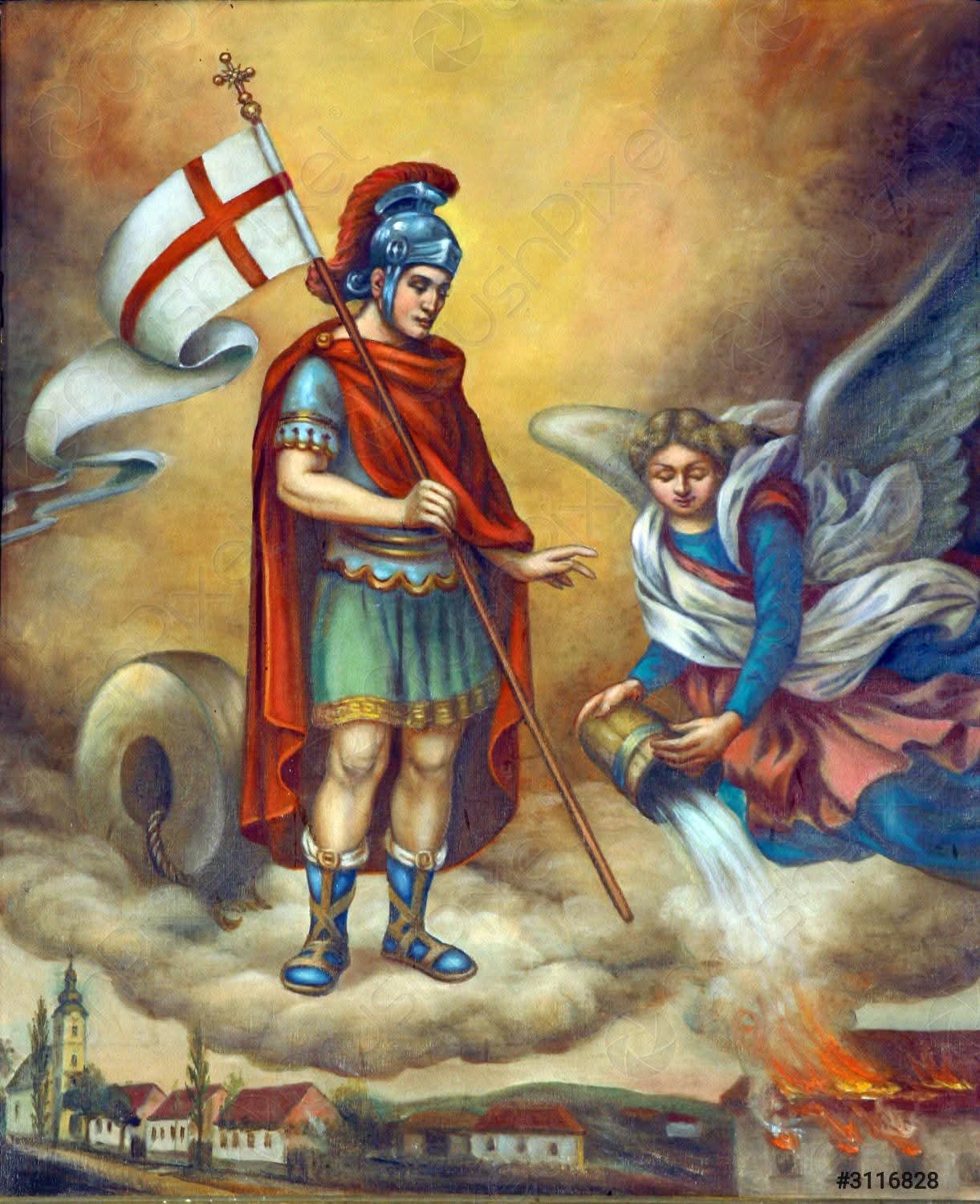
He became known for courage, discipline, and compassion, especially through his role in organizing firefighting brigades. Tradition remembers one striking event in his life: when a town was threatened by a raging fire, St. Florian prayed to God and extinguished it with a single bucket of water. That miracle helped establish his lasting reputation as a protector against fire and disaster.

St. Florian’s path to sainthood was sealed by his refusal to betray Christ. Reports reached imperial authorities that he was not enforcing the persecution of Christians in his territory.
Once investigated, St. Florian was discovered to be a Christian himself. Some accounts say he refused to sacrifice to pagan gods; others say he would not execute fellow Christians. In either case, his fidelity to Christ led to his arrest, torture, and condemnation. He endured scourging and brutal mistreatment without renouncing his faith. At last, a millstone was tied to his body and he was thrown into the river, where he died a martyr.
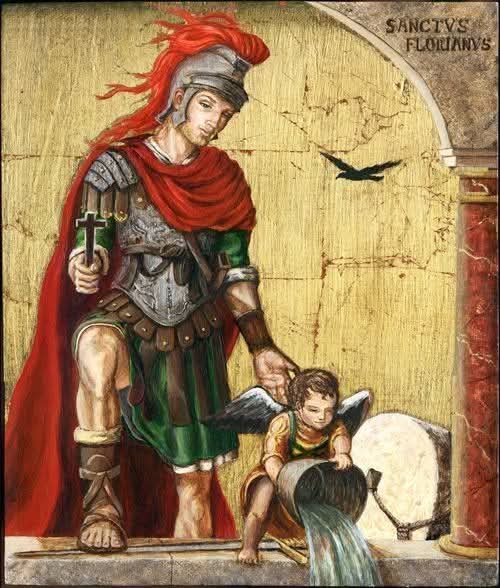
St. Florian is honored as the patron saint of firefighters, Austria, and Poland. His feast day is celebrated on May 4.
CONTEMPLATING THE LIFE OF SAINT FLORIAN
HISTORICAL IDENTITY AND BACKGROUND
Saint Florian, who lived around 250 to 304 AD, was a Roman officer and Christian martyr during the persecutions under Emperor Diocletian. He is among the earliest and most venerated saints of Central Europe, especially in Austria and Poland.
He was born in the region of present-day Upper Austria, likely near what is now Saint Florian or Lorch. He served as a high-ranking officer in the Roman army and may have been responsible for firefighting brigades, which later influenced his patronage.
He lived during a time of intense persecution when the growing Christian Church faced suppression. Though detailed historical records are limited, his life is preserved through early Christian tradition and accounts of martyrdom that remain deeply rooted in the Church’s memory.
PATRONAGE AND DEVOTION
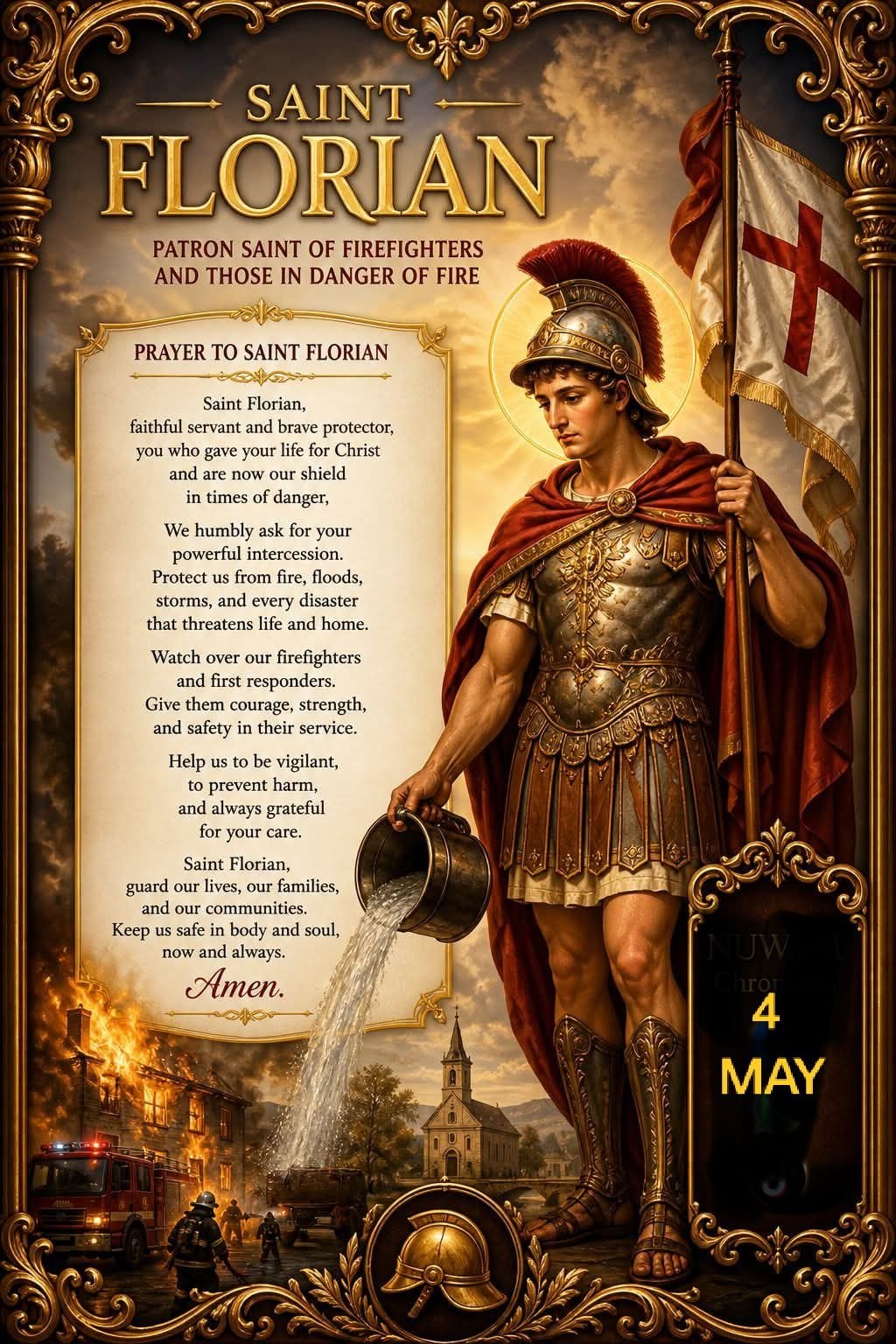
Saint Florian is widely invoked across Europe, particularly in regions vulnerable to fire.
He is the patron saint of firefighters, chimney sweeps, Poland as co-patron, and Upper Austria. His association with firefighting is both historical, linked to Roman fire brigades, and symbolic, reflecting the tradition of him extinguishing flames.
Across many European cities, statues of Saint Florian are placed on buildings as a sign of protection against fire.
FEAST DAY AND LITURGICAL SIGNIFICANCE
His feast day is celebrated on May 4. It is widely observed in Austria, Germany, and Poland, where fire departments often hold special commemorations in his honor.
This feast occurs during the season of spring, symbolizing renewal and reinforcing his role as protector and restorer.
ST. FLORIAN: THE SOLDIER WHO CHOSE THE FLAME
The Roman Empire was vast, disciplined, and unyielding. Its authority stretched across lands and demanded obedience, especially from those who followed Christ.
In the province of Noricum, in what is now Austria, lived Florian, a respected Roman officer. He was trained in command, shaped by duty, and known among his peers. Some traditions suggest he oversaw units responsible for protecting towns from fire, a vital role in a world of wooden structures and open flames.
Florian understood discipline and obedience, yet within him lived a deeper allegiance that could not be easily subdued.
A SECRET FAITH IN A DANGEROUS TIME
During the reign of Diocletian, one of the fiercest persecutions of Christians began. Believers were no longer merely watched but actively sought out. Arrests increased, homes were raided, and Christians were forced to deny their faith or face punishment.
Florian had kept his faith hidden for years due to his position. But as he heard of Christians being imprisoned for their belief, his silence began to weigh on him. When news came that a group of Christians had been captured and were to be tried, Florian made a decisive choice.
THE WALK TOWARD JUDGMENT
He did not flee or conceal himself. Instead, he went directly to where the prisoners were held and he declared that he too was one of the Christians.
He was immediately brought before the governor Aquilinus, known for his harshness.
A TRIAL WITHOUT ILLUSIONS
The governor reminded him of his rank, honor, and future, urging him to sacrifice to the Roman gods and save himself. Florian refused. He understood the consequences. He had witnessed such punishments before and possibly carried them out. Yet he remained steadfast and would not deny his faith.
FIRE CANNOT BREAK WHAT IS ALREADY GIVEN
He was beaten and scourged, yet he did not yield. When threatened with fire, he responded with calm conviction, saying that if they lit the fire, he would ascend to heaven through the flames. His words reflected not defiance but deep faith.
THE RIVER AND THE STONE
Instead of burning him, the governor ordered another form of execution.
Florian was taken to the banks of the Enns River. A heavy stone was tied around his neck, and he was given one final chance to save himself by renouncing his faith. He refused. He was cast into the river, where his life ended in silence beneath the waters.
WHAT THE EMPIRE COULD NOT ERASE
Though it seemed his story would end there, it did not. According to tradition, a devout woman named Valeria later recovered his body and gave him a proper burial.
His memory endured. People remembered not only how he died but how he lived, with courage, calmness, and unwavering faith. A story spread that he once extinguished a great fire with a single bucket of water. Whether literal or symbolic, it captured his role as one who stood against destruction.
FROM SOLDIER TO PROTECTOR
Over time, devotion to Florian grew. In regions where fire posed constant danger, people invoked his protection.
Images of him appeared as a Roman soldier pouring water over a burning building. Firefighters later embraced him as their patron, honoring his courage and willingness to face danger.
Churches were built in his honor, including the monastery near his burial place in Austria. His feast on May 4 became a day of remembrance and devotion.
THE QUIET POWER OF A CHOICE
What endures most in Florian’s life is the clarity of his decision.
He was not a man without responsibility or understanding. He knew the cost of his choice. Yet he chose truth over safety and integrity over survival.
His life reveals that there are forces stronger than fear.
A FIRE THAT STILL BURNS
Centuries have passed, and empires have faded, yet the witness of Saint Florian remains.
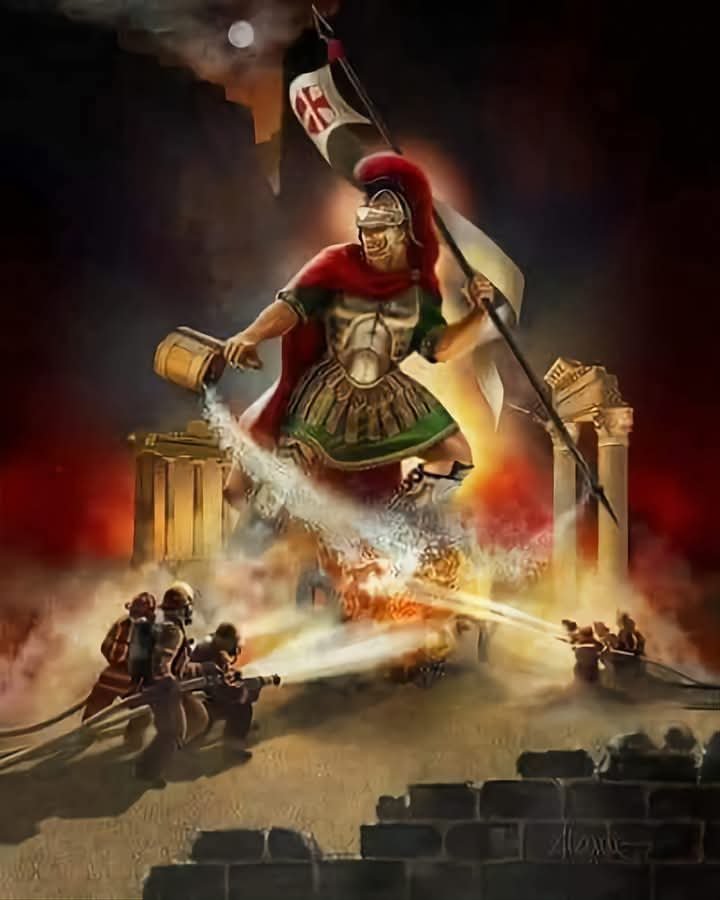
He is remembered as a soldier holding water before a burning world, not removing every danger but standing firm against destruction. His story continues to challenge each generation.
PRAYER
Saint Florian, courageous defender of faith and protector of those in danger, we seek your intercession.
Pray that we may live with bravery in our daily challenges and defend what is good and true.
Help us to serve others selflessly, protect those in need, and remain faithful to Christ in all circumstances.
Through your prayers, may we become instruments of God’s mercy and courage.
Amen.