
From Earth to Heaven: Understanding the Ascension of Christ
May 12, 2026
Romans 10:9
May 12, 2026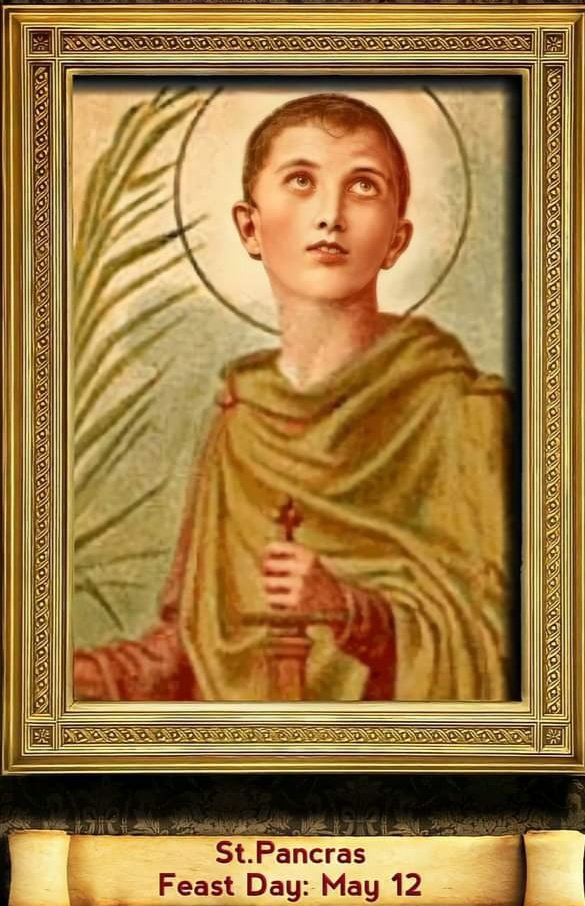
FEAST OF SAINT PANCRAS OF ROME, MARTYR
FEAST DAY – 12th MAY
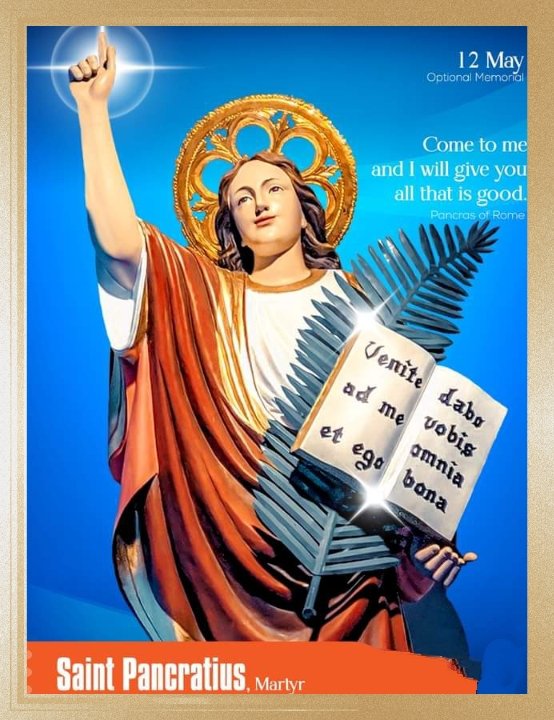
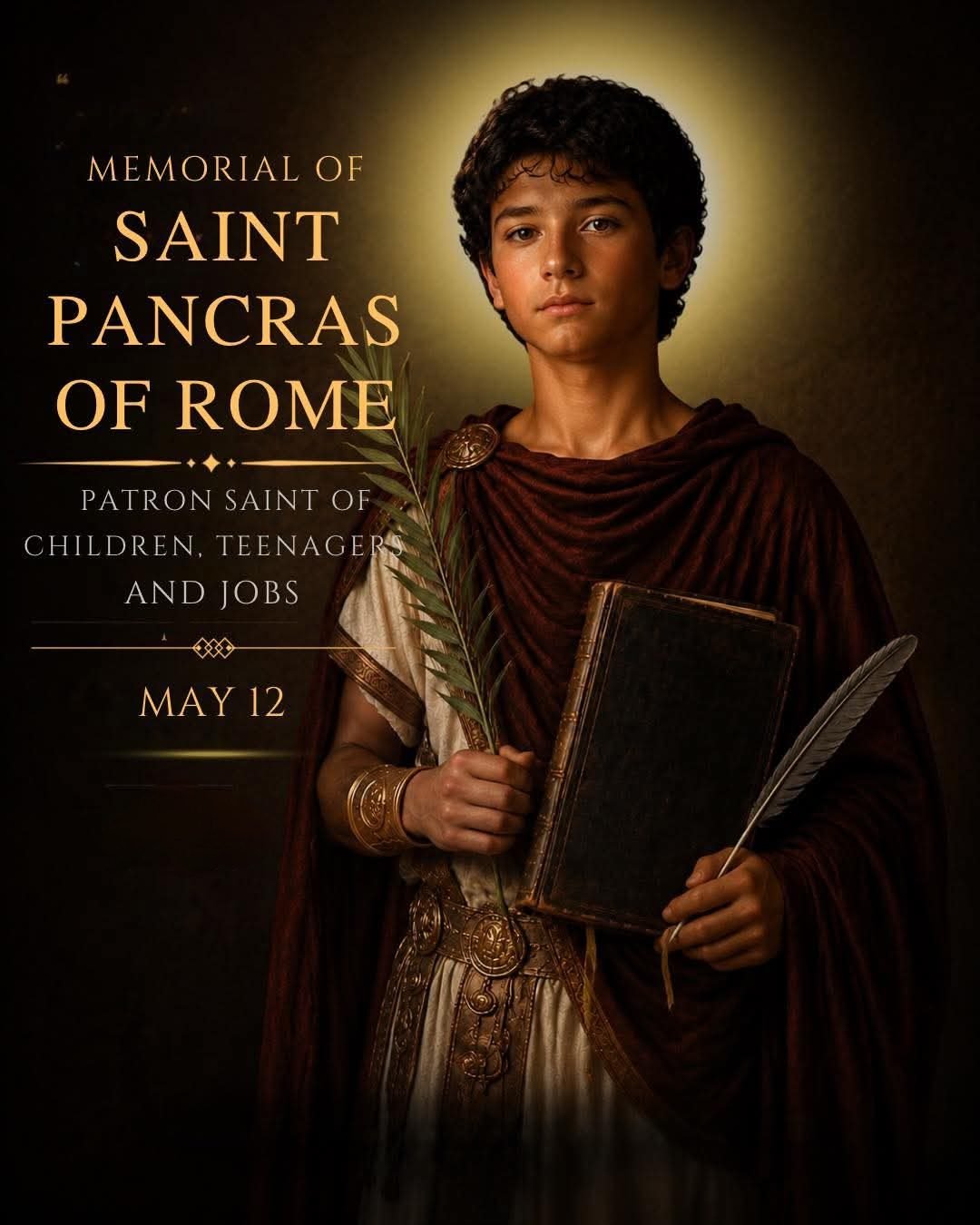
Pancras was a Roman citizen who converted to Christianity, and was beheaded for his faith at the age of fourteen, around the year 304.
From an early stage, Pancras was venerated together with Nereus and Achilleus in a shared feast day and Mass formula on 12 May. In 1595, 25 years after Pope Pius V promulgated the Tridentine Missal, Domitilla was added.
Since 1969, Pancras has been venerated separately, still on 12 May. He is, traditionally, the second of the Ice Saints. In the Syriac traditions he is known as Mor Izozoel (Mar Azazael) remembered on 12 May and 12 August. He is the saint of children.
Because he was said to have been martyred at the age of fourteen during the persecution under Diocletian, Pancras would have been born around 289, at a place designated as near Synnada, a city of Phrygia Salutaris, to parents of Roman citizenship.
His mother Cyriada died during childbirth, while his father Cleonius died when Pancras was eight years old. Pancras was entrusted to his uncle Dionysius’ care. They moved to Rome, to a villa on the Caelian Hill. They converted to Christianity, and Pancras became a zealous adherent of the faith.
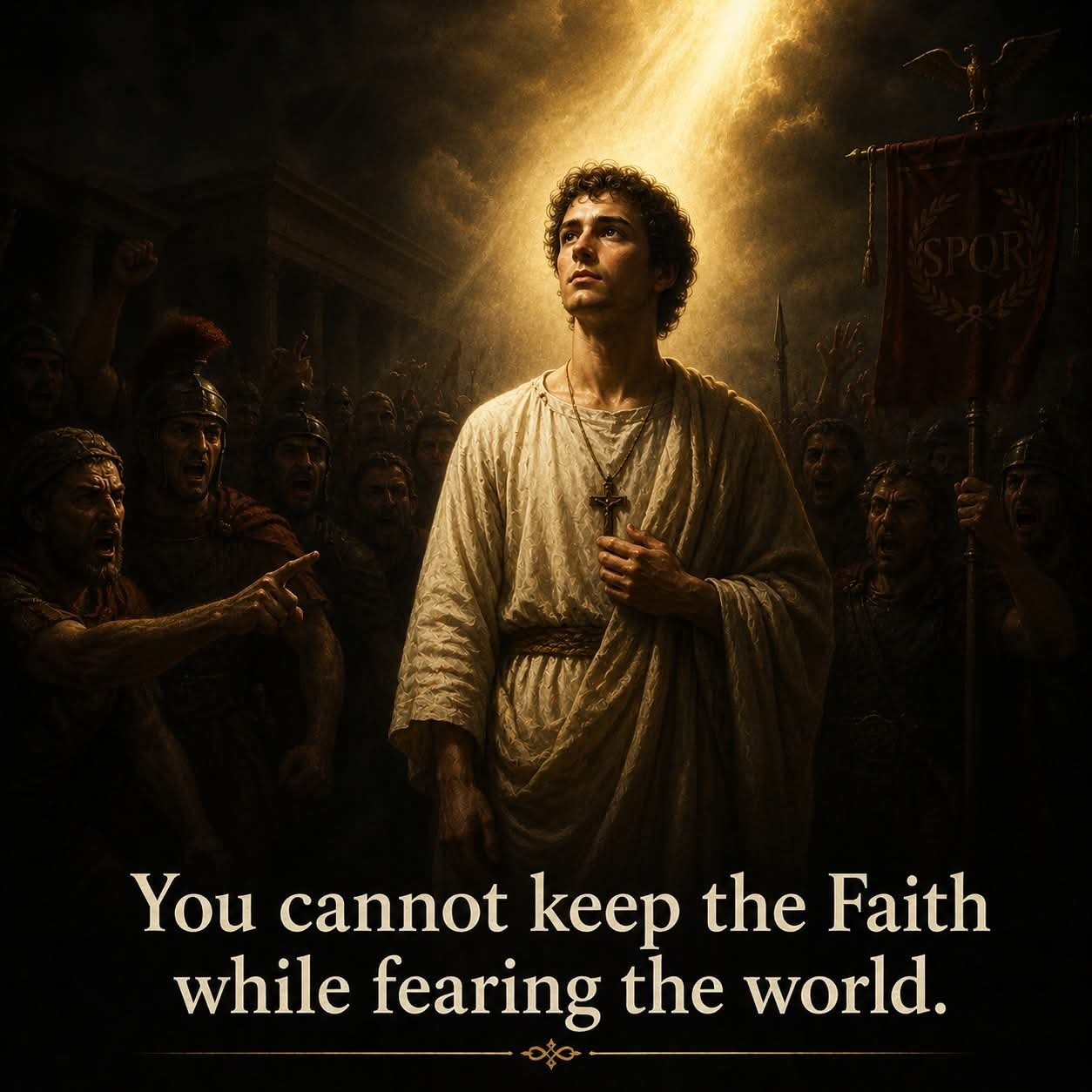
During the persecution of Christians by Emperor Diocletian, around 303 AD, he was brought before the authorities and asked to perform a sacrifice to the Roman gods. Diocletian, impressed with the boy’s determination to resist, promised him wealth and power, but Pancras refused. The emperor ordered him to be beheaded on the Via Aurelia, on 12 May 303 AD.
This traditional year of his martyrdom cannot be squared with the saint’s defiance of Diocletian in Rome, which the emperor had not visited since 286, nor with the mention of Cornelius (251–253) as Bishop of Rome at the time of the martyrdom, as the most recent monograph on Pancras’ texts and cult has pointed out.
A Roman matron named Ottavilla recovered Pancras’ body, covered it with balsam, wrapped it in precious linens, and buried it in a newly built sepulchre dug in the Catacombs of Rome. Pancras’ head was placed in the reliquary that still exists today in the Basilica of Saint Pancras.
Devotion to Pancras definitely existed from the fifth century onwards, for the basilica of Saint Pancras was built by Pope Symmachus (498–514), on the place where the body of the young martyr had been buried; his earliest passio seems to have been written during this time.
Pope Gregory the Great gave impetus to the cult of Pancras, sending Augustine to England carrying relics of that saint and including his legend in Liber in gloria martyrum (for this reason, many English churches are dedicated to Pancras; St Pancras Old Church in London is one of the oldest sites of Christian worship in England).
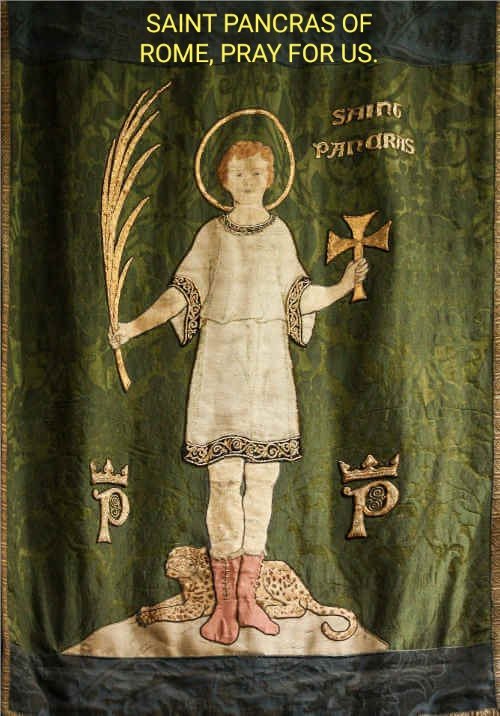
In medieval iconography, Pancras was depicted as a young soldier, due to his association with the paired soldier saints Nereus and Achilleus. It is said that Pancras’ martyrdom took place in the arena among wild beasts, where the panther refrained from attacking and killing him until the martyr gave the beast permission.
Pancras is popularly venerated as the patron saint of children, jobs and health. His name is also invoked against cramps, false witnesses, headaches and perjury. His image in statue form can be found in many bars, restaurants and other businesses. He is also the patron saint of the Italian city San Pancrazio Salentino.
The Tridentine Calendar had on 12 May a joint feast (semidouble rank) of Nereus, Achilleus and Pancras. The name of Domitilla was added in 1595. The joint celebration of Nereus, Achilleus, Domitilla and Pancras continued with that ranking until the revision of 1960, when it was reclassified as a third-class feast in the General Roman Calendar.
In the present General Roman Calendar, revised in 1969, Saints Nereus and Achilleus (together) and Saint Pancras have distinct celebrations (optional memorials) on 12 May. Saint Domitilla is not included in the revised calendar, because the liturgical honours once paid to her “have no basis in tradition”.
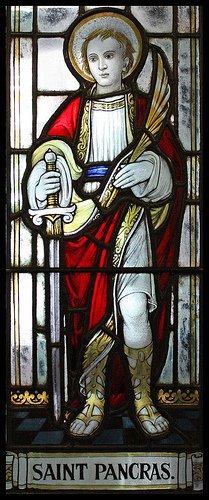
In the late 500’s, Pope Saint Gregory the Great appointed monks to staff a small church in Rome, already almost three hundred years old, which was dedicated to Saint Pancras. In 597 the same Pope Gregory sent Saint Augustine of Canterbury on a missionary journey to England, and Augustine copied his Roman mentor and established a church in honor of Saint Pancras.
About sixty years after Augustine, a different pope sent relics of Saint Pancras to England. This further spread devotion to this boy martyr, until a total of six ancient churches were dedicated to Saint Pancras in England alone, including the oldest church still used for Christian worship in that old country.
Moments of great danger for the Church are also moments of great grace. In her long history, the Church has passed through, and continues to live, many such dangerous, grace-filled times. Saint Pancras’ times were precisely such. If he had stayed in his native land, he would likely have died of natural causes.
But he went in search of something, perhaps wealth, fame, or family, in Rome, the big city, just as so many people search for the same in big cities today. But young Pancras found what he probably wasn’t looking for—God. And his decision to become a Christian, quickly took a very serious turn.
He was threatened with death if he did not burn incense to a false god. The boy stood fast. Like other more famous young martyrs, such as Saint Agnes, the idealism of youth provoked both admiration and fury in his persecutors, and he was taken beyond the walls of Rome to be decapitated.
PRAYER
Saint Pancras of Rome, you gave away your young life rather than offer worship to false deities. May your example edify, and your intercession strengthen, all young people to put love of God above all else.
Pray for us that we will remain firm in our faith and a worthy example to others. Amen
*******************************
OPTIONAL MEMORIAL
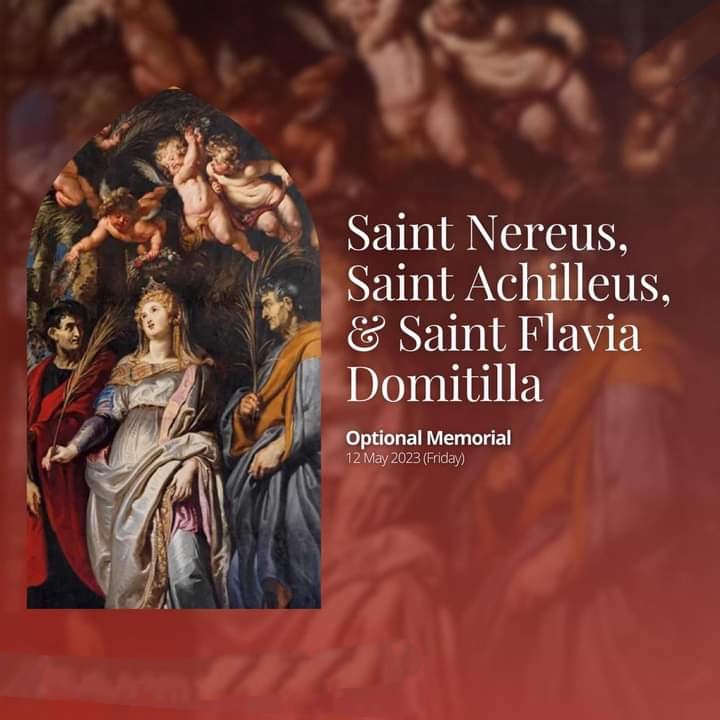
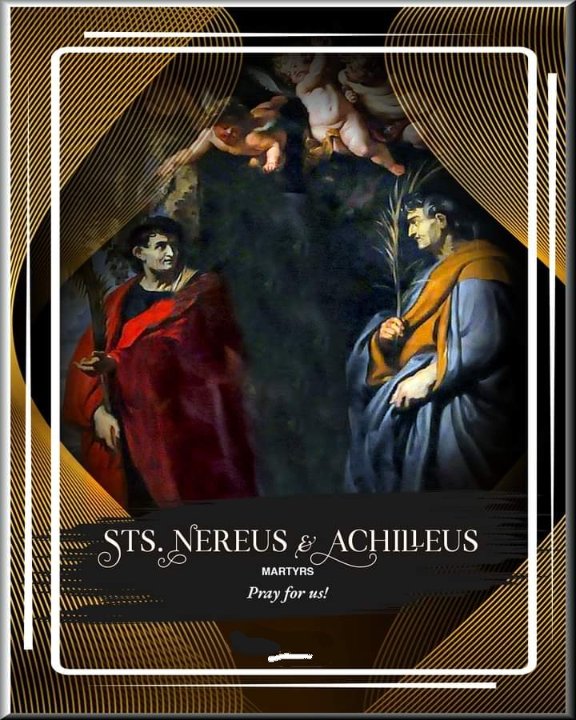
SAINTS NEREUS, ACHILLEUS AND FLAVIA DOMITILLA, MARTYRS – FEAST DAY – 12 MAY
Nereus and Achilleus were Roman soldiers in the household of Flavia Domitilla. They were instructed and converted by St. Peter. These two soldiers in turn inspired St. Domitilla to consecrate her virginity to God.
Thereupon, Aurelianus, the fiancee of Domitilla, reported all three to the Roman authorities as being Christians. They were martyred out of hatred for Christianity. Pancras, a noble Phrygian youth, came to Rome at the age of fourteen, and was martyred in 275 because he refused to offer sacrifices to the pagan gods.
Saints Nereus and Achilleus (died 304) were Roman soldiers who served under Emperor Trajan. When Diocletian ascended to the thrown, persecution of Christians began in earnest, which Nereus and Achilleus readily participated in.
However, through this participation, they came to meet holy men and women who moved their hearts, leading to their eventual conversion to Christianity. While holy legend suggests that they were baptized in the faith by Saint Peter himself, the timing of their lives suggests this not to be true (although no less remarkable!).
Upon their conversion and baptism, the soldiers threw down their weapons and armor, free from the tyranny of sin, and rejoicing in their newfound freedom. Of course, having been involved in the persecution of Christians, both Nereus and Achilleus knew what was in store for them, and were not disappointed.
They were arrested, tortured, and exiled to the island of Terracina. There, they were beheaded for failure to renounce their faith and sacrifice to the Roman gods, true followers of Jesus Christ.
Source: https://www.saintsfeastfamily.com/copy-of-st-nereus-achilleus-domit
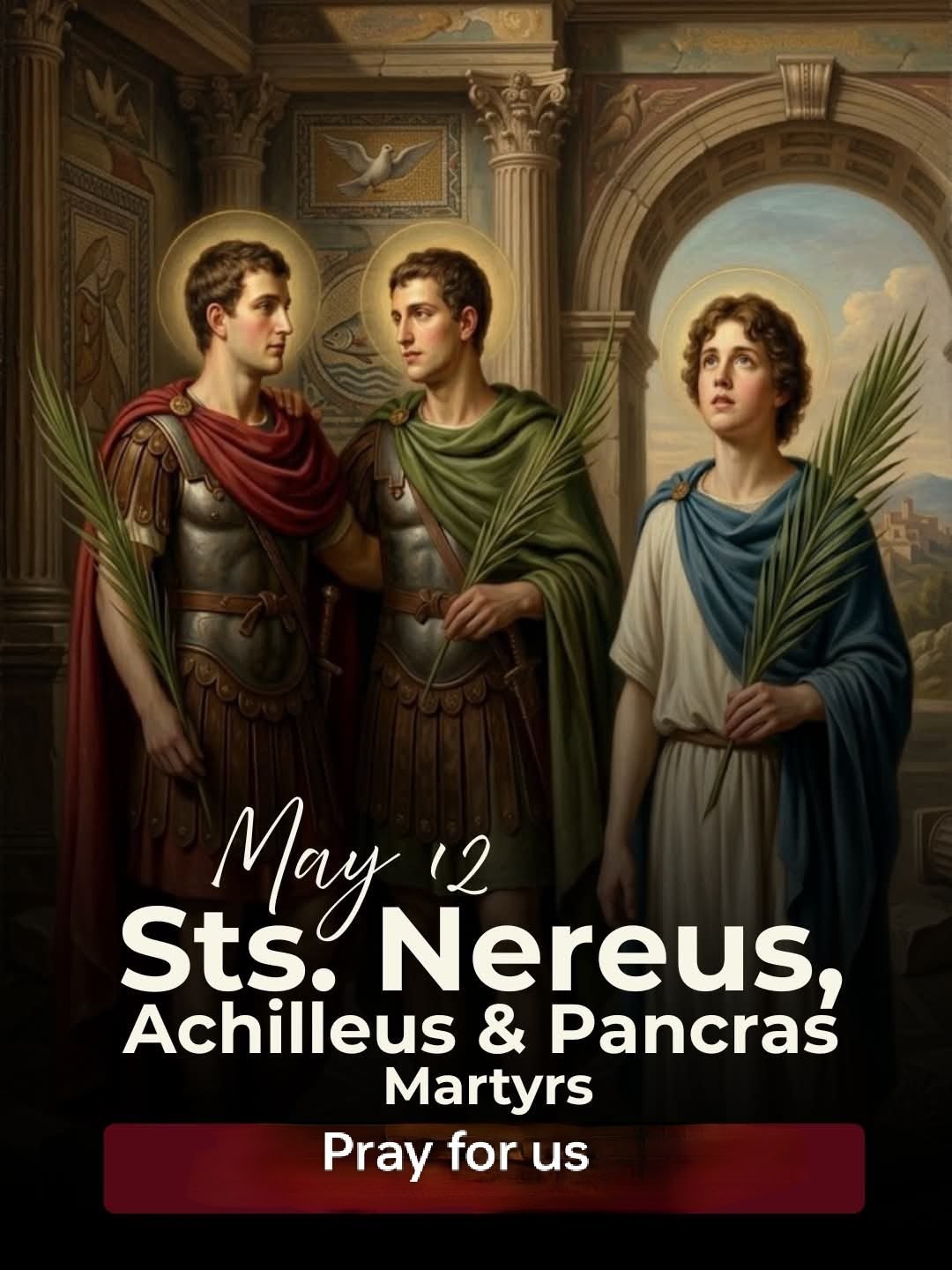
CONTEMPLATING THE LIVES OF SAINTS NEREUS, ACHILLEUS AND PANCRAS
INTRODUCTION
Saints Nereus, Achilleus and Pancras, belonged to the early centuries of Christianity, when following Christ often meant facing persecution, imprisonment, and death. Though remembered together on the Church’s liturgical calendar on May 12, they came from different backgrounds and suffered martyrdom under different circumstances. Yet they are united by youthful courage, steadfast faith, rejection of compromise, and unwavering witness to Christ during times of persecution. Their lives helped shape the spiritual imagination of the early Church.
NEREUS AND ACHILLEUS
HISTORICAL BACKGROUND
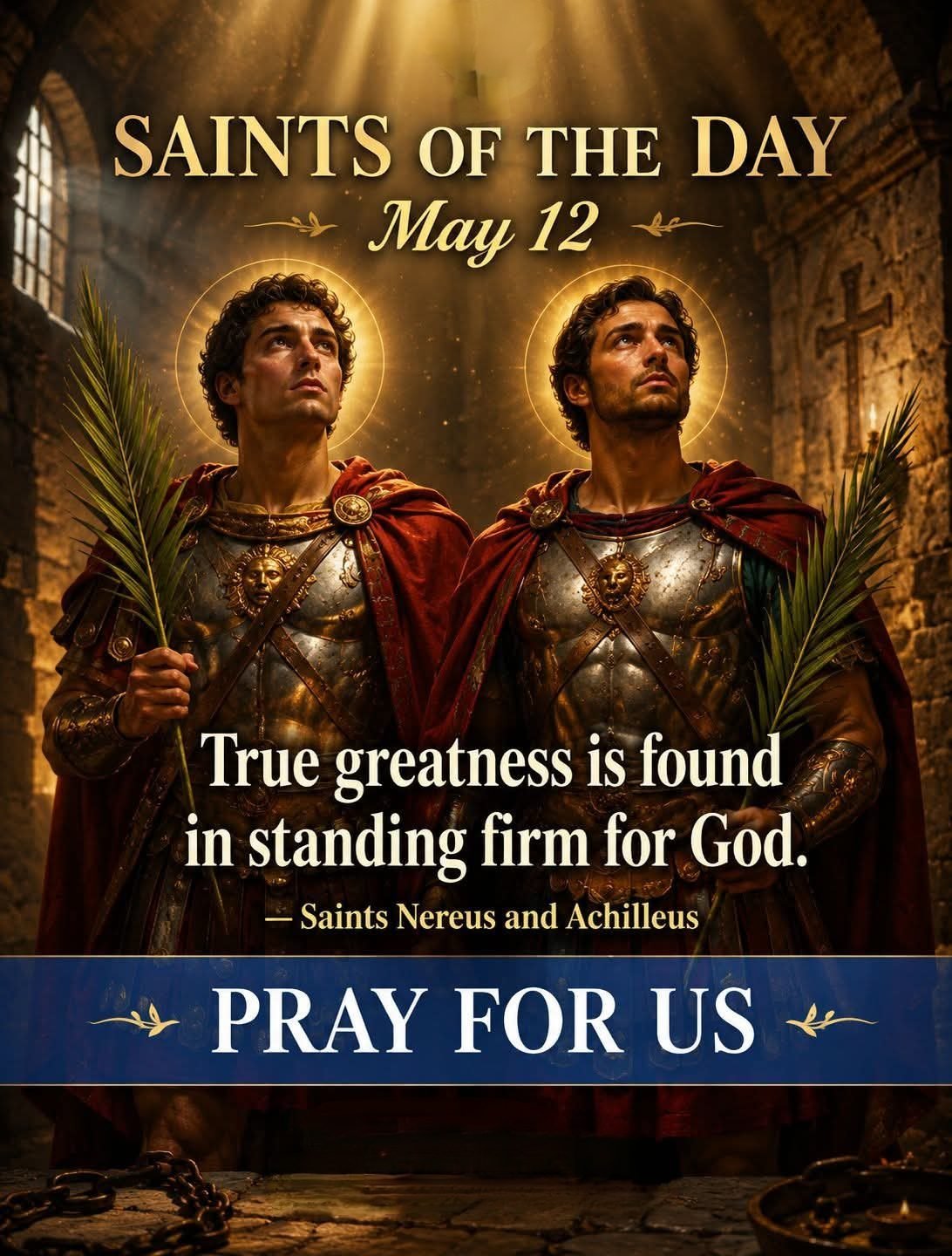
Nereus and Achilleus are traditionally remembered as Roman soldiers or imperial servants who converted to Christianity and later suffered martyrdom. Historical details about them are limited, preserved mainly through ancient Christian traditions, inscriptions, and martyr accounts. They are closely connected with Domitilla, the Roman catacombs, and the persecuted Church in Rome.
PANCRAS
HISTORICAL BACKGROUND
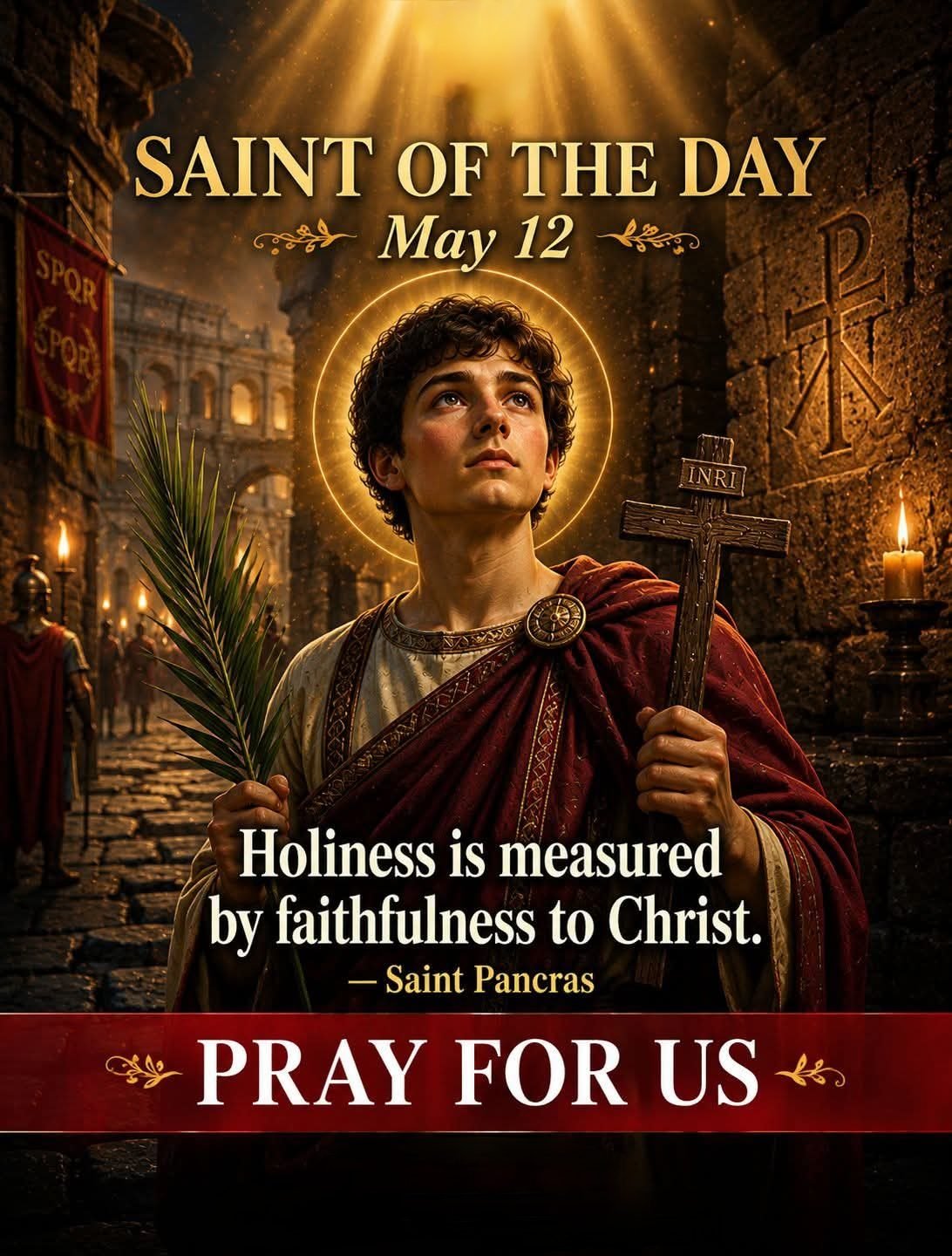
Saint Pancras was one of the most beloved young martyrs of the early Church. Born in the late third century, likely in Phrygia in modern-day Turkey, he was brought to Rome after the death of his parents. He was believed to be only about fourteen years old when he suffered martyrdom.
THE BOY, THE SOLDIERS, AND THE EMPIRE
Rome appeared powerful and eternal, ruling through armies, wealth, and authority. Yet beneath its greatness, Christianity quietly spread through prayer, hidden gatherings, and faithful hearts.
Among those hearts were two soldiers and one young boy.
THE SOLDIERS WHO QUESTIONED THE EMPIRE
Nereus and Achilleus understood Roman discipline, obedience, and power. Tradition remembers them as soldiers or attendants connected to Domitilla’s household. Though once loyal servants of the empire, they were deeply moved by the courage and peace of Christians who faced suffering without fear.
Gradually, they realized that Rome could control bodies but not souls.
THE CONVERSION OF NEREUS AND ACHILLEUS
Their conversion changed their entire understanding of life. Rome glorified conquest, but Christ taught mercy and humility. The soldiers came to understand that following Christ required a new allegiance beyond the empire.
Ancient traditions suggest they even renounced military violence, unable to reconcile the teachings of Christ with the brutality of imperial power. Once truth took root in their hearts, compromise became impossible.
PANCRAS ARRIVES IN ROME
While the soldiers struggled with conscience and faith, a young orphan named Pancras arrived in Rome. Though still a boy, he embraced Christianity with remarkable sincerity and devotion.
His faith was simple, pure, and fearless.
Oplus_131072
THE GROWING PERSECUTION
During the persecutions under Emperor Diocletian, Christians were pressured to offer sacrifice to Roman gods and conform outwardly to imperial religion. Many yielded out of fear, but Nereus, Achilleus, and Pancras refused to deny Christ.
THE EMPIRE’S FAILURE TO UNDERSTAND MARTYRDOM
Rome understood rebellion, but it did not understand martyrdom. Authorities believed fear would eventually overcome faith. Yet these Christians believed death was not the greatest loss.
Once fear of death loses its hold, earthly power begins to weaken.
THE MARTYRDOM OF NEREUS AND ACHILLEUS
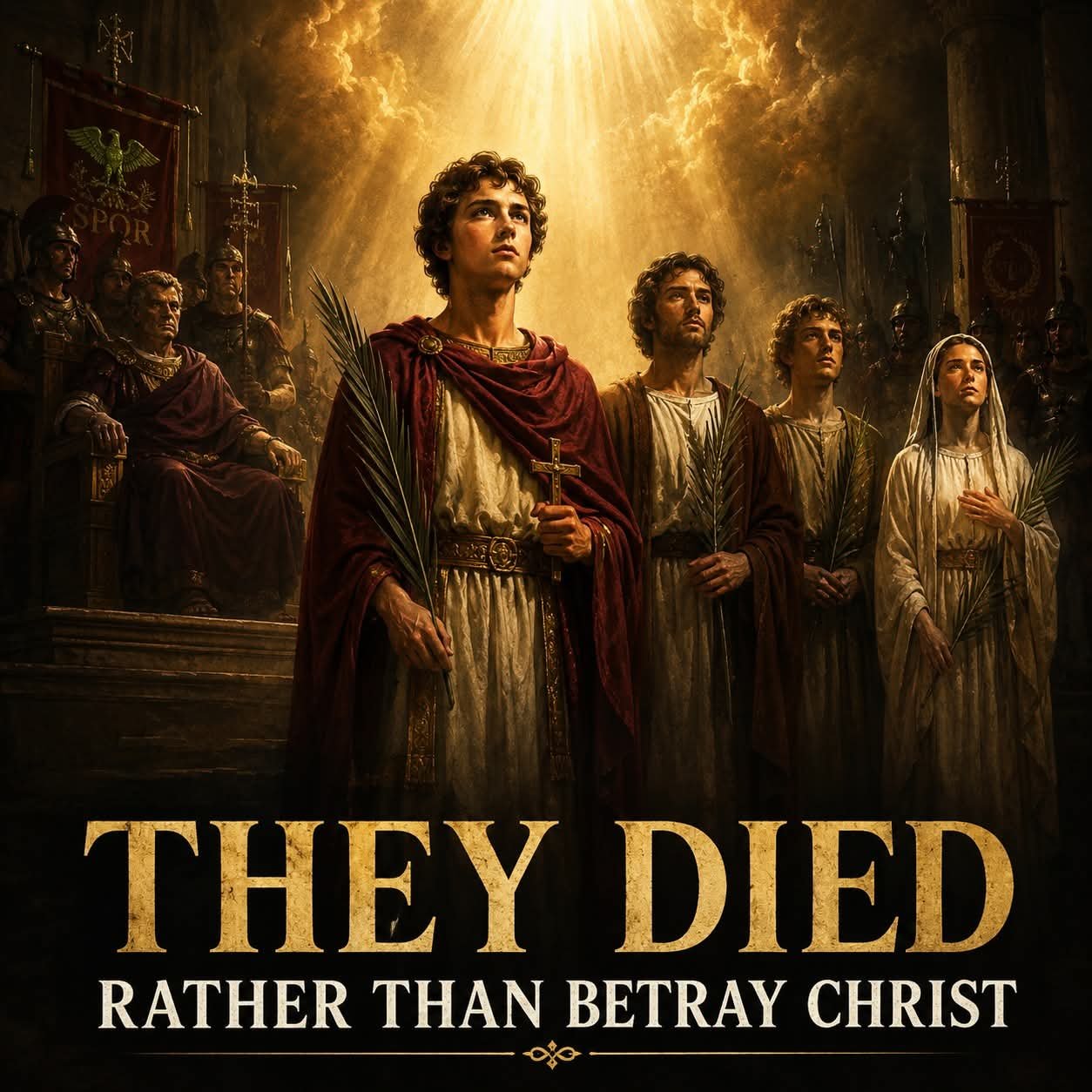
Nereus and Achilleus were arrested and questioned. They were likely urged to return to loyalty toward Rome and abandon their faith in Christ. Instead, they remained steadfast.
Tradition remembers them being executed by beheading. The soldiers once trained to wield the sword ultimately died beneath it for the sake of Christ.
THE MARTYRDOM OF PANCRAS
Pancras was still only a child when brought before the authorities. They likely assumed he would surrender his faith to save his life. But Pancras refused to deny Christ.
The empire executed a young boy, yet the courage of the child revealed a strength greater than imperial power.
THE MEMORY THAT ENDURED
The Roman Empire faded, but the memory of these martyrs endured within the Church. Christians continued honoring the names of Nereus, Achilleus, and Pancras because courage rooted in truth leaves a deeper mark than power rooted in fear.
EARLY DEVOTION AND INFLUENCE
The tombs of Nereus and Achilleus became places of Christian veneration within the Roman catacombs. Pope Damasus I honored their witness in the fourth century.
Devotion to Pancras spread rapidly throughout the Christian world. Churches were built in his honor, including the famous Basilica of San Pancrazio in Rome. In medieval Europe, he became associated with truthfulness, youthful fidelity, courage, and honesty.
SHARED SPIRITUAL THEMES
FAITH GREATER THAN FEAR
All three saints faced the power of Rome yet refused to compromise their faith.
THE SPIRITUAL POWER OF YOUTH
Pancras shows that holiness and courage are not limited by age.
IDENTITY TRANSFORMED BY CHRIST
Nereus and Achilleus demonstrate how faith reshapes loyalties, values, and priorities.
MARTYRDOM AS WITNESS
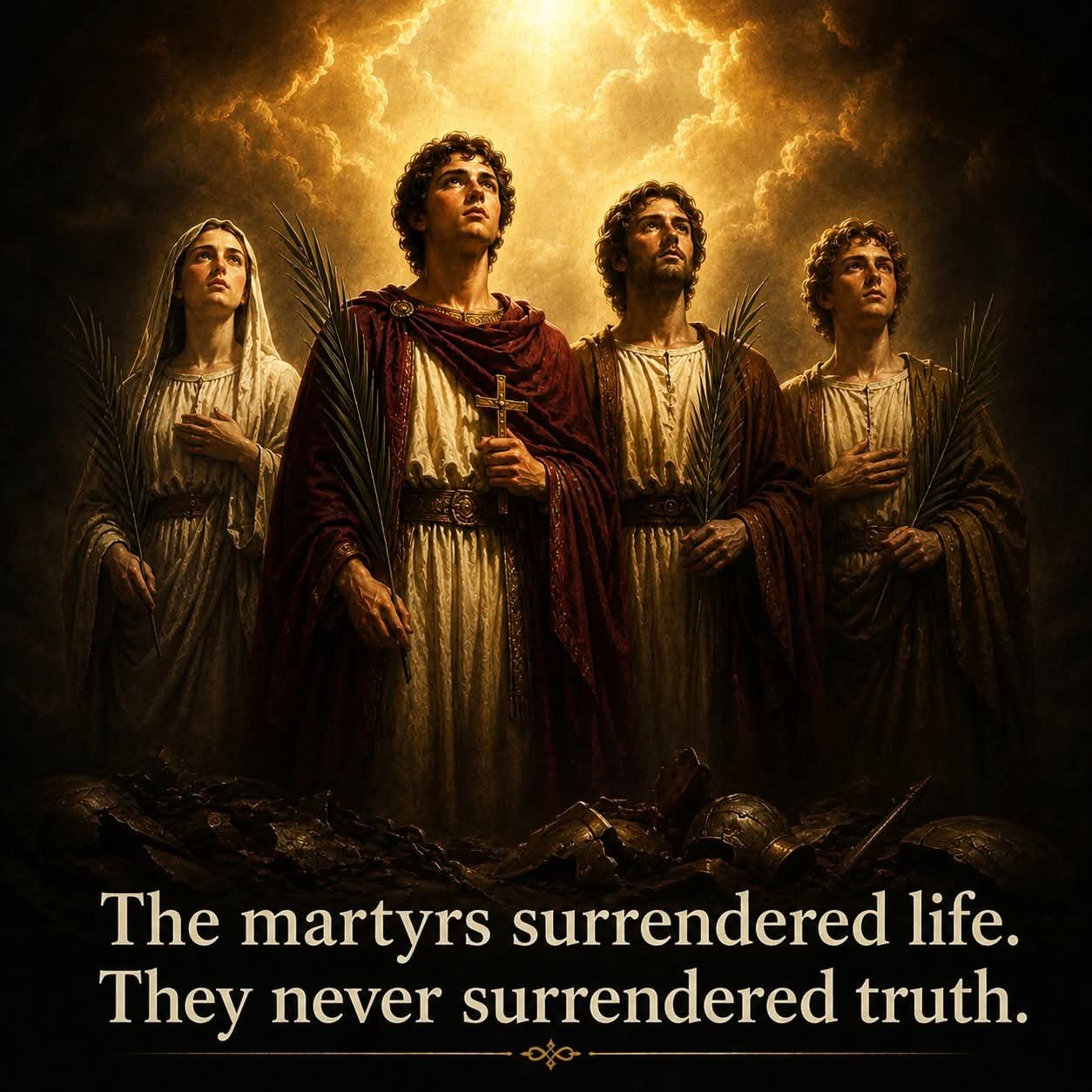
Their deaths were not seen as defeat, but as testimony to Christ. The word “martyr” itself means witness.
HISTORICAL IMPORTANCE
These saints are remembered not because of extensive historical records, but because they represent the lived reality of the early Church — hidden worship, dangerous discipleship, fragile Christian communities, and unwavering fidelity to Christ.
FINAL REFLECTION
Nereus and Achilleus once served the power of the empire. Pancras had barely entered manhood. Yet all three discovered a freedom deeper than fear — a freedom rooted in Christ.
The empire threatened them with death, but they had already surrendered themselves completely to God.
The soldiers laid down worldly power.
The boy refused compromise.
And the Church remembered them not for how long they lived, but for what they would never betray.