
SPIRITUAL INSIGHTS INTO THE LIFE OF SAINT POPE JOHN I
May 18, 2026
Ephesians 2: 8-9
May 19, 2026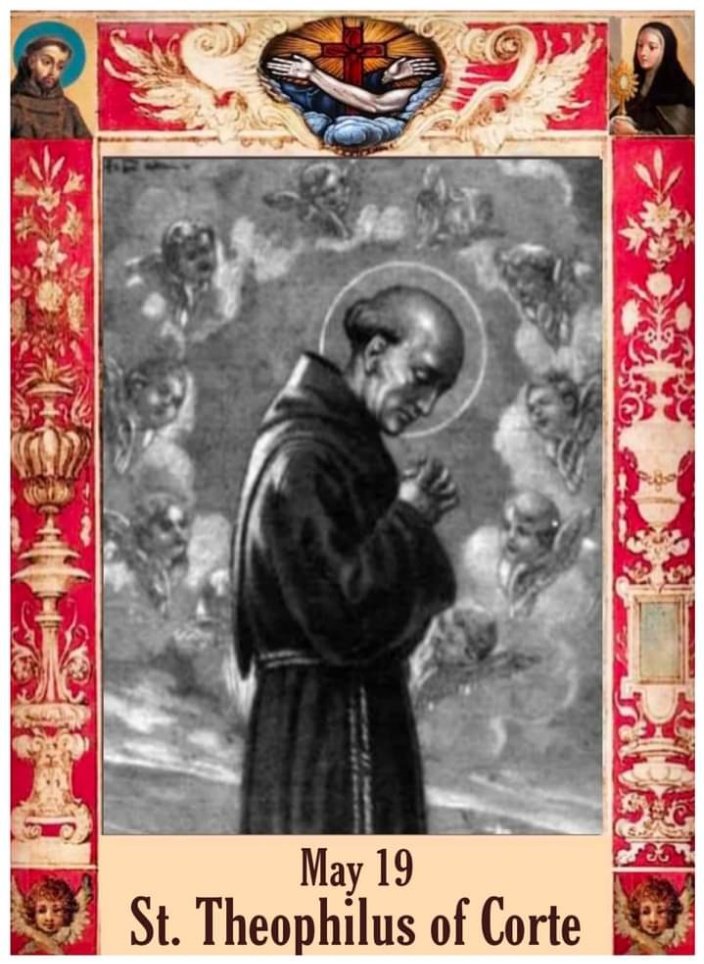
FEAST OF SAINT THEOPHILUS OF CORTE
FEAST DAY – 19th MAY
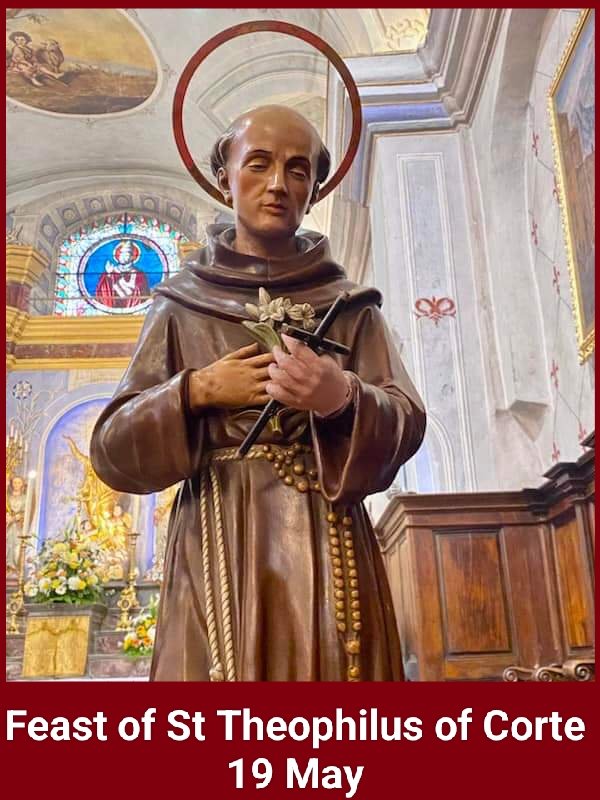
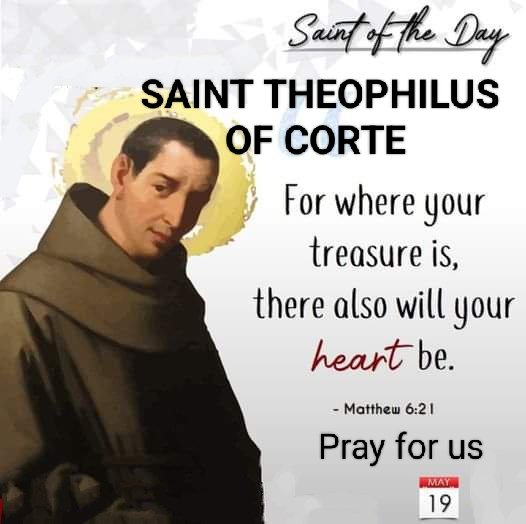
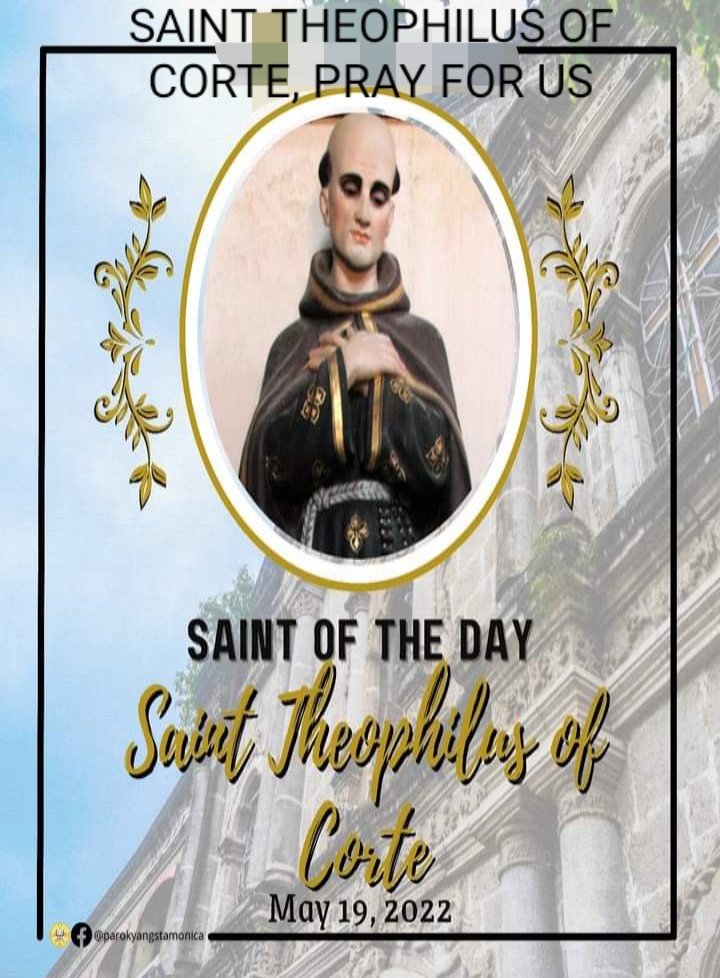
Theophilus of Corte (30 October 1676 – 17 June 1740) – born Biagio Arrighi – was an Italian Roman Catholic priest and a professed member from the Order of Friars Minor. Arrighi became known for his preaching and evangelization efforts and acted as a reformer in establishing houses for the Franciscans in northern Italian cities and throughout the Corsica island where he was born.
He was known for his cheerfulness and his willingness to assist others while also known for his tireless dedication to silence and solitude while exhorting his fellow Franciscans to do the same to reflect on the goodness of God and for a better communion with the Lord. Biagio Arrighi was born on 30 October 1676 in Corsica to the nobles Giovanni Antonio and Maddalena.
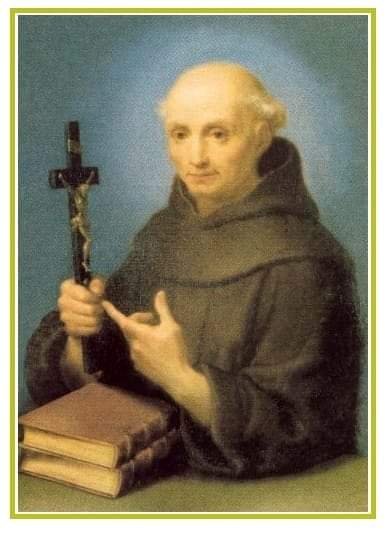
He studied under the Franciscans and on 21 September 1693 joined their order and assumed his religious name. He completed his theological studies in Rome with distinctions and began his theological studies in Naples. Arrighi made his solemn profession in Salerno in 1694 and was ordained to the priesthood in Naples at the convent of Santa Maria La Nova on 30 November 1700.
Once he was ordained he begged his superiors for permission to repair an old convent at Civitella near Subiaco. He founded houses for the order in the Tuscan region and in Corscia in places such as Zuani and Fucecchio. He was a reformer who become known for his preaching and evangelization efforts and for his cheerful disposition.
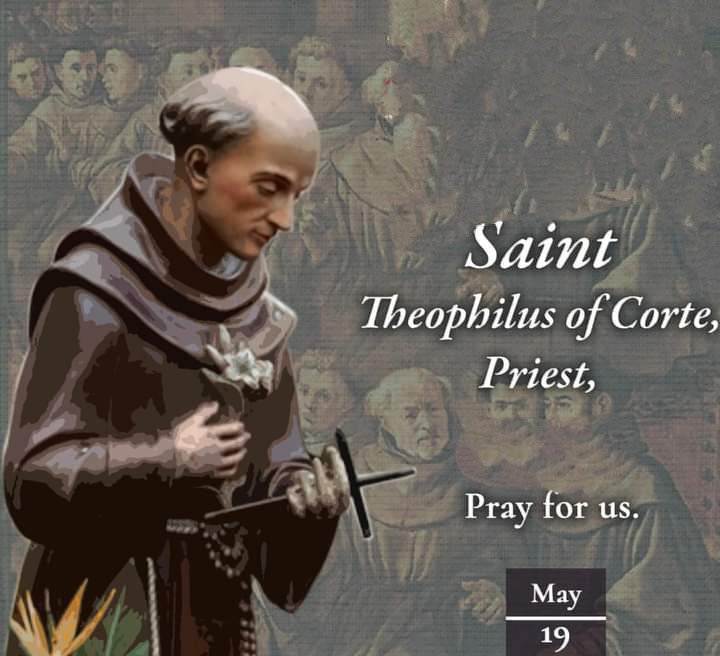
Arrighi first met Tommaso da Cori in 1702 in Bellegra and would live with him for the next decade until 1709 when he was stationed in Palombra until 1715. He served as the guardian of that convent from 1713 to 1715 before he would return to Bellegra. He was in Rome from 1734 until 1735 when he was moved to Bellegra once more.
Arrighi died on 17 June 1740. The cause for his canonization opened after his death in 1750 and Pope Benedict XIV named him as Venerable on 21 November 1755. The cause culminated on 19 January 1896 after Pope Leo XIII beatified him while Pope Pius XI later proclaimed him to be a saint on 29 June 1930.
PRAYER
Lord God, Saint Theophilus spent substantial time in prayer and solitude to enjoy better communion with you. Spending time alone with You, his God, became indispensable in growing closer to You.
Dear God, help us to find time for praying and talking to You in silence and solitude and, when we have time alone with You, help us to know you more. In Jesus’ Name. Amen
Saint Theophilus of Corte, pray for us.
**************************************
ALSO CELEBRATED:
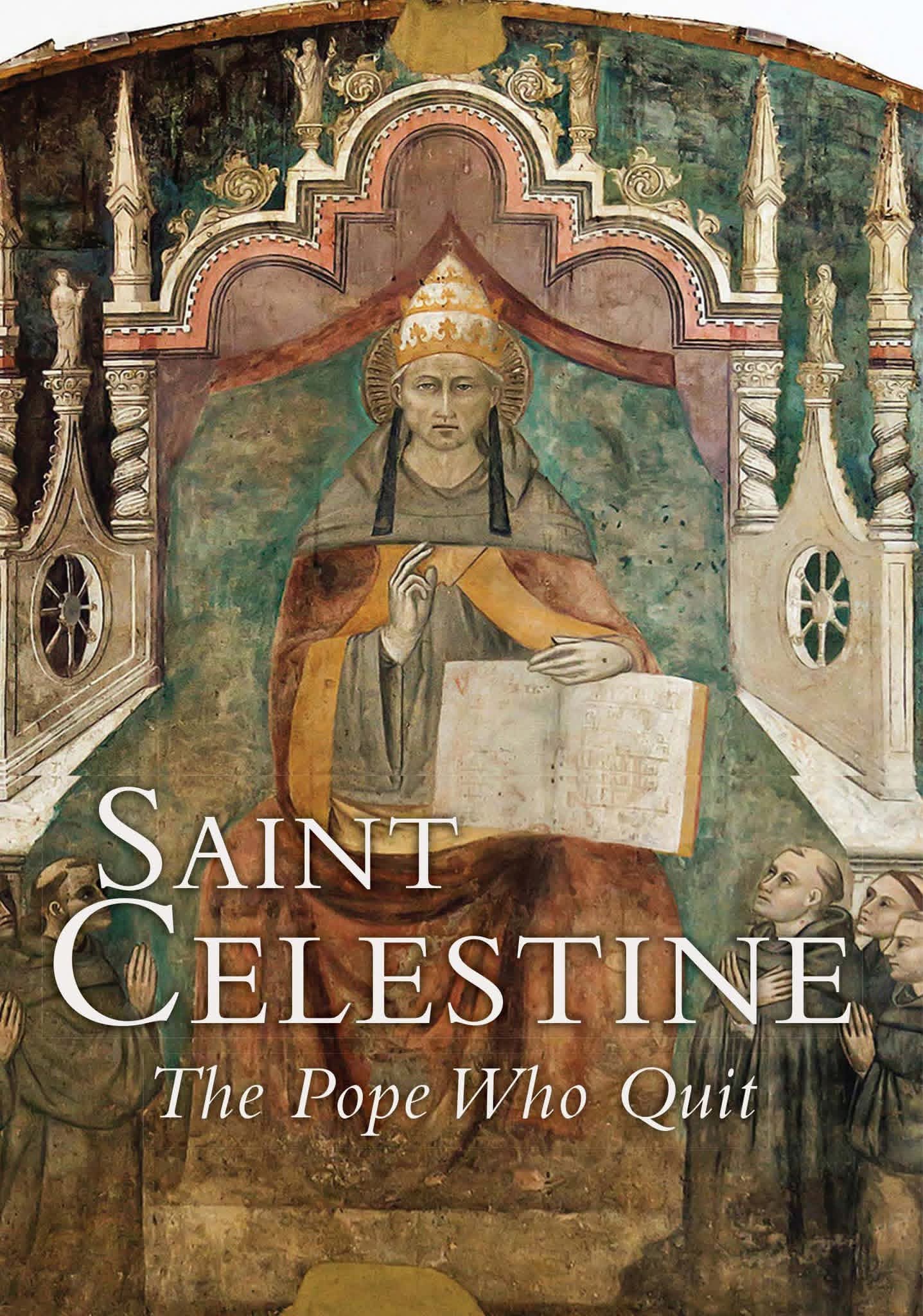
SAINT CELESTINE V POPE.
(1210 – 1296)
Peter was born in 1210 at Isneria, Abruzzi, Italy as Pietro del Morrone. He was eleventh of twelve children.
His father died when Peter was quite young. When his mother would ask, “Which one of you is going to become a saint?” Peter would answer “Me, Mama! I’ll become a saint!”.
At 20 Peter became a hermit, praying, working, and reading the Bible. He followed the Benedictine Rule, and so many other hermits came to him for guidance, that he founded the Holy Spirit Community of Maiella (Celestines).
Following a two year conclave during which the cardinals could not decide on a pope, Peter came to them with the message that God was not pleased with the long delay; the cardinals chose Peter as the 192nd Pope.
The primary objective of Celestine’s pontificate was to reform clergy, many of whom were using spiritual power to obtain wordly power.
Celestine sought a way to bring the faithful to the original Gospel spirit, and he settled on “Pardon” – he called for a year of forgiveness of sins, and return to evangelical austerity and fidelity.
He reigned a mere five months, and the members of the Vatican Curia took advantage of him. This led to much mismanagement, and great uproar in the Vatican.
Knowing he was responsible, Celestine asked forgiveness for his mistakes, and abdicated on 13 December 1294, the only pope to do so.
His successor, Boniface VIII, kept Celestine hidden for the last ten months of his life in a small room in a Roman palace. Celestine may have appreciated it – he never lost his love of the hermit‘s life, and spent his last days in prayer.
PATRON: Aquila, Italy; bookbinders
CONTEMPLATING THE LIFE OF SAINT CELESTINE V, POPE
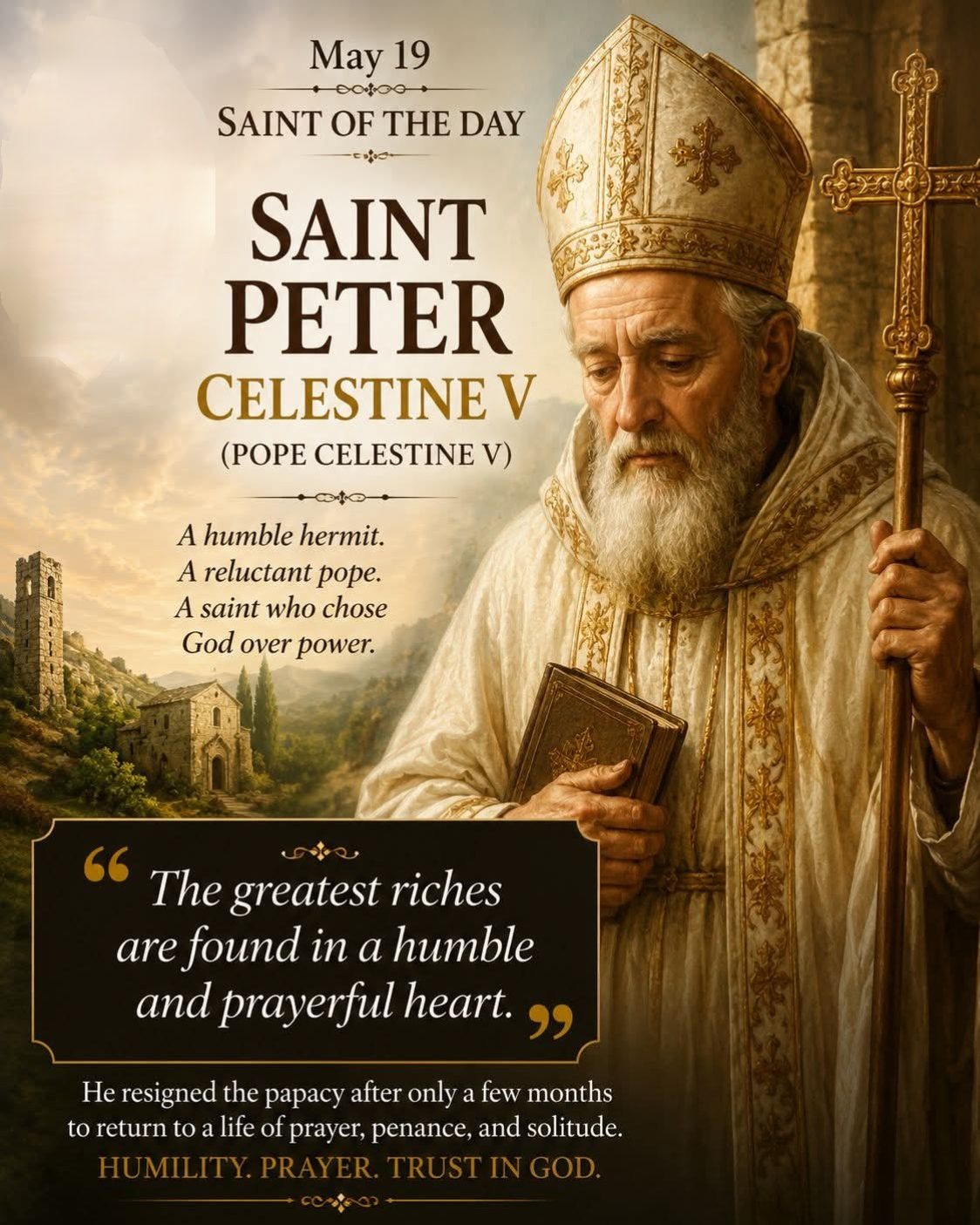
Saint Celestine V remains one of the most remarkable figures in Church history. He was a hermit who loved silence more than authority, a reluctant pope drawn into political turmoil, and a saint remembered for humility rather than worldly success. His life reflects the paradox of a man who fled the world, yet was eventually called to lead the Church.
He is remembered as a hermit and mystic, founder of a monastic congregation, pope for only a few months, the first pope to resign freely and formally, and a saint canonized for holiness rather than political achievement.
HISTORICAL BACKGROUND
Celestine V lived during the troubled thirteenth century, when Europe was shaped by feudal politics and the papacy held immense spiritual and political influence. Kings often interfered in Church affairs, while corruption and power struggles affected many parts of society and the Church.
This was also the age of saints such as Saint Francis of Assisi and Saint Dominic, when many Christians longed for simplicity, holiness, prayer, and Gospel poverty. Pietro del Morrone, later known as Celestine V, became a symbol of that longing.
THE HERMIT WHO BECAME POPE
EARLY LIFE OF PIETRO DEL MORRONE
Pietro was born around 1215 in southern Italy to a poor peasant family. After the death of his father, his mother noticed his deep attraction to prayer and silence. While other boys sought adventure or wealth, Pietro preferred churches, solitude, and quiet prayer.
When someone once asked why he was always alone, he answered gently, “Because God speaks quietly.” Those words reflected the spirit of his entire life.
MONASTIC FORMATION
As a young man, Pietro entered Benedictine monastic life, where he learned Scripture, discipline, fasting, and prayer. Yet he longed for even greater solitude and eventually left for the mountains to live alone with God.
LIFE AS A HERMIT
In the caves and forests of Mount Morrone, Pietro lived a life of extreme simplicity. He endured harsh winters, survived on little food, and spent long hours in prayer and silence.
People gradually heard about the holy hermit living in the mountains. Pilgrims, priests, nobles, and ordinary villagers climbed the slopes seeking advice, blessing, and prayer. They found a man marked by gentleness, peace, and deep holiness.
Many believed miracles surrounded him, and people left his presence spiritually renewed.
FOUNDER OF THE CELESTINES
Disciples eventually gathered around Pietro, and communities of hermits formed under his guidance. Though he desired solitude, he became the founder of a religious congregation later known as the Celestines.
The man who sought hiddenness became widely known throughout Italy as a spiritual father.
THE CRISIS IN THE CHURCH
After the death of Pope Nicholas IV, the Church remained without a pope for a long period because the cardinals could not agree on a successor. Political divisions created confusion and scandal.
Pietro reportedly warned the cardinals to stop delaying and obey God. His words deeply affected them, and they made the astonishing decision to elect the elderly hermit as pope.
When messengers arrived with the news, Pietro was overwhelmed and reluctant to accept the office.
CORONATION AND THE ASTONISHMENT OF EUROPE
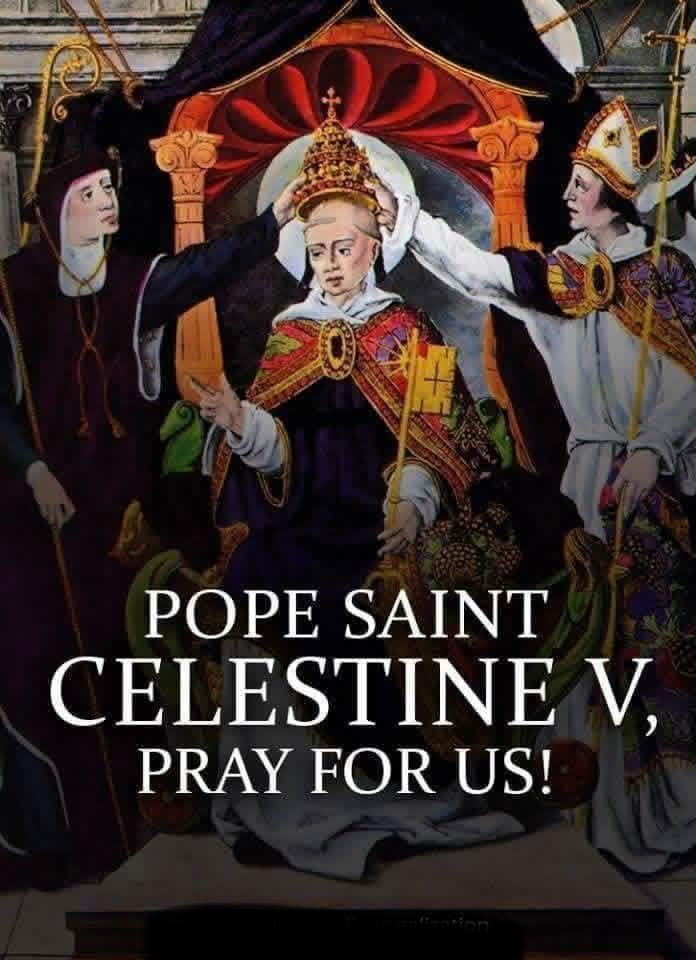
At nearly eighty years old, Pietro descended from the mountains and entered the center of Church leadership. Europe expected a powerful prince of the Church, but instead saw an elderly ascetic riding on a donkey.
He took the name Celestine V. Many rejoiced, believing that holiness had finally triumphed over politics.
A DIFFICULT PAPACY
The responsibilities of the papacy quickly overwhelmed him. Ceremonies exhausted him, politics confused him, and powerful men attempted to manipulate him. The burden of administration weighed heavily upon the old hermit.
He deeply missed the silence of the mountains and once lamented, “I desired a cell, and they gave me a throne.”
THE GREAT DECISION — RESIGNATION
Celestine eventually recognized that he was not suited for governing the Church. Rather than cling to authority or prestige, he chose humility.
After only a few months as pope, he declared that a pope could freely resign and then resigned himself. Europe was shocked by his decision. Some considered him weak, while others saw in him a rare freedom from attachment to power.
HIS SUCCESSOR — POPE BONIFACE VIII
His successor, Pope Boniface VIII, feared that political groups might use Celestine against him. As a result, Celestine was eventually confined in the Castle of Fumone.
IMPRISONMENT AND FINAL YEARS
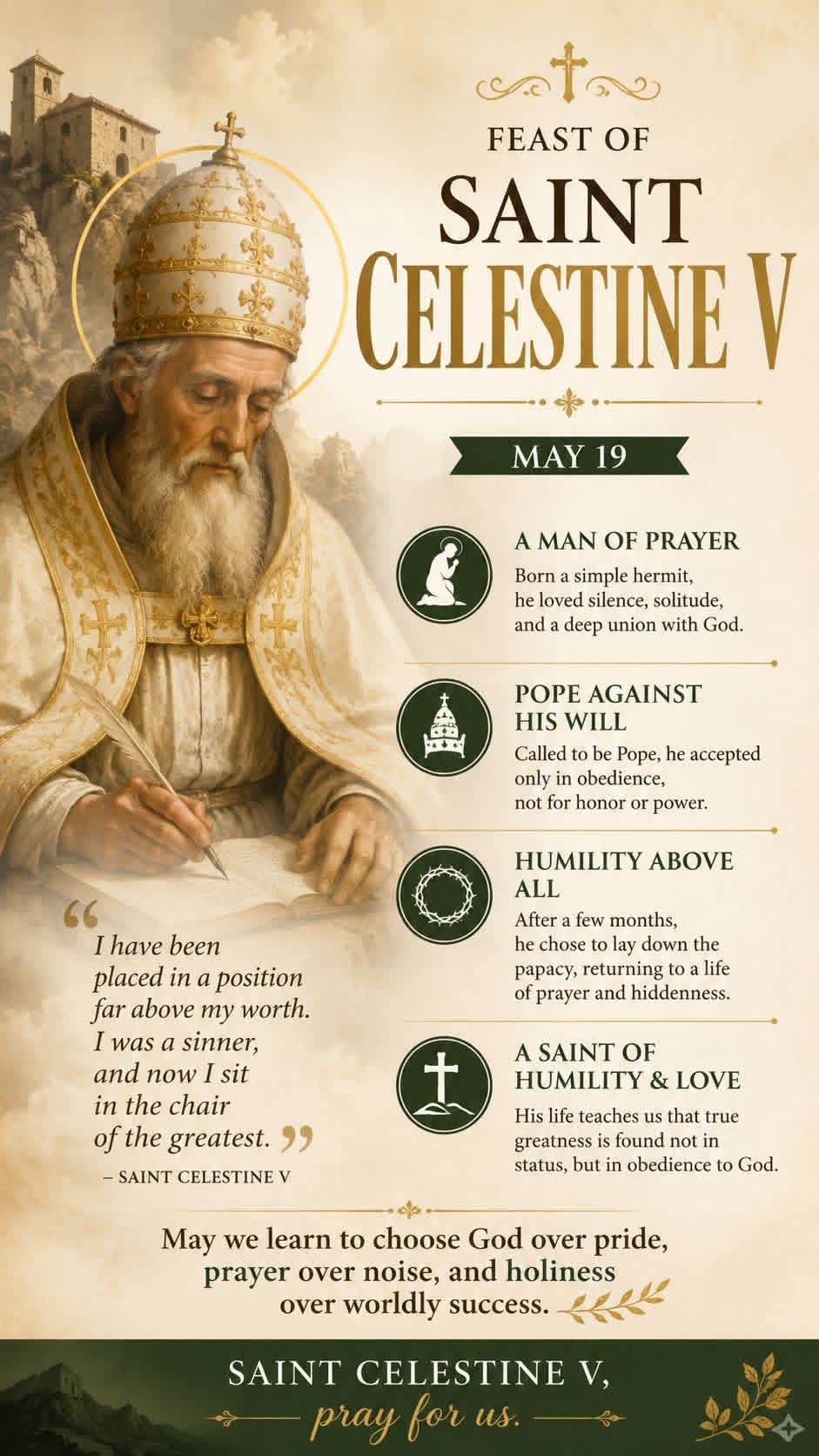
The hermit who once roamed the mountains spent his final years in confinement. Yet witnesses testified that he remained peaceful, prayerful, and forgiving.
In 1296 he died quietly. Though he achieved no political triumphs, people remembered him as the pope who never desired power and the saint who valued his soul more than earthly greatness.
CANONIZATION
In 1313, only seventeen years after his death, Celestine was canonized by Pope Clement V. He was honored mainly as a holy hermit, ascetic, and confessor rather than for achievements during his short papacy.
The Church recognized in him a man who remained poor in spirit before God in an age marked by ambition and power.
SPIRITUAL THEMES IN HIS LIFE
THE DANGER OF POWER
Celestine’s life shows that holiness and leadership are not always the same calling. Spiritual greatness can flourish far from public success or authority.
RADICAL SIMPLICITY
He embodied poverty, silence, prayer, and detachment. His life reflected complete trust in God alone.
THE COURAGE TO STEP ASIDE
His resignation remains a profound example of humility and honesty before God. He refused to cling to prestige once he realized the office was beyond his abilities.
CONTEMPLATION AND ADMINISTRATION
Celestine’s life highlights the tension between contemplation and active leadership. He was deeply gifted in prayer and solitude, though not in governance. The Church needs both contemplatives and leaders.
INFLUENCE ON LATER HISTORY
Centuries later, when Pope Benedict XVI resigned in 2013, many people remembered Celestine V. Before resigning, Benedict visited Celestine’s tomb, a gesture widely seen as symbolic.
LEGENDS AND MYSTICAL TRADITIONS
Over time, many legends arose around Celestine, including stories of visions, prophecies, miracles, and mystical experiences. These traditions reflect how deeply people viewed him as a man close to God.
THE CELESTINE FORGIVENESS
One of his enduring legacies is the Perdonanza Celestiniana. In 1294 he granted a plenary indulgence to pilgrims visiting a church in L’Aquila under certain conditions. Many historians see this as a precursor to later Jubilee traditions. The celebration continues annually in L’Aquila.
TOMB AND RELICS
His relics are venerated in the Basilica of Santa Maria di Collemaggio. After the devastating 2009 earthquake in L’Aquila, devotion to Celestine revived strongly, and many people saw him as a protector and intercessor during suffering.
FEAST DAY AND PATRONAGE
His feast day is celebrated on May 19 in the Roman Catholic Church.
He is associated with hermits, prisoners, those carrying heavy leadership burdens, and people drawn to contemplative life.
WHAT MAKES CELESTINE V UNIQUE
Very few saints combine the identities of hermit, founder, pope, abdicator, prisoner, and mystic.
Saint Celestine V is remembered not for conquering kingdoms or exercising power, but because he valued fidelity to conscience above prestige and chose humility over greatness.
PRAYER
Almighty ever-living God, who chose blessed Celestine V to preside over your whole people and benefit them by word and example, keep safe, we pray, by his intercession, the shepherds of your Church along with the flocks entrusted to their care, and direct them in the way of eternal salvation.
Through our Lord Jesus Christ, your Son, who lives and reigns with you in the unity of the Holy Spirit, one God, for ever and ever. Amen
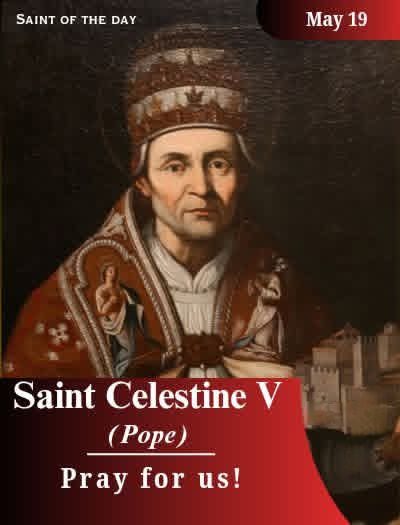
Saint Celestine V (Pope), pray for us!
*********************************
ALSO CELEBRATED:
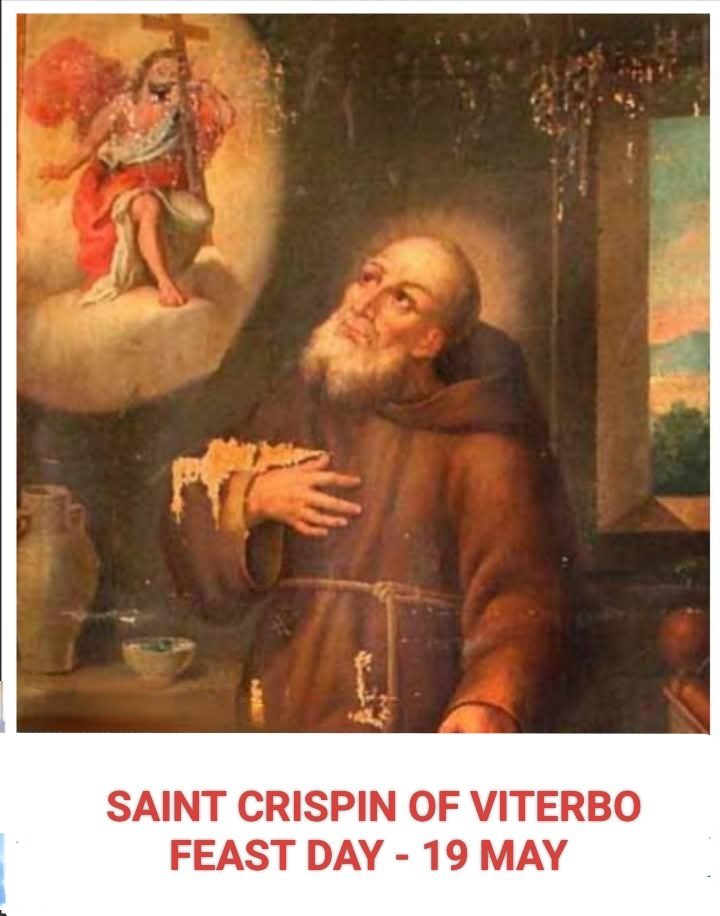
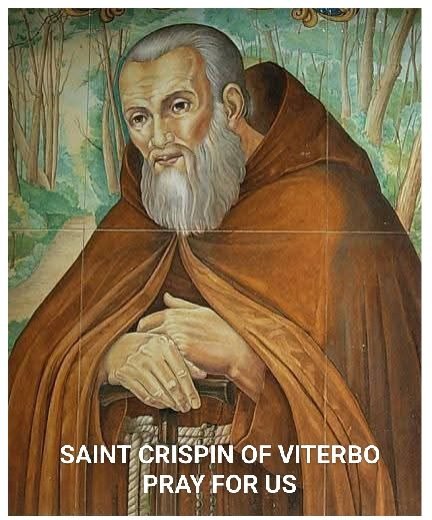
SAINT CRISPIN OF VITERBO – 19 MAY (Religious, I Order)
Crispin was born Pietro Fiorette in Viterbo, Italy in 1668. When he was 6 years old his mother took him to a Marian shrine and consecrated him to the Mother of God to place him under her spiritual protection. It was from that point that Pietro referred to the Blessed Mother as his “other mother.”
Pietro became known for his piousness and for his great knowledge of the saints; the townsfolk often referred to him as “il santarello” (“the little saint”). He was educated under the Jesuits.
In 1693 he applied for admission into the Order of Friars Minor; he assumed the religious name of “Crispino da Viterbo” upon his admittance. After serving as a gardener and a cook, he was sent to Tolfa as the infirmarian where, during an epidemic, he is said to have effected a number of cures after turning to God for Divine intervention.
Crispin lived a life devoid of luxuries. He called himself “the little beast of burden of the Capuchins.” In Orvieto he lived in a small room and rose in the morning to meditate before he attended a number of Masses. For lunch he ate a little vegetable soup or a mouthful of bread dipped in water. He would often beg for alms or go out to visit convicts in the local prison or the sick in the hospitals. In the summer he slept on the roof.
Illustrious individuals visited Crispin, including bishops and cardinals; even Pope Clement XI took great delight in conversing with him. In 1750 Crispin’s superiors sent him to Rome when his health began to deteriorate; and he himself predicted he would die there.
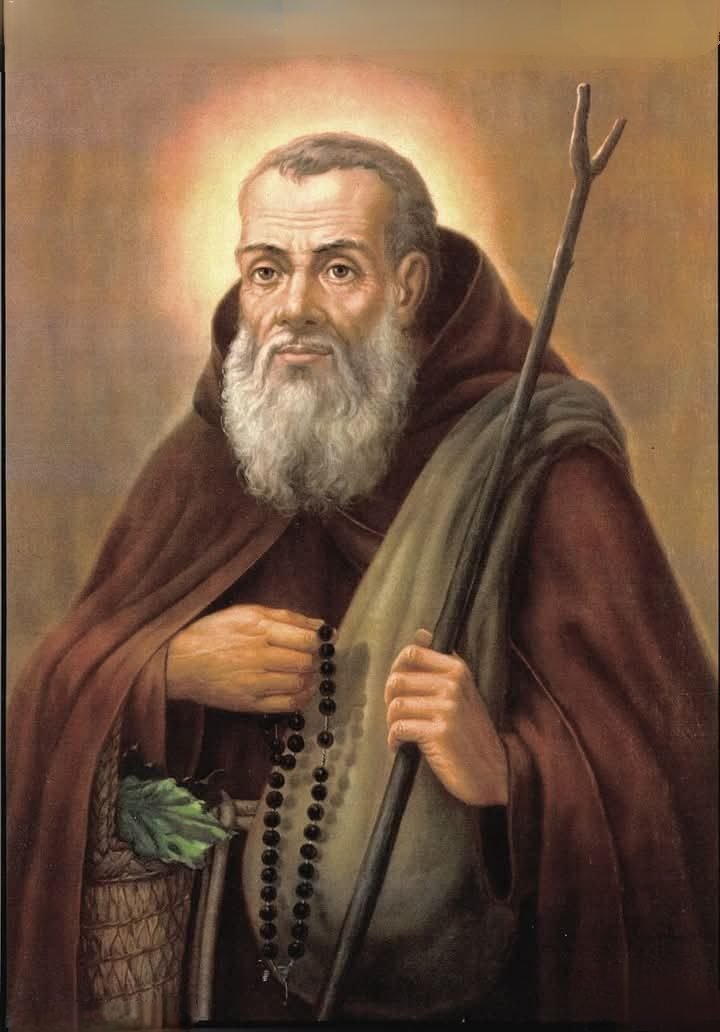
Crispin died on May 19, 1750 and was buried in the Santa Maria della Concezione dei Cappuccini church. His remains were exhumed in 1959 and found to be incorrupt.
The canonization process began under Pope Clement XIII in 1761. Pope Pius VI named Crispin as Venerable in 1796. Pope Pius VII beatified him in 1806, and he was canonized by Pope John Paul II in 1982.
PRAYER
O God, who filled St. Crispin with a spirit of joy and peace, grant that, through his example, we may live in harmony with you and with one another. May the joy that filled his heart and shone from his face inspire us to seek reconciliation with you and peace with our brothers and sisters. Through Jesus Christ, our Lord. Amen