
SPIRITUAL INSIGHTS INTO THE LIFE OF SAINT JOSEPH CAFASSO
June 23, 2026
Romans 8:18
June 24, 2026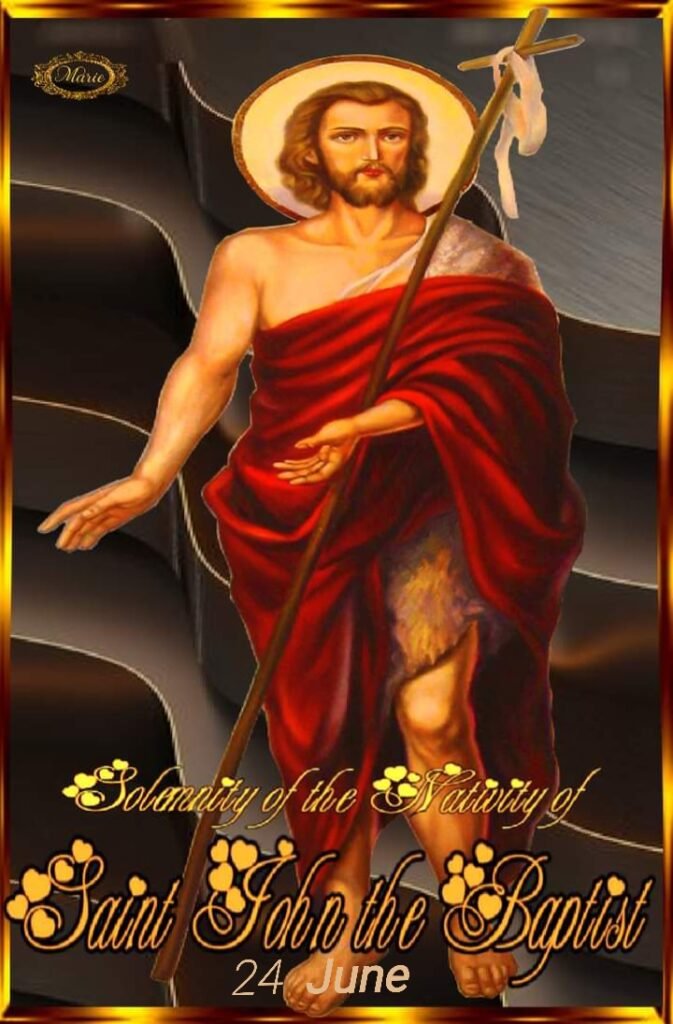
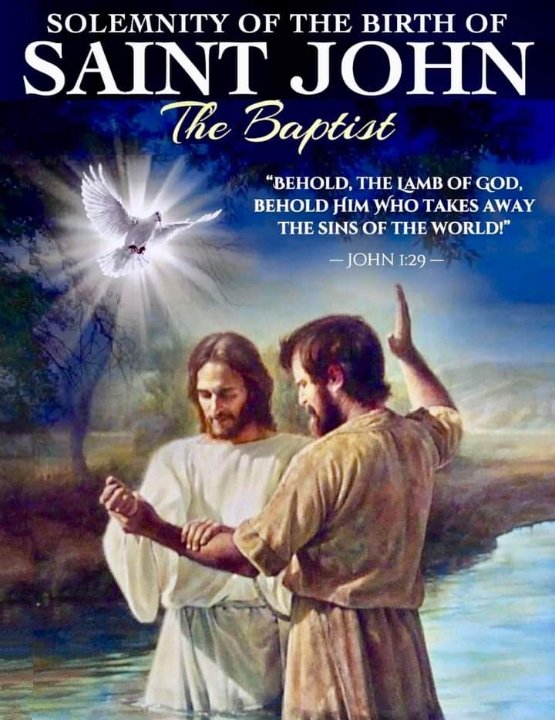
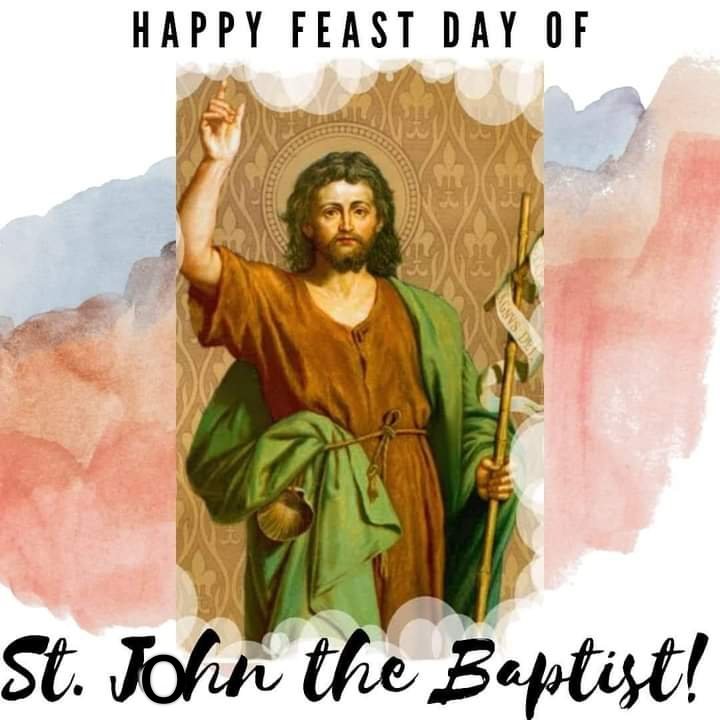
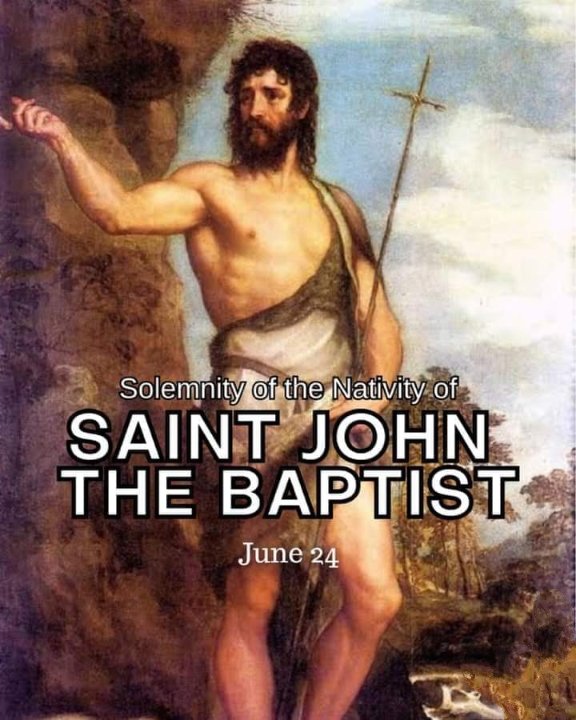
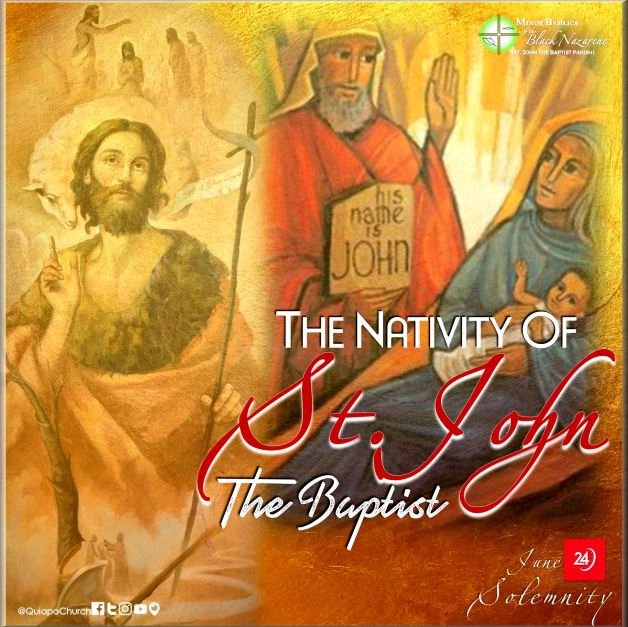
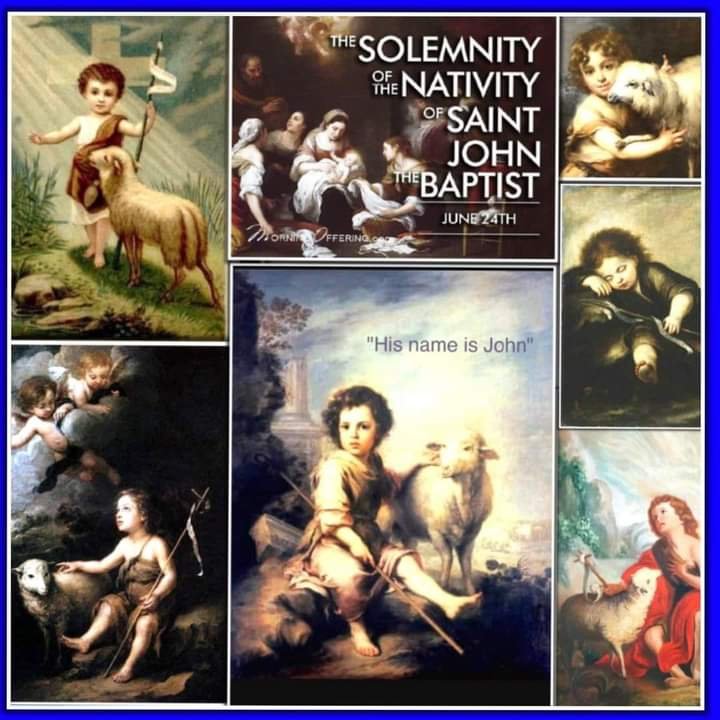
SOLEMNITY OF THE NATIVITY OF SAINT JOHN THE BAPTIST
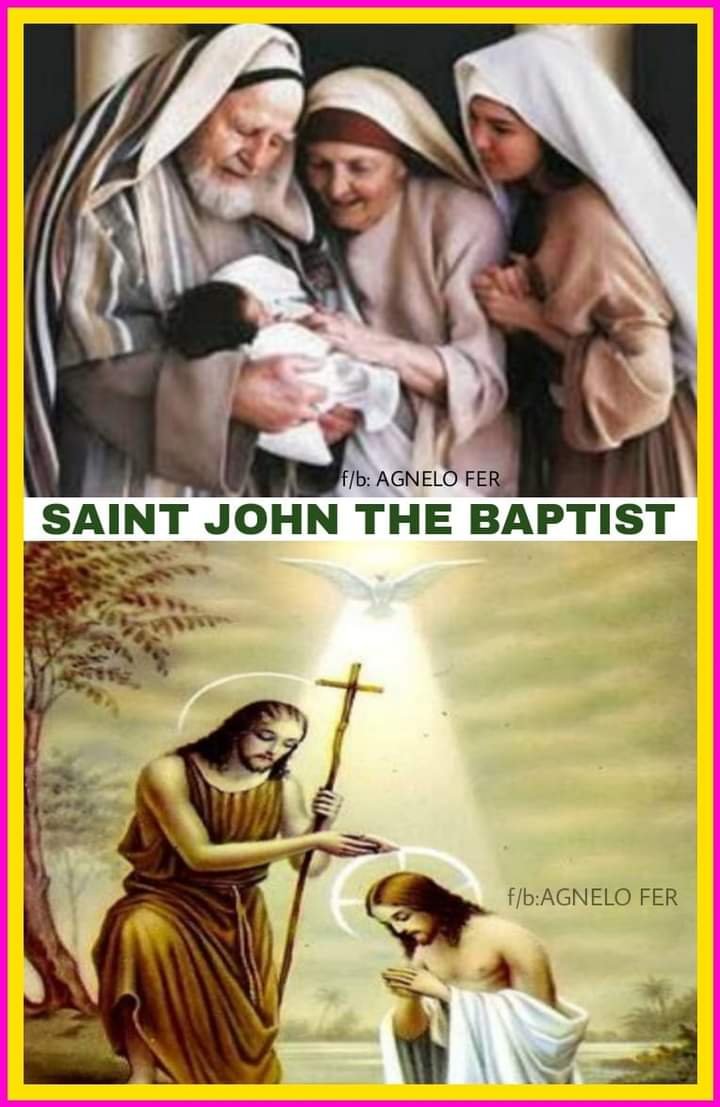
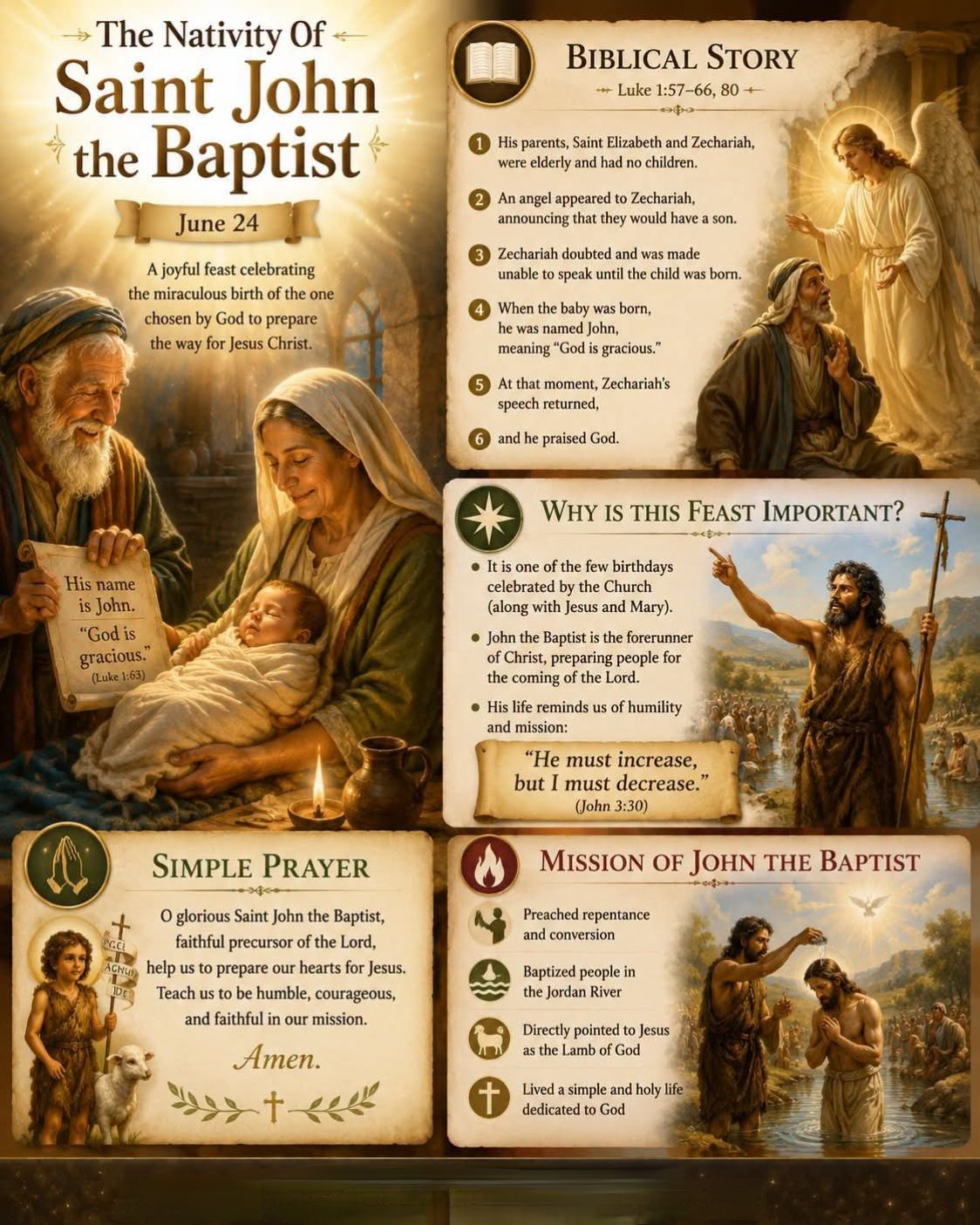
When the time arrived for Elizabeth to have her child she gave birth to a son. Her neighbors and relatives heard that the Lord had shown his great mercy toward her, and they rejoiced with her.
When they came on the eighth day to circumcise the child, they were going to call him Zechariah after his father but his mother said in reply, “No. He will be called John.” But they answered her, “There is no one among your relatives who has this name.”
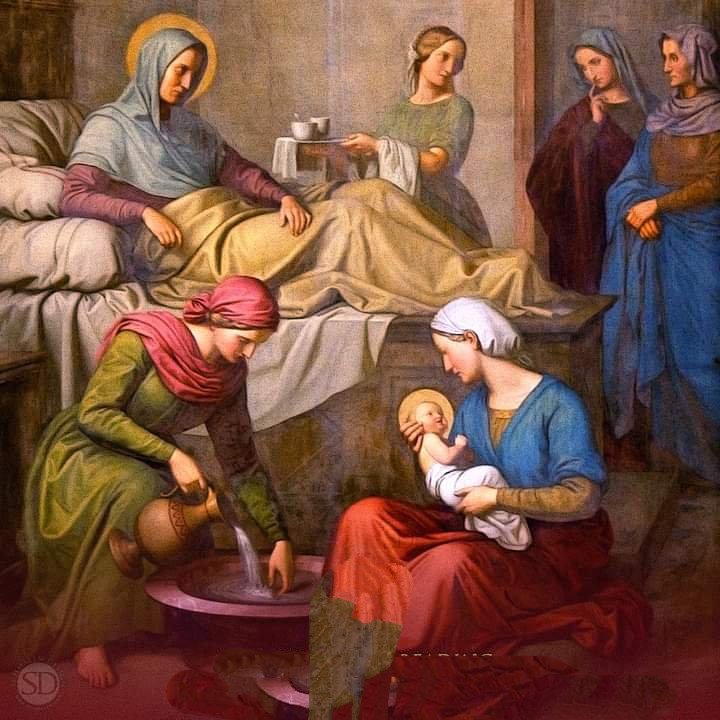
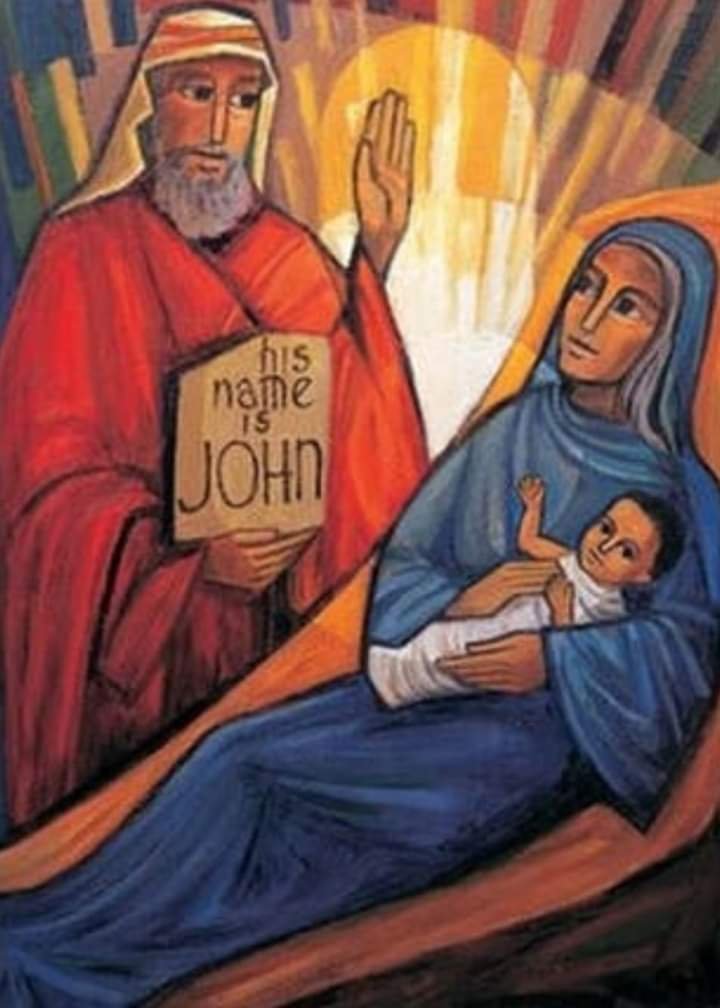
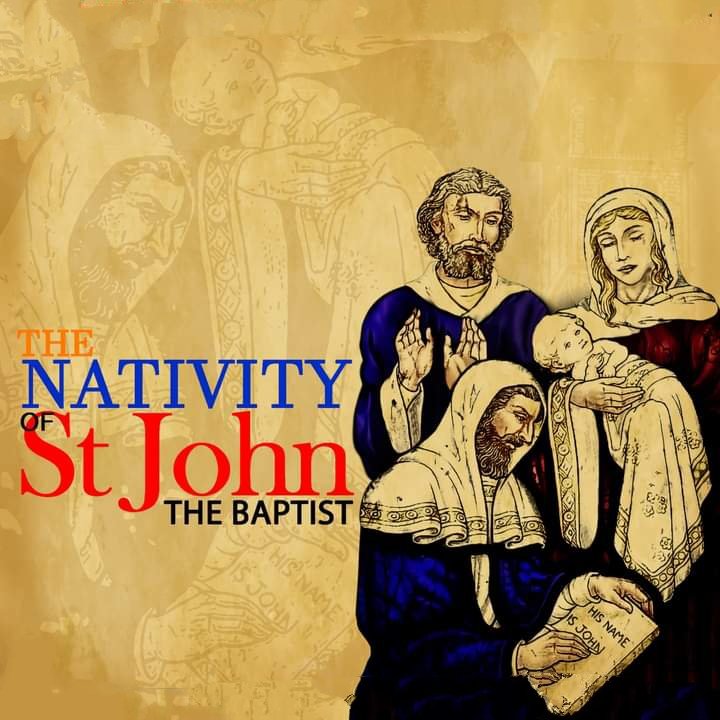
So they made signs, asking his father what he wished him to be called. He asked for a tablet and wrote, “John is his name,” and all were amazed. Immediately his mouth was opened, his tongue freed, and he spoke blessing God.
Then fear came upon all their neighbors, and all these matters were discussed throughout the hill country of Judea. All who heard these things took them to heart, saying, “What, then, will this child be?” For surely the hand of the Lord was with him.
Lk. 1:57-64.
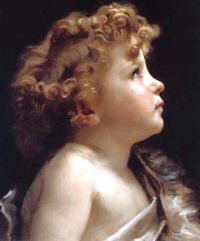
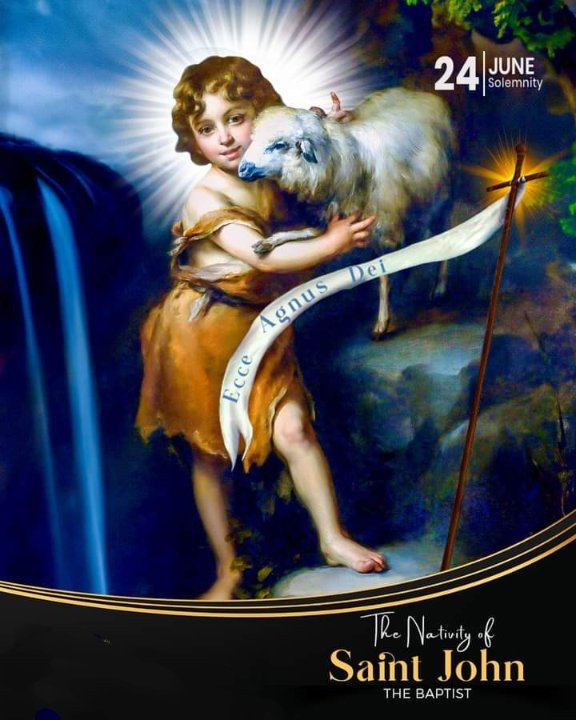
Jesus himself said, “Amen, I say to you, among those both of women there has been none greater than John the Baptist” – Mt. 11:11
Today, we celebrate the Solemnity of the Nativity of Saint John the Baptist. For the Church, this is a special day—one of the only feast days of a saint falling on the date of birth, rather than the date on which the saint died.
Of course, we also celebrate the beheading of Saint John the Baptist in August. Ordinarily the Church observes the day of a saint’s death as his feast, because that day marks his entrance into heaven.
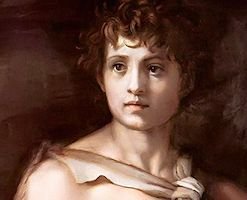
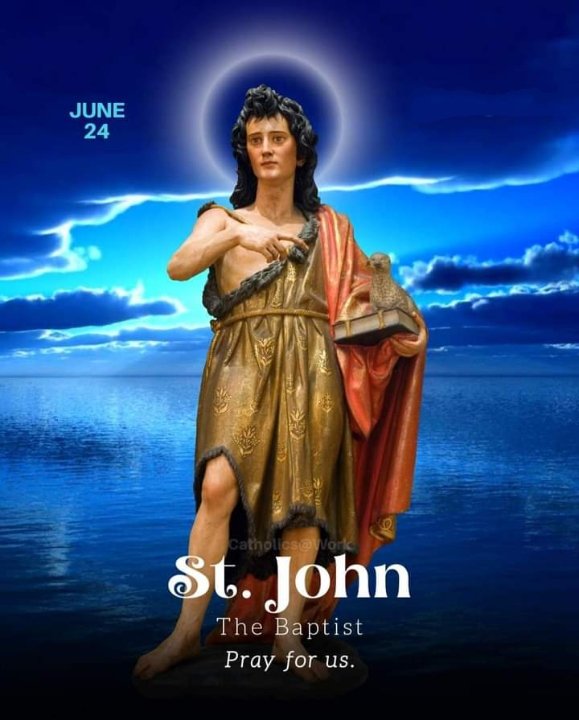
To this rule there are two notable exceptions, the birthdays of Blessed Mary (celebrated on September 8) and of Saint John the Baptist. All other persons were stained with original sin at birth, preventing a liturgical celebration of the event. But through the grace of God—in preparation for her special role as Mother of God– Mary, from the first moment of her existence, was free from original sin.
Similarly, John was cleansed of original sin in the womb of his mother, jumping for joy at the greeting of Mary to Elizabeth during her visitation (the second Luminous Mystery of the Holy Rosary). So, today, the Nativity of Saint John the Baptist, is a special day for the Church.
Saint Augustine said – Apart from the most holy solemnity commemorating our Savior’s birth, the Church keeps the birthday of no other person except that of John the Baptist. (The feasts of the Immaculate Conception and of the Nativity of the Blessed Virgin had not yet been introduced when he wrote this.)
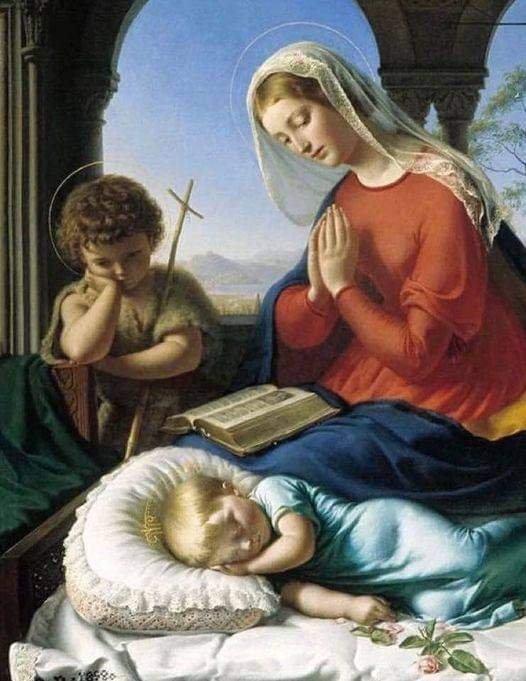
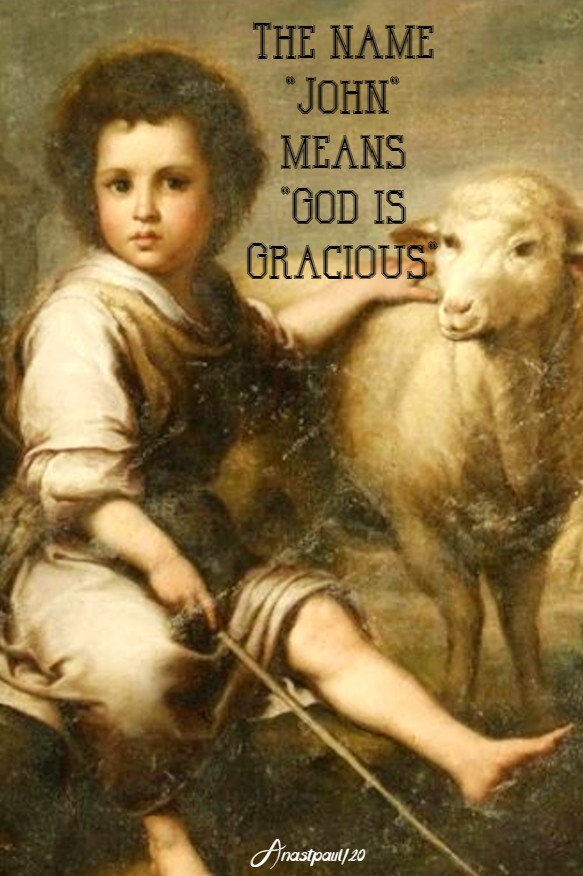
In the case of other saints or of God’s chosen ones, the Church, as you know, solemnizes the day on which they were reborn to everlasting beatitude after ending the trials of this life and gloriously triumphing over the world.
“For all these the final day of their lives, the day on which they completed their earthly service is honored. But for John the day of his birth, the day on which he began this mortal life is likewise sacred. The reason for this is, of course, that the Lord willed to announce to men His own coming through the Baptist, lest if He appeared suddenly, they would fail to recognize Him. John represented the Old Covenant and the Law. Therefore he preceded the Redeemer, even as the Law preceded and heralded the new dispensation of grace.”
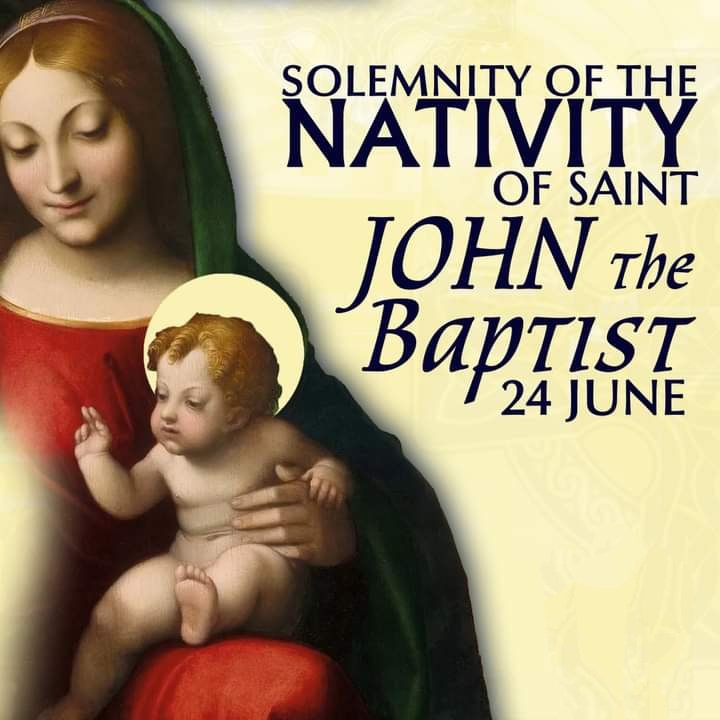
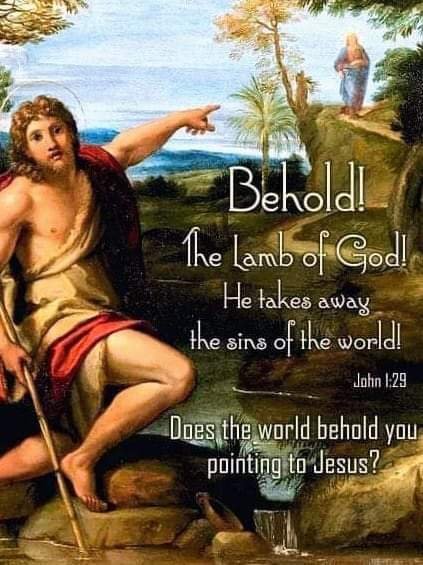
Saint John the Baptist is, therefore, the Precursor of Christ, the forerunner of the Son of Justice, the minister of baptism of Jesus. His birth prepared the way for the coming of Our Lord and Savior, for the coming of salvation for all.
John was born to Elizabeth, the “cousin” of Mary, and Zechariah, an elderly man and priest at the Temple of Jerusalem. Elizabeth, also in advanced age, was childless and sterile, although both she and Zechariah very much wished to conceive. According to the Gospel of Luke, John’s birth was foretold by the angel Gabriel to Zechariah while he was at work in the Temple.
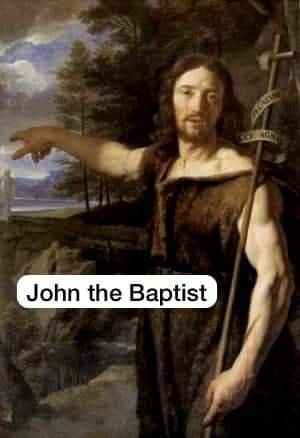
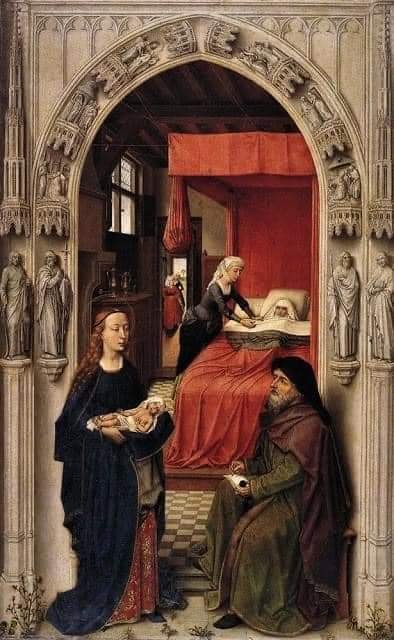
However, he did not believe, and was struck mute until he named his son John. John, the cousin of Jesus, the infant who leapt in the presence of the Lord prior even to his birth in purity, grew and began his public ministry—one which prepared the way for Christ.
In this way, his birth and life anticipated that of Jesus. Both births were foretold by message of an angel—one to a virgin, one to a woman unable to conceive.
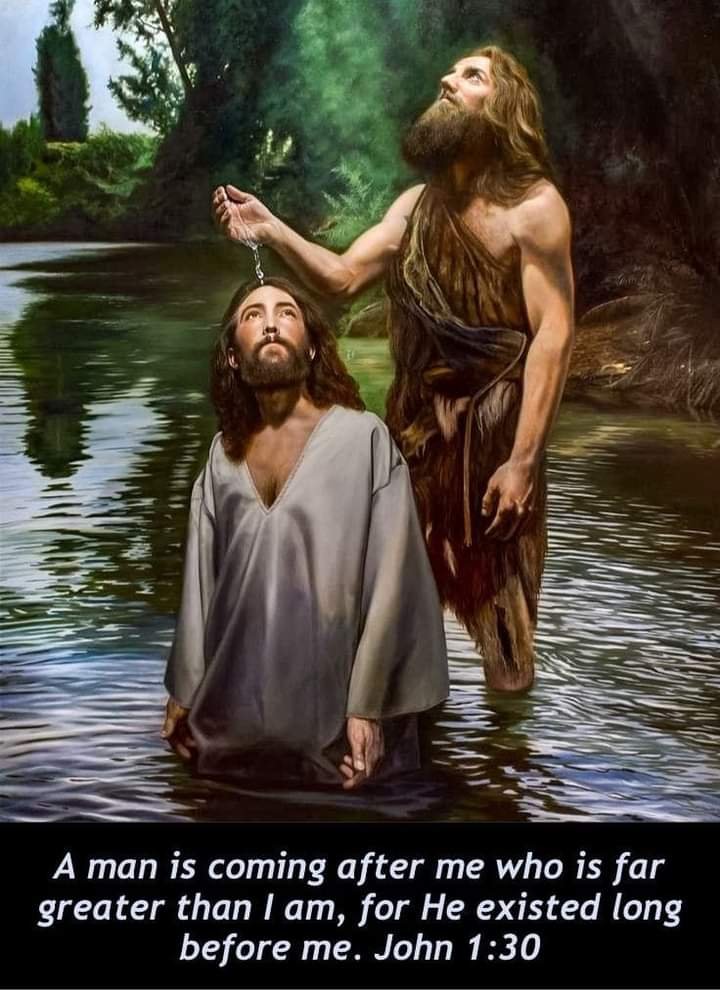
Both men brought all to faith—one through baptism by water, one by the Spirit. The people were amazed because of this child, as well as by this sterile couple, who were advanced in age, who had a son. Their wonder was illuminated by faith. This is why they “took to heart” what they had heard and what they saw, and they praised God.
Their amazement was accompanied by the awareness that they did not understand everything “What, then, will this child be?” This is a legitimate question since if they had understood everything, God would not have been a part of it!
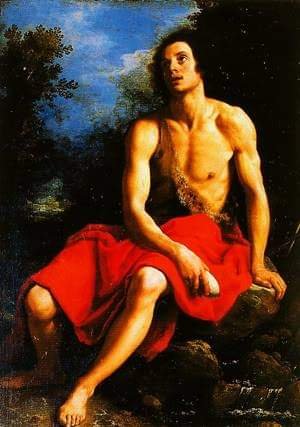
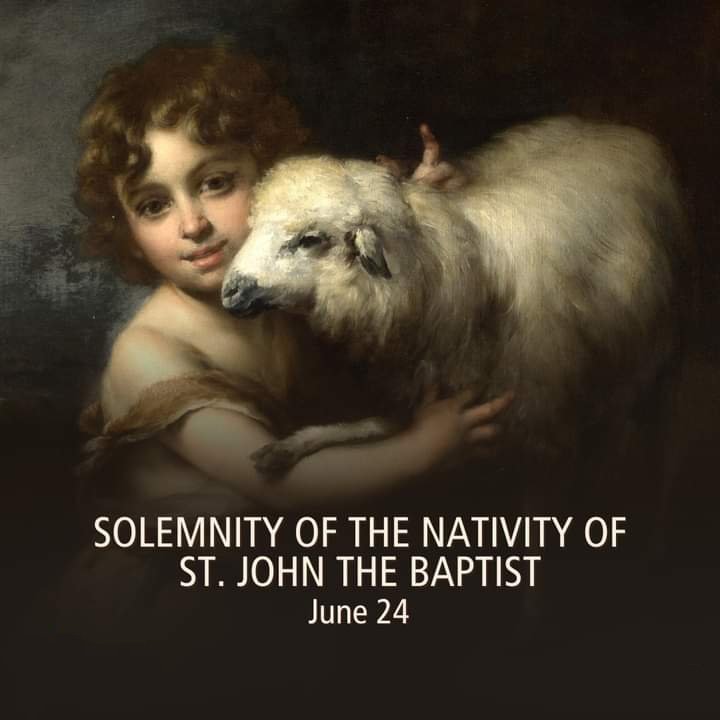
“The birth of John the Baptist is surrounded by a joyous sense of wonder, surprise and gratitude…. The faithful people sense that something great has occurred, even though it is humble and hidden…. The people are able to live the faith with joy, with a sense of wonder, of surprise and of gratitude. Do I feel a sense of wonder when I see the Lord’s works, when I hear about evangelization or the life of a saint?… Am I able to feel the Spirit’s consolation or am I closed?” (Pope Francis, Angelus, 24 June 2018)
Those who were present for his circumcision want to give the baby his father’s name, Zechariah. But something out of the ordinary happens – Elizabeth intervenes and says his name must be John.
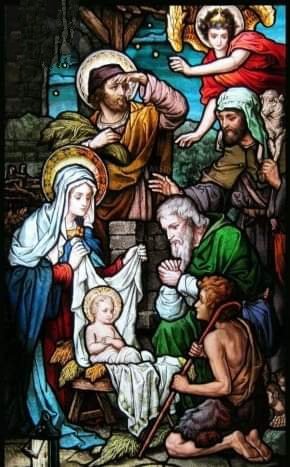
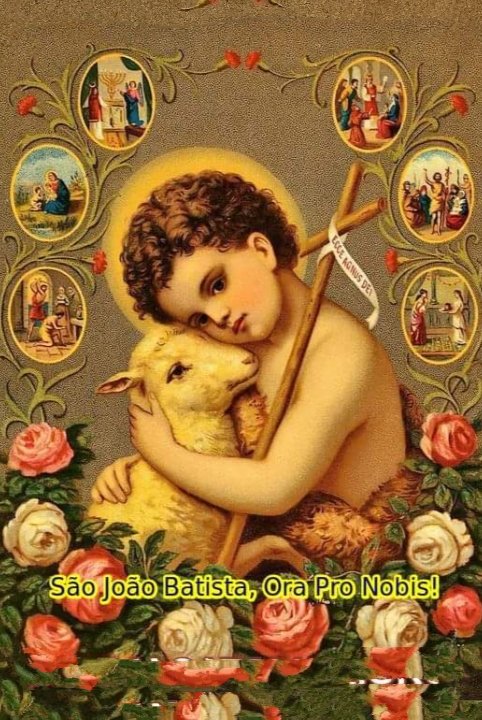
This was the name that God himself had indicated through the angel: “Do not be afraid, Zechariah, your prayer has been heard. Your wife Elizabeth will bear you a son, and you shall name him John” (Lk. 2:13).
Zechariah had at first demonstrated unbelief toward God which left him mute. Now, obeying God’s request – you shall name him John – a new story began.
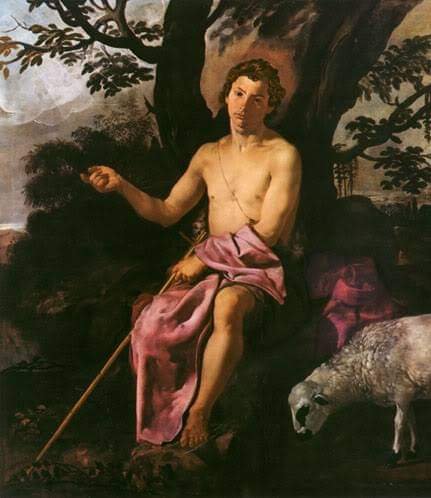
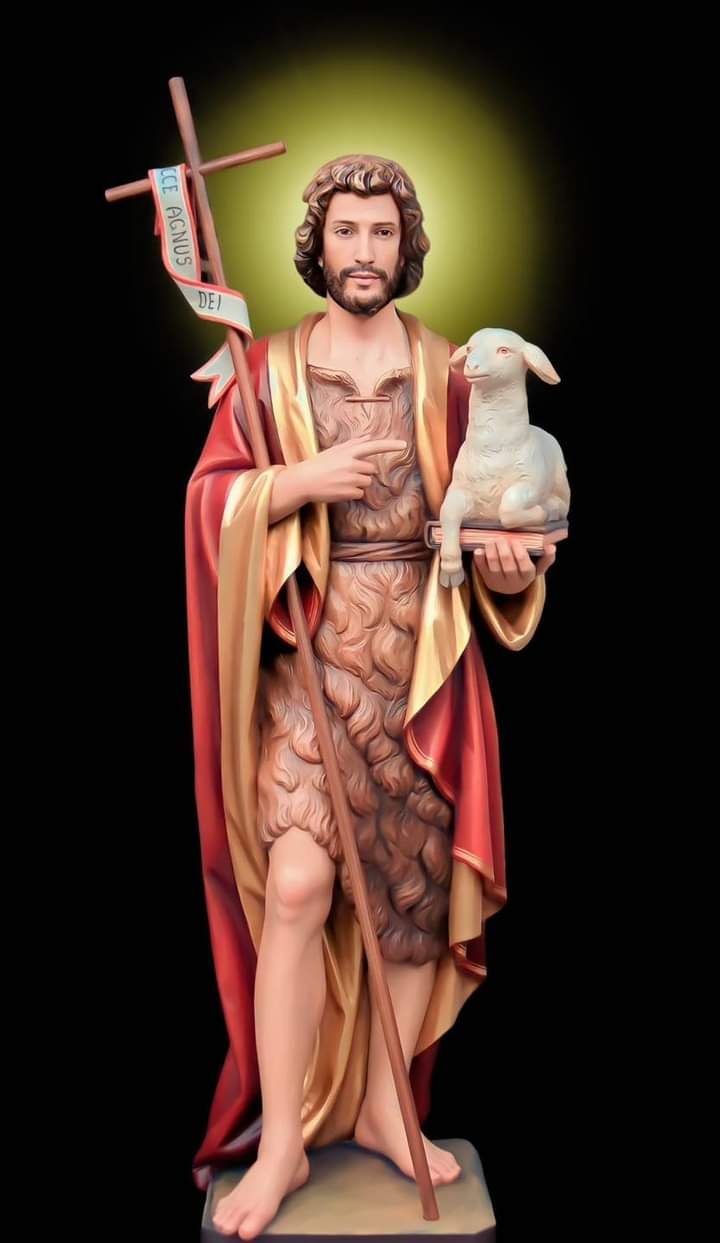
The text makes us understand what has opened up. An old, barren woman gives birth to a son; an old mute man speaks. These two signs attest that where things seem impossible, God always holds a possibility in store as the prophet Isaiah recalls: “See, I am doing something new! Now it springs forth, do you not perceive it?” (Is. 43:19)
John left his father’s home—giving up considerable honor and privilege (and even some riches, perhaps!)– and went into the desert when he was just an adolescent (scholars estimate between 12 and 15 years old). There, in the desert near the river Jordan, he entered into a contemplative life of hermitude, communing with the Lord in silence.
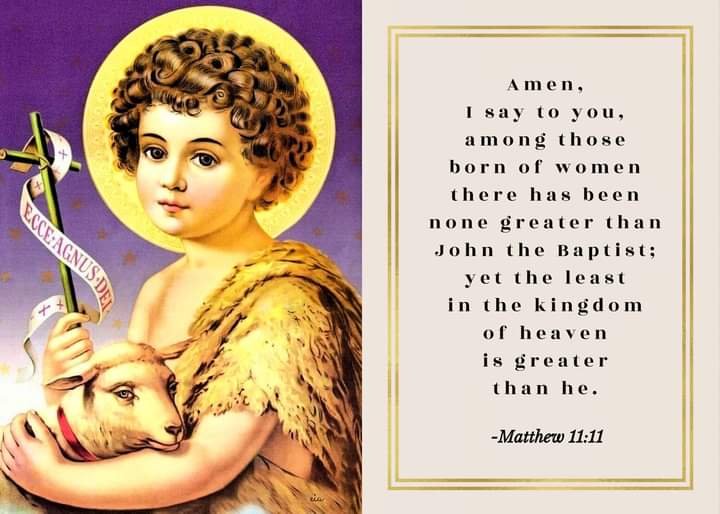
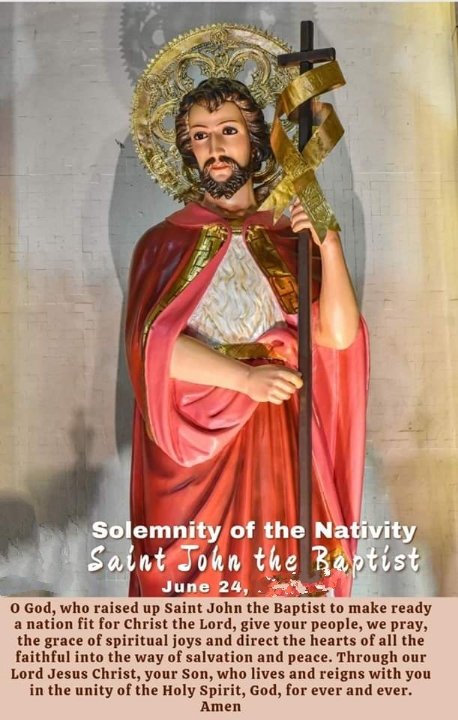
He began a life of mortification and penance, wearing a camel-hair shirt, and sustaining his body with locusts and honey. Soon, he gained notoriety as a pious and holy man, and people flocked to him for baptism in the river. He preached reformation of life.
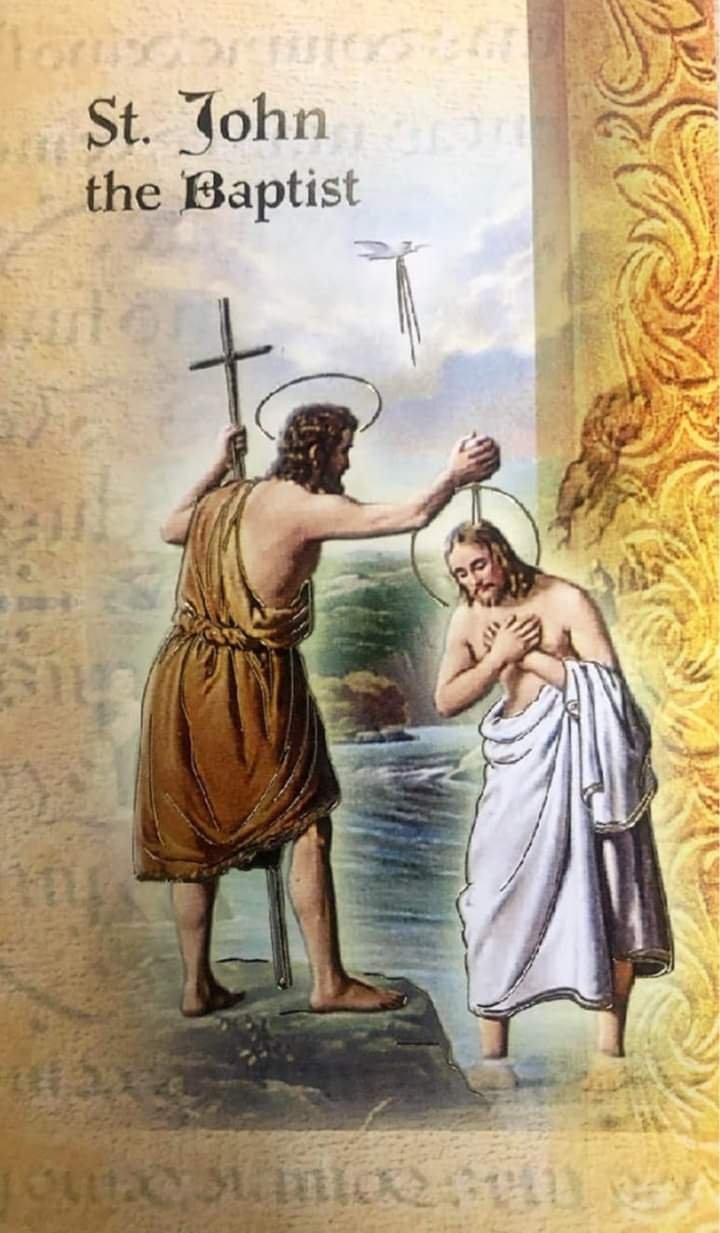
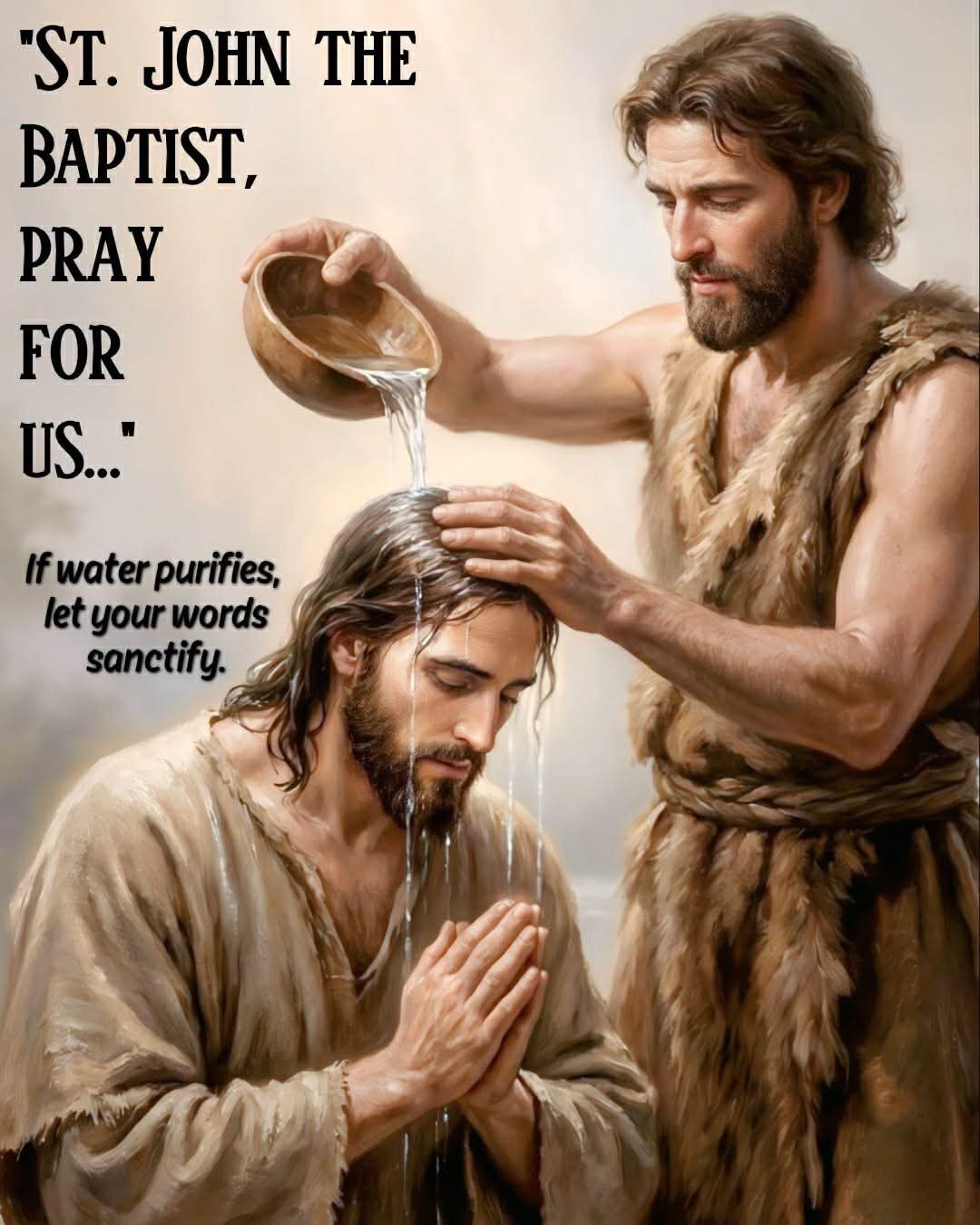
John served the Lord until the age of 29, at which time the angel of the Lord appeared to him, instructing him to proclaim the coming of Christ, preach penance, and to continue baptizing the many. The angel also informed John that Jesus was the Savior of the World, whom John should baptize (the Second Luminous Mystery of the Holy Rosary), and upon whom the Holy Spirit would descend in the form of a dove.
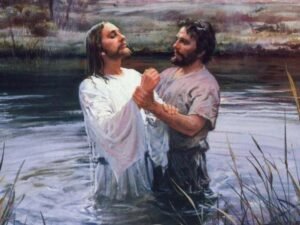
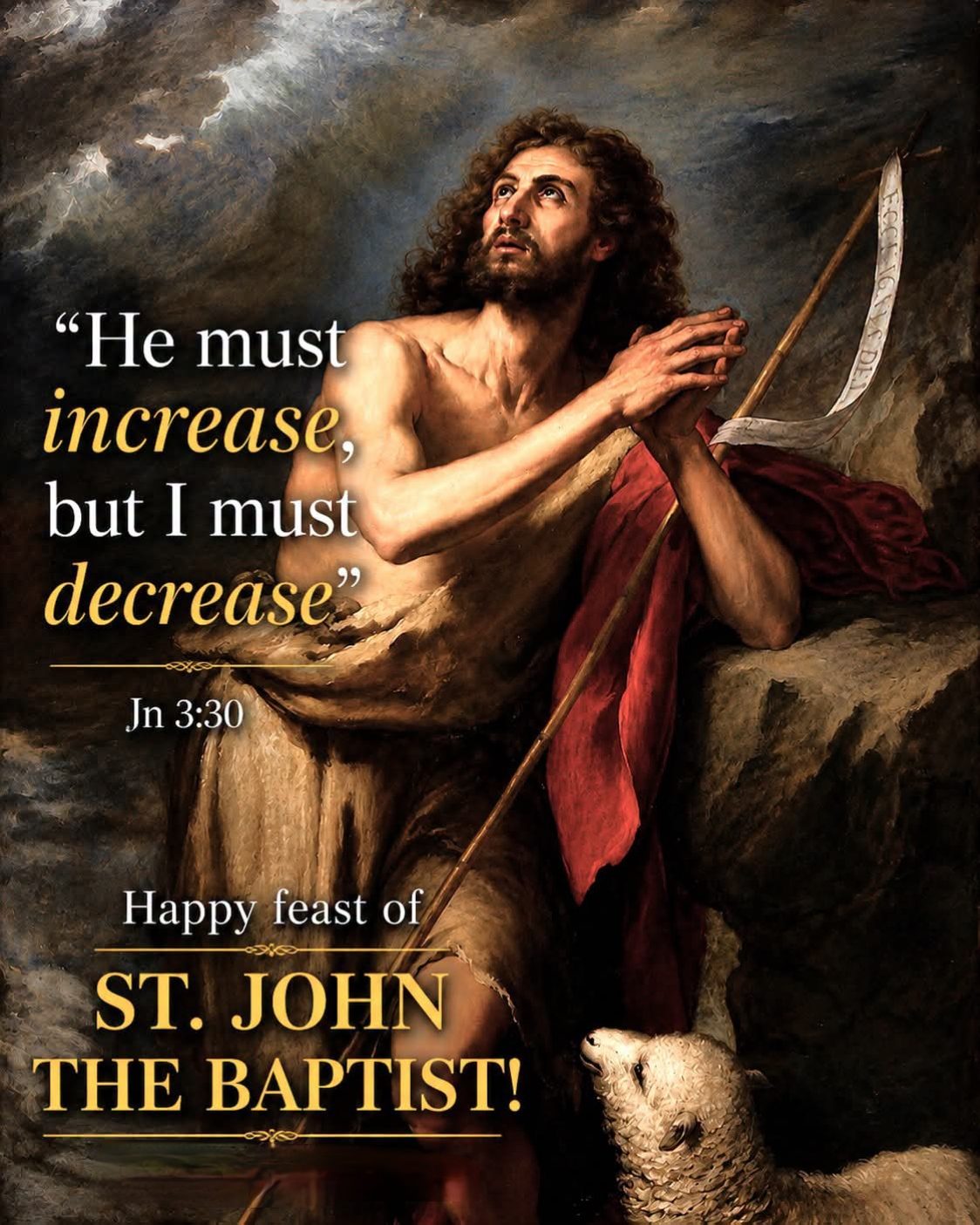
Jesus called John the greatest of all those who had preceded him. But John would have agreed completely with what Jesus added: “Yet the least in the kingdom of God is greater than he.” (Luke 7:28). Saint John lived the words “He must increase; I must decrease,” (John 3:30) believing them to the core of his being.
His purpose was to prepare the way for Jesus. The baptisms John performed were baptisms of repentance and reformation. But the baptisms that Jesus would bring to the world would be through the Holy Spirit and fire.
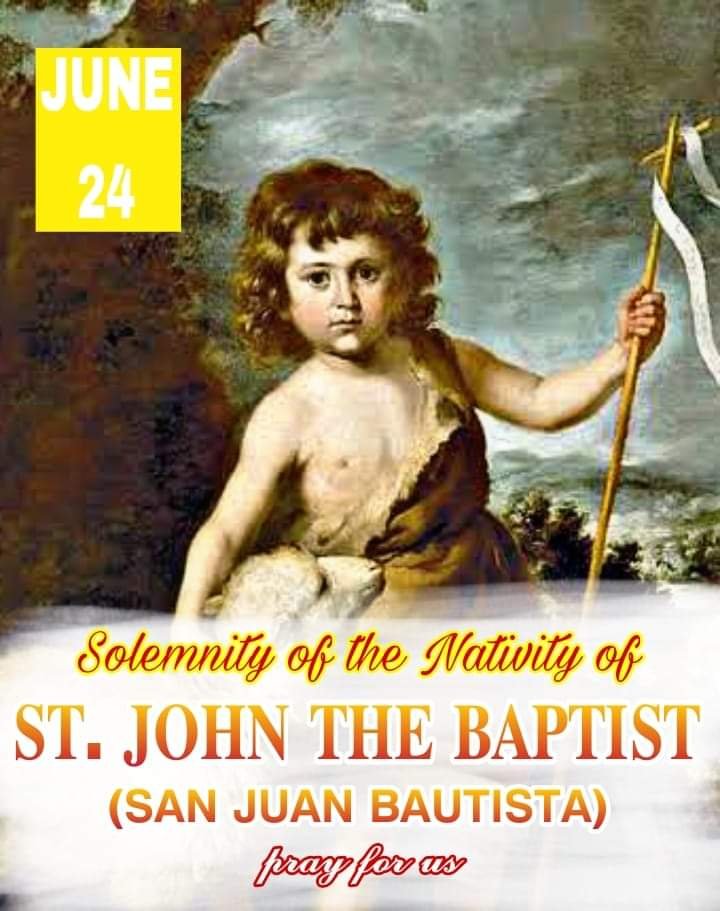
John recognized his role, his insignificance in comparison to the greatness of Christ, and proclaimed himself unworthy to even carry the sandals of Jesus. He said:
“The one who comes from above is above all; the one who is from the earth belongs to the earth, and speaks as one from the earth. The one who comes from heaven is above all. He testifies to what he has seen and heard, but no one accepts his testimony. The man who has accepted it has certified that God is truthful. For the one whom God has sent speaks the words of God, for God gives the Spirit without limit. The Father loves the Son and has placed everything in his hands. Whoever believes in the Son has eternal life, but whoever rejects the Son will not see life, for God’s wrath remains on him.” (John 3: 31-36)

Today is a special day for the Church, for all the faithful! In the words of Blessed Guerric of Igny (c.1080 -1157), Cistercian abbot, from his sermon on the Nativity of Saint John the Baptist:
“Rightly, then, did the birth of this child make many rejoice then and does make many rejoice today: born in the old age of his parents he was to preach the grace of rebirth to an aging world. Rightly does the Church solemnly venerate this birth, which is wonderfully brought about by grace and at which nature wonders.

To me certainly the birth of the world’s Lamp (John 5:35) brings fresh joy, for it enabled me to recognize the true Light shining in the darkness but not mastered by the darkness, (Jn1,5.9).
His birth brings me a joy utterly unspeakable, for so many outstanding benefits accrue to the world through it. He is the first to give the Church instruction, to initiate it by penance, to prepare it by baptism. When it is prepared he delivers it to Christ and unites it with him, (John 3:29). He both trains it to live temperately and, by his own death, gives it the strength to die with fortitude. In all these ways he prepares for the Lord a perfect people, (Luke 1:17).”
CONTEMPLATING THE LIFE OF SAINT JOHN THE BAPTIST ON THE SOLEMNITY OF HIS NATIVITY
THE BIRTH OF THE VOICE WHO PREPARED THE WAY
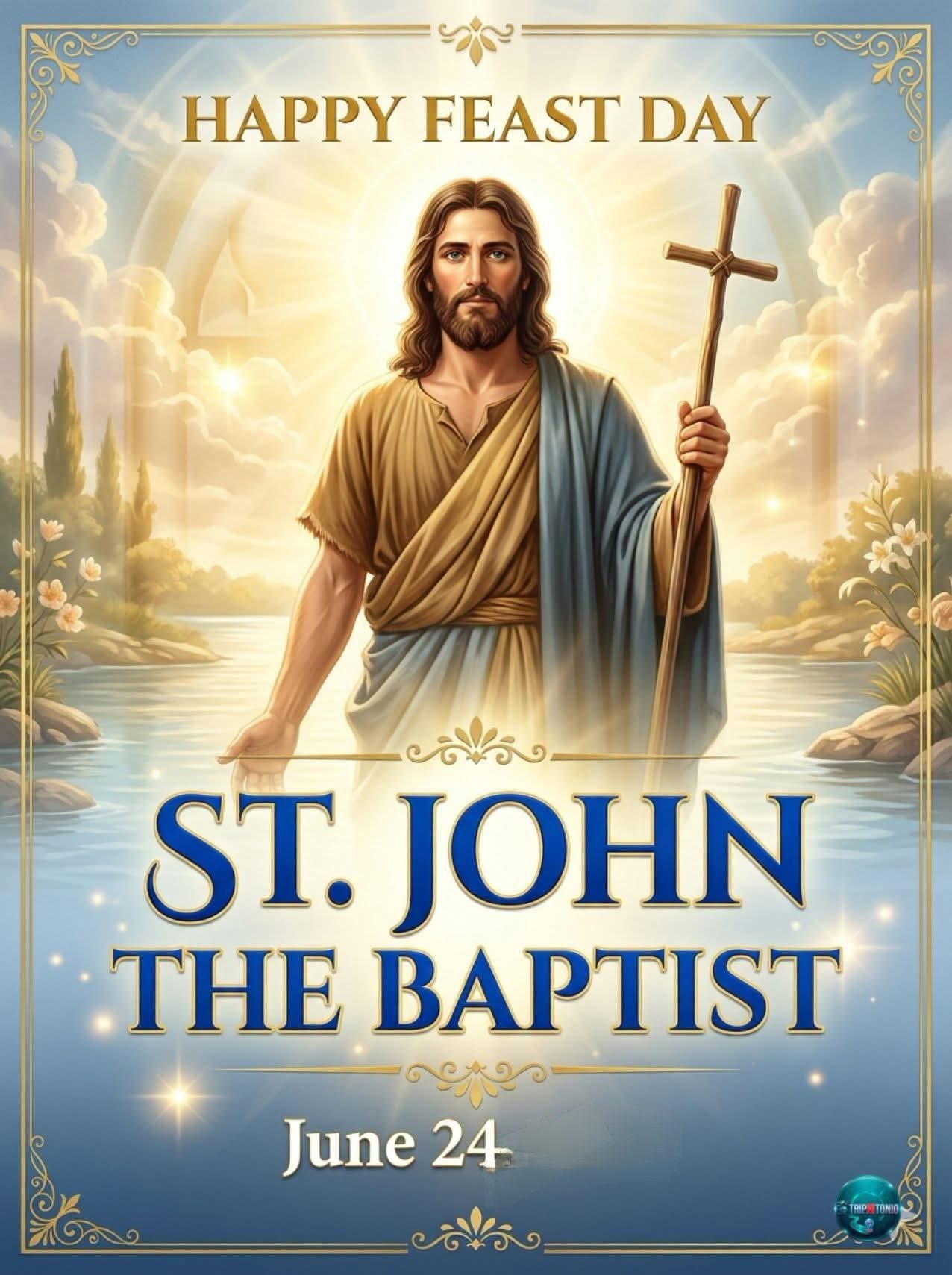
The Solemnity of the Nativity of Saint John the Baptist, celebrated on June 24, honors the birth of the prophet chosen by God to prepare the way for Jesus Christ. Along with the birthdays of Jesus and the Blessed Virgin Mary, John’s birth is one of only three celebrated by the Church, highlighting his unique role in salvation history.
WHY JOHN’S BIRTH IS IMPORTANT
Unlike most saints, who are remembered on the day of their death, John’s earthly birth is celebrated because it marked the beginning of the final preparation for the coming of the Messiah. He was the bridge between the Old and New Testaments and the greatest of the prophets. Jesus Himself said, “Among those born of women there has arisen no one greater than John the Baptist” (Matthew 11:11).
THE MIRACULOUS CIRCUMSTANCES OF HIS BIRTH
John was born to Zechariah, a priest, and Elizabeth, a righteous woman, who were advanced in age and had no children. Through the angel Gabriel, God announced that they would have a son named John, meaning “God is gracious.” He would be filled with the Holy Spirit and prepare the people for the Lord.
JOHN’S SANCTIFICATION BEFORE BIRTH
When Mary visited Elizabeth while carrying Jesus in her womb, the unborn John leapt for joy. This event is traditionally understood as John’s sanctification before birth, as he recognized the presence of the Messiah even before he was born.
THE NAMING OF JOHN
At his circumcision, Elizabeth insisted that the child be named John. When Zechariah confirmed the name, his speech was restored after months of silence. Filled with the Holy Spirit, he proclaimed the Benedictus, a hymn of praise still prayed daily by the Church.
JOHN THE FORERUNNER
John fulfilled the prophecies of Isaiah and Malachi by preparing the way for the Lord. He called people to repentance and urged them to prepare their hearts for Christ. His message echoed throughout Judea: “Prepare the way of the Lord.”
WHY THE FEAST IS CELEBRATED ON JUNE 24
According to the Gospel of Luke, Elizabeth was six months pregnant when Mary conceived Jesus. This places John’s birth six months before Christmas, leading to the celebration of his nativity on June 24.
THE SYMBOLISM OF THE DATE
John’s feast falls near the summer solstice, when daylight begins to decrease, while Christmas occurs near the winter solstice, when daylight begins to increase. Christians see in this a reflection of John’s words: “He must increase, but I must decrease” (John 3:30).
JOHN’S PLACE IN SALVATION HISTORY
John stands at the meeting point of the Old and New Covenants. He was the last prophet of Israel, the herald of the Messiah, the baptizer of Jesus, and the witness who proclaimed Him to the world. At the Jordan River he declared, “Behold, the Lamb of God.”
LITURGICAL SIGNIFICANCE OF THE SOLEMNITY
As a Solemnity, this feast is celebrated with special joy. The liturgy highlights God’s faithfulness, the fulfillment of prophecy, John’s mission, and the preparation for Christ. The readings focus on vocation, divine calling, and God’s saving plan.
THEMES OF THE FEAST
John’s life reveals the importance of divine calling, humility, preparation, courage, and joy. Chosen by God before birth, he devoted himself completely to his mission. Though admired by many, he pointed only to Christ. He preached truth fearlessly and rejoiced in the coming of the Savior.
DEVOTIONS AND TRADITIONS
For centuries, Christians have marked this feast with processions, prayers, pilgrimages, bonfires, and blessings of fields and crops. The traditional Saint John’s Fires symbolize the light of faith and John’s prophetic mission.
WHY THIS SOLEMNITY STILL MATTERS
In a world that often promotes self-interest and recognition, John teaches humility and selfless service. His life was dedicated to leading others to Jesus. He challenges every Christian to ask whether they are drawing attention to themselves or directing others toward Christ.
THE ENDURING MESSAGE OF THE NATIVITY OF JOHN THE BAPTIST
John’s birth was the beginning of a divine mission. He was a voice in the wilderness, a prophet of repentance, a herald of hope, and a witness to the Light. His life had one purpose: to help the world recognize Jesus Christ. That remains the calling of every Christian today.
PRAYER
All powerful God,
help Your people to walk the path to salvation.
By following the teaching of St. John the Baptist,
may we come to your Son, our Lord Jesus Christ,
who lives and reigns with You and the Holy Spirit,
one God, for ever and ever.
Amen.
COLLECT PRAYER
O God, who willed that Saint John the Baptist should go ahead of your Son both in his birth and in his death, grant that, as he died a Martyr for truth and justice, we, too, may fight hard for the confession of what you teach. Through our Lord Jesus Christ, your Son, who lives and reigns with you in the unity of the Holy Spirit, God, for ever and ever.
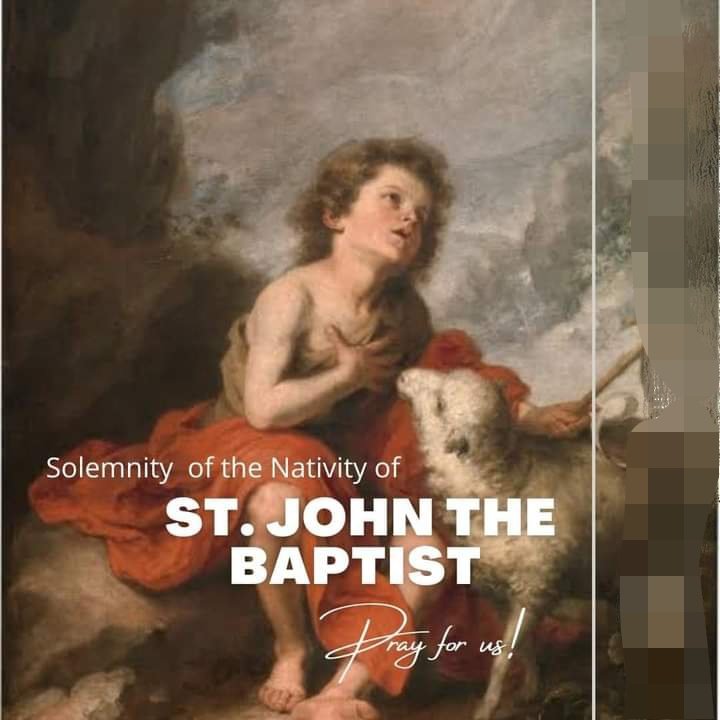
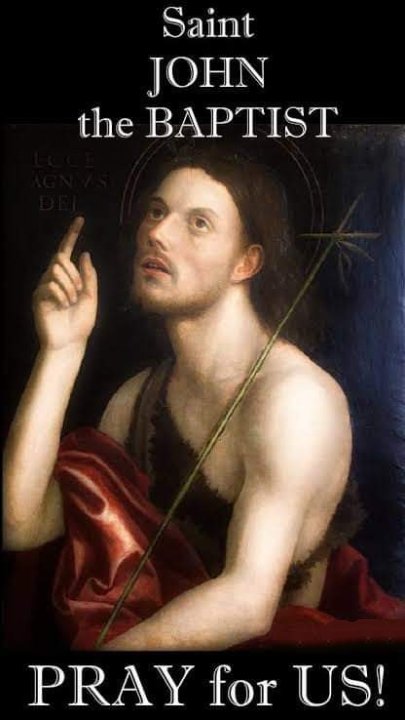
Saint John the Baptist, pray for us.