
FEAST OF OUR LADY OF PERPETUAL HELP – 27th JUNE
June 27, 2026
James 4:7
June 27, 2026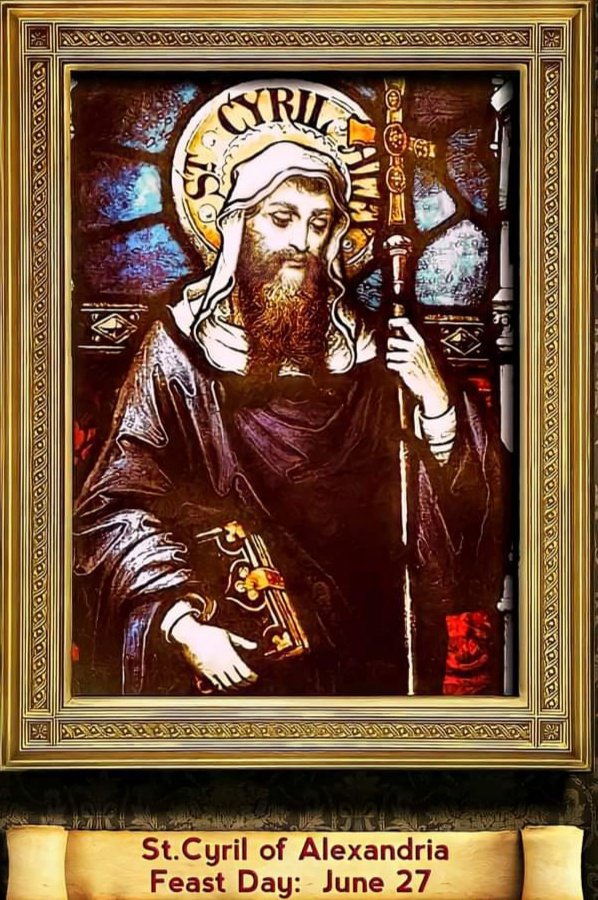
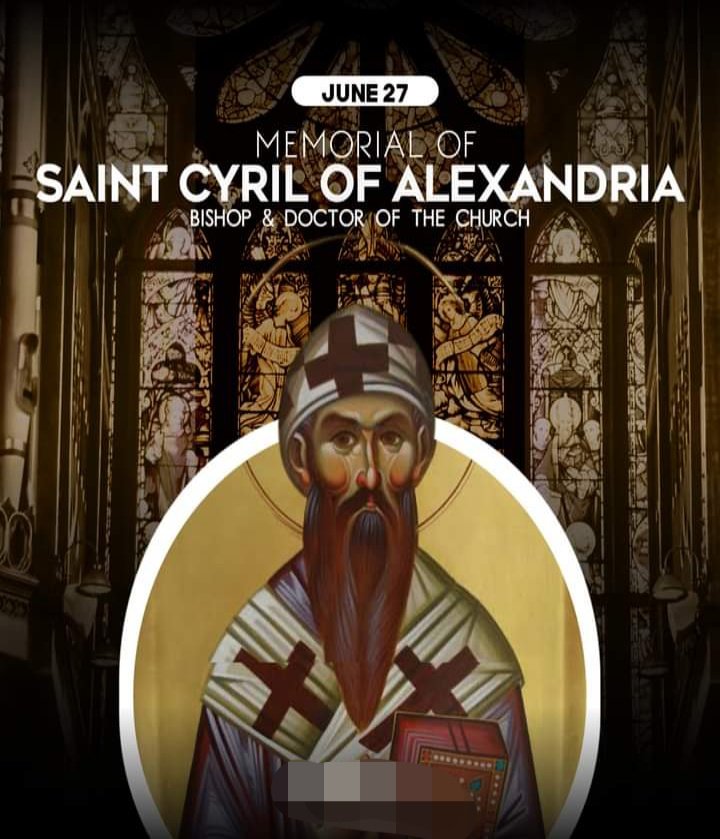
FEAST OF SAINT CYRIL OF ALEXANDRIA, BISHOP AND DOCTOR OF THE CHURCH
FEAST DAY – 27th JUNE
Cyril of Alexandria (370 – 444) was the Patriarch of Alexandria from 412 to 444. He was enthroned when the city was at the height of its influence and power within the Roman Empire. Cyril wrote extensively and was a leading antagonist in the Christological controversies of the late-4th and 5th centuries. He was a central figure in the Council of Ephesus in 431, which led to the deposition of Nestorius as Patriarch of Constantinople.
Cyril is counted among the Church Fathers and also as a Doctor of the Church and his reputation within the Christian world has resulted in his titles Pillar of Faith and Seal of all the Fathers. The Roman emperor Theodosius II, however, condemned him for behaving like a “proud pharaoh”, and the Nestorian bishops at their synod at the Council of Ephesus declared him a heretic, labelling him as a “monster, born and educated for the destruction of the church.”
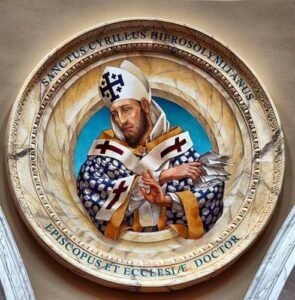
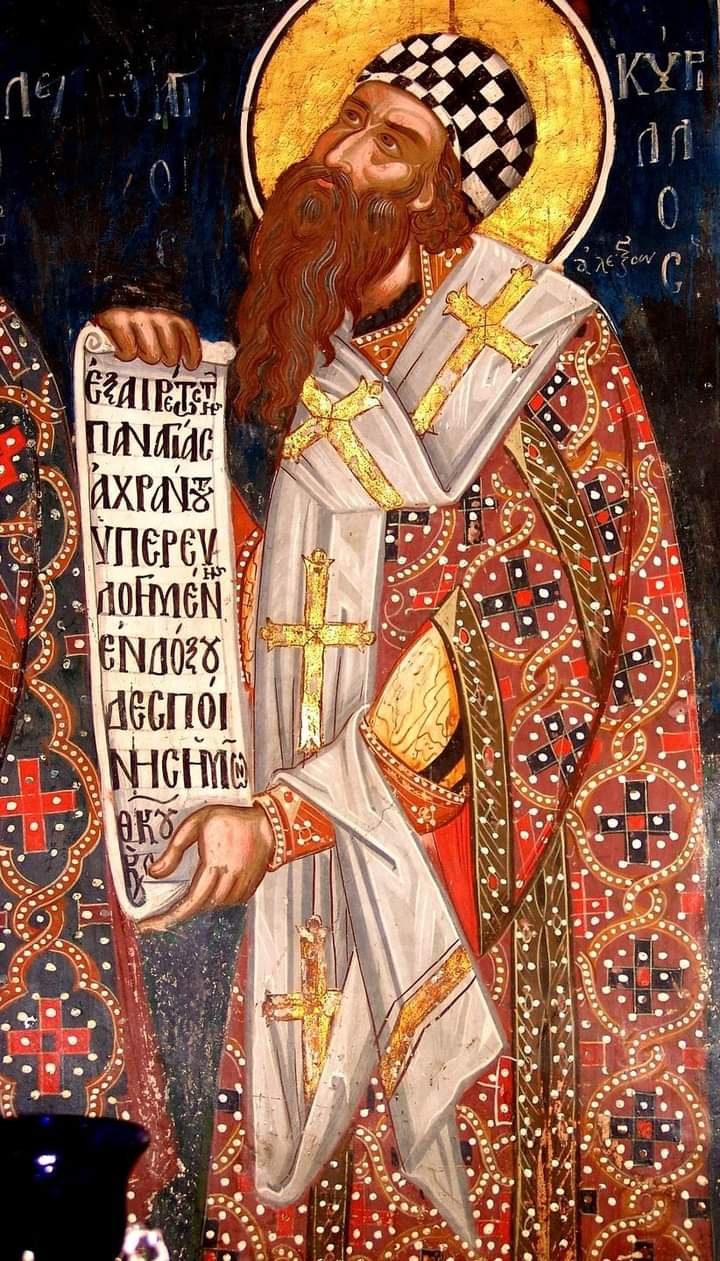
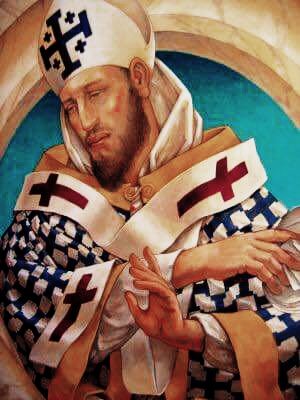
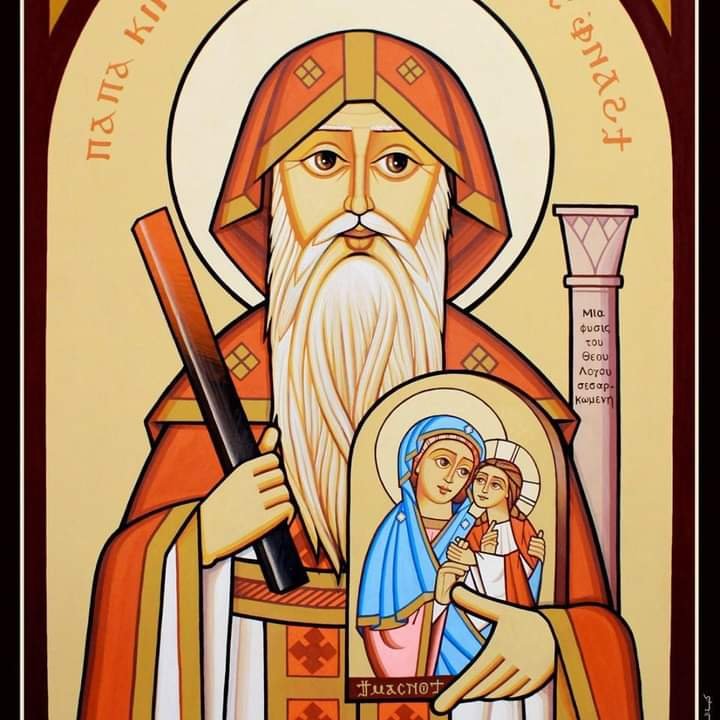
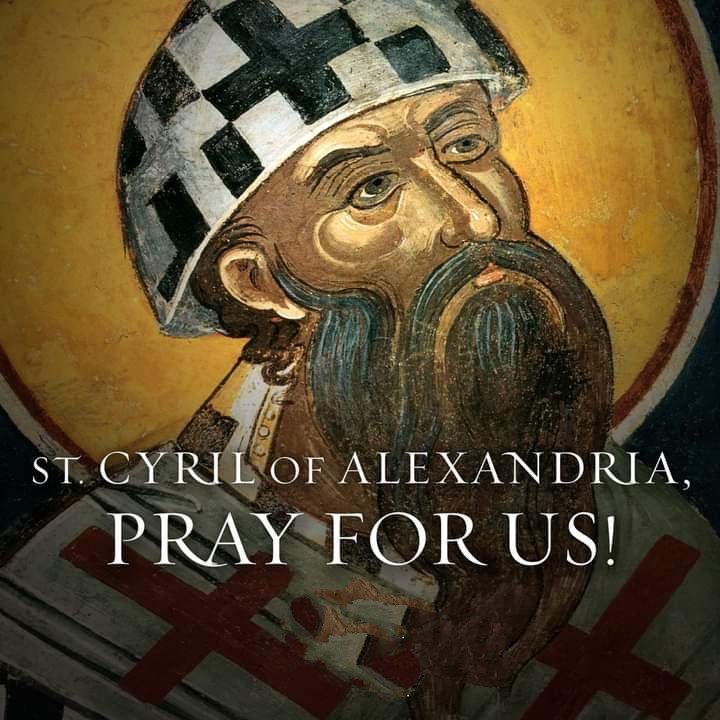
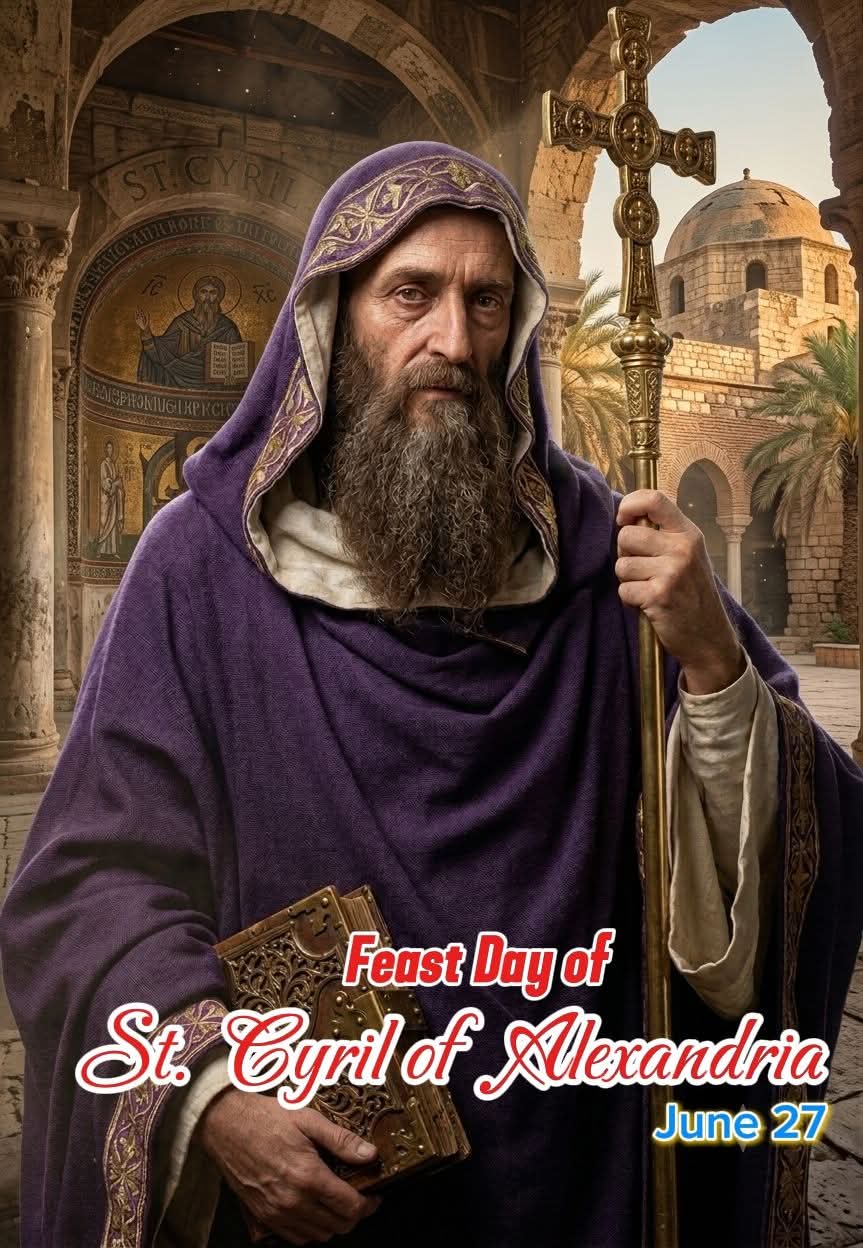
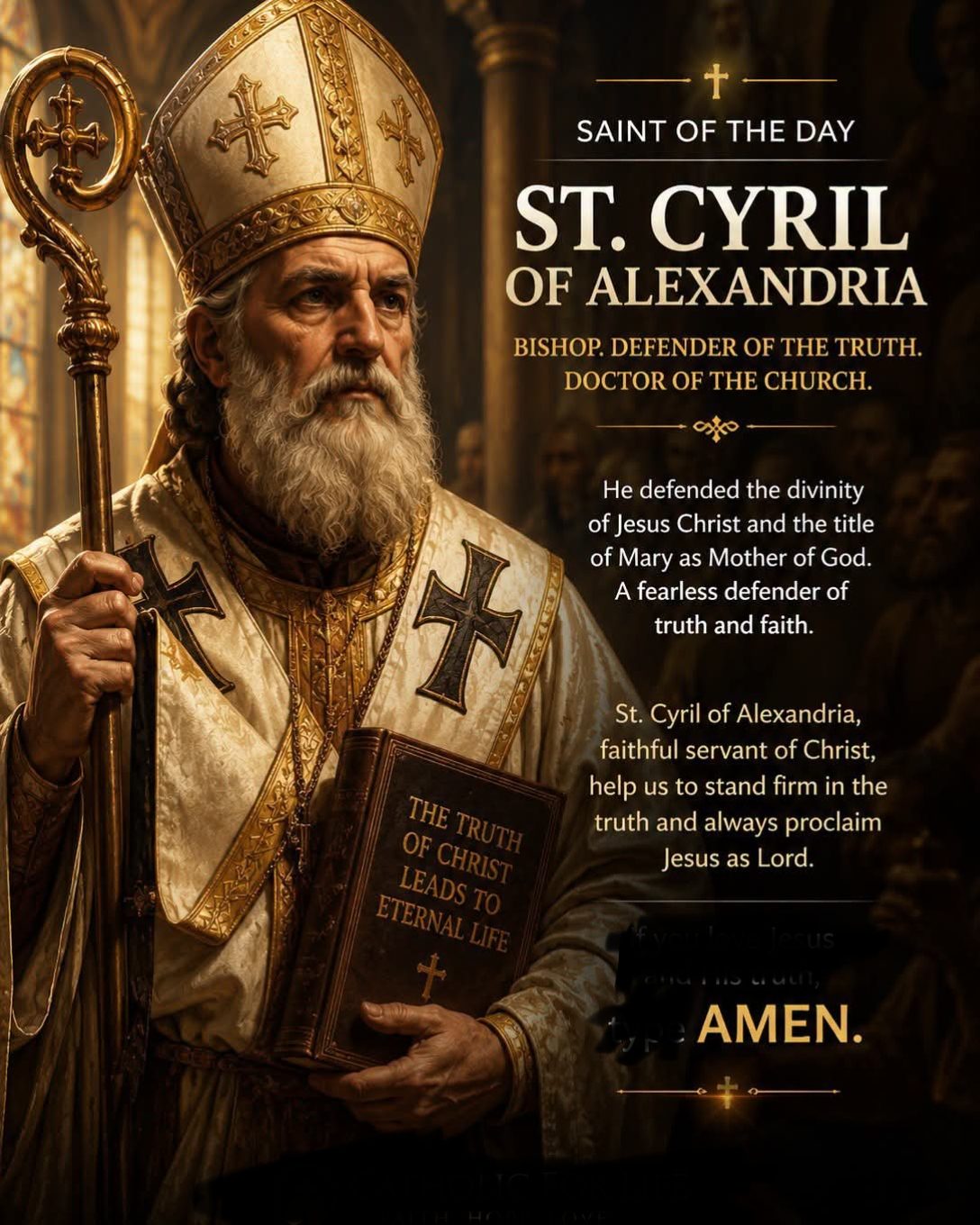
His attributes are, as a Bishop with phelonion and omophorion, and usually with his head covered in the manner of Egyptian monastics (sometimes the head covering has a polystavrion pattern); depicted holding a Gospel Book or a scroll, with his right hand raised in blessing. His Patronage is Alexandria. Alexandria was the largest city in the ancient world.
 It was a sprawling mixture of races and creeds; and it was a byword for the violence of its sectarian politics, whether of Greeks against Jews or of orthodox Christians against heretics. Cyril began his career as a worthy follower of this tradition. He succeeded his uncle as bishop of Alexandria in 412, and promptly solved a number of serious problems by closing the churches of the Novatian heretics and expelling the Jews from the city.
This caused trouble and led to an ongoing quarrel with the Imperial governor of the city and to murderous riots. It is not for this part of his life that St Cyril is celebrated. In 428, Nestorius, the new Patriarch of Constantinople (and hence one of the most important bishops in the world) made statements that could be interpreted as denying the divinity of Christ.
The dual nature – human and divine – has always been hard for us to accept or understand, and if it seems easy it is only because we have not thought about it properly. Those who dislike problems have had two responses: to deny the human nature of Christ or to deny his divinity: and either leads to disaster, since both deny the Incarnation and hence the divinisation of human nature.
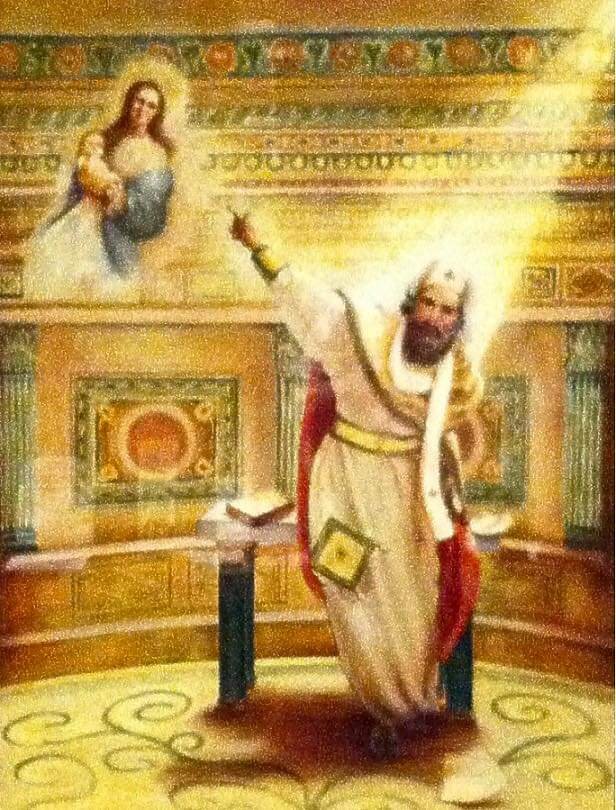
The resulting battle was as unedifying as most of the early fights that defined the shape of Christianity, because both sides were concerned to defend something that they saw as being of infinite and eternal importance. If it had been a question of power politics, of who got what post and what revenues, the matter could have been settled quietly – but this was not about power.
It was important, and the victory was more important than the methods. Seen from fifteen centuries later, the proceedings seem melodramatic and absurd. Cyril arriving at the Council of Ephesus accompanied by fifty bishops wielding the fifth century equivalent of baseball bats, the Emperor, burdened with a sister who supported Cyril and a wife who supported Nestorius.
The ratification of the contradictory decrees of both the council that supported Cyril and the council that supported Nestorius; the imprisonment of both bishops; the bribery. To revere Cyril of Alexandria is not to approve the methods he used. He fought according to the conventions of the time, and with its weapons. But he never sought to destroy Nestorius or any of his opponents, only to win the day for the truth of salvation.
After the conclusions of the Council, Cyril was moderate and conciliatory, and sought to reconcile to the Church any Nestorians who were willing to engage in dialogue. It is largely through his efforts that we can celebrate (even if we still fail to understand completely) the two natures of Christ, and that we can address Mary as “Mother of God”. It is as a theologian rather than as a politician that Cyril is honoured.
At Easter 429 A.D., Cyril wrote a letter to the Egyptian monks warning them of Nestorius’s views. A copy of this letter reached Constantinople where Nestorius preached a sermon against it. This began a series of letters between Cyril and Nestorius which gradually became more strident in tone. Finally, Emperor Theodosius II convoked the Council of Ephesus (in 431) to solve the dispute.
Cyril selected Ephesus as the venue since it supported the veneration of Mary. The council was convoked before Nestorius’s supporters from Antioch and Syria had arrived and thus Nestorius refused to attend when summoned. Predictably, the Council ordered the deposition and exile of Nestorius for heresy.
However, after John of Antioch condemned Cyril for heresy, deposed him from his see, Theodosius, by now old enough to hold power by himself, annulled the verdict of the Council and arrested Cyril, but Cyril eventually escaped. Having fled to Egypt, Cyril bribed Theodosius’s courtiers, and sent a mob led by Dalmatius, a hermit, to besiege Theodosius’s palace, and shout abuse; the emperor eventually gave in, sending Nestorius into minor exile.
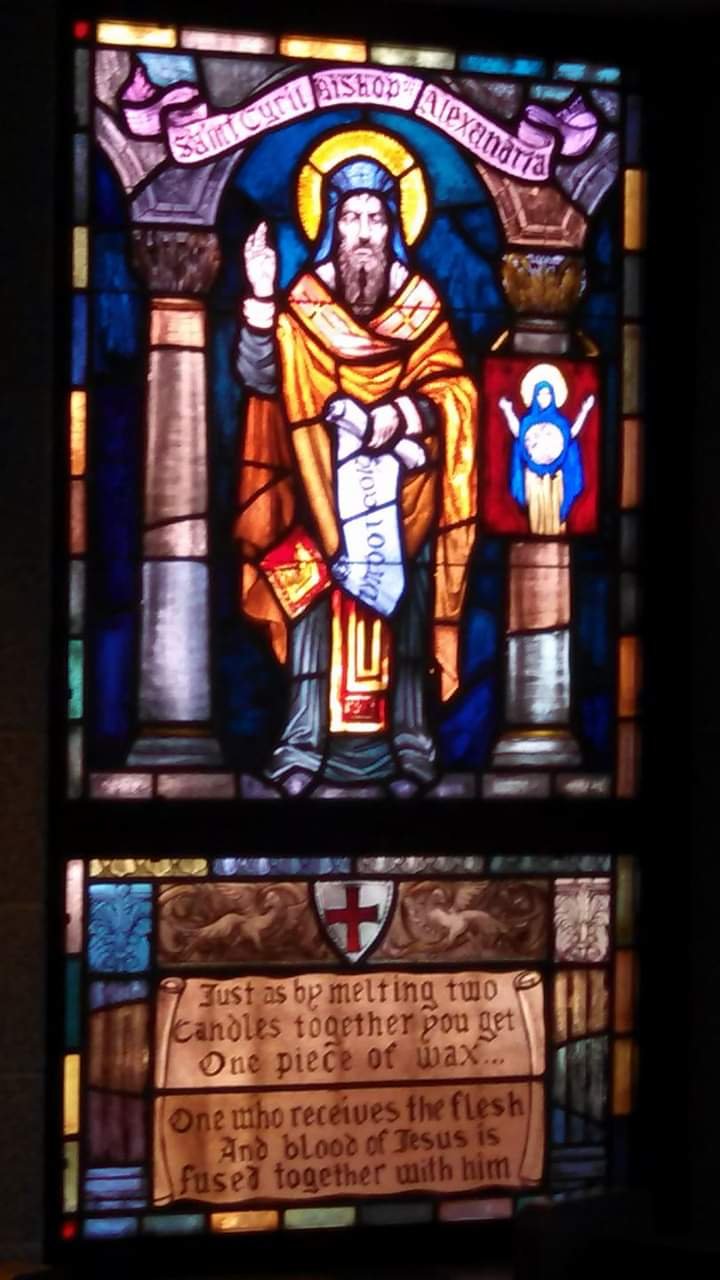
Cyril died about 444, but the controversies were to continue for decades, from the “Robber Synod” of Ephesus (449) to the Council of Chalcedon (451) and beyond. He questioned how anyone could doubt the right of the holy Virgin to be called the Mother of God. This filled him with astonishment.
Surely she must be the Mother of God if our Lord Jesus Christ is God, and she gave birth to him! Our Lord’s disciples may not have used those exact words, but they delivered to us the belief those words enshrine, and this has also been taught us by the holy fathers.
In the third book of his work on the holy and consubstantial Trinity, our father Athanasius, of glorious memory, several times refers to the holy Virgin as “Mother of God.” I cannot resist quoting his own words: “As I have often told you, the distinctive mark of holy Scripture is that it was written to make a twofold declaration concerning our Saviour; namely, that he is and has always been God, since he is the Word, Radiance and Wisdom of the Father; and that for our sake in these latter days he took flesh from the Virgin Mary, Mother of God, and became man.”

Again further on he says: “There have been many holy men, free from all sin. Jeremiah was sanctified in his mother’s womb, and John while still in the womb leaped for joy at the voice of Mary, the Mother of God.” Athanasius is a man we can trust, one who deserves our complete confidence, for he taught nothing contrary to the sacred books.
The divinely inspired Scriptures affirm that the Word of God was made flesh, that is to say, he was united to a human body endowed with a rational soul. He undertook to help the descendants of Abraham, fashioning a body for himself from a woman and sharing our flesh and blood, to enable us to see in him not only God, but also, by reason of this union, a man like ourselves.
It is held, therefore, that there are in Emmanuel two entities, divinity and humanity. Yet our Lord Jesus Christ is nonetheless one, the one true Son, both God and man; not a deified man on the same footing as those who share the divine nature by grace, but true God who for our sake appeared in human form. We are assured of this by Saint Paul’s declaration: When the fullness of time came, God sent his Son, born of a woman, born under the law, to redeem those who were under the law and to enable us to be adopted as sons.
Here is the rephrased and concise version in the format you requested:
CONTEMPLATING THE LIFE OF SAINT CYRIL OF ALEXANDRIA
THE CHAMPION OF CHRIST’S DIVINITY AND THE DOCTOR OF THE INCARNATION
Saint Cyril of Alexandria is one of the greatest theologians and Church Fathers of the fifth century. As a courageous bishop, biblical scholar, and defender of the Catholic faith, he played a decisive role in preserving the Church’s teaching that Jesus Christ is one divine Person, fully God and fully man. Because he safeguarded the faith handed down by the early Church, he is known as the “Seal of the Fathers.” His feast is celebrated on June 27.
HISTORICAL BACKGROUND
Saint Cyril lived during a time when the Church had emerged from persecution but faced serious theological disputes about the identity of Jesus Christ. Questions concerning His divinity, humanity, and the unity of His person challenged the faith of many believers. Cyril became one of the foremost defenders of orthodox Christian teaching during this critical period.
EARLY LIFE
Born around A.D. 376 in Egypt, Cyril belonged to a family closely associated with the Church of Alexandria, a renowned center of biblical scholarship, theology, philosophy, and monastic life. He received an outstanding education in Scripture, theology, philosophy, and classical literature. Under the guidance of his uncle, Patriarch Theophilus of Alexandria, he was prepared for future leadership in the Church.
PATRIARCH OF ALEXANDRIA
After the death of Theophilus in A.D. 412, Cyril became Patriarch of Alexandria, one of the most influential episcopal sees in Christianity. For over thirty years he faithfully served as pastor, teacher, administrator, and defender of the true faith.
THE NESTORIAN CONTROVERSY
The defining challenge of Cyril’s ministry was opposing the teachings of Nestorius, who appeared to separate Christ’s humanity and divinity into two distinct persons. Nestorius rejected the title “Mother of God” for Mary, preferring “Mother of Christ,” which threatened the Church’s understanding of Christ’s unity.
CYRIL’S DEFENSE OF THE FAITH
Cyril insisted that Jesus Christ is one divine Person. Since Mary gave birth to the incarnate Son of God, she is rightly called the Mother of God. He taught that this title safeguards the truth about Christ’s identity rather than simply honoring Mary.
THE COUNCIL OF EPHESUS
At the Council of Ephesus in A.D. 431, Cyril led the defense of orthodox teaching. The Council affirmed that Jesus Christ is one divine Person, truly God and truly man, and officially declared Mary to be the Mother of God. Nestorianism was condemned, securing one of the central doctrines of the Christian faith.
CYRIL’S CHRISTOLOGY
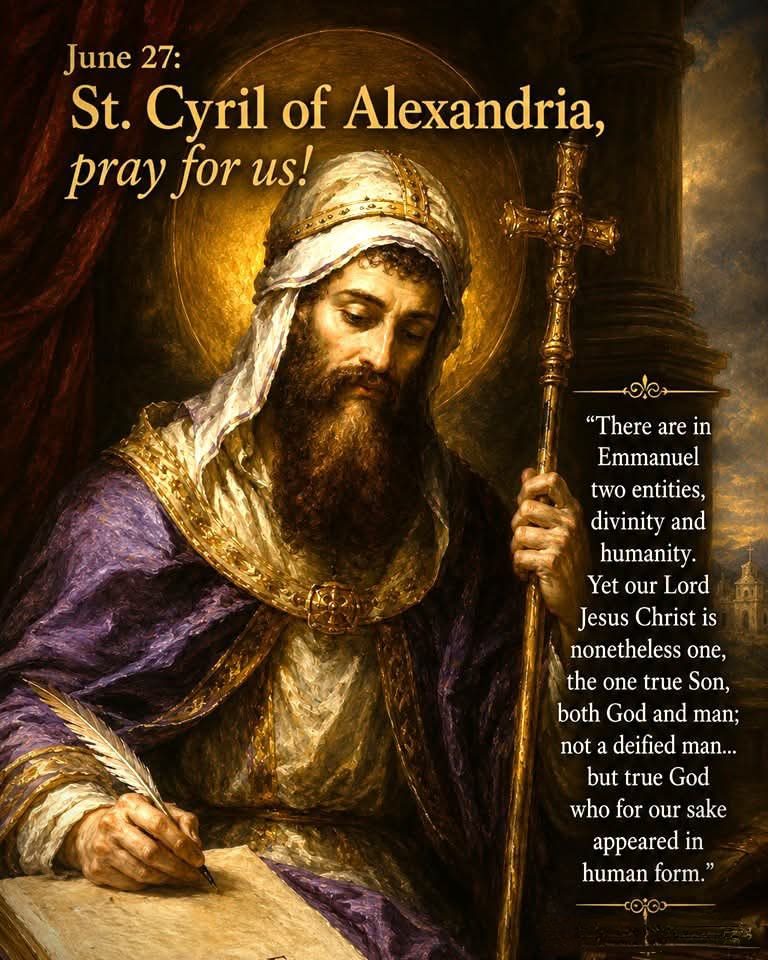
Cyril summarized the mystery of Christ by teaching that Jesus is one divine Person with both divine and human natures. He is fully God and fully man, not two persons but one Lord. His teaching later became the foundation for the Council of Chalcedon.
HIS WRITINGS
Cyril produced numerous biblical commentaries on the Gospels, Isaiah, and the Minor Prophets, along with important theological works defending the Trinity, the Incarnation, and Christ’s divinity. His letters became authoritative documents that greatly influenced the Church’s doctrine.
HIS SPIRITUALITY
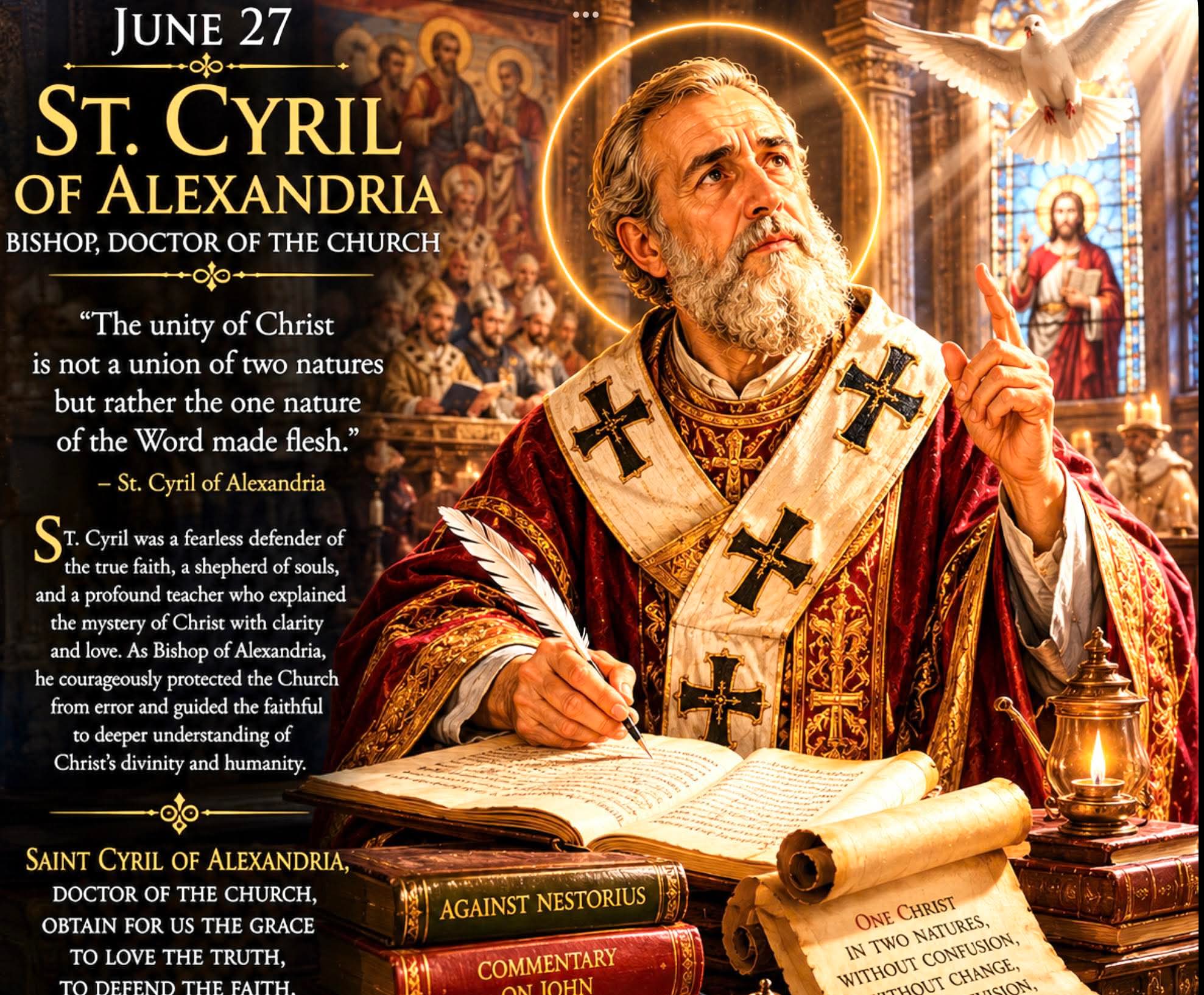
Although renowned as a theologian, Cyril’s writings reveal a profound spiritual life centered on Christ. He emphasized the mystery of the Incarnation, devotion to the Eucharist, meditation on Scripture, and union with Christ. He taught that by becoming truly human, Christ healed and redeemed human nature.
HIS CHARACTER
Cyril was known for his strong leadership, determination, and unwavering defense of the faith. While some events during his episcopate remain historically debated, his theological brilliance and steadfast commitment to Christ continue to earn him great respect. His life reminds us that God works through human strengths as well as weaknesses.
HIS DEATH
Saint Cyril died on June 27, A.D. 444, after more than three decades as Patriarch of Alexandria. By then he had become one of Christianity’s most influential theologians, and his teachings have continued to guide the Church through the centuries.
DOCTOR OF THE CHURCH
In recognition of his lasting contribution to Christian doctrine, Saint Cyril was declared a Doctor of the Church. He is honored by the Catholic Church, the Eastern Orthodox Church, and the Oriental Orthodox Churches for his faithful witness to the mystery of Christ.
HIS LASTING LEGACY
Saint Cyril preserved the Church’s understanding of Jesus Christ as true God and true man united in one divine Person. He defended the title of Mary as Mother of God and safeguarded the heart of the Gospel, reminding believers that through Christ humanity is united with God.
LESSONS FROM HIS LIFE
Love and defend the truth with courage, even when it is difficult. Sound theology strengthens faith, worship, and daily living. Scripture always leads us to Christ. True devotion to Mary deepens our understanding of her Son. The Incarnation reveals the dignity of every human person because God became one of us.
A FAMOUS SAYING OF SAINT CYRIL
“Hail, Mary, Mother of God, venerable treasure of the whole world, lamp unquenchable, crown of virginity, sceptre of right doctrine, indestructible temple, dwelling of Him whom no place can contain.”
These words beautifully express the truth Saint Cyril defended throughout his life: in Jesus Christ, God truly entered our world so that humanity might share in His divine life.
Saint Cyril of Alexandria, Doctor of the Church and Champion of the Incarnation, pray for us.
PRAYER
O God, who made the Bishop Saint Cyril of Alexandria an invincible champion of the divine motherhood of the most Blessed Virgin Mary, grant, we pray, that we, who believe she is truly the Mother of God, may be saved through the Incarnation of Christ your Son. Who lives and reigns with you in the unity of the Holy Spirit, one God, for ever and ever. Amen
Saint Cyril of Alexandria, pray for us.