
SPIRITUAL INSIGHTS INTO THE LIFE OF SAINT IRENAEUS
June 28, 2026
Psalm 4:8
June 29, 2026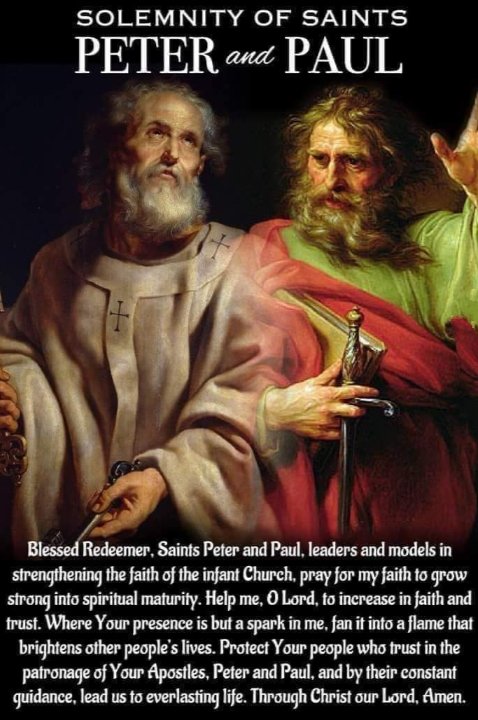
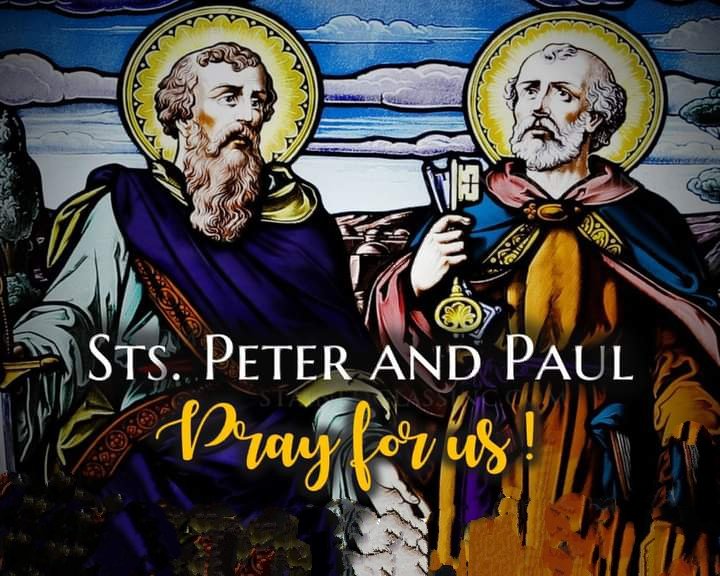
FEAST OF SAINTS PETER AND PAUL, APOSTLES AND MARTYRS
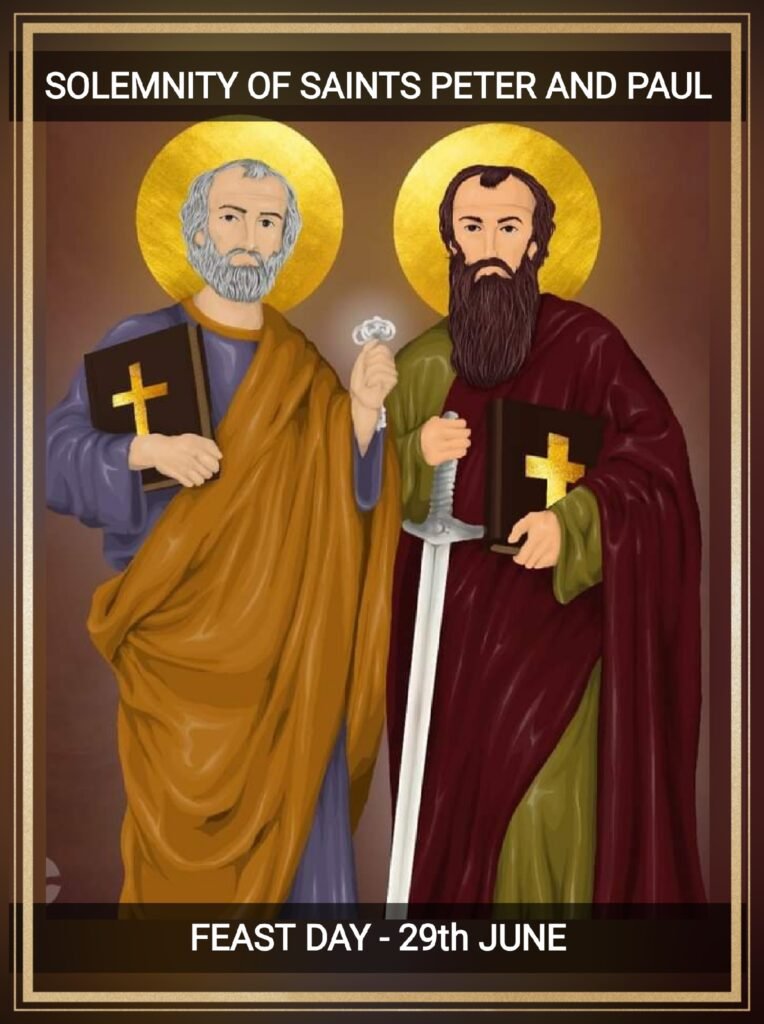
FEAST DAY – 29th JUNE

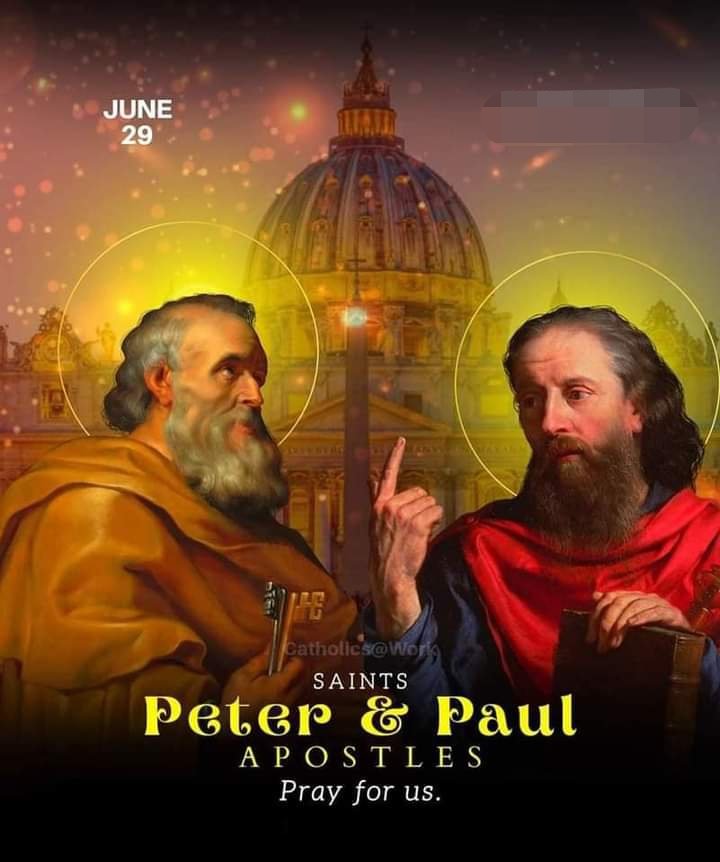
The Feast of Saints Peter and Paul or Solemnity of Saints Peter and Paul is a liturgical feast in honour of the martyrdom in Rome of the apostles Saint Peter and Saint Paul, which is observed on 29 June. The celebration is of ancient Christian origin, the date selected being the anniversary of either their death or the translation of their relics.
While not considered among the twelve great feasts, it is one of five additional feasts ranked as a great feast in the Eastern Orthodox tradition and is often celebrated with an all-night vigil starting the evening before. In the Julian calendar, 29 June falls on the Gregorian calendar date of 12 July from 1900–2099, inclusive.
In the Russian Orthodox tradition, Macarius of Unzha’s Miracle of the Moose is said to have occurred during the Apostles’ Fast and the Feast of Saints Peter and Paul that followed it. In the Coptic Orthodox Church and the Ethiopian Orthodox Tewahedo Church, the feast of saints Peter and Paul is also celebrated on the day 5 Epip which is also the end of the fast of the apostles in these traditions.
 Although the Canadian Doukhobors, a Spiritual Christian denomination, do not venerate saints, the Feast of St. Peter and St. Paul has traditionally been a day of celebration for them. Since 1895, it has acquired a new significance as a commemoration of the “Burning of the Arms”, the Doukhobors’ destruction of their weapons, as a symbol of their refusal to participate in government sponsored killing. It is celebrated now by their descendants as simply “Peter’s Day”, sometimes referred to as the “Doukhobor Peace Day”.
In the General Roman Calendar, the celebration is a solemnity. In earlier editions, it was ranked as a Double (Tridentine Calendar), Double of the First Class (e.g., General Roman Calendar of 1954), or First-Class Feast (General Roman Calendar of 1960).
Prior to the liturgical reforms of Pope Pius XII, this feast was followed by a common octave. On this feast, newly created metropolitan archbishops receive from the pope the primary symbol of their office, the pallium.
It is a holy day of obligation in the Latin Church, although individual conferences of bishops can suppress the obligation. In England, Scotland and Wales the feast is observed as a holy day of obligation while in the United States and Canada, it is not. The Feast ceased being a Holy Day of Obligation in the United States in 1840. The Church of England celebrates the Feast of St Peter and St Paul on 29 June as a Festival.
The Voice of the Martyrs, a non-governmental organization that aids persecuted Christians, has designated 29 June as the “Day of the Christian Martyr”, in honour of the martyrdom of Saints Peter and Paul, as well as all martyrs for the Christian faith.
Peter, originally known as Simon, was a fisherman by trade. Jesus called Peter, along with his brother Andrew, James, and John, to leave everything behind to become His followers. Jesus said to them, “Come after me, and I will make you fishers of men”(Matthew 4:19).
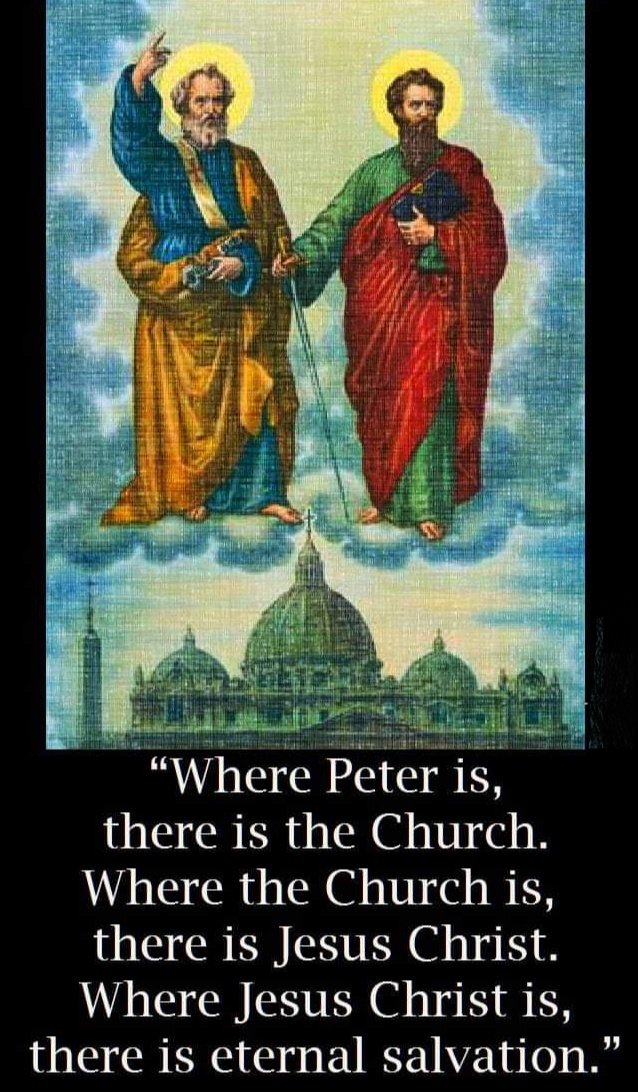
It is because of Peter’s confession of faith in Jesus as Messiah that Jesus gave him the nickname of “rock” and stated that it was upon the rock of Peter’s faith that the Church would rise (Matthew 16:18). All the Gospel writers list Peter first when naming the apostles of Jesus. Time and again in the Gospels, however, Peter demonstrates that his faith is imperfect, but growing.
St. Peter can show us how difficult discipleship can truly be, but is also an example of the Lord choosing the weak and making them strong in bearing witness to Him. Peter was martyred (crucified upside down on a cross) for the Faith in the year 64 in Rome, the city he served as its first bishop. St. Peter’s feast day is February 22nd, the feast of the primacy of St. Peter.
St. Paul’s background and journey of faith is somewhat different from St. Peter’s. Paul, who was originally known as Saul, was an educated Jew and a member of the Pharisee party, as well as being a Roman citizen. He first appears in the pages of Scripture in Acts 7:58, as being present at the martyrdom of St. Stephen, the first of Jesus’ followers to be put to death because of his faith in Jesus.
 Saul persecuted the Christians savagely, but was dramatically converted to the very One he had been persecuting after seeing Jesus in a vision (Acts 9:4).
From that time on, Saul, who was now known as Paul, poured the same energy with which he persecuted Christ’s followers into bringing the Gospel of Jesus to many people.
Paul traveled around most of what was the Roman Empire, establishing Christian communities. His many letters form the bulk of the writings of the New Testament. Paul was also martyred in Rome, three years after St. Peter, in the year 67 AD, by being beheaded (His Roman citizenship would not permit his being crucified). The feast commemorating his conversion is January 25th.
Peter and Paul represent two strikingly different approaches to discipleship. Peter had to learn slowly, make many mistakes along the way, but always experienced the compassionate forgiveness and encouragement of Jesus.
Paul, on the other hand, came to the Faith immediately and never backed away from his zeal for Christ after that.
Many of us can see both these great Apostles in ourselves. Like Peter, we sometimes fail but yet persevere. Like Paul, we must always be on fire for the Lord, and proclaim Him to everyone and in every situation, no matter how difficult it can sometimes be to do so.
Because of the importance of saints Peter and Paul to the Catholic Church, many Catholic-majority countries also observe their feast day as a public holiday. The feast is observed in Rome because St. Paul and St. Peter are patron saints of the Eternal City. In the Apulia region of southeastern Italy, the feast of saints Peter and Paul was associated with the Tarantella dance since the middle ages.
It was believed that the bite of the tarantula wolf spider caused of form of manic behavior which would result in death if the afflicted did not dance and could not be cured without the intercession of saint Paul. These panics were especially common near the feast day in the 16th and 17th centuries in Galatina, where the basilica of Saint Peter and Paul is located.
In Malta the solemnity is a public holiday and in Maltese is known as L-Imnarja. It is celebrated with festivals the preceding weekend in Buskett Gardens in Rabat. It is also a public holiday of the Canton of Ticino, Switzerland, as well as parts of the Swiss cantons of Lucerne and Graubünden. It is a public holiday in Peru and in various municipalities of the Philippines. In Ormoc, festivals, bazaars, parades, and pageants are held annually on the feast day, as Peter and Paul are the city’s patron saints.

Peter and Paul’s day is the feast day that honors the martyrdom of the two saints, sometime between AD 64 and 68. While the church recognizes that they may not have died on the same day, tradition says that this is the day that they were both martyred in Rome by Emperor Nero.
Saint Peter was crucified, whereas Saint Paul would have been beheaded with a sword as he was a Roman citizen and afforded a quicker execution. It is said of Peter that he was crucified head downward as he didn’t feel worthy of being crucified in the same way as Jesus.
Peter was the rock on which Christ formed His Church, and became the first Pope as the specialized Shepard of Christ’s Flock on Earth. Paul wrote the majority of the New Testament, with 13 letters ascribed to his name (most scholars agree that 7 are objectively his, yet the other 6 are of contested authorship).
St. Paul, although not one of the Twelve, was an Apostle commissioned by Jesus. There is the January 25th celebration of “The Conversion of St. Paul” which commemorates the Damascus Road episode described in Acts of the Apostles: 9:1-31, 22:1-22, and 26:9-24. It is the scene made famous by the “Conversion on the Way to Damascus” painting by Caravaggio.
The two leading saints of the early Church are celebrated together in the Feast of Saints Peter and Paul, (or the Solemnity of Saints Peter and Paul if celebrated on a Sunday). This celebration is a liturgical feast in honor of the martyrdom in Rome of the apostles Saint Peter and Saint Paul and is observed on June 29th.
The Roman Martyrology (the official lists of solemnities, feasts, and other liturgical celebrations of the saints and martyrs) assigns June 29th as the feast day without thereby declaring that to be the day of their deaths.
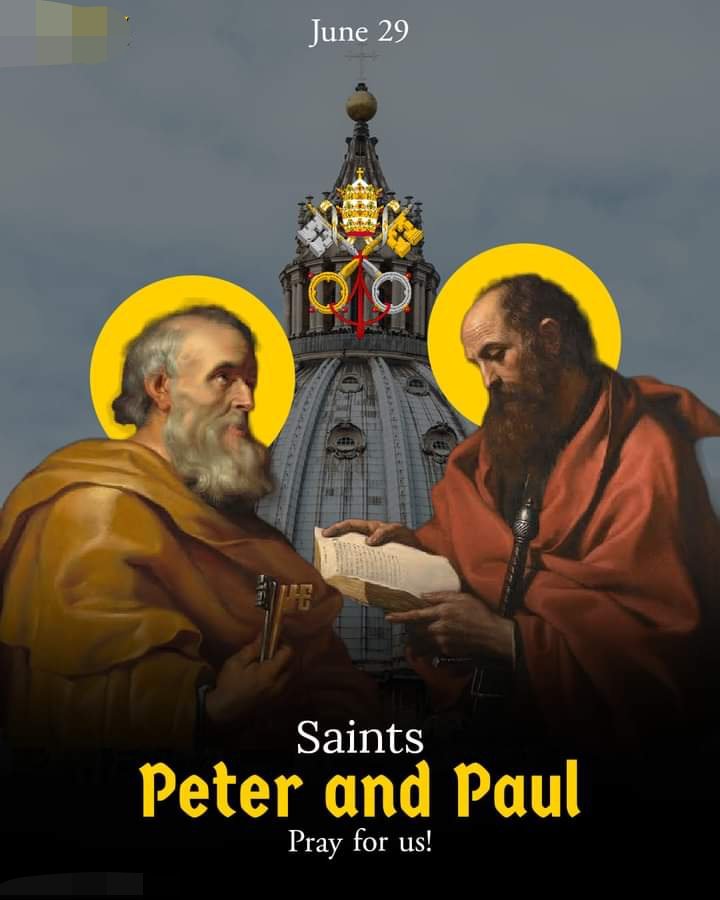
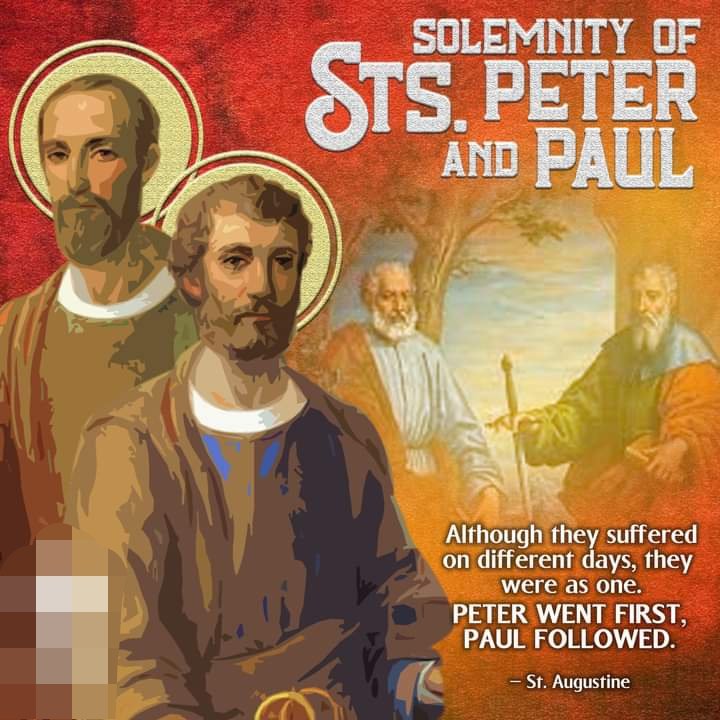
St. Augustine of Hippo (late 4th century) says in his Sermon 295: “One day is assigned for the celebration of the martyrdom of the two apostles. But those two were one. Although their martyrdom occurred on different days, they were one.” Thus it is clear that the celebration is of ancient origin. There is some speculation that the date selected may be the anniversary either of their death or of the translation of their relics.
When Peter made his great confession of faith: “You are the Messiah” (Mark 8:29 b), it was one of the many glorious moments in Peter’s life, beginning with the day he was called from his nets along the Sea of Galilee to become a fisher of men for Jesus.
The New Testament clearly shows Peter as the leader of the apostles, chosen by Jesus to have a special relationship with him. With James and John he was privileged to witness the Transfiguration, the raising of a dead child to life, and the agony in Gethsemane. His mother-in-law was cured by Jesus. He was sent with John to prepare for the last Passover before Jesus’ death.
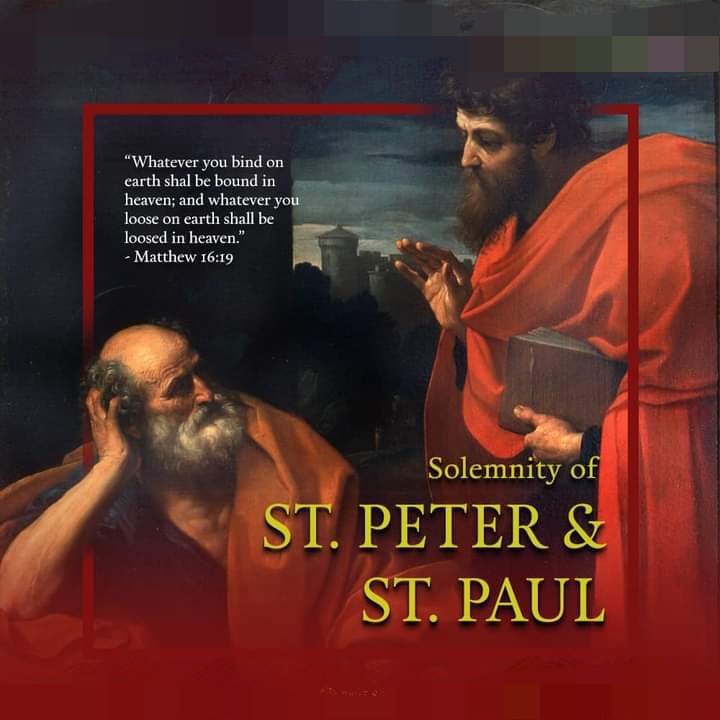
And to Peter only did Jesus say, “Blessed are you, Simon son of Jonah. For flesh and blood has not revealed this to you, but my heavenly Father. And so I say to you, you are Peter, and upon this rock I will build my church, and the gates of the netherworld shall not prevail against it. I will give you the keys to the kingdom of heaven. Whatever you bind on earth shall be bound in heaven; and whatever you loose on earth shall be loosed in heaven” (Matthew 16:17b-19).
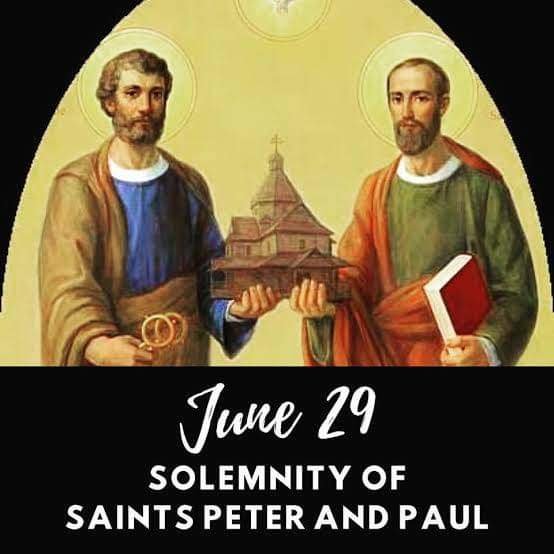 But the Gospels prove their own trustworthiness by the unflattering details they include about Peter. He clearly had no skills as a public relations person. It is a great comfort for ordinary mortals to know that Peter also has his human weakness, even in the presence of Jesus.
He generously gave up all things, yet he can ask in childish self-regard, “What are we going to get for all this?” (see Matthew 19:27). He receives the full force of Christ’s anger when he objects to the idea of a suffering Messiah: “Get behind me, Satan! You are an obstacle to me. You are thinking not as God does, but as human beings do” (Matthew 16:23 b).
Peter is willing to accept Jesus’ doctrine of forgiveness, but suggests a limit of seven times. He walks on the water in faith, but sinks in doubt. He refuses to let Jesus wash his feet, then wants his whole body cleansed. He swears at the Last Supper that he will never deny Jesus, and then swears to a servant maid that he has never known the man.
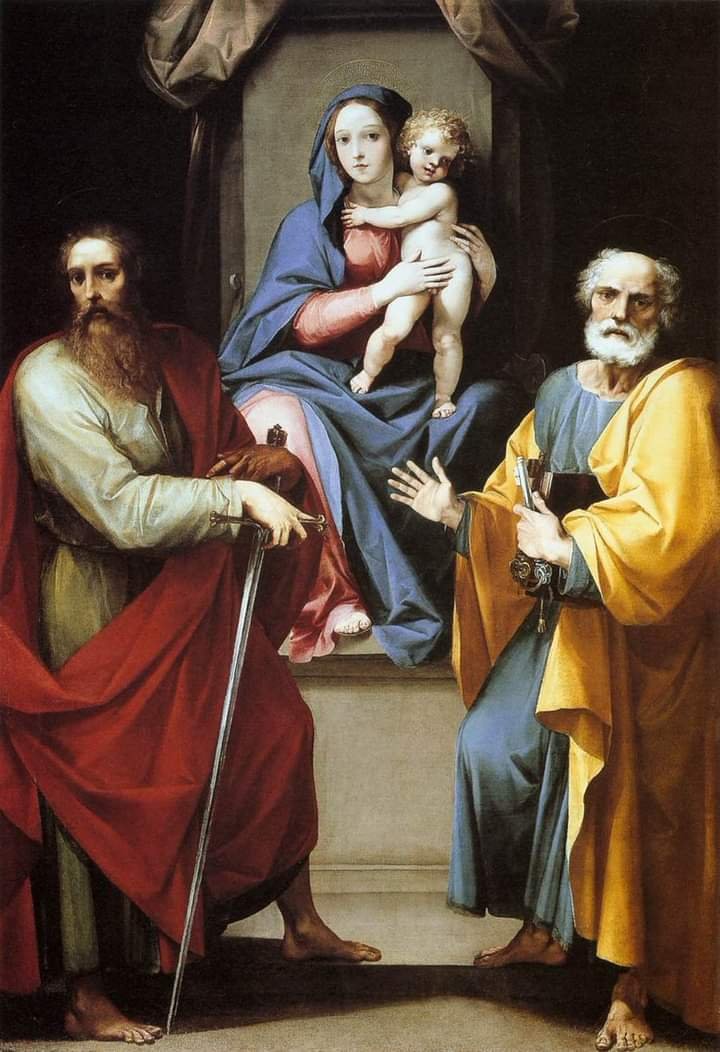
He loyally resists the first attempt to arrest Jesus by cutting off Malchus’ ear, but in the end he runs away with the others. In the depth of his sorrow, Jesus looks on him and forgives him, and he goes out and sheds bitter tears. The Risen Jesus told Peter to feed his lambs and his sheep (John 21:15-17).
Paul’s life of public ministry in preaching the gospel began when he started preaching that Christ alone can save us. He had been the most pharisaic of Pharisees, the most legalistic of Mosaic lawyers. Now he suddenly appears to other Jews as a heretical welcomer of Gentiles, a traitor and apostate.
Paul’s central conviction was simple and absolute: Only God can save humanity. No human effort—even the most scrupulous observance of law—can create a human good which we can bring to God as reparation for sin and payment for grace. To be saved from itself, from sin, from the devil, and from death, humanity must open itself completely to the saving power of Jesus.
Paul never lost his love for his Jewish family, though he carried on a lifelong debate with them about the uselessness of the Law without Christ. He reminded the Gentiles that they were grafted on the parent stock of the Jews, who were still God’s chosen people, the children of the promise.
In conclusion, Peter is perhaps a more striking example of the simple fact of holiness. Jesus says to us as he said, in effect, to Peter: “It is not you who have chosen me, but I who have chosen you. Peter, it is not human wisdom that makes it possible for you to believe, but my Father’s revelation. I, not you, build my Church.”
Paul’s experience of the risen Jesus on the road to Damascus was the driving force that made him one of the most zealous, dynamic, and courageous ambassadors of Christ the Church has ever had. But persecution, humiliation, and weakness became his day-by-day carrying of the cross, material for further transformation. The dying Christ was in him, the living Christ was his life.
CONTEMPLATING THE LIVES OF SAINT PETER AND SAINT PAUL THE APOSTLES ON THE SOLEMNITY OF SAINT PETER AND SAINT PAUL
THE TWIN PILLARS OF THE CHURCH
The Solemnity of Saints Peter and Paul, celebrated on June 29, is one of the Church’s greatest feasts. It honors the two foremost Apostles who, though very different in background, character, and mission, were united in faith, service to Christ, and martyrdom. Together they laid the visible and spiritual foundations of the Church and sealed their witness with their blood in Rome.
WHY PETER AND PAUL ARE CELEBRATED TOGETHER
Peter was a Galilean fisherman, one of the Twelve Apostles, personally called by Jesus, and a man of simple faith. Paul was a Jew from Tarsus, highly educated, a Roman citizen, and once a persecutor of Christians before his conversion on the road to Damascus.
God united these two men in one mission. Peter became the chief shepherd of the Church, while Paul became the great missionary to the Gentiles. Together they represent the unity and universality of the Gospel.
THE ORIGIN OF THE FEAST
The feast of Saints Peter and Paul is one of the oldest in Christianity. Christians in Rome were already celebrating it together by the third century. June 29 is traditionally associated with their martyrdom or the transfer of their relics during times of persecution.
After Christianity was legalized, magnificent basilicas were built over their tombs, and this day has remained one of the Church’s principal solemnities.
SAINT PETER THE ROCK
Jesus called Simon while he was fishing and gave him the name Peter, saying, “You are Peter, and upon this rock I will build my Church.”
Peter became the leader of the Apostles, the first public preacher after Pentecost, the first Bishop of Rome, and the visible sign of unity in the Church.
Although he denied Jesus during the Passion, he repented and was entrusted with the care of Christ’s flock. His life shows that God’s grace can transform weakness into faithful leadership.
SAINT PAUL THE APOSTLE TO THE GENTILES
Saul of Tarsus fiercely persecuted the early Church until he encountered the risen Christ on the road to Damascus. His conversion transformed him into one of Christianity’s greatest missionaries.
Paul founded many Christian communities, wrote many New Testament letters, and preached tirelessly despite imprisonment, beatings, shipwrecks, hardship, and persecution. He remained faithful until death, declaring that he had fought the good fight and kept the faith.
THEIR MARTYRDOM
Ancient tradition teaches that both Apostles were martyred during Nero’s persecution of Christians.
Peter was crucified upside down because he considered himself unworthy to die as Jesus had died. His tomb rests beneath Saint Peter’s Basilica.
Paul, as a Roman citizen, was beheaded outside Rome. His tomb is honored in the Basilica of Saint Paul Outside the Walls.
Though they died in different ways, both gave their lives in faithful witness to Christ.
THE SIGNIFICANCE OF THE SOLEMNITY
This feast celebrates the unity and diversity of the Church. Peter and Paul had different personalities and missions, yet both served the same Gospel.
Peter symbolizes unity, pastoral leadership, and authority. Paul symbolizes evangelization, missionary zeal, and theological depth. Together they reveal the Church’s apostolic foundation.
Their lives also proclaim the triumph of God’s grace. Peter denied Christ, and Paul persecuted His followers, yet both became great saints through God’s mercy. Their witness reminds Christians to remain faithful even in suffering.
THE LITURGICAL CELEBRATION
The Solemnity of Saints Peter and Paul is one of the Church’s highest feast days. The liturgy includes the Gloria, the Creed, and readings celebrating their mission and witness.
In Rome, the Pope traditionally blesses the palliums, symbols of pastoral authority, which are later bestowed on newly appointed metropolitan archbishops as a sign of communion with the Bishop of Rome.
SYMBOLS OF PETER AND PAUL
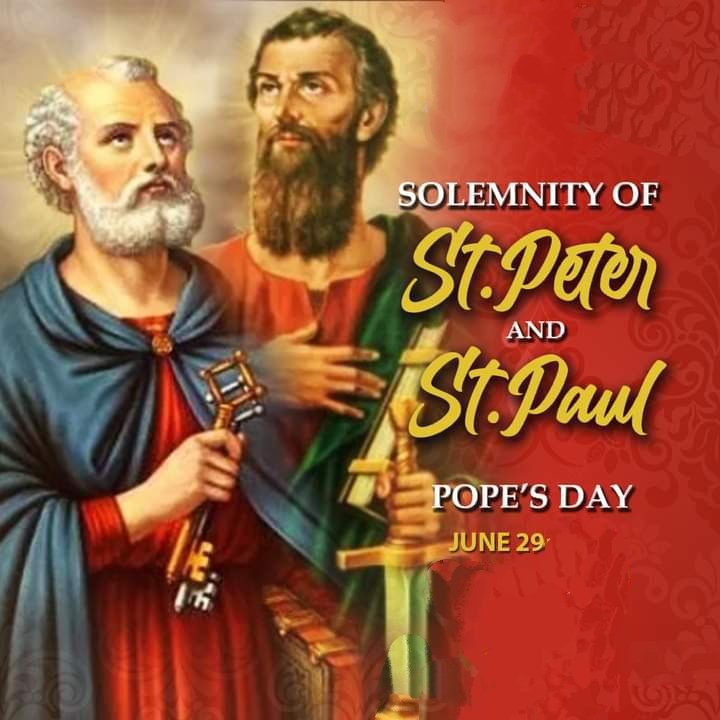
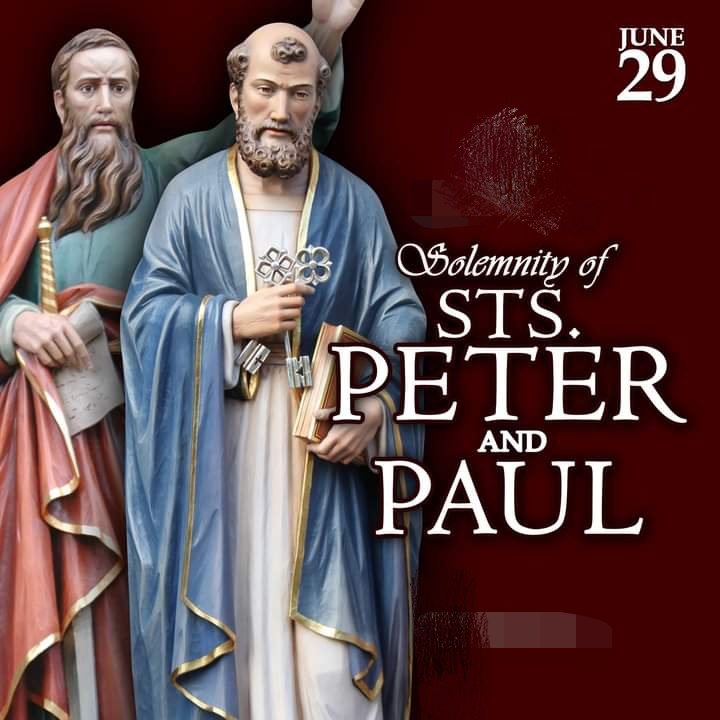
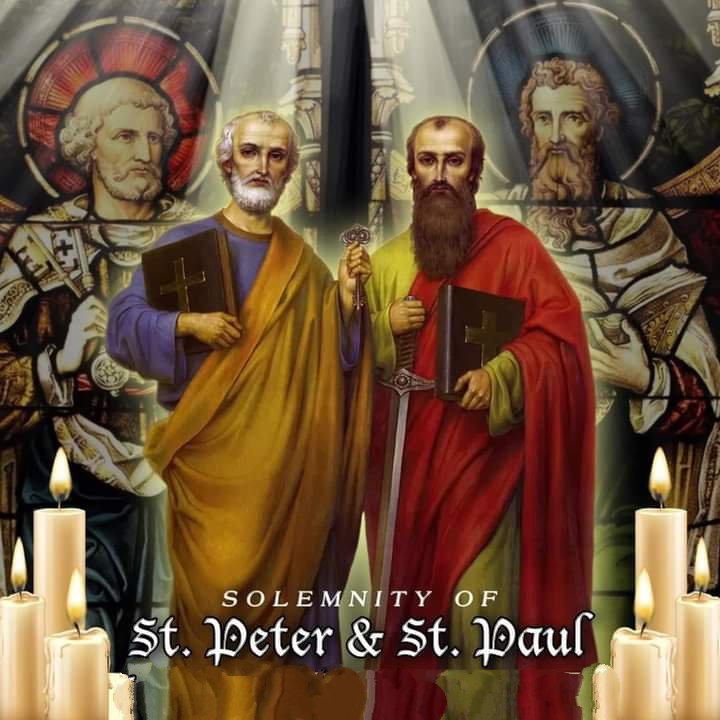
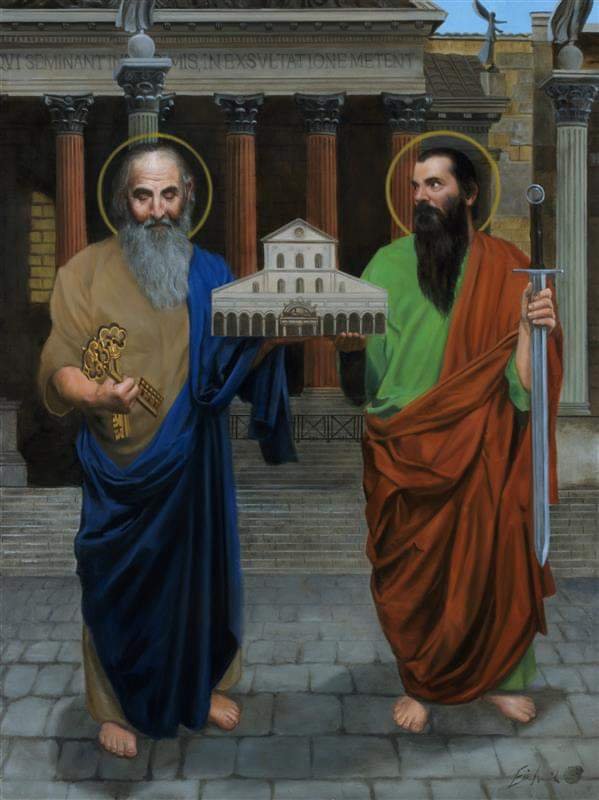
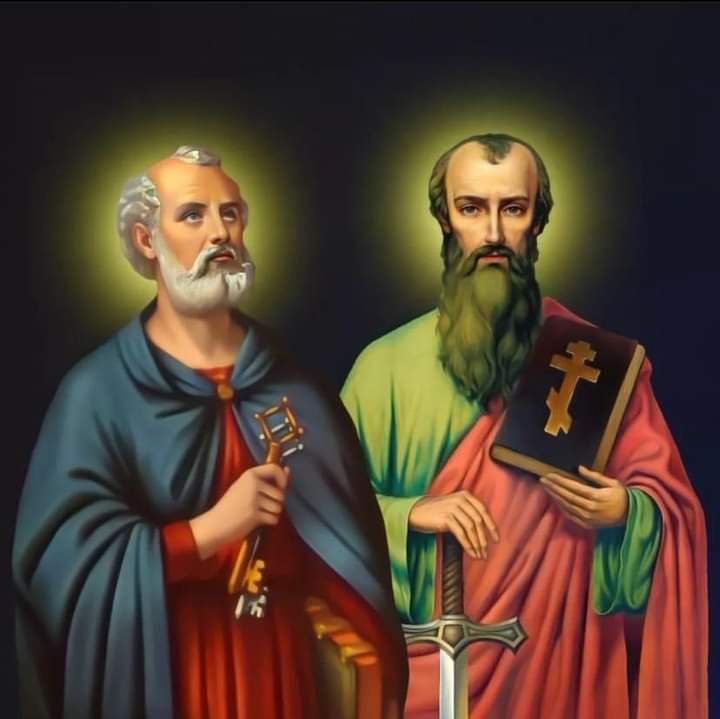
Peter is represented by the keys, the boat, the fishing net, the rooster recalling his denial, and the upside-down cross.
Paul is represented by the sword, symbolizing both his martyrdom and the Word of God, the book or scroll of his letters, and the three springs associated with the tradition of his execution.
LESSONS FOR TODAY
The lives of Saints Peter and Paul remind us that God calls ordinary people to extraordinary missions. Past failures do not define our future. The Church needs faithful leadership and courageous evangelization. Unity does not require uniformity. Fidelity to Christ is worth every sacrifice, and the Gospel is meant for every nation and every people.
WHY THIS SOLEMNITY MATTERS
The Church honors Peter and Paul together because they reveal two essential dimensions of her mission. Peter safeguards the Church’s unity and continuity, while Paul carries the Gospel to the nations. Together they remind us that the Church must remain firmly rooted in apostolic truth while boldly proclaiming Christ to the world. Their lives continue to inspire Christians to remain steadfast in faith, courageous in witness, and generous in service.
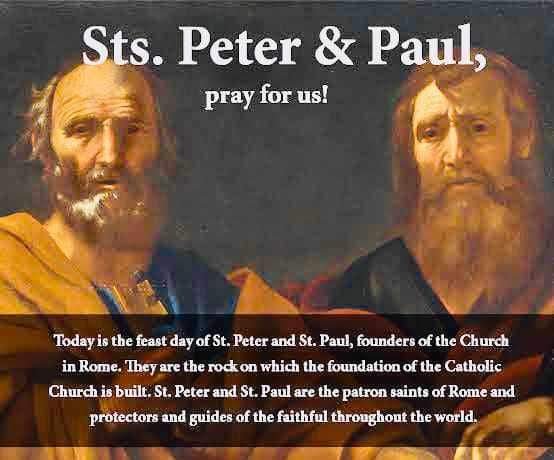
Holy Apostles Peter and Paul, pray for us.
PRAYER
Eternal God, Saints Peter and Paul directed the early Church by Your Power and were preachers of distinction, who modelled and strengthened the faith of the Church. We pray that like Saints Peter and Paul, our belief may increase and become enriched every day.
We implore You Lord, that through the intercession of Saints Peter and Paul, we may become spiritually strong. O Lord, help my unbelief and increase my faith and trust in You.
Dear Lord, with the fire of Your love, and the Power of Your Holy Spirit, rekindle the flickers within me into a flame of evangelical zeal and enlightenment, for the conversion of sinners, drawing lost souls into the warmth of Your love. In Jesus Christ Our Lord. Amen

Saints Peter and Paul, pray for us.