
SPIRITUAL INSIGHTS FROM THE ARCHANGELS
September 29, 2026
Philippians 4:19
September 30, 2026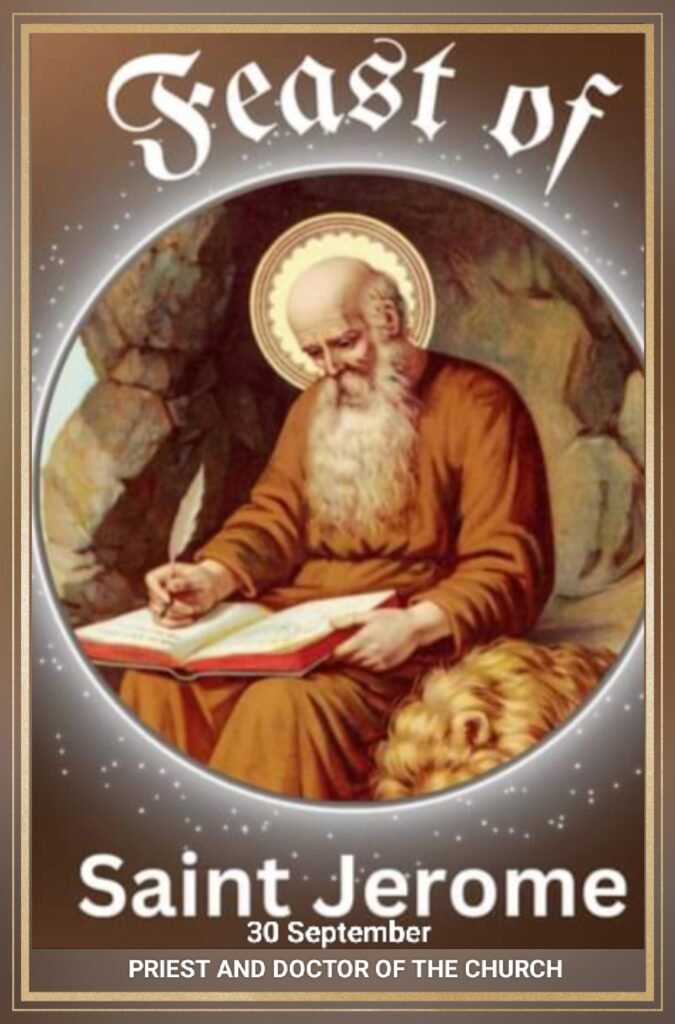
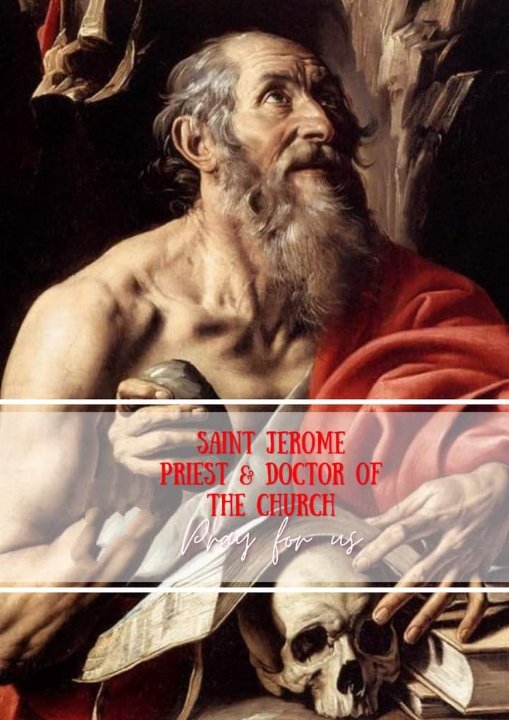
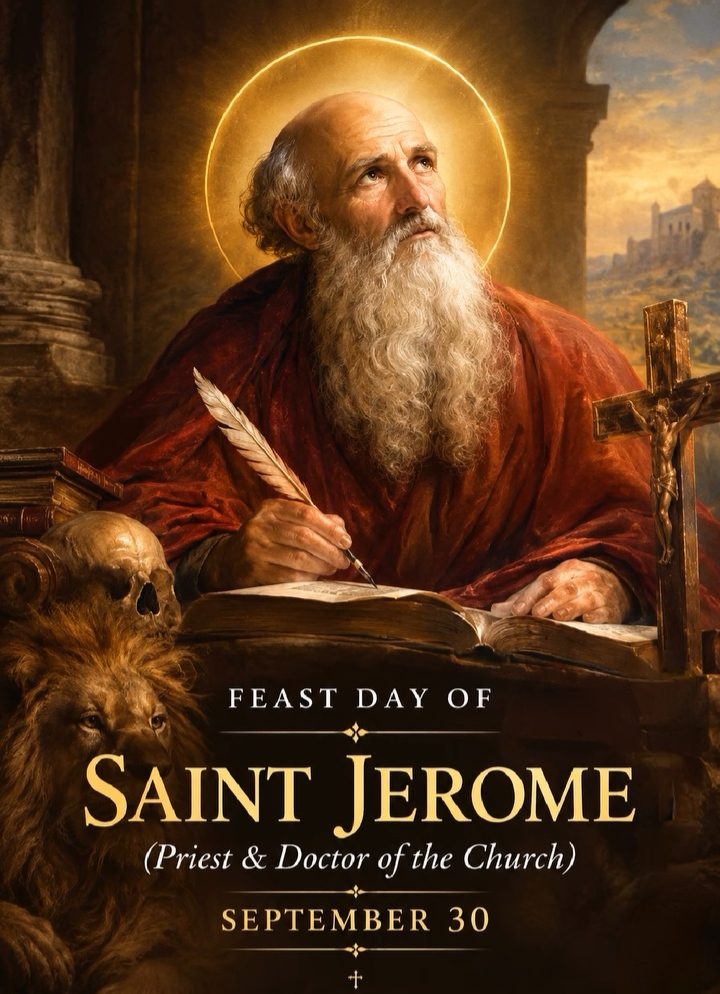
FEAST OF ST. JEROME, PRIEST AND DOCTOR OF THE CHURCH
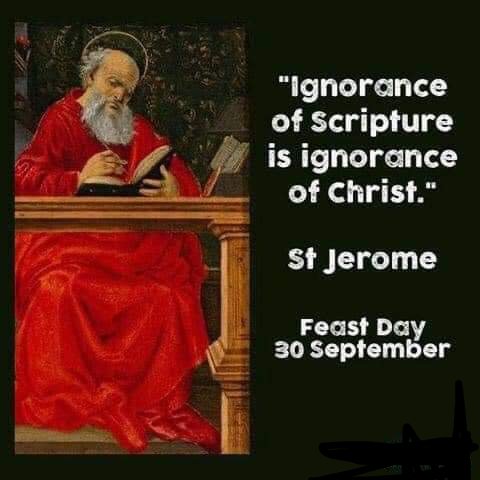
FEAST DAY – 30th SEPTEMBER
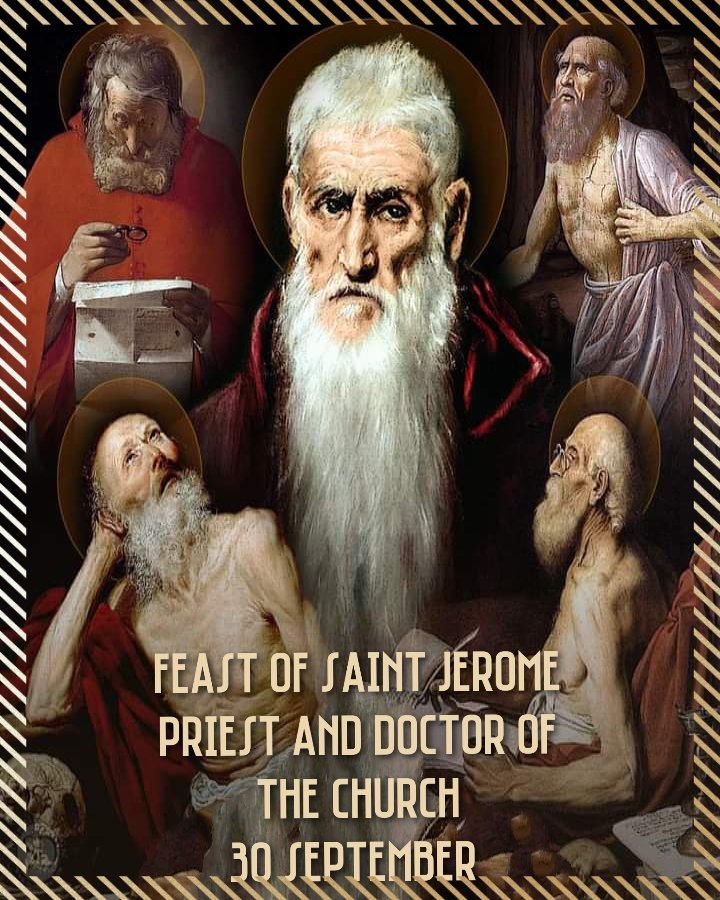
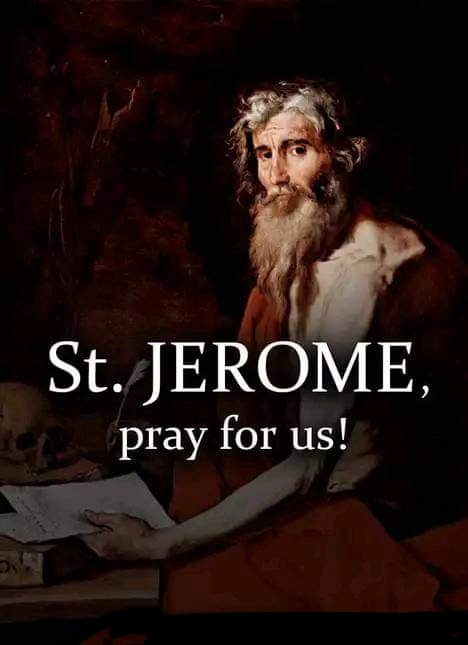
Saint Jerome (347 – 420) was born to a wealthy pagan family in Dalmatia. He was sent to Rome for his schooling and there converted to Christianity, being baptized by Pope Liberius. He studied theology and traveled widely to the important intellectual and theological centers across the newly-established Christian Empire. He was ordained a priest at Antioch and lived many years as a hermit in a nearby desert. He became an extraordinary scholar, considered to be the most learned of the Latin Church Fathers.
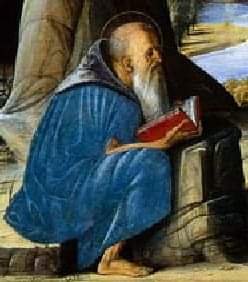
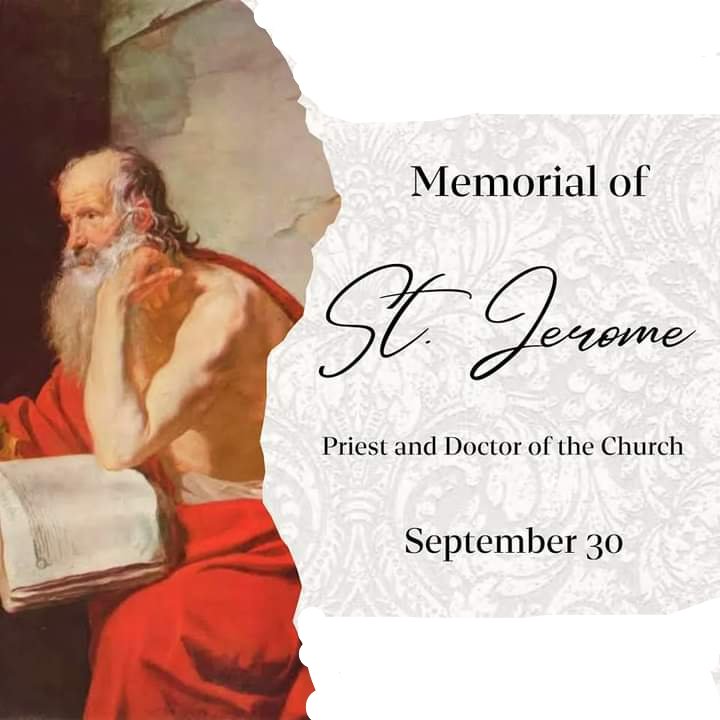
Because of his many significant theological works, most notably the thirty years he spent writing the Latin translation of the Bible (the Latin Vulgate), he is one of the most influential and orthodox theologians in the life of the early Church. In his final years Saint Jerome lived in a monastery that he founded in the Holy Land near Bethlehem, where he worked on writing histories and biographies in addition to drawing deeper into a life of prayer and asceticism. For his important scholarly contributions St. Jerome was named a Doctor of the Church. He is the patron of libraries, archaeologists, students, and translators.
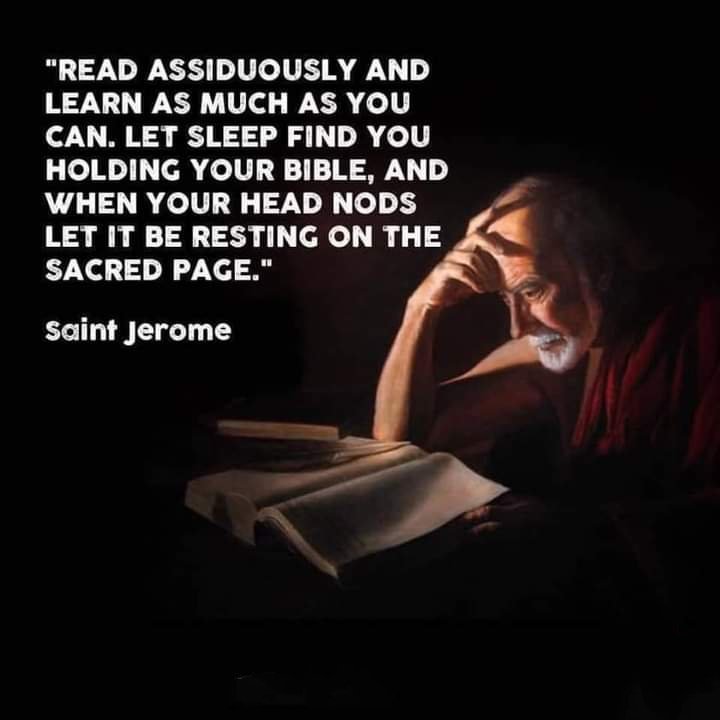
Most of the saints are remembered for some outstanding virtue or devotion which they practiced, but Jerome is frequently remembered for his bad temper! It is true that he had a very bad temper and could use a vitriolic pen, but his love for God and his son Jesus Christ was extraordinarily intense; anyone who taught error was an enemy of God and truth, and Saint Jerome went after him or her with his mighty and sometimes sarcastic pen.
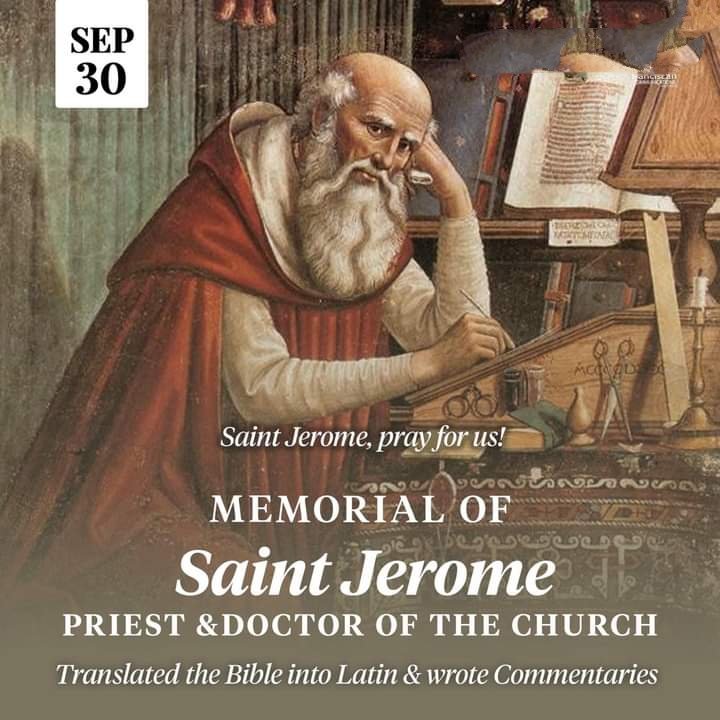
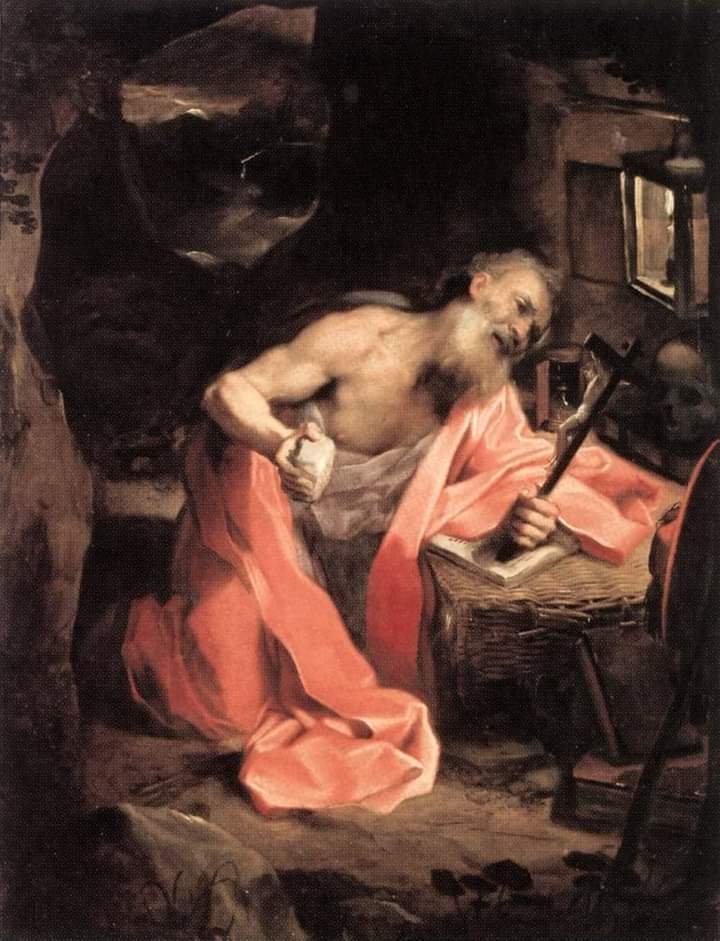
He was above all a Scripture scholar, translating most of the Old Testament from the Hebrew. Jerome also wrote commentaries which are a great source of scriptural inspiration for us today. He was an avid student, a thorough scholar, a prodigious letter-writer and a consultant to monk, bishop, and pope. Saint Augustine said of him, “What Jerome is ignorant of, no mortal has ever known.”
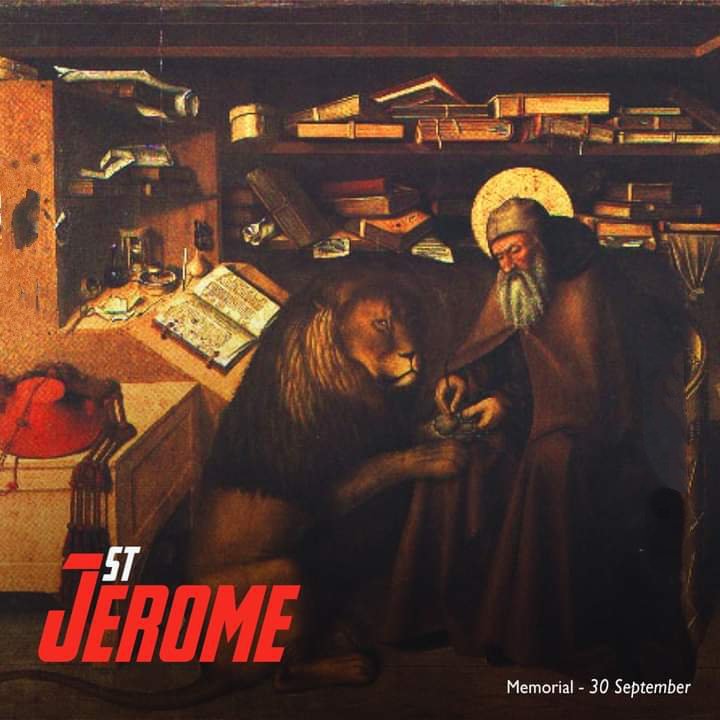
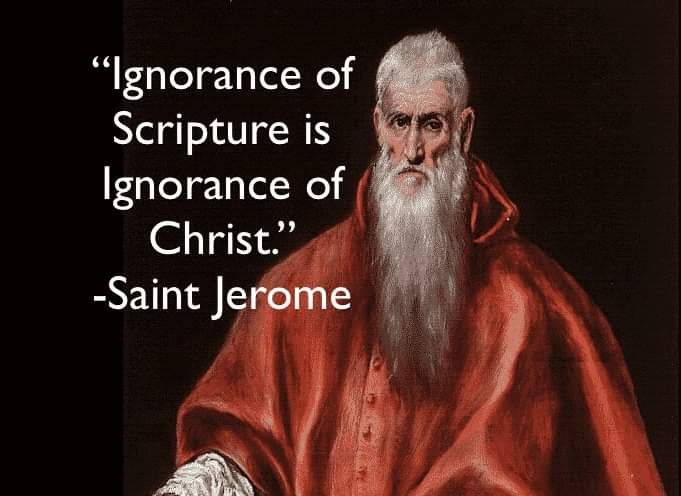
The Vulgate, translated by Saint Jerome is not the most critical edition of the Bible, but its acceptance by the Church was fortunate. As a modern scholar says, “No man before Jerome or among his contemporaries and very few men for many centuries afterwards were so well qualified to do the work.” The Council of Trent called for a new and corrected edition of the Vulgate, and declared it the authentic text to be used in the Church.
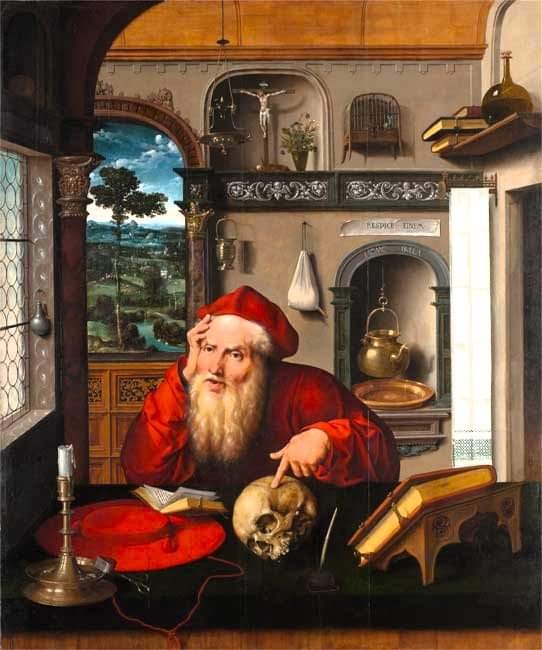
In order to be able to do such work, Jerome prepared himself well. He was a master of Latin, Greek, Hebrew, and Chaldaic. He began his studies at his birthplace, Stridon in Dalmatia. After his preliminary education, he went to Rome, the center of learning at that time, and thence to Trier, Germany, where the scholar was very much in evidence. He spent several years in each place, always trying to find the very best teachers. He once served as private secretary to Pope Damasus.
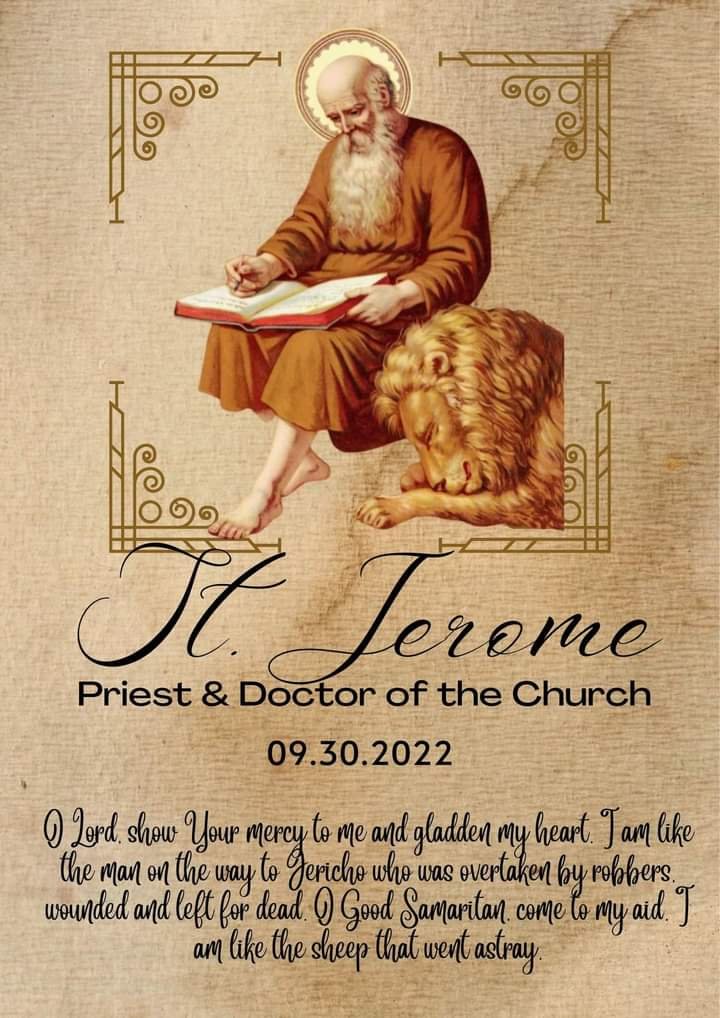

After these preparatory studies, he traveled extensively in Palestine, marking each spot of Christ’s life with an outpouring of devotion. Mystic that he was, he spent five years in the desert of Chalcis so that he might give himself up to prayer, penance, and study. Finally, he settled in Bethlehem, where he lived in the cave believed to have been the birthplace of Christ. Jerome died in Bethlehem, and the remains of his body now lie buried in the Basilica of St. Mary Major in Rome.
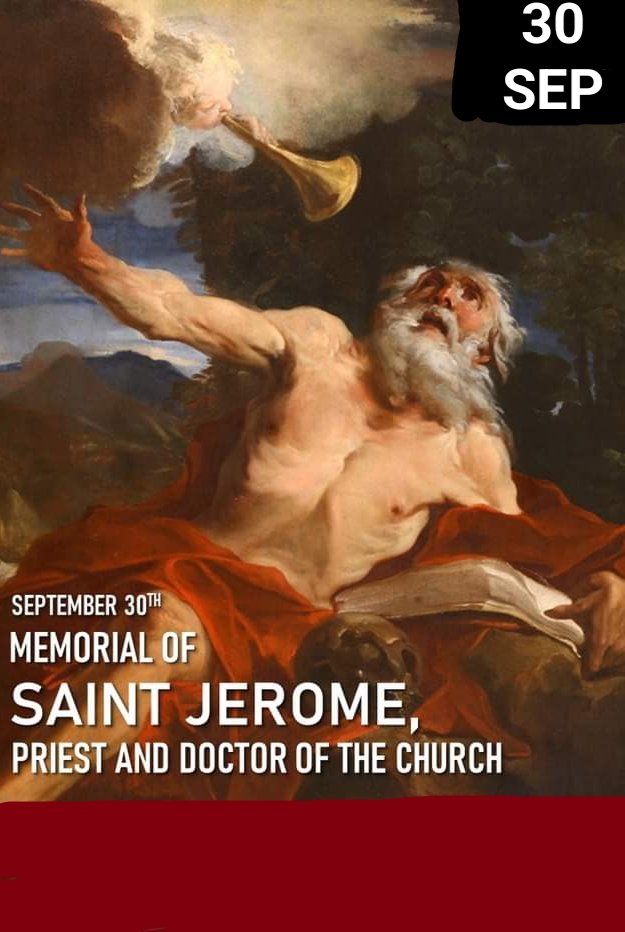
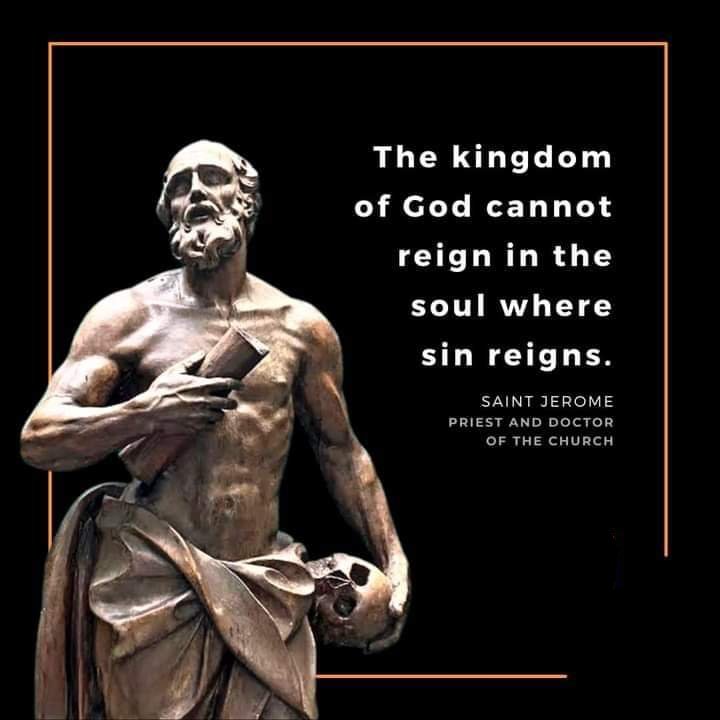
Saint Jerome was a devout Christian, theologian, priest, and monk. He preached the truth, even when people objected or took offense. His dedication to the Holy Scriptures is second to none, and the impact of his translations and writings continues to be felt today.
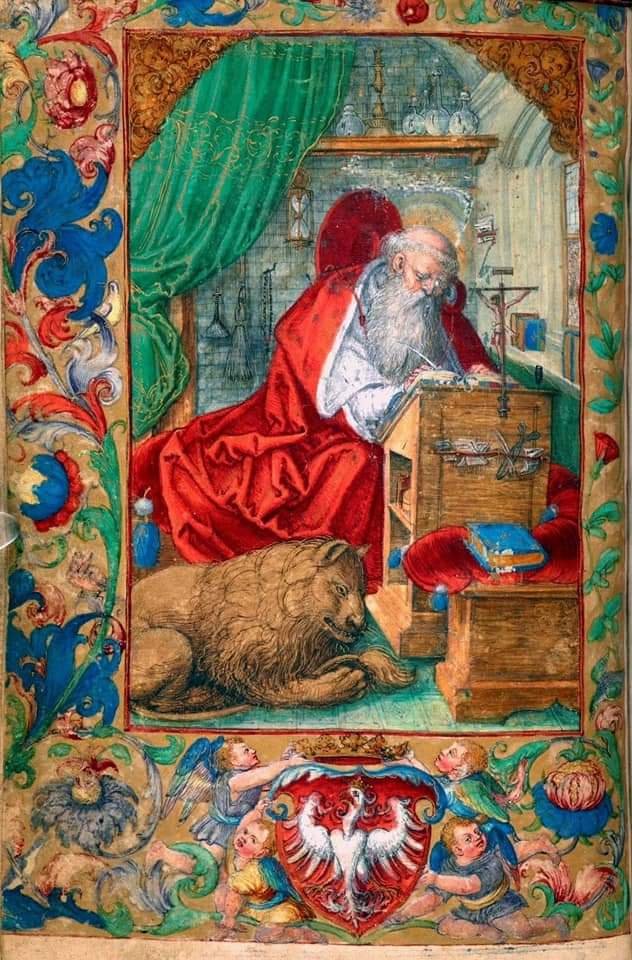
As we honor this early saint, ponder your own commitment to a prayerful reflection on the Word of God. Saint Jerome should inspire us to devote more of our attention to a better love for God’s Word through study, reflection, and prayer. Commit yourself to this ideal, and seek Saint Jerome’s intercession as you do.
CONTEMPLATING THE LIFE OF SAINT JEROME, PRIEST, DOCTOR
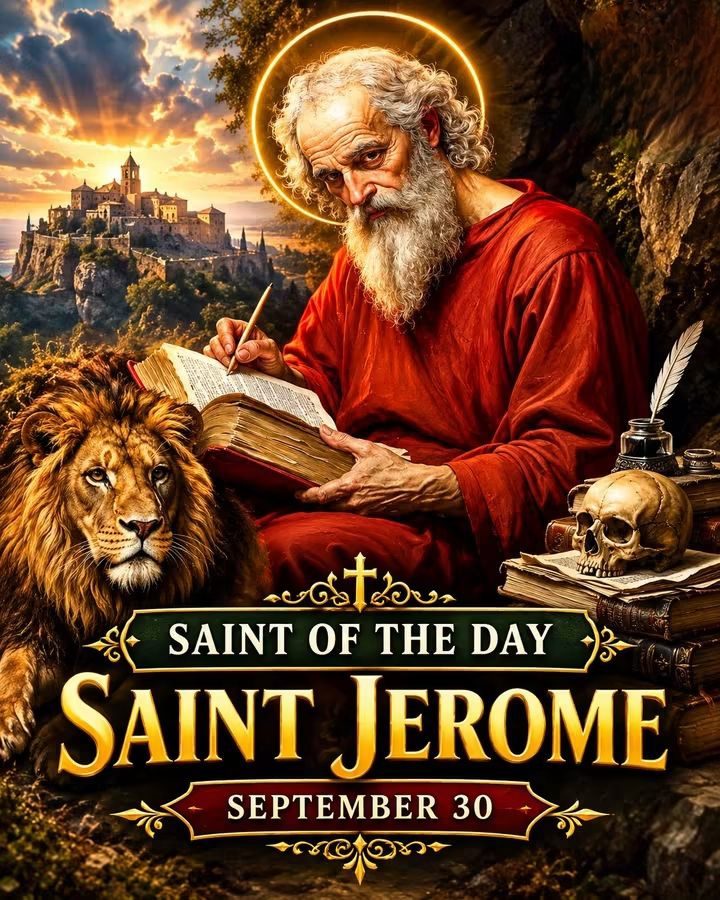
THE LION OF SCRIPTURE
Jerome was born to Christian parents in Dalmatia and received an excellent education in Rome, where he immersed himself in classical literature, especially Cicero and Virgil. After his baptism, he gradually understood that intellectual achievement must give way to a life centred on Christ and His Word.
THE DREAM THAT CHANGED HIS LIFE
During an illness, Jerome experienced a powerful dream in which Christ questioned his identity. When he proudly called himself a Christian, he was told that he was more a follower of Cicero than of Christ. The experience deeply shook him and inspired him to place Sacred Scripture at the centre of his life.
THE DESERT STRUGGLE
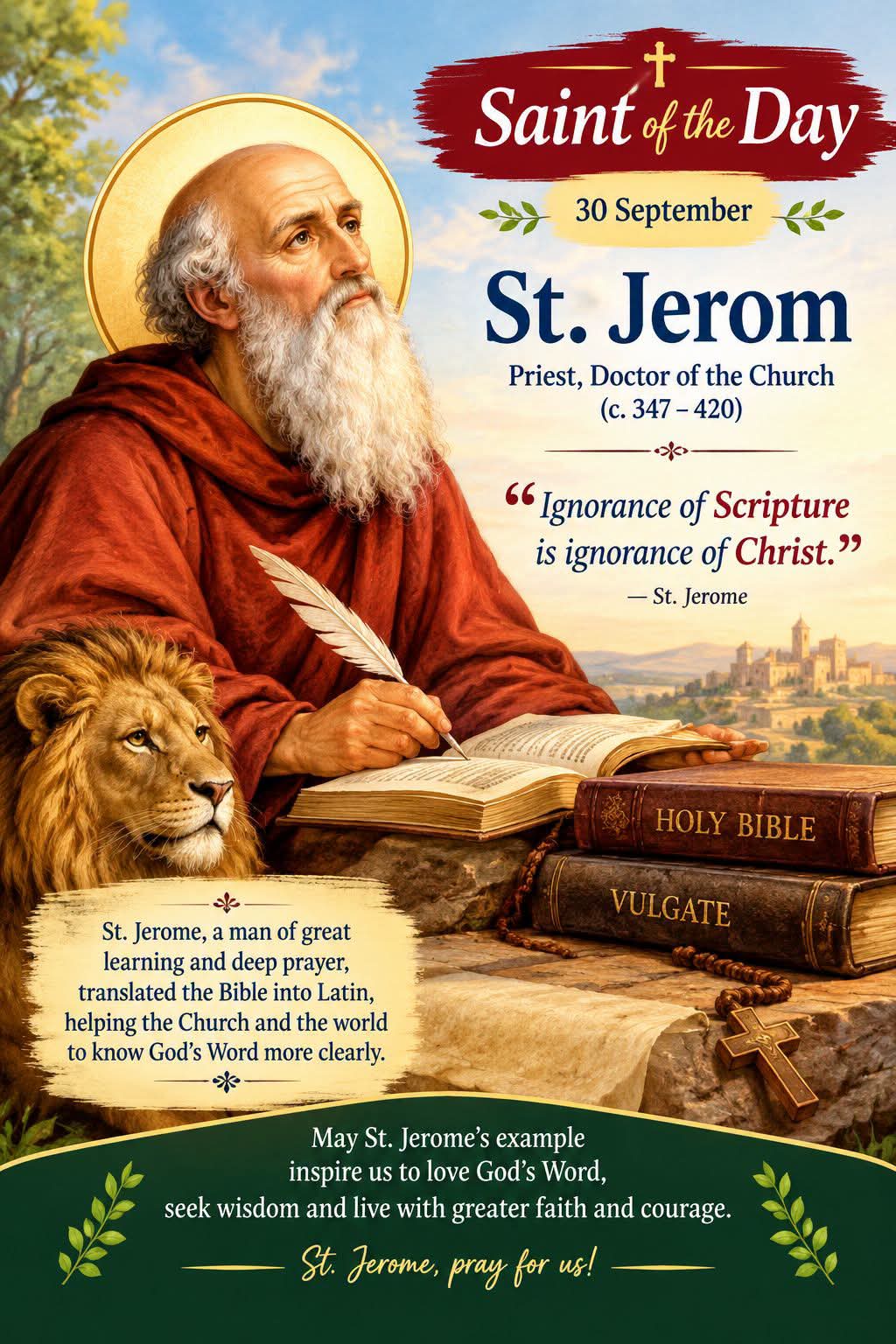
Seeking greater conversion, Jerome withdrew to the desert of Chalcis in Syria. There he embraced prayer, fasting and penance while struggling against worldly temptations. He also learned Hebrew so that he could understand the Scriptures more deeply. The hardships of the desert purified his heart and strengthened his dedication to God.
THE SCHOLAR OF ROME
Pope Damasus summoned Jerome to Rome and entrusted him with the task of improving the Latin biblical texts then in use. Jerome revised the Gospels from the Greek and translated much of the Old Testament from the Hebrew, producing the Latin Vulgate. His work brought greater clarity and consistency to the Scriptures for the Western Church.
BETHLEHEM, HIS FINAL WORKSHOP
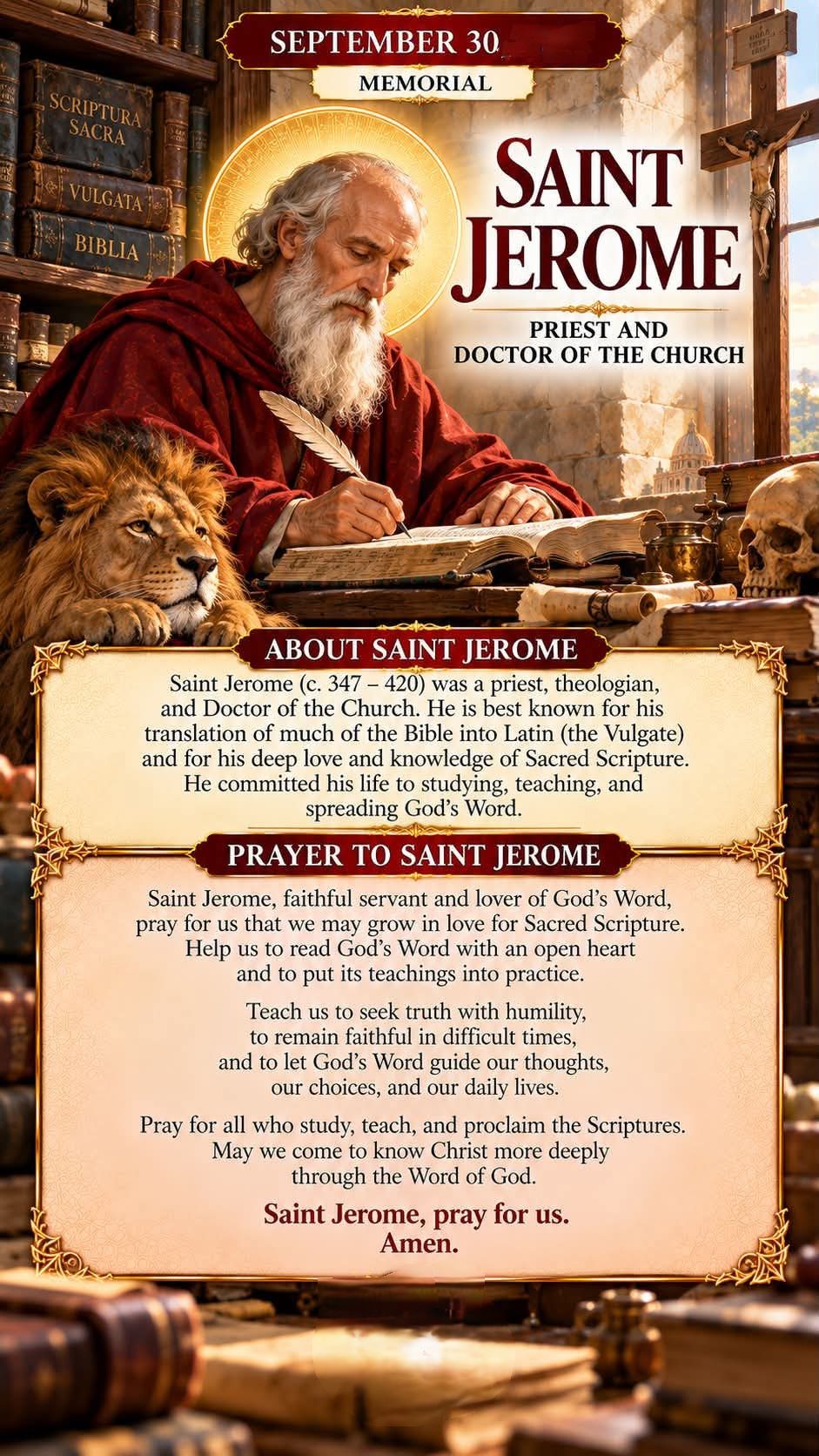
After the death of Pope Damasus, Jerome settled in Bethlehem, near the place of Christ’s birth. He established a monastery, a convent and a library, dedicating the remainder of his life to prayer, study, translation and teaching. Surrounded by Hebrew, Greek and Latin texts, he continued his lifelong service to the Word of God.
JEROME AND THE DEFENCE OF THE FAITH
Jerome vigorously defended Catholic teaching against various theological errors and controversies of his time. His knowledge of Scripture was central to his defence of the divinity of Christ, the importance of grace, the perpetual virginity of Mary and other teachings of the Church. Though known for his strong and sometimes fiery temperament, his life was devoted to defending the truth of Christ.
THE LION OF SCRIPTURE
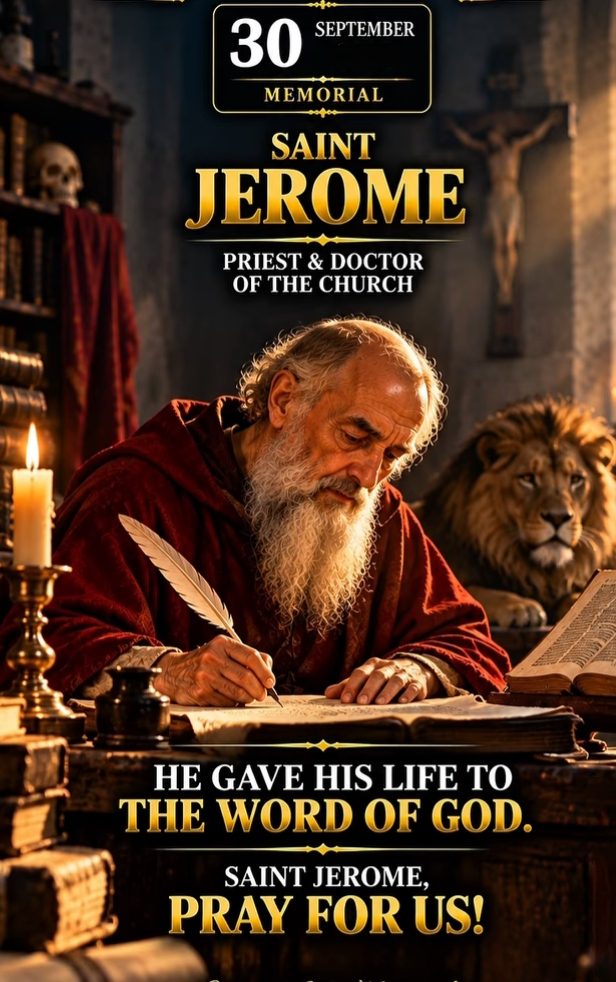
In his later years, Jerome became a humble and weathered monk, shaped by prayer, fasting, study and years of service. He did not merely study Scripture; he allowed it to transform his life. He died in Bethlehem in 420 and was later honoured by the Church as a Doctor of the Church and patron of biblical scholars.
His life continues to remind Christians that Sacred Scripture is not merely a book to be studied but the living Word through which we encounter Christ. His famous teaching expresses this truth: Ignorance of Scripture is ignorance of Christ.
PRAYER TO SAINT JEROME
O fiery Doctor of the Word, you who left behind the treasures of the world to drink deeply from the living streams of Sacred Scripture, pray for me as I open the holy pages.
Teach me to love the Word not merely as a student but as a disciple longing to hear the voice of Christ.
Purify my heart from everything that keeps me from God. Grant me courage to seek the truth, patience in study and humility to live what I learn.
Saint Jerome, lover of the Living Word, guide me to discover Christ in every page of Scripture. May the Word not merely inform my mind but transform my heart and my life. Amen.
PRAYER
O God, You gave Saint Jerome a unique calling and used him to provide the Church with a foundational understanding of the Scriptures. His dedication to prayer, asceticism, and study clearly shows his love for You, God and for Your Church. Please give us that same depth of love for the Scriptures as Saint Jerome had, so that we will also come to the same love of our God. Amen
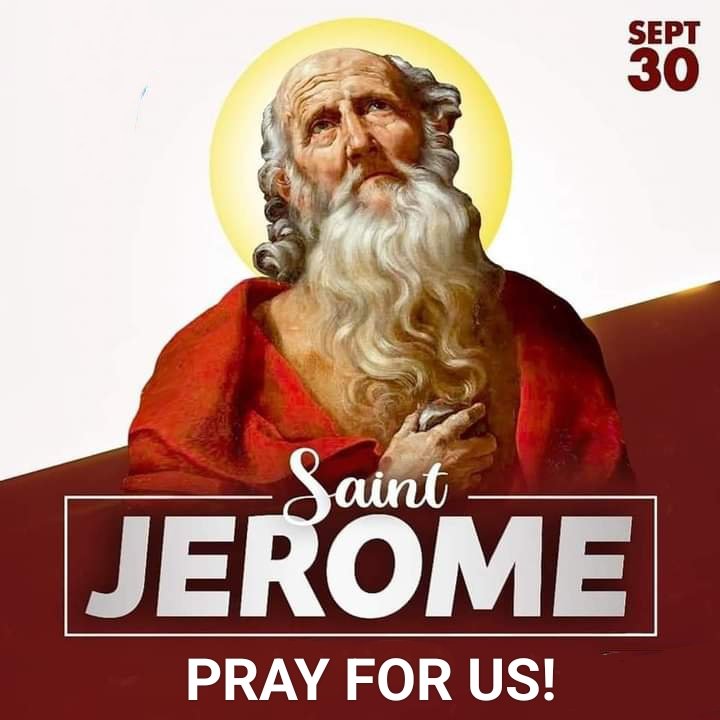
SAINT JEROME, PRAY FOR US!