
Day Ten of Lent – The Sword of Sorrow
February 28, 2026
Proverbs 18:24
February 28, 2026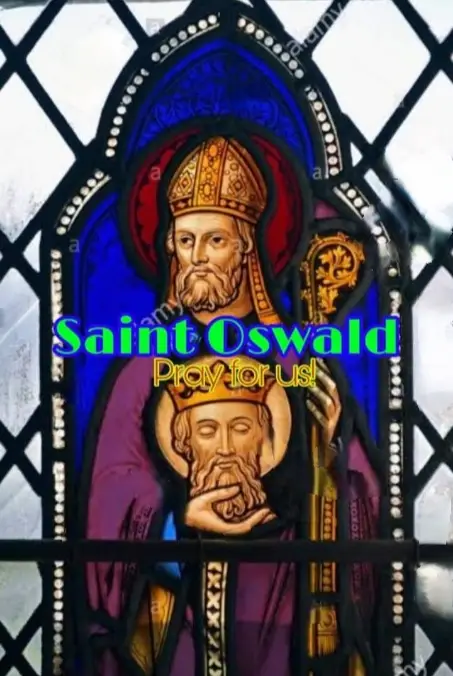
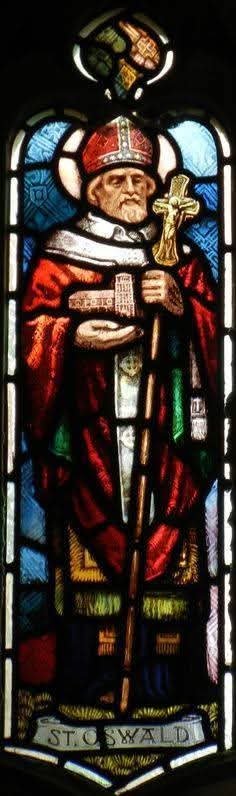
SAINT OSWALD OF WORCESTER
Oswald of Worcester (died 29 February 992) was Archbishop of York from 972 to his death in 992. He was of Danish ancestry, but brought up by his uncle, Oda, who sent him to France to the abbey of Fleury to become a monk. After a number of years at Fleury, Oswald returned to England at the request of his uncle, who died before Oswald returned.
With his uncle’s death, Oswald needed a patron and turned to another kinsman, Oskytel, who had recently become Archbishop of York. His activity for Oskytel attracted the notice of Archbishop Dunstan who had Oswald consecrated as Bishop of Worcester in 961. In 972, Oswald was promoted to the see of York, although he continued to hold Worcester also.
As bishop and archbishop, Oswald was a supporter and one of the leading promoters (together with Æthelwold) of Dunstan’s reforms of the church, including monastic reforms. Oswald founded a number of monasteries, including Ramsey Abbey, and reformed another seven, including Winchcombe in Gloucestershire and Pershore and Evesham in Worcestershire. Oswald also switched the cathedral chapter of Worcester from secular clergy to monks.
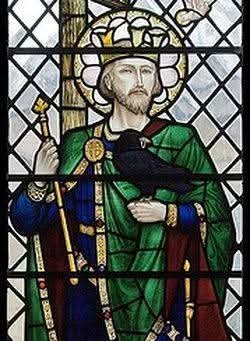
While archbishop, he brought the scholar Abbo of Fleury to teach, and he spent two years in England, mostly at Ramsey. Oswald died in 992, while washing the feet of the poor. A hagiographical life was written shortly after his death, and he was quickly hailed as a saint.
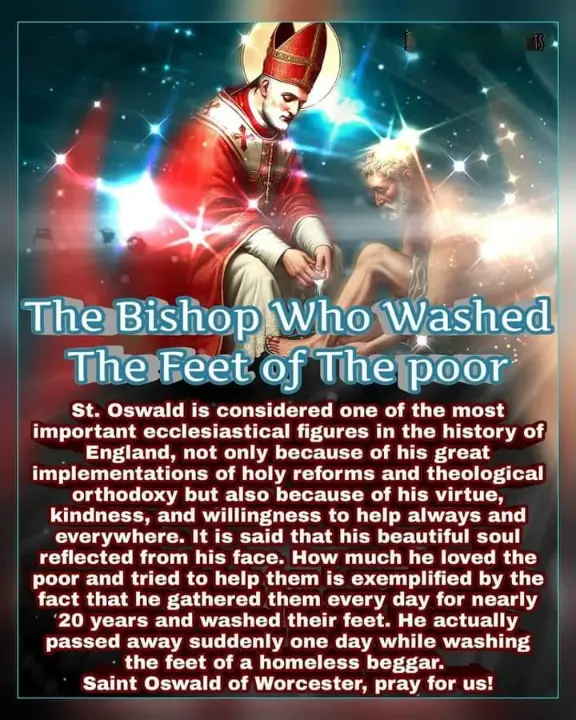
Oswald died on 29 February 992 in the act of washing the feet of the poor at Worcester, as was his daily custom during Lent, and was buried in the Church of St Mary at Worcester. He promoted the education of the clergy and persuaded scholars to come from Fleury and teach in England.
A Life of Oswald was written after his death, probably by Byrhtferth, a monk of Ramsey Abbey. Two manuscripts, a psalter (Harley MS 2904 in the British Library) and a pontifical (MS 100, part 2 from Sidney Sussex College of Cambridge University), probably belonged to Oswald and would have been used in his daily devotions.
Almost immediately after his death miracles were reported at his funeral and at his tomb. His remains were translated to a different burial spot in Worcester Cathedral ten years after his death.
His feast day is celebrated on 28 February or on 19 May in the Personal Ordinariate of the Chair of Saint Peter. On leap years, it is celebrated on 29th February.
St. Oswald is the patron saint of soldiers. He always took a cross into battle with him and prayed at the foot of the cross to ask God to protect him and his soldiers.
PRAYER
O glorious Oswald, ruler of faith and model of meekness, splendour of Worcester and luminary of York, like a tree in the midst of paradise didst you bear the fruit of the virtues for your Lord.
Enlighten all who cherish your honoured memory as we ever cry out to you in prayer. Intercede, O holy bishop, that our souls may be saved. Amen

Saint Oswald of Worcester, pray for us.
************************************
ALSO CELEBRATED:
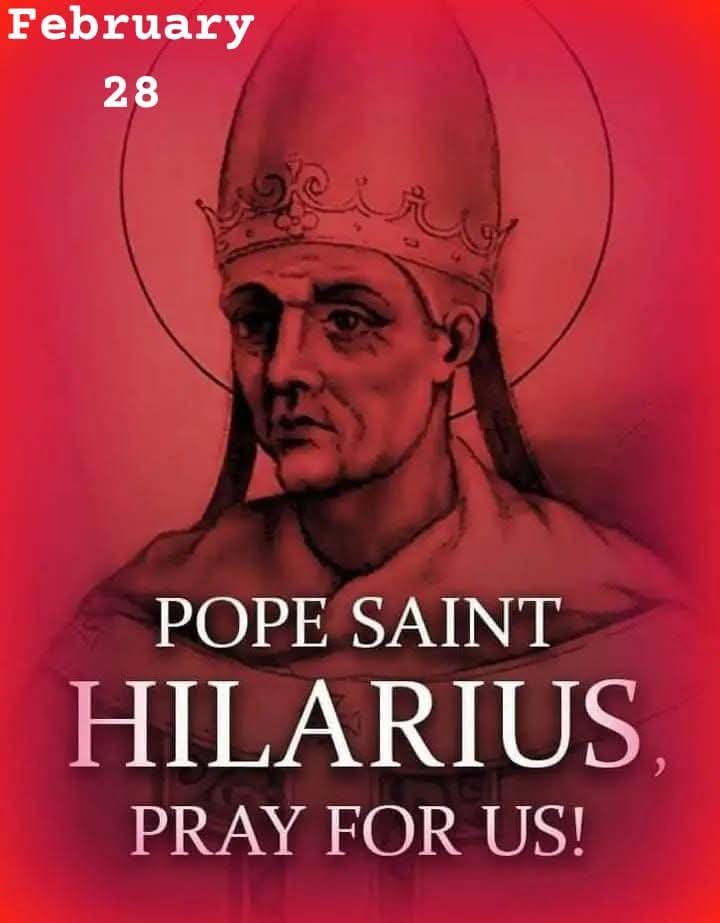
SAINT HILARIUS, POPE
FEAST: 28 FEBRUARY
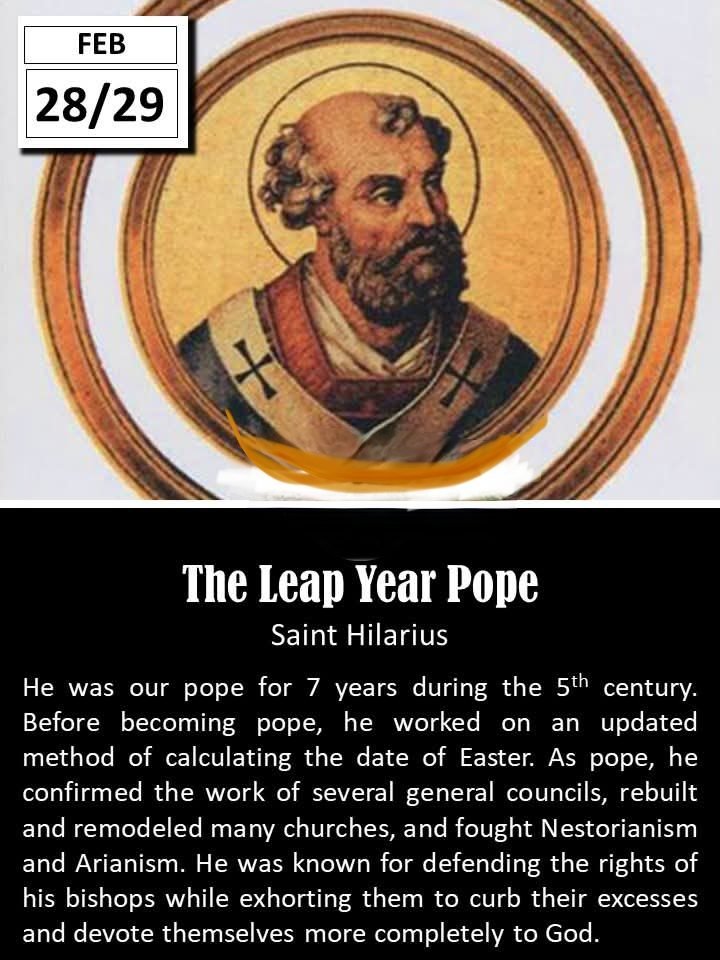
Pope Hilarius is one of the first popes of whom we hear stories before his consecration.
Under Pope Leo I, Hilarius, from the island of Sardinia, was a deacon. In 445, Flavian, a godly man was raised to Bishop of Constantinople, Politics got between him and Emperor Theodosius. And the monk, Eutyches, was in trouble. The energy and imprudence with which he asserted his opinions led to his being misunderstood. He was accused of heresy by Domnus II of Antioch and Eusebius, bishop of Dorylaeum, at a synod presided over by Flavian at Constantinople in 448. His explanations deemed unsatisfactory, the council deposed him from his priestly office and excommunicated him. In 449, however, as Eutyches protested against this verdict and received the support of Dioscorus I of Alexandria, the Emperor convoked another Council to Ephesus. Because of the speed involved, many Western bishops did not come. Pope Leo sent two legates to read a letter from him and to argue his points. One of these legates was Hilarius.
Dioscurus, who was an aquaintance of Eutyches, both being from Alexandria, was leading the synod. He did not let the legates read the letter from Pope Leo nor speak during the council. At this council, which assembled on August 8, 449, Eutyches and Dioscorus verbally attacked the archbishop. The council reinstated Eutyches and Flavian died shortly afterwards, on August 11, 449, from injuries incurred from a physical assault brought about by the followers of the two Alexandrians. Apparently feeling he had won, Dioscorus tried to hinder the return to Rome of the legates. Hilarius told how he had to hide in the chapel of St. John the Evangelist and walked, taking all back roads, to Rome. Hilarius’ safe arrival back to Pope Leo was the occasion of Hilarius being granted the title of archdeacon.
Nine days after Pope Leo’s death, Hilarius was raised to the throne of Peter.
In his six and one-third years, he had several accomplishments:
1. He developed episcopal discipline in the heretofore undisciplined areas of Gaul and Hispania, by insisting on a formal hierarchy. Priests answer to bishops, bishops answer to metropolitans and popes, metropolitans answer to popes. Synods answer to popes. He did this in a number of ways, including insisting that a bishop could not leave his diocese without written permission from the metropolitan. He also insisted that church property could not be sold without a synod examining the situation.
In 465, at a synod in Rome, it was declared that an authority could not name his own successor without the approval of Rome. This synod is the first whose original records are still extant.
2. The new emperor, Arthemius, who reigned after the death of Theodosius, wrote an edict allowing tolerance of schismatic sects. He was moved to do this by a favorite official. Hilarius took the matter in hand and waited for the emperor to come to Rome, at which time he have him a lecture on allowing people to be exposed to heresies. He stood by St. Peter’s grave to accent his own words.
3. In 467, there were many heretics who were coming into understanding and returning to the Church. There were also many people coming to the Church for the first time. Hilarius completely revamped the liturgy to make it more understandable to these people.
4. Hilarius built two oratories for the Basilica of St. John Lateran, one dedicated to St. John the Baptist and one dedicated to St. John the Evangelist.
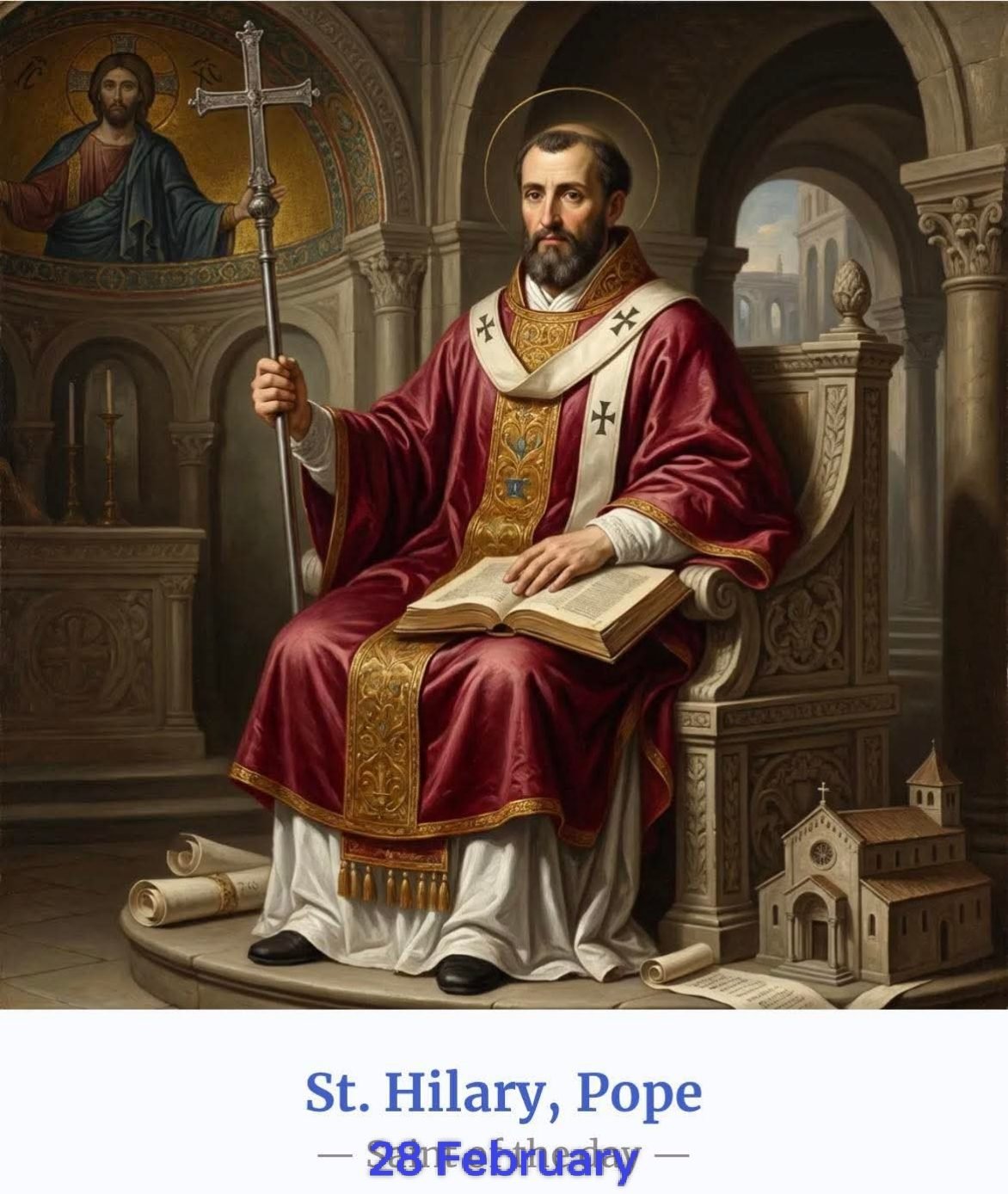
Hilarius felt that these two saints had protected him during his escape from Ephesus years before. He also had built a chapel, several convents, two public baths and libraries near the Basilica of St. Lawrence Outside the Walls.
This last basilica was where Pope Hilarius was buried when he died February 28, 468.
PRAYER
All-powerful God, help us who celebrate the memory of Saint Hilarius to emulate his discipline and commitment to build up of the Church with zeal and fervour.
May the example of your saints be our challenge to live holier lives. Grant this through our Lord Jesus Christ, your Son, who lives and reigns with you and the Holy Spirit, God forever and ever. Amen.
Pope Saint Hilarius, pray for our Church, which you helped direct!
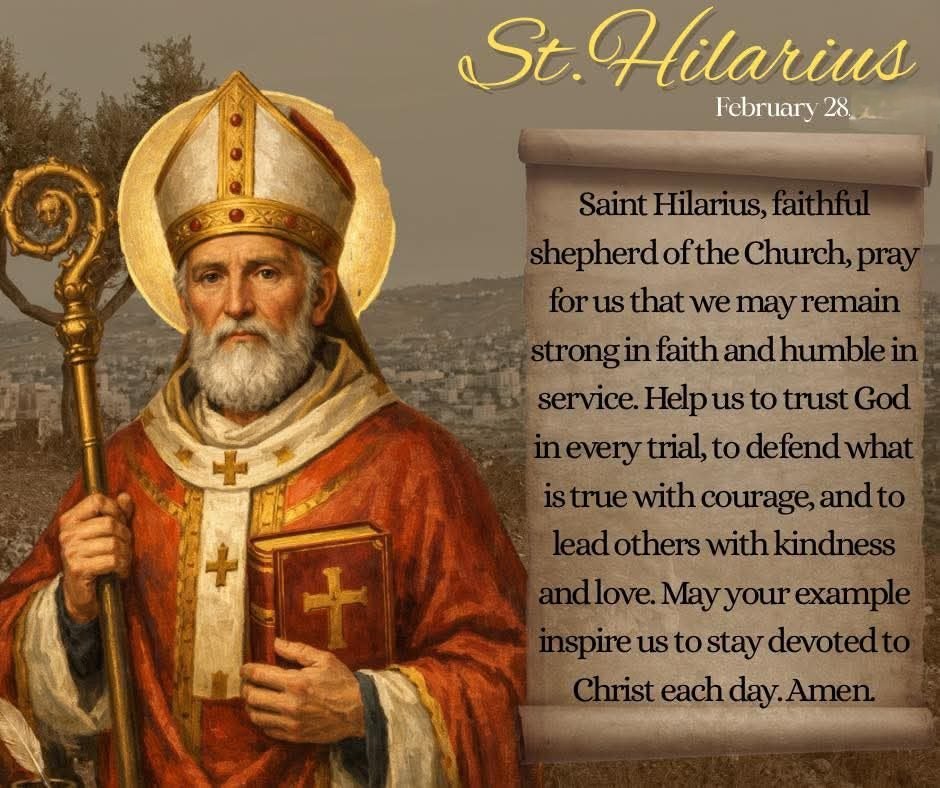
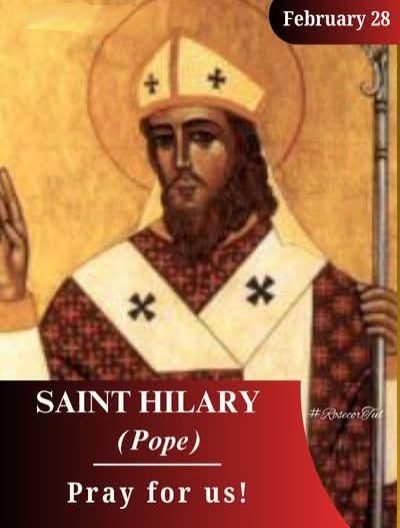
Saint (Pope) Hilarius, pray for us.
**********************************
BLESSED DANIEL BROTTIER
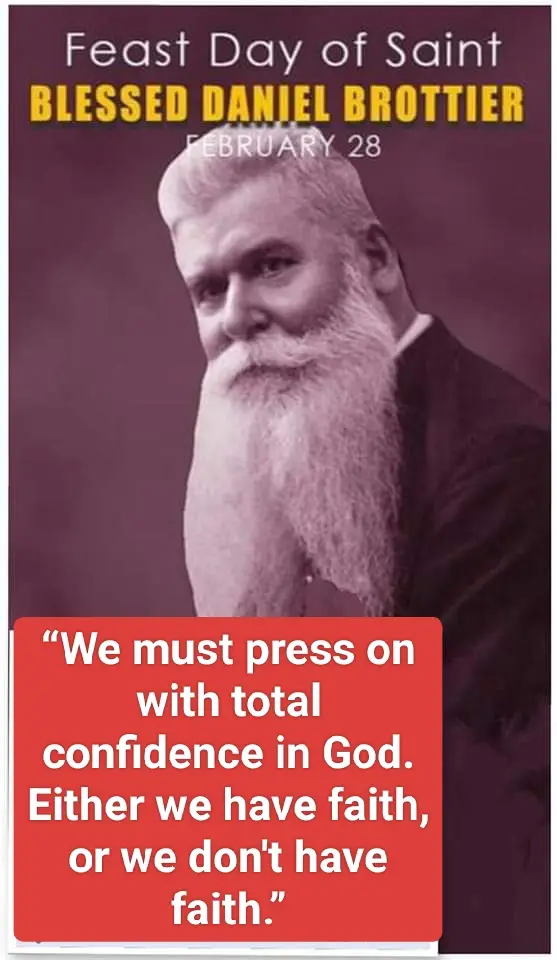
Brottier was born in La Ferté-Saint-Cyr, a commune in the Loir-et-Cher Department of France on 7 September 1876,(7 September 1876 – 28 February 1936) the second son of Jean-Baptiste Brottier, coachman for the Marquis Durfort, and his wife Herminie. A story from his childhood recounts that when he was five, his mother asked him what he would like to be when he grew up. Daniel’s answer was, “I won’t be either a general or a pastry chef—I will be the Pope!” His mother reminded him that to be the pope, he would first have to become a priest. Little Daniel piped up, “Well, then I’ll become a priest!”
Quite early on he showed an interest in the faith. Gifted with intelligence, good judgment, and a loving heart, he quickly showed himself to be headstrong and boisterous, and dreamt only of cuts and bumps. At the age of 10, Brottier received First Communion, and enrolled a year later in the minor seminary at Blois. In 1896, at the age of 20, he did one year of military service at Blois. He was ordained on 22 October 1899, after which he was assigned to teach for three years at a secondary school in Pontlevoy, France.
Restless in his life as a teacher and determined to be a missionary, the young Abbé Brottier decided to give his life to bringing the gospel to unbelievers. With this in mind he entered the congregation of the Holy Ghost Fathers. He was sent as a missionary to Senegal, W. Africa where he worked with great drive and commitment in the parish of St. Louis. After completing his novitiate, the now-Father Brottier was sent by the congregation to serve as a vicar in a mission parish in Saint-Louis, Senegal in 1903. He was disappointed that he had been assigned to a city rather than the more difficult interior.
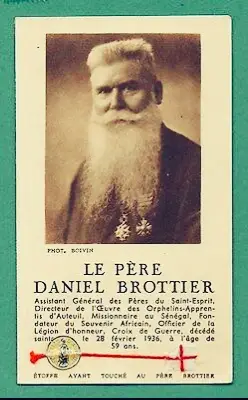
Brottier had felt called to a more contemplative life than he had been living as a missionary in Africa, but the stay at Lérins rid him of that idea. As Brottier wrote to his sisters, “I lived unforgettable hours in the recollection of the cloister in an atmosphere of sacrifice and immolation. But the lack of sleep, and especially of food, wore me down, and after a few days I had to yield to the evidence: I was not made for this kind of life”. He was recalled to France in 1911 and became involved in raising funds for the cathedral of Dakar, capital city of Senegal.
The First World War intervened. He was enlisted in the French forces and worked in the Red Cross with the function of chaplain. In this capacity, he took part in the battles of Lorraine, the Somme, Verdun and Flanders. One of the fortunate few to survive the war, he founded the National Union of Ex-Servicemen shortly after leaving the French forces. In 1923, the Archbishop of Paris, Cardinal Dubois, asked the Congregation of the Holy Spirit to take over the Orphans of Auteuil, a shelter for the many half-starved children living on the streets of Paris.
Providing refuge and education for children was an early and ongoing option for the Congregation, which often had orphanages attached to seminaries and schools. Fr. Daniel Brottier took up the task. For 13 years, Fr. Brottier lived among these abandoned children. He welcomed them, listened to them and suffered with them in their misery. Of the orphanage, Fr. Brottier wrote; “So they turn, up full of confidence, at Auteuil. They have heard that in this house, as long as space can be found, children like them will get something to eat and drink, and a place to sleep.
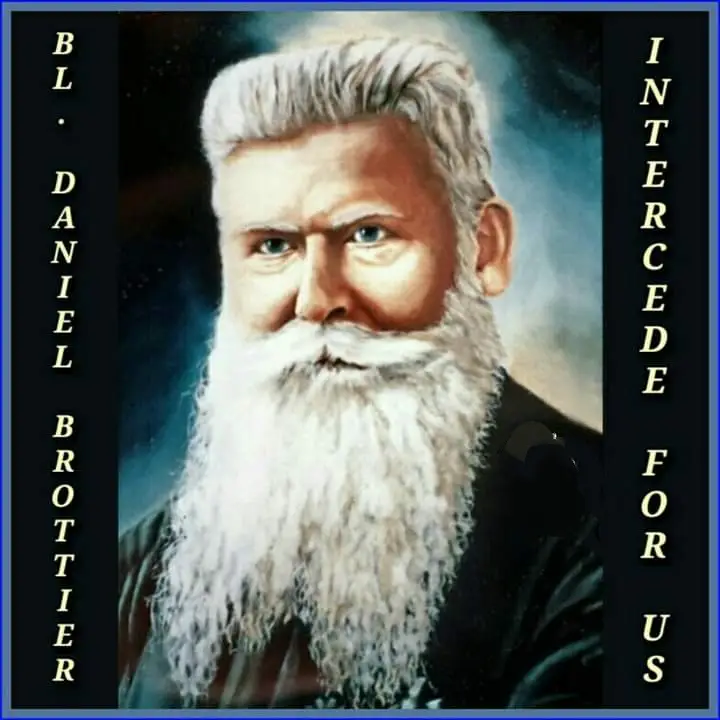
Even better, they have been told that at Auteuil you are taught how to work and prepare for the future, so that there will be no more talk of the miseries suffered in the past. And later on, they can start a family of their own, full of joy and love.”
Fr. Brottier, without thinking of himself, tried to give the children at least sufficient comfort to make them want to live like everybody else: “Believe me, there has to be a minimum of well-being and comfort if these young people are to grow up without bitterness. Otherwise they will later on sow the seeds of revolt and anarchy in society”.
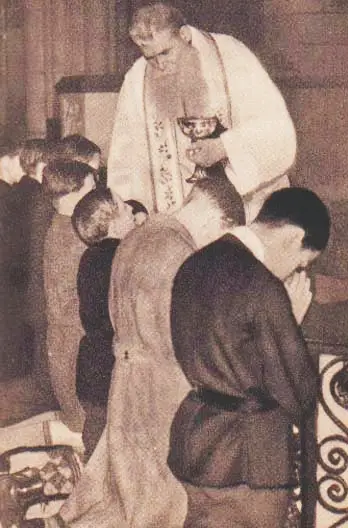
Daniel Brottier found an ally and friend for his life and work – Thérèse of Lisieux. At Auteuil, he “plotted” with her many ways of “tempting Providence” for the running and development of the work for orphans. Although preeminently a man of action, his work flowed from an interior “practical union” with God.
He put it this way: “If Providence exists, if God is concerned about orphans and abandoned children, if the birds of the fields and the lilies in the valleys are dear to him, if the merits of some can go to help others, ….then in that case, we must act out this belief. We must not doubt Providence. We must pray and act…with that programme we can flatten mountains. We must press on with total confidence in God. Either we have faith, or we don’t have faith.”
Blessed Daniel is remembered for saying: “My secret is this: help yourself and heaven will help you. … I have no other secret. If the good God worked miracles, through Thérèse’s intercession, I think I can say in all justice that we did everything, humanly speaking, to be deserving, and that they were the divine reward of our work, prayers and trust in providence.” Father Brottier died on February 28, 1936 in the Hospital of Saint Joseph in Paris. He was buried in the Chapel of St. Thérèse in Auteuil on April 5, 1936. He was declared venerable in 1983, and beatified on November 25, 1984, by Pope John Paul II. The cause for his canonization was greatly advanced by the claim, in 1962, that his body was as intact as on the day of his burial. In addition, many miracles have been attributed to his intercession.
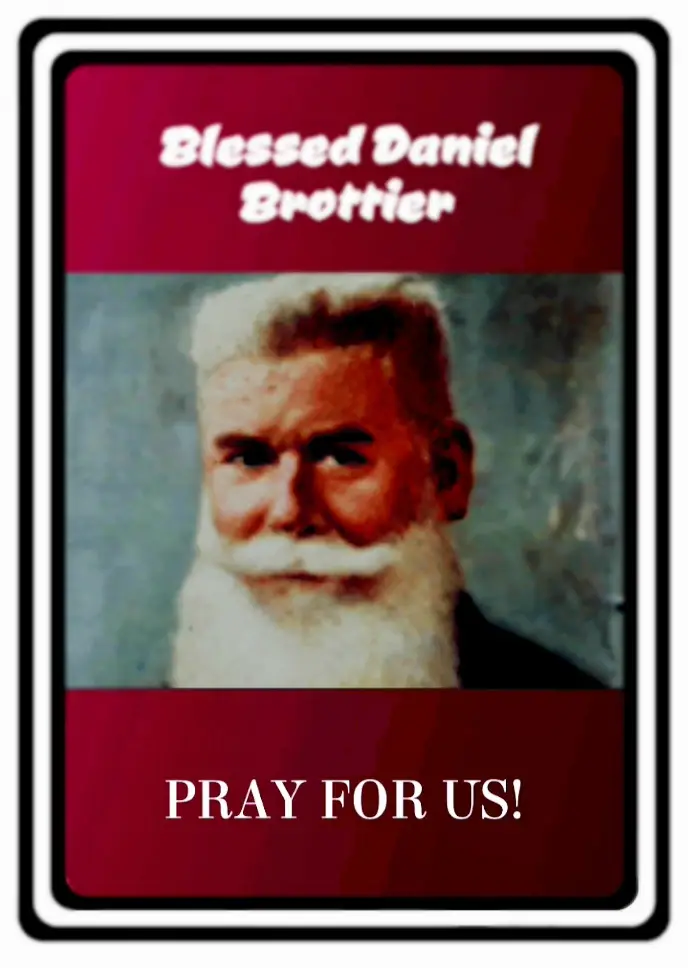
PRAYER
O God, light of the faithful and shepherd of souls, who set blessed Daniel in the Church to feed your sheep by his words and form them by his example, grant that through his intercession we may keep the faith he taught by his words and follow the way he showed by his example.
Through our Lord Jesus Christ, your Son, who lives and reigns with you in the unity of the Holy Spirit, one God, for ever and ever. Amen
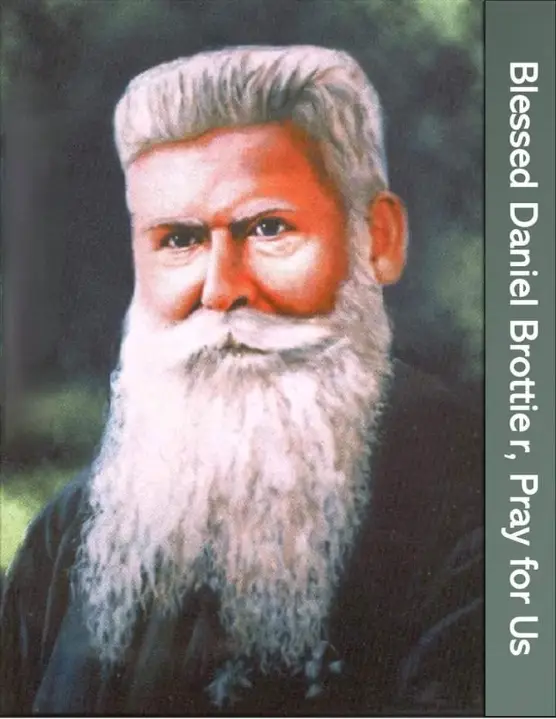
Blessed Daniel, you might be called “Teflon Dan” since nothing seemed to harm you while in the midst of war. God intended to use you in some wonderful ways for the good of the Church and you willingly served, becoming a good example for us all.
Blessed Daniel Brottier, pray for us to be good examples to our fellow Christians and live our lives in faith and trust in Jesus our Lord. Amen