
TODAY’S GOSPEL READING – 21 OCTOBER
October 21, 2026
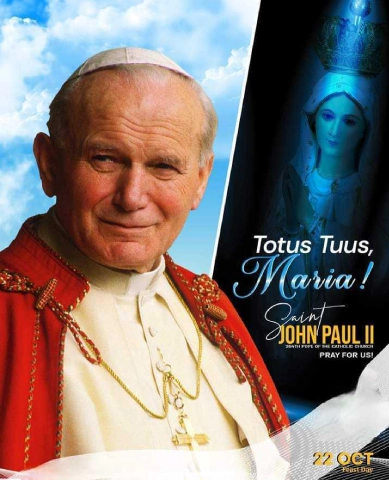
FEAST OF SAINT JOHN PAUL II, POPE – 22nd OCTOBER
October 22, 2026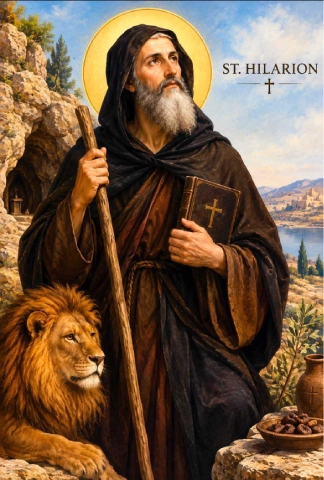
THE HOLY RESTLESSNESS OF THE HUMAN HEART
“You have made us for yourself, O Lord, and our heart is restless until it rests in you.”
— St. Augustine, Confessions 1.1
Saint Hilarion was born near Gaza around AD 291. Although he received an education and had the opportunity to enjoy a comfortable life, his encounter with Christianity awakened in him a deeper longing for God. After visiting Saint Anthony in Egypt, he chose a life of prayer, simplicity and solitude.
Like Hilarion, we may possess material security, loving relationships and worldly achievements while still experiencing an emptiness that these things cannot completely satisfy. Such restlessness can become an invitation to seek a deeper purpose and discover the lasting peace that comes from God.
The soul begins its journey towards holiness when it recognises that worldly pleasures alone cannot satisfy its deepest longing for God.
THE GRACE OF A SPIRITUAL ENCOUNTER
“Be imitators of me, as I am of Christ.”
— 1 Corinthians 11:1
Hilarion’s encounter with Saint Anthony profoundly influenced his spiritual journey. Witnessing Anthony’s holiness and disciplined life inspired him to embrace the path of a hermit. He returned to Palestine determined to devote himself to prayer and asceticism.
We, too, can be transformed by people whose lives reflect the Gospel. A prayerful priest, a forgiving parent or a person who serves others selflessly can awaken our own desire for holiness. However, admiration must lead to personal commitment if it is to bear lasting fruit.
A holy encounter becomes transformative when inspiration gives way to a wholehearted response to God’s call.
THE DESERT WITHIN THE HEART
“Be still, and know that I am God.”
— Psalm 46:10
Hilarion withdrew into the desert to seek God away from worldly distractions. His solitude provided an opportunity to confront temptations, discipline his desires and deepen his relationship with the Lord.
Although most of us cannot withdraw from our daily responsibilities, we can create an inner desert through silence, prayer and reflection. In these quiet moments, we become more aware of our fears, wounds and motives and allow God to work within us.
The purpose of silence is not emptiness but openness to God’s presence.
Our inner desert becomes a sacred meeting place where we stop escaping ourselves and allow God to transform our hearts.
THE DISCIPLINE OF HOLY DESIRE
“Everyone who competes in the games exercises self-control in all things.”
— 1 Corinthians 9:25
Saint Hilarion embraced fasting, manual labour and a life of simplicity to discipline his desires and remain focused on God. His ascetic practices reflected his determination to overcome whatever might weaken his spiritual life.
Christian self-denial is not contempt for the body or rejection of legitimate needs. It is the pursuit of freedom from anything that controls us excessively. Whether resisting anger, avoiding dishonest gain or limiting unhealthy habits, we learn to choose what is good rather than simply what is pleasurable.
True self-denial does not diminish life; it frees us to desire and choose what leads to genuine holiness.
THE HIDDEN BATTLE OF THE SOUL
“Watch and pray that you may not undergo the test. The spirit is willing, but the flesh is weak.”
— Matthew 26:41
Traditional accounts of Hilarion’s life describe intense struggles against temptation and fear. His perseverance reminds us that outward religious practices do not automatically free us from inner weaknesses.
We may perform good works while secretly harbouring resentment, seek recognition while speaking of humility, or serve others while feeling bitter when our efforts go unnoticed. Spiritual growth begins when we honestly acknowledge these contradictions before God.
Through prayer, Scripture, spiritual guidance and perseverance, we can surrender our weaknesses to divine grace and gradually grow in holiness.
The hidden struggle becomes fruitful when we stop disguising our weaknesses and allow God’s grace to transform us.
THE PARADOX OF SOLITUDE AND SERVICE
“Let each of you look not to your own interests, but to the interests of others.”
— Philippians 2:4
Although Hilarion sought solitude, his reputation for holiness attracted disciples and people seeking his guidance and help. His life became a source of spiritual encouragement to many, demonstrating that contemplation and service can flourish together.
Prayer draws us closer to God and opens our hearts to the needs of others. Solitude can purify our intentions and renew our strength, enabling us to serve without seeking personal importance. Conversely, service without prayer can become exhausting activity, while prayer without charity can become self-centred.
Authentic solitude does not close our hearts to the world; it prepares us to love others more sincerely.
THE SUBTLE TEMPTATION OF RECOGNITION
“Take care not to perform righteous deeds in order that people may see them.”
— Matthew 6:1
As Hilarion’s reputation for holiness spread, increasing numbers of people sought him out, making the solitude he cherished increasingly difficult. According to traditional accounts, he eventually moved from place to place to preserve his contemplative life.
His experience reminds us that even good works can become occasions for pride when we become dependent on praise, recognition or public attention. Appreciation is not wrong, but our service should remain sincere even when nobody notices our efforts.
We can examine our hearts by asking whether we would continue serving if we received no recognition and whether we could rejoice when another person received the credit.
The heart becomes truly free when pleasing God matters more than being admired by others.
DETACHMENT AS FREEDOM, NOT ESCAPE
“Keep your lives free from the love of money, and be content with what you have”
— Hebrews 13:5
Hilarion gave away his inheritance and embraced material simplicity to devote himself more completely to God. His example challenges us to examine whether possessions and worldly attachments have begun to dominate our lives.
Detachment does not require everyone to abandon possessions or neglect family responsibilities. It means using material goods wisely, sharing generously and refusing to measure our worth by what we own. It also involves releasing grudges, unhealthy comparisons and the desire to control others.
The deepest poverty is a heart so attached to worldly things that it has little room for God and neighbour.
We become spiritually rich not by possessing everything, but by allowing nothing to possess us more deeply than God.
THE DESERT OF LEADERSHIP
“Whoever wishes to be great among you will be your servant”
— Matthew 20:26
Hilarion began as a solitary hermit but eventually became a spiritual guide to many. His example demonstrates that genuine leadership grows from prayer, humility and personal discipline rather than the desire for authority.
Spiritual leaders must learn to listen patiently, guide wisely, correct compassionately and respect the freedom of those entrusted to their care. Their purpose is not to make others dependent on them but to help them grow in faith and holiness.
Priests, religious, parents, teachers and community leaders can learn from Hilarion that leadership demands continual purification of motives and a sincere commitment to service.
A true spiritual leader helps others grow in freedom and holiness through a life rooted in humility and love.
PERSEVERANCE WHEN PRAYER FEELS DRY
“Pray without ceasing.”
— 1 Thessalonians 5:17
Traditional accounts of Hilarion’s life portray a demanding spiritual journey marked by struggles, temptations and persistent prayer. His example reminds us that a life devoted to God does not necessarily bring uninterrupted consolation.
There are times when prayer fills us with peace and joy, and other times when it seems dry, distracted or difficult. Such experiences do not necessarily indicate that our faith is weakening. Prayer is not merely a search for comfort but a relationship sustained by trust and love.
By maintaining a regular time for prayer, meditating on Scripture, participating in the Eucharist and speaking honestly to God, we can remain faithful even when we do not feel His presence clearly.
Faith matures when we continue seeking God not merely for the consolation He gives, but because we love Him.
THE JOURNEY OF CONTINUAL CONVERSION
“Whoever wishes to come after me must deny himself, take up his cross, and follow me.”
— Matthew 16:24
Hilarion’s later travels reflected his determination to preserve his vocation despite growing attention and changing circumstances. Even after attracting disciples, he continued seeking a life that would enable him to remain faithful to God.
His example teaches us that holiness requires a willingness to begin again. We may need to renew our commitment to prayer, restore tenderness in our relationships, recover the joy of our vocation or abandon habits that have gradually drawn us away from Christ.
Conversion is not merely a single event in the past. It is a continuing decision to return to the Lord and allow Him to reorder our priorities.
The soul remains spiritually alive when it willingly leaves behind whatever prevents it from following Christ more faithfully.
THE FRUITFULNESS OF A HIDDEN LIFE
“Neither the one who plants nor the one who waters is anything, but only God, who causes the growth.”
— 1 Corinthians 3:7
Hilarion did not seek fame or recognition. His desire was to remain close to God, yet his holiness influenced the development of monastic life in Palestine and inspired generations of Christians.
His life reveals that the fruits of faithfulness often extend beyond what we can see. A parent who prays for a child, a teacher who encourages a struggling student or a person who serves quietly may never fully discover the lasting impact of those actions.
Our responsibility is to sow seeds of faith, truth and charity, trusting God to bring forth fruit in His own time.
A life surrendered to God can become fruitful far beyond the boundaries of what we can see or measure.
PRAYER THROUGH THE INTERCESSION OF SAINT HILARION THE GREAT
O God, our loving Father, You called Saint Hilarion the Great to seek You in the silence of the desert and made his hidden life a blessing to many.
Through his intercession, teach us to quieten the restless noise within our hearts and recognise Your presence in our daily lives.
Free us from attachments that enslave us, from the craving for recognition, from distractions that weaken our prayer and from fears that prevent us from following Your call.
Grant us discipline without harshness, solitude without selfishness, humility without discouragement and service without the need for praise.
When temptation troubles us, strengthen our perseverance. When prayer feels dry, deepen our faithfulness. When worldly success distracts us from You, restore our hearts to what truly matters.
Bless all who seek You in silence, all who struggle with inner burdens, all who guide others in the spiritual life and all who long to overcome destructive habits.
Help us discover our own inner desert, not to escape our responsibilities, but to encounter You more deeply and return to the world with hearts renewed in love.
Through the example and intercession of Saint Hilarion, help us seek You above all things and make our lives a quiet witness to Your grace.
We ask this through Christ our Lord. Amen.
Saint Hilarion the Great, pray for us.