
TODAY’S GOSPEL READING – 29 OCTOBER
October 29, 2026
FEAST OF SAINT ALPHONSUS RODRIGUEZ – 30th OCTOBER
October 30, 2026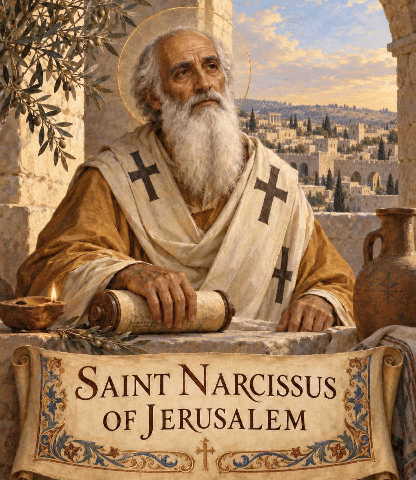
WHEN HUMAN RESOURCES RUN DRY
During the Easter Vigil, when the oil for the lamps was exhausted, St. Narcissus turned to God in prayer. His story reminds us to seek divine help when our strength, patience and hope seem insufficient.
“Trust in the LORD with all your heart, and do not rely on your own insight.”
— Proverbs 3:5
Like Narcissus, we must pray while doing what is practically possible, trusting that God can provide unexpected solutions and the grace to endure our difficulties.
THE LIGHT OF EASTER MUST BE GUARDED
The traditional account of St. Narcissus recalls the miraculous provision of oil for the lamps during the Easter Vigil, symbolising God’s providence and the enduring light of faith.
“I am the light of the world. Whoever follows me will never walk in darkness but will have the light of life.”
—John 8:12
Just as the lamps were kept burning, we must nurture our faith through prayer, the Eucharist, Scripture, reconciliation and charity, allowing Christ’s light to shine within us.
THE WOUND OF FALSE ACCUSATION
St. Narcissus endured false accusations that deeply wounded his reputation. Although he withdrew from his community, he did not allow this painful experience to destroy his relationship with God or his vocation to serve.
“Commit your way to the LORD; trust in him, and he will act.”
— Psalm 37:5
When falsely accused, we must seek truth and justice without surrendering to hatred or revenge. Like Narcissus, we can entrust our suffering to God while preserving our integrity and peace of heart.
THE FREEDOM OF NOT NEEDING TO WIN EVERY BATTLE
When faced with false accusations, St. Narcissus withdrew into solitude. His response reminds us that not every conflict requires an immediate answer, although injustice must sometimes be confronted courageously.
“The LORD will fight for you, and you have only to keep still.”
— Exodus 14:14
We must discern when to speak and when to remain silent, distinguishing the defence of truth from wounded pride. True spiritual freedom enables us to stand for what is right without becoming prisoners of endless arguments.
SOLITUDE AS A PLACE OF HEALING
St. Narcissus spent years away from his community before eventually returning to Jerusalem. His period of solitude reminds us that prayerful withdrawal can provide space for healing, reflection and renewed trust in God.
“Be still, and know that I am God!”
— Psalm 46:10
Solitude can restore our peace and strengthen our faith, but it should not become permanent isolation. Like Narcissus, we must remain open to returning to others with renewed love, wisdom and willingness to serve.
GOD’S JUSTICE AND THE MYSTERY OF WAITING
The traditional account of St. Narcissus describes how the truth eventually emerged after he had suffered false accusations. His story encourages us to trust God’s justice, even when vindication does not come immediately.
“He will bring forth your vindication as the light, and your right as the noonday.”
— Psalm 37:6
We must pursue truth through rightful means while surrendering outcomes to God. Waiting upon Him does not mean inaction but faithful perseverance without bitterness or revenge.
THE GRACE OF BEGINNING AGAIN
After years of absence, St. Narcissus returned to Jerusalem and resumed his pastoral service. His return demonstrates that painful experiences need not bring our vocation to an end.
“See, I am making all things new.”
— Revelation 21:5
Failures, disappointments and misunderstandings need not define our future. Through God’s grace, healing and reconciliation, we can begin again, allowing our past struggles to deepen our humility and compassion.
THE HUMILITY OF SHARING RESPONSIBILITY
In his later years, St. Narcissus served alongside Alexander of Cappadocia, who assisted him in the responsibilities of leadership. Their association illustrates the value of shared responsibility in God’s service.
“Bear one another’s burdens, and in this way you will fulfil the law of Christ.”
—Galatians 6:2
True leadership is not about controlling everything but enabling others to contribute their gifts. Like Narcissus, we must learn to accept assistance, share responsibilities and rejoice when God’s work continues through others.
HOLINESS IN THE WEAKNESS OF OLD AGE
St. Narcissus was remembered as having lived to an extraordinary age, continuing to be valued as a servant of God even in his later years. His life reminds us that age does not diminish a person’s spiritual worth.
“Even to your old age I am he, even when you turn grey I will carry you.”
—Isaiah 46:4
When physical strength declines, prayer, wisdom, encouragement and faithful presence remain precious gifts. Like Narcissus, the elderly can continue to inspire others and serve God through lives rooted in faith.
THE LAMP OF A LIFE WELL LIVED
The lamps in the Easter account of St. Narcissus symbolise the light that a faithful Christian brings into the world. His life reminds us that holiness is expressed through prayer, integrity, perseverance and loving service.
“Let your light shine before others, so that they may see your good works and give glory to your Father in heaven.”
—Matthew 5:16
Like a lamp that illuminates its surroundings, our lives should lead others towards Christ. We need not seek recognition; we must simply remain faithful, allowing God’s love to shine through our words and actions.
PRAYER THROUGH THE INTERCESSION OF ST. NARCISSUS OF JERUSALEM
O God, faithful Shepherd of Your people, You strengthened St. Narcissus through trials and sustained him in prayer and service.
Through his intercession, grant us confidence in Your providence when our resources run dry, courage when we are misunderstood, and wisdom when we encounter injustice.
Protect us from bitterness and revenge. Teach us to seek truth with integrity, find healing through prayer, and begin again after difficult seasons.
Strengthen all who lead Your people, comfort those wounded by false accusations, and bless the elderly whose quiet faith continues to inspire others.
May the light of Christ burn brightly in our hearts and shine through our words, decisions and acts of love.
We ask this through Christ our Lord. Amen.
St. Narcissus of Jerusalem, pray for us.