
SPIRITUAL INSIGHTS INTO THE LIFE OF SAINT CECILIA
November 22, 2026
FEAST OF SAINT CECILIA – 22nd NOVEMBER
November 22, 2026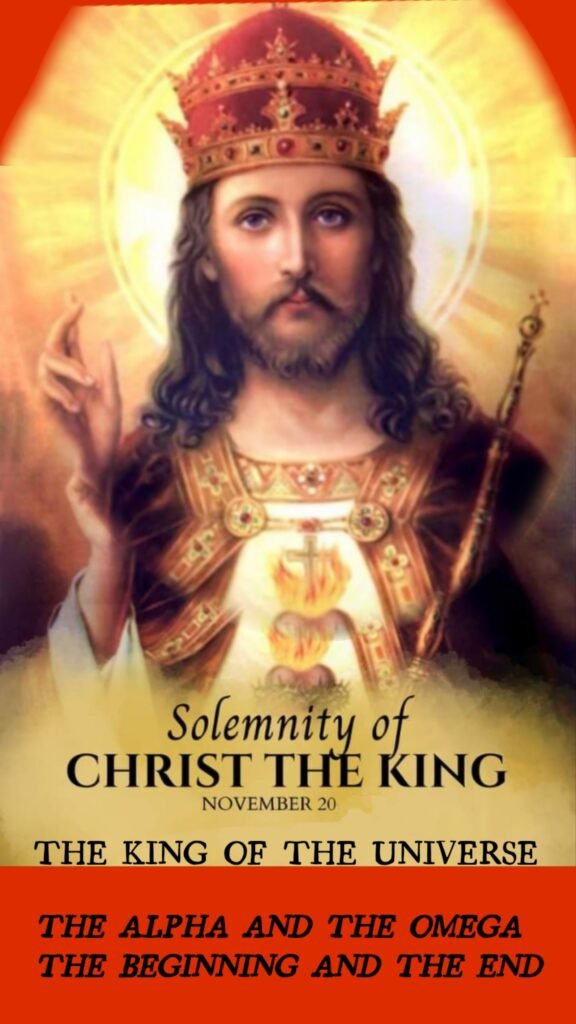
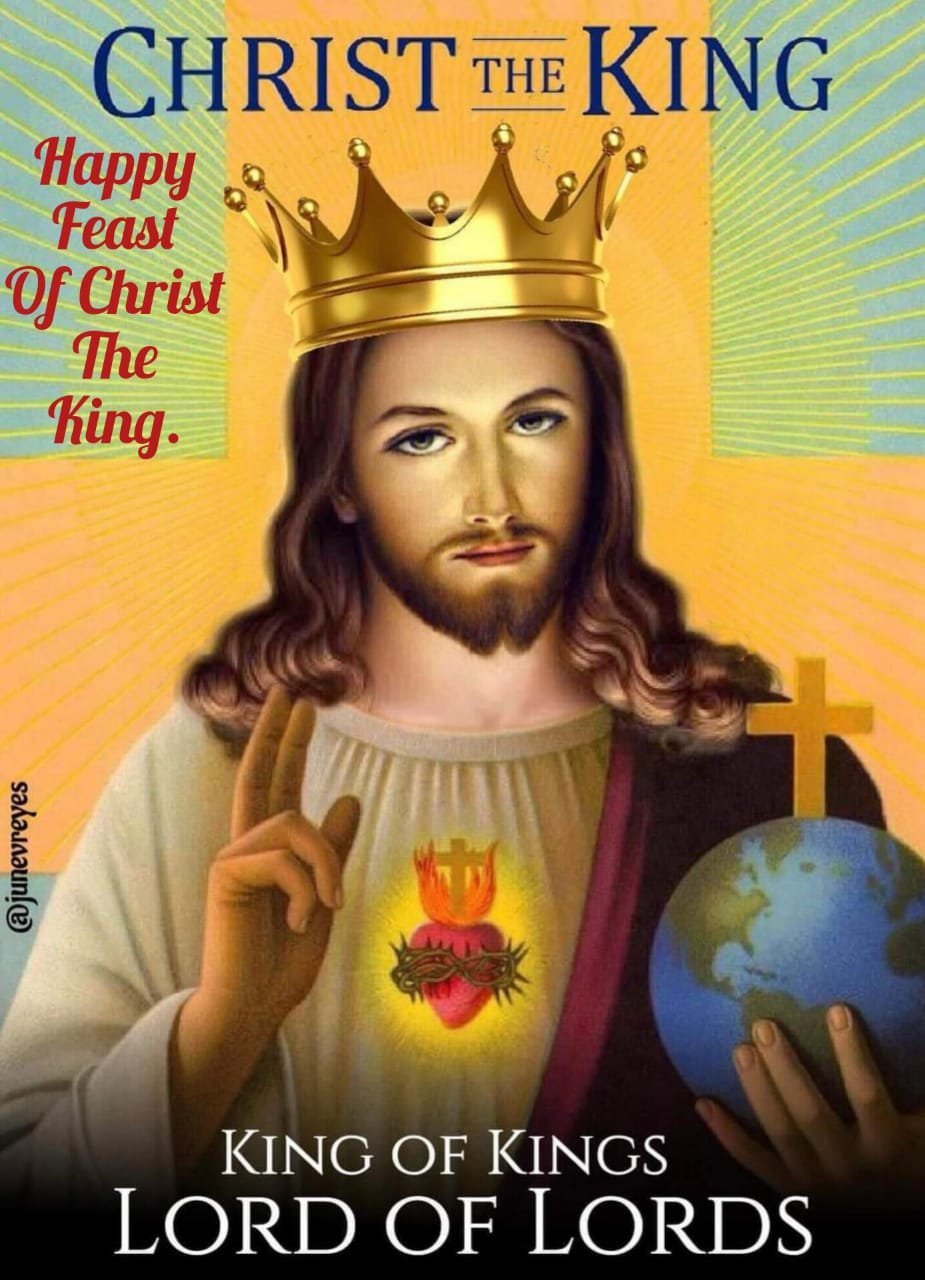
👑FEAST OF CHRIST THE KING 👑
THE SOLEMNITY OF LORD JESUS AS KING OF THE UNIVERSE.
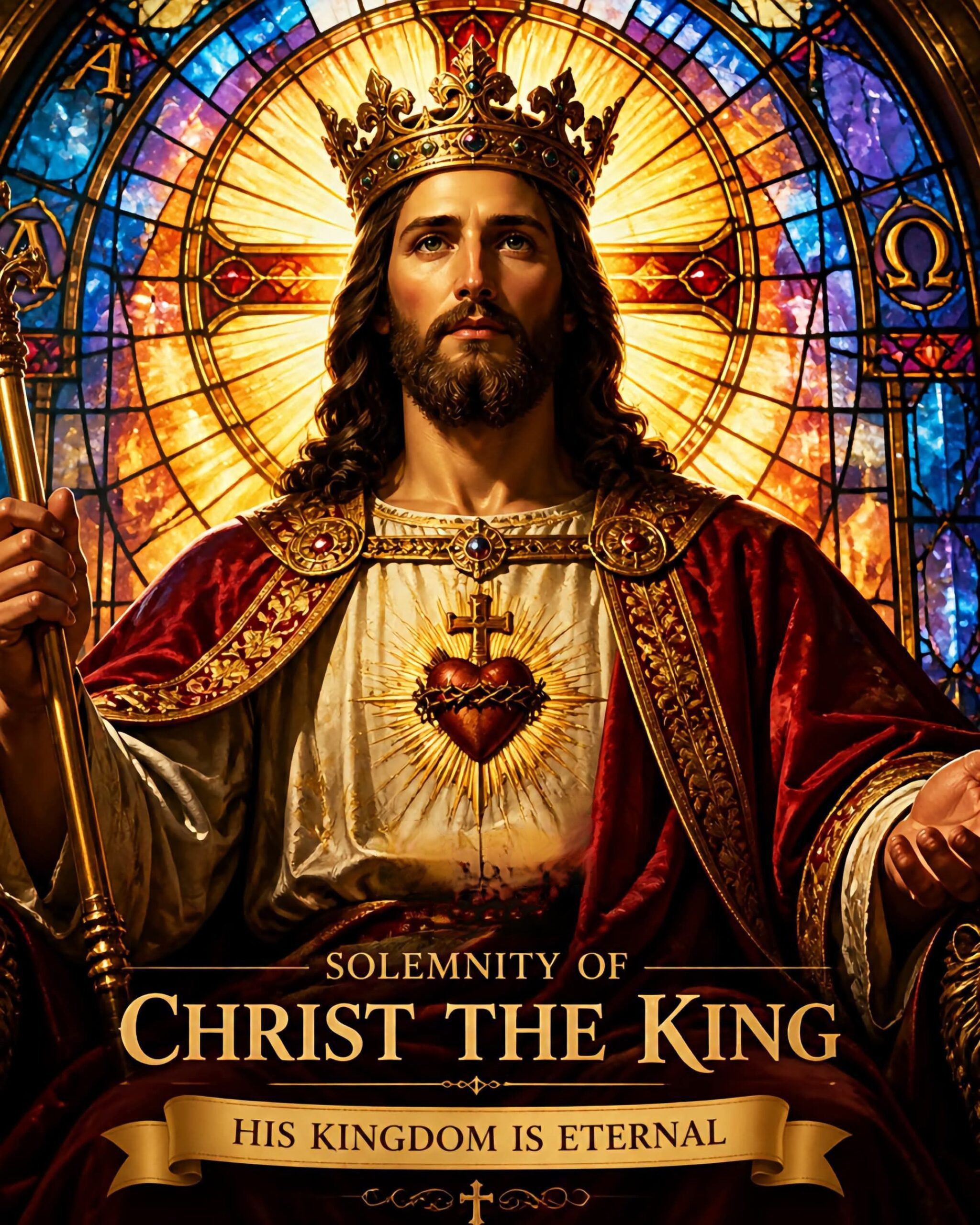
FROM CHRIST THE KING TO ADVENT: HOW THE CHURCH MOVES FROM THE END OF ONE LITURGICAL YEAR INTO ANOTHER!
The Catholic Church celebrates Christ the King on the final Sunday of the liturgical year and then begins a completely new liturgical year with the First Sunday of Advent.
It is not just a change of dates on the Church calendar. There is a beautiful spiritual meaning behind this transition. The Church concludes one liturgical year by proclaiming Jesus Christ as the King of the Universe, and immediately begins another by preparing our hearts for His coming.
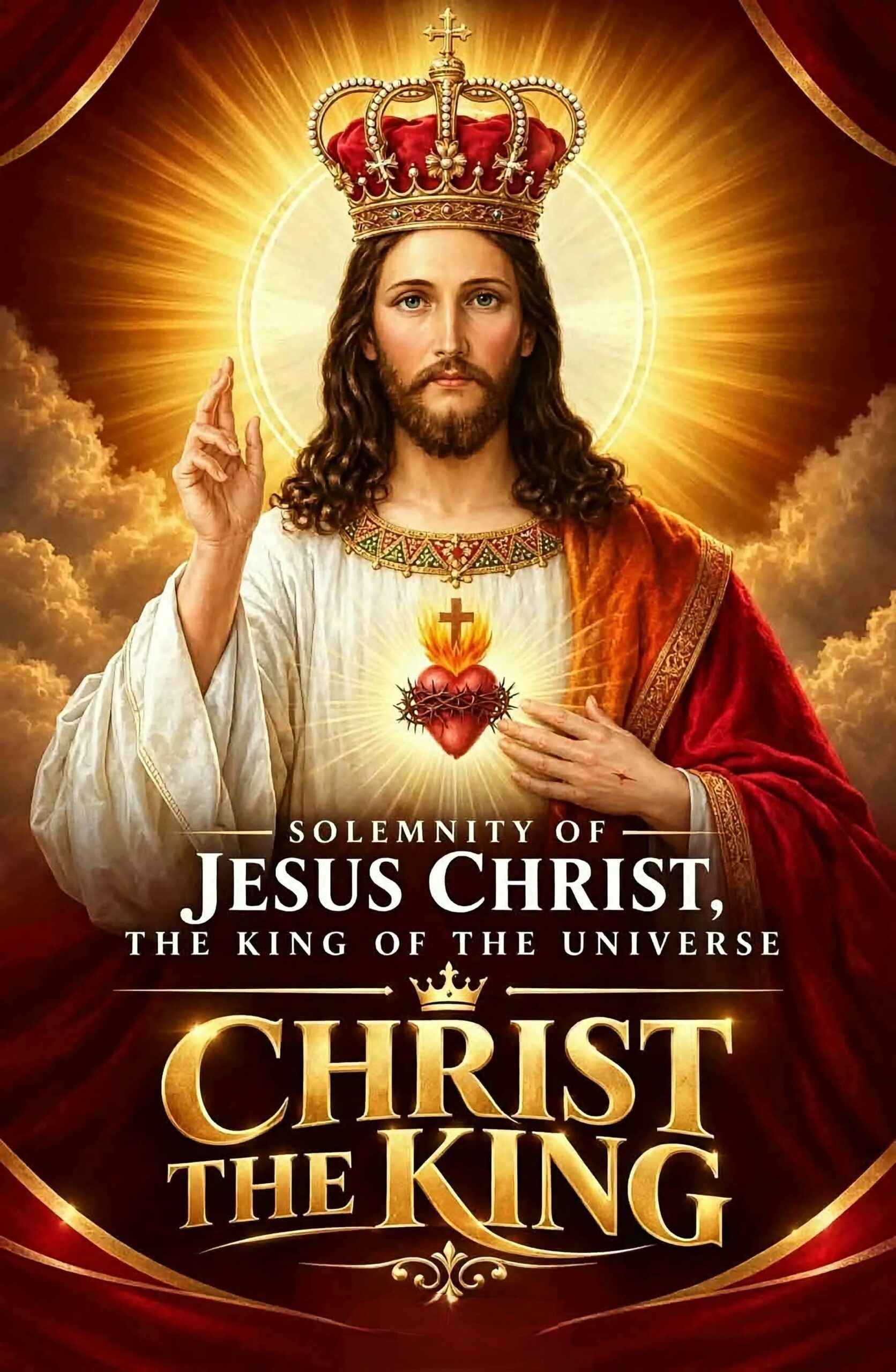
This movement reminds us that our Christian journey is centred on Jesus Christ: the One who came into the world, the One who comes to us every day through grace, and the One who will come again in glory.
But how exactly does this transition happen?
Here are five important things every Catholic should understand.
CHRIST THE KING SUNDAY BRINGS THE LITURGICAL YEAR TO A CLOSE.
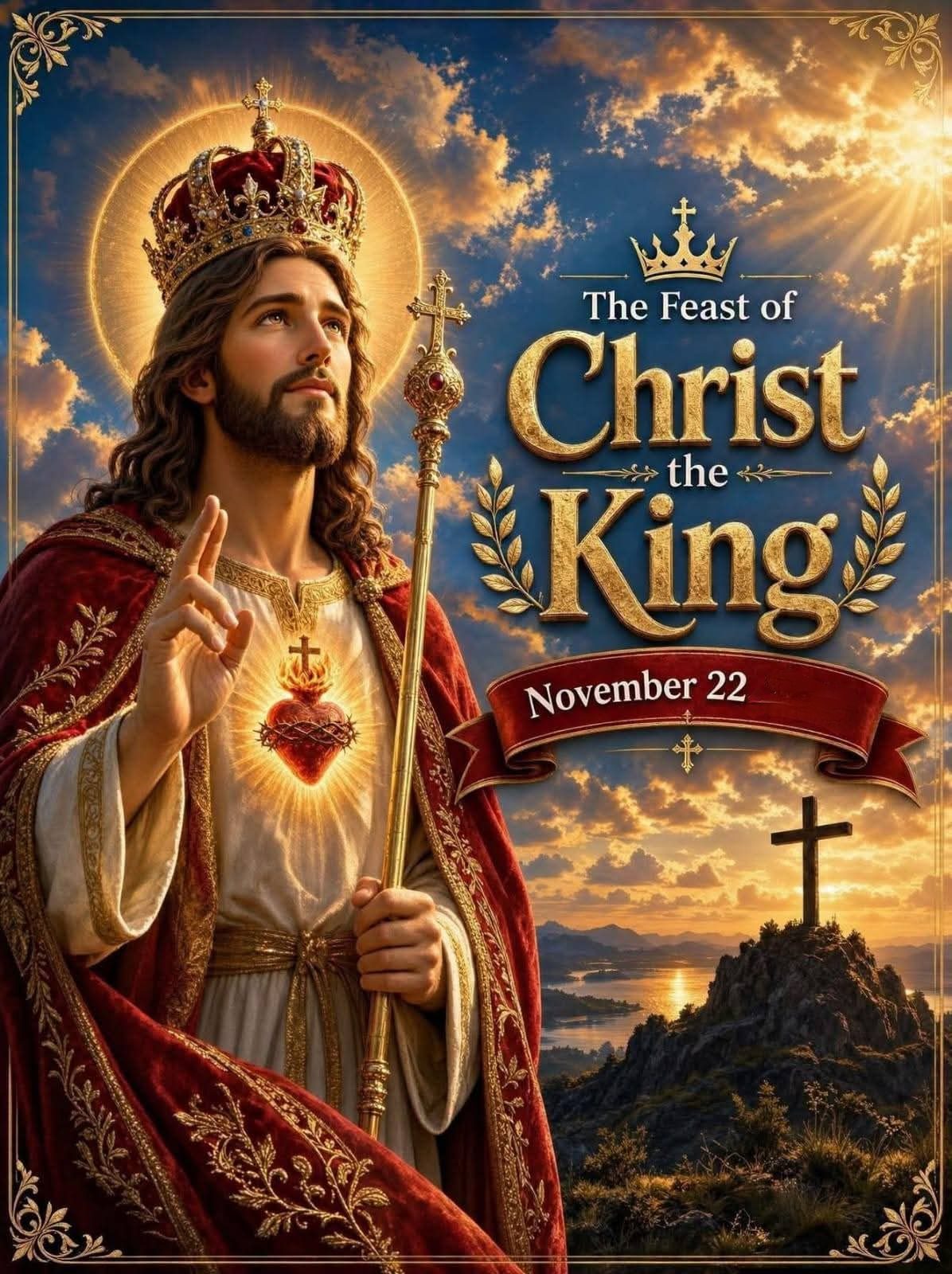
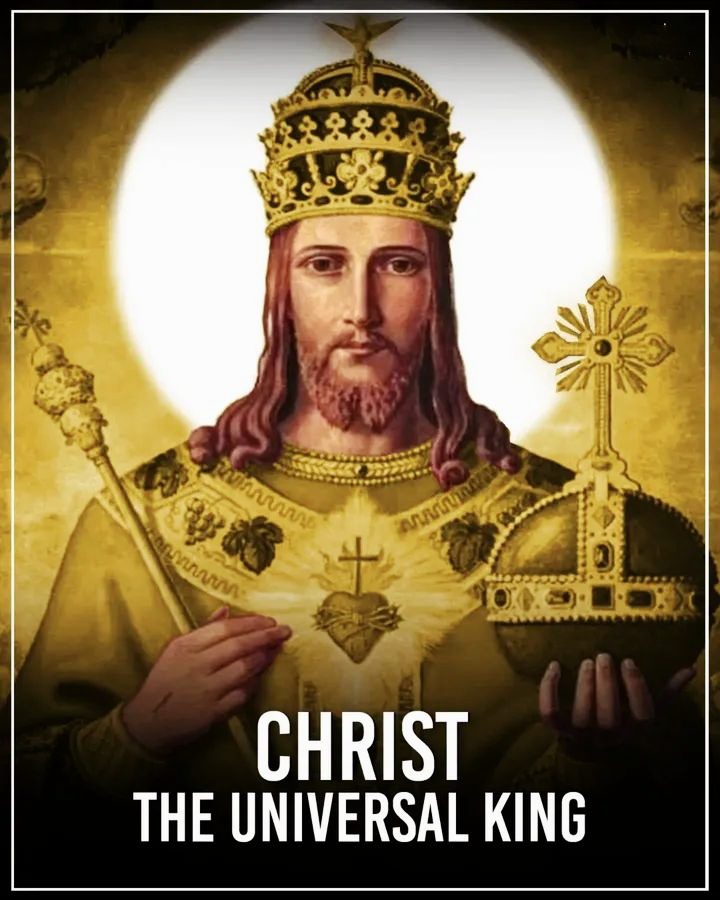
The Solemnity of Our Lord Jesus Christ, King of the Universe, commonly called Christ the King Sunday, is celebrated on the final Sunday of the liturgical year.
On this day, the Church proclaims Jesus Christ as the King of all creation, the Lord of history and the One whose kingdom will never end.
The celebration reminds us that earthly kingdoms, governments, wealth and human achievements are temporary, but the reign of Christ is eternal.
It also calls us to examine our lives and ask ourselves an important question: Does Jesus truly reign in our hearts, families, decisions and daily activities?
In 2026, Christ the King Sunday falls on November 22.
THE FIRST SUNDAY OF ADVENT BEGINS A NEW LITURGICAL YEAR.
Immediately after the final Sunday of the liturgical year, the Church prepares to begin another cycle with the First Sunday of Advent.
Advent is the season of preparation for the celebration of the Nativity of Jesus Christ at Christmas. It is also a time when Catholics reflect on Christ’s promised return at the end of time.
The word Advent comes from the Latin word adventus, meaning “coming” or “arrival.”
Unlike the ordinary calendar year, which begins on January 1, the Catholic liturgical year begins with the First Sunday of Advent.
This means that the new liturgical year begins just one week after Christ the King Sunday.
THE CHURCH MOVES FROM CELEBRATING CHRIST’S KINGSHIP TO PREPARING FOR HIS COMING.
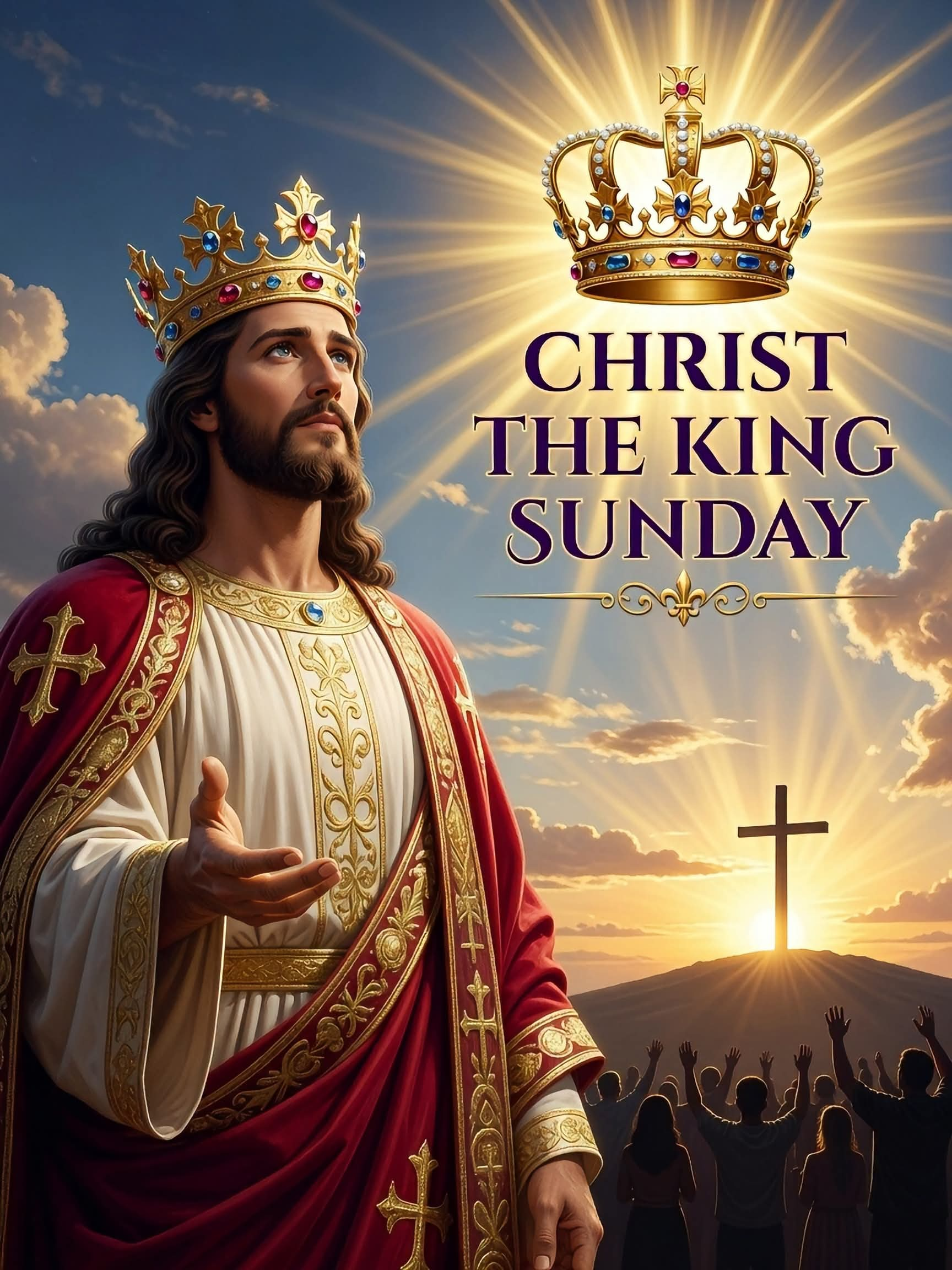
There is a beautiful connection between these two celebrations.
On Christ the King Sunday, we celebrate Jesus as the eternal King who will come again in glory to judge the living and the dead.
Then, when Advent begins, the Church invites us to prepare for the coming of that same King.
Advent has a twofold character. First, it prepares us to celebrate the first coming of Jesus Christ in humility at Bethlehem. Secondly, it directs our hearts towards His second coming in glory at the end of time.
This is why Advent is not simply a countdown to Christmas. It is also a season of spiritual preparation, expectation, repentance and hope.
THE LITURGICAL COLOURS AND SCRIPTURE READINGS CHANGE AS ADVENT BEGINS.
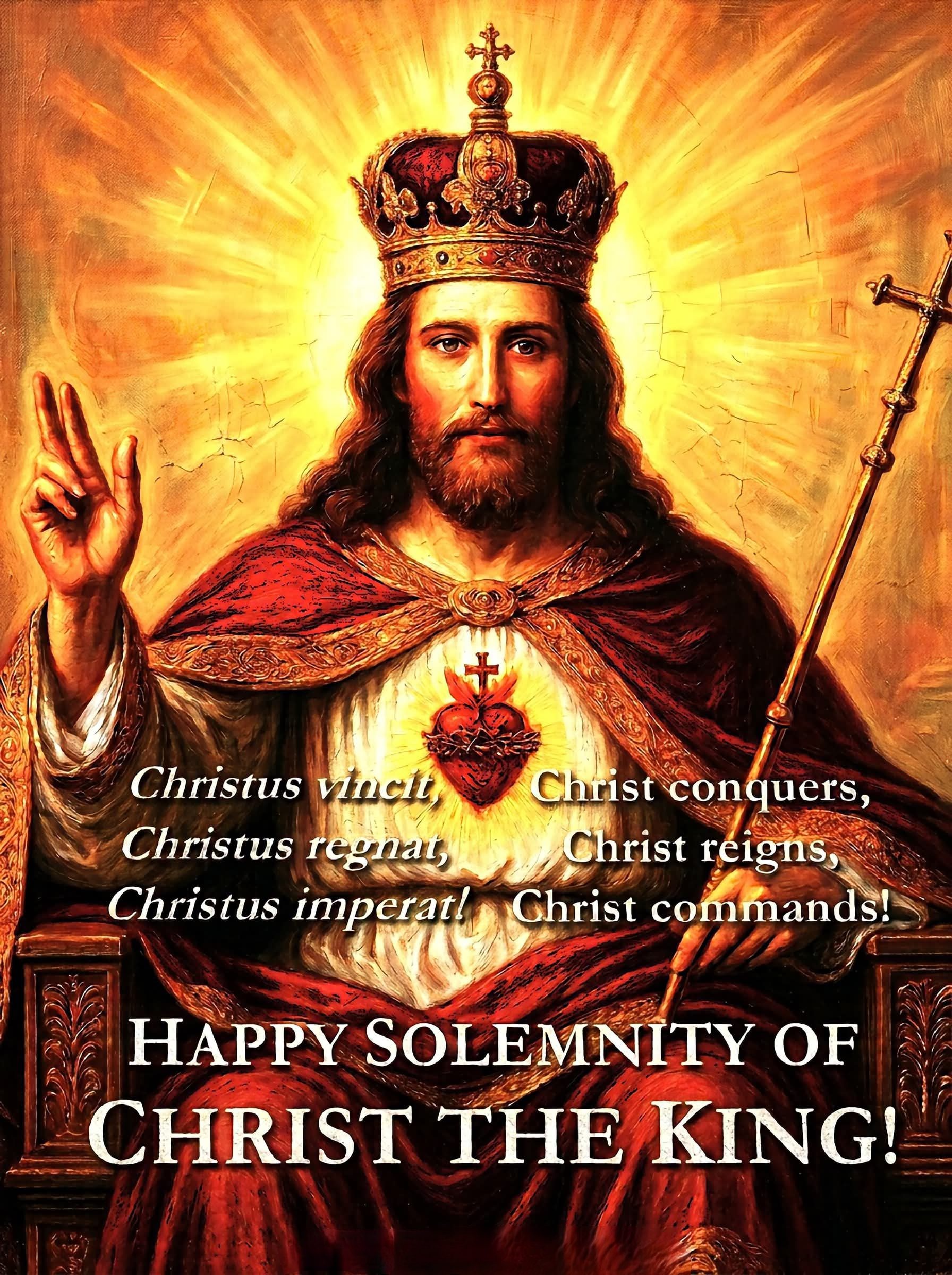
Another visible sign of the transition is the change in liturgical colour.
During Christ the King Sunday, the priest wears white or gold vestments, reflecting the solemnity and glory of Christ’s kingship.
When Advent begins, the liturgical colour changes to violet, which expresses a spirit of preparation, repentance and expectation.
On the Third Sunday of Advent, known as Gaudete Sunday, rose vestments may be worn as a sign of rejoicing because the celebration of the Lord’s coming is drawing near.
The Scripture readings also take on a different emphasis. During Advent, the Church presents passages about the prophets, John the Baptist, the Blessed Virgin Mary and the coming of the Messiah.
These readings help us prepare spiritually for Christmas and remind us to remain watchful for Christ’s return.
THE CHURCH ALSO BEGINS A NEW CYCLE OF SUNDAY BIBLE READINGS.
Did you know that the Catholic Church follows a three-year cycle of Sunday Scripture readings?
These cycles are traditionally identified as Year A, Year B and Year C.
Each year gives special attention to one of the Synoptic Gospels: Matthew, Mark and Luke, respectively, while the Gospel of John is also used at particular celebrations and seasons.
When a new liturgical year begins on the First Sunday of Advent, the Sunday reading cycle changes.
For example, the liturgical year that ends with Christ the King Sunday on November 22, follows Year A. The new liturgical year beginning on November 29, starts Year B.
This means Catholics around the world will begin a new cycle of Sunday readings, allowing the faithful to encounter different parts of the life and teachings of Jesus Christ throughout the Church’s liturgical calendar.
In simple words, Christ the King Sunday brings the Catholic liturgical year to its conclusion by celebrating Jesus Christ as the King of the Universe.
The First Sunday of Advent begins a new liturgical year by preparing us to celebrate the birth of Jesus at Christmas and reminding us to await His glorious return.
So, the Church moves from proclaiming Christ as King to preparing our hearts for His coming. It is not merely the end of one calendar and the beginning of another; it is a continuous journey of faith centred on Jesus Christ.
One fascinating thing is that the Church does not begin its liturgical year with Christmas Day. Instead, it begins with Advent, a season that looks both backwards to the first coming of Christ in Bethlehem and forwards to His second coming at the end of time. This means that every new liturgical year begins with a reminder that we are still waiting for the complete fulfilment of God’s promises.
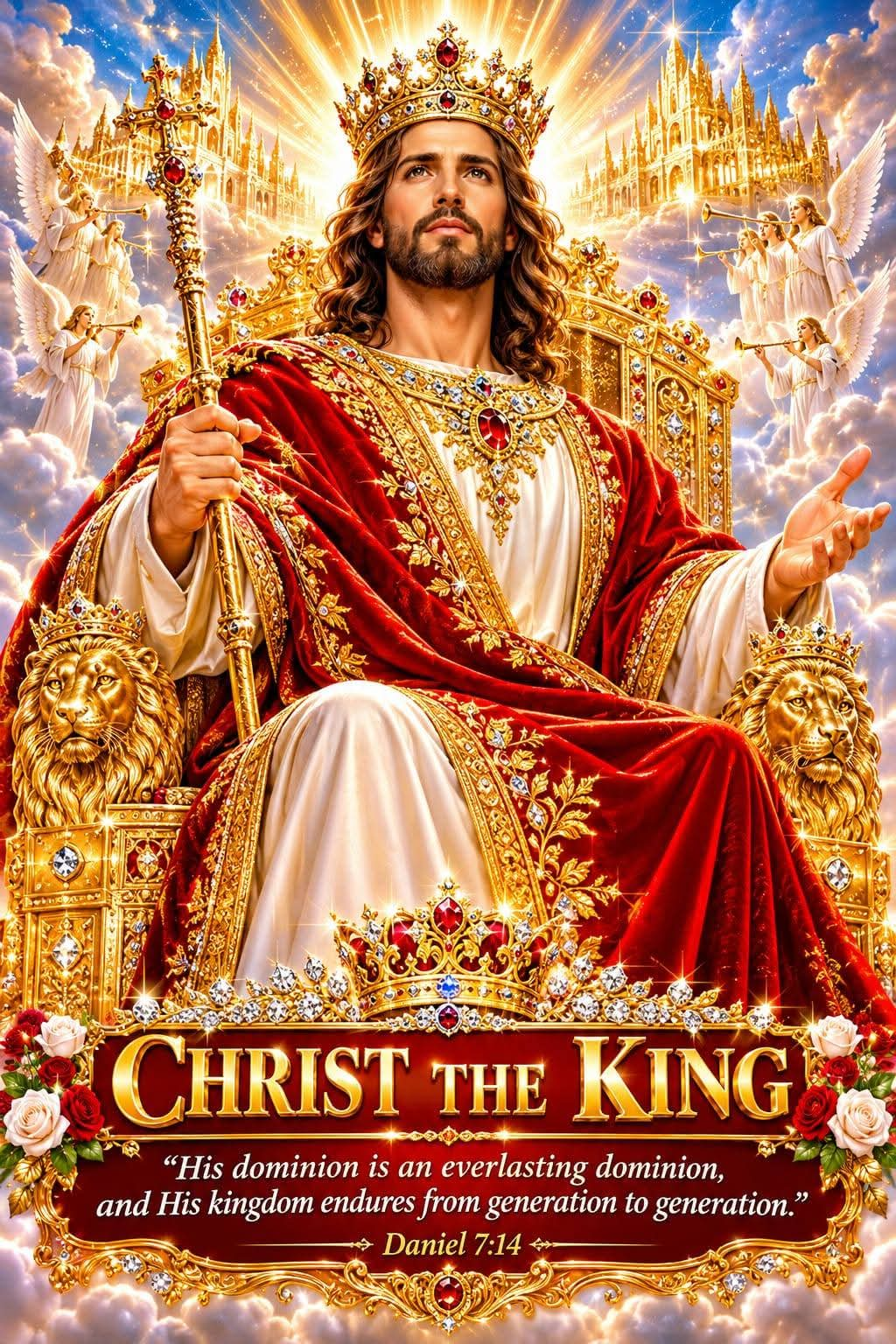
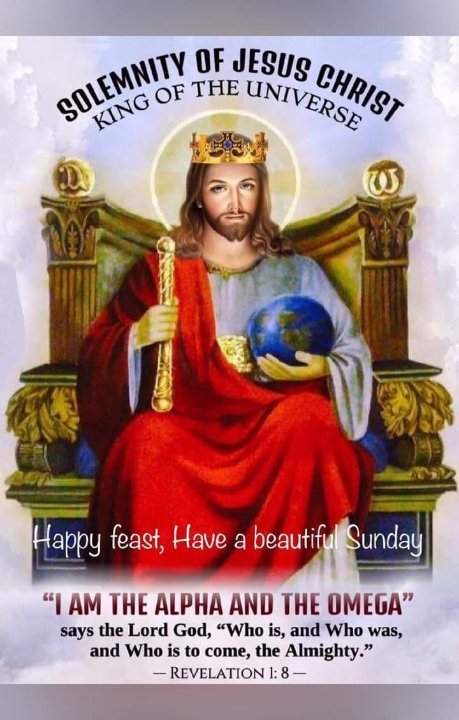
They will wage war against the Lamb, but the Lamb will triumph over them because he is Lord of lords and King of kings, and with him will be his called, chosen and faithful followers. Revelation 17:14
(The Solemnity of Our Lord Jesus Christ, King of the Universe, commonly referred to as the Feast of Christ the King or Christ the King Sunday, is a relatively recent addition to the Western liturgical calendar, having been instituted in 1925 by Pope Pius XI for the Roman Rite of the Catholic Church.)
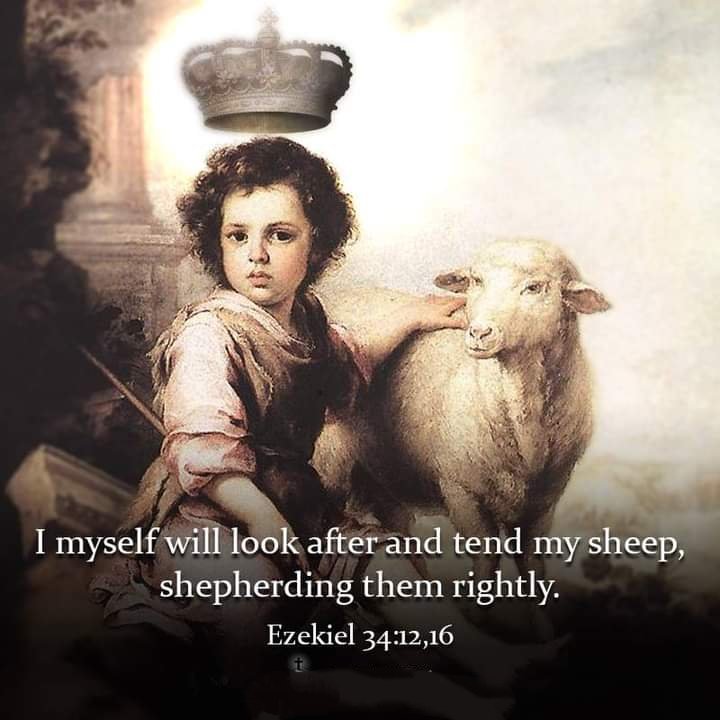
Jesus Christ, our Messiah, you have dominion over all creatures,. You are the word of God made incarnate, consubstantial with the Father, having all things in common with him, and therefore having necessarily supreme and absolute dominion over all things created.
Through acquired and natural right, all heavenly and earthly creatures are subject to you, proclaiming you as Lord and Master, for you are our redeemer. We belong to you, Jesus, for you have sovereignty, bestowed by God upon you, and all the nations of the world are your special possession and dominion.
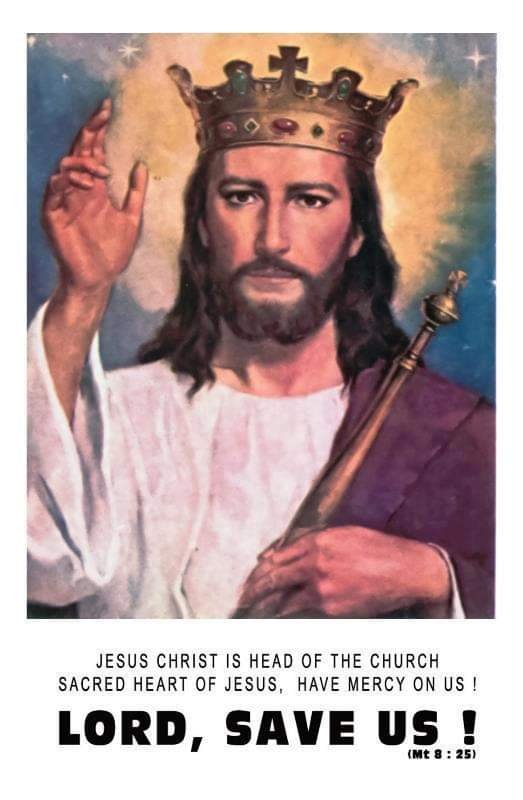
The Feast of Christ the King points to the end of time when you will come in the fullness of your glory, iridescent, and riding a brilliant white steed, and your kingdom will be established in all its fullness to the ends of the earth. The commemoration of your victorious entry into Jerusalem, astride a donkey, joyously witnessed by a crowd celebrating a prophecy come true, leads us into Advent, when the Church anticipates your second coming.
Christ our Lord, to you is given all power in heaven and on earth. All men, purchased by your precious blood, are by a new right subjected to your dominion. Your power embraces all men, exempting none, and we surrender all our faculties to you.
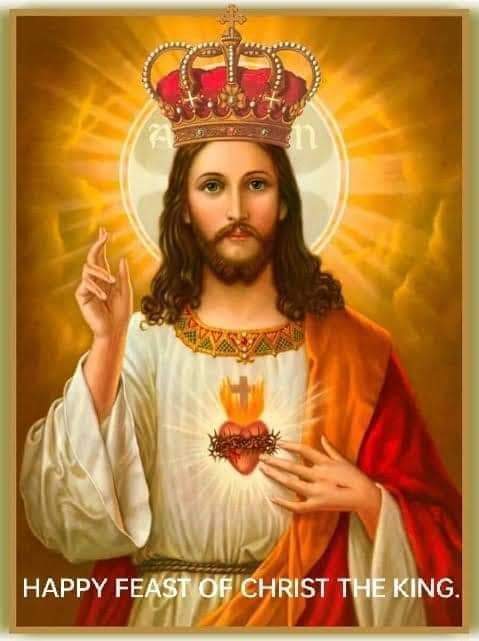
Reign in our minds, which should assent with perfect submission and firm belief to revealed truths and to your doctrines. Reign in our wills, which should obey the laws and precepts of God. Reign in our hearts, which should spurn natural desires and love God above all things, and cleave to him alone. Reign in our bodies and in our members, which should serve as instruments for the interior sanctification of our souls, as instruments of justice unto God.
You are king over the universe and our hearts, true God and true man, sinless and all-perfect. As God’s beloved Son, you possess direct and immediate access to God. As the image of the invisible God, you are the embodiment of Divine Sovereignty. As the firstborn of creation, you are the promise of all good things to follow. As risen Lord, you are the Head of the church and the promise of our own resurrection. In you, Jesus, all things hold together and we hail you, as our majesty, forevermore. Amen