
SPIRITUAL INSIGHTS INTO THE LIFE OF ST. EDWARD THE CONFESSOR
October 13, 2026
Psalm 46:10
October 14, 2026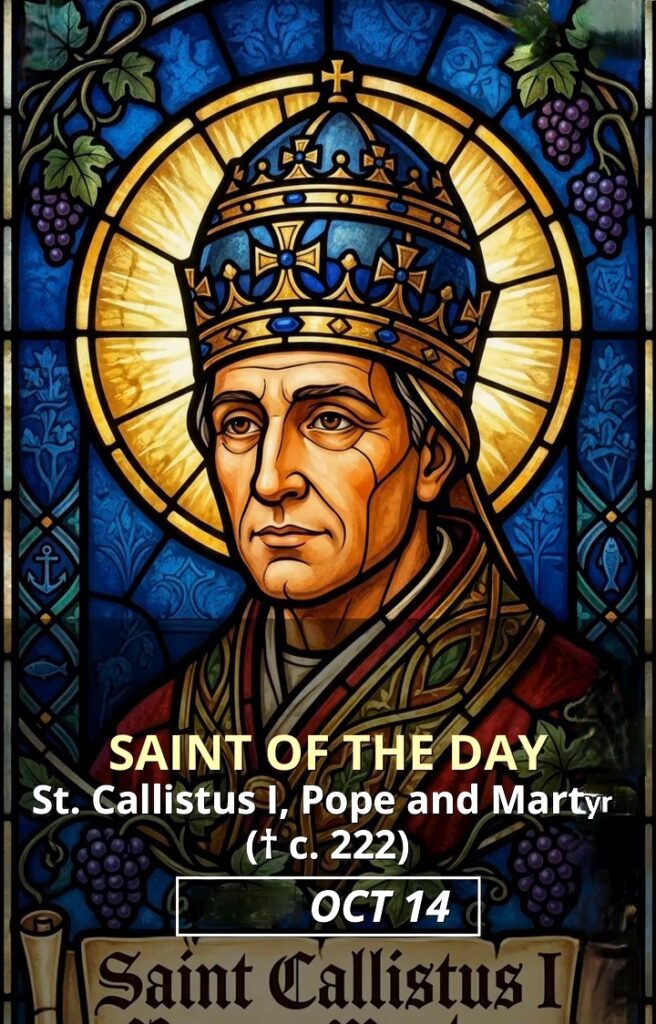
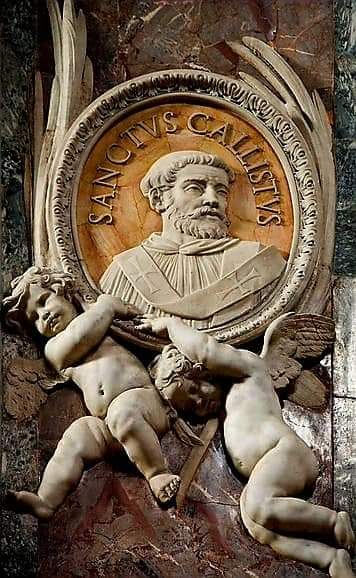 SAINT CALLISTUS I – FEAST DAY – 14th OCTOBER
Pope Callixtus, also called Callistus I, was the bishop of Rome from c. 218 to his death c. 222 or 223. In 217, Callixtus followed Zephyrinus as Bishop of Rome.
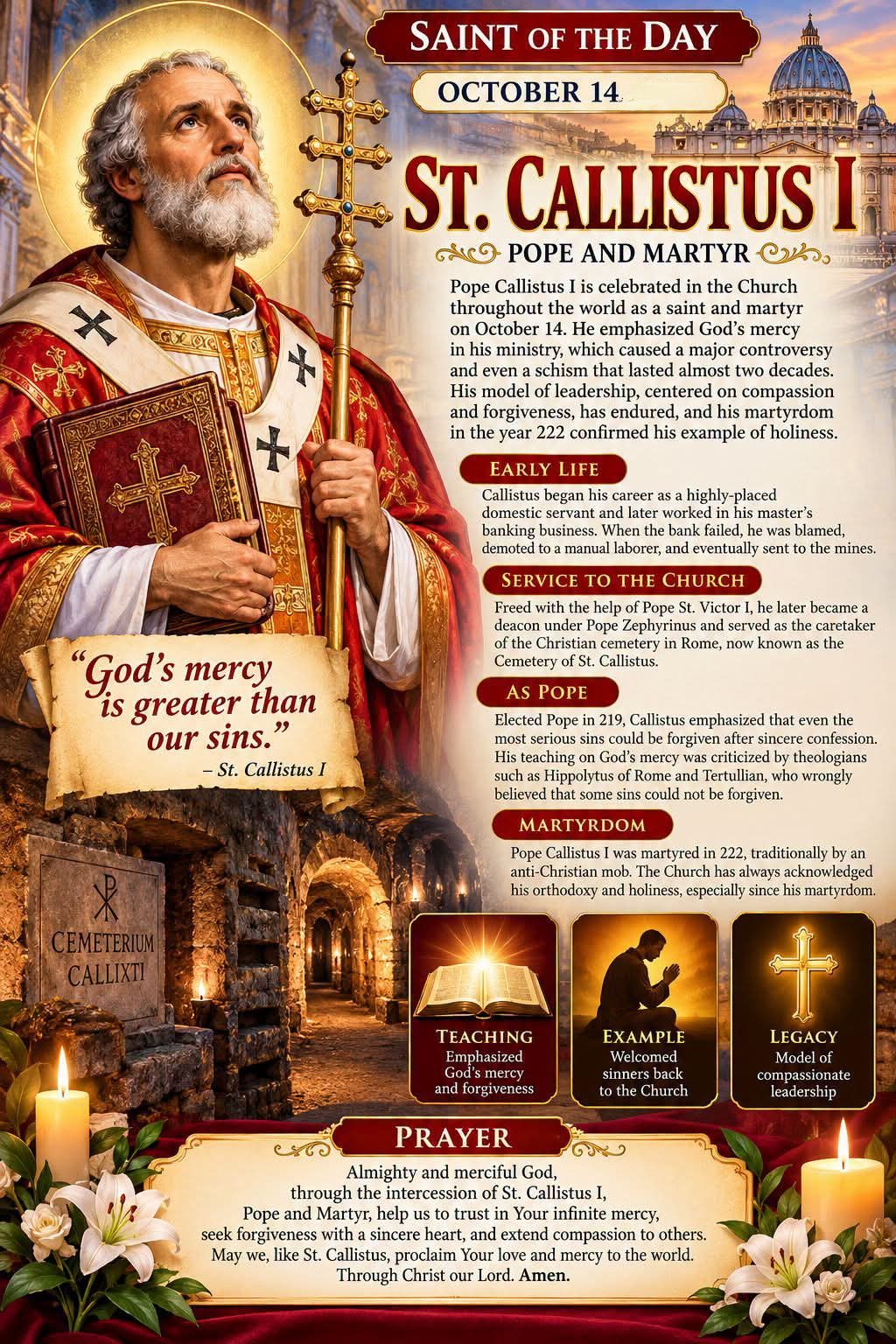
Pope Callistus I is celebrated in churches throughout the world as a saint and martyr on October 14. The saint caused a major controversy, including a schism that lasted almost two decades, by choosing to emphasize God’s mercy in his ministry. However, the early Pope’s model of leadership has endured, and his martyrdom in the year 222 confirmed his example of holiness.
Because no completely trustworthy biography of Pope Callistus I exists, historians have been forced to rely on an account by his contemporary Hippolytus of Rome. Although Hippolytus himself was eventually reconciled to the Church and canonized as a martyr, he vocally opposed the pontificate of Callistus and three of his successors, to the point of usurping papal prerogatives for himself (as the first “antipope”). Nevertheless, his account of Callistus’ life and papacy provides important details.
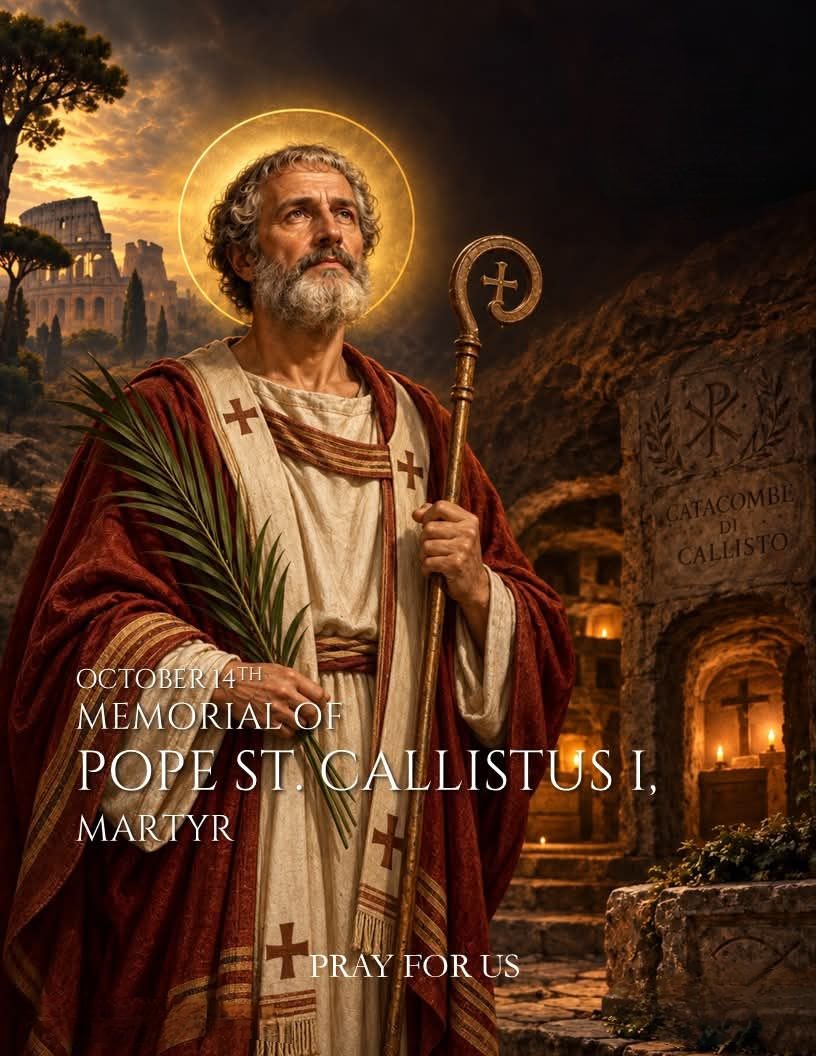
Callistus began his career as a highly placed domestic servant, eventually taking responsibility for his master’s banking business. When the bank failed, Callistus received the blame, and attempted to flee from his master. Being discovered, he was demoted to serve as a manual laborer in Rome. Thus, under inauspicious circumstances, Callistus came as a slave to the city where he would later serve as Pope.
During the reign of Pope Zephyrinus, Callistus became a deacon and the caretaker of a major Roman Christian cemetery (which still bears his name as the “Cemetery of St. Callistus”), in addition to advising the Pope on theological controversies of the day. He was a natural candidate to follow Zephyrinus, when the latter died in 219.
Hippolytus, an erudite Roman theologian, accused Pope Callistus of sympathizing with heretics, and resented the new Pope’s clarification that even the most serious sins could be absolved after sincere confession. The Pope’s assertion of divine mercy also scandalized the North African Christian polemicist Tertullian, already in schism from the Church in Carthage, who also erroneously held that certain sins were too serious to be forgiven through confession.
Callistus could not persuade Hippolytus’ followers of his rightful authority as Pope during his own lifetime. The Catholic Church, however, has always acknowledged the orthodoxy and holiness of Pope St. Callistus I, particularly since the time of his martyrdom – traditionally ascribed to an anti-Christian mob – in 222. He is the patron saint of cemeteries.
CONTEMPLATING THE LIFE OF SAINT CALLISTUS, POPE AND MARTYR
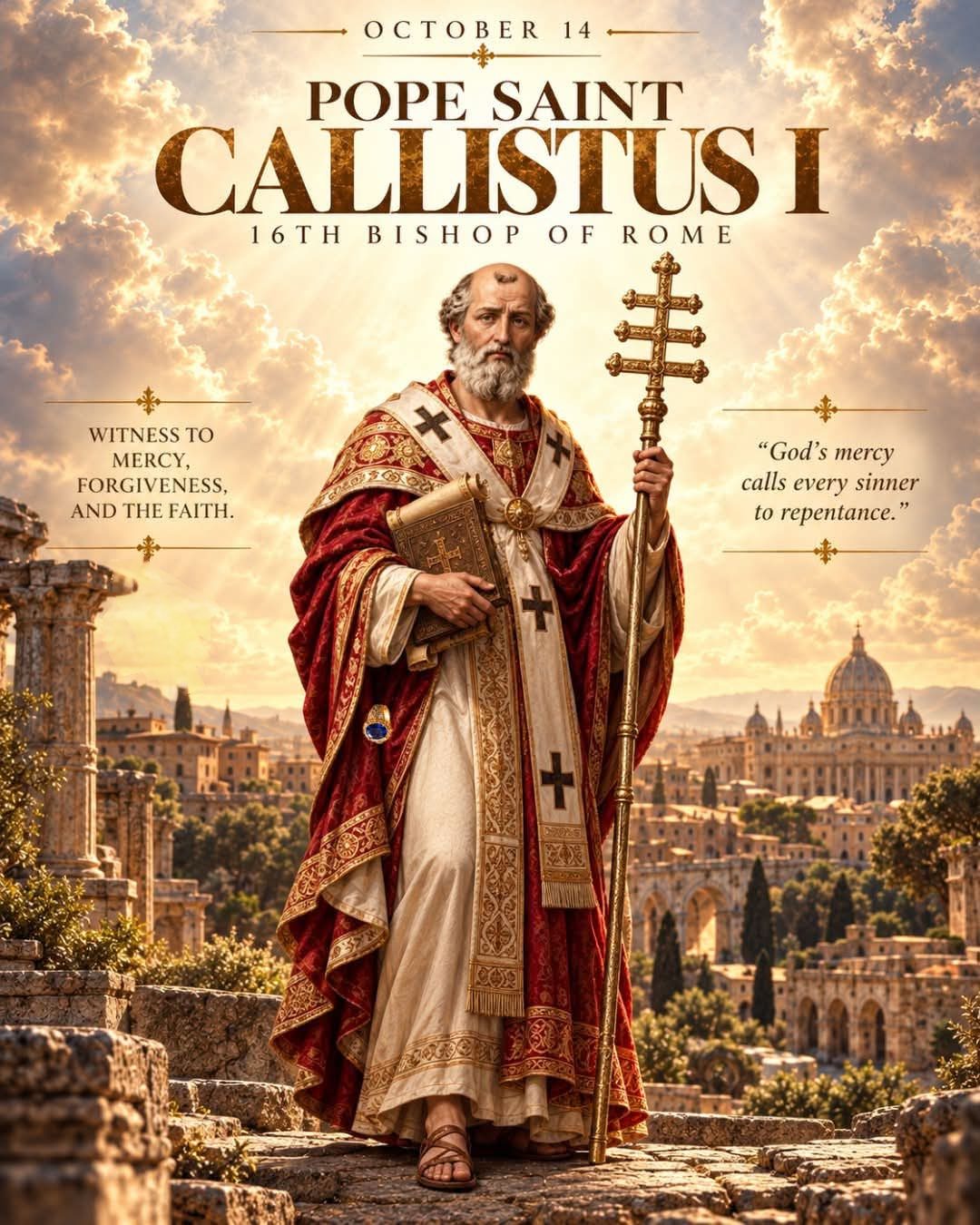
THE SLAVE WHO UNLOCKED HEAVEN
In the bustling heart of imperial Rome, where magnificent palaces stood beside the poverty of the forgotten, a young slave named Callistus began a remarkable journey. No one could have imagined that this humble servant would one day ascend to the papal throne and receive the crown of martyrdom.
THE TRUSTED SLAVE
Callistus served in the household of Carpophorus, a wealthy Roman Christian who recognised the young man’s intelligence and entrusted him with an important responsibility. He placed in Callistus’s care the funds belonging to Christian widows and merchants, money intended to support the faithful and assist those in need.
For a slave, such trust was extraordinary, but the responsibility proved overwhelming. Lacking experience in financial matters, Callistus made unwise loans, and when his ventures failed, the money was lost.
The Christian community was distressed, and Carpophorus demanded repayment. Overcome by fear and shame, Callistus fled Rome, hoping to recover the money or escape the consequences of his failure.
However, he was soon captured, beaten and imprisoned. His fellow Christians regarded him as a thief, and the financial disaster brought disgrace upon his name. His life seemed shattered, and his future appeared hopeless.
THE MINES OF SARDINIA
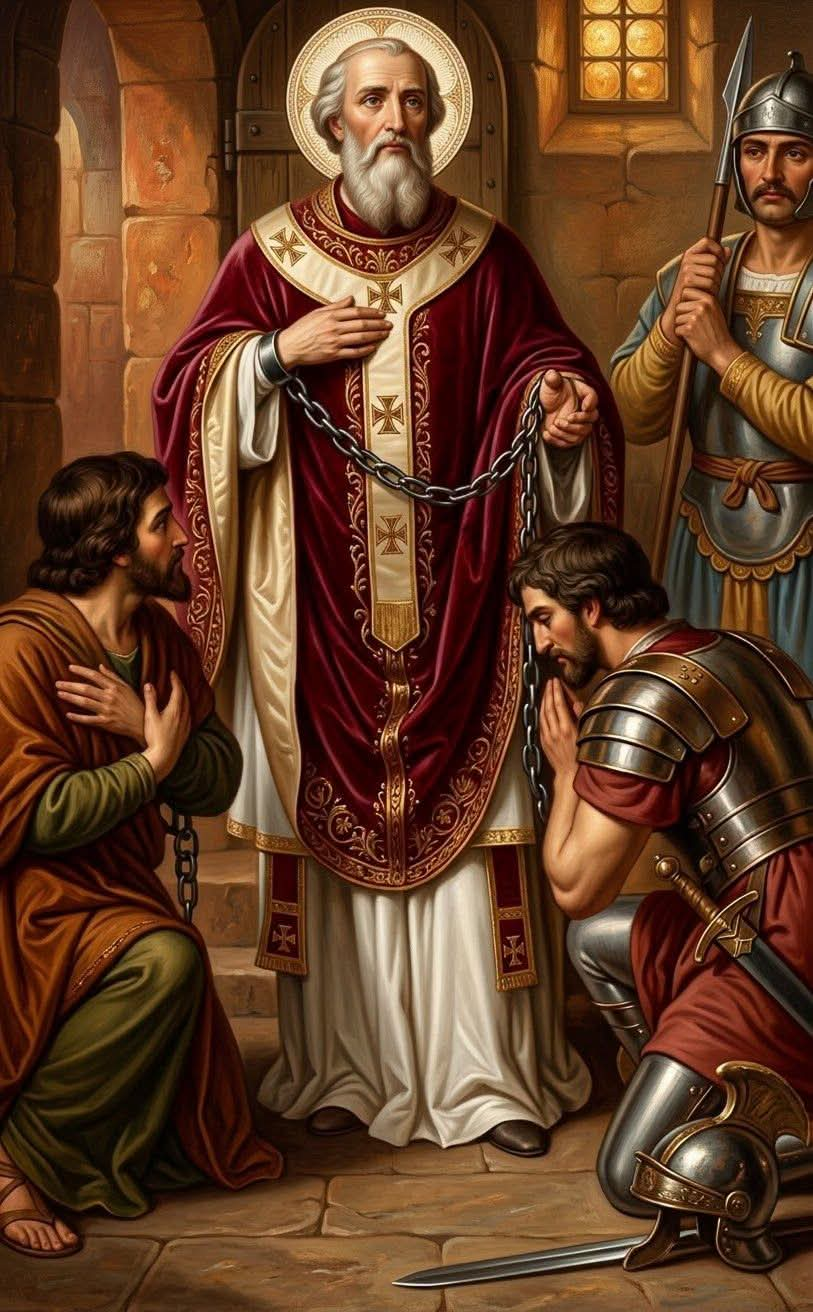
Callistus was condemned to labour in the mines of Sardinia, a punishment notorious for its cruelty. Surrounded by suffering, exhaustion and death, he experienced the depths of human misery. Stripped of his freedom, reputation and dignity, he had little left to depend upon except God.
In that desolate place, his suffering became an opportunity for spiritual transformation. The man who had lost everything gradually learned humility and discovered that God’s grace could reach him even in the darkest circumstances.
Providence intervened through Marcia, a Christian woman associated with Emperor Commodus, who sought the release of imprisoned Christians. Although Callistus’s name was not included on the list of prisoners to be freed, the governor, seeing his desperate condition, released him out of compassion.
A condemned man walked free, not because he had earned his freedom, but because mercy had been shown to him. This experience became a defining lesson in his life. He came to understand that mercy is not a reward for perfection but a gift of grace.
THE KEEPER OF THE TOMBS
Callistus returned to Rome a changed man. Pope Zephyrinus recognised his potential, ordained him a deacon and entrusted him with the care of the Christian burial grounds along the Appian Way.
In the quiet passages of the catacombs, Callistus cared for the resting places of martyrs and bishops. He organised burials, comforted grieving families and preserved the memory of Christians who had died for their faith.
The man once disgraced by his fellow Christians now served the departed with devotion and reverence. His past no longer defined his purpose; instead, he dedicated himself to serving God and His people.
The burial grounds entrusted to him became known as the Catacombs of Saint Callistus, one of the most important early Christian cemeteries in Rome. These sacred passages preserved the memory of the faithful and bore witness to the hope of eternal life. Among the tombs, Callistus encountered the enduring truth that light can emerge from darkness and hope can rise from suffering.
THE POPE OF MERCY
After the death of Pope Zephyrinus, Callistus was elected Bishop of Rome. His election surprised some who remembered his troubled past. Yet his journey demonstrated that God could transform human weakness into an instrument of grace.
As pope, Callistus became known for his compassionate approach towards repentant sinners. He believed that those who sincerely sought forgiveness should not be permanently excluded from the Church. He emphasised God’s mercy and the Church’s responsibility to reflect the compassion of Christ.
His pastoral approach provoked strong opposition, particularly from Hippolytus, a theologian who disagreed with his decisions regarding the reconciliation of sinners. Hippolytus accused him of being too lenient, especially towards those who had committed serious sins.
Callistus, however, upheld the conviction that the Church must offer the possibility of repentance and reconciliation. He understood that Christ had come not to abandon sinners but to call them to conversion and new life.
The disagreement deepened, and Hippolytus became a rival claimant to the papacy, making him the first antipope in Church history. Despite these divisions, the story of their later reconciliation remains an important reminder of the power of forgiveness. Both men are honoured as martyrs in the Church’s tradition.
THE MARTYR OF THE WELL
During the reign of Emperor Alexander Severus, Christians continued to face hostility despite the absence of a general imperial persecution. In Rome’s Trastevere district, tensions between Christians and pagan groups sometimes erupted into violence.
According to tradition, a disturbance broke out near a Christian place of worship associated with Callistus. The elderly pope was attacked by an angry mob, beaten and thrown into a well, where he died.
The shepherd who had spent his life proclaiming mercy met a violent end at the hands of those who showed him none. Yet his death became a final testimony to his faith and perseverance.
His body was recovered by fellow Christians and buried in the Cemetery of Calepodius along the Aurelian Way, rather than in the catacombs associated with his ministry. His burial reflected the humility that had marked his journey from slavery to the papacy.
THE ETERNAL LESSON OF MERCY
The life of Saint Callistus reveals the transforming power of God’s grace. A slave became a servant of the Church, a disgraced man became a shepherd of souls, and one who had experienced rejection became a champion of forgiveness.
His journey reminds us that failure need not determine our destiny. When we acknowledge our mistakes, accept God’s mercy and allow His grace to transform us, even our painful experiences can become instruments of spiritual growth.
Callistus believed that the Church must be a place where repentant sinners can find forgiveness, healing and renewed hope. His life challenges us to look beyond the failures of others and recognise their capacity for conversion and change.
THE LEGACY OF A MERCIFUL SHEPHERD
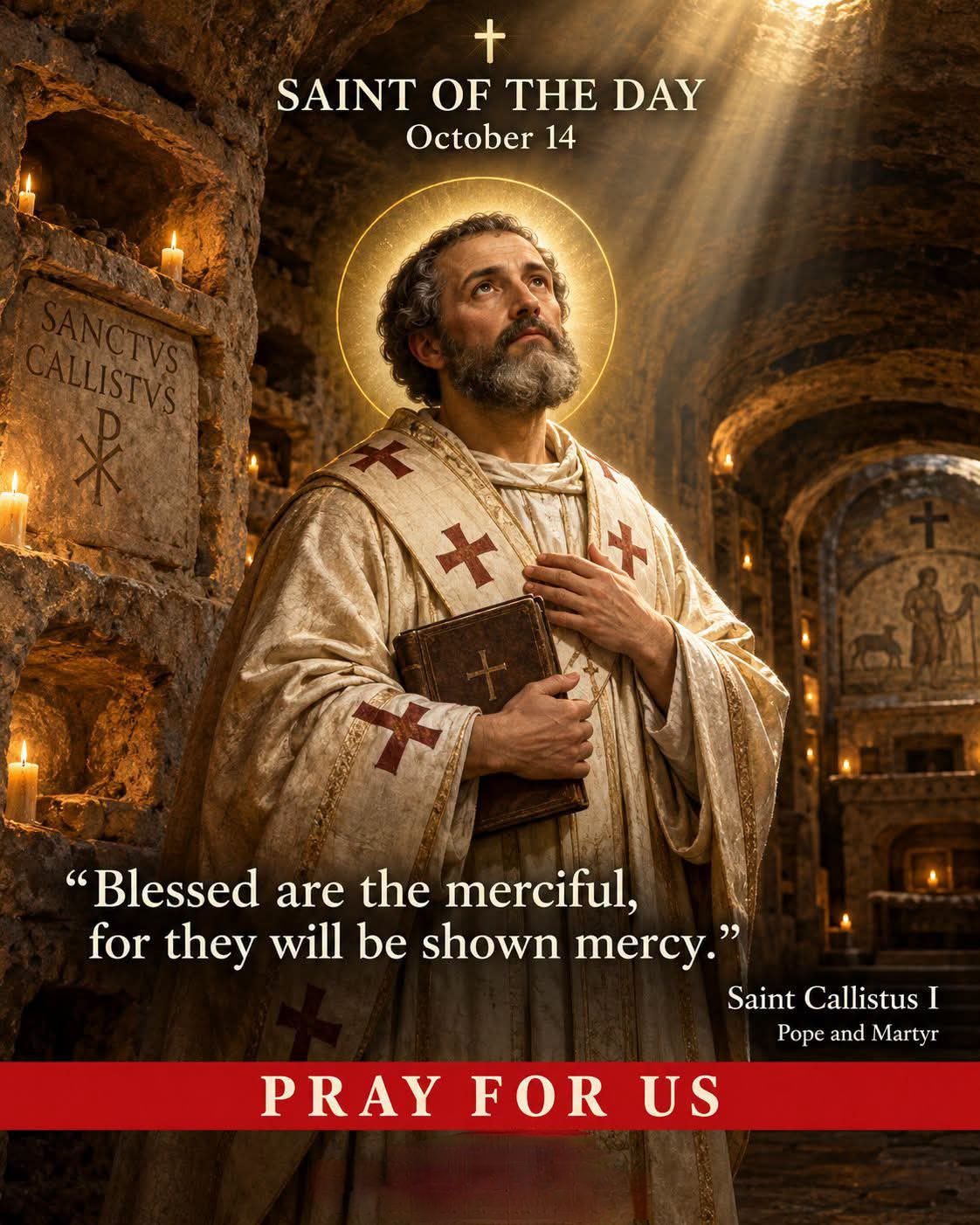
Across the centuries, Saint Callistus is remembered not merely for his position as pope but for his commitment to mercy and reconciliation. His life bears witness to the truth that the Church’s greatest treasure is not earthly wealth or worldly power, but the love and forgiveness of Christ.
He remains an inspiring example for those who have fallen, those who feel rejected and those who long for a new beginning. His journey proclaims that no past failure can place a repentant heart beyond the reach of God’s grace.
Saint Callistus teaches us that holiness is not the absence of human weakness but the willingness to be transformed by divine mercy. Through his life and martyrdom, he invites us to become instruments of compassion, forgiveness and hope in a world that often judges more readily than it loves.
PRAYER FOR THE FEAST OF
POPE SAINT CALLISTUS I.
(Martyr)
O Lord, may this mystical oblation benefit us:
may it both release us from our guilt
and confirm us in eternal salvation.
Through our Lord Jesus Christ,
Who liveth and reigneth with God the Father,
in the unity of the Holy Ghost, one God,
world without end. Amen
Pope Callistus I, pray for us.