
TODAY’S GOSPEL READING – 15 APRIL
April 15, 2026
2 Corinthians 5:21
April 16, 2026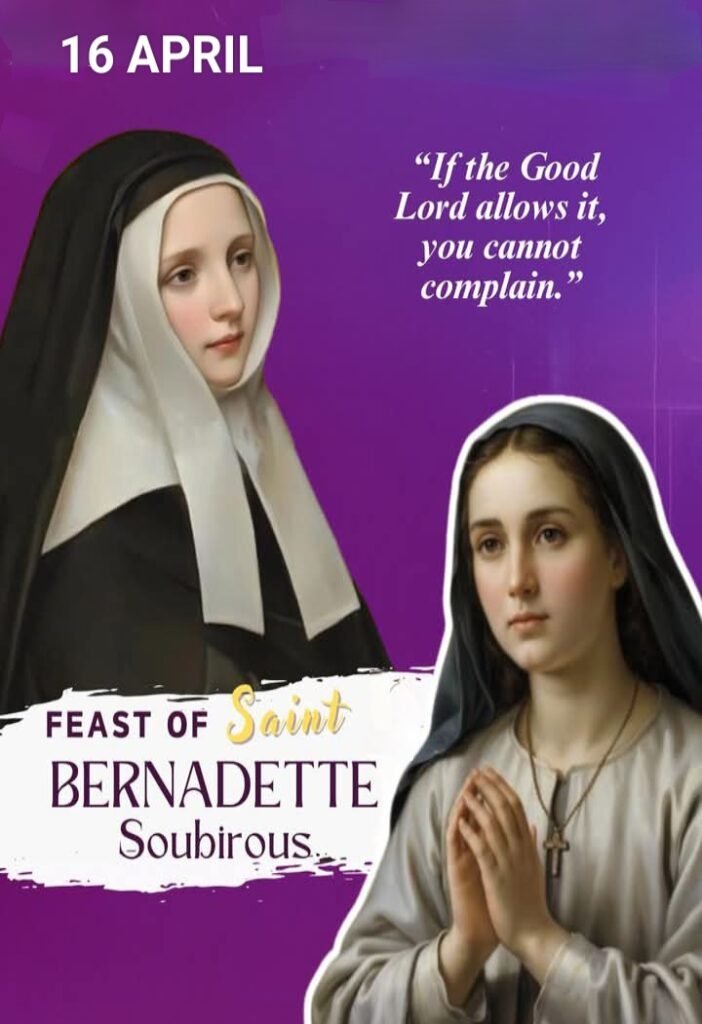
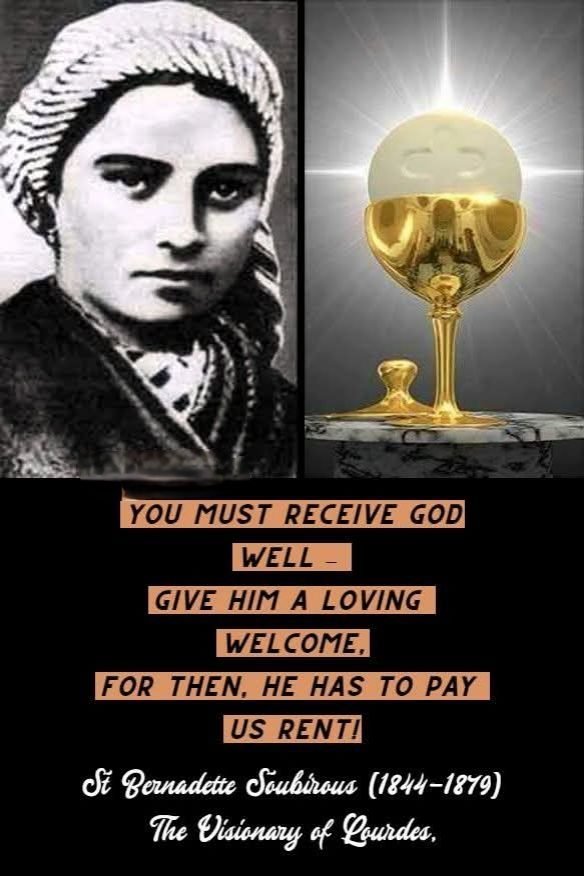
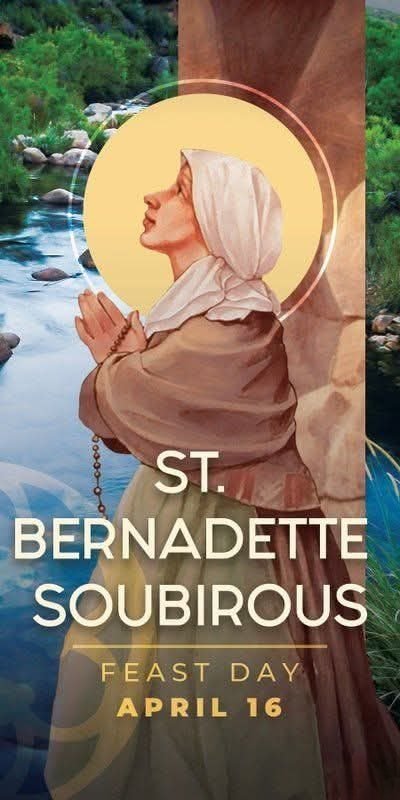
FEAST OF SAINT BERNADETTE OF LOURDES
FEAST DAY – 16th APRIL
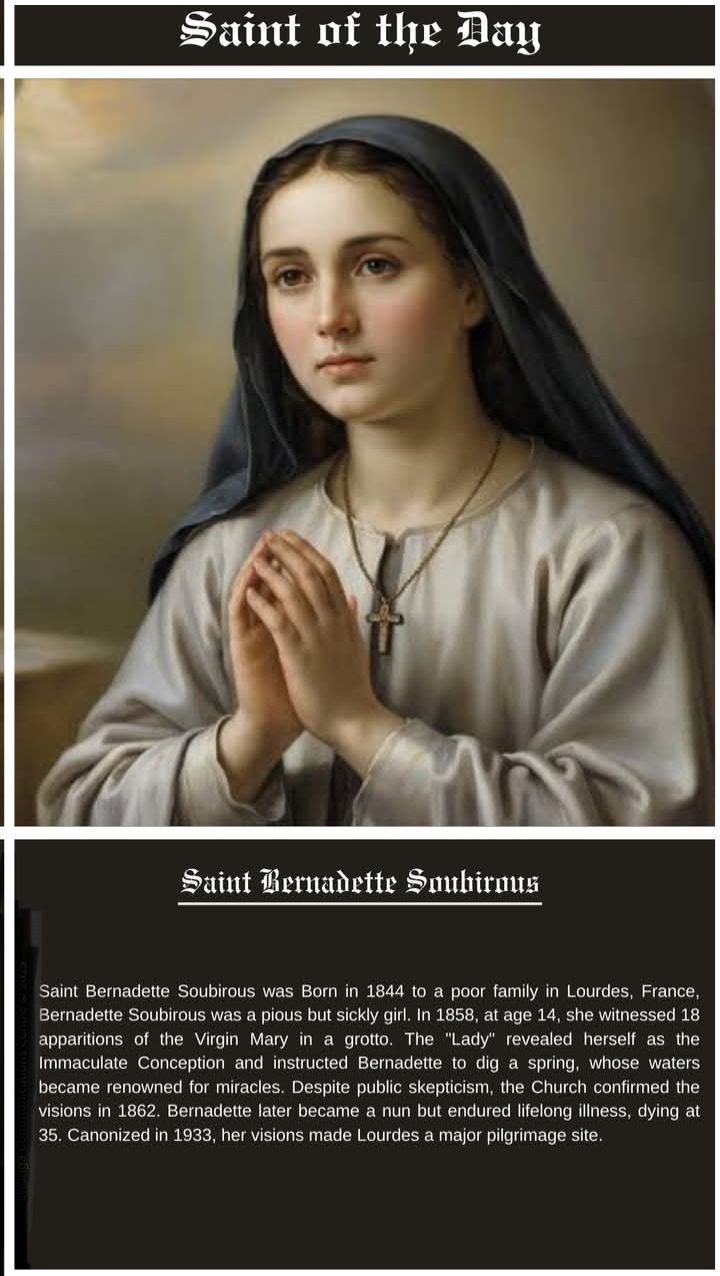
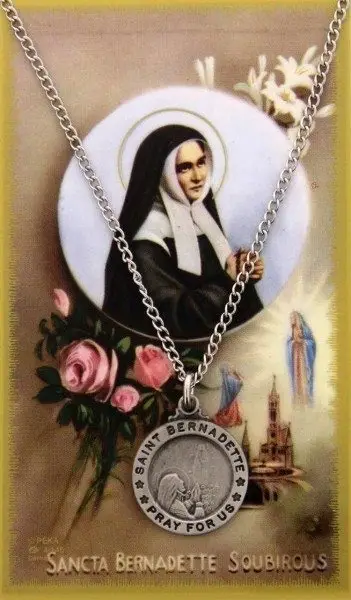
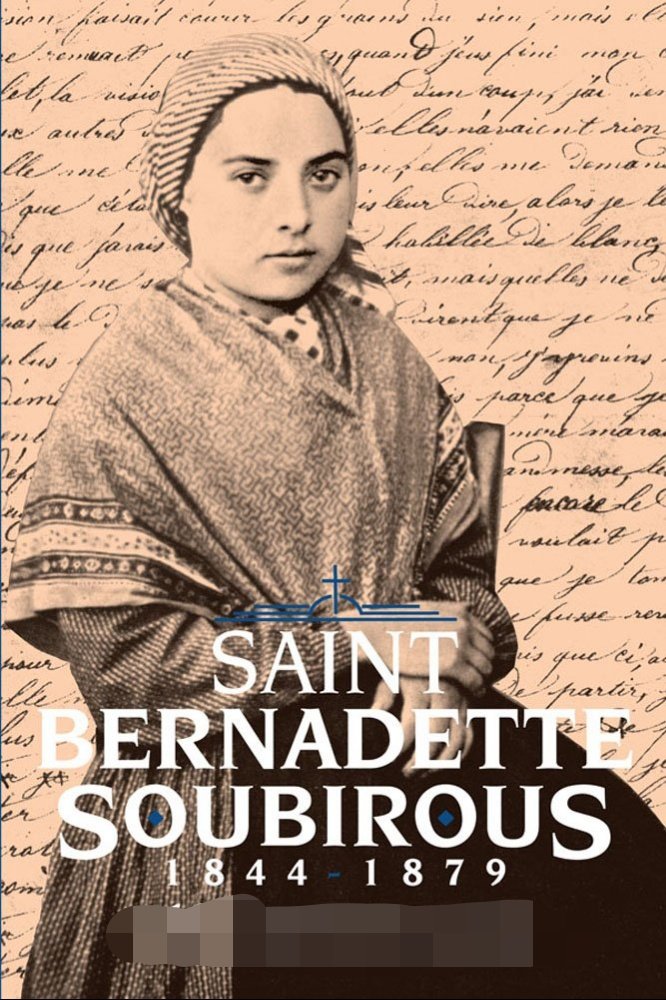
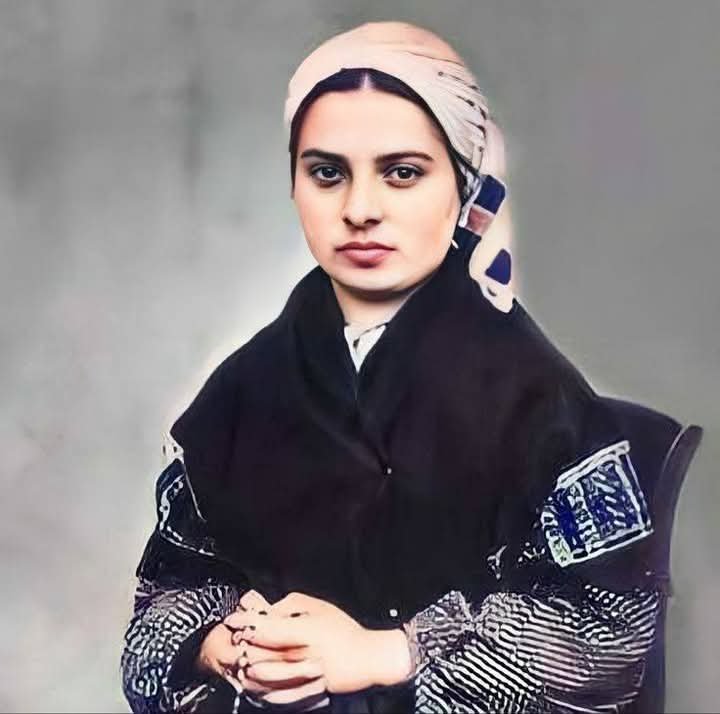
St. Bernadette was born in Lourdes, France on January 7, 1844. Her parents were very poor and she was the first of nine children. She was baptized at St. Pierre’s, the local parish church, on January 9. As a toddler, Bernadette contracted cholera and suffered extreme asthma. Unfortunately, she lived the rest of her life in poor health.
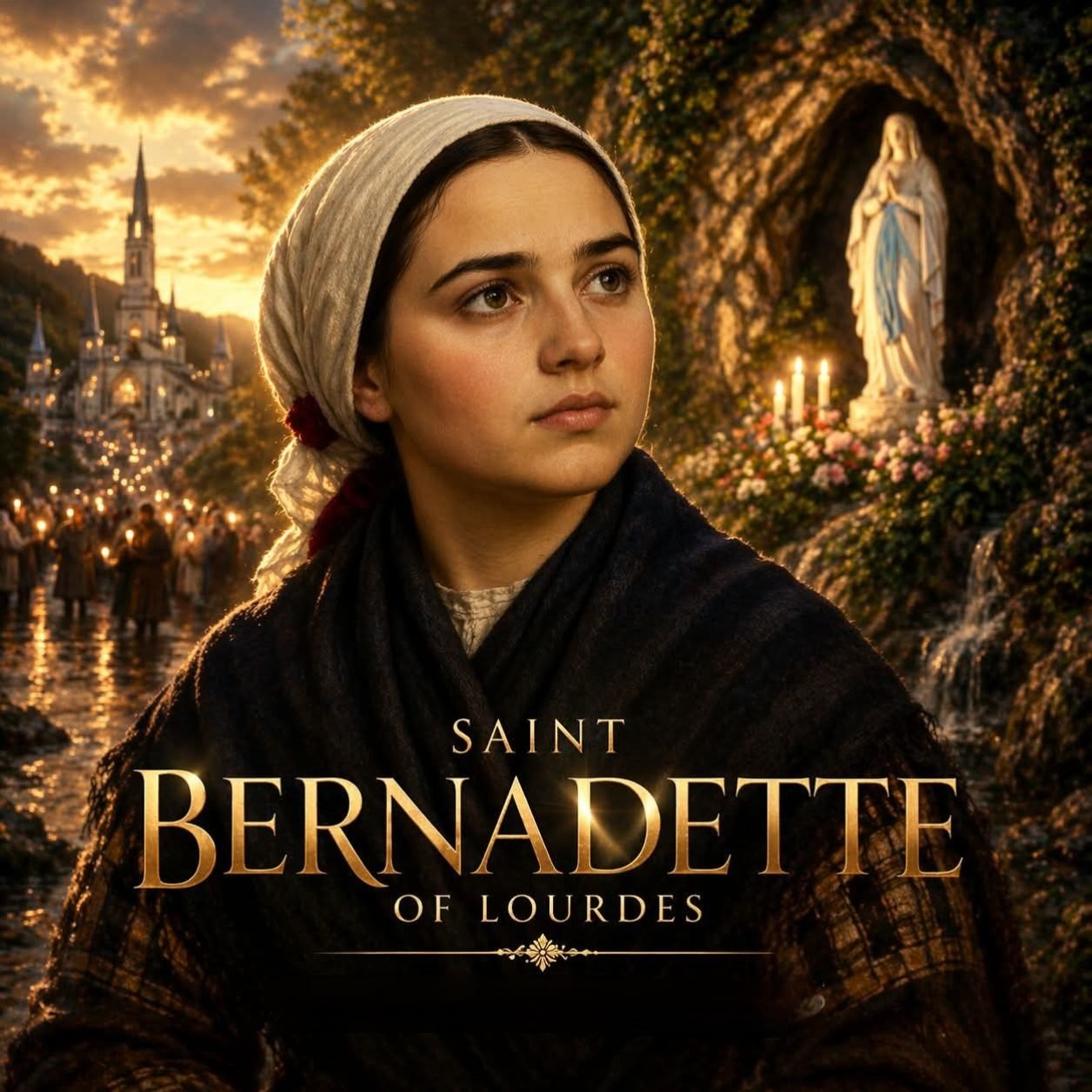
On Thursday, February 11, 1858, fourteen-year-old Bernadette was sent with her younger sister and a friend to gather firewood, when a very beautiful lady appeared to her above a rose bush in a grotto called Massabielle (Tuta de Massavielha).
The woman wore blue and white and smiled at Bernadette before making the sign of the cross with a rosary of ivory and gold. Bernadette fell to her knees, took out her own rosary and began to pray. Bernadette later described the woman as “uo petito damizelo,” meaning “a small young lady. Though her sister and friend claimed they were unable to see her, Bernadette knew what she saw was real.
Three days later, Bernadette, her sister Marie, and other girls returned to the grotto, where Bernadette immediately knelt, saying she could see “aquero” again. She fell into a trance and one girl threw holy water at the niche and another threw a rock that shattered on the ground. It was then that the apparition disappeared On February 18, Bernadette said “the vision” asked her to return to the grotto each day for a fortnight.
With each visit, Bernadette saw the Virgin Mary and the period of daily visions became known as “la Quinzaine sacrée,” meaning “holy fortnight.” When Bernadette began to visit the grotto, her parents were embarrassed and attempted to stop her, but were unable to do so. On February 25, Bernadette claimed to have had a life-changing vision.
The vision had told her “to drink of the water of the spring, to wash in it and to eat the herb that grew there” as an act of penance. The next day, the grotto’s muddy waters had been cleared and fresh clear water flowed. On March 2, at the thirteenth of the apparitions, Bernadette told her family the lady sad “a chapel should be built and a procession formed.”
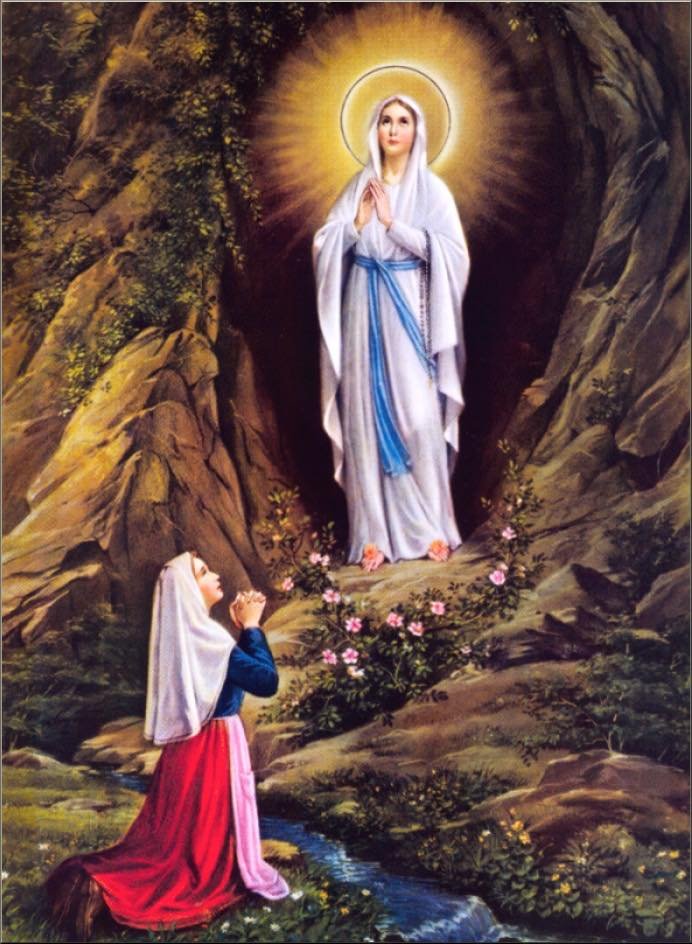
During her sixteenth vision, which Bernadette claims to have experienced for over an hour, was on March 25. Bernadette claimed she had asked the woman her name, but her question was only met with a smile. Bernadette asked again, three more times, and finally the woman said, “I am the Immaculate Conception.”
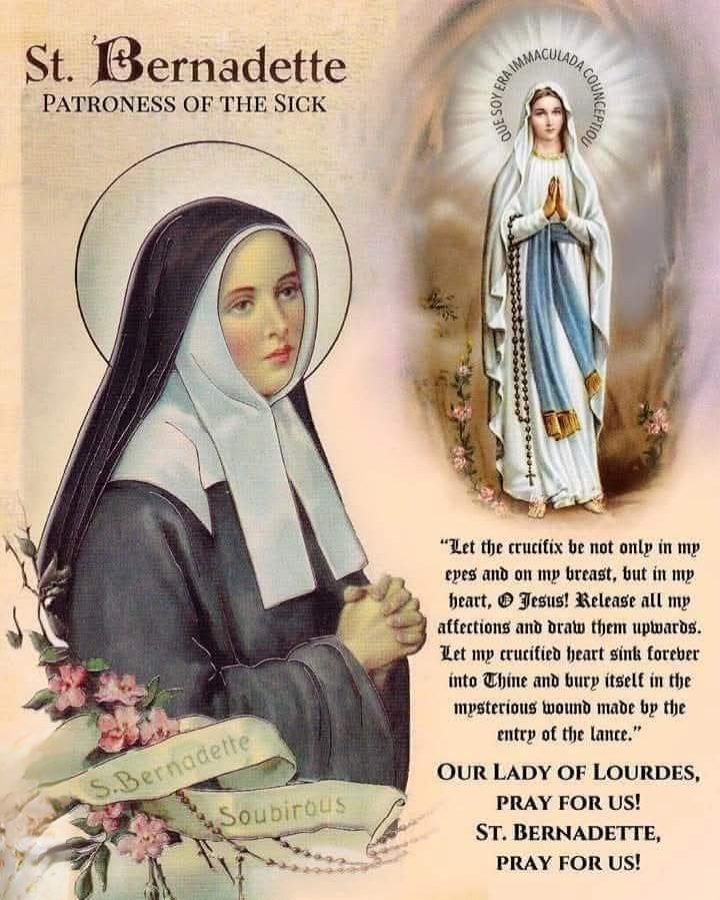
Though many townspeople believed she had indeed been seeing the Holy Virgin, Bernadette’s story created a division in her town. Many believed she was telling the truth, while others believed she had a mental illness and demanded she be put in a mental asylum. Some believed Bernadette’s visions meant she needed to pray for penance.
Church authorities and the French government rigorously interviewed the girl, and by 1862 they confirmed she spoke truth. Since Bernadette first caused the spring to produce clean water, 69 cures have been verified by the Lourdes Medical Bureau, and after what the Church claimed were “extremely rigorous scientific and medical examinations,” no one was able to explain what caused the cures.

The Lourdes Commission that initially examined Bernadette, ran an analysis on the water but were only able to determine it contained a high mineral content. Bernadette believed it was faith and prayer that was responsible for curing the sick.
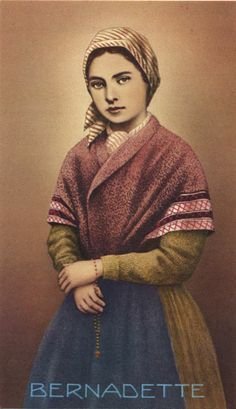
Bernadette asked the local priest to build a chapel at the site of her visions and the Sanctuary of Our Lady of Lourdes is now one of the major Catholic pilgrimage sites in the world. Many other chapels and churches has been built around it, including the Basilica of St. Pius X, which can accommodate 25,000 people and was dedicated by the future Pope John XXIII when he was the Papal Nuncio to France.
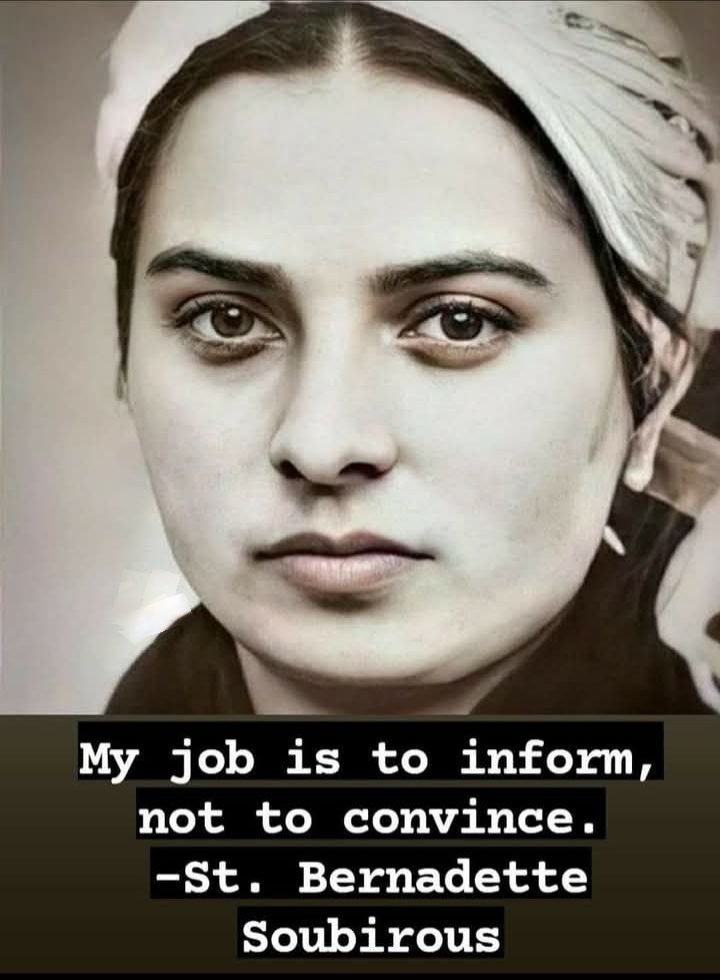
On July 29, 1866, Bernadette took the religious habit of a postulant and joined the Sisters of Charity at their motherhouse at Nevers. Her Mistress of Novices was Sister Marie Therese Vauzou and the Mother Superior at the time named her Marie-Bernarde, in honor of her grandmother.
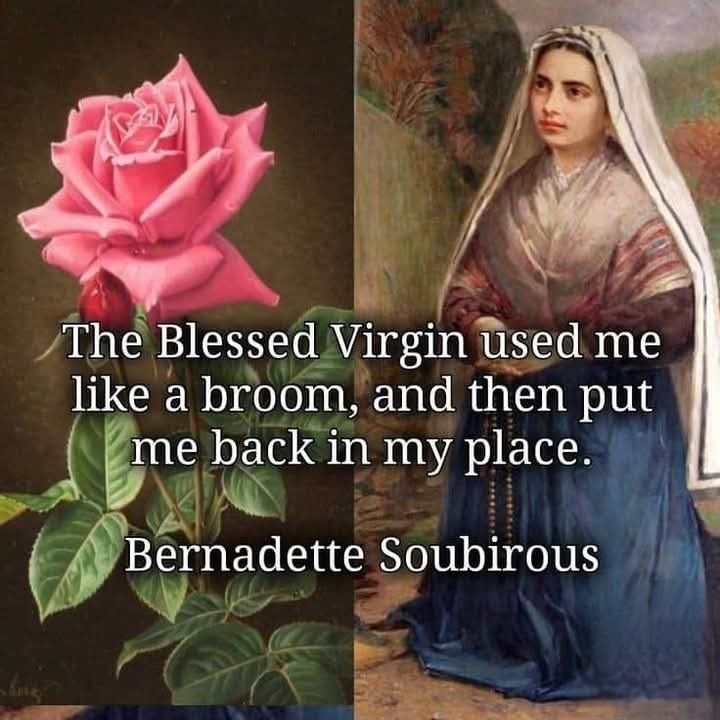
Bernadette spent the rest of her life there working as an infirmary assistant, and later a sacristan. People admired her humility and spirit of sacrifice. Once a nun asked her if she had temptations of pride because she was favored by the Blessed Mother. “How can I?” she answered quickly. “The Blessed Virgin chose me only because I was the most ignorant.”
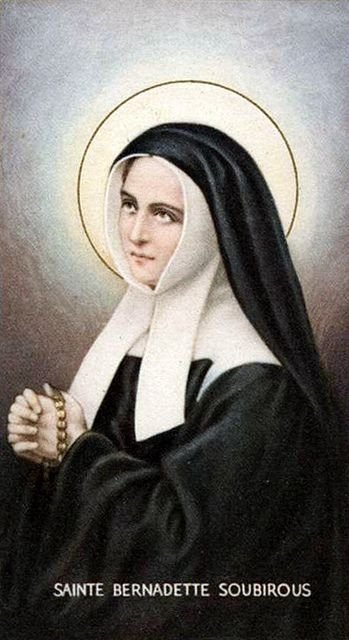
Unfortunately, she was diagnosed with tuberculosis of the bone in her right knee and was unable to take part in convent life. She died in the Sainte Croix (Holy Cross) Infirmary of the Convent of Saint-Gildard at the age of 35 on April 16, 1879, while praying the holy rosary.
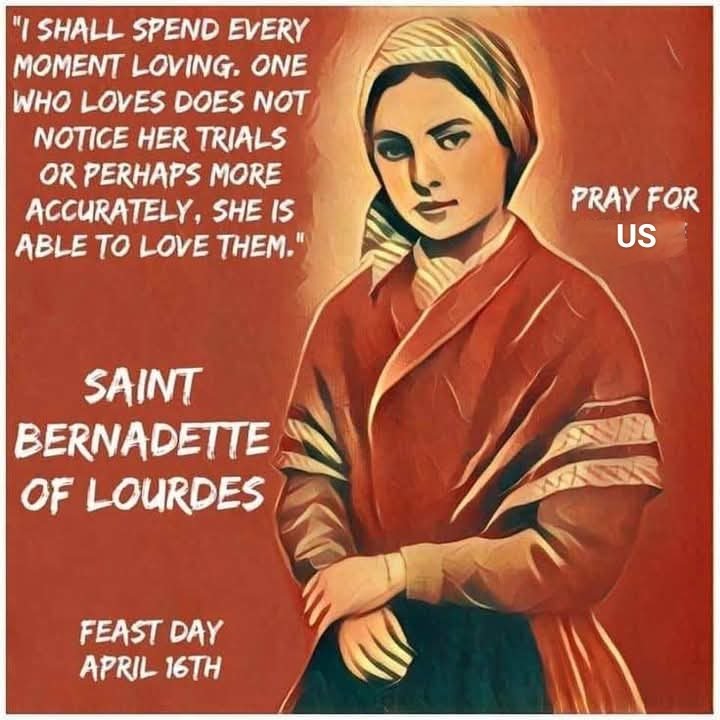
Even on her deathbed Bernadette suffered severe pain and, keeping with the Virgin Mary’s admonition of “Penance, Penance, Penance,” she proclaimed “all this is good for Heaven!” Bernadette’s last words were, “Blessed Mary, Mother of God, pray for me. A poor sinner, a poor sinner.”
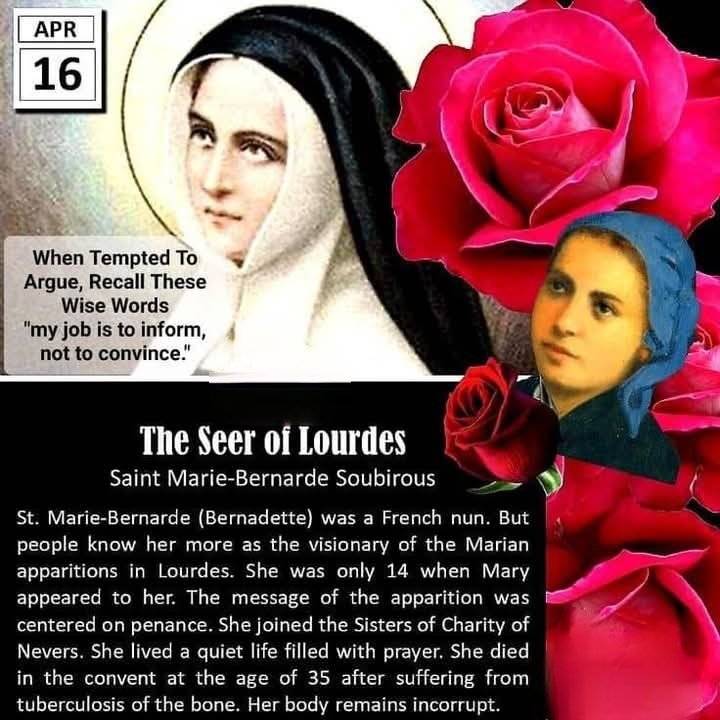
The nuns of Saint-Gildard, with the support of the bishop of Nevers, applied to the civil authorities for permission to bury Bernadette’s body in a small chapel dedicated to Saint Joseph, which was within the confines of the convent. Permission was granted on April 25, 1879, and on April 30, the local Prefect pronounced his approval of the choice of the site for burial. On May 30, 1879, Bernadette’s coffin was transferred to the crypt of the chapel of Saint Joseph, where a very simple ceremony was held to commemorate the event.
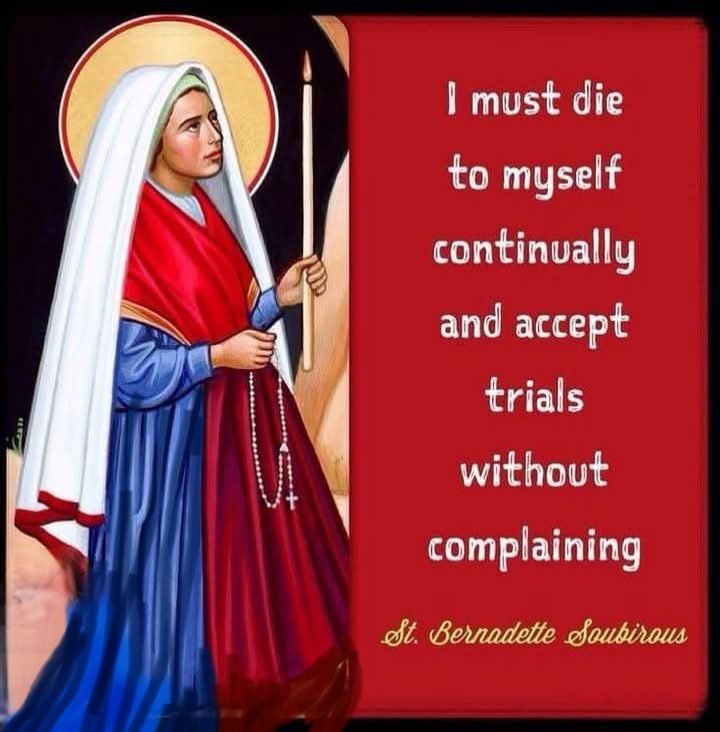
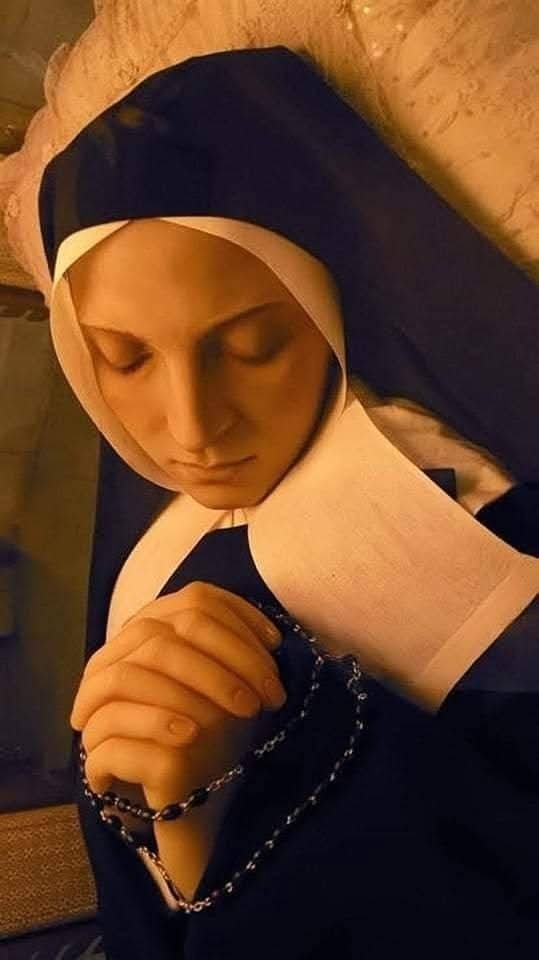
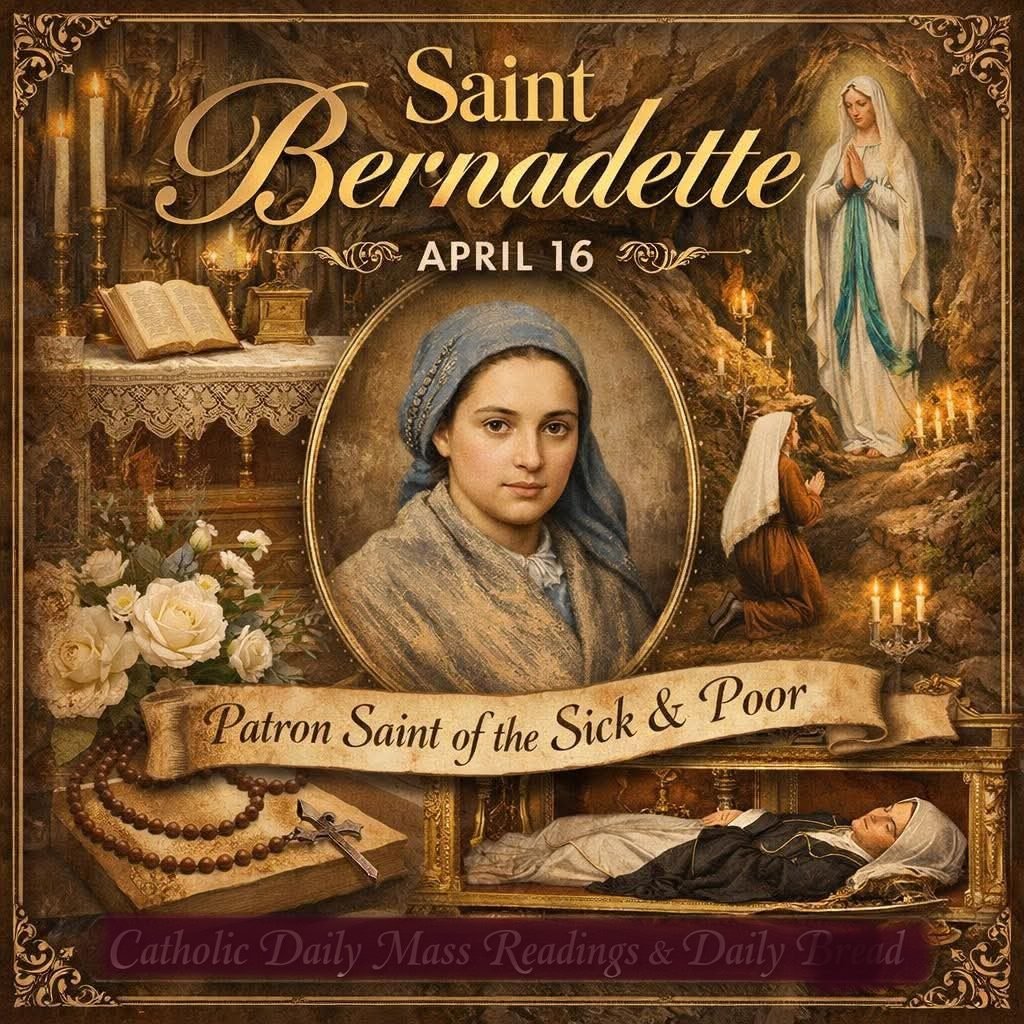
Thirty years layer, on September 22, two doctors and a sister of the community exhumed her body. They claimed the crucifix and rosary she carried had been oxidized but her body remained incorrupt. The incorruption was cited as one of the miracles supporting her canonization. Saint Bernadette is often depicted in prayer with a rosary or appealing to the Holy Virgin. She was beatified in 1925 and canonized by Pope Piuis XI in December 1933. Saint Bernadette is the patroness of illness, people ridiculed for their piety, poverty, shepherds, shepherdesses, and Lourdes, France.
(excerpts : catholic.org)
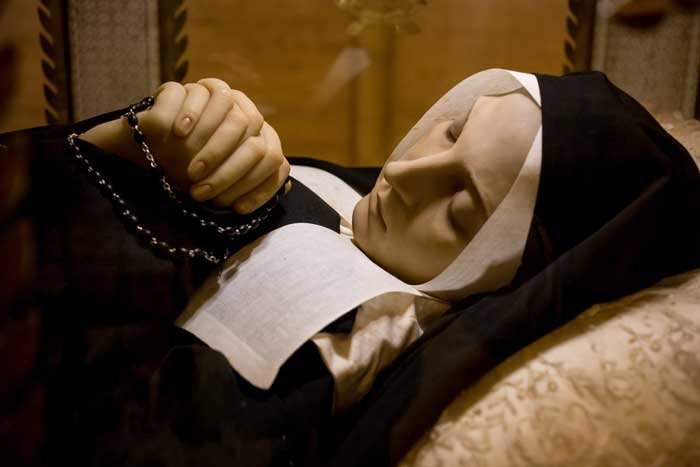
CONTEMPLATING THE LIFE OF SAINT BERNADETTE SOUBIROUS
Saint Bernadette is one of the most beloved modern saints, remembered for her simplicity, honesty, and steadfast faith in the midst of extraordinary experiences. Through her life, the world received the message of Our Lady of Lourdes, a call to prayer, penance, and deep trust in God.
Born in 1844 in Lourdes, France, she lived a short life, passing away in 1879 in Nevers. Her feast day is celebrated on April 16. She embraced religious life as a sister in the Sisters of Charity of Nevers.
She is remembered as a poor and uneducated girl, a visionary, and above all, a humble witness.
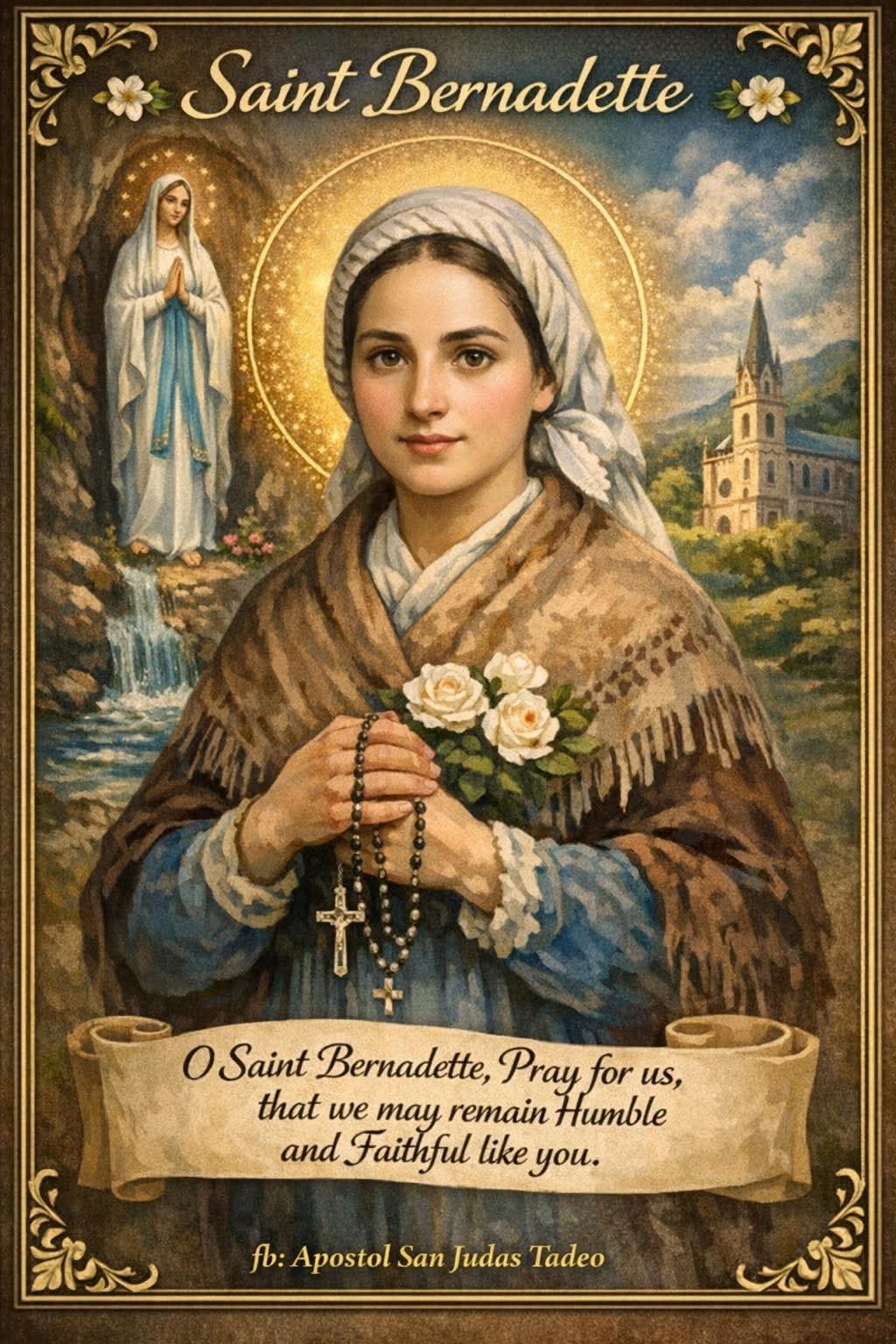
THE GIRL WHO SAW AND THEN DISAPPEARED
A LIFE TOO SMALL TO BE NOTICED
In a quiet and overlooked corner of France, in the town of Lourdes, lived a girl from whom nothing was expected.
Bernadette grew up in extreme poverty. She was often ill and struggled to keep up in school. For a time, her family even lived in a former prison cell known as the cachot.
Yet she was gentle, honest, and deeply prayerful. Though she knew little of the world, she trusted God quietly, simply, and without question.
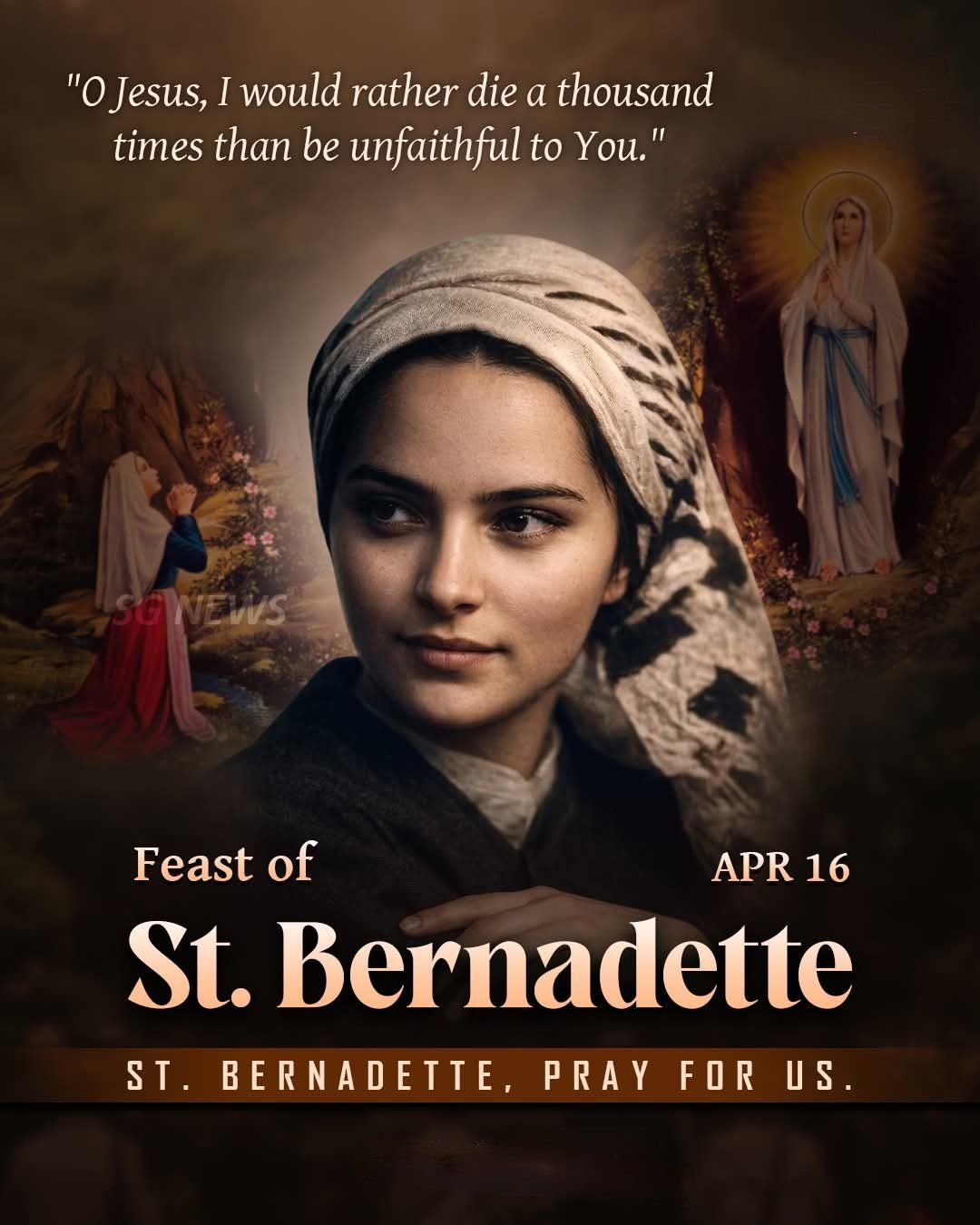
THE DAY HEAVEN TOUCHED EARTH
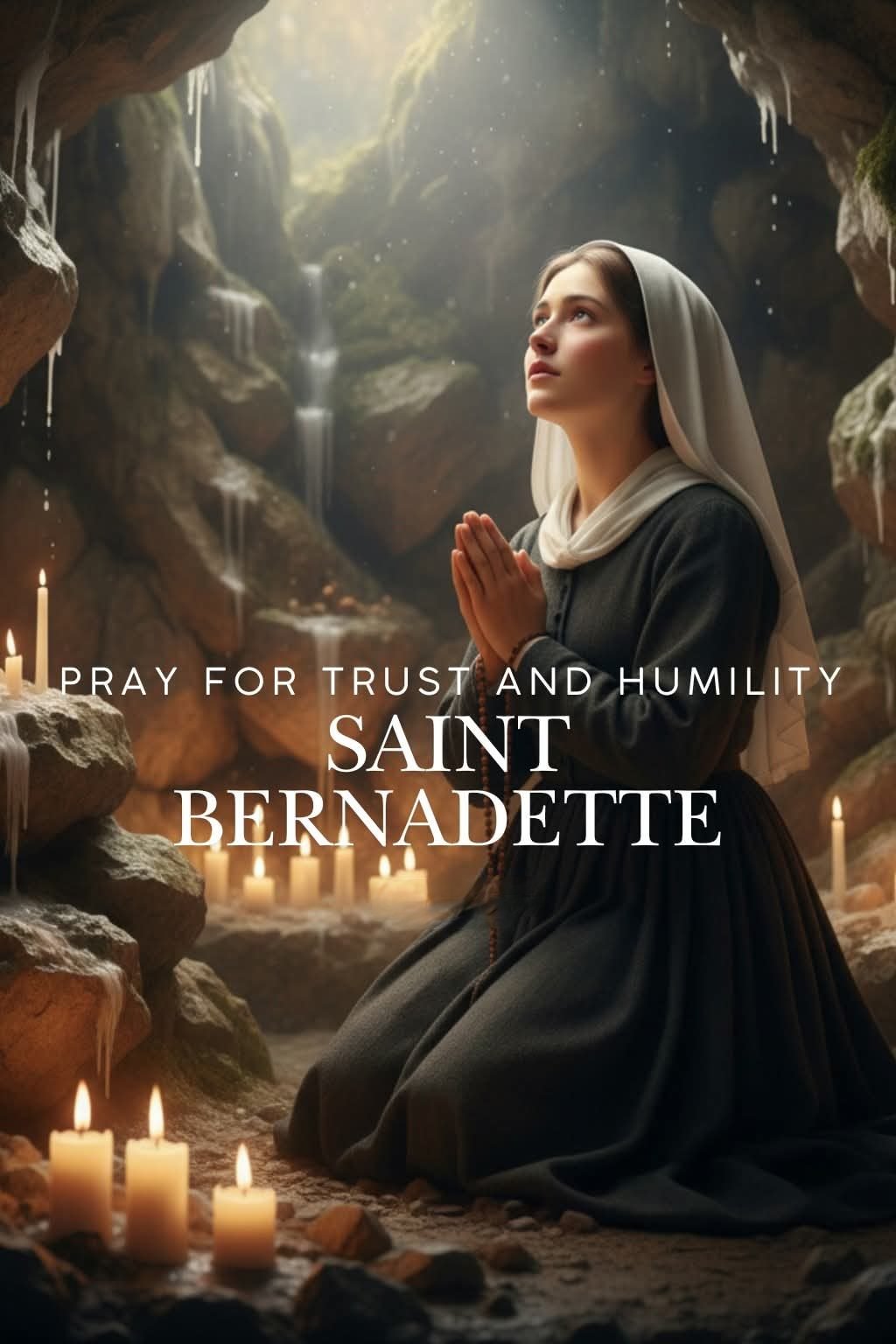
It was an ordinary, cold, and quiet day when Bernadette went with her sister to gather firewood near a rocky grotto called Massabielle.
In that moment, everything changed.
She saw a Lady clothed in white, radiant and peaceful. The world around her seemed to fade, and a deep silence filled the air. Within her heart, she knew this was no imagination. This was a true encounter.
A MESSAGE TOO GREAT FOR HER WORDS
The Lady appeared again and again, a total of eighteen times.
During these apparitions, the Lady called for prayer and penance, asked that a chapel be built, and invited people to come in procession.
Bernadette remained calm, consistent, and unwavering in her account. She did not understand everything, nor could she explain everything, but she remembered everything faithfully.
When questioned, she simply said, “I saw a Lady.”
There was no embellishment or exaggeration, only truth.
When the Lady revealed her name as “I am the Immaculate Conception,” Bernadette repeated the words carefully, as though carrying something delicate, even though she did not fully understand them.
THE MUD THAT BECAME A SPRING
One day, the Lady gave an unusual instruction to drink from the spring and wash there. But there was no visible spring, only dirt.
Bernadette obeyed without hesitation and began to dig. Onlookers watched in confusion as she uncovered only mud at first.
Yet she continued, and soon water began to flow.
What seemed foolish became a sign. What began in obscurity became a place of grace. This spring remains even today, associated with healing and a symbol of spiritual cleansing.
WHEN THE WORLD CAME LOOKING
As news spread, crowds gathered. Authorities questioned her. Some believed, others mocked, and many doubted.
Through it all, Bernadette remained unchanged. She did not argue or defend herself forcefully. She simply said, “I am not asked to make you believe, only to tell you.”
While others tried to elevate her importance, she quietly refused.
THE DISAPPEARING WITNESS
As suddenly as it had begun, the apparitions came to an end.
Though the crowds remained, Bernadette chose to step away. She entered religious life with the Sisters of Charity at Nevers, not seeking prominence but embracing hiddenness.
There, she lived quietly, performing ordinary duties, enduring illness, and remaining largely unnoticed. The girl who had seen heaven chose a life of obscurity.
A LIFE HIDDEN IN GOD
As the years passed, her suffering increased, and public recognition faded. Yet her spiritual life deepened.
Having once seen the Lady, she now walked by faith alone, without visions or signs, sustained only by trust.
In this hidden life, her greatest holiness unfolded.
THE FINAL SURRENDER
Toward the end of her life, Bernadette endured great suffering. Yet her heart remained simple, trusting, and surrendered.
She died in 1879, not as a celebrated figure, but as a faithful servant. The girl who had once seen a vision had herself become a quiet reflection of humility and faith.
SPIRITUAL CHARACTER
HUMILITY
She never claimed importance or sought recognition.
TRUTHFULNESS
She remained faithful to what she had seen, without distortion.
SIMPLICITY
Her faith was direct, childlike, and pure.
ENDURANCE
She accepted suffering without complaint.
SPIRITUAL SIGNIFICANCE
A WITNESS OF THE LOWLY
God chose one who was small and overlooked to reveal His message.
A MESSENGER, NOT THE MESSAGE
She consistently pointed beyond herself to something greater.
A SAINT OF HIDDEN HOLINESS
Her deepest sanctity was lived in quiet, ordinary life after the apparitions.
KEY THEMES FROM HER LIFE
GOD WORKS THROUGH THE HUMBLE
Great things are accomplished through simple instruments.
FAITHFULNESS OVER FAME
She remained unchanged before and after her extraordinary experiences.
SUFFERING AS PARTICIPATION
Her illness became a path of union with Christ.
TRUTH WITHOUT DEFENSIVENESS
She bore witness with quiet conviction, without forcing belief upon others.
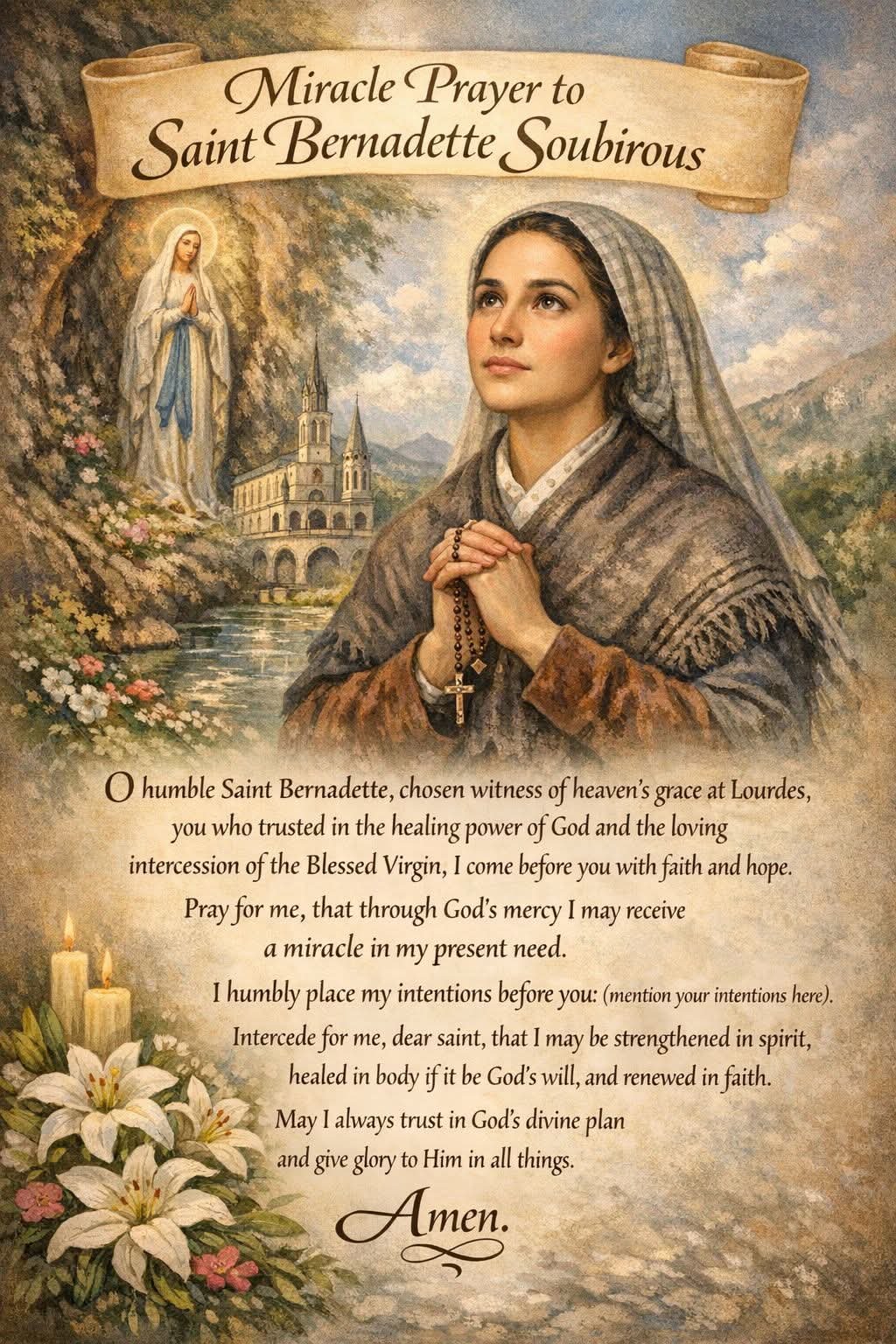
PRAYER
ST. BERNADETTE,
pure and simple child,
you who were privileged to
behold the beauty of
Mary Immaculate and to be
the recipient of her
confidence eighteen
times at Lourdes;
you who did desire from then
on to hide yourself in the
cloister of Nevers and there live
and die as a victim of sinners,
obtain for us that spirit of purity,
which will lead us also
to the glorious vision of God
and of Mary in Heaven. Amen.
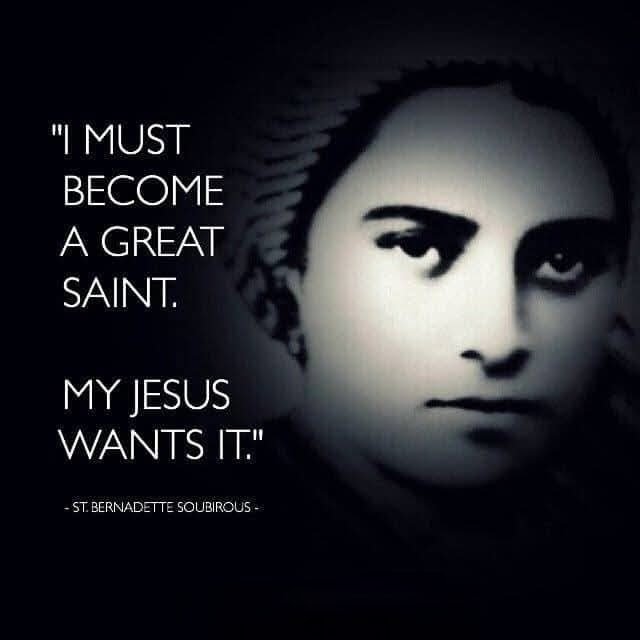
******************************************************************************
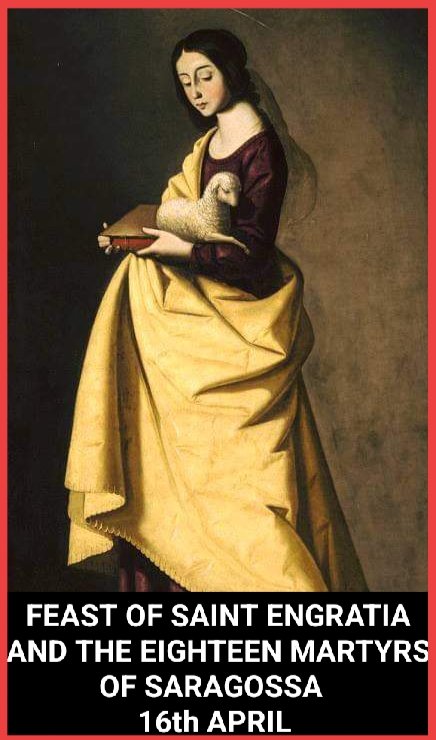
ALSO CELEBRATED:
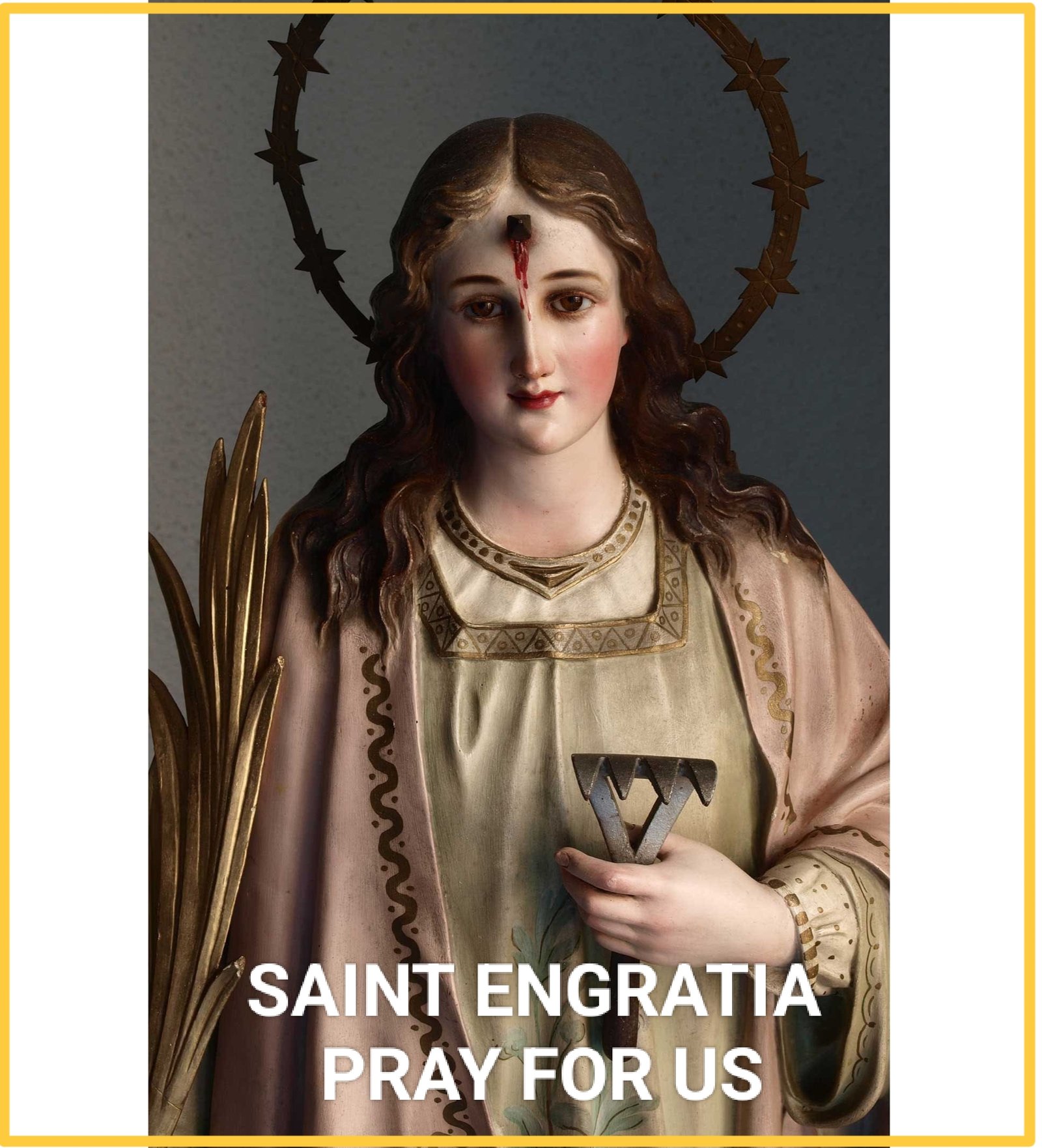
SAINT ENGRATIA AND THE EIGHTEEN MARTYRS OF SARAGOSSA
St. Optatus and seventeen other holy men received the crown of martyrdom on the same day, at Saragossa, under the cruel Governor Dacian, in the persecution of Diocletian, in 304. Two others, Caius and Crementius, died of their torments after a second conflict.
The Church also celebrates on this day the triumph of St. Encratis, or Engratia, Virgin. She was a native of Portugal. Her father had promised her in marriage to a man of quality in Roussillon; but fearing the dangers and despising the vanities of the world, and resolving to preserve her virginity, in order to appear more agreeable to her heavenly Spouse and serve Him without hindrance, she stole from her father’s house and fled privately to Saragossa, where the persecution was hottest, under the eyes of Dacian.
She even reproached him with his barbarities, upon which he ordered her to be long tormented in the most inhuman manner: her sides were torn with iron hooks, and one of her breasts was cut off, so that the inner parts of her chest were exposed to view, and part of her liver was pulled out. In this condition she was sent back to prison, being still alive, and died by the mortifying of her wounds, in 304.
The relics of all these martyrs were found at Saragossa in 1389.
(Excerpted from the Lives of the Saints, by Alban Butler, Benziger Bros. [1894])
PRAYER
Eternal Father, our Refuge and Fortress, you gave us Saint Engratia as a testimony of faith and strength. Make us have faith in you and also have strength to face the barriers of every day. Through Jesus Christ, Our Lord. Amen.
St. Engratia and the Eighteen Martyrs of Saragossa: Pray for us!