
SPIRITUAL INSIGHTS INTO THE LIFE OF ST. KATERI TEKAKWITHA
July 14, 2026
Colossians 3:12
July 15, 2026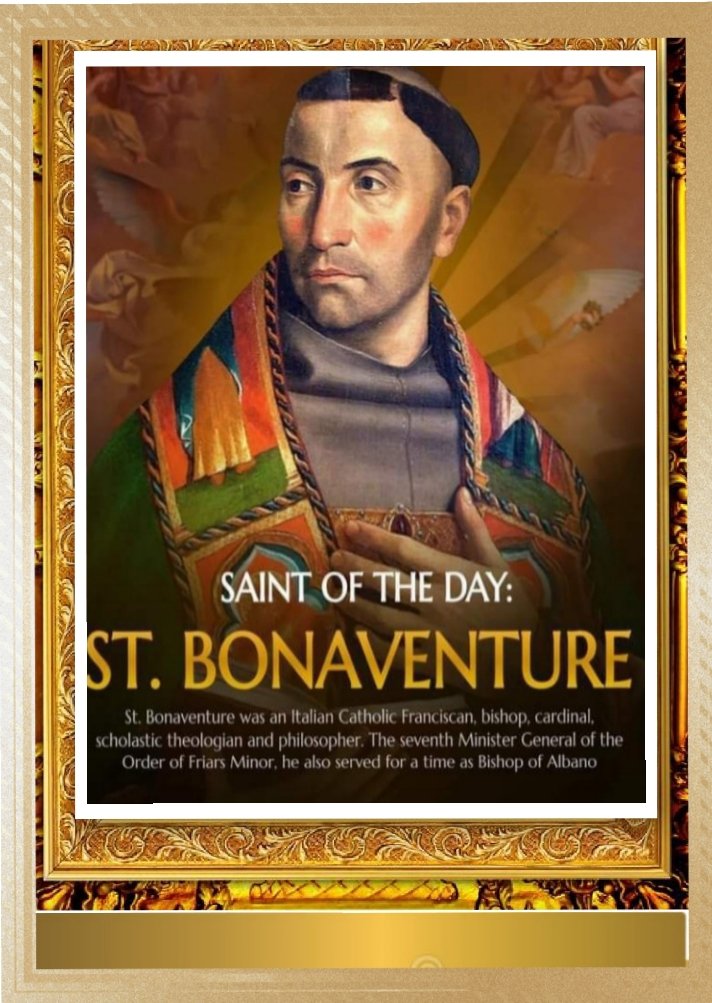
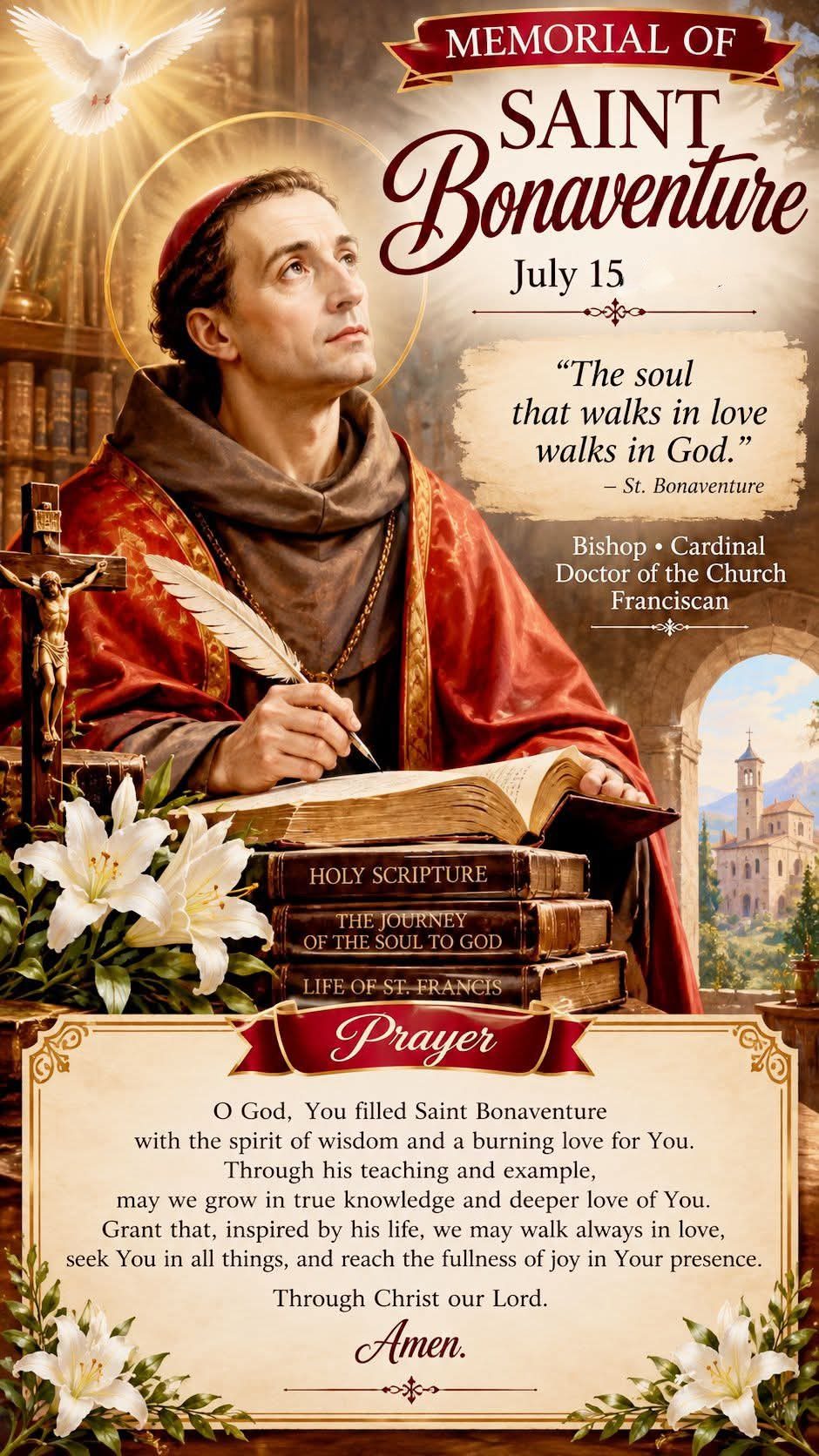
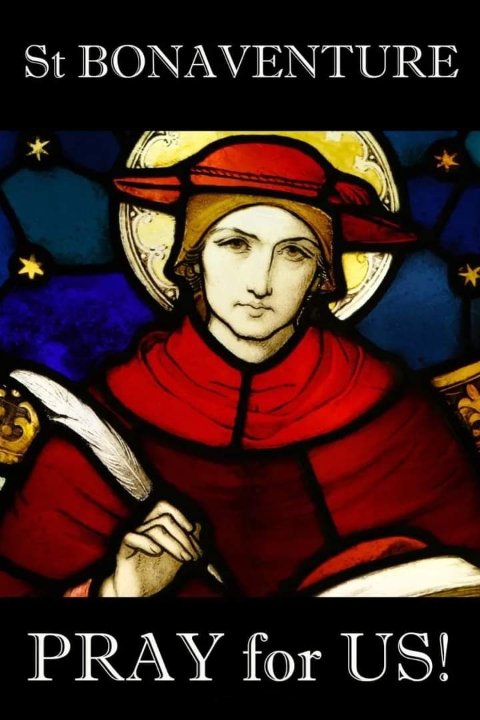
FEAST OF SAINT BONAVENTURE, BISHOP AND DOCTOR
FEAST DAY – 15th JULY
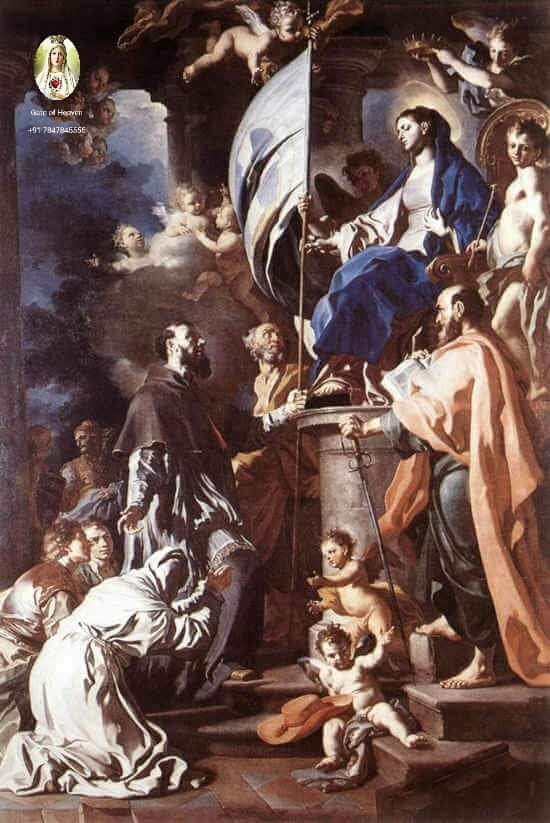
Saint Bonaventure, born Giovanni di Fidanza, was an Italian Catholic Franciscan, bishop, cardinal, scholastic theologian and philosopher. He was the seventh Minister General of the Order of Friars Minor, and he also served for a time as Bishop of Albano. He was canonised on 14 April 1482 by Pope Sixtus IV and declared a Doctor of the Church in 1588 by Pope Sixtus V.
He is known as the “Seraphic Doctor” (Latin: Doctor Seraphicus). His feast day is 15 July. Many writings believed in the Middle Ages to be his are now collected under the name Pseudo-Bonaventure.
He was born at Civita di Bagnoregio, not far from Viterbo, then part of the Papal States. Bonaventure reports that in his youth he was saved from an untimely death by the prayers of Francis of Assisi, which is the primary motivation for Bonaventure’s writing the vita.
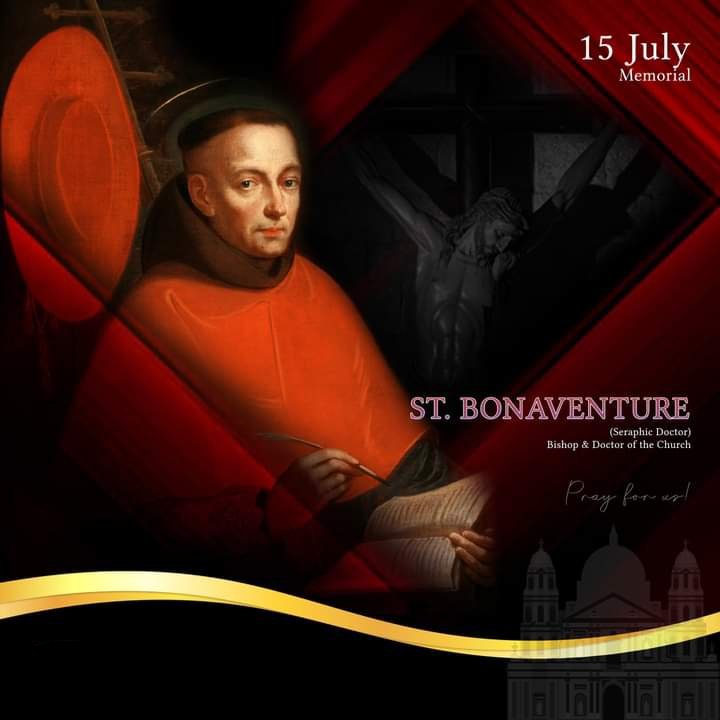
Perhaps not a household name for most people, Saint Bonaventure, nevertheless, played an important role in both the medieval Church and the history of the Franciscan Order. A senior faculty member at the University of Paris, Saint Bonaventure certainly captured the hearts of his students through his academic skills and insights.
But more importantly, he captured their hearts through his Franciscan love for Jesus and the Church. Like his model, Saint Francis, Jesus was the center of everything—his teaching, his administration, his writing, and his life.
Born in Bagnoregio in 1221, Saint Bonaventure was baptized John, but received the name Bonaventure when he became a Franciscan at the age of 22. Little is known about his childhood, but we do know that his parents were Giovanni di Fidanza and Maria Ritell. It seems that his father was a physician and a man of means.
Saint Francis of Assisi died about five years after Bonaventure’s birth. Saint Bonaventure’s teaching career came to a halt when the Friars elected him to serve as their General Minister.

His 17 years of service were not easy as the Order was embroiled in conflicts over the interpretation of poverty.
He entered the Franciscan Order in 1243 and studied at the University of Paris, possibly under Alexander of Hales, and certainly under Alexander’s successor, John of Rochelle. In 1253 he held the Franciscan chair at Paris.
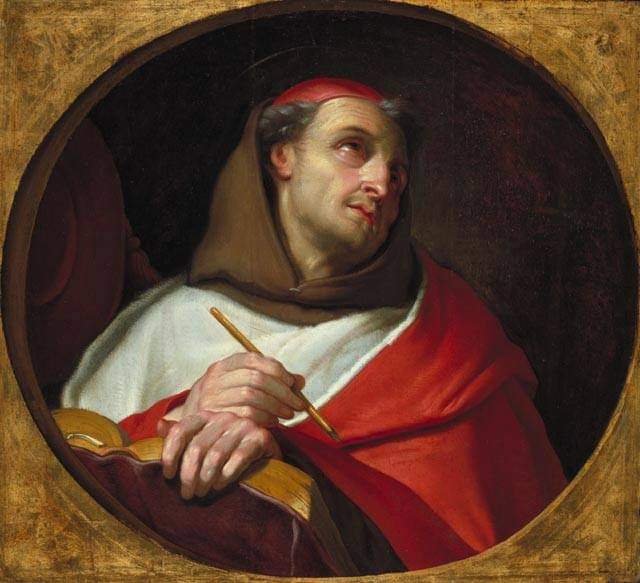
A dispute between seculars and mendicants delayed his reception as Master until 1257, where his degree was taken in company with Thomas Aquinas.
Three years earlier his fame had earned him the position of lecturer on The Four Books of Sentences—a book of theology written by Peter Lombard in the twelfth century—and in 1255 he received the degree of master, the medieval equivalent of doctor.
Some friars even ended up in heresy saying that Saint Francis and his community were inaugurating the era of the Holy Spirit which was to replace Jesus, the Church, and Scripture. But because he was a man of prayer and a good administrator, Saint Bonaventure managed to structure the Order through effective legislation.
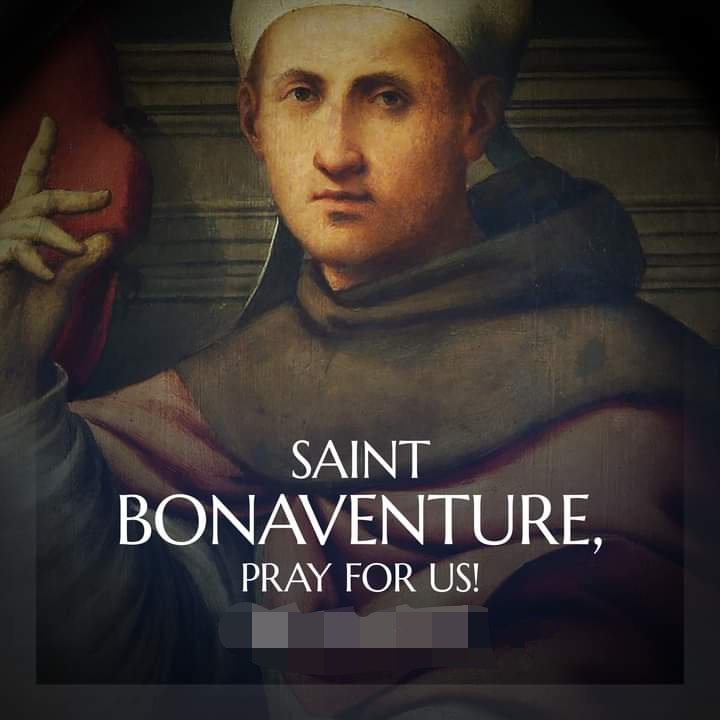
But more importantly, he offered the Friars an organized spirituality based on the vision and insights of Saint Francis. Always a Franciscan at heart and a mystical writer, Bonaventure managed to unite the pastoral, practical aspects of life with the doctrines of the Church. Thus, there is a noticeable warmth to his teachings and writings that make him very appealing.
Shortly before he ended his service as General Minister, Pope Gregory X created him a Cardinal and appointed him bishop of Albano. But a little over a year later, while participating in the Second Council of Lyon, Saint Bonaventure died suddenly on July 15, 1274.
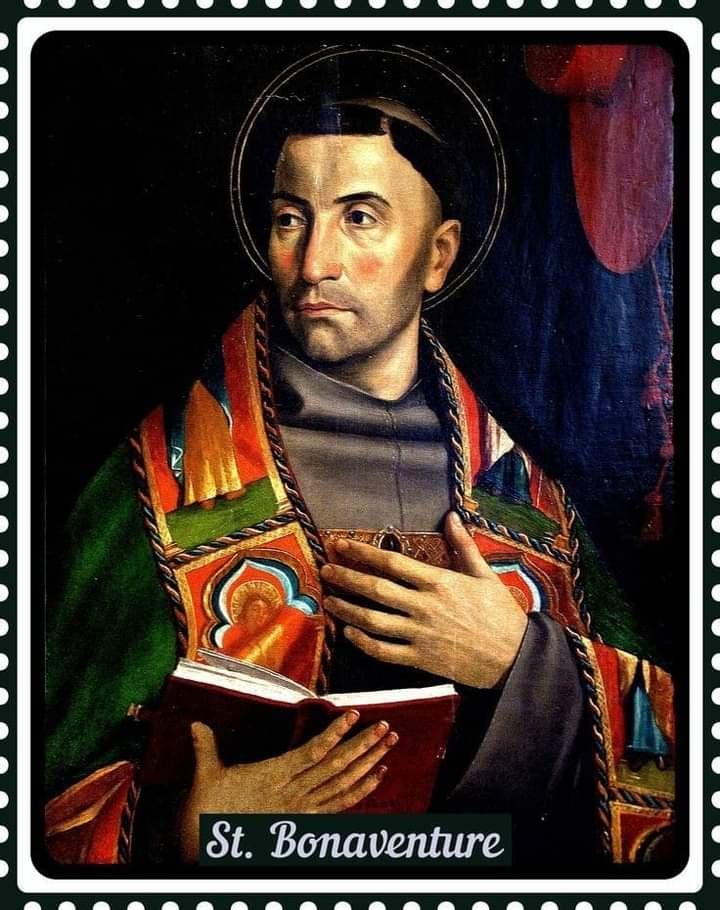
After his significant contributions led to a union of the Greek and Latin churches, Bonaventure’s death was sudden and under suspicious circumstances. The 1913 edition of the Catholic Encyclopedia has citations that suggest he was poisoned, but no mention is made of this in the 2003 second edition of the New Catholic Encyclopedia.
Saint Bonaventure left behind a structured and renewed Franciscan Order and a body of work all of which glorifies his major love—Jesus. He steered the Franciscans on a moderate and intellectual course that made them the most prominent order in the Catholic Church until the coming of the Jesuits.
His theology was marked by an attempt completely to integrate faith and reason. He thought of Christ as the “one true master” who offers humans knowledge that begins in faith, is developed through rational understanding, and is perfected by mystical union with God.
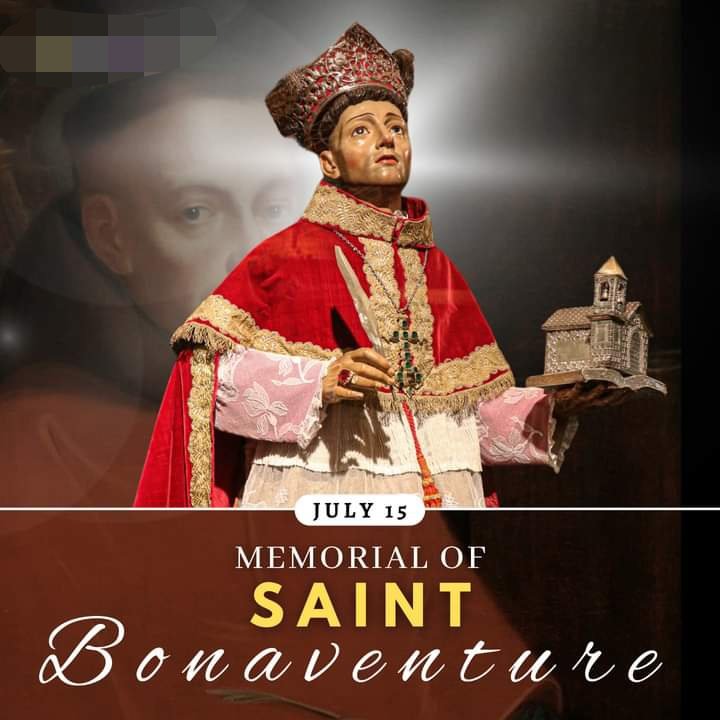
Bonaventure’s feast day was included in the General Roman Calendar immediately upon his canonisation in 1482. It was at first celebrated on the second Sunday in July, but was moved in 1568 to 14 July, since 15 July, the anniversary of his death, was at that time taken up with the feast of Saint Henry.
It remained on that date, with the rank of “double”, until 1960, when it was reclassified as a feast of the third class. In 1969 it was classified as an obligatory memorial and assigned to the date of his death, 15 July. He is the patron saint of bowel disorders. Bonaventure is remembered in the Church of England with a commemoration on 15 July
(Excerpts: franciscanmedia.org)
CONTEMPLATING THE LIFE OF SAINT BONAVENTURE

THE SERAPHIC DOCTOR
Saint Bonaventure, born Giovanni di Fidanza around 1221 in Bagnoregio, Italy, was one of the Church’s greatest theologians, mystics, and spiritual writers. He became a Franciscan friar, Minister General of the Franciscan Order, Cardinal Bishop of Albano, and was later declared a Doctor of the Church. Renowned for his deep love of God and profound spirituality, he is honoured as the “Seraphic Doctor.” His life beautifully united brilliant scholarship with humility, prayer, and an unwavering love for Christ. The Church celebrates his feast on July 15.
A CHILD GIVEN BACK TO GOD
According to Franciscan tradition, Bonaventure was gravely ill as a child until St. Francis of Assisi prayed for him. Miraculously restored to health, he received the name “Bonaventure,” meaning “good fortune,” reflecting the great mission God had prepared for him. His life was seen as a gift returned to God for the service of the Church.
A SCHOLAR WHO SOUGHT GOD
Bonaventure studied at the renowned University of Paris, where his exceptional intellect quickly gained recognition. Yet he pursued learning not for fame but to know and love God more deeply. He believed that true wisdom always leads the soul to Christ and that knowledge should inspire holiness rather than pride.
EMBRACING THE FRANCISCAN WAY
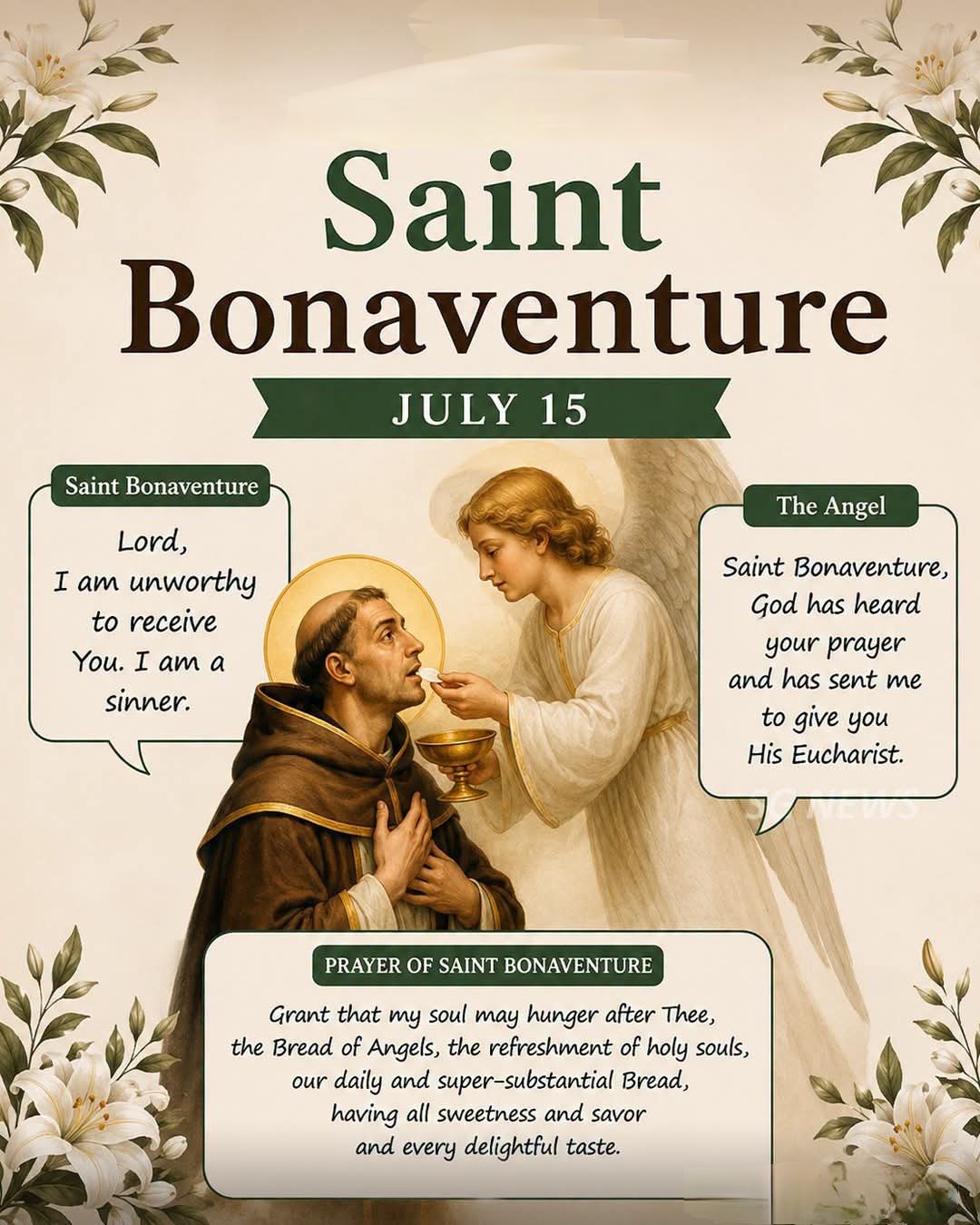
At the height of his academic success, Bonaventure joined the Franciscan Order, choosing a life of poverty, simplicity, and fraternity. Following the example of St. Francis of Assisi, he discovered that authentic wisdom is rooted in humble discipleship and loving service.
THE LIBRARY OF THE CROSS
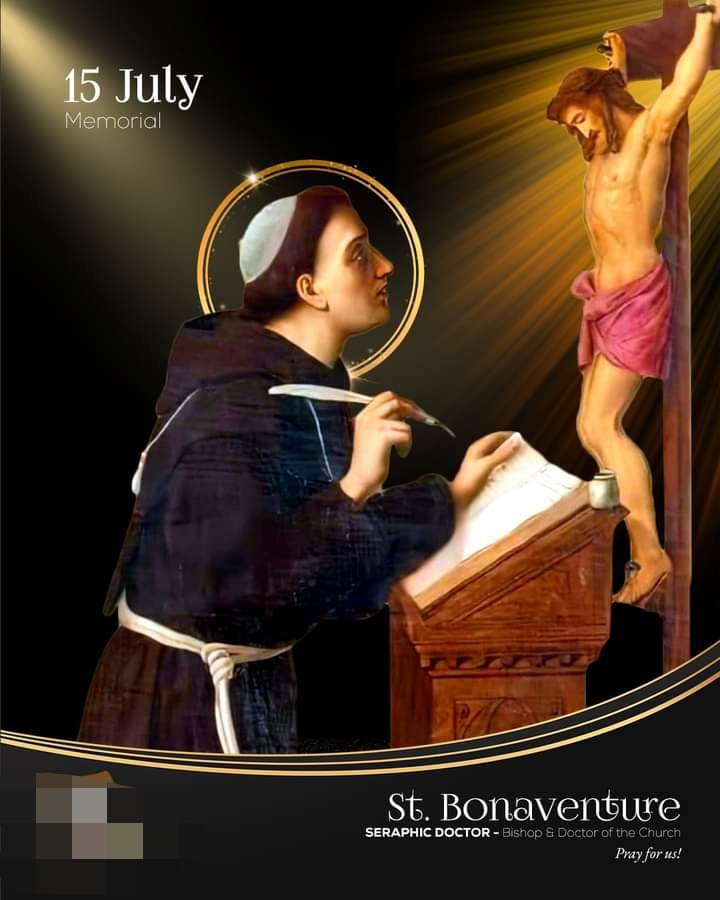
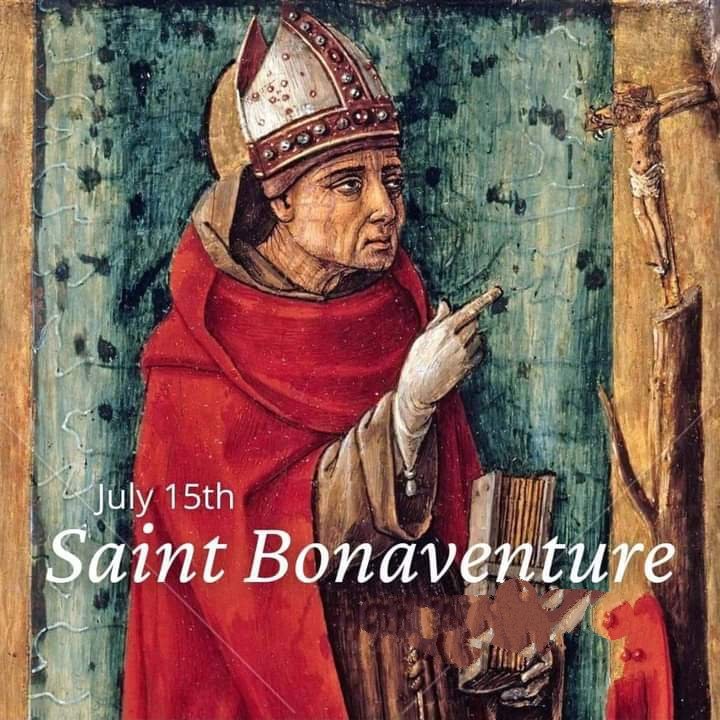
A cherished tradition recounts that when St. Thomas Aquinas asked Bonaventure to show him the source of his wisdom, he pointed to a crucifix and said, “This is my library.” His theology was born from prayer before Christ crucified, making the Cross the foundation of all his teaching.
A SERVANT OF UNITY
As Minister General of the Franciscans, Bonaventure guided the rapidly growing Order through difficult internal divisions. With patience, prayer, and wisdom, he restored harmony and reminded the friars that humility and charity are stronger than conflict.
THE BIOGRAPHER OF ST. FRANCIS
To preserve the authentic spirit of St. Francis, Bonaventure wrote the Legenda Maior, the definitive biography of the saint. Through this work, he presented Francis as a faithful image of Christ and inspired generations to embrace Gospel simplicity and holiness.
THE HUMBLE CARDINAL
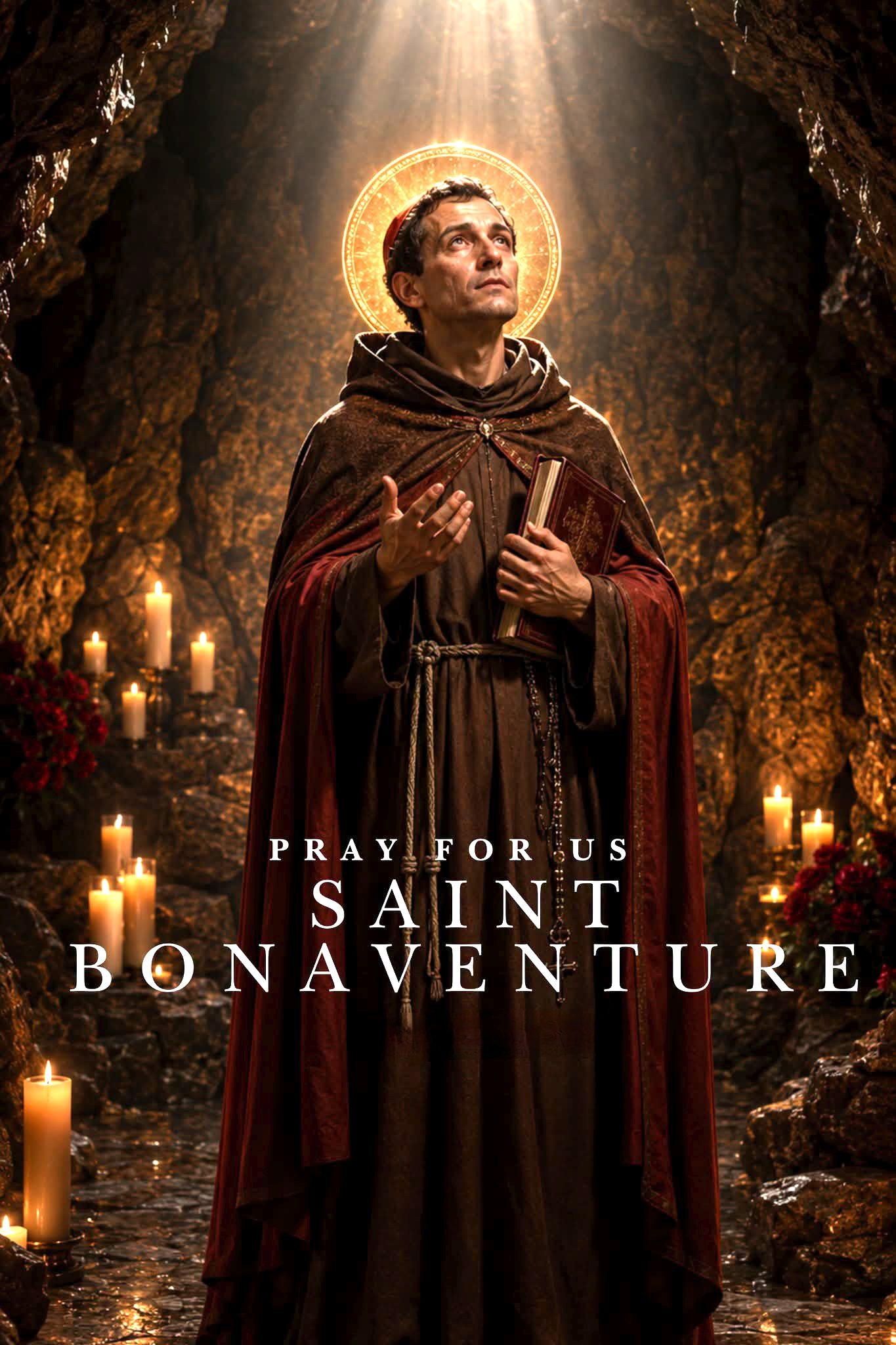
Pope Gregory X appointed Bonaventure Cardinal Bishop of Albano. Tradition tells that when the papal envoys arrived with the cardinal’s hat, they found him washing dishes. He asked them to hang the hat on a tree until he had finished his task, revealing that even the highest honours never diminished his humility.
HIS FINAL JOURNEY
In 1274, while serving the Church at the Second Council of Lyons, Bonaventure’s earthly pilgrimage came to an end. He died on July 15 after dedicating his life to promoting unity, deepening faith, and leading countless souls closer to Christ. His holiness was widely praised and deeply mourned.
CANONIZATION AND HONOURS
Pope Sixtus IV canonized Bonaventure in 1482, and Pope Sixtus V proclaimed him a Doctor of the Church in 1588. The title “Seraphic Doctor” honours his burning love for God and his profound spiritual teaching.
HIS SPIRITUALITY
The spirituality of St. Bonaventure places Christ at the centre of everything. He taught that theology should deepen prayer, knowledge should lead to love, humility should accompany learning, and the Christian life is a continual journey toward perfect union with God through contemplation.
LESSONS FROM HIS LIFE
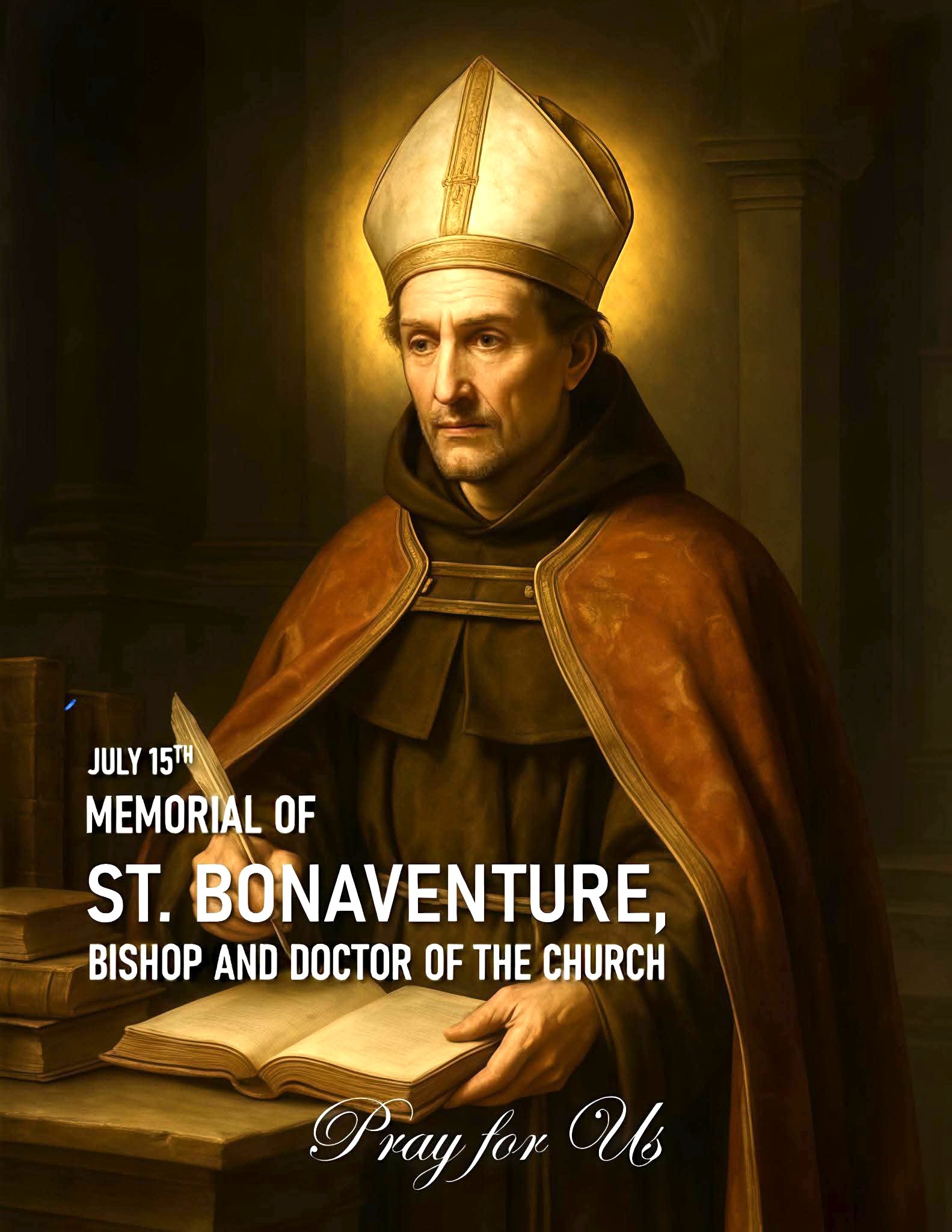
St. Bonaventure reminds us that faith and reason work together in harmony, leadership is rooted in humble service, knowledge without charity is empty, and true wisdom is found by following Christ and embracing the mystery of His Cross.
HIS LASTING LEGACY
The writings of St. Bonaventure continue to enrich the Church and inspire theologians, priests, religious, and lay faithful. His enduring message is that the highest wisdom is not merely understanding God but loving Him wholeheartedly. As he beautifully expressed, “No one knows Christ truly unless he follows Him.”
PRAYER
Almighty God, grant that, as we celebrate the feast of Saint Bonaventure, we may also, like him grow in spiritual wisdom, knowledge and understanding, by emulating the same fervor of charity that was his constant attitude towards his people.
Through our Lord Jesus Christ, your Son, who lives and reigns with you in the unity of the Holy Spirit, God, for ever and ever. Amen
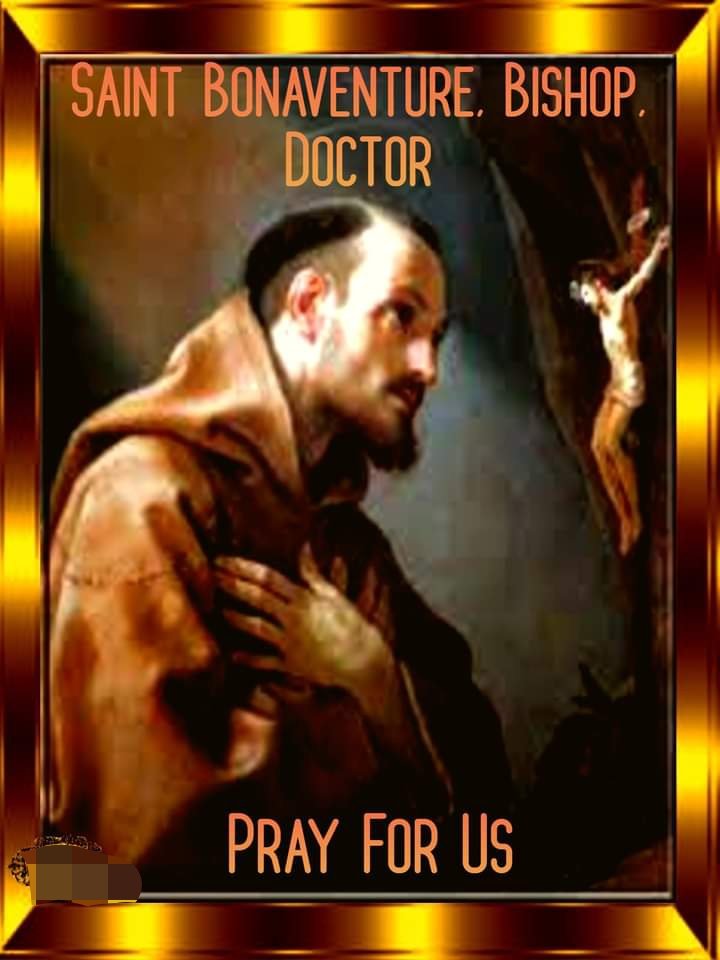
Saint Bonaventure, pray for us.