
SPIRITUAL INSIGHTS INTO THE LIFE OF SAINT MECHTILDE
November 19, 2026
1 Corinthians 15: 57-58
November 20, 2026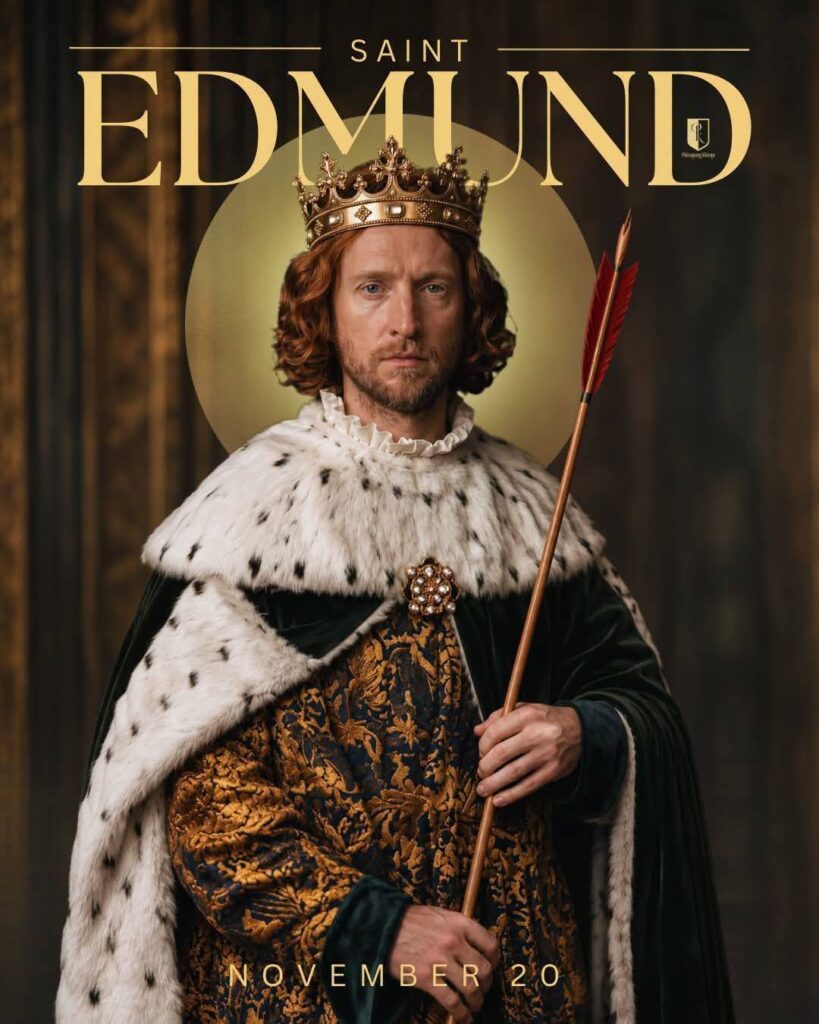
FEAST OF ST EDMUND THE MARTYR
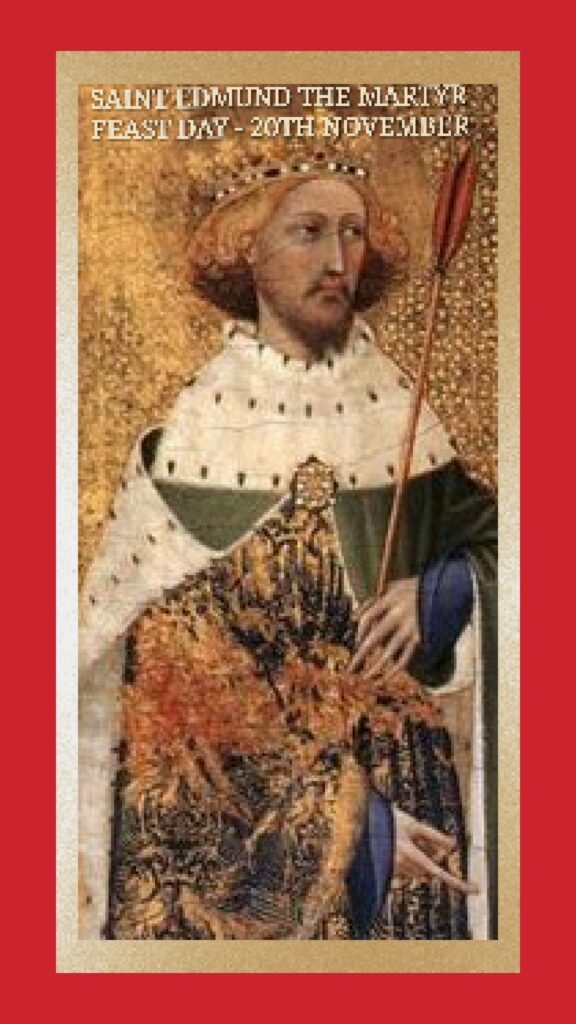
FEAST DAY – 20th NOVEMBER
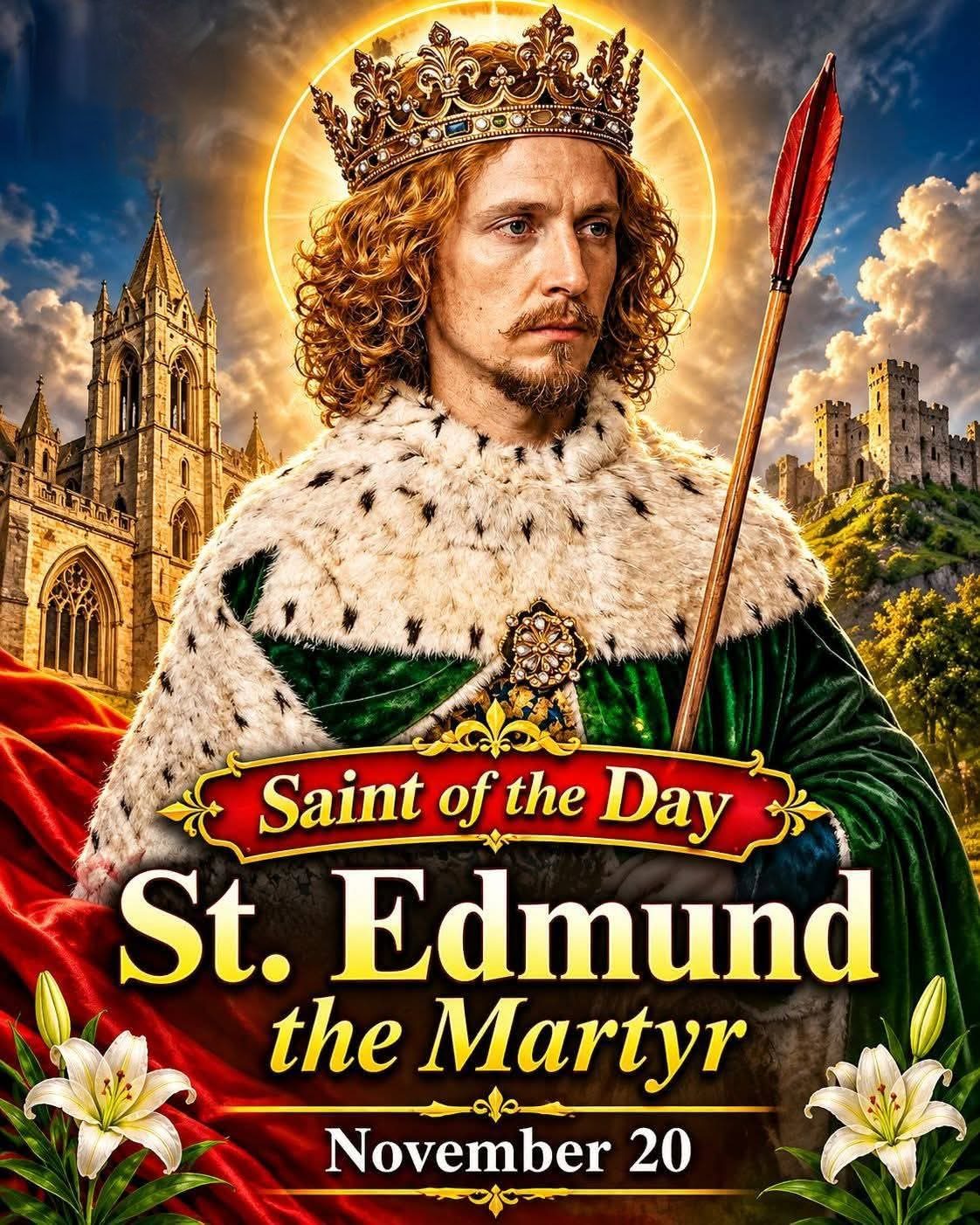
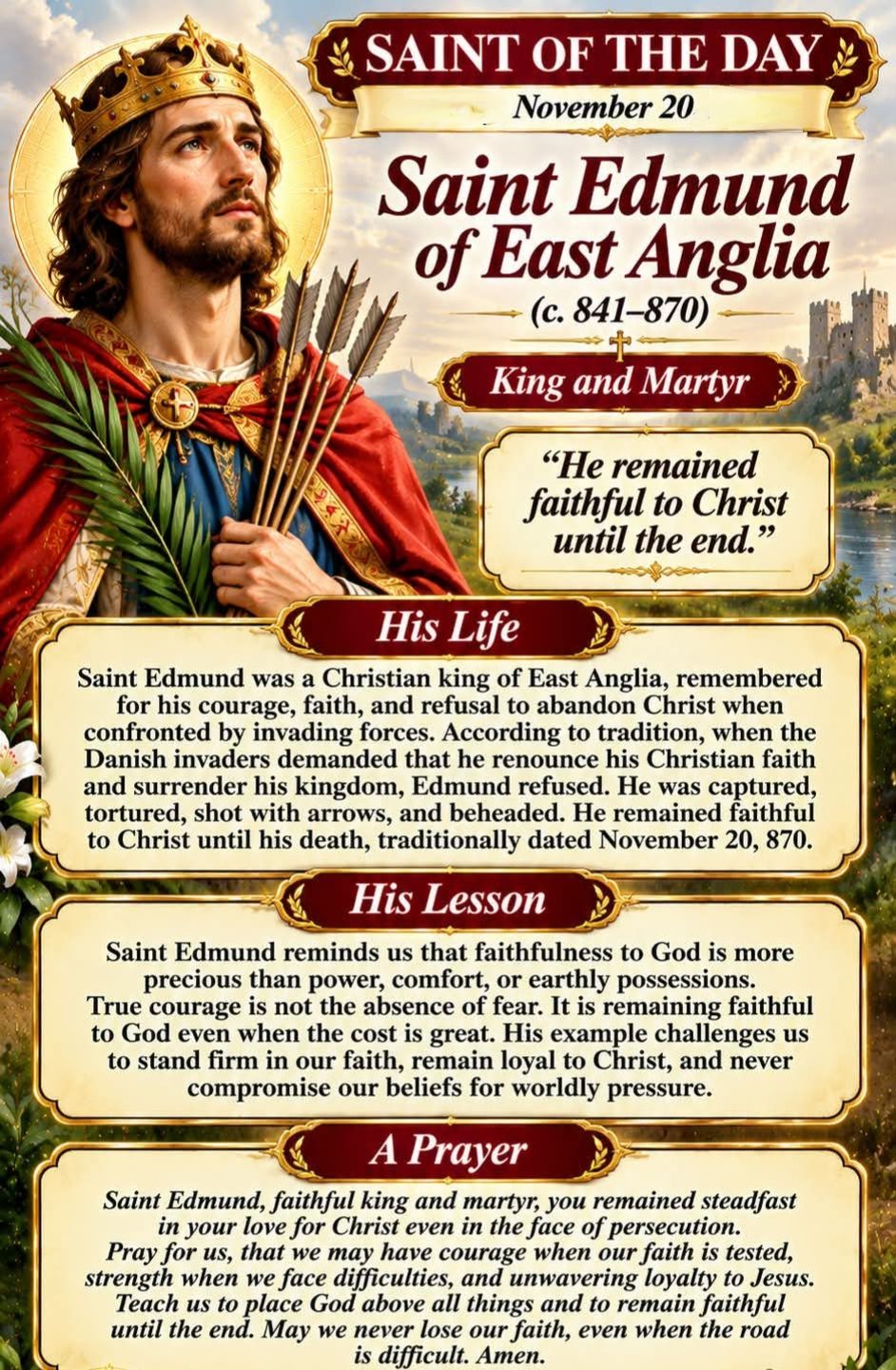
Saint Edmund, or Edmund the Martyr, King of East Anglia in the 9th century AD, is the first saint of England. He was born on Christmas Day, 841 AD. Edmund succeeded to the throne of East Anglia in 856. As a Christian, he fought alongside King Alfred of Wessex against the pagan Viking and Norse invader until 869/70, when his forces were defeated and Edmund was captured by the Vikings. He was ordered to renounce his faith and share power with the pagan Vikings, but he refused.
Edmund became king when he was only fourteen. Yet his high position did not render him proud or conceited. Instead, he took as his role model the Old Testament king, David. Edmund tried to serve God as well as David had. He even learned David’s psalms, which are the hymns of praise to God contained in the Holy Bible. He governed wisely, showing kindness to all his subjects.
When the Danish barbarians invaded his land, he fought them bravely. Their army was much larger than his. At last, the English king was captured. The barbarian leader offered to spare Edmund’s life if he would agree to certain terms. But since these terms were opposed to his country and his religion, the king refused. He declared he would never save his life by offending God and his people. In anger, the chief condemned him to death.
St. Edmund was tied to a tree and then cruelly whipped. The holy king took it all patiently, calling on Jesus for strength. Next, his torturers shot arrows into every part of his body. They were careful not to hit any vital organ, so his sufferings would be prolonged. At last he was beheaded. King Edmund died in 870. The date was 20th November. His decapitated head is said to have been reunited with its body with the help of a talking wolf who alerted his men. Devotion to St. Edmund the martyr became very popular in England. Many churches were dedicated in his honor.
During the Dissolution of the Monasteries under Henry VIII, his remains were removed to France where they remained until 1911. Today they are kept in the chapel in Arundel Castle. It is known that in 902 his remains were moved to Bedricsworth (modern Bury St. Edmunds) where King Athelstan founded a religious community to care for his shrine, a place of national pilgrimage.
King Canute built a stone abbey on the site in 1020 to house the shrine. For centuries Edmund’s resting place was patronised by the kings of England and the abbey became increasingly wealthy as the cult of St Edmund grew.
Such was the influence of St Edmund that on St Edmund’s Day in 1214 rebel English barons held a secret meeting there before going to confront King John with the Charter of Liberties, the forerunner to Magna Carta which he signed a year later. This event is reflected in the motto of Bury St Edmunds: ‘Shrine of a King, Cradle of the Law’.
Although the banner of St. Edmund was still carried into battle by the English army, by the time of Edward I it had been joined by the flag of St. George. In 1348, Edward III founded a new order of chivalry, the Knights of the Garter. Edward made St George the patron of the Order and also declared him Patron Saint of England. But St Edmund has not been forgotten.
An attempt was made in 2006 to have St Edmund reinstated as patron saint of England. A petition was handed into Parliament but it was rejected by the government. In 2013 another campaign was launched to reinstate St Edmund as patron saint. This was the ‘St Edmund for England’ e-petition, backed by the Bury St Edmunds based brewery, Greene King.
It questioned whether St George, patron saint of 16 other countries, ever even visited England and suggested he should be replaced by an Englishman, and who better than the Anglo-Saxon martyr-king St Edmund.
Edmund is the patron saint of pandemics as well as kings, the Roman Catholic diocese of East Anglia, and Douai Abbey in Berkshire. Churches dedicated to his memory are to be found all over England, including St Edmund the King and Martyr’s Church in London, designed by Sir Christopher Wren during the 1670s.
CONTEMPLATING THE LIFE OF SAINT EDMUND, THE MARTYR
A KING WHO CHOSE FAITH OVER POWER
Saint Edmund was a king who ruled with courage, justice and deep devotion to God. Though entrusted with earthly authority, he understood that true kingship was rooted in humility, righteousness and service. His life reminds us that leadership is not measured by power or possessions, but by the integrity with which we serve God and others.
A HEART ROOTED IN CHRIST
Edmund’s faith was not merely a part of his life; it was the foundation of everything he did. He sought to govern in accordance with Christian principles, placing God’s commandments above worldly ambitions. His devotion reminds us that when Christ becomes the centre of our lives, even our responsibilities, decisions and struggles can become acts of faith.
COURAGE IN THE FACE OF PERSECUTION
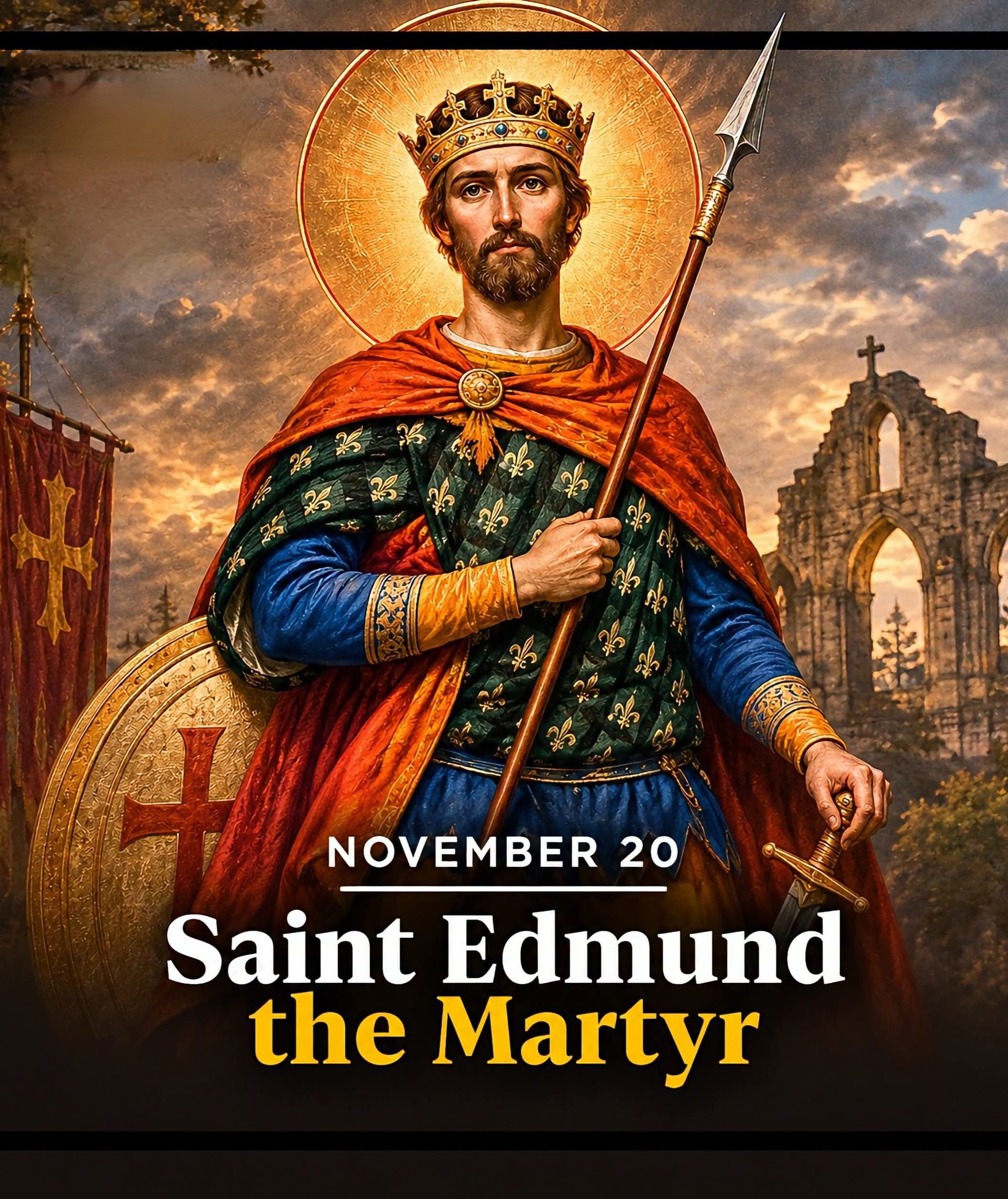
When invading forces threatened his kingdom and demanded that he abandon his faith and surrender his people, Edmund refused to compromise his Christian convictions. Rather than seek safety through submission to evil, he stood firm in his allegiance to Christ. His courage teaches us that true bravery is not the absence of fear, but the willingness to remain faithful when the cost of faithfulness is great.
THE POWER OF FORGIVENESS
Even in the face of cruelty and suffering, Saint Edmund remained steadfast in his Christian spirit. His martyrdom reflects the Gospel call to love our enemies, forgive those who hurt us and refuse to allow hatred to overcome our hearts. He reminds us that forgiveness is not weakness but a powerful testimony to the love of Christ.
A MARTYR WHO GAVE EVERYTHING
Saint Edmund endured a cruel martyrdom, traditionally remembered as being bound to a tree, shot with arrows and ultimately beheaded for refusing to renounce his faith. He accepted suffering rather than betray Christ. His death was not a defeat, but a witness to the triumph of faith, courage and eternal hope. His life reminds us that earthly life is temporary, but fidelity to God has an everlasting reward.
A LEGACY OF FAITH AND HOPE
Saint Edmund’s witness continues to inspire generations of Christians to stand firm in their beliefs, remain faithful in adversity and place their trust in God above all else. His life encourages us to be fearless witnesses of Christ in a world that often challenges our convictions. Like Edmund, we are called to defend truth with courage, live with integrity and surrender our lives into the hands of God.
May the life of Saint Edmund inspire us to remain unwavering in faith, courageous in trials, generous in love and steadfast in our devotion to Christ, whatever the challenges we may face.
PRAYER
Into your hands, O Lord, we entrust this day our souls, and those of all believers. Keep us safe through Saint Edmund’s special intercession, by the merits and intercession of the Blessed Virgin Mary and all heavenly hosts, from all vicious and unruly desires, sins and temptations of the devil, and sudden and unprovided death and the pains of hell.
Illuminate our heart with the grace of your Holy Spirit; grant that we may, like Saint Edmund, be ever obedient to your commandments and may we not be separated from you, O God, in the Name of Jesus our Lord. Amen

Saint Edmund, O Patron Saint of pandemics, pray for us in the Name of Jesus. Amen
*********************************
ALSO CELEBRATED:
SAINT BERNWARD OF HILDESHEIM
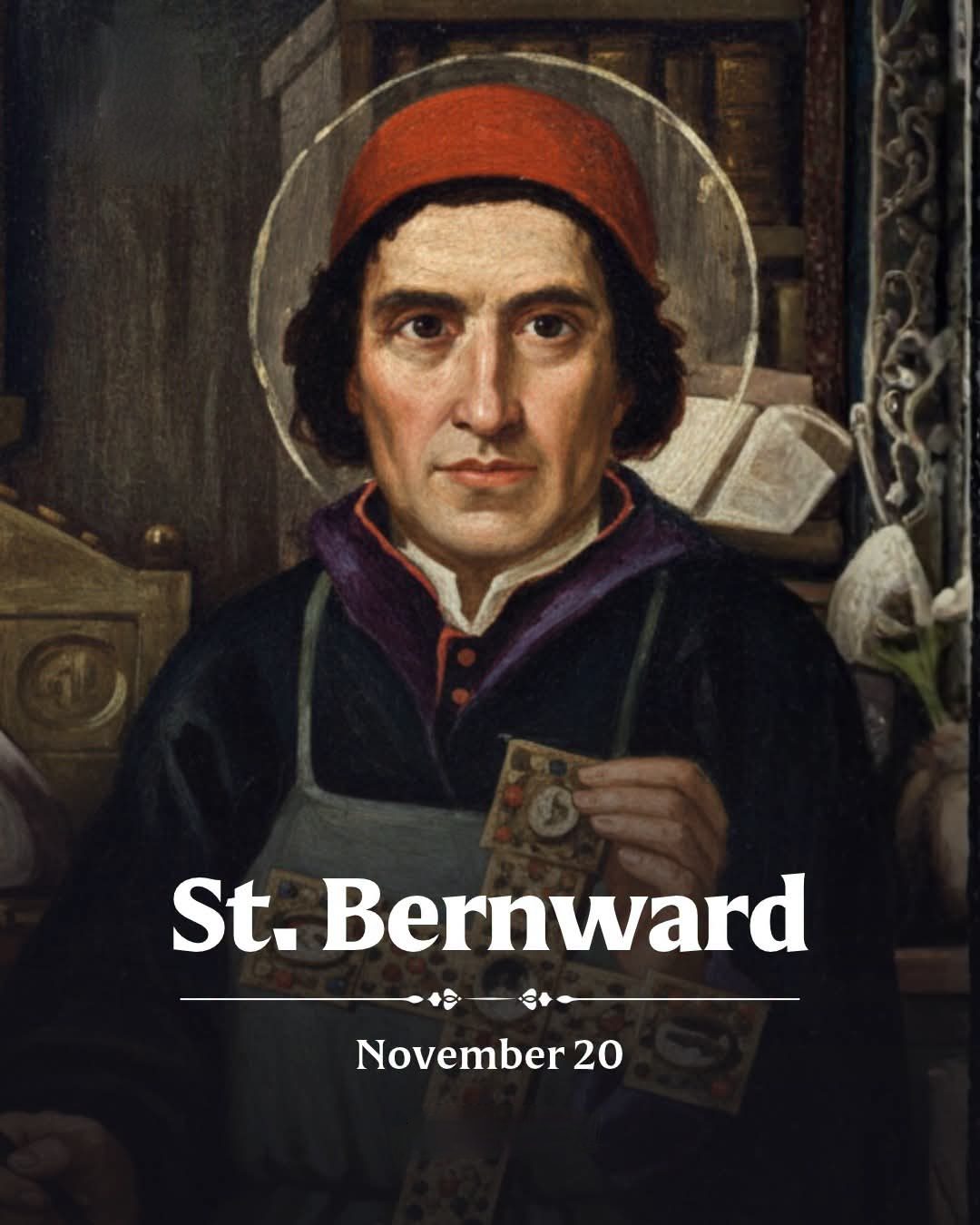
Saint Bernward served as the thirteenth Bishop of Hildesheim, Germany during the middle of the tenth century. His grandfather was Athelbero, Count Palatine of Saxony. After having lost his parents, Bernward was sent to live with his uncle Volkmar, who was the Bishop of Utrecht. His uncle enlisted the assistance of Thangmar, the pious and well-educated director of the cathedral school at Heidelberg, the help with Bernward’s education.
Under the instruction of Thangmar, Bernward made rapid progress in Christian piety as well as in the sciences. He became very proficient in mathematics, painting, architecture, and particularly in the manufacture of ecclesiastical vessels and ornaments made of silver and gold.
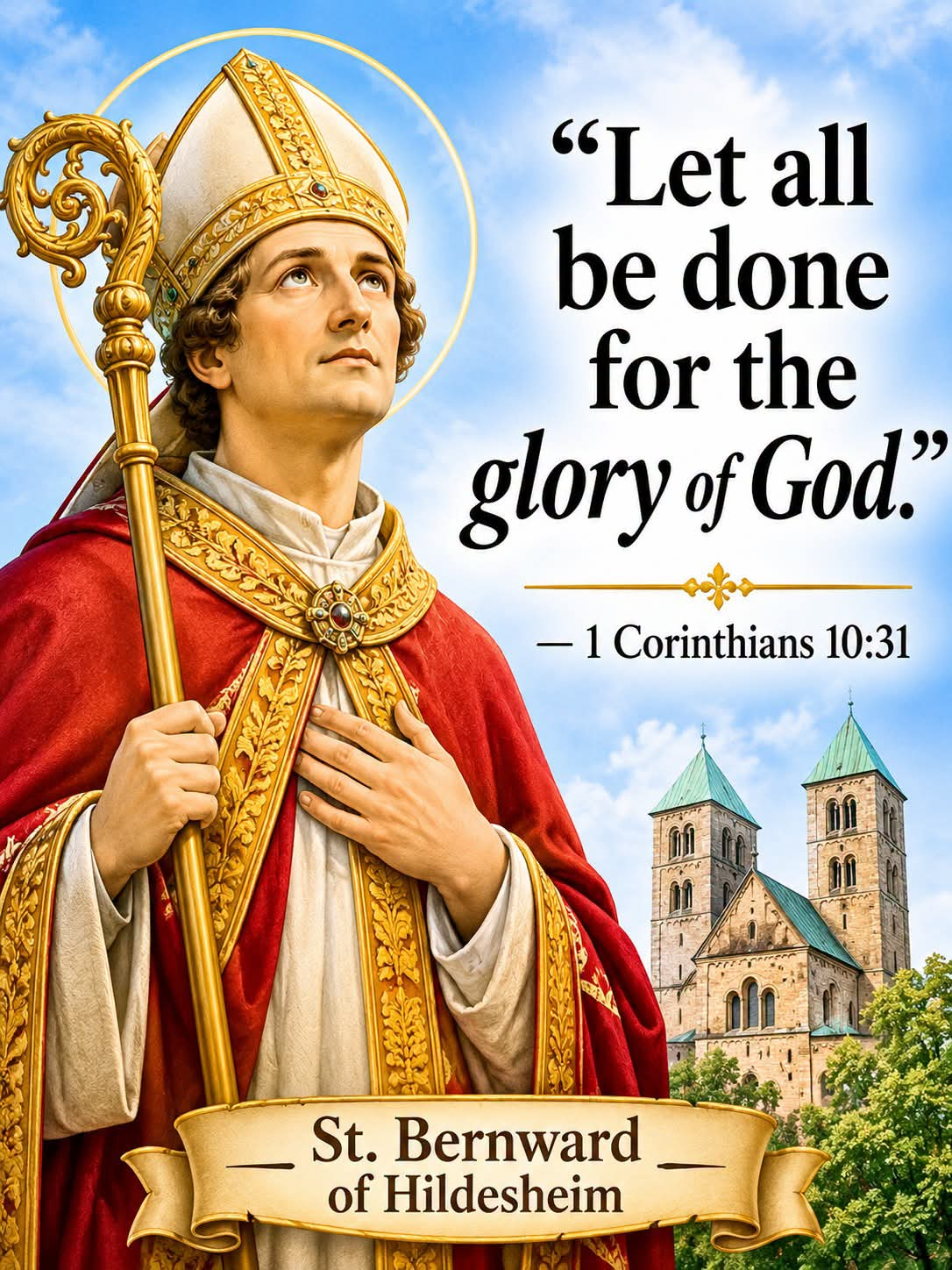
Saint Bernward completed his studies at Mainz, where he was then ordained a priest. In lieu of being placed in the diocese of his uncle, Bishop Volkmar, he chose to remain near his grandfather, Athelbero, to comfort him in his old age. Upon his grandfather’s death in 987, he became chaplain in the imperial court, and the Empress-Regent Theophano quickly appointed him to be tutor of her son Otto III, who was only six years old at the time. Bernward remained at the imperial court until 993, when he was elected Bishop of Hildesheim.
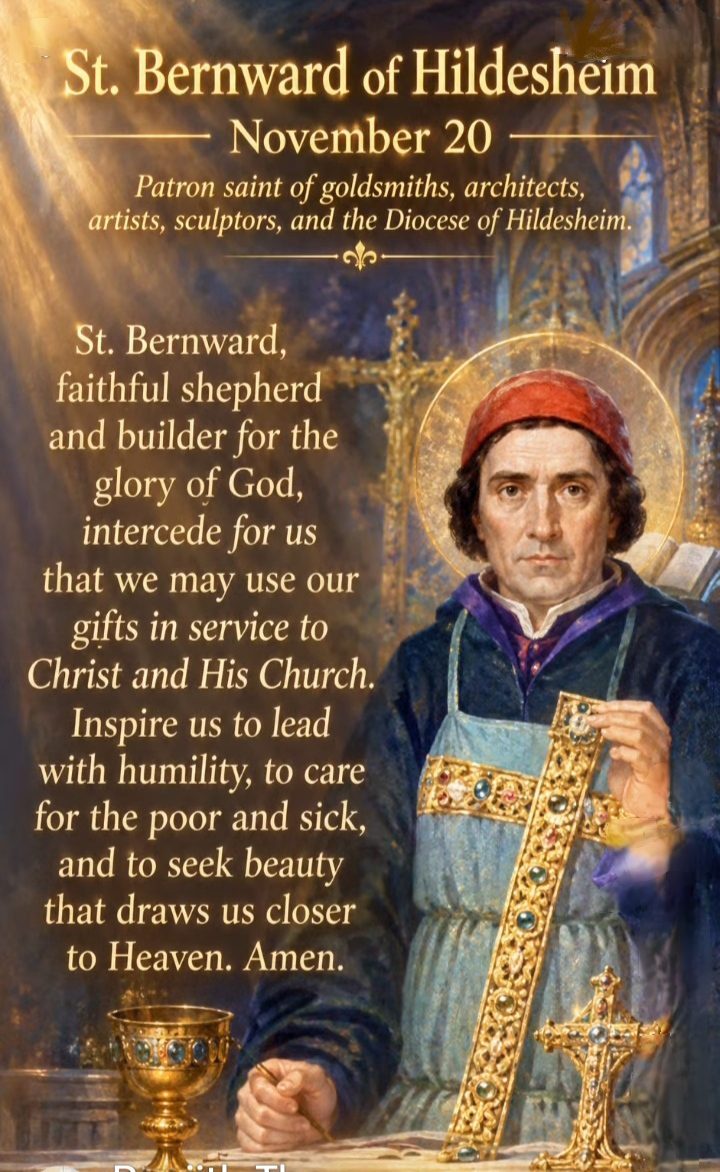
A man of extraordinary piety, he was deeply devoted to prayer as well as the practice of mortification, and his knowledge and practice of the arts were employed generously in the service of the Church.
Shortly before his death in 1022, he was vested in the Benedictine habit. He was canonized by Pope Celestine III in 1193.
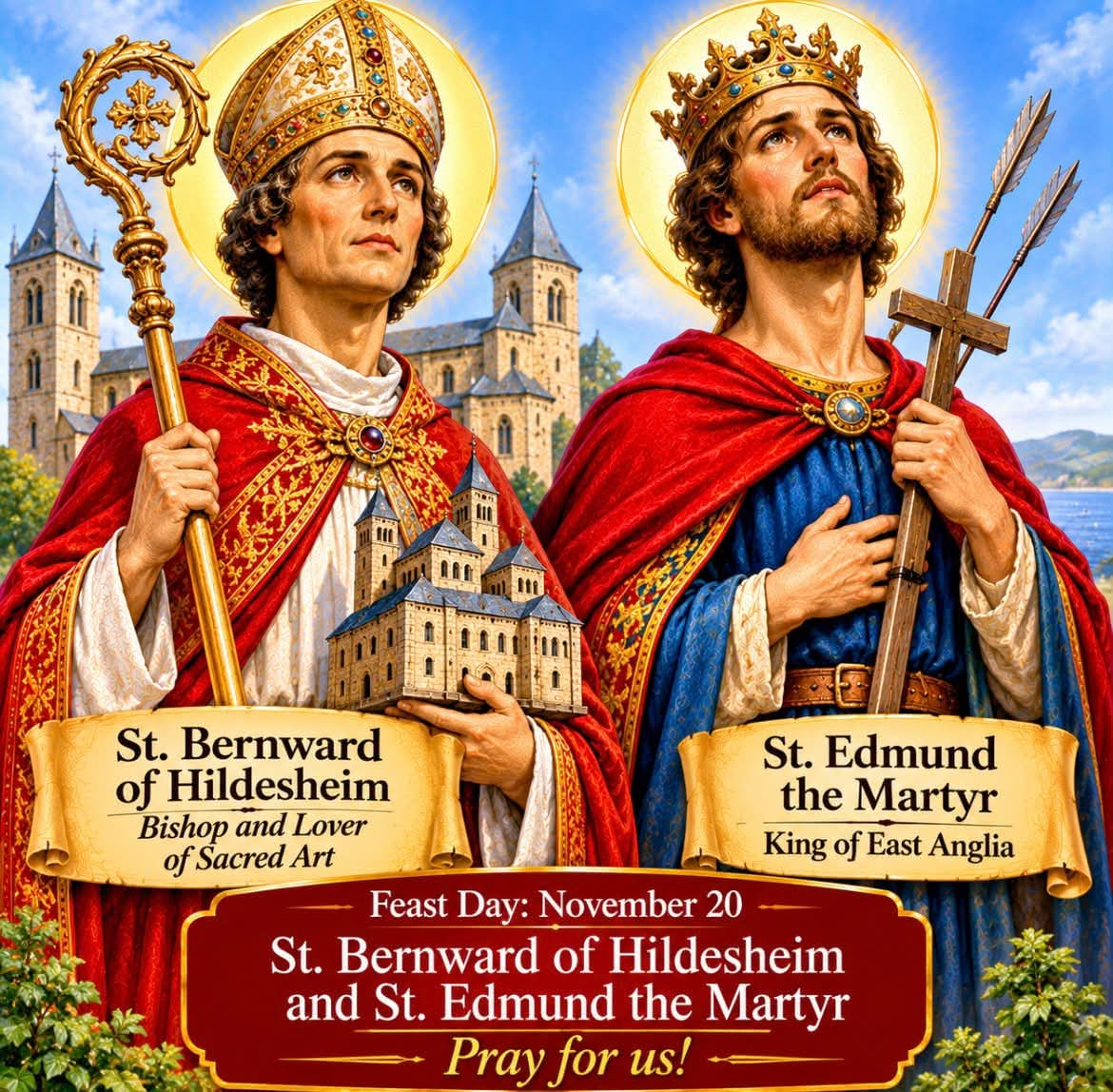
Saints Bernward of Hildesheim and Saint Edmund, pray for us.