
FEAST OF SAINT APOLLONIUS THE APOLOGIST, MARTYR – 18 APRIL
April 18, 2026
SPIRITUAL INSIGHTS INTO THE LIFE OF SAINT GALDINUS
April 18, 2026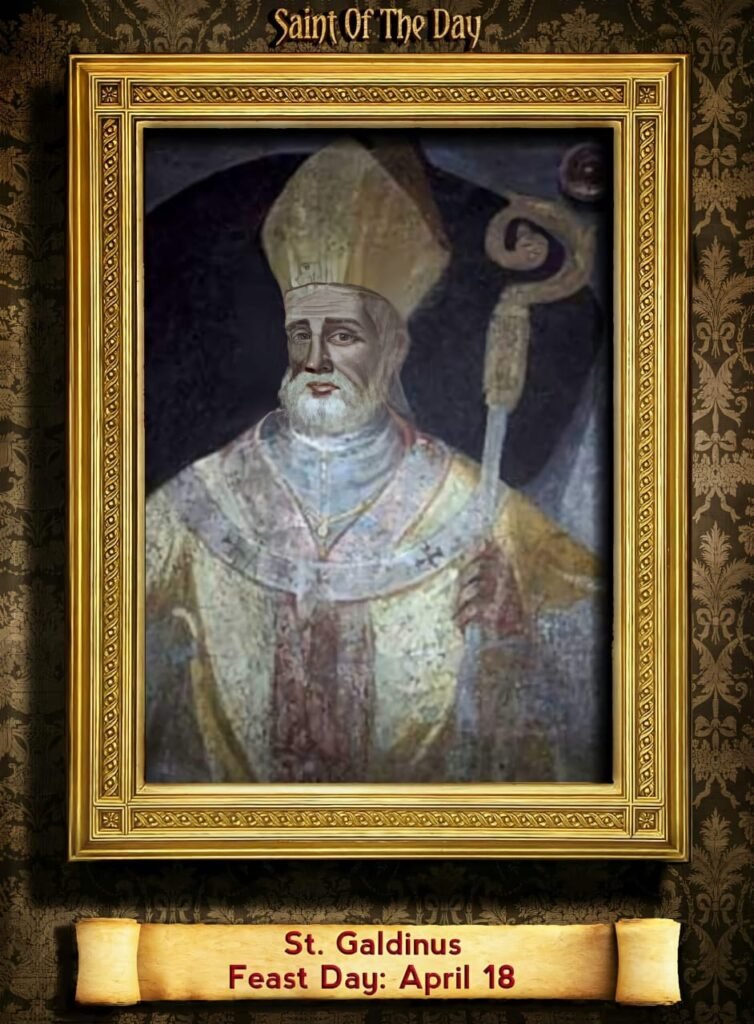
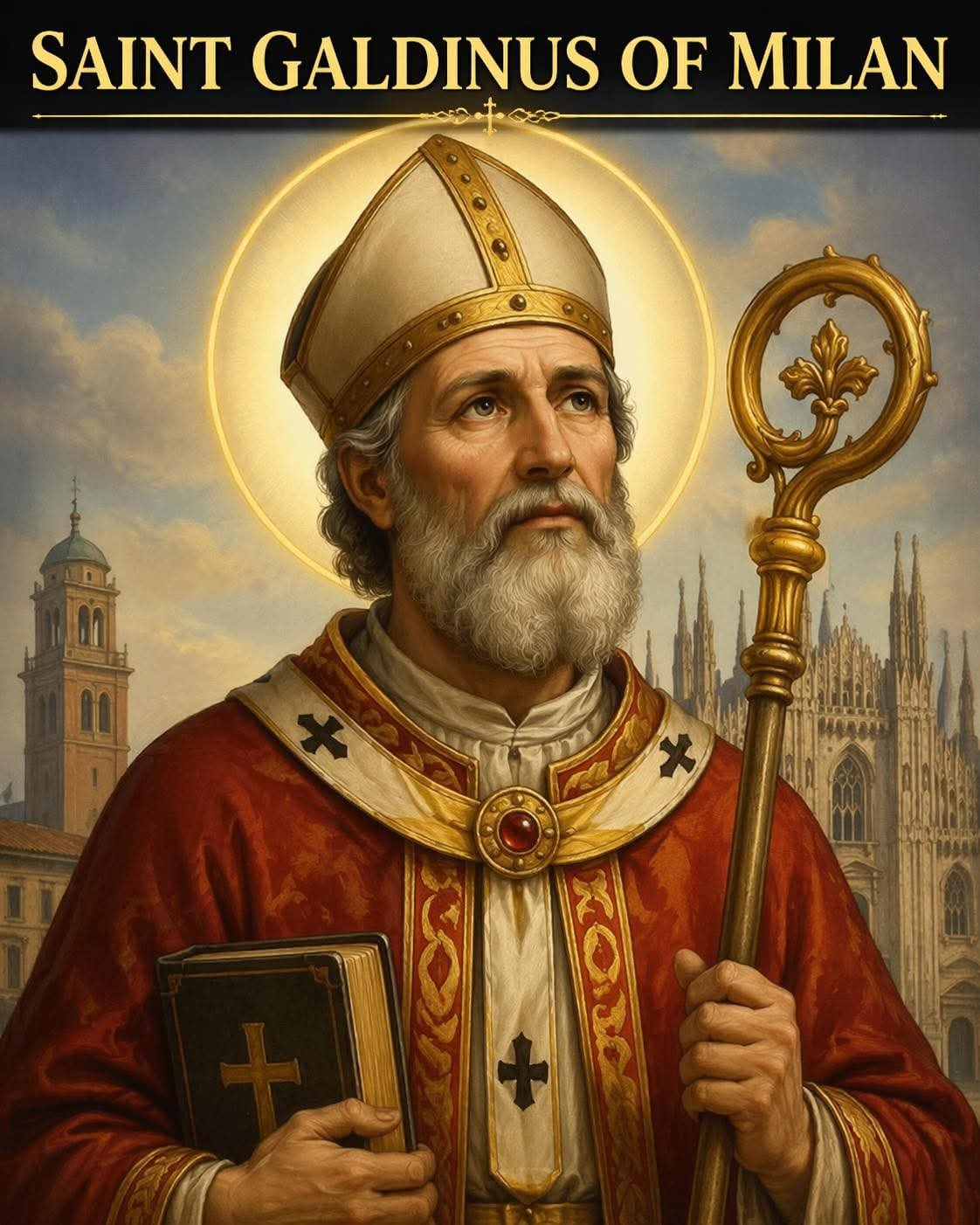
FEAST OF SAINT GALDINUS OF MILAN, CARDINAL
FEAST DAY – 18th APRIL
Saint Galdinus of Milan, Cardinal and Defender of the Faith, 1100 -1176, was a Roman Catholic saint from Milan in Northern Italy. He was a cardinal elevated in 1165 and he also served as Archbishop of Milan from 1166 to his death in 1176. He was a staunch supporter both of Pope Alexander III, and of Milan and its neighbours in Lombardy, in their joint and parallel struggles against the Antipope Victor IV, supported by Holy Roman Emperor Frederick I Barbarossa.
He was born in Milan around 1096 into the della Sala family which was considered to be minor nobility of the city. He was a strong supporter of the Roman papacy in the schism that erupted in 1159 after the death of Pope Adrian IV. Pope Alexander III was the Roman candidate, while Antipope Victor IV was supported by Frederick Barbarossa and his cardinals. Galdinus’ Milanese church supported Alexander III, and as archdeacon of the church, he took a very public stand. Frederick came to besiege Milan and reduced it within six months.
Galdinus joined Alexander III in Genoa and followed him to Maguelonne, Montpellier, and Clermont. He later followed him to Sicily and Rome upon his return in 1165. When Alexander returned to the papacy in 1165, he named Galdinus in the consistory of 15 December as the Cardinal Priest of the titular church of Santa Sabina, and a year later made him the Archbishop of Milan. A year later, Alexander III made him the apostolic legate for Lombardy.
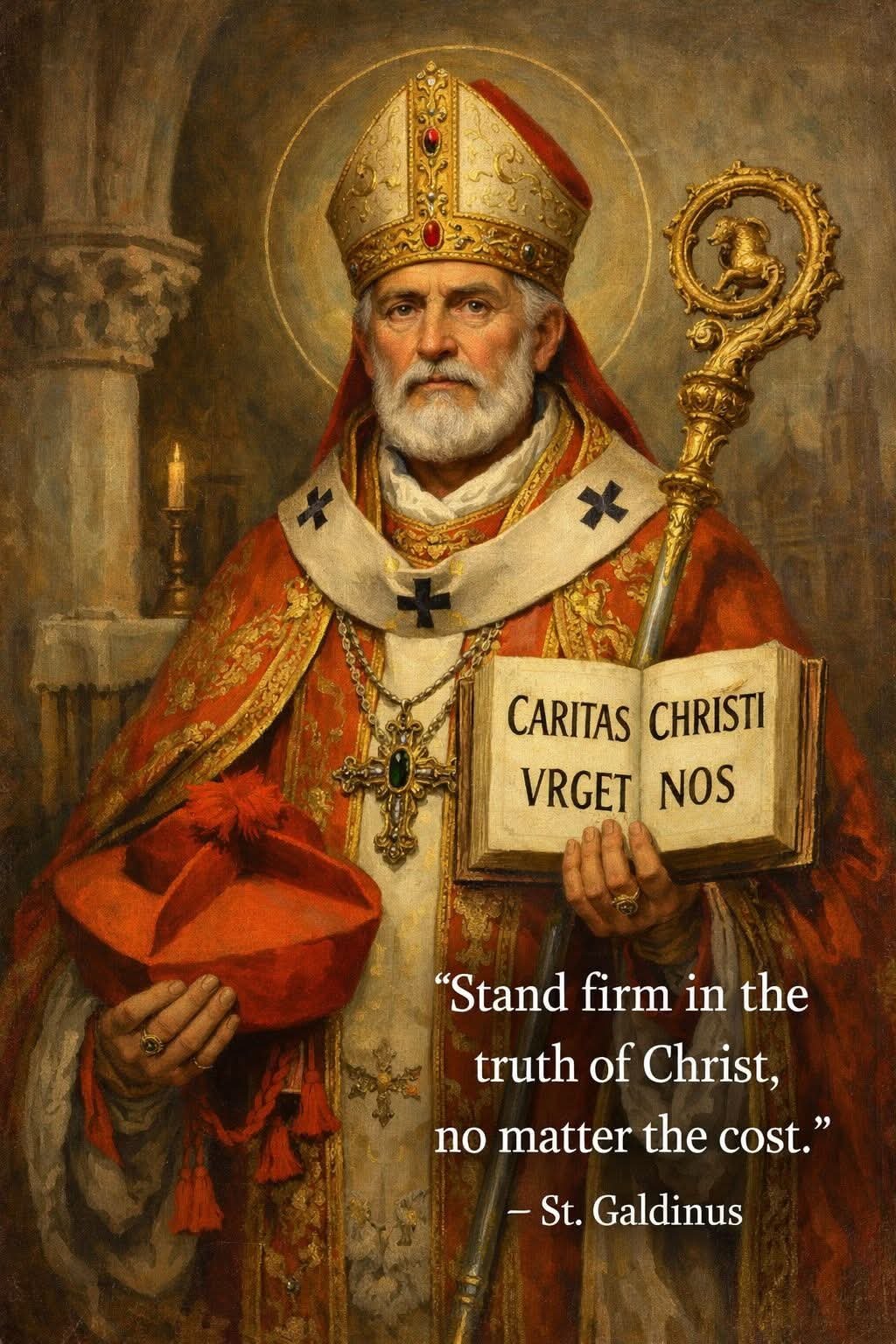
When the Lombard League expelled Barbarossa, Galdinus took possession of his See and began deposing any Lombard priests who were faithful to Victor IV. He consecrated new bishops at Lodi, Alba, Cremona, Vercelli, Asti, Turin, Novara, Brescia, and Alessandria. On 18 April 1176 Galdinus della Sala died in his pulpit, having just completed a sermon against the Cathars, who were seen by orthodox Catholics as ‘heretics’. Pope Alexander III canonized Galdinus as a saint of the Roman Catholic Church during his pontificate.
His liturgical feast day in the Roman Catholic Church, celebrated particularly in churches which follow the Ambrosian Rite, is 18 April (the anniversary of his death). He is remembered also for his charity in Milan to the poor and to those imprisoned for debt. He is a patron of both Lombardy and his old archdiocese. Galdinus lived during a very turbulent era in the Church.
Plagued by scandal and political contests, the Church faced unprecedented attacks in the mid-12th Century. This led the Church to become divided under rival popes, driving clergy loyal to the true pontiff into hiding in certain areas loyal to the anti-pope. St. Galdinus was one of the men whose loyalty to the Papacy and Pope Alexander III caused him to be exiled from his clerical duties in Milan.
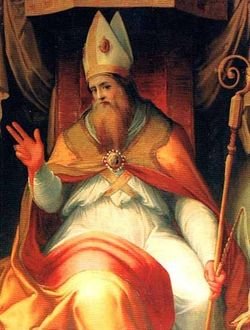
During the era of the anti-pope, St. Galdinus had served under two archbishops of Milan. Capable and orthodox, he rebuilt a city demolished by the political and ecclesial strife that had ensued over the years. He commenced an effort to reform the clergy, who during the confusion developed unpriestly habits, like unchaste relations and selling of ecclesial graces (simony). Further, he sought to aid the poor, whose miseries were only compounded by the political turmoil.
For the decades that he led the Church in Milan, St. Galdinus became known as a powerful preacher, whose eloquence and zeal educated and touched the hearts of the Faithful. In the final days of his life he had fallen into such fragile health that he was not able to celebrate the Mass. Nonetheless, true to form, St. Galdinus would not miss the opportunity to teach and preach.
Accordingly, in his final sermon he was articulating a position against prevailing false doctrines in the Church, when he concluded not by exiting the pulpit, but by dying in it. St. Galdinus shows us a stunning example of a man who died with Christ’s Church at the very forefront of his thoughts, words, and actions. We could only hope to die as he did. The crux of St. Galdinus final sermon had to do with the need for reconciliation in the Church by abandoning the anti-pope.
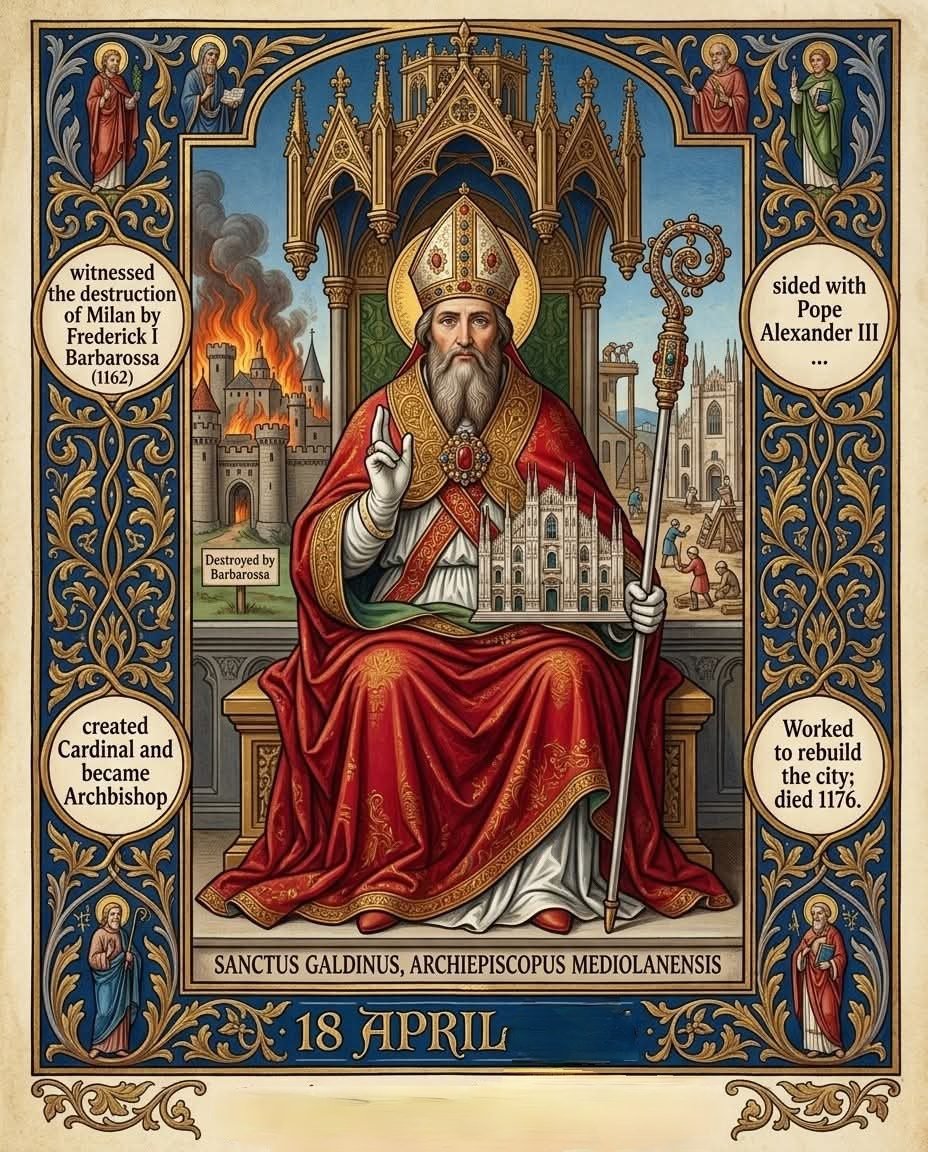
He died, of course, before the Church was reunited under its One True Head. But he worked diligently toward this goal, despite it all. His final breath was drawn in 1176. By 1177 the excommunicated Emperor Frederick was reconciled to Pope Alexander III and the Church was, again, united. St. Galdinus didn’t live to see it, but he never stopped working for it.
We must follow this example. We must work unceasingly to ushering in God’s Kingdom, to reunite a fractured Church. We cannot despair because our efforts seem unfruitful or ineffective. Christ will not let our efforts be in vain. We do His work, and though we may die before we see the result in this earthly life, we will live eternally to enjoy the results forever in the next.

CONTEMPLATING THE LIFE OF SAINT GALDINUS
INTRODUCTION
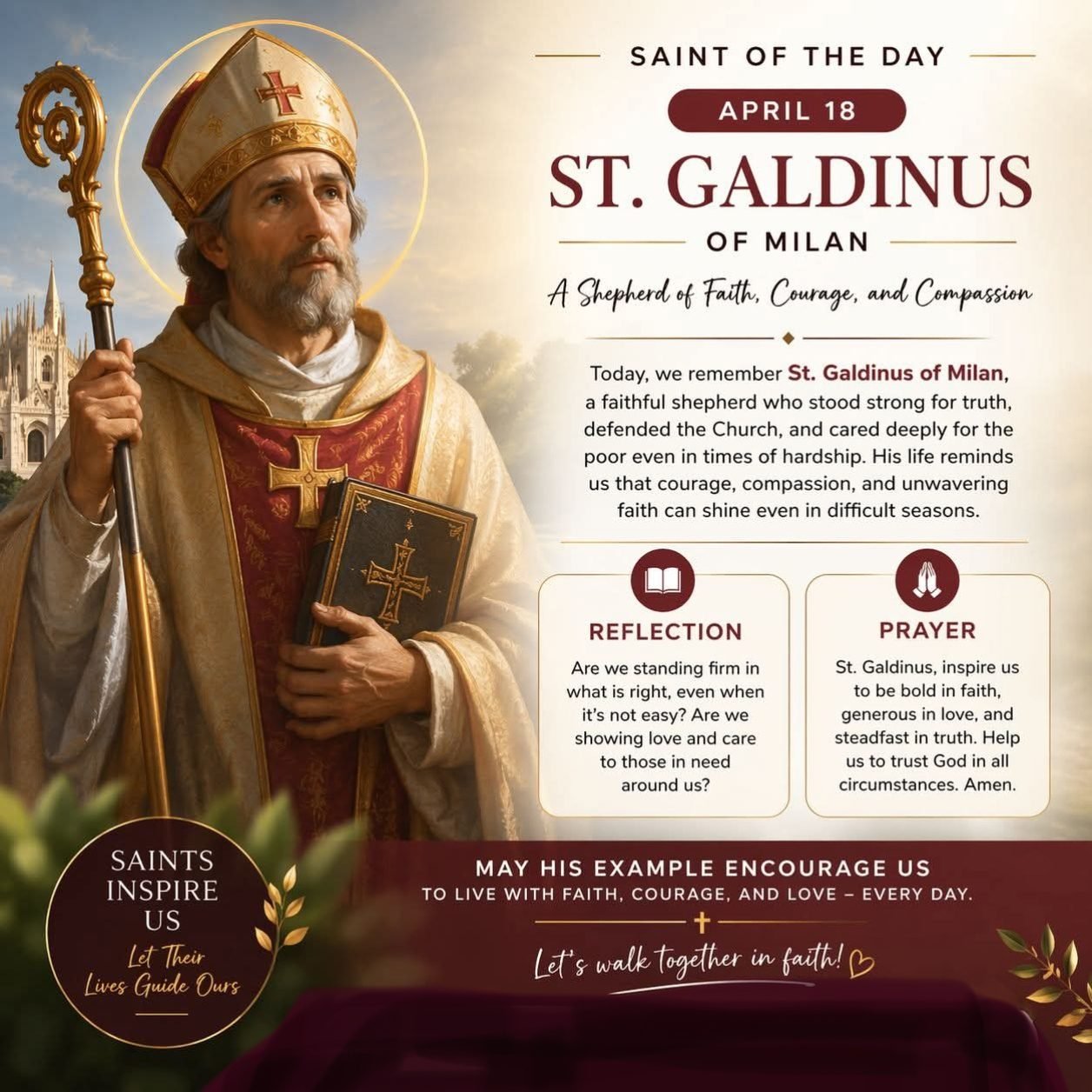
Saint Galdinus stands as a powerful yet lesser-known figure of the twelfth century, remembered as a faithful Archbishop of Milan, a reformer, and a courageous defender of the Church’s freedom during a time of intense political and religious turmoil. His life reveals steadfast courage, deep loyalty to the Church, and a compassionate pastoral heart, especially toward the poor and suffering.
EARLY LIFE AND BACKGROUND
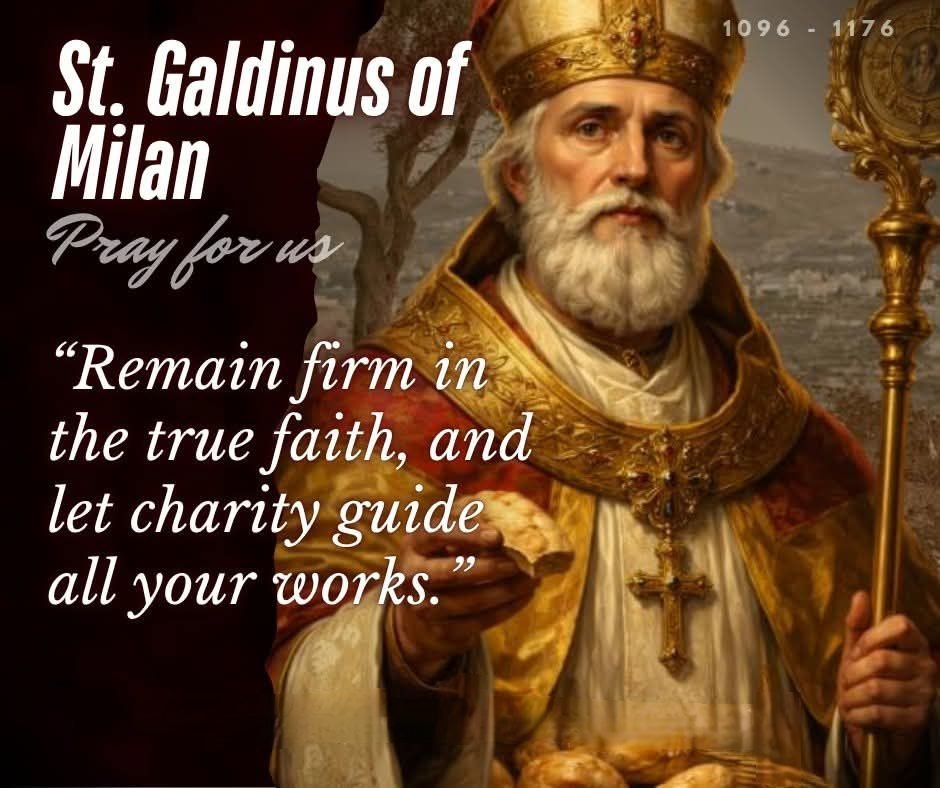
Born around the year 1096 in Milan, Italy, Galdinus lived in a period marked by conflict between Church and empire, struggles over authority and reform, and widespread political instability across northern Italy. He eventually became Archbishop of Milan and remained devoted to his mission until his death in 1176. His feast day is celebrated on April 18.
A MAN OF ORDER IN A WORLD OF TENSION
Milan was a strong and influential city, rich in structure and tradition. Within its Church quietly served Galdinus, not yet a bishop or widely known figure, but a faithful servant. As a deacon and administrator, he ensured that the daily life of the Church functioned smoothly. He was known for his reliability and steadiness, a man who maintained order when circumstances began to shift.
WHEN POWER TURNED AGAINST FAITH
Pressure soon mounted from beyond the city, not only through external threats but from imperial authority itself. Emperor Frederick Barbarossa sought control not just over lands but also over the Church. Milan resisted this domination, and the consequences were devastating. The city was attacked, broken, and scattered. Homes were lost, lives disrupted, and in the midst of this upheaval, Galdinus was driven into exile.
EXILE AS A TEST OF LOYALTY
Exile stripped away everything familiar from Galdinus, including his position, influence, and security. He could have chosen safety or aligned himself with power, but instead he remained faithful to the Church and to the truth he believed in. Far from ending his mission, exile deepened his commitment and strengthened his resolve.
THE CALL TO RETURN
After years of hardship, a call came from Pope Alexander the Third, inviting Galdinus to return to Milan, not as an administrator but as its Archbishop. He returned not to a flourishing city but to ruins, a broken Church, a divided people, and a wounded faith community.
REBUILDING HEARTS AND HOPE
Galdinus did not begin by rebuilding structures but by restoring people. He preached tirelessly, gathered the scattered, rebuilt trust, fed the poor, encouraged the weary, and worked to unite those who were divided. While physical structures can be restored quickly, healing hearts takes time. Through his patient efforts, Milan slowly began to live again.
DEFENDER OF TRUTH
As the city recovered, new challenges emerged in the form of misleading teachings that denied the goodness of creation and distorted Christian belief. These ideas, similar to Cathar heresies, rejected the material world and undermined the truth of Christ’s Incarnation. Galdinus recognized the danger and responded not with anger but with clarity and conviction. He defended the faith and safeguarded the people from spiritual confusion.
A LIFE COMPLETELY GIVEN
Galdinus poured out his life in service, giving his strength, time, and voice without reserve. He labored tirelessly until, while preaching, his body could endure no more. In the very act of serving God and His people, he collapsed and passed from this life.
SPIRITUAL CHARACTER
Saint Galdinus is remembered for his fidelity, remaining loyal under pressure; his courage in the face of political and doctrinal challenges; his charity toward the poor and suffering; and his zeal in dedicating himself fully to his mission.
SPIRITUAL SIGNIFICANCE
His life reveals that true leadership is most needed in times of crisis, that fidelity to truth must remain even in exile or hardship, and that the faith must be protected with clarity and conviction.
KEY THEMES FROM HIS LIFE
His journey reflects the choice of truth over comfort, the rebuilding of hope after destruction, leadership expressed through humble service, and the beauty of a life completely given to God.
THE LEGACY OF A FAITHFUL SHEPHERD
The life of Saint Galdinus concludes not with grandeur but with quiet fulfillment. A city was restored, a faith preserved, and a people strengthened. He did not build monuments of stone, but something far greater—he rebuilt lives.
PRAYER
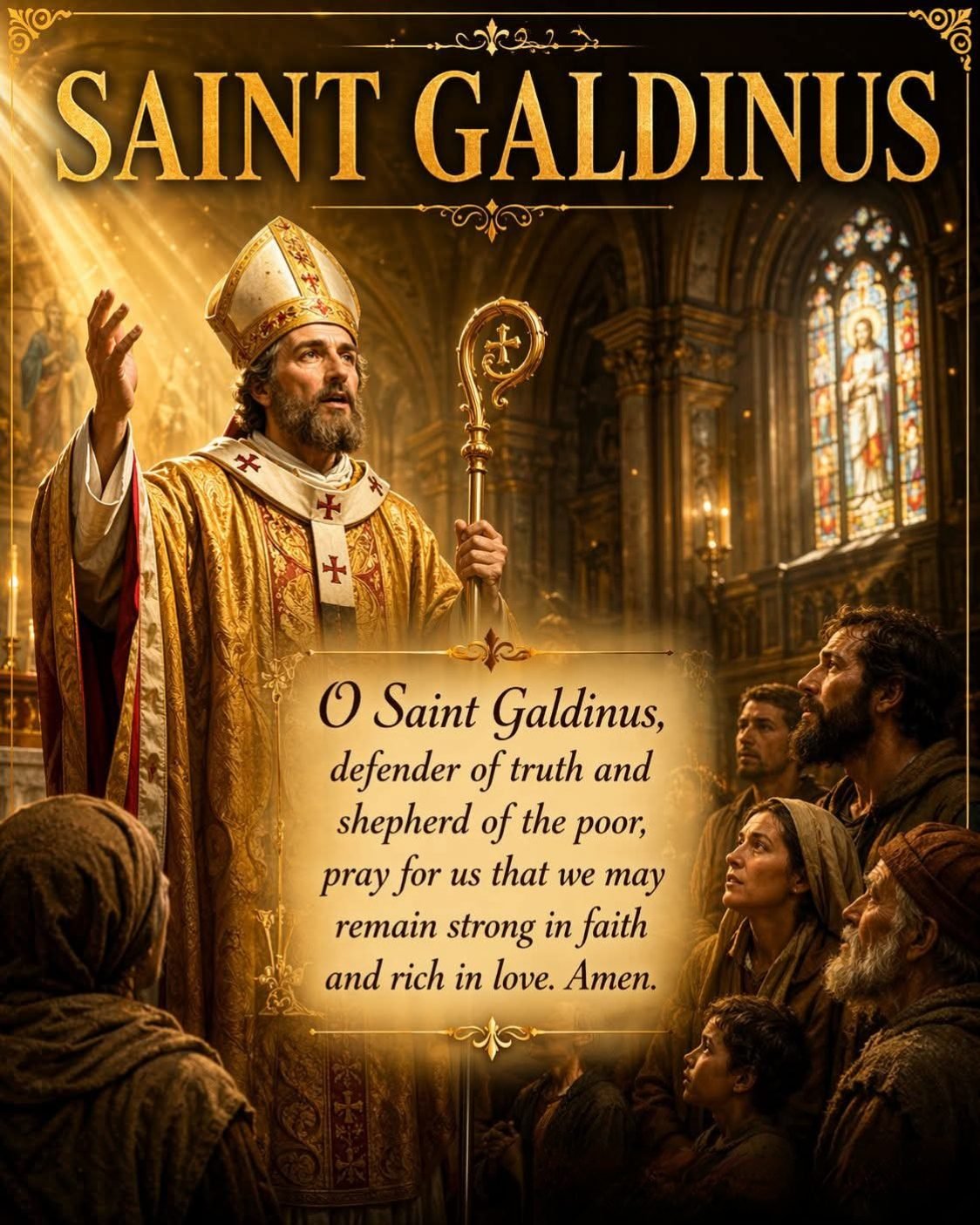
Dear God, your chosen saint, Saint Galdinus, in zealous commitment, went out fighting for what Jesus built. Passing right after delivering a sermon against heresies of our time is what we all should aspire for.
Lord, we pray that each of us could muster the courage to speak and stand up when our faith is under assault. In Jesus’ Name. Amen
Saint Galdinus of Milan, pray for us.