
Day Thirty-Four of Lent – “I Thirst”
March 28, 2026
Psalm 3:3
March 28, 2026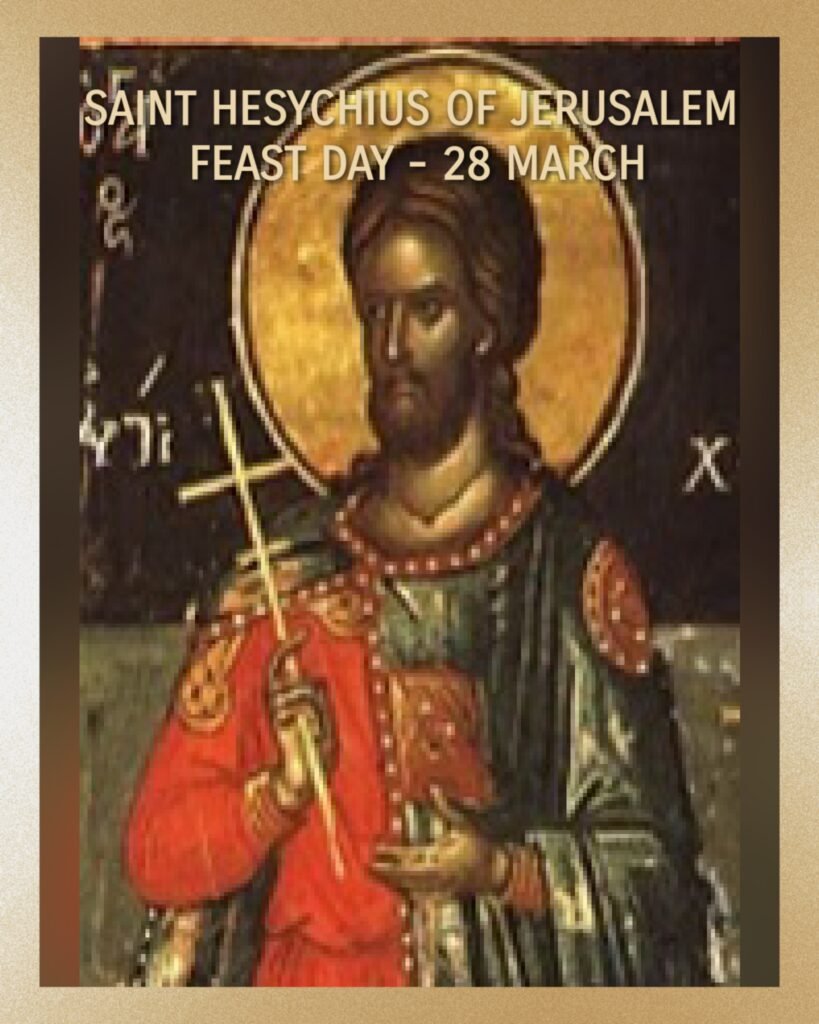
FEAST OF SAINT HESYCHIUS OF JERUSALEM
FEAST DAY – 28th MARCH
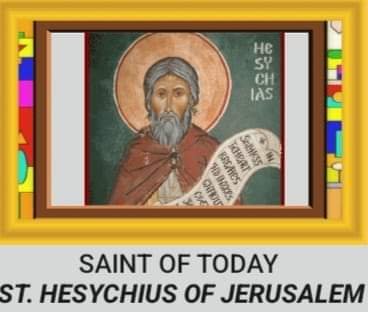
Hesychius of Jerusalem was a Christian presbyter and exegete, active during the first half of the fifth century. Nothing certain is known as to the dates of his birth and death, or, indeed, concerning the events of his life. Bearing as he does the title “priest”, he is not to be confused with Bishop Hesychius of Jerusalem, a contemporary of Gregory the Great.
He was consecrated as a Christian Presbyter (Leader and Elder) by the Archbishop of Jerusalem. He wrote many books and commentaries on the Bible. They include Leviticus, the Psalms, Minor Prophets, Isaiah, Luke and the Blessed Virgin Mary although, sadly, not all of his manuscripts have survived the ravages of time.
Through his writings, he became a highly respected authority on Christian teaching. He had a special devotion to the Eucharist and told his followers, “Keep yourselves free from sin so that every day you may share in the mystic meal; by doing so our bodies become the body of Christ.”
The writings of Hesychius of Jerusalem have been in part lost, in part handed down and edited as the work of other authors, and some are still buried in libraries in manuscript. Whoever would collect and arrange the fragments of Hesychius which have come down to us must go back to the manuscripts.
About half of the matter under “Hesychius” must be discarded. However, the commentary on Leviticus, which is extant in its entirety only in Latin is authentic, although its biblical text has been aligned to the Vulgate text rather than the Septuagint. Its authenticity has been proved by the publication of a Greek fragment, which, moreover, shows that the Latin text is in poor condition.
A comprehensive critical edition of the homilies, said to be of Hesychius, both authentic and spurious, transmitted in Greek under Hesychius’ name was published by Michel Aubineau. Judging from the extant fragments—scattered and translated into Armenian, Georgian, and Latin, Hesychius must have been a very prolific writer on Biblical, particularly Old Testament, exegetics.
The notice in the Greek Menology under 28 March, in which mention is made of the exposition of the entire Scriptures, can refer to none other than Hesychius of Jerusalem. In hermeneutics he adheres to the allegorico-mystical method of the Alexandrines; he finds in every sentence of the Bible a mystery of dogma, and reads into texts of the Old Testament the whole complexus of ideas in the New.
His comment on Isaiah, xix, 1, “the Lord will ascend upon a swift cloud, and will enter into Egypt” is “Christ in the arms of the Virgin”. Water represents always to him “the mystical water” (of baptism), and bread, “the mystical table” (of the Eucharist). It is this hyper-allegorical and glossarial method which constitutes the peculiar characteristic of his exegesis, and proves a valuable help to the literary critic in distinguishing authentic Hesychiana from the unauthentic.
The anti-Semitic tone of many scholia may find an explanation in local conditions; likewise geographical and topographical allusions to the holy places of Palestine would be expected of an exegete living at Jerusalem. The importance of Hesychius for textual criticism lies in the fact that many of his paraphrases echo the wording of his exemplar, whereby he has saved many rare variants.
He is likewise of importance in Biblical stichometry. His “Capitula” and commentaries show the early Christian division into chapters of at least the Twelve Minor Prophets and Isaiah, which corresponds to the inner sequence of ideas of the respective books better than the modern division.
In the case of certain separate books, Hesychius has inaugurated an original stichic division of the Sacred Text—for the “citizen of the Holy City” cited in the oldest manuscripts of catenae of the Psalms, and the Canticles, is none other than Hesychius of Jerusalem. It was discovered by Giovanni Mercati that in some manuscripts the initial letter of each division according to Hesychius is indicated in colour.
Hesychius must have been generally known as an authority, for he is quoted simply as Hagiopolites, or, elsewhere, by the equally laconic expression “him of Jerusalem” St Hesychius was also well known for his preaching and teaching. He died around 450. St Hesychius’ Feast Day in the Greek Orthodox Church is the 28th March.
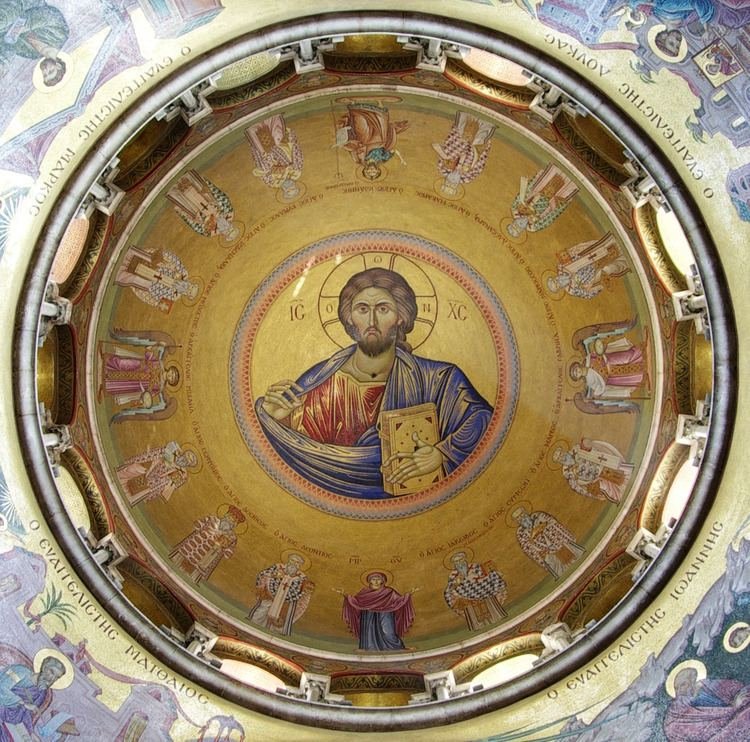
PRAYER
Saint Hesychius of Jerusalem, pray for us that we will seek the wisdom to search for a deep love of Jesus in our everyday life. Amen
*************************************
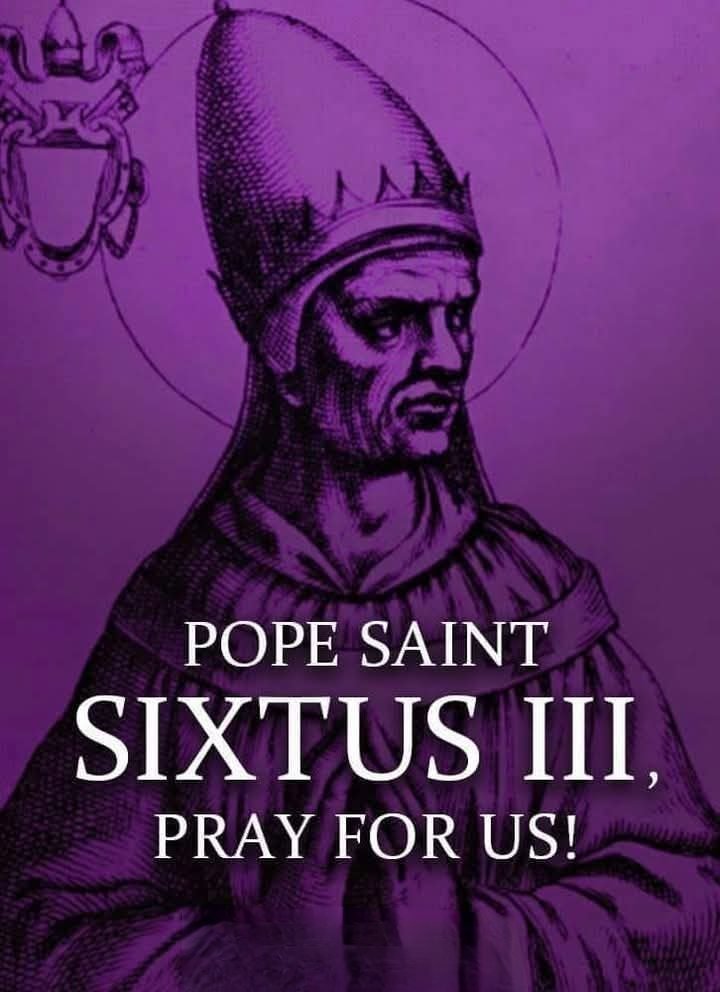
SAINT SIXTUS III – POPE
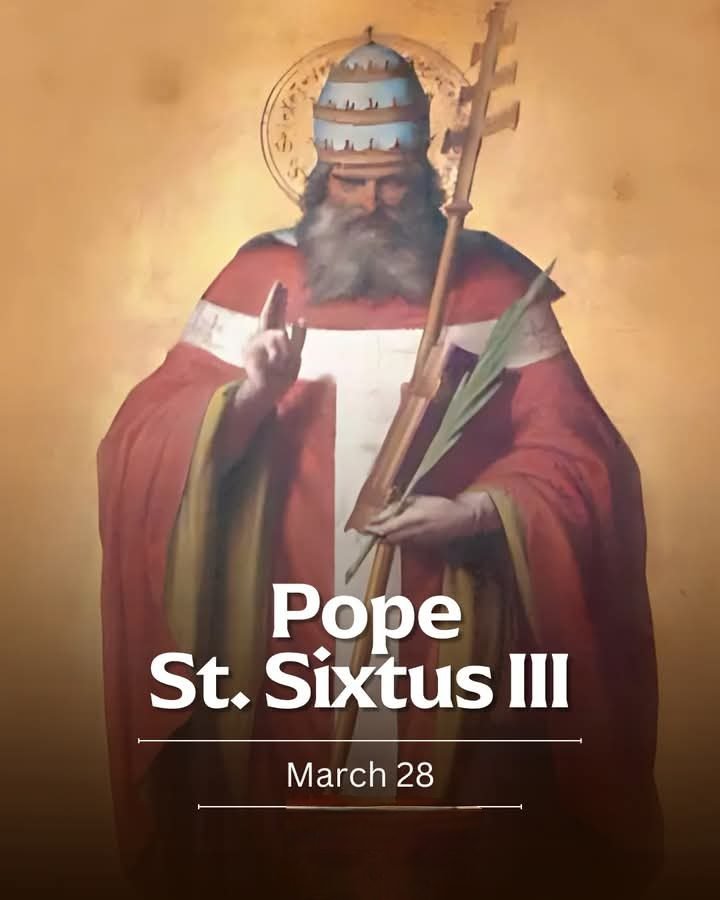
Son of Xystus, St Sixtus was Chief Roman priest at the time of his election to succeed Pope St Celestine I on 31 July 432. He was known to St Augustine.
Sixtus was a conciliator. Following the Council of Ephesus (431) he encouraged the negotiations between Cyril of Alexandria and John of Antioch who were in disagreement regarding the two natures in Christ. When they, at last, came to an agreement, he wrote to congratulate them (433).
Among the other fortifications in the city, Sixtus restored the Liberian Basilica, now called St Mary Major and rebuilt the Lateran Baptistery, giving it the present form. A second basilica was joined to the Church of St Lawrence outside-the-walls to replace what had been carried off by the Visigoths. Valentinian III was persuaded by him to contribute silver and gold ornaments to the basilicas of Sts Peter, Paul and John Lateran.
After his death on 19 August 440, his mortal remains were buried in St Lawrence’s church, and his name was included in the 9th century version of the Roman Martyrology by Ado of Sens.
CONTEMPLATING THE LIFE OF SAINT SIXTUS III (d. 440) – POPE AND DEFENDER OF THE INCARNATION
Sixtus III was a 5th-century pope who guided the Church during a crucial time of theological clarity, especially after the debates about the identity of Christ and the role of the Virgin Mary.
He is remembered for:
* defending orthodox teaching
* promoting unity in the Church
* building one of the most important Marian basilicas in Rome.
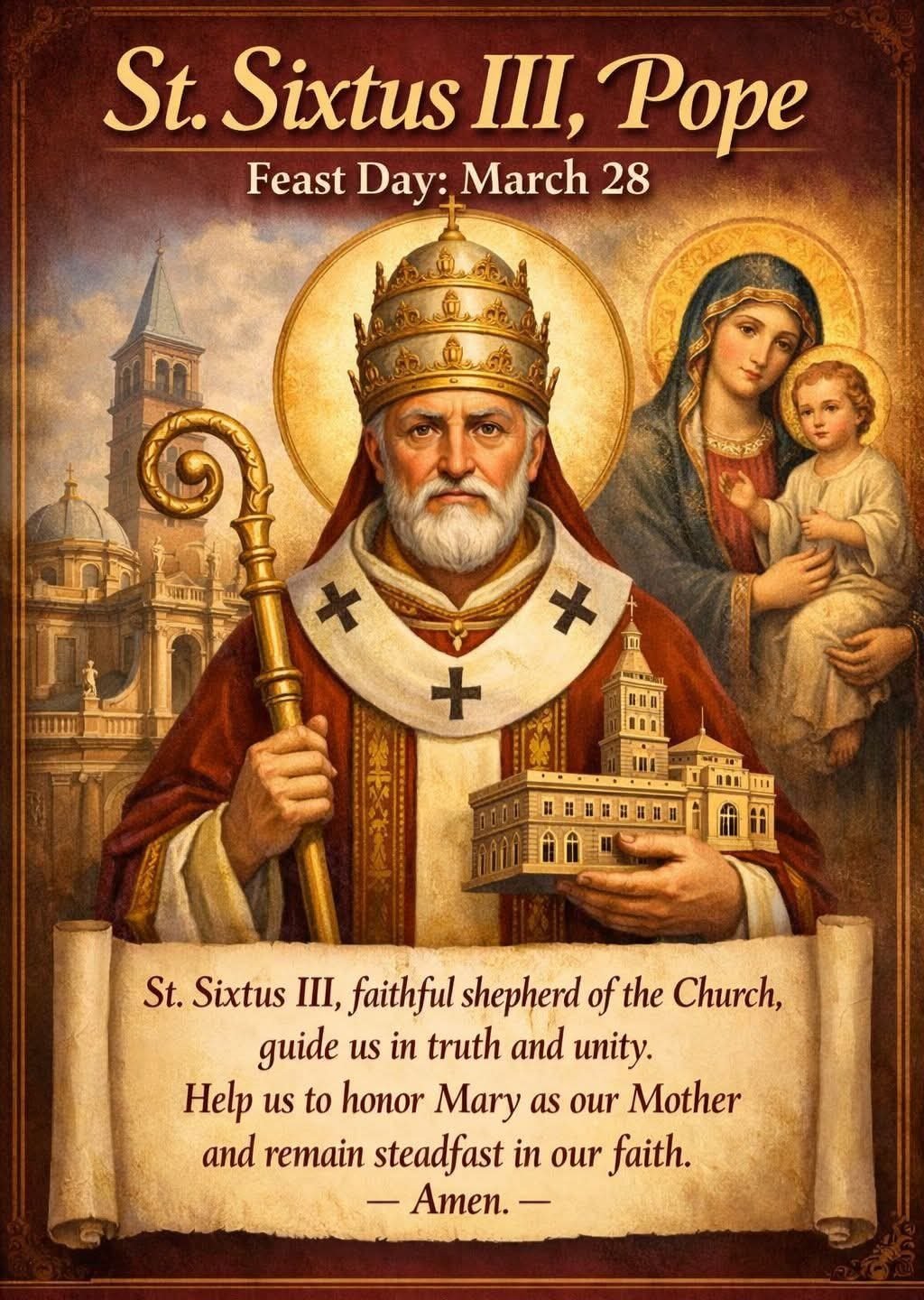
THE POPE WHO GUARDED THE MYSTERY: ST. SIXTUS III AND THE TRUTH OF THE INCARNATION
In the ancient city of Rome, where empires had risen and fallen, a quiet but decisive leader took his place at a moment of deep tension within the Church. His name was Sixtus III.
The question before the Church was not political. It was far more profound:
Who is Jesus Christ?
A Church Divided
The years before his election had been marked by intense controversy. At the heart of the conflict was a teaching known as Nestorianism.
Nestorianism claimed that Jesus was not one unified person, but almost two separate persons – one human, one divine. If true, then Mary would not truly be the Mother of God, but only the mother of Christ’s human nature.
But the Church saw the danger: If Christ is divided, then our salvation is divided. If God did not truly become one with humanity, then humanity is not fully redeemed.
The Council and Its Aftermath
The Council of Ephesus had already declared the truth:
1 Christ is one Person, both fully God and fully man.
2 Mary is rightly called Theotokos, the Mother of God.
But even after the council, tensions remained. Disagreements lingered. Unity was fragile.
The Shepherd of Peace
Sixtus III was elected pope in 432 AD, just one year after the Council of Ephesus.
When Sixtus III became pope in 432, he inherited not a peaceful Church – but a divided one.
He could have ruled with severity. He could have deepened the divisions. Instead, he chose a different path.
He became a shepherd of reconciliation. He upheld the truth firmly – but worked tirelessly to heal wounds. He sought not victory over others, but unity in truth.
Building a Visible Faith
To strengthen the faith of the people, Sixtus III turned not only to words – but to beauty. He rebuilt and adorned the great basilica of: Santa Maria Maggiore
The original church, known as the Liberian Basilica, was constructed by Pope Liberius in the mid-4th century. Sixtus III’s renovation was a response to the Council of Ephesus in 431, which affirmed Mary’s title as Mother of God.
Its walls were covered with luminous mosaics. Gold and color told the story of salvation.
Above all, they proclaimed one truth:
God has truly come among us!
* Mary is not just the mother of a man.
* She is the Mother of God made flesh. The theology of the Church was now written not only in books – but in light and stone.
Guarding the Mystery
For Sixtus III, this was not just a debate of ideas. It was a mystery to be protected. If Christ is truly God and truly man, then:
* God has entered human suffering
* God has shared our life
* God has redeemed us from within
And so, defending this truth was not about argument. It was about protecting the heart of the Gospel.
The Quiet Strength of a Pope
Sixtus III did not leave behind dramatic speeches or grand gestures. His greatness lay in something quieter: steady leadership, fidelity to truth, commitment to unity.
He guided the Church through a fragile moment. He ensured that the mystery of Christ remained clear and intact.
The Legacy That Endures
When he died in 440, the Church stood more united, thanks to his example of balanced leadership. The truth of Christ’s identity had been preserved.
And in Rome, the basilica of Santa Maria Maggiore still stood – shining with the message he had defended:
God became man, and Mary is His Mother.
In summary
St. Sixtus III was a pope who guided the Church through a time of doctrinal conflict with wisdom and peace. By defending the truth of Christ and honoring Mary, he helped strengthen the Church’s understanding of the mystery of the Incarnation.
PRAYER
Almighty and Eternal God, you gave to Saint Sixtus wisdom in defending the Catholic faith and to maintain Church unity and peace: listen to our prayers, and send us an ever greater harvest of faith, hope and love. Through our Lord Jesus Christ, your Son, who lives and reigns with you in the unity of the Holy Spirit, one God, now and forever, Amen
************************************
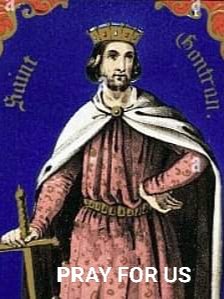
SAINT GONTRAN

The Roman Martyrology today honors St. Gontran (d. 592), also known as Gontran or Guntramnus. He was the son of King Clotaire and the grandson of Clovis I. He was raised pagan and became King of Orleans in 561.
St. Gontran was the son of King Clotaire and grandson of Clovis I and Saint Clotildis. When Clotaire died in 561, his domains were divided among his four sons. While Gontran’s brother Caribert reigned at Paris, Sigebert in Metz, and Chilperic in Soissons, he was crowned king of Orleans and Burgundy in 561. He then made Chalons-sur-Saone his capital.
When compelled to take up arms against his ambitious brothers and the Lombards, he made no other use of his victories, gained under the conduct of a brave general called Mommol, than to give peace to his dominions. The crimes in which the barbarous habits of his nation involved him, he effaced by tears of repentance. The prosperity of his reign, both in peace and war, condemns those who suppose that human policy cannot be determined by the maxims of the Gospel, whereas the truth is just the contrary: no others can render a government so efficacious and prosperous.
Saint Gontran always treated the pastors of the Church with respect and veneration. He was the protector of the oppressed, and the tender parent of his subjects. He gave the greatest attention to the care of the sick. He fasted, prayed, wept, and offered himself to God night and day as a victim ready to be sacrificed on the altar of His justice, to avert His indignation, which Saint Gontran believed he himself provoked and drew down upon his innocent people.
He was a severe punisher of crimes in his officers and others, and by many wholesome regulations he restrained the barbarous licentiousness of his troops, but no man was ever more ready to forgive offenses against his own person. With royal magnificence, he built and endowed many churches and monasteries.
This good king died on the 23rd of March in 593, in the sixty-eighth year of his age, having reigned thirty-one years. His Patronage is Divorced people; guardians; repentant murderers.
He was buried in the Church of Saint Marcellus, which he had founded in Chalon. Almost immediately, his subjects proclaimed Gontran a saint and the Catholic Church celebrates his feast day on 28 March. The Huguenots scattered his ashes in the 16th century. Only his skull remains in the Church of St. Marcellus in a silver case.
*************************************
SAINT VENTURINO OF BERGAMO
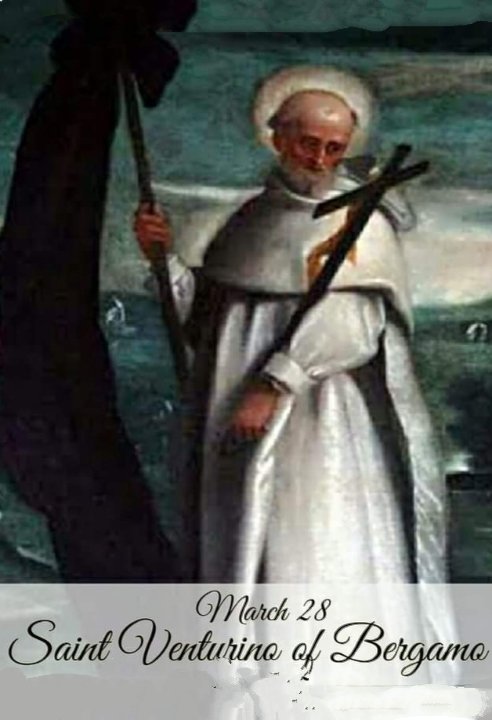
Venturino of Bergamo (9 April 1304 – 28 March 1346) was an Italian Dominican preacher. He was born at Bergamo, and received the habit of the Order of Friars Preachers at the convent of St. Stephen, Bergamo, 22 January 1319. From 1328 to 1335 he won fame preaching in all the cities of upper Italy.
In February, 1335, he planned to make a penitential pilgrimage to Rome with about thirty thousand of his converts. His purpose was misunderstood, and Pope Benedict XII, then residing at Avignon, thought that Venturino wished to make himself pope. He wrote letters to Giovanni Pagnotti, Bishop of Anagni, his spiritual vicar, to the Canons of St. Peter’s and St. John Lateran’s, and to the Roman senators empowering them to stop the pilgrimage.
This complaint to the Dominican Master General resulted in an ordinance of the Chapter of London (1335) condemning such pilgrimages. The pope’s letters and commands, however, did not reach Venturino, and he arrived in Rome, 21 March 1335. He was well received, and preached in various churches. Twelve days later he left Rome, without explanation, and the pilgrimage ended in disorder.
In June, he requested an audience with Benedict XII at Avignon; he was seized and cast into prison (1335–43). He was restored to favour by Pope Clement VI, who appointed him to preach a crusade against the Turks, 4 January 1344; his success was remarkable.
He urged the pope to appoint Humbert II of Dauphiné, whose friend and spiritual adviser he had been, leader of the crusade, but Humbert proved incapable and the crusade came to nothing. Venturino’s writings consist of sermons (now lost) and letters. He died at Smyrna.