
SPIRITUAL INSIGHTS INTO THE LIFE OF SAINT JOHN THE SILENT
May 13, 2026
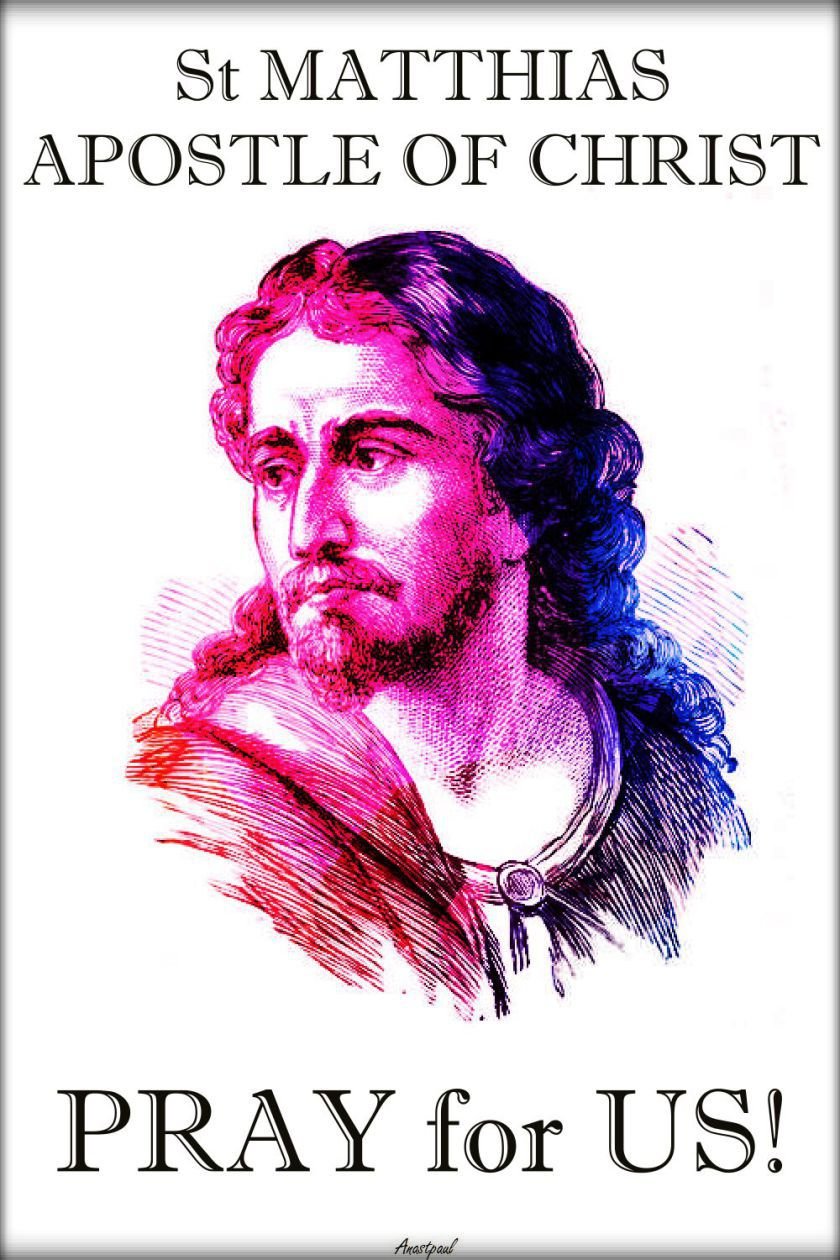
SPIRITUAL INSIGHTS INTO THE LIFE OF SAINT MATTHIAS
May 14, 2026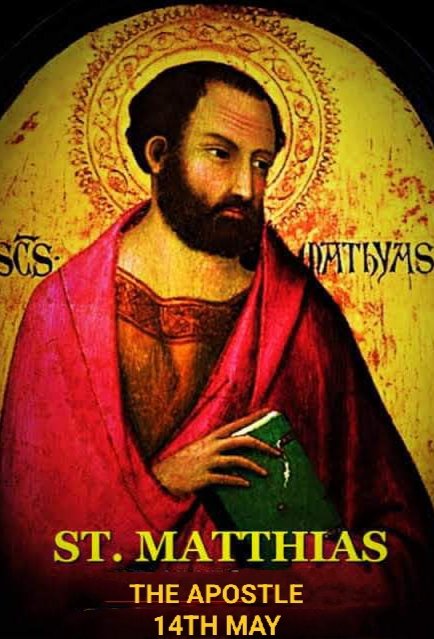
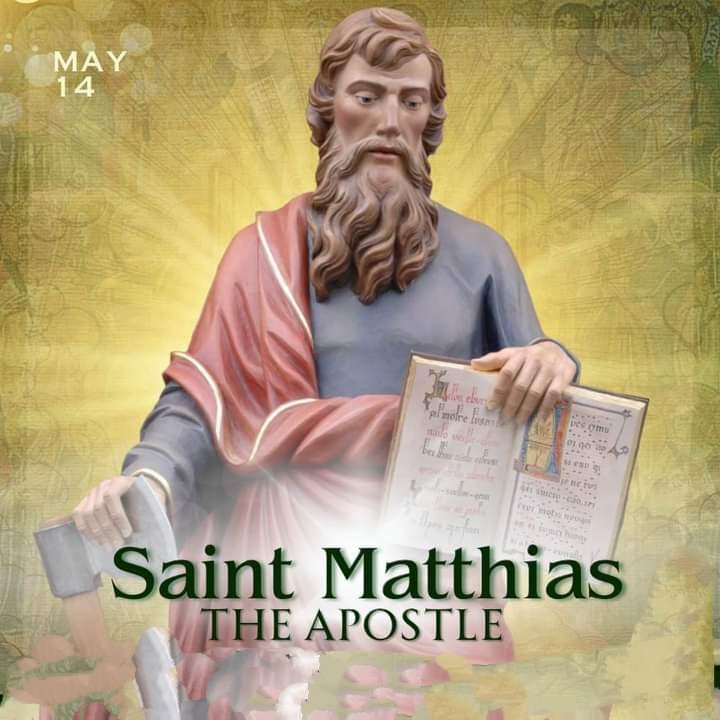
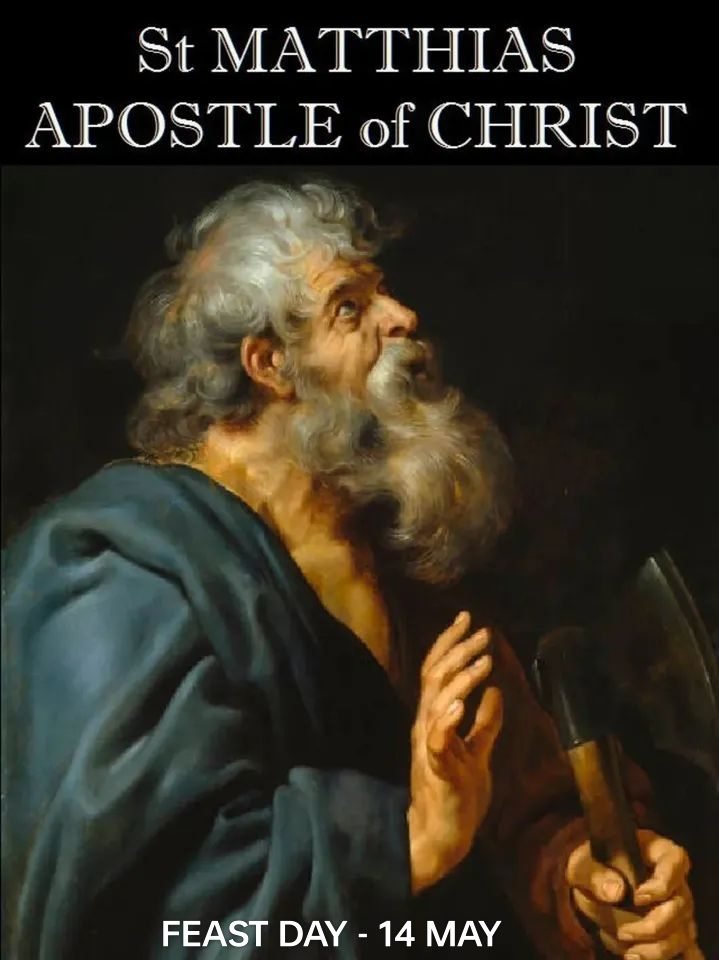
FEAST OF SAINT MATTHIAS THE APOSTLE
FEAST DAY – 14th MAY
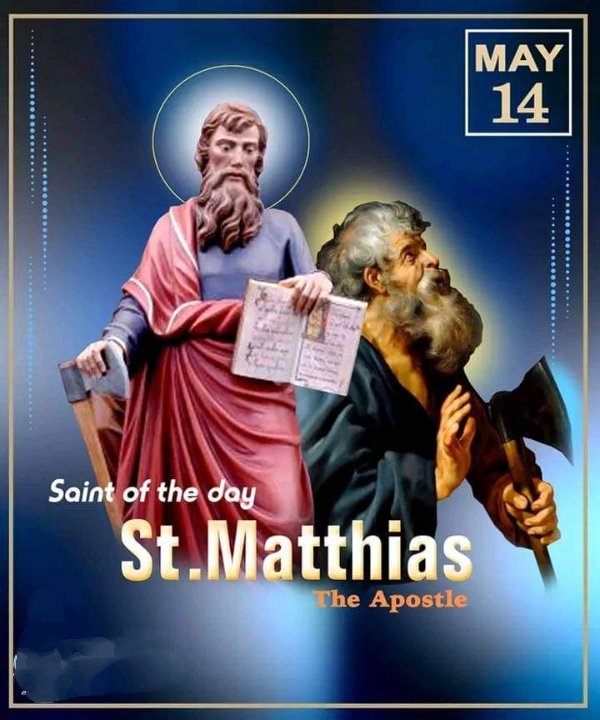
Matthias, (died c. AD 80) was, according to the Acts of the Apostles (written c. AD 63), chosen by the apostles to replace Judas Iscariot following the latter’s betrayal of Jesus and his subsequent death. His calling as an apostle is unique, in that his appointment was not made personally by Jesus, who had already ascended into heaven, and it was also made before the descent of the Holy Spirit upon the early Church.
There is no mention of a Matthias among the lists of disciples or followers of Jesus in the three synoptic gospels, but according to Acts, he had been with Jesus from his baptism by John until his Ascension. In the days following, Peter proposed that the assembled disciples, who numbered about 120, nominate two men to replace Judas.
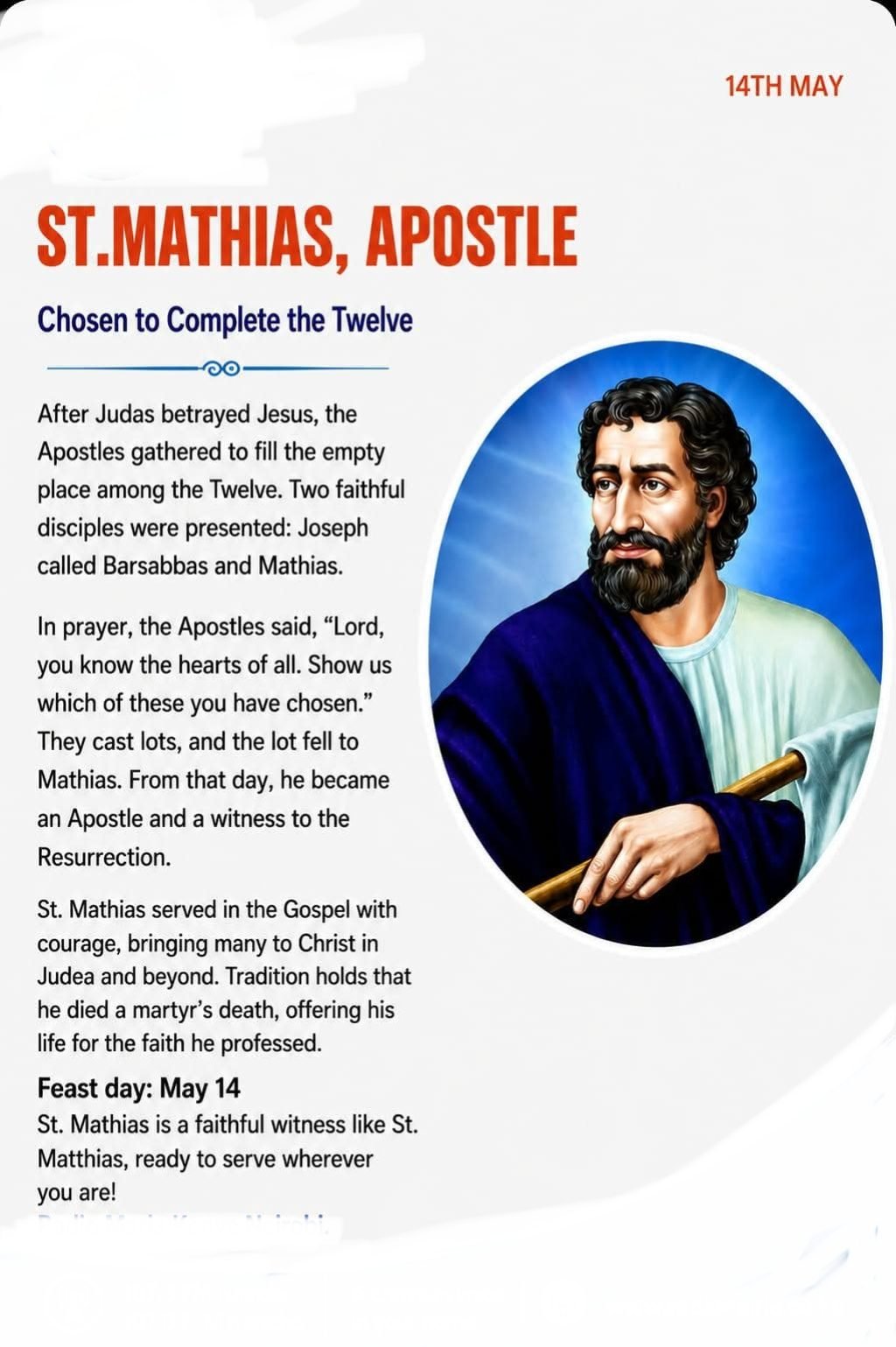
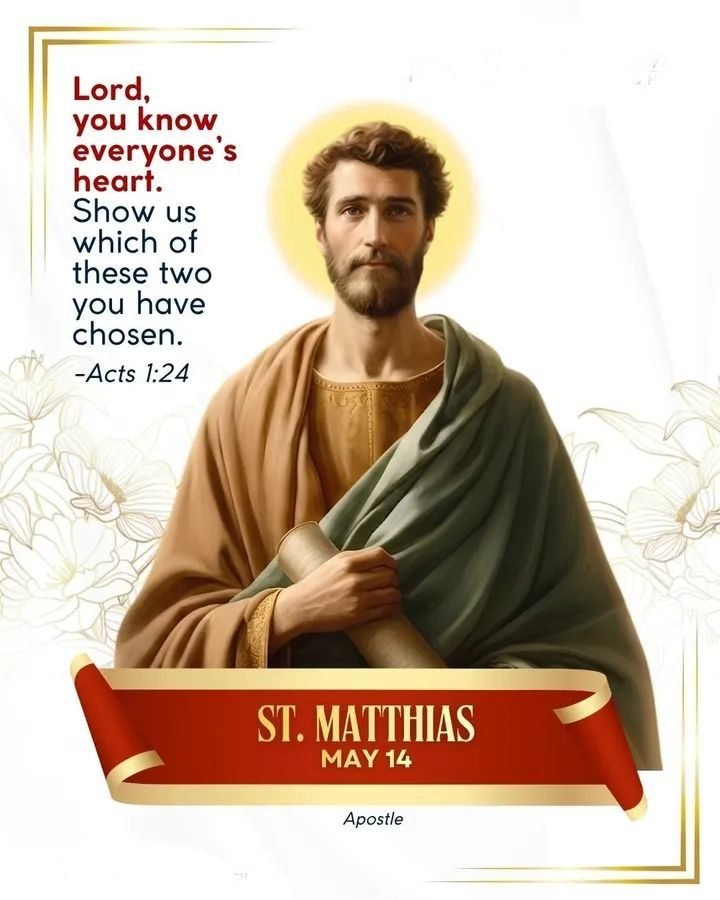
They chose Joseph called Barsabas (whose surname was Justus) and Matthias. Then they prayed, “Thou, Lord, which knowest the hearts of all [men], shew whether of these two thou hast chosen, That he may take part of this ministry and apostleship, from which Judas by transgression fell, that he might go to his own place.”[Acts 1:24–25] Then they cast lots, and the lot fell to Matthias; so he was numbered with the eleven apostles.
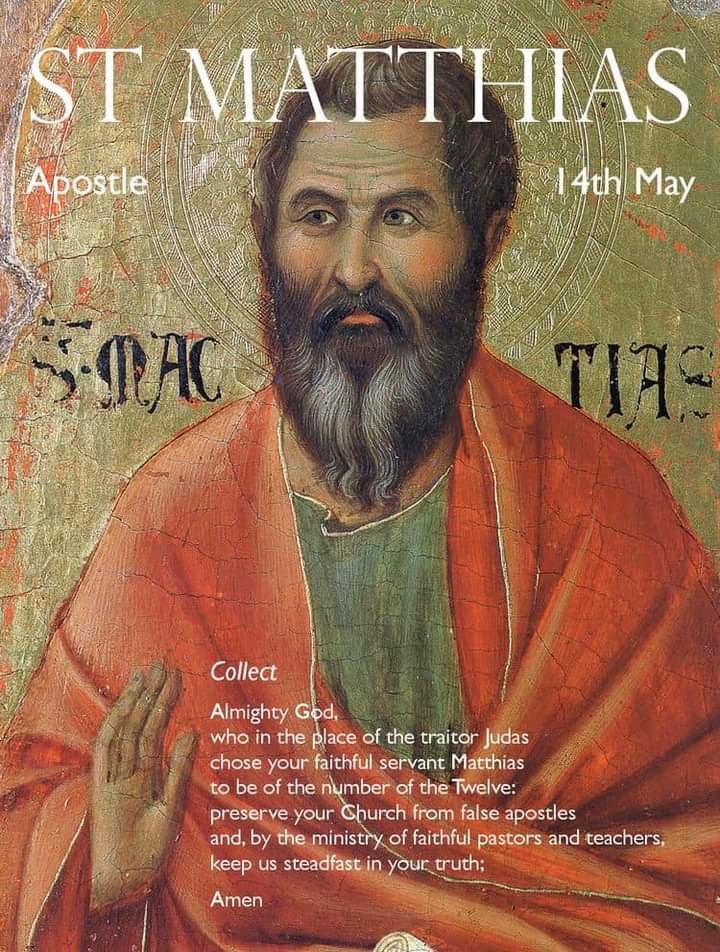
No further information about Matthias is to be found in the canonical New Testament. Even his name is variable: the Syriac version of Eusebius calls him throughout not Matthias but “Tolmai”, not to be confused with Bartholomew (which means Son of Tolmai), who was one of the twelve original Apostles; Clement of Alexandria refers once to Zacchaeus in a way which could be read as suggesting that some identified him with Matthias; the Clementine Recognitions identify him with Barnabas.
Adolf Bernhard Christoph Hilgenfeld thinks he is the same as Nathanael in the Gospel of John. The tradition of the Greeks says that St. Matthias planted the faith about Cappadocia and on the coasts of the Caspian Sea, residing chiefly near the port Issus.
According to Nicephorus (Historia eccl., 2, 40), Matthias first preached the Gospel in Judaea, then in Aethiopia (by the region of Colchis, now in modern-day Georgia) and was crucified. An extant Coptic Acts of Andrew and Matthias, places his activity similarly in “the city of the cannibals” in Aethiopia. A marker placed in the ruins of the Roman fortress at Gonio in the modern Georgian region of Adjara claims that Matthias is buried at that site.
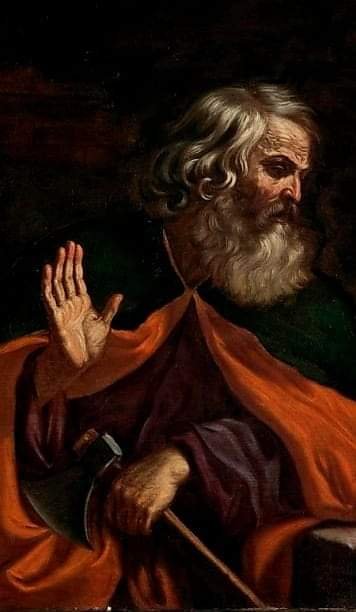
The Synopsis of Dorotheus contains this tradition: “Matthias preached the Gospel to barbarians and meat-eaters in the interior of Ethiopia, where the sea harbor of Hyssus is, at the mouth of the river Phasis. He died at Sebastopolis, and was buried there, near the Temple of the Sun.” Alternatively, another tradition maintains that Matthias was stoned at Jerusalem by the local populace, and then beheaded.
According to Hippolytus of Rome, Matthias died of old age in Jerusalem.
According to various traditions, Matthias preached in Cappadocia, Jerusalem, the shores of the Caspian Sea (in modern day Turkey) and Ethiopia. He is said to have met his death by crucifixion in Colchis or by stoning in Jerusalem.
There is evidence cited in some of the early Church fathers that there was a Gospel according to Matthias in circulation, but it has since been lost, and was declared apocryphal by Pope Gelasius. He is invoked for assistance against alcoholism, and for support by recovered alcoholics.
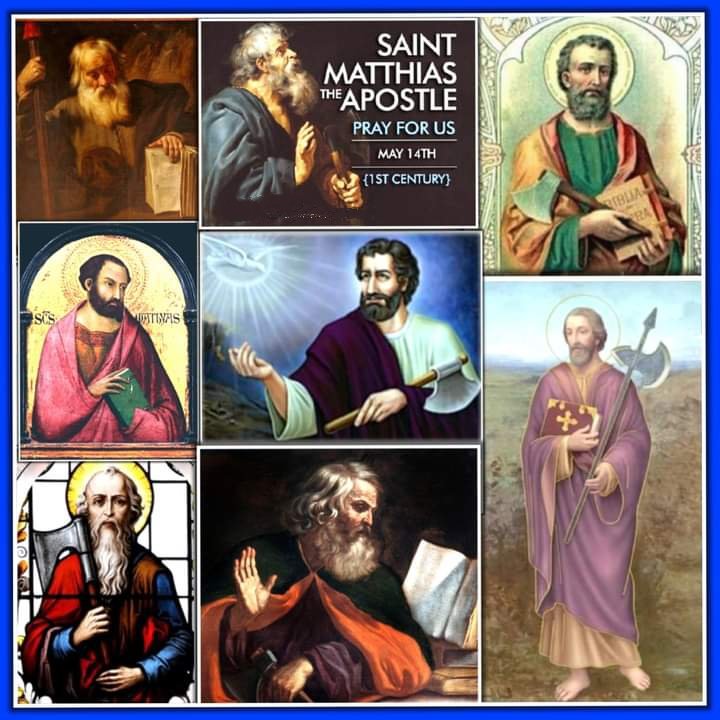
The feast of Saint Matthias was included in the Roman Calendar in the 11th century and celebrated on the sixth day to the Calends of March (24 February usually, but 25 February in leap years).
In the revision of the General Roman Calendar in 1969, his feast was transferred to 14 May, so as not to celebrate it in Lent but instead in Eastertide close to the Solemnity of the Ascension.
This is the event after which the Acts of the Apostles recounts that Matthias was selected to be ranked with the Twelve Apostles. The Eastern Rites of the Eastern Orthodox Church celebrate his feast on 9 August. Yet the Western Rite parishes of the Orthodox Church continues the old Roman Rite of 24 and 25 February in leap years.
The Church of England’s Book of Common Prayer, as well as other older common prayer books in the Anglican Communion, celebrates Matthias on 24 February. According to the newer Common Worship liturgy, Matthias is remembered in the Church of England with a Festival on 14 May, although he may be celebrated on 24 February, if desired.
In the Episcopal Church as well as some in the Lutheran Church, including the Lutheran Church–Missouri Synod and the Lutheran Church–Canada, his feast remains on 24 February. In Evangelical Lutheran Worship, used by the Evangelical Lutheran Church in America as well as the Evangelical Lutheran Church in Canada, the feast date for Matthias is on 14 May.
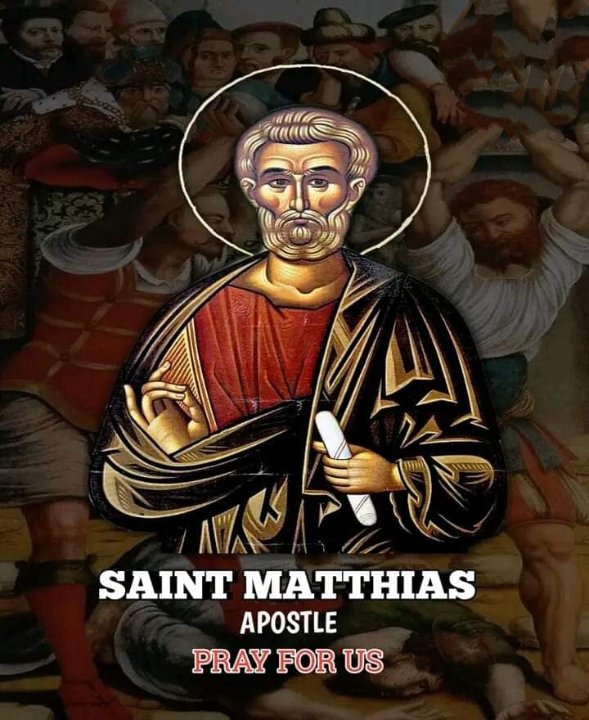
It is claimed that St Matthias the Apostle’s remains were brought to Italy through Empress Helena, mother of Emperor Constantine I (the Great); part of these relics would be interred in the Abbey of Santa Giustina, Padua, and the remaining in the Abbey of St. Matthias, Trier, Germany. According to Greek sources, the remains of the apostle are buried in the castle of Gonio-Apsaros, Georgia.
CONTEMPLATING THE LIFE OF SAINT MATTHIAS – APOSTLE
HISTORICAL IDENTITY AND SIGNIFICANCE
Saint Matthias is remembered as the apostle chosen to replace Judas Iscariot after Judas’ betrayal and death. Though he was not among the original Twelve named early in the Gospels, he was chosen by the apostolic community to restore the fullness of the Twelve Apostles. His election is recorded in the Acts of the Apostles (Acts 1:15–26).
The New Testament gives little information about his later ministry, but Church tradition remembers him as a faithful disciple, a witness to the Resurrection, and a courageous missionary who preached the Gospel and eventually died as a martyr.
THE APOSTLE WHO WAITED IN SILENCE
Among the disciples of Jesus, some names stood out more prominently. Peter was known for his boldness, John for his closeness to Christ, and James for his zeal. Matthias remained mostly unnoticed.
Yet long before he became an apostle, Matthias had already been faithfully following Jesus. He spent years quietly preparing for a calling he did not yet know awaited him.
THE HIDDEN DISCIPLE
Matthias had journeyed with Jesus from the early days of His ministry. He witnessed the preaching of John the Baptist, the calling of the disciples, the miracles, the teachings, and the growing crowds that followed Christ.
Although he belonged to the wider group of disciples, his name was rarely mentioned publicly. He remained one of the many faithful followers who served quietly in the background.
FOLLOWING WITHOUT RECOGNITION
Matthias watched others receive special moments with Jesus, yet he remained faithful without seeking attention or recognition. There are no recorded complaints or attempts for prominence in his life.
His quiet perseverance became part of his spiritual strength and prepared him for the responsibility that would later be entrusted to him.
THE SHOCK OF BETRAYAL
After the suffering and death of Christ, the betrayal by Judas left a deep wound among the apostles. The apostolic circle felt incomplete.
Following the Ascension, the early Church gathered in prayer, seeking God’s guidance during a time of uncertainty and sorrow.
THE UNEXPECTED CALL
Saint Peter declared that the vacant place left by Judas needed to be filled by someone who had followed Jesus from the beginning and witnessed His Resurrection.
Two disciples were proposed: Matthias and Joseph Barsabbas. Both had remained faithful through the years of Christ’s ministry.
THE PRAYERFUL CHOICE
Before making the decision, the apostles prayed, asking the Lord who knows every heart to guide them.
They cast lots in trustful surrender to divine providence, and the choice fell upon Matthias. The hidden disciple was suddenly counted among the Twelve Apostles.
THE WEIGHT OF THE MISSION
Matthias accepted the call with humility. He was not merely filling an empty position but helping restore the unity and completeness of the apostolic foundation of the Church.
His life reveals that God often prepares souls quietly before calling them into visible mission.
THE APOSTLE WHO LEARNED TO WAIT
After Pentecost, Matthias joined in spreading the Gospel to distant lands. Ancient traditions speak of his missionary work and eventual martyrdom for the sake of Christ. The disciple who had followed Jesus faithfully in silence remained faithful even unto death.
SPIRITUAL THEMES IN THE LIFE OF MATTHIAS
Hidden faithfulness marked the life of Matthias long before recognition came. Readiness defined his response when God called him into greater responsibility.
His apostleship came through prayerful discernment rather than self-promotion. Perseverance sustained him through years of obscurity and uncertainty.
FEAST DAY AND VENERATION
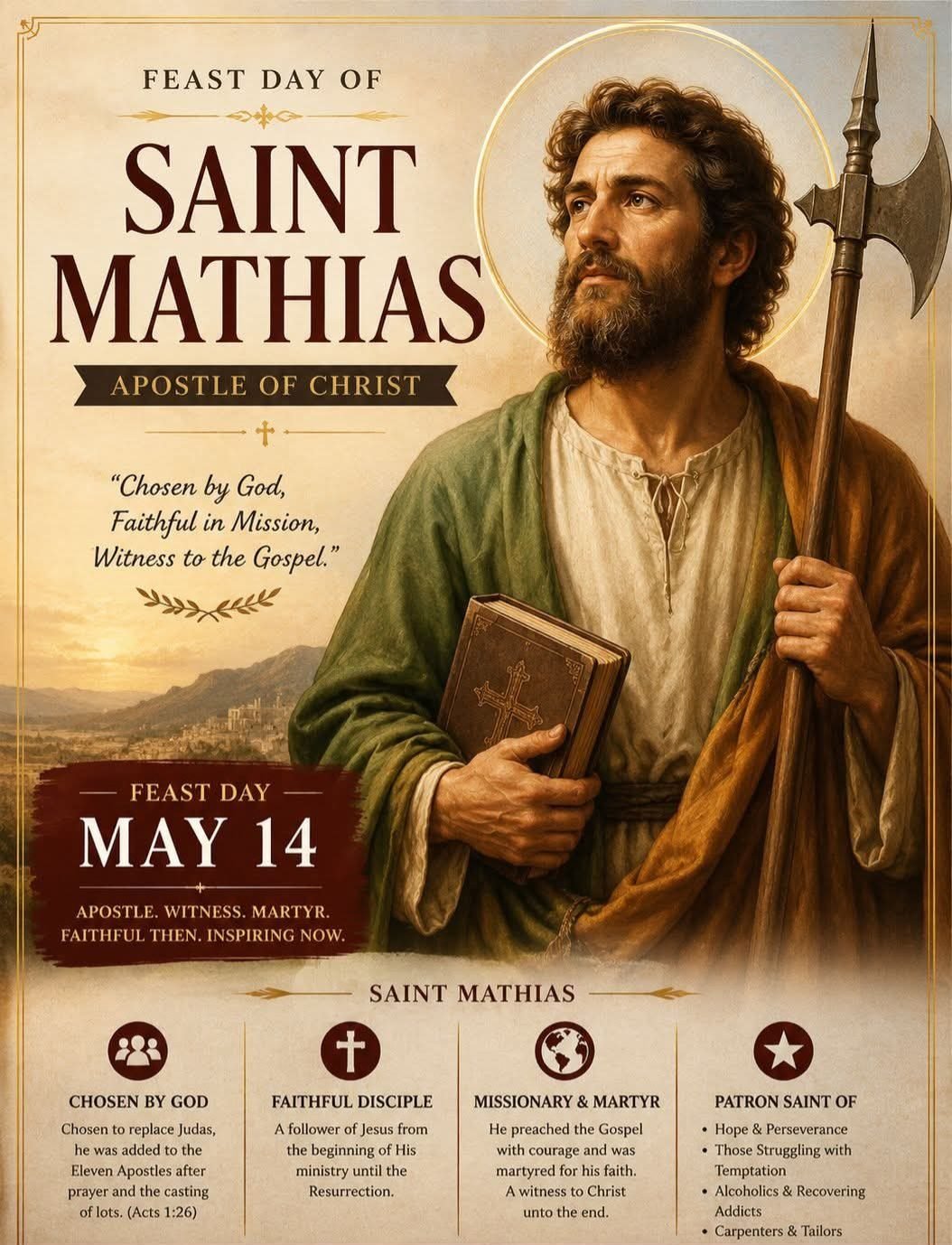
The Roman Catholic Church celebrates the feast of Saint Matthias on May 14. From ancient times he has been honored as a true apostle and martyr.
HISTORICAL AND ECCLESIAL IMPORTANCE
Saint Matthias reveals important truths about the early Church. Leadership arose through prayer, discernment, and faithful witness. His life also reminds believers that God often chooses those overlooked by the world.
By replacing Judas, Matthias restored the symbolic fullness of the Twelve Apostles and became a sign of healing after betrayal and division.
A BRIEF REFLECTION
For many years Matthias remained hidden behind the scenes. He listened to Christ’s teachings, witnessed His miracles, and stayed faithful when others stood at the center of attention.
When the apostolic circle was broken through betrayal, Matthias stepped forward, not through ambition, but through readiness.
His life reminds us that God often prepares His servants quietly and faithfully long before calling them into visible service.
PRAYER
O Glorious Saint Matthias, it was God’s plan to select you to take the place of Judas Iscariot, who betrayed his Master. You were chosen by virtue of the uprightness of your life and the call of the Holy Spirit.
Obtain for us grace to live righteously and to be called by the same Spirit to work with zeal for the Church, thereafter to join the company of Saints in heaven, singing forever the praises of our Heavenly Father, in Jesus’ Name. Amen