
SPIRITUAL INSIGHTS INTO THE LIFE OF SAINT PETER OF TARANTAISE
May 8, 2026
John 20: 21
May 9, 2026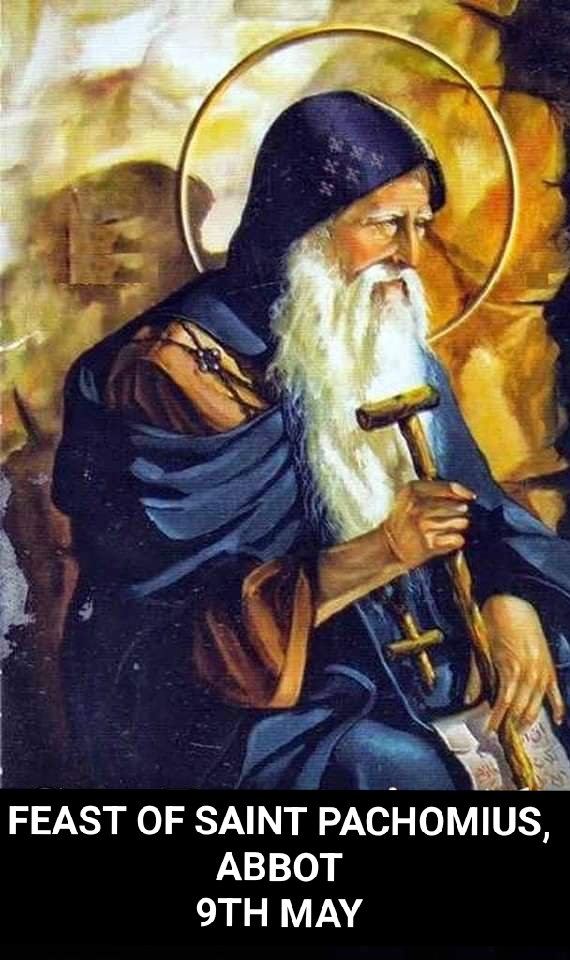
FEAST OF SAINT PACHOMIUS
FEAST DAY – 9th MAY
St. Pachomius can justifiably be called the founder of cenobitic monasticism (monks who live in community). Even though St. Antony the Great was the first to go into the desert to live a life of seclusion pursuing evangelical perfection, he lived an eremitic life, that is, a primarily solitary life.
Pachomius first started out as a hermit in the desert like many of the other men and women in the third and fourth centuries who sought the most radical expression of Christian life and he developed a very strong bond of friendship with the hermit Palemon. One day he had a vision during prayer in which he was called to build a monastery.
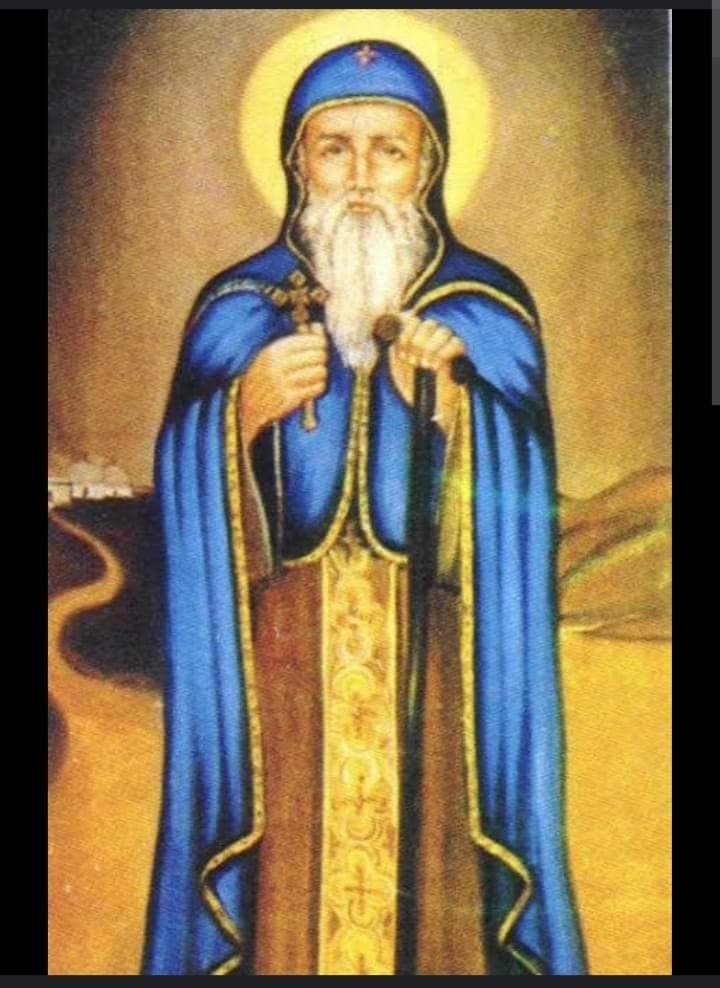
He was told in the vision that many people who are eager to live an ascetic life in the desert, but who are not inclined to the solitude of the hermit, will come and join him. His hermit friend Palemon helped him to build the monastery and Pachomius insisted that his cenobites were to aspire to the austerity of the hermits.
However, he knew that his idea was a radical one, in that most of the men who came to live in his monastery had only ever conceived of the eremitic lifestyle; his great accomplishment was to reconcile this desire for austere perfection with an openness to fulfilling the mundane requirements of community life as an expression of Christian love and service.
He spent most of his first years as a cenobitic doing all the menial work on his own, knowing that his brother monks needed to be gently inducted into serving their brothers in the same manner. He therefore allowed them to devote all their time to spiritual exercises in those first years. At his death, there were eleven Pachomian monasteries, nine for men and two for women.
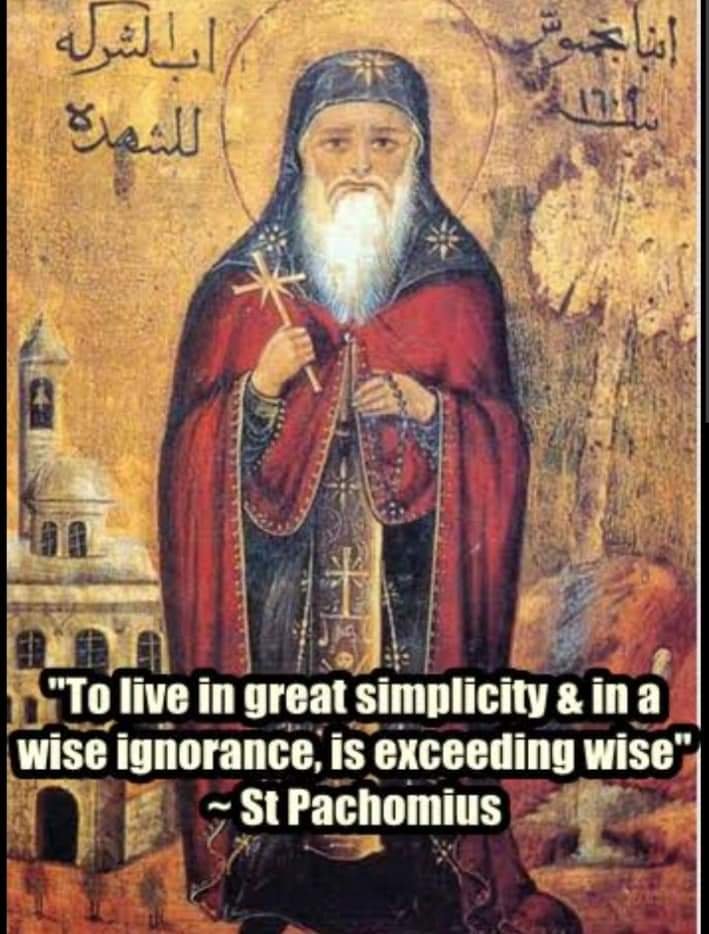
The rule that Pachomius drew up was said to have been dictated to him by an angel, and it is this rule that both St. Benedict in the west and St. Basil in the east drew upon to develop their better known rules of cenobitic life. Saint Pachomius died around the year 346.
Saint Basil the Great visited Pachomius and his monks and adopted many of the spiritual values he learned from them, incorporating them into his own monastic rule—The Rule of Saint Basil—which is the guiding document for all monks and nuns of the Eastern Church.
Quote
“It is patience that reveals every grace to you, and it is through patience that the saints received all that was promised to them.”—Saint Pachomius
CONTEMPLATING THE LIFE OF SAINT PACHOMIUS OF TABENNA
HISTORICAL IDENTITY AND BACKGROUND
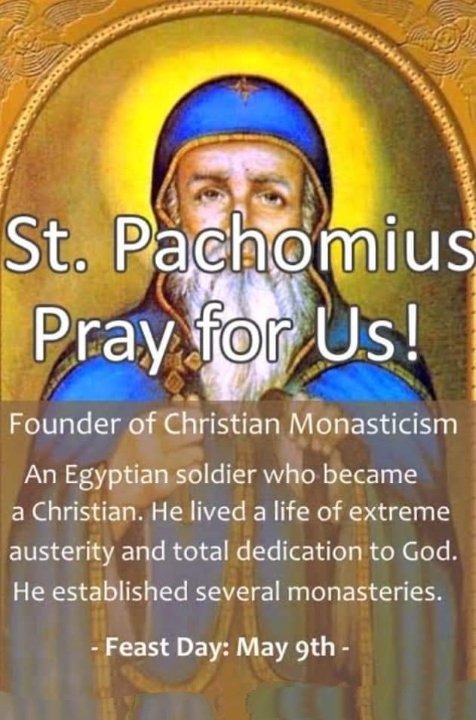
Saint Pachomius of Tabenna (c. 292 – 348 AD) was an Egyptian monk and spiritual father who is widely regarded as the founder of organized Christian monastic life lived in community. Before his time, many monks lived alone in deserts as hermits. Pachomius introduced a new form of monasticism in which monks prayed, worked, ate, and served together under a common rule. His life became a model for Christian community life and deeply influenced Eastern and Western monastic traditions.
EARLY LIFE AND CONVERSION
Pachomius was born into a pagan family in Upper Egypt. As a young man, he was forcibly recruited into the Roman army. During his military service, he witnessed Christians showing extraordinary kindness to prisoners by bringing them food and comfort. Their charity deeply touched him and awakened in him a desire to know the God they served.
After leaving the army, he embraced Christianity and was baptized. He longed for a life completely dedicated to God and eventually became a disciple of the hermit Palamon, learning prayer, fasting, discipline, and silence in the desert.
THE CALL TO COMMUNITY LIFE
While living as a hermit, Pachomius sensed that God was calling him to create a spiritual community where monks could grow together in holiness rather than struggle alone. Tradition says he received this inspiration near Tabenna in Egypt, where he founded the first monastery.
He organized the monks into communities with structure, prayer schedules, manual labor, and mutual service. Each monk lived simply, obeyed a rule of life, and shared possessions in common. His wisdom brought balance between prayer and practical work.
THE SPIRIT OF HIS MONASTERIES
The monasteries founded by Pachomius were marked by humility, discipline, charity, and fraternity. The monks copied manuscripts, cultivated land, cared for the poor, and spent time in prayer and Scripture meditation. Pachomius believed that holiness flourishes through obedience, mutual patience, and daily faithfulness.
He insisted that monks should not seek extraordinary spiritual experiences but should grow through ordinary acts of love, sacrifice, and perseverance.
A TEACHER OF SPIRITUAL WISDOM
Pachomius guided his monks with gentleness and firmness. He understood human weakness and encouraged repentance rather than harsh judgment. His leadership reflected deep compassion rooted in prayer.
His spiritual rule later influenced many great saints and monastic founders, including Saint Basil the Great and indirectly Saint Benedict of Nursia. Through them, his vision shaped Christian monastic life across the world.
FINAL YEARS AND DEATH
During an epidemic that struck his monasteries, Pachomius cared for the sick with fatherly devotion. He eventually contracted the illness himself and died around the year 348 AD. By the time of his death, thousands of monks and nuns were living according to his spiritual rule.
His legacy continued through the flourishing of monastic communities that became centers of prayer, learning, charity, and evangelization for centuries.
SPIRITUAL LESSONS FROM HIS LIFE
The life of Saint Pachomius teaches that holiness is not lived in isolation alone but also through community, service, patience, and shared prayer. He reminds Christians that discipline and love must walk together, and that everyday acts of obedience and humility can transform the soul.
His witness encourages believers to build communities rooted in faith, compassion, and unity in Christ.
PRAYER
Saint Pachomius of Tabenna, faithful servant of God and father of community life, pray for us. Teach us to live with humility, discipline, charity, and perseverance. Help us to serve others with joy and to seek holiness in the ordinary duties of daily life. May our homes, churches, and communities reflect the peace and love of Christ. Amen
St. Pachomius, pray for us!
******************************************************************************
ALSO CELEBRATED
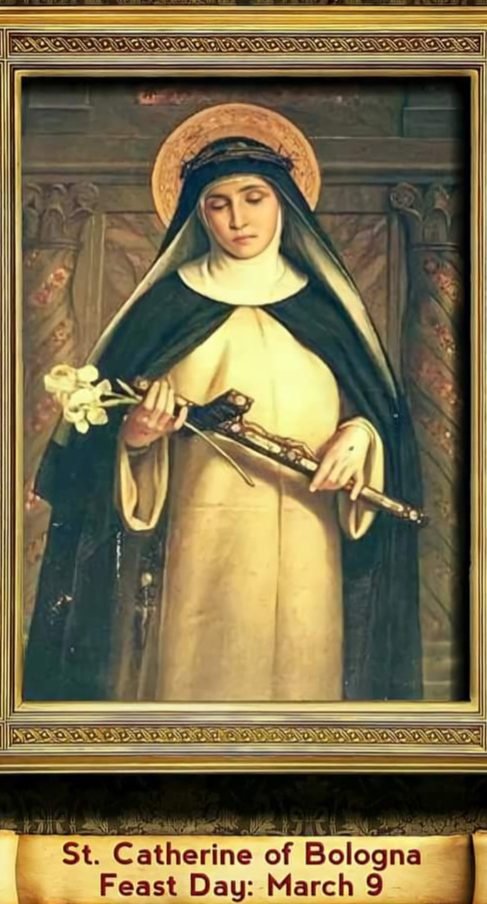
FEAST OF SAINT CATHERINE OF BOLOGNA – 9 MAY
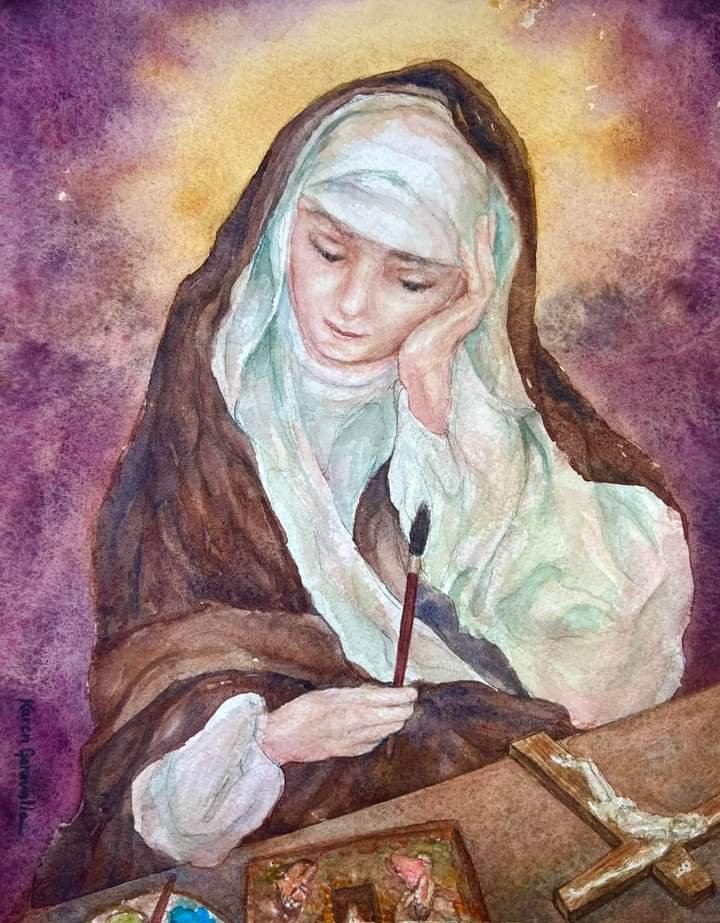
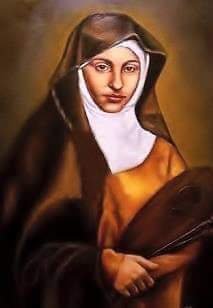
Saint Catherine was an Italian nun and artist born as Catherine de’ Vigri on September 8, 1413 in Bologna, Italy. She was the member of an aristocratic family and the daughter of a diplomat to the Marquis of Ferrara. Catherine received a wonderful education in reading, writing, singing and drawing while being raised at the court of the Duke of Ferrara. Catherine excelled in painting, Latin and the viola.
When the daughter eventually married, she wanted Catherine to remain in her service, but Catherine, feeling a calling to the religious life, left the court.
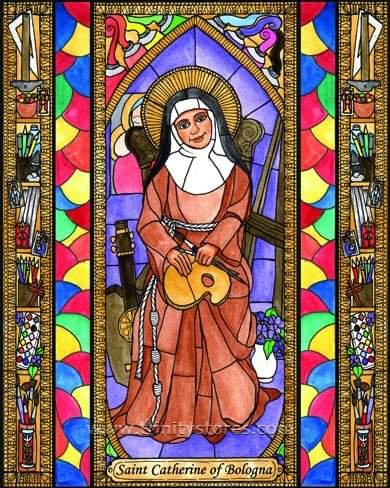
In 1426, at 13-years-old, she entered the convent of Corpus Domini at Ferrara and became a Franciscan Tertiary. During this time, her convent disagreed in whether to continue following the Augustinian rule or to instead adhere to the Franciscan rule.
A Rule is a specific expression of the Christian life which calls the men or women of a particular religious order to a daily pattern of prayer, work and charity. Catherine was determined to live a life of perfection, and was admired by her companions for her holiness.
In 1432, Catherine and other young women of Ferrara founded a monastery of the Order of Poor Clares, an order founded by St. Francis and St. Clare of Assisi. Catherine was openly willing to serve the more humble roles in the convent. She was a laundress, a baker and a caretaker for the animals.
Through her efforts with Pope Nicholas V, the Poor Clare convent at Ferrara erected an enclosure, and Catherine was appointed Superioress. That office made her responsible for providing pastoral care and spiritual oversight to all of sisters. The reputation of the Community for its holiness and austerity became widespread.
In 1456, Catherine returned to Bologna with her superiors and the governors there requested she found a second monastery of the same Order and be the Abbess of the convent.
Catherine continued to paint and to write beautiful spiritual guides and poetry. She wrote the Treatise on the 7 Spiritual Weapons Necessary for Spiritual Warfare. And, her painting of St. Ursula remains on display in a Venice gallery.
Throughout her life, Catherine experienced visions of both Jesus Christ and Satan, which she documented in her treatise. In one instance, she had the baby Jesus placed in her arms by the Blessed Virgin Mary.
During the Lenten season of 1463, Catherine became seriously ill, and on March 9th she passed away. She was buried without a coffin and her body was exhumed eighteen days later because of many cures attributed to her at her graveside and the sweet scent coming from her grave.
Her body was discovered incorrupt and remains so today. That means it has not decayed. Catherine is dressed in her religious habit seated upright on a golden throne behind glass in the chapel of the Poor Clares in Bologna.

Saint Catherine of Bologna, pray for us!