
SPIRITUAL INSIGHTS INTO THE LIVES OF SAINT CRISTOBAL/CHRISTOPHER MAGALLANES AND COMPANIONS
May 21, 2026
Romans 10:14
May 22, 2026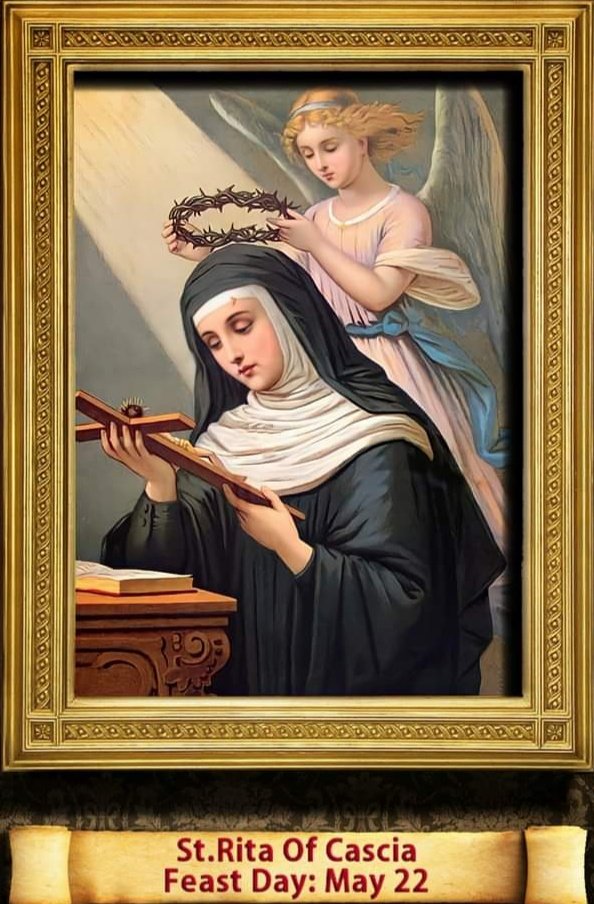
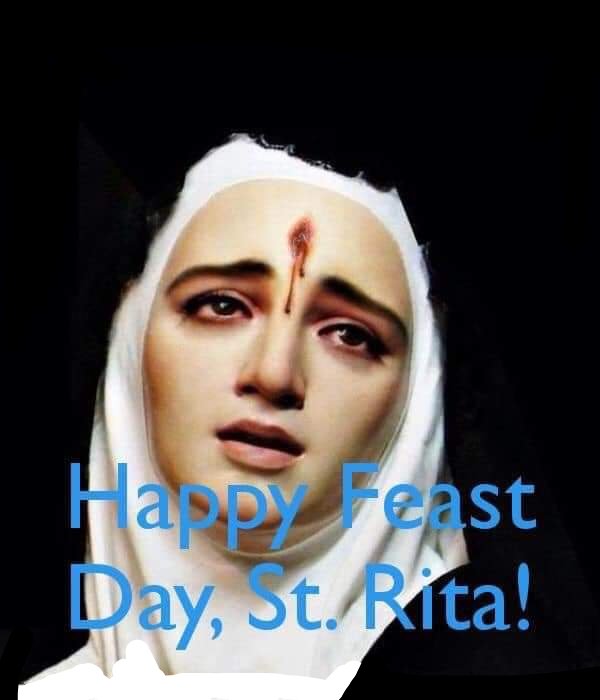
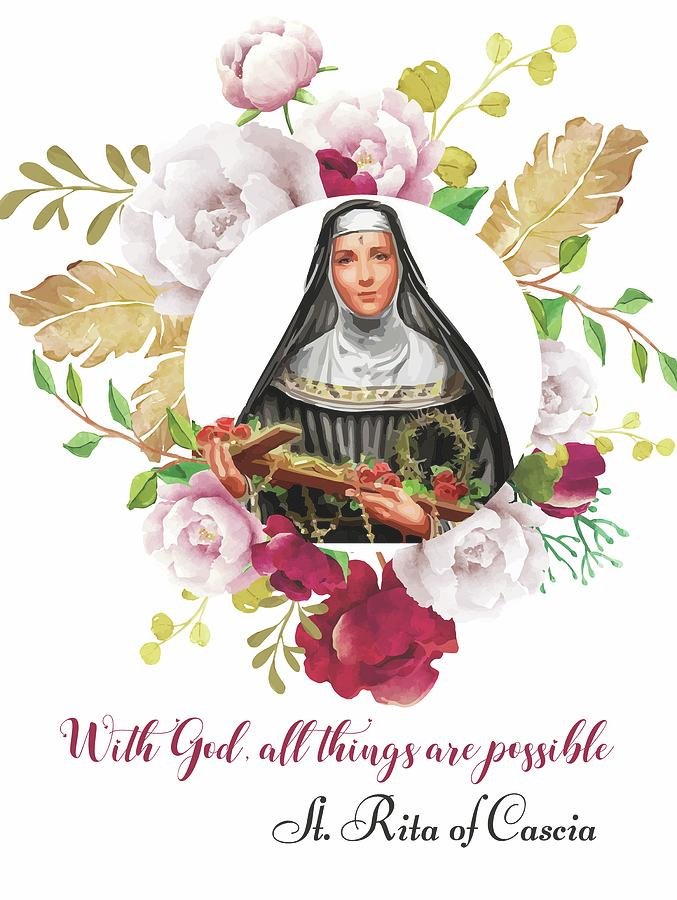
FEAST OF SAINT RITA OF CASCIA
FEAST DAY – 22nd MAY
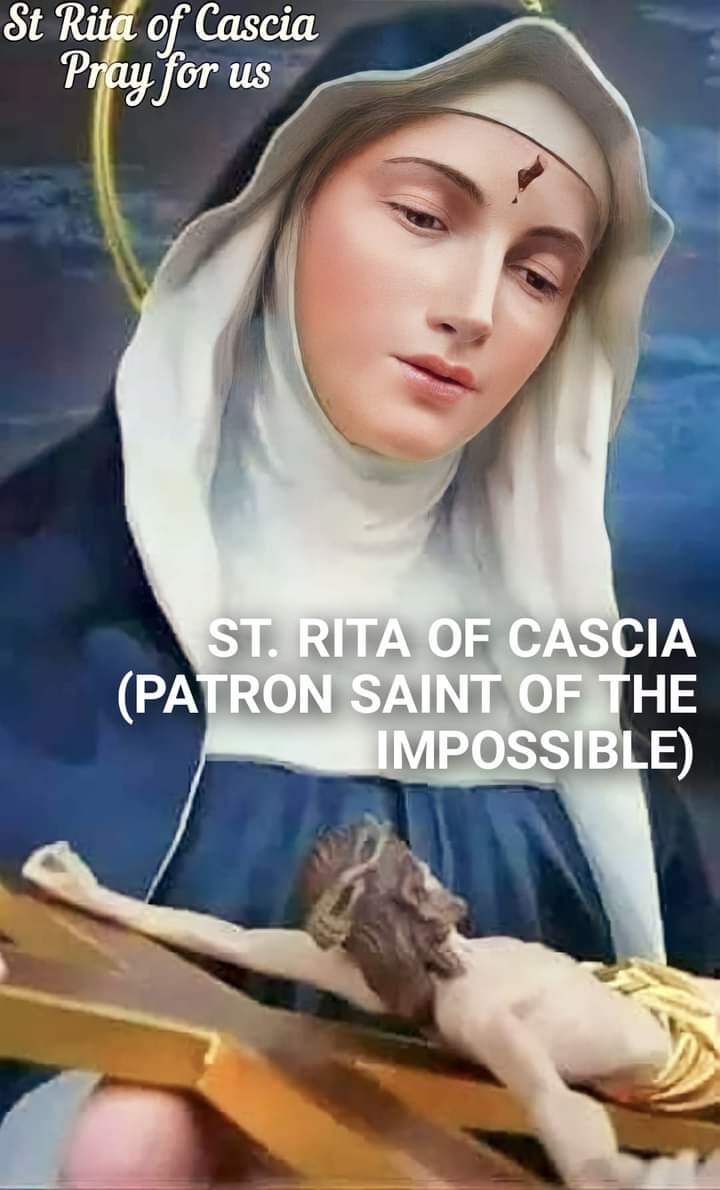
Rita of Cascia, born Margherita Lotti (1381 – 22 May 1457), was an Italian widow and Augustinian nun venerated as a saint in the Roman Catholic Church. As Rita was growing up, her parents supported her desire to live a life of prayer and set up an oratory in their home. They were reluctant when at age 12, Rita decided to dedicate herself to God. They won out and gave her in marriage at age 18.
Margherita Lotti was born in 1381 in the city of Roccaporena a small suburb of Cascia (near Spoleto, Umbria, Italy), where various sites connected with her are the focus of pilgrimages.
Her name, Margherita, means “pearl”. She was affectionately called Rita, the short form of her baptismal name. At a very early age, Rita felt inclined to join the convent. She begged her parents to allow her to do so, but instead, they arranged a marriage for her.
Her parents, Antonio and Amata Ferri Lotti, were known to be noble, charitable persons, who gained the epithet Conciliatore di Cristo (Peacemakers of Christ).
According to pious accounts, Rita was originally pursued by a notary named Gubbio but she resisted his offer. She was married at age twelve to a nobleman named Paolo Mancini.
Her parents arranged her marriage, a common practice at the time, despite her repeated requests to be allowed to enter a convent of religious sisters. Her husband, Paolo Mancini, was known to be a rich, quick-tempered, immoral man, who had many enemies in the region of Cascia.
The marriage lasted for eighteen years, during which she is remembered for her Christian values as a model wife and mother who made efforts to convert her husband from his abusive behavior.
After 18 years of marriage and 2 sons, Rita lost her husband and shortly after, her 2 sons. One night as Rita was praying, she heard her name called out and was transported to another place. This miracle astonished the Augustinian Nuns who received Rita, and soon enrolled her among their number.
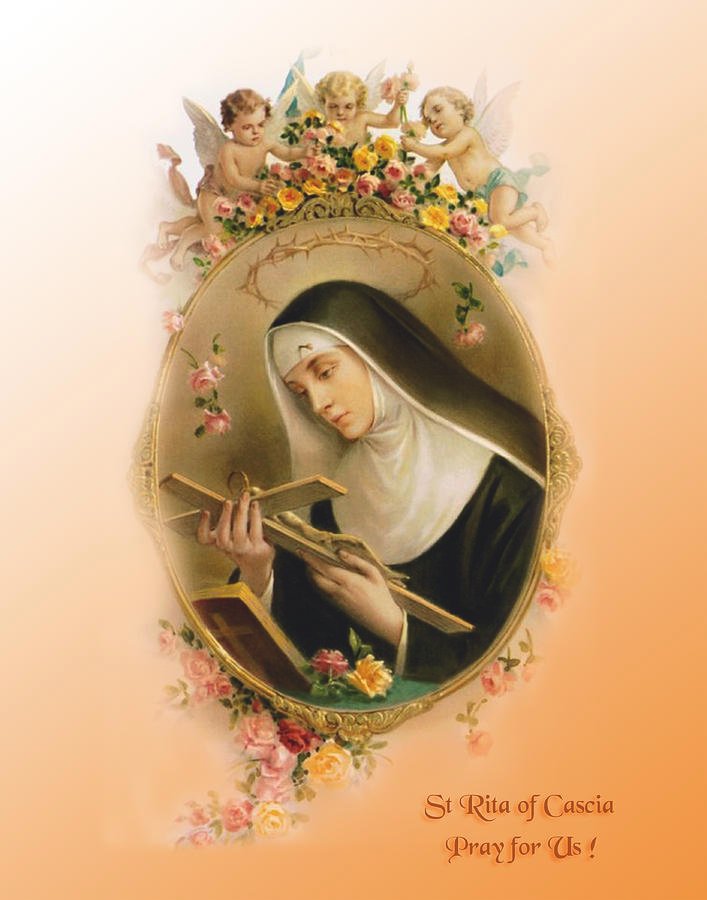
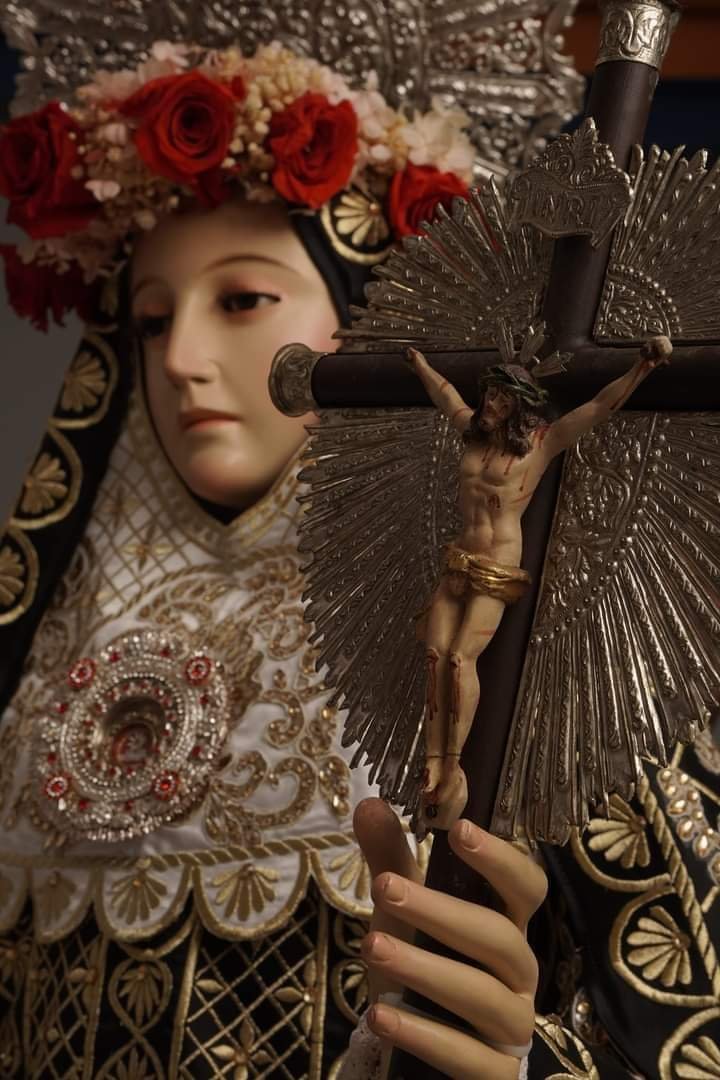
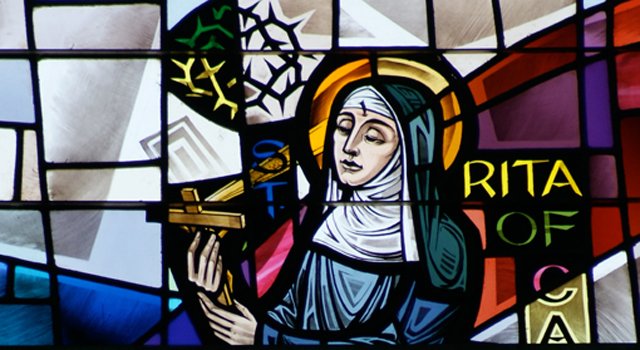
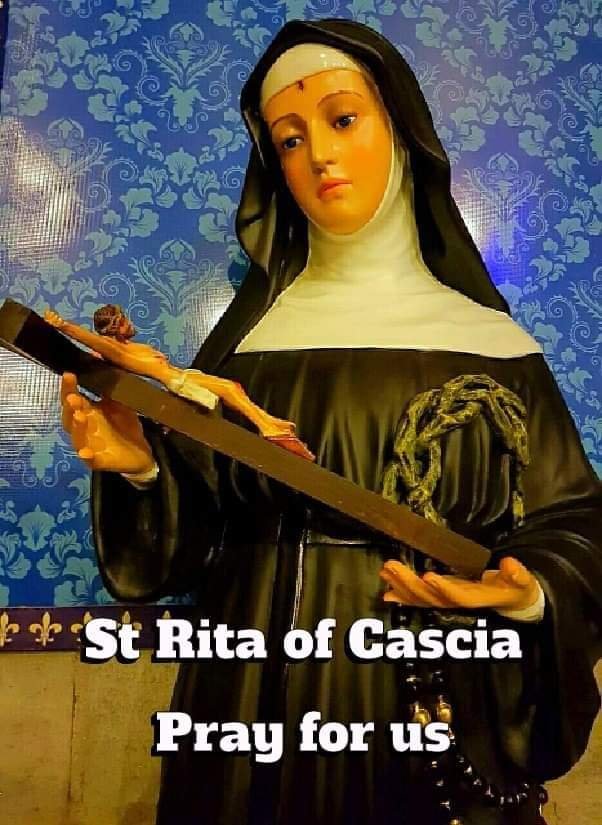
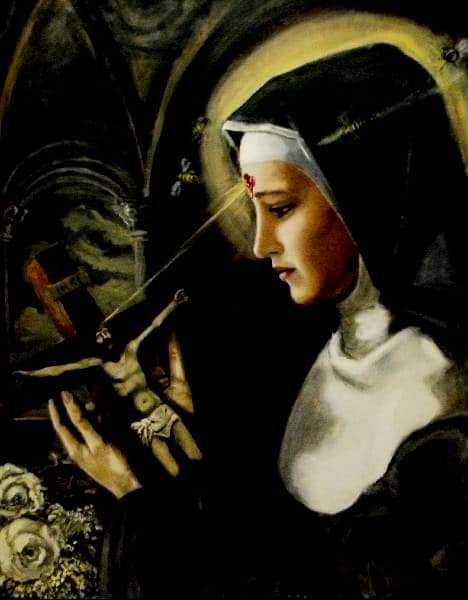
She joined the Augustinian community of religious sisters, where she was known both for practicing mortification of the flesh and for the efficacy of her prayers. Various miracles are attributed to her intercession, and she is often portrayed with a bleeding wound on her forehead, which is understood to indicate a partial stigmata.
Rita had endured her husband’s insults, physical abuse and infidelities for many years. According to popular tales, through humility, kindness and patience, Rita was able to convert her husband into a better person, more specifically renouncing a family feud known at the time as La Vendetta. Rita eventually bore two sons, Giangiacomo (Giovanni) Antonio and Paulo Maria, and brought them up in the Christian faith.
As time went by and the family feud between the Chiqui and Mancini families became more intense, Paolo Mancini became congenial, but his allies betrayed him and he was violently stabbed to death by Guido Chiqui, a member of the feuding family.
Rita gave a public pardon at Paolo’s funeral to her husband’s murderers. Paolo Mancini’s brother, Bernardo, was said to have continued the feud and hoped to convince Rita’s sons to seek revenge.
Bernardo convinced Rita’s sons to leave their manor and live at the Mancini villa ancestral home. As her sons grew, their characters began to change as Bernardo became their tutor.
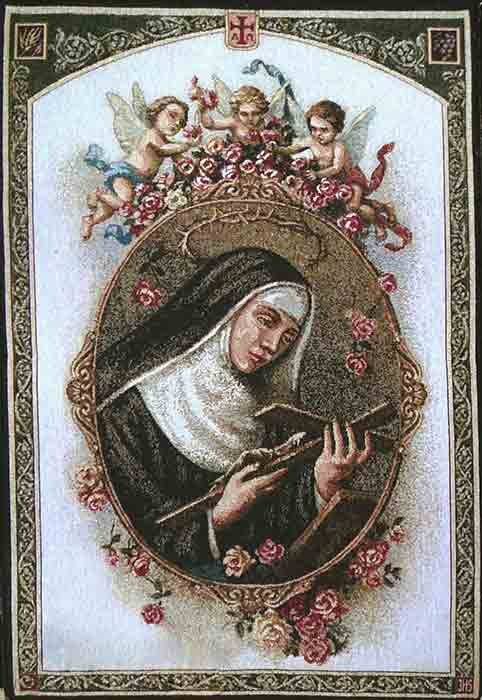
Rita’s sons wished to avenge their father’s murder. Rita, fearing that her sons would lose their souls, tried to dissuade them from retaliating, but to no avail. She asked God to remove her sons from the cycle of vendettas and prevent mortal sin and murder. Her sons died of dysentery a year later, which pious Catholics believe was God’s answer to her prayer, taking them by natural death rather than risk them committing a mortal sin punishable by Hell.
After the deaths of her husband and sons, Rita desired to enter the monastery of Saint Mary Magdalene in Cascia but was turned away. Although the convent acknowledged Rita’s good character and piety, the nuns were afraid of being associated with her due to the scandal of her husband’s violent death and because she was not a virgin.

However, she persisted in her cause and was given a condition before the convent could accept her: the task of reconciling her family with her husband’s murderers.
She implored her three patron saints (John the Baptist, Augustine of Hippo, and Nicholas of Tolentino) to assist her, and she set about the task of establishing peace between the hostile parties of Cascia.
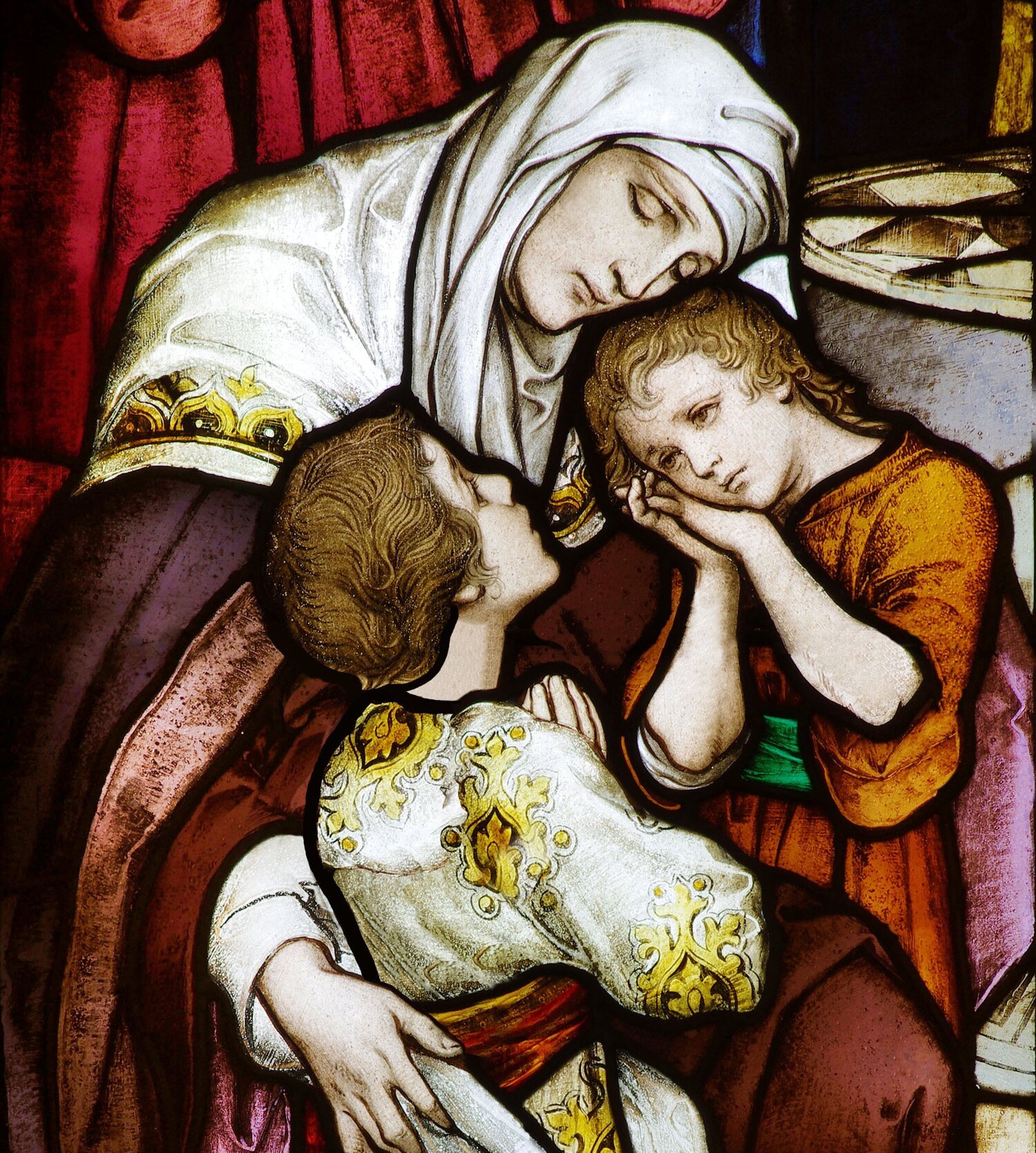
Popular religious tales recall that the bubonic plague, which ravaged Italy at the time, infected Bernardo Mancini, causing him to relinquish his desire to feud any longer with the Chiqui family. She was able to resolve the conflicts between the families and, at the age of thirty-six, was allowed to enter the monastery.
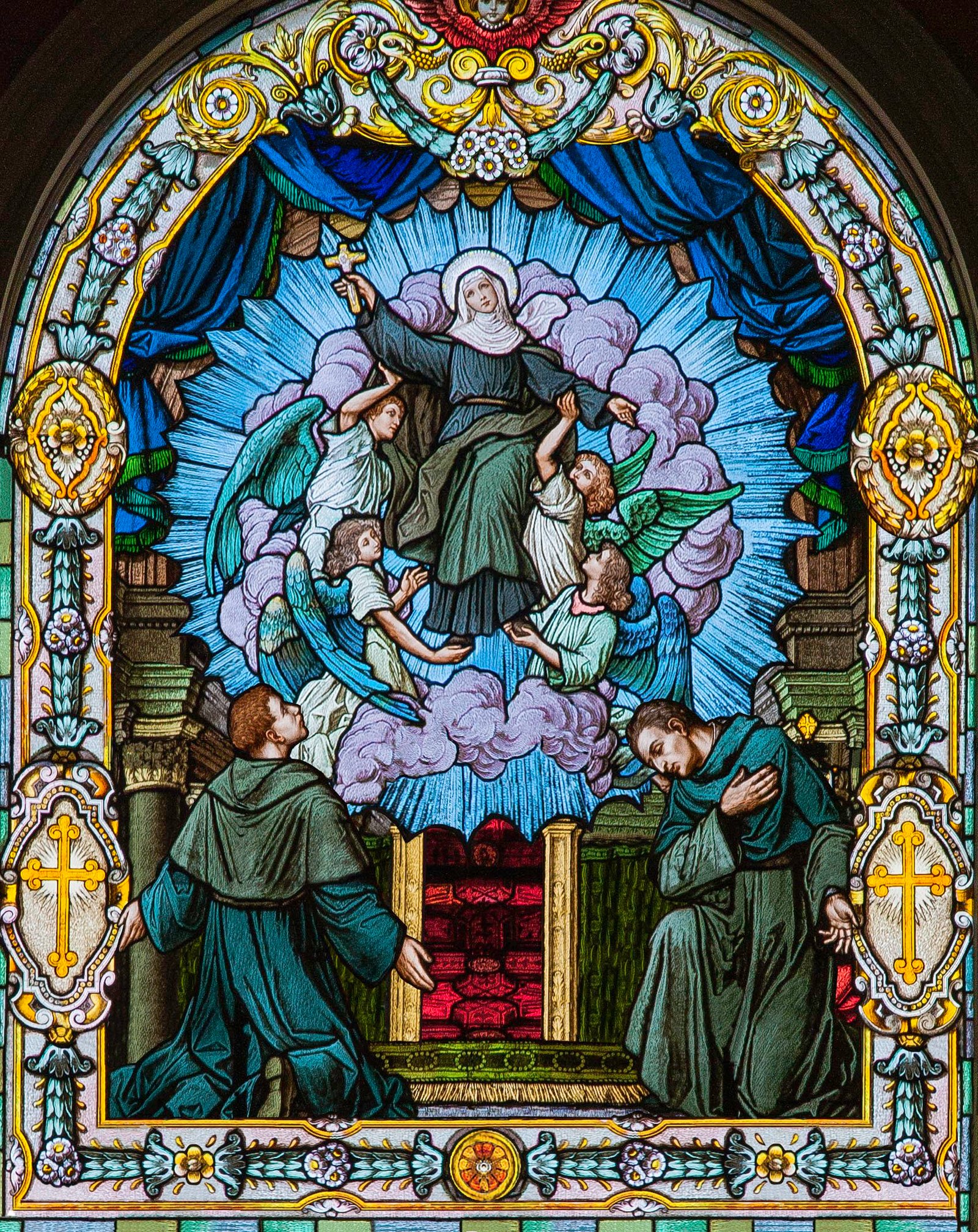
Pious Catholic legends later recount that Rita was transported into the monastery of Saint Magdalene via levitation at night into the garden courtyard by her three patron saints.
She remained at the monastery, living by the Augustinian Rule, until her death from tuberculosis on 22 May 1457. The Augustinian Father Agostino Cavallucci from wrote the first biography of Rita based on oral tradition.
The Vita was published in 1610 by Matteo Florimi in Siena. The work was composed long before her beatification, but the title page nevertheless refers to Rita as already ‘blessed’. Another “Acta” or life story of the woman was compiled by the Augustinian priest Jacob Carelicci. Rita was beatified by Pope Urban VIII in 1626.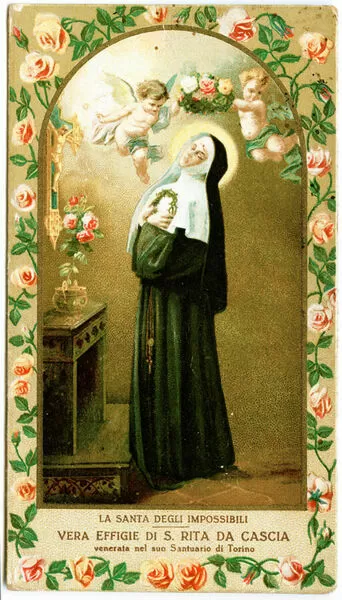
The pope’s private secretary, Fausto Poli, had been born some fifteen kilometers (nine miles) from her birthplace and much of the impetus behind her cult is due to his enthusiasm.
Rita was also mentioned in a French volume on important Augustinians by Simplicien Saint-Martin. She was canonized on 24 May, 1900 by Pope Leo XIII.
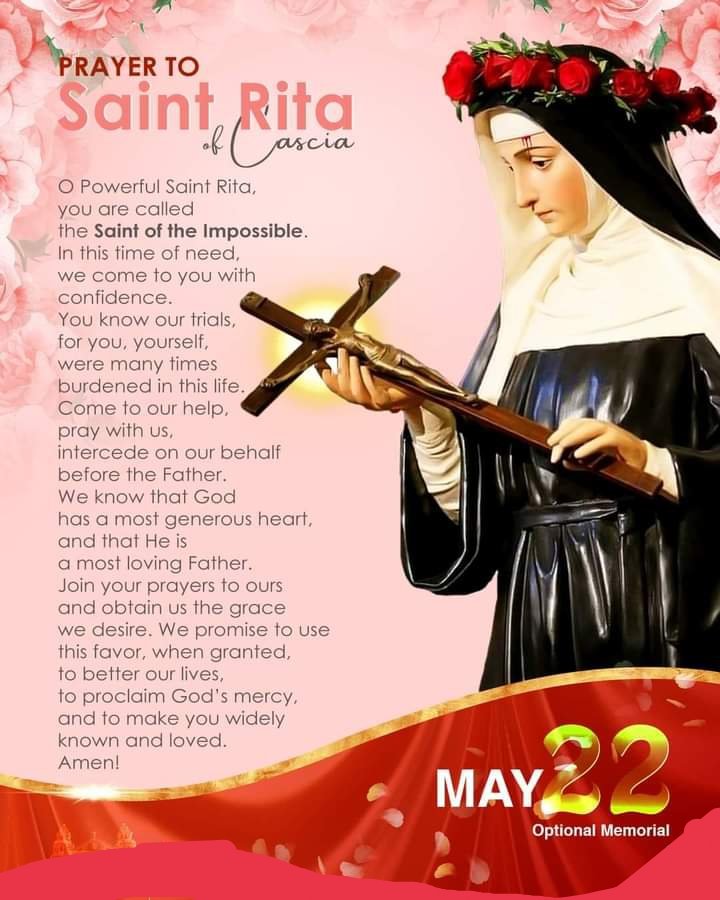
Her feast day is 22 May. On the 100th anniversary of her canonization in 2000, Pope John Paul II noted her remarkable qualities as a Christian woman: “Rita interpreted well the ‘feminine genius’ by living it intensely in both physical and spiritual motherhood.” Pope Leo XIII canonized Rita on 24 May 1900. Her feast day is celebrated on 22 May.
At her canonization ceremony, she was bestowed the title of Patroness of Impossible Causes, while in many Catholic countries, Rita came to be known as the patroness of abused wives and heartbroken women. Her incorrupt body remains in the Basilica of Santa Rita da Cascia.
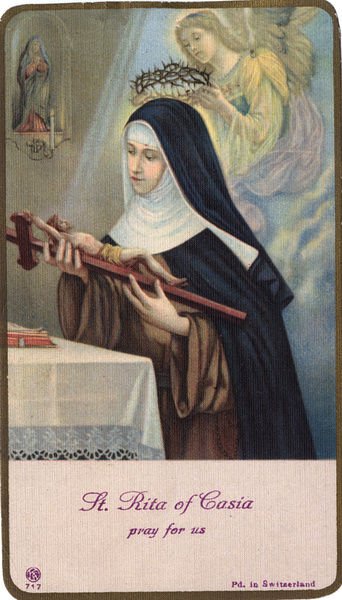
SAINT RITA OF CASCIA Italian peasant woman who survived a brutal husband to become a nun and saint Date: 1377 – 1447
Rita has acquired the reputation, together with St. Jaude Thaddeus, as a saint of impossible causes.
She is also the patron saint of sterility, abuse victims, loneliness, marriage difficulties, parenthood, widows, the sick, bodily ills, and wounds.

Rita’s body, which has remained incorrupt over the centuries, is venerated today in the shrine at Cascia, which bears her name.
Many people visit her tomb each year from all over the world. French painter Yves Klein had been dedicated to her as an infant. In 1961, he created a Shrine of St. Rita, which is in Cascia Convent.
CONTEMPLATING THE LIFE OF SAINT RITA OF CASCIA – THE SAINT OF THE IMPOSSIBLE
Saint Rita of Cascia is one of the most beloved saints in the Catholic Church. She is widely known as the Saint of Impossible Causes because her life was filled with suffering, heartbreak, violence, widowhood, the loss of her children, and deep spiritual trials. Yet through all these hardships, she became a powerful witness to forgiveness, patience, prayer, reconciliation, and redemptive suffering.
Unlike saints known for great public missions, Rita’s holiness was formed quietly through domestic suffering and hidden religious life. She became holy not by escaping pain, but by surrendering it to God and allowing it to transform her into a woman of mercy and union with Christ.
HISTORICAL BACKGROUND
Rita lived in Italy during the late fourteenth and early fifteenth centuries, a time marked by political unrest, family feuds, violence, revenge killings, and social instability. Many regions were trapped in cycles of vengeance between rival families, and Rita’s life unfolded within this harsh environment.
BIRTH AND EARLY LIFE
Rita was born around the year 1381 in the small village of Roccaporena to elderly parents who had long prayed for a child. She was baptized Margherita, though the world would later know her as Rita.
According to tradition, bees surrounded her cradle and entered and left her mouth without harming her, which villagers saw as a sign of grace resting upon the child. From an early age, Rita loved silence, prayer, and devotion to God.
DESIRE FOR RELIGIOUS LIFE
As a young girl, Rita desired to enter convent life and dedicate herself completely to Christ. However, her parents arranged a marriage for her, and she obediently accepted their decision.

MARRIAGE TO PAOLO MANCINI
Rita married Paolo Mancini, a man associated with violent family rivalries. Their marriage was often troubled by tension and anger, and some traditions suggest he treated her harshly. Yet Rita responded with patience, prayer, and gentleness rather than bitterness.
Over time, her peaceful spirit gradually softened Paolo’s heart. Together they had two sons.
MURDER OF HER HUSBAND
After years of struggle, peace finally seemed possible within the family. But Paolo was eventually murdered in a violent feud, becoming another victim of the endless cycle of revenge.
Rita was devastated by grief, yet she responded in an extraordinary way. She forgave her husband’s killers because she refused to allow hatred to rule her soul.
THE CRISIS WITH HER SONS
Rita’s sons were consumed with anger and desired revenge for their father’s death. Fearing they would lose their souls through violence, Rita prayed that God would prevent them from committing murder.
According to tradition, both sons later became ill and died before taking revenge. Rita was left widowed, childless, and alone, carrying immense sorrow while continuing to trust in God.
RETURN TO HER RELIGIOUS VOCATION
After the death of her family, Rita once again sought entrance into the Augustinian convent at Cascia. Initially, the sisters refused her because of her family’s connection to violent feuds, fearing conflict for the convent.
Rita persevered in prayer and patience despite the rejection.

THE MIRACLE OF HER ENTRANCE INTO THE CONVENT
Tradition tells that after intense prayer, Rita was miraculously brought into the locked convent by three heavenly saints: Saint John the Baptist, Saint Augustine of Hippo, and Saint Nicholas of Tolentino.
When the sisters discovered her mysteriously inside the convent, they believed it was God’s will and finally admitted her.
LIFE AS AN AUGUSTINIAN NUN
Rita spent nearly forty years in the convent living a quiet and hidden life. She devoted herself to prayer, work, service, and humble obedience. She performed no famous public missions and left behind no great writings, yet her holiness deepened through ordinary faithfulness.

MYSTICAL UNION WITH CHRIST
Rita developed a profound devotion to the Passion of Christ and constantly meditated on His suffering. One day while praying before a crucifix, she asked to share in Christ’s pain.
Soon afterward, a wound appeared on her forehead resembling a thorn wound from Christ’s crown. The wound caused her great suffering for many years, yet she accepted it peacefully as a sign of union with the suffering Christ.
THE ROSE MIRACLE
Near the end of her life, while bedridden, Rita asked a relative to bring her a rose from her old garden. Though it was winter and snow covered the ground, a single rose was found blooming there.
The rose became a symbol of Rita’s life — hope blooming in impossible circumstances, peace blooming amid suffering, and love blooming through pain.

DEATH
Rita died in 1457. The people already regarded her as a saint because they had witnessed a woman transformed by forgiveness, suffering, prayer, and love of God.
CANONIZATION
Pope Leo XIII canonized Saint Rita in 1900. Since then, devotion to her has spread throughout the world.
WHY SHE IS CALLED THE SAINT OF IMPOSSIBLE CAUSES
Rita became associated with impossible situations because her own life was filled with circumstances that seemed hopeless. Her violent marriage was transformed, she forgave murderers, her sons were spared from revenge, she entered the convent despite rejection, and holiness blossomed through suffering like a rose in winter.
People especially seek her intercession for broken marriages, family struggles, hopeless situations, healing, reconciliation, and impossible prayers.
SPIRITUAL THEMES IN HER LIFE

FORGIVENESS
Rita broke the cycle of hatred and revenge by forgiving those who murdered her husband.
REDEMPTIVE SUFFERING
She united her suffering with Christ and transformed pain into an offering of love.
HIDDEN HOLINESS
Rita became a saint through ordinary faithfulness in family life and convent life.

HOPE IN DESPAIR
Her life revealed how God can bring grace and beauty even from situations that appear hopeless.
PATRONAGES
Saint Rita is the patroness of impossible causes, difficult marriages, widows, abused women, family problems, and hopeless situations.
ARTISTIC REPRESENTATION
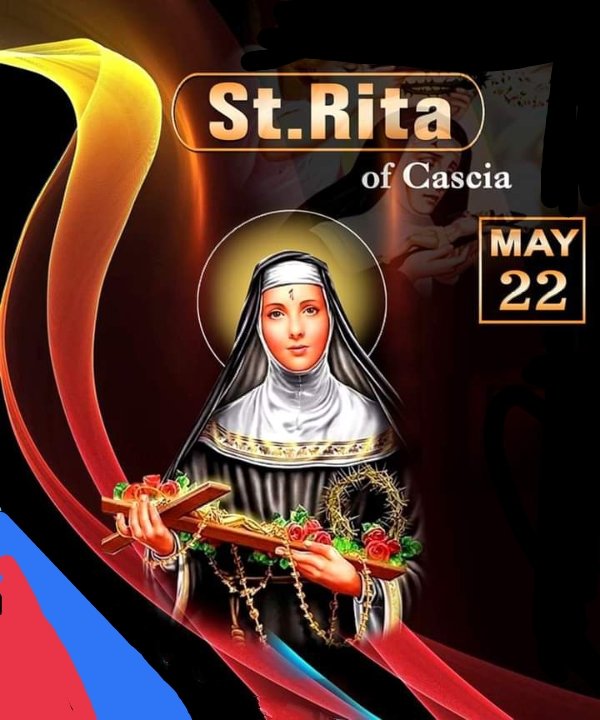
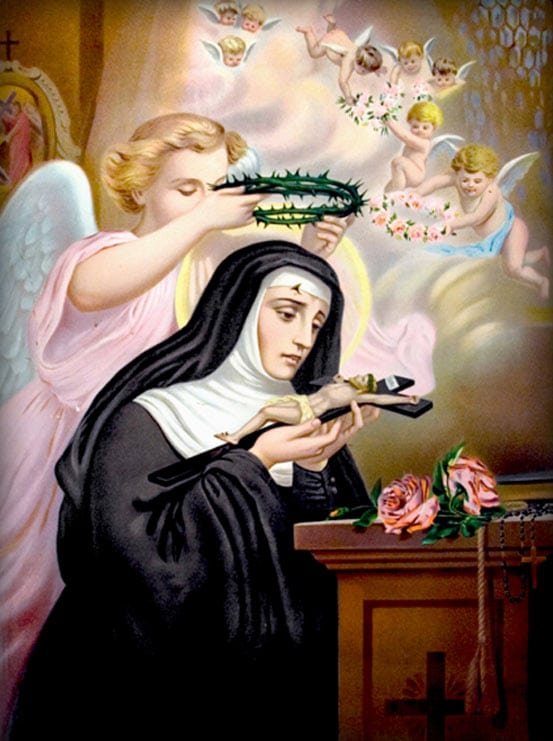
She is commonly depicted holding roses, bearing the wound on her forehead, praying before a crucifix, or wearing the Augustinian habit. Bees are sometimes shown near her as a reminder of the stories surrounding her infancy.

WHY SAINT RITA STILL MATTERS
Saint Rita continues to inspire people because her life reflects the hidden struggles many experience today — family conflict, grief, loneliness, disappointment, abuse, unanswered prayers, and difficult relationships.
She teaches that holiness is possible not only through great public works, but also through quiet faithfulness in daily suffering, family life, silence, and perseverance.
Her life remains a powerful reminder that no suffering offered to God is ever wasted.
PRAYER
Heavenly Father, Who in your infinite goodness has regarded the prayer of your servant, Saint Rita, and have granted her supplications in reward of her compassionate love and firm reliance on your promises.
Have pity on our adversity and succor us in our times of need, so that we may obtain the piety of Saint Rita and edify the faith by our conduct, in Jesus’ Name. Amen
O Glorious St. Rita, who miraculously participated in the sorrowful Passion of our Lord Jesus Christ, obtain for us the similar grace to suffer with resignation the troubles of this life, and protect us in all our needs. Amen