
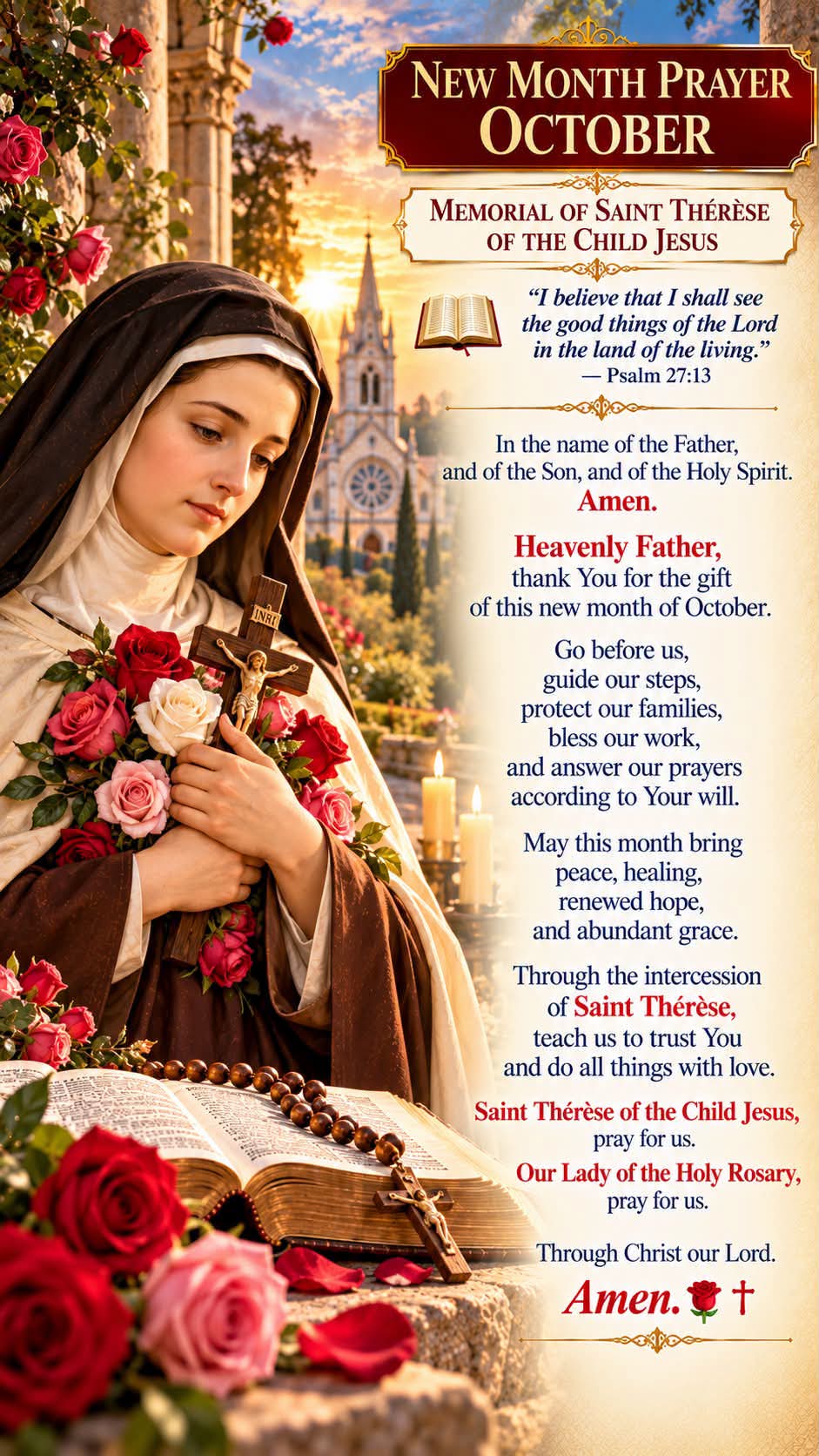
DEVOTION OF THE MONTH OF OCTOBER TO THE MOST HOLY ROSARY OF THE BLESSED VIRGIN MARY
October 1, 2026
2 Corinthians 10:5
October 1, 2026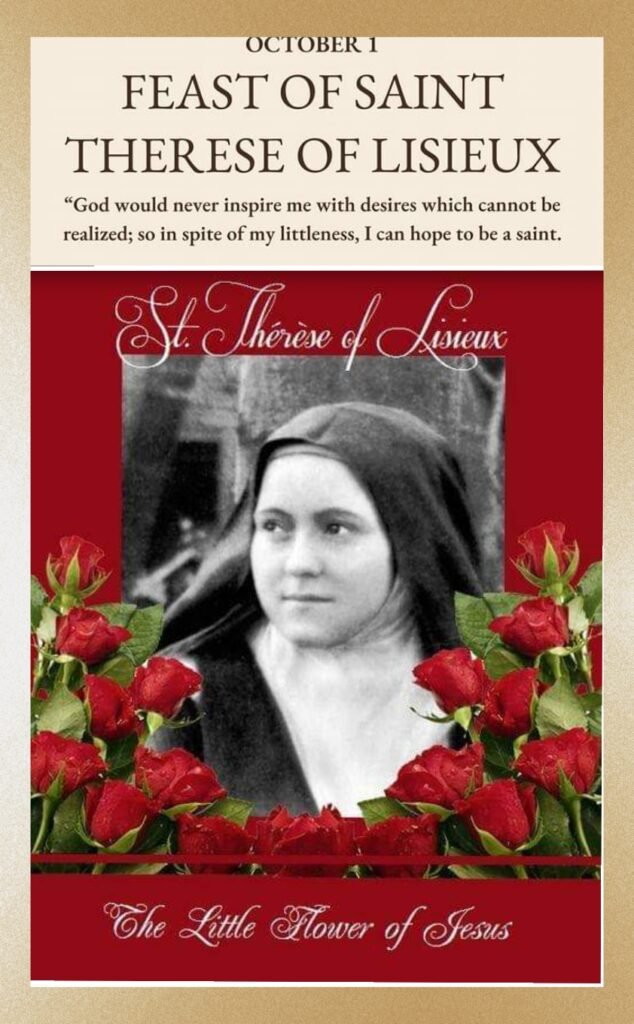

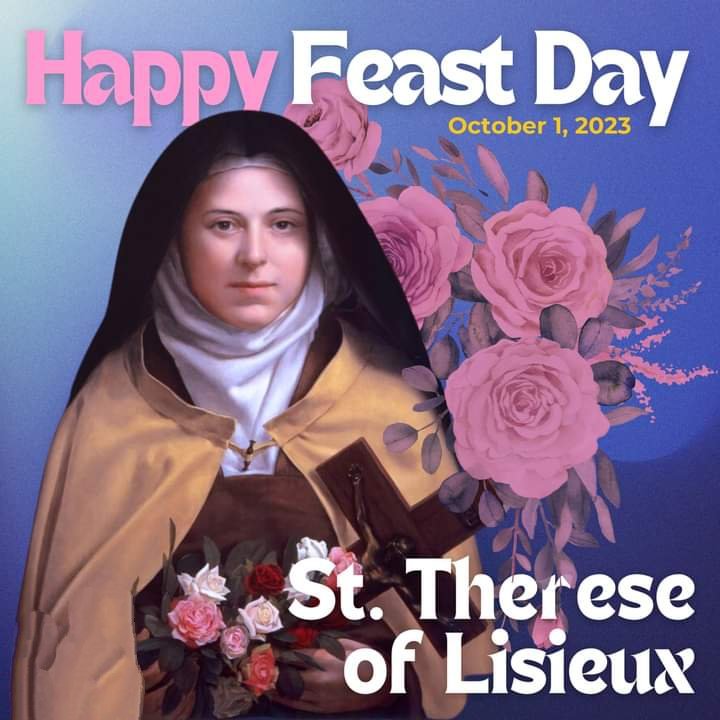
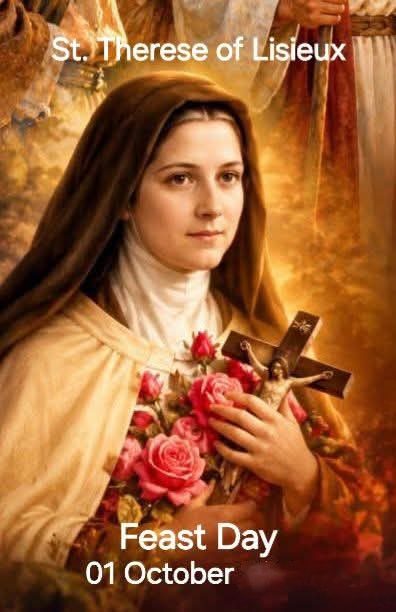
FEAST OF SAINT THÉRÈSE OF LISIEUX, LITTLE FLOWER, OF THE CHILD JESUS
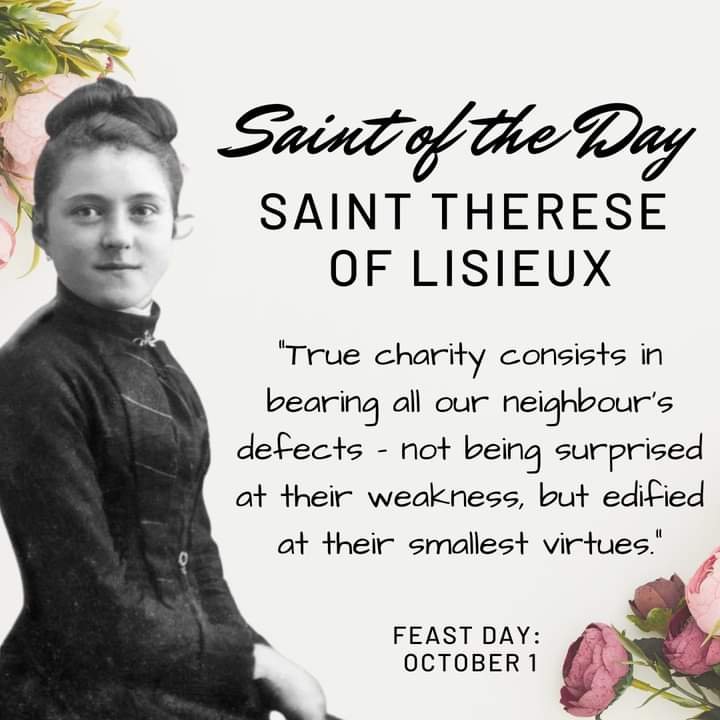
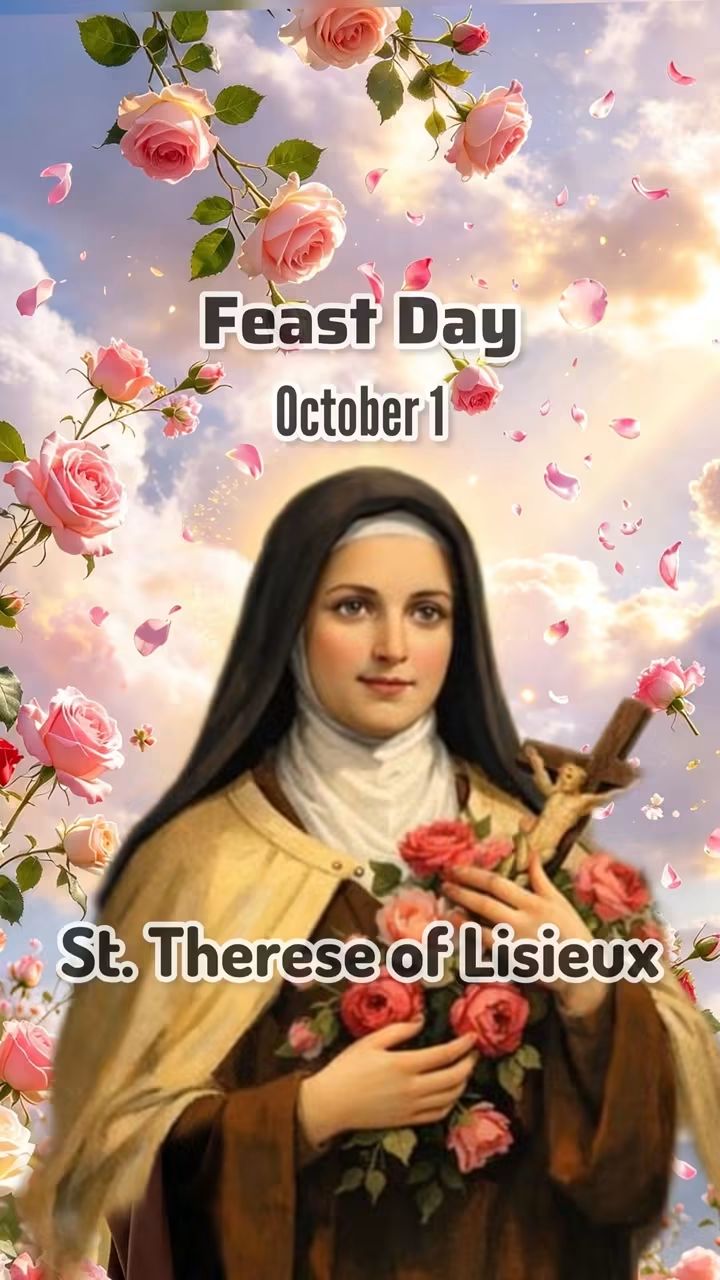
FEAST DAY – 1st OCTOBER
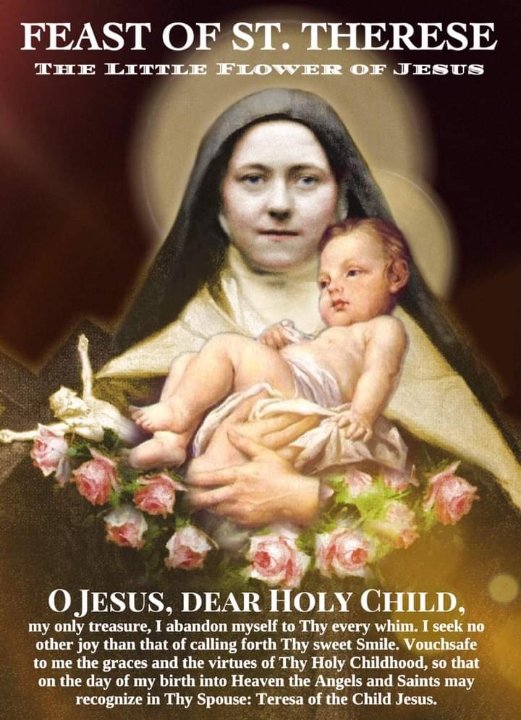
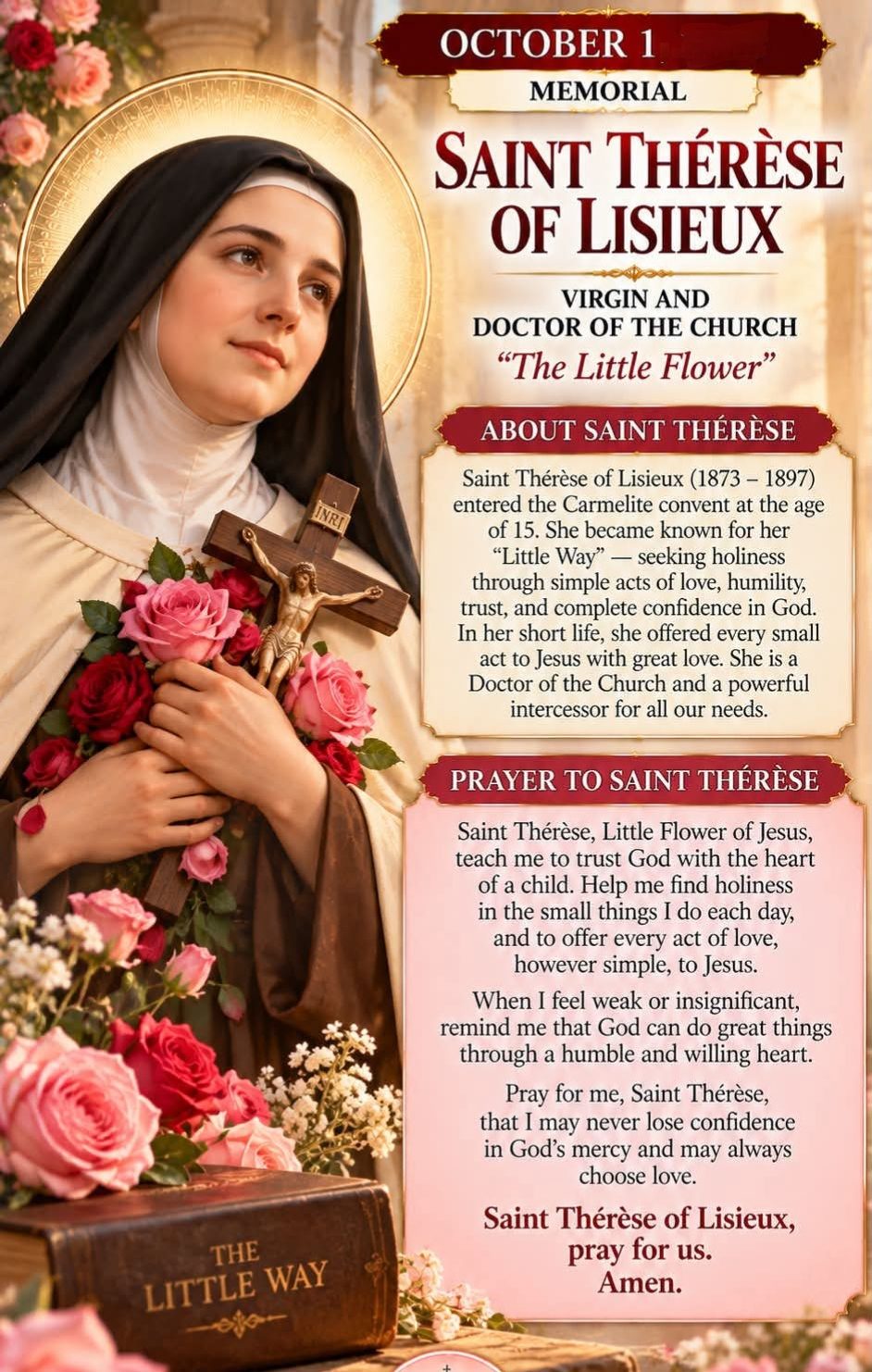
Thérèse of Lisieux OCD, born (2 January 1873 – 30 September 1897), also known as Saint Therese of the Child Jesus and the Holy Face (Thérèse de l’Enfant Jésus et de la Sainte Face), was a French Catholic Discalced Carmelite nun who is widely venerated in modern times. She is popularly known in English as the Little Flower of Jesus, or simply the Little Flower, and in French as la petite Thérèse (little Thérèse)
Thérèse has been a highly influential model of sanctity for Catholics and for others because of the simplicity and practicality of her approach to the spiritual life. Together with Francis of Assisi, she is one of the most popular saints in the history of the church. Pope Pius X called her “the greatest saint of modern times”.
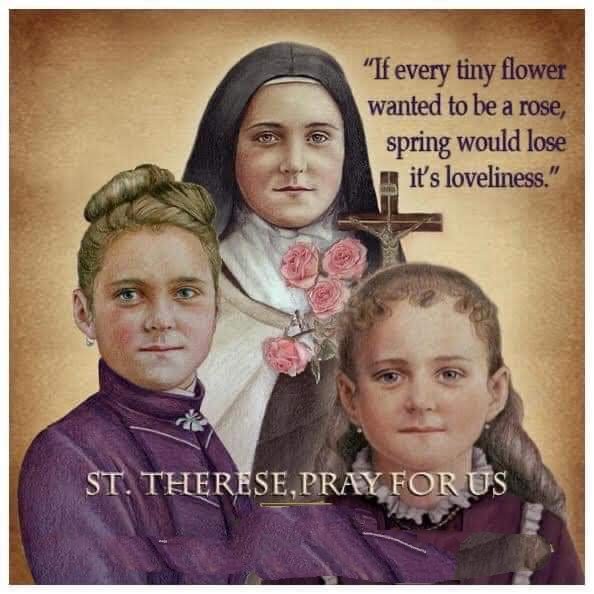
Thérèse felt an early call to religious life and, after overcoming various obstacles, in 1888, at the early age of 15, she became a nun and joined two of her older sisters in the cloistered Carmelite community of Lisieux, Normandy (yet another sister, Céline, also later joined the order).
After nine years as a Carmelite religious, having fulfilled various offices such as sacristan and assistant to the novice mistress, in her last eighteen months in Carmel she fell into a night of faith, in which she is said to have felt Jesus was absent and been tormented by doubts that God existed. Thérèse died at the age of 24 from tuberculosis.
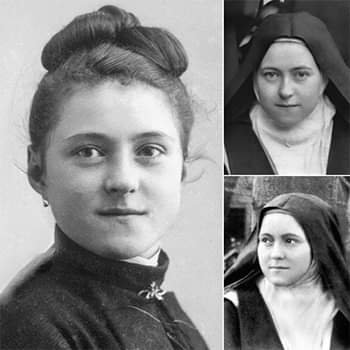
Her feast day in the General Roman Calendar was 3 October from 1927 until it was moved in 1969 to 1 October. Thérèse is well known throughout the world, with the Basilica of Lisieux being the second most popular place of pilgrimage in France after Lourdes. Therese was born on Rue Saint-Blaise, in Alençon, France on January 2, 1873, and was the daughter of Marie-Azélie Guérin (usually called Zélie), and Louis Martin who was a jeweler and watchmaker.
Both her parents were devout Catholics who would eventually become the first (and to date only) married couple canonized together by the Roman Catholic Church (by Pope Francis in 2015).
Louis had tried to become a canon regular, wanting to enter the Great St Bernard Hospice, but had been refused because he did not know Latin. Zélie, possessed of a strong, active temperament, wished to serve the sick, and had also considered entering consecrated life, but the prioress of the canonesses regular of the Hôtel-Dieu in Alençon had discouraged her outright.
Disappointed, Zélie learned lacemaking instead. She excelled in it and set up her own business on Rue Saint-Blaise at age 22. Louis and Zélie met in early 1858 and married on July 13 of that same year at the Basilica of Notre-Dame d’Alençon.
At first they decided to live as brother and sister in a perpetual continence, but when a confessor discouraged them in this, they changed their lifestyle and had nine children. From 1867 to 1870, they lost 3 infants and five-year-old Hélène. All five of their surviving daughters became nuns. In addition to Therese, they were:
Marie (February 22, 1860, a Carmelite in Lisieux, in religion Sister Marie of the Sacred Heart, d. January 19, 1940),
Pauline (September 7, 1861, a Carmelite in Lisieux, in religion Mother Agnes of Jesus, d. July 28, 1951),
Léonie (June 3, 1863, a Visitandine at Caen, in religion Sister Françoise-Thérèse, d. June 16, 1941), and
Céline (April 28, 1869, a Carmelite in Lisieux, in religion Sister Geneviève of the Holy Face, d. February 25, 1959).
“A dreamer and brooder, an idealist and romantic, the father gave touching and naïve pet names [to his daughters]: Marie was his ‘diamond’, Pauline his ‘noble pearl’, Céline ‘the bold one’.
But Therese was his ‘little queen’, to whom all treasures belonged.” Her whole strength was in praying and in making sacrifices.

Zélie was so successful in manufacturing lace that by 1870 Louis had sold his watchmaking shop to a nephew and handled the traveling and bookkeeping end of his wife’s lacemaking business.
Soon after her birth in January 1873, the outlook for the survival of Therese Martin was uncertain.
Because of her frail condition, she was entrusted to a wet nurse, Rose Taillé, who had already nursed two of the Martin children. Rose had her own children and could not live with the Martins, so Therese was sent to live with her in the bocage forests of Semallé.
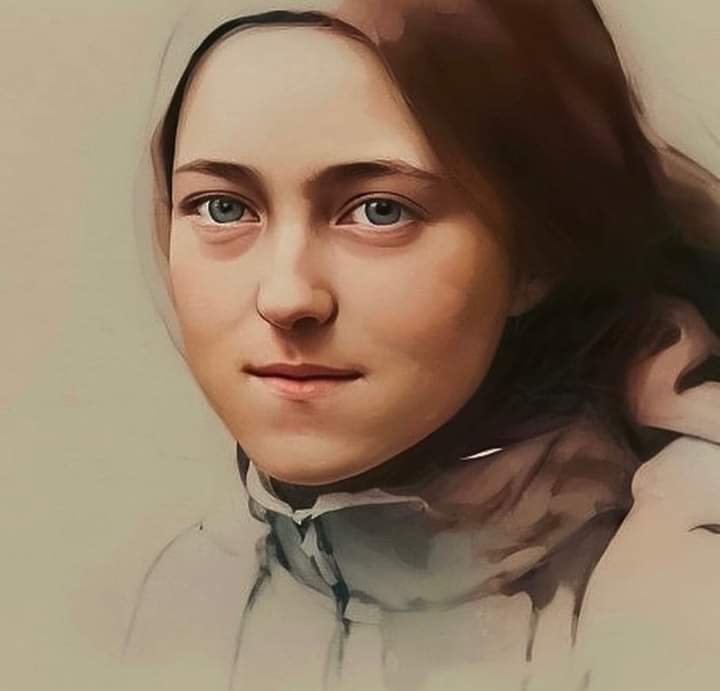
On 2 April 1874, when she was 15 months old, she returned to Alençon where her family surrounded her with affection. “I hear the baby calling me Mama! as she goes down the stairs. On every step, she calls out Mama! and if I don’t respond every time, she remains there without going either forward or back.” (Madame Martin to Pauline, 21 November 1875) She was educated in a very Catholic environment, including Mass attendance at 5:30 a.m., the strict observance of fasts, and prayer to the rhythm of the liturgical year.
The Martins also practiced charity, visiting the sick and elderly and welcoming the occasional vagabond to their table. Even if she was not the model little girl, her sisters later portrayed, Therese was very responsive to this education. She played at being a nun.
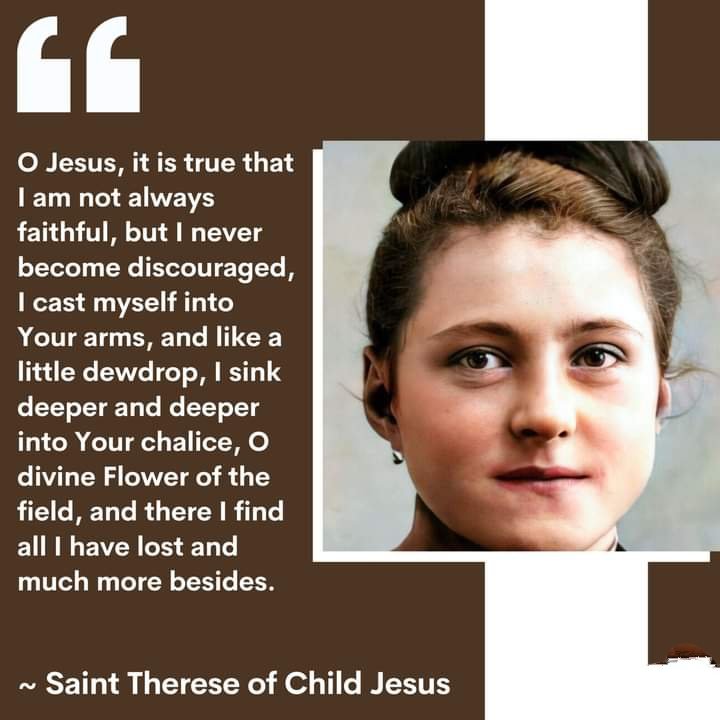
Described as generally a happy child, she also manifested other emotions, and often cried: “Céline is playing with the little one with some bricks. I have to correct poor baby who gets into frightful tantrums when she can’t have her own way.
She rolls in the floor in despair believing all is lost. Sometimes she is so overcome she almost chokes. She’s a nervous child, but she is very good, very intelligent, and remembers everything.”
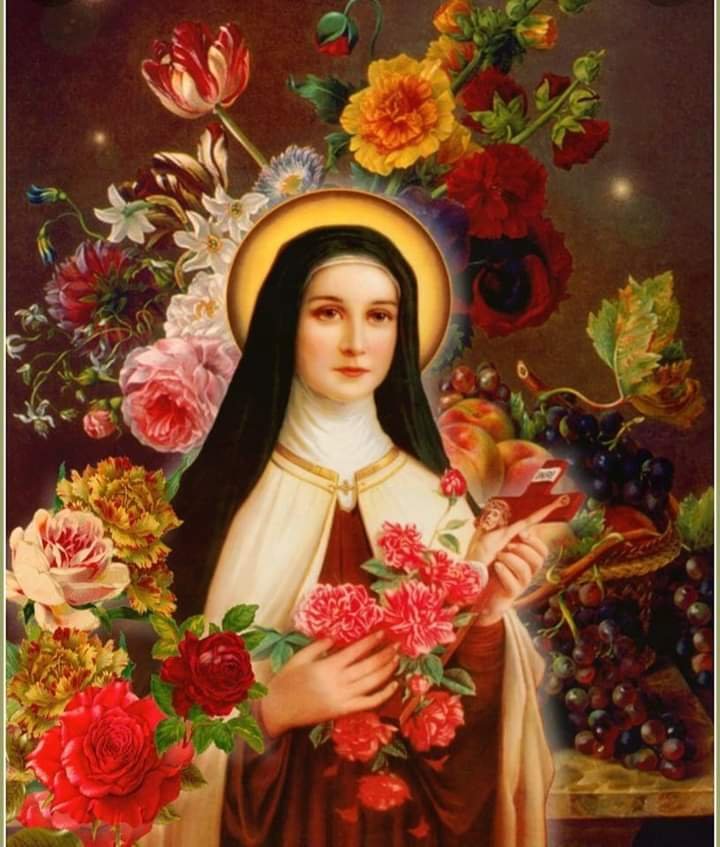
At 22, Therese, then a Carmelite, admitted: “I was far from being a perfect little girl. From 1865 Zélie had complained of breast pain and in December 1876 a doctor told her of the seriousness of the tumour.
Feeling death was imminent, Madame Martin had written to Pauline in spring 1877, “You and Marie will have no difficulties with her upbringing. Her disposition is so good. She is a chosen spirit.” In June 1877 she left for Lourdes hoping to be cured, but the miracle did not happen.

“The Mother of God has not healed me because my time is up, and because God wills me to repose elsewhere than on the earth.” On 28 August 1877, Zélie died, aged 45.
Her funeral was conducted in the Basilica of Notre-Dame d’Alençon. Therese was barely 4 and a half years old. Her mother’s death dealt her a severe blow and later she would consider that “the first part of her life stopped that day”.

She wrote: “Every detail of my mother’s illness is still with me, specially her last weeks on earth.” She remembered the bedroom scene where her dying mother received the last sacraments while Therese knelt and her father cried.
She wrote: “When Mummy died, my happy disposition changed. I had been so lively and open; now I became diffident and oversensitive, crying if anyone looked at me. I was only happy if no one took notice of me… It was only in the intimacy of my own family, where everyone was wonderfully kind, that I could be more myself.”
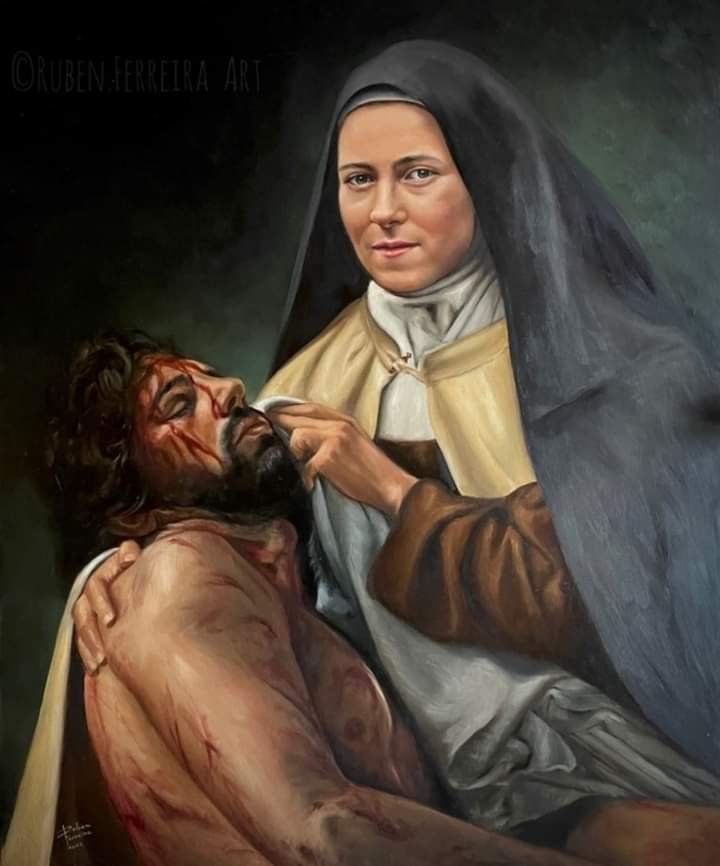
Three months after Zélie died, Louis Martin left Alençon, where he had spent his youth and marriage, and moved to Lisieux in the Calvados Department of Normandy, where Zélie’s pharmacist brother, Isidore Guérin lived with his wife and their two daughters, Jeanne and Marie.
In her last months Zélie had given up the lace business. After her death, Louis sold it. Louis leased a pretty, spacious country house, Les Buissonnets, situated in a large garden on the slope of a hill overlooking the town.
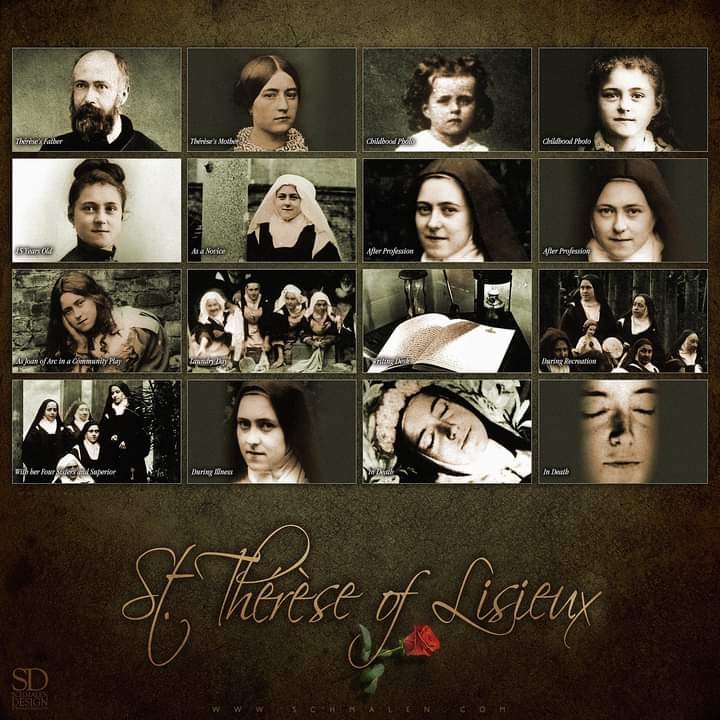
Looking back, Therese would see the move to Les Buissonnets as the beginning of the “second period of my life, the most painful of the three: it extends from the age of four-and-a-half to fourteen, the time when I rediscovered my childhood character, and entered into the serious side of life”.
In Lisieux, Pauline took on the role of Therese’s “Mama”. She took this role seriously, and Therese grew especially close to her, and to Céline, the sister closest to her in age.
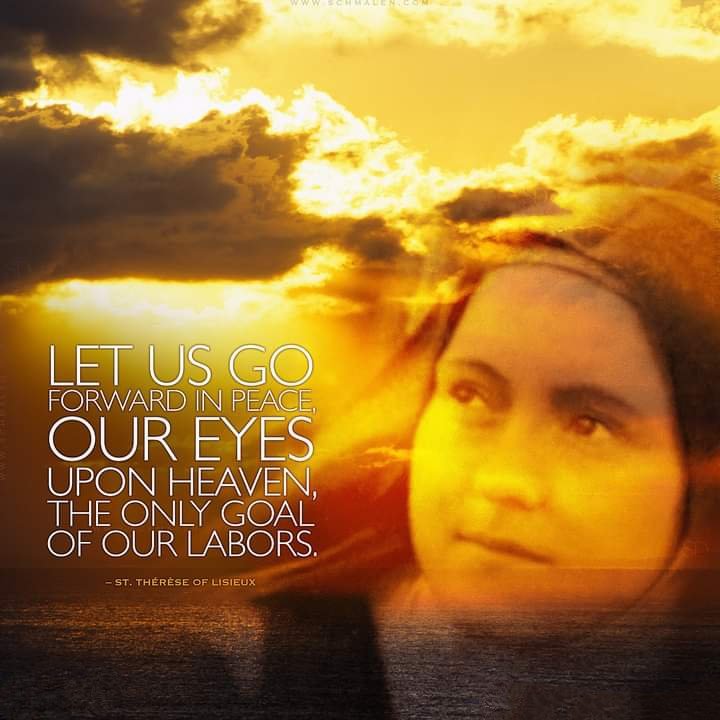
On Christmas Day 1886 St. Thérèse had a profound experience of intimate union with God, which she described as a “complete conversion.”
Almost a year later, in a papal audience during a pilgrimage to Rome, in 1887, she asked for and obtained permission from Pope Leo XIII to enter the Carmelite Monastery at the young age of 15.
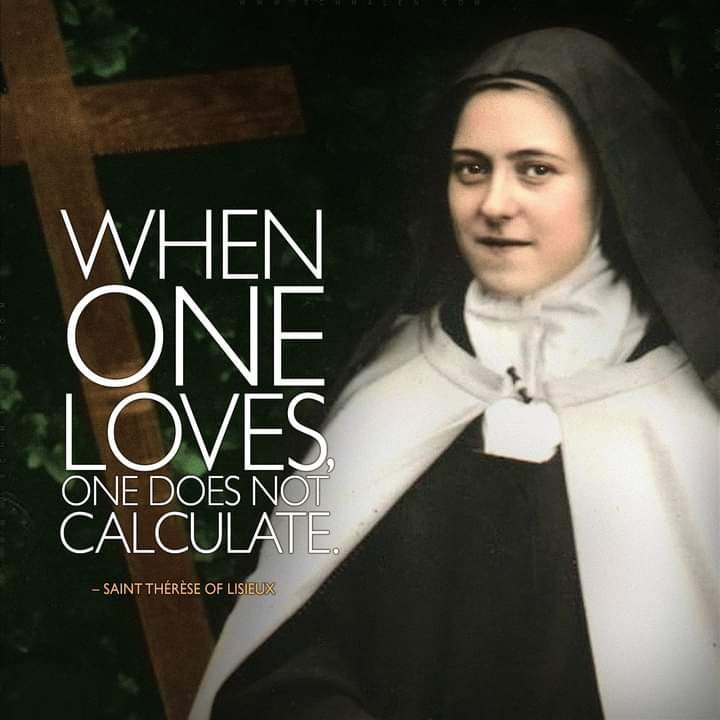
On entering, she devoted herself to living a life of holiness, doing all things with love and childlike trust in God. She struggled with life in the convent, but decided to make an effort to be charitable to all, especially those she didn’t like.
She performed little acts of charity always, and little sacrifices not caring how unimportant they seemed. These acts helped her come to a deeper understanding of her vocation.
She wrote in her autobiography that she had always dreamed of being a missionary, an Apostle, a martyr – yet she was a nun in a quiet cloister in France. How could she fulfill these longings? “Charity gave me the key to my vocation. I understood that the Church had a Heart and that this Heart was burning with love. I knew that one love drove the members of the Church to action, that if this love were extinguished, the apostles would have proclaimed the Gospel no longer, the martyrs would have shed their blood no more.
I understood that Love comprised all vocations, that Love was everything, that it embraced all times and places…in a word, that it was eternal! Then in the excess of my delirious joy, I cried out: O Jesus, my Love…my vocation, at last I have found it…My vocation is Love!”
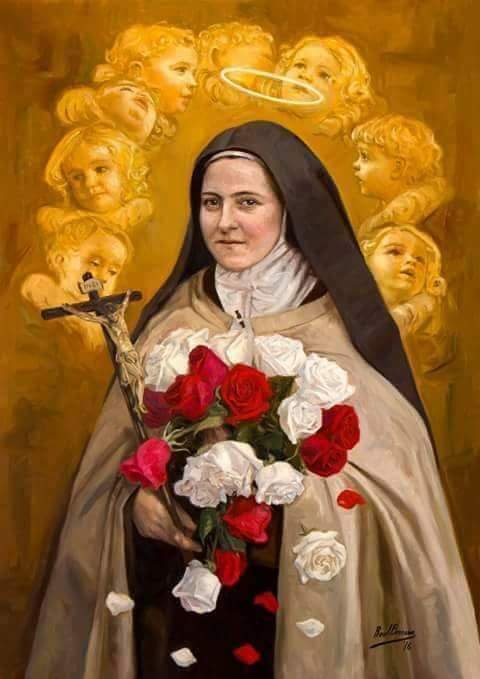
Thérèse offered herself as a sacrificial victim to the merciful Love of God on June 9, 1895, the feast of the Most Holy Trinity and the following year, on the night between Holy Thursday and Good Friday, she noticed the first symptoms of Tuberculosis, the illness which would lead to her death.
Thérèse recognized in her illness the mysterious visitation of the divine Spouse and welcomed the suffering as an answer to her offering the previous year. She also began to undergo a terrible trial of faith which lasted until her death a year and a half later. “Her last words, ‘My God, I love you,’ are the seal of her life,” said Pope John Paul II.
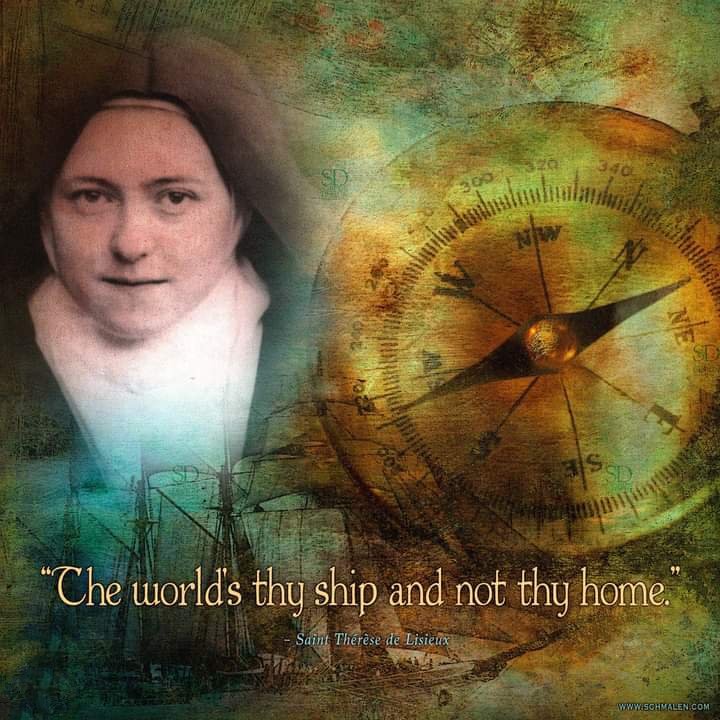
Since her death, millions have been inspired by her ‘little way’ of loving God and neighbor. Many miracles have been attributed to her intercession. She had predicted during her earthly life that “My Heaven will be spent doing good on Earth.
Saint Thérèse was proclaimed a Doctor of the Church by Pope John Paul II in 1997 – 100 years after her death at the age of 24. She is only the third woman to be so proclaimed, after Saint Catherine of Siena and Saint Teresa of Avila.

St. Thérèse wrote once, ‘You know well enough that Our Lord does not look so much at the greatness of our actions, nor even at their difficulty, but at the love with which we do them.
Generations of Catholics have admired this young saint, called her the “Little Flower”, and found in her short life more inspiration for their own lives than in volumes by theologians.
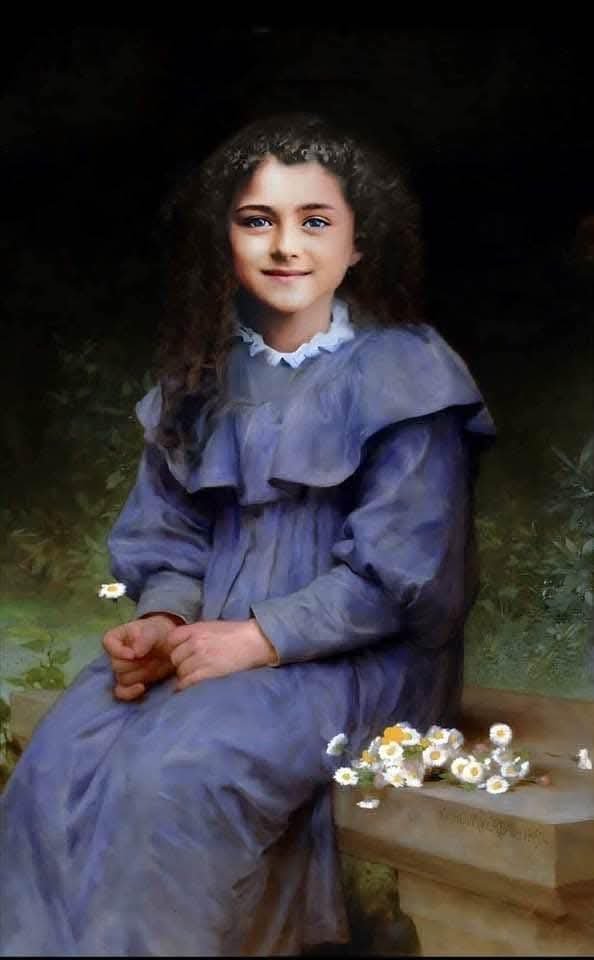
Yet Therese died when she was 24, after having lived as cloistered Carmelite for less than ten years. She never went on missions, never founded a religious order, never performed great works.
The only book of hers, published after her death, was an brief edited version of her journal called “Story of a Soul.”

Collections of her letters and restored versions of her journals have been published recently. But within 28 years of her death, the public demand was so great that she was canonized.
Over the years, some modern Catholics have turned away from her because they associate her with over- sentimentalized piety and yet the message she has for us is still as compelling and simple as it was almost a century ago.
CONTEMPLATING THE LIFE OF SAINT THÉRÈSE OF THE CHILD JESUS, VIRGIN, DOCTOR – THE LITTLE FLOWER OF LISIEUX
A CHILDHOOD TOUCHED BY SORROW
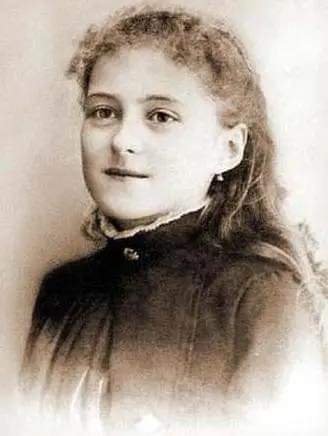
Marie Françoise Thérèse Martin was born in Alençon, France, in 1873, the youngest of nine children of Louis and Zélie Martin. When she was only four, her mother died of breast cancer. Deeply affected by this loss, Thérèse found comfort in her father, whom she lovingly called her King, and in the affection of her sisters.
A FATHER’S TENDER CARE
Louis Martin raised his daughters with prayer, faith, and charity. Though loving and gentle, Thérèse was extremely sensitive and easily moved to tears. She later described herself as a “ball of tears.”
A MYSTERIOUS ILLNESS AND MARY’S SMILE
At ten, Thérèse was devastated when her beloved sister Pauline entered the Carmelite convent. Soon afterward, she suffered a mysterious illness involving fever, tremors, and hallucinations. When her family prayed to the Blessed Virgin, Thérèse saw the statue of Mary smile at her, and she was suddenly healed. This experience strengthened her lifelong devotion to Our Lady.
A CHRISTMAS CONVERSION
On Christmas Eve in 1886, Thérèse experienced a profound spiritual transformation. After hearing her father express weariness over preparing her Christmas stockings, she overcame the tears that would once have overwhelmed her. She described this moment as her “complete conversion,” marking the beginning of a new spiritual maturity and strength.
DRAWN TO CARMEL
Thérèse felt called to dedicate her life entirely to God in the Carmelite convent. Despite being only fifteen, she courageously sought permission from Church authorities and even appealed to Pope Leo XIII during a pilgrimage to Rome. Her request was eventually granted, and she entered the Carmel of Lisieux in 1888.
THE LITTLE WAY OF HIDDEN LOVE
In the convent, Thérèse discovered holiness through her Little Way, offering ordinary actions and daily difficulties to God with extraordinary love. She patiently endured irritations, accepted humble tasks, and responded kindly to those who hurt her. Through these hidden sacrifices, she sought to bring souls closer to God.
CARRIED BY THE FATHER’S ARMS
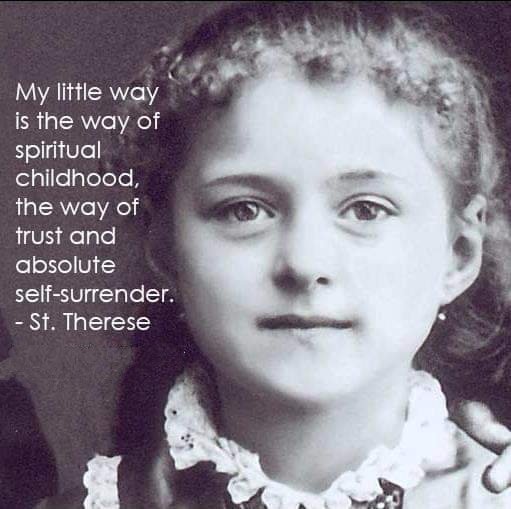
Thérèse believed that holiness did not depend on extraordinary achievements but on complete trust in God. Recognising her own littleness, she imagined herself as a child who could not climb the staircase to heaven but would allow Jesus to carry her there.
“The elevator which must raise me to heaven is Your arms, O Jesus!”
ILLNESS AND OFFERING FOR MISSIONARIES
Thérèse contracted tuberculosis, enduring severe suffering with faith and courage. Although she never left the convent, she offered her prayers and sufferings for missionaries and priests serving in distant lands. Her hidden life became a powerful spiritual contribution to the Church’s missionary work.
STORY OF A SOUL
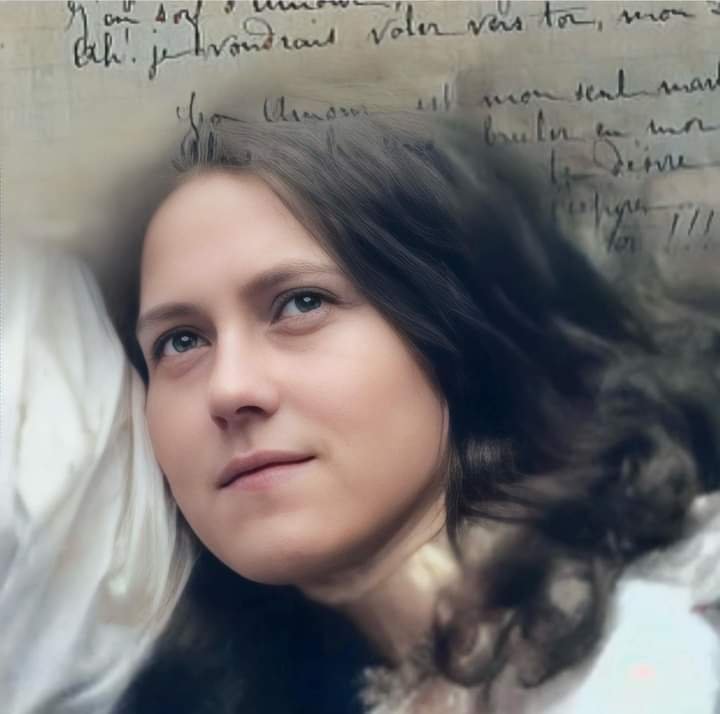
During her final years, Thérèse wrote her spiritual autobiography, Story of a Soul, revealing her profound trust in God’s merciful love. Her writings expressed her desire to make love the centre of her vocation.
“My vocation is love.”
“Holiness consists in doing God’s will, in being just what He wants us to be.”
“I will spend my heaven doing good on earth.”
Thérèse died on 30 September 1897, at the age of twenty-four, whispering, “My God, I love You!” Her autobiography soon touched hearts throughout the world, showing that holiness is possible for everyone through faith, love, and trust in God.
DEATH AND GLORY
Thérèse was canonised by Pope Pius XI in 1925 and declared Patroness of the Missions. In 1997, Pope John Paul II proclaimed her a Doctor of the Church, recognising the profound spiritual wisdom of her Little Way and its message of confidence in God’s merciful love.
LEGACY OF THE LITTLE WAY
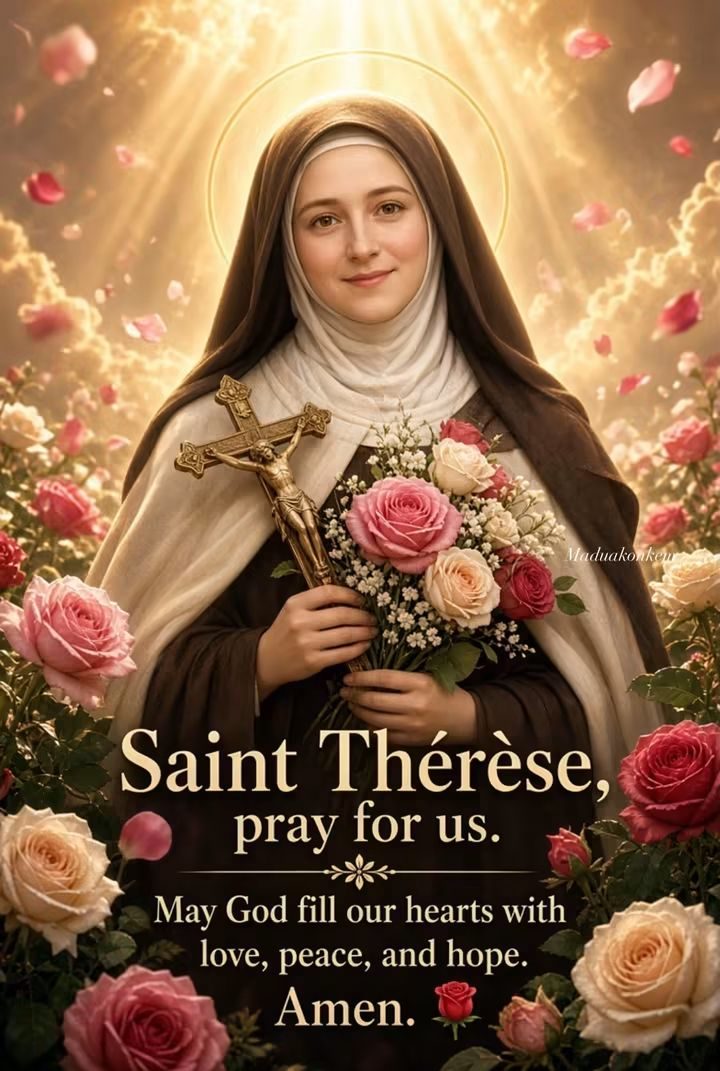
The sensitive young girl who believed herself too small for great deeds became one of the most beloved saints of modern times. Her Little Way continues to inspire people throughout the world to discover holiness in ordinary life through love, humility, trust, and surrender to God.
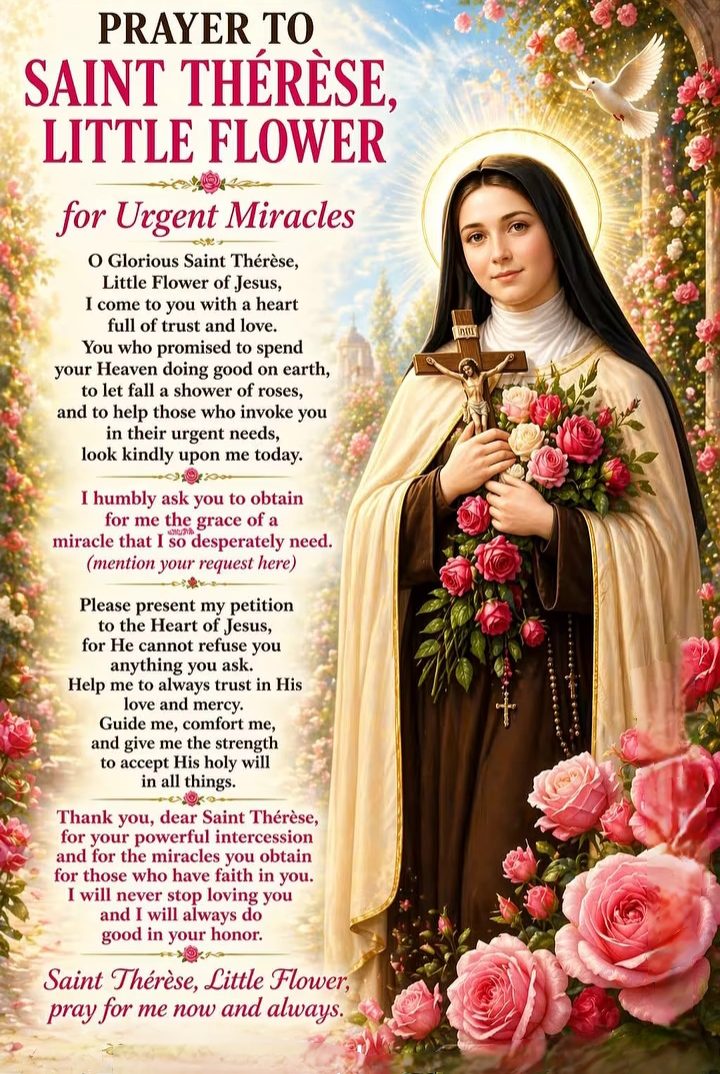
PRAYER TO THE LITTLE FLOWER
Saint Thérèse, Little Flower of Jesus, teach us your Little Way of trust and love. Help us to offer our small sacrifices joyfully, recognise holiness in everyday life, and trust that Jesus will carry us into His heavenly embrace. Intercede for us, that we may love as you loved and spread the fragrance of Christ wherever we go. Amen.
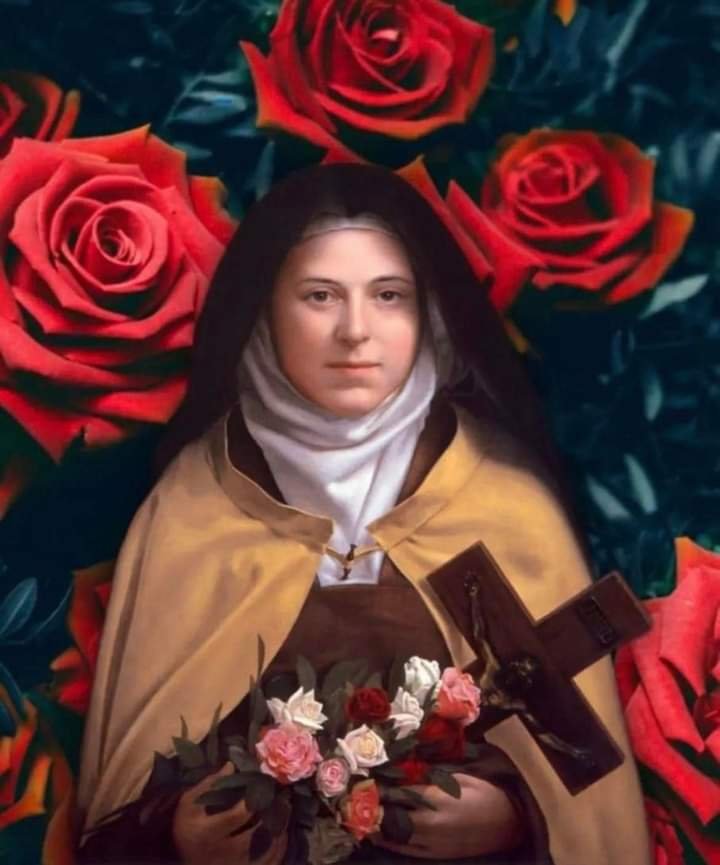
PRAYER
Saint Thérèse, you were dedicated in faith and belief of God till your last breath. Pray for us to be so guided to holiness and righteousness to our one true God, that our lives may inspire warring spirits towards peace in the world through faithful endurance in glorifying the Name of our God of Salvation.
O little St. Theresa of the Child Jesus, you lived with total abandonment to God, and were a true example of purity and piety.
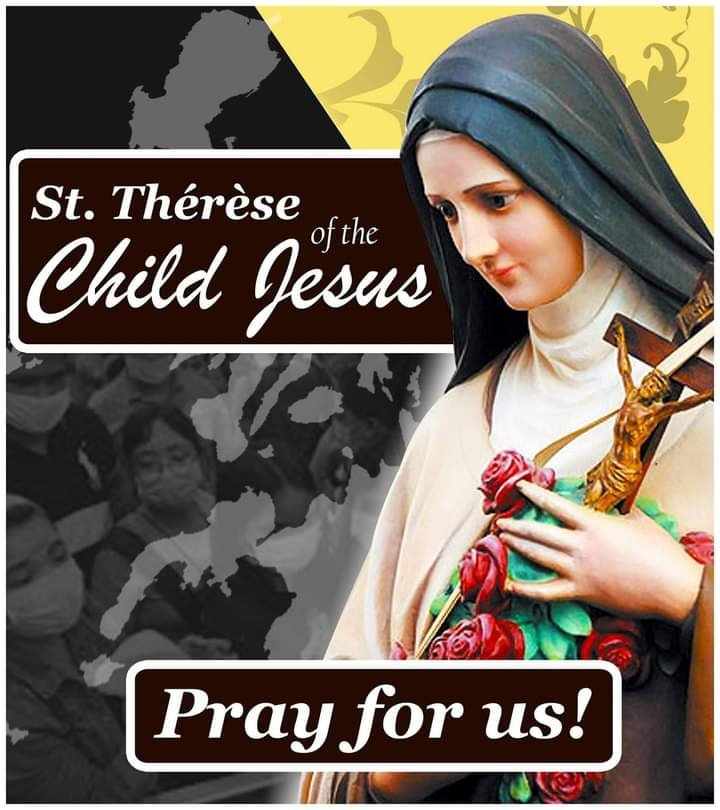
Saint Thérèse, as you rejoice in the reward of your virtues, look upon us with compassion and carry our troubles and petitions, interceding for us through Mary our Mediatrix.
May your plea on our behalf, to our Immaculate Mother be obtained for us by her powerful intercession, winning for us the grace and blessing that may strengthen us during life. Defend us at the hour of death, leading us straight to an eternal life with our God, in Jesus’Name. Amen