
SPIRITUAL INSIGHTS INTO THE LIFE OF SAINT ROMUALD
June 19, 2026
1 John 1:9
June 20, 2026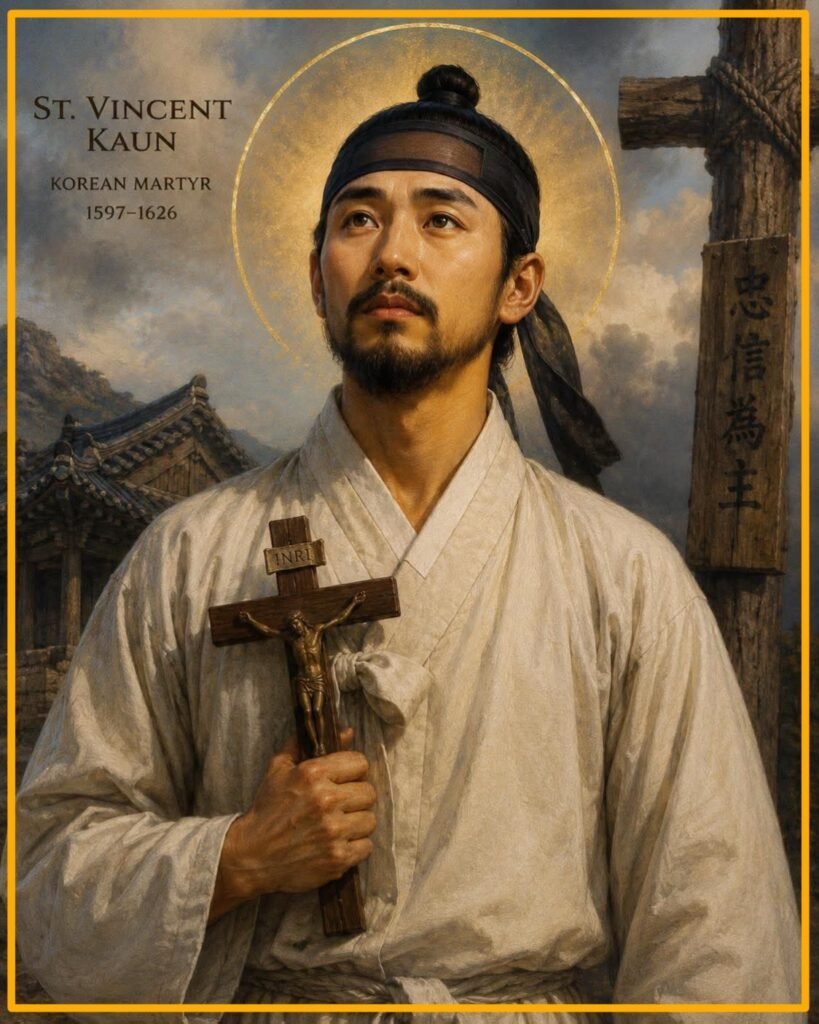
FEAST OF SAINT (BLESSED) VINCENT KAUN, MARTYR OF JAPAN
FEAST DAY – 20th JUNE
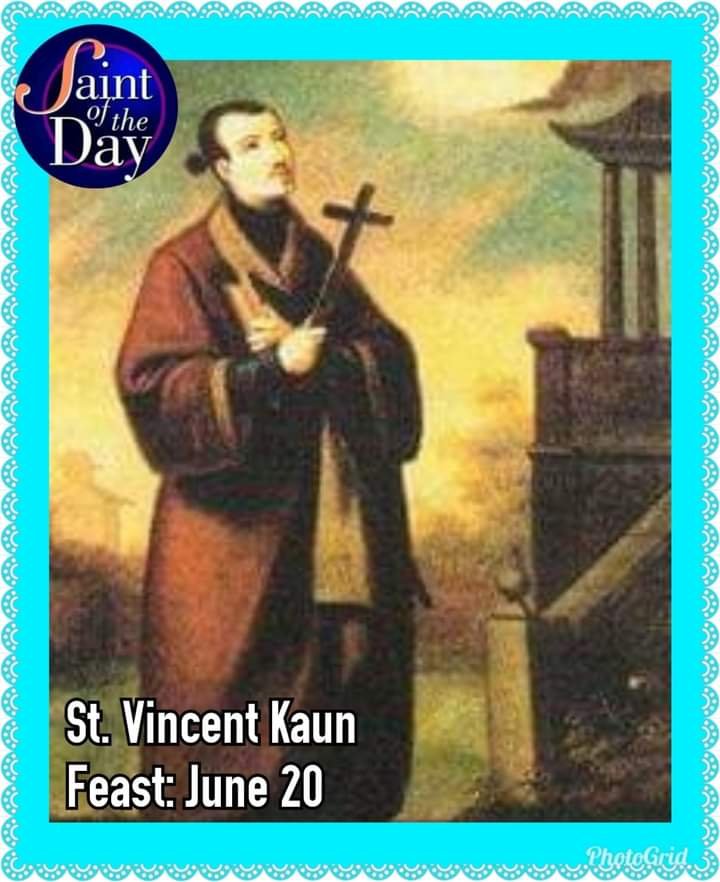
Saint Vincent Kaun was a native of Korea. In 1591, he was captured by Japanese soldiers, and taken to Japan as a prisoner of war. While in Japan, he learnt about Jesus and was converted to Christianity.
He joined the Jesuits and studied at the Jesuit seminary of Arima. St Vincent worked for three decades as a catechist in both Japan and China, and taught other people about Jesus.
But about 25 years later, the Japanese emperor decided that he wanted to get rid of all the Christians in his country. In 1626, Saint Vincent Kaun was arrested during the persecution of the Church and was later killed for his faith in Jesus.
He was burnt alive at Nagasaki with Blessed Francis Pacheco. He was beatified in 1867.
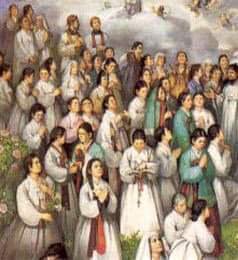
CONTEMPLATING THE LIFE OF SAINT VINCENT KAUN – A KOREAN MARTYR OF FAITH
St. Vincent Kaun is remembered as one of the courageous Korean martyrs who remained faithful to Christ despite immense suffering and persecution. His life serves as a powerful testimony to unwavering faith, perseverance, and devotion to God.
EARLY LIFE AND CAPTIVITY
Vincent Kaun was a native of Korea who lived during a turbulent period in Korean history. During the Japanese invasions of Korea in the late sixteenth century, he was captured as a prisoner of war around 1597. Along with many other Koreans, he was taken to Japan, where he endured the hardships and uncertainties of captivity.
Far from his homeland and separated from his family and culture, Vincent faced a difficult future. Yet it was during this period of suffering that God would lead him to discover the Christian faith.
CONVERSION TO CHRISTIANITY
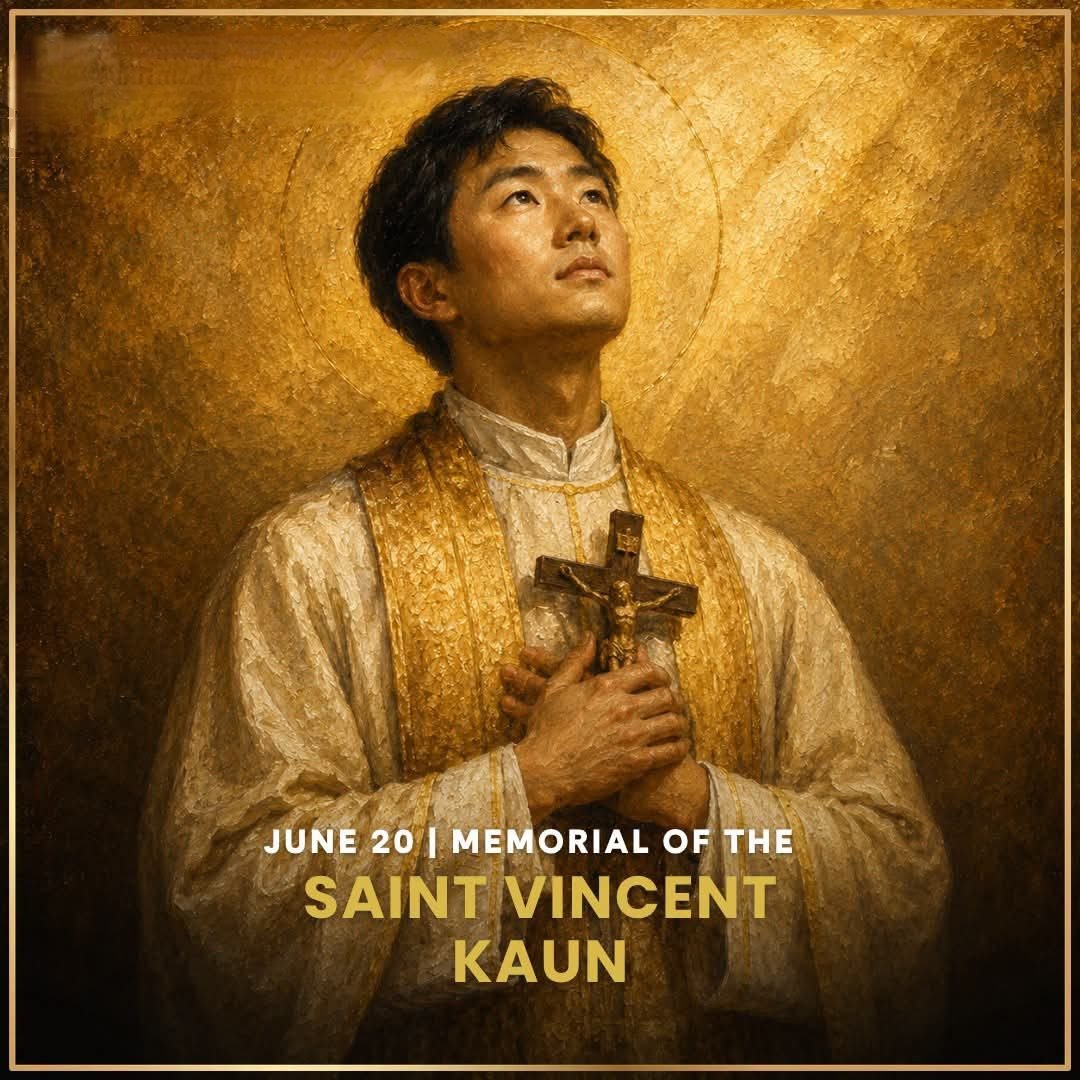
While living in Japan, Vincent encountered Catholic missionaries who were spreading the Gospel. Through their teachings, he learned about Jesus Christ and the Christian faith. Deeply moved by the message of God’s love and salvation, Vincent embraced Christianity and was baptized, taking the name Vincent.
His conversion transformed his life. He devoted himself to prayer, the study of Christian teachings, and living according to the Gospel. Despite being a foreigner and former prisoner, Vincent became known for his sincere faith and commitment to God.
RETURN TO KOREA
Eventually, Vincent returned to Korea. At that time, Christianity was still largely unknown in the country. He became one of the early Korean Catholics who helped spread the faith among his fellow countrymen.
Vincent shared what he had learned in Japan, encouraging others to seek Christ and embrace the teachings of the Church. His efforts contributed to the growth of the Catholic community in Korea, even as opposition to Christianity increased.
PERSECUTION AND MARTYRDOM
The Korean government viewed Christianity with suspicion because its teachings challenged certain social and religious traditions. As persecution intensified, many Christians were arrested, tortured, and executed for refusing to renounce their faith.
Vincent Kaun was among those who suffered for Christ. Authorities demanded that he abandon Christianity, but he steadfastly refused. Despite imprisonment, threats, and torture, he remained loyal to Jesus.
In 1626, Vincent Kaun was executed for his faith, becoming one of Korea’s earliest martyrs. His willingness to die rather than deny Christ inspired countless believers who faced persecution after him.
CANONIZATION AND LEGACY
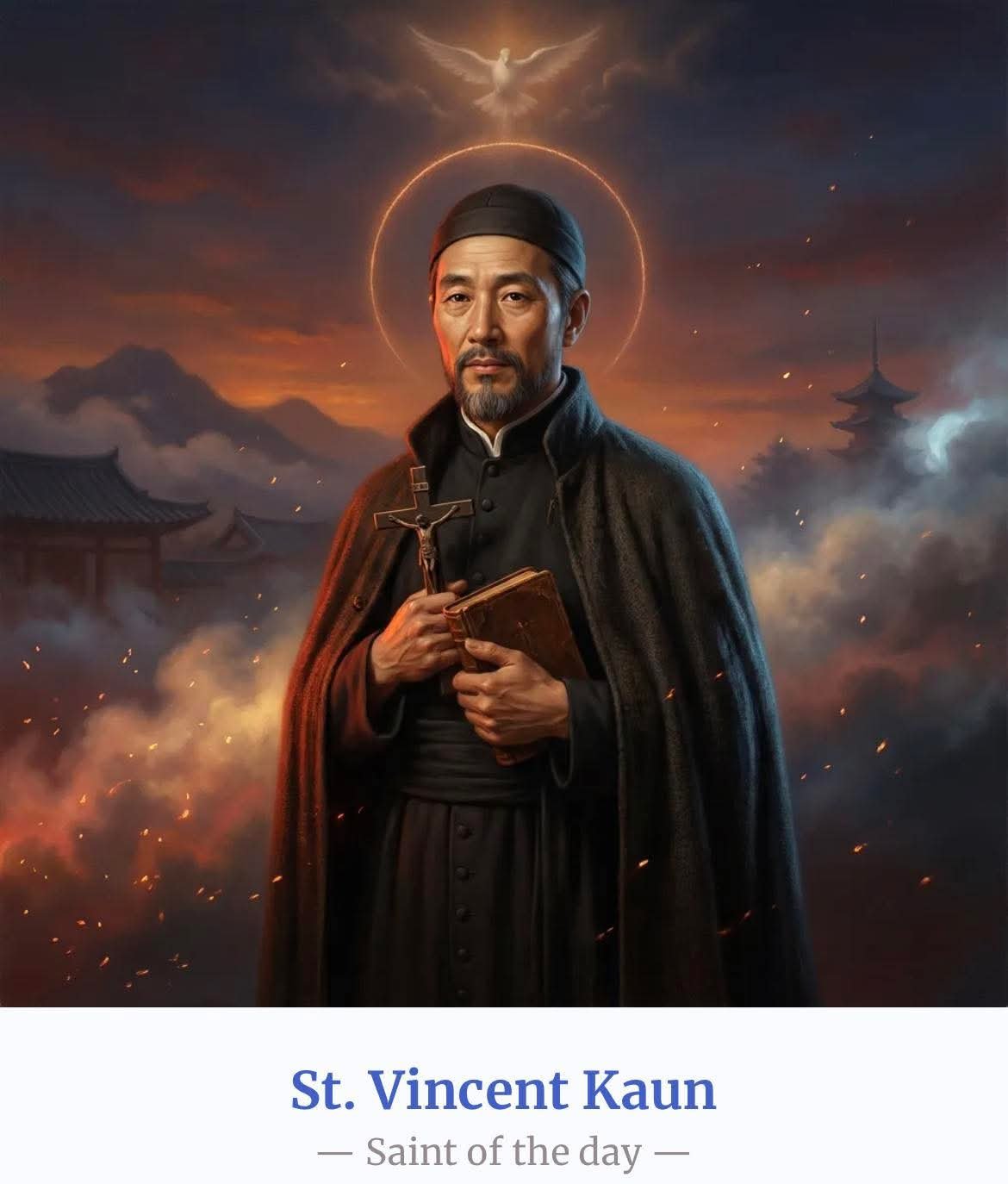
Vincent Kaun’s heroic witness was recognized by the Church centuries later. He was among the Korean martyrs honored for their sacrifice and devotion to the faith.
Today, St. Vincent Kaun is remembered as a model of courage and fidelity. His story reminds Christians that faith can flourish even in the most difficult circumstances and that God’s grace can transform suffering into a powerful witness for the Gospel.
LESSONS FROM ST. VINCENT KAUN’S LIFE
Faith can be found in unexpected places.
Trials and suffering can strengthen one’s relationship with God.
True discipleship requires courage and perseverance.
Standing firm in faith can inspire future generations.
God’s love transcends nationalities, cultures, and circumstances.
PRAYER THROUGH THE INTERCESSION OF ST. VINCENT KAUN
St. Vincent Kaun, faithful martyr of Korea, help us to remain steadfast in our faith even when faced with difficulties and challenges. Inspire us with your courage, devotion, and trust in God. May we follow your example of unwavering love for Christ and become faithful witnesses to the Gospel in our daily lives. Amen.
PRAYER
Almighty, Ever-living God, mercifully pour out your Spirit upon us, so that our hearts may possess the strong love by which the Martyr Saint Vincent triumphed over all bodily torments.
Through our Lord Jesus Christ, your Son, who lives and reigns with you in the unity of the Holy Spirit, one God, for ever and ever. Amen
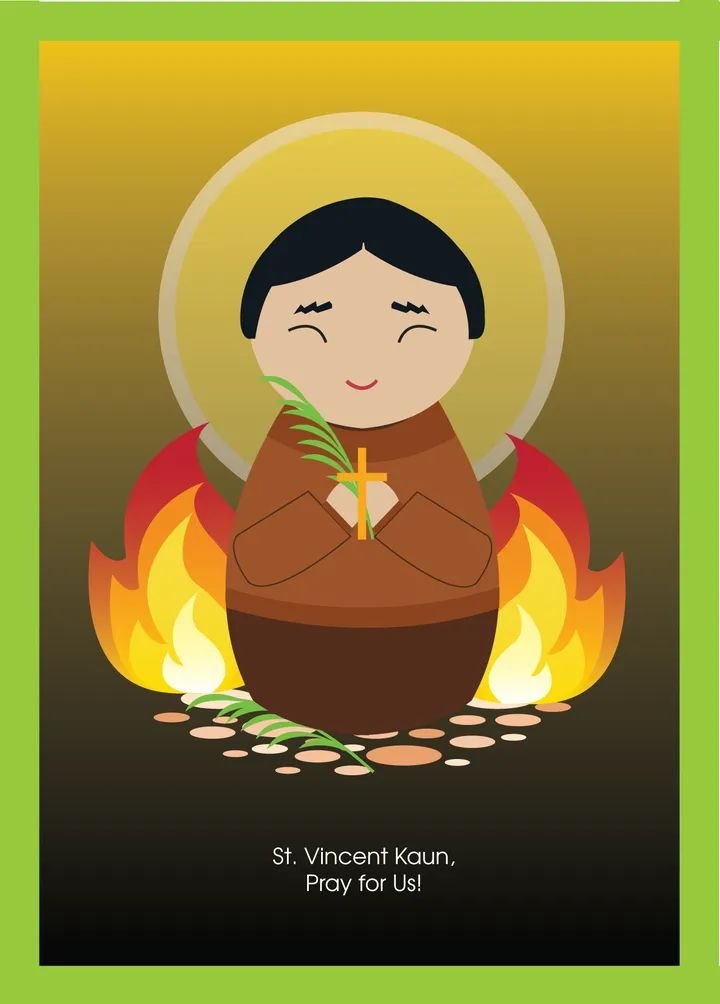
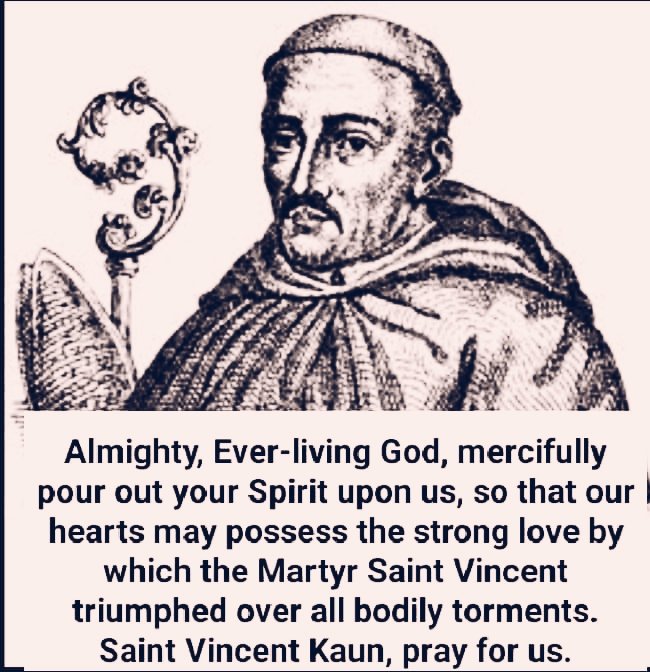
Saint Vincent Kaun, pray for us.
(source: catholiconline)
++++++++++++++++++++++++++++++++++++++++++++++++++++++++++++++++++++++
ALSO CELEBRATED
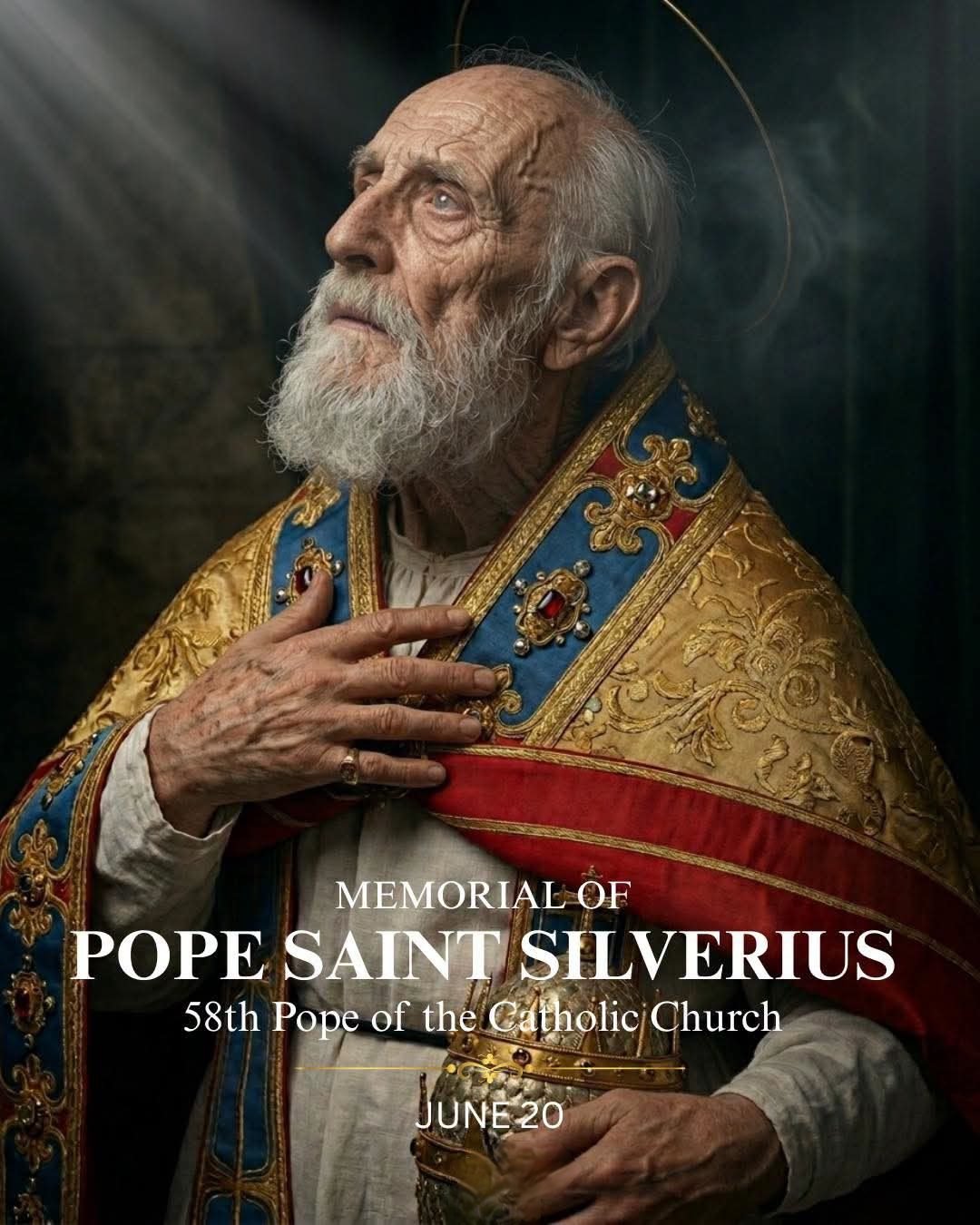
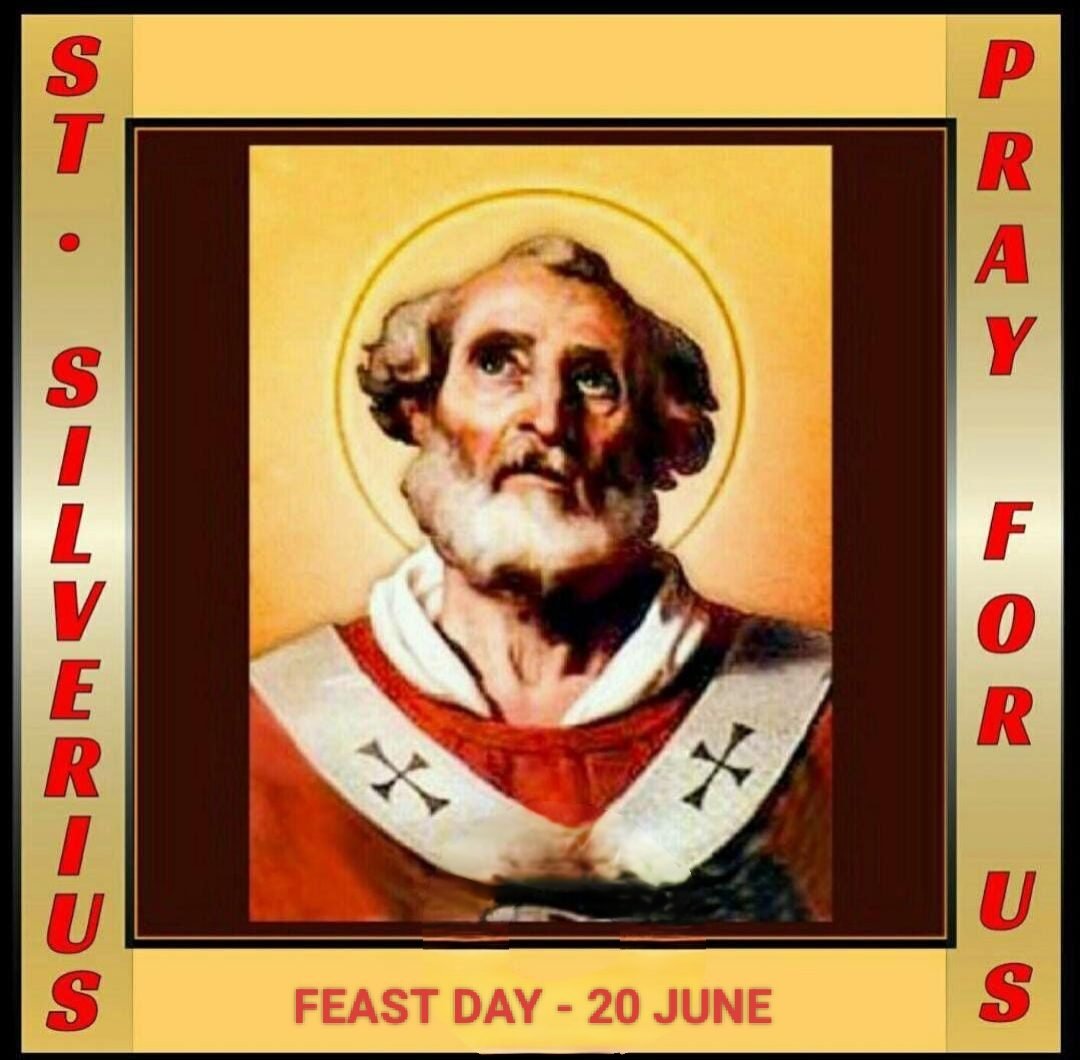
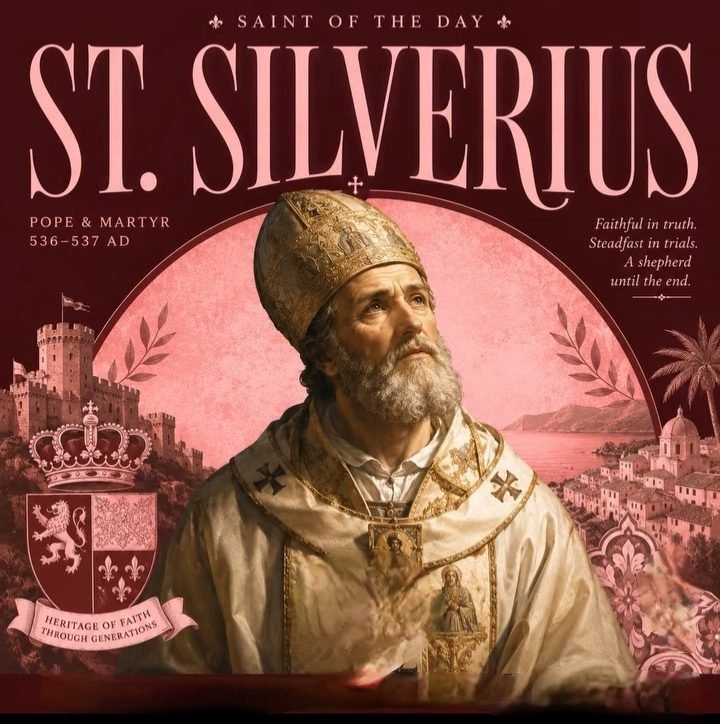
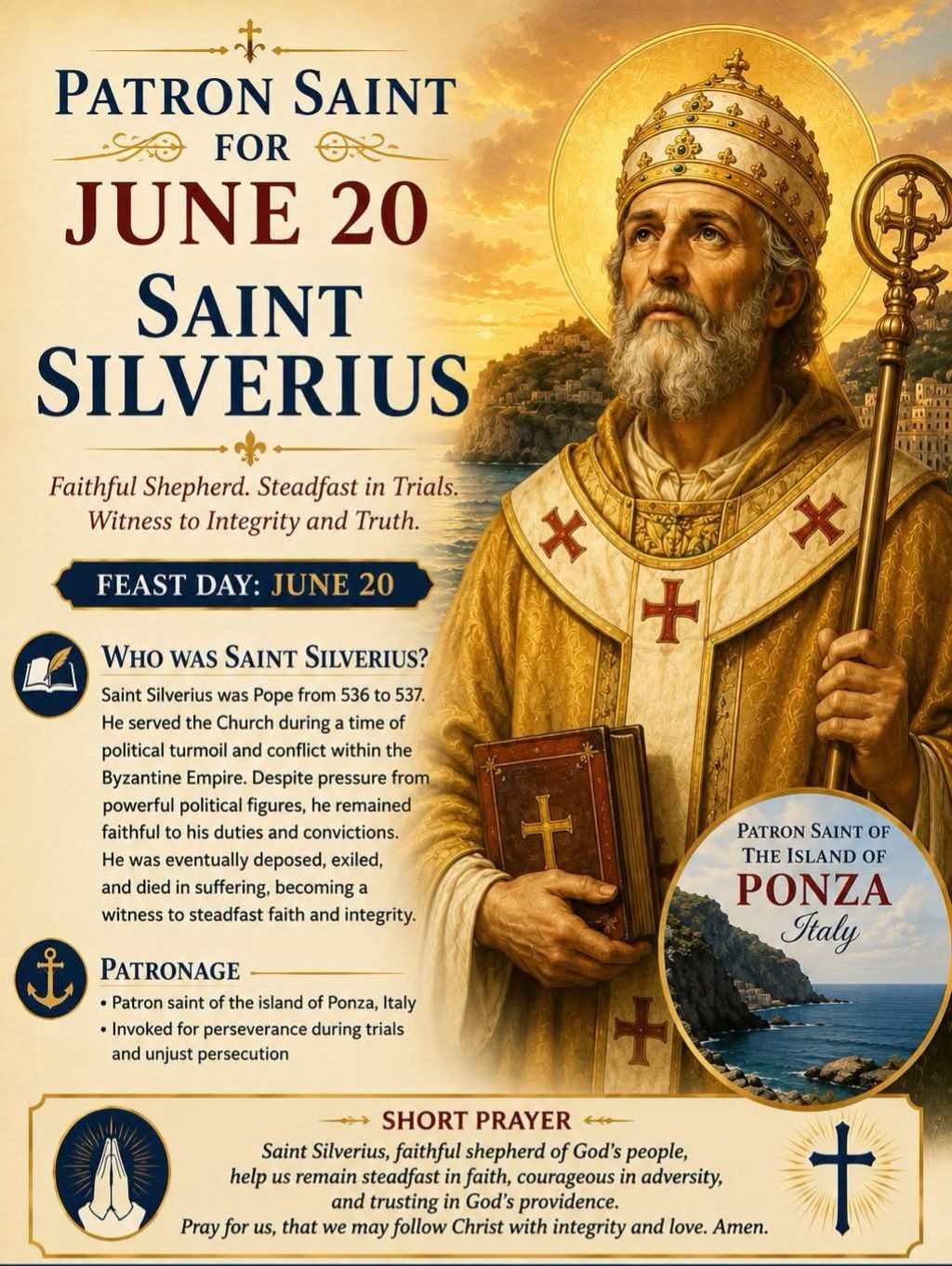
SAINT SILVERIUS – POPE AND MARTYR FEAST DAY – 20 JUNE
When news of Agapitus’ death reached Rome, King Theodahad, fearing the imminent Eastern invasion, was determined to have a pro-Gothic ally on the throne of Peter. Silverius, son of the glorified Pope Hormisdas, was his candidate. The clergy reluctantly submitted to the will of their king and elected the subdeacon, accepting him only for the sake of unity. The destiny of this pope, however, would not follow the same glorious path as that of his father.
While Silverius was being consecrated in Rome, the emperor’s wife Theodora was making her own plans to reinstate the Monophysite, Anthimus, as patriarch of Constantinople. Striking a bargain with the chosen successor of Boniface II, Vigilius (who had been serving as nuncio to Constantinople), the empress packed him off to Rome, promising him the papacy in exchange for the heretic’s rehabilitation. But by the time Vigilius reached his destination, Silverius was already tending to the needs of the Apostolic See.
The emperor’s general Belisarius now marched on Rome. As the Eastern army drew near, the Romans looked to their pope for advice. Silverius, realizing that resistance would be fruitless, recommended surrender. In early December of 536, as a triumphant army occupied Rome, Belisarius summoned the pope to his quarters. Theodora had been adamant with the general—the pope must submit to her wishes or face dire consequences. The general’s first tacti with Silverius failed. Using forged letters, Belisarius had accused the pope of treason on the grounds that he had allowed the city’s gates to be opened for the retaliating Goths, now led by King Witiges. The general ordered Silverius to concede to the empress by reinstating Anthimus as patriarch and giving in to the Monophysite doctrine. Silverius adamantly refused. Belisarius took no chances the second time; he seized the pope and, stripping him of his pallium, deposed the protesting Silverius, now clothed only in a monk’s habit. The clergy was then notified by a subdeacon of the pope’s terrible treatment and sentence of banishment. When the general ordered the election of a new pope, the ambitious Vigilius was well prepared. Through coercion Belisarius and Vigilius successfully accomplished the nomination and election of the latter by the clergy.
Silverius had been deported to Patara, a seaport in Lycia. The local bishop was so distressed that he personally went to Constantinople to plead with Justinian, telling him that Silverius had been unjustly accused and, more, unjustly exiled. The emperor believed there might be some merit to this and ordered Silverius back to Rome to face a fair trial. Moreover, he ordered that, if found innocent, Silverius was to be given back his throne. Vigilius panicked, and as soon as Silverius reached Rome, the new pope ordered his removal to Palmaria, an island in the Gulf of Gaeta. It was on this island that Silverius was forced to submit his abdication. After suffering torture and starvation, Silverius died, a martyr for his Church.
Silverius was buried on the same island of his exile, his grave becoming the center of miraculous healings. He is patron of the Island of Ponza.
Excerpted from The Popes: A Papal History, J.V. Bartlett
CONTEMPLATING THE LIFE OF SAINT SILVERIUS
THE POPE WHO LOST EVERYTHING BUT KEPT HIS FAITH
St. Silverius is remembered as one of the most courageous and suffering popes in Church history. His pontificate was brief and marked by political intrigue, theological disputes, and imperial interference. Though deprived of his office and sent into exile, he remained faithful to Christ and the Church. His life teaches that true holiness is found in perseverance and fidelity during trials.
HISTORICAL BACKGROUND
Saint Silverius lived during the sixth century when the Western Roman Empire had collapsed and Italy was torn by political conflict. Theological controversies concerning the nature of Christ also divided parts of the Christian world. Political rulers frequently sought to influence Church leadership, and Silverius became a victim of these struggles.
BORN IN THE SHADOW OF A POPE
Silverius was the son of Pope Hormisdas, who had been married before entering ecclesiastical life. Raised close to the Church, he grew up during a time of uncertainty, political rivalry, and religious controversy. No one could have foreseen that he would one day become Bishop of Rome.
AN UNLIKELY POPE
Before his election, Silverius served humbly as a subdeacon in Rome. He was not widely known or considered a leading candidate for high office. Yet in the year 536, he was chosen as pope and entrusted with guiding the Church through a difficult period.
STORM CLOUDS OVER ROME
His pontificate began amid intense theological and political tensions. One major controversy involved Monophysitism, which denied the full humanity and divinity of Christ as taught by the Church. Powerful political figures sought to influence Church decisions, including Empress Theodora, who desired support for her religious policies.
THE COST OF INTEGRITY
Silverius refused to compromise Church teaching or surrender his conscience to political pressure. His resistance angered influential leaders. When the Byzantine general Belisarius captured Rome, Silverius became increasingly vulnerable to his opponents.
THE ACCUSATION
False accusations soon emerged, claiming that Silverius had conspired against Byzantine authorities. Whether true or not mattered little to those seeking his removal. Political interests used these charges to undermine him and justify action against him.
THE FALL
Silverius was arrested, stripped of his papal authority, and publicly humiliated. Pope Vigilius was installed in his place. The former pope lost his position, influence, and protection, but he remained steadfast in faith.
THE LONELY ROAD OF EXILE
Banished from Rome, Silverius appealed for justice and briefly gained support from those who believed in his innocence. Yet political forces prevailed, and his suffering continued as he was sent farther from the city he once shepherded.
THE ISLAND PRISON
Silverius was eventually exiled to the remote island of Palmarola. Once at the center of Christendom, he now lived in isolation and hardship. Deprived of comfort and companionship, he endured poverty and loneliness while remaining faithful to God.
THE HIDDEN MARTYRDOM
Unlike many martyrs, Silverius did not die in a public execution. His martyrdom came through neglect, deprivation, abandonment, and injustice. He suffered deeply from humiliation and betrayal, yet never abandoned his trust in Christ.
THE FINAL SURRENDER
Around the year 537, Saint Silverius died in exile. Though the world may have viewed his life as a defeat, the Church recognizes his victory of faith. He remained loyal to God until the end.
THE SAINT WHO LOST EVERYTHING
Silverius lost power, security, and status, but he never lost his faith. Many rulers and political figures of his time have faded into history, while Silverius is remembered for his integrity and perseverance. His life shows that those who remain faithful to God lose nothing of lasting value.
VENERATION AFTER DEATH
After his death, devotion to Saint Silverius spread among the faithful. His endurance under injustice inspired many, and he became especially honored in areas connected with his exile. His memory survived long after those who opposed him were forgotten.
SPIRITUAL THEMES IN HIS LIFE
FIDELITY
Silverius remained faithful to God and the Church despite suffering and persecution.
INTEGRITY
He refused to compromise truth for political advantage.
HUMILITY
He accepted humiliation without abandoning his faith.
PERSEVERANCE
He endured exile and hardship with patience and courage.
TRUST IN GOD
When human support disappeared, he relied completely on divine providence.
PATRONAGE
Saint Silverius is invoked by fishermen, sailors, island communities, those suffering injustice, and people facing false accusations.
ARTISTIC REPRESENTATION
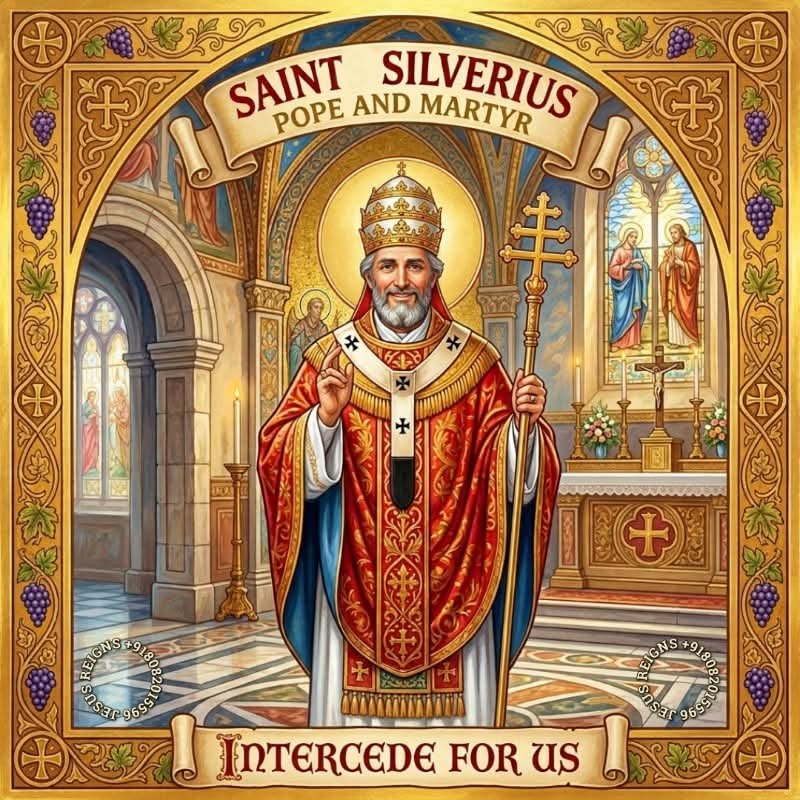
He is often portrayed wearing papal vestments, holding the papal cross, standing near the sea, or enduring exile. These images reflect both his dignity as pope and his suffering as a faithful witness.
WHY HE STILL MATTERS
Many people today experience misunderstanding, false accusations, betrayal, loss of reputation, or isolation. Saint Silverius offers hope and encouragement by reminding believers that faithfulness to God is more important than success, recognition, or vindication.
HIS ENDURING MESSAGE
Saint Silverius began his journey as pope and ended it as a prisoner in exile. He lost position, influence, and security, but he kept the treasure that mattered most—his fidelity to Christ. His life proclaims a timeless truth: the measure of holiness is not what we possess, but what remains when everything else is taken away.
PRAYER
Almighty God, help us to bear worldly adversities with an unconquerable spirit. For You did not let St. Silverius, Your Pope and Martyr, be terrified by threats or conquered by pains. Amen.