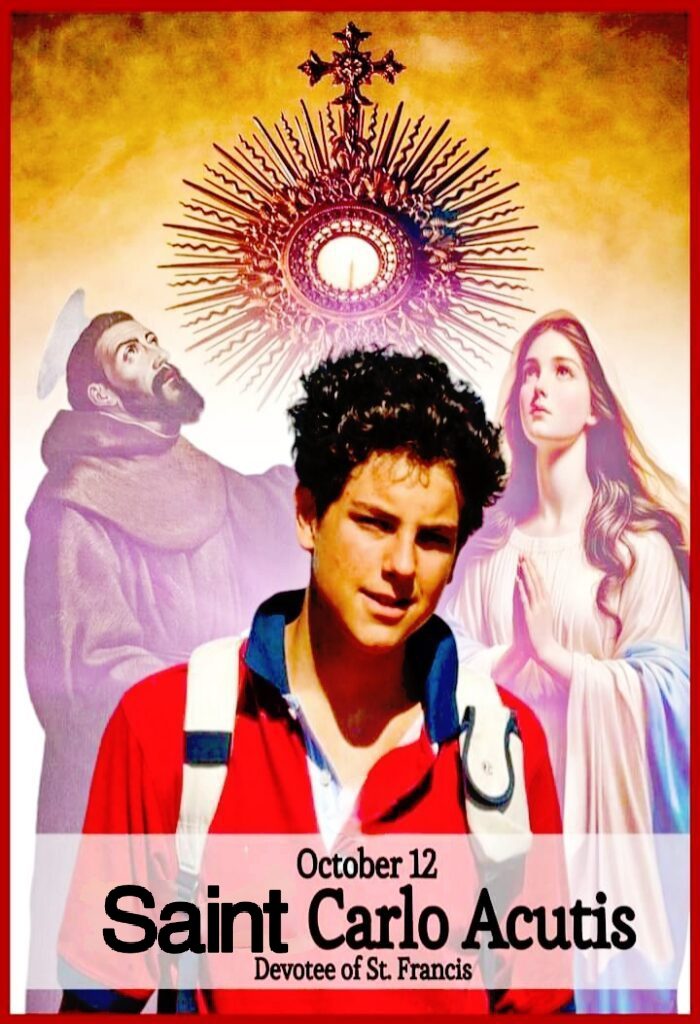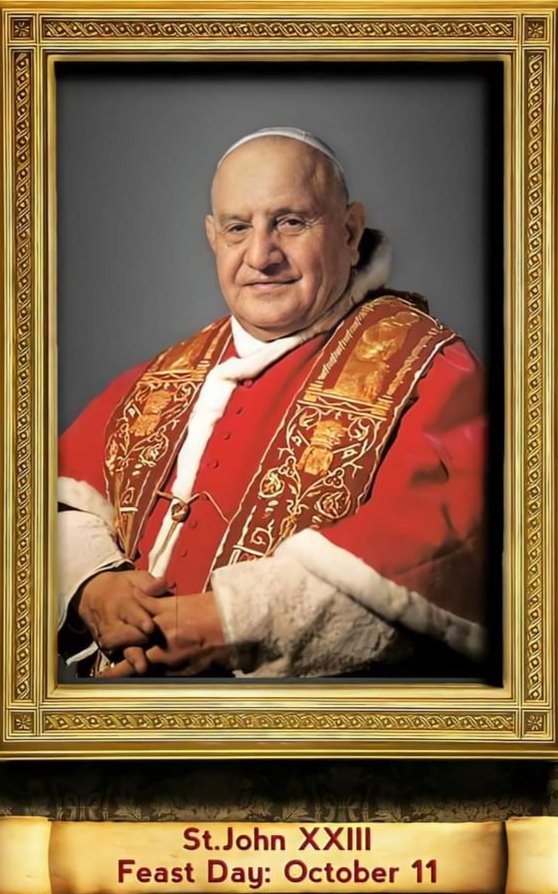

SPIRITUAL INSIGHTS INTO THE LIFE OF SAINT CARLO ACUTIS
October 12, 2026
FEAST DAY OF THE LAST APPARITION OF OUR LADY OF FATIMA AND THE MIRACLE OF THE SUN – 13th OCTOBER
October 13, 2026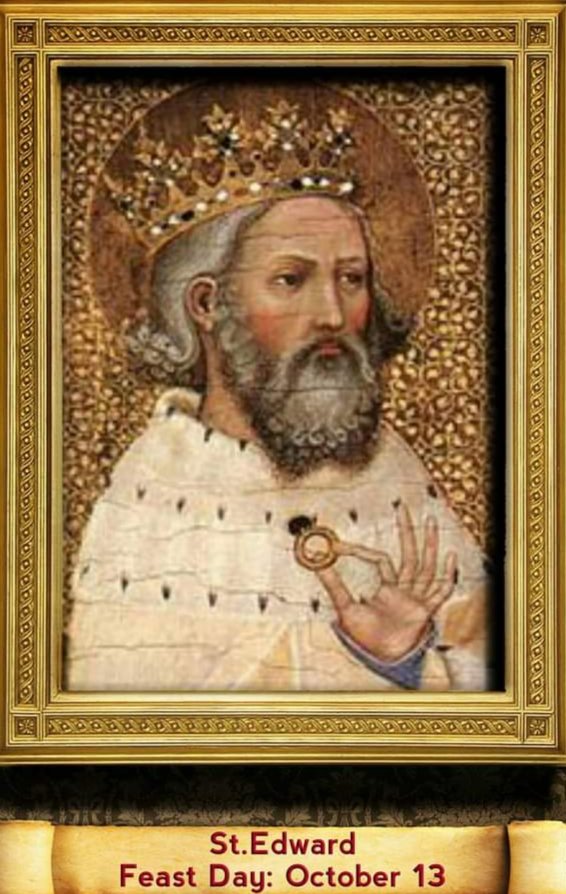
SAINT EDWARD THE CONFESSOR
FEAST DAY – 13th OCTOBER
Edward the Confessor, (1003 – 1066) the son of King Ethelred III and his Norman wife, Emma, was born at Islip, England, and sent to Normandy with his mother in the year 1013 when the Danes invaded England. Canute remained in England and the year after Ethelred’s death in 1016, married Emma, who had returned to England, and became King of England. Edward remained in Normandy, and in 1042, on the death of his half-brother, Hardicanute, son of Canute and Emma, and through the support of the powerful Earl Godwin, he was acclaimed king of England.
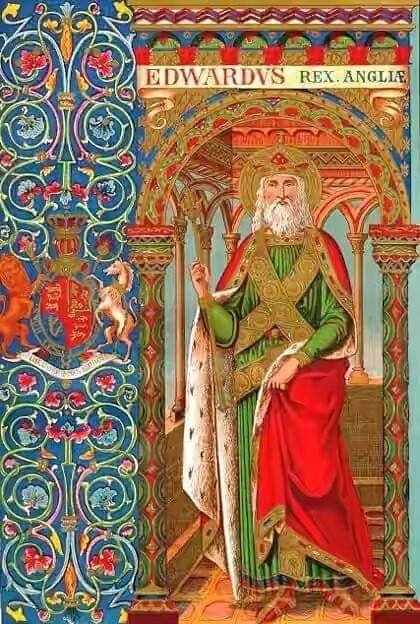
In 1044, he married Godwin’s daughter Edith. His reign was a peaceful one characterized by his good rule and remission of odious taxes, but also by the struggle, partly caused by his natural inclination to favor the Normans, between Godwin and his Saxon supporters and the Norman barons, including Robert of Jumieges, whom Edward had brought with him when he returned to England and whom he named Archbishop of Canterbury.
In the same year, Edward banished Godwin, who returned with a fleet ready to lead a rebellion. Armed revolt was avoided when the two men settled their differences, which was resolved when Edward replaced Robert with Stigand, and Robert returned to Normandy.
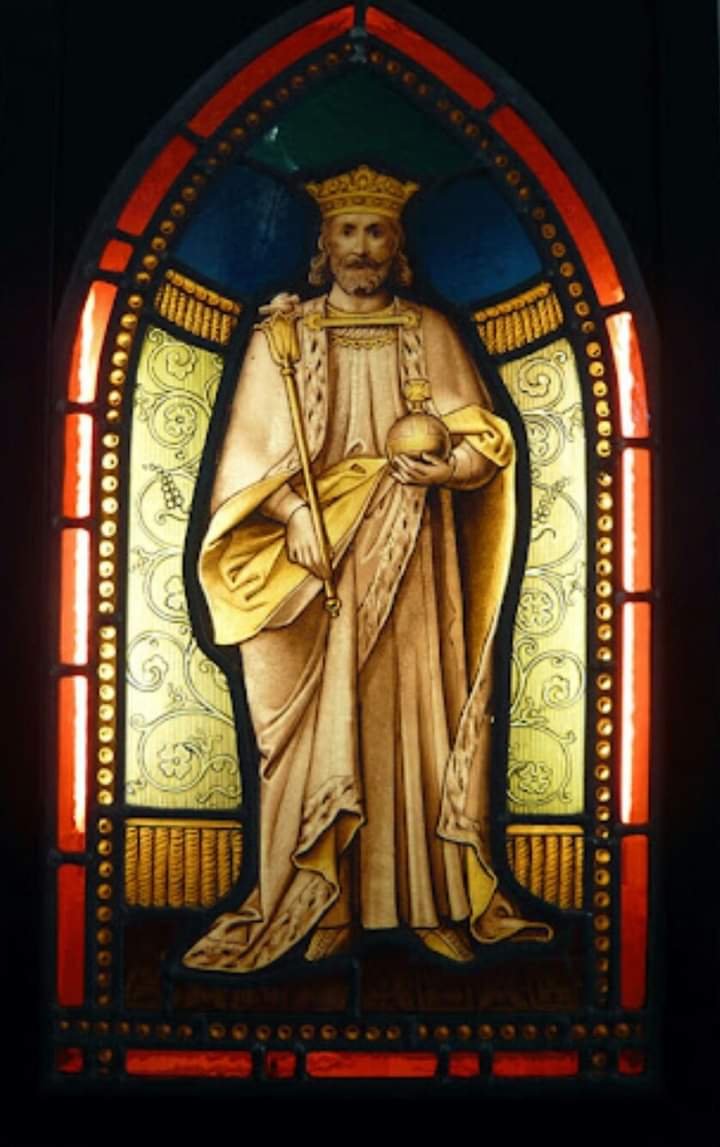
Edward’s difficulties continued after Godwin’s death in 1053 with Godwin’s two sons: Harold who had his eye on the throne since Edward was childless, and Tostig, Earl of Northumbria. Tostig was driven from Northumbria by a revolt in 1065 and banished to Europe by Edward, who named Harold his successor.
After this Edward became more interested in religious affairs and built St. Peter’s Abbey at Westminster, the site of the present Abbey, where he is buried. His piety gained him the surname “the Confessor”. He died in London on January 5, and he was canonized in 1161 by Pope Alexander III. His feast day is October 13.
CONTEMPLATING THE LIFE OF SAINT EDWARD THE CONFESSOR – THE GENTLE KING WHO RULED BY PRAYER
EARLY LIFE AND EXILE
Saint Edward was born around 1003 in Islip, Oxfordshire, to King Æthelred the Unready and Queen Emma of Normandy. During the Danish invasion, he fled with his mother to Normandy, where he grew up surrounded by monasteries and religious devotion. His years in exile strengthened his faith, love of prayer, and trust in Divine Providence.
RETURN TO ENGLAND AND CORONATION
After nearly twenty five years in exile, Edward returned to England and became king in 1042. He regarded kingship as a sacred responsibility, ruling with justice, mercy, and humility. His gentle nature and sincere faith earned him a reputation as a peaceful ruler.
A KING OF PRAYER AND MERCY
Edward devoted himself to prayer, attended Mass regularly, and practised fasting and charity. Rather than seeking military glory, he preferred reconciliation and forgiveness. He believed that a king should serve his people with compassion rather than fear.
MARRIAGE AND CHASTITY
Edward married Edith, the daughter of the powerful Earl Godwin. Their marriage was marked by mutual respect and devotion. Tradition holds that they lived in continence, placing their spiritual commitment above worldly desires.
THE BUILDER OF WESTMINSTER ABBEY
Edward rebuilt Westminster Abbey in honour of Saint Peter the Apostle. The church was consecrated shortly before his death in 1066. He regarded it as a house of God rather than a monument to royal greatness. Westminster Abbey later became the coronation church of English monarchs and the resting place of many kings and queens.
CHARITY TOWARDS THE POOR
Edward cared deeply for the poor and gave alms generously. A popular legend tells of his giving his royal ring to a beggar. According to tradition, Saint John the Evangelist later returned the ring through two pilgrims, symbolising divine favour upon Edward’s charity.
HOLINESS AMID POLITICAL TURMOIL
Edward’s reign was marked by tensions with powerful nobles, particularly Earl Godwin and his sons. Despite these challenges, he sought peace and reconciliation rather than unnecessary conflict. His patient leadership demonstrated that true authority rests in virtue and service.
DEATH AND ETERNAL HOPE
Edward died on 5 January 1066, leaving no heir. He was buried in Westminster Abbey, which had been consecrated shortly before his death. The English people remembered him as a compassionate king who cared for the poor and sought peace for his kingdom.
THE NORMAN CONQUEST
Following Edward’s death, Harold Godwinson became king, but William, Duke of Normandy, also claimed the throne. The conflict culminated in the Battle of Hastings in 1066, where Harold was killed and William the Conqueror took power. Despite the Norman Conquest, Edward’s reputation for holiness endured, and Westminster Abbey continued to preserve his memory.
THE REFORMATION AND HIS ENDURING LEGACY
During the reign of Henry VIII, England broke communion with Rome, and many monasteries were dissolved. Westminster Abbey survived but ceased to function as a Catholic monastery. Saint Edward continued to be honoured by Catholics as a canonised saint and remembered by many Anglicans as an example of faith, justice, and godly kingship.
THE MEANING OF THE CONFESSOR
The title Confessor was traditionally given to saints who bore witness to their faith through a holy life without dying as martyrs. Edward earned this title through his humility, purity, charity, and devotion to God. His greatness lay not in military victories or worldly riches but in his pursuit of peace, justice, and holiness.
A CROWN THAT ENDURES FOREVER
Saint Edward was canonised in 1161 by Pope Alexander III and became one of England’s patron saints. Westminster Abbey, which he rebuilt, continues to serve as the coronation church of British monarchs. His life reminds us that earthly crowns fade, but a life devoted to God leaves an enduring legacy of faith, mercy, and holiness.
PRAYER
Lord God, you gave your follower St. Edward the Confessor, the grandson of St. Edward, king and martyr, though king of England, a demeanor of gentleness, humility, detachment and angelic purity. He preserved perfect chastity in his wedded life. So little was his heart set on riches that he freely dispensed his goods at the palace gate to the sick and poor. He was compassionate and kind.
He was always inclined to your Holy Word and to spreading your peace. His reign was one of almost continuous peace. The people were prosperous and ruined churches were rebuilt. All spoke affectionately of his wise measures of unprejudiced reign and he was affectionately called the good King Edward.
Grant that, on this, his feast day, he may be remembered for his exemplary service and devout life and may he enjoy the reward of dwelling in your Kingdom, in the name of Christ the Lord. Amen
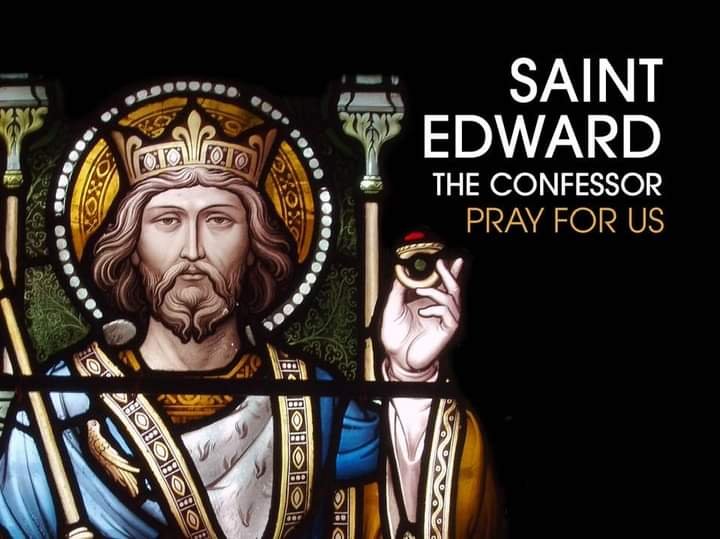
St Edward, the Confessor, pray for us.