
SPIRITUAL INSIGHTS INTO THE LIFE OF SAINT EPHREM THE SYRIAN
June 10, 2026
Psalm 27:14
June 10, 2026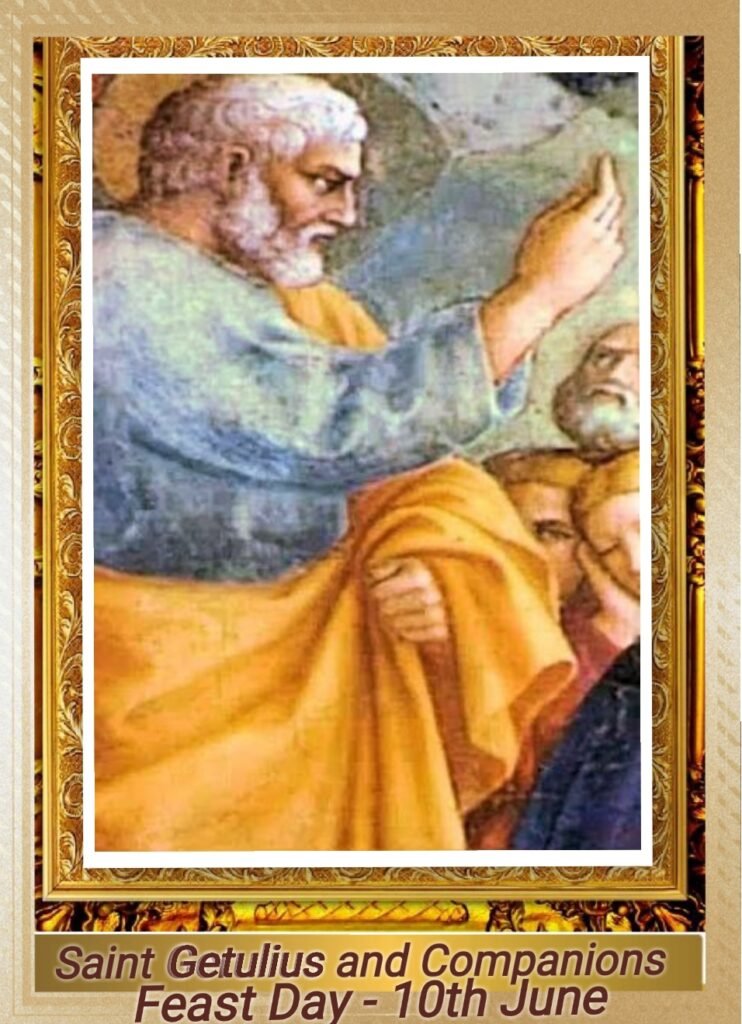
FEAST OF SAINT GETULIUS AND COMPANIONS, MARTYRS
FEAST DAY – 10th JUNE
Saint Getulius (died 120 AD) is venerated together with Amantius (Amancius), Cerealus (Caerealis), and Primitivus (Italian: Getulio, Amanzio, Cereale, e Primitivo) as a Christian martyr and saint. They are considered to have died at Gabii. According to tradition, Getulius was the husband of Saint Symphorosa. Getulius is a name meaning “of the Gaetuli”, which was a tribe of North Africa.
According to his legend, Getulius was a native of Gabii in Sabina. Getulius was an officer in the Roman army who resigned when he became a Christian. He retired to his estates near Tivoli. Caerealis was an imperial legate sent to arrest him but was converted to Christianity by Getulius. Primitivus was another officer sent to arrest him, but he was also converted. Amantius was Getulius’ brother.
According to his Passio, all four men were tied to a stake and set alight. However, the fire did not harm them, so they were brutally clubbed and then beheaded. According to the Roman Martyrology, Getulius was killed on the Via Salaria and is called the father of the Seven Martyrs and the husband of Symphorosa. The legend further states that Saint Symphorosa buried them in an arenarium on her estate.
Their seven sons (not to be confused with the seven sons of Felicity of Rome) are named specifically. According to their legend, each of them suffered a different kind of martyrdom. Crescens was pierced through the throat, Julian through the breast, Nemesius through the heart, Primitivus was wounded at the navel, Justinus was pierced through the back, Stracteus (Stacteus, Estacteus) was wounded at the side, and Eugenius was cleft in two parts from top to bottom.
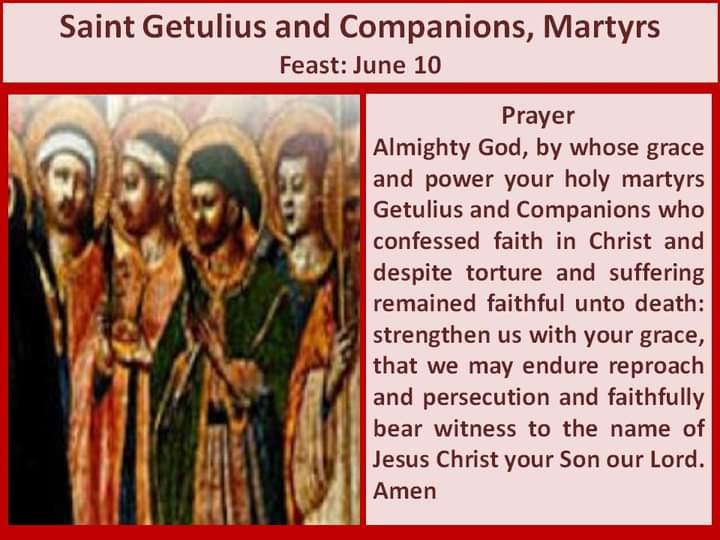
The Martyrology of Ado states: By Capriolis, viam Salariam, Ado is referring to a place on the Tiber River later known in the Middle Ages as the Corte di San Getulio (today part of Montopoli di Sabina), because a church was built here that originally held some of the saint’s relics. In 867, Abbot Peter of Farfa moved these relics to his abbey in a solemn ceremony. However, Getulius’ relics are also considered to lie in Rome.
There was previously a church of San Getulio at Teramo. Getulius’ relics are purported to be at Rome, in the principal altar of the church of Sant’Angelo in Pescheria. The relics of his purported wife St. Symphorosa and their seven sons were transferred to the Church of Sant’Angelo in Pescheria at Rome by Pope Stephen II in 752.
A sarcophagus was found here in 1610, bearing the inscription: Hic requiescunt corpora SS. Martyrum Simforosae, viri sui Zotici (Getulii) et Filiorum ejus a Stephano Papa translata. They were placed in a glass urn during the pontificate of Pius IV, who placed the relics in an urn of glass. In 1584, part of his relics were donated by Gregory XIII to the Jesuits, and these relics are found in a chapel near the Villa d’Este.
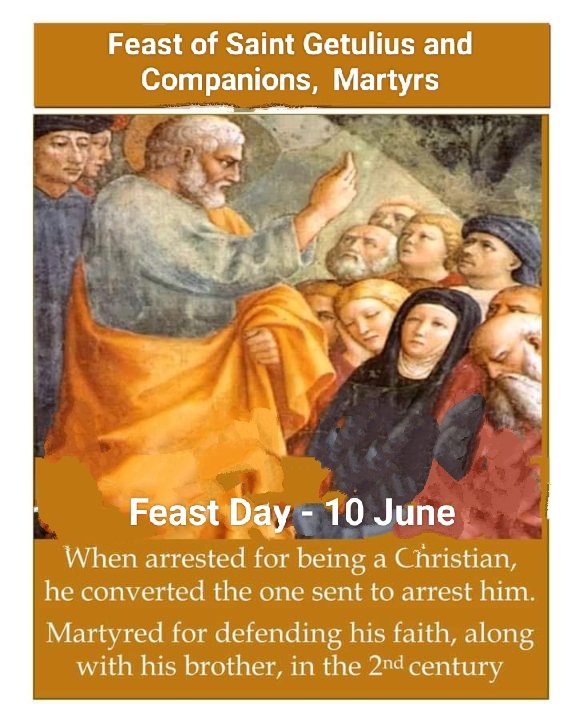
Some relics were taken to Jesuit colleges in India and Spain (June 25, 1572). On September 26, 1587, to prevent further distribution, Mariano Perbenedetti, governor of Rome, enclosed the rest of the relics at Sant’Angelo in a sarcophagus of marble. This same sarcophagus also holds relics of Cyrus and John.
CONTEMPLATING THE LIFE OF SAINT GETULIUS OF TIVOLI
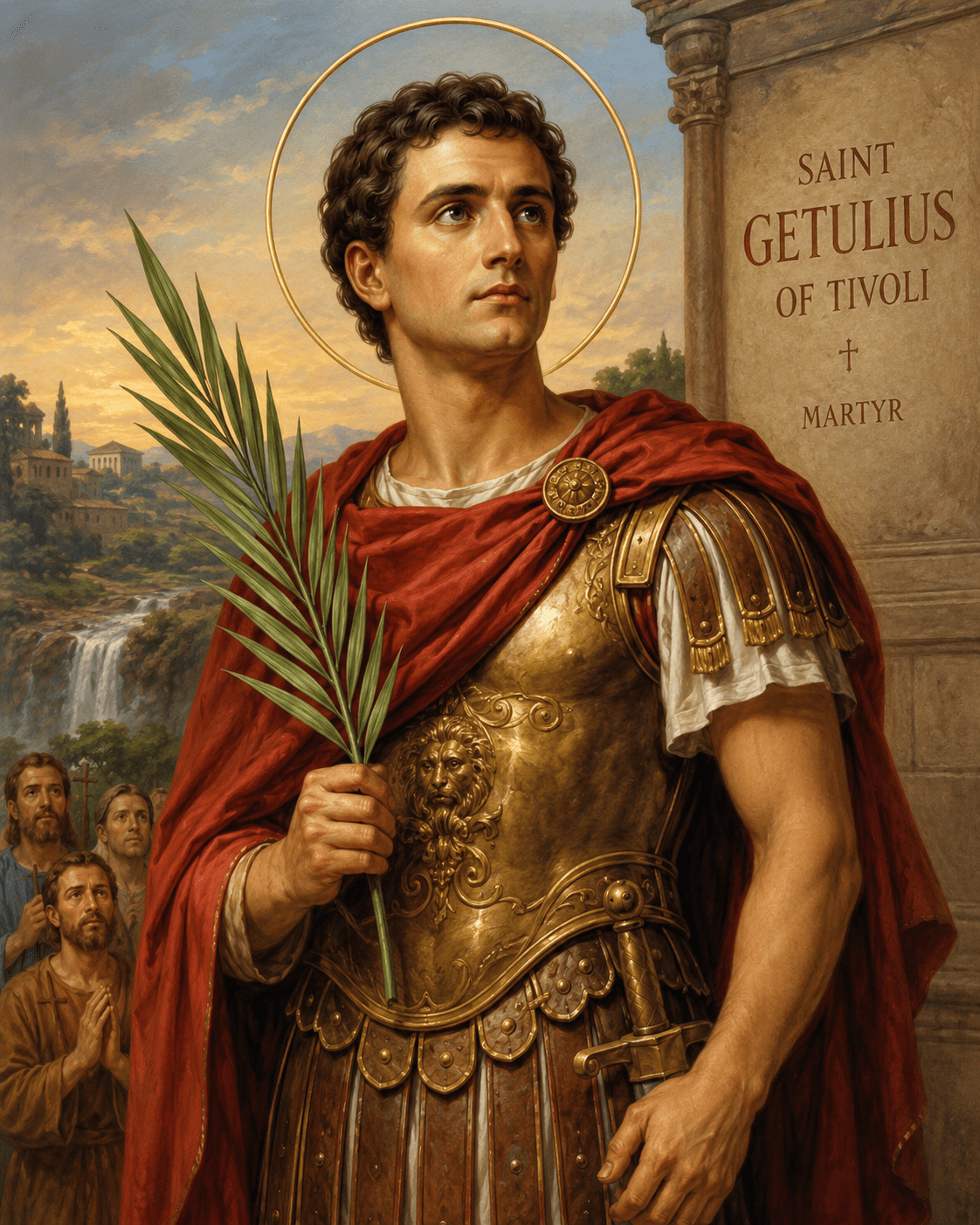
THE SOLDIER WHO BECAME A WITNESS OF CHRIST
Saint Getulius of Tivoli was an early Christian martyr who lived during the heroic age of the Church, when faith in Christ often demanded great sacrifice. Although historical records about him are limited and some details come from ancient Christian tradition, he has been honored for centuries as a courageous witness to the faith. He is remembered as a martyr, convert, evangelizer, and companion of other Roman martyrs whose witness helped strengthen Christianity in Italy.
HISTORICAL SETTING
Saint Getulius is generally associated with the late first or early second century, possibly during the reign of Emperor Trajan. Christianity was still a small and often misunderstood movement. Christians frequently faced suspicion, imprisonment, persecution, and even death because they refused to participate in the religious practices required by the Roman Empire.
A ROMAN OFFICER WHO CHOSE A GREATER KING
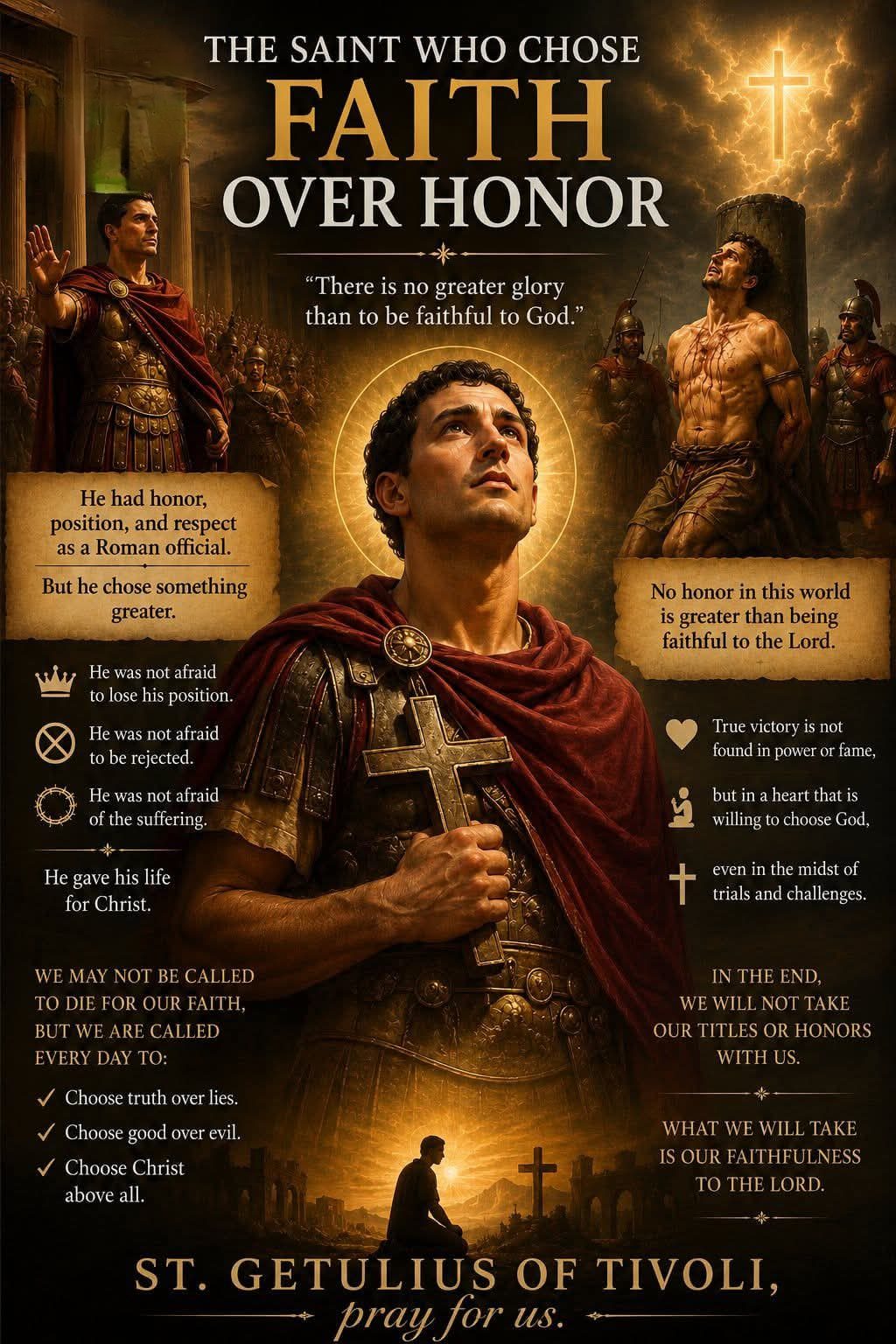
Getulius was a respected Roman officer who enjoyed honor, influence, and security within the empire. Though he seemed to have every reason to be satisfied with his life, God called him to a deeper purpose and a higher allegiance.
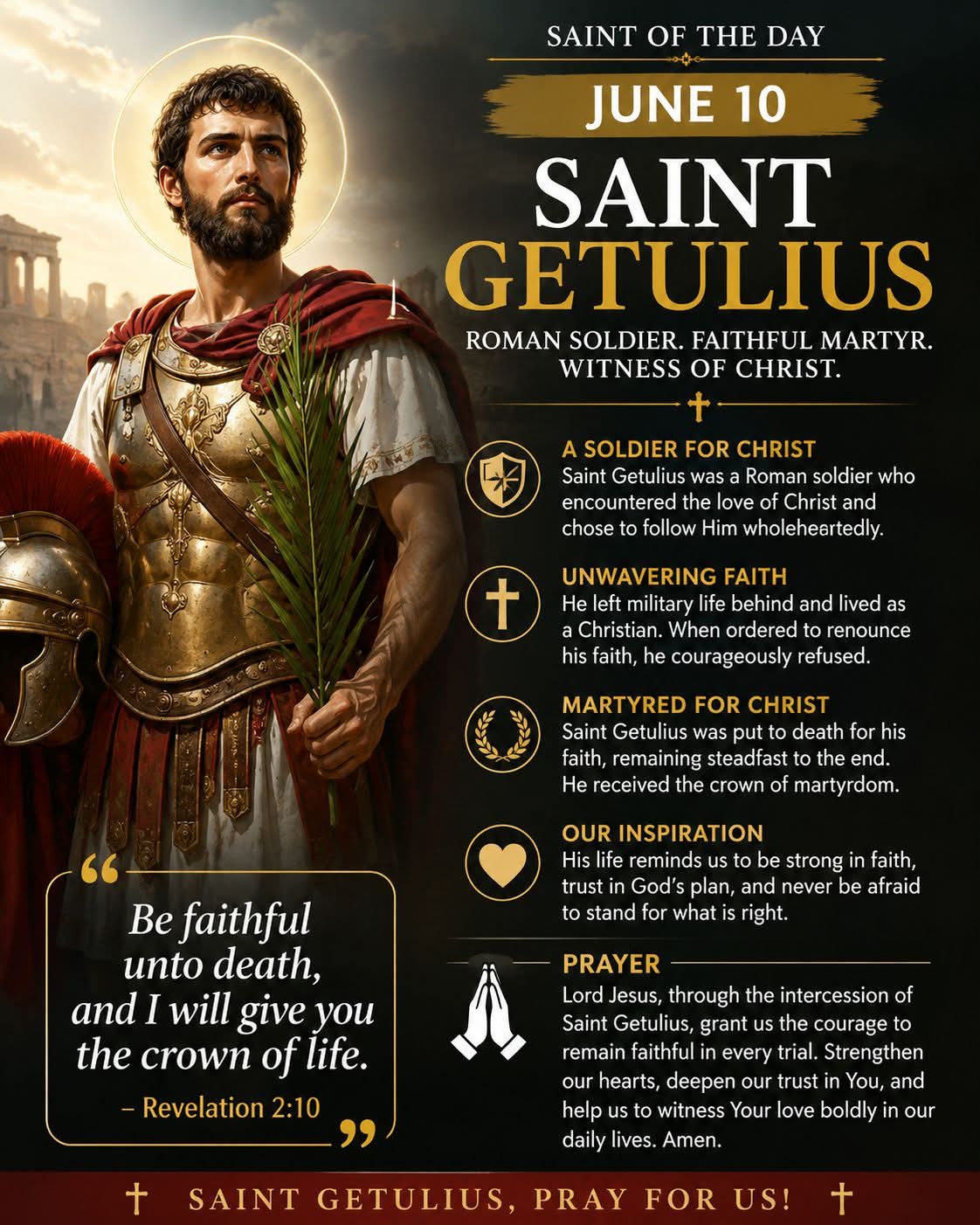
THE ENCOUNTER WITH CHRIST
At some point, Getulius encountered Christians whose courage, peace, and unwavering faith deeply impressed him. The message of the Gospel touched his heart, and he embraced Christianity. In Christ, he discovered a kingdom far greater than any earthly empire.
A NEW ALLEGIANCE
His conversion transformed his life. The honors and ambitions of Rome no longer held the same attraction. Having found Christ, Getulius dedicated himself to serving God and sharing the faith with others.
COMPANIONS IN FAITH
Ancient tradition remembers Saint Amantius, Saint Cerealis, and Saint Primitivus as his companions. Together they formed a community of believers who encouraged one another through prayer, fellowship, and steadfast faith.
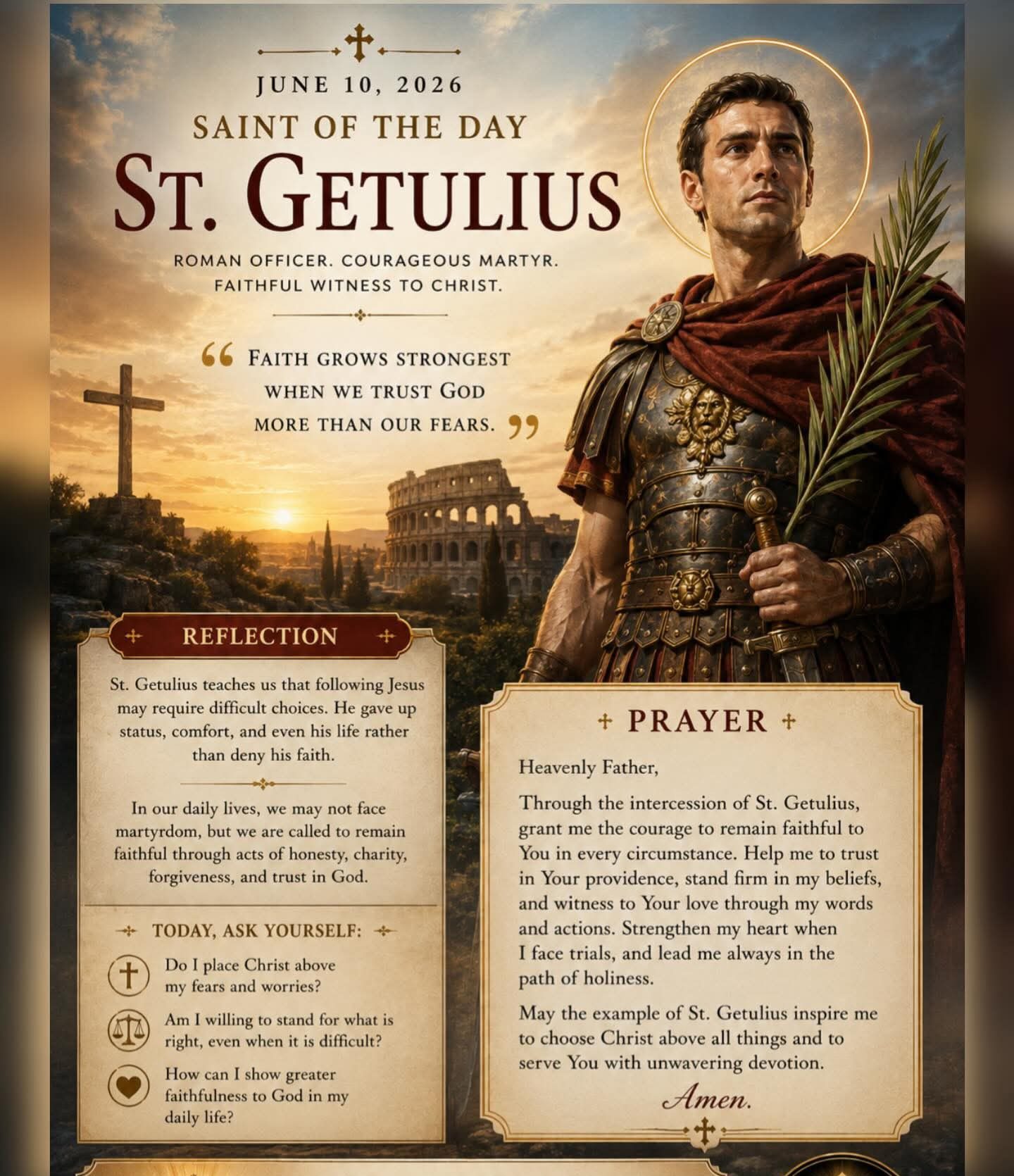
A HOUSE OF EVANGELIZATION
Near Tivoli, Getulius opened his home as a place of prayer and Christian instruction. Many people came seeking truth, and through his witness and teaching, numerous conversions took place. The soldier became an evangelizer, spreading the Gospel through faith and example rather than force.
THE TEST OF FAITH
As Christianity spread through the region, Roman authorities became aware of the growing Christian community. Getulius and his companions were arrested and ordered to renounce Christ and offer sacrifice to the Roman gods. They refused.
COURAGE IN PERSECUTION
Neither threats nor promises could persuade Getulius and his companions to abandon their faith. They remained steadfast in their loyalty to Christ, demonstrating remarkable courage and conviction before their persecutors.
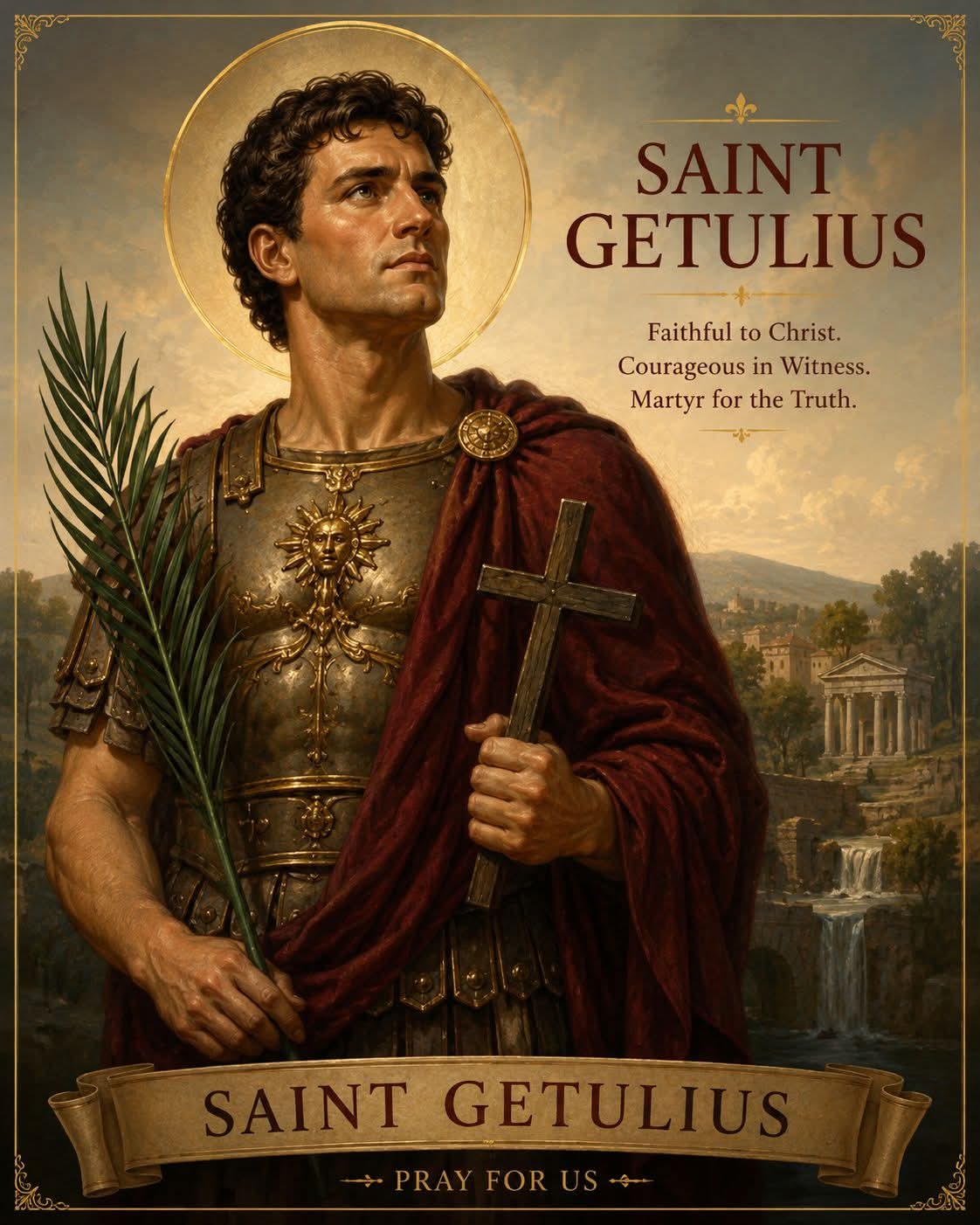
MARTYRDOM
Ancient accounts vary regarding the exact manner of their execution, mentioning beatings and death by fire. Whatever the details, the central truth remains that Getulius and his companions chose death rather than deny Christ. They entered eternal life as martyrs and faithful witnesses of the Gospel.
A MEMORY THAT ENDURED
The Roman authorities hoped to silence them, but their witness continued to inspire generations of Christians. Their burial place became a site of prayer, and devotion to them spread through the centuries. While the empire passed away, their memory endured.
CONNECTION WITH TIVOLI
Because of his martyrdom and burial near Tivoli, Saint Getulius became closely associated with the region and remains an important part of its Christian heritage.
HISTORICAL CHALLENGES
Like many early martyrs, the details of Saint Getulius’ life are difficult to verify completely. Much of what is known comes through oral tradition, liturgical remembrance, and hagiographical writings. Nevertheless, the Church has consistently honored him as an authentic witness to Christ.
SPIRITUAL THEMES IN HIS LIFE – CONVERSION
Getulius left behind worldly ambition after encountering Christ and embraced a life of faith.
COURAGE
He remained faithful despite persecution and the threat of death.
EVANGELIZATION
His love for Christ inspired him to share the Gospel with others.
COMMUNITY
He journeyed toward martyrdom alongside fellow believers who strengthened one another in faith.
PATRONAGE AND LEGACY
Though not among the most widely known saints today, Saint Getulius remains a powerful example of fidelity, courage, perseverance, and missionary zeal. His witness forms part of the enduring legacy of the Roman martyrs.
ARTISTIC REPRESENTATION
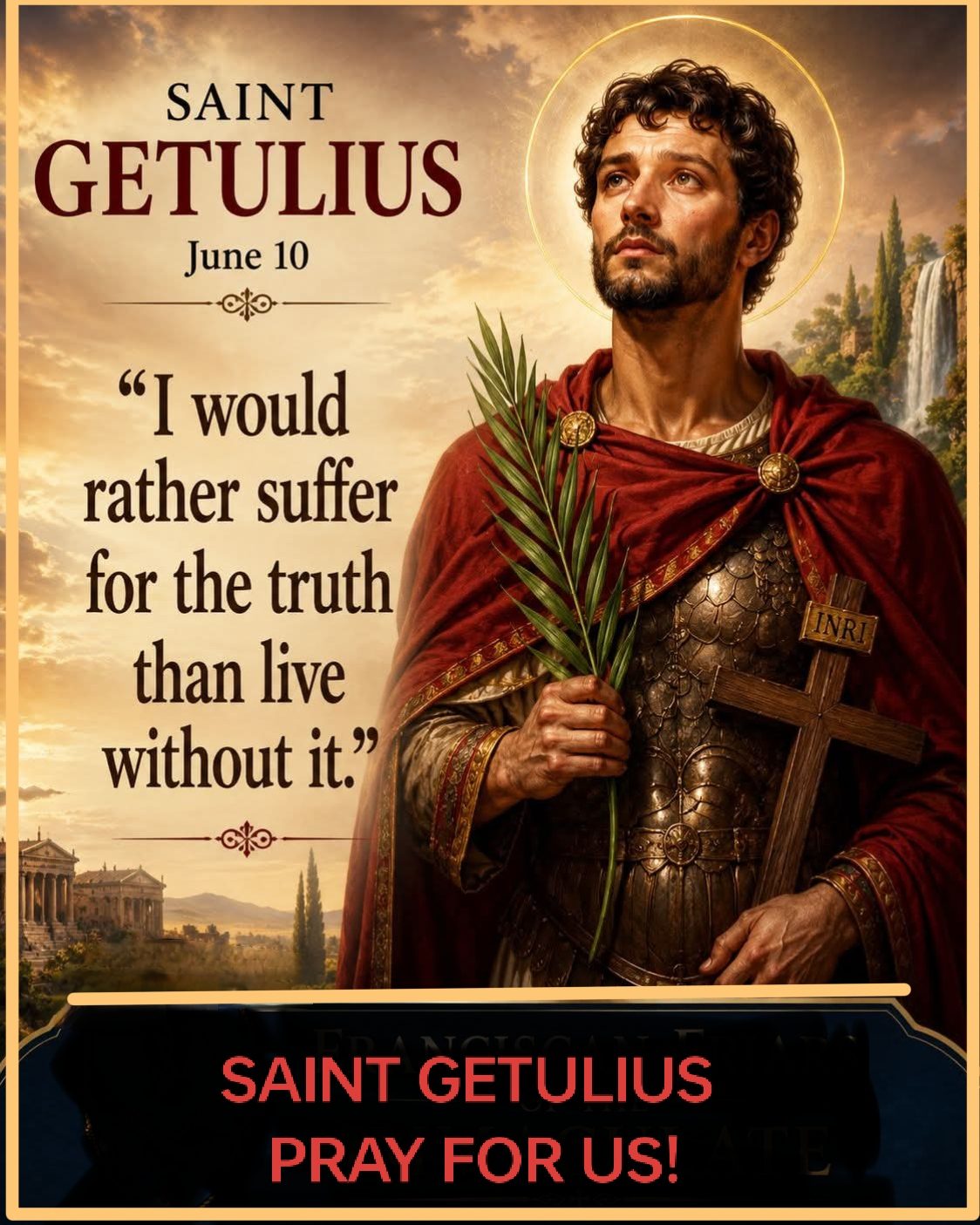
Saint Getulius is often portrayed as a Roman soldier carrying a martyr’s palm, sometimes accompanied by his fellow martyrs. These images symbolize both his military background and his triumph as a witness of Christ.
WHY HE STILL MATTERS
Modern Christians may not face Roman persecution, but they often encounter social pressure, opposition to faith, and temptations to compromise their beliefs. Saint Getulius reminds believers that true loyalty belongs to God and that faith sometimes requires sacrifice and courage.
HIS ENDURING MESSAGE
The Roman Empire offered Getulius security, honor, and power. Christ offered him the Cross. He chose Christ. Though the empire faded into history, the martyr it sought to silence is still remembered today. His life proclaims a timeless truth: when earthly power and eternal truth stand opposed, the saints choose truth.
PRAYER
Saint Getulius, you died for your faith, after converting and inspiring the officers sent to arrest you, and who were killed with you. We ask you to pray for those who try to change their minds about the Faith.
May all who evangelize falsely, leading others astray, be led to the Truth and acknowledge and accept the precepts and promises of our EverLiving God, the Infinite God of salvation.
May the Holy Spirit and the angels continue the process of their conversion and reparation for their falsehoods.
Saint Getulius, pray for us. Amen