
SPIRITUAL INSIGHTS INTO THE LIFE OF SAINT CLOUD
September 7, 2026
1 Peter: 5-6
September 8, 2026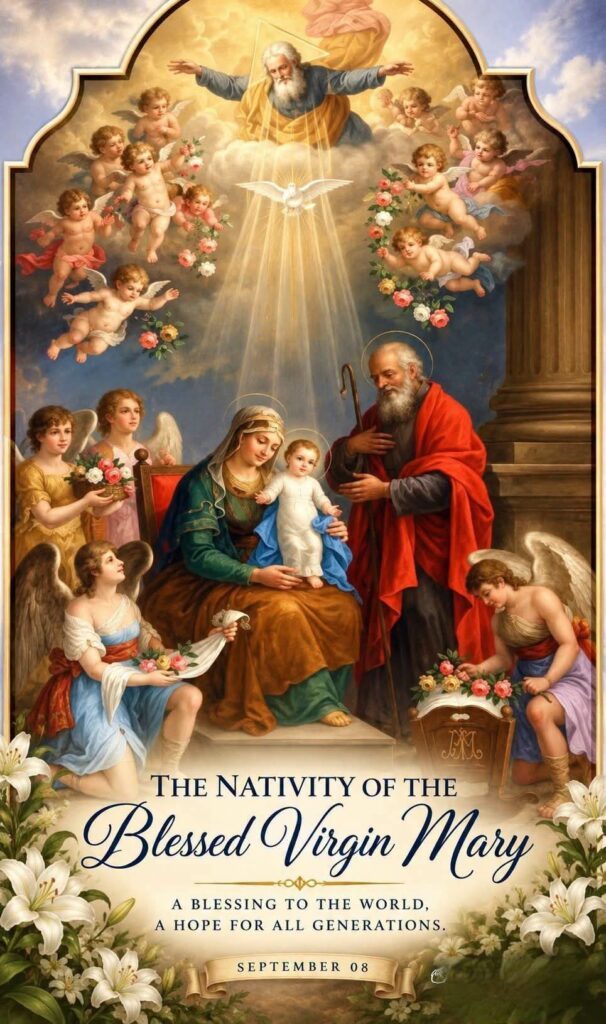
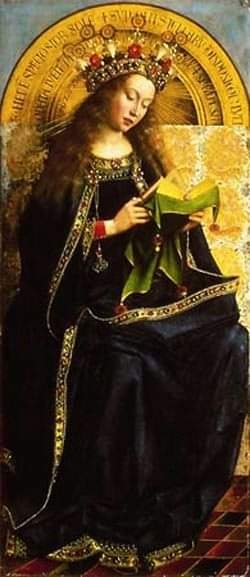
THE NATIVITY OF THE BLESSED VIRGIN MARY – 8th SEPTEMBER
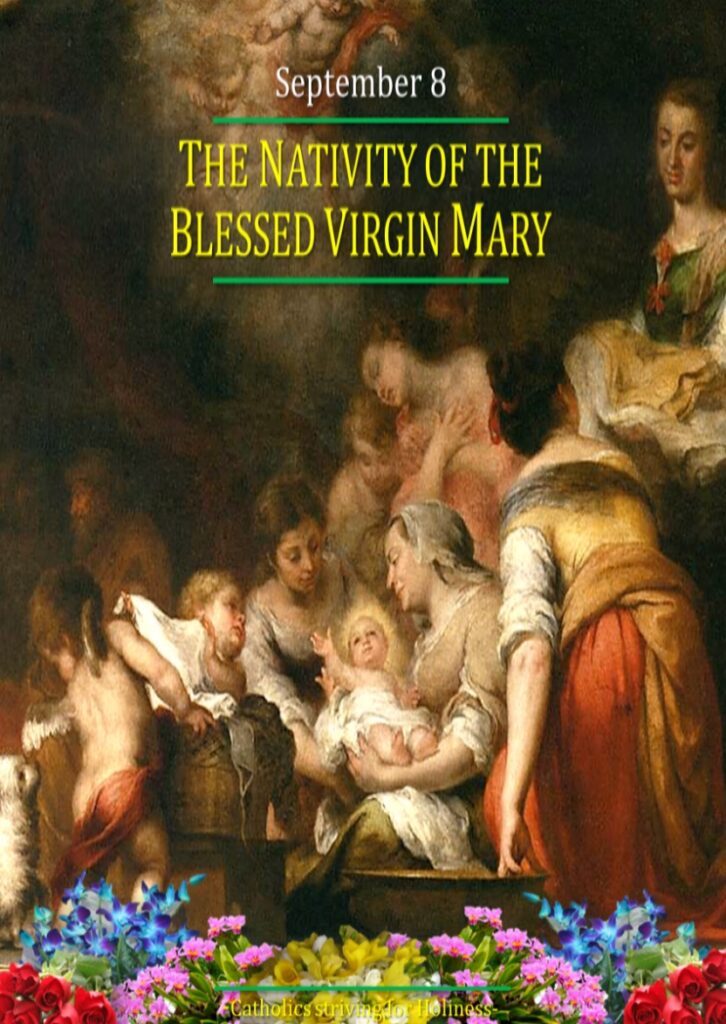

The modern canon of scripture does not record Mary’s birth. The earliest known account of Mary’s birth is found in the Gospel of James (5:2), an apocryphal text from the late second century, with her parents known as Saint Anne and Saint Joachim.
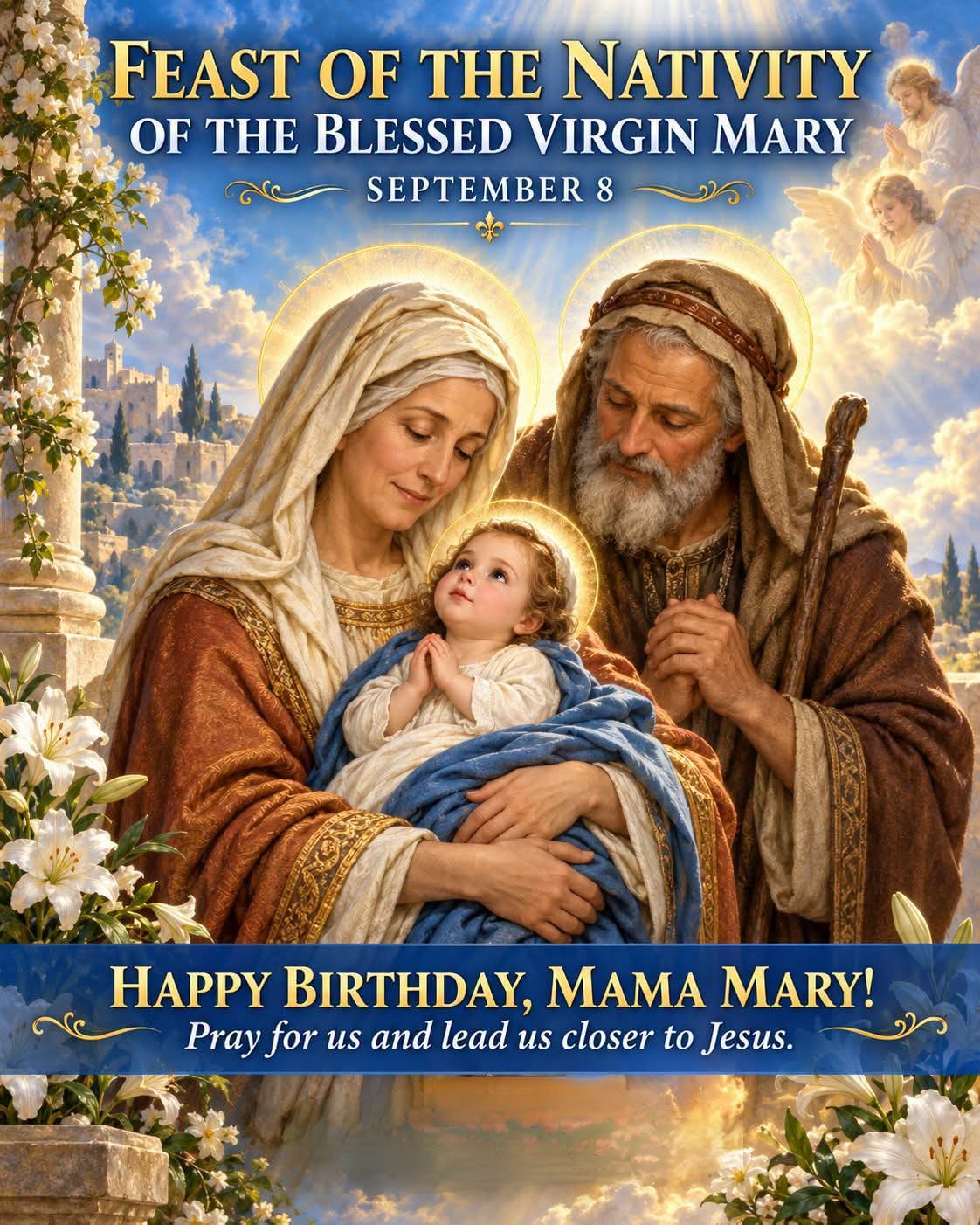
In the case of saints, the Church commemorates their date of death, with Saint John the Baptist and the Virgin Mary as the few whose birth dates are commemorated. The reason for this is found in the singular mission each had in salvation history, but traditionally also because these alone were holy in their very birth (for Mary, see Immaculate Conception; John was sanctified in Saint Elizabeth’s womb according to the traditional interpretation of Luke 1:15).
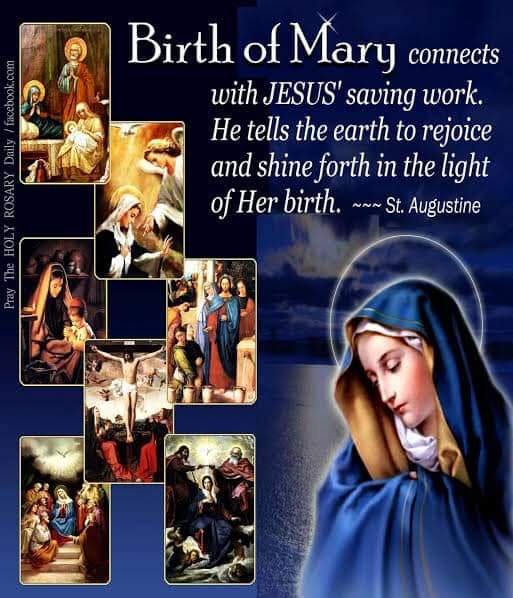
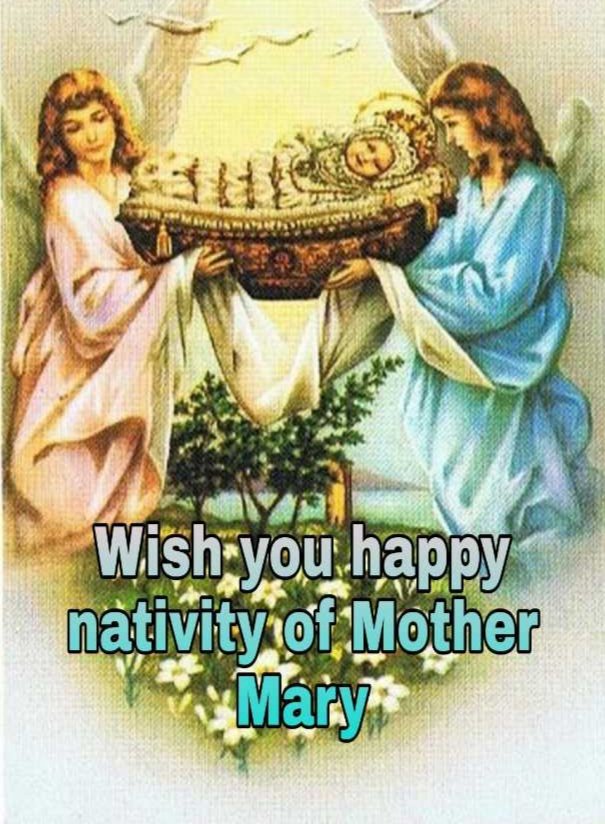
Devotion to the innocence of Mary under this Marian title is widely celebrated in many cultures across the globe in various prayers and hymns such as the Novena in Honor of the Nativity of the Blessed Virgin Mary.
The “Protoevangelium of James,” which was probably put into its final written form in the early second century, describes Mary’s father Joachim as a wealthy member of one of the Twelve Tribes of Israel. Joachim was deeply grieved, along with his wife Anne, by their childlessness.
“He called to mind Abraham,” the early Christian writing says, “that in the last day God gave him a son Isaac.”
Joachim and Anne began to devote themselves extensively and rigorously to prayer and fasting, initially wondering whether their inability to conceive a child might signify God’s displeasure with them.
As it turned out, however, the couple were to be blessed even more abundantly than Abraham and Sarah, as an angel revealed to Anne when he appeared to her and prophesied that all generations would honor their future child: “The Lord has heard your prayer, and you shall conceive, and shall bring forth, and your seed shall be spoken of in all the world.”
After Mary’s birth, according to the Protoevangelium of James, Anne “made a sanctuary” in the infant girl’s room, and “allowed nothing common or unclean” on account of the special holiness of the child.
The same writing records that when she was one year old, her father “made a great feast, and invited the priests, and the scribes, and the elders, and all the people of Israel.”
“And Joachim brought the child to the priests,” the account continues, “and they blessed her, saying: ‘O God of our fathers, bless this child, and give her an everlasting name to be named in all generations’ . . . And he brought her to the chief priests, and they blessed her, saying: ‘O God most high, look upon this child, and bless her with the utmost blessing, which shall be for ever.’”

The protoevangelium goes on to describe how Mary’s parents, along with the temple priests, subsequently decided that she would be offered to God as a consecrated Virgin for the rest of her life, and enter a chaste marriage with the carpenter Joseph.
Saint Augustine described the birth of the Blessed Virgin Mary as an event of cosmic and historic significance, and an appropriate prelude to the birth of Jesus Christ.
“She is the flower of the field from whom bloomed the precious lily of the valley,” he said.
The fourth-century bishop, whose theology profoundly shaped the Western Church’s understanding of sin and human nature, affirmed that “through her birth, the nature inherited from our first parents is changed.”
Pious accounts place the birthplace of the Virgin Mary in Sepphoris, where a 5th-century basilica is excavated at the site. Some accounts speak of Nazareth and others say it was in a house near the Sheep Gate in Jerusalem. It is possible that a wealthy man such as Joachim had a home in both Judea and Galilee.
The earliest document commemorating Marymas comes from a hymn written in the sixth century. The feast may have originated somewhere in Syria or Palestine in the beginning of the sixth century, when after the Council of Ephesus, the cult of the Mother of God was greatly intensified, especially in Syria.
The first liturgical commemoration is connected with the sixth century dedication of the Basilica Sanctae Mariae ubi nata est, now called the Church of Saint Anne in Jerusalem. The original church, built in the fifth century, was a Marian basilica erected on the spot known as the Shepherd’s Pool and thought to have been the home of Mary’s parents.
In the seventh century, the feast was celebrated by the Byzantines as the Feast of the Birth of the Blessed Virgin Mary. Since the story of Mary’s Nativity is known only from apocryphal sources, the Latin Church was slower in adopting this festival. At Rome, the Feast began to be kept toward the end of the 7th century, brought there by Eastern monks.

Tradition celebrates Marymas as a liturgical feast in the General Roman Calendar and in most Anglican liturgical calendars on 8 September, nine months after the solemnity of her Immaculate Conception, celebrated on 8 December. The feast is also included in the Tridentine Calendar for 8 September.
This date is also used in the Western Rite Orthodox Church. Previous to the reforms by Pope Pius XII, the General Roman Calendar of 1954 kept the Nativity of the Blessed Virgin Mary as an Octave since the Octave was established by Pope Innocent IV in 1243.
The Byzantine Rite Orthodox likewise celebrate the Nativity of the Theotokos on 8 September.
The Syriac Orthodox Church, like its closely related sister church, the Byzantine Rite Antiochian Orthodox Church, also celebrates the feast on 8 September.
CONTEMPLATION AND REFLECTIONS FOR THE NATIVITY OF THE BLESSED VIRGIN MARY
MARY’S ROLE IN USHERING IN THE KINGDOM OF GOD
WHAT IS THE KINGDOM OF GOD?
The Kingdom of God is not a worldly territory, political empire or future conquest. It is the active reign of God entering human life. Wherever Jesus is welcomed, received and obeyed, the Kingdom becomes present.
St. Paul reminds us that the Kingdom of God is righteousness, peace and joy in the Holy Spirit. It is the restoration of God’s order, where mercy replaces judgment, love replaces domination and divine justice brings healing to human brokenness.
GOD’S KINGDOM IS USHERED IN THROUGH AVAILABILITY
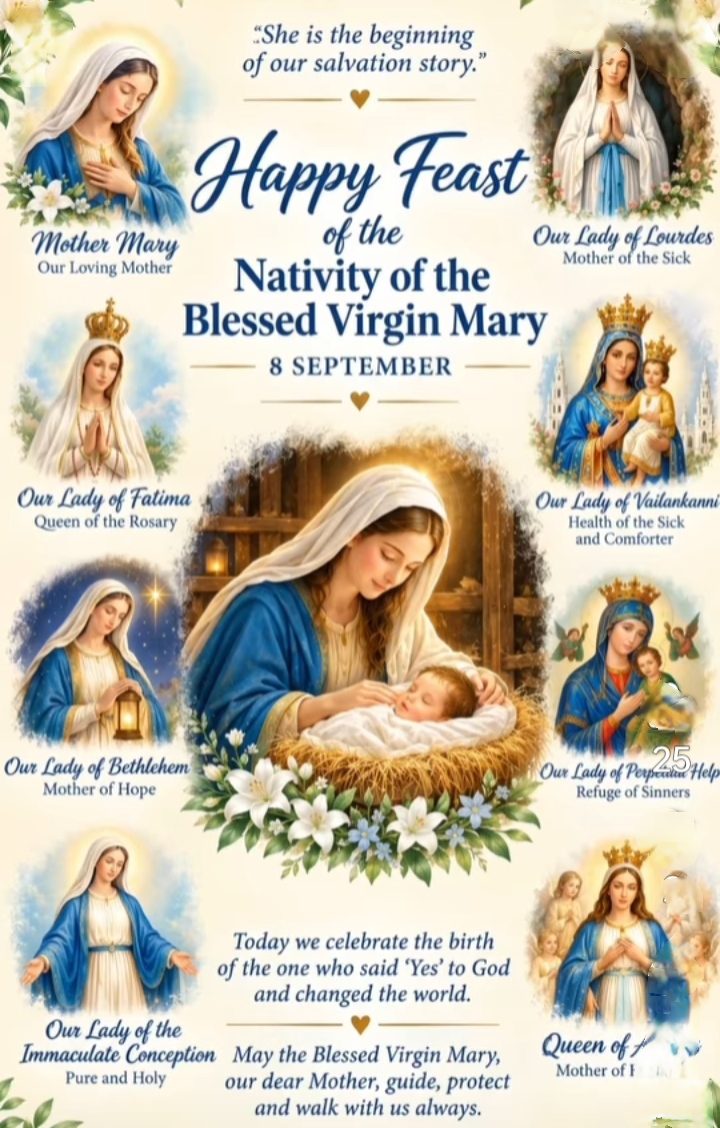
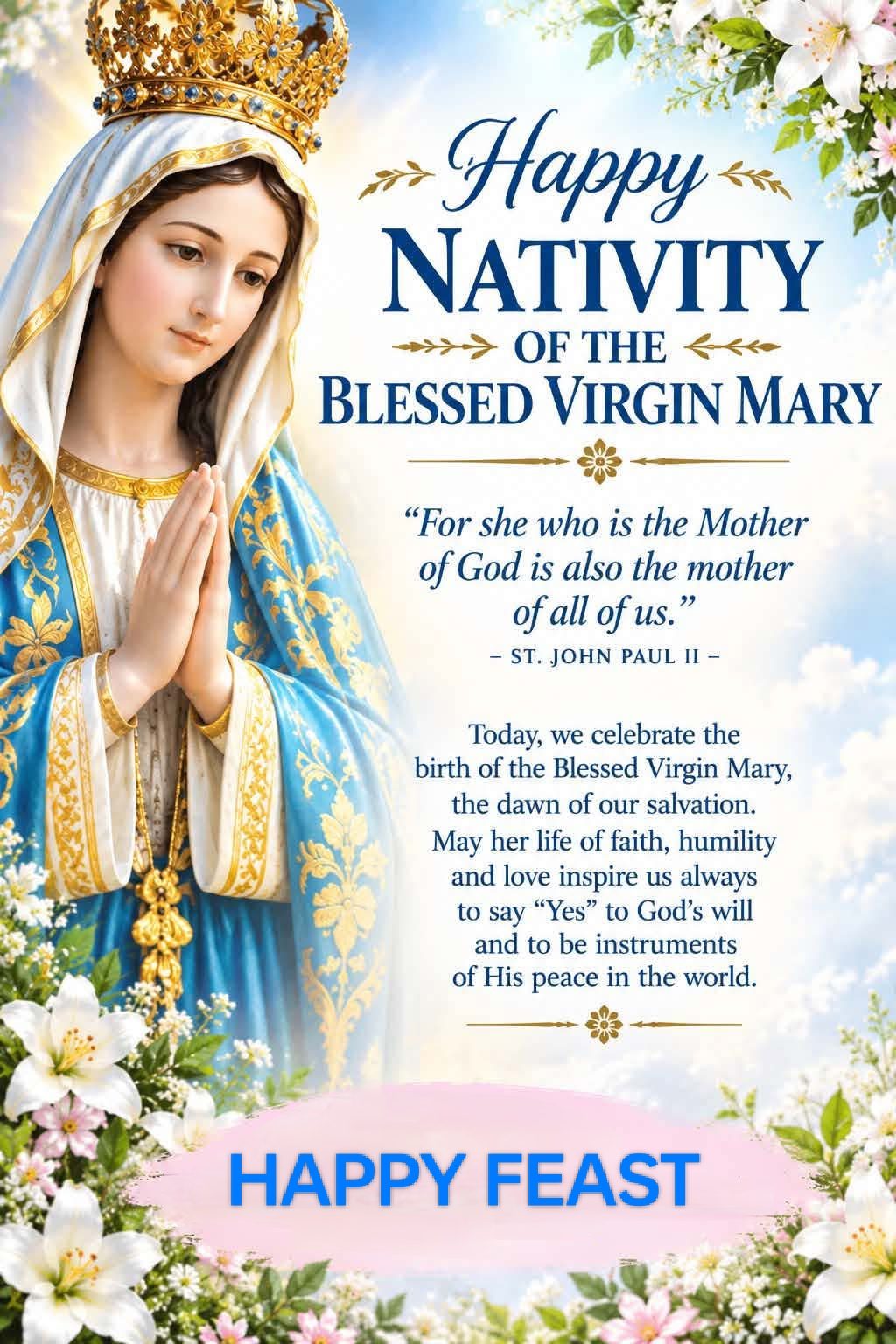
Today we celebrate the Nativity of the Blessed Virgin Mary. Her birth may appear ordinary and unnoticed, yet through Mary God was preparing the woman who would become the Mother of His Son.
Mary’s role began not with power or influence but with openness to God. She allowed Him to work through her and became the doorway through which Christ entered human history.
GOD BEGINS GREAT THINGS IN SMALL PLACES
Micah speaks of Bethlehem, a small and seemingly insignificant place, from which the ruler of Israel would come. God repeatedly chooses what appears small: Bethlehem instead of Jerusalem, a manger instead of a palace, fishermen instead of the powerful, and a humble young woman instead of a queen.
God does not measure greatness by worldly importance. He looks for hearts that are open and willing.
We may sometimes think that our contribution is too small to make a difference. A parent raising children, a teacher encouraging a student, a catechist serving a few children or a parishioner quietly helping others may never realize the impact of their actions.
Mary reminds us never to underestimate what God can accomplish through an ordinary life completely surrendered to Him.
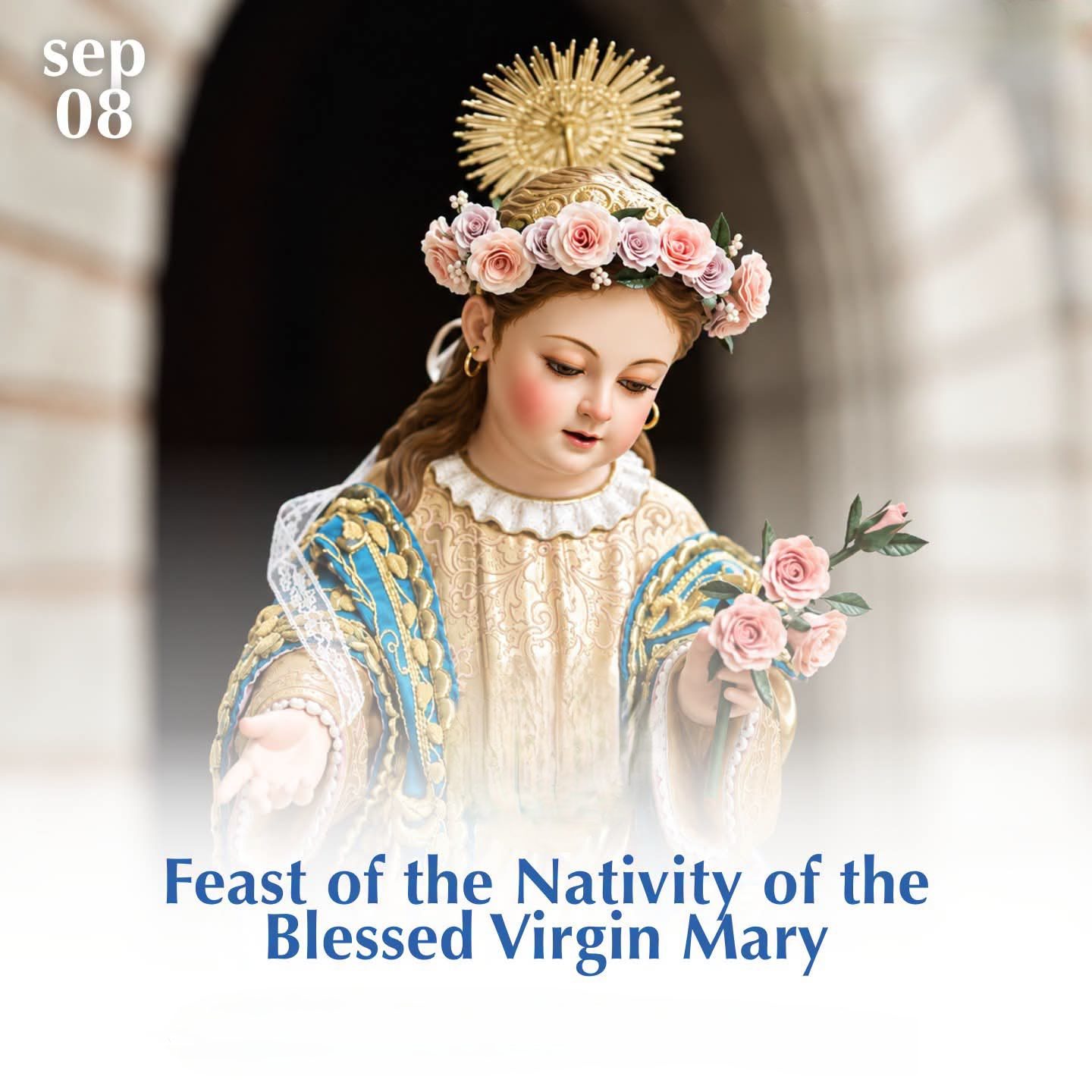
What seems insignificant can become a turning point in someone’s life. God’s Kingdom is often built through small acts of love and encouragement.
MARY’S YES BECAME THE DOORWAY FOR CHRIST
The Gospel tells us of Joseph’s confusion when Mary was found to be with child. The angel reassured him and revealed that the child was the fulfilment of God’s promise: Emmanuel, God with us.
God chose to enter human history through a family, through Mary’s womb and through the vulnerability of ordinary human life. Mary became the human doorway through which Christ entered the world.
Mary did not usher in God’s Kingdom through political power, armies or public influence. She simply gave herself completely to God’s plan. Her “yes” opened the way for Jesus to enter the world.
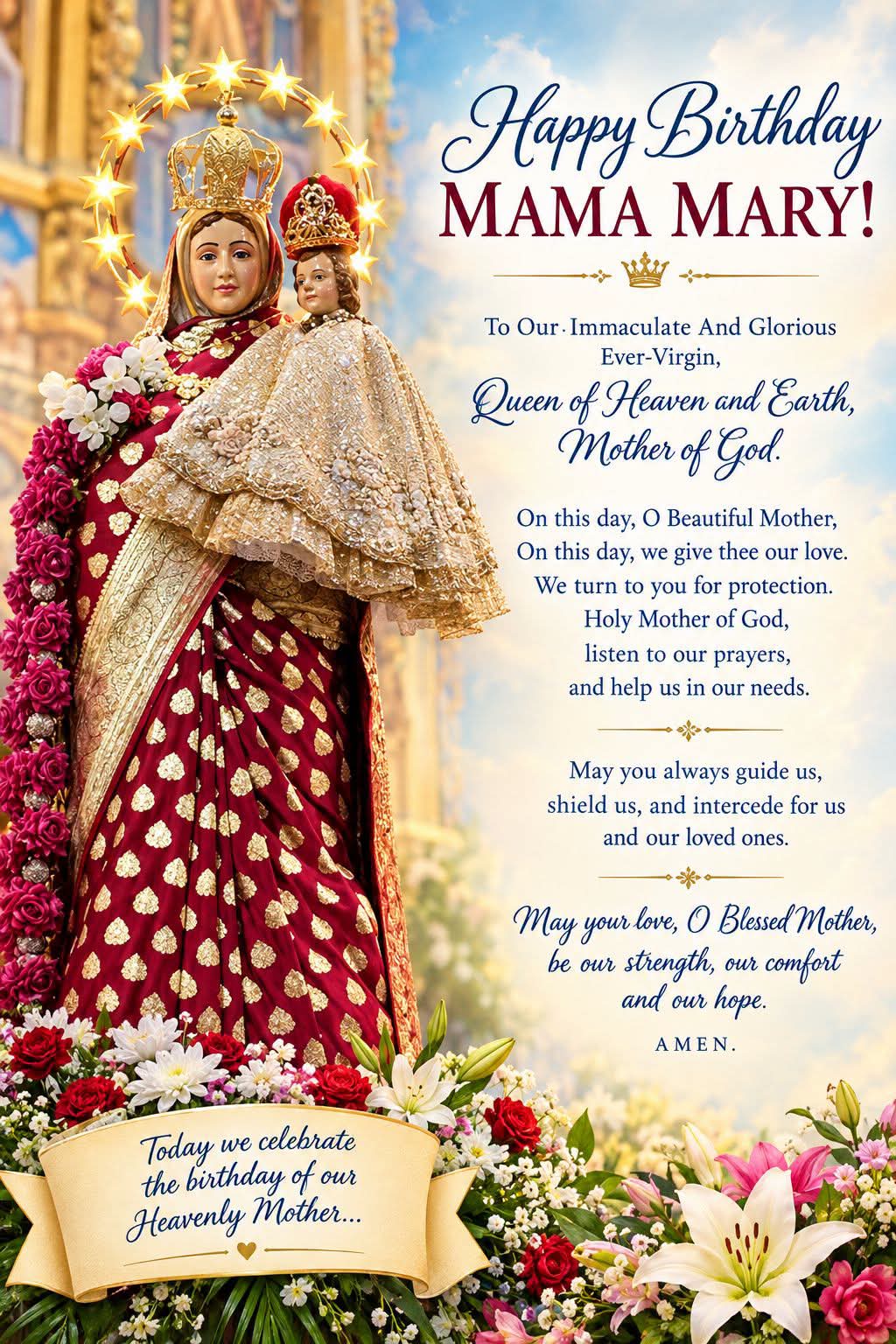
God’s grace is always greater than our limitations, yet He invites our cooperation. Mary teaches us to open the door of our hearts and allow God to work through us.
Her yes did not remain private. Through Jesus, sinners encountered mercy, the sick experienced healing, the lost found direction and the excluded discovered welcome.
Like Mary, we may never see the full consequences of our yes to God. Yet one faithful response can bless many lives.
THE KINGDOM IS RECEIVED BEFORE IT IS BUILT
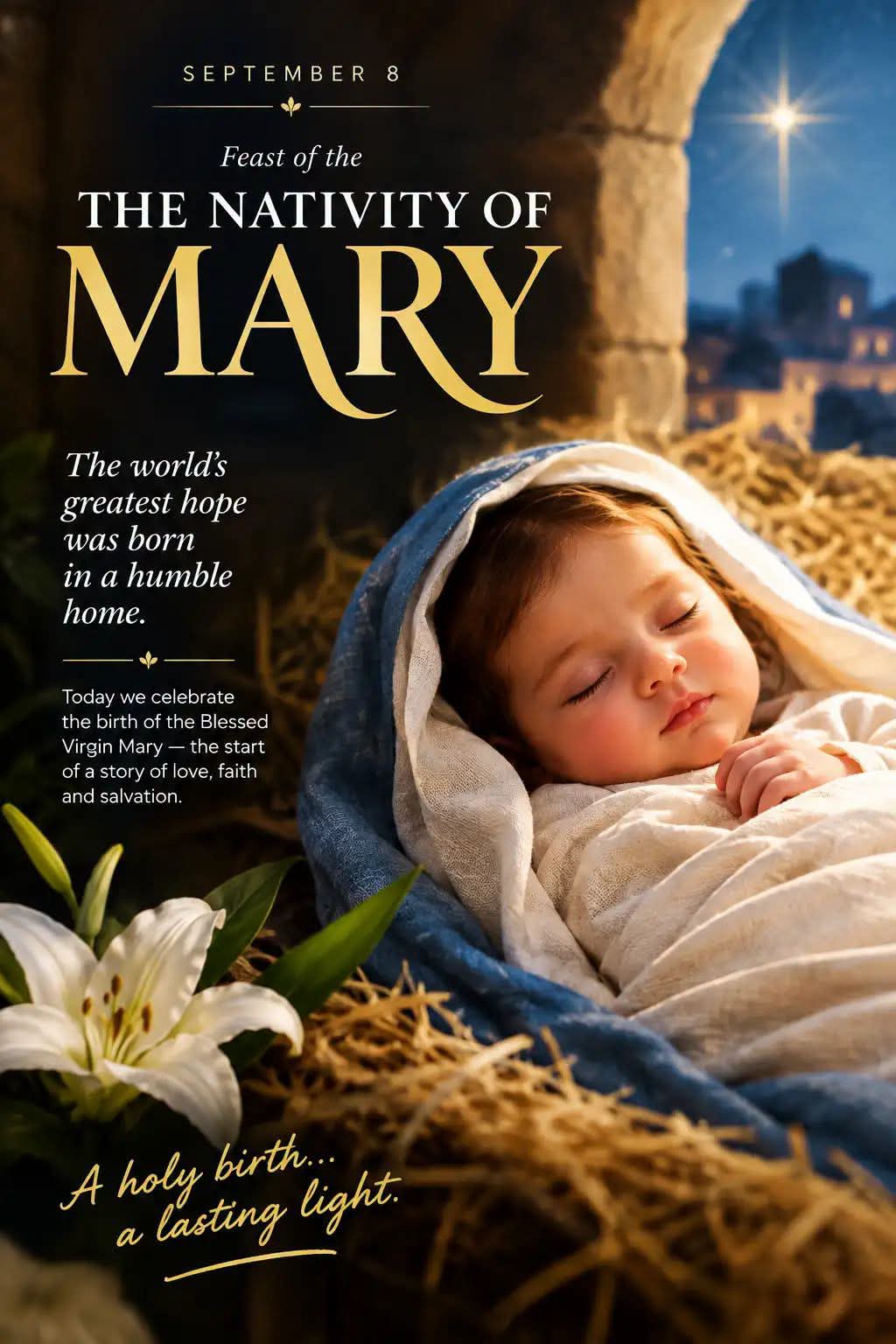
Mary first received Christ before giving Him to the world. She listened before speaking, welcomed before serving and carried Christ before revealing Him.
This is an important lesson for every Christian. Before we try to do great things for God, we must first allow Christ to live within us.
We can become so busy serving, organizing, preaching and helping that we forget to spend time with the Lord. Our activities may increase while our inner relationship with Christ becomes weaker.
Mary teaches us that we must first receive the Lord before we can faithfully carry Him to others.
MARY USHERS IN THE KINGDOM THROUGH RELATIONSHIPS
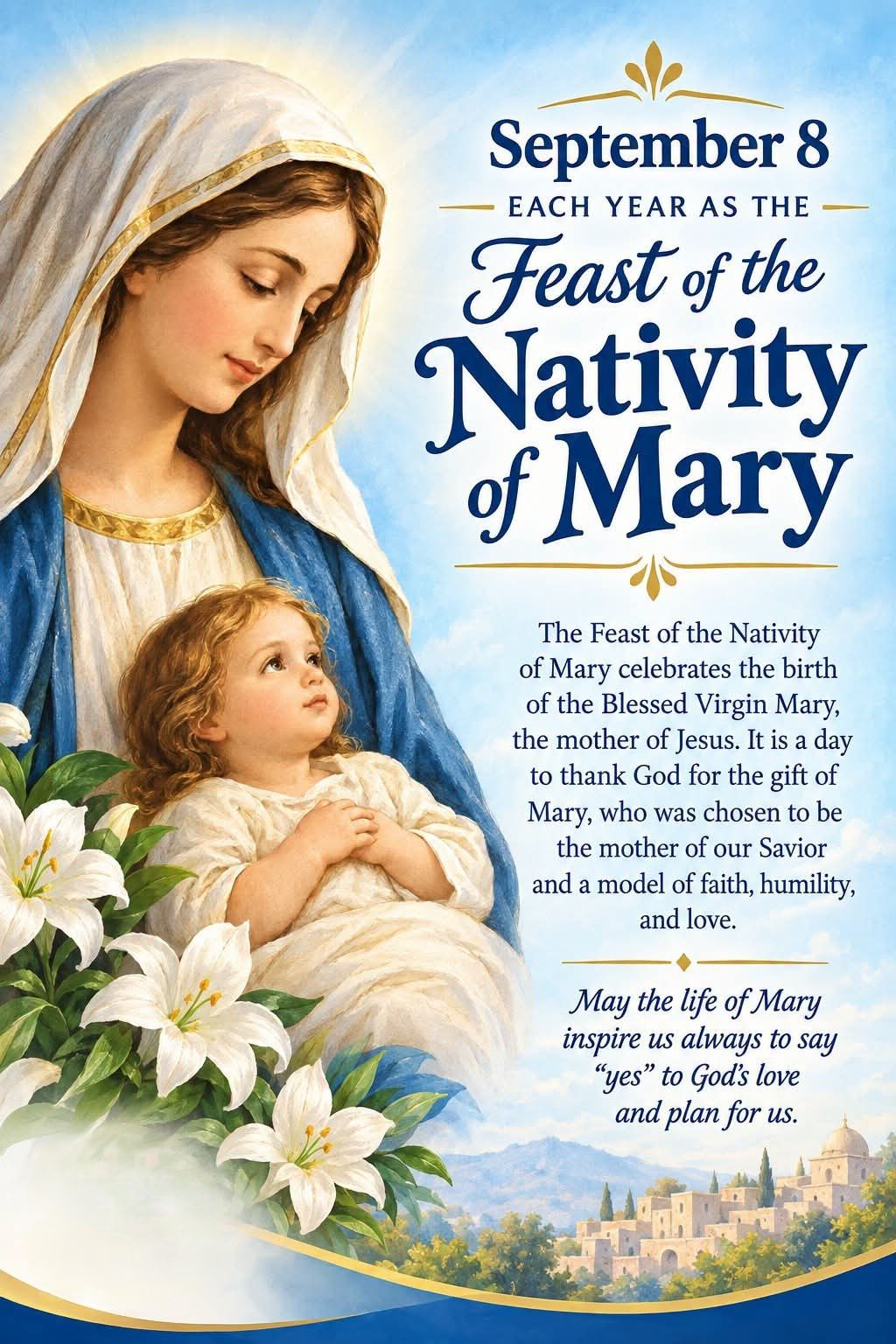
Mary did not bring Jesus into the world alone. Joseph was also called to accept Mary, protect Jesus and care for the Holy Family.
The Kingdom of God grows through relationships. It creates communion, strengthens families, builds communities and brings reconciliation.
Holiness does not mean escaping from people. Mary teaches us to bring Christ into our marriages, families, friendships, workplaces, parishes and communities.
The Kingdom grows whenever Christ changes the way we treat one another.
Our faith becomes credible when Christ is visible in our relationships. The world needs Christians who do not merely speak about Jesus but reveal Him through their love.
MARY’S KINGDOM BUILDING IS A MINISTRY OF JOY
The Psalm invites us to rejoice in the Lord. Mary’s life was filled with joy, but it was not free from uncertainty, poverty, misunderstanding, exile and suffering.
Her joy came from knowing that God was at the centre of her life.
Christian joy is not the absence of difficulties. It is the presence of God in the midst of difficulties.
Mary shows us that the Kingdom is advanced through people who radiate hope, peace and trust even during times of suffering. Some people bring peace wherever they go. After meeting them, we feel encouraged and uplifted. Others carry resentment, criticism and negativity into every situation.
We can ask ourselves what people experience when they encounter us. Do they experience anxiety or hope, judgment or mercy, division or communion?
Mary carried Jesus wherever she went. As Christians, we too are called to carry Christ into every place and relationship.
MARY’S ROLE IS TO LEAD US TO JESUS
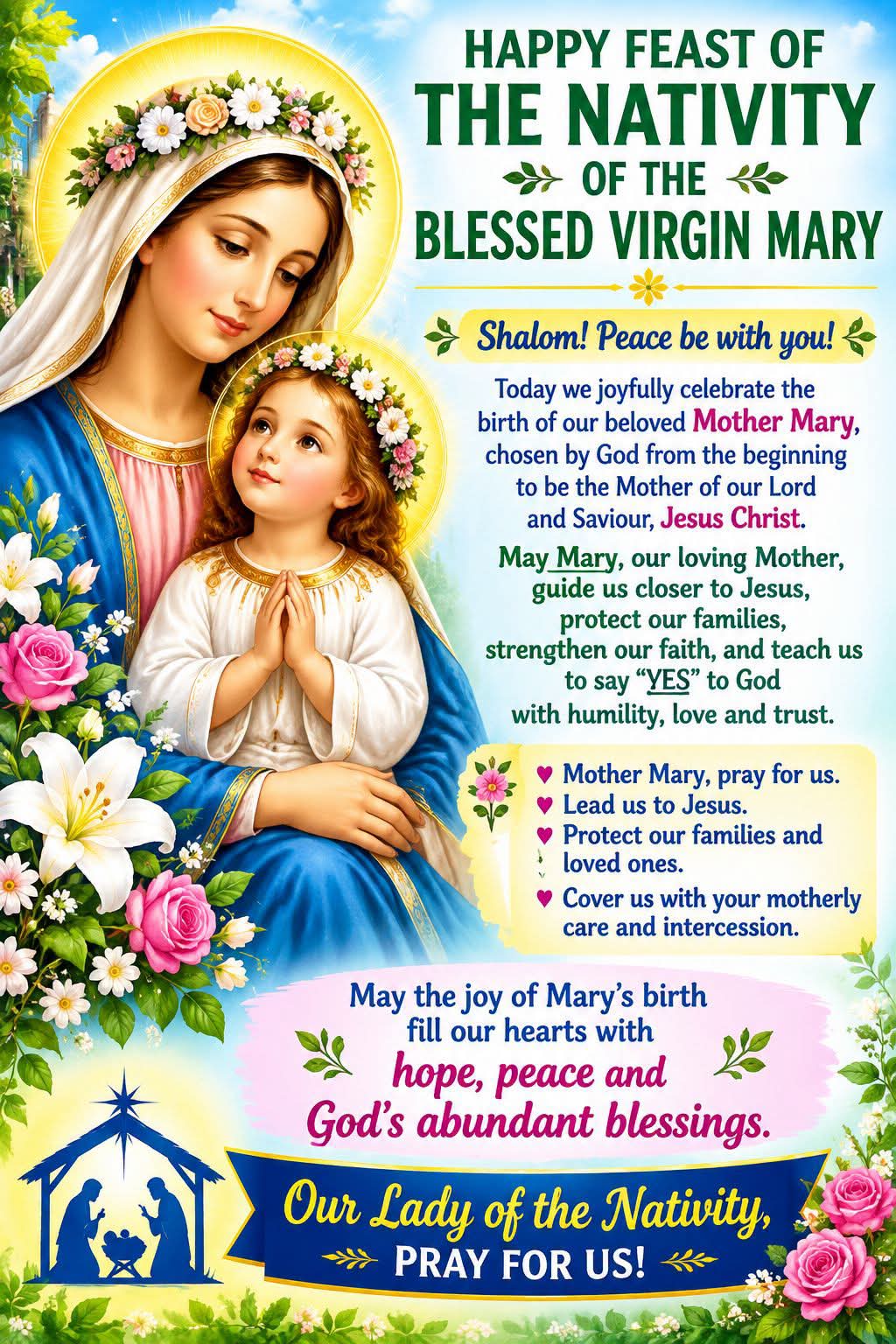
Mary’s entire life points beyond herself to Christ. She is the Mother who gives Jesus, the disciple who follows Him and the faithful woman who directs others towards Him.
Her message remains simple: “Do whatever He tells you.”
Mary’s greatest role in ushering in God’s Kingdom is to lead us to Jesus and help us open our lives to Him.
THE COMMON THREAD FROM BETHLEHEM TO MARY TO EMMANUEL
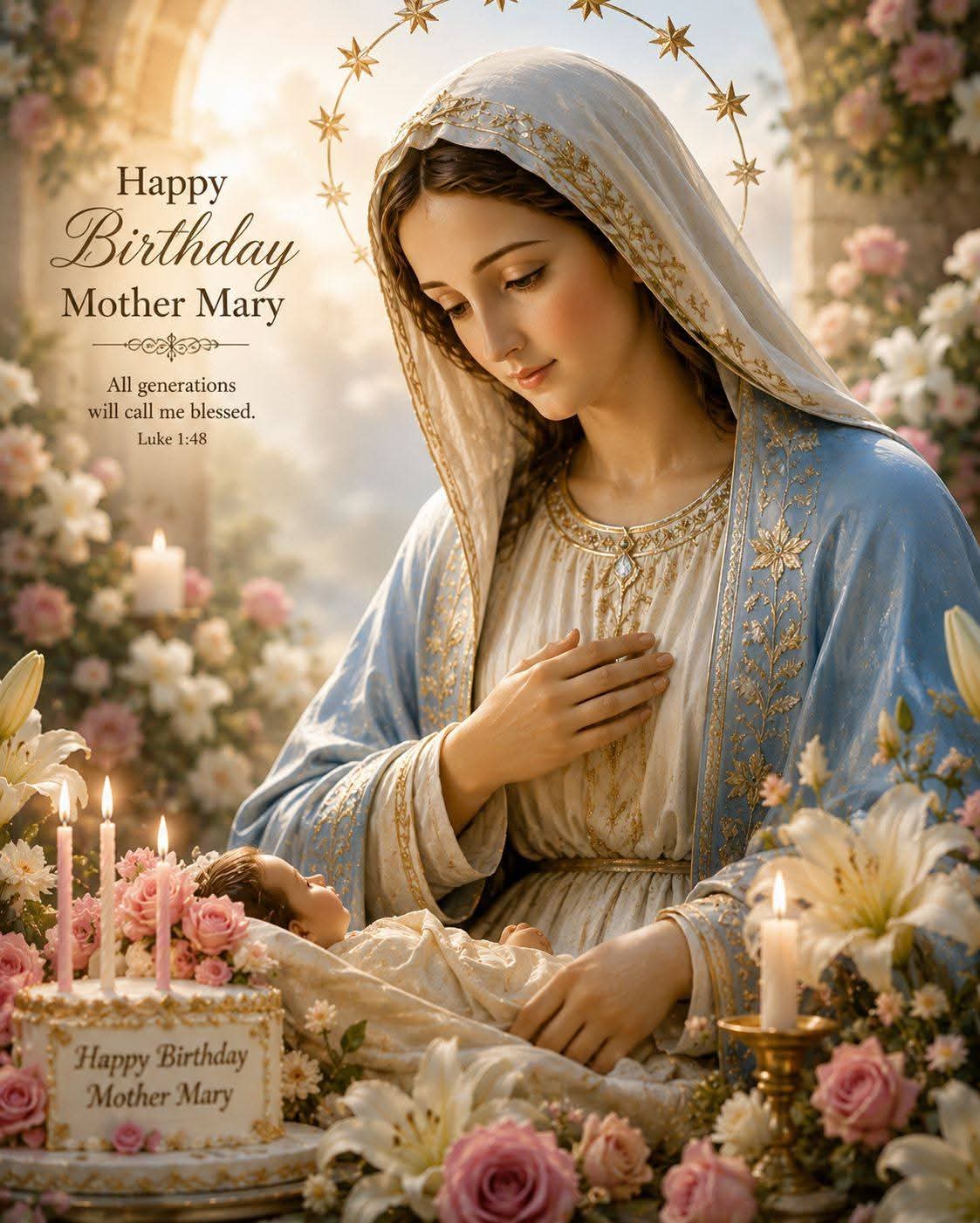
Micah shows us that God chooses what is small and seemingly insignificant. The Psalm invites us to joyful trust. Matthew reveals that God enters human history as Emmanuel, God with us.
Mary stands at the heart of this mystery. Bethlehem makes room for God. Mary makes room for God. Joseph makes room for God. Through them, God’s presence becomes visible in Jesus.
The Kingdom enters the world whenever people make room for God in their hearts and lives.
WHAT DOES MARY TEACH US TODAY?
MAKE ROOM FOR GOD
Do not allow the noise and demands of life to leave no space for prayer, silence and God’s presence.
SAY YES EVEN BEFORE YOU UNDERSTAND EVERYTHING
Mary did not know the entire journey ahead of her. She trusted God and responded with faith. We too are called to trust the One who calls us.
BRING CHRIST INTO YOUR RELATIONSHIPS
Let your family, friends and community experience Christ through your patience, forgiveness, gentleness, compassion and faithfulness.
NEVER UNDERESTIMATE SMALL ACTS
A kind word, a listening ear, a visit, a quiet prayer, an act of forgiveness or a faithful commitment may seem small, but God can use these simple acts to build His Kingdom.
BECOME A BEARER OF JOYFUL HOPE
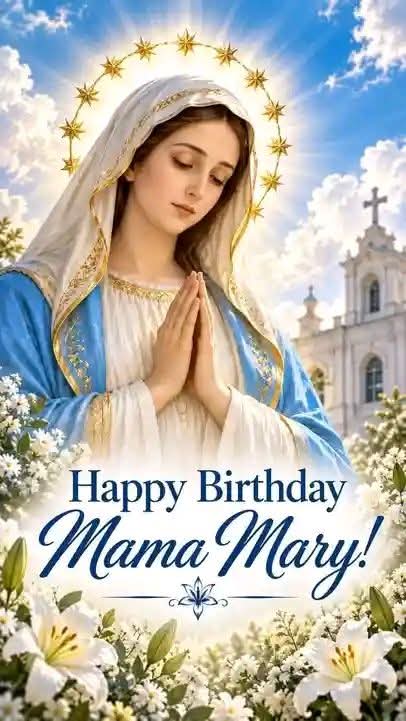
Mary carried Christ physically. We are called to carry Him spiritually. Wherever we go, Christ should become more visible because we have been there.
CONCLUSION
On this feast of the Nativity of the Blessed Virgin Mary, may Mary teach us to become living doorways through which Christ enters the world.
May our lives reflect her openness, humility, faith, joy and love, so that through us others may encounter Emmanuel, God with us.

Mary, unblemished flower of the field of God’s earth from whom bloomed forth the precious lily who would radiate the light of the dawn of salvation to the most cherished of God’s creation, the human race.
Created in God’s form and likeness, brought to life by his breath and Spirit, yet doomed for all time through betrayal of our first parents, God, consumed by his passionate, pure love for his creation, sent his beloved Word made flesh into the world to save and redeem mankind by his death and resurrection, taking upon himself our transgressions in exchange for our eternal redemption.
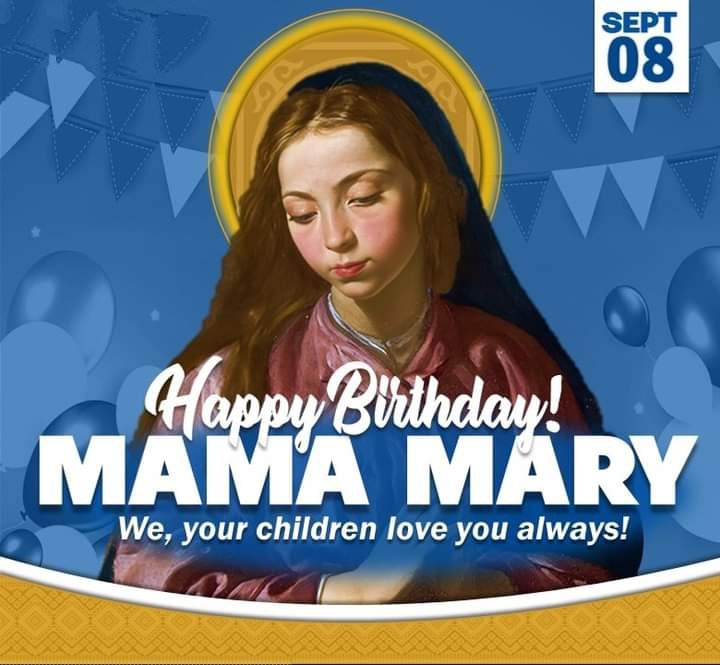
And Mary, you became the chosen vessel, the channel through which God would assume human flesh, become incarnate as the Son of Man and bring to fruition his eternal plan of adoption of the human race to sonship and an eternal inheritance as a free gift of his love.
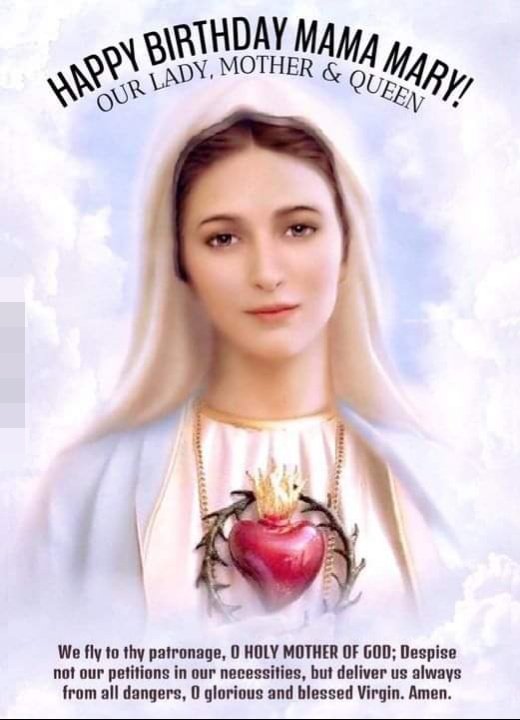
You are the foreshadowing of God’s perfect love for mankind through his Son Jesus Christ, our Savior and Redeemer. The feast of your Nativity, therefore, is an unparalleled veneration of your incomparable purity, beauty, innocence and your total acceptance and obedience of God’s plan of salvation for the world.
You entered this world sinless through the privilege of the Immaculate Conception and are thus the firstborn of the redeemed. Your nativity is a cause for great joy as it is considered the “dawn of our salvation.”
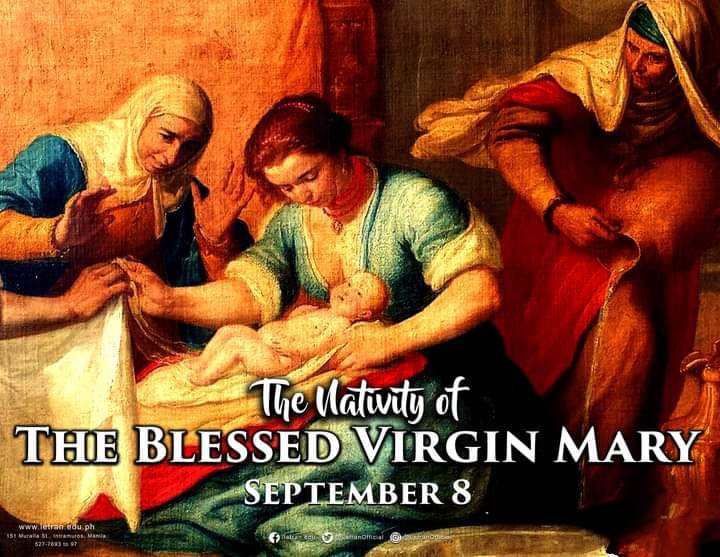
In you, the whole of creation is exalted. God gave you the richest personality imaginable and the added gifts of supernatural order, treasures of elevated thought and perfect nature, the most precious graces God ever gave to any human creature.
Your parents, Anna and Joachim were blessed when they received the promise of a child who would advance God’s plan of salvation for mankind, stressing the special presence of God in your life from the beginning. You, Mother Mary, are the personification of God’s perfect creation and we honor your birthday as the day the world returned to the nature God intended it to be. Amen