
TODAY’S GOSPEL READING – 20 SEPTEMBER
September 20, 2026
Deuteronomy 7:9
September 21, 2026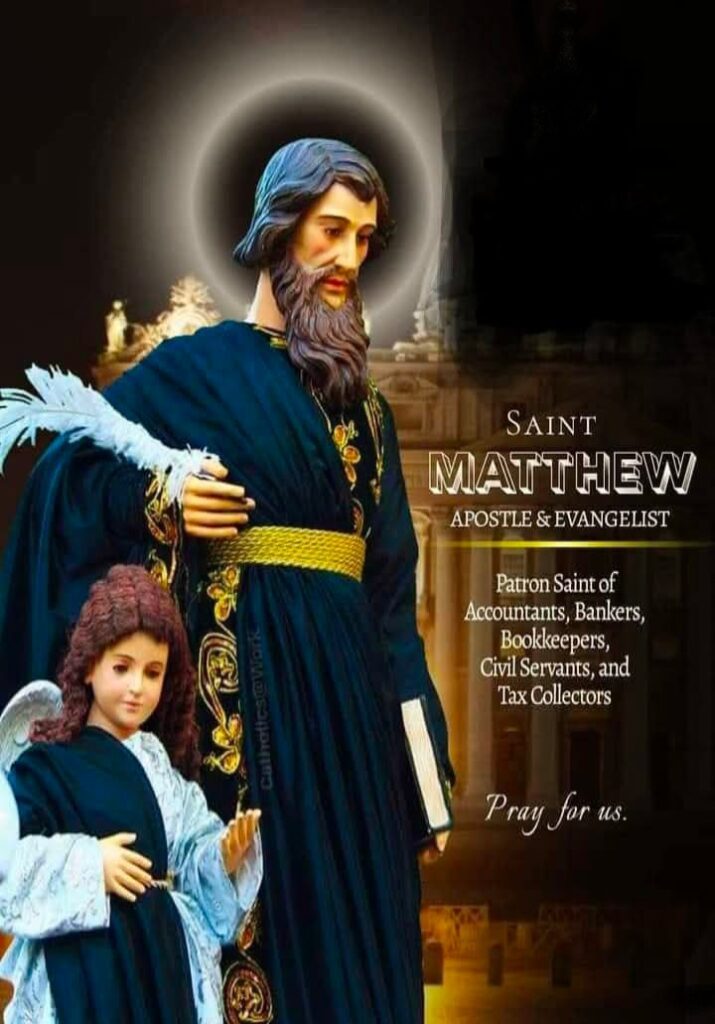
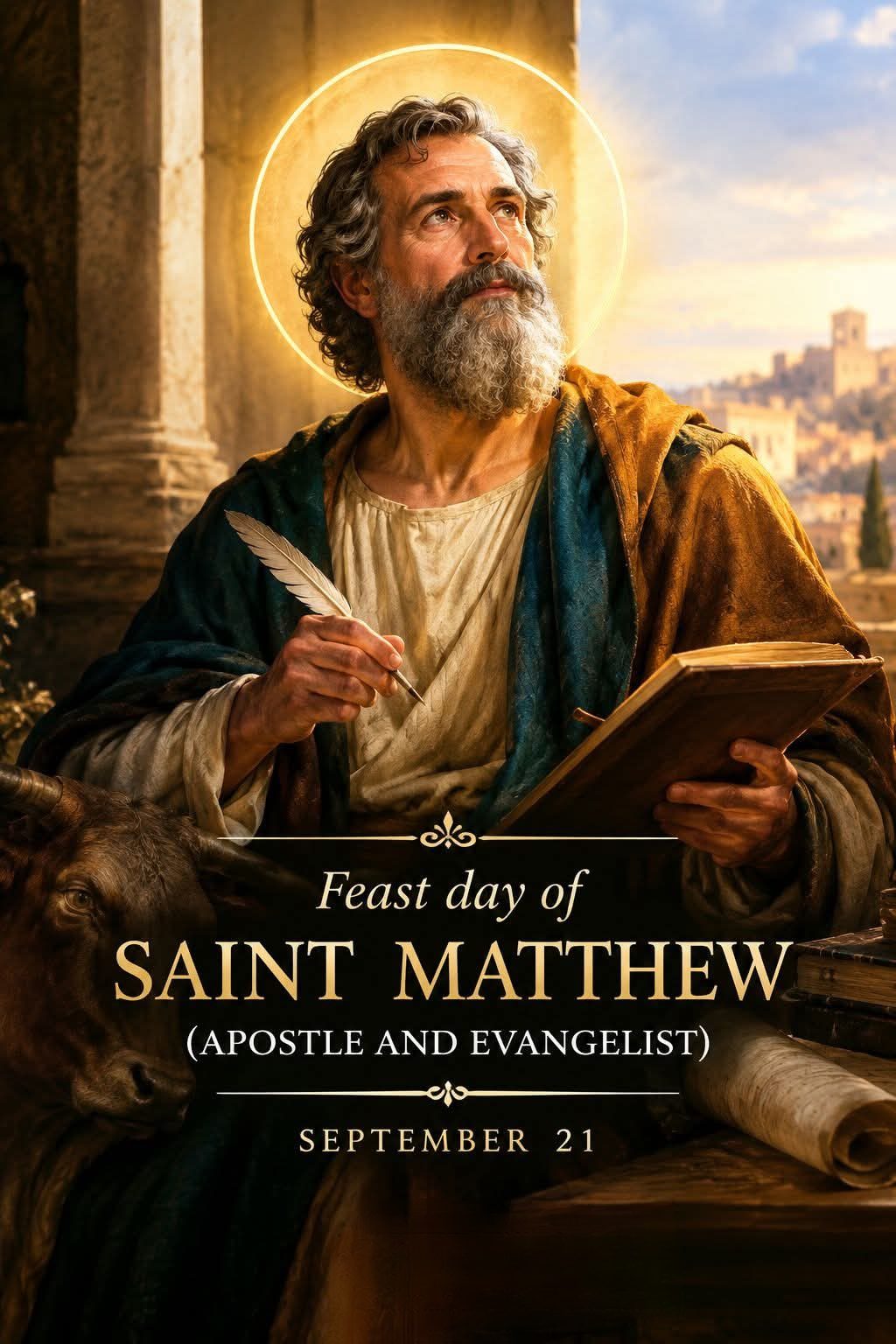
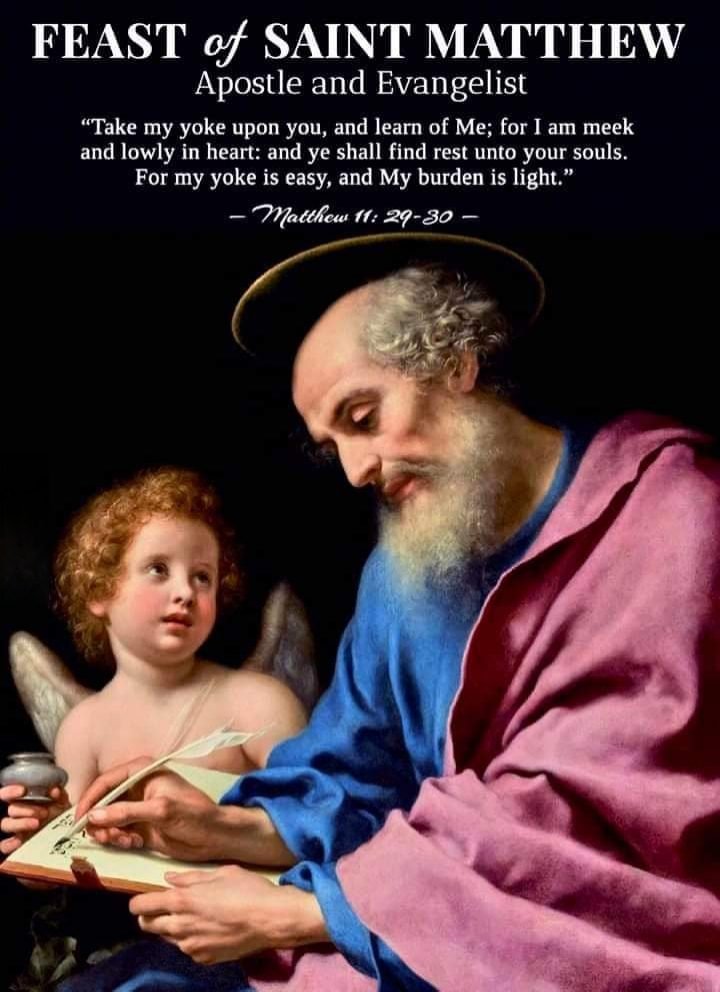
FEAST OF SAINT MATTHEW, APOSTLE, EVANGELIST
FEAST DAY – 21st SEPTEMBER
People leave their jobs for all sorts of reasons: more pay, better opportunity, a shorter commute. Today’s saint left his job for a better boss.
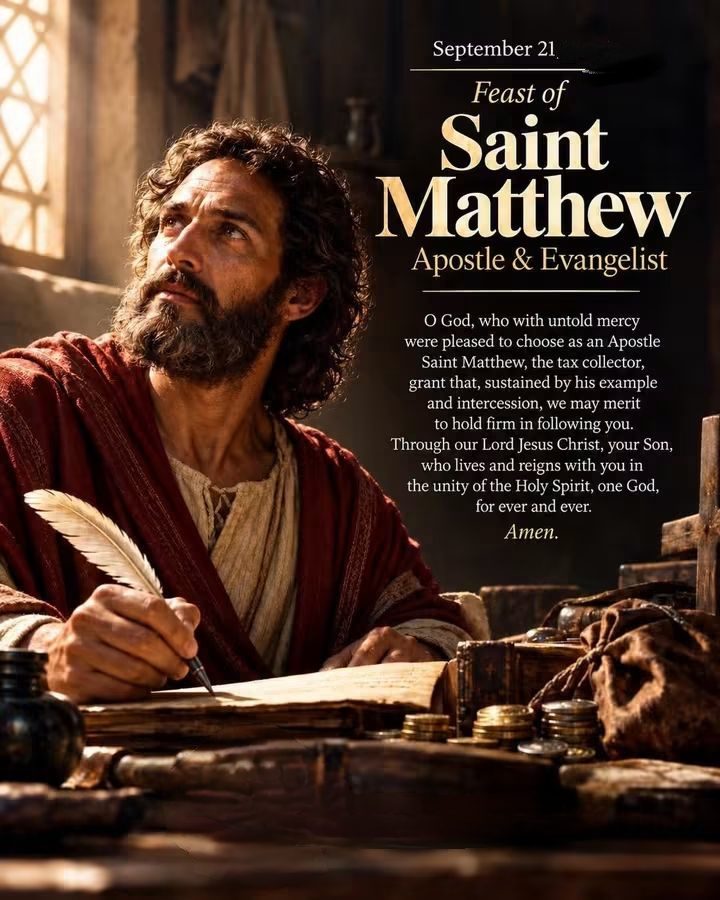
Matthew was at work in the city of Capernaum, a bustling town with a customs house. It was just another day, and Matthew was going about his job of collecting taxes.
Nearby, Jesus was doing his job too, curing a paralyzed man. It was an ordinary day for both of them. But after performing His miracle, Jesus walked down the main street of Capernaum, saw Matthew outside of the customs house, and then…the normal day ended.
Jesus said to Matthew, simply, directly, and with force, “Follow me.” And then something astonishing happened. Matthew followed Him.
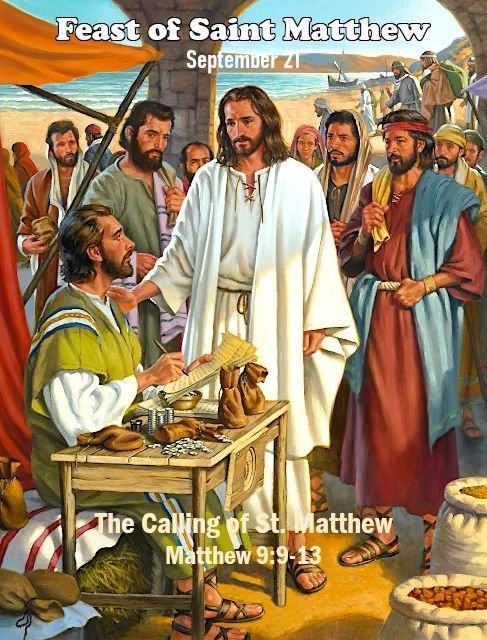
Fistfuls of Roman coins may have spilled from his hands, or he may have swallowed a gulp in his throat, quickly adjusted his tunic, and then scurried to walk in the small clouds of dust that puffed up behind Jesus as His sandals slapped the dry ground. In an instant, Matthew’s life changed forever and always. He had become a follower, a joiner, of the most important man in the history of the world.
The Gospel of Matthew nowhere mentions that it is written by a man named Matthew. But it was attributed to him very early in the life of the Church. It was compiled by 80 A.D., at the latest.
Matthew’s Gospel is clearly written by a Jew and for Jews. It references the Old Testament repeatedly and notes how Jesus fulfilled those ancient Scriptures.
Matthew’s Gospel is the only one which identifies him as a tax collector. Mark and Luke refer to him as Levi, which may have been his birth name, while Matthew (“gift of Yahweh”) was his post-conversion name.
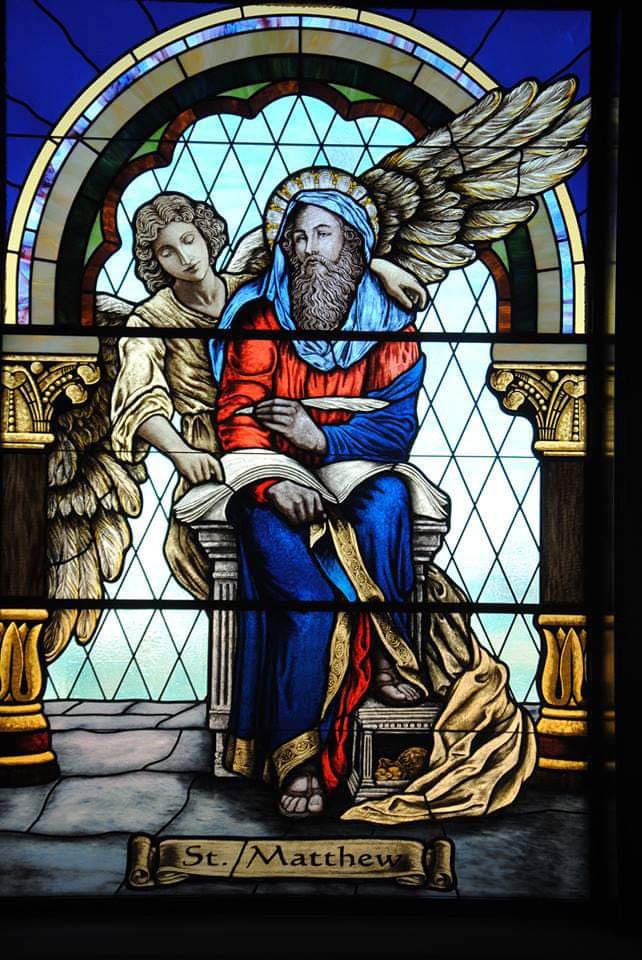
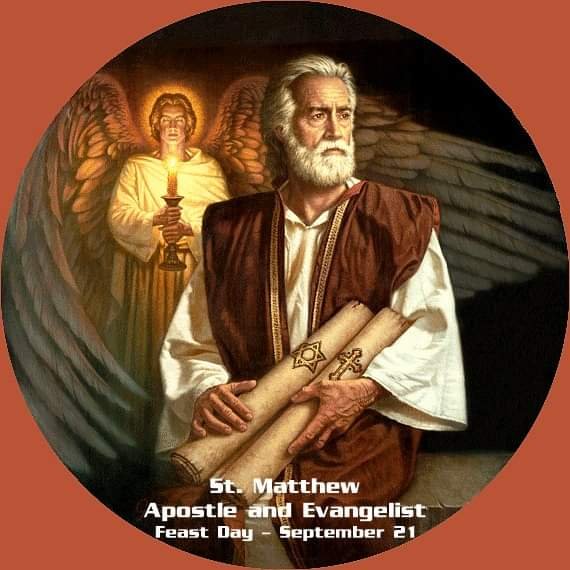
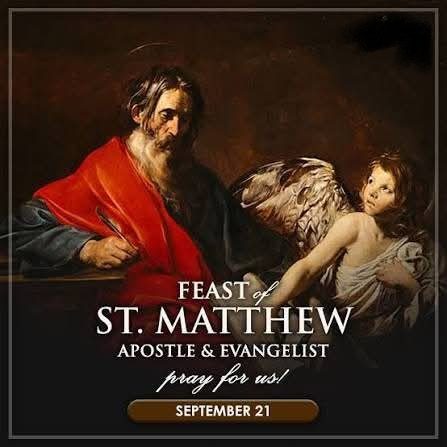
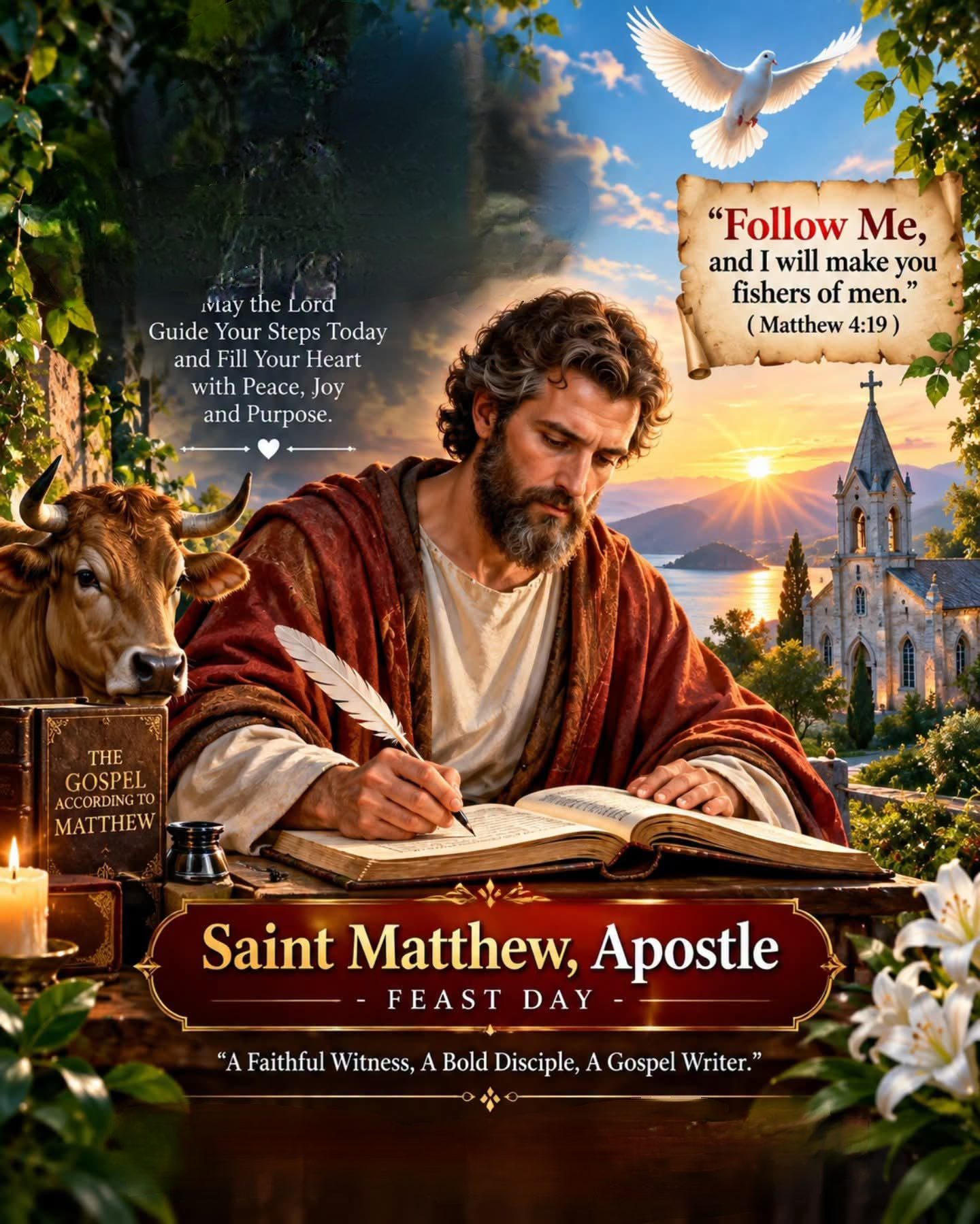
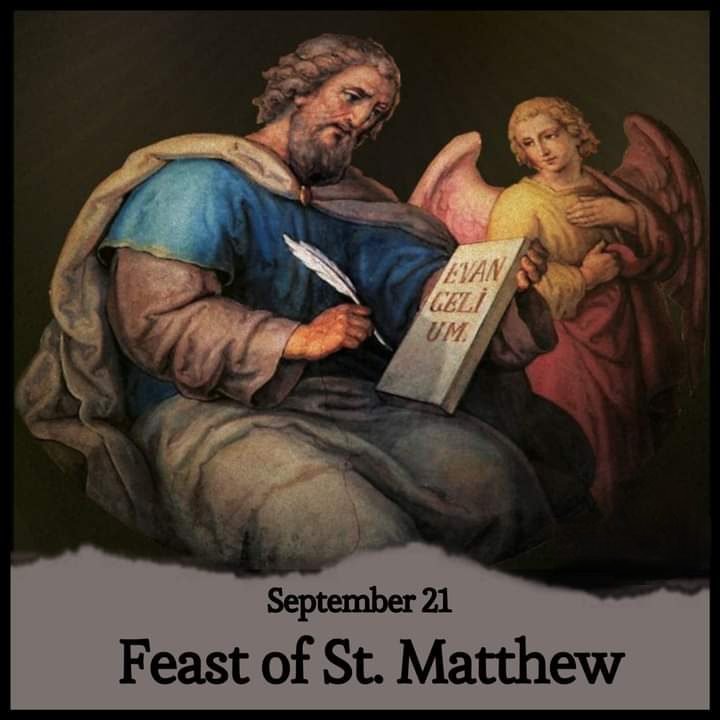
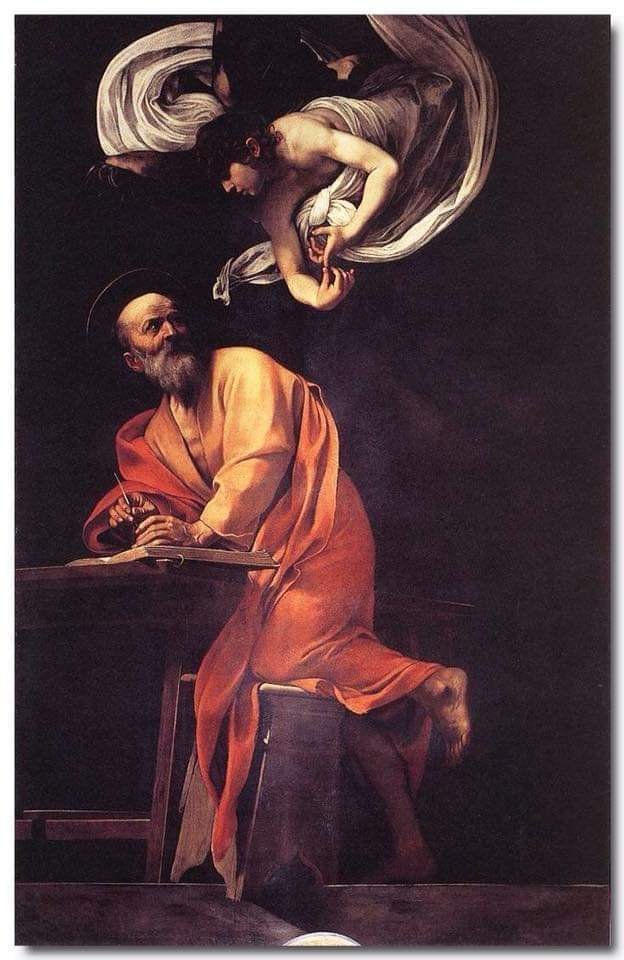
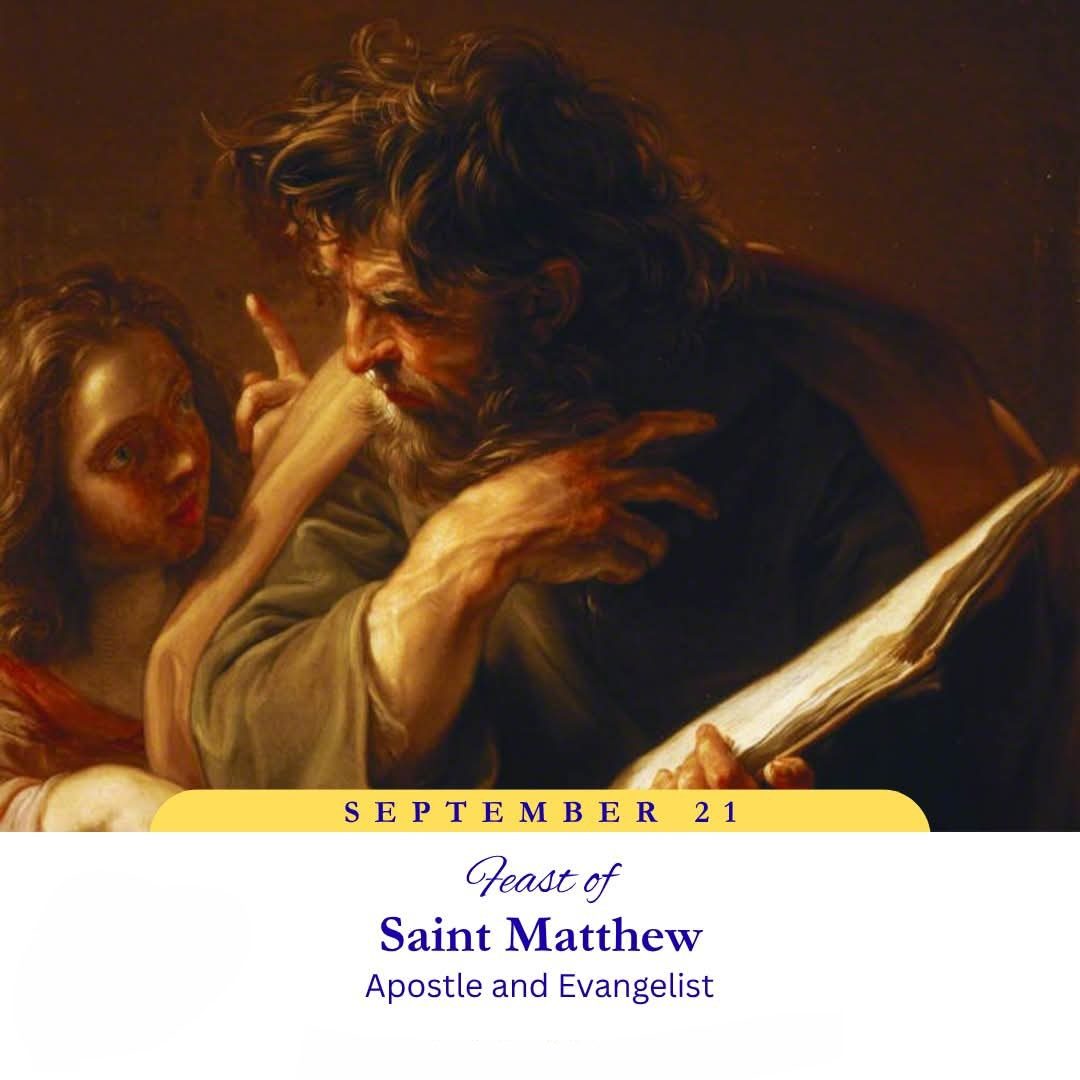
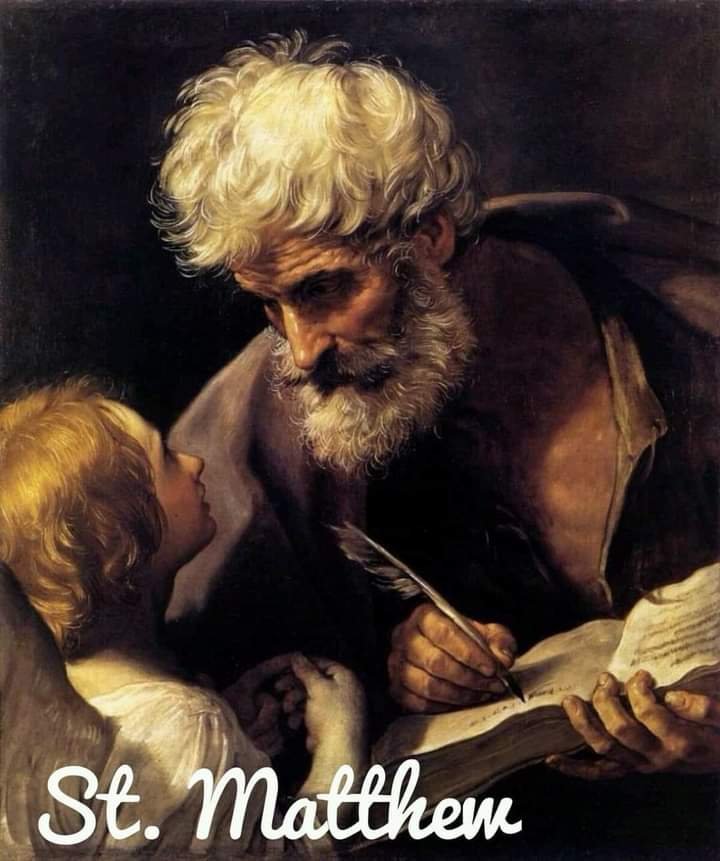
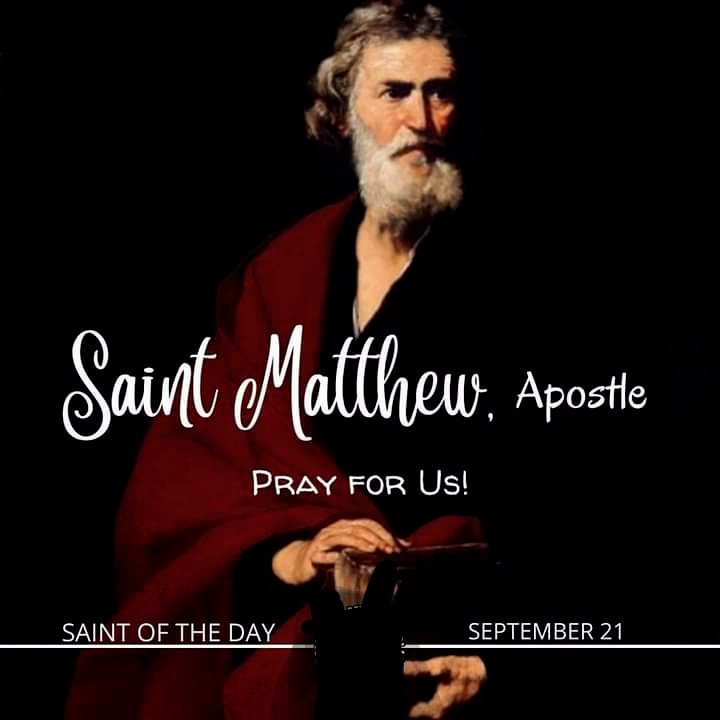
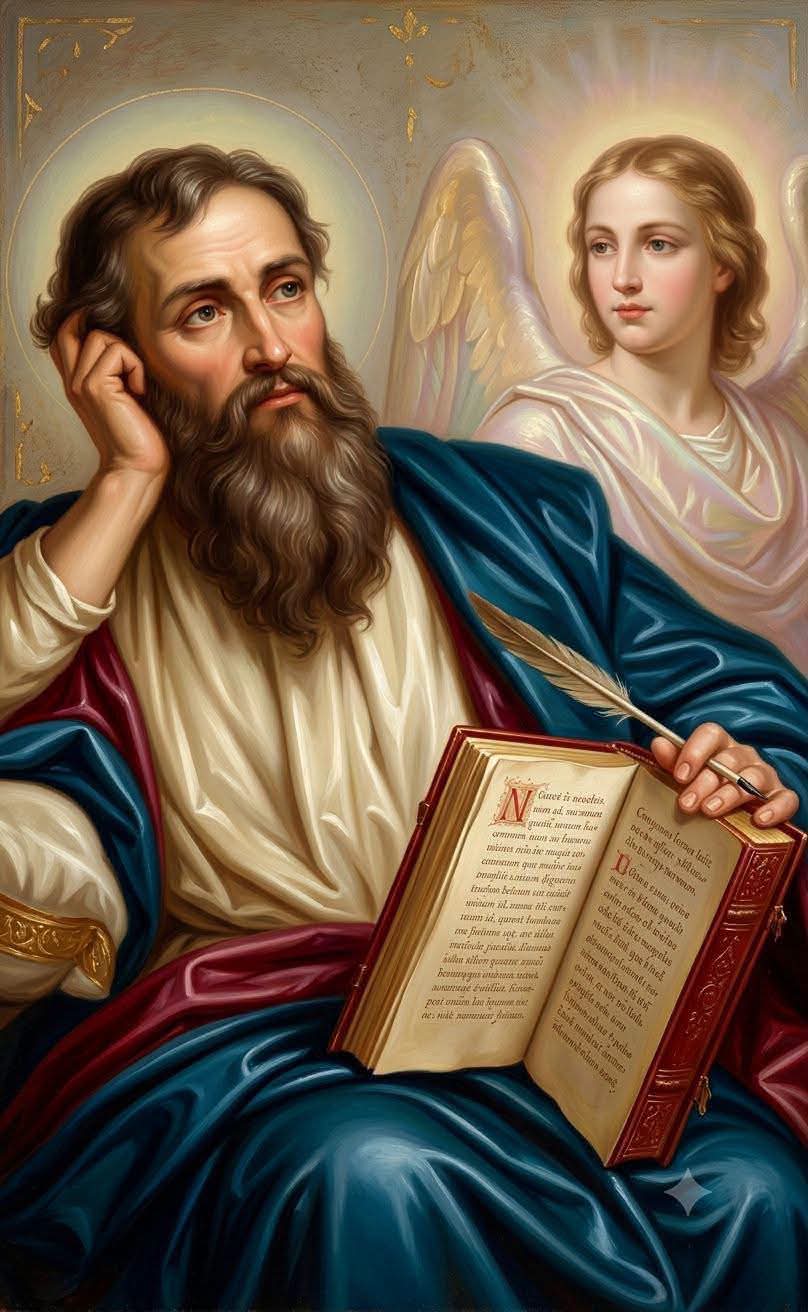
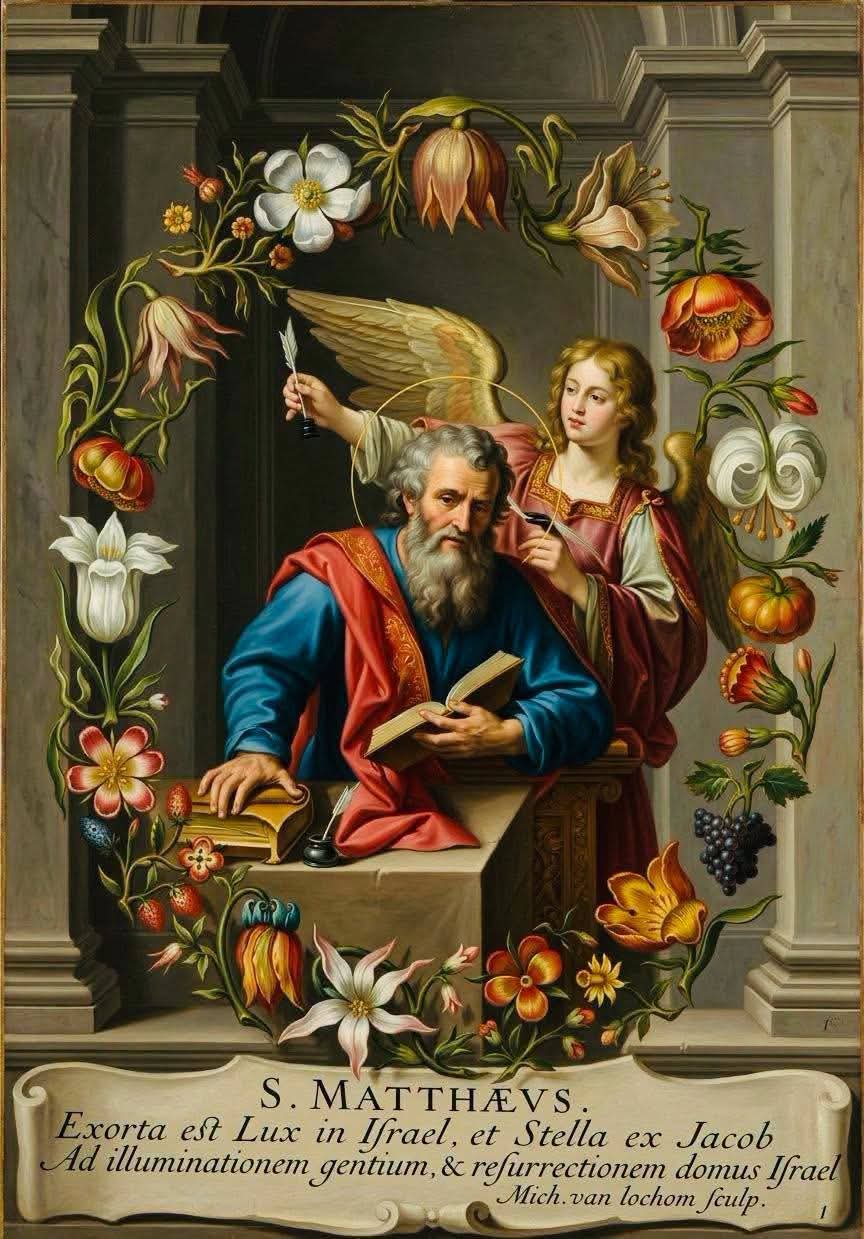
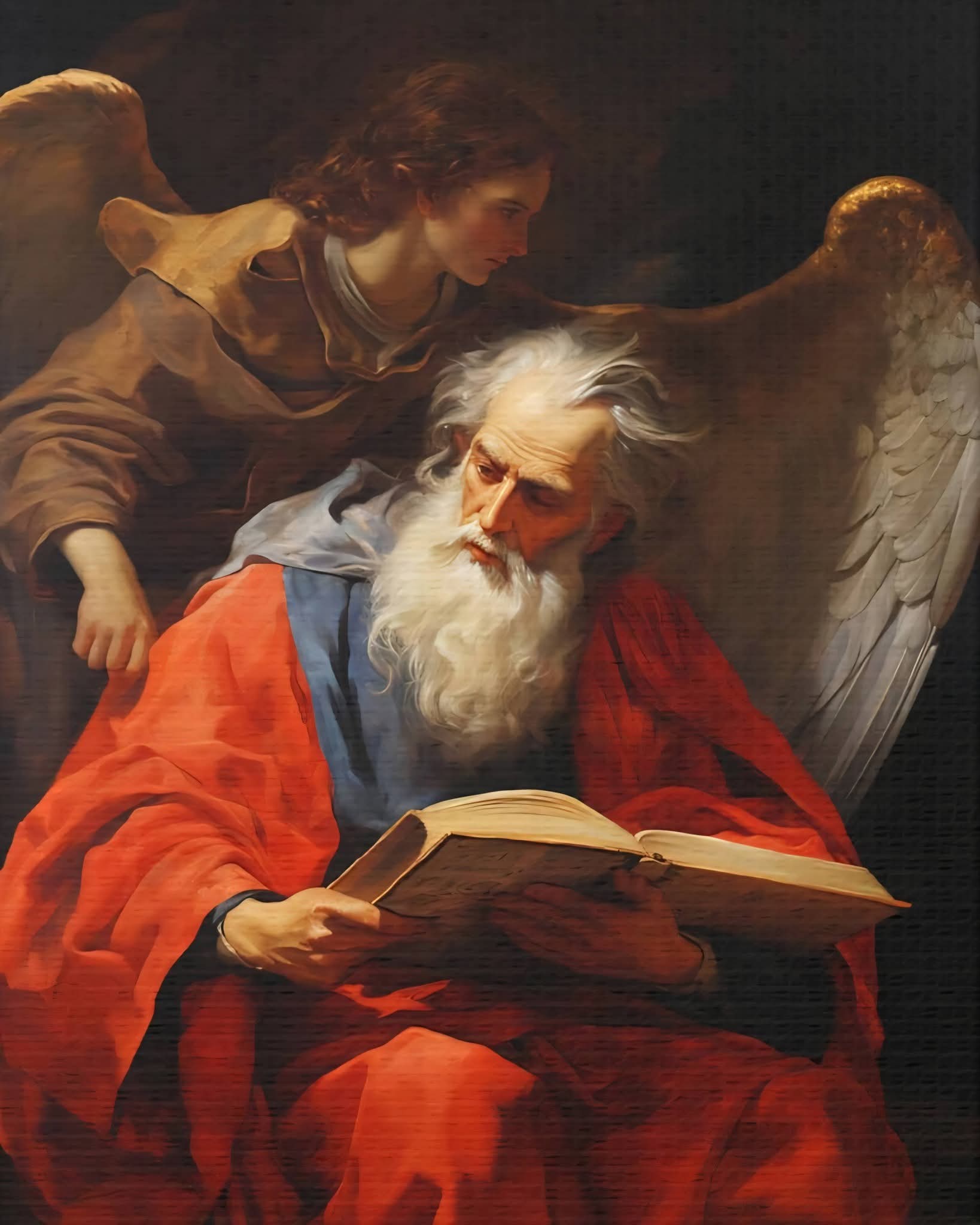
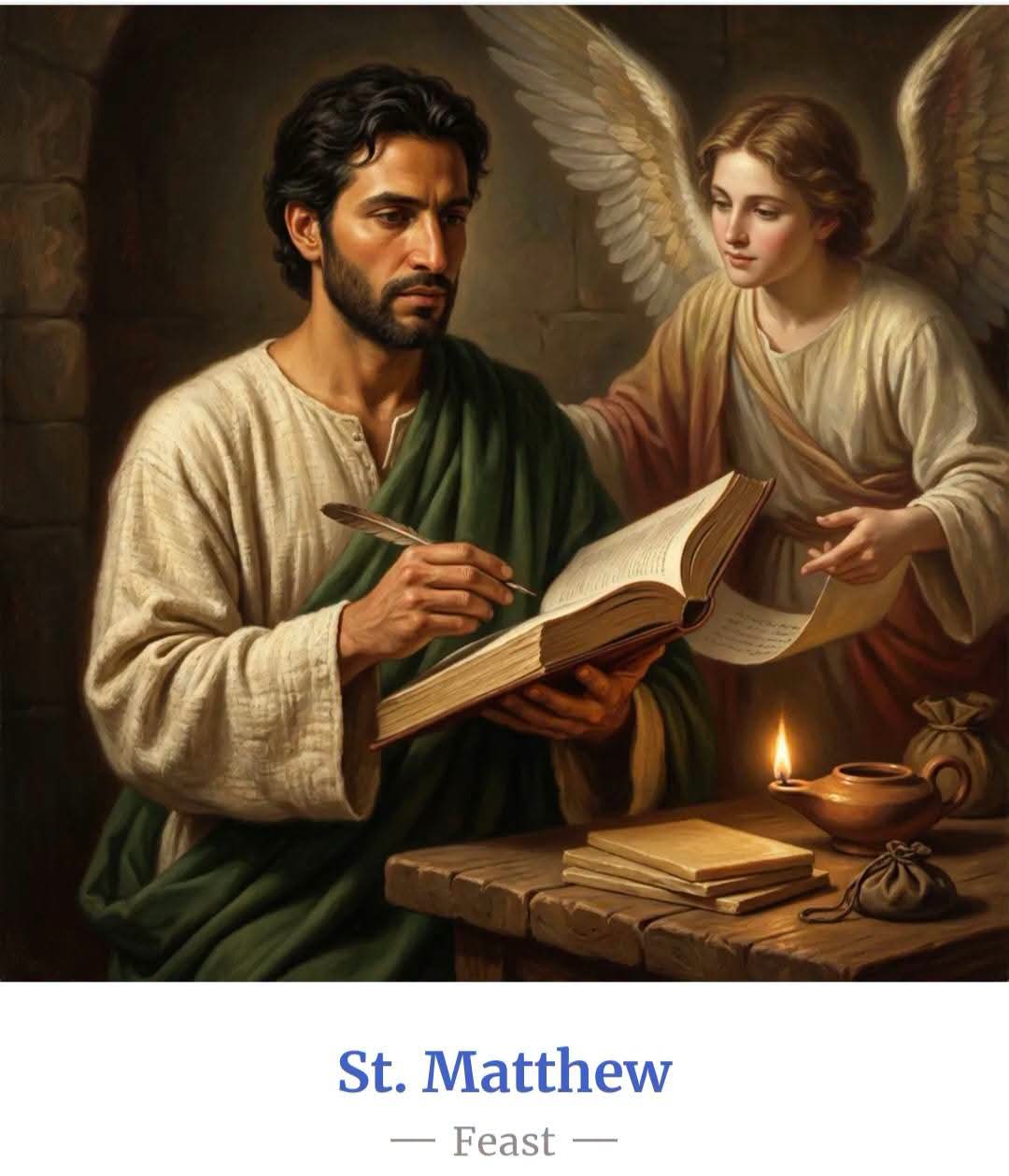
Because it begins with a genealogy, Matthew’s Gospel, but not Matthew himself, is in art represented by a man or by a man’s face. After his big moment in Capernaum, Matthew’s name consistently appears in the Gospels’ lists of Apostles, but little more is said about him, apart from a feast he hosts in honor of Jesus.
 That moment may come only once and never return. Sudden callings, and sudden conversions, are rare, but they do happen. And these callings are God’s plan for our lives.
A life is more likely to plot gradually up or down like a line on a graph than to take a sharp right angle in either direction. Matthew’s life angled sharply when his personal trajectory intersected with Christ’s.
The moment is captured in all of its drama by the painter Caravaggio in his Calling of Saint Matthew. A broad shaft of light beams through the room from above Christ’s head. His bony finger points to a well-dressed man at a table with his hands over a pile of coins.
The scene unfolds not in the street but in a darkened room. Light and darkness play. Sin and virtue tussle. Past, present, and future hang in the balance.
Christ seems to say, “Will you take and eat, will you go and sell, will you come and follow me?” Difficult, challenging questions. But Matthew gave the difficult, generous answer in response, and we remember him today due to that one moment.
CONTEMPLATING THE LIFE OF SAINT MATTHEW, APOSTLE, EVANGELIST – FROM TAX BOOTH TO GOSPEL THRONE
THE TAX COLLECTOR’S TABLE
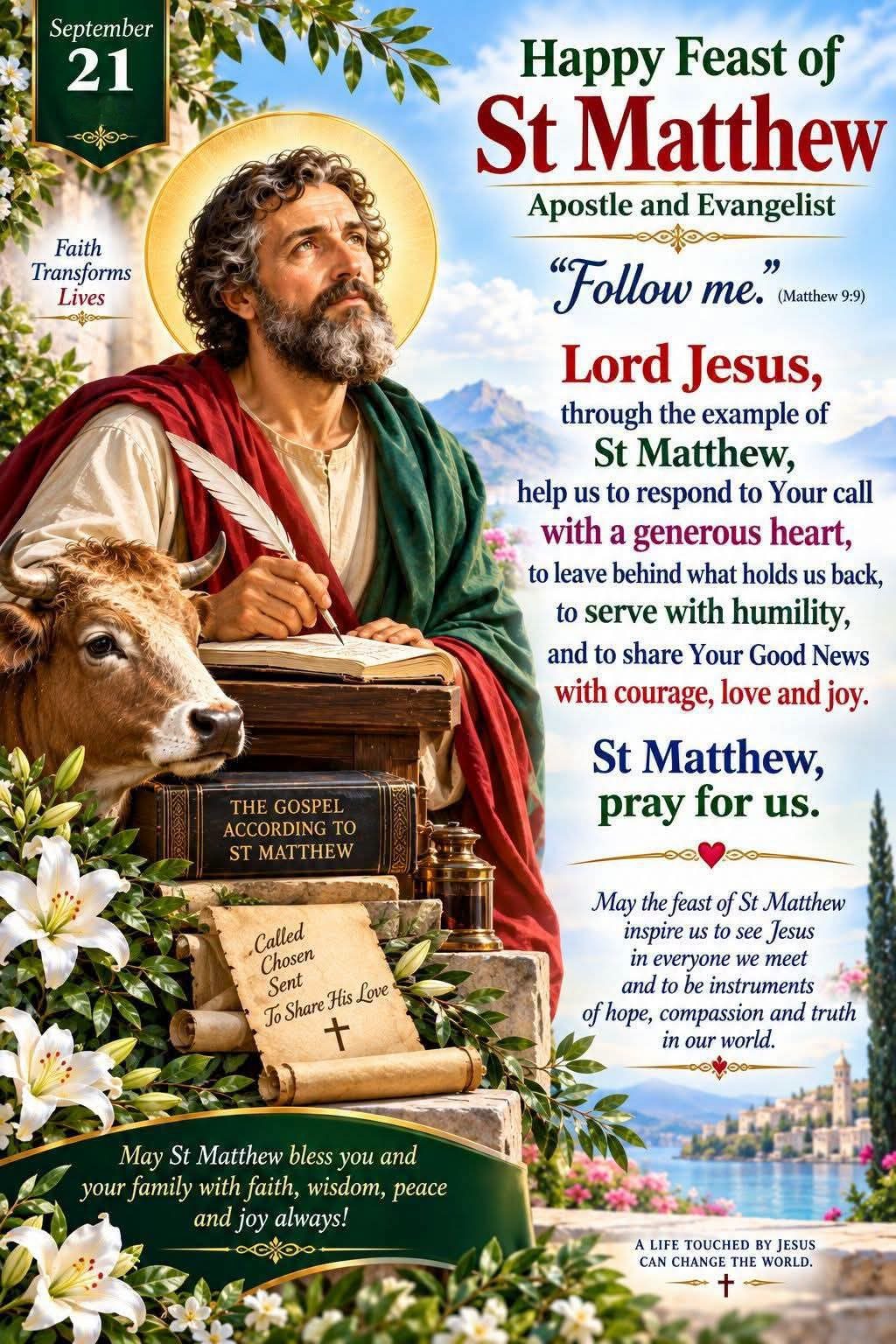
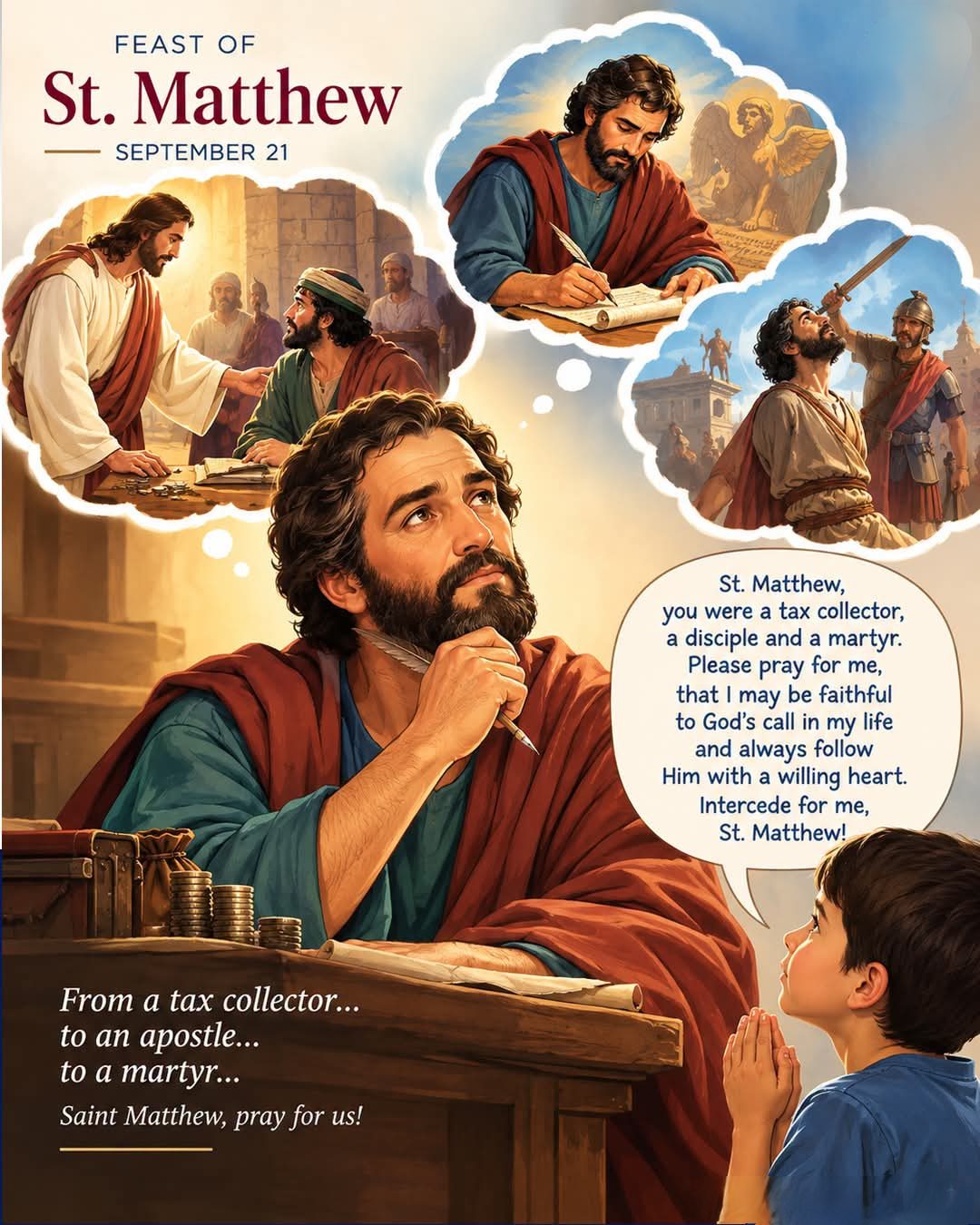
Matthew, also called Levi, was a tax collector in Capernaum. Though financially successful, he was despised by his fellow Jews because of his association with the Romans and the reputation of tax collectors for dishonesty. Yet Jesus saw beyond his past and called him with the simple words, “Follow me.” Matthew immediately left his tax booth and followed Christ.
A BANQUET OF MERCY
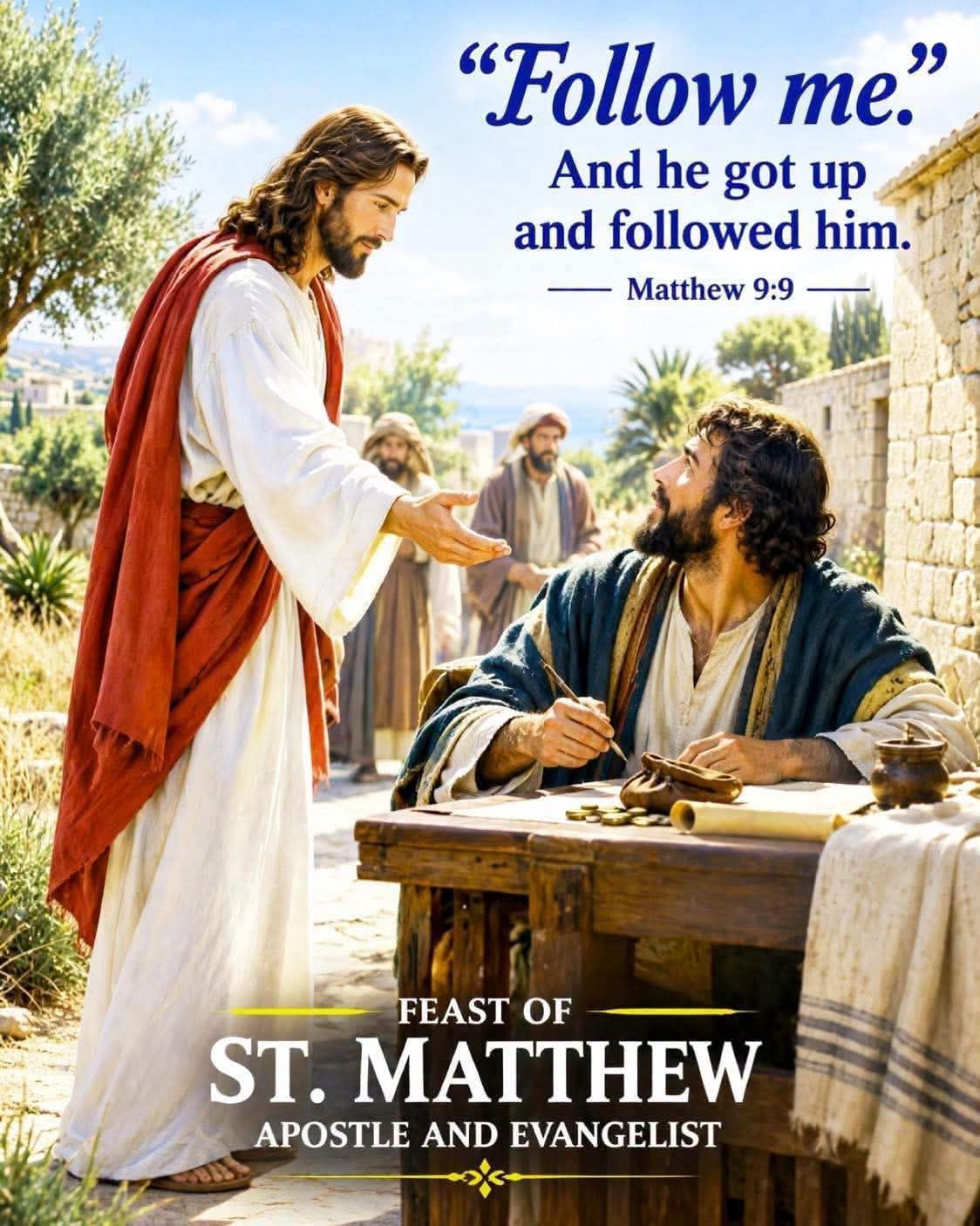
After answering Jesus’ call, Matthew welcomed Him into his home and invited fellow tax collectors and sinners to the meal. When the Pharisees questioned Jesus for eating with such people, He replied, “Those who are well have no need of a physician, but those who are sick.” Matthew discovered that Christ’s mission was one of mercy, healing and salvation.
FROM APOSTLE TO EVANGELIST
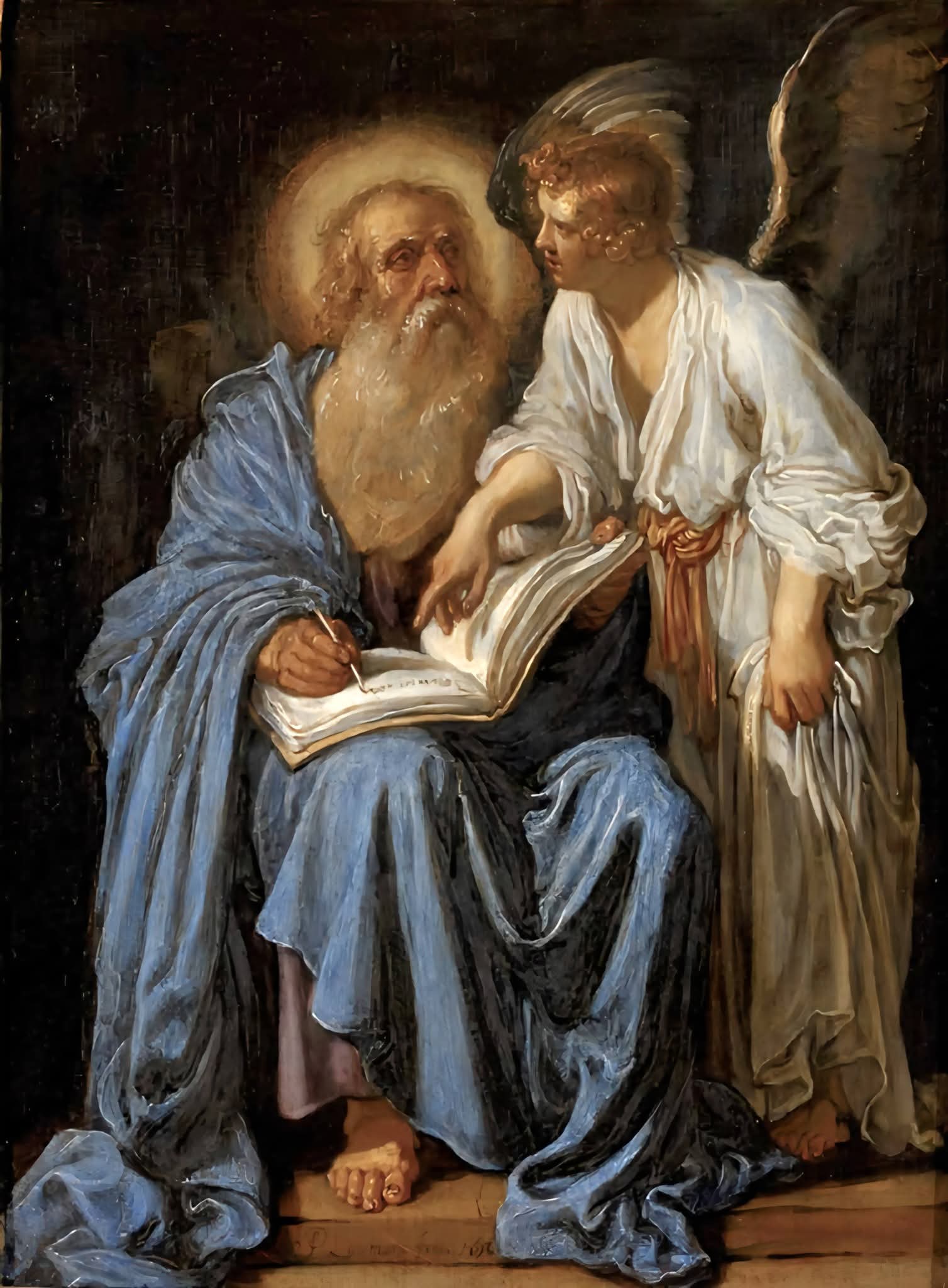
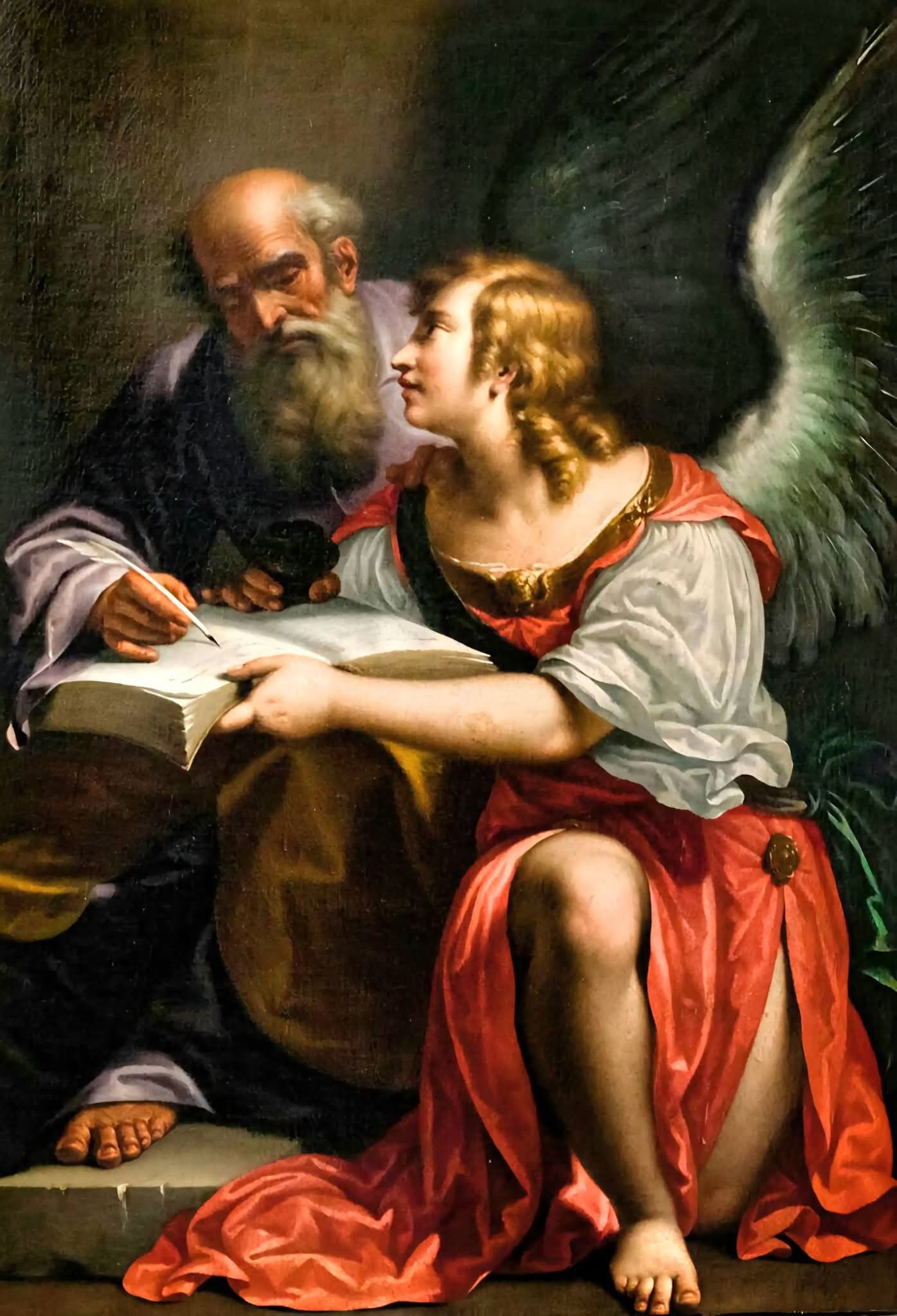
Matthew became a faithful apostle and witness to Christ’s ministry, death and Resurrection. After the Ascension, he remained with the apostles in prayer. The man who had once carefully recorded taxes now recorded the words and deeds of Jesus, proclaiming Him as the promised Messiah and the fulfilment of the Law and the Prophets.
THE MISSIONARY APOSTLE
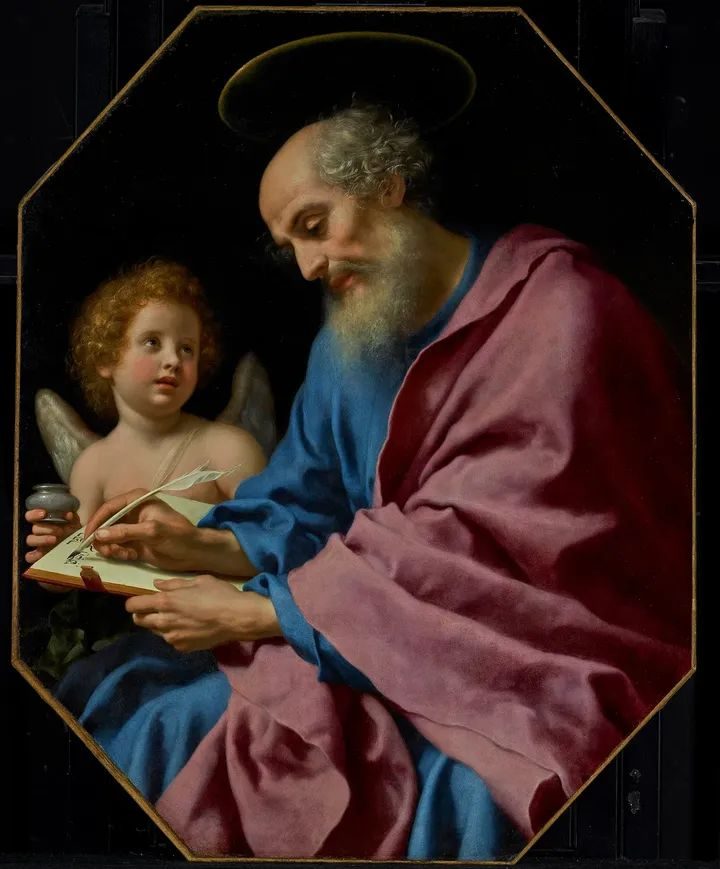
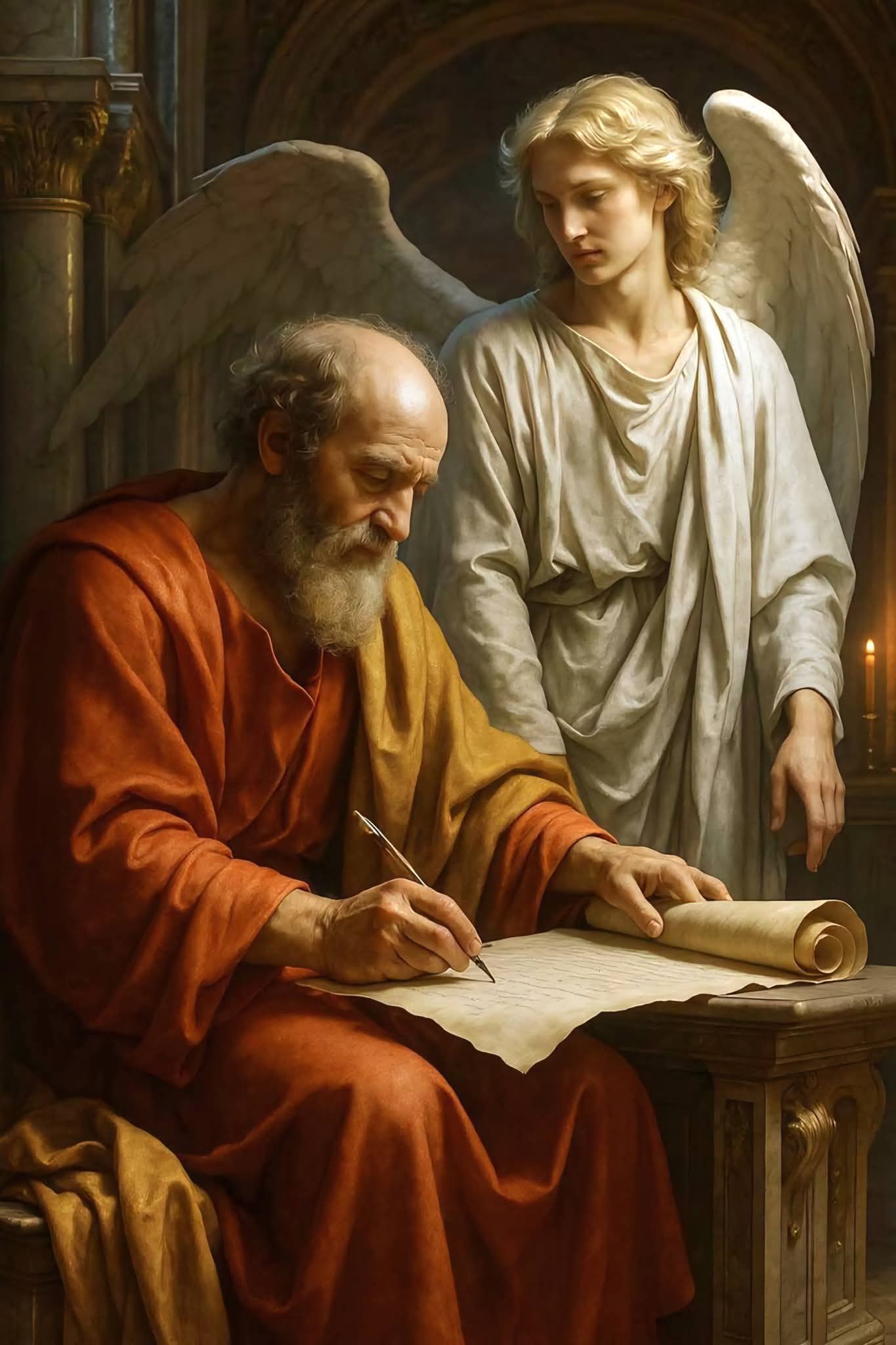 According to ancient Christian tradition, Matthew preached the Gospel beyond Judea, with traditions associating his mission with Parthia, Persia and Ethiopia. Tradition also recounts that he opposed the unjust desires of King Hirtacus and was eventually martyred while celebrating the Holy Eucharist. His relics are venerated in Salerno, Italy.
THE EVANGELIST’S SYMBOL
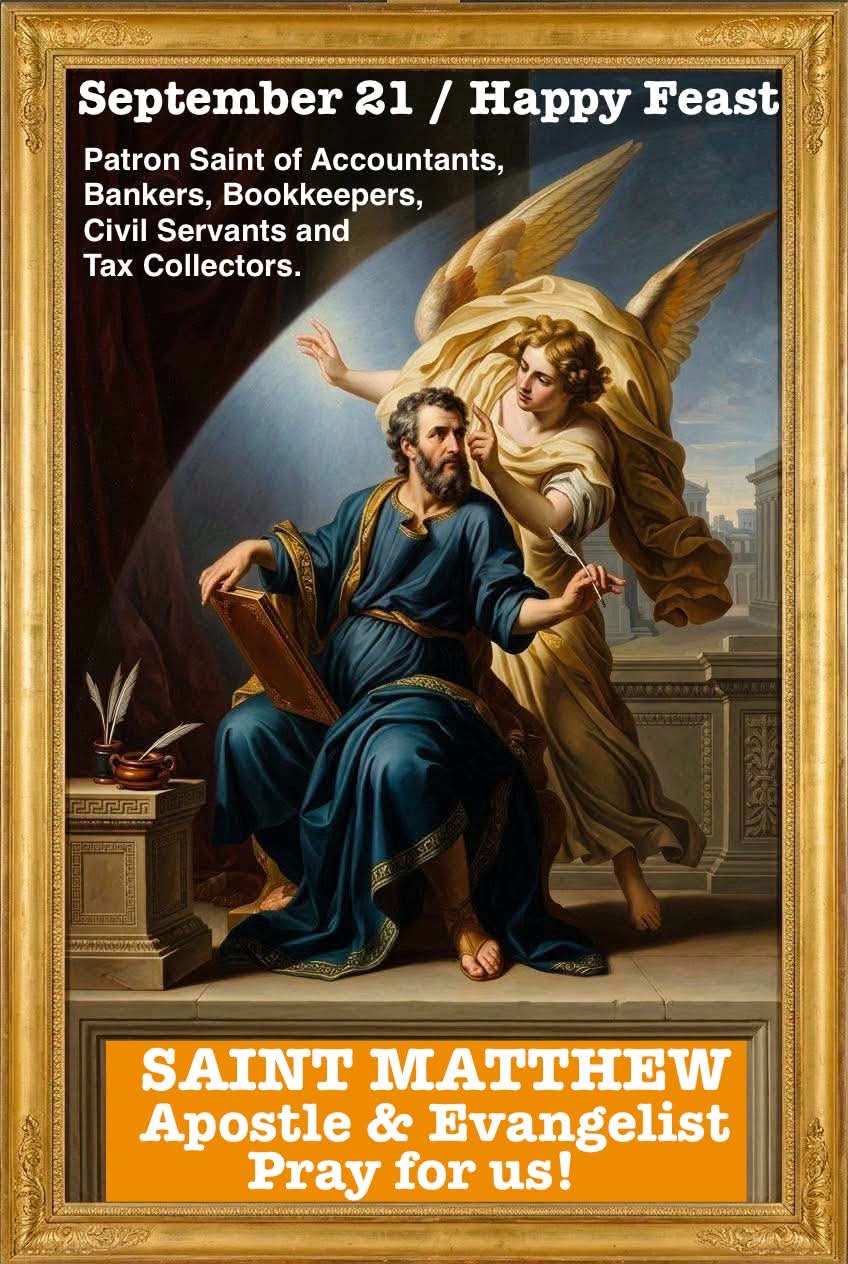
Matthew is traditionally represented by a winged man or angel because his Gospel begins with the human genealogy of Jesus. His writing particularly emphasizes Christ as the Son of David and Son of Abraham, revealing the mystery of God who became man for our salvation.
THE LEGACY
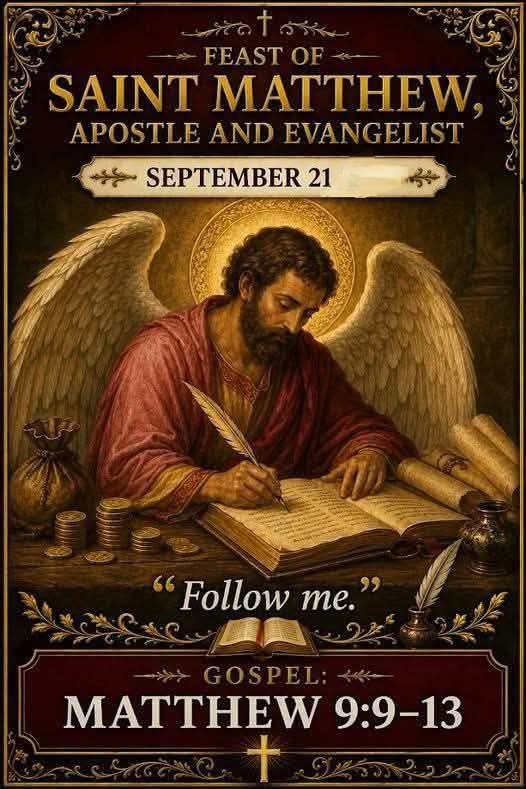
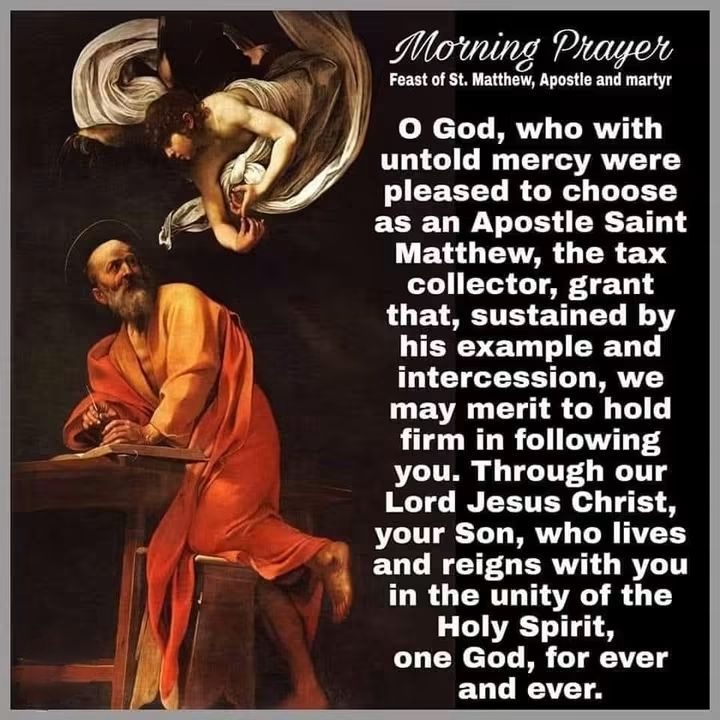
Matthew’s life is a powerful testimony to the transforming mercy of Christ. The despised tax collector became an apostle, missionary and evangelist whose Gospel continues to proclaim the Kingdom of God. His journey reminds us that no sinful past is beyond the reach of Christ’s mercy when a person responds generously to His call.
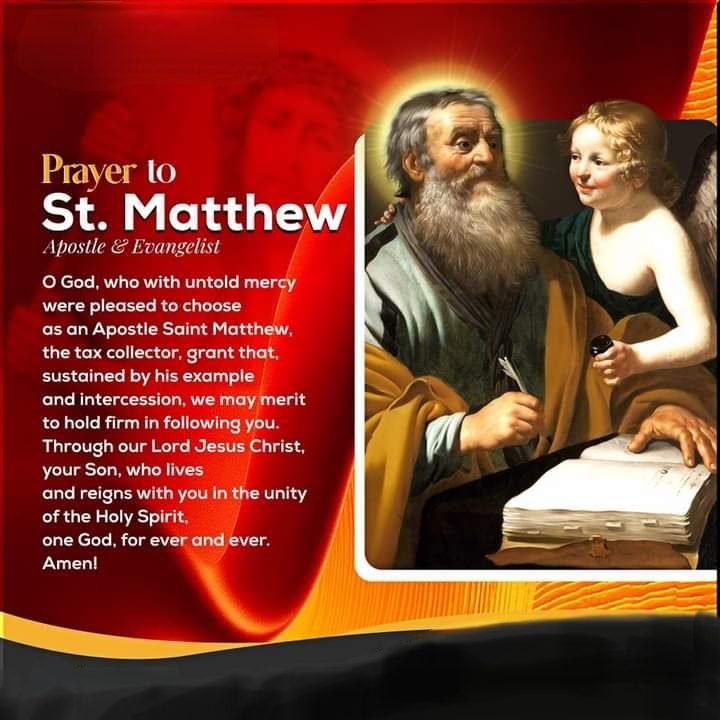
PRAYER
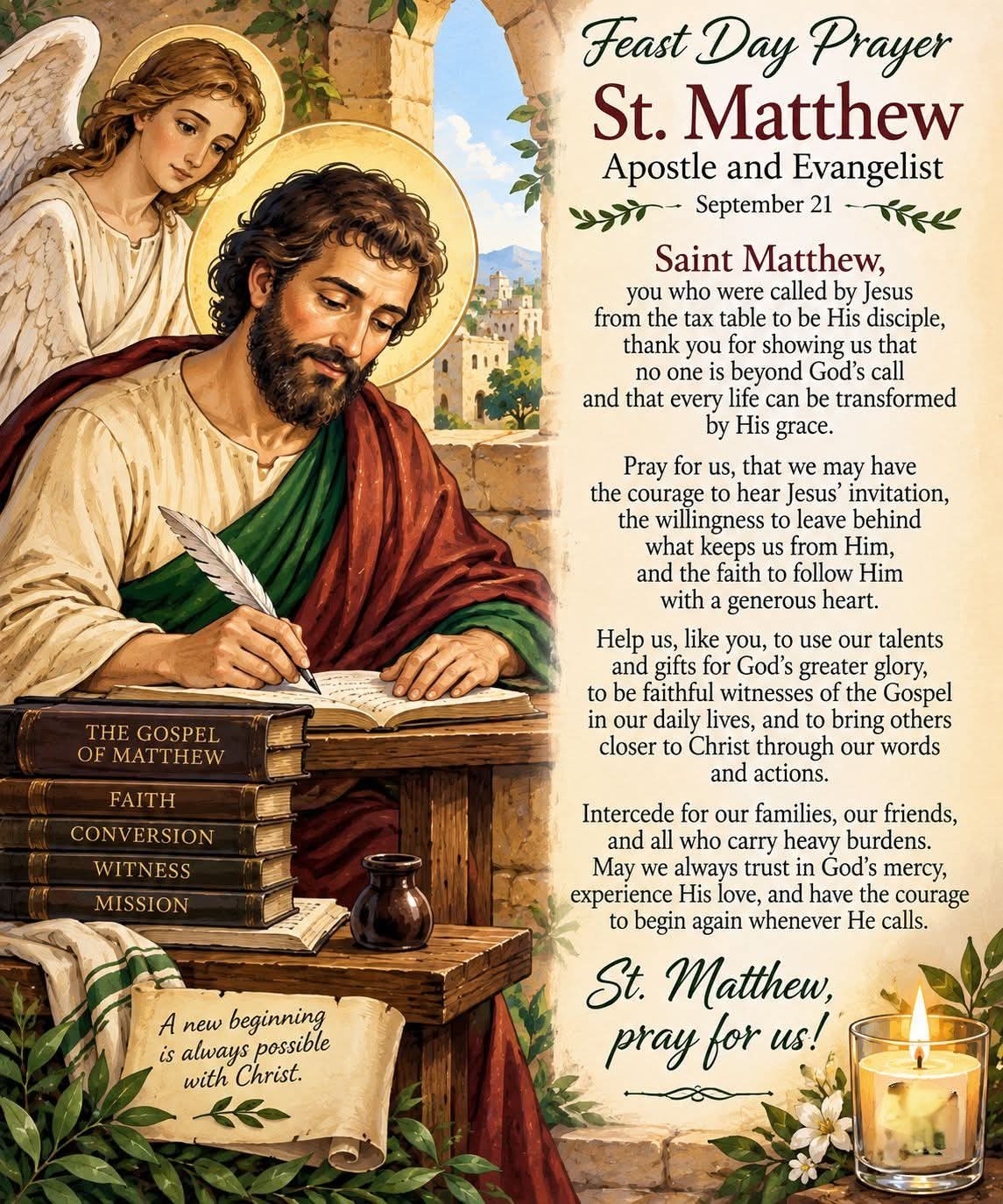
Saint Matthew, you made the right decision at the right time and so changed your life and those of millions of others who know Christ because of you.
Help us to recognize when a pivot point arrives in our own life, when we must change direction, and help us to choose that direction well. Amen
(Source: mycatholiclife.org)