
TODAY’S GOSPEL READING – 10 NOVEMBER
November 10, 2026
Matthew 6:11
November 11, 2026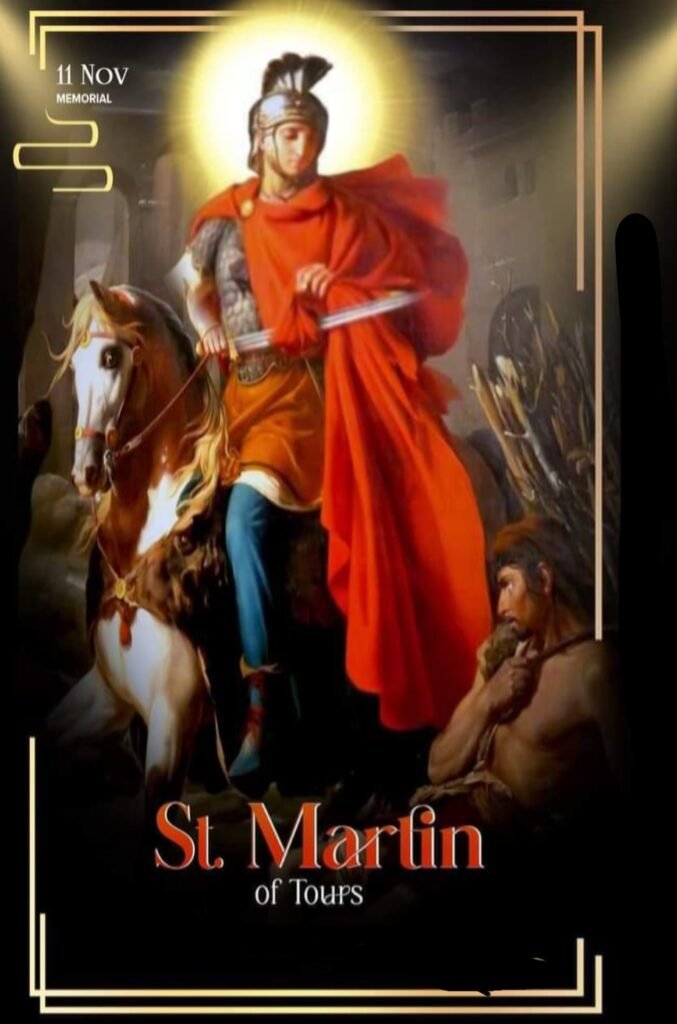
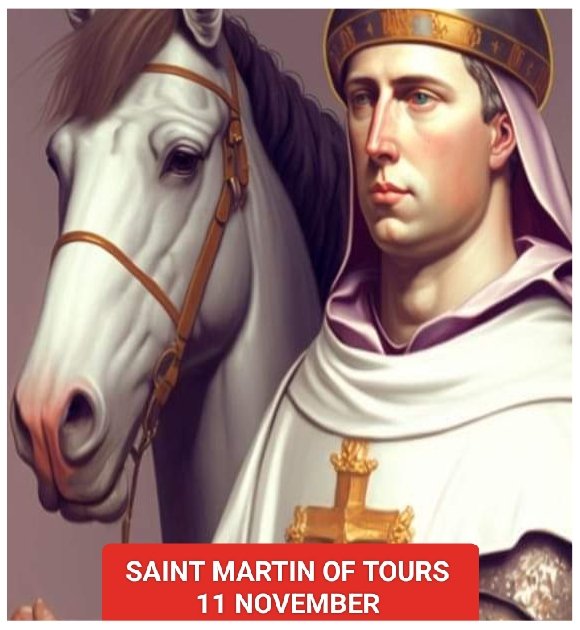
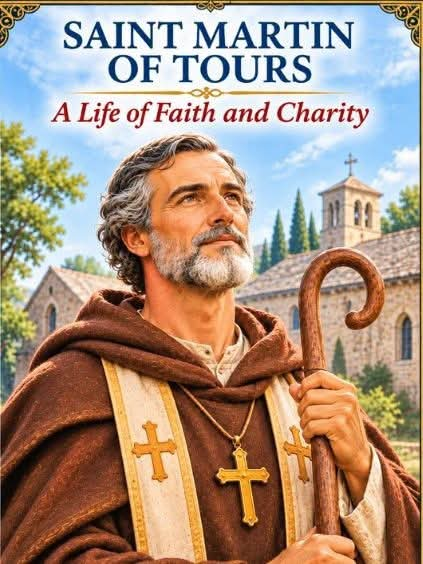
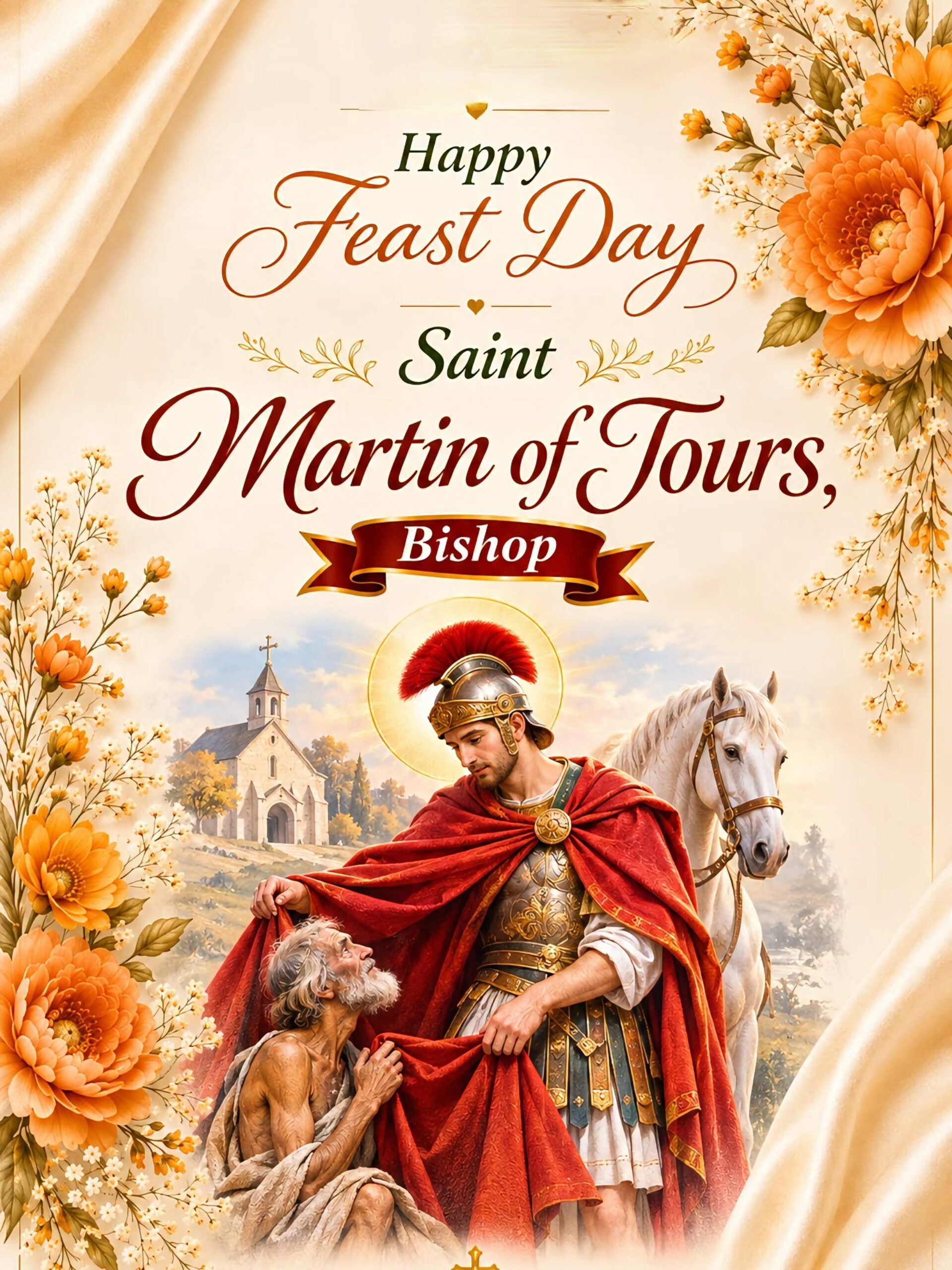
FEAST OF SAINT MARTIN OF TOURS
FEAST DAY – 11th NOVEMBER
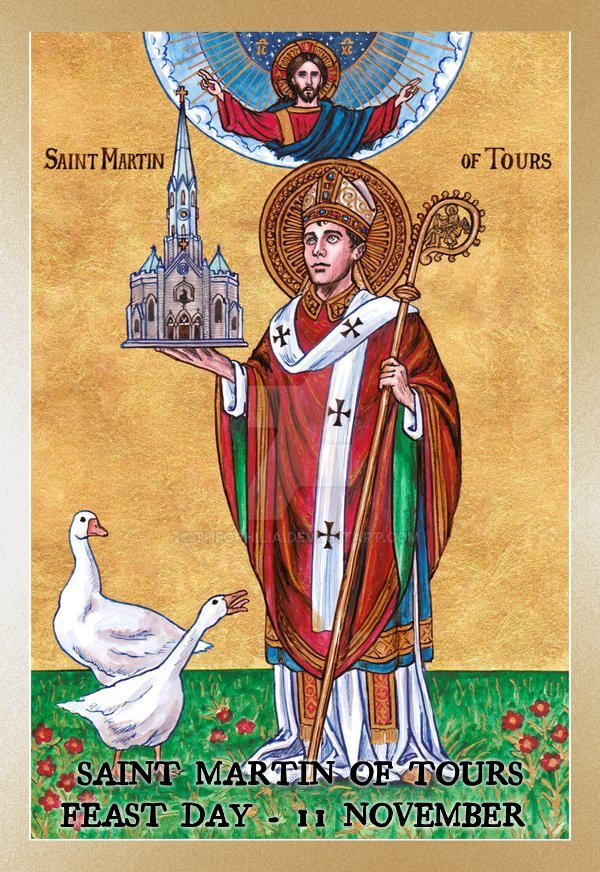
Saint Martin of Tours was born in Savaria, Pannonia in around 316 AD in a region which is today called Hungary. Martin grew up in Ticinum, in Northern Italy, where his father was assigned the post of a Tribune. Just before Martin was born, Christianity was legalized in the Roman Empire and though it was not the official religion of the State, it could be practiced openly without persecution.
It was during this period that Martin, though he had pagan parents, responded to the call of the Gospel, becoming a Christian at age 10.
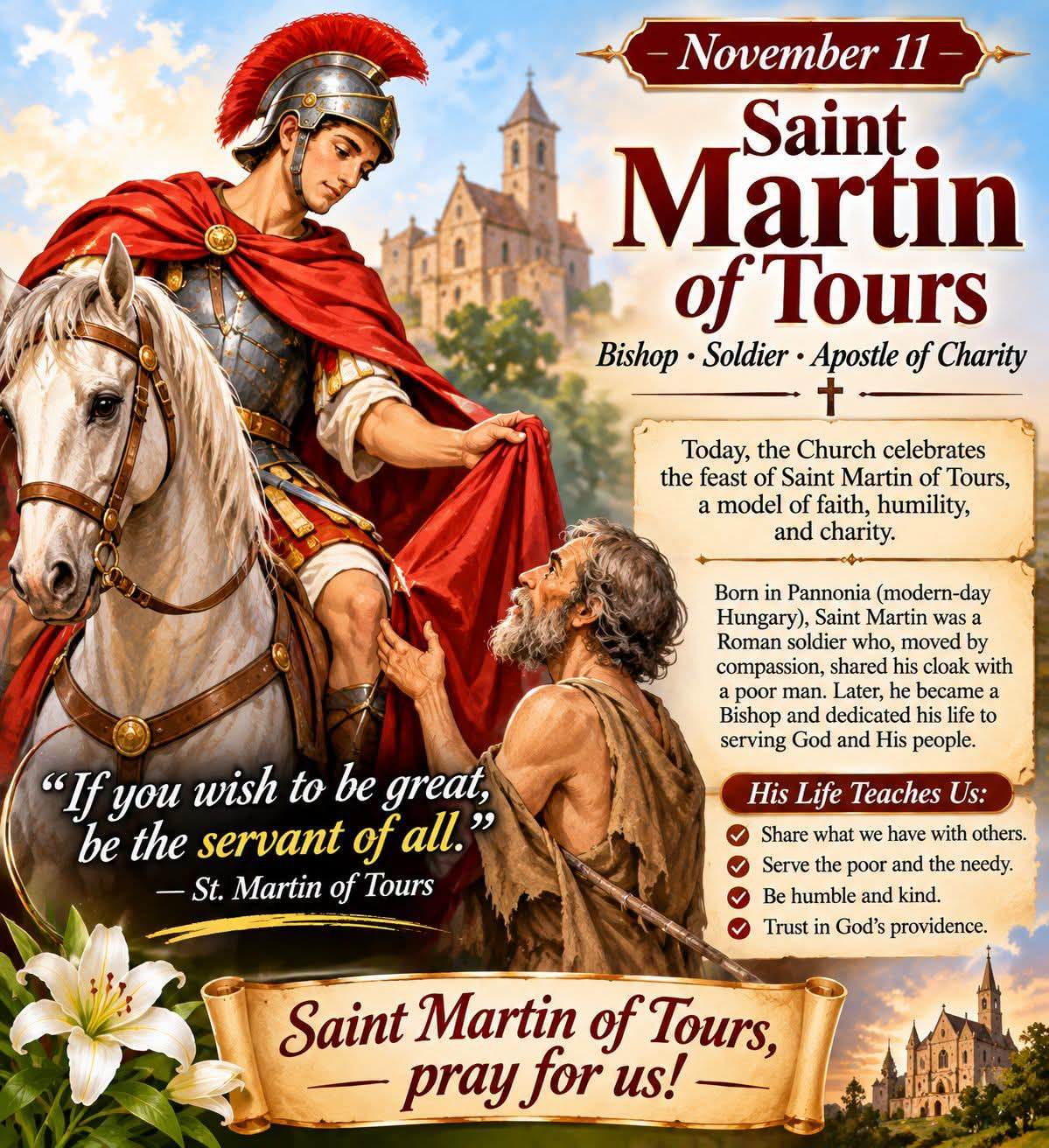
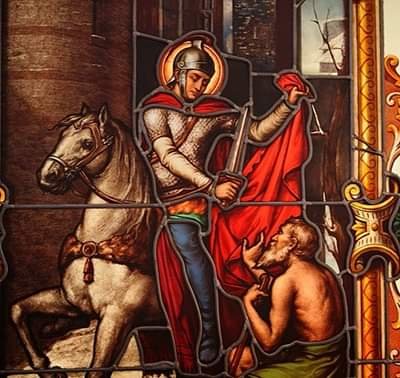
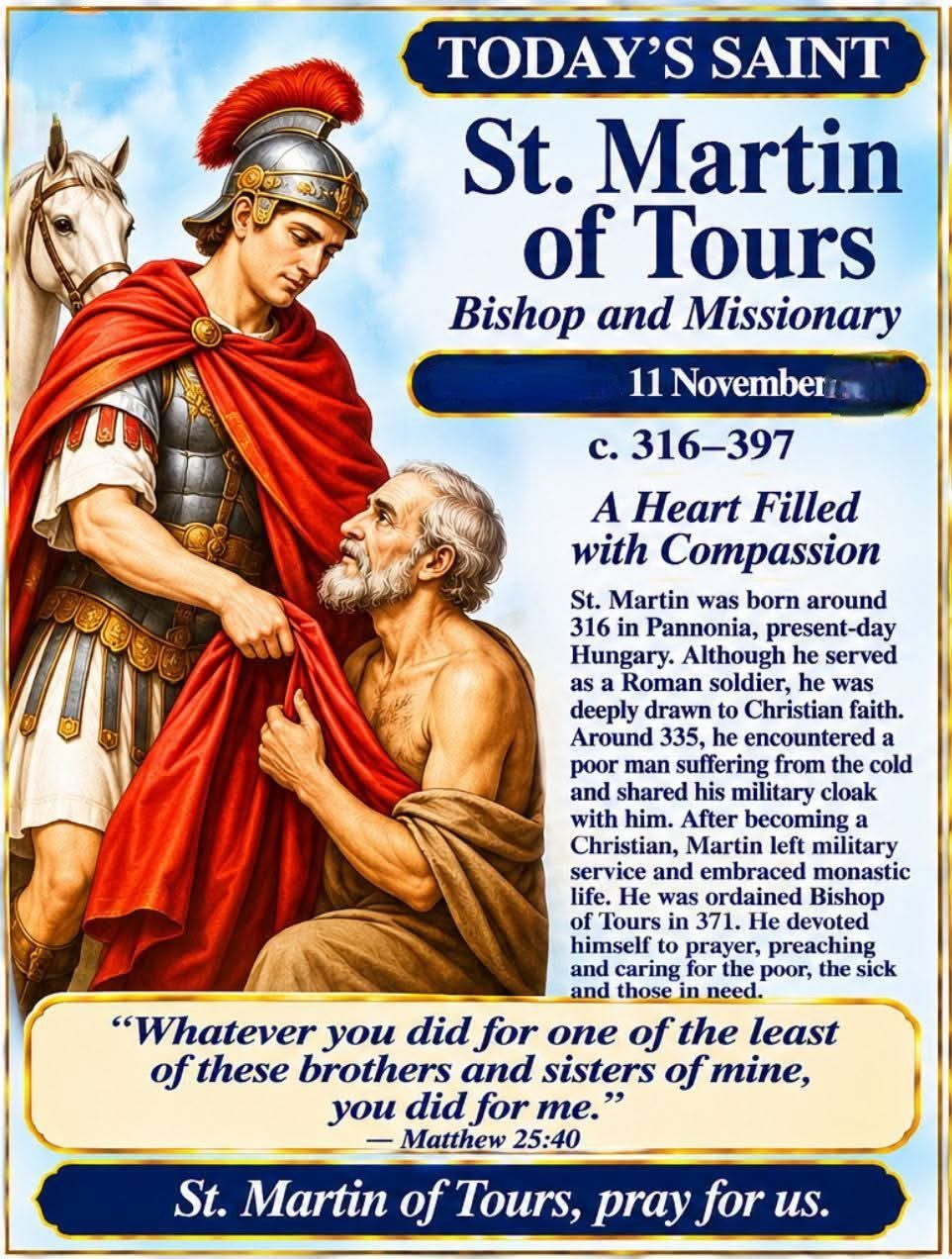
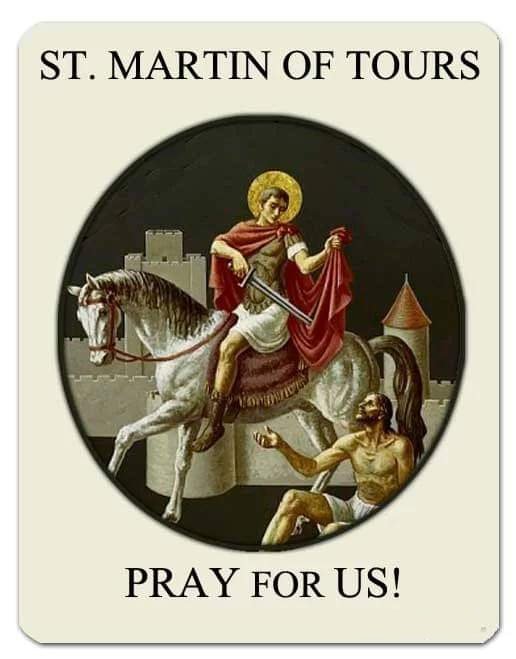
At fifteen, Martin was required to follow his father into the cavalry corps of the Roman military. As a young soldier, Martin encountered a beggar in Amiens, who had no clothes to keep him warm, in the very cold weather.
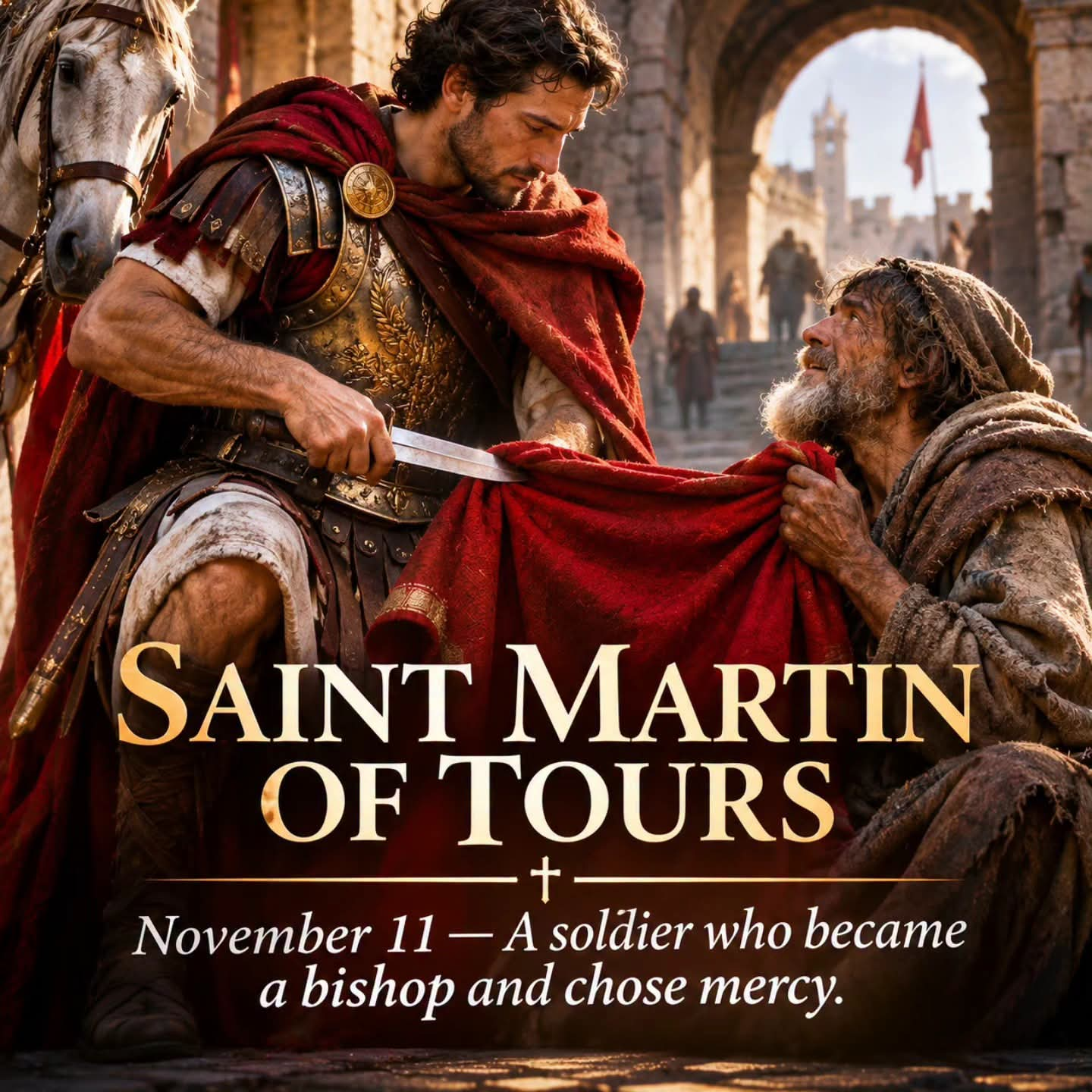
Martin cut his cloak in half with his sword, giving half to the destitute and using the other half for himself. It is said that he kept half of the cloak for himself, because he had already parted with other garments as a deed of charity and the cloak was all that he had left. There were some onlookers who mocked him for being dressed in only half of his cloak, while others felt shame as they had ample clothes which they could have parted with, but didn’t.
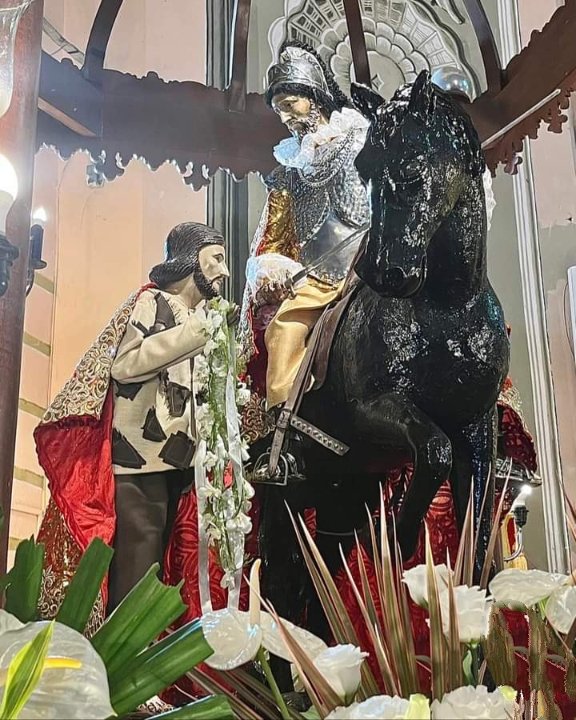
On that very night, Martin had a vision in which Christ appeared to him, and said, “Martin, a mere catechumen has clothed me with his robe.” This was so true, as Jesus, when on earth, had said, ‘Whatever you do to one of the least of these, that you do unto me’. Martin was exemplary, and through this small act, he portrayed the importance of dignity and equality, by treating the beggar as an equal, sharing his cloak with him.
During the Middle Ages, the supposed relic of St. Martin’s miraculous cloak, (cappa Sancti Martini) was carried by the king even into battle, and used as a holy relic upon which oaths were sworn. Martin was deeply dedicated to the long process of instruction in the Christian faith. After his discharge from military service in 356, Martin became a disciple of St. Hilary of Poitiers. In 360–61, he founded a monastery at Ligugé, which was the first established monastery in Gaul. Martin was made Bishop of Tours in 372 and died on a pastoral visit to Candes on November 8, 397.
He was buried in Tours, on November 11, and his tomb is a major place of pilgrimage. St. Martin’s Day (Martinstag) is a religious observance on November 11th, in Germany, that is particularly popular with children, dedicated to St. Martin of Tours celebrating modesty and altruism – both values commonly associated with the Saint. November 10 was usually the end of the working year for peasants from northern Italy. Their landlord and employer either renewed the deal for the year to come, or he they were left homeless and without work and had to go and find another landlord somewhere else. Today people who rent a flat/house are supposed to change it on that day like their ancestors did.
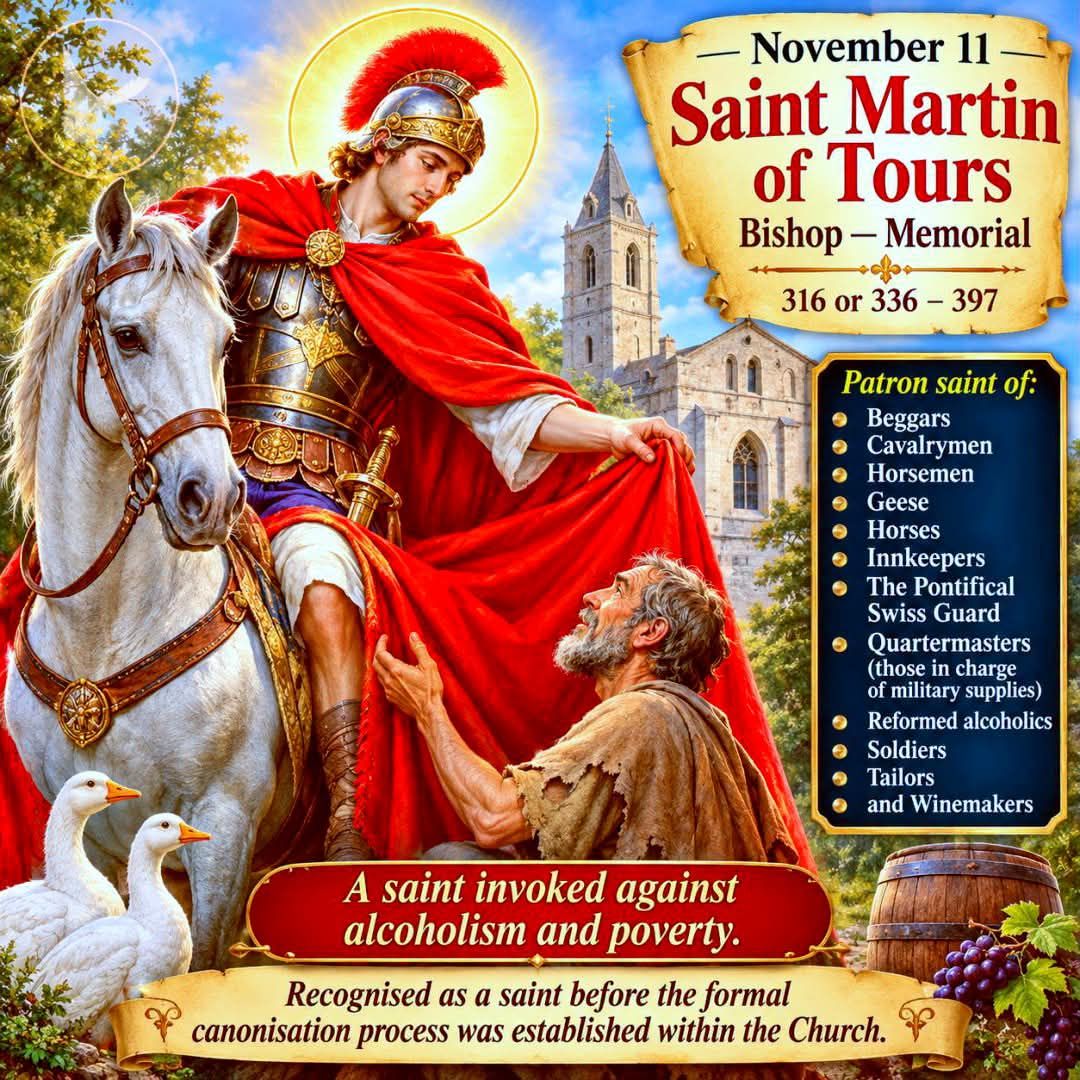
Martin is the first non-martyr to be venerated as a saint. He is maybe the only saint whose day has a specific name in English: Martinmas. Martin is heralded as the patron of the Third Republic, and also against poverty, alcoholism and is patron saint of many communities and organizations across Europe.
ST. MARTIN OF TOURS – APOSTLE OF GAUL AND FATHER OF RURAL CHRISTIANITY
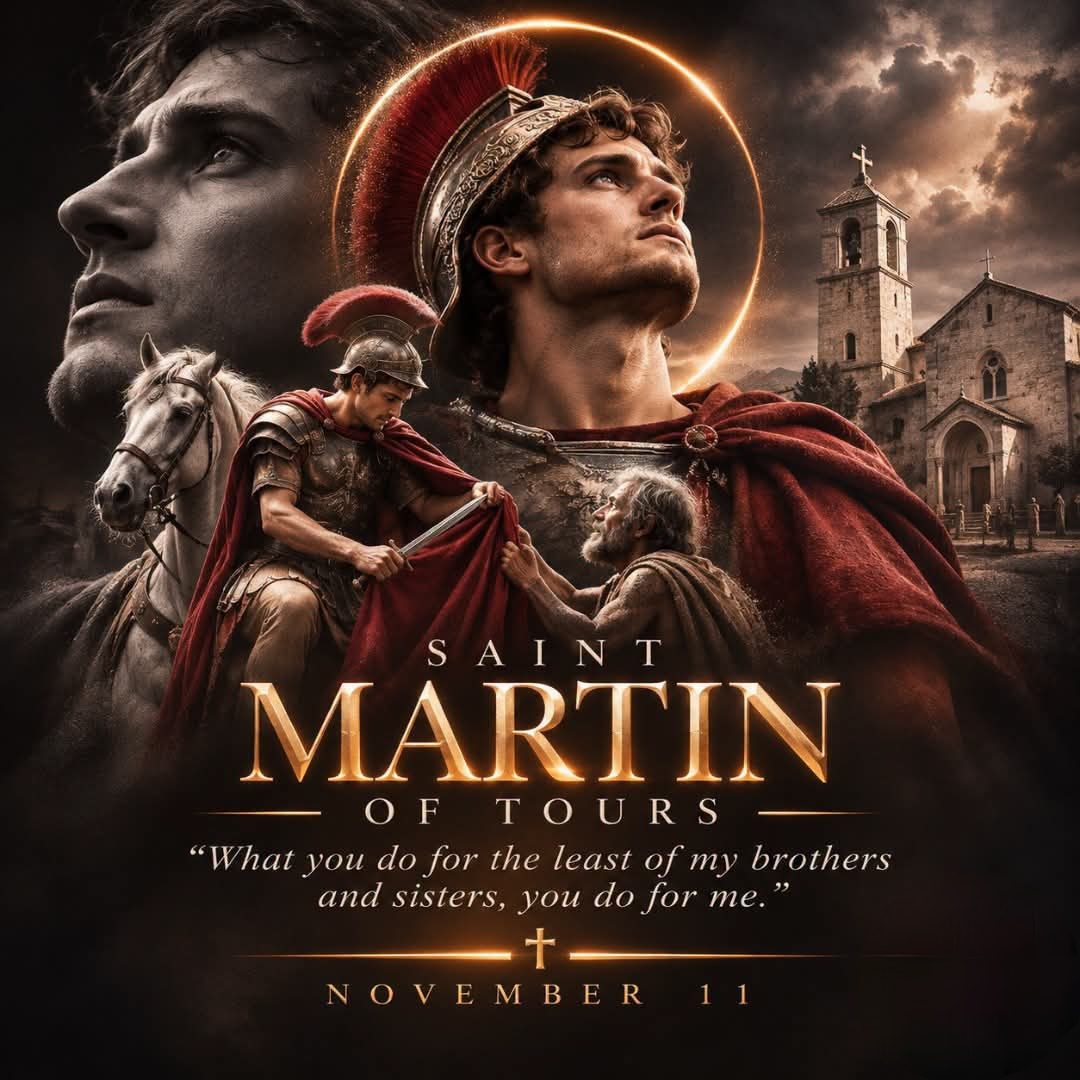
THE SOLDIER WHO DISCOVERED CHRIST
On a freezing night in Amiens, a young Roman cavalry officer named Martin encountered a shivering beggar at the city gate. Moved with compassion, he took his sword and cut his military cloak in half, giving one portion to the poor man.
That night, Martin dreamt of Christ wearing the very piece of cloak he had given away. Jesus revealed that Martin had clothed Him through his act of charity.
Deeply touched, Martin soon received Baptism and began his journey towards a life devoted entirely to Christ.
A HEART THAT CHOSE CHRIST OVER WAR
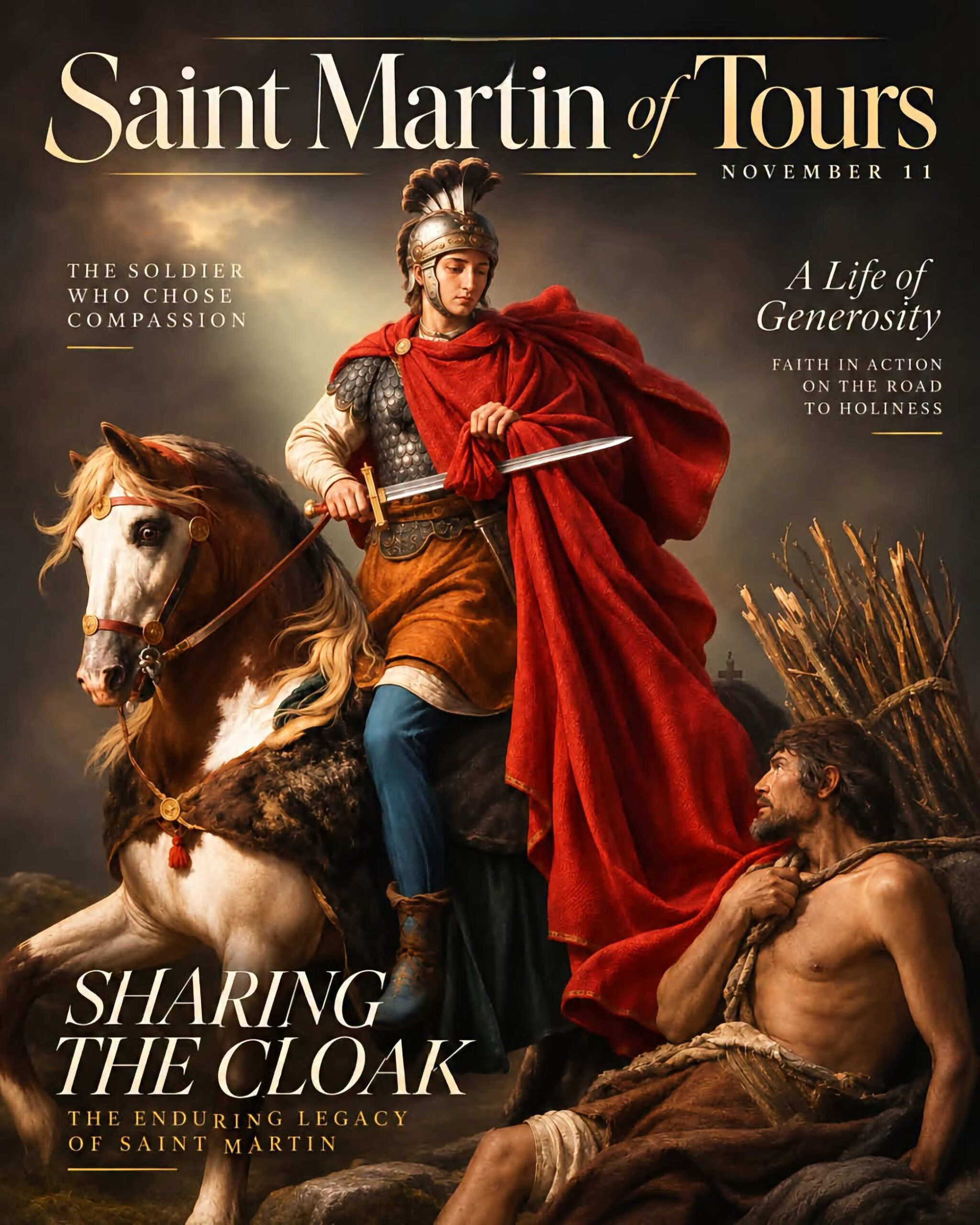
Martin was born in 316 in Savaria, in present-day Hungary, to pagan parents. His father was a senior officer in the Roman army, and Martin followed him into military service at a young age.
However, his growing Christian faith changed his outlook on life. When he refused to fight during a military campaign, declaring that he was a soldier of Christ, he was eventually released from service.
He travelled to Gaul, where he became a disciple of Saint Hilary of Poitiers. Seeking a life of prayer and solitude, Martin established a monastic community at Marmoutier, which became an important centre of holiness and Christian formation.
THE MIRACLE WORKER AND SERVANT OF GOD
Martin became renowned for his extraordinary holiness. He healed the sick, drove out evil spirits and, according to tradition, even raised people from the dead.
Despite these remarkable works, he remained humble, always giving glory to God. His life of prayer, simplicity and charity attracted many followers who wished to learn from his example.
THE RELUCTANT BISHOP OF TOURS
The people of Tours, impressed by Martin’s holiness, desired him as their bishop. They persuaded him to come to the city, where he was welcomed by an enthusiastic crowd and chosen for the office.
Martin initially resisted this honour, preferring the simplicity of monastic life. Tradition relates that he hid among some geese, whose loud cries revealed his hiding place.
Eventually accepting God’s will, he became Bishop of Tours. Yet he continued to live like a monk, choosing simple clothing, humble accommodation and a life of prayer.
THE APOSTLE OF RURAL GAUL
Martin devoted himself to bringing Christianity to the villages and countryside of Gaul, where pagan practices were still widespread.
Through preaching, kindness and miracles, he encouraged people to abandon their old beliefs and embrace Christ. He worked tirelessly among the poor, protecting widows, caring for orphans, helping the sick and defending those who were oppressed.
His missionary zeal spread Christianity throughout rural Gaul, earning him the titles Apostle of Gaul and Father of Rural Christianity.
A BISHOP WHO LIVED AS A SERVANT
Martin never allowed his position to separate him from the people he served. He remained approachable, compassionate and deeply committed to the needs of his flock.
His authority came not from power or wealth but from his holiness, humility and generous love. He showed that true leadership in the Church means serving others with the heart of Christ.
HIS FINAL JOURNEY TO HEAVEN
In his old age, Martin travelled to settle a dispute among the clergy. Though physically weak, he willingly undertook the journey, saying that he wished to bring peace to his people.
After completing his mission, he realised that his earthly journey was nearing its end. Surrounded by his disciples, he prayed with his eyes lifted towards heaven.
Tradition remembers his final words as an expression of complete surrender to God’s will. He died peacefully on 8 November 397, and his feast is celebrated on 11 November.
His death brought immense sorrow to the people, who had lost a beloved spiritual father. His memory continued to inspire generations, and numerous churches and villages throughout Europe were dedicated to him.
A LEGACY OF CHARITY AND HOLINESS
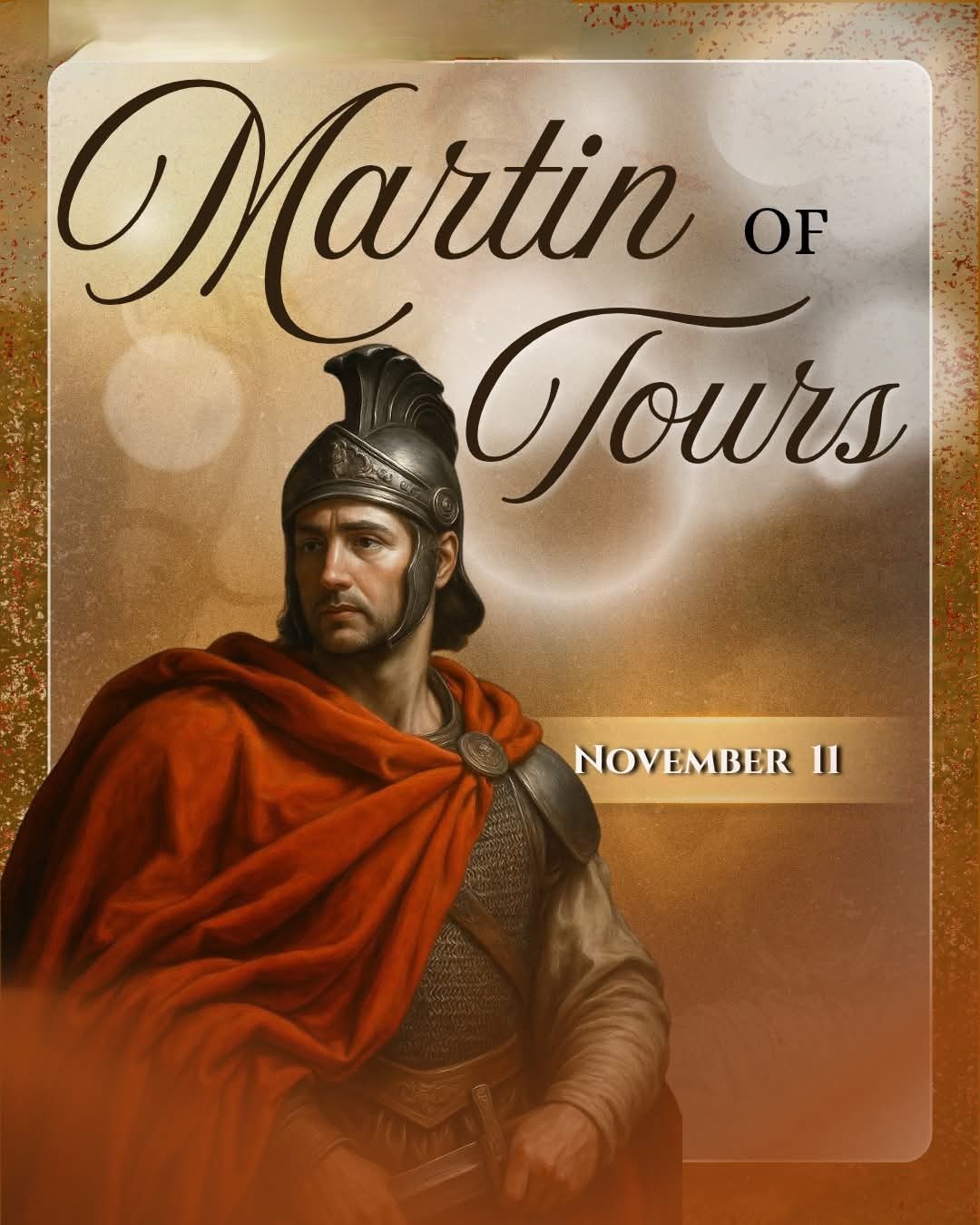
Saint Martin remains one of the most beloved saints of Europe. He is remembered as a model of charity, a witness to peace, a pioneer of Western monasticism and a bishop who placed service above honour.
His feast day, 11 November, is traditionally associated with generosity towards the poor and thanksgiving for the harvest.
His life reminds us that holiness is possible in every walk of life. Whether as a soldier, monk or bishop, Martin placed Christ above everything.
He is remembered not for his position or achievements but for a simple act of kindness: a cloak divided in two and a heart completely surrendered to God.
PRAYER
Heavenly Father, through the intercession of Saint Martin of Tours, teach us to recognise Christ in the poor, the suffering and the needy. Give us hearts filled with compassion, hands ready to serve and the courage to choose peace over conflict. Help us to live with the humility of a servant and the faithfulness of a true disciple. May our lives become instruments of Your love and charity. Through Christ our Lord. Amen.
NOVENA PRAYER
Blessed St. Martin of Tours, you, who full of love and generosity when you saw the beggar that was freezing from cold, without knowing that in truth he was Christ, did not doubt to give him half of your cape, and did not give it completely to him since the other half belonged to the Roman army; you, who did not seek recognition but only to favor your neighbor, found glory before the Lord.
And when the Savior appeared to you dressed with the half-cape so as to express appreciation for your gesture and He told you “today you covered me with your mantle”, you decided to no longer serve the army and to dedicate your life to God and to the salvation of souls, being from then on a propagator of the faith and a holy man totally dedicated to whomever was in need.
Glorious Saint Martin, you who worked miracles and prodigies, who with joy, amiability and the most exquisite goodness won over the hearts of all and did not cease to ever work for their well being: give me your hand and help me to come out of all lack and scarcity which today afflicts me and weighs me down. Glorious Saint Martin, I humbly ask you with great faith that you attain from God, the fount of all Mercies that my ways on this earth, my work and toils be cleansed and opened with clarity.
In the name of our Omnipotent God, Saint Martin of Tours, remove all that harms me and give me work and prosperity. Amen.