
TODAY’S GOSPEL READING – 28 MAY
May 28, 2026
FEAST OF SAINT POPE PAUL VI – 29th MAY
May 29, 2026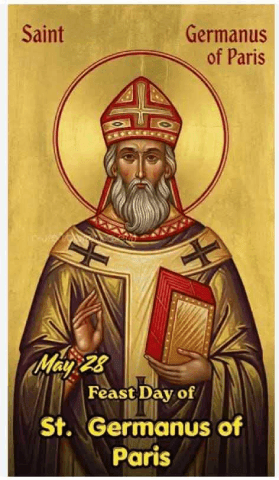
EARLY ATTRACTION TO PRAYER
From his youth, Germanus was drawn toward silence, prayer, and a life centered on God. Before becoming known publicly, he cultivated deep interior communion through simplicity and contemplation.
“Be still, and know that I am God.”
— Psalm 46:10
As a young man living near the monastery of Avalon, he preferred solitude and spiritual discipline over worldly ambitions.
COMPASSION IN THE MONASTERY
As a monk and later abbot, Germanus freely shared food, clothing, and possessions with the poor. His generosity sometimes concerned fellow monks because he gave away so much.
“Whoever is generous to the poor lends to the Lord”
— Proverbs 19:17
Stories tell how he often distributed monastery resources to hungry people who came seeking help.
RELUCTANCE TO BECOME BISHOP
Germanus did not seek honor or leadership. He feared losing his quiet monastic life when chosen as Bishop of Paris.
“Whoever wants to become great among you must be your servant.”
— Matthew 20:26
He accepted the office only through obedience, embracing responsibility with humility rather than ambition.
MINISTRY AMONG THE POOR
As bishop, Germanus became known for his closeness to the poor, widows, orphans, and abandoned people throughout Paris.
“Whatever you did for one of the least of these brothers and sisters of mine, you did for me”
— Matthew 25:40
He often used church resources and personal possessions to feed and support those in need.
VISITS TO PRISONERS
Germanus regularly visited prisoners, comforting them and pleading for mercy on their behalf.
“Remember those in prison as if you were together with them in prison.”
— Hebrews 13:3
Historical accounts describe him interceding for captives and securing freedom for some through negotiations and appeals.
COURAGE BEFORE KINGS
Germanus spoke boldly before rulers and powerful leaders when injustice and violence harmed the people.
“Speak up for those who cannot speak for themselves.”
— Proverbs 31:8
He confronted Frankish kings and nobles during times of conflict, urging justice and restraint.
WORK AS A PEACEMAKER
Living during political unrest, Germanus worked tirelessly to reconcile enemies and reduce violence.
“Blessed are the peacemakers, for they shall be called children of God.”
— Matthew 5:9
He frequently mediated disputes between rulers and sought peace during civil conflicts.
HIDDEN LIFE OF PRAYER
Despite heavy responsibilities, Germanus remained faithful to fasting, vigils, and personal prayer.
“Pray without ceasing.”
— 1 Thessalonians 5:17
Even as bishop, he maintained monastic disciplines and withdrew regularly for prayer.
REPUTATION FOR MIRACLES
People believed that God worked through Germanus because of his holiness and compassion.
“The prayer of a righteous person is powerful and effective.”
— James 5:16
Numerous accounts describe healings, answered prayers, and extraordinary acts associated with his intercession.
LASTING LEGACY AMONG THE POOR
After his death, ordinary people remembered Germanus not for status or influence but for his love toward the forgotten.
“The righteous will be remembered forever.”
— Psalm 112:6
His tomb became a place of pilgrimage, especially for the poor who saw him as their spiritual father.
PRAYER THROUGH THE INTERCESSION OF ST. GERMANUS OF PARIS
O compassionate Saint Germanus of Paris,
father of the poor and servant of peace,
pray for us that we may grow in mercy, courage, and holiness.
Teach us to love the forgotten,
to defend the weak,
and to remain faithful to God amid the distractions of the world.
Help us to seek peace instead of hatred,
charity instead of selfishness,
and prayer instead of pride.
May our hearts become gentle, generous, and deeply rooted in God.
Amen.