
TODAY’S GOSPEL READING – 10 AUGUST
August 10, 2026
SPIRITUAL INSIGHTS INTO THE LIFE OF SAINT LAWRENCE
August 10, 2026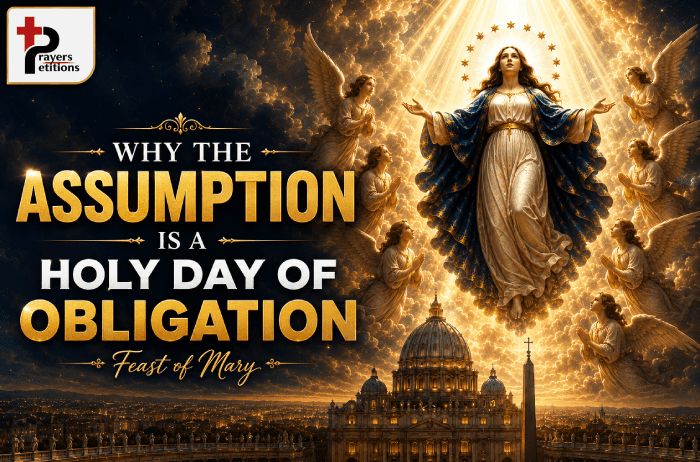
The Assumption of the Blessed Virgin Mary is an important Catholic feast celebrated on August 15. It commemorates the belief that Mary was taken body and soul into heavenly glory at the end of her earthly life.
The feast points beyond Mary herself to God’s power, grace, and promise of eternal life. It reminds Catholics that human life is ultimately directed toward communion with God.
Meaning of a Holy Day of Obligation
A Holy Day of Obligation is a day when Catholics are required to participate in Mass, just as they are on Sundays, unless they have a serious reason that prevents them from doing so.
The Church sets aside certain feast days because they celebrate important events and truths of the Catholic faith. Attending Mass allows Catholics to come together in worship and give special attention to the mystery being celebrated.
Why the Assumption is Important
The Assumption is significant because Mary has a unique place in salvation history as the mother of Jesus Christ. Catholics honor her because of her close relationship with Christ and her faithful response to God’s call.
Her Assumption is understood as a sign of the destiny promised to God’s faithful people. Mary is seen as a model of faith and an example of complete trust in God.
The feast therefore invites Catholics to reflect not only on Mary’s life but also on the hope of resurrection and eternal life.
Biblical Foundations of the Feast
The Bible does not directly describe Mary’s Assumption in a specific passage. However, Catholic teaching understands the feast in light of Scripture’s broader teachings about Mary, Christ’s victory over death, and the resurrection of believers.
Mary’s role as the mother of Jesus and her faithful participation in God’s plan are central to this understanding. The Assumption developed within the Church’s tradition and was formally defined as a dogma by Pope Pius XII in 1950.
The Assumption and Christian Hope
The Assumption carries a message of hope because it points toward the future resurrection of the faithful. Catholics believe that Mary shares in heavenly glory in a unique way because of her relationship with Christ.
Her Assumption reminds believers that death is not the final destination. The Christian hope is centered on resurrection and eternal life with God.
Celebrating the feast therefore becomes an opportunity to reflect on where our own lives are ultimately headed.
Why Catholics Attend Mass
Because the Assumption is designated as a Holy Day of Obligation in the Catholic Church, Catholics are called to attend Mass and participate in the Eucharistic celebration.
The obligation is not simply about following a rule. It encourages believers to pause from ordinary responsibilities and dedicate the day to worship, reflection, and gratitude.
Mass provides an opportunity for Catholics to remember God’s promises and celebrate the mystery of Mary’s Assumption together as a community of faith.
Mary’s Example of Faith
Mary’s life offers an example of humility, obedience, courage, and trust. From accepting God’s call to remaining faithful through the suffering of Christ, she continually points believers toward Jesus.
The Assumption celebrates the culmination of that earthly journey and reminds Catholics that faithfulness to God has an eternal purpose.
The Assumption is a Holy Day of Obligation because it celebrates a central Catholic belief about Mary and points toward the Christian hope of resurrection and eternal life.
Celebrated on August 15, the feast invites Catholics to honor Mary, reflect on God’s grace, and remember that our ultimate hope is found in being united with God. By attending Mass and celebrating the Eucharist, Catholics are reminded that earthly life is not the end but a journey toward eternal life.
Frequently Asked Questions (FAQs)
1. When is the Feast of the Assumption Celebrated?
The Feast of the Assumption is celebrated every year on August 15.
2. What Does the Assumption Mean?
It means that Mary was taken body and soul into heavenly glory at the end of her earthly life.
3. Why is the Assumption a Holy Day of Obligation?
It is a major Catholic feast that celebrates Mary’s Assumption and the Christian hope of resurrection and eternal life.
4. Is the Assumption Mentioned Directly in the Bible?
The Bible does not directly describe Mary’s Assumption, but Catholic teaching understands it through Scripture and Sacred Tradition.
5. Who Declared the Assumption a Dogma?
Pope Pius XII formally defined the Assumption of Mary as a Catholic dogma in 1950.