
TODAY’S GOSPEL READING – 4 SEPTEMBER
September 4, 2026
SPIRITUAL INSIGHTS INTO THE LIFE OF SAINT POPE BONIFACE I
September 4, 2026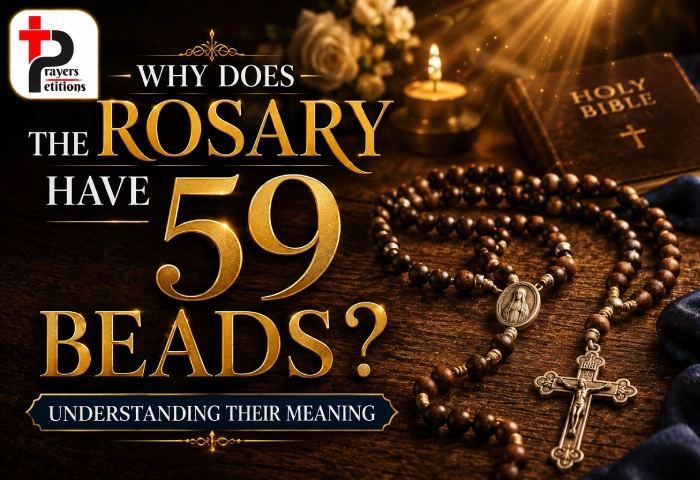
The Rosary is a traditional Catholic prayer that combines spoken prayers with meditation on important events in the life of Jesus Christ and the Virgin Mary. A standard Catholic Rosary contains 59 beads, and each group of beads has a specific purpose within the prayers.
The beads are not meant to be objects of worship. Instead, they help guide the person praying through a familiar sequence while reflecting on the mysteries of faith.
Meaning of the 59 Beads
The 59 beads are arranged into different sections, with each bead corresponding to particular prayers. The structure includes 53 Hail Mary beads and 6 Our Father beads.
The 53 Hail Mary beads are divided into groups of ten, known as decades, with one additional Hail Mary traditionally included at the beginning of the Rosary. The six Our Father beads mark the beginning of each decade and other important points in the prayer.
This arrangement gives the Rosary its recognizable structure and makes it easier to keep track of the prayers.
Meaning of the Hail Mary Beads
The 53 Hail Mary beads are used for the Hail Mary prayer, which focuses on Mary and asks for her prayers while reflecting on the life of Christ.
The prayer itself is rooted in Scripture, particularly the words spoken by the angel Gabriel to Mary and Elizabeth’s greeting to her in the Gospel of Luke. While praying these beads, Catholics traditionally meditate on one of the mysteries of the Rosary.
Meaning of the Our Father Beads
The 6 Our Father beads are used for the Lord’s Prayer, the prayer Jesus taught His disciples.
These beads separate the decades and help create the rhythm of the Rosary. The Our Father also keeps the focus of the prayer centered on God, His Kingdom, His will, forgiveness, and daily dependence on Him.
Meaning of the Decades
The Rosary contains five decades, with each decade consisting of ten Hail Mary beads. Before each decade, the person praying announces or reflects on a particular mystery from the life of Jesus and Mary.
The mysteries are traditionally grouped into the Joyful, Sorrowful, Glorious, and Luminous Mysteries. These reflections cover events such as the birth of Jesus, His suffering and death, His Resurrection, and significant moments in His ministry.
The purpose is not simply to repeat prayers but to meditate on these events while praying.
Why the Rosary Uses Repeated Prayer
The repeated prayers of the Rosary are designed to create a rhythm that allows the mind to focus on the mysteries being contemplated. Repetition can help a person slow down, become more attentive, and enter into prayer more deeply.
For many Catholics, the Rosary becomes a form of meditation and reflection rather than simply counting prayers.
Spiritual Meaning for Believers
The Rosary’s beads provide a physical structure for prayer, but their deeper purpose is spiritual reflection. Each decade invites the person praying to reflect on Christ’s life while asking for Mary’s intercession.
The Rosary can be prayed individually or with others and is often used as a prayer for peace, guidance, gratitude, protection, and personal intentions.
The Rosary has 59 beads because of the traditional structure of its prayers: 53 Hail Mary beads and 6 Our Father beads. These beads organize the five decades and guide Catholics through prayers and meditation on the mysteries of Christ’s life.
More than simply a collection of beads, the Rosary is a structured form of prayer that encourages reflection, meditation, and deeper focus on the Christian faith.
Frequently Asked Questions
1. Why Does the Rosary Have 59 Beads?
The traditional Rosary has 53 Hail Mary beads and 6 Our Father beads.
2. How Many Decades Are in a Rosary?
A standard Rosary contains five decades, with ten Hail Mary beads in each decade.
3. What Do the Rosary Beads Represent?
The beads help guide the sequence of prayers and provide a physical way to keep track of them.
4. Are Rosary Beads Worshipped?
No, Rosary beads are used as a prayer aid and are not themselves objects of worship.