
TODAY’S GOSPEL READING – 23 AUGUST
August 23, 2026
Galatians 5:14
August 24, 2026
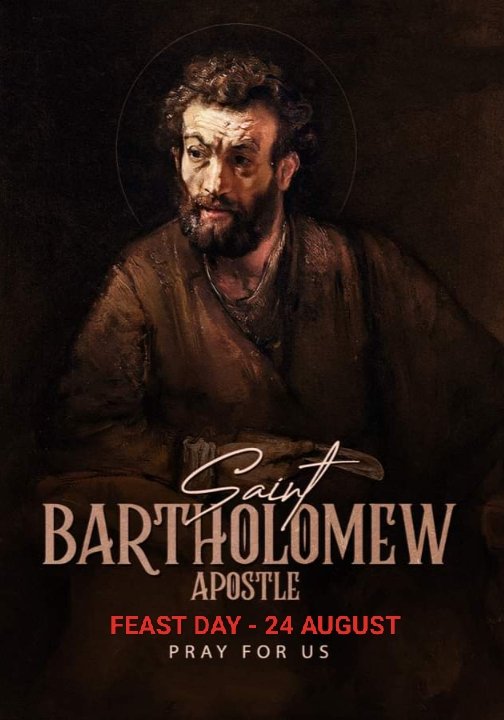
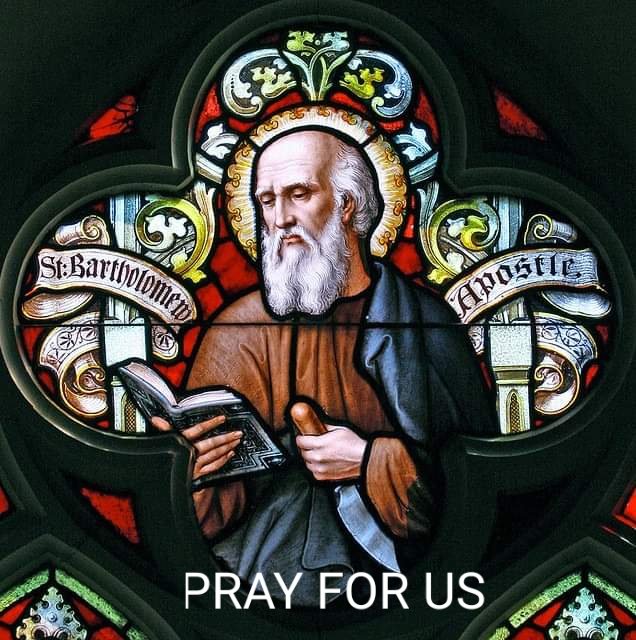
FEAST OF SAINT BARTHOLOMEW, THE APOSTLE
FEAST DAY – 24th AUGUST
 Saint Bartholomew is one of the Twelve Apostles, mentioned sixth in the three Gospel lists (Matthew 10:3; Mark 3:18; Luke 6:14), and seventh in the list of Acts (1:13). The name (Bartholomaios) means “son of Talmai” which was an ancient Hebrew name.
Besides being listed as an Apostle, he is not otherwise mentioned in the New Testament, at least not under the name Bartholomew: many ancient writers, and Catholic tradition have identified Bartholomew as Nathaniel in the Gospel of John (John 1:45-51, and 21:2).

The Gospel passage read at Mass on the feast of Saint Bartholomew is precisely this passage from John (1:45-51) where Nathaniel is introduced to Jesus by his friend Phillip, and Jesus says of him “Here is a true child of Israel. There is no duplicity in him (1:47).”
We are presented with the Apostle’s character in this brief and beautiful dialogue with the Lord Jesus. He is a good Jew, honest and innocent, a just man, who devotes much time to quiet reflection and prayer – “under the fig tree (1:48)” – and has been awaiting the Messiah, the Holy One of God.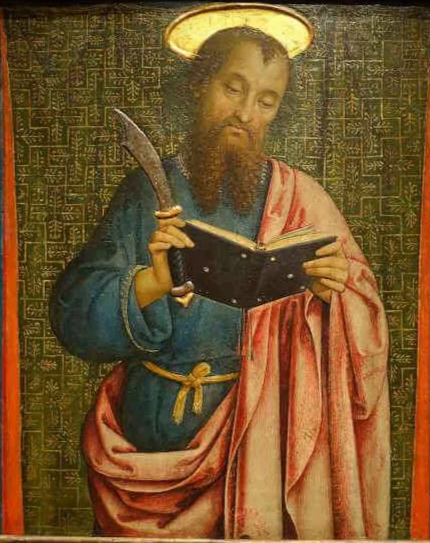
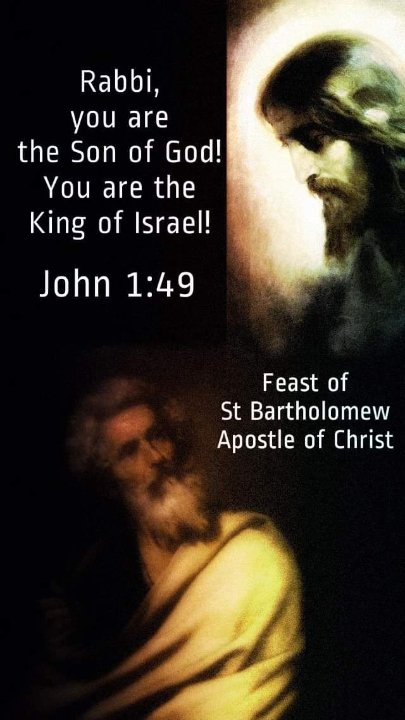
At Jesus’ mention that “Before Philip called you, when you were under the fig tree, I saw you (1:48),” Nathaniel responded “Rabbi, you are the Son of God! You are the King of Israel (1:49)!”
Being “a true child of Israel,” Nathaniel was a man well-read in the Scriptures and knew what they said of the Messiah and where he would come from. This is why he is skeptical of Phillip’s claim that Jesus is the Messiah, “Can anything good come out of Nazareth (1:46)?”
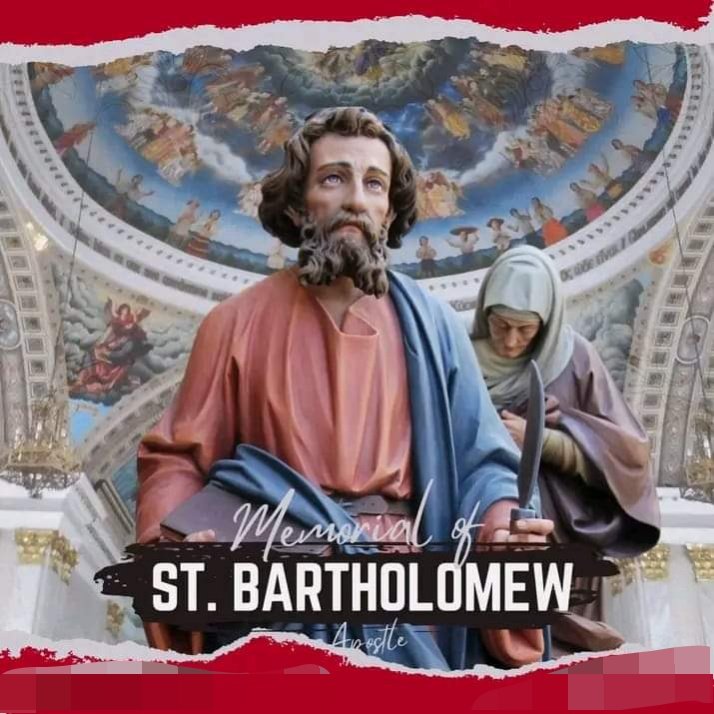
But Nathaniel was lacking “duplicity” – that is, his heart was undivided, his intentions pure – his openness to reality was always ready to recognize and surrender to the truth when he encountered it. He remained open to his friend Phillip’s invitation to “Come and see (1:46).”
In encountering Jesus and hearing His words, he found himself face to face with the Truth Himself, and, like John the Baptist’s leap in his mother’s womb at the Lord’s presence, Nathaniel’s words leapt out of his own heart in a clear and simple confession of faith, “Rabbi, you are the Son of God! You are the King of Israel!”
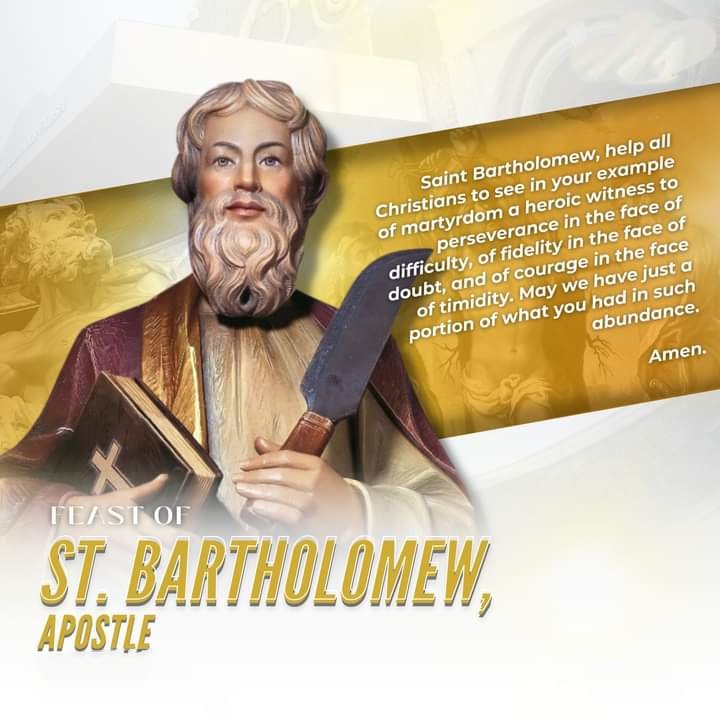
Jesus, in Matthew 5:8, says, “Blessed are the pure of heart, for they shall see God.” In Nathaniel we have an example of the pure man who sees – recognizes – God when confronted with Him, and on seeing Him believes in Him, and upon believing in Him, follows Him.
Nothing is known for sure about the life of Nathaniel/Bartholomew after the Ascension of Jesus, but tradition holds that he preached in the East and died a martyr’s death in Armenia, being flayed alive for having won converts to the Lord Jesus.
(Source: catholicnewsagency)
CONTEMPLATING THE LIFE OF SAINT BARTHOLOMEW: THE APOSTLE WITHOUT GUILE
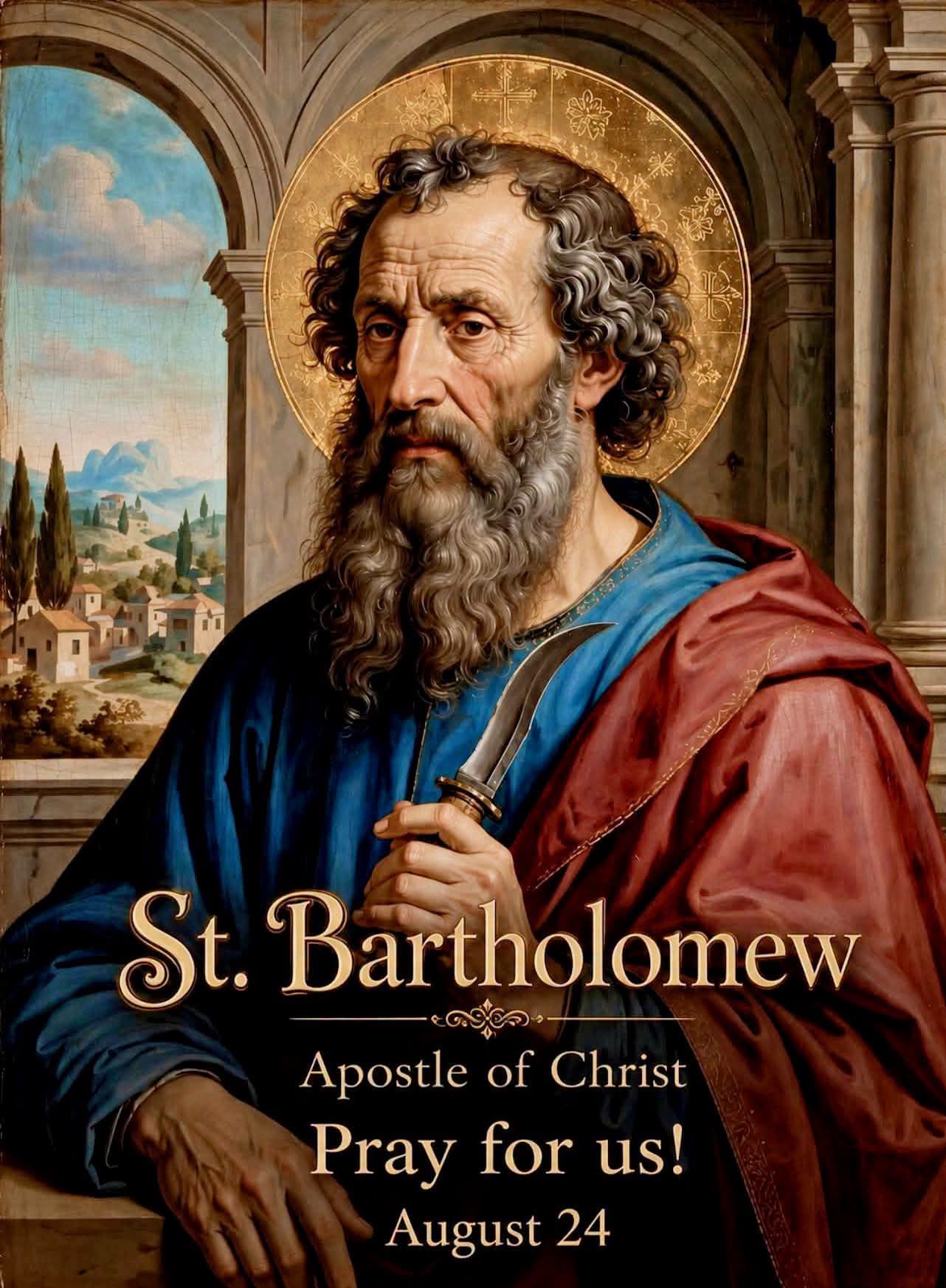
A MAN FROM CANA
Nathanael, also known as Bartholomew, came from Cana in Galilee. He was a sincere man who loved God’s Law and longed for the promised Messiah. One day, his friend Philip told him, “We have found the One of whom Moses wrote, Jesus of Nazareth.” Nathanael wondered whether anything good could come from Nazareth.
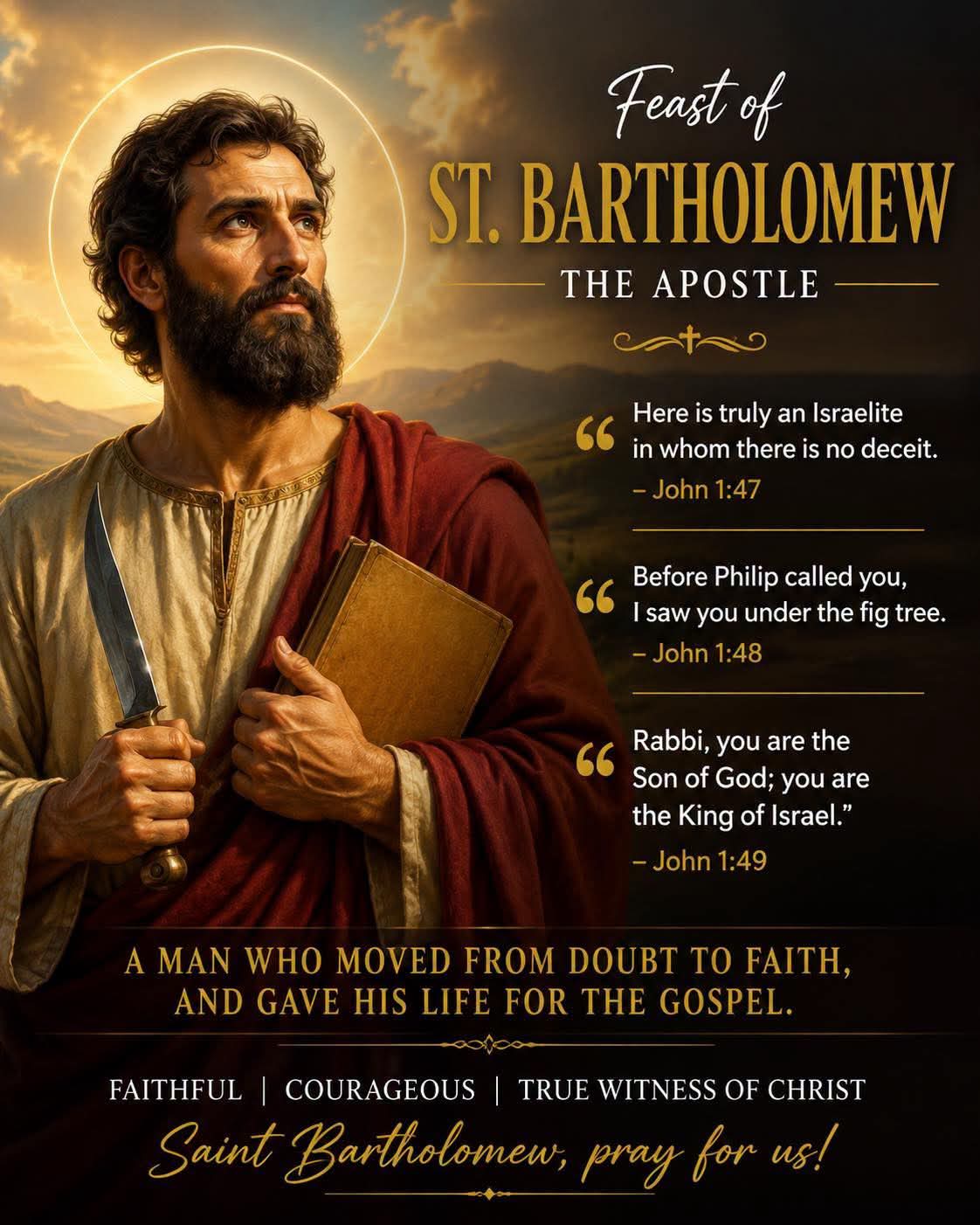
When he met Jesus, the Lord revealed that He already knew him and said, “Here is a true Israelite in whom there is no deceit.” Jesus told him that He had seen him under the fig tree even before Philip called him. Nathanael immediately recognised Jesus as the Son of God and King of Israel. Thus he became one of the Twelve Apostles.
WITNESS TO THE MESSIAH
Bartholomew followed Jesus throughout His ministry and witnessed His teachings, miracles, Passion, Death and Resurrection. After the Resurrection, he received the Holy Spirit at Pentecost and was sent forth to proclaim the Gospel to the nations.
TO THE ENDS OF THE EARTH
Ancient traditions associate Bartholomew with missionary journeys through India, Mesopotamia, Persia and Arabia. Tradition also connects him with Armenia, where he preached Christ and helped establish the Christian faith. Wherever he went, he brought people from the worship of idols to faith in the living God.
MARTYRDOM IN ARMENIA
Bartholomew’s preaching eventually brought him opposition from those who resisted the Gospel. According to ancient tradition, he was seized and brutally martyred in Armenia after leading many to Christ. He remained faithful to the end, giving his life rather than denying his Lord.
THE APOSTLE REMEMBERED
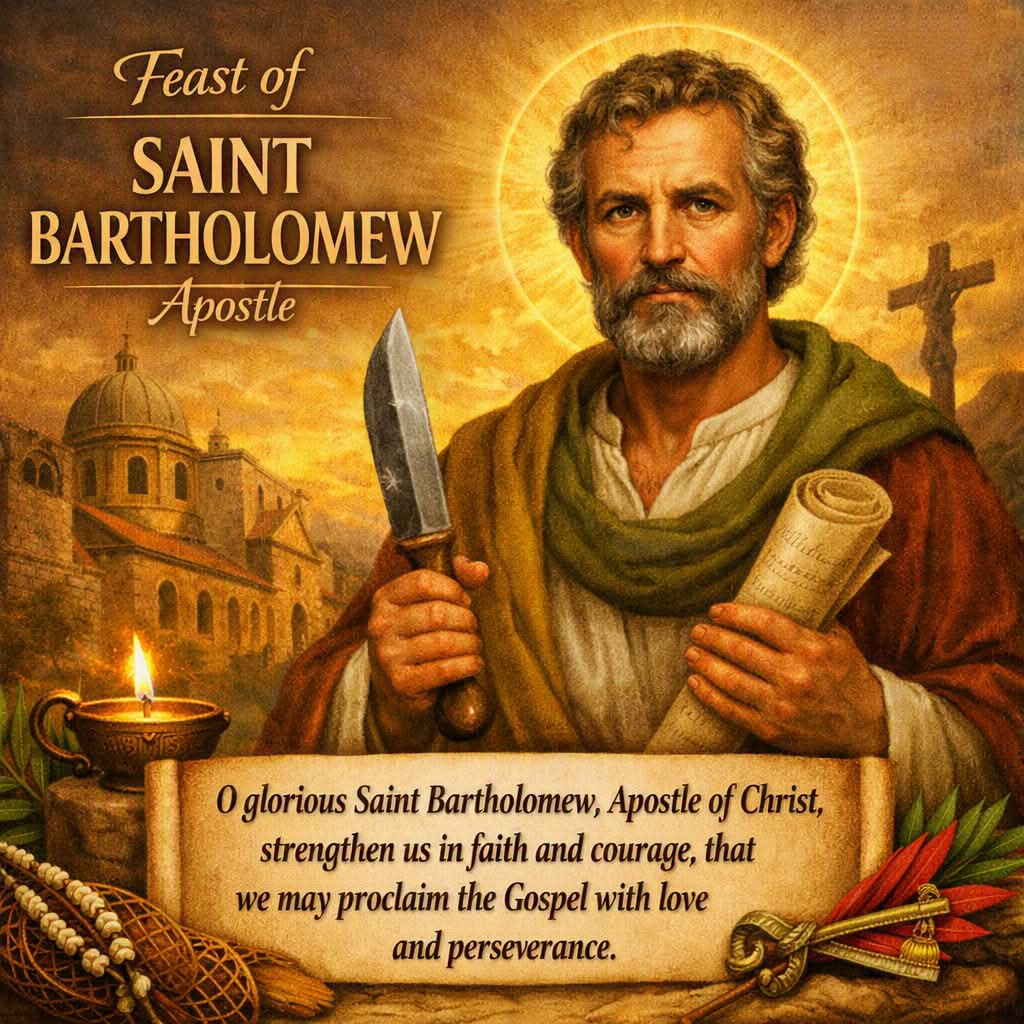
The Church honours Bartholomew as a courageous Apostle and martyr. His traditional symbol is the knife associated with his martyrdom, and sacred art often portrays him holding it or his own skin. He is especially honoured as a patron of the Armenian Church, and his relics are traditionally venerated in the Basilica of San Bartolomeo all’Isola in Rome.
THE GUILELESS WITNESS
Bartholomew’s greatest characteristic was his guilelessness. He was sincere before others, honest before God and courageous in following Christ. From the quietness of his prayer under the fig tree to the sacrifice of his life, he remained faithful to the truth he had discovered in Jesus.
St. Bartholomew reminds us that genuine faith requires an honest heart, courageous witness and steadfast loyalty to Christ, even when following Him becomes difficult.
PRAYER TO ST. BARTHOLOMEW
Saint Bartholomew, Apostle without guile, you recognised Jesus with a sincere and believing heart. Intercede for us, that we may live with honesty, seek the truth, proclaim the Gospel with courage and remain faithful to Christ in every trial. Help us to follow the Lord with pure hearts and unwavering faith, so that our lives may become a witness to His love. Amen.

PRAYER
Saint Bartholomew, Jesus recognized your honesty and you saw in his word a sign that he was the Son of God and King of Israel. Please pray that we too may preserve our innocence and help us to deepen our faith, walking the way of our daily life with God.
May we discern through the Power of the Holy Spirit the path that leads to Jesus, eventually uniting us to him forever in heaven. Amen