
TODAY’S GOSPEL READING – 16 JUNE
June 16, 2026
John 15:12
June 17, 2026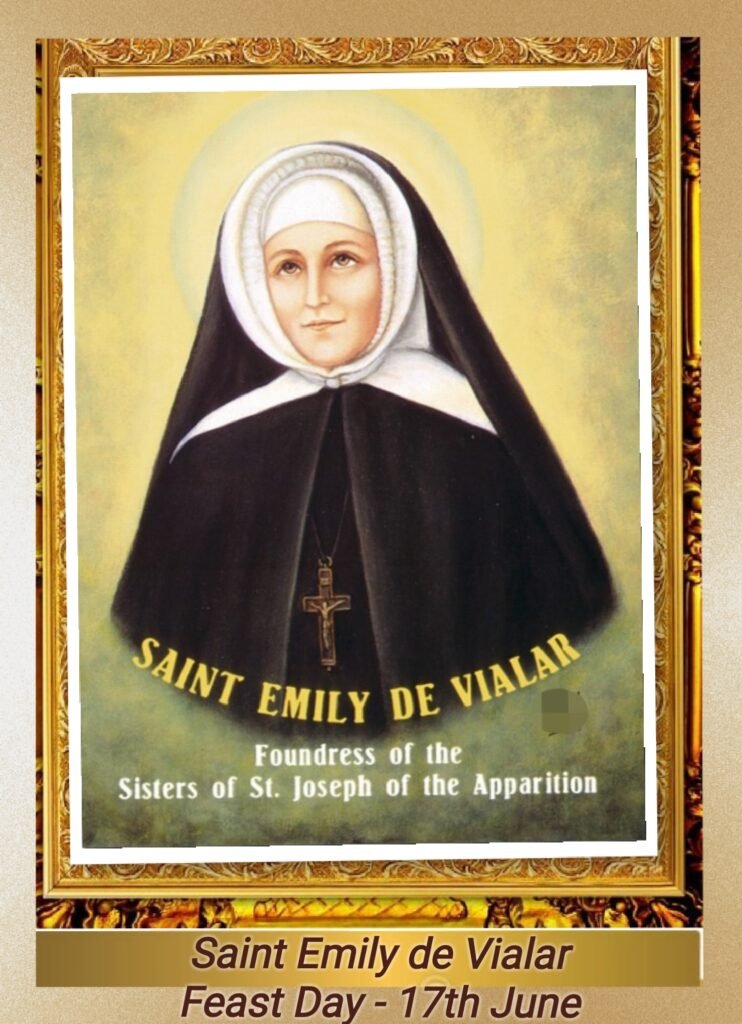
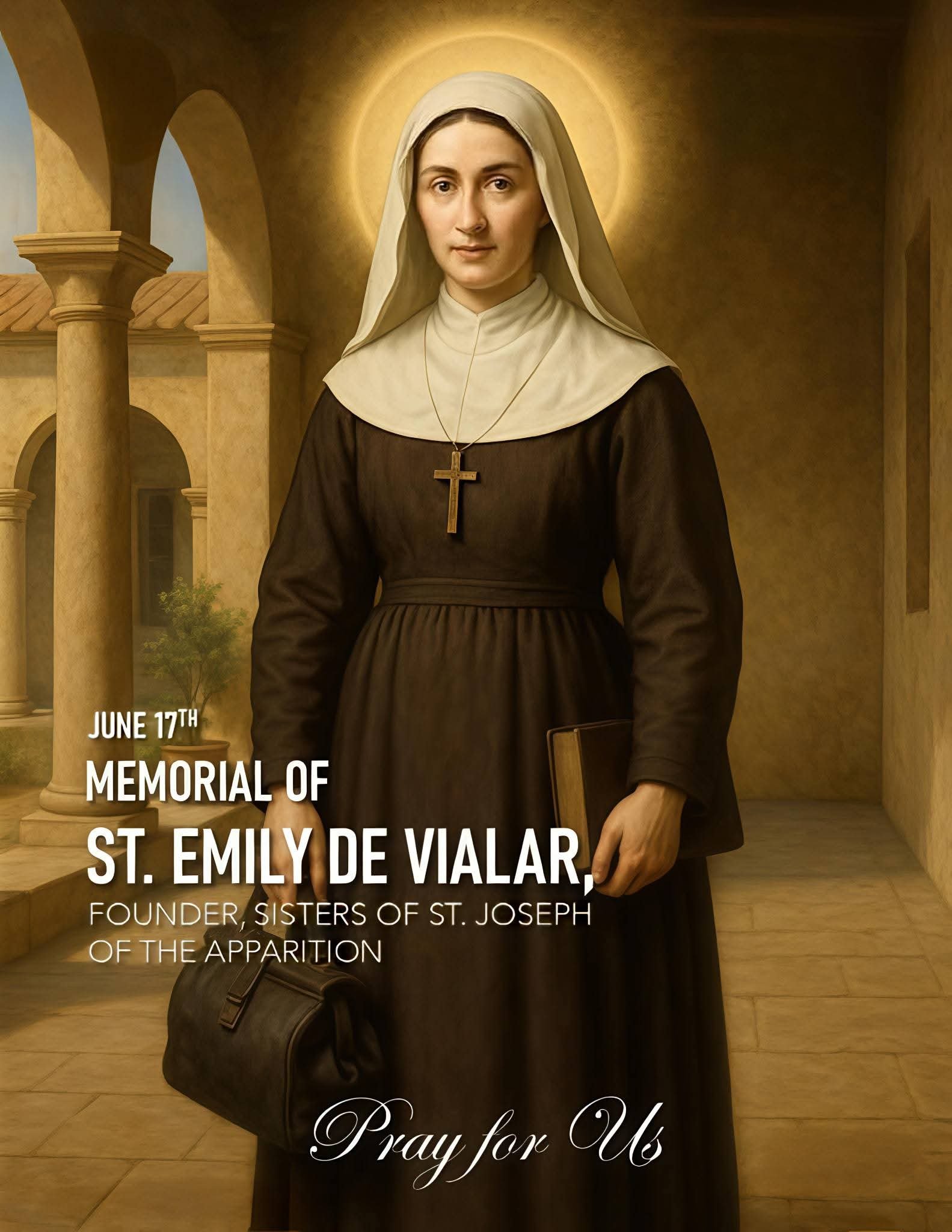
FEAST OF SAINT EMILY DE VIALAR
FEAST DAY – 17th JUNE
Emily de Vialar or Émilie de Vialar (1797–1856) was a French nun who founded the missionary congregation of the Sisters of St. Joseph of the Apparition. She is revered as a saint by the Catholic Church. Emily de Vialar was born on 12 September 1797 to Jacques and Antoinette Portal de Vialar, in Gaillac. Her father was a doctor.
De Vialar was born 3 years after the Reign of Terror, in the same year as Pope Pius VI was taken prisoner by French troops. She was the oldest of 3 children and was baptized in secret. At a young age, de Vialar was taught by her mother how to read. At the age of thirteen she went to the Parisian college of the Abbaye-au-Bois Ladies, for young ladies of quality, accompanied by her mother, who became ill on the long journey.
Despite the best efforts of de Vialar’s father, on 17 September 1810 her mother died at the age of 35. At the age of fifteen, De Vialar returned to Gaillac to live with her father and two younger brothers. She found that her father, overwhelmed with grief had relinquished management of the household to Toinon, a devoted but autocratic servant.
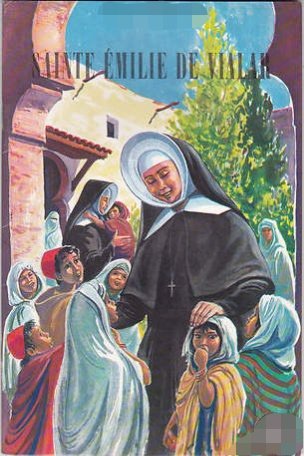
In her attempts to help the poor, the old and the destitute, de Vialar invited them to the house, causing considerable tension in the household. Other young women joined her efforts. In 1832 her maternal grandfather left her an inheritance, with which she bought a house for herself and her companions.
Inspired by Matthew 1:20, where an angel appeared to Joseph to reassure him: “Joseph, son of David, do not be afraid to take Mary, your bride, because what is generated in her comes from the Holy Spirit,” and with the help of the bishop of Albi, François-Marie de Gauly, on Christmas, de Vialar and three other women established the congregation of the Srs. of St. Joseph of the Apparition.
Her brother Agostino lived in French Algeria and proposed to open a hospital in Boufarik, near Algiers. De Vialar and her first companions arrived at a time of an outbreak of cholera. She used the money her grandfather left her to open hospitals and schools. De Vialar and 17 other sisters received a formal approval for the rule of congregation in 1835.
However, in 1843, the bishop of Algiers had all the nuns return to France. De Vialar left France to establish schools and hospitals in Cyprus, Tripoli, and Beirut. In 1845, de Vialar was on her way from Tunisia to Algeria when the ship on which she was traveling was caught in a terrible storm for nine days.
De Vialar vowed “that wherever they landed safe and sound, she would open a house and dedicate it to St Paul”. The ship came to rest at Malta, where St. Paul had also been shipwrecked. There de Vialar opened one of the first Catholic schools for young ladies. Meanwhile, back in Gaillac the local superior, deceived by an unscrupulous businessman, had accumulated debts.
She abandoned the Congregation and sued for the return of his dowry. Beset by slander and creditors Mother de Vialar was forced to leave her hometown. Her inheritance now long gone on the many institutions she built, in 1852 de Vialar found help and hope in Marseilles with the benevolent acceptance of Eugène de Mazenod, founder of the Missionary Oblates of Mary Immaculate.
The foundress, in the course of twenty-two years, saw her Congregation grow from one to some forty houses, many of which she had founded in person. The achievements of St. Emily de Vialar are the more remarkable in that from her youth she was troubled by hernia, contracted characteristically in doing a deed of charity.
From 1850 this became more and more serious, and it hastened her end, which came on August 24, 1856. The burden of her last testament to her daughters was “Love one another”. “The saint is dead,” said the poor people who knew her kindness. Her canonization took place in 1951and her feast is celebrated on June 17th by the Sisters of St. Joseph of the Apparition.
CONTEMPLATING THE LIFE OF SAINT EMILY DE VIALAR
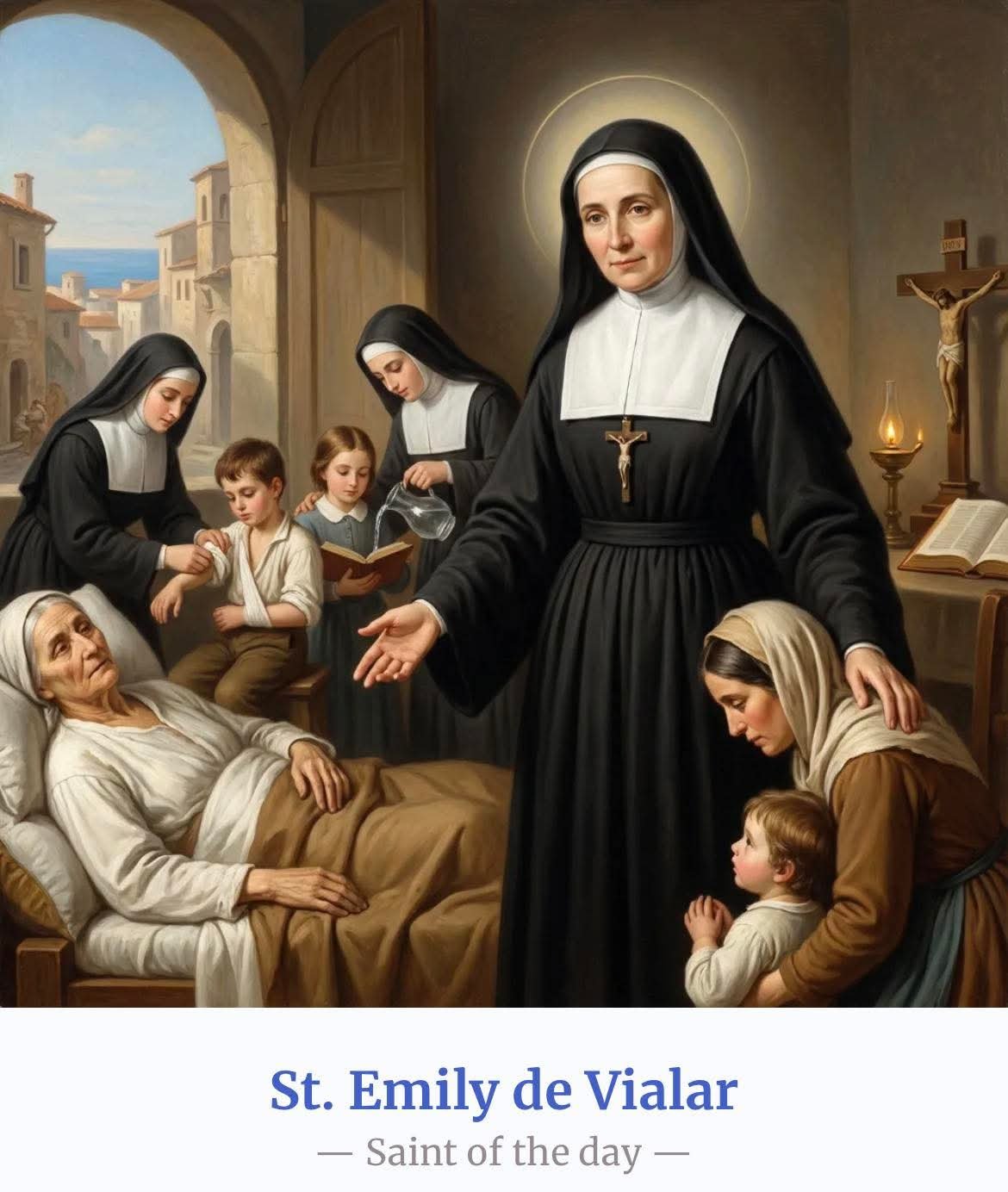
THE NOBLE WOMAN WHO GAVE HER LIFE TO CHRIST
Saint Emily de Vialar was born in France in 1797 into a wealthy and respected family. Though she enjoyed the privileges of a comfortable life, her heart was drawn to God from an early age. She recognized the suffering of the poor, the sick, and the abandoned, and felt called to dedicate her life entirely to their service.
A HEART FOR GOD AND THE NEEDY
Emily developed a deep life of prayer and compassion. While many around her sought social status and worldly success, she desired to follow Christ more closely. She used her personal resources to assist the poor and cared for those who had no one to help them. Her love for God found expression in practical acts of charity.
FOUNDER OF A MISSIONARY CONGREGATION
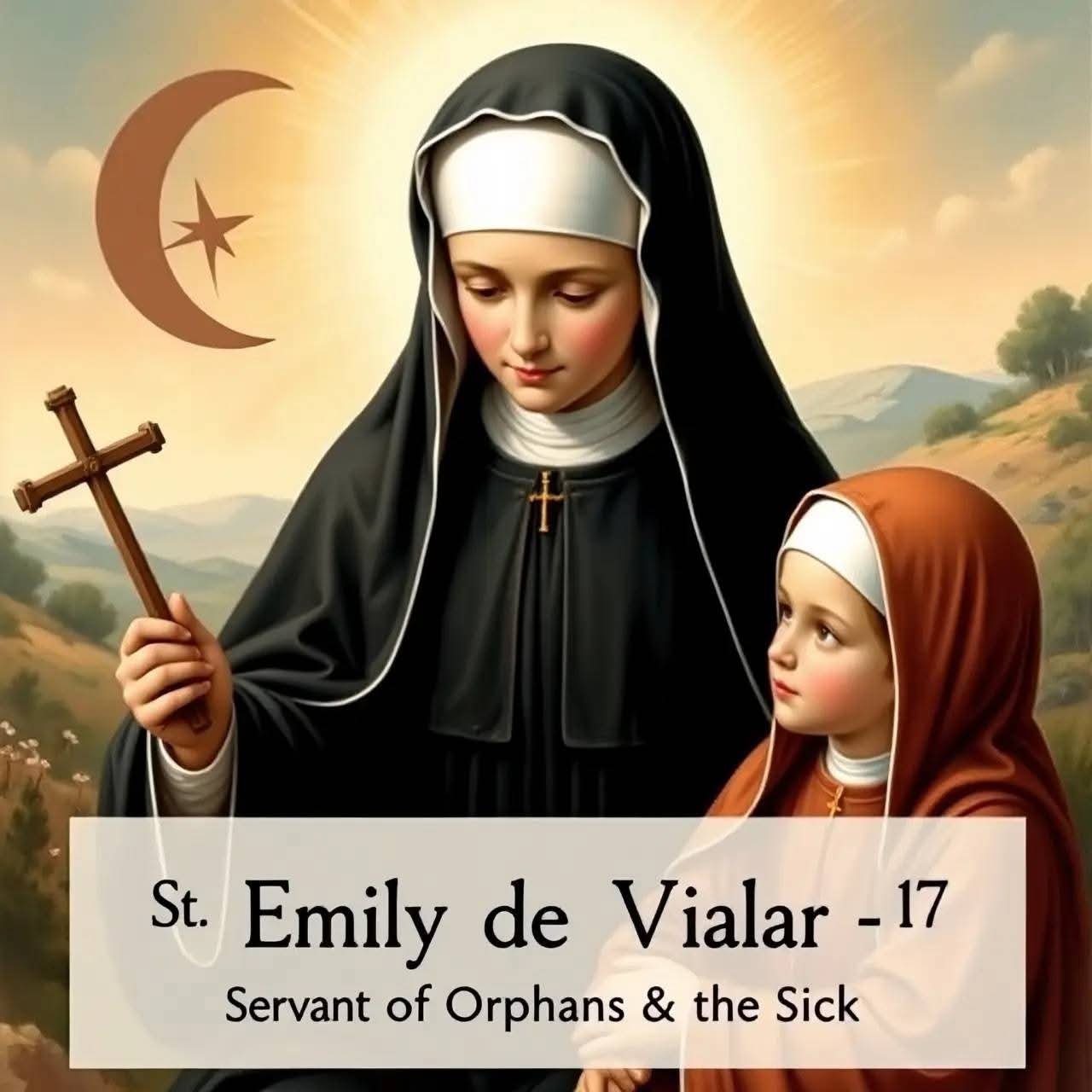
In 1832, Emily founded the Congregation of the Sisters of Saint Joseph of the Apparition. The congregation was established to serve wherever there was human suffering and spiritual need. Under her leadership, the sisters cared for the sick, educated children, visited prisoners, and assisted the poor.
A COURAGEOUS MISSIONARY
Saint Emily possessed remarkable courage and vision. At a time when missionary travel was difficult and dangerous, she sent sisters to distant lands, including North Africa, the Middle East, and other mission territories. Her desire was that the love of Christ be made known to all people, regardless of culture, language, or social condition.
PERSEVERANCE THROUGH TRIALS
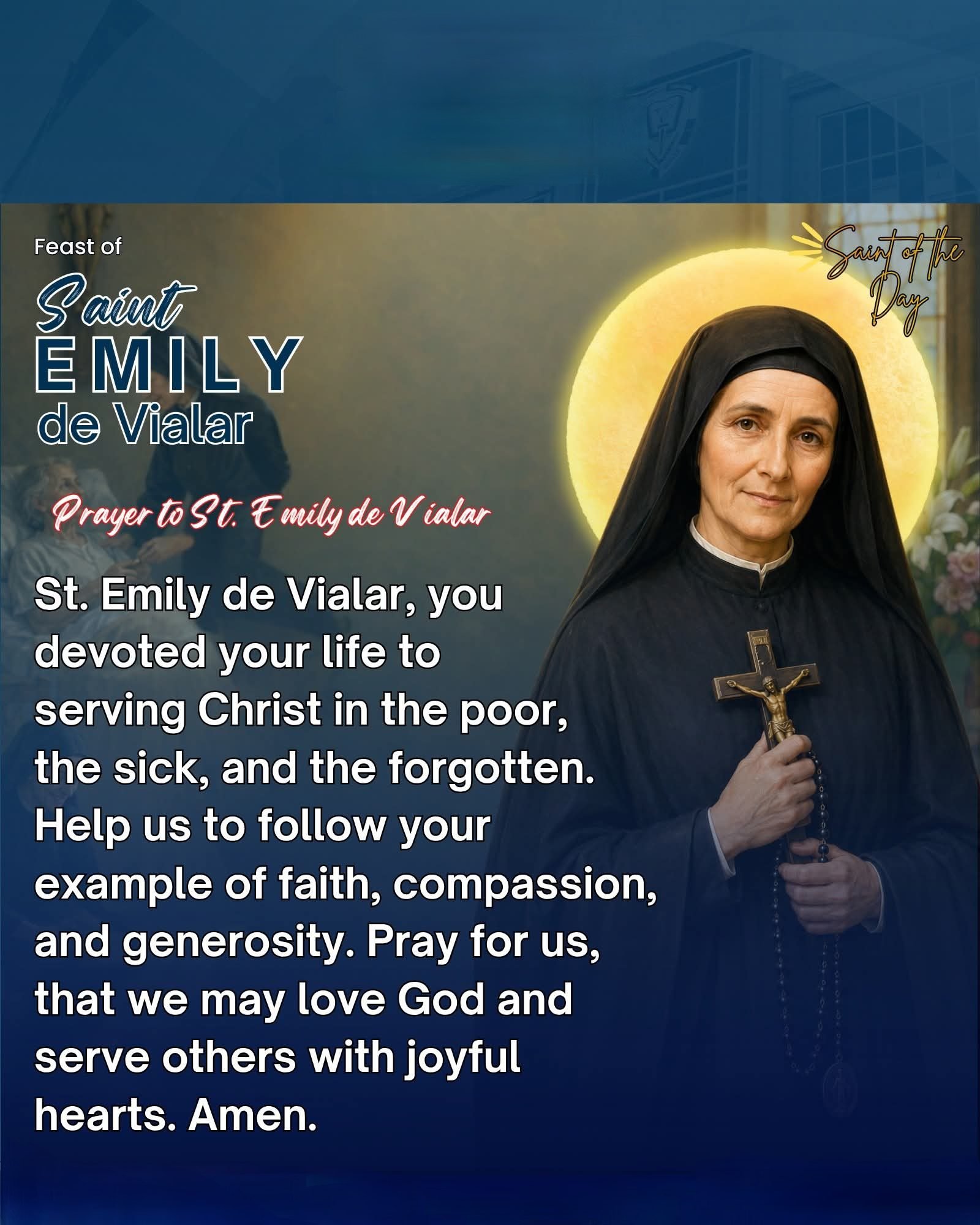
Like many founders, Emily faced misunderstandings, opposition, and personal disappointments. She endured criticism, financial difficulties, and internal challenges within her congregation. Yet she remained steadfast in faith, trusting that God would guide the work He had begun.
A LIFE ROOTED IN PRAYER
Despite her many responsibilities, prayer remained the foundation of Emily’s life. She sought God’s will in every decision and encouraged her sisters to cultivate a deep relationship with Christ. Her strength came not from human abilities alone but from her union with God.
HER HOLY DEATH AND LASTING LEGACY
Saint Emily de Vialar died on 24 August 1856. By the time of her death, her congregation had spread across several countries, bringing education, healthcare, and Christian witness to countless people. Her work continued to grow long after her passing.
LESSONS FROM HER LIFE
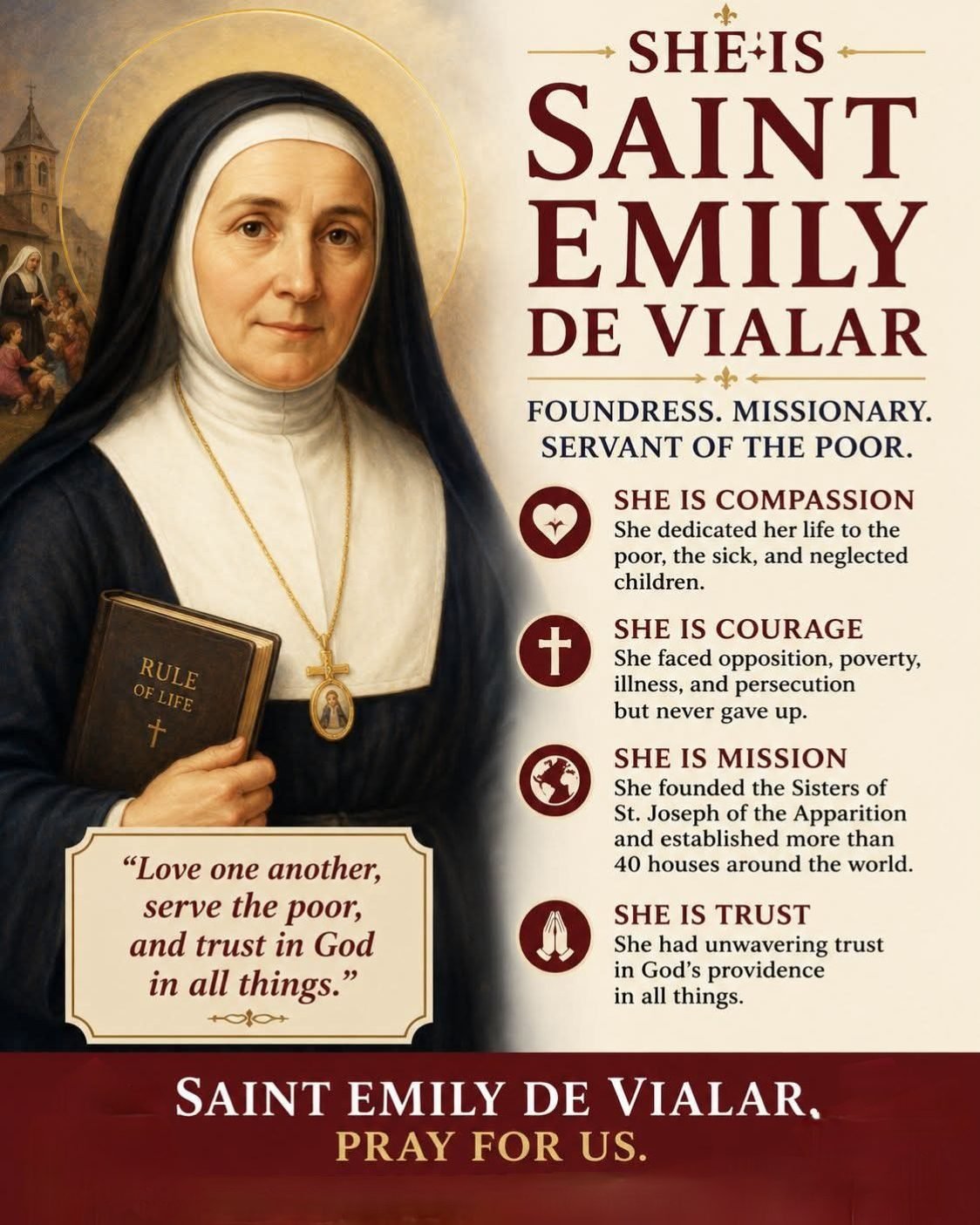
Saint Emily teaches us that generosity becomes powerful when placed in God’s hands. She reminds us to use our talents, resources, and opportunities for the service of others. Her life shows that prayer, courage, and perseverance can overcome even the greatest obstacles.
A SAINT FOR OUR TIMES
In a world marked by suffering, inequality, and spiritual hunger, Saint Emily de Vialar remains a shining example of Christian charity and missionary zeal. Her life invites us to trust God completely and to bring His love to those most in need.
“Whatever you do, do all to the glory of God.” (1 Corinthians 10:31)
CONTINUED RELEVANCE
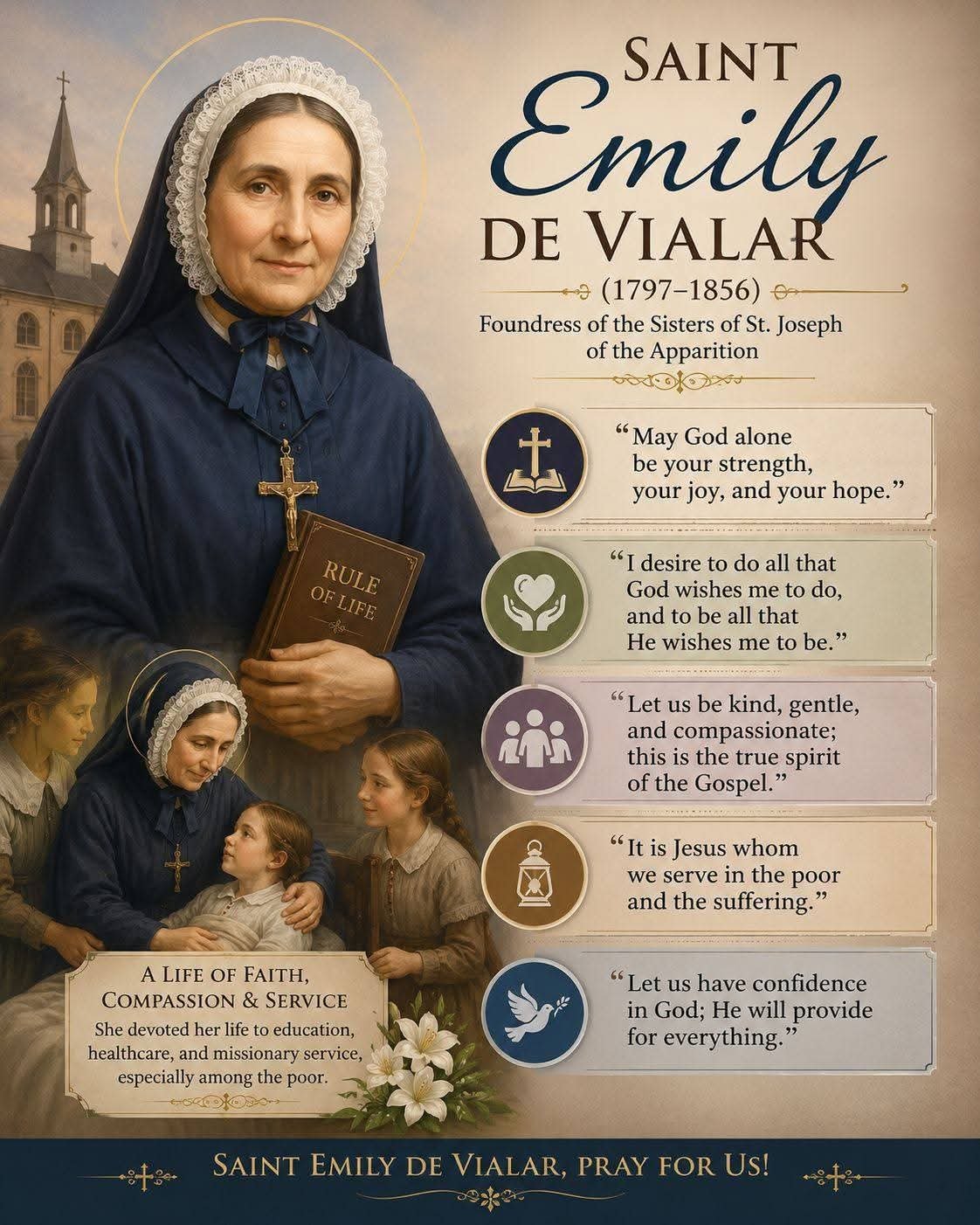
Saint Emily de Vialar continues to inspire the Church through her unwavering faith, compassionate service, and courageous dedication to the mission of Christ.
PRAYER
Saint Emily, you served the poorest of the poor and in the church, you continued to propagate the Father’s love, as obtained through the Incarnation of the Son, our beloved Savior Jesus Christ.
Pray that we may imbibe your gentleness and meekness in spirit, as well as your boldness and apostolic zeal. Amen
*********************************
ALSO CELEBRATED:
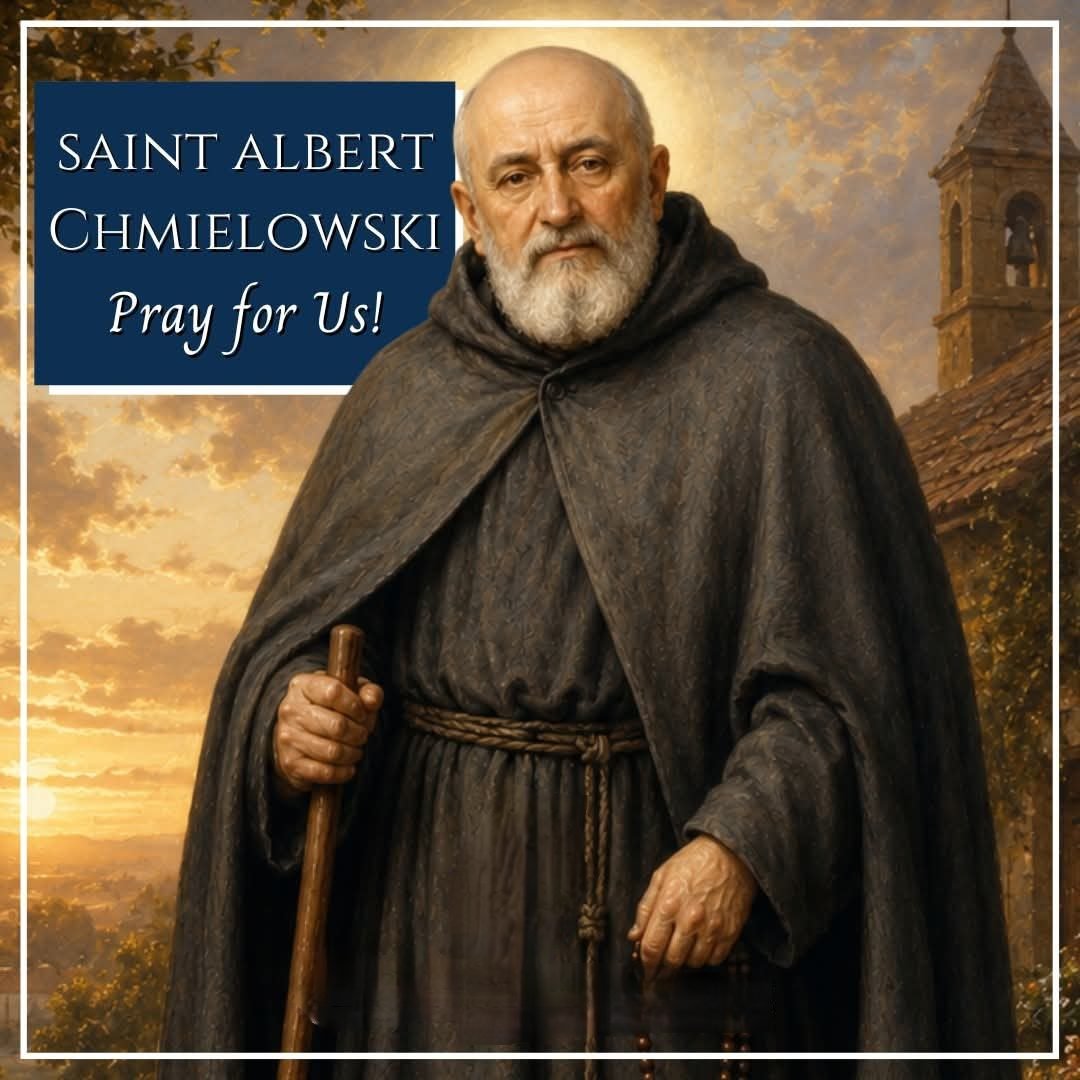
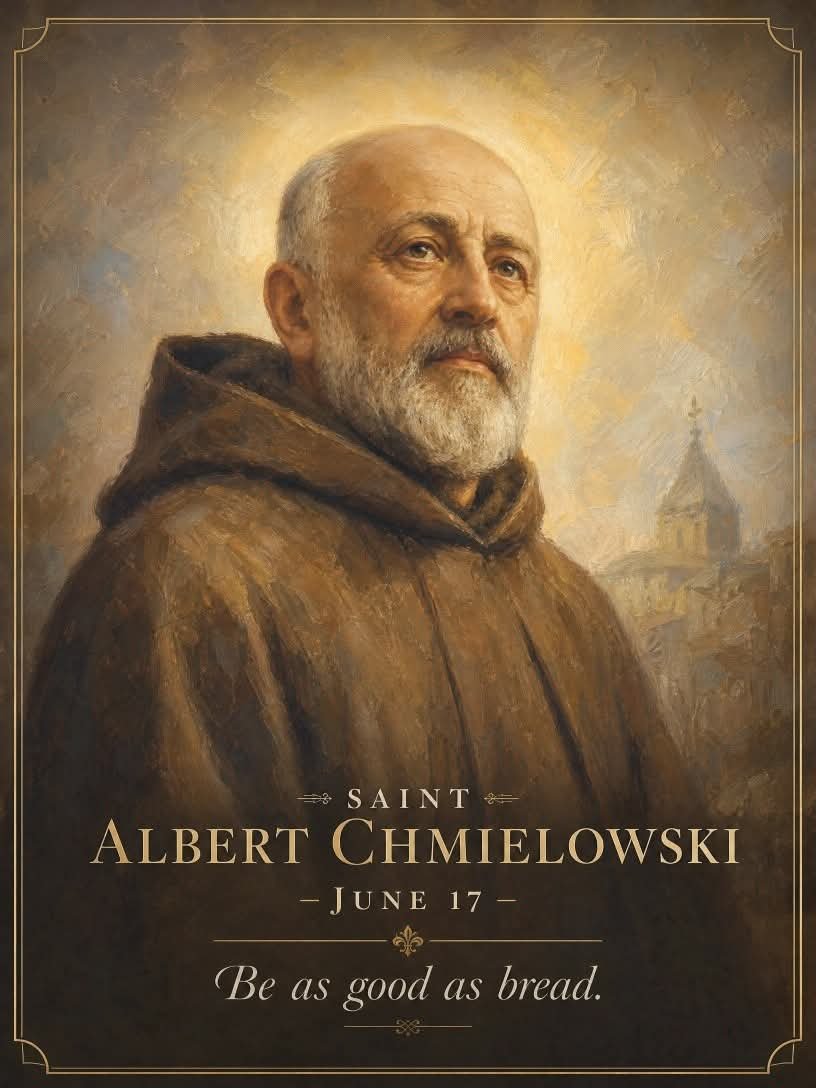
SAINT ALBERT CHMIELOWSKI – FEAST DAY 17 JUNE
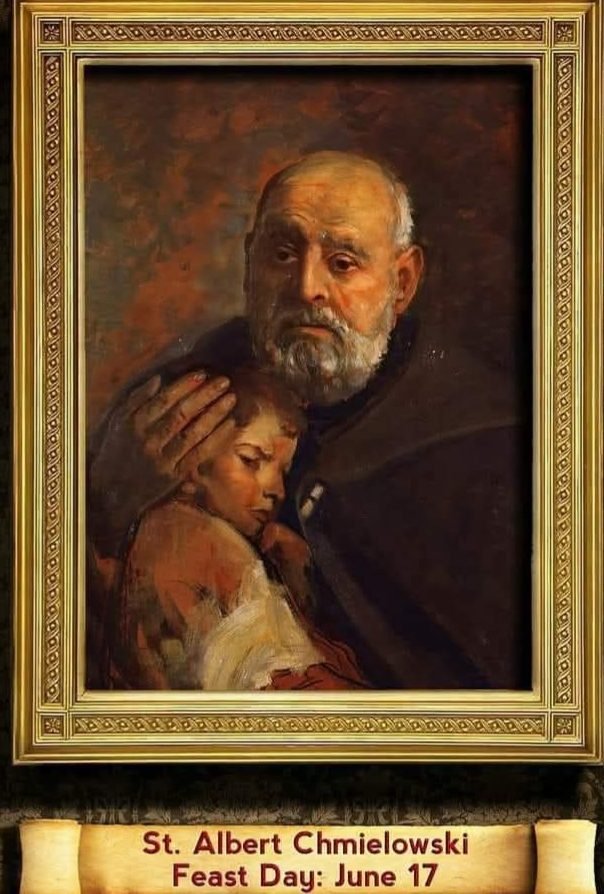
Saint Albert Chmielowski was born as Adam Hilary Bernard Chmielowski on 20 August 1845 in Igołomia, Poland. He came from a noble family and received a good education. During his youth, Poland was under foreign domination, and Adam became involved in efforts to regain national independence.
As a young man, he joined the January Uprising of 1863 against Russian rule. During the conflict, he was severely wounded and lost one of his legs. He later used a prosthetic limb for the rest of his life. Despite this hardship, he continued his studies and developed a remarkable talent for painting.
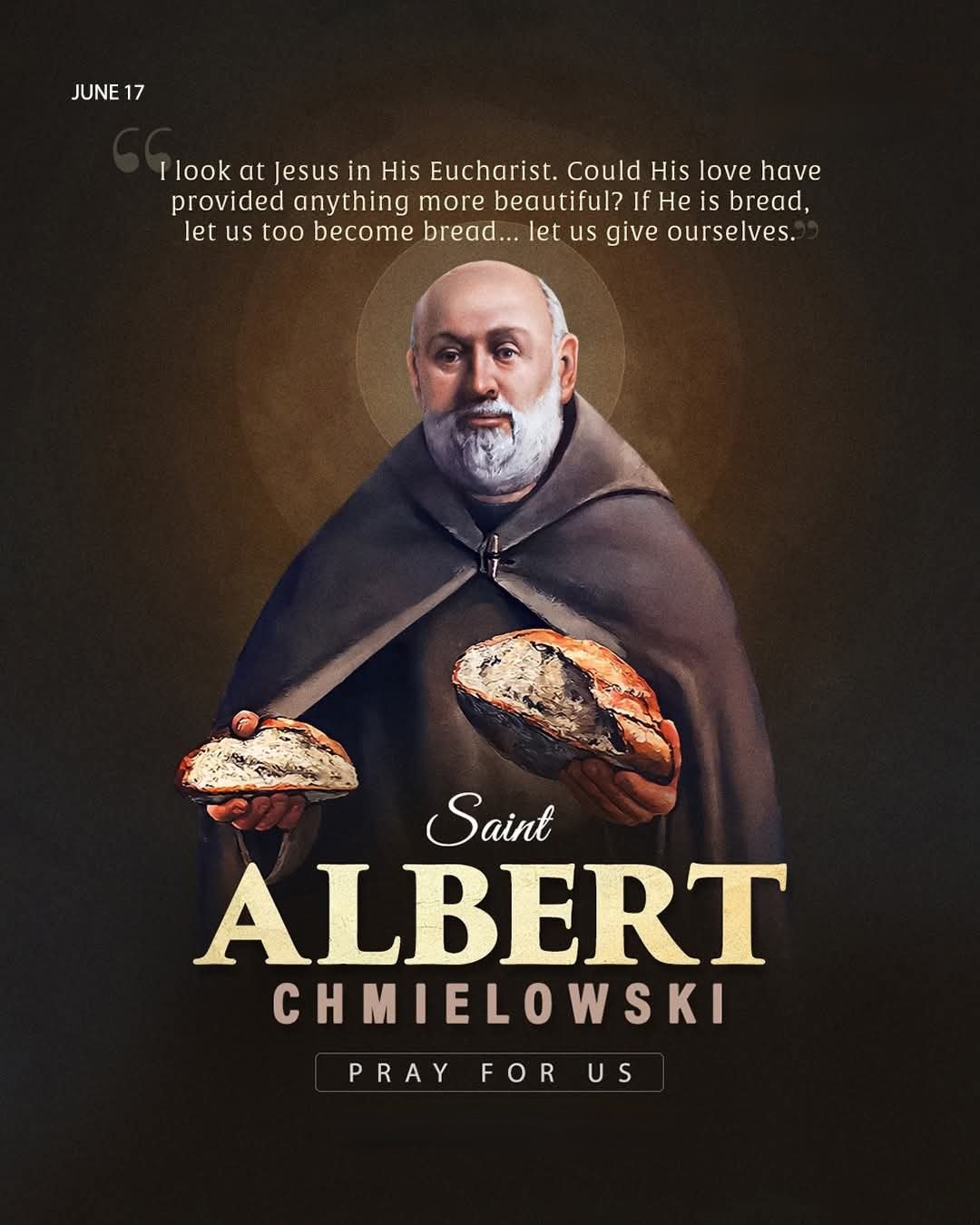
Adam became a respected artist and studied in Warsaw, Munich, and Paris. His paintings gained recognition, and he appeared destined for a successful artistic career. Yet, as he grew spiritually, he became increasingly aware of the suffering of the poor and homeless around him.
A turning point came while he was working on a painting of Christ Ecce Homo (“Behold the Man”). As he contemplated the suffering face of Jesus, he experienced a profound conversion. He realized that Christ was present in the poor, the abandoned, and the outcasts of society.
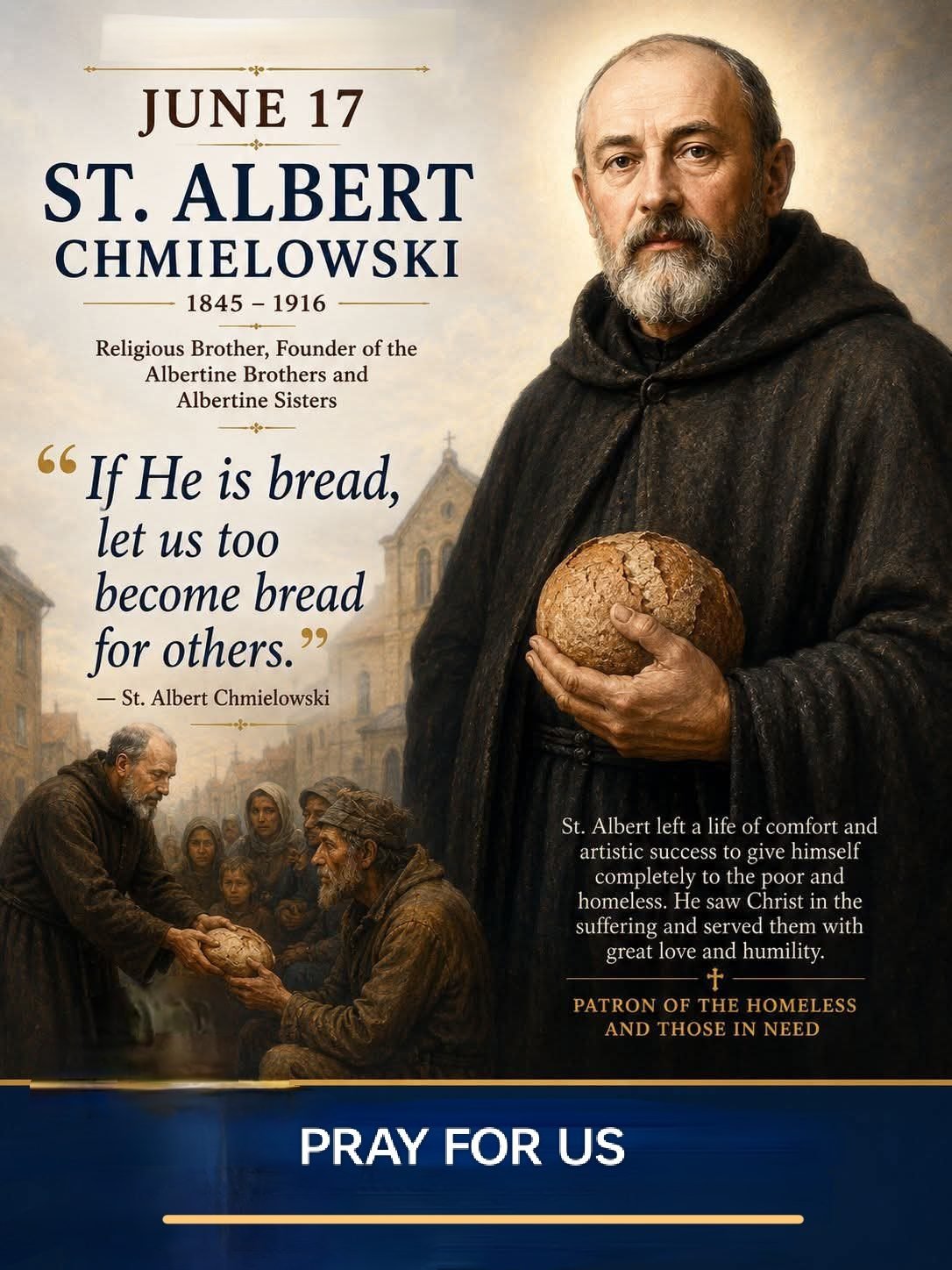
Leaving behind his artistic ambitions, he dedicated his life to serving the destitute of Kraków. He entered the Third Order of Saint Francis and took the religious name Brother Albert. He lived among the poor, shared their hardships, and sought to restore their dignity.
To continue this mission, he founded the Albertine Brothers in 1888 and later the Albertine Sisters in 1891. These communities cared for the homeless, the sick, and those rejected by society. His guiding principle was: “One must be as good as bread, which lies on the table for everyone to take when hungry.”
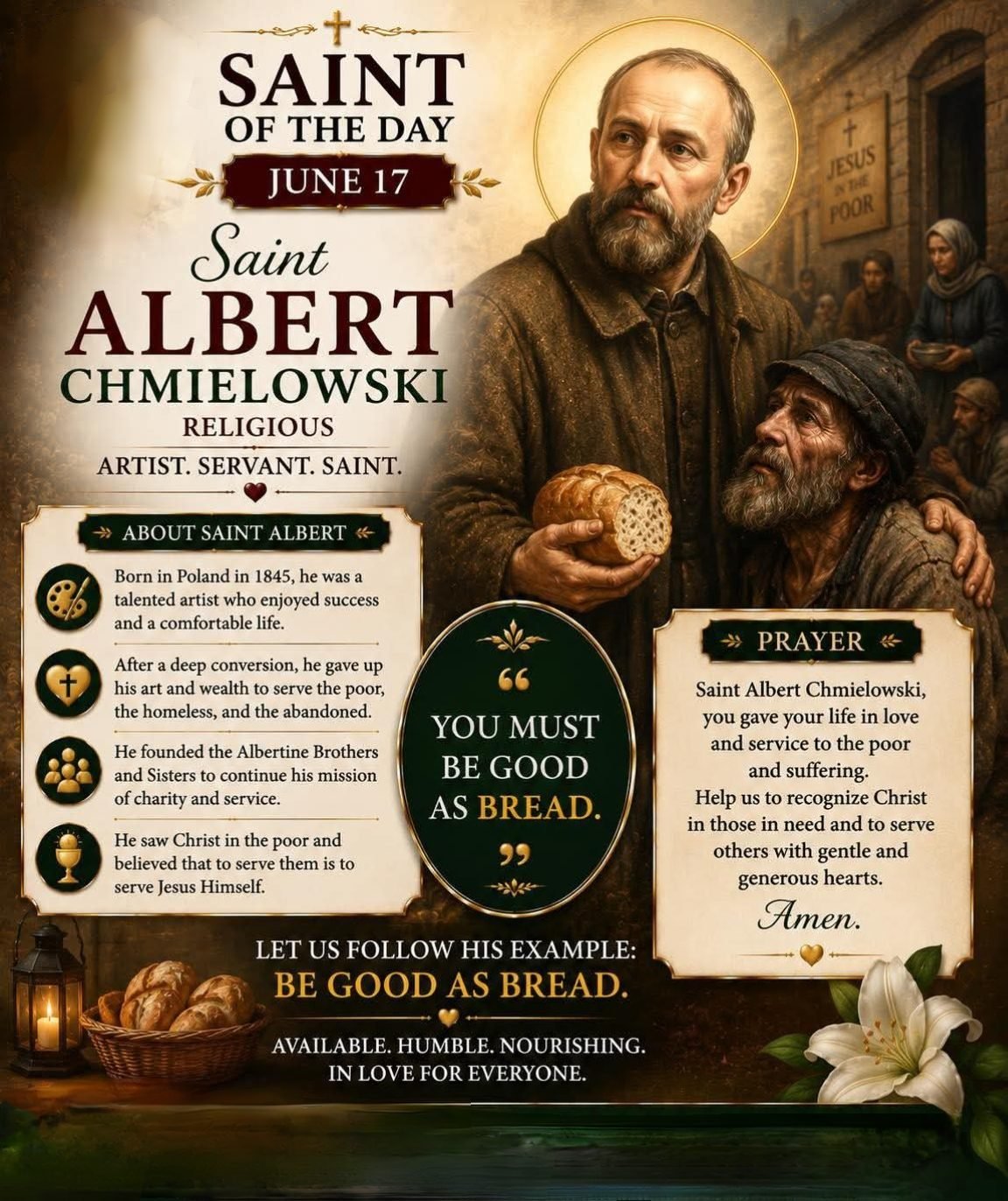
Brother Albert spent the remainder of his life serving the poorest people of Poland. His compassion, humility, and self-sacrifice earned him widespread admiration. He died on 25 December 1916 in Kraków.
He was beatified in 1983 and canonized in 1989 by Pope John Paul II, who greatly admired him and considered him a model of Christian charity.
CONTEMPLATING THE LIFE OF SAINT ALBERT CHMIELOWSKI
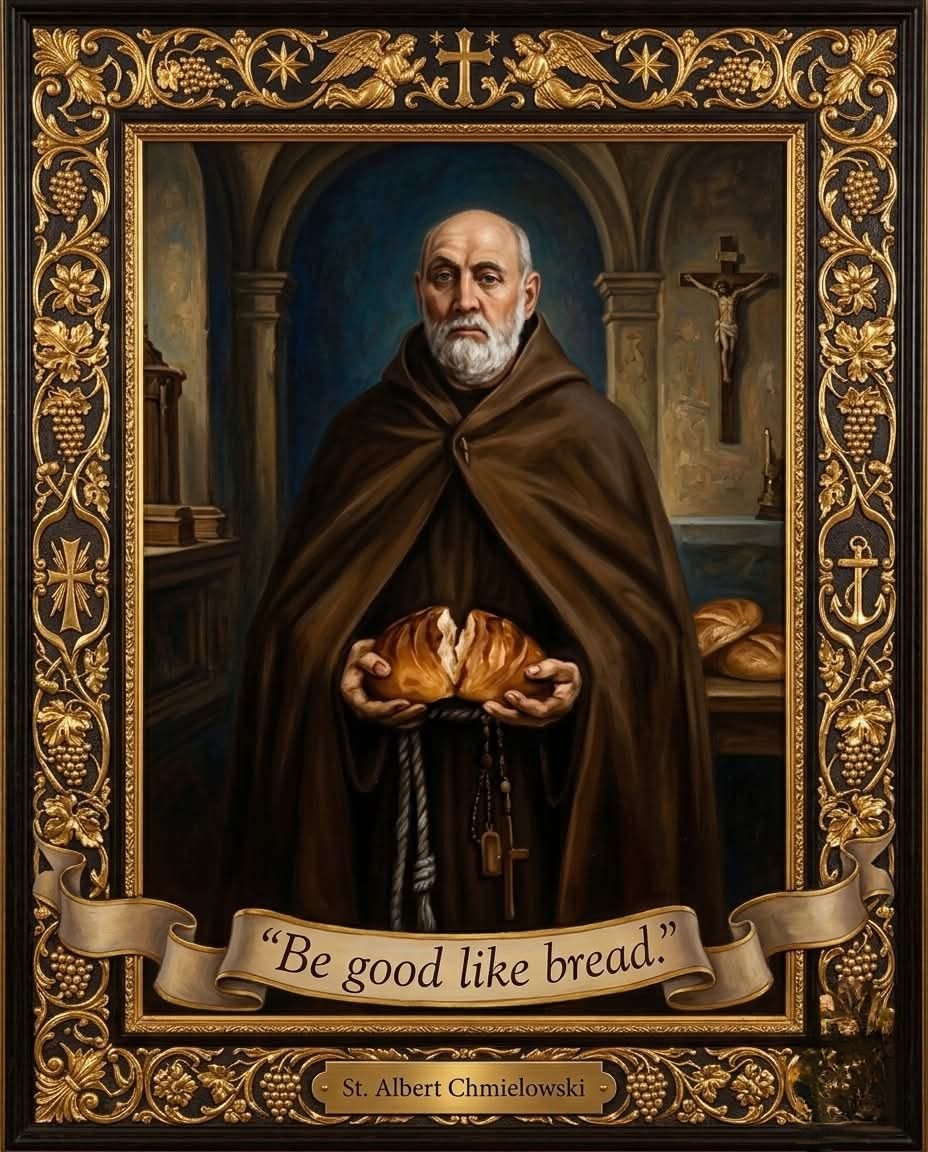
THE ARTIST WHO BECAME A SERVANT OF THE POOR
The life of Saint Albert Chmielowski demonstrates that God can transform personal suffering into a mission of love. Though gifted as an artist and capable of achieving fame, he discovered a higher calling in serving Christ through the poor.
A HEART SHAPED BY SUFFERING
The loss of his leg during the struggle for Poland’s freedom could have filled him with bitterness. Instead, it deepened his compassion for those who suffered. His own wounds helped him understand the pain and loneliness of others.
“Blessed are the merciful, for they shall obtain mercy.” (Matthew 5:7)
THE FACE OF CHRIST IN THE POOR
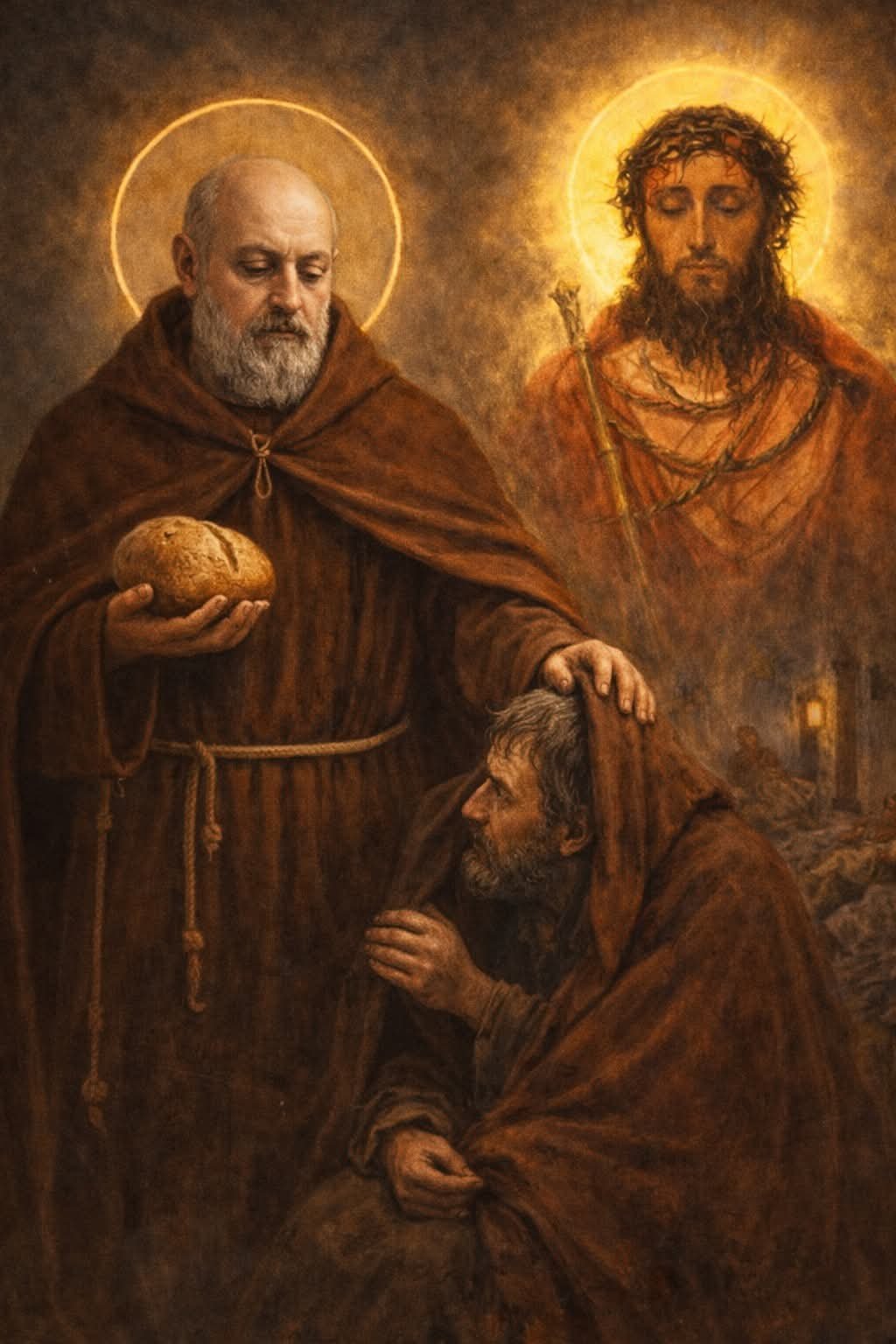
While painting Ecce Homo, Albert came to see that the suffering Christ was present in every abandoned person. This insight changed the direction of his life and inspired him to leave behind personal ambitions for a life of service.
“Truly, I say to you, as you did it to one of the least of these my brethren, you did it to me.” (Matthew 25:40)
THE COURAGE TO LET GO
Saint Albert willingly abandoned a promising artistic career to follow God’s call. His example teaches that true greatness is found not in worldly success but in faithful obedience to God’s will.
“What does it profit a man if he gains the whole world and forfeits his soul?” (Mark 8:36)
LIVING AMONG THOSE HE SERVED
He did not merely help the poor from a distance. He chose to live among them, sharing their daily struggles and treating them as brothers and sisters. Through this witness, he restored hope and dignity to many lives.
“Bear one another’s burdens, and so fulfil the law of Christ.” (Galatians 6:2)
AS GOOD AS BREAD
His famous saying, “One must be as good as bread,” captures the essence of Christian charity. Like bread that nourishes everyone without discrimination, he gave himself freely to all who came to him in need.
“I am the bread of life; he who comes to me shall not hunger.” (John 6:35)
A MODEL OF CHRISTIAN LOVE
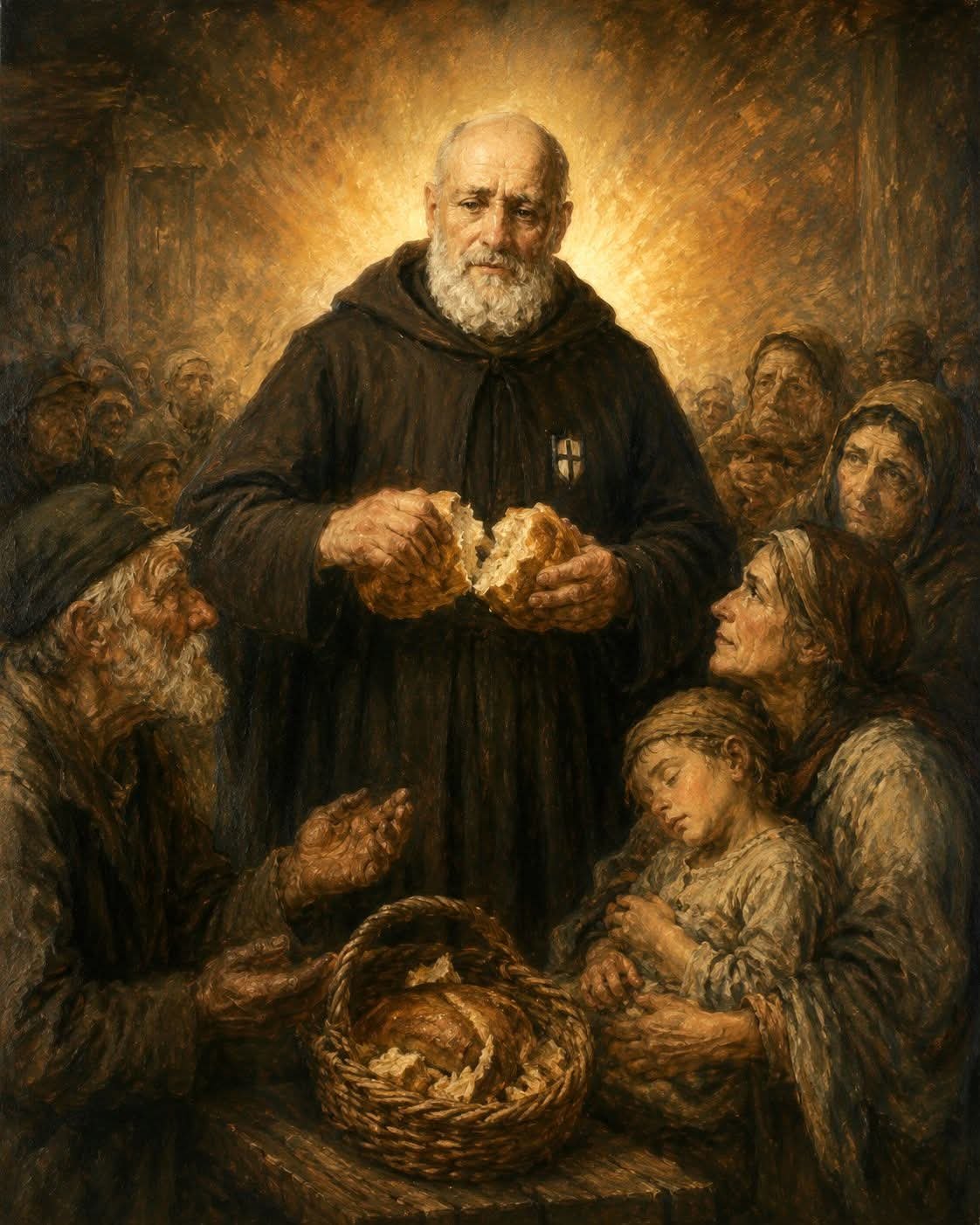
Saint Albert reminds us that holiness is found in practical acts of mercy. He teaches that every encounter with the poor is an opportunity to encounter Christ Himself and to reveal God’s love to the world.
“Little children, let us not love in word or speech but in deed and in truth.” (1 John 3:18)
LEGACY OF COMPASSION
The communities he founded continue their work of caring for the poor and homeless. His life remains a powerful testimony that genuine love always seeks the good of others and reflects the compassion of Christ.
“Whoever is generous to the poor lends to the Lord, and He will repay him for his deed.” (Proverbs 19:17)

Saint Albert Chmielowski invites us to look beyond appearances, recognize Christ in every person, and become instruments of God’s mercy wherever we are.
PRAYER
O God of infinite love and mercy, look at the merits of St. Brother Albert, who following the example of Your Son, became a brother of all people and by his humble service to the most abandoned and outraged, rescued their human dignity and aroused faith in Your Divine Providence.
Through his intercession deign graciously to grant me the favor of …. for which I ask You with trust. Amen