
SPIRITUAL INSIGHTS INTO THE LIVES OF BLESSED TERESA OF ST. AUGUSTINE AND COMPANIONS
July 17, 2026
Philippians 4 : 7
July 18, 2026FEAST OF SAINT FREDERICK OF UTRECHT, BISHOP AND MARTYR AND SAINT BRUNO OF SEGNI – 18th JULY
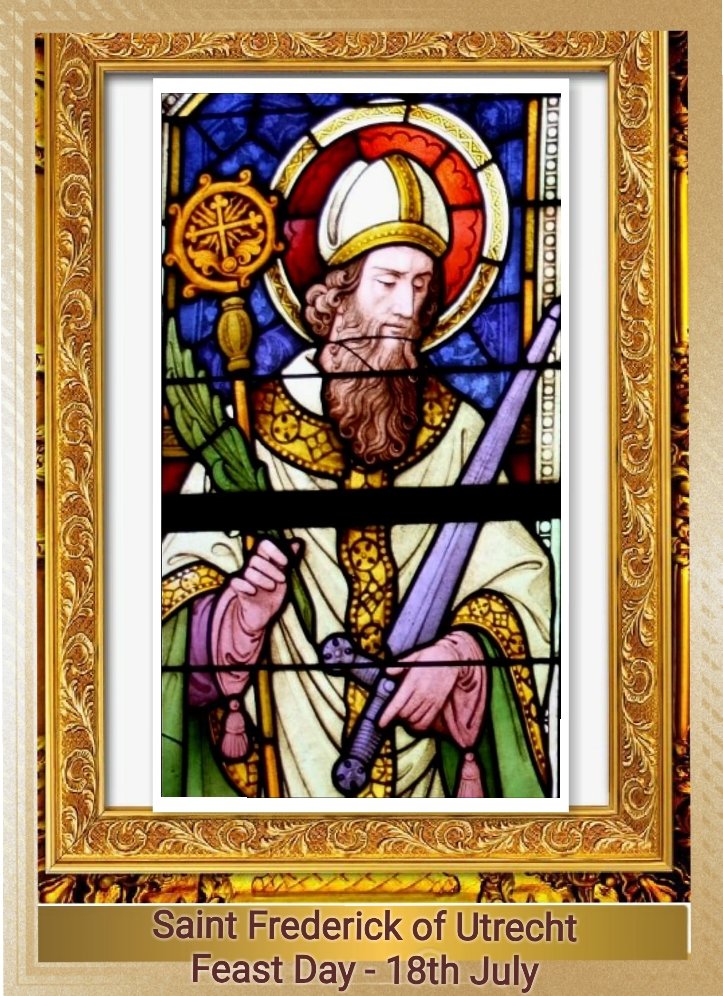
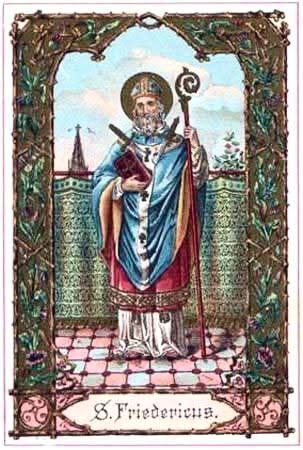
FEAST OF SAINT FREDERICK OF UTRECHT, BISHOP AND MARTYR
FEAST DAY – 18th JULY
Frederick I was Bishop of Utrecht between 815/816 and 834/838 AD, and is a saint of the Eastern Orthodox Church and Roman Catholic Church. Frederick was born around 780 in Friesland and was a grandson of the Frisian King Radboud. According to Church records, he died on 18 July 838 but other sources give dates between 834 and 838.
Frederick, the member of an illustrious family among the Frisians, was educated by the clergy of the Church of Utrecht. Filled with piety and learned in spiritual things, he was ordained by Bishop Rickfield and given the task of instructing catechumens. In 820, Frederick succeeded the same prelate as Bishop of Utrecht.
The Saint was consecrated in the presence of the Emperor, Louis the Debonair, who advised him to stamp out the remaining vestiges of idolatry in Friesland. Frederick took the advice and sent zealous laborers into the north to extirpate the paganism still lurking there. He reserved for himself the most troublesome territory, Walcheren, an island belonging to The Netherlands that was rampant with incestuous marriages contracted within the forbidden degrees.
At a young age he was taught at Utrecht by the clergy, including Bishop Ricfried. After completing his studies he was ordained priest and put in charge of converting the remaining heathens in the northern areas of the diocese, but also in areas outside of the diocese. It is known that he preached at Walcheren, together with St. Odulfus in Stavoren and its surroundings.
Frederick was known for his piety and erudition. He maintained a correspondence with Rabanus Maurus. He was praised for his knowledge and understanding during the synod of Mainz in 829. It is unclear exactly how Frederick came to an end. It has been established that he was murdered, but by whom and why is unclear.
Legend tells that he was stabbed by two men after the offering of the Mass on 18 July 838. According to the 11th and 12th century writers Bishop Otbert of Liège (Passio Frederici) and William of Malmesbury, the killers were hired by Empress Judith, because of Frederick’s regular criticism of her dissolute way of life. Later writers like Cesare Baronio and Jean Mabillon write that the inhabitants of Walcheren, who were hostile to Christianity, sent them as a response to Frederick’s preaching there.
The latter seems the most plausible. There are no sources of writers of the time showing that the empress was unchaste or immoral, or that Frederick had made that allegation. Moreover, Walcheren was quite hostile to the missionaries from Utrecht.

According to tradition St. Frederick became involved in the difficulties between the sons of the emperor, Louis the Debonair, and their father and step-mother. During these disturbances the party of the young princes charged the Empress Judith with numerous immoralities.
Whatever may have been the truth of these stories, St. Frederick is said to have admonished her of them, with charity but with the effect of drawing upon himself the fury and resentment of the empress. He also got himself disliked elsewhere. The inhabitants of Walcheren were barbarous and most averse from the Gospel.
On which account, St. Frederick, when he sent priests in the northern part of his diocese, took this most dangerous and difficult part chiefly to himself; and nothing gave him more trouble than marriages contracted within the forbidden decrees and the separation of the parties (that the union of Louis and Judith was itself incestuous was an afterthought of hagiographers
The story goes on that, on July 18, 838, after St. Frederick had celebrated Mass and was about to make his thanksgiving, he was stabbed by two assassins. He died in a few minutes, reciting that verse of Psalm 144, “I will praise the Lord in the land of the living”. The eleventh century author of his life says that these assassins were employed by the Empress Judith, who could not pardon the liberty he had taken to reprove her sins, and was incited thereto by her husband.
William of Malmesbury and others repeat the same; but later writers, such as Baronius and Mabillon, think that they were rather sent by some of the inhabitants of Walcheren. And this seems the more likely opinion: for no contemporary makes the charge against Judith and it is not at all in consonance with the attitude of Louis towards episcopal authority and Christian conduct.
Frederick composed a prayer to the Blessed Trinity which for many ages was used in the Netherlands. The reputation of his sanctity appears from a poem of Rabanus Maurus, his contemporary, in praise of his virtues
Shortly after his death, Frederick was canonized. His feast day is 18 July and he is the patron saint of the deaf. He was buried in St. Salvator’s Church in Utrecht.
CONTEMPLATING THE LIFE OF SAINT FREDERICK OF UTRECHT
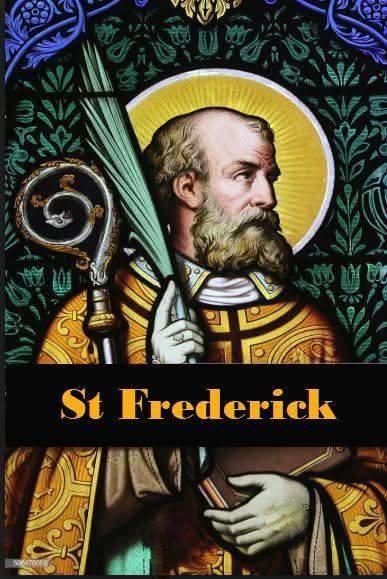
BISHOP, TEACHER, REFORMER, AND MARTYR OF TRUTH
Saint Frederick of Utrecht (c. 781–838) was a bishop, missionary, teacher, reformer, and martyr who fearlessly proclaimed the Gospel and worked tirelessly for the spiritual renewal of his people. Renowned for his unwavering commitment to Christian truth and morality, he remained faithful to Christ even when it placed his life at risk. The Church honours him as a courageous shepherd who sealed his witness with martyrdom. His feast is celebrated on July 18.
A CHILD PREPARED FOR GOD’S SERVICE
Born into a noble Christian family in a region where Christianity was still taking root, Frederick was raised with a deep love for God rather than worldly ambition. Inspired by the lives of the saints, he desired above all to serve Christ, not earthly power. From his youth, God prepared him for a life of faithful service and courageous witness.
A MIND FORMED BY FAITH
Frederick received an excellent education in Sacred Scripture and theology, combining learning with humility and prayer. He understood that true wisdom comes from holiness, allowing God’s Word to shape both his mind and heart before teaching others.
A FAITHFUL SHEPHERD
Ordained a priest and later appointed Bishop of Utrecht, Frederick patiently guided a young Christian community still influenced by pagan customs. Through preaching, teaching, and pastoral care, he encouraged clergy and faithful alike to live the grace of Baptism with sincerity and devotion.
A FEARLESS DEFENDER OF TRUTH
Frederick preached the Gospel with charity and courage, speaking the truth to both ordinary people and influential leaders. Even when correcting those in authority, he remained faithful to Christ, knowing that a true shepherd cannot remain silent when souls are at risk.
A LIFE ROOTED IN PRAYER
The Eucharist, prayer, preaching, and care for his people formed the centre of Frederick’s ministry. He believed that a bishop’s true strength came not from authority but from humble communion with God, drawing his strength from the Good Shepherd.
THE MARTYR’S CROWN
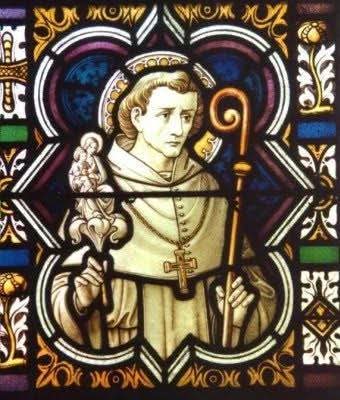
On July 18, 838, after celebrating Holy Mass and remaining in prayer, Frederick was attacked by assassins as he left the church. According to tradition, he forgave his attackers before dying, offering his life in imitation of Christ. His martyrdom became the final testimony of his faithful service to the Gospel.
SPIRITUALITY
Saint Frederick’s spirituality was founded on love of truth, pastoral charity, courage, forgiveness, and deep prayer. His ministry reflected unwavering fidelity to God and compassionate care for His people.
VENERATION
Buried in Utrecht, devotion to Saint Frederick spread rapidly throughout the region. He is honoured as one of the great saints of the Dutch Church and is remembered as a courageous bishop, faithful shepherd, defender of Christian morality, and martyr for truth.
LESSONS FROM HIS LIFE
Saint Frederick teaches that truth must always be proclaimed with love and courage. His life reminds pastors to shepherd God’s people faithfully, encourages every Christian to seek personal holiness, draws strength from prayer, practise forgiveness even in suffering, and remain steadfast in following Christ despite opposition.
LASTING LEGACY
The witness of Saint Frederick continues to inspire bishops, priests, missionaries, catechists, and all Christians. His life demonstrates that authentic leadership is rooted in holiness and that fidelity to the Gospel is worth every sacrifice, even the gift of one’s own life.
PRAYER
God our Father, your servant Saint Frederick worked unceasingly to eradicate evil from the people, by means of assiduous exhortations, tears, watching, prayer and fasting.
He sent forth ways and means by which wicked abominations such as illegal marriages could be eliminated for good, and brought back to you numberless persons who were truly contrite.
May we, likewise, work for the cause of sanctification of souls, and reconcile people with you, thus establishing your greater glory, through Christ our Lord. Amen

==================================
ALSO CELEBRATED:
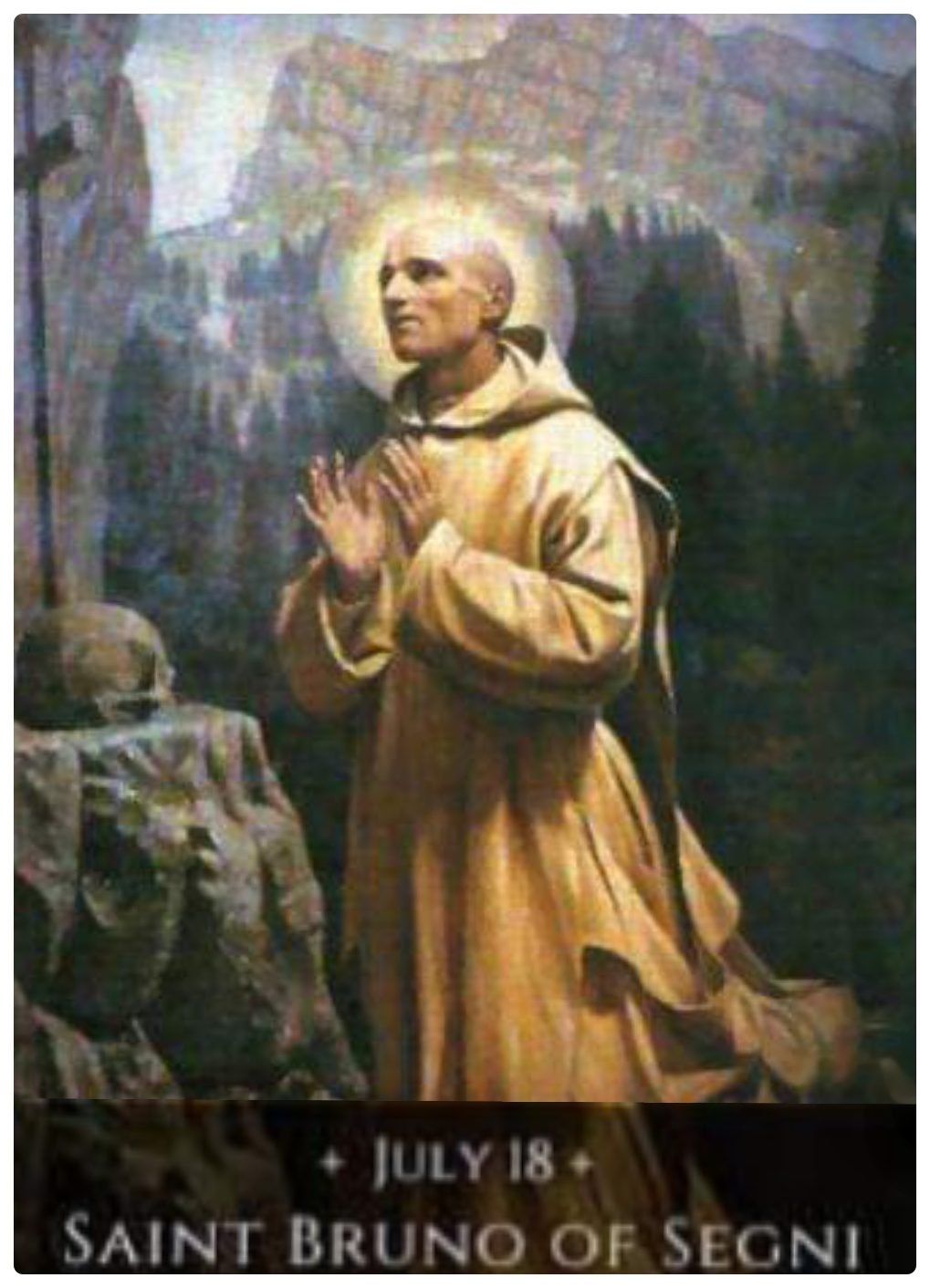
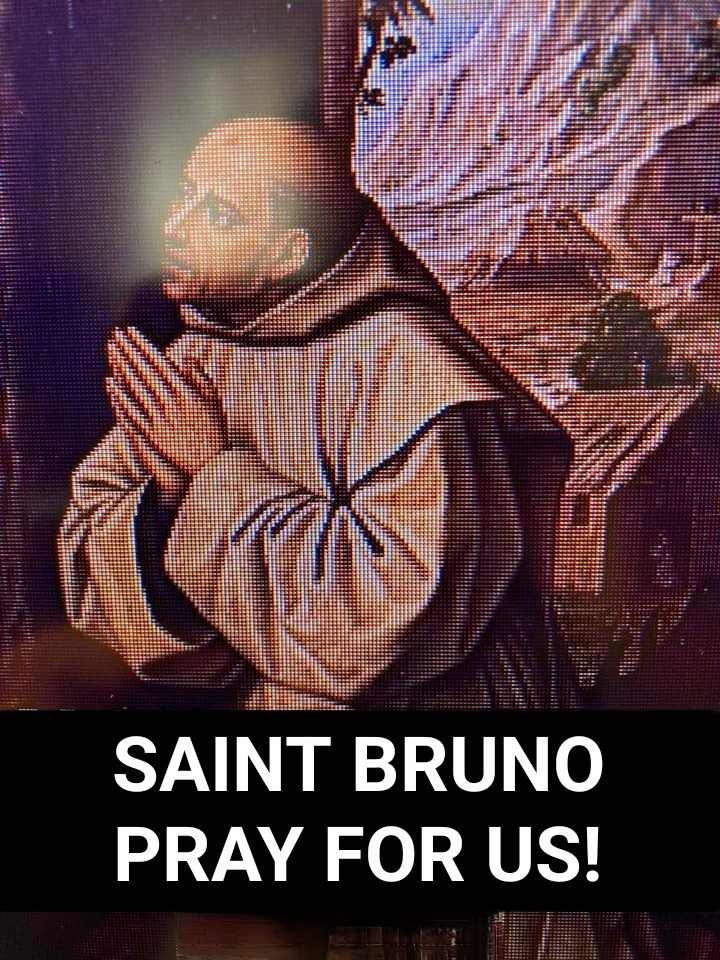
FEAST OF SAINT BRUNO OF SEGNI – 18 JULY
St. Bruno of Segni was born in Asti, Italy, in 1049 and came from a distinguished line of nobles. From childhood, he believed that the only way for a man to be happy is to love God, so his greatest aim was to please him in everything he did. When Bruno was young, he became a Benedictine and completed his studies at St. Perpetuus Monastery in the Asti Diocese.
In 1079, as a Priest, he stood against Berengarius during the Roman Council to defend the doctrine of the Catholic Church regarding the Holy Eucharist. He was appointed Bishop of Segni by Pope Gregory VII in 1081. Bruno, who had been compelled to submit after a long and strenuous resistance, served his flock with unwearied zeal.
Bishop Bruno was a regular presence on significant papal commissions. He worked to eradicate simony and uphold ecclesiastical discipline through his writings. In 1099, he departed from his diocese to embrace the monastic lifestyle once again, assuming the role of abbot at Monte Cassino. In addition to being a cardinal legate, Bruno served as a librarian to the Holy Roman See.
The Holy Eucharist was studied and discussed for centuries according to Bruno’s theological writings. He authored commentaries on the Book of Job, the Psalms, and the four Gospels. Bishop Bruno also wrote about the lives of Pope Leo IX and Pietro di Anagni.
He died at Segni in mid-1123. Pope Lucius III canonized St. Bruno on 5 September 1181 in Segni. He is the patron saint for Segni.
PRAYER
St. Bruno of Segni, pray that we lead a life devoted to prayer and remain faithful to the teachings of the Catholic Church.
*********************************
ALSO CELEBRATED:
SAINT CAMILLUS DE LELLIS
FEAST DAY – 18 JULY (USA)
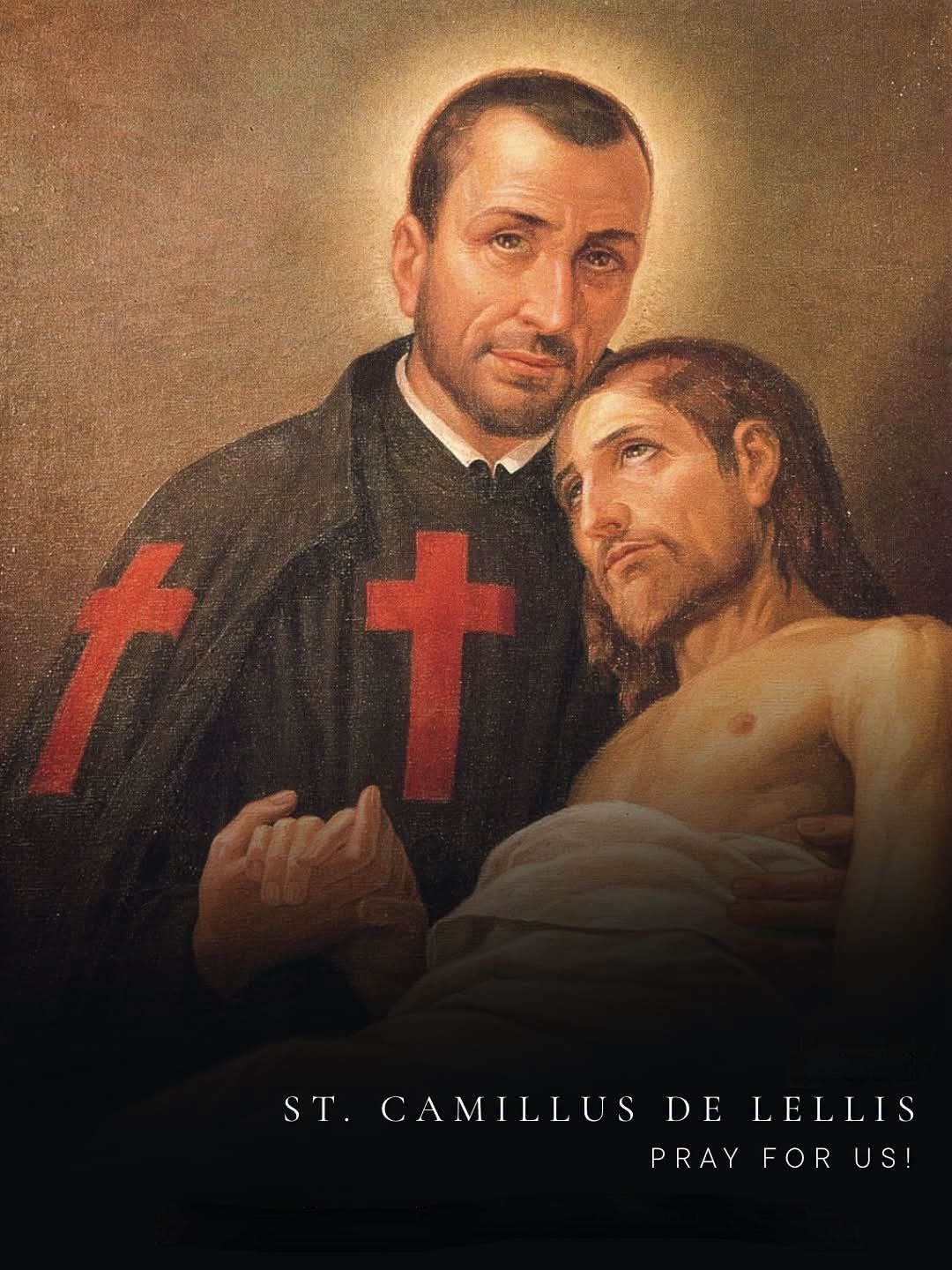
Saint Camillus De Lellis’ Feast is celebrated on 18 July in the USA and on 14 July, in the rest of the world.
Saint Camillus De Lellis, pray for us!