
Day Twenty-Three of Lent – The Sentence of Death
March 16, 2026
Psalm 105:1
March 16, 2026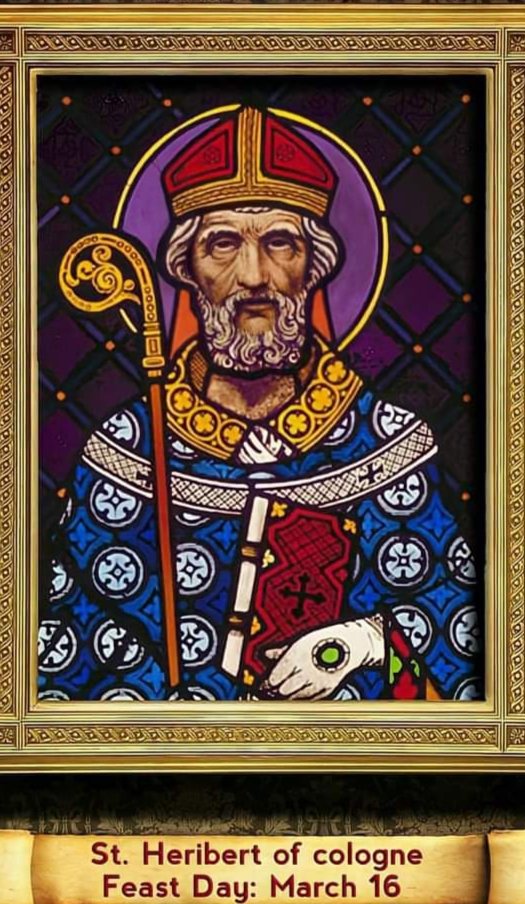
FEAST OF SAINT HERIBERT OF COLOGNE, ARCHBISHOP
FEAST DAY – 16th MARCH
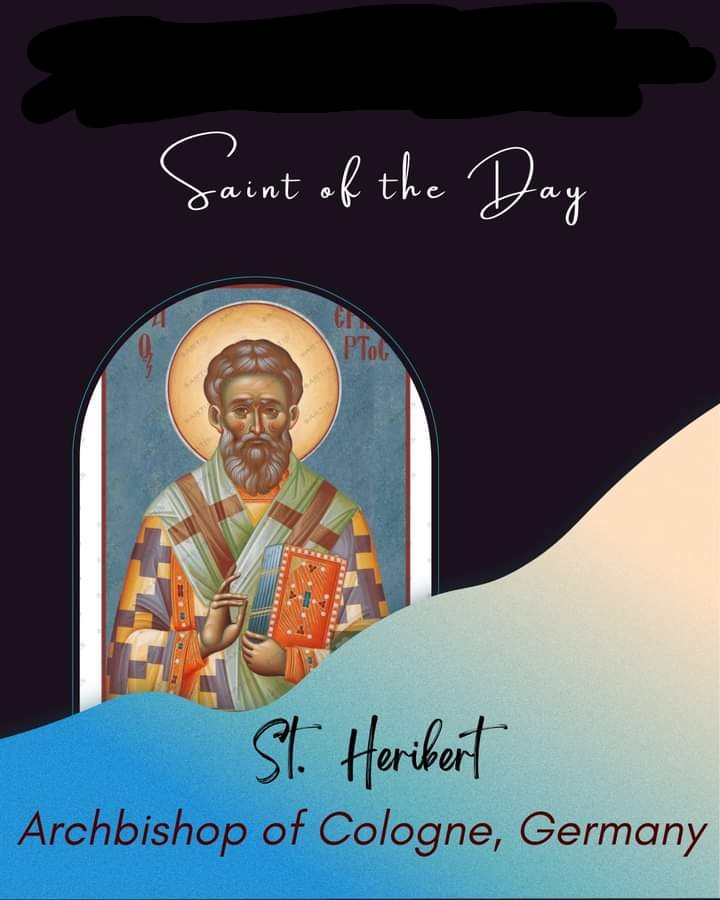
Heribert of Cologne (c. 970 – 16 March 1021), also known as Saint Heribert, was a German Roman Catholic prelate who served as the Archbishop of Cologne from 999 until his death. He also served as the Chancellor for the Emperor Otto III since 994. He also collaborated with Henry II, Holy Roman Emperor with whom relations were strained, though were strengthened over time.
Heribert was born around 970 in Worms to Count Hugo and Tietwista. On the maternal side his half-brother was Heinrich who was the Bishop of Würzburg. He was educated at the Abbey of Gorze, at the Worms Cathedral and at the Benedictine Gorze convent Lorraine. He wanted to enter the Benedictine Order there, but his father recalled him to Worms and obtained a canonry for him. As a young priest, Heribert became a trusted counselor of the youthful Emperor Otto III, chancellor of the diocese, and finally Archbishop of Cologne in 998.
Heribert studied alongside Bruno of Carinthia who was the future Pope Gregory V. He returned to the Worms Cathedral to serve as its provost and received his ordination to the priesthood in 994 from Bishop Holdebold. The Bishop of Worms wanted Heribert to be his successor though the emperor took notice of him and planned to bring him as an advisor to his court.
The Emperor Otto III appointed him in 994 as the Italian chancellor and in 998 for the German kingdom. He held the latter position until Otto III’s death. He had accompanied the emperor to Rome in 996 and again in 997 and was still on the peninsula when word came that he had been chosen as the Archbishop of Cologne. In Benevento he received investiture and the pallium from the new Pope Sylvester II on 9 July 999 and on the following Christmas received his episcopal consecration at Cologne in the archdiocesan cathedral.
In 1002 he was present at the deathbed of Otto III at Paterno. While returning to his homeland to Aachen with the Emperor’s remains and the imperial insignia, he was captured at the behest of the future Saint Heinrich II whom he had first opposed but later served. In the ensuing skirmishing for the post of Emperor, St. Heribert at first was opposed to St. Henry II through a mutual misunderstanding.
But in time the two Saints, Archbishop and Emperor, were publicly reconciled and labored together for the good of the people. Once the latter was made king in 1002, Heribert acknowledged him as such and served as his collaborator and still as chancellor. The pair’s relations were not the best though the new emperor came to respect his abilities and the rift between them turned into a friendship.
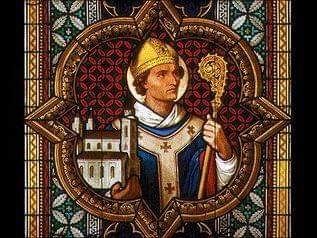
In 1003 he founded the Deutz convent on the Rhine. Heribert often sent alms to the poor and sent alms to priests to distribute to the poor. Heribert died on 16 March 1021 in his archdiocese and was buried at his convent church after their transferral on 30 August 1147. Heribert contracted a fever while on a pastoral visitation and hurried back to Cologne to recover where he died within the week. He was honoured as a saint during his lifetime and was canonized in about 1075.
His reported miracles included ending a drought; he is thus invoked for beneficial rains. His relics were kept in the convent church at Deutz in a golden casket which is now preserved in the parish church of “Neu-St.Heribert”, in Köln-Deutz. He was revered as a kindly bishop who gave himself intensely to prayer and poured the riches of his own spiritual life on his people. The confidante of emperors, he never lost touch with God, or the people to whom he was father and shepherd.
St. Heribert was practically a model of what a Bishop should be. He was a peaceful man but a firm disciplinarian; a holy man but one who knew the value of money and saw to it that his was always divided among the poor. He was a man of prayer, and in a time of drought it was in answer to his prayers that a torrential rain fell, saving the harvest and delivering the people from famine. He is invoked in the time of drought.
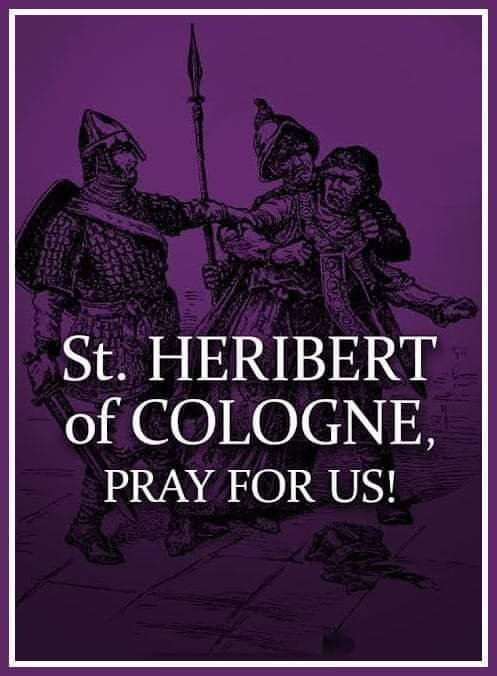
CONTEMPLATING THE LIFE OF SAINT HERIBERT OF COLOGNE (c. 970-1021)
Heribert of Cologne was a German bishop, statesman, and saint of the early 11th century, remembered for his deep spirituality, charity toward the poor, and wise leadership during a turbulent period of medieval Europe.
He served as Archbishop of Cologne and also as the trusted adviser and chancellor of the Holy Roman Emperor Otto III.
Despite his political responsibilities, he remained a man of prayer, humility, and pastoral care, earning a reputation for holiness both during his life and after his death.
THE BISHOP WHO WALKED BESIDE AN EMPEROR
In the powerful lands of medieval Germany, where kings ruled vast territories and bishops often guided entire regions, a child was born around the year 970. His name was Heribert.
He was born into a noble family in the region of Worms (in present-day Germany), but from an early age his parents saw that their son possessed something more valuable than noble blood. He had a deep love for God.
A Scholar Formed by Faith
Heribert was sent to study at the famous cathedral school of Worms and later at the monastic school of Gorze Abbey.
These schools were centers of the Benedictine reform movement, which emphasized spiritual renewal, discipline, and scholarship.
Heribert grew not only in learning but also in devotion and humility. He learned Scripture, theology, and the wisdom of the Church.
His teachers soon realized that this young man possessed rare qualities:
* intelligence
* humility
* spiritual discipline.
These gifts brought him to the attention of one of the most powerful rulers in Europe. The young emperor Otto III invited Heribert to serve in the imperial court.
Service to the Empire
In the royal court, Heribert became not only an adviser but a trusted friend to the emperor. He eventually served as imperial chancellor, helping manage the political and diplomatic affairs of the vast Holy Roman Empire.
But despite living among power and wealth, Heribert remained deeply rooted in prayer. He never forgot the poor or abandoned his spiritual life. Even the emperor admired his humility.
The Archbishop
In the year 999, Heribert was appointed Archbishop of Cologne, one of the most important dioceses in the empire. Now he carried enormous responsibilities.
As archbishop, he worked to strengthen the spiritual life of the Church. He encouraged:
* monastic reform
* education of clergy
* charitable works for the poor.
Even while serving as archbishop, he continued assisting Emperor Otto III as chancellor.
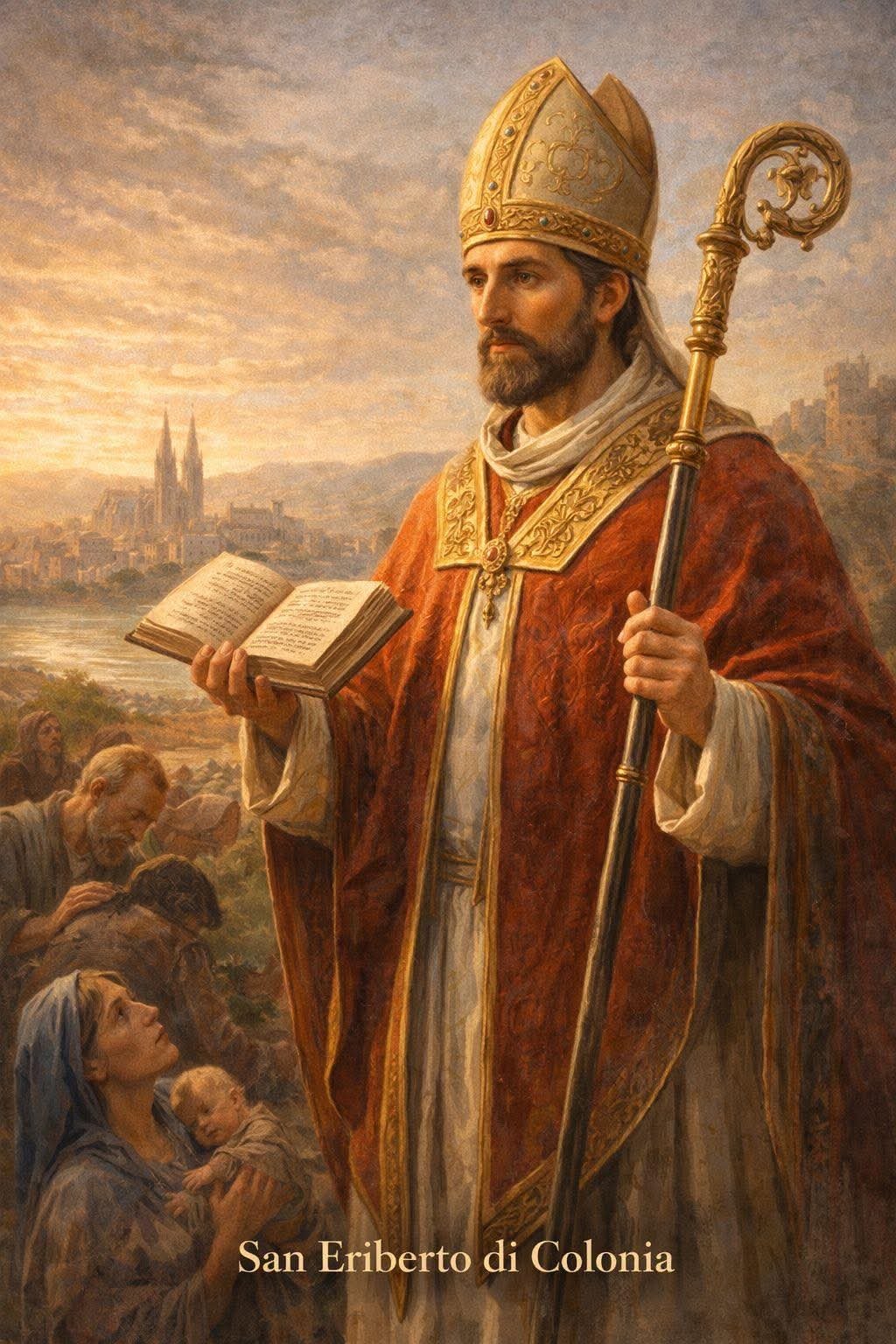
Close Friendship with Otto III
Heribert shared a close spiritual and political friendship with Otto III. The emperor envisioned a renewed Christian empire rooted in both faith and learning.
Heribert supported these ideals and often accompanied the emperor on travels across Europe.
The Death of an Emperor
One of the most dramatic moments of his life came when Emperor Otto III died suddenly in Italy in 1002. Heribert was at his side. The emperor who had dreamed of renewing Christian Europe was gone.
Heribert personally carried the emperor’s body back across the Alps to Germany for burial. It was a journey of grief, loyalty, and faith.
A Bishop Who Served the Poor
The people of Cologne soon discovered that their archbishop was not interested in prestige. He was interested in serving them. When famine struck, he opened church resources to feed the hungry.
When people suffered, he personally organized relief. For Heribert, the authority of a bishop was meant for compassion.
The Abbey of Prayer
Despite his busy life, Heribert longed for quiet places of prayer. So he founded a monastery near Cologne called Deutz Abbey. There monks prayed dailly. The archbishop himself often withdrew to seek God in silence.
It was a reminder that even leaders of great responsibilities must return to the source of their strength: prayer.
Miracles and Reputation for Holiness
Stories spread among the people about the holiness of their bishop. During times of severe drought, they asked for his prayers. When he prayed, rain came.
For this reason, the people began invoking him in times of drought and crop failure.

The Final Years
After years of service to the Church and the empire, Heribert grew weaker with age. Yet he continued caring for the poor and guiding his people. On March 16, 1021, he died peacefully. He was buried at the monastery he had founded.
Soon pilgrims began visiting his tomb. The bishop who had walked beside emperors was remembered most for something far greater: his kindness and holiness.
Canonization
Heribert was canonized in 1147 by Eugene III.
His veneration spread especially throughout Germany and the Rhineland region.
Patronage
St. Heribert is traditionally invoked as a patron for:
* rain during drought
* good harvests
* agricultural needs.
In Summary
St. Heribert of Cologne stands as an example of a holy bishop who served both the Church and society with wisdom, humility, and compassion. His life shows that leadership in public affairs can be deeply rooted in prayer and charity.
PRAYER
God, Light and Shepherd of souls, You established St. Heribert as Bishop in Your Church to feed Your flock by his word and form it by his example.
Help us through his intercession to keep the Faith he taught by his word and to edify your Church by emulation of the virtues Saint Heribert displayed.
We pray this in the Name of Jesus. Amen
Saint Heribert of Cologne, pray for us.