
Found by the Shepherd’s Love: The Story of a God Who Never Stops Searching
July 20, 2026
Jeremiah 31:25
July 21, 2026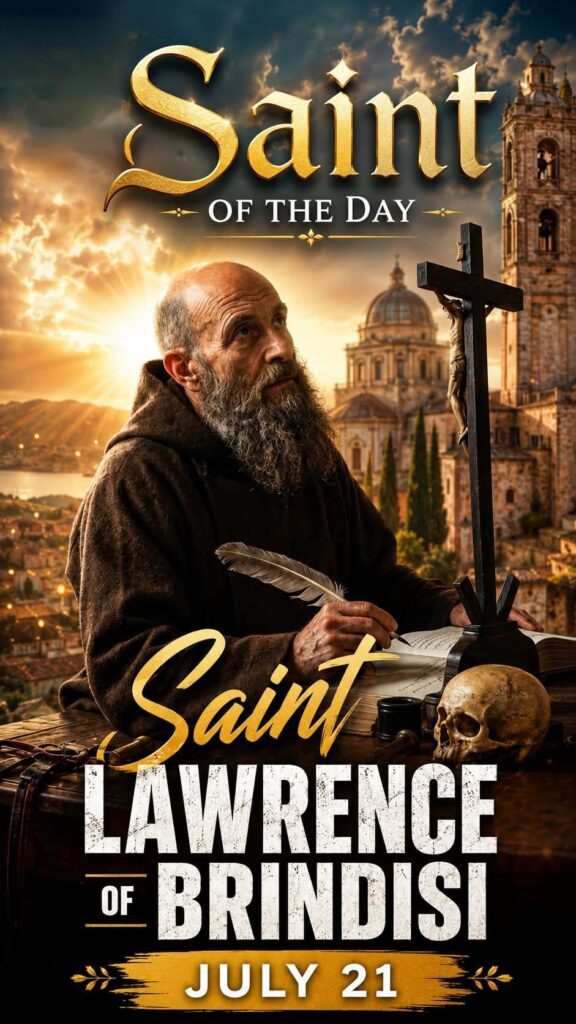
FEAST OF SAINT LAWRENCE OF BRINDISI, PRIEST AND APOSTOLIC DOCTOR OF THE CHURCH
FEAST DAY – 21st JULY
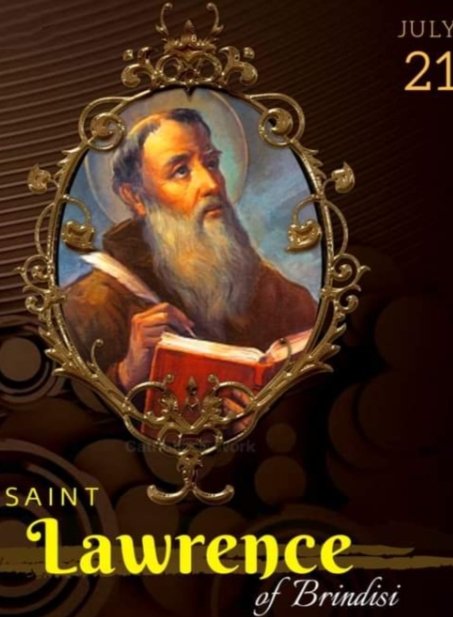
Lawrence of Brindisi (22 July 1559 – 22 July 1619), born Giulio Cesare Russo, was a Roman Catholic priest and a theologian as well as a member of the Order of Friars Minor Capuchin. An accomplished linguist, in addition to his native Italian, Lawrence could read and speak Latin, Hebrew, Greek, German, Czech, Spanish, and French fluently.
Giulio Cesare Russo was born in Brindisi, Kingdom of Naples, to a family of Venetian merchants. The Conventuals of Brindisi were entrusted with his education. Showing an early gift for oratory, he was always the one chosen to address, in accordance with the Italian custom, a short sermon to his compatriots on the Infant Jesus during the Christmas festivities.
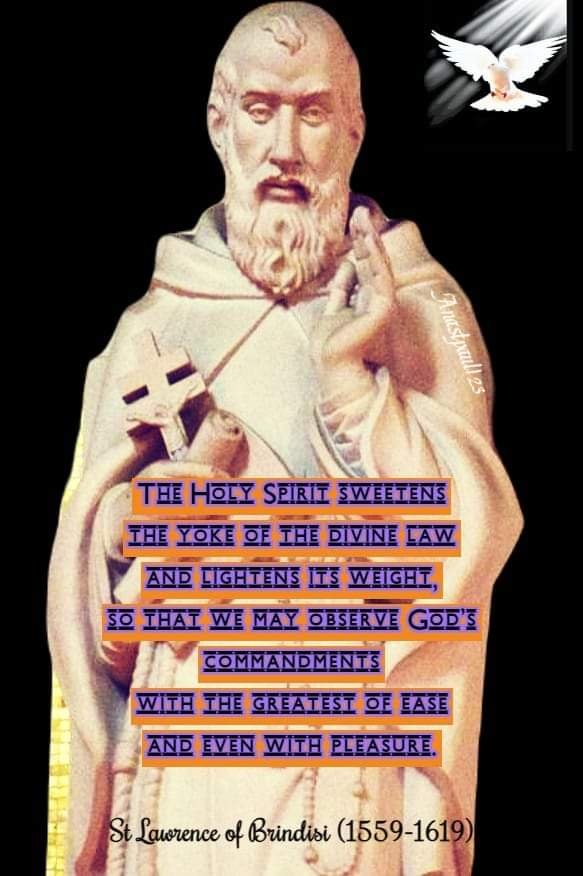
He was twelve when his father died, and continued his education at Saint Mark’s College in Venice under the supervision of one of his uncles. Cesare joined the Capuchins in Verona as Brother Lawrence. He received further instruction from the University of Padua. While still a deacon he preached the Lenten sermons in Venice. Lawrence was ordained a priest at the age of 23.
At the age of thirty-one, Lawrence was elected superior of the Capuchin Franciscan province of Tuscany. In 1596 he was appointed definitor general in Rome for the Capuchins. With his facility for languages Lawrence was able to study the Bible in its original texts. At the request of Pope Clement VIII, he spent much time preaching to the Jews in Italy.
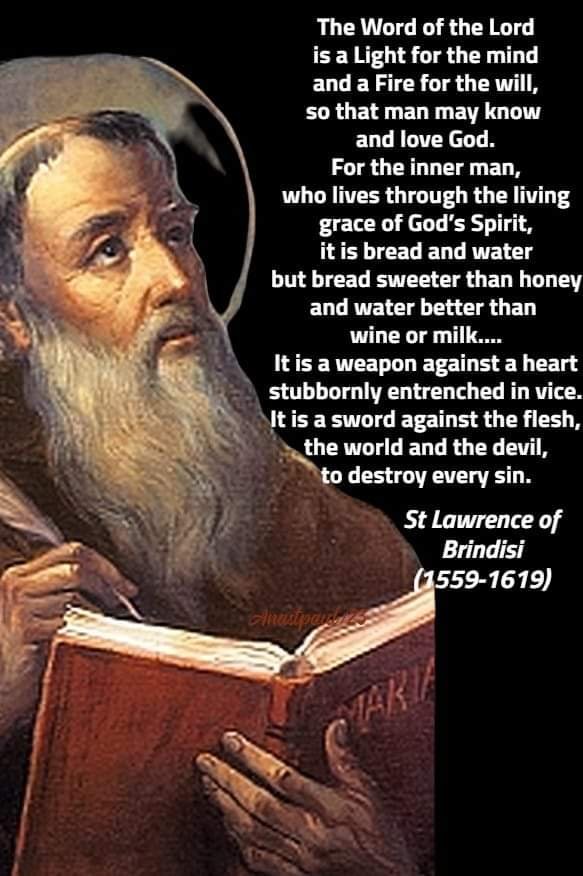
So excellent was his knowledge of Hebrew, the rabbis felt sure he was a Jew who had become a Christian. Lawrence’s sensitivity to the needs of people—a character trait perhaps unexpected in such a talented scholar—began to surface.
Beginning in 1599, Lawrence established Capuchin monasteries in modern Germany and Austria, furthering the Counter-Reformation and bringing many Protestants back to the Catholic faith. He also founded friaries in Vienna, Prague, and Graz. It was on the occasion of the foundation of the convent of Prague in 1601 that he was named the imperial chaplain for the army of Rudolph II, Holy Roman Emperor.
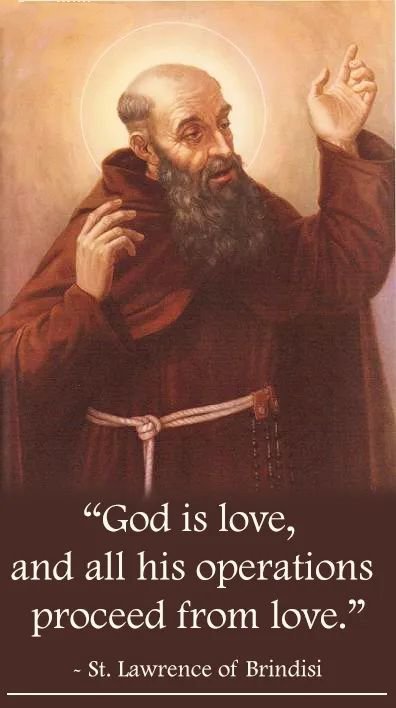
He successfully recruited Philippe Emmanuel, Duke of Mercœur, to help fight against the Ottoman Turks. He then led the army during the siege of Székesfehérvár in Hungary from the Ottoman Empire, armed only with a crucifix. In 1602, he was elected vicar general of the Capuchin friars, at that time the highest office in the Order.
He had the combination of brilliance, human compassion, and administrative skill needed to carry out his duties. In rapid succession he was promoted by his fellow Capuchins and was elected minister general of the Capuchins in 1602. In this position he was responsible for great growth and geographical expansion of the Order.
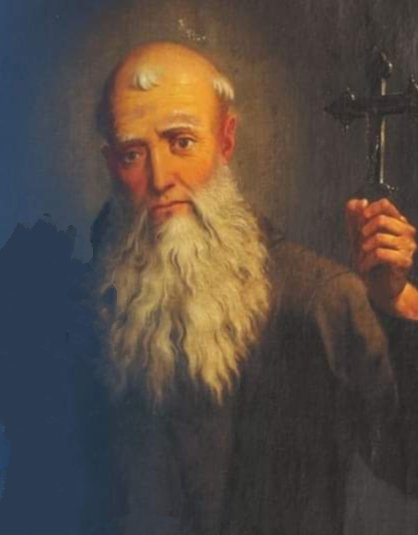
Lawrence was appointed papal emissary and peacemaker, a job which took him to a number of foreign countries. An effort to achieve peace in his native kingdom of Naples took him on a journey to Lisbon to visit the king of Spain. In 1956, the Capuchins completed a 15-volume edition of Lawrence’s writings. Eleven of these 15 contain his sermons, each of which relies chiefly on scriptural quotations to illustrate his teaching.
He was elected again in 1605, but refused the office. Until his death, he was the best adviser of his successors. He entered the service of the Holy See, becoming papal nuncio to Bavaria.
After serving as nuncio to Spain, he retired to a monastery in 1618. He was recalled as a special envoy to the King of Spain regarding the actions of the Viceroy of Naples in 1619. Finishing his mission, he died on his 60th birthday in Lisbon.
He was entombed at the Poor Clares’ Convento de la Anunciada (Convent of the Annunciation) in Villafranca del Bierzo, Spain. Lawrence was beatified on 1 June 1783 and canonized as a saint on 8 December 1881.
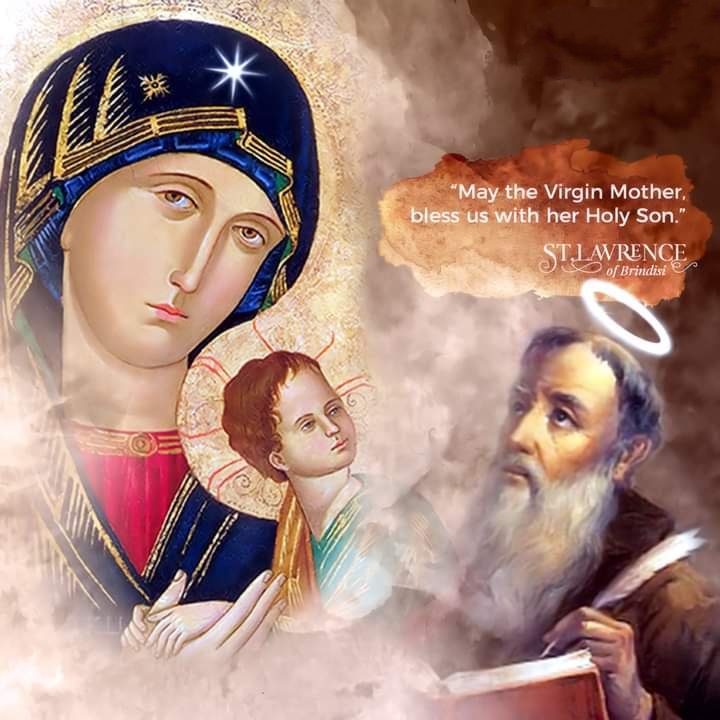
He was beatified by Pope Pius VI and was canonized in by Pope Leo XIII. In 1959 Pope John XXIII declared him Doctor of the Church with the title “Apostolic Doctor”.
His favorite blessing was, “Mary, with Her loving Son, bless us each and every one”.
CONTEMPLATING THE LIFE OF SAINT LAWRENCE OF BRINDISI
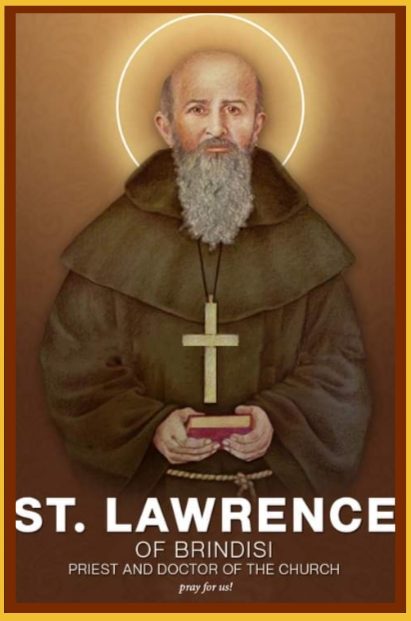
CAPUCHIN FRIAR, PREACHER, DIPLOMAT, BIBLICAL SCHOLAR, AND DOCTOR OF THE CHURCH
Saint Lawrence of Brindisi (1559–1619) was one of the most outstanding figures of the Catholic Reformation. A Capuchin Franciscan friar, he was a gifted preacher, theologian, missionary, diplomat, peacemaker, and biblical scholar. He combined remarkable learning with deep humility and an unwavering love for Christ. Renowned for his preaching, knowledge of Scripture, courageous leadership, and devotion to the Blessed Virgin Mary, he was declared a Doctor of the Church by Pope John XXIII in 1959 with the title “Doctor Apostolicus.” His feast is celebrated on July 21.
THE FRIAR WHO CARRIED THE BIBLE IN HIS HEART AND CHRIST ON HIS LIPS
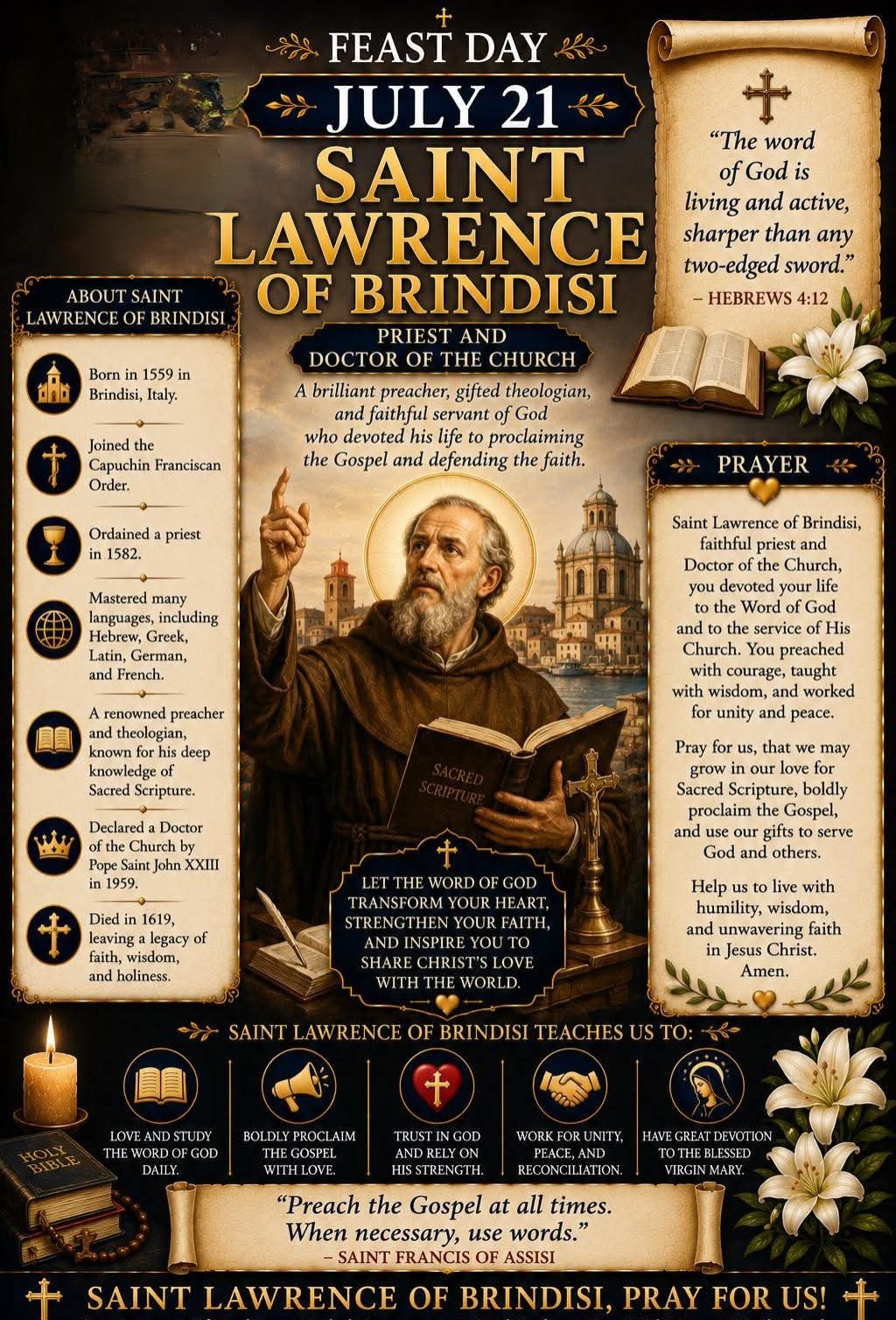
AN ORPHAN CHOSEN BY GOD
Born as Giulio Cesare Russo on July 22, 1559, in Brindisi, Italy, Lawrence was raised in a devout Catholic family. After losing both parents at a young age, he was brought up by the Franciscans. Though orphaned, he found a loving home in God and grew in faith, discovering that those who belong to Christ are never alone.
A MIND THAT LONGED FOR GOD
From childhood, Lawrence displayed an extraordinary memory and a deep love for learning. He mastered several languages, including Latin, Greek, Hebrew, Syriac, German, French, and Spanish. His greatest passion, however, was Sacred Scripture, which he treasured as the living Word of God.
BECOMING BROTHER LAWRENCE
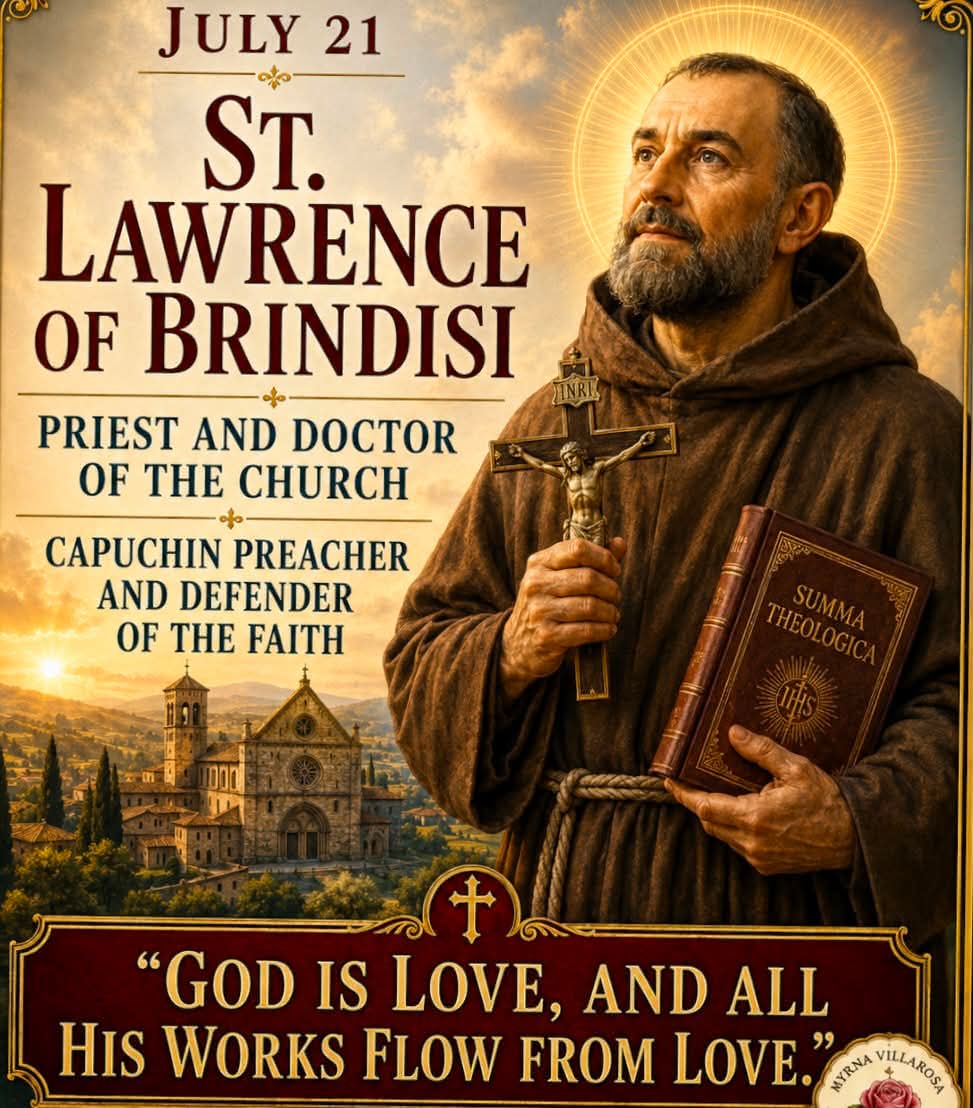
At the age of sixteen, Giulio entered the Capuchin Franciscan Order and took the name Lawrence. He embraced a life of poverty, humility, and service, offering his exceptional gifts entirely to God and the mission of the Church.
THE PREACHER WHO TOUCHED HEARTS
Lawrence became one of Europe’s most sought-after preachers. His sermons brought Scripture to life and inspired people from every walk of life, including rulers, scholars, and ordinary believers. His only aim was to lead souls to Christ.
THE WORD OF GOD AS HIS LIFE
Lawrence knew much of the Bible by heart and prayed constantly with its words. Scripture guided every aspect of his life and ministry, shaping his thoughts, decisions, and preaching. He lived what he proclaimed.
THE FRIAR WHO SERVED NATIONS
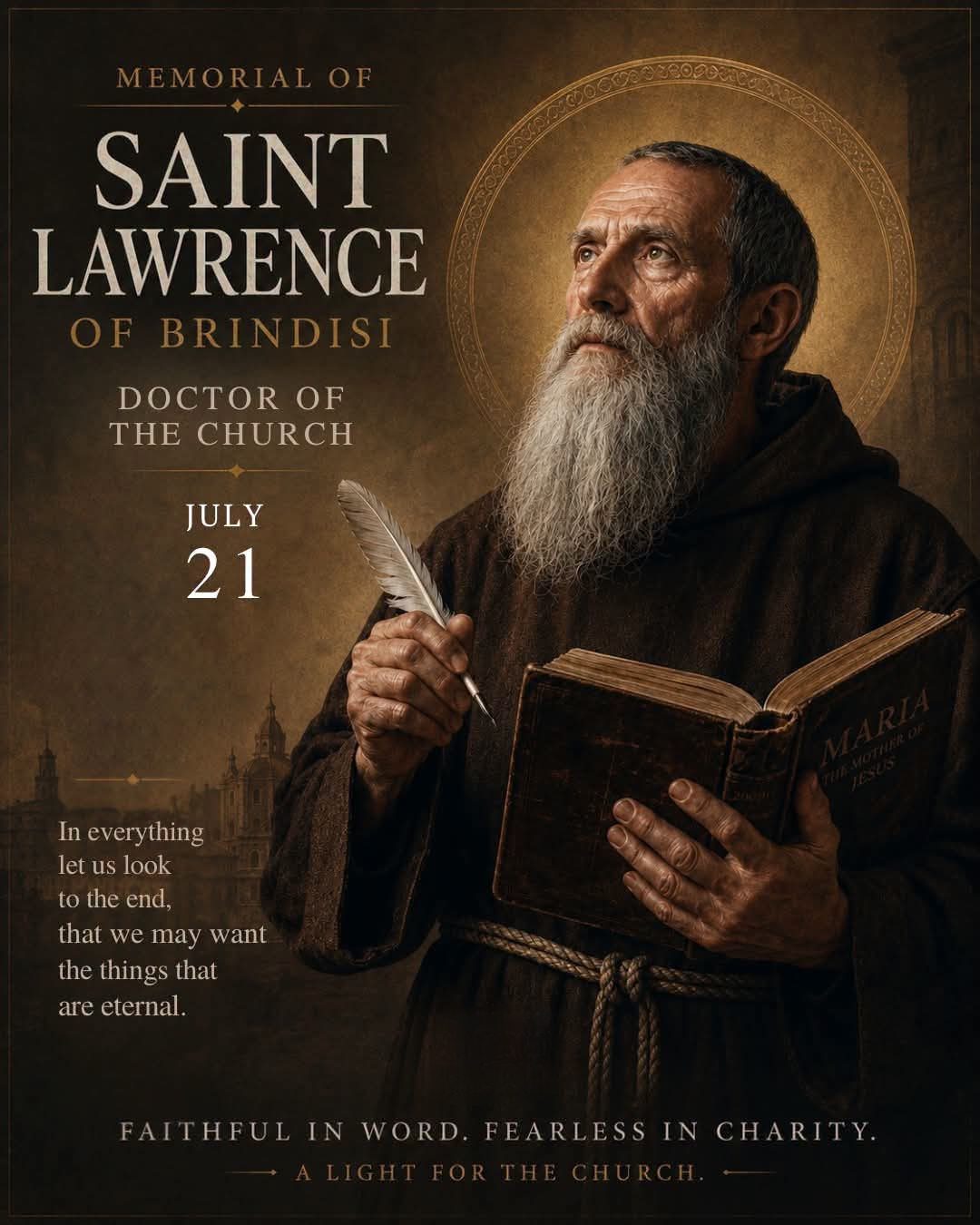
His wisdom earned the respect of popes, kings, and princes, who entrusted him with important diplomatic missions. He travelled across Europe promoting peace and strengthening the Church, always remaining a humble Capuchin whose authority came from holiness rather than power.
COURAGE WITH THE CRUCIFIX
During the campaign against the Ottoman forces in Hungary in 1601, Lawrence carried only a crucifix instead of a weapon. By encouraging soldiers to place their trust in Christ, he inspired them with courage and hope, showing that true victory comes through faith.
RETURNING TO THE FATHER
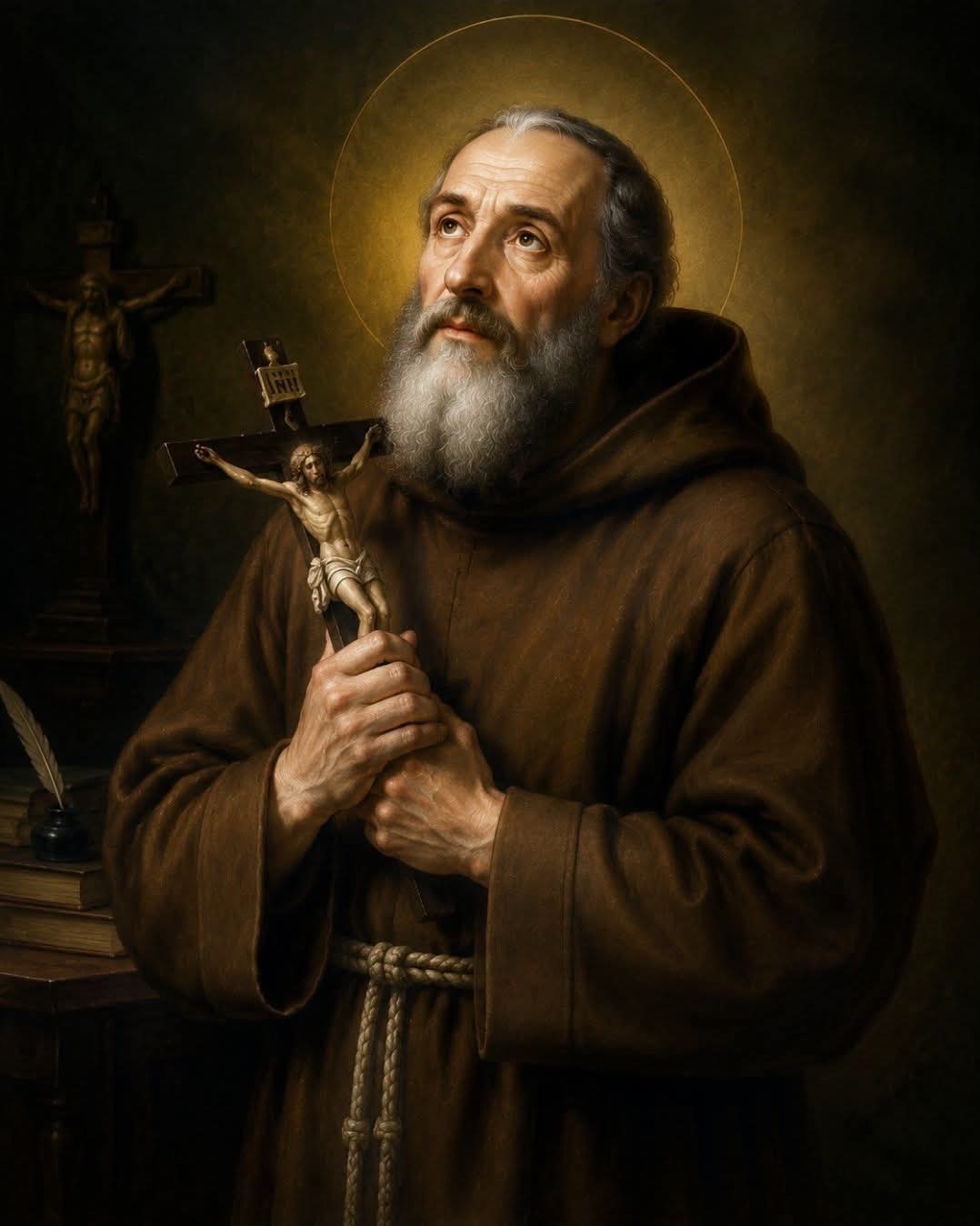
After years of preaching, teaching, prayer, and service, Lawrence’s health declined. While on a diplomatic mission in Portugal, he died peacefully on his sixtieth birthday in 1619, completing a life devoted entirely to God and His Church.
CANONIZATION AND DOCTOR OF THE CHURCH
Pope Leo XIII canonized Lawrence in 1881. In 1959, Pope John XXIII declared him a Doctor of the Church in recognition of his outstanding biblical scholarship, theological wisdom, and apostolic zeal.
HIS SPIRITUALITY
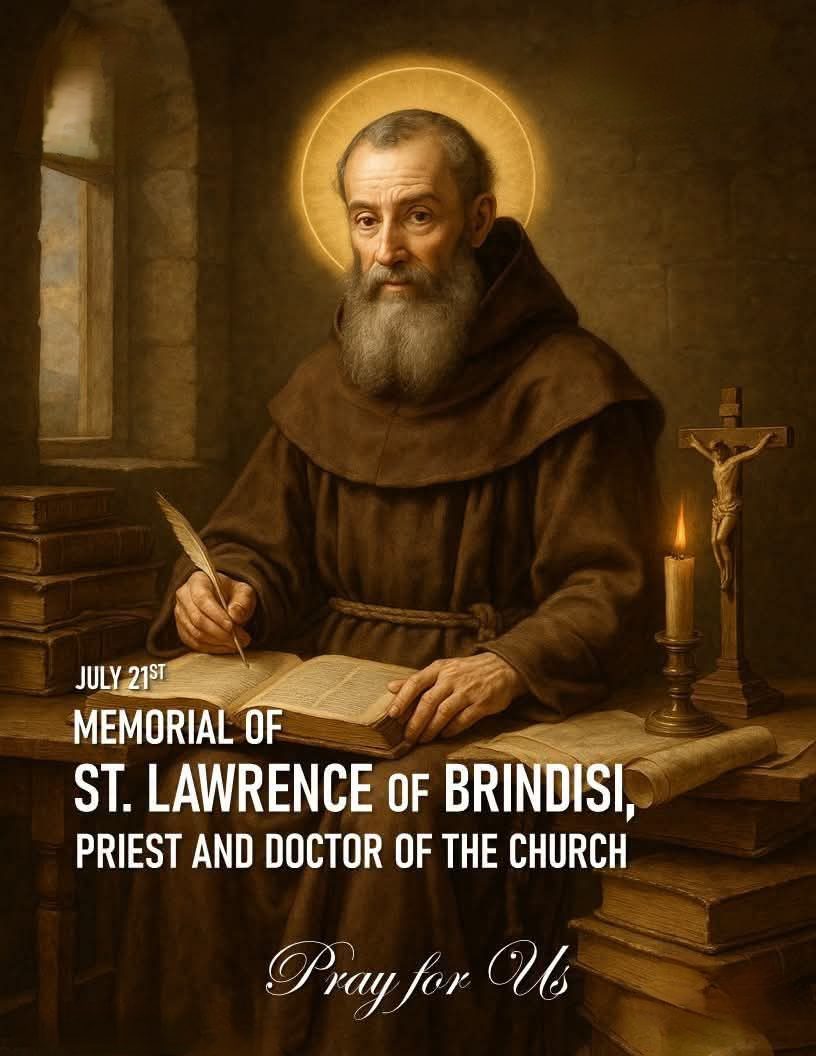
Lawrence’s spirituality was rooted in a profound love for Sacred Scripture, Christ-centred preaching, Franciscan humility, zeal for souls, deep devotion to the Blessed Virgin Mary, and a rich life of prayer that sustained all his ministry.
LESSONS FROM HIS LIFE
Saint Lawrence teaches us that true knowledge should deepen our love for God, Scripture should guide our daily lives, authentic preaching flows from prayer, leadership requires humble service, peace is built through wisdom and justice, and every Christian is called to proclaim Christ with courage and charity.
HIS LASTING LEGACY
Saint Lawrence of Brindisi remains one of the Church’s greatest biblical preachers and missionary apostles. His brilliant intellect was always united with humility and placed at the service of the Gospel. He continues to inspire priests, religious, missionaries, theologians, catechists, and all who seek to combine deep learning with genuine holiness, reminding us that true wisdom is found in living and sharing the Word of God.
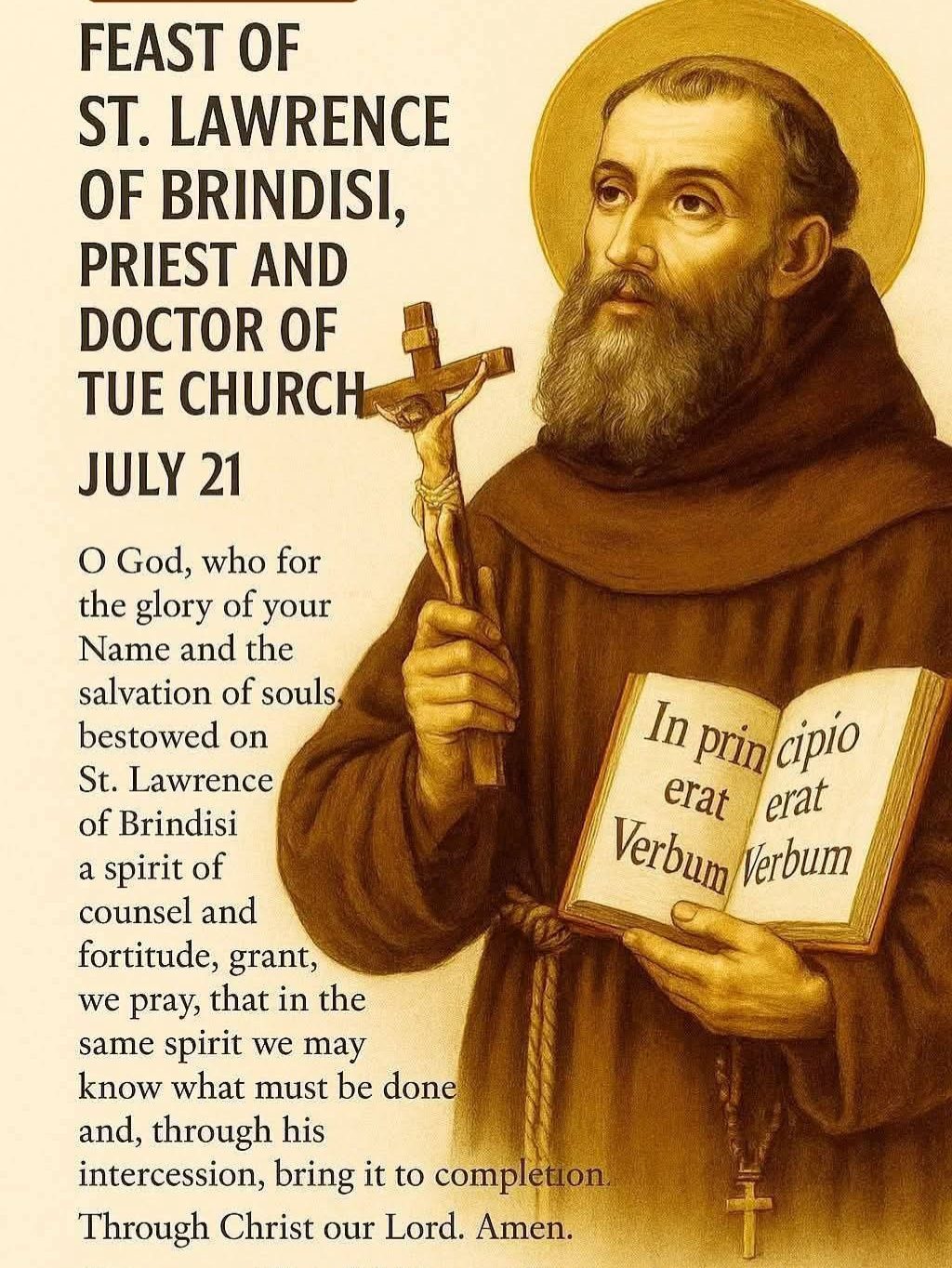
PRAYER
Eternal Father, you endowed Saint Lawrence of Brindisi with warm compassion and sensitivity to the needs of people. With his constant devotion to Scripture, he worked towards the edification of the Church, resulting in the title of Apostolic Doctor.
His lifestyle is greatly appealing to Christians today. He had a balance in his life that blended self-discipline with a keen appreciation for the needs of those whom he was called to serve.
Bless us, dear Lord, to approach our Christian mission with the same zeal and discipline. We pray in Jesus’ Name. Amen
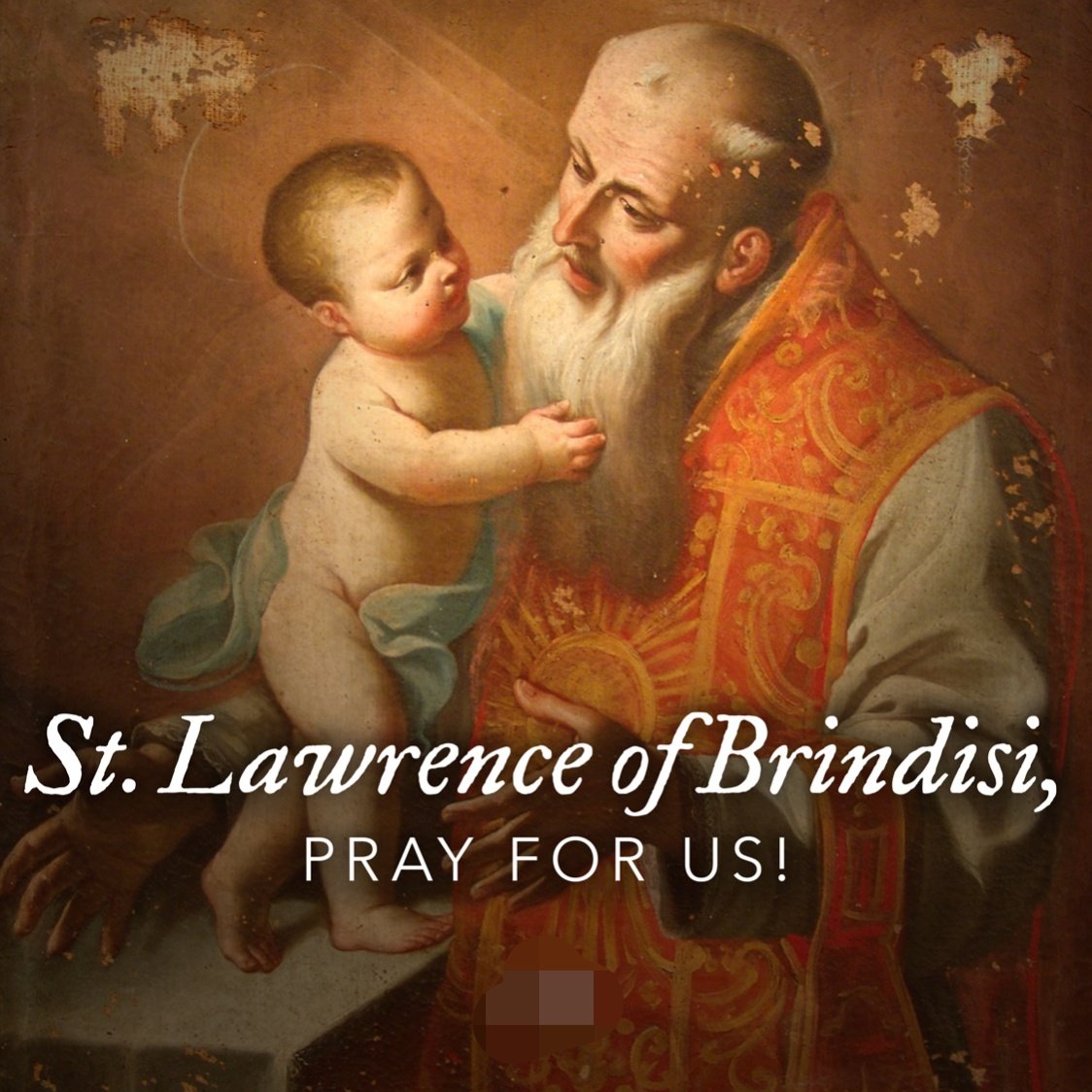
Saint Lawrence of Brindisi, pray for us.