
SPIRITUAL INSIGHTS INTO THE LIFE OF SAINT NICHOLAS OF TOLENTINO
September 10, 2026
Hosea 10:12
September 10, 2026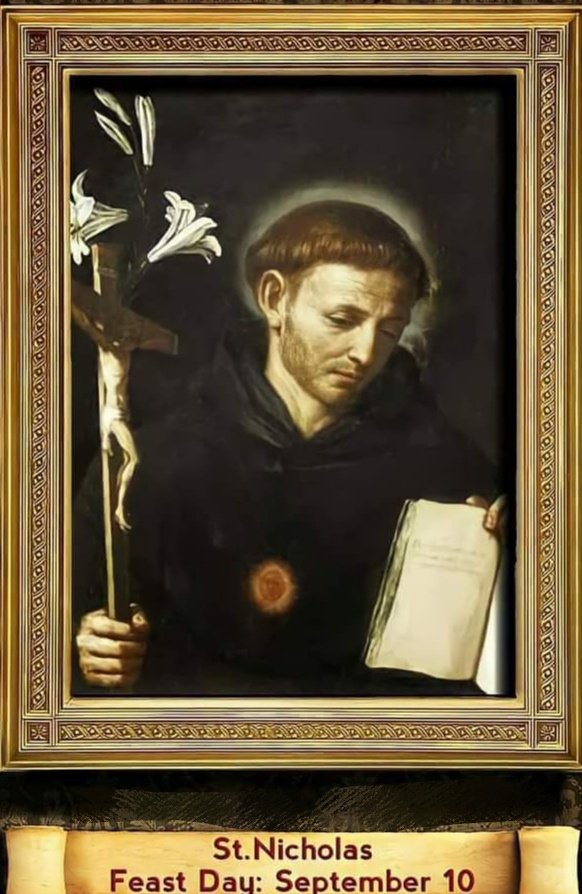
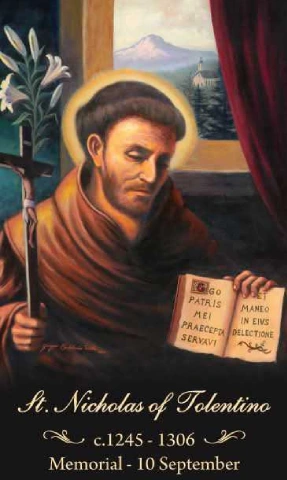
SAINT NICHOLAS OF TOLENTINO
FEAST DAY – 10th SEPTEMBER

Nicolas de Tolentino was born in San Angelo, a town that is near Fermo, in the Marca de Ancona, Italy, around the year 1245. His parents, very poor but highly Christian, baptized him with this name in honor of St. Nicholas de Bari, to whom his mother had been entrusted to get pregnant.
Since a child he was a mortified soul, who fasted three times a week on the basis of bread and water, which he often shared with the poor, for whom he felt special affection.

Being very young, St. Nicholas was chosen to help in the Church of Our Savior. This occupation extreme in accordance with his inclination to engage himself in service to God. However, the saint aspired for a state that would allow him directly devote all his time and thoughts to God, without interruptions or distractions.
With these desires to surrender entirely to God, he heard on one occasion a sermon, from a friar or hermit of the Order of Saint Augustine, about the vanity of the world, which made him decide to renounce the world absolutely and enter the world order of that holy preacher. He did this without wasting any time, entering as a religious into the convent of the small town of Tolentino.

Nicholas made his novitiate under the direction of the preacher himself and made his religious profession before he turned 18. He was sent to several convents of his order in Recanati, Macerata and others. In all he was very successful in his mission. In 1271 he was ordained a Priest by the Bishop of Osimo in the Convent of Cingole.
His appearance at the Altar was angelic. Devotees were keen to attend their Mass every day, for they noticed it was a sacrifice offered by the hands of a Saint.

Nicholas seemed to enjoy a kind of anticipation of the delights of Heaven, because of the secret communications aroused between his pure soul and God in contemplation, particularly when he had just been on the Altar or in the Confessional.
For the last thirty years of his life, Nicholas lived in Tolentino and his zeal for the salvation of souls bore abundant fruit. He preached in the streets almost every day and his sermons were accompanied by great conversions. He used to administer the sacraments in nursing homes, hospitals and prisons; he spent long hours in the confessional.

His exhortations, whether while confessing or giving catechism, always reached the heart and leaving footprints that lasted forever on those who heard him. Also, with the power of the Lord, he performed countless miracles, in which he asked the receivers, “Do not say anything about this. Thank God, not me. “The faithful were amazed to see his powers of persuasion and his spirituality so elevated that they had great confidence in his intercession to alleviate the sufferings of Souls in Purgatory.”
This trust was confirmed many years after his death when he was named “Patron of Purgatory Souls.” Towards the latter years of his life, when he was going through prolonged illness, his superiors ordered him to take foods stronger than the small rations he used to ingest, but unsuccessfully, because, his health stayed the same.

One night the Virgin Mary appeared to him, instructed him to ask for a piece of bread, dip it in water and then eat it, promising him that he would be healed by his obedience. As a gesture of gratitude for his immediate recovery, Nicholas began blessing similar loaves of bread and distributing them among the sick. This practice produced numerous favors and great healings.
In commemoration of these miracles, the Sanctuary of the Holy conserves a worldwide distribution of the “Breads of St. Nicholas” that are blessed and continue to bestow favors and thanks.

The saint’s last illness lasted a year, after which he died on September 10, 1305. His liturgical feast is commemorated on the same day.
Nicholas was buried in the church of his convent in Tolentino, in a chapel where he used to celebrate the Holy Mass.
Forty years after his death, his body was found incorrupt and exposed to the faithful. During this exhibition the saint’s arms were removed, and so began a series of extraordinary bloodshed that were witnessed and documented.

The sanctuary has no documented evidence regarding the identity of the individual who amputated the saint’s arms, although legend has appropriated the report that a German monk, Theodore, was the one who did it; claiming to take them as a relic going to his home country. However, it is known for a fact that a flow of blood was the sign of the fact and was what prompted his capture.
A century later, during the recognition of the relics, the bones of the saint were found, but the amputated arms were found completely intact and soaked in blood. These were placed in beautiful silver boxes, each consisting of a forearm and a hand. Nicholas of Tolentino was canonized by Pope Eugene IV, in the year 1446.

Towards the end of the same XV century, there was a fresh blood shed from the arms, an event repeated twenty times; the most famous occurred in 1699, when the flow began on May 29 and continued until September 1.
The Augustinian monastery and the archives of the Bishop of Camerino (Macerata) possess many documents relating to these bloods.

Saint Nicholas was one of the Saints (next to Saint John the Baptist and Saint Augustine), who came from Heaven to take Santa Rita to the Augustinian convent at Cascia.
In October 2016, the city of Tolentino suffered a major earthquake in which both the Basilica and the Augustine convent suffered serious damage. The relics of St. Nicholas are currently venerated in the Chapel of the Santos Brazos.
CONTEMPLATING THE LIFE OF SAINT NICHOLAS OF TOLENTINO
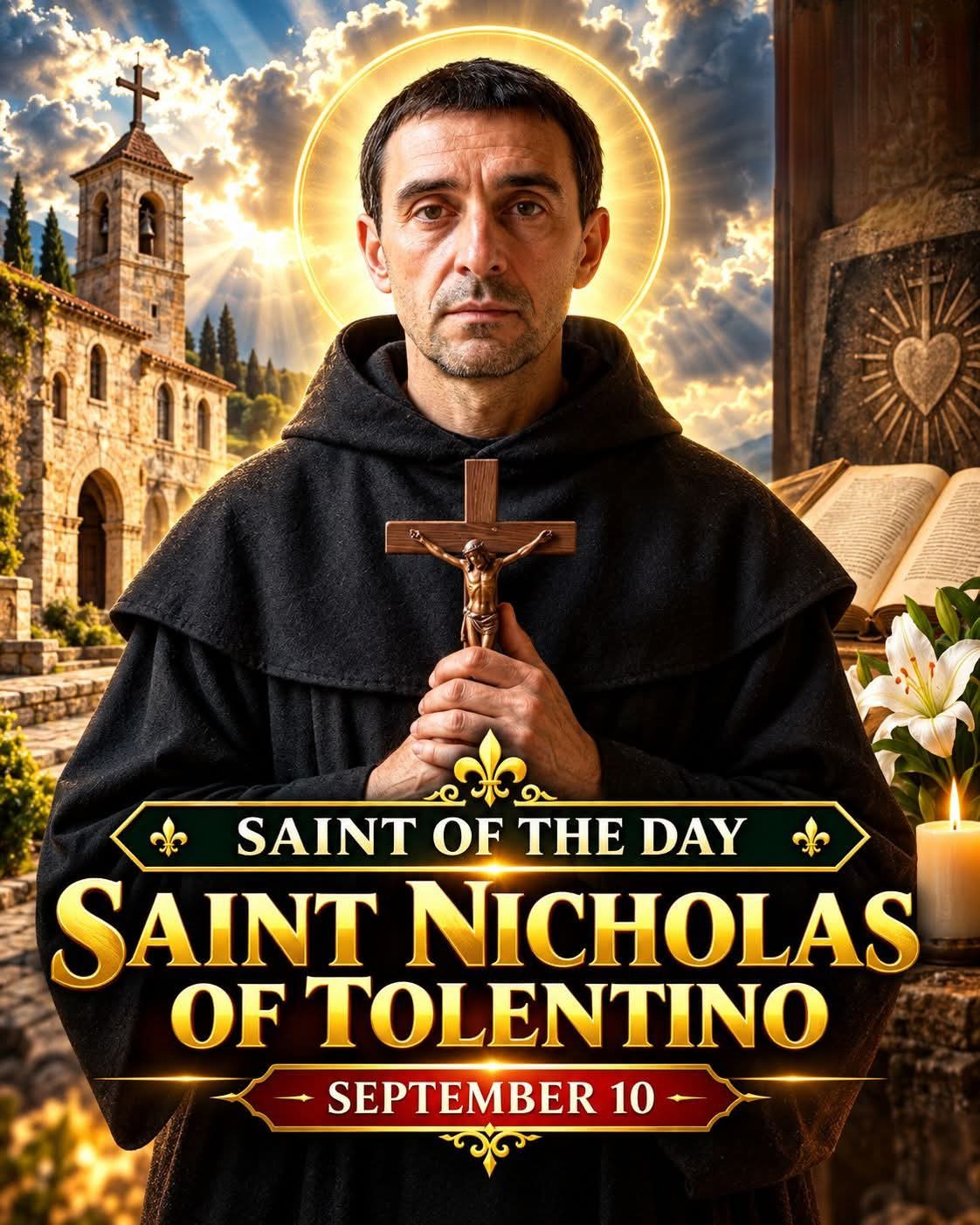
THE AUGUSTINIAN SAINT OF PRAYER, COMPASSION AND THE HOLY SOULS
St. Nicholas of Tolentino (1245–1305) was an Italian Augustinian friar, priest, preacher, ascetic and mystic.
He is remembered especially for his extraordinary charity toward the poor and sick, his life of prayer and penance, his devotion to the Eucharist and his prayers for the souls of the departed.
He was the first member of the Augustinian Order to be canonized, by Pope Eugene IV in 1446. His feast is celebrated on 10 September.
THE SAINT WHO CARRIED THE LIVING AND THE DEAD IN HIS HEART
THE CHILD WHOM HIS PARENTS RECEIVED AS A GIFT
Nicholas was born in Sant’Angelo in Pontano around 1245 to Compagnus and Amata. His parents had prayed for a child and, according to tradition, travelled to Bari to pray at the shrine of St. Nicholas of Myra. Their prayer was answered, and they named their son Nicholas. From his earliest years, he grew up in an atmosphere of faith, gradually discovering that his life belonged to God.
THE BOY WHO HEARD A CALL
As a young man, Nicholas was deeply moved by a sermon based on the words, “Do not love the world or the things in the world.” These words awakened in him a desire to seek something eternal rather than worldly pleasures or possessions. He felt called to religious life and entered the Hermits of St. Augustine, beginning a lifelong journey of prayer and service.
THE FRIAR WHO LEARNED TO PRAY
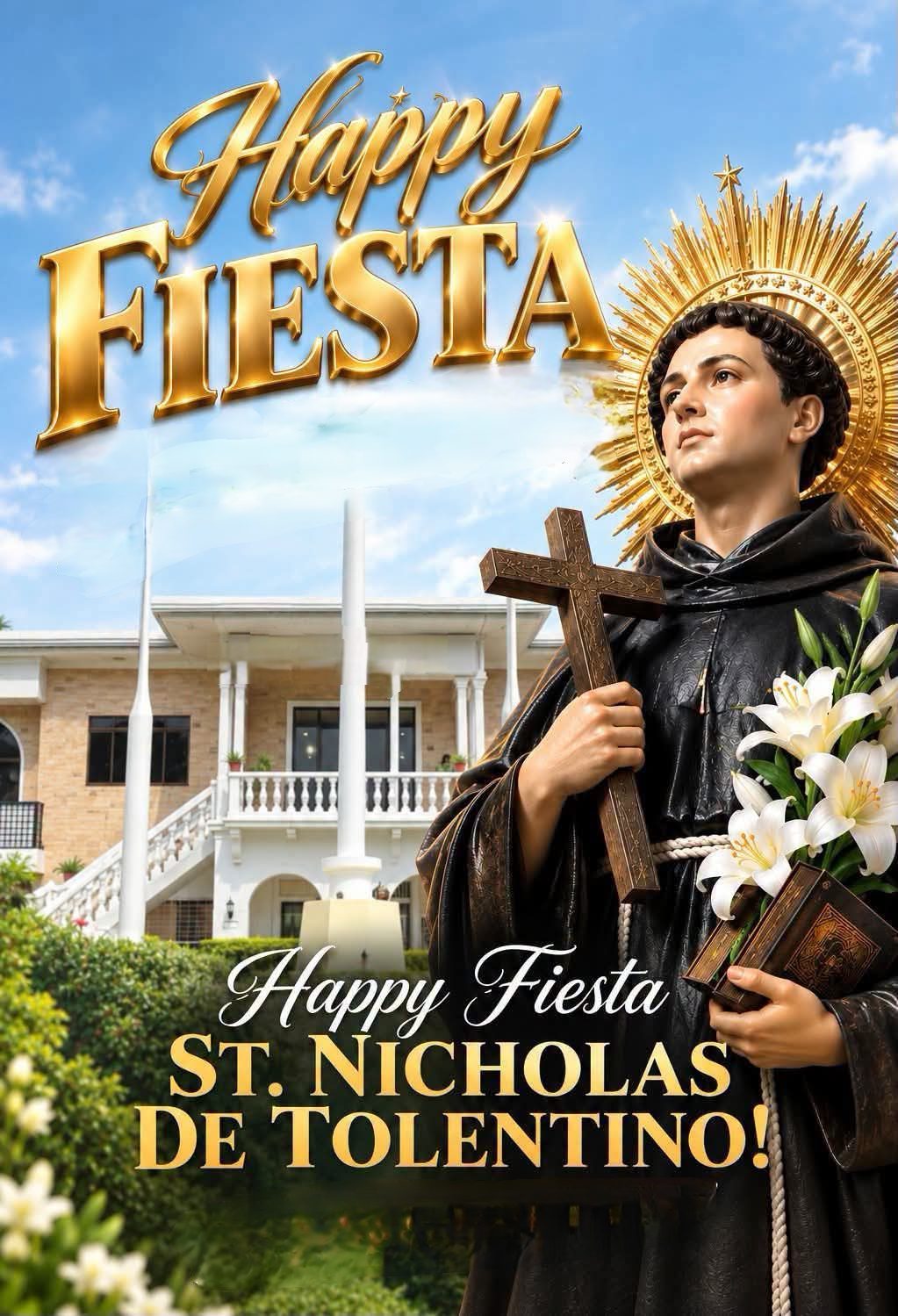
Nicholas embraced religious life with great seriousness. He prayed, fasted, practised penance, studied and prepared for the priesthood. Yet his prayer did not separate him from people. Instead, it opened his heart more deeply to their suffering. The poor, the sick, the lonely and those in need became opportunities for him to express the love he received from God.
THE PRIEST WHO WAS SENT TO TOLENTINO
Around 1275, Nicholas was sent to Tolentino, where he remained for the rest of his life. For about thirty years he preached, celebrated Mass, heard confessions, visited the sick, counselled troubled people, reconciled those who were divided and encouraged the discouraged. The people experienced through him the tenderness and mercy of God.
THE FRIAR WHO FOUND IT DIFFICULT TO SAY NO
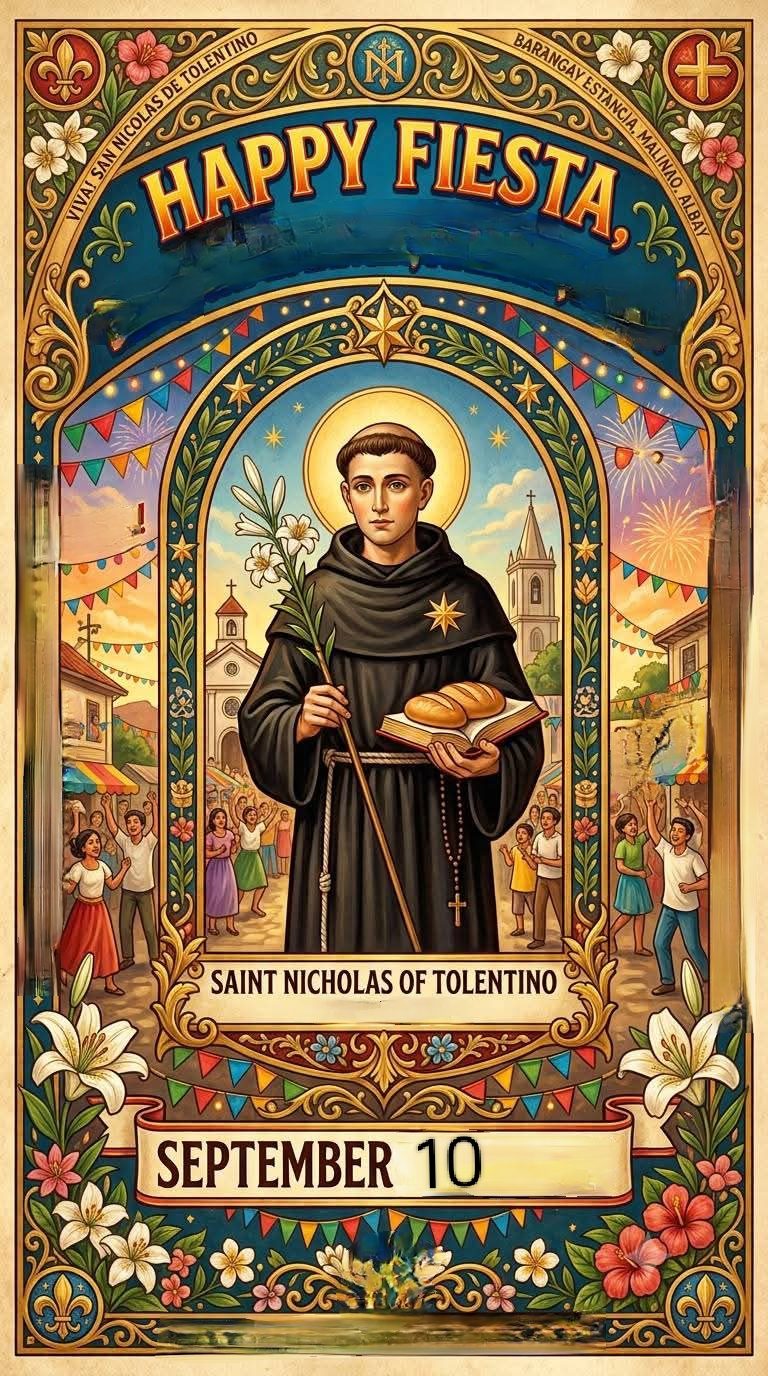
Nicholas was entrusted with distributing food to the poor, but he found it difficult to turn away anyone who was hungry. He saw beyond their poverty and recognised their human dignity. His generosity sometimes placed a strain on the monastery’s provisions, yet he remained convinced that caring for the poor was an essential part of Christian life.
THE SAINT WHO WAS AUSTERE WITH HIMSELF AND GENTLE WITH OTHERS
Nicholas lived a life of fasting, prayer, penance and mortification, yet his holiness never made him harsh toward others. He was demanding of himself but compassionate toward those around him. His fasting deepened his compassion, his prayer increased his patience and his penance made him more generous. His Eucharistic devotion flowed naturally into charity.
THE NIGHT WHEN THE DEAD CAME TO HIM
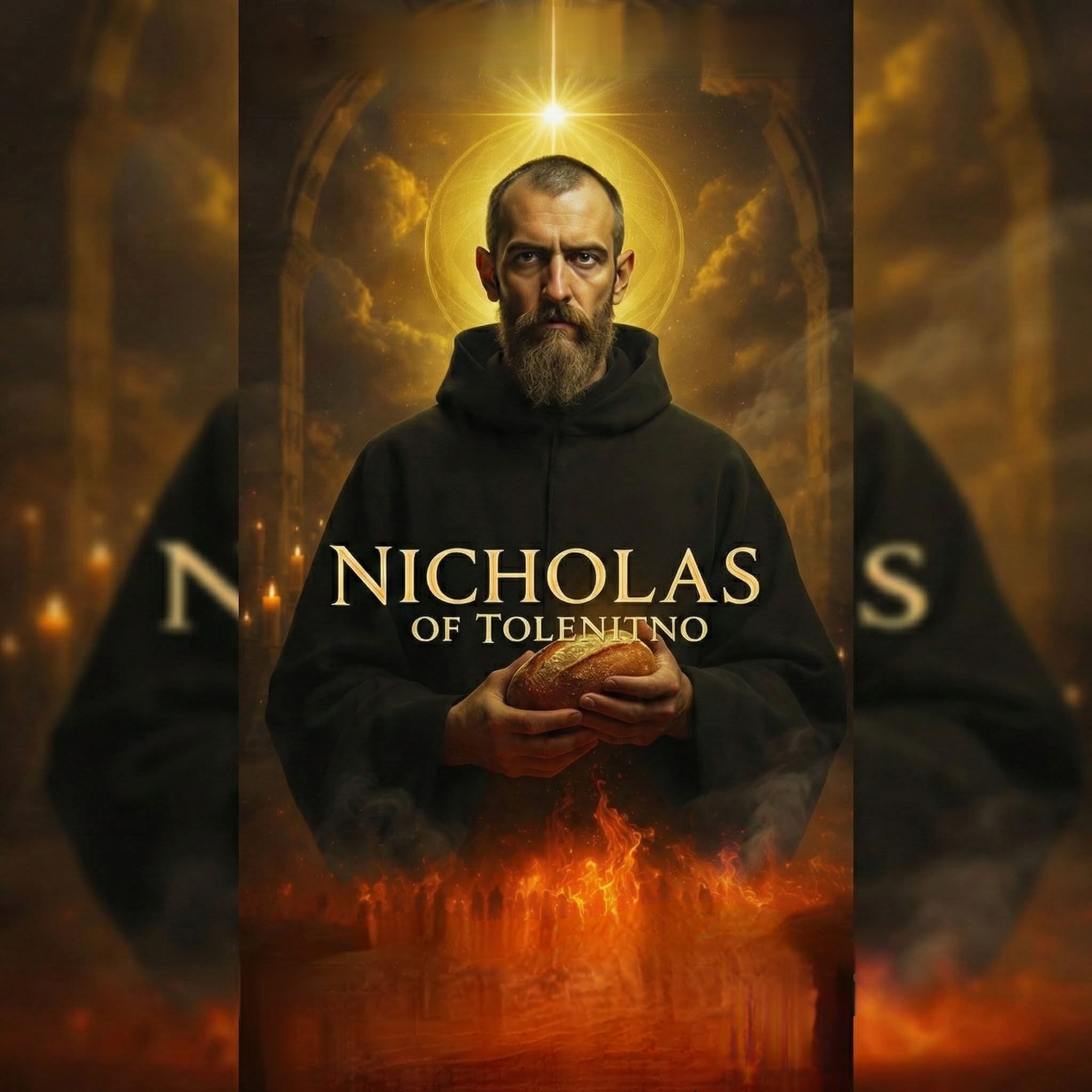
According to tradition, Nicholas was once visited in a dream or vision by a deceased Augustinian friar named Pellegrino of Osimo, who asked him to offer Mass and prayers for the souls suffering in Purgatory. Nicholas responded with intense prayer and celebrated Mass for seven days. Tradition holds that Pellegrino later appeared again and told him that many souls had been helped through his intercession.
THE SAINT WHO NEVER FORGOT THE DEAD
Nicholas came to understand that Christian love does not end with death. He prayed for the departed, offered Mass for them and entrusted their souls to God’s mercy. People began bringing him the names of deceased relatives so that he could remember them in prayer. In 1884, Pope Leo XIII proclaimed him Patron of the Holy Souls in Purgatory.
THE EUCHARIST AT THE CENTRE
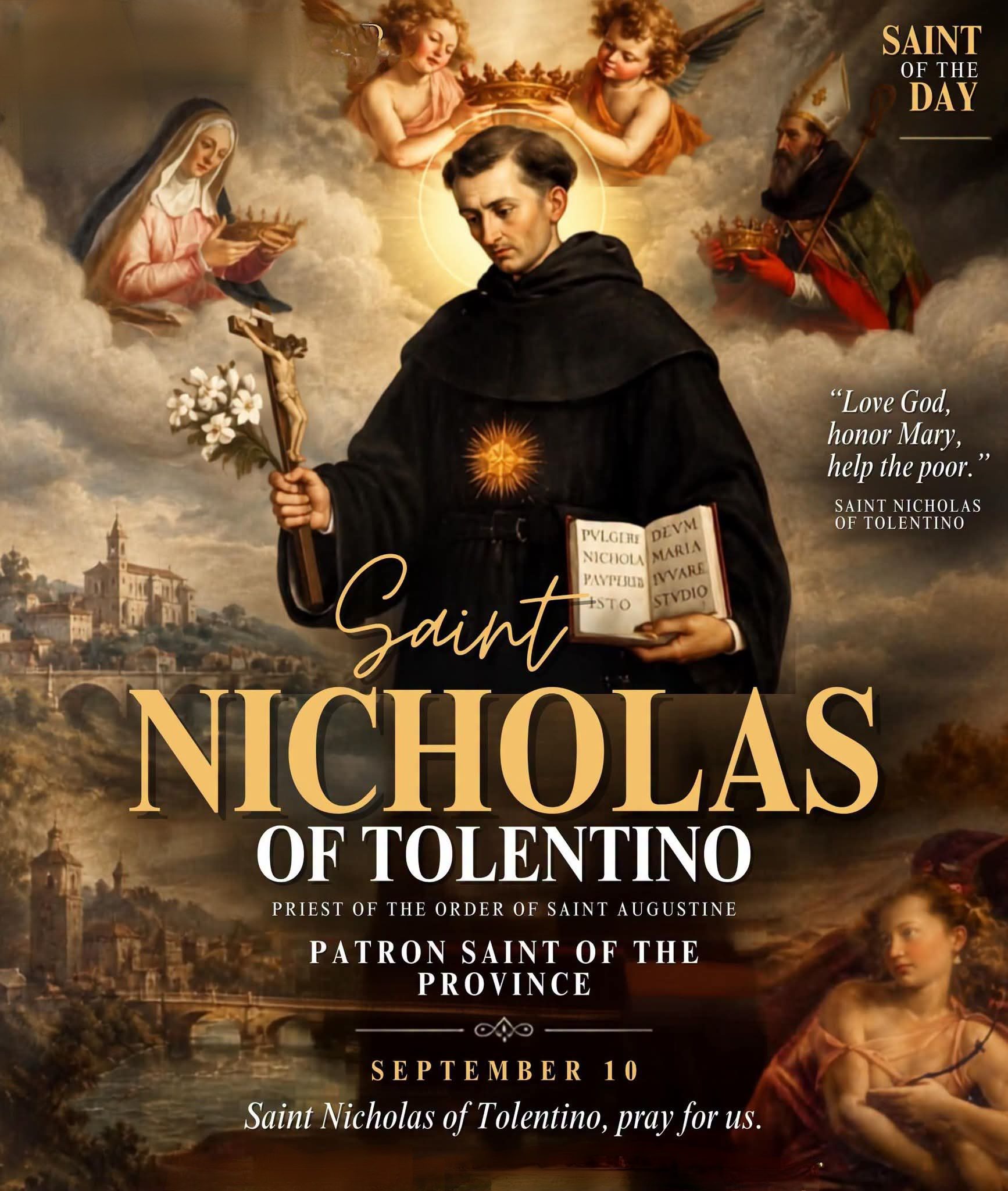
The Eucharist was at the heart of Nicholas’s spiritual life. He celebrated Mass with profound devotion and became associated with extraordinary Eucharistic experiences. His deep belief in Christ’s presence transformed the way he looked at every person. The poor, the sick, the sinner and the departed were all people entrusted to God’s mercy.
THE BREAD THAT BECAME A SIGN OF HEALING
A tradition associated with Nicholas tells of a time when, during an illness, he was encouraged through a heavenly indication to eat bread dipped in water and subsequently recovered. This tradition gave rise to the practice of blessed bread associated with him. It became a sign of confidence in God’s healing mercy and reminds us that God can use simple things as instruments of grace.
THE WONDERWORKER WHO REMAINED A SERVANT
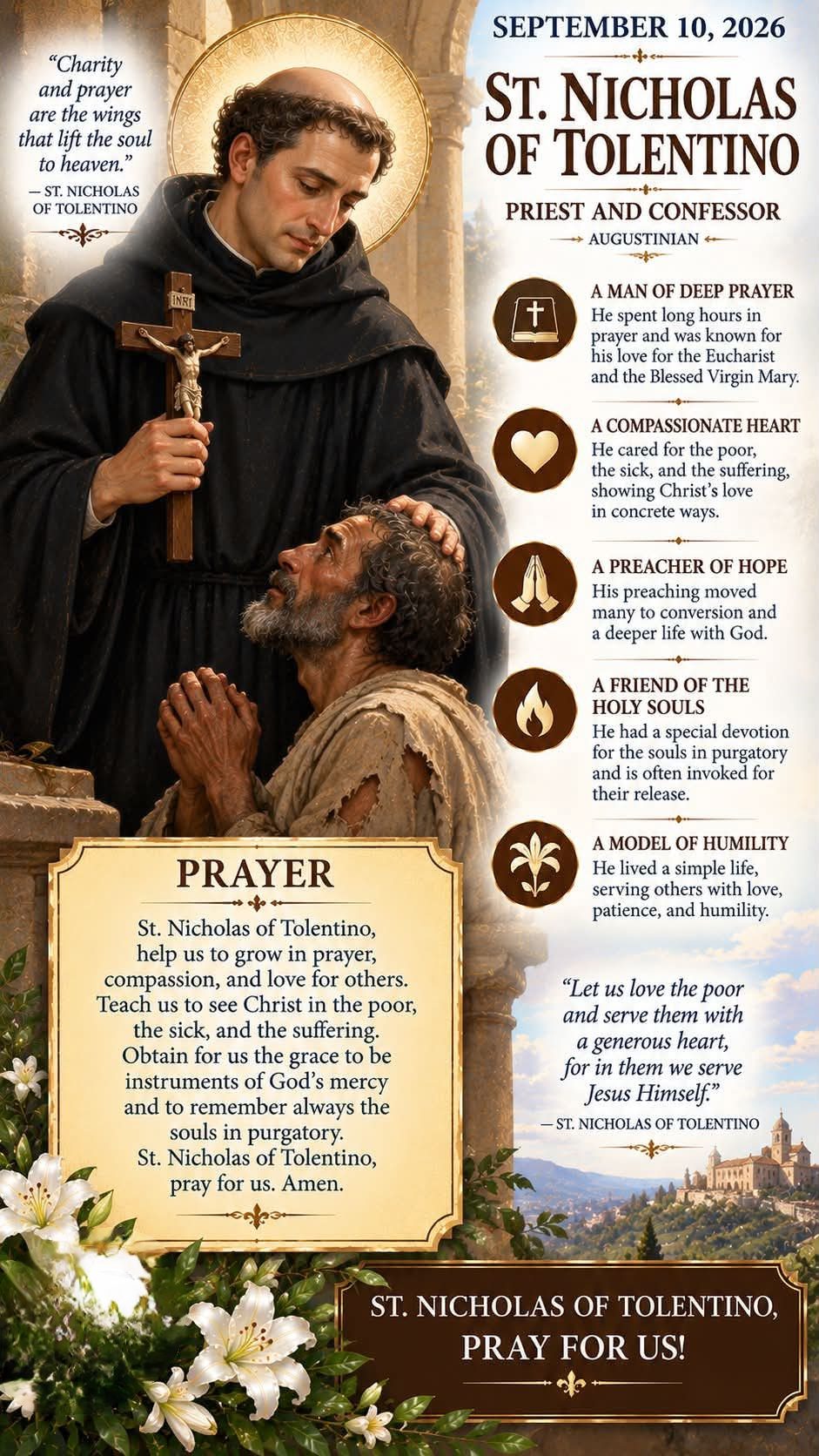
As stories of healings and miracles spread, Nicholas became known as a wonderworker. Yet he never sought fame. He listened, prayed, blessed and encouraged those who came to him. The miracles were never the centre of his life. Christ was. A true saint does not draw attention to himself but always leads others toward Christ.
WHEN THE SAINT HIMSELF BECAME WEAK
After many years of serving others, Nicholas himself became seriously ill. The man who had prayed for the sick now experienced sickness. The one who had strengthened others now needed strength himself. His suffering became another opportunity to surrender himself to God. Even when his abilities were limited, he continued to pray and accept God’s will.
THE FINAL PRAYER
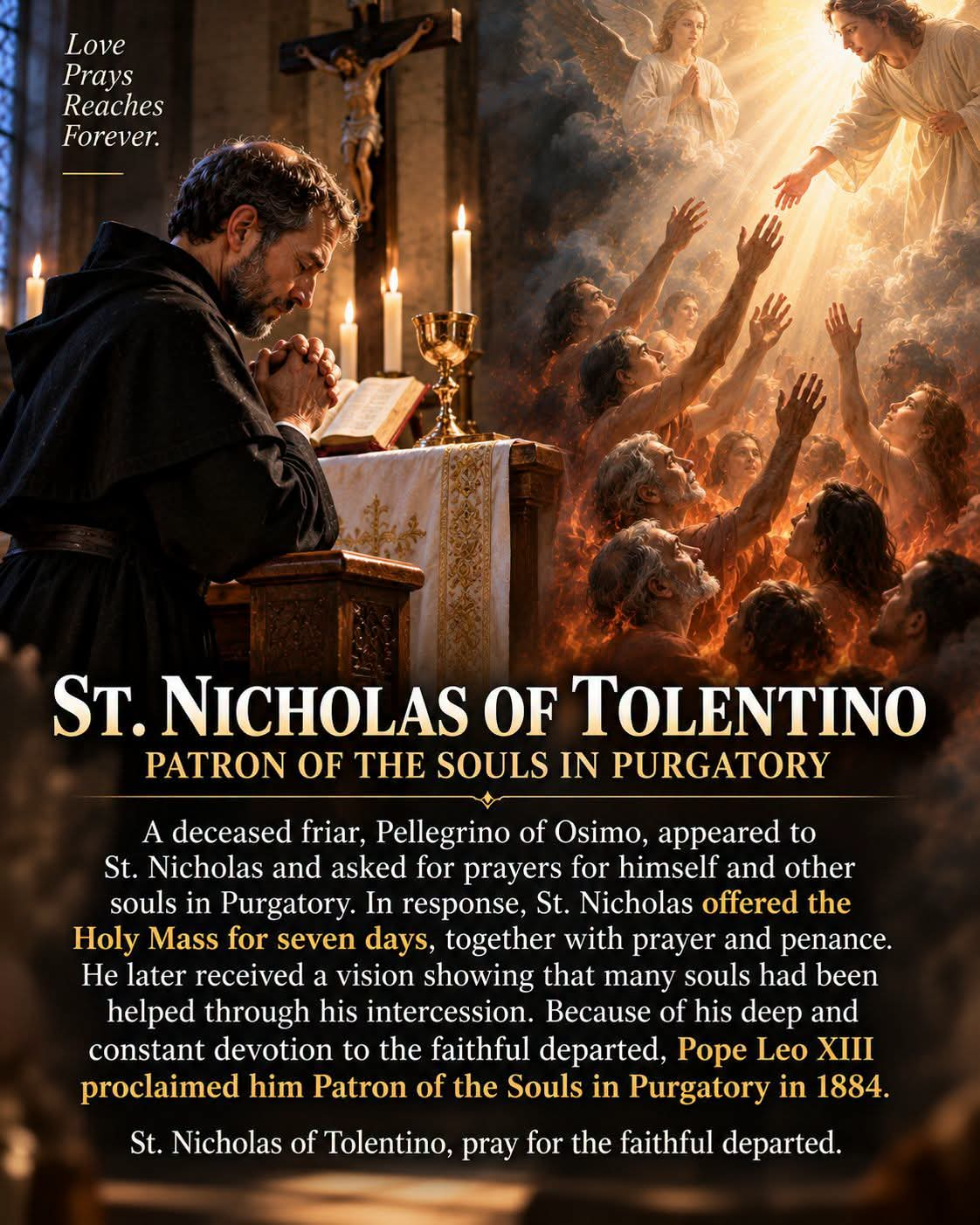
Nicholas died in Tolentino on 10 September 1305 after approximately thirty years of ministry there. His life had been marked by prayer, preaching, penance, service to the poor and intercession for others. The people mourned his death, yet they trusted that the man who had spent his life praying for others would continue to intercede for them in heaven.
THE SAINT WHO NEVER STOPPED CARRYING PEOPLE
Nicholas was canonized by Pope Eugene IV in 1446, becoming the first canonized saint of the Augustinian Order. His shrine in Tolentino became a place of pilgrimage. His enduring legacy is that of a man who carried the poor, the sick, sinners, the lonely and the departed in his heart before God. He teaches us that holiness is not escaping from human suffering but allowing God to make our hearts large enough to carry it.
HIS ENDURING SPIRITUAL LEGACY
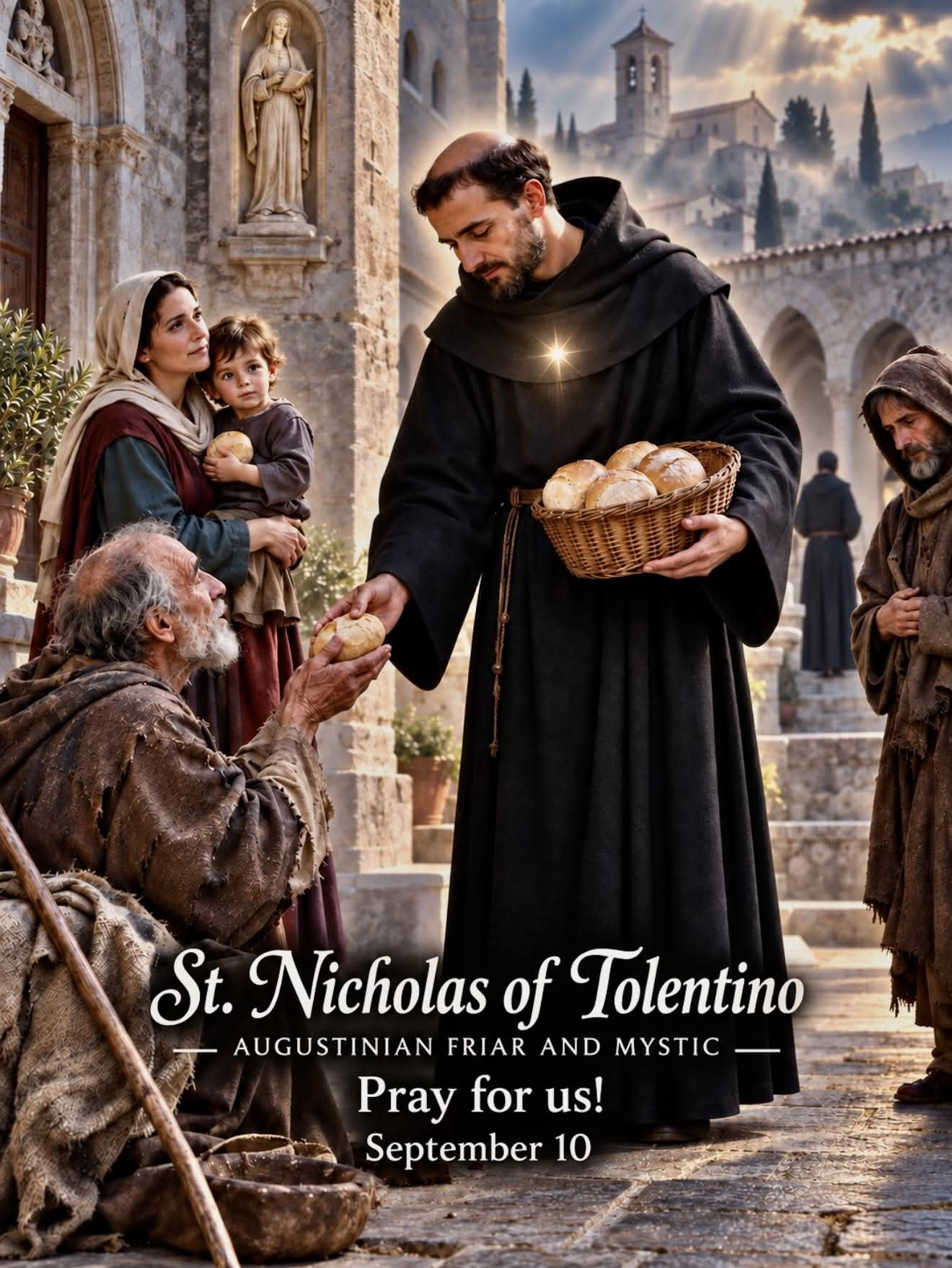
St. Nicholas of Tolentino brought together prayer and action, penance and joy, contemplation and service, Eucharistic devotion and charity. He served the living and prayed for the dead. His life reminds priests, religious and lay Christians that genuine love of God must overflow into love of neighbour.
The deepest lesson of his life is simple. Prayer should become charity, faith should become service and love should continue even beyond death. St. Nicholas of Tolentino teaches us that a heart truly united with God becomes wide enough to carry the needs of others and to entrust both the living and the departed into the loving mercy of God.

PRAYER
Almighty, Eternal God, you appointed this day as a memorial to the glorification of Saint Nicholas, your most humble subject.
In your compassion, grant that we may always strive to retain and complete by our works that Faith which he continually proclaimed with unstoppable zeal. Ꭺmen

Saint Nicholas de Tolentino, pray for us!