
FEAST OF SAINT HUNNA OF ALSACE – 15 APRIL
April 15, 2026
Mark 13:33
April 15, 2026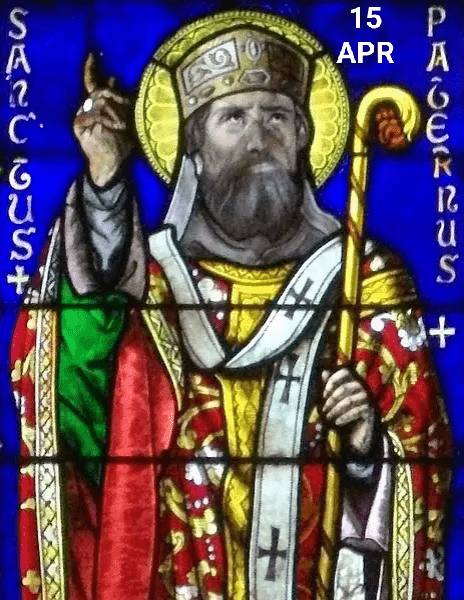
FEAST OF SAINT PATERNUS OF WALES
FEAST DAY – 15th APRIL
Saint Paternus of Wales (c 482 – c 568) was a Bishop, Monk, Hermit, and renowned Preacher. He built a Monastery of Llanbadarn Fawr in Wales. He died in c 568 of natural causes. He is also known as Padern. Soon after Paternus’ birth his pious father with his wife’s consent moved to Ireland to lead a solitary life in prayer. The mother raised Paternus in great piety.
When Paternus grew up he decided to follow in the steps of his father and, obtaining his mother’s permission and blessing, he set out to Wales together with a group of other young ascetics seeking the solitary life. In Wales the saint acquainted himself with his relative, St. Samson, with whom he became spiritual friends.
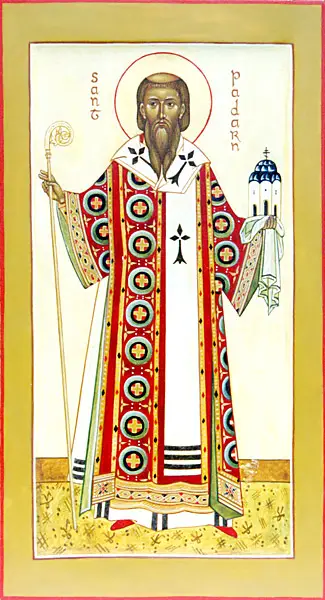
The ascetic met other prominent mentors of the Welsh Church of that period and always eagerly heeded their spiritual advice. Paternus was possibly trained for some time at the famous Llanilltud Fawr monastic school founded by St. Illtyd; at approximately the same time he established his first church on the seashore. St. Paternus started to withdraw for solitary prayer. But the saint was destined to lead the life of a hermit for only a short time.
Soon, together with other monks, Paternus with the blessing of spirit-bearing elders founded the great Monastery of Llanbadarn Fawr (“the Great Monastery of Padarn”) near to Aberystwyth in the former county of Cardiganshire, which is now Ceredigion. Some 120 monks lived in this monastery under St. Paternus. Paternus was most probably not only the Abbot of Llanbadarn but also a bishop at the same time.
Paternus was a bold opponent of the pagan kings of the region, never tiring of preaching in the hope of their conversion. King Maelgun accused the saint of stealing royal treasure and Paternus proved his innocence by plunging his hand into boiling water and taking it out completely unharmed. He was known for his preaching, charity and mortifications.
PRAYER:
All-powerful and ever-living God, you called Saint Paternus to guide your people by his word and example. With him we pray to you to watch over the pastors of your Church, with the people entrusted to their care, and lead them to salvation.
We ask this through our Lord Jesus Christ, your Son, who lives and reigns with you and the Holy Spirit, one God, for ever and ever. Amen
Saint Paternus of Wales, pray for us.
******************************
ALSO CELEBRATED:
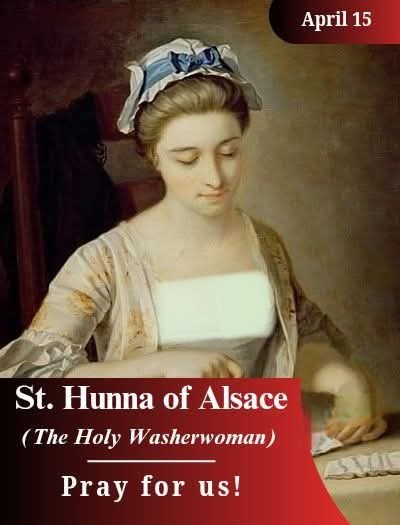
SAINT HUNNA OF ALSACE
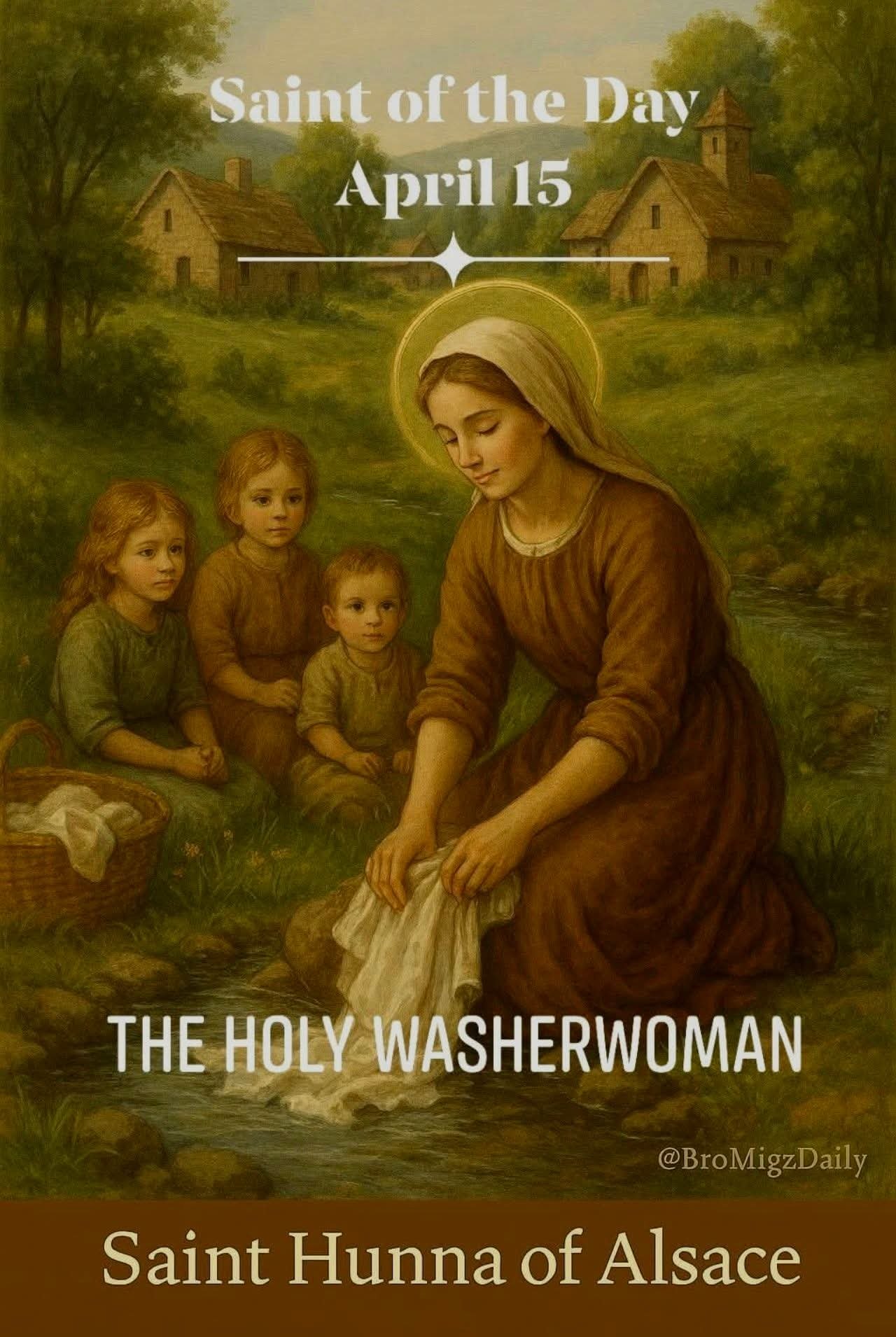
Saint Hunna of Alsace, revered as the “Holy Washerwoman,” lived in the 7th century in what is now eastern France near Strasbourg. Born into nobility as the daughter of a duke, she married Huno of Hunnaweyer and had a son, Deodatus, who later became a saint and founded a monastery.
Despite her privileged status, Hunna dedicated herself to serving the poor, inspired by Saint Deodatus of Nevers, whom she hosted during his exile. She managed her household while her husband traveled, balancing family duties with deep prayer and charity.
Hunna’s profound humility shone through her daily practice of hand-washing the filthy clothes of the impoverished in her own home—a radical act for a noblewoman—along with bathing the sick, cooking meals, and caring for children.
She died around 679 AD, and her relics, once housed in Hunawihr, were lost during the Reformation; Pope Leo X canonized her in 1520, setting her feast day on April 15. As patron saint of laundresses and washerwomen, Hunna exemplifies how ordinary acts of service can lead to extraordinary holiness, influencing her son’s monastic legacy.
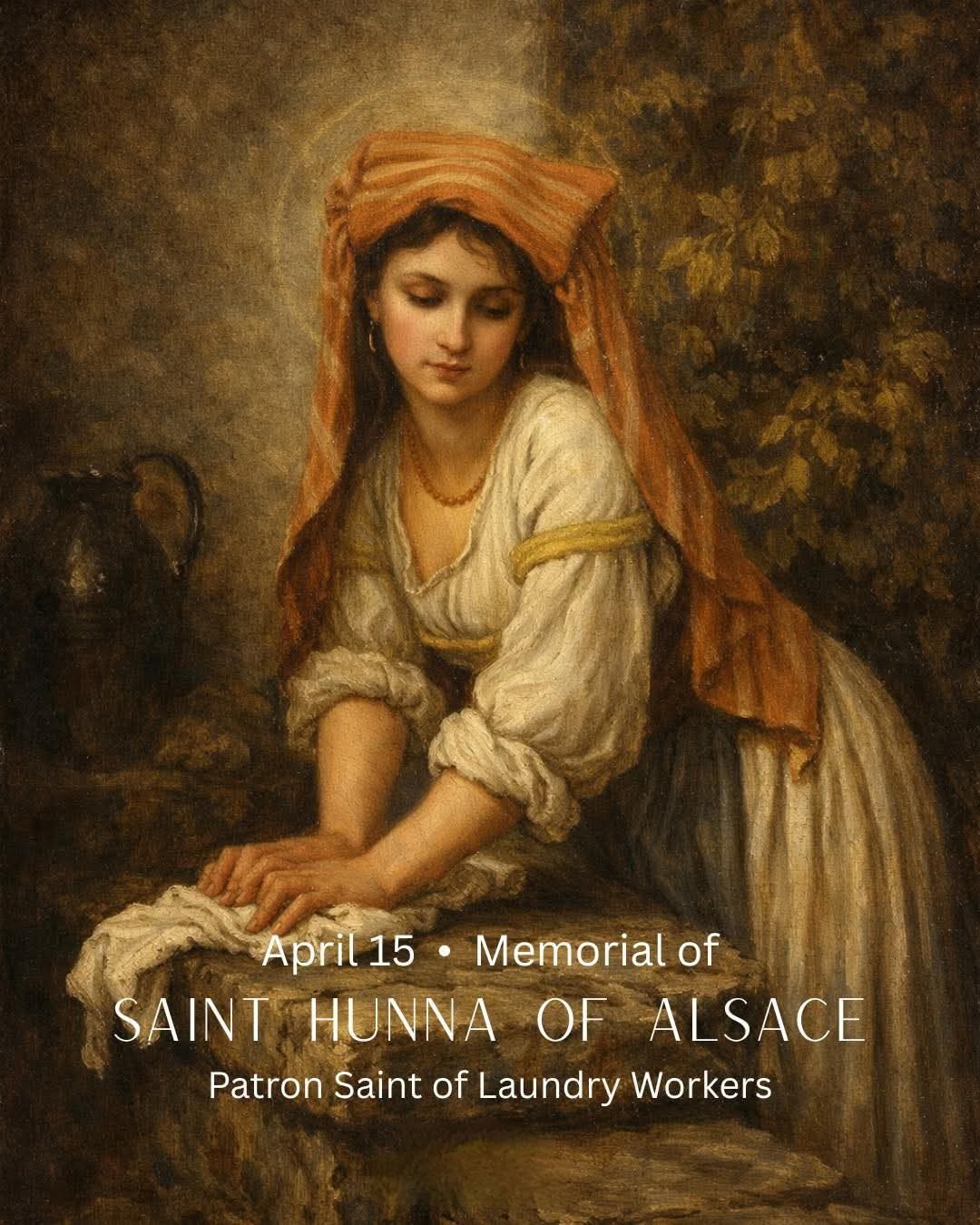
CONTEMPLATING THE LIFE OF SAINT HUNNA OF ALSACE
EARLY LIFE AND HUMBLE BEGINNINGS
Saint Hunna of Alsace was born into nobility in the region of Alsace, in present-day France. Despite her privileged upbringing, she chose a life marked not by comfort, but by service. Married to a nobleman, she lived in the world but not of it, quietly dedicating her life to the needs of others, especially the poor and forgotten.
A LIFE OF SERVICE AND CHARITY
Hunna became widely known for her extraordinary compassion toward the poor, particularly in washing and caring for their clothes. At a time when such work was considered lowly, she embraced it with joy and humility. Because of this, she was affectionately called “the Holy Washerwoman.” Her acts were not merely practical but deeply spiritual—she saw Christ in those she served.
“Whatever you did for one of the least of these brothers and sisters of mine, you did for me.” – Matthew 25:40
HUMILITY IN DAILY DUTIES
Rather than seeking recognition, Hunna sanctified the ordinary. She transformed simple, repetitive work into acts of love and devotion. Her life reminds us that holiness is not reserved for grand gestures but is often found in quiet, faithful service. Each garment she washed became an offering, each act a prayer.
A HEART ROOTED IN COMPASSION
Hunna’s compassion extended beyond physical care—she uplifted the dignity of the poor. In a society that often overlooked them, she treated them with tenderness and respect. Her charity was not selective or conditional; it was generous, constant, and rooted in a deep love for God.
BALANCING FAMILY AND FAITH
As a wife and mother, Hunna did not abandon her responsibilities. Instead, she integrated her faith into family life. Her home became a place of generosity and kindness, showing that holiness can flourish within the duties of everyday living. She lived out her vocation with grace, proving that sanctity is possible in every state of life.
A WITNESS OF QUIET HOLINESS
Unlike many saints known for dramatic martyrdoms or miracles, Hunna’s life was a gentle witness. Her sanctity lay in consistency, humility, and love. She reminds us that God often works through the hidden and unnoticed acts of goodness that shape the world silently.
LESSONS FROM HER LIFE
Saint Hunna teaches that no act of service is too small when done with love. She challenges us to look beyond status or recognition and to serve where we are, with what we have. Her life calls us to embrace humility, to honor the dignity of others, and to find God in the simplicity of daily duties.
CONTEMPLATION
As we reflect on Saint Hunna’s life, we are invited to examine our own hearts. Do we serve others with joy or reluctance? Do we recognize Christ in the poor and needy? Hunna’s example gently urges us to transform our ordinary routines into extraordinary acts of love, making our lives a quiet offering to God.
PRAYER
O God, who raised Saint Hunna from nobility to sanctity through her love for the suffering, grant us the grace to imitate her selflessness. May her intercession strengthen us to care for our neighbors, fostering peace and unity in our communities. Through Christ our Lord. Amen
Saint Hunna, pray for us!