
Why Does the Bible Begin with Creation and End with Revelation?
August 21, 2026
Matthew 6: 19
August 21, 2026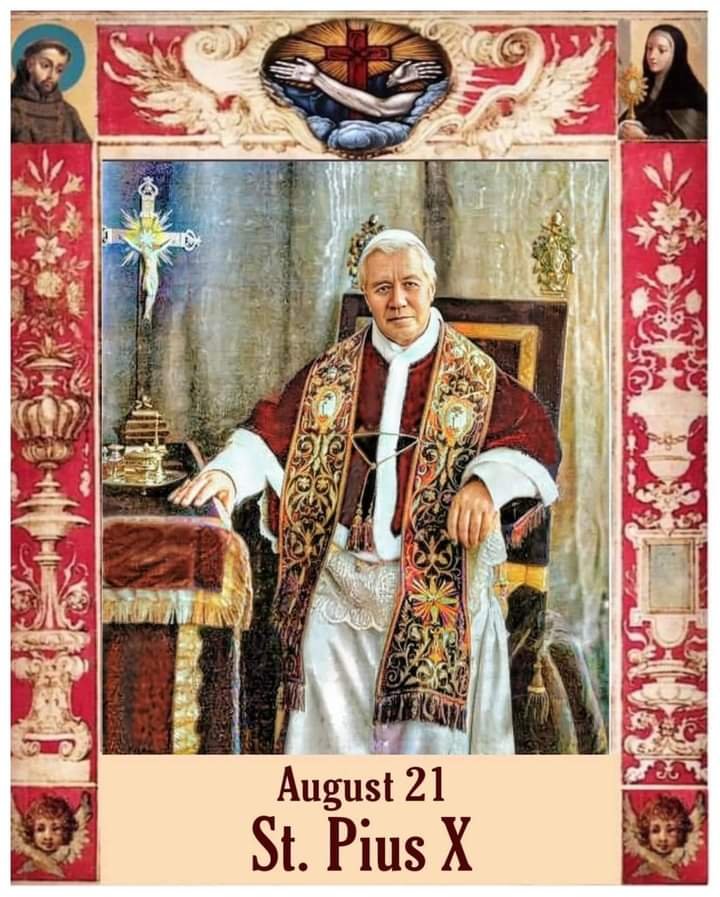
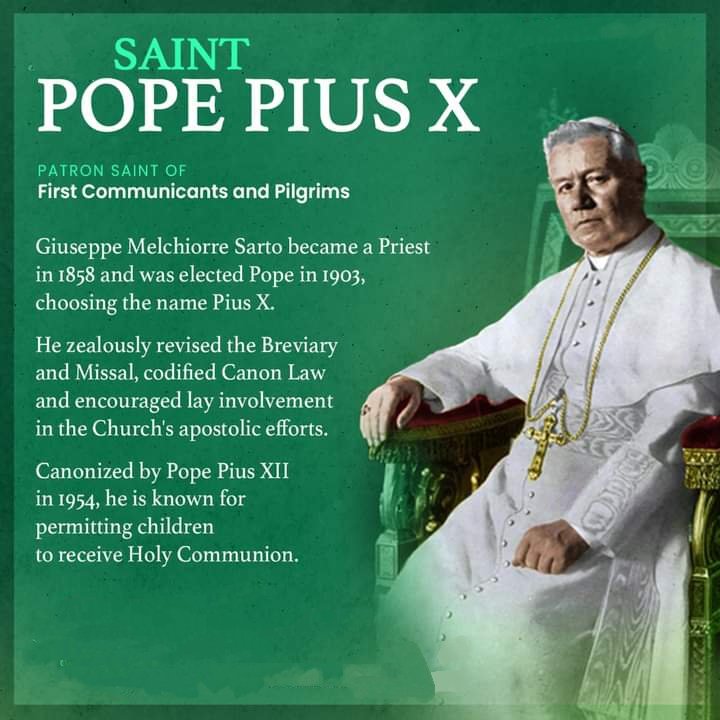
FEAST OF SAINT PIUS X POPE
FEAST DAY – 21st AUGUST
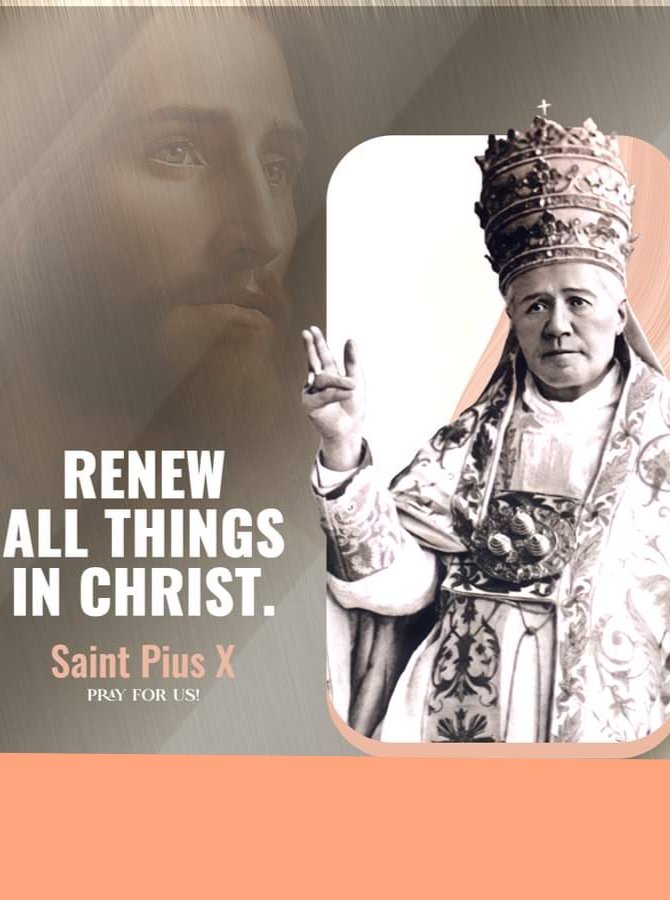
The future Pope-Saint of the twentieth century was born at Riese in Venetia on June 2, 1835, his name, Joseph Sarto. After ordination at the age of twenty-three (by special dispensation), he labored for 17 years as a parish priest, then as bishop of Mantua, and in 1892 was advanced to the metropolitan see of Venice with the honorary title of patriarch. On August 4, 1903, he was elected Pope, “a man of God who knew the unhappiness of the world and the hardships of life, and in the greatness of his heart wanted to comfort everybody.”
The primary aim of his pontificate Pius X announced in his first encyclical letter, viz., “to renew all things in Christ.” Here we need but allude to his decree on early and frequent reception of holy Communion; his Motu Proprio on church music; his encouragement of daily Bible reading and the establishment of various Biblical institutes; his reorganization of the Roman ecclesiastical offices; his work on the codification of Canon Law; his incisive stand against Modernism, that “synthesis of all heresies.” All these were means toward the realization of his main objective of renewing all things in Christ.
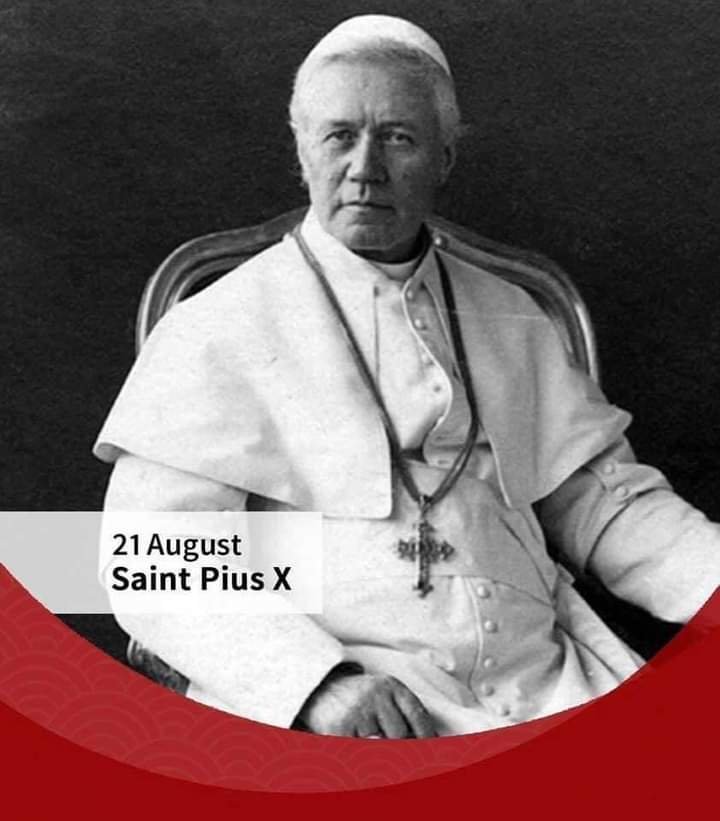
The outbreak of the first World War, practically on the date of the eleventh anniversary of his election to the See of Peter, was the blow that occasioned his death. Bronchitis developed within a few days, and on August 20, 1914, Pius X succumbed to “the last affliction that the Lord will visit on me.” He had said in his will, “I was born poor, I have lived poor, I wish to die poor” — and no one questioned the truth of his words. His sanctity and his power to work miracles had already been recognized. Pius X was the first Pope canonized since St. Pius V in 1672.
“He was one of those chosen few men whose personality is irresistible. Everyone was moved by his simplicity and his angelic kindness. Yet it was something more that carried him into all hearts: and that ‘something’ is best defined by saying that all who were ever admitted to his presence had a deep conviction of being face to face with a saint” (Baron von Pastor).
– From ‘The Church’s Year of Grace’, Pius Parsch
CONTEMPLATING THE LIFE OF SAINT PIUS X, POPE
THE POOR BOY WHO FED THE CHURCH
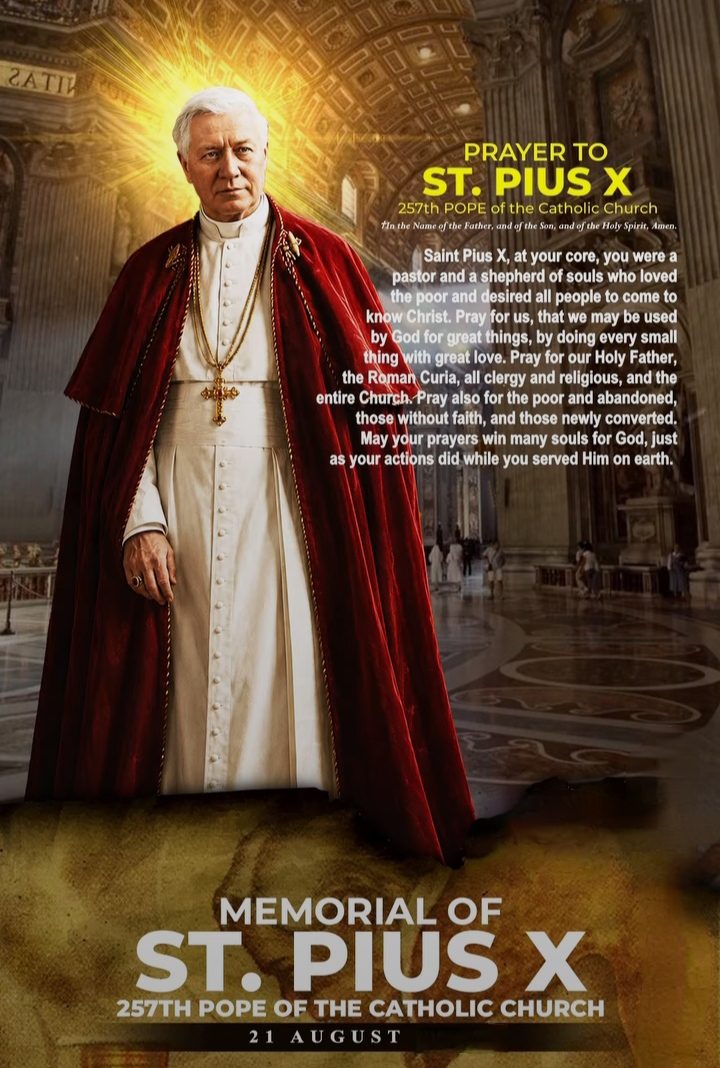
In the small village of Riese in Veneto, Giuseppe Sarto was born into a humble family. His father was a postman and his mother a seamstress. As a child, Giuseppe walked long distances to school and church, sometimes carrying his shoes to keep them from the muddy roads. He studied diligently, served at the altar and felt a deep desire to become a priest.
Through the generosity of his parish priest and bishop, he received an education at the seminary. He never forgot this kindness. His humble beginnings shaped his understanding of priesthood: a shepherd must remain close to his people, serve them with love and lead them towards Christ.
TO RESTORE ALL THINGS IN CHRIST
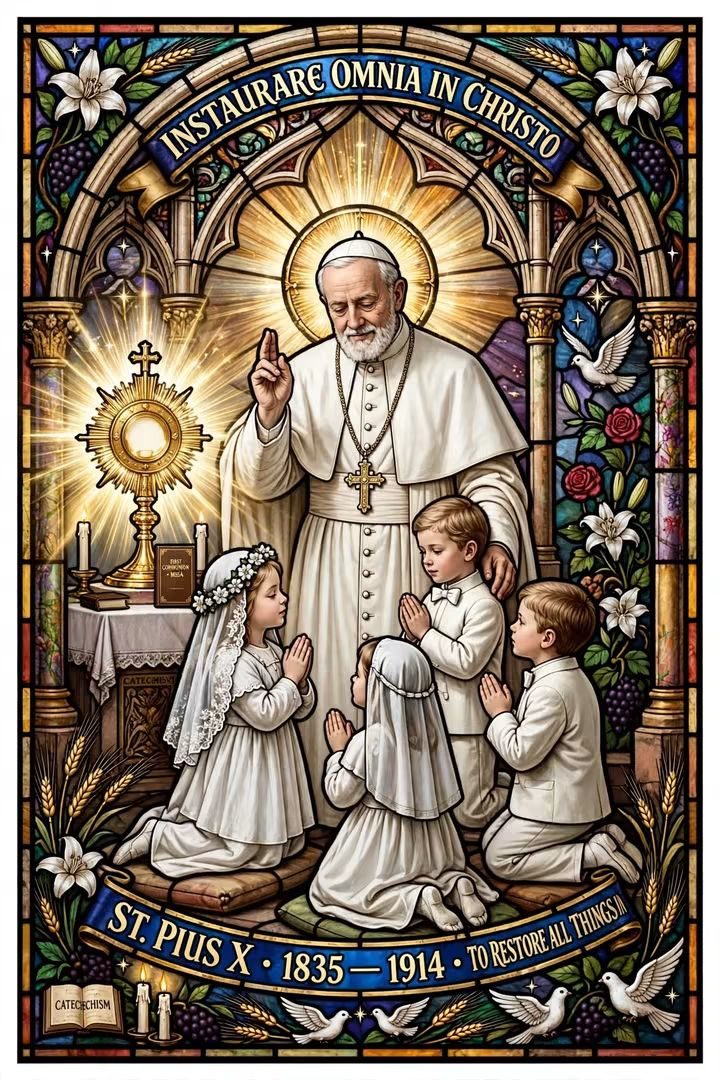
As a parish priest, Bishop of Mantua and later Patriarch of Venice, Giuseppe Sarto dedicated himself to the spiritual and material welfare of his people. He visited the sick, taught catechism, encouraged education, reformed seminaries and defended the faith. He lived simply and generously shared what he had with those in need.
His great desire was to bring people closer to Jesus Christ. His motto as Pope expressed this mission: “Instaurare Omnia in Christo” — “To restore all things in Christ.”
WE HAVE A POPE
After the death of Pope Leo XIII in 1903, the cardinals unexpectedly elected Cardinal Sarto as his successor. He accepted the papacy with humility and took the name Pius X.
He understood the enormous responsibility placed upon him and committed himself to protecting the faith and renewing the spiritual life of the Church. His papal motto became the guiding principle of his ministry: “To restore all things in Christ.”
FEEDING THE FLOCK THROUGH THE EUCHARIST AND CATECHISM
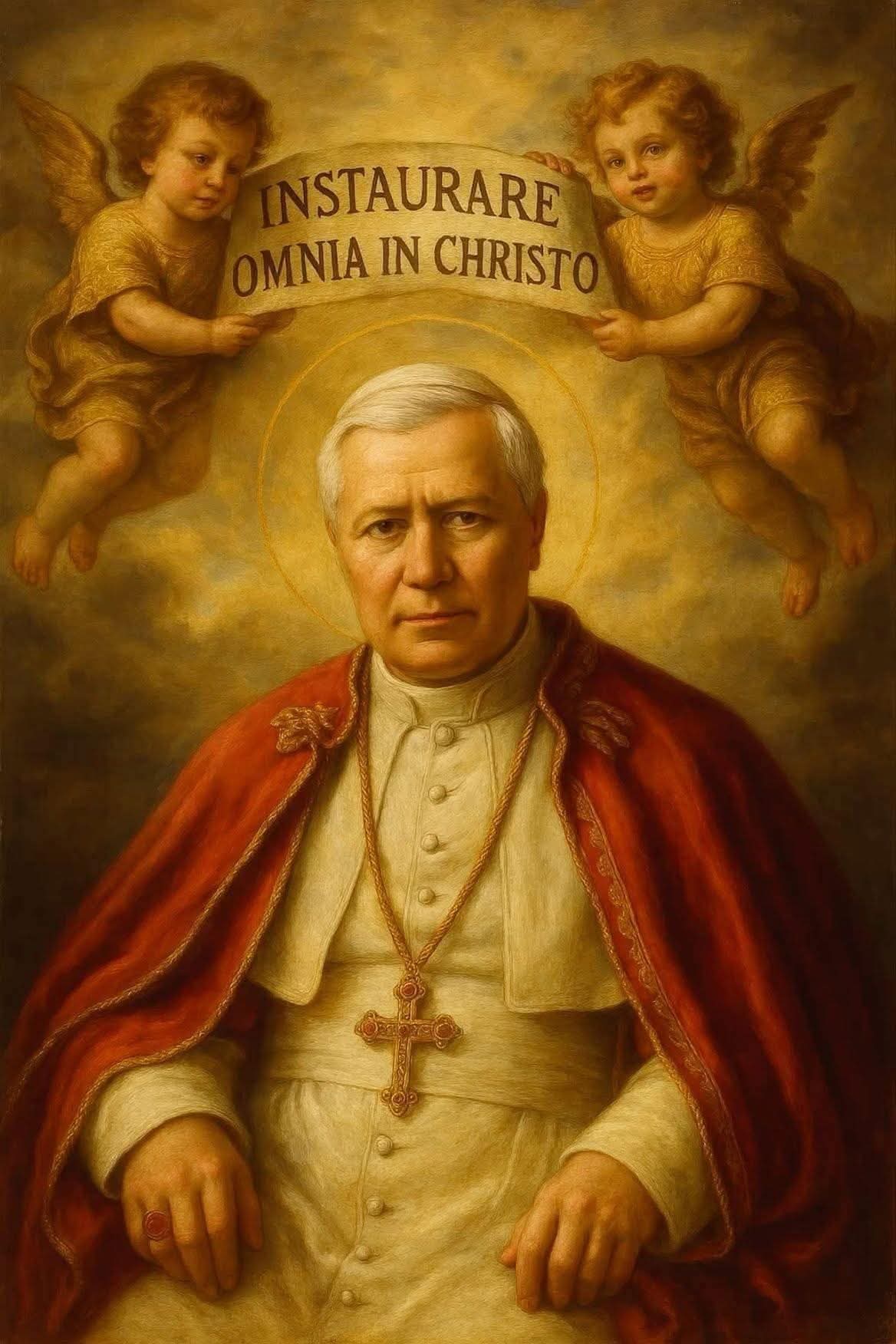
Pope Pius X believed that the renewal of the Church had to begin with the Eucharist, sound doctrine and proper Christian formation.
He lowered the age for First Holy Communion, recognising that children could genuinely encounter Christ at a young age. He encouraged frequent and even daily Communion and promoted a deeper love for the Eucharist.
He also encouraged Gregorian chant and greater dignity in the liturgy, reformed seminaries and promoted clear catechisms so that children and adults could understand the Catholic faith more easily.
His vision was simple and profound: Catholics should know their faith, live it faithfully and draw their strength from Christ in the Eucharist.
DEFENDING THE FAITH AGAINST MODERNISM
Pius X faced the growing challenge of Modernism, which attempted to reinterpret fundamental Christian beliefs according to changing philosophical and historical ideas. He feared that such approaches could weaken belief in revelation, Scripture, doctrine and the divinity of Christ.
He therefore defended the objective truth of the Catholic faith and insisted that reason and scholarship must remain faithful to divine revelation. In 1907, he issued Pascendi Dominici Gregis, addressing the dangers he perceived in Modernist thought.
He strengthened theological education, promoted fidelity in seminaries and encouraged responsible interpretation of Scripture. His concern was not to oppose genuine learning or reason, but to protect the faith from interpretations that could undermine its essential truths.
THE SHEPHERD WHO REMAINED CLOSE TO HIS PEOPLE
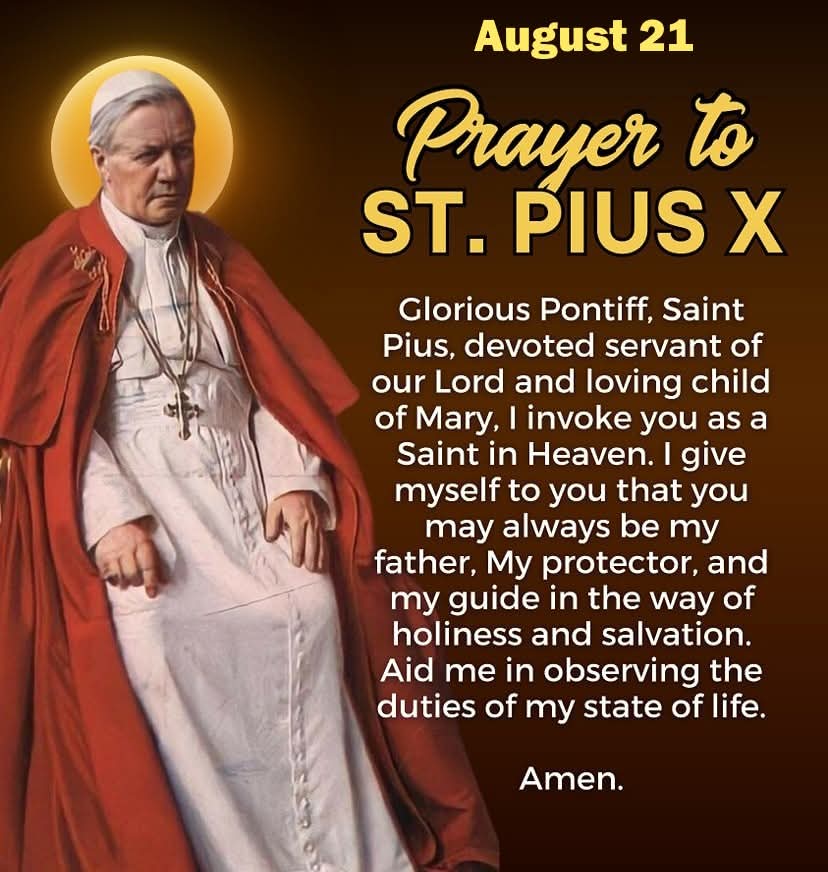
Although he became Pope, Pius X never forgot his humble origins. He simplified unnecessary papal ceremonies, welcomed pilgrims warmly and remained deeply concerned about ordinary people.
He believed that a shepherd must know and love his flock. His life combined firmness in defending the faith with simplicity, compassion and genuine pastoral concern.
When the First World War began in 1914, he was deeply distressed by the suffering it brought to Europe. He regarded the conflict as a terrible tragedy and desired to spare humanity from its devastation.
A HOLY DEATH
Pope Pius X died on 20 August 1914, shortly after the outbreak of the First World War. His final days were marked by sorrow for the suffering of humanity, but also by trust in God.
He was canonized in 1954 by Pope Pius XII, becoming the first Pope in several centuries to be formally declared a saint.
A LASTING LEGACY
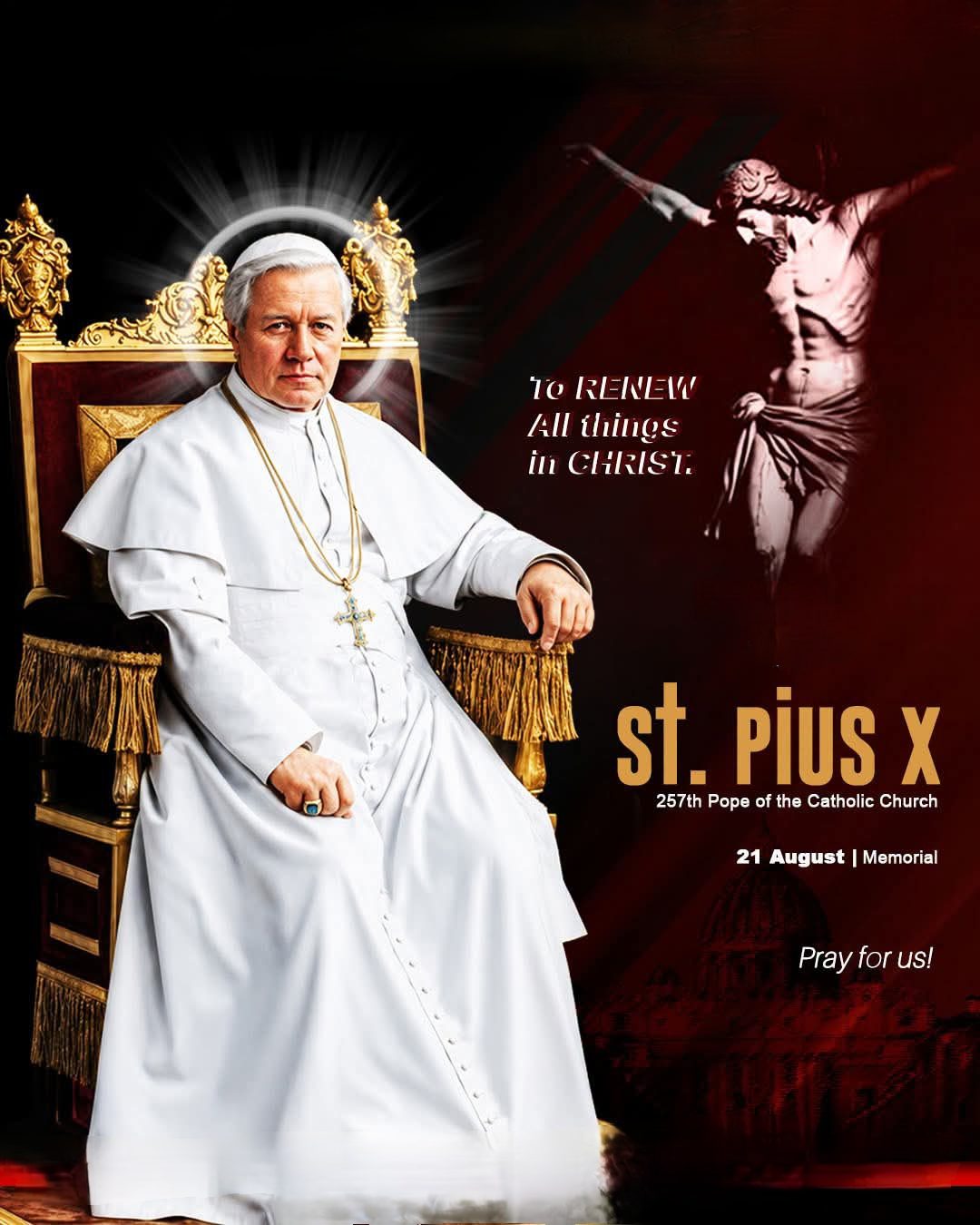
The legacy of Saint Pius X continues in the Church’s love for the Eucharist, its commitment to catechesis, its reverence for the liturgy and its defence of the truths of the Catholic faith.
He did not seek renewal through novelty, but through a deeper return to Christ. He was a father to his people, a faithful shepherd and a vigilant guardian of the faith.
Saint Pius X reminds us that true renewal begins when Christ is placed at the centre of personal life and the life of the Church.
PRAYER TO LOVE THE TRUTH AND THE EUCHARIST
O Lord Jesus, You gave Saint Pius X a shepherd’s heart and a soul aflame with love for Your truth and Your presence.
Grant me a heart that hungers for the Eucharist, a mind formed by Your Word and a spirit courageous enough to defend the faith with humility and love.
May I seek You in the silence of prayer, remain faithful to the truth of Your Gospel and live each day with a deeper love for You. Amen
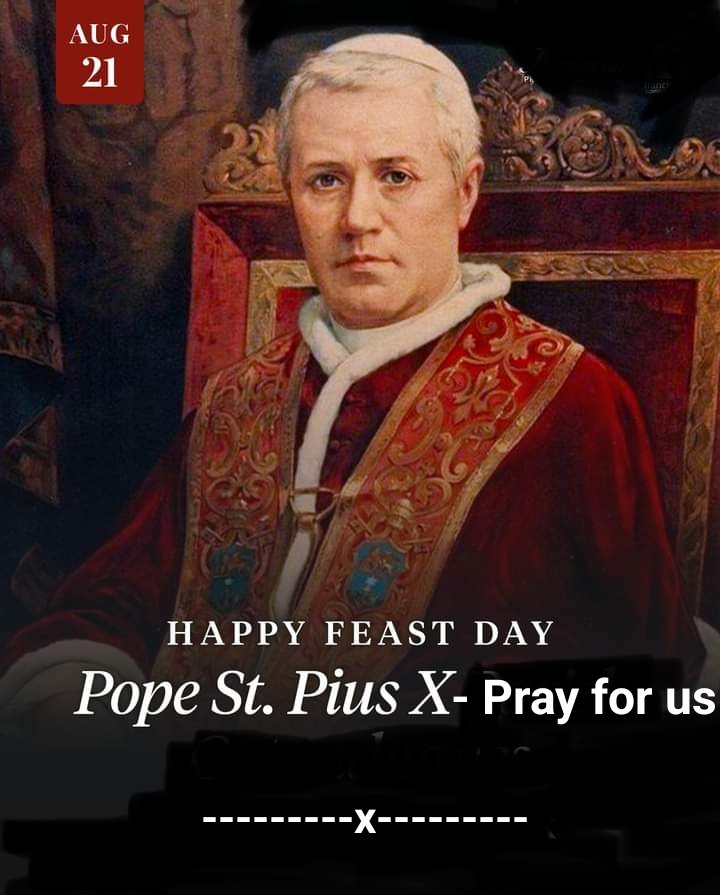
PRAYER
O God, who to safeguard the Catholic faith and to restore all things in Christ, filled Pope Saint Pius the Tenth with heavenly wisdom and apostolic fortitude, graciously grant that, following his teaching and example, we may gain an eternal prize.
Through our Lord Jesus Christ, your Son, who lives and reigns with you in the unity of the Holy Spirit, one God, for ever and ever. Amen.
Saint Pius X Pope, pray for us.