
AN EFFICACIOUS NOVENA FOR THE NATIVITY OF OUR LADY
August 31, 2026
Daniel 12: 3
August 31, 2026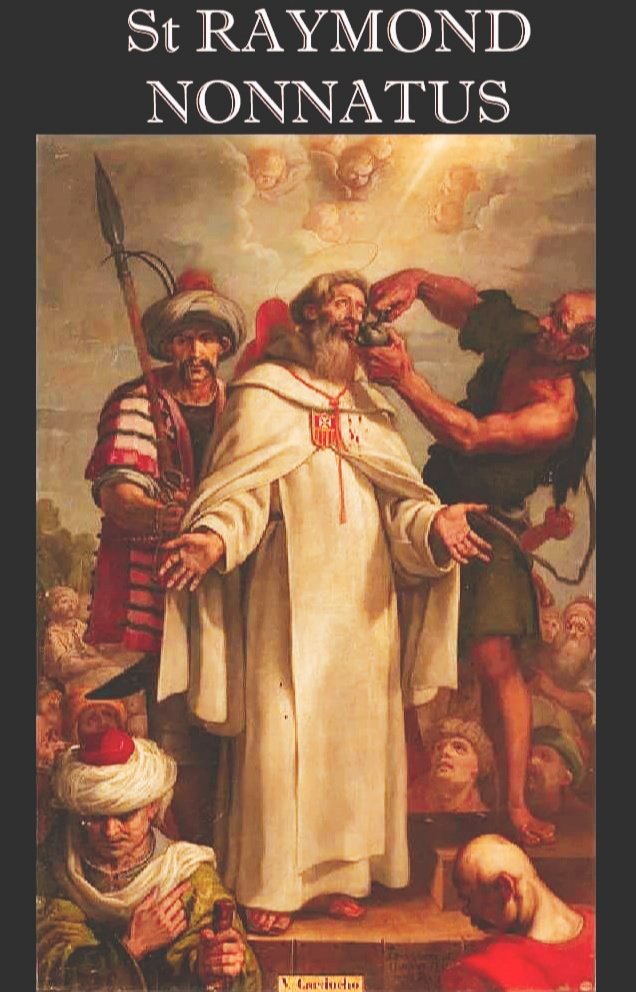
FEAST OF SAINT RAYMOND NONNATUS, CONFESSOR
FEAST DAY – 31st AUGUST
Peter Nolasco, a native of Languedoc, founded in the early thirteenth century a society known as the Mercedarians, devoted to ransoming Christians captured by the Moors.
Amongst those he received into the society was a Catalonian named Raymond. This Raymond’s mother had died giving birth to her son, and he was delivered by a caesarian section — hence his nickname Nonnatus, which is Latin for ‘not born’.
So determined was Saint Raymond Nonnatus that when Peter Nolasco retired as chief ransomer, the saint succeeded him in this office. He set off for Algiers with a great sum of money, and there ransomed many.
When his money ran out, Saint Raymond Nonnatus could have made his own escape. But this would have involved leaving several slaves behind. He gave himself up in exchange for their liberty.
His own life was now in great danger. The Moors of Algiers were enraged that he had managed to convert some of their number. The governor would have put him to death by impaling the saint on a stake. What saved him were others who realized that a rich ransom would be paid for this particular Christian.
Even so, he was still whipped publicly in the streets — partly to discourage those who might be tempted to learn from him the Christian faith. Reports of his tortures probably exaggerated the cruelty of his Moorish captors but after eight months of torture, Peter Nolasco arrived with Raymond Nonnatus’s ransom. Even then he wanted to stay behind, hoping to convert still more men and women to Christianity; but Peter Nolasco forbade it.
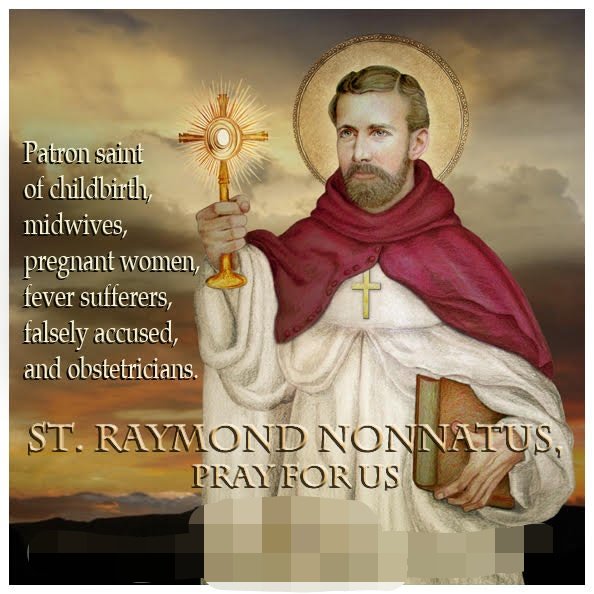
On his return, Pope Gregory IX made him a cardinal. The pope wished to see Raymond Nonnatus in Rome, but on his way there in the year 1240 he reached only Cardona near Barcelona, where he died at the age of thirty-six. He is Patron of childbirth; children; expectant mothers; falsely accused people; fever; infants; midwives; newborn babies; obstetricians; pregnant women.
– From A Calendar of Saints by James Bentley
CONTEMPLATING THE LIFE OF SAINT RAYMOND NONNATUS
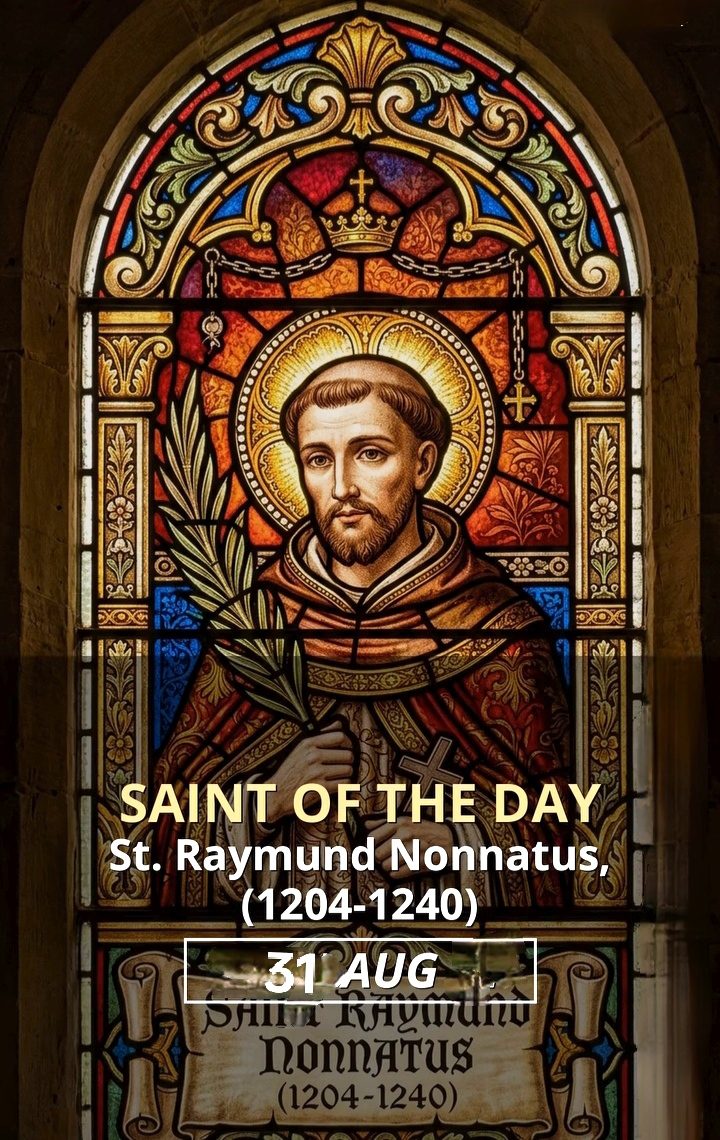
THE MAN WHOSE LIPS WERE LOCKED – BUT WHOSE FAITH COULD NOT BE SILENCED
Saint Raymond Nonnatus – known as “Raymond Not-Born” – was a 13th-century Spanish Mercedarian religious, priest, missionary, and ransom-worker for Christian captives.
He was born around 1204 at Portell, near Barcelona in Catalonia, Spain. His traditional feast is 31 August.
His life is especially associated with three themes: birth through suffering → liberation of captives → heroic fidelity to Christ.
A CHILD WHO ENTERED THE WORLD THROUGH DEATH
The room was filled with fear.
A mother was dying.
The child had not yet been born.
There seemed to be no way for both mother and child to survive.
The mother died.
But those around her refused to give up on the child.
They performed a post-mortem Caesarean delivery.
And a baby boy was brought into the world.
His name was Raymond.
Because he had not been born in the ordinary way, he was given the name:
Nonnatus – “Not Born.”
His beginning was marked by death.
Yet the child who entered the world through death would spend his life bringing freedom and new life to people trapped in suffering.
THE BOY WHO DISCOVERED THE GOD OF MERCY
Raymond grew up in Catalonia.
As he matured, his heart became increasingly drawn toward God.
But he did not want a comfortable religious life.
He was attracted to a new religious order whose mission was extraordinarily dangerous.
It was called the Order of the Blessed Virgin Mary of Mercy – the Mercedarians.
Their mission was simple:
_Find Christians who had been captured. Pay their ransom. Bring them home._
And if the money was not enough?
The Mercedarian was willing to offer himself in exchange.
Raymond understood the Gospel:
Christ had given Himself to set humanity free.
He wanted to do the same.
THE PRIEST WHO WALKED INTO DANGER
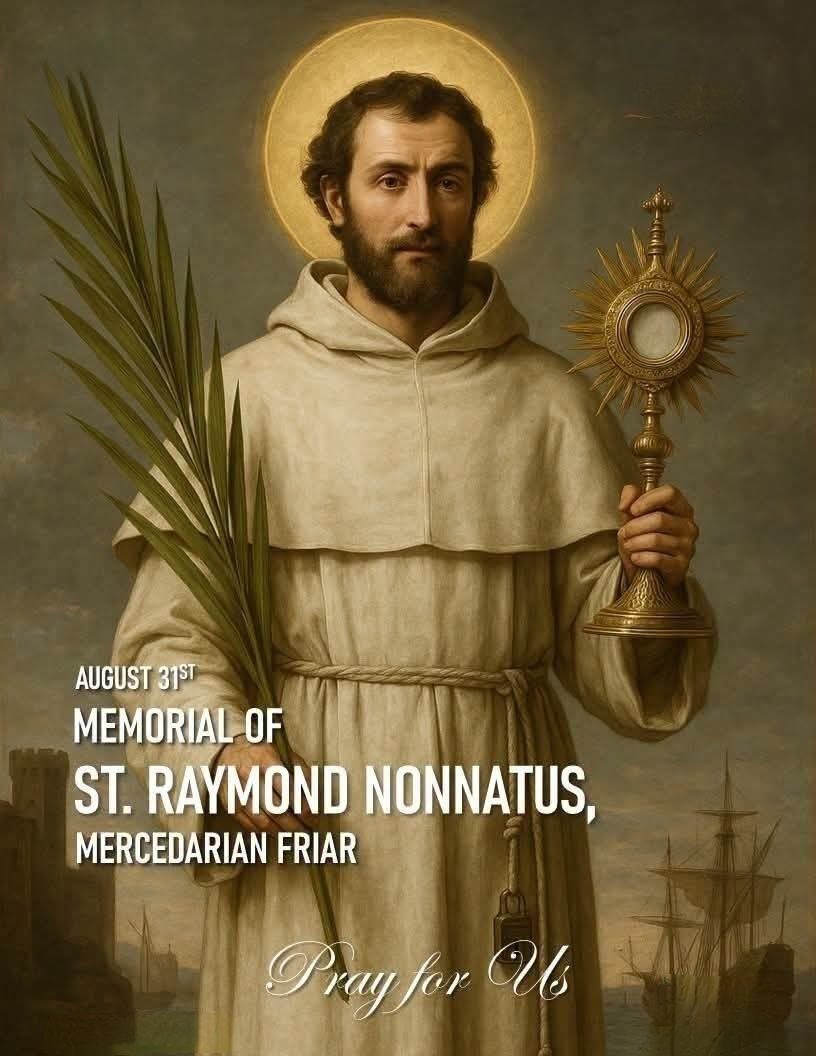
Raymond became a priest.
Then he went where many others feared to go.
He entered territories where Christians were held captive.
He negotiated.
He begged.
He raised money.
He purchased freedom.
Imagine the scene:
A prisoner behind bars.
A family waiting at home.
A price demanded for freedom.
And Raymond standing on the other side saying:
_“I have come to bring you home.”_
For Raymond, priesthood was not merely about preaching salvation.
It was about making salvation visible through mercy.
WHEN THE MONEY RAN OUT
Then one day, the situation became impossible.
There were still prisoners who needed to be freed.
But the ransom money was gone.
The negotiations failed.
Raymond faced a terrible choice.
He could leave.
He could return safely.
Or he could stay.
He stayed.
And according to the traditional account, Raymond offered himself as a hostage in place of the remaining captives.
His freedom for theirs.
His safety for theirs.
His life for theirs.
He had understood the words of Jesus:
_“Greater love has no one than this, that someone lay down his life for his friends.”_
Raymond did not merely preach those words.
He became them.
THE PRISONER
Now the priest became a prisoner.
The liberator became captive.
The man who had come to unlock chains now wore them himself.
But something unexpected happened.
His captors could imprison his body.
They could not imprison his mission.
Raymond began encouraging the other prisoners.
He prayed with them.
He strengthened them.
He proclaimed Christ.
His prison became his pulpit.
His chains became his testimony.
His suffering became his ministry.
“YOU WILL NOT SPEAK!”
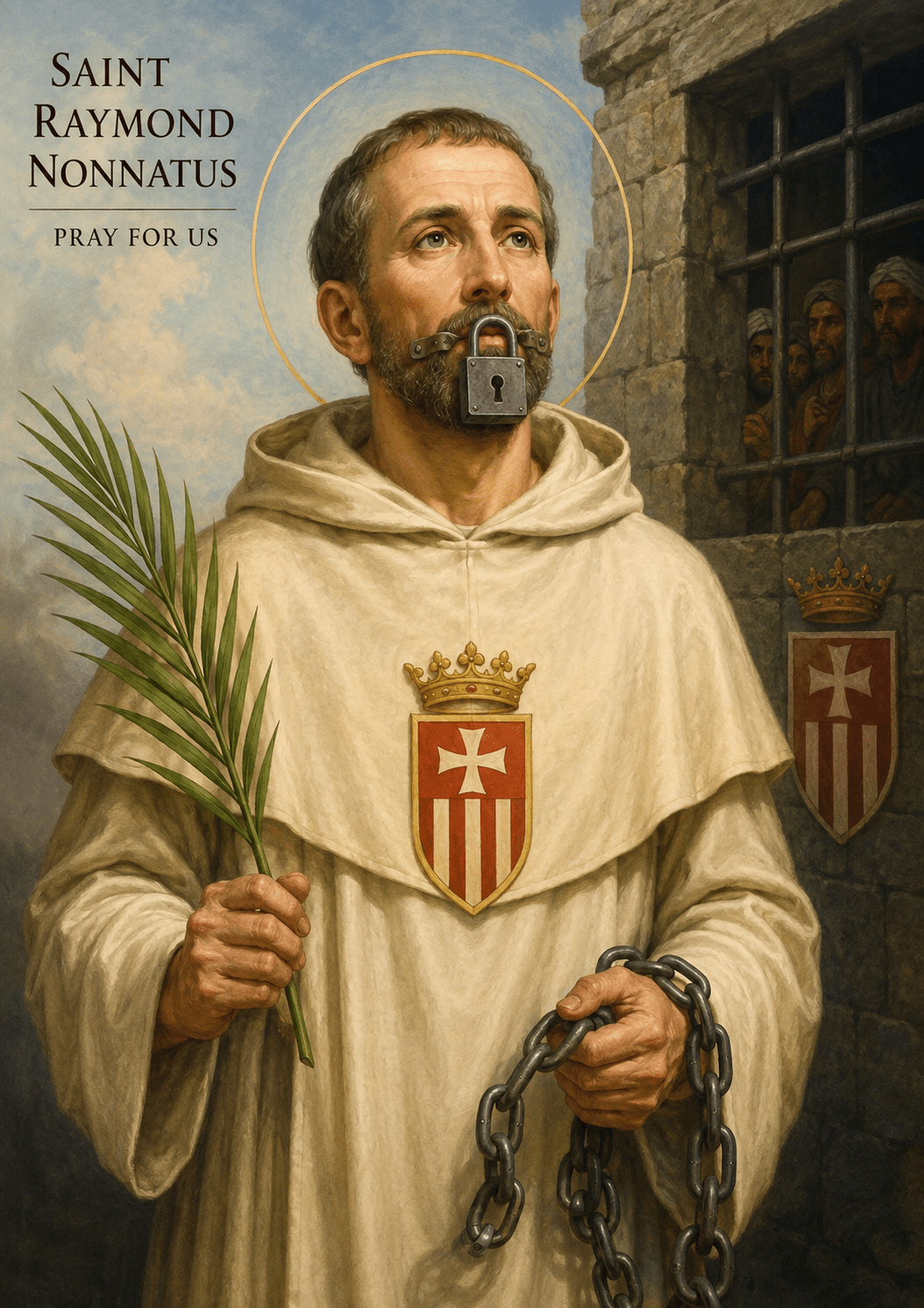
His preaching angered his captors.
They wanted silence.
According to the traditional accounts, they subjected him to brutal treatment and eventually locked or pierced his lips with a padlock so that he could no longer preach.
Imagine it.
A priest whose vocation was to proclaim Christ.
His lips were locked.
His voice was silenced.
His captors thought:
_“Now he cannot speak.”_
But they misunderstood the Gospel.
Because sometimes the most powerful witness is not what a person says.
It is what a person continues to be when everything is taken away.
WHEN SILENCE BECAME PREACHING
Raymond could no longer speak freely.
But he could still pray.
He could still love.
He could still encourage.
He could still remain faithful.
The chains could not reach his soul.
The padlock could not lock his heart.
And his silence itself began proclaiming:
_“Christ is worth suffering for.”_
His life became a living sermon:
You can imprison the preacher.
You cannot imprison the Gospel.
THE CAPTIVE WHO REMAINED FREE
Raymond’s captors had taken away his physical freedom.
But spiritually, they had failed.
He was still free to forgive.
Free to pray.
Free to love.
Free to remain faithful.
This is the paradox of Christian freedom.
A person may be physically imprisoned and spiritually free.
Another may possess enormous worldly freedom and yet be enslaved by:
anger,
addiction,
greed,
lust,
fear,
resentment,
pride,
the need for approval.
Raymond discovered a freedom that chains could not destroy.
THE DAY THE CHAINS WERE BROKEN
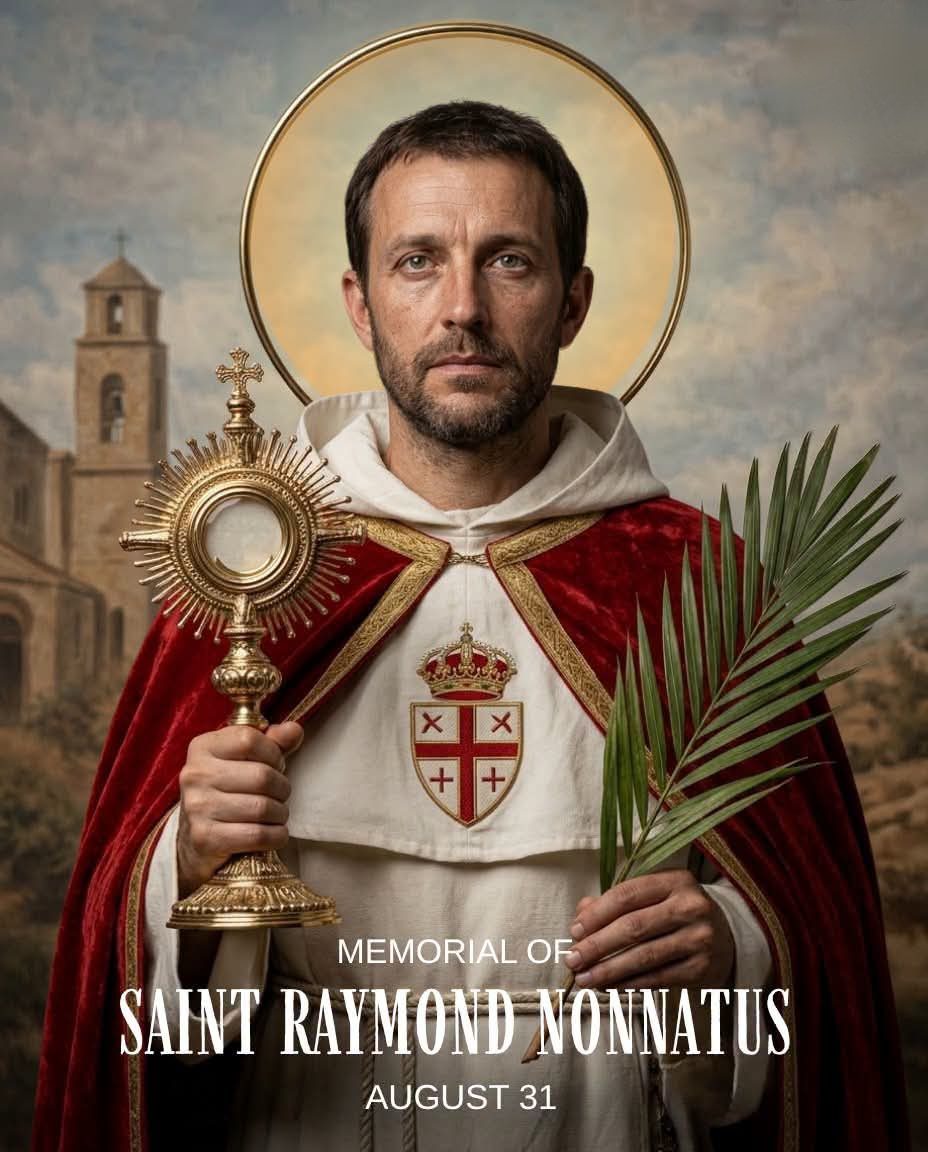
Eventually Raymond was ransomed.
The prisoner returned to freedom.
But he did not forget those who remained captive.
His entire life had been shaped by one conviction:
No human being should be abandoned in captivity.
He returned to Spain carrying the scars of what he had endured.
But he also carried something else:
A deeper identification with Christ.
He had learned personally what it meant to be:
the one who suffers so that another may become free.
FROM CAPTIVE TO CARDINAL
Then came another astonishing turn.
Raymond’s reputation for holiness spread.
According to tradition, Pope Gregory IX appointed him a cardinal.
The former captive was now given one of the highest honours in the Church.
The man who had worn chains now wore the insignia of ecclesiastical authority.
But Raymond’s life had already taught him something:
titles do not make a person great.
Love does.
Service does.
Sacrifice does.
Faithfulness does.
THE FINAL JOURNEY
Raymond was summoned to Rome.
He set out.
But he never reached his destination.
His health deteriorated.
Around the year 1240, Raymond died at Cardona in Catalonia.
He was only about thirty-six.
His earthly life had been brief.
But what a journey it had contained.
A child born through tragedy.
A young man who chose mercy.
A priest who freed captives.
A man who exchanged his freedom for theirs.
A prisoner who continued preaching.
A preacher whose lips were locked.
A captive who remained spiritually free.
A cardinal who never forgot the suffering of the imprisoned.
And finally –
a saint.
THE MAN WHOSE LIPS WERE LOCKED
Centuries later, people would remember Raymond with an unusual symbol:
A padlock.
Why?
Because the story of the padlocked lips became a powerful image of his life.
The world said:
_“Be silent.”_
Raymond’s life answered:
_“I cannot stop belonging to Christ.”_
The world said:
_“Your suffering has made you powerless.”_
His life answered:
_“Suffering offered to God can become witness.”_
The world said:
_“You are a prisoner.”_
His life answered:
_“My body may be imprisoned, but my soul belongs to Christ.”_
THE SAINT WHO UNDERSTOOD TRUE FREEDOM
Raymond’s greatest lesson is not simply about physical captivity.
It is about the captivity of the human heart.
There are people who have no chains on their wrists but cannot forgive.
People who live in beautiful houses but are imprisoned by anxiety.
People who have money but are enslaved by greed.
People who have enormous freedom but are controlled by addictions.
People who appear successful but cannot escape the need for others’ approval.
Raymond points us toward another freedom:
Freedom in Christ.
He teaches:
You are truly free when nothing can separate you from God’s love.
WHY “NONNATUS” IS SUCH A BEAUTIFUL NAME
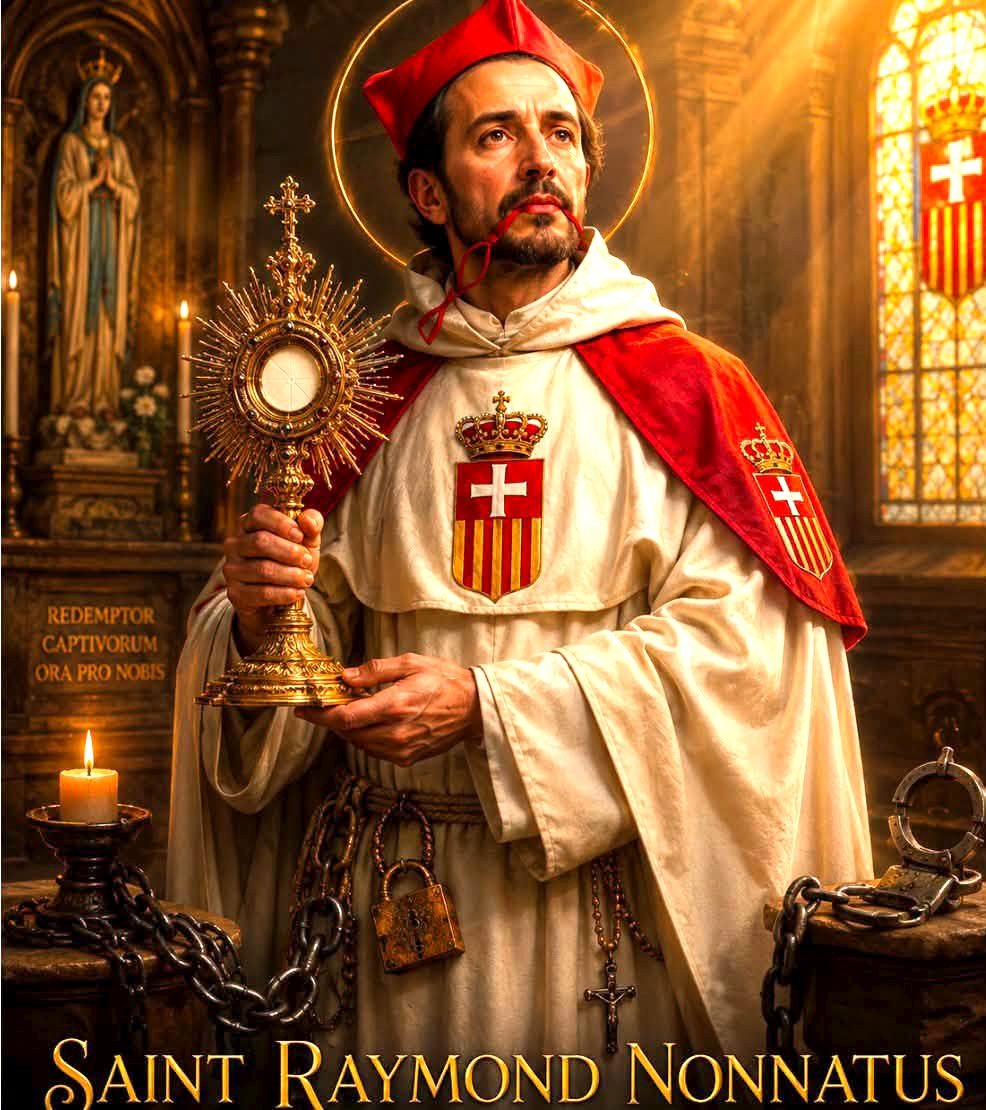
The name Nonnatus means:
_“Not Born.”_
It originated from the extraordinary circumstances of his birth.
But spiritually, the name almost becomes a prophecy.
Raymond’s entire life was about new birth.
He helped captives regain freedom.
He strengthened Christians whose faith was dying.
He brought hope into prisons.
He proclaimed Christ to people surrounded by suffering.
The man who had entered the world through an extraordinary birth became a minister of new life.
HIS MERCEDARIAN SPIRITUALITY
At the heart of Raymond’s life was the spirituality of the Redeemer.
The Mercedarian understood Christ as the One who liberates humanity from the captivity of sin.
Therefore, the Christian cannot remain indifferent to people who are imprisoned, oppressed, enslaved, exploited, or abandoned.
Raymond’s life asks a challenging question:
Whose freedom am I willing to sacrifice for?
Not necessarily by literally becoming a hostage, but by giving:
our time,
our comfort,
our money,
our reputation,
our attention,
our forgiveness,
our service,
our prayers.
HIS PATRONAGE
St. Raymond Nonnatus is traditionally invoked especially for:
Expectant mothers
Childbirth
Infants
Midwives
Those falsely accused
Prisoners
Captives
Victims of persecution
Those seeking protection from gossip and slander
His association with childbirth comes naturally from the circumstances of his own birth.
His association with prisoners and captives comes from his Mercedarian mission.
HIS SYMBOLS
You will often see St. Raymond depicted with:
_*A padlock*_
Recalling the tradition that his captors locked his lips to stop him preaching.
_*Chains*_
Representing his work for the liberation of captives and his own imprisonment.
_*A child or references to childbirth*_
Because of the extraordinary circumstances of his birth.
_*A Mercedarian habit*_
Showing his identity as a member of the Order of Mercy.
_*The Eucharist or cross*_
Expressing his complete identification with Christ.
THE CENTRAL MESSAGE OF HIS LIFE
St. Raymond’s life can be summarized in one extraordinary paradox:
He was born through the death of another, and he spent his life giving himself so that others could live free.
His life moves through a beautiful progression:
Birth through suffering
↓
Vocation to mercy
↓
Service to captives
↓
Personal captivity
↓
Self-sacrifice
↓
Witness in suffering
↓
Freedom for others
↓
Sainthood
He teaches us that Christianity is not simply about asking:
_“How can God save me?”_
It is also about allowing God to make us instruments through whom someone else experiences His saving love.
And perhaps that is the deepest lesson of the Mercedarian saint:
The person who has encountered Christ the Liberator cannot remain indifferent to those who are still in chains.
PRAYER
Eternal God, you blessed Saint Raymond, your confessor, with a wonderful way in delivering your faithful who were held in captivity by infidels.
Grant us by his intercession that, loosed from the bonds of sins, we may with equanimity perform those things which are pleasing to you. Through Jesus Christ, our Lord. Amen