
SPIRITUAL INSIGHTS INTO THE LIFE OF SAINT FULBERT OF CHARTRES
April 10, 2026
FEAST OF SAINT GEMMA GALGANI, MYSTIC – 11th APRIL
April 11, 2026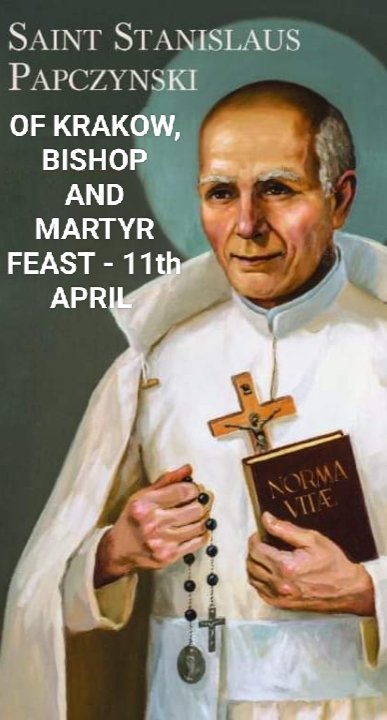
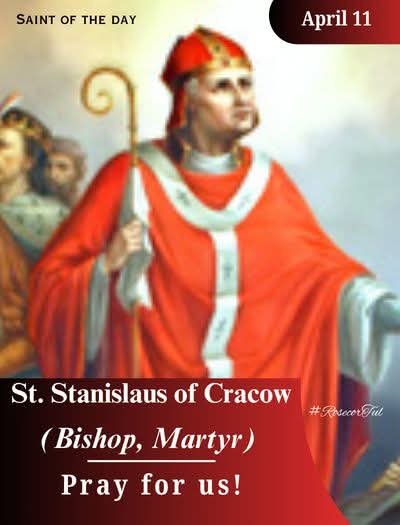
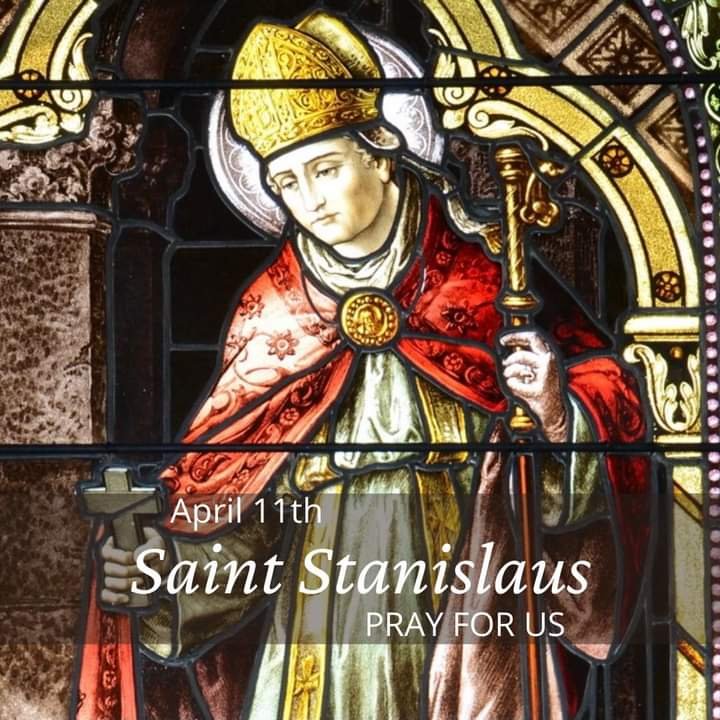
FEAST OF SAINT STANISLAUS OF KRAKOW, BISHOP AND MARTYR
FEAST DAY – 11th APRIL
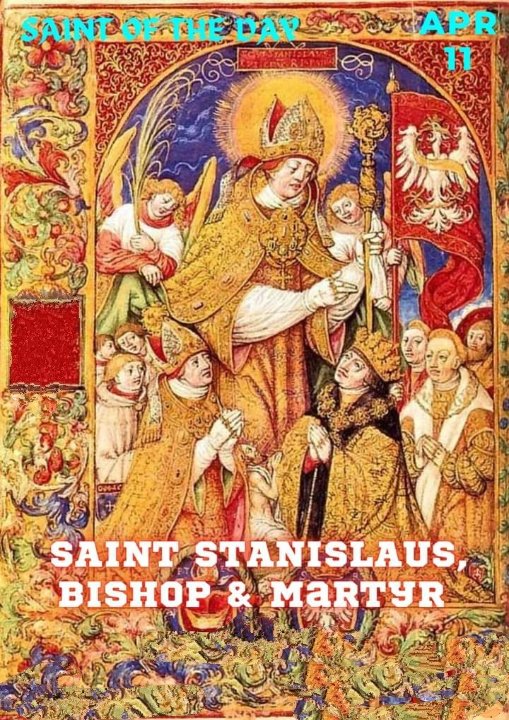
On April 11, the Catholic Church honors the memory of the 11th-century bishop and martyr St. Stanislaus of Krakow, who died for the faith at the hands of King Boleslaus II. Canonized in 1253, St. Stanislaus is a beloved patron of the Polish nation and people. In his own country he is commemorated May 8, the date of his death in 1079.
Just as a baptized person comes to Christian maturity by means of this sacrament of Confirmation, so Divine Providence gave to our nation, after its Baptism, the historical moment of Confirmation. Saint Stanislaus, who was separated by almost a whole century from the period of the Baptism and from the mission of Saint Adalbert, especially symbolizes this moment by the fact that he rendered witness to Christ by his own blood. ~1979 homily of Saint John Paul II in Poland
In 966, Mieszko I, duke and ruler of Poland, along with many others in his ruling court, converted to the Catholic faith. Their conversion marked the beginning of what is often referred to as “The Baptism of Poland.” In the years that followed, many more conversions took place throughout the land, especially through the efforts of missionary bishop Saint Adalbert.
Just over a century later, another significant event took place in Poland. The Archbishop of Krakow, Stanislaus of Szczepanów, was brutally martyred by King Bolesław II. In 1979, Pope Saint John Paul II, the former Archbishop of Krakow himself, referred to Saint Stanislaus’ martyrdom analogously as “Poland’s Confirmation” (see above).
Very little is known about Saint Stanislaus for certain since his first biography was not written until more than a century after his death. Nonetheless, his influence upon Poland has been great. He is believed to have been born and raised in southern Poland, in the village of Szczepanów. His town and the surrounding area stood out from the rest of Poland for their unique culture, architecture, traditional costumes, dances, food, and dialect.
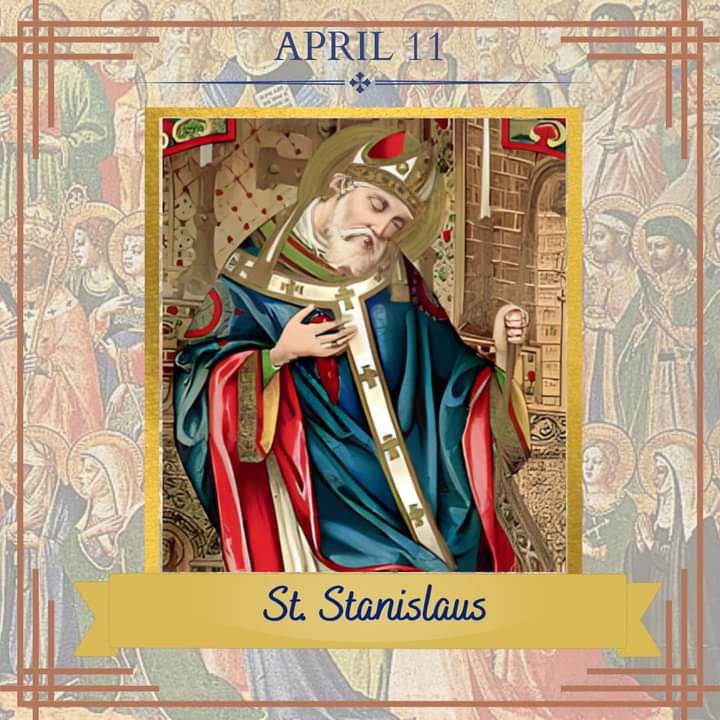
The capital and largest city of the territory was Krakow. His parents were prominent and wealthy, as well as devout and charitable. For most of their marriage, they were without children. When his mother conceived Stanislaus later in their lives, his parents saw their child as a gift from Heaven.
As a youth, Stanislaus became very devout, charitable toward the poor, fervent in mortifications, and dedicated to growth in virtue. As a young man, it is believed that he was sent to study in the then capital of Poland, Gniezno, and later completed his theological studies in Paris. After his parents died, Stanislaus received a huge inheritance, which he immediately gave to the poor.
He was ordained to the priesthood by the Bishop of Krakow and appointed canon at the cathedral, became a well respected preacher, was later appointed as a pastor, and eventually became the Vicar General of Krakow, a position of great importance in the local church. When the Bishop of Krakow died, Stanislaus was chosen as his successor by popular acclaim. At first he refused the position, but on the explicit order of the pope, he accepted and was ordained a bishop around the age of forty-two.
As a bishop, Stanislaus vigorously preached against immoralities at all social levels. He even confronted the king. When he was met with opposition, he remained steadfast in his convictions. It is believed that, to help solve various ecclesiastical matters, he brought papal legates to Poland, reestablished the Diocese of Gniezno as an archdiocese, and worked with the king to found new monasteries to help with the ongoing efforts of evangelization.
At that time, Bolesław II was King of Poland. Legend has it that Bishop Stanislaus had purchased land for the church from a man named Piotr. After Piotr’s death, however, his three sons disputed the sale and took the matter to the king. The king, agitated with Bishop Stanislaus for condemning his immoralities, sided with the sons and ordered that the bishop return the property. Bishop Stanislaus is said to have asked for three days to produce Piotr as his witness of the sale.
The king and his court laughed and gave him his three days. After three days of prayer and fasting, Bishop Stanislaus led a procession to the cemetery where Piotr’s body was exhumed and the bishop ordered him to rise, which he did. The group then proceeded to the king and Piotr testified that he did indeed sell the property, scolding his sons before returning to his grave.
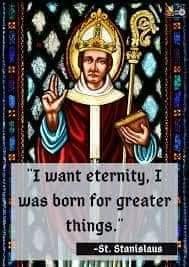
Though King Bolesław enjoyed many honors as a successful military leader, he also continued to manifestly indulge in immoralities, such as lusts and heavy-handed cruelty to anyone who opposed him. Tensions continued to grow between the bishop and king. Eventually, after the king ignored the bishop’s warnings, Bishop Stanislaus excommunicated Bolesław. Outraged, Bolesław held a mock trial and found the bishop guilty of treason, punishable by death. When Bolesław’s soldiers refused to carry out the order, Bolesław himself slew the bishop with his sword while the bishop was celebrating Mass.
The legend continues that after Stanislaus’ death, the soldiers were ordered to dismember the bishop’s body and scatter the pieces on the land to be devoured by wild beasts. Miraculously, eagles guarded the pieces until the canons of the cathedral were able to gather them and bury them properly. Outrage against Bolesław’s actions quickly reached a fever pitch in the kingdom, and the king had to flee to Hungary for safety where he died an unhappy death.
Saint Stanislaus has become a legend and inspiration for all of Poland for many centuries. Like many kingdoms throughout the ages, Poland has gone through times of division, later to be reunited once again. Through it all, Saint Stanislaus has been a guiding light to Poles and a source of hope when it was needed the most. There is little doubt that his martyrdom confirmed Poland as a Christian country, strengthening its people throughout the years to become true witnesses to Christ no matter the cost.
Ponder your own call to courageously lay down your life for the faith. When fear keeps you from fidelity, turn to prayer and seek to imitate Saint Stanislaus. Allow his prayers and witness to confirm you more firmly in the faith so that you will be a witness to those who need it the most.
CONTEMPLATING THE LIFE OF SAINT STANISLAUS OF KRAKÓW
St. Stanislaus is one of the most important saints of Poland, remembered as a courageous bishop who stood for justice against royal abuse, even at the cost of his life. His story is dramatic, moral, and deeply relevant, a shepherd who chose truth over power.
He was born around the year 1030 in Szczepanów in Poland and died in 1079 in Kraków. He served as the Bishop of Kraków. His feast day is celebrated on April 11, and he is honored as a patron of Poland.
He lived during a time when Christianity in Poland was still developing, and political authority was strong and often went unchecked.
THE SHEPHERD WHO STOOD AGAINST A KING
A NATION STILL LEARNING FAITH
Poland was still young in the faith. Churches were being built, but hearts were still being formed. Power was strong, and kings ruled with authority that few dared to question.
Into this world came a man chosen not for ambition but for integrity. Stanislaus was not loud or forceful, but steady. He was a man who understood that faith was not just something to be believed, but something to be lived.
EARLY LIFE FORMATION FOR LEADERSHIP
Stanislaus came from a noble and devout family. He studied either in Poland or possibly abroad, with traditions mentioning places such as Paris or Liège. He was known for his intelligence, integrity, and deep faith.
In time, he was ordained a priest and later became the Bishop of Kraków.
A BISHOP WITH A CLEAR CONSCIENCE
As Bishop of Kraków, Stanislaus walked closely among his people. He saw the poor struggling, the powerful acting without restraint, and the fragile balance between authority and justice.
He taught, guided, and corrected, not to control, but to lead others toward truth. Gradually, a quiet tension began to grow, because truth, when lived seriously, always disturbs something.
THE SHADOW OF A KING
At the center of that tension stood King Bolesław II the Bold, a ruler who was strong, decisive, and influential, but increasingly unjust.
Reports reached the bishop about abuses of authority, harsh punishments, and moral disorder. Stanislaus listened, not as a politician, but as a shepherd.
He understood that silence would be easier and safer, but it would not be faithful.
THE COURAGE TO SPEAK
Stanislaus approached the king not with rebellion, but with truth. He warned him, called him to repentance, and invited him to change.
But power rarely yields easily. The warnings were ignored, and the injustice continued.
In response, Stanislaus took a bold and shocking step. He excommunicated the king, not to humiliate him, but to awaken him, not to destroy, but to call him back to righteousness.
THE ALTAR AND THE SWORD
The breaking point came quickly. One day, as Stanislaus stood at the altar offering the Holy Sacrifice, the king arrived, not to pray, but to silence the voice that opposed him.
What followed was sudden, violent, and final. At the altar, the place of sacrifice, the shepherd was struck down, and the Church fell silent.
A DEATH THAT SPOKE LOUDER THAN POWER
But the silence did not last. The people saw what had happened, and the truth could not be hidden.
The king who wielded power lost his moral authority, while the bishop who lost his life gained a voice that would echo through generations.
Stanislaus had died, but his witness remained, proclaiming that no earthly power stands above truth.
AFTERMATH AND LEGACY
His death shocked the nation, and the consequences were immediate. King Bolesław was eventually forced into exile.
Stanislaus became a powerful symbol of moral courage and of the Church’s independence from unjust authority. He was canonized in the year 1253.
SPIRITUAL SIGNIFICANCE
A MARTYR OF CONSCIENCE
Stanislaus shows that true faith must shape moral courage and guide one’s actions even in the face of danger.
A DEFENDER OF JUSTICE
He stood for the vulnerable and defended what was right, even when it meant opposing the powerful.
A BISHOP WHO RISKED EVERYTHING
His life reminds us that silence in the face of injustice is not neutrality, but compromise.
KEY THEMES FROM HIS LIFE
TRUTH OVER POWER
No human authority stands above moral truth.
COURAGE IN LEADERSHIP
True leadership sometimes requires the courage to confront wrongdoing.
FAITH LIVED PUBLICLY
Faith cannot remain private when justice is at stake.
THE COST OF INTEGRITY
Doing what is right may lead to suffering, but it ultimately leads to holiness.
COLLECT PRAYER
O God, for whose honor the Bishop Saint Stanislaus fell beneath the swords of his persecutors, grant we pray, that we may persevere strong in faith even until death. Through our Lord Jesus Christ, your Son, who lives and reigns with you in the unity of the Holy Spirit, God, for ever and ever.
PRAYER
Saint Stanislaus, your birth was a gift from Heaven and your life of virtue, courage, and charity was a gift to the Church of Poland. Please pray for me, that I will never cower in the face of opposition, always preferring persecution over sin, and a holy life over fear of death. Like you, may I become a true witness of my faith and a source of inspiration to others. Saint Stanislaus, pray for me. Jesus, I trust in You.
Excerpts: catholicnewsagency